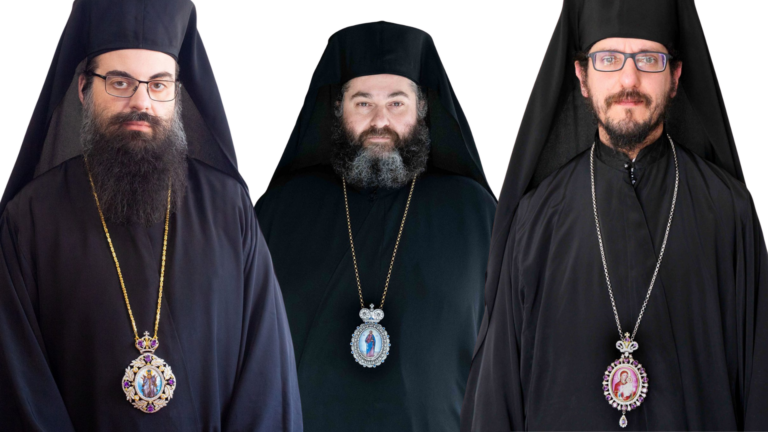
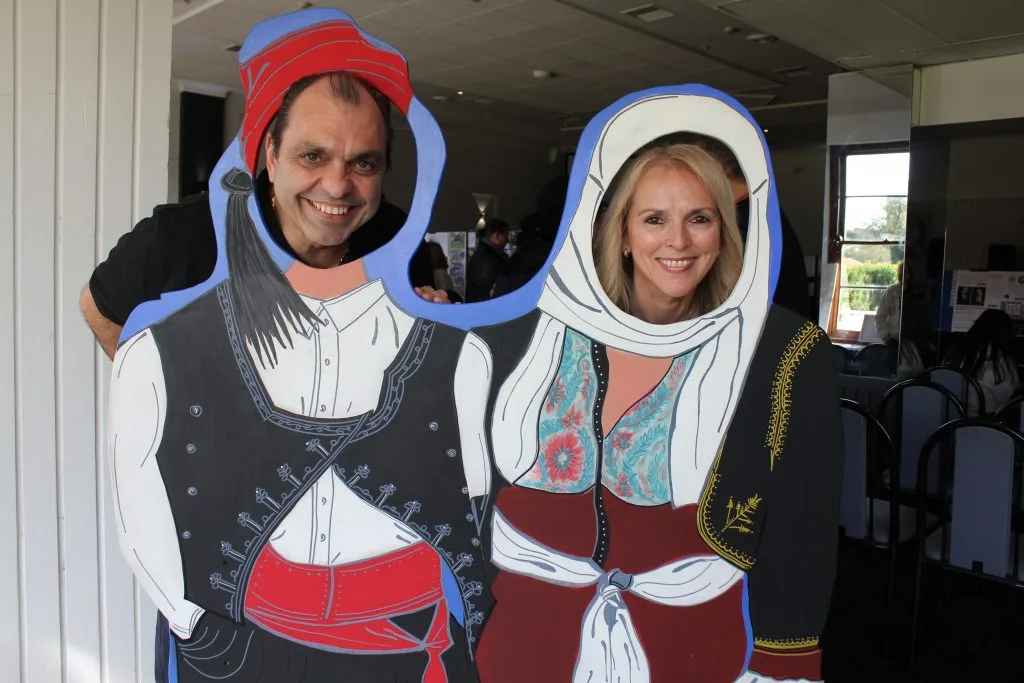
New regional Greek Orthodox Bishops have been appointed for Australia following a meeting of the Holy and Sacred Synod on Tuesday, July 16 and Wednesday, July 17.
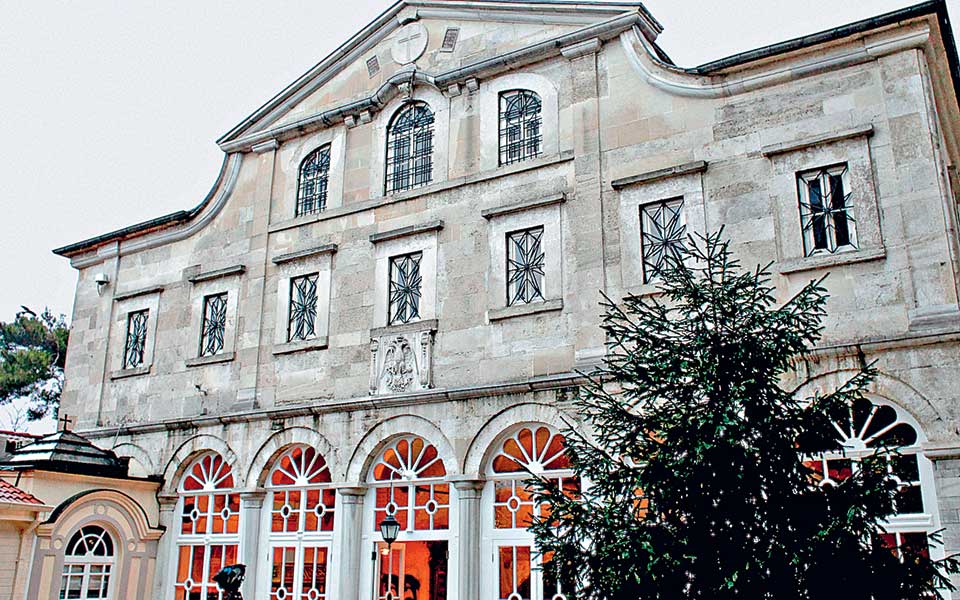
During the meeting and at the request of Archbishop Makarios of the Greek Orthodox Archdiocese of Australia (GOAA), the Holy and Sacred Synod established the Dioceses of Canberra, Melbourne, Perth, Adelaide, Brisbane, and Chora (previously known as the District of Northcote).
The Holy and Sacred Synod met on Tuesday, July 16 and Wednesday, July 17.
Regional Greek Orthodox Bishops were also appointed to look over these Dioceses. They are:
Bishop Kyriakos of Sozopolis as Regional Bishop of Melbourne
Bishop Elpidios of Kyanea as Regional Bishop of Perth
Bishop Silouan of Sinope as Regional Bishop of Adelaide
Bishop Bartholomew of Charioupolis as Regional Bishop of Brisbane
Bishop Evmenios of Kerasounta as Regional Bishop of Chora
According to a Communiqué following the meeting, these Diocese were created “in order to enhance the pastoral care of the Orthodox faithful in Australia.”
The GOAA is now governed on the basis of a Holy Eparchial Synod, with Archbishop Makarios as President. Its members will be his active Auxiliary Bishops in their capacity as “Regional Bishops.” There are no specific details yet as to how the Holy Eparchial Synod will work in Australia.
Two-time former major finalists and three-time Grand Slam finalists, Casper Ruud and Stefanos Tsitsipas will battle alongside 22-time Grand Slam champion Rafael Nadal, world number three Carlos Alcaraz, world number four Alexander Zverev and world number five Daniil Medvedev at the upcoming 2024 Laver Cup in Berlin, Germany.
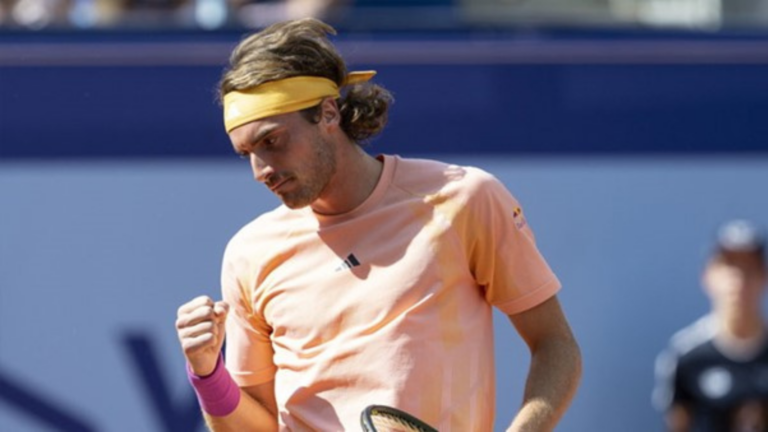
Stefanos Tsitsipas is aiming to reclaim the Laver Cup title with Team Europe at Uber Arena in Berlin from September 20-22, 2024. pic.twitter.com/VPjF2qzEhh
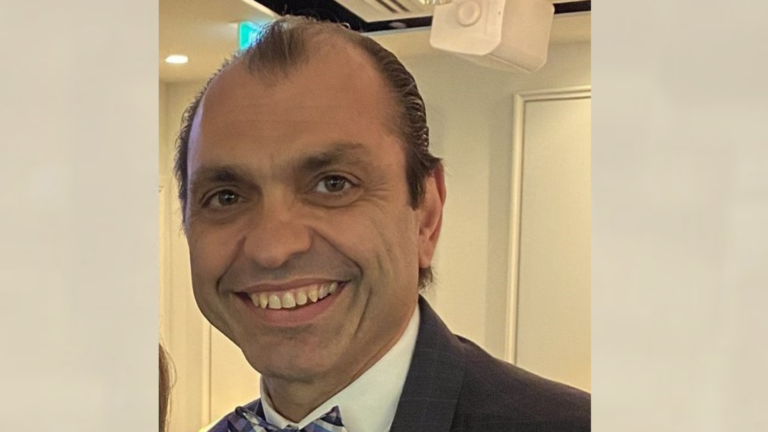
Tributes are flowing today for the former President of the Kytherian Association of Australia (KAA), Emmanuel Alfieris who passed away suddenly at the age of 53.
Mr Alfieris passed away in Sydney on Wednesday, July 17 after a heart attack during a soccer match. He is survived by his dad George, wife Louise and two children.
Mr Alfieris was a much-loved member of Sydney’s Greek community, having been President of the KAA from 2018 to 2022. He also served as a volunteer and Board member at All Saints Greek Orthodox Parish and Community at Belmore for a number of years.
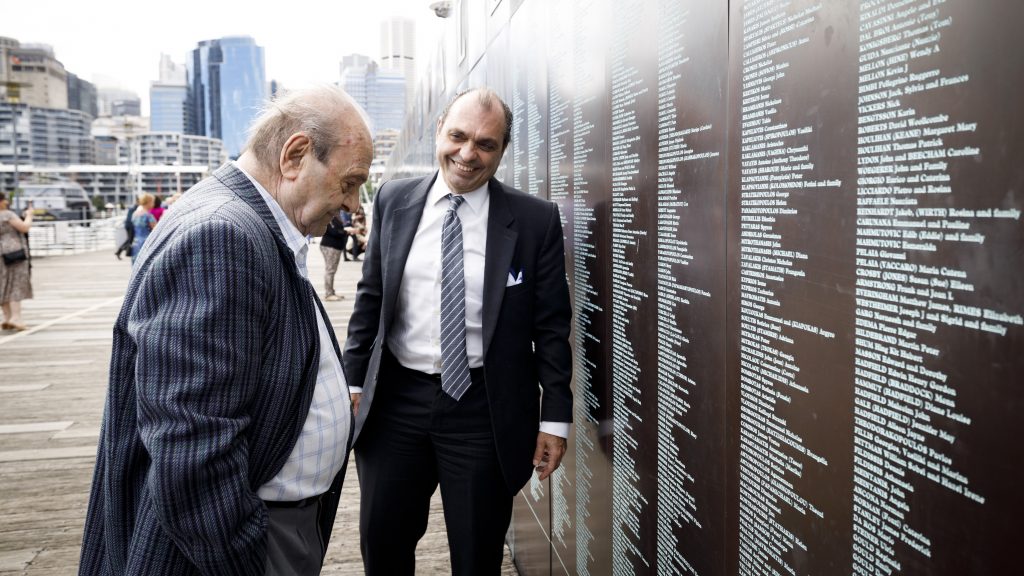
Emmanuel Alfieris and his dad at the Monument to Migration in 2023. Photo by Marinco Kojdanovski / Australian National Maritime Museum.
In a statement to The Greek Herald, current President of the KAA, Barbara Zantiotis said she was “devastated at his sudden passing” and he will be dearly missed.
“Emmanuel, a proud Kytherian, was a vibrant, vivacious, generous and kind man whose love for our beautiful island knew no bounds,” Ms Zantiotis said. “The Board and I extend our sincerest condolences to his beautiful family at this difficult time. Eternal be his memory.”
Emmanuel Alfieris (left), with current President of the Kytherian Association of Australia, Barbara Zantiotis (right) back in 2022. Photo copyright The Greek Herald / Andriana Simos.
In a post on Facebook, the All Saints Greek Orthodox Parish and Community at Belmore remembered Mr Alfieris as “a man of integrity, vision and much love.”
“He was a big supporter of all initiatives undertaken by both our Parish and School. For this we are grateful. Emmanuel’s kind spirit and warmth will be missed,” the post reads.
President of the Mytilenian Brotherhood of Sydney, Peter Psomas also passed on his condolences to the Alfieris family in a comment on Facebook.
“A good man gone too soon,” Mr Psomas wrote.
Other Greek community members have also expressed their shock at Mr Alfieris’ sudden passing, with many saying he was a “kind and generous” who would never be forgotten.
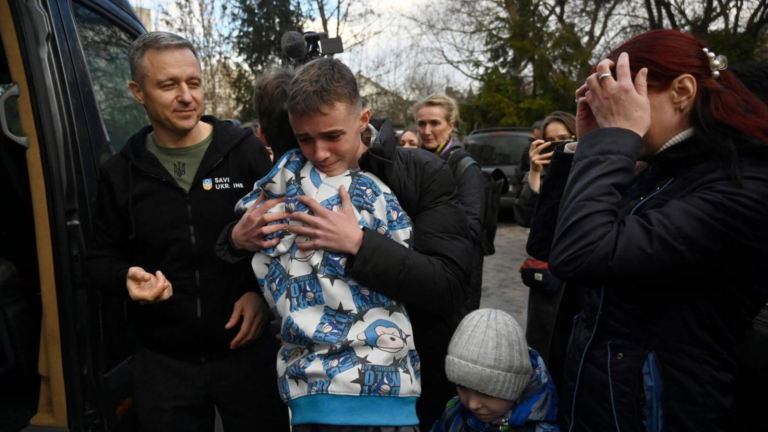
In an announcement by the Ministry of Foreign Affairs, Greece declared their accession to the International Coalition for the Return of Ukrainian Children.
Greece formed an alliance with mutual operation developed by Ukraine and Canada to mobilise the safe return to Ukraine of children “illegally deported or forcibly displaced” by Russian forces.
#Greece 🇬🇷 joined the International Coalition for the Return of Ukrainian 🇺🇦 Children as a full member state.
Alongside international partners, Greece has aligned themselves with humanitarian intervention under the provisions of children’s rights as it pertains to International Law.
According to Ekathimerini, several thousand children have been kidnapped by Russian forces, fewer than 400 have been returned.
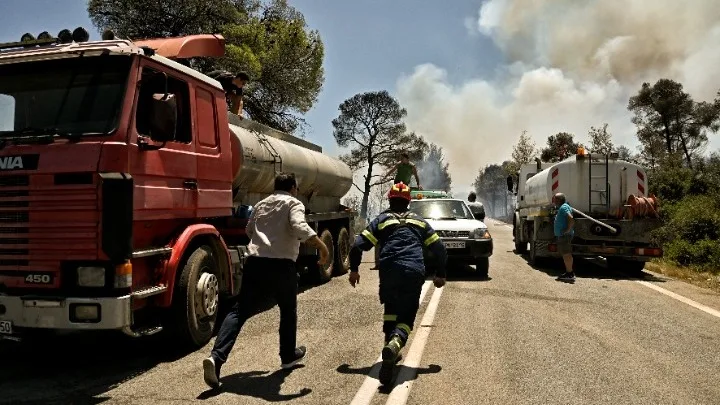
The Civil Protection Ministry has declared a general state of alert due to extreme weather conditions in Greece, including blistering temperatures and strong winds.
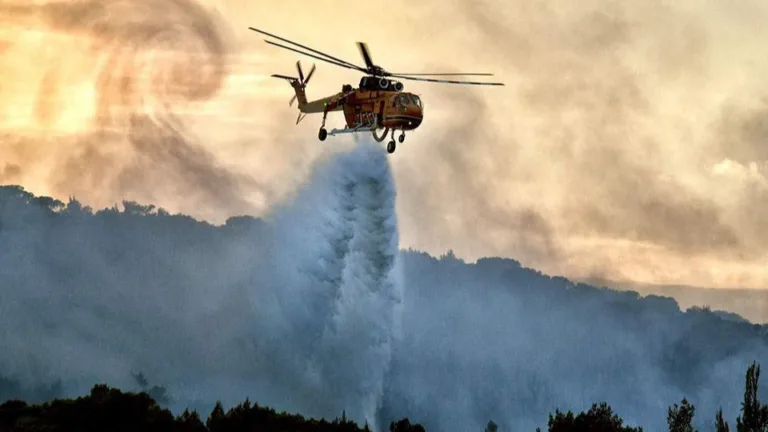
A current total of 42 fires have been reported nationwide, only 30 of which have been successfully contained. Civil Protection sources noted several incidents required aerial support.
The efforts in containing the wildfire located near Sofiko, Corinth have involved 22 aerial vehicles, 140 firefighters, six forest firefighting teams and 37 vehicles.
A current total of 42 fires have been reported nationwide, only 30 of which have been successfully contained. Photo: AMNA.
According to AMNA, no homes are currently at risk as firefighters have continued their operation. However, residents are being informed to remain vigilant given the emergency stratus of the situation.
These efforts have not come without casualties however, as one firefighter from Sofiko reportedly suffered a heart attack while three others have sustained minor injuries.
In Athens, amid their tenth day in the heatwave, the Acropolis was forced to temporarily close. Primary schools and nurseries have also closed, as the heatwave persists.
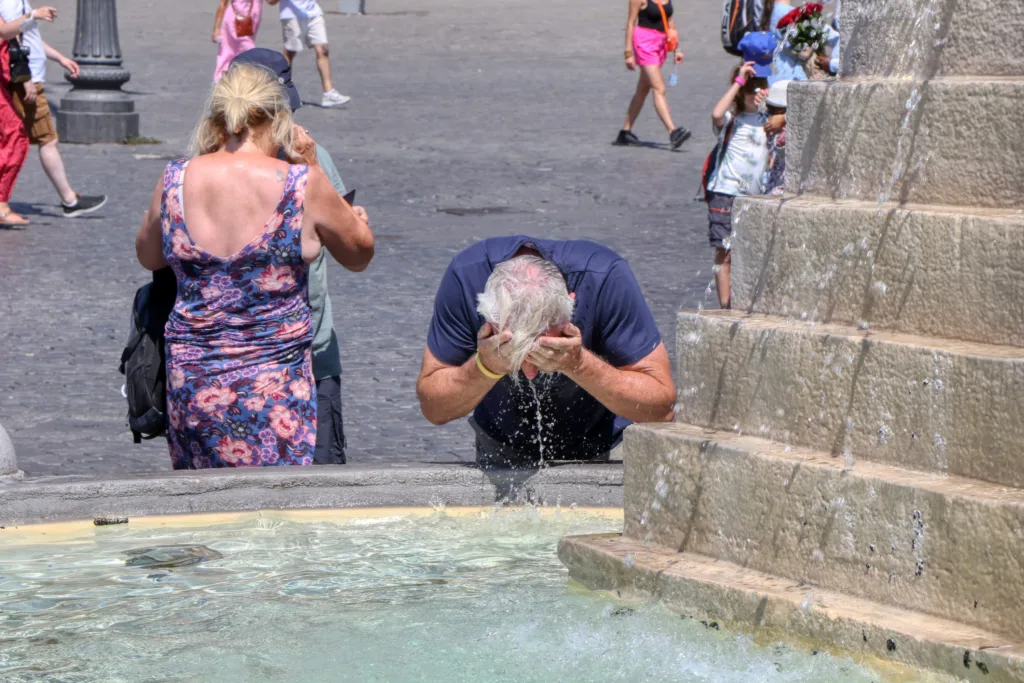
Temperatures continue to soar in Greece. Photo: Massimo Todaro / Shutterstock.
According to Reuters, six tourists have lost their lives since the increased heat in June.
The highest temperature on Wednesday was recorded in Oleni, Ilia, in the Peloponnese, at 42.2°C. Reports indicate these very high temperatures are expected to continue.
The former President of the Kytherian Association of Australia (KAA), Emmanuel Alfieris has passed away suddenly at the age of 53.
Mr Alfieris passed away in Sydney on Wednesday, July 17 after a heart attack during a soccer match.
Mr Alfieris was a much-loved member of Sydney’s Greek community, having been President of the KAA from 2018 to 2022. As President, Mr Alfieris was an advocate for the youth to ensure Kytherian culture is passed onto the next generation.
Tsitsipas who has been ranked number 12 made a winning debut in Gstaad and will advance, facing seventh-seed Fabio Fognini next in the Swiss Open’s quarter-final.
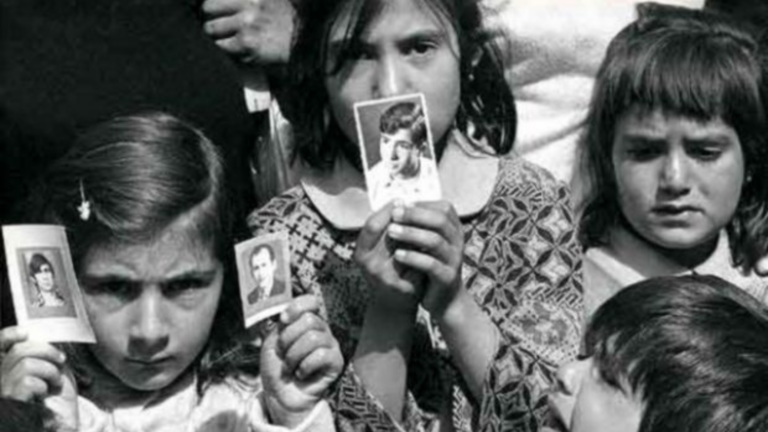
Approaching the 50 year remembrance of the Turkish invasion of Cyprus, I spoke with Cypriot academic, Dr Maria Herodotou, whose research area of interest among many, includes Cypriot (and Australian Cypriot) literature.
“Coincidentally with the beginning of the British rule in 1878, the first printing press was introduced to Cyprus from Egypt, something very important for the intellectual creation of the island, because it gave some intellectual independence, since now the creators could publish their works in printed form and in a book,” Dr Herodotou says.
In relation to a popular theme in Cypriot literature, she asserts, “in situations of colonialism, literature is important because it becomes for the colonised the means of questioning, undermining and ultimately subverting the colonial ideology of ‘superiority’ promoted by the colonisers. Literature is also very important in times of political crises depicting social problems, ideological conflicts, national aspirations, wars, etc. Literature flourished, for example, after the Turkish invasion of Cyprus.”
Dr Herodotou was born and grew up in Cyprus, studied in Athens, Greece and eventually settled in Australia after the 1974 Turkish occupation of her island. During the English colonial rule, the Greek Orthodox Church and Community leaders rejected an offer by the British to establish a University in Cyprus. They were concerned about British interference in the education system and the danger of undermining the Greek ethnic identity. The University of Cyprus was established in 1989.
She explains that “Greek identity and language were preserved through education in Cyprus. There was always a great emphasis on Greek history and classical studies, and anything related to Greece. Even the school buildings in Cyprus were built in a neoclassical style. In schools we followed the education system of Greece (programs, material, books, etc.).”
Hence Dr Herodotou attended Athens University in Greece from 1969-1974 on a scholarship, during the years of the Junta dictatorship. On completion of her Degree in Classical Studies and Philology in early 1974, she returned to Cyprus.
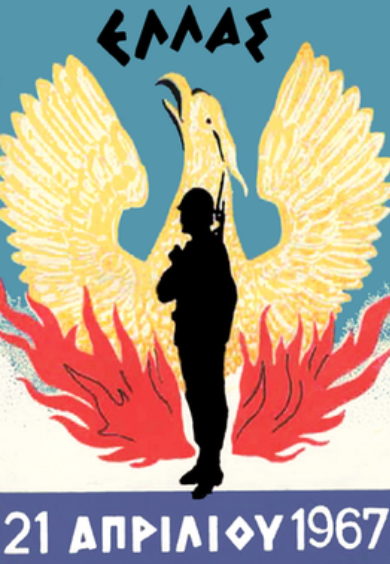
Junta symbol.
Dr Herodotou goes on to explain the roots of the 1974 invasion of Cyprus, as being due to the separation of the Greek Cypriots and Turkish Cypriots by British rule – or colonisation and the development of two conflicting nationalisms (Greek and Turkish): “The British armed the Turkish-Cypriots, employing them as policemen against the Greeks.”
Yet, she states, “the paradox is that individual relations with the Turks were mostly friendly. At the political level, however, they then became hostile and a feeling of suspicion and mistrust prevailed.”
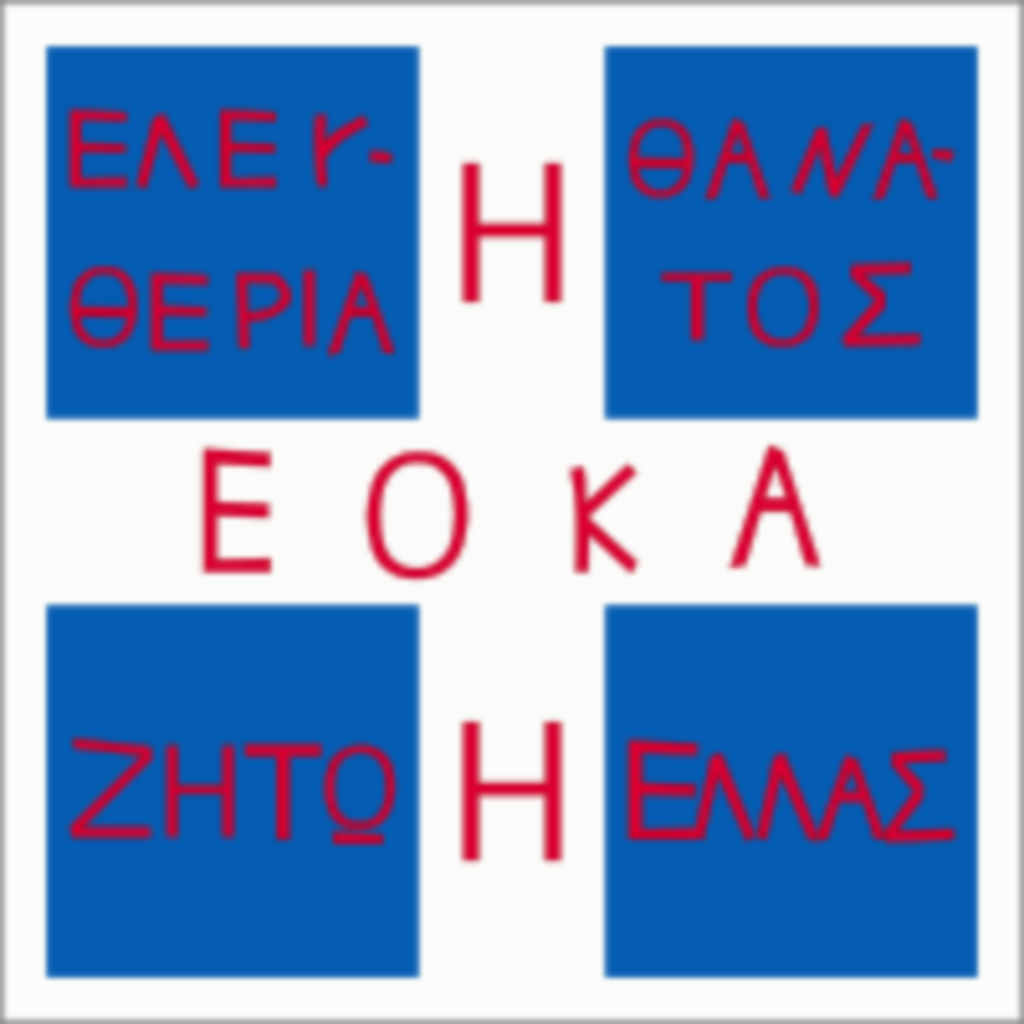
She informs me that the Greek Cypriots struggled against the British, desiring Cyprus to be united with Greece (enosis). However, they were let down by the 1960 Zurich-London Agreements, which deemed Cyprus an independent state. This led to the formation of the paramilitary organisation EOKA-B by G. Grivas (1971) under the control and influence of the Greek military Junta in Athens. Their goal was to achieve enosis. EOKA-B was outlawed by the Cyprus government. The first EOKA was a Greek Cypriot nationalist guerrilla organisation that fought to end British rule in Cyprus (1955-1959).
EOKA flag.
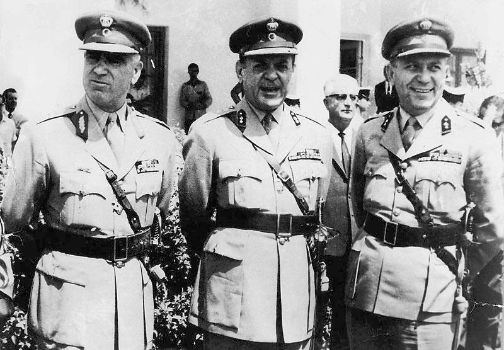
Junta leaders.
“The Zurich-London agreements gave a lot of rights to the Turks, so the first president Makarios asked to change 13 points of the Constitution. The first armed conflict between Greek and Turkish Cypriots occurred on Christmas of 1963, then an outbreak of violence from both sides followed,” Dr Herodotou explains.
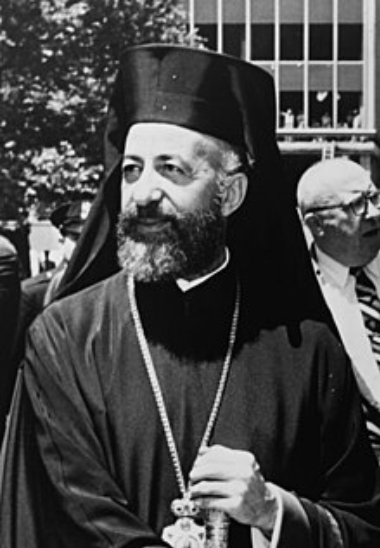
First president of the Republic of Cyprus, Archbishop Makarios.
In August 1964, the armed conflict between the Cypriot army and armed groups of Turkish Cypriots (with the help of Turkey) continued. Turkey bombed villages in Tylleria (north west of the island) with many dead. The capital Nicosia becomes divided in two by the infamous Green Line which is controlled by UN soldiers, who keep the two sides separated.
A Coup was enacted against the legitimate government of Makarios on July 15, 1974, due to the division and violence that broke out among the Greek Cypriots, giving Turkey a pretext to invade “with the excuse that it wanted to protect the Turkish Cypriots and the legitimate Cypriot state.”
Dr Herodotou continues: “I experienced all these events. I was born in a village in the province of Kyrenia shortly before the liberation struggle against the British began, and have vivid memories, because my relatives took an active part. I still have in my mind the images of armed British soldiers, curfews, visits to concentration camps and the fear we felt. One of the fighters hanged by the English, Stelios Mavromatis, was our relative.”
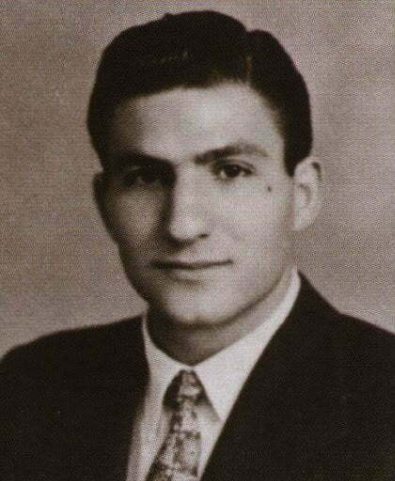
Stelios Mavromatis.
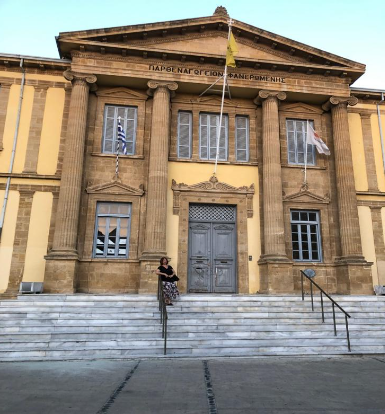
“When I was still a primary school child, we settled in Nicosia. I also vividly experienced the events of 1963-64 and the separation of Nicosia as a high school student. My High School, Phaneromeni, is on the Green Line that divides Nicosia. I still remember the shooting and the clashes and the atmosphere of fear that prevailed at Christmas 1963 in Nicosia.
Phaneromeni Girls’ High School.
“The experiences of war are not easily forgotten. My family house is close to the Nicosia airport and the Greek and British military base, which were bombed by Turkish planes on July 20, 1974. We woke up to a deafening noise because a mortar had fallen in the back yard of our house.
“The noise of the bomber planes, the explosions of bombs, the sounds of the battles made us panic and run out of the house to look for shelter. We put on the radio which was playing marches, calling for young men, and men up to 50, for general conscription to report to their units.
“The tragic situation was that in the chaos that prevailed due to the coup, the army itself was disorganised and everything had disintegrated. So most young people went blindly, not knowing exactly where to go, unguided and unarmed.
“I had two brothers (one was still a soldier) and I saw them go to enlist, not knowing if we would see them again. I don’t think there are many words to describe how we felt.
“The rest of the family, along with other neighbours, moved away from the area on foot and while the planes were bombing. We ended up in the basement of an apartment building that was under construction and stayed there for 2-3 days. Then we went to a village outside of Nicosia where we were hosted by family friends for a few weeks.
“What we were experiencing was the result of a national division and a huge betrayal instigated by the Junta and unfortunately, the military on the island played a major role.
“The army instead of protecting the population and the island, caused their destruction. It gave Turkey the pretext to invade. Of course, the military leaders were responsible, because the ordinary soldiers were also victims. The Turkish warships had arrived in northern Cyprus, in the area of Kyrenia, in the early hours of July 20. An invasion had taken place and the Turkish army was advancing south of the inland.
“The Greek army had left the area, because it was ‘busy’ with the coup in Nicosia. However, the radio kept calling the young men to enlist in their units (military bases) in the Kyrenia area. Among them were two of my cousins, who went to enlist and of course fell to the Turkish soldiers like sheep to the slaughter. They were both killed. Equally tragic was the position of the people who began to flee and seek shelter – to save themselves from the Turkish army, but had no information or help on where to go.
“The images of destruction and the refugees that followed cannot be forgotten. In Cyprus, another page of national disaster was written that should not be forgotten. Much of northern Cyprus is under occupation, much of the population are refugees in their own homeland, with no solution in sight.
“Many missing persons are dead, because their bones were identified with modern methods. But there are still missing people, so we can imagine the agony of family and their relatives who have lived for 50 years torn between hope and despair of not knowing what happened to their own. The most tragic thing is that the parents of the missing youth are either very old or have passed away, waiting to find out what happened to their children. I have personal experience of this trauma, because I have relatives who are ‘missing’.”
I surmise that Cypriot literature (and all literature depicting Cyprus’ historical events) keeps memories alive, which educates.
Maria adds, “The return to the past through memory [in literature] functions as a way of explaining the present writing of the works – which is a traumatic, but also healing process.”
Believing in the importance of literature and history, Dr Herodotou introduced many subjects in these areas at La Trobe University in Melbourne, where she was a lecturer and Coordinator of the Greek Studies Program for almost 40 years. She also organised international scientific conferences on Cyprus.
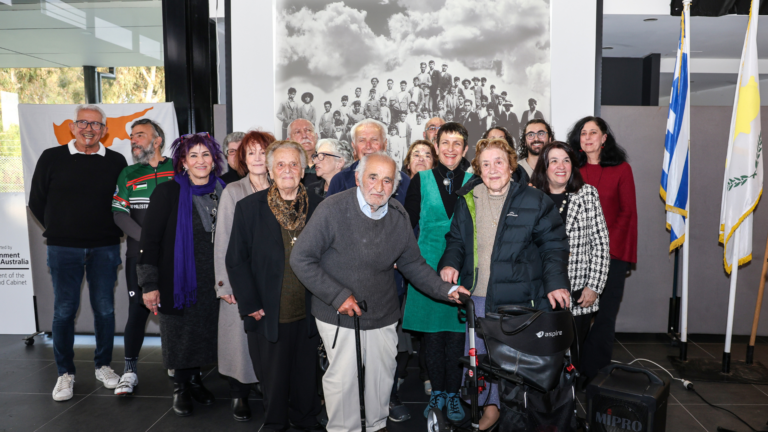
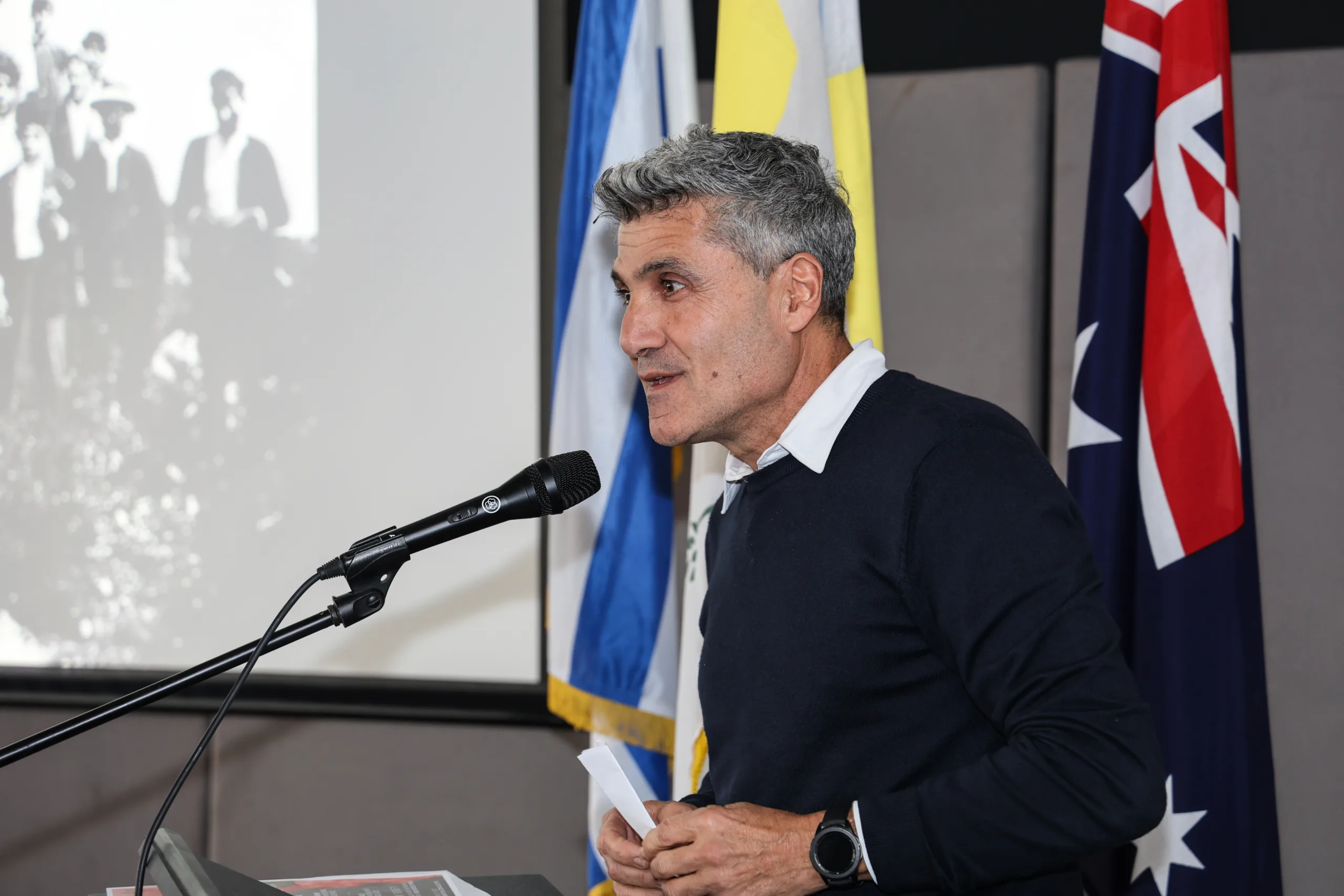
On a wintery cold afternoon, the South Australian Greek Cypriot community gathered on Sunday, July 14 at 3 pm. The occasion was the world premiere of Two Homelands, a one-hour documentary produced and directed by locally born Kay Pavlou.
The film focuses on the 50th anniversary of the 1974 Turkish invasion of Cyprus. Six senior Australian Greek Cypriots – aged 70 to 102 – give emotional eyewitness accounts of the war and their migration to Australia.
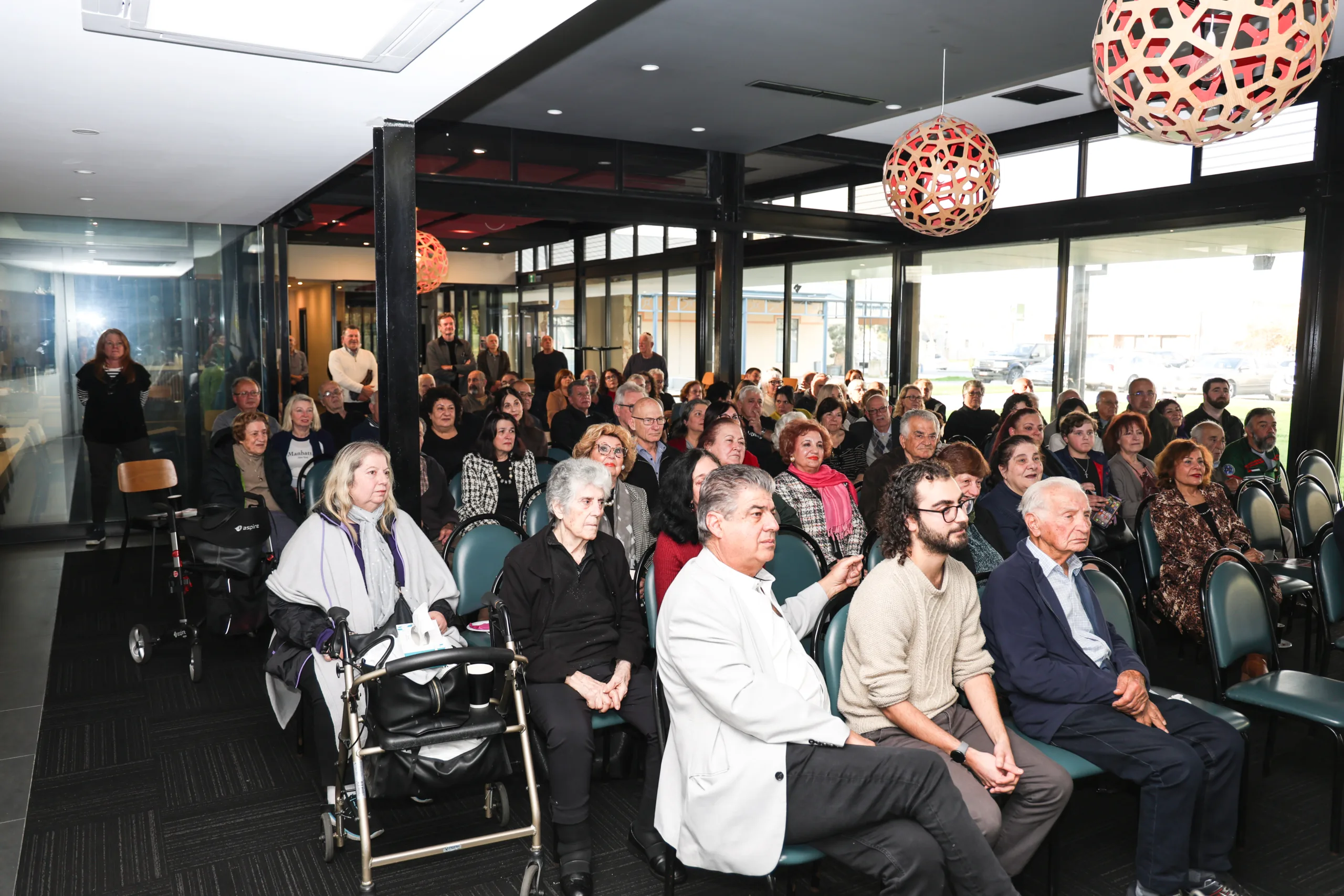
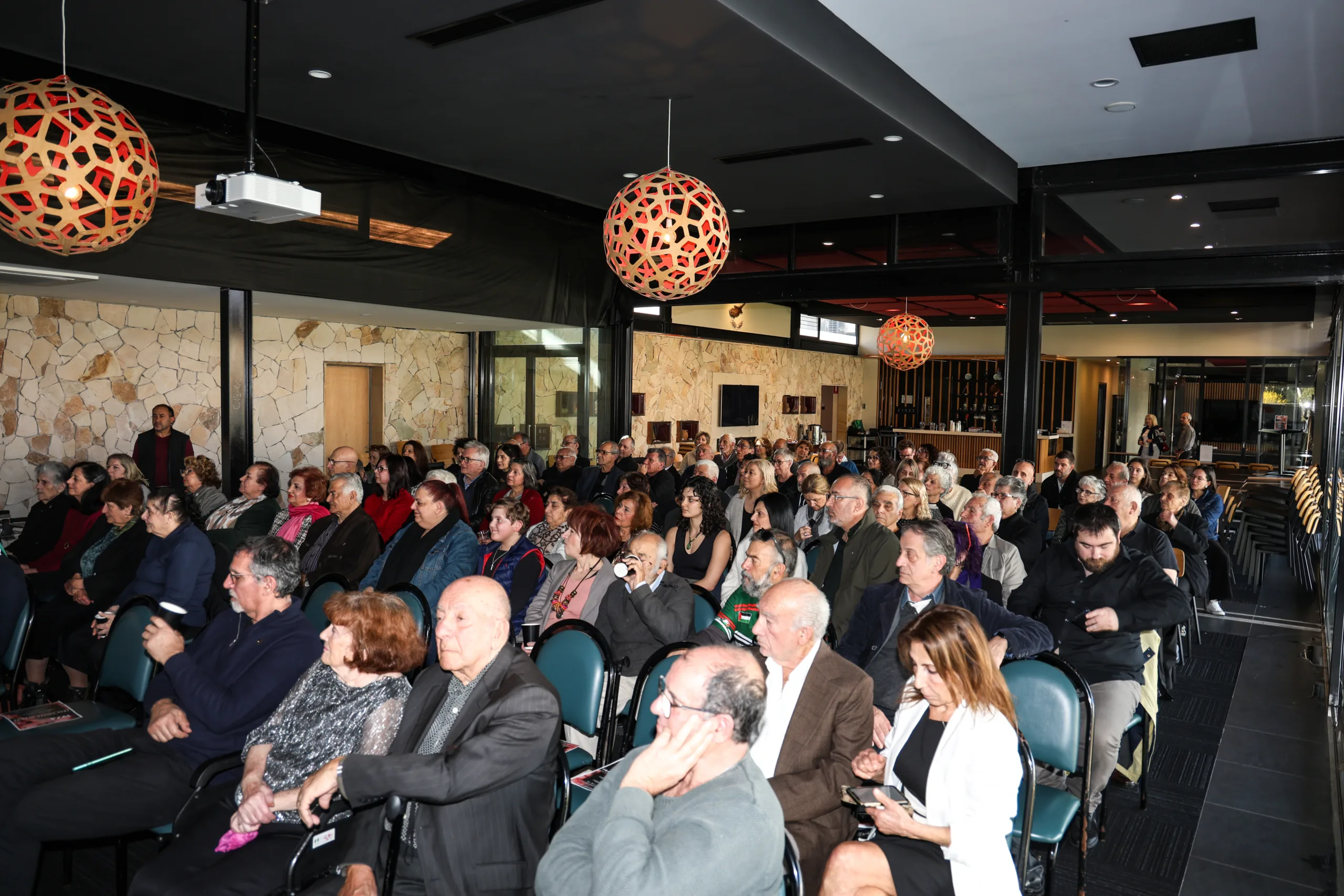
Over 100 South Australian community members attended their Club in Welland, Adelaide for the documentary premiere. The response from the audience was one of tears and grief at the loss of their beloved island.
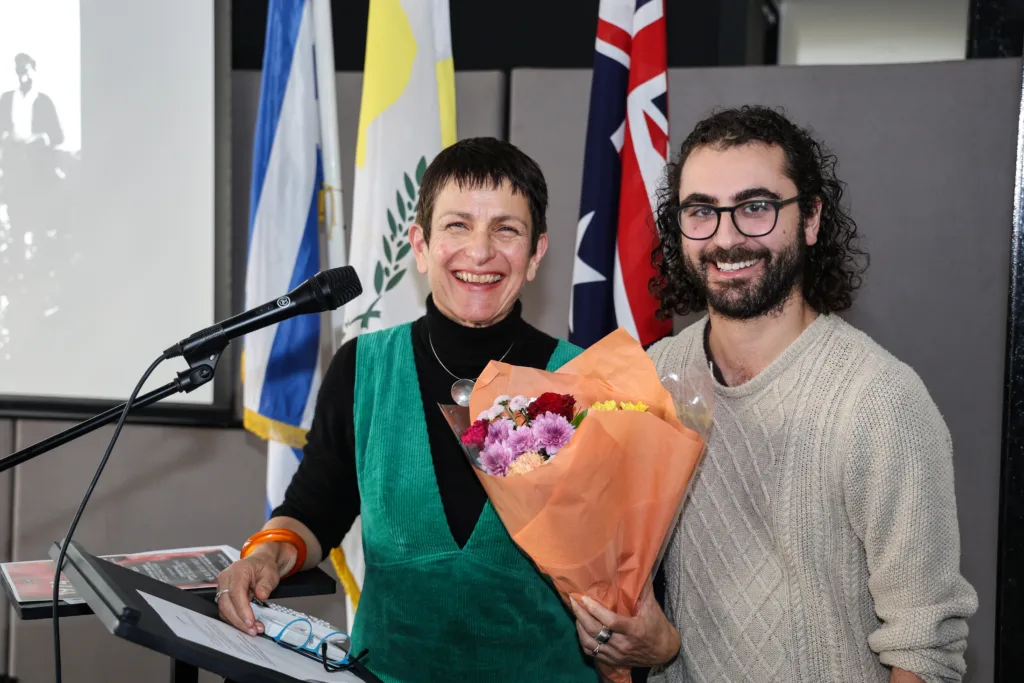
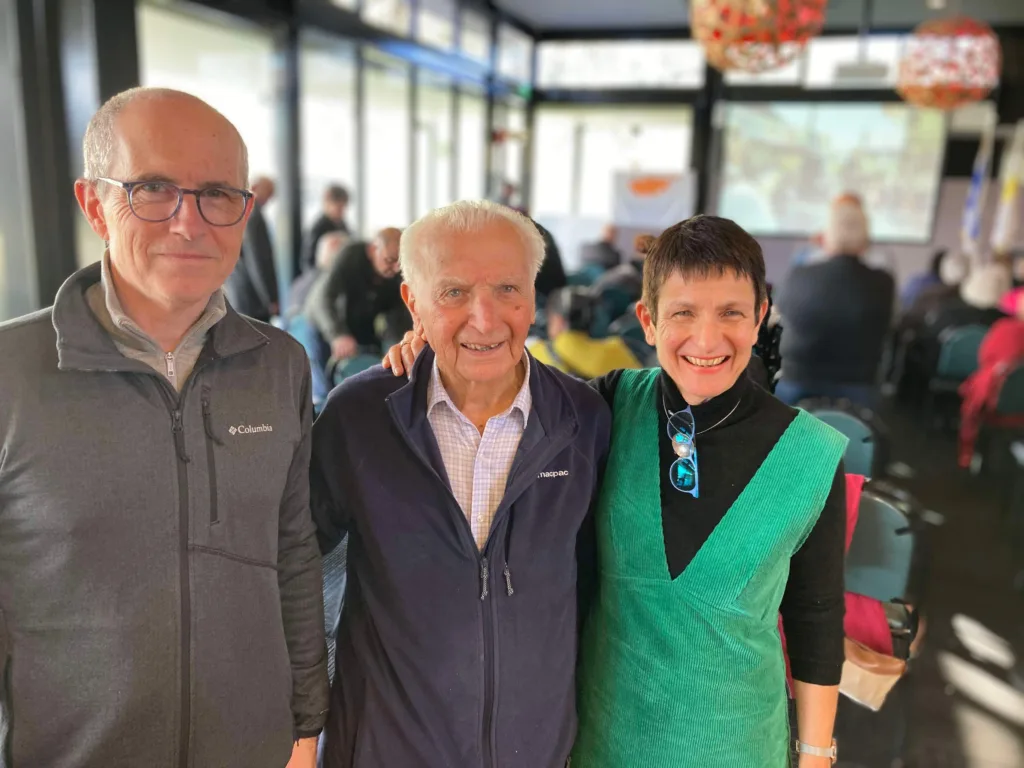
Kay Pavlou (left) with new SEKA South Australia President Iacovos Digenis.
One refugee said, “Even though we are crying, we are happy to see our story told.”
Peter Ppiros, Findon Ward Councillor, added, “The film exposes the Cyprus problem, but also tells our story as migrants, our struggles to stay connected to our homeland.”
Kay Pavlou with her father Panayiotis Pavlou and partner Jack Tanner.
Pavlou was very moved by the reaction to her documentary.
“When I started out nine months ago, I was hoping to make a film that would help communities around Australia express the complex emotions surrounding the 50th anniversary – sorrow, anger but also hope that the island can find a peaceful solution,” she said.
Cyprus Community of South Australia President Professor Andreas Evdokiou.Photos supplied.
Newly appointed President of SEKA SA (Justice for Cyprus), lawyer Iacovos Digenis represented the next generation in community leadership.
“As Australians, we can see the success of multiculturalism so we wish that Cyprus can also live as a united island with different ethnicities living side by side,” he said.
Cyprus Community of SA President, Professor Andreas Evdokiou, urged the audience to attend the ‘Raise Your Voice’ protest against the continuing illegal occupation of Cyprus by the Turkish Government on the steps of South Australia’s Parliament House at 1.30 pm on Sunday, July 21.
Two Homelands will screen in Sydney on Saturday, July 20 at 7 pm at the Cyprus Community Club of NSW, 58-76 Stanmore Road, Stanmore.
In recognition of the 50th anniversary of the Turkish invasion of Cyprus, the Greek Orthodox Community of Melbourne & Victoria, in collaboration with SEKA Victoria, the Cyprus Community of Melbourne & Victoria, and members of the 50th Year Action Group, are presenting a series of lectures addressing various aspects of the “Cyprus Issue.”
The lectures will be held at the Mezzanine Level of the Greek Centre (168 Lonsdale Street, Melbourne) starting at 7pm.
Each session features two speakers, each allocated 25 minutes, followed by a question-and-answer session.
The lecture programme for Thursday, July 28 is:
Pavlos Andronikos, President of SEKA Victoria and former Head of Greek at Monash University, giving a talk titled: “The Nature of the Turkish Invasion of Cyprus in 1974”
The Hon. Theo Theophanous, President of the Cyprus Community of Melbourne & Victoria and former Minister in the Parliament of Victoria, giving a talk titled: “Cyprus: The Solution Rests with Turkey, Not Greek and Turkish Cypriots.”