Home Blog Page 517

Amazon invests in Greek wind farms

0

Amazon has announced its investment in three large-scale wind farms in Greece, marking its most significant renewable energy initiative in the country, according to ekathimerini.com. The wind farms, located in Western and Central Macedonia and the Peloponnese, are part of four Power Purchase Agreements (PPAs) with Ireland-based renewable energy firm Aer Soléir.

The projects include the Vermio North and South wind farms in Macedonia, and the Mesokorfi and Koukouras wind farms in the Peloponnese. Currently under construction, they are expected to start generating power by 2026, producing enough carbon-free energy to supply nearly 200,000 Greek homes annually.

Amazon’s investment aims to directly power its operations and support the local energy grid, benefitting businesses, public institutions, and households. More than 100 construction jobs have already been created for the Vermio wind farm, with up to 300 expected at peak activity.

Aer Soléir has also committed over €1 million to community initiatives, including infrastructure improvements, support for schools and emergency services, and assistance to local agriculture. An additional €1.8 million has been earmarked for reforestation and biodiversity projects near the Vermio site.

The €496 million project is financed through a combination of €249 million in commercial debt from the National Bank of Greece and funds from the European Recovery & Resilience Fund.

“The collaboration between Aer Soléir, the National Bank of Greece, and Amazon represents a transformative investment exceeding $1 billion,” said Theodoros Skylakakis, Greece’s Minister of Energy & Environment.

This follows Amazon’s completion of Greece’s first utility-scale solar project in 2022, contributing over 1GW of clean energy to European grids.

Source: ekathimerini.gr

Israeli connection and Cyprus

0

By Andreas C Chrysafis*

The island of Cyprus is going through major transformations, political, social, economic and cultural dimensions! If those changes continue unchecked they may lead to the irreversible loss of its ancient Hellenic identity. Cyprus’s legacy deep rooted in its history, it now stands at the crossroads and vulnerable to political, social and demographic sweeping changes brought about by homegrown political incompetence but also due to foreign influences.

Cyprus, perched in the Eastern Mediterranean Basin has long been a land of paradox—a blessed island yet a cursed one! Its strategic location has made it a coveted stepping stone and a gateway to Western markets, the Far East and Egypt. That curse has now become more dangerous than ever before especially after the discovery of natural gas in its Exclusive Sea Protection Zone. (EEZ). Today, the island’s untapped recourses with its strategic military position have turned it into a magnet for foreign powers seeking exploitation and military dominance in the region.

The island has been a prized trophy for centuries and shares the hallmarks of foreign exploitation and domination. One of the most dangerous countries in the region is Turkey, where Sultan Erdogan envisions his Neo-Ottoman Empire and Cyprus, lays smack in the centre of his ambitions.

Nobody can tell what the Sultan’s cunning mind plots for the future (not even the West can predict that) for he has mastered the art of deceipt. Demographic engineering has long been a potent tool for reshaping and even erasing ethnic identities of nations and today, the island’s future hangs in the balance.

Jewish/Israeli Connection

In the last decade a somewhat—aside from the European Union’s influence in the affairs of the Republic—a surprising contender has emerged in the property investment arena of the island: the Israeli Connection! The sudden surge of calculating Jewish/Israeli acquisitions in EU-Cyprus worth millions has prompted speculation of the scale and nature of these ventures. Why now?

Is there more than meets the eye behind this influx of capital investments and growing acquisitions of hotels, land and properties coming from Israel and investors of Jewish origins in diaspora?

The trend gained momentum immediately after the IMF/EU Troika’s 2013 Bail-in robbery in Cyprus by the Anastasiades government to save a corrupt banking system by stealing people’s bank accounts without their consent. Repossessed properties and toxic loans were sold en-masse at staggering discounts—often 80-90% of the outstanding debt to international Banking Hedge Funds while at the same time, borrowers were held liable for the outstanding debt!

Cyprus banks eager to clear their books of toxic loans facilitated the sale to bulk buyers who seized the opportunity like bees to a honeycomb! What’s particular striking is the geographical scope of these investments within the Cyprus Republic but also in the Turkish occupied northern part of the island.

Greek properties and land in the occupied north are offered to Jewish/Israeli investors for a steal by the illegal Turkish Cypriot Authority for development; properties that in fact, truly belongs to Greek refugees! Could this wave of ventures simply reflect savvy investment strategies, or are there deeper, strategic considerations at play? The answers remain elusive, but the curious Israeli Connection is undoubtedly reshaping Cyprus’ political landscape in significant ways.

The common perception—that “foreign investments are good for the economy” —is frequently invoked, but it fails to address the deeper question about social, demographic, environmental, and economic repercussions such projects may entail for the small island. It has been suggested that some dark forces envision EU-Cyprus of becoming a “new Israel” or an “extension of the existing one.”  Real or not, they undoubtedly provide food for thought!

Jewish Ambitions

Jewish settlements in Cyprus trace back to ancient times when Jews living in Cyprus have actually experienced two major expulsions from the island. The first mass exile occurred soon after the destruction of the First Temple in the 586 BC, and the second after the obliteration of the Second Temple in 70 AD. In both instances, Jews were banished forever and forbidden to live in Cyprus!

The most blatant historical ambition to take over the island and make it into a Jewish state were exhibited by the Zionist Movement in Diaspora years after the expulsion of the Jews from Portugal by King Manuel. Thousands of displaced Portuguese Jews found refuge in Venice, including the family of Joseph Miquel Nasi, whose mother was a prominent socialite and banker’s wife. As a young boy, Joseph soon took offense to Venetian high society for ignoring his mother’s social status and vowed to punish the Venetians for ill-treating his mother! In 1568 the Jews were once again ordered to leave the city of Venice forcing Joseph Miquel Nasi and his family relocate to the influential and prominent city of Constantinoupolis.

The Ottoman Empire expanded rapidly and Joseph Miquez Nasi—a brilliant strategist and financial expert—rose to prominence as the most trusted advisor and confidant to Sultan Selim II. In fact, he had become known throughout the Empire as “The Great Jew”. In recognition for his loyalty to the Turkish Empire, the Sultan bestowed upon him the title of Duke of Naxos and the Seven Seas.

However, behind the prestigious titles, Nasi harboured a secretive personal mission: His ambition stemmed from a vow made to his mother to punish the Venetians and fulfil his ultimate dream of becoming the new King of Cyprus. His friend Sultan Selim II approved his ambitious plan and ordered the preparation of an immense invasion force against the Venetian-held island of Cyprus. By assembling a fleet of 400 ships and a formidable army of 60,000 well-equipped soldiers, the Sultan was more than ready to keep the promise made to his good friend Nasi.

On 27 June 1570, the Ottoman invasion-fleet, under the command of Lala Mustapha Pasha, cast off to capture Cyprus from the Venetians. The passionate realisation of “the Great Jew” to establish a Jewish settlement on the island were now more real than ever before! Using the island as a stepping-stone to Zion, the Zionist colonisation of Cyprus envisioned as a territorial solution to rootless Jewish communities—so acute in the 16th century—offered Miquel Nasi the opportunity to provide a permanent sanctuary to stateless Jews in Diaspora.

But for Joseph Miquel Nasi, it was not meant to be: “The Great Jew” died and did not live to see his dream of becoming King of Cyprus, nor to provide a homeland for displaced Jews! The Zionist colonisation of Cyprus remained unrealized, bringing to an end of one man’s remarkable, yet incomplete legacy.

Fledgling State of Israel 

After the Second World War, Cyprus played a significant humanitarian role in supporting thousands of Jewish refugees attempting to return to the Promised Land! Following the liquidation of the Nazi concentration camps in Europe, the British set up a massive barbed-wire detention camp at Karaolos for Holocaust survivors trying illegally to enter Palestine. Determined to reach their destination, over 1,600 tragically drowned at sea, while only a few thousand have managed to arrive safely in Palestine. Of the 64 vessels that sailed for Palestine, Exodus 1947 a steamship departing from France was the biggest. It carried 4,515 passengers—the highest number of illegal immigrants ever attempting to reach and occupy Palestine. The steamship was apprehended and all refugees were shipped back to France in three separate vessels.

Between 1946 and the establishment of the State of Israel in 1948, the British confined over 50,000 Jewish refugees in Cyprus unsure what to do with them.  During this time, Cypriots played a critical role in supporting the Jewish migrants detained inside the Karaolos Detention Camp in Famagusta. Despite their own struggles under British rule, local Cypriots—many of who were impoverished themselves, showed extraordinary compassion. They visited the detention camp providing clothing, food, water and other provisions to help out and ease the plight of those trapped in bleak conditions. Their generosity reflected a profound truth: poverty has neither enemies nor envy!

These events remain undeniable historical facts for which cannot be disputed; facts that have taken place in a by-gone era marked by the stark contrast between acts of ethnic brutality and acts of human empathy for those people less fortunate. Greek Cypriots demonstrated compassion and humanity to Holocaust survivors the best way they could—even as they themselves endured the hardships of British colonial subjugation!

The humanitarian efforts by Greeks in aiding those in need, serve as a powerful reminder of how humanity and solidarity can coexist in the face of adversity!

New realities

Nowadays things are very different; a new and shrewd trend across the island is taking place that could have far-reaching consequences in the future! Money, corruption and exploitation for profit have become the new religion of the day! Cypriots now face not only with the challenges posed by the Turkish military invasion but also face another form of intrusion—this time cunning economic one! A wave of companies and individuals of Jewish/Israeli origin are systematically purchasing properties throughout EU-Cyprus—including the Turkish occupied north—raising public concerns about the implications of such a practice.

It seems as thought there is a deliberate mission to acquire and develop as many Israeli-owned properties as possible: hotels, villas, apartments, prime industries, and vast tracts of land for development! The public is seriously questioning the motives and what lays behind this sudden surge of interest in properties and investments in Cyprus! Meanwhile, the government and most political parties continue to praise the Israeli investment spree “in a free market society” as a positive move for the economy, often with little consideration for the long-term implications for the island’s future.

A number of major hotels in Limassol, Nicosia, Paphos and Larnaca have already changed hands and the buying frenzy has extended as far as the picturesque and quaint Latchi waterfront in Polis Chrysochous where Israeli companies have purchased most of the hotels. Meanwhile, a massive but contentious “all inclusive” Israeli resort complex—that looks like a settlement—comprising more than twenty steel buildings aimed for the Israeli market, is being constructed by a Jewish consortium. This development proceeds with little consideration for the environmental impact or the infrastructure of the local community.

The developers ignoring building permits and conditions added extra floors and additional mass structures without proper planning consent. As a result, the public is now confronted with an overwhelming eyesore; an ugly complex perched prominently atop the hill at the very entrance of beautiful Latchi! Such actions demonstrate a stench of corruption, disrespect for the law but also disregard for the local community. Meanwhile, the authorities seem to turn a blind eye, leaving citizens questioning why such actions are allowed to take place in a EU country that prides itself on upholding the Rule of Law!

*Andreas C Chrysafis is a UK published author of five books and over 450 press articles but also a recognized artist. His works are globally available and can be viewed here
Copies: www.artpal.com/chrysafis

Ferry ticket prices in Greece to increase by up to 12%

0

Ferry ticket prices in Greece are set to rise significantly, with increases of up to 12% expected from May 2025, according to news.gtp.gr. The hike, exceeding the average inflation rate, is attributed to rising fuel costs and new environmental regulations for coastal vessels aimed at promoting sustainable practices.

“Fuel costs, which constitute 47 percent of a ferry’s operating expenses, are the primary factor driving the ticket price increase,” said Dionysis Theodoratos, President of the Association of Passenger Shipping Businesses (SEEN), during the “Modern Coastal Shipping Transportation, Island Sustainable Development” conference.

Reasons Behind the Increase

On May 1, 2025, the Mediterranean will officially become a Sulphur Emission Control Area (SECA), requiring ships to use fuel with a sulfur content no greater than 0.001 percent. This fuel is significantly more expensive, prompting ferry companies to project a price hike of 10–12%.

This regulation is part of the European Commission’s “Fit for 55” package, which includes measures such as the European Emissions Trading System (EU-ETS) and the FuelEU Maritime Regulation, aimed at reducing shipping emissions. While crucial for the green transition, the changes are expected to raise ferry operating costs further, with full implementation of EU-ETS by 2026.

Financial Impact

A study by the Foundation for Economic and Industrial Research (IOBE) estimates the new regulations could increase operating costs for coastal ferry companies by €320 million by 2031.

Greek Maritime Minister Christos Stylianides acknowledged these challenges and stated that the government is advocating for EU-ETS revenues to support the industry. “We want the ETS revenues to be allocated to the coastal shipping sector to help the industry cope with the financial burden of adapting to greener fuel requirements,” he said.

The SEEN conference emphasized balancing green transformation with the economic sustainability of Greece’s island regions.

Source: news.gtp.gr

Folegandros island among Europe’s most underrated destinations

0

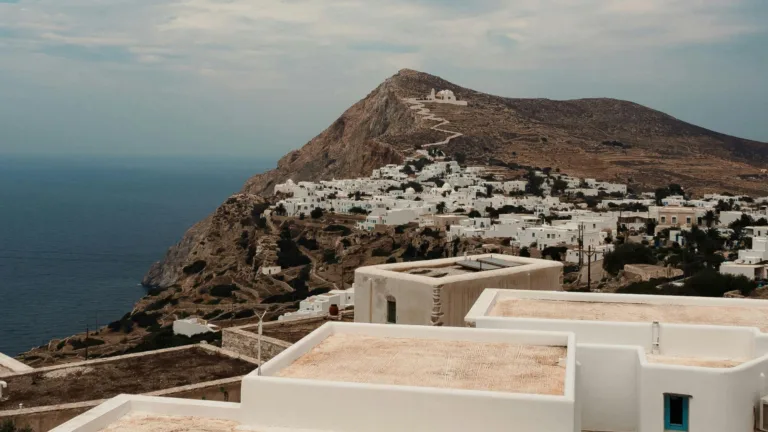
Folegandros was included among Europe’s most underrated destinations by the Sydney Morning Herald. The Greek island offers a serene escape with all the beauty and culture of the Greek islands—minus the chaos.

Where: Looking to escape the crowds? Just a 45-minute ferry ride northwest of Santorini lies Folegandros, a Greek island waiting to be discovered.

Why Go: Folegandros offers everything you’d expect from a Greek island—whitewashed villages, crystal-clear waters, and rich local culture—without the overwhelming crowds of its famous neighbor. Think of it as a glimpse into Santorini’s past, before mass tourism took over. While popular, it still retains an unspoiled charm, making it ideal for those seeking a more tranquil getaway.

See + Do: Wander through Chora, the island’s picturesque main settlement perched on a clifftop and built around a historic castle. Explore Karavostasis, the quaint port town, and discover the island’s many inviting beaches. Don’t miss the opportunity to savor traditional Greek cuisine at the local tavernas.

Don’t Miss: Take a 15-minute walk from Chora to the Church of Panagia. This iconic site not only showcases traditional architecture but also offers breathtaking views of the island and the sparkling Aegean Sea.

Essentials: Folegandros is at its liveliest during summer, but the quieter months of autumn and spring are equally pleasant. Many businesses close in winter, so plan accordingly. The island is accessible via ferry from Santorini, Naxos, and Milos. For more information, visit visitgreece.gr.

Source: The Sydney Morning Herald

Anastasia Kondos on how to make it as an investment banking graduate

0

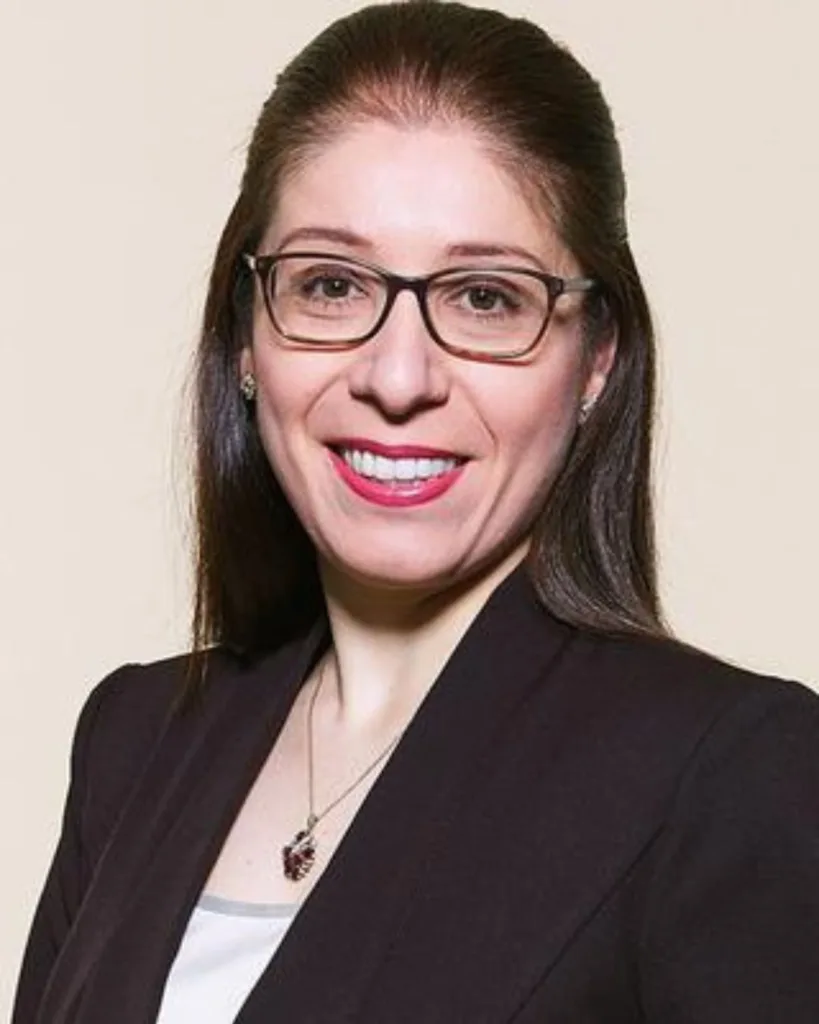
Landing a graduate role in investment banking is a challenge, with fierce competition for a limited number of positions. For those like Anastasia Kondos who spoke in the Financial Review, her advice for incoming grads is clear and practical.

Be Excited – It’s the Right Decision

“It can be nerve-wracking starting a career in banking,” says Ms. Kondos. “[For any incoming graduates], I’d reassure them they’ve made the right decision, be excited and just relax before they start their career. You learn a lot on the job, and it’s not really something you can prepare that much for.”

She suggests taking time to recharge before diving in. “You’re much better spending your time relaxing before you start, so you can come in fresh and absorb everything like a sponge.” Ms. Kondos also found inspiration in listening to motivational speeches from senior banking leaders, including RBC Capital Markets’ Derek Neldner.

Leave the Sneakers at Home

“It’s an investment bank, and it’s a professional place. It’s always good to present yourself that way,” she advises. While casual Fridays exist, she opts for a polished look.

Acknowledging the demanding nature of the industry, Ms. Kondos embraces the challenge. “The hours are long because it’s a demanding industry with high expectations on all of us from a client perspective. I work hard; however, I take the opportunity for downtime when possible.”

By staying professional, focused, and balanced, Ms. Kondos sets a strong example for new graduates entering the field.

Source: The Financial Review

Three Greek Australians among South Australia’s notable figures to watch in 2025

0

South Australia has a history of producing global icons, from astronaut Andy Thomas to actor Teresa Palmer and scientist Mark Oliphant. Three talented Greek-Australians who are poised to make waves in their respective fields, were included among the 25 South Australians to watch in 2025, by The Advertiser.

Panagiotis Kikianis – Football Prodigy

Adelaide United defender Panagiotis Kikianis, 19, has already etched his name in A-League history by signing the longest contract ever offered — a five-year deal. Reds coach Carl Veart lauds him as an “exceptional talent with immense potential.” Starting his journey with Fulham United as a child, Kikianis climbed the ranks through West Adelaide and state development programs. With dedication and a stellar attitude, he is expected to be Adelaide’s next big football export.

Selina Nikoloudakis – Family Law Specialist and Mentor

Selina Nikoloudakis, a highly-regarded family lawyer, recently launched her own firm, Divorce Legal, in Prospect. With over 15 years of experience and recognition in the Doyles Guide, she is among the state’s elite family law specialists. Nikoloudakis is not only a trailblazer in law but also a mentor to emerging lawyers, describing her field as “constantly evolving” and emotionally impactful. Her passion for helping families navigate challenging times underpins her success.

Selina Nikoloudakis Photo: The Advertiser

Alexia Spyridonidis – Marketing Visionary

In just over a year since founding her marketing agency Sax, Alexia Spyridonidis has worked with brands like F45 and SkyCity. Combining her background in fashion marketing with a passion for creative content, she has quickly positioned herself as a rising star in Adelaide’s media and marketing world. Her work spans social media, publicity, and event management, making her one to watch in 2025.

Alexia Spyridonidis Photo: Linkedin

Source: The Advertiser

Thrills and victories at the Greek Community Cup

By Vasilios Roumeliotis.

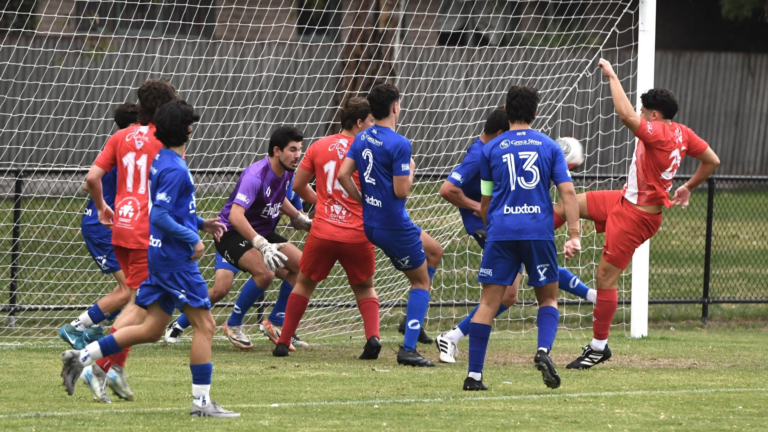
The Greek Community Cup delivered another round of astonishing football, with Malvern edging out East Kew in a 3–2 thriller and Oakleigh Cannons securing a commanding 2–0 win over South Springvale to claim their spot in the Semi-Finals.

The tournament continues to showcase the passion, skill, and community spirit that define the competition.

In a closely fought encounter, Malvern’s youthful squad, featuring several promoted Under-17 players, displayed exceptional resilience and talent to clinch a hard-earned 3–2 victory over East Kew.

Photo: Kostas Deves.

East Kew started strong, taking an early lead and coming close to doubling it. Despite Malvern’s fluid ball movement, East Kew’s defence held firm until a well-worked equaliser brought the team’s level. Just before halftime, East Kew capitalised on an opportunity to go 2–1 up.

Malvern roared back in the second half, equalising quickly with a sharp finish. The match remained on a knife’s edge until Malvern netted a decisive goal to seal the win. Both teams impressed, with Malvern’s young side showcasing great potential and East Kew demonstrating determination.

Tournament hosts South Springvale showed significant improvement but ultimately fell to the clinical Oakleigh Cannons, who secured a 2–0 victory and a place in the Semi-Finals.

Photo: Kostas Deves.

South Springvale started with intent, creating early chances and pressing Oakleigh. However, Oakleigh struck first with Marco’s composed finish, gaining momentum and dictating the game. A second goal before halftime cemented Oakleigh’s control.

Despite South Springvale’s spirited efforts in the second half, their attacks were thwarted by Oakleigh’s solid defence. Oakleigh threatened to extend their lead but were denied by the crossbar and missed opportunities.

The Greek Community Cup continues to bring thrilling matches and passionate performances, with the stage now set for even greater action.

For competition details, full fixture and results check out www.greekcup.com.au

Maras and Arsenikakis propose eight-storey development in Adelaide

A proposed mixed-use development just outside Adelaide’s CBD could rise to eight storeys, featuring 300 dwellings and 1,000 sqm of ground-floor retail space.

The site, located at 12-22 Richmond Rd, Keswick, was previously planned for a glass-walled office complex by local developer Maras Group. However, a rezoning request is now under consideration to allow for a larger, more diverse project.

Project consultant Future Urban outlined that, if approved, the new development would include an affordable and social housing component.

Senior consultant Belinda Monier noted that the site would offer convenient access to the Adelaide Showground train station, bus stops, and nearby parklands, with potential views of the CBD and the sea.

High-profile businessman Theo Maras, along with James Arsenikakis of Cambridge Private Capital, has joined the venture. The location is situated near the Urban Corridor zone along Anzac Highway, an area that has seen significant residential development in recent years.

Currently, the site houses a two-storey office block next to the SA Power Networks tower and across from the Emergency Services Headquarters. No formal design plans have been submitted, and the decision timeline from PlanSA remains unclear.

Source: The Advertiser.

Soteris family’s IVF journey inspires those with fertility challenges

After years of heartbreak and setbacks, Laura Garcia and Max Soteris’ dream of having a child finally came true with the birth of their son, Mateo Soteris.

The couple’s IVF journey, which included five miscarriages and significant emotional and financial costs, ended with the arrival of their “gift from God.”

The couple’s story began over a decade ago when Garcia, 37, met Soteris, 47, in the Dominican Republic. After struggling to conceive naturally, they turned to fertility specialist Dr Lynn Burmeister at No 1 Fertility.

“My advice to any young woman is don’t wait, have your fertility tested and freeze your eggs,” Garcia said. Despite being young, fit, and healthy, they soon faced fertility challenges.

In March 2020, Garcia was ready for her first egg collection, only to have the procedure cancelled due to a misunderstanding during the pandemic. The following years saw the couple navigate lockdowns and delays, leading to further emotional tolls.

Photo: Victoria D’Angelo.

After several unsuccessful rounds of IVF and five miscarriages, the couple discovered they were pregnant naturally in 2020, but sadly lost the pregnancy just days later.

Despite the heartbreaking losses, Garcia and Soteris persevered.

Eventually, they sought additional help from a reproductive immunologist in Sydney, who discovered that Garcia’s immune system was attacking the embryos. With the right medication, they successfully completed another IVF cycle, leading to the birth of Mateo.

“Everything we’ve been through takes a toll. Max is a keeper. After everything we have been through to have our family, it has all been worth it,” Garcia said.

Dr Burmeister praised Garcia’s resilience, saying, “Sadly, not all fertility journeys end the way patients hope it will, but Laura’s little Mateo is an inspiration to all women and couples with fertility challenges that dreams can come true.”

Source: Herald Sun.

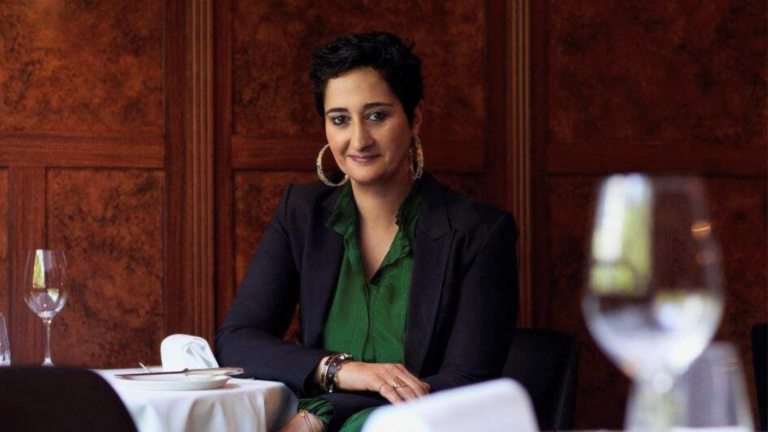
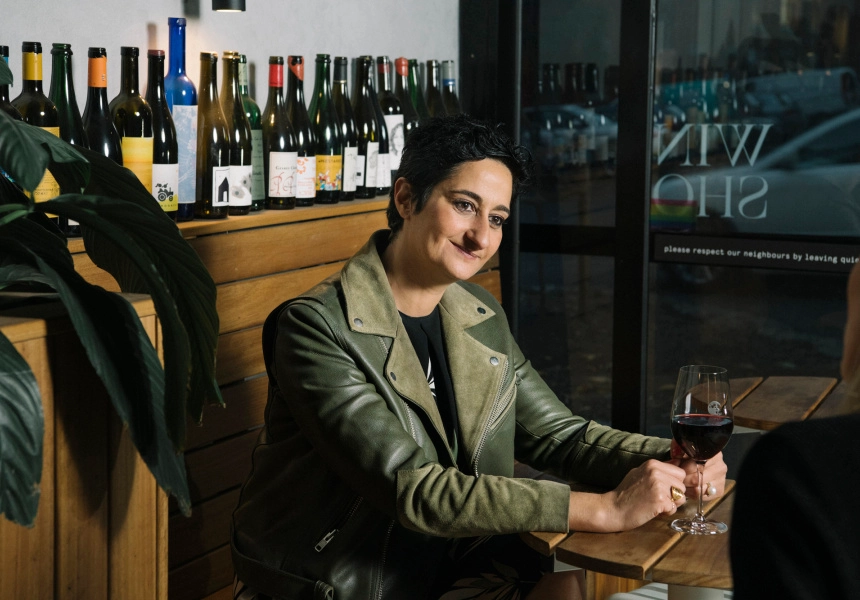
Anthea Loucas Bosha champions Melbourne’s food culture

Anthea Loucas Bosha, CEO of Food & Drink Victoria, has played a pivotal role in shaping the city’s food scene, particularly through her leadership of the Melbourne Food & Wine Festival.

Under her guidance, the festival has brought international chefs to Melbourne while highlighting the best of local talent and produce.

“We can grow or make virtually anything in Victoria,” she told Sydney Morning Herald, underscoring her commitment to promoting local producers, who contribute to nearly a quarter of Australia’s food exports.

Her journey into the food industry has been anything but conventional. Born to Greek Cypriot parents in Melbourne, Loucas Bosha’s love for food was cultivated at home, where her parents, both hardworking entrepreneurs, were known for their hospitality.

Initially aspiring to be a sports journalist, Loucas Bosha shifted her focus to media.

Despite her success, Loucas Bosha faced personal challenges, including the heartbreaking loss of a child in 2012. She chose to return to Melbourne and eventually took up her current role with Food & Drink Victoria, where she now champions the state’s culinary culture.

Reflecting on her career, Loucas Bosha notes, “My passion for Melbourne and food brought all my worlds together.”

With a clear vision for the future, Loucas Bosha continues to make an indelible mark on Melbourne’s food landscape, turning the festival into a year-round platform for celebrating the state’s diverse food and drink culture.

Source: Sydney Morning Herald.