Home Blog Page 51

Melbourne educators honoured for contribution to Greek language teaching

0

Educators who teach the Greek language in Melbourne schools were formally recognised at a special awards ceremony held on Sunday, February 23, at Axion Esti in Northcote.

The event was organised by the Modern Greek Teachers Association of Victoria and brought together teachers, academics and community members to acknowledge the vital role educators play in preserving Greek language and culture.

Addressing those present, Association President Despina Saranti praised all Greek language teachers for their dedication, noting that many work under challenging conditions. She emphasised that their efforts contribute significantly to the maintenance of the Greek language, traditions and broader cultural heritage. 

She explained, however, that the distinctions were awarded to educators who go “something more” beyond their teaching duties – a criterion that formed the basis for this year’s selections.

The awards were presented by Dr Stavroula Nikoloudi of La Trobe University, who congratulated the recipients and commended their commitment to Greek language education.

The ceremony was accompanied by a musical programme by musician Mr Kapralos, adding warmth to the evening. Literary contributions also featured, with Chrysoula Stamopoulou reading an excerpt from Report to Greco by Nikos Kazantzakis, while Niki Farfara Paschou reflected on the poem To the Teacher by Kostis Palamas.

The educators recognised on the evening were:

  • Loukia Andreou
  • Koula Antoniou
  • Amalia Vasiliadi
  • Christina Gliogou
  • Eleni Dimitriou
  • Dionysia Diakodimitriou
  • Connie Diakodimitriou
  • Marianna Theodosi
  • Voula Imbrizimi
  • Maria Kefalidou
  • Stella Lamprou
  • Effie Bintevi
  • Ourania Papageorgiou
  • Androula Papakonstantinou
  • Christina Soumi
  • Natasa Spanos
  • Giota Stavridou
  • Toula Terazaki
  • Niki Farfara Paschou
  • Mary Christofidi.

The ceremony highlighted not only individual excellence but also the collective impact of Greek language educators in sustaining linguistic and cultural continuity for future generations in Melbourne’s Greek community.

Chalkidiki Brotherhood of NSW holds AGM with committee elections and Vasilopita

The Greek Brotherhood of Chalkidiki “Aristotelis” of NSW held its Annual General Meeting (AGM) on Sunday, February 22 with a Vasilopita cutting and committee elections.

The day was described as a success despite “mixed emotions” following the departure of long-serving committee member Vicky Stamatiou.

Organisers said Ms Stamatiou had contributed to the association for decades and thanked her for giving “so much to our association,” adding she and her husband Mimi would continue to offer their support.

Katherine Theofanopoulos was welcomed to the committee, recognised for her years of membership and “great knowledge on many things that will be worthy to our association.”

The committee remains unchanged otherwise: President Costa Dantos, Vice President Jenny Kaporis, Secretary Alexandra Poulos, Treasurer John Tratselas, and committee members Artemis Kelezis, Bill Dantos, Carol Stavropoulos, George Tratselas, Joanna Arnis, Katherine Theofanopoulos and Vicky Tsakirou. George Tratselas won the flouri and a $50 gift voucher.

The Brotherhood also thanked the Pontian Association of NSW Pontoxeniteas for hosting the event at its Earlwood hall and for an “insightful lecture on the Akrites of Pontos,” as well as members who attended “for the food, coffee and parea in the huge heat,” and Alexandra Poulos for preparing the Vasilopita.

Meanwhile, the group’s Blue Mountains and Hawkesbury bus trip on Sunday, March 15, is expected to sell out imminently, with members urged to book urgently.

World Greek Language Day marked with star-studded Adelaide Fringe event

0

The vibrant sights, sounds and flavours of Greece took centre stage at the Adelaide Fringe as the Garden Feast, in partnership with the Hellenic Studies Foundation, hosted a spectacular one-night-only celebration marking World Greek Language Day.

Officially recognised by UNESCO in 2025, World Greek Language Day acknowledges Greek as a foundational language of civilisation and education, celebrated globally each year on February 9. 

The Greek Table Feast brought together food, performance, language and culture in a high-profile Fringe event celebrating the enduring legacy of the Greek language in Australia.

The evening featured acclaimed celebrity chef George Calombaris, who showcased his passion for Greek cuisine, alongside beloved comedian and cultural icon Mary Coustas, who served as Master of Ceremonies in her iconic role as Effie, and entertaining the 500 guests with her beloved character.  

To further honour World Greek Language Day, the Hellenic Studies Foundation, in partnership with the Greek Consulate General in Adelaide, proudly commissioned and facilitated the statewide student video competition, “You Speak Greek, Did You Know?”

The competition invited students across South Australia to demonstrate how Greek is used in everyday life — at home, at school, with friends and within the broader community — while highlighting the language’s profound influence on English and its global impact.

First prize winners were formally presented with their awards at the Greek Table Feast.

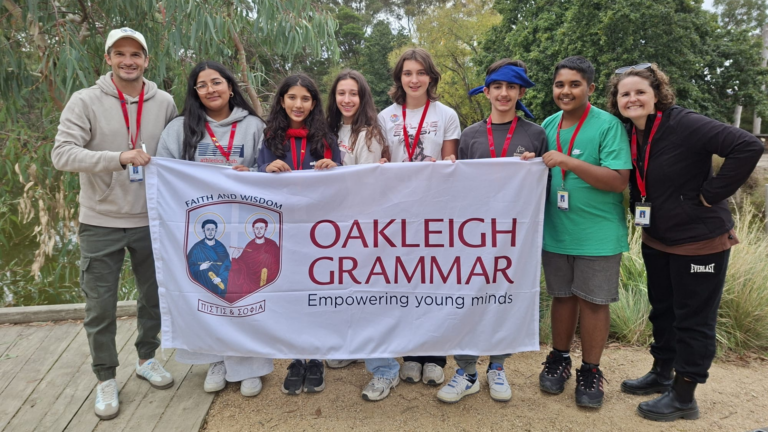
In the Primary School Category, congratulations were extended to Prophet Elias Greek School students — Billy, Leonidas, Peter, Rafael, Anastasia and Rosaria — under the guidance of their teacher, Aleka Papakostas. 

Their creative and engaging video offered an entertaining and insightful demonstration of how Greek words extend far beyond borders and continue to shape everyday language around the world.

Taking out First Prize in the High School Category was Norwood International High School, led by teacher Maria Batzavalis. Congratulations to Adam, Aayan, Anna and Stefan, whose thoughtful and well-researched presentation showcased impressive linguistic skill and a deep appreciation for Greek heritage.

The competition not only celebrated language learning, but also honoured the extraordinary cultural legacy of Greek — a language that has shaped philosophy, science, medicine, democracy and the arts for thousands of years — ensuring its continued vibrancy for generations to come.

This one-night celebration delivered exceptional food, live entertainment and meaningful cultural connection — a true feast for the senses at the heart of Adelaide Fringe.

Hellenic Parliament honours diaspora role in UNESCO recognition of Greek language

0

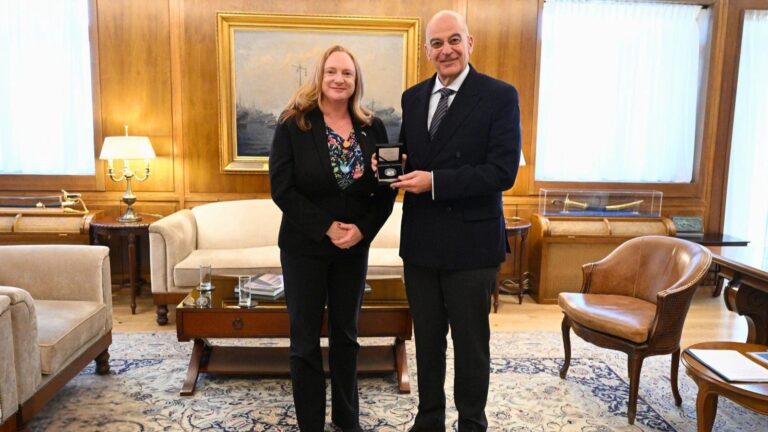
A joint ceremonial session of the Hellenic Parliament has formally recognised the decisive role played by the Greek diaspora and academic community in securing UNESCO’s historic recognition of World Greek Language Day.

Held in the Senate Chamber at the invitation of the President of the Hellenic Parliament Nikitas Kaklamanis, the session brought together senior government officials, MPs from across the political spectrum, diplomats and leading scholars from Greece and the global Diaspora.

The event marked UNESCO’s unanimous decision on 12 November 2025 to designate February 9 – the anniversary of the death of national poet Dionysios Solomos – as World Greek Language Day, recognising the enduring contribution of the Greek language to global civilisation.

Among those present were Deputy Minister for Foreign Affairs responsible for Diaspora Ioannis–Michail Loverdos, Deputy Minister for Education Konstantinos Vlasis, and Greece’s Permanent Representative to UNESCO, Ambassador Georgios Koumoutsakos, who played a central diplomatic role in advancing the initiative internationally.

The session was jointly organised by the Special Standing Committee on Hellenism of the Diaspora and the Standing Committee on Cultural and Educational Affairs.

Addressing the chamber, Ambassador Koumoutsakos called on Greek communities, the Church and the business sector worldwide to actively and financially support the global promotion of the Greek language.

Particular emphasis was placed on the contribution of diaspora academics who, over recent years, prepared studies, research and documentation that underpinned Greece’s diplomatic campaign at UNESCO. These efforts, speakers noted, were instrumental in mobilising international consensus.

From Australia, Anastasios Tamis, Professor of Social Linguistics and History of the Greek Diaspora, was singled out for his pivotal role. According to Ambassador Koumoutsakos and fellow academics, Professor Tamis’ sustained advocacy proved decisive during the final stages of the campaign.

During the session, reference was also made to Professor Tamis’ earlier public criticism of the Australian Government after it abstained from a key UNESCO vote in April 2015 relating to the Greek language – a stance that was later reversed in November of the same year.

In an excerpt from his address to Parliament, Professor Tamis described UNESCO’s recognition as a milestone with far-reaching implications, noting that Greek is the only language of the Western world with an uninterrupted written and spoken history of more than 3,500 years and the sole ancient language still in continuous use today.

He argued that the recognition should serve as a catalyst for a coordinated global effort to revitalise and promote Greek as a living, creative language, particularly in the formation of new scientific and technological concepts. He also underscored that Greek is the only language to have received global institutional recognition specifically for its contribution to humanity.

Speakers further highlighted that the original idea for a World Greek Language Day emerged from the diaspora in 2014, before being formally recognised by the Hellenic Parliament in 2017 and ultimately elevated to global status through UNESCO.

The session concluded with a clear message: while the international recognition of the Greek language marks a historic achievement, its long-term impact will depend on sustained action by the Greek state and the global diaspora to ensure that Greek remains relevant, taught and actively used in the modern world.

Dennis Bastas proposes $38.5m overhaul of Melbourne’s most expensive home

Pharmaceutical billionaire Dennis Bastas has lodged plans for a $38.5 million renovation of Coonac, Melbourne’s most expensive house, which sold last year for more than $100 million.

The heritage-listed Italianate mansion in Toorak – dating to the 1860s and built for pastoralist and financier Robert Bruce Ronald – would be partially demolished under the proposal, with a double-storey rear extension, basement expansion for car parking and amenities, and a modification to the front fence to allow an extra vehicle access point.

The demolition would remove the tennis court, pool and pool house, parts of the masonry fence, gardens to the south and west of the service wing, and a series of non-original additions including the conservatory, first-floor balcony and alterations to facades.

The proposal states the demolition would be limited to non-original additions and that the original fabric of Coonac would be retained.

The new extension, rising 10.6 metres and designed to sit lower than the main eastern building so as not to dominate the heritage dwelling, would feature stone finishes in light tones and limestone solid blocks.

Plans include multiple living areas, dining and lounge rooms, a family room, study/library and kitchen opening to a terrace, with five bedrooms, bathrooms, a sitting room, mezzanine and retreat upstairs.

The home was sold by logistics boss Paul Little and Jane Hansen, chancellor of the University of Melbourne, in a deal tipped at between $115 million and $135 million, though the price will be confirmed at settlement.

While Bastas initially denied knowledge of the transaction, planning documents list Gina Bastas as the permit applicant and name Dennis Bastas as a client on landscape drawings.

Source: The Age.

Bill Papastergiadis OAM calls on Athens to secure diaspora postal voting rights

Greek Australians have renewed calls for Greece to entrench postal voting and establish a dedicated overseas electorate, arguing that the reform is long overdue for a diaspora that has been sustained for decades by Australian institutions rather than its ancestral homeland.

Appearing before a parliamentary committee in Athens, representatives of Greek communities from across the world overwhelmingly backed the Interior Ministry’s bill, which provides for postal voting and the creation of a three-seat overseas constituency.

Among them was President of the Greek Community of Melbourne (GCM) Bill Papastergiadis OAM, who described the proposal as a positive and necessary step toward restoring democratic equity for Greeks abroad.

Mr Papastergiadis stressed that Greek Australians, in particular, have long demonstrated loyalty to Greece despite receiving little institutional recognition in return.

“When Australian governments support and nurture our community through grants for schools and cultural events, the least Greece can do is embrace its citizens with basic rights,” he said.

He also rejected narratives that frame overseas Greeks as detached or privileged voters, noting the historical reality of migration to Australia.

“Greece’s citizens didn’t leave in the 1950s and 1960s because they wanted to or needed a holiday. They left out of sheer necessity to survive. All of them left with the dream to return to their homeland,” Mr Papastergiadis said.

“Greece must now, by allowing its citizens to vote, extend its hand and welcome them back.

“It’s paradoxical for us in the diaspora to have the Victorian Government fund the construction of replicas of the Parthenon Marbles adorning our 15-storey cultural centre, whilst our homeland fails to support basic democratic principles such as the right to vote.”

Support for the bill was echoed by diaspora leaders from Europe and beyond, including representatives from Germany, France, Sweden, Belgium and Argentina, all of whom described postal voting and an overseas electorate as long-standing and justified demands.

Interior Minister Thodoris Livanios urged all parliamentary parties to approve the legislation swiftly, arguing that it would allow the new arrangements to apply at the next national election rather than being delayed further. He dismissed claims that overseas Greeks would not bear the consequences of their vote, stressing that every citizen has an equal right to participate in democratic decision-making.

While some reservations were raised – including concerns about proportionality and the structure of overseas constituencies – Livanios emphasised that the three-seat model was an initial framework and did not prevent parties from expanding diaspora representation in the future.

For Greek Australians, however, the issue is less about technical detail and more about recognition.

After generations of preserving language, culture and national identity thousands of kilometres from Athens, community leaders argue that Greece now faces a clear choice: either fully embrace its global citizenry or continue to leave millions of Greeks abroad on the margins of its democracy.

Hatzistergos presses NSW Liberals on making ICAC’s recording powers permanent

ICAC Commissioner John Hatzistergos has renewed his push for permanent powers to investigate illegally recorded private conversations, raising the issue in a meeting last week with NSW Liberal Leader Kellie Sloane.

ICAC was granted temporary powers in 2023 during “Operation Rosny” into fugitive developer Jean Nassif, but those powers expire on June 30.

The Minns government has since introduced fresh legislation to make them permanent, including provisions allowing police and ICAC to use hidden body-worn camera footage and to protect individuals who hand over illegal recordings, provided they were not involved in making them.

The Coalition and Greens previously voted down similar legislation, with Liberal Susan Carter stating: “In a free society, surely we should be able to assert limits on surveillance and protect our privacy.”

While Sloane would not comment on her meeting with Hatzistergos, her spokeswoman said the bill remains “too wide” but the Coalition is open to negotiating reforms that give ICAC “appropriate powers to tackle and eliminate corruption in NSW.”

Source: The Daily Telegraph.

Greek Prime Minister’s Australia visit locked in for March 25 celebrations

Greek Prime Minister Kyriakos Mitsotakis has officially locked in his trip to Australia, with visits to Melbourne, Sydney and Canberra to coincide with the March 25 Greek Independence Day celebrations.

According to ieidiseis.gr, the schedule has now been finalised after earlier uncertainty in Athens, where officials at the Maximos Mansion had been awaiting developments regarding a potential meeting between Mitsotakis and the President of the United States Donald Trump.

That meeting is now expected to take place at a later date, clearing the way for the Prime Minister to commit fully to Australia and attend major national day events with the Greek diaspora.

The visit is expected to carry both symbolic and political weight. Alongside his participation in commemorations marking the anniversary of the Greek War of Independence, Mitsotakis will use the trip to highlight his government’s flagship initiative granting voting rights to Greeks living abroad – a reform in which the government continues to invest significant political capital.

According to reports in Greece, the Prime Minister’s office is already actively identifying prominent members of the diaspora with strong public profiles, as part of broader efforts linked to the formation of a New Democracy-affiliated diaspora ticket.

First revealed by The Greek Herald

The Greek Herald was the first to report on Mitsotakis’ intention to travel to Australia around March 25, following an informal exchange with members of the Greek diaspora in central Athens earlier this year.

During a walk through the city, the Prime Minister extended New Year wishes to expatriates and revealed plans to align a visit to Australia with the national celebrations. The comments came after he attended the official New Year doxology, before meeting with senior state figures at a café in Kolonaki.

The proposed visit follows a long-standing invitation from Australian Prime Minister Anthony Albanese, who has previously invited Mitsotakis to Australia as an official guest, underscoring the close bilateral relationship between the two countries and Australia’s deep ties with the Greek diaspora.

With the itinerary now confirmed, Mitsotakis’ presence is expected to attract significant interest and attendance across Australia’s major Greek community centres, as he joins one of the most important annual commemorations on the Hellenic calendar.

Music, memory and heritage at Panipirotiki Enosis of NSW’s Annual Dance

On Saturday, February 21, the Panipirotiki Enosis of New South Wales hosted its highly anticipated Annual Dance at The Grand Roxy in Brighton-Le-Sands, Sydney, commemorating the 113-year anniversary of the Liberation of Ioannina.

The evening served as a meaningful tribute to the region’s rich history and enduring cultural legacy, bringing together members of the community in a celebration of heritage, unity, and remembrance.

Distinguished guests were in attendance including the Consul General of Greece in Sydney, George Skemperis; His Grace Bishop Christodoulos of Magnesia; and media representatives.

The event drew a full house, with guests enjoying an evening filled with amazing food, lively music, dancing, and exciting raffle prizes.

The night began with a captivating performance by Stavrina Dimitriou from Melbourne, whose powerful vocals set the tone for the celebrations and delighted the audience.

Taking centre stage as the main act was international singer Konstantina Touni and her band, who travelled from Greece to perform live. Their dynamic performance, accompanied by the resonant sounds of the clarino, filled the venue with energy and emotion.

Guests quickly took to the dance floor, joining hands in traditional dances that carried on late into the night.

The atmosphere throughout the evening was one of joy, pride, and togetherness, as attendees embraced the spirit of the occasion through music and dance. Events such as these play a vital role in preserving cultural traditions and passing them on to future generations.

The Panipirotiki Enosis of NSW continues to honour the bravery and sacrifice of the men and women who fought for the liberation of Ioannina, recognising the hardships they endured and the legacy they left behind.

Through commemorative events like the Annual Dance, their stories remain alive, inspiring pride and reflection within the community.

Persefoni Mousmoutis-Thliveris on culture, community and future of the Greek Festival of Sydney

As Sydney prepares to welcome one of its most anticipated cultural celebrations, the 44th Greek Festival of Sydney is set to return to Darling Harbour on Sunday, March 1, bringing with it a full day of food, music, dance and shared heritage in one of the city’s most iconic locations.

At the heart of this year’s festival is Persefoni Mousmoutis-Thliveris, a member of the Board of the Greek Orthodox Community of NSW and recently elected President of the Sub-Committee for the Greek Festival of Sydney.

Known to many simply as Persa – or Sue from her high school days – she speaks with warmth, clarity and conviction about what the festival represents, both now and into the future.

gocnsw
At the heart of this year’s festival is Persefoni Mousmoutis-Thliveris (front row, second from left).

A flagship celebration of living culture

The Darling Harbour event remains the centrepiece of the wider Greek Festival of Sydney program, attracting thousands of visitors each year from across Sydney and beyond the Greek Australian community.

“Our flagship Darling Harbour event represents a powerful opportunity to showcase our rich, vibrant and enduring culture — our politismos,” Persefoni tells The Greek Herald.

“It is a celebration of the Greek spirit and creativity in all its forms, shared proudly with the wider community. It allows us to present our heritage not only as something historic, but as something living and dynamic.”

Held at Tumbalong Park from 10am to 10pm, Greek Fest@Darling Harbour will once again transform the waterfront into a vibrant hub of Greek culture. Food stalls will be stacked with festival favourites — souvlakia, lamb souvla, halloumi, barbecued octopus, calamari, pites, loukoumades and traditional Greek ice cream — alongside Greek beer and a touch of ouzo.

Darling-Harbour-Greek-Festival
Food stalls will be stacked with festival favourites.

Retailers will offer everything from jewellery to t-shirts for children and adults, highlighting the creativity of Greek Australian small businesses.

Live music will fill the park throughout the day, with Greek Australian bands Yianni Trio and Iho Nyx performing contemporary and traditional sounds, while dance groups from Crete, Kalymnos, Cyprus, Pontos and northern Greece take to the main stage, sharing regional traditions with the crowd.

For Persefoni, Darling Harbour’s significance goes beyond its beauty.

“Darling Harbour remains an iconic and inclusive setting where we can build meaningful connections between our Greek heritage and contemporary multicultural Australian society,” she says.

“Especially in times when social cohesion and tolerance are being tested, events like this foster understanding, respect and unity across communities.”

Families, football and community connections

This year, the festival expands its family-friendly offerings with the involvement of Western Sydney Wanderers FC, who will host an interactive marquee from 11am.

“For families – and especially football lovers – we are excited to welcome Western Sydney Wanderers FC, who will host an interactive marquee with competitions, prizes and player meet-and-greets,” Persefoni says. “Special guests include Anthony Pantazopoulos, Alex Gersbach and Kosta Barbarouses.”

Children will also have the opportunity to participate in a free soccer clinic and a juggling competition, blending sport and culture in a way that reflects the festival’s inclusive spirit.

A headline act with heart and energy

Closing the Darling Harbour celebrations will be a free performance by internationally acclaimed Greek singer Ioulia Karapataki, whose appearance has been eagerly anticipated.

Ioulia Karapataki
Ioulia Karapataki.

“We are delighted to welcome internationally acclaimed singer Ioulia Karapataki as our headline act at Tumbalong Park,” Persefoni says.

“The decision was made by the previous Festival Committee in collaboration with our colleagues at the Antipodes Festival, and it is a wonderful choice. I was introduced to Ioulia about two years ago and was immediately struck by her vibrancy and authenticity. She is one of Greece’s most exciting contemporary artists – energetic, charismatic and incredibly engaging on stage.”

Audiences, she adds, are in for something special.

“Audiences can expect a lively, inclusive and emotionally rich performance that truly brings the stage to life. We are thrilled that Sydney will finally experience her talent live,” she says.

A new chapter in leadership

The 2026 festival also marks the first year under new Chair Pamela Proestos, with a refreshed committee and leadership team guiding the program.

“This year marks a transitional chapter for the Festival,” Persefoni explains. “Our committee comprises many new and highly engaged members who have embraced the responsibility with enthusiasm.”

She highlights the depth of experience within the new leadership.

“Our new Chair, Pamela Proestos, brings significant experience, having previously served as Festival Director for seven years and currently working at the Australian National Maritime Museum. Our new Festival Director, Tilda Sikes, also brings valuable expertise across multiple cultural and event platforms. We are fortunate to have such high-calibre leadership.”

While some events were inherited from previous planning stages, the committee also embraced new opportunities, including a major conversation event with Yanis Varoufakis in discussion with Helen Vatsikopoulos, exploring themes of resistance, history and identity drawn from Varoufakis’ recent book Raise Your Soul.

Varoufakis
A major conversation event will feature Yanis Varoufakis in discussion with Helen Vatsikopoulos.

Reflecting an evolving community

Beyond Darling Harbour, the Greek Festival of Sydney will continue across the coming weeks with a diverse program of theatre, music, comedy and discussion. Highlights include the Greek Australian Comedy Gala, Paravasis, hosted by Anthony Locascio at the Sydney Comedy Store, and the musical tribute Untamed Voices by Elsa Mouratidou & Taxim Trio, honouring the women of rebetiko.

For Persefoni, the 2026 program is both reflective and forward-looking.

“The 2026 program is more concise compared to previous years, but it represents an important period of reflection and strategic planning,” she says.

“We are exploring the idea of concentrating future events primarily in March — a significant month for us, culminating in the celebration of 25 March, Greek Independence Day. It has the potential to become a dedicated ‘month of all things Greek’.

“Our vision is to honour tradition while thinking creatively and innovatively. We want to introduce fresh ideas and exciting proposals that reflect the evolving identity of the Greek Australian community – confident in its heritage, yet forward-looking and inclusive.”

Nearing the finish line

With just days to go before the Darling Harbour celebrations, Persefoni acknowledges the scale of the task behind the scenes.

“This year’s Festival has been a mammoth undertaking, delivered within a short timeframe and with limited resources,” she says. “Despite the challenges, our team has approached the task with determination, passion and optimism.”

As the countdown continues, her message to the community is simple.

“We are nearing the finish line and are proud of what we have achieved together. I look forward to welcoming everyone to celebrate with us — to share in our culture, our music, our food and our spirit,” she concludes.

Event Details

  • EVENT: Greek Fest@Darling Harbour
  • DATE: Sunday, 1 March 2026
  • TIME: 10am–10pm
  • LOCATION: Tumbalong Park, 11 Harbour St, Sydney NSW
  • ENTRY: Free event – no tickets required

For full program updates, follow the Greek Festival of Sydney on social media or visit the festival website.