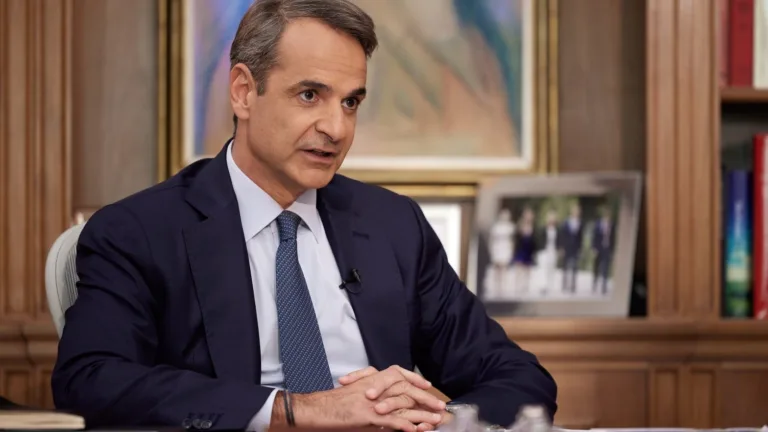
Greece’s ruling New Democracy party is under mounting pressure following claims that a politically linked communications agency, Blue Skies, served as a covert propaganda and funding arm for Prime Minister Kyriakos Mitsotakis’ government.
The allegations, reported by Politico, suggest Blue Skies — a lesser-known spin-off of the public relations giant V+O — paid salaries to over a dozen individuals simultaneously holding senior roles within New Democracy. Critics say this amounts to “shadow financing” and accuse the firm of orchestrating online disinformation campaigns, including attacks on grieving families of the 2023 Tempi rail disaster.
“This is an extreme institutional aberration that undermines democracy,” said New Left MP Nasos Iliopoulos, pointing to claims that public money may have indirectly funded these efforts.
The allegations, reported by Politico, suggest Blue Skies paid salaries to over a dozen individuals simultaneously holding senior roles within New Democracy.
Among those reportedly involved are Minister of Labour Domna Michailidou, Deputy Minister of Transport Konstantinos Kyranakis, and Thanasis Bakolas, outgoing Secretary General of the European People’s Party. Kyranakis confirmed he worked at the agency from 2016 to 2019 while also serving as New Democracy’s deputy spokesman, insisting he was “a normal employee who paid taxes normally.”
Government spokesperson Pavlos Marinakis rejected the accusations as “a relic of science fiction,” stating, “In New Democracy, a position in the party is not a job… We want more professionals involved in political life.”
Blue Skies denied any wrongdoing, claiming the hiring of politically experienced staff is routine and that the company does not police the private social media activities of its employees.
The opposition, including PASOK, Syriza, and the New Left, are calling for an urgent judicial investigation. Syriza MEP Kostas Arvanitis has also called on European institutions to act, warning of a serious threat to democratic integrity.
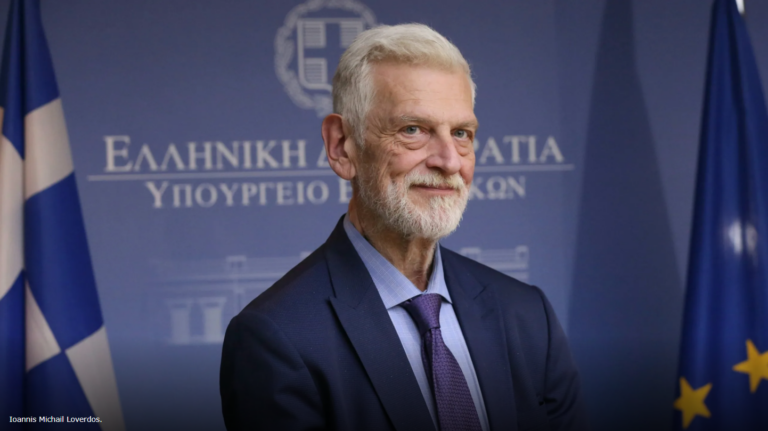
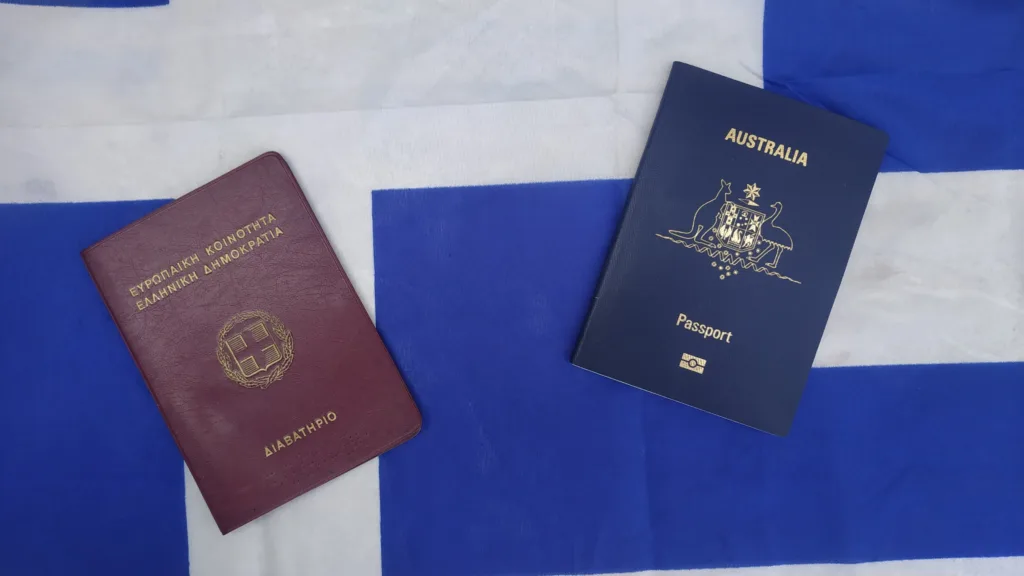
The procurement of a Greek passport for Greek Australians is, finally, on its way to becoming more efficient. This reassurance comes from Greece’s new Deputy Foreign Affairs Minister for Greeks Abroad, Ioannis Michail Loverdos who personally responded to my original article, The Greek Passport for Aussies Debacle: Part One, published in The Greek Herald.
In a detailed and candid address, Mr Loverdos acknowledged the concerns raised and outlined the steps the Ministry of Foreign Affairs is taking to improve passport issuance and broader consular services—especially in countries like Australia.
“These are my first few weeks in the new important responsibilities I’ve been honoured with,” he wrote, “pertaining with the Greek Diaspora around the world.” Nonetheless, he wasted no time in addressing the issue: “Improving our consular services worldwide is one of our top priorities at the Ministry of Foreign Affairs,” adding that this is one of the “most urgent” goals in the Ministry’s Strategic Plan for Greeks Abroad.
He confirmed that while many consular appointments globally are “flowing smoothly,” the government is “aware that some of our Consular Authorities, including a few in Australia, need urgent improvements.” However, he cautioned that “this is not a quick-fix issue.”
Mr Loverdos offered a detailed explanation of the existing passport application process. Since the early 2000s, Greek Consulates no longer issue passports directly. Instead, applications are checked locally, then sent via diplomatic pouch to the Hellenic Police in Greece for processing. Once issued, the passports are returned through the same channel. “This process is smooth,” he assured, “but it does take some time, though not as long.”
Importantly, he reiterated a key point for clarity: “Only Greek citizens are entitled to apply for a Greek passport. Greek citizenship is proven through registration in a Municipality in Greece.” Many delays, he said, are caused when individuals—often children or grandchildren of Greek citizens—apply for passports without having completed their municipal registration. “There are cases where, for example, a father or mother applies for a Greek passport, but they have not been registered for two or three generations. These situations can cause delays.”
That said, Mr Loverdos also emphasised that for eligible applicants, the process is becoming significantly more efficient thanks to digital reforms. “Thankfully, this process, which used to take months, is now much quicker,” he said, referring to the retrieval of updated birth certificates from Greek municipalities, which is now handled electronically.
Looking ahead, he described several important initiatives already underway. Among them is the “Citizens’ Registry” (Μητρώο Πολιτών), introduced under Law No. 4674/2020, which allows consular authorities (except honorary ones) to register civil events like births, marriages and deaths “on the spot.” “This is a major step forward,” he stressed, “and we cannot and should not return to outdated methods.”
Another exciting development is the digitalisation of part of the passport issuance process. “We aim to electronically forward passport applications, supporting documentation, and photos directly to the Hellenic Police, bypassing the need for the initial diplomatic pouch procedure,” he explained. This, he said, will “significantly reduce the time it takes to renew or issue a passport.”
To complement these upgrades, a new “Consular Virtual Assistant” using AI has been introduced to answer inquiries online in 19 languages, including Greek and English. The Ministry is also working to increase staffing levels at several consular offices, including in Australia, to address backlogs and improve service delivery.
In Mr Loverdos’ words: “The Greek State is actively working to improve its services to both citizens and non-citizens abroad… We place great importance on strengthening the relationship between Greece and the Greek Diaspora, especially in countries with large Greek communities.”
Though it goes (and went) without saying in Part 1, that the delays we reported referred to those already eligible for Greek passport issuance, Mr Loverdos’ clarification of the application criteria also serves as a helpful guide for new applicants navigating the system for the first time.
Hopefully, with the digitisation of passport administration now on the horizon, these delays will soon become a thing of the past.
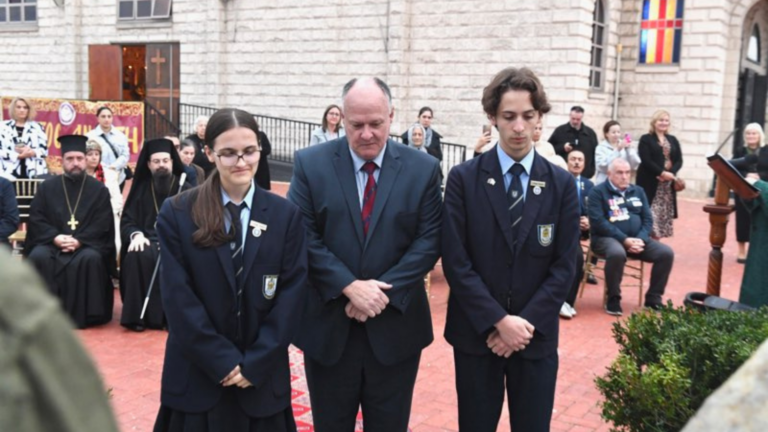
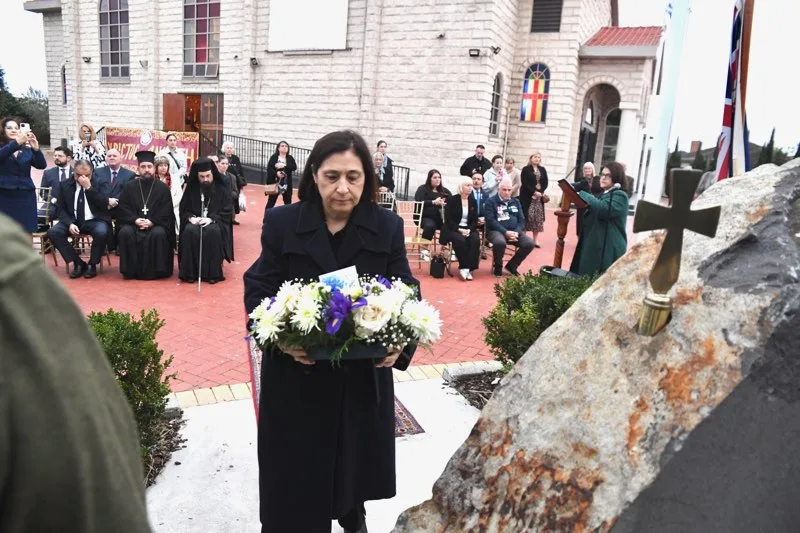
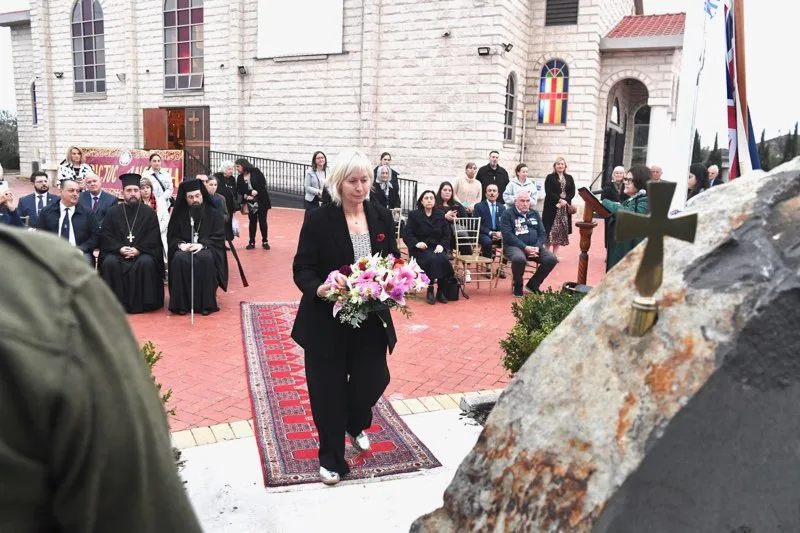
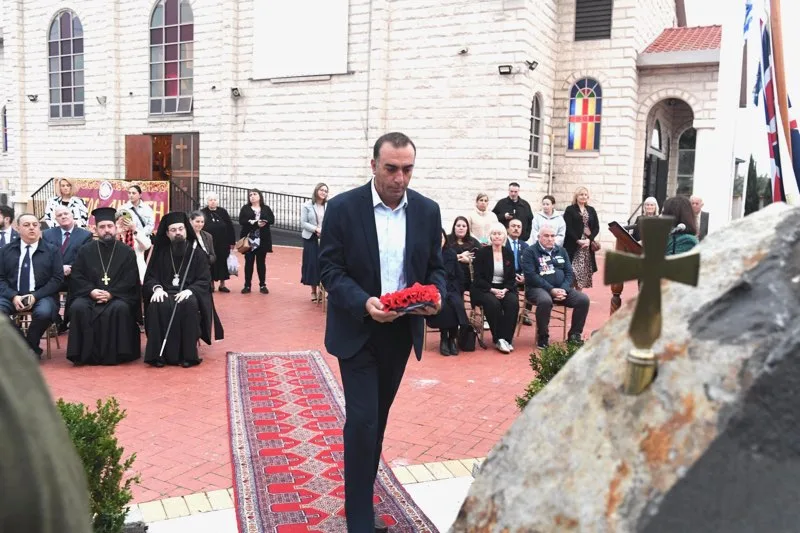
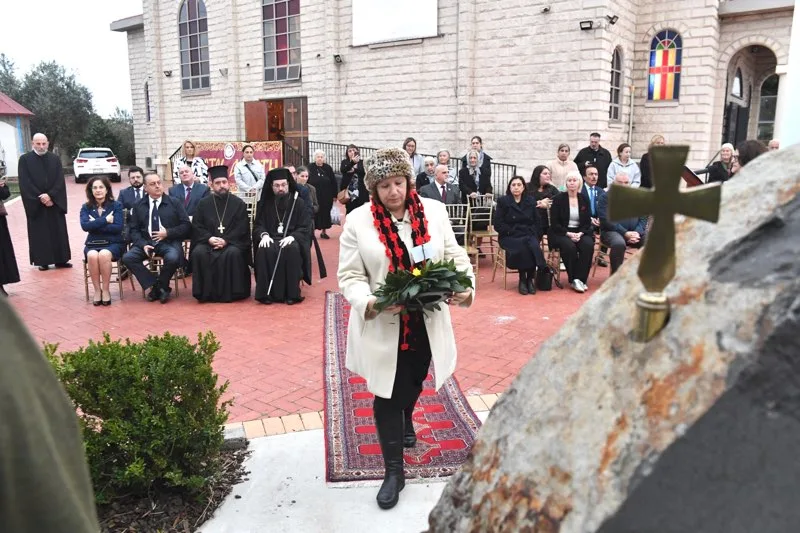
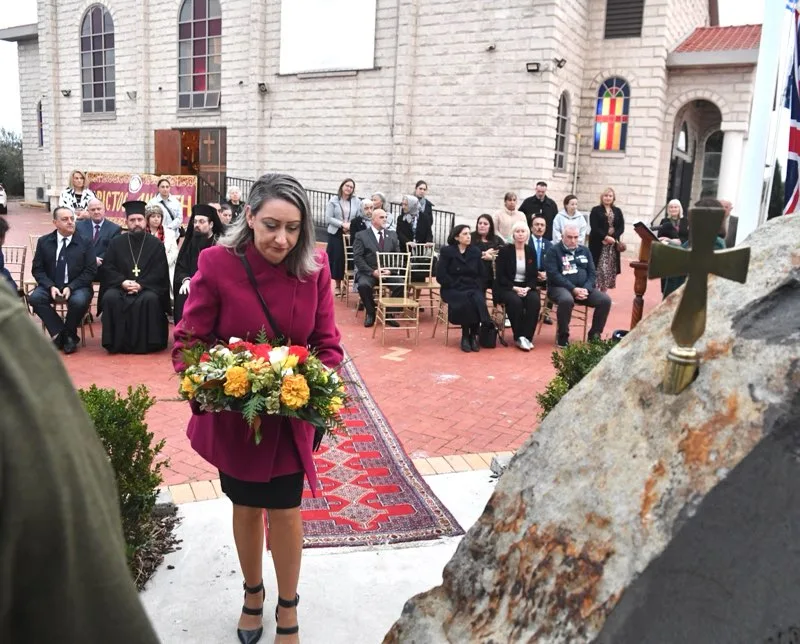
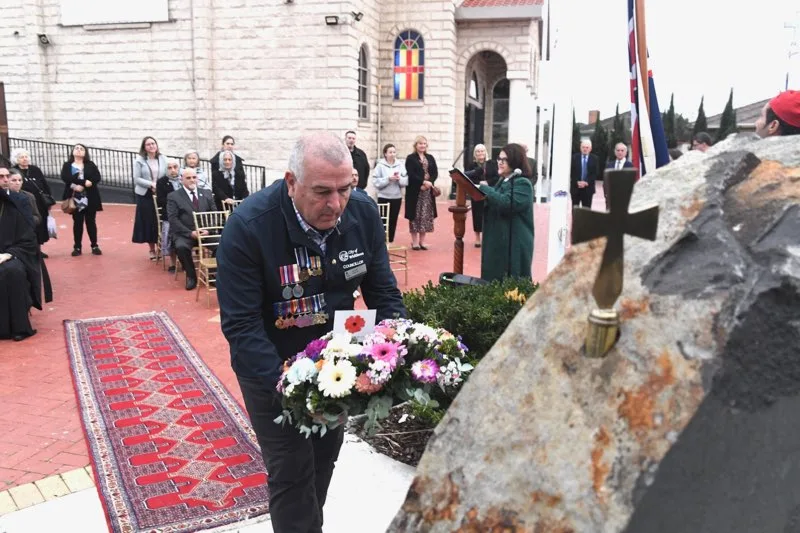
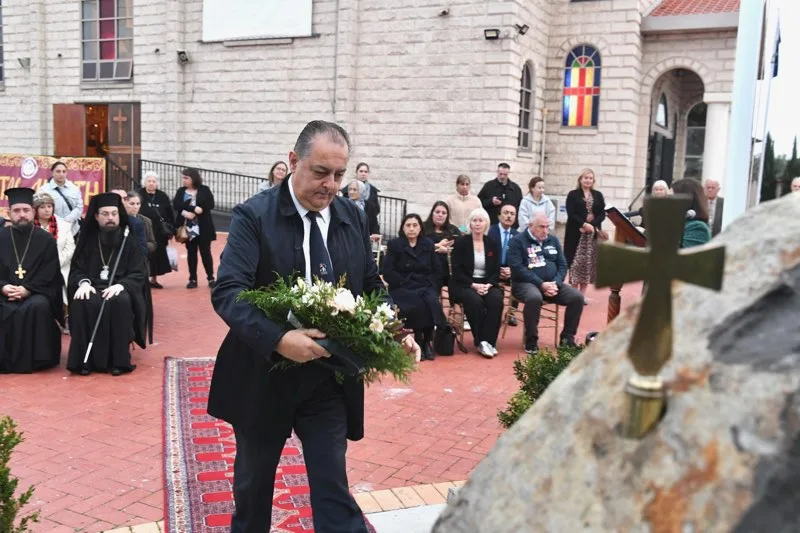
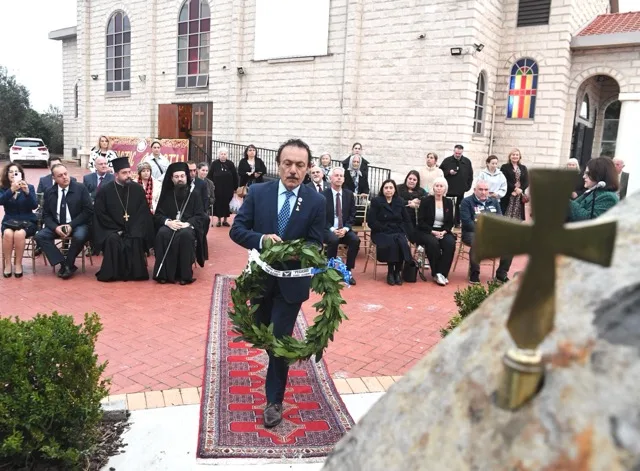
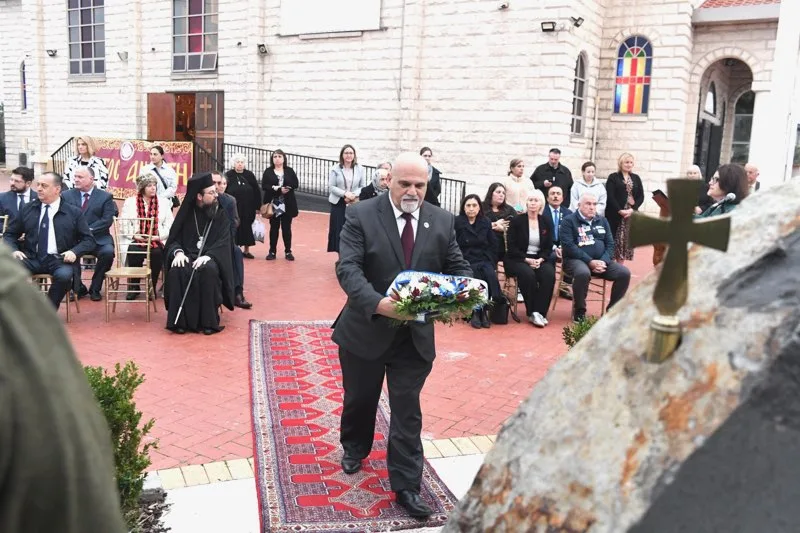
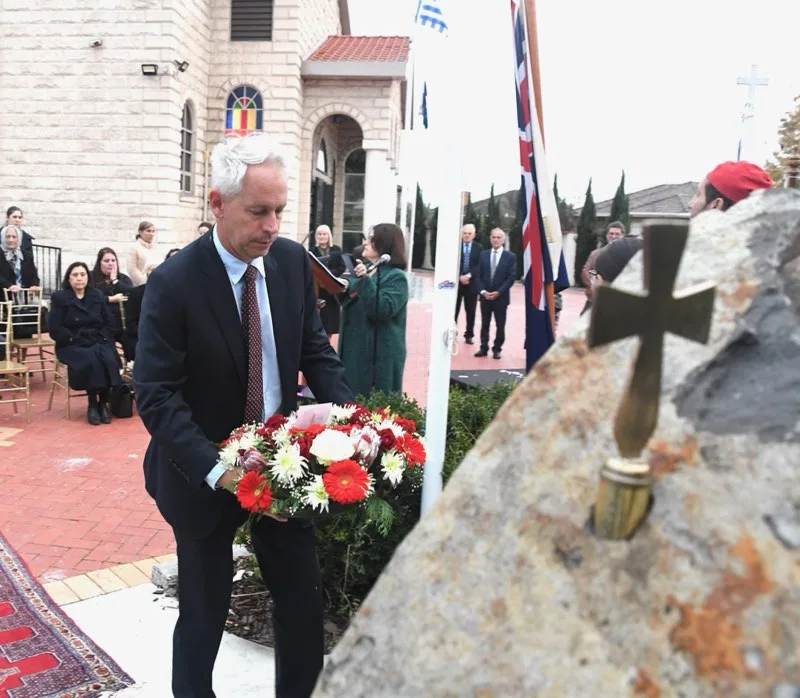
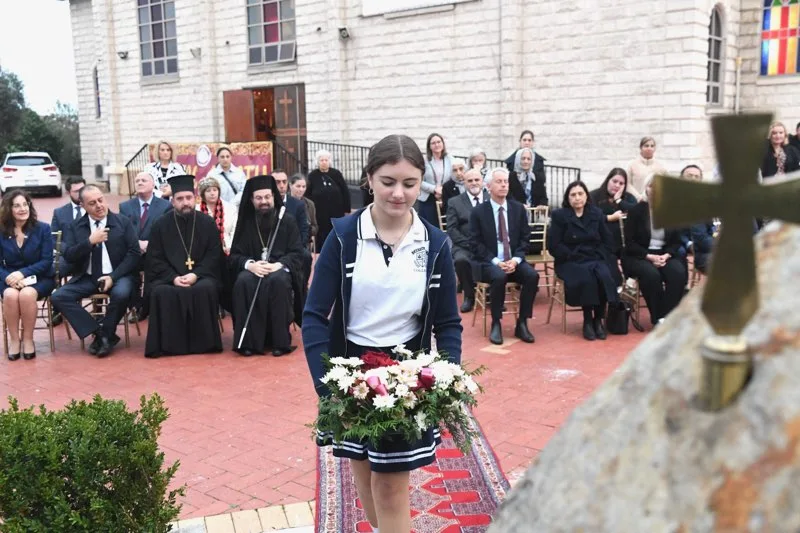
The Greek Orthodox Archdiocese of Australia’s District of Chora and specifically, the Parish of the Transfiguration of the Saviour in Thomastown, organised an ANZAC Dawn Service with the support of The Battle of Crete & Greece Commemorative Council on Sunday, April 27 at 6am at the Greek-Australian Memorial of the Northern Suburbs.
ANZAC Day commemorates the Australian and New Zealand soldiers who fought and died in World War I, particularly at the Battle of Gallipoli in 1915.
The landing at Gallipoli was one of the first major military operations of the ANZACs. Greece played a crucial role in the war as an ally of Australia and New Zealand, providing military and strategic support.
Relations between Greek and Australian troops were strengthened through shared sacrifices and military cooperation, particularly later in the Battle of Crete during World War II.
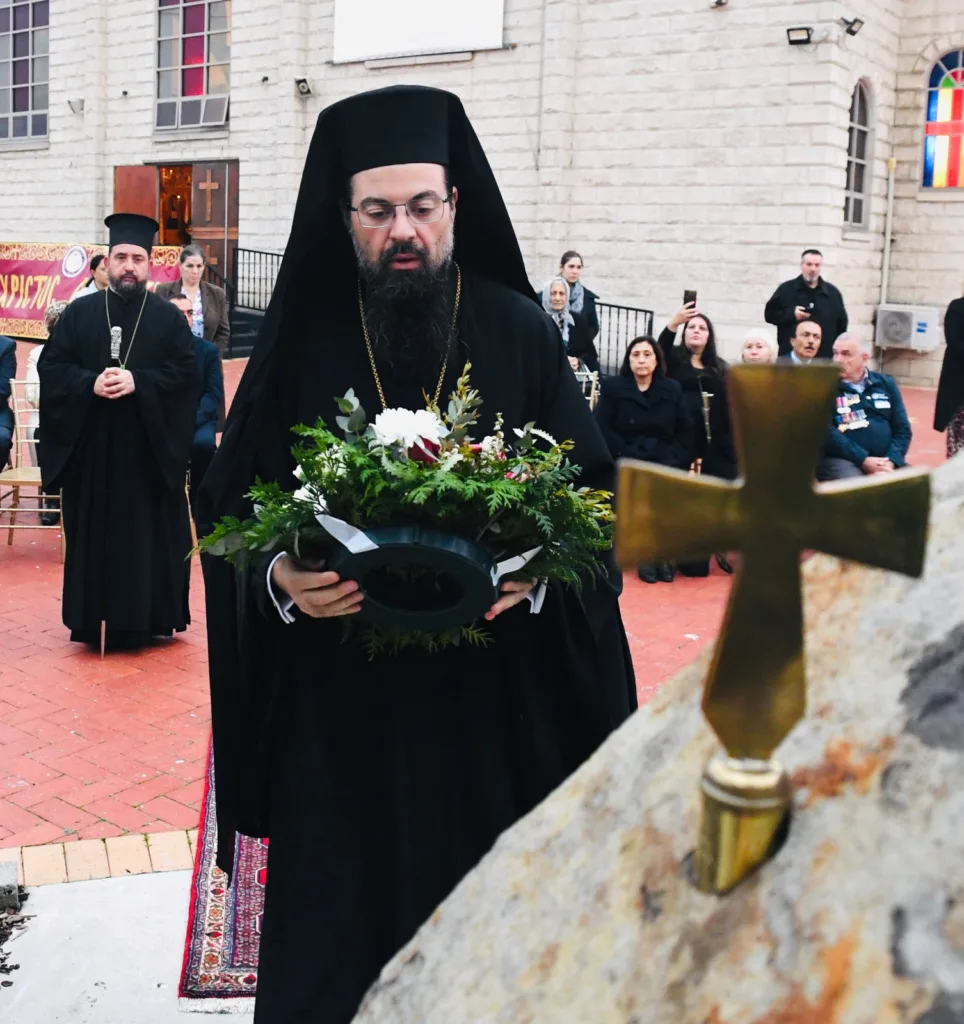
The event began with a Memorial Prayer for the fallen by His Grace Bishop of Evmenios of Chora, assisted by Rev. Father George Frangos. His Grace conveyed the heartfelt wishes of His Eminence Archbishop Makarios of Australia, while he also read his message for ANZAC Day.
The guests were welcomed by Master of Ceremonies, Loukia Andreou from Aetolian College, while an address was also given by the President of the Intercommunities Council of Victoria, Tony Tsourdalakis.
The ceremony was also attended by the Greek Military Guard with Dimitris Anagnostou and Mr. Giorgos Kyprio.
Aetolian College students Andriana Neroupos and Andriana Menikos from the Reservoir campus recited poems about the ANZACs.
Wreaths were laid by: His Grace Bishop Evmenios of Chora, accompanied by the Rev. Father George Frangos, the Federal Minister for Skills & Training, Andrew Giles, the State Minister for Resources, Energy and Climate Change, Lily D’Ambrosio, the State MP for Thomastown, Bronwyn Halfpenny, the City Councillor and former Mayor of Whittlesea, Laurie Cox, the President of the Intercommunities Council of Victoria, Tony Tsourdalakis, the President of the Whittlesea Greek Community, Chris Pavlidou, the President of the Battle of Crete & Greece Commemorative Council, Natasha Spanos, the Principal of St John’s College, Andrew Ponsford, the President of the Hellenic Women’s Federation Mary Lalios, the President of the Cypriot Community of the Northern Suburbs Yiannis Christou, the Secretary of the Union of Military Reservists and Veterans George Lambrou, the Director of the Pegasus Dance School Sotiris Sotiriou, and a student from the Aetolian College.
In the ceremonial part of the event the Ode was recited in English and Greek by the leaders of the student body of St John’s College, Daniel Bridgeman and Angeliki Tsiounis, while the Byzantine Choir of the College sang the National Anthems of Greece and Australia. After the ceremony, all those present went to the church for the Liturgy.
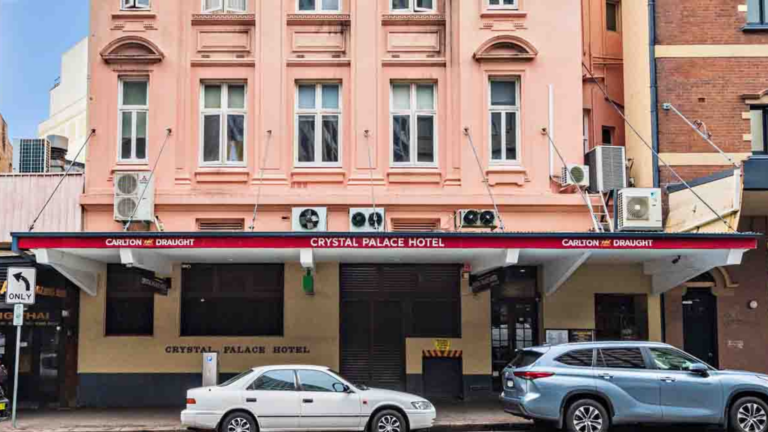
The Crystal Palace Hotel in Sydney’s CBD has been sold for the first time in 45 years, with Jimmy Galanakis and his family offloading the landmark pub to JDA Hotels for around $35 million.
JDA Hotels, led by John Feros, plans to transform the venue into a New York-style sports bar and boutique hotel with a rooftop offering.
Located in Haymarket, where JDA already operates three pubs, the acquisition boosts the group’s portfolio to 14 venues.
The off-market deal, managed by HTL Property, reflects growing investor interest in pubs as stable, high-yielding assets.
Property tycoon Harry Stamoulis is poised to purchase a major Melbourne office building at 357 Collins Street for around $200 million, outbidding several rivals including cryptocurrency billionaire Ed Craven.
According to The Australian, Stamoulis Property Group, advised by Paul Henley’s OneEast Capital, has entered due diligence to acquire the A-grade office block from a Singapore-listed arm of Frasers. The parties declined to comment on the pending deal.
Stamoulis was drawn to the asset’s prime location, high amenity, and reduced valuation amid the broader downturn in commercial property markets following interest rate hikes.
The acquisition continues his counter-cyclical investment strategy, following last year’s $155 million purchase of 1 Nicholson Street from Charter Hall.
The 25-storey building — formerly Stock Exchange House — spans over 31,000 square metres and includes a food hall, retail access, and strong transport links. It houses tenants such as Commonwealth Bank, Gartner Australasia, Meridian Lawyers, and Vapiano.
Ed Craven, co-founder of global gambling platform Stake.com, was a key contender for the site, reportedly seeking a Melbourne base for his growing operations.
The bidding also attracted interest from Growthpoint’s funds management arm and the Lowy-backed Assembly Funds, signalling continued appetite from private capital in Melbourne’s office market.
Stamoulis, whose family fortune is estimated at $797 million, is the son of late soft drink magnate Spiros Stamoulis. Known for a $70 million Toorak mansion and a Gold Coast apartment project, he has built a reputation for strategic property acquisitions during market troughs.
Cushman & Wakefield is brokering the Collins Street sale. The building last sold in 2014 for $222.5 million and underwent redevelopment in 2013 to integrate with an adjacent building.
Local Government Association of the Northern Territory (LGANT) president and Darwin Lord Mayor Kon Vatskalis has criticised a proposed amendment to the Local Government Act that would prevent voters from directly electing mayors across the Territory.
Under current rules, councils can decide whether their mayors are elected by the public or appointed by councillors at their first meeting. The proposed change would require all NT councils to adopt the appointment model, removing the option for popular vote.
Vatskalis said he was unclear why the change had been suggested and warned it could lead to political dysfunction.
“All the examples we’ve got from down south indicate that … it will generate so many problems that the minister and the department will be sorry for doing it,” he said.
“If you look at what happened in Victoria, a lot of the councils are in disarray because of the politics played inside the council to elect mayors.”
Currently, major councils including Darwin, Palmerston, Litchfield, Katherine, Alice Springs, and Barkly elect their mayors by popular vote, while most regional councils appoint them internally.
A discussion paper circulated to LGANT and councils argued the proposal would align the NT with most other jurisdictions, promote consistency, and reduce conflict between mayors and councillors. However, it also raised concerns about the potential impact on the visibility and legitimacy of mayors.
Alice Springs Mayor Matt Paterson, elected by just two votes in 2021, also opposed the proposal, calling it “a reduction in democracy.”
“I think you want to vote for your leader,” he said. “I don’t think the punters will wear it and I don’t think that they’ll be real happy about it.”
Local Government Minister Steve Edgington, himself a former directly elected mayor, said the government is still gathering feedback. “We’ve made no decisions,” he said.
“As the minister, I’ve certainly made no decisions on what the best way forward is at this point.”
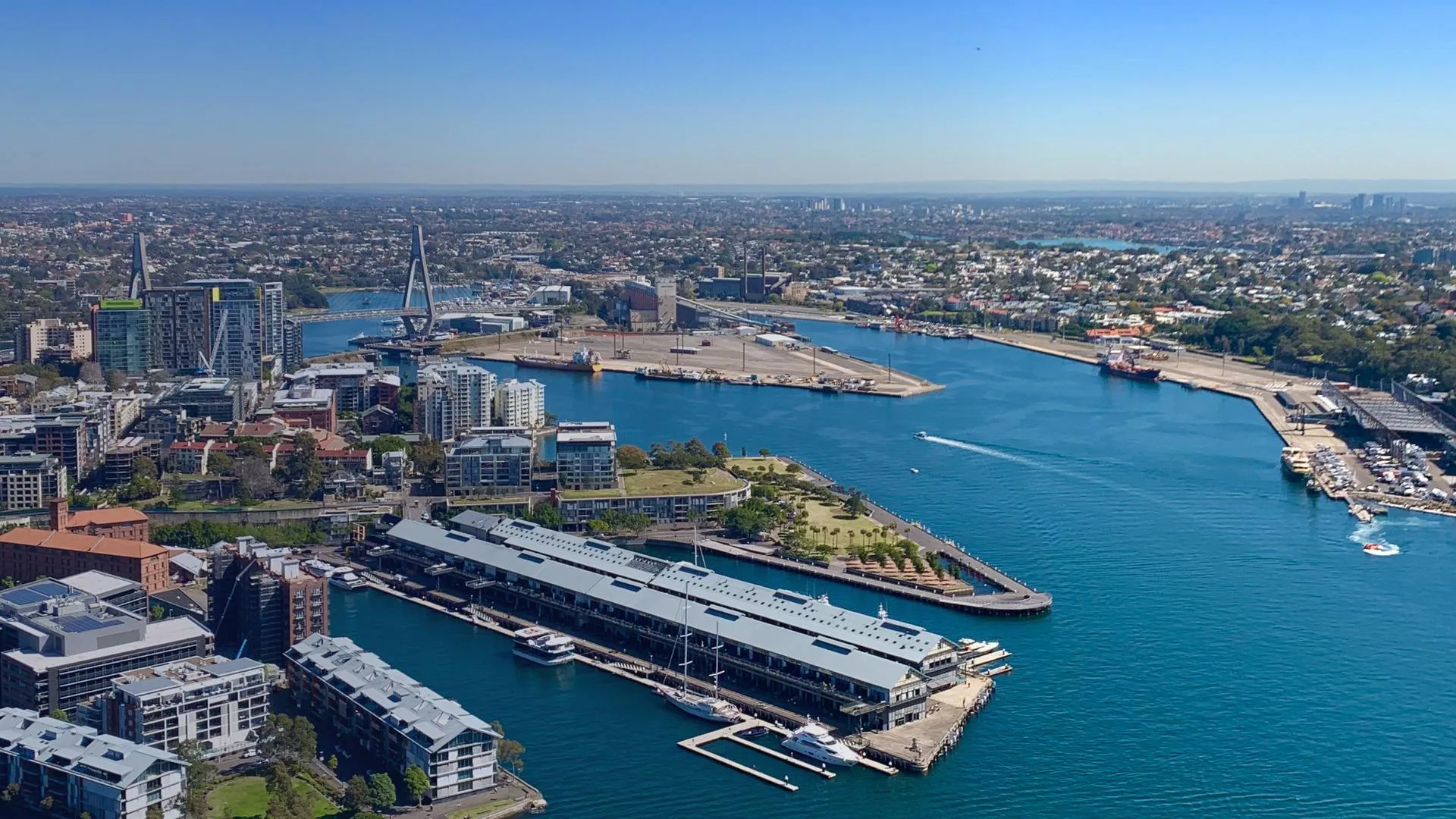
Business Sydney Executive Director Paul Nicolaou has warned that closing Glebe Island port would threaten Australia’s national security and undermine the Royal Australian Navy’s operational readiness, as the Defence Department confirms the strategic value of the site.
Nicolaou, a member of the Working Port Coalition, said the Defence Department’s position “should put to rest any thought of closing Sydney Harbour’s last remaining deepwater port.”
“National security has never been more important,” Nicolaou said.
“In an era of increasing regional tensions, every operational berth is a strategic asset – without them, Defence’s capacity to respond swiftly to crises, protect trade routes and support national security would be compromised.”
His comments come as the NSW Government reviews the future of the Bays West precinct, which includes plans that could see Glebe Island redeveloped into high-rise apartments.
Despite warnings from business and industry leaders about potential economic fallout, stakeholders remain concerned the Minns Government is still considering the closure.
The Department of Defence confirmed to The Daily Telegraph that the Royal Australian Navy uses Glebe Island and nearby White Bay to berth vessels when Garden Island is at capacity—especially during military exercises, foreign naval visits, or ship maintenance.
A recent Urbis report highlighted Glebe Island’s importance in national disaster response, military mobilisation, and law enforcement, warning that the loss of the port would create major logistical challenges.
The report also cautioned that shutting down the port could worsen the NSW housing crisis, as Glebe Island plays a critical role in the construction materials supply chain.
The NSW Government confirmed it has held discussions with the Navy about the future of the port, stating: “No decisions have been made.”
Artists competing in the Eurovision Song Contest 2025 will only be permitted to display their country’s official flag at Eurovision events, under new rules that effectively ban Pride and other non-national flags from official spaces, including the main stage and the opening ceremony.
The updated policy, first reported by Danish broadcaster DR and shared by PinkNews, restricts contestants and their delegations to using only the national flag of the country they represent at all official Eurovision venues and performances. This includes the Eurovision stage, Green Room, Opening Ceremony, and the Village Stage.
As a result, LGBTQ+ contestants such as Malta’s Miriana Conte, Austria’s JJ, and Finland’s Erika Vikman will not be allowed to display Pride-related flags during performances.
Contestants are also barred from showing solidarity with other nations, such as by holding Ukraine’s flag.
A Eurovision spokesperson confirmed the policy was developed by Swiss host broadcaster SRG SSR in coordination with the European Broadcasting Union (EBU), “to provide clarity for audiences and delegations.”
“In line with other international competitive events, the policy for participating broadcasters is that only one national flag can be used in official spaces,” the spokesperson stated.
“Outside of these official spaces, the flag policy for delegations is the same as for audiences, where all flags permitted under Swiss law can be used.”
Photo: Getty Images.
Last year’s winner, Switzerland’s Nemo—who identifies as non-binary—revealed they were forced to smuggle the non-binary flag past security to display it during the flag parade. “I had to smuggle my flag in because Eurovision said no, and I did it anyway,” they said.
This year, only official country flags provided by SRG SSR will be allowed in the flag parade. The EBU confirmed there would be “consequences” for breaking the rules, though no specific penalties have been outlined.
In contrast to the stricter rules for performers, flag regulations have been relaxed for fans attending the contest in Basel’s St. Jakobshalle arena.
Audience members will be allowed to bring “all flags and banners” into events, provided they do not pose a safety or production risk and comply with Swiss law. This includes the previously banned Palestinian flag, which will be permitted this year.
Flag policies have been a contentious issue in recent years. At the 2023 contest in Sweden, fans reported being denied entry with certain Pride and EU flags. Eurovision previously limited fan flags to those of competing countries and the general rainbow Pride flag.
Eurovision 2025 will be held in Basel, with semi-finals scheduled for May 13 and 15, and the grand final on May 17.
Football Australia has confirmed the group stage draw for the inaugural Australian Championship including two blockbuster opening round fixtures set to launch a bold new chapter for Australian football in October.
South Melbourne FC and Sydney Olympic FC will renew one of the game’s most iconic rivalries when they meet at Lakeside Stadium, Melbourne to launch the Championship. With proud histories, passionate supporters and many unforgettable NSL battles this clash between two Foundation Clubs is a fitting way to kick-start the competition.
The following day, another storied Foundation Club, Preston Lions FC, will host the reigning NPL NSW Premiers at BT Connor Reserve, Melbourne. Backed by decades of tradition and one of the most loyal fan bases in the country, Preston’s clash with the top-performing state champion promises to continue the strong start with another high-quality encounter.
Two feature matches will be played across each group stage round, on a Friday evening and Saturday afternoon. Remaining matches are scheduled to be played consecutively on a Sunday across two provisional match start times of 2:00pm AEST and 5:00pm AEST.
Opening Fixtures
Friday, 10 October – South Melbourne FC v Sydney Olympic FC at Lakeside Stadium, Melbourne
Saturday, 11 October – Preston Lions FC v NPL Premier (NSW) at BT Connor Reserve, Melbourne
Round two feature matches will showcase NSW-based Foundation Clubs. Apia Leichhardt FC hosts Sydney United FC at Leichhardt Oval on Friday, 17 October in what promises to be a fierce battle for 3 points, and Wollongong Wolves FC will return home to WIN Stadium and face the reigning NPL VIC Premiers on Saturday, 18 October.
The Australian Championship will bring together 16 teams in a dynamic and sustainable format, featuring eight Foundation Clubs and eight invited NPL champions from the National Premier Leagues (NPL). This innovative format bridges state-based competitions with the Isuzu UTE A-League Men’s pathway, helping reshape the national football pyramid and unlock new opportunities for clubs and players.
Four seeded Foundation Clubs including South Melbourne FC (Group A), Marconi Stallions FC (Group B), Avondale FC (Group C) and APIA Leichhardt FC (Group D), will be joined by the remaining Foundation Clubs and top-performing teams from each NPL division to create four balanced and equal groups.
Following six rounds of group stage matches, the top two teams from each group will advance to a knockout Finals Series, culminating in the Championship Final in early December. This structure has been designed to ensure the competition model is sustainable while maintaining a high degree of competitive integrity and commercial appeal.
Football Australia Chief Executive Officer, James Johnson, said, “The Australian Championship is an exciting new annual tournament bringing together Foundation Clubs with their rich histories and top-performing NPL Clubs to showcase their talents and culture to our growing national football audience.”
“The Australian Championship will bring a sense of nostalgia to our football community. Genuine rivalries will be on full display to supporters of all generations, and new stories will be created on and off the field,” Mr Johnson added.
“Football supporters across the country will get a taste for what our national competitions will look like in years to come, enriched with talented state-based players and aspirational Foundation Clubs.
“The Australian Championship draw strikes the perfect balance with groups made up equally of Foundation Clubs and NPL Champions, delivering a rare combination of unpredictable interstate clashes and traditional historic rivalries.
“We can expect big crowds for the opening round matches, and excitement will continue to build throughout the tournament with must-win matches played across the group stage draw. The inaugural winners of the Australian Championship will also need to navigate their way through a highly competitive knockout finals series before being crowned Champions.
“We encourage fans to visit their local clubs and experience the excitement of the Australian Championship and witness the talent and clubs of tomorrow.”
Group Stage Draw
Group A: South Melbourne FC, Sydney Olympic FC, NPL Premier (Football QLD), NPL Premier (NNSW Football)
Group B: Marconi Stallions FC, Wollongong Wolves FC, NPL Premier (Football VIC), NPL Premier (Football TAS)
Group C: Avondale FC, Preston Lions FC, NPL Premier (Football NSW), NPL Premier (Capital Football)
Group D: APIA Leichhardt FC, Sydney United 58 FC, NPL Premier (Football SA), NPL Premier (Football WA)
Knockout Finals Series
The top two teams from each group will advance to the quarterfinals, with the higher placed team hosting each crossover encounter:
Quarter Finals: A1 v C2, B1 v D2, C1 v A2, D1 v B2
Semi Finals & Grand Final: All matches to be staged at a neutral venue, culminating in the Championship Final on either 6 or 7 December 2025.
Football fans are encouraged to follow the NPL competitions and Hahn Australia Cup around the country throughout the 2025 season to get a glimpse of the talent and rivalries set to feature in the Australian Championship.
Further announcements, including fixtures, participating NPL teams, broadcast details and commercial partnerships will be made in the lead-up to the competition’s historic debut on Friday, 10 October 2025.
Thomas Niles, a career diplomat and US Ambassador to Greece from 1993 to 1997, has died at the age of 85.
His death from cancer was announced Wednesday, April 30, by his brother, John Edward Niles, in a social media post.
Niles served in Athens during a particularly volatile period in the Balkans following the breakup of Yugoslavia and amid escalating tensions between Greece and Turkey.
His tenure included the 1996 Imia crisis, in which both nations deployed special forces to disputed islets in the Aegean Sea.
A Greek Navy helicopter crash during the standoff killed three officers, and a military escalation was narrowly avoided through high-level US diplomatic intervention, including direct talks by President Bill Clinton with Greek Prime Minister Costas Simitis and Turkish President Suleyman Demirel.
Reflecting on the crisis a year after leaving Athens, Niles criticised the US decision to remain neutral on the sovereignty dispute.
“We knew by the time we took this position that the Greeks were right on the sovereignty argument,” he said.
“When we refused to take a position it sent a signal back to the Turks that we were prepared to countenance or not do anything about aggressive Turkish behaviour toward the Greeks.”
He also defended then-Assistant Secretary of State Richard Holbrooke’s sharp criticism of the European Union’s inaction during the crisis, calling it “unkind, perhaps unnecessary, but true nonetheless.”
The crisis occurred just days after Simitis replaced ailing PASOK founder Andreas Papandreou as prime minister. In a parliamentary debate, Simitis acknowledged US help by stating, “I thank the Americans,” a remark that drew widespread backlash from Greek politicians across the spectrum.
Before his posting in Greece, Niles served as US Ambassador to Canada (1985–89), Ambassador to the European Union (1989–91), and Assistant Secretary of State for European and Canadian Affairs (1991–93). He was succeeded in Athens by R. Nicholas Burns.
Born in Lexington, Kentucky, on September 22, 1939, Niles studied at Harvard and earned a master’s degree from the University of Kentucky.
He served 36 years in the US Foreign Service, with earlier assignments in Belgrade, Moscow, and the US Mission to NATO in Brussels.