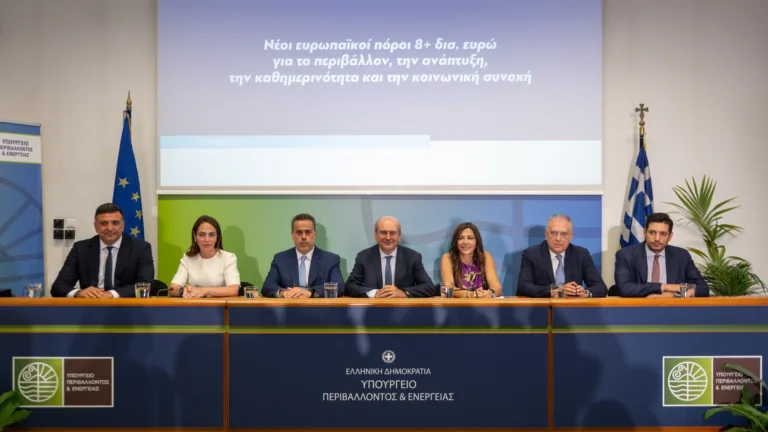
The Greek government has unveiled an ambitious €8 billion programme, funded by the European Union, aimed at addressing key national challenges in energy, housing, transport, and social support.
The initiative, announced at an inter-ministerial press conference led by Deputy Prime Minister Kostis Hatzidakis, will draw funds from the Social Climate Fund, the Modernisation Fund, and the newly created Island Resilience Fund.
Among the priorities are the electrical interconnection of the Dodecanese, North Aegean, and Cyclades islands — expected to reduce utility costs for consumers — and subsidies for energy upgrades to homes and commercial buildings.
Ένα νέο ευρωπαϊκό πακέτο που ισοδυναμεί με «μισό Ταμείο Ανάκαμψης», με έντονο κοινωνικό χρώμα, παρουσιάσαμε σήμερα με τους συναρμόδιους υπουργούς. Πρόκειται για μια πολύ ουσιαστική παρέμβαση για την προστασία του περιβάλλοντος, τη στήριξη της οικονομίας και της ανάπτυξης, τη… pic.twitter.com/9qQRH5smpH
A strong focus is being placed on support for low-income households, including heating allowances, rent subsidies, and the development of social housing. University dormitory renovations are also included to ease student accommodation shortages.
Transport improvements feature heavily, with plans to procure electric buses for Athens and Thessaloniki and a significant upgrade of the Athens metro. Water scarcity will be tackled through desalination and dam projects.
Further measures include targeted support for micro-enterprises to modernise their energy use, investments in industrial energy-saving technology, subsidies for public sector workers in housing-stressed regions, and efforts to improve the energy efficiency of ships in collaboration with Greek shipyards.
Greek tennis star Stefanos Tsitsipas was forced to retire from his Wimbledon first-round match against French qualifier Valentin Royer due to a persistent back injury.
The 24th seed and former world number three was trailing 6-3, 6-2 when he withdrew, later admitting to reporters, “I’m battling many wars these days. It’s really painful to see myself in a situation like this.”
Tsitsipas revealed he has been struggling with the injury since withdrawing from the ATP Tour Finals in 2023. Despite his win in Dubai earlier this year, the problem has persisted, impacting both his performance and his rankings.
“I feel like I’m left without answers. I don’t know. I’ve tried everything,” he said, adding, “Right now, I’m just absolutely left with no answers.”
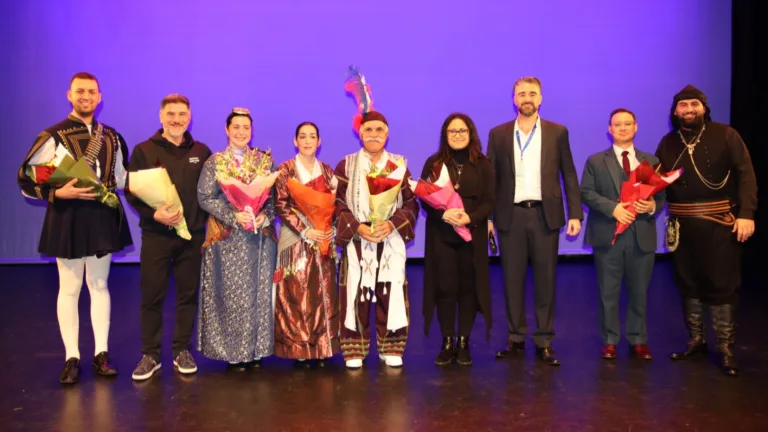
An audience that filled every seat at the Clocktower Centre on 29 June was treated to Alexander’s Journey, a unique theatrical presentation that combined historical narrative with intercultural performance.
Among the many in attendance were His Grace Bishop Evmenios of Chora and other prominent figures from Melbourne’s Hellenic and broader multicultural communities.
Written by author and poet Dean Kalimniou and presented by the Pan-Macedonian Association of Melbourne, the production was inspired, directed and produced by Association President Peter Stefanidis.
Backed by the Multicultural Commission of Victoria, it aimed to explore not only the legacy of Alexander the Great, but also the ways in which different cultures intersected across time and geography. The result was a carefully constructed dramatic oratorio that pushed beyond conventional storytelling.
What set Alexander’s Journey apart was its breadth. Spoken monologues, choreographed dance, poetic narration, historical dramatization, and music were seamlessly integrated into a performance that was both intellectually stimulating and emotionally charged. Stefanidis’ audiovisual direction brought a visual clarity to the work, enhancing Kalimniou’s layered and lyrical script without overwhelming it.
The narrative unfolded through a series of monologues voiced by historical witnesses—figures such as Aristotle, Babylonian scribes, Indian kings, and Alexander’s mother, Olympias. Rather than following a linear biographical account, the structure allowed for a wide-ranging perspective on Alexander’s character and deeds. What emerged was a portrait of a figure motivated not simply by conquest, but by an ideal of civilisational encounter—one who challenged boundaries, both physical and philosophical.
A particularly strong feature of the event was the inclusion of traditional dance. Groups representing the Armenian, Assyrian, Indian, Pontic, Pan-Macedonian and Florinian (Aristotelis) communities performed throughout the show. Their presence grounded the work in lived cultural practice. The collective finale, set to Μακεδονία Ξακουστή, brought the audience to its feet in a prolonged ovation.
Still, it was a quiet moment that seemed to leave the most lasting impression. In a gesture that caught many by surprise, Kalimniou took up a Chinese erhu and performed Μακεδονία Ξακουστή. The unlikely pairing of a Greek anthem with an ancient Chinese instrument encapsulated the broader message of the performance: cultural identity is not diluted through exchange, but enriched.
Speaking after the show, Mr Stefanidis reflected on the collaborative nature of the production.
“We wanted to offer not just a narrative about Alexander, but an experience that embodied his vision, bringing peoples together, across cultures, through art,” he said.
“Collaborating with Armenian, Assyrian and Indian communities was profoundly enriching, as we all came to recognise elements of our shared legacy in the process. Tonight, I believe we achieved something greater than performance: a moment of unity and mutual recognition.”
More than a compelling night at the theatre, Alexander’s Journey marked a singular moment in Melbourne’s cultural calendar. It offered a bold and imaginative model for how diasporic communities might move beyond nostalgic representations or ethnic stereotypes, and instead reimagine their heritage through innovation, dialogue and artistic rigour. In doing so, the production suggested a new path forward—one in which the past is neither romanticised nor forgotten, but critically and creatively engaged with.
Those present left not just entertained, but moved—and, in many cases, inspired.
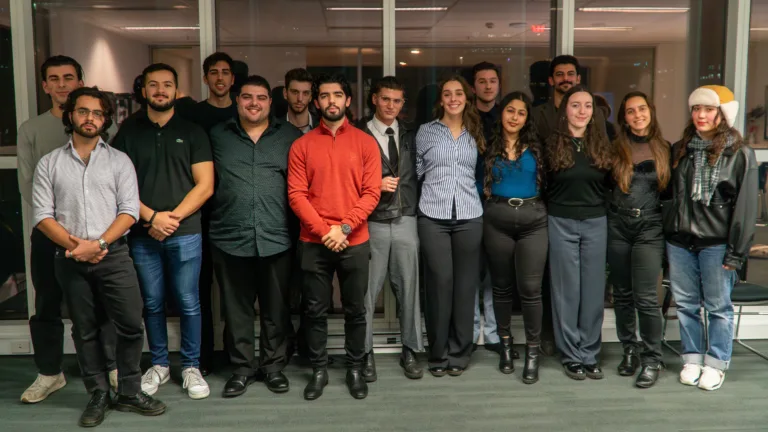
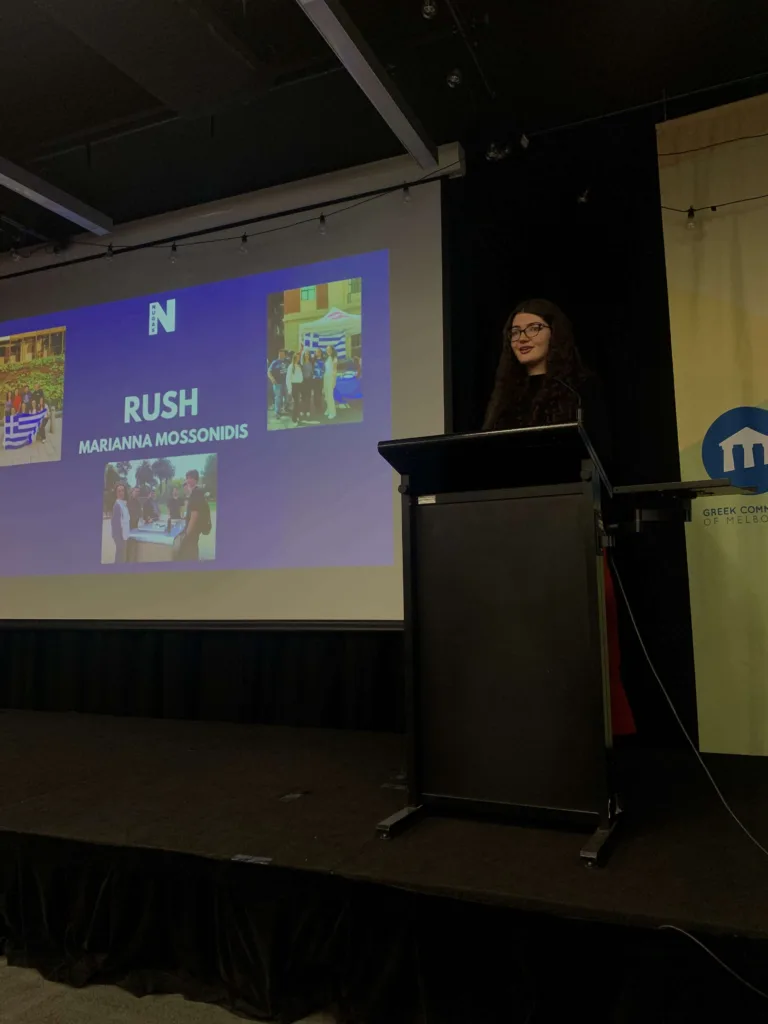
On 26 May 2025 the Victorian branch of the National Union of Greek Australian Students (NUGAS) held its Annual General Meeting (AGM) to elect a new committee.
The meeting was attended by members of affiliate club committees, alumni and much Greek youth looking to become more involved in the community.
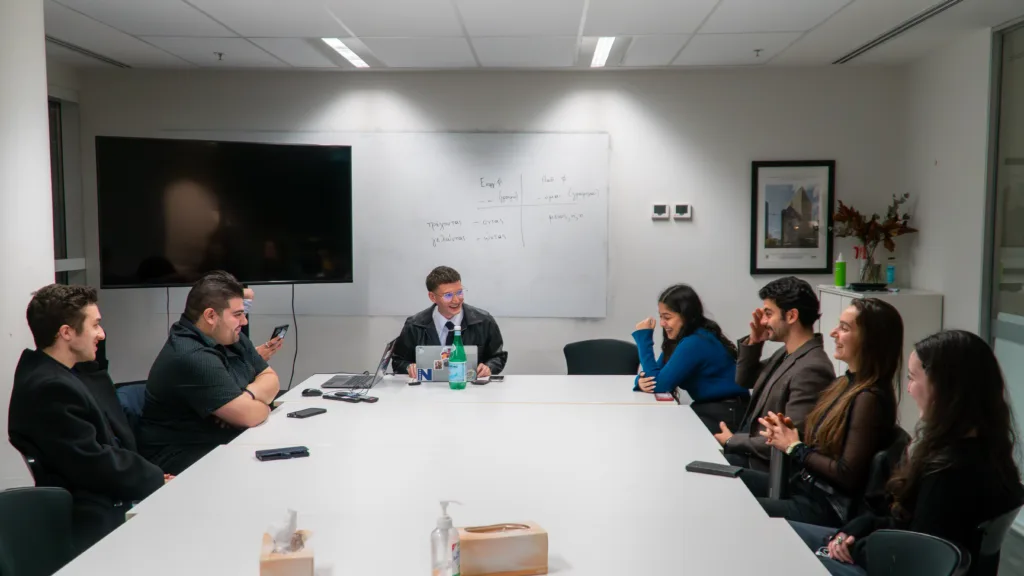
The meeting began with an overview of the last year’s achievements from affiliate club presidents from various universities, as well as addresses from the outgoing executive committee.
The committee reflected on a year of successful events and initiatives. From flagship events such as the boat cruise and the annual NUGAS ball to smaller scale cultural events such as lectures, dance workshops and the fortnightly NUGAS kafenio catch ups.
Along with collaborations with community groups like the Five Loaves initiative, visits to aged care centres or volunteering for the Hellenic Medical Society of Australia’s Careers Day, it was inspiring to see so much cultural engagement and community building events from the Greek youth of Melbourne.
Following on from the addresses from club presidents and the previous executive committee, the outgoing committee was disbanded and the 2025/2026 committee was elected:
President Mr Gallos had the following to say with regards to his vision for the next year of NUGAS.
“Our goal here during this term is to do a few of things; First to establish a sense of community and really promote a sense of fostering interpersonal relationships within the Greek spheres. What this looks like is building on our smaller events like our fortnightly kafeneion,” Mr Gallos said.
“We also plan on bringing in some more cultural elements into our flagship events such as our upcoming NUGAS BALL. This will largely take the form of demotic style music/rebetika, basically music forms from our culture that are easily implemented into events that we would traditionally host.
“In doing these things we hope to bring a bit of soul with us into not just ‘events’ but broadly, with our interactions with the community. We’re all about ‘Greekness’ and we’re all about youth – but it extends beyond that. Bringing community together generally, making people connect and making a difference in representing our people takes some time, effort and certainly some grace.
“I am confident with this year’s committee’s ability to accomplish these things and foster something substantial within our local and broader communities.”
The newly elected committee now looks ahead to a promising year of growth, connection, and cultural pride as they continue to represent and uplift Greek Australian youth across Victoria.
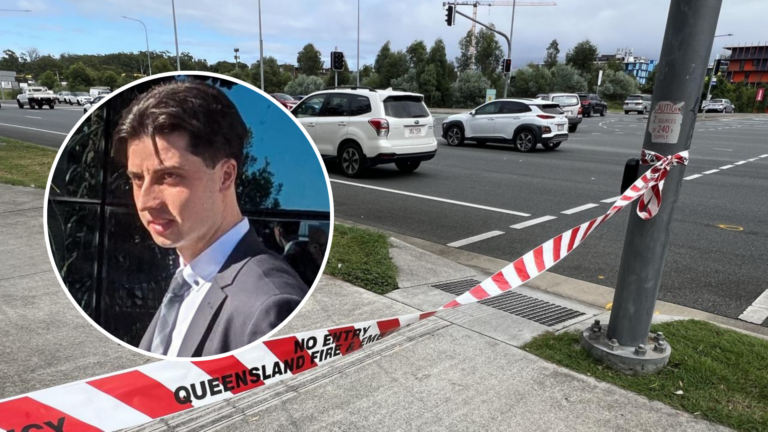
Gold Coast man Alexander James Vadeikis, 21, has faced court after being hit with upgraded charges over a deadly alleged street race that killed a pedestrian in Southport last year.
According to the Gold Coast Bulletin, Vadeikis is now charged with dangerous operation of a vehicle causing death while taking part in an unlawful race — a criminal offence carrying up to 20 years’ imprisonment — as well as operate or interfere with the operation of a vehicle dangerously in any public place while excessively speeding or taking part in an unlawful race or unlawful speed trial.
The charges relate to a March 22, 2024 incident in which Vadeikis and co-accused David Saji Mathew, 22, were allegedly street racing when Mathew struck and killed 21-year-old student Daimler Kyle Bermudo as he crossed Smith Street.
Vadeikis appeared in Southport Magistrates Court on Thursday. His lawyer, Alex Somers, told the court a partial brief of evidence had been received and requested an adjournment.
The matter is scheduled to return on July 24. The most serious charge must be heard in the Southport District Court.
No pleas have been entered by either Vadeikis or Mathew. Vadeikis was originally charged with a lesser offence but that charge was withdrawn earlier this month to allow for the more serious prosecution.
Bermudo, an aspiring nurse, was remembered by his parents as a devoted and selfless young man, just months away from graduating from Griffith University.
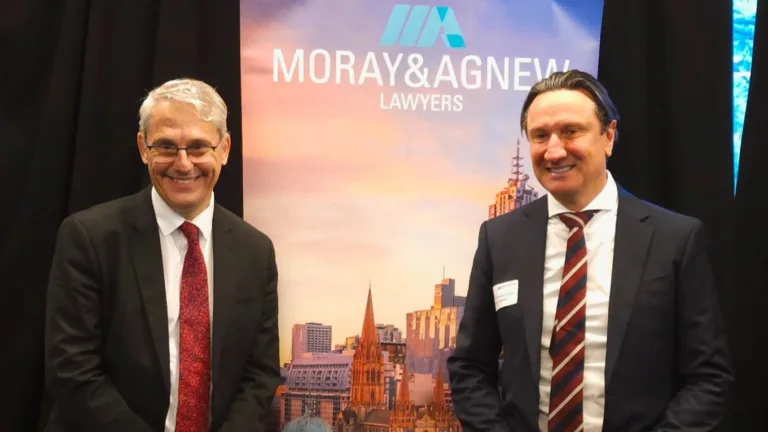
Moray & Agnew has been named as a finalist in the Lawyers Weekly Australian Law Awards for ‘Insurance Team of the Year,’ ‘Pro Bono Program of the Year,’ and ‘Managing Partner of the Year’ with Bill Papastergiadis OAM, Melbourne Managing Partner.
These results reflect the firm’s continued commitment to excellence in legal service delivery and leadership.
The Insurance Team’s recognition highlights its deep sector expertise and outstanding results for clients across Australia. The firm has sustained an unwavering commitment to the insurance sector for decades. Moray & Agnew remains the firm of choice for insurers seeking technical excellence, commercial pragmatism and enduring value; especially in matters where the legal, reputational, scheme, market, coverage or policy implications loom large.
The Pro Bono Program nomination celebrates the firm’s ongoing commitment to access to justice and meaningful community contribution. The firm’s Pro Bono Practice does a significant amount of pro bono legal work, predominantly in discrimination, sexual harassment, employment and housing. Members of the Pro Bono Practice coordinate and promote pro bono work across the firm, with all staff being encouraged to participate in pro bono and being provided opportunities to do so.
Moray & Agnew recognises the significant funding and resourcing constraints facing the community legal sector, which often results in vulnerable community members being unable to access legal assistance. For this reason, a core aspect of our firm’s Pro Bono Practice involves supporting the work of Community Legal Centres. We do this through a number of pro bono initiatives, most notably our secondment program which has five staff members from our Pro Bono Practice seconded full-time to the following to community legal centres around the country.
“Pro Bono work reflects our firm’s values. Our belief is that access to justice should not depend on financial means. We’re proud of the meaningful impact our people make in communities across Australia through our pro bono partnerships and secondments,” Geoff Connellan, National Managing Partner, said.
The nomination of Mr Papastergiadis as ‘Managing Partner of the Year’ acknowledges his strategic leadership and dedication to fostering a high-performing, client-focused culture in our Victorian office. Since his appointment as Managing Partner of Moray & Agnew Melbourne in 2007, he has led transformation through hands-on management and careful strategic development of our services, clients, people and culture.
Under Mr Papastergiadis’ leadership, the Melbourne office has grown from five to 32 partners and from 20 to over 220 staff with a greatly expanded service offering to our wonderful client base. He additionally believes it is important for him to maintain a strong client portfolio, advising major players and prominent families in the construction sector. This direct engagement and collaboration helps him understand what is really expected of legal advisors, which in turn informs his leadership and ensures our services align with client expectations.
“We’re honoured to be recognised among the best in the profession on a team and individual basis. These nominations are a testament to the exceptional work of our people and the trust our clients place in us,” Mr Papastergiadis said.
“Our firm’s commitment to social justice is a critical part of the firm’s fabric. Hence, being nominated by the Australian Legal Awards for our pro bono practice is important recognition to our lawyers who dedicate their career to supporting community work.
“Culture plays a critical role in the success and sustainability of law firms. We understand that at Moray & Agnew it influences everything from attracting top tier talent, retaining clients and internal morale. Culture has been a critical driver of Moray & Agnew’s strong success. It allows us the ability to compete in a crowded legal market whilst nurturing a healthy work environment.”
Winners will be announced at the awards ceremony in Sydney on 14 August 2025.
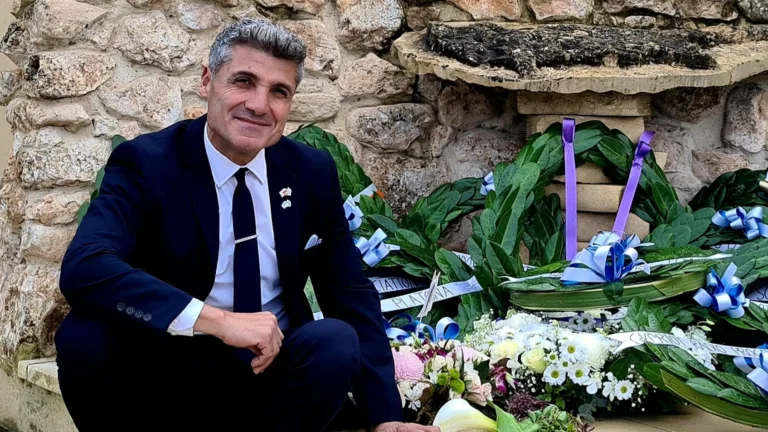
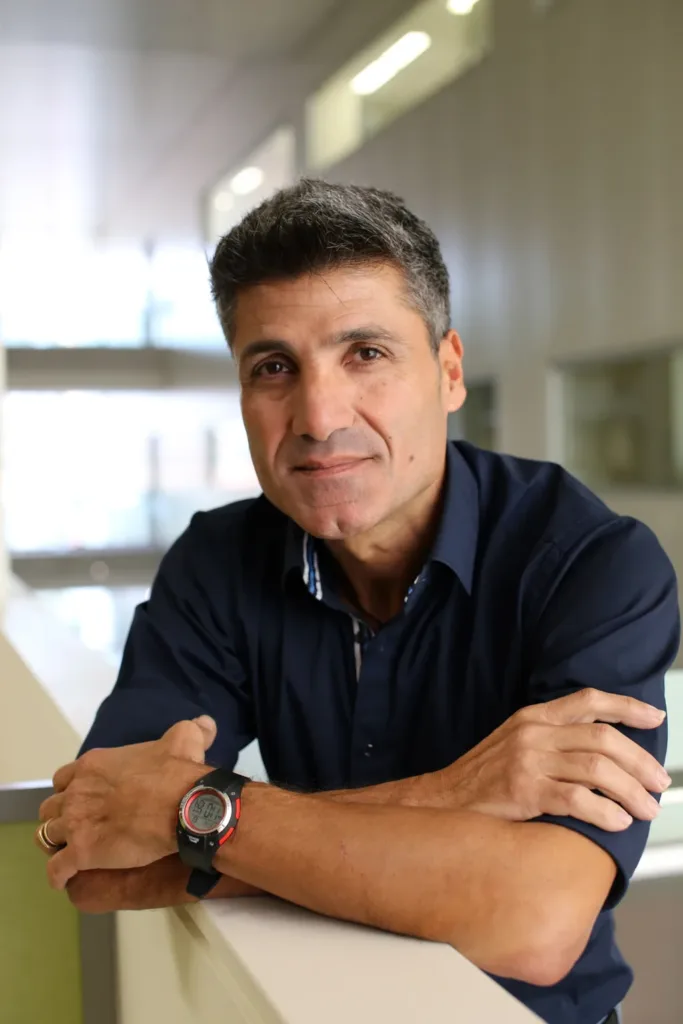
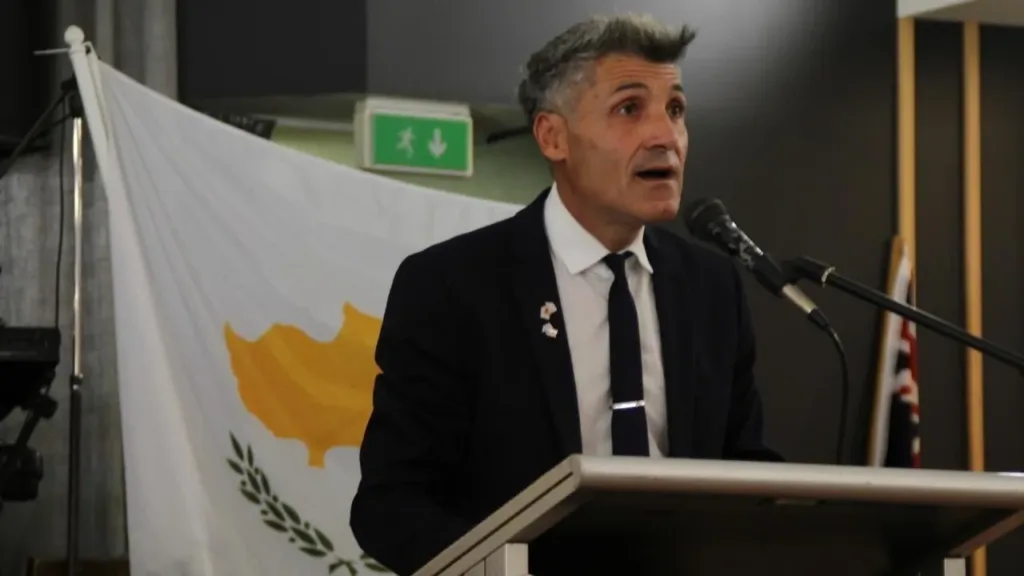
The Cyprus Community of South Australia has farewelled its long-serving President, Professor Andreas Evdokiou, who formally stepped down from his role this week after ten years of transformative leadership.
Prof. Evdokiou, a respected academic and community advocate, has been widely credited with strengthening the Community’s foundations, overseeing major growth in cultural programming, infrastructure development, and financial stability.
In a heartfelt farewell message, he wrote: “Serving our community has been one of the greatest honours of my life.”
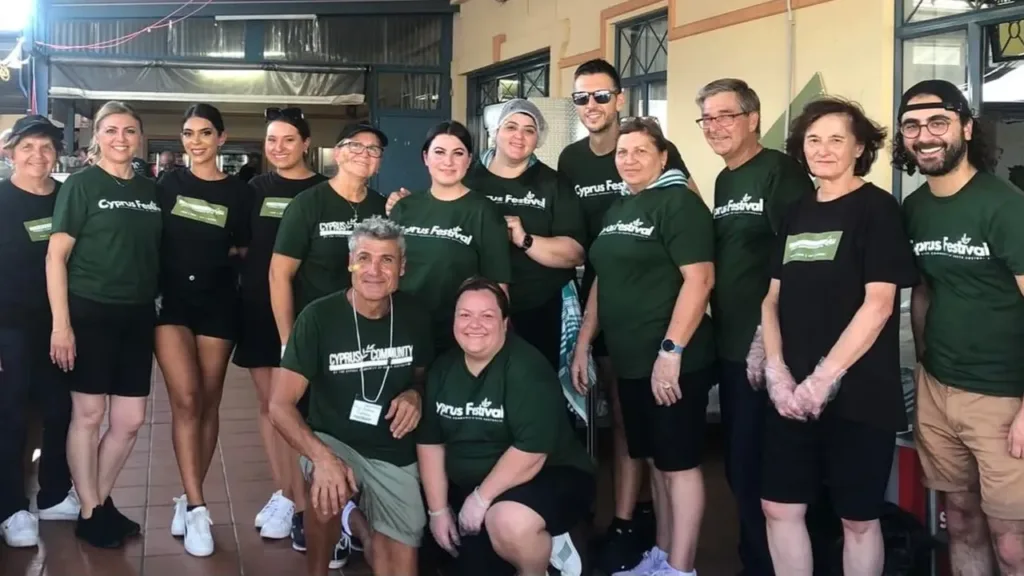
Under his leadership, the Community launched the inaugural Cyprus Festival, now a flagship cultural event in SA drawing thousands each year. He also helped secure vital government funding, led the Community to debt-free status, and expanded intergenerational programs with a focus on youth engagement and cultural continuity.
Andreas and the Cyprus Festival volunteers.
Prof. Evdokiou was known for his hands-on approach, often working behind the scenes at events — flipping souvlakia, lifting tables, and engaging volunteers with humility and warmth.
In his farewell message, he reflected: “This decision to step down did not come lightly. But it comes from a place of honesty, reflection, and a belief that leadership sometimes means knowing when to step aside.”
“My hope is that this moment will inspire important conversations about where we are going as a community, and how we continue to preserve not just our traditions, but the integrity and courage that built this community,” he added.
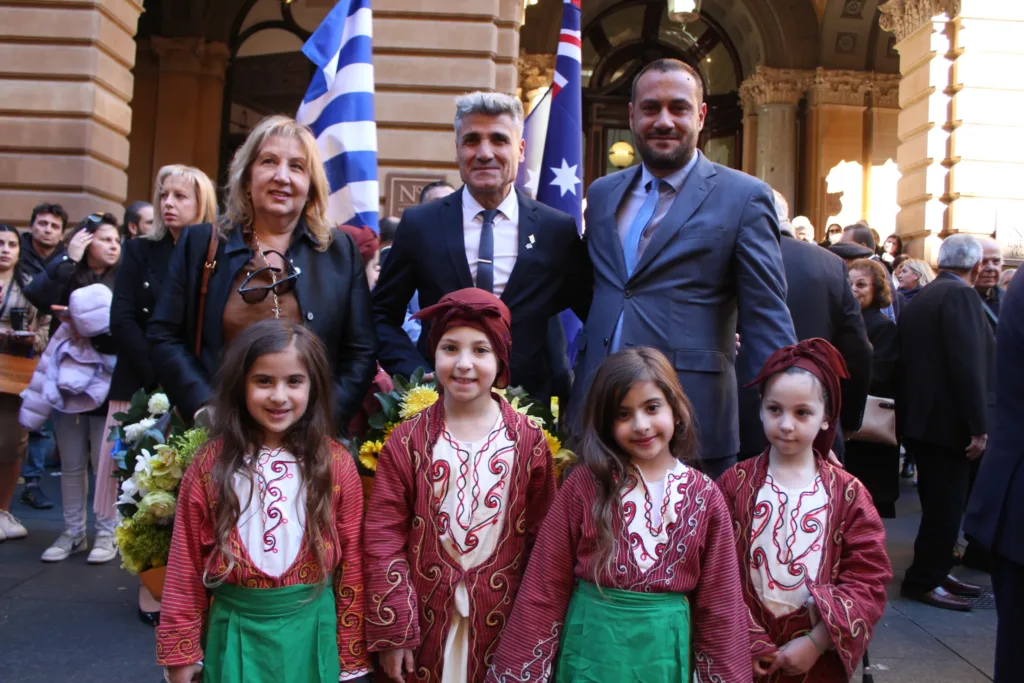
Andreas with Cypriot Ministers (right) and the SEKA NSW co-President Miranda Adamou (right).
The outgoing President concluded with a message of unity and hope: “Though I step away from the role, I remain, as ever, a proud member of this community, hopeful, grateful, and committed to seeing it flourish for generations to come.”
The Community has expressed deep gratitude for his service and noted that his legacy of vision, humility, and resilience will continue to inspire future leadership.
The United States Studies Centre (USSC) at the University of Sydney has announced the appointment of former Australian Ambassador to the United States, Arthur Sinodinos AO, as their next Chair.
A long-serving Senator for New South Wales and former Minister for Industry, Innovation and Science, The Hon. Arthur Sinodinos AO, brings a wealth of political and diplomatic experience in both Australia and the United States to the role.
CEO Dr Michael Green said, “Ambassador Sinodinos has long been a friend of the United States Studies Centre. To have him as chair is a real coup because there are few people better placed to speak to the nature of the US-Australia relationship in this current era.”
Currently serving as Partner and Chair of Australia Practice for The Asia Group, Ambassador Sinodinos is at the forefront of conversations about Australia’s role and relationships across the Indo-Pacific region. He played a key role in high-level negotiations around AUKUS, the Quad and the Indo-Pacific Economic Framework.
Speaking at the USSC Sydney International Strategy Forum in 2024, Ambassador Sinodinos noted, “What we’ve got to be able to say to the Americans is that the economic and security architecture in the region is vital to their interest and to remind them of that, and, if it’s America first, it can’t be America only.”
Ambassador Sinodinos is succeeding Mark Baillie in the role of Chair of the Board of Directors. Mr Baillie is the longest-serving chair in the history of the United States Studies Centre, having served for 10 years and overseeing the greatest growth in the Centre’s history.
Speaking about Mr Baillie, Dr Green said, “The United States Studies Centre has benefited enormously from the contributions Mark Baillie made as chair. Under his leadership, the Centre initiated important strategic expansion and achieved the strongest financial position in its history. In recognition of the many years he dedicated to the Centre, we are happy to share that Mark Baillie will be a Distinguished Fellow and maintain a level of connection with the institution he profoundly shaped.”
Andrew Varigos, former owner and marketing manager of Melbourne’s Love Machine nightclub, has pleaded not guilty to three counts of rape and one count of assault, stemming from an alleged incident involving a female employee in January 2020.
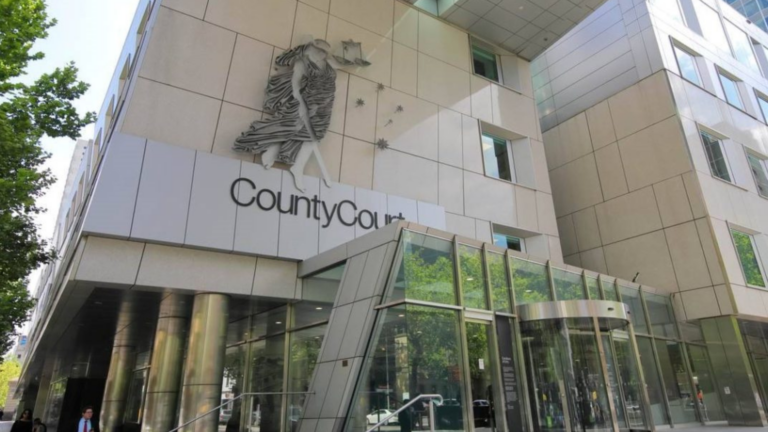
The County Court of Victoria heard that after a staff birthday party at the Prahran venue, Varigos and the woman, then in her early 20s, left the club in the early hours and later went to his apartment.
According to the Sydney Morning Herald, Prosecutor Nick Batten said Varigos initially offered to sleep on the couch but instead allegedly assaulted the woman in bed, forcing her to perform a sexual act and having non-consensual intercourse.
Batten told the jury the woman took photos of her injuries and left the apartment around 6:48am, but did not report the incident until over a year later.
Varigos’ lawyer, Philip Dunn KC, said the encounter was consensual and argued the woman’s delay in reporting, memory lapses, and withheld phone data undermined the investigation. Dunn said many details in the police brief would be “hotly disputed.”
A coroner has found that Christos Panagakos was responsible for the 2019 shooting death of his former partner, Ivona Jovanovic, at his Highland Park home on the Gold Coast.
According to ABC News, the 27-year-old was fatally wounded in the chest when a handgun discharged from inside a bag Panagakos was carrying as he tripped on a staircase.
The weapon was removed from the scene and never recovered.
Despite initially denying having a gun and claiming memory loss due to drug use, Coroner Donald MacKenzie said Panagakos’ version of events could “easily be rejected” and relied instead on a police statement from a witness at the scene, calling it the “most cogent and reliable” evidence.
Ivona Jovanovic. Photo: Facebook.
Panagakos was charged with manslaughter in 2021, but the case was later dropped.
While Coroner MacKenzie concluded the shooting was “essentially an accident” and did not meet the threshold for criminal negligence, he held Panagakos responsible.
The coroner also criticised several witnesses, including Panagakos’ mother, for giving misleading evidence.
He acknowledged the profound impact of Jovanovic’s death on her loved ones, saying, “Her death has had a devastating and lasting impact on her family and those close to her.”