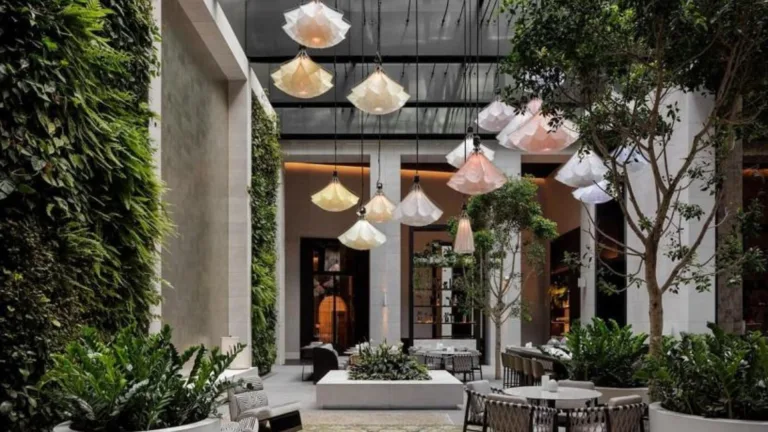
A Greek hotel has earned a place among the finest in the world, following an awards event held in London on Sunday night. The Four Seasons Astir Palace in Athens claimed the 17th spot on the prestigious list, according to tovima.com.
Despite being open for only six years, the hotel has already twice ranked third among the world’s top 50 hotels. Designed by Taiwanese designer Tony Chi, the sleek 413-room resort outperformed last year’s winner, the Capella Bangkok.
This year, the Rosewood Hong Kong topped the global rankings of luxury hotels. In second place was the Four Seasons Bangkok at Chao Phraya River – a 299-room property in the vibrant cultural district of Thailand’s capital – followed by Capella Bangkok in third. Asian hotels dominated the list once again.
One standout European entry, Passalacqua – a boutique hotel housed in an 18th-century villa on Lake Como, Italy – ranked fourth overall. It also received recognition as the Best Boutique Hotel and the highest-ranked European property.
The fifth position went to the historic Raffles Singapore, renowned as the birthplace of the iconic Singapore Sling cocktail.
The rankings are compiled by The World’s 50 Best Hotels Academy, a panel of 800 travel industry experts, including hoteliers and travel journalists from 13 global regions.
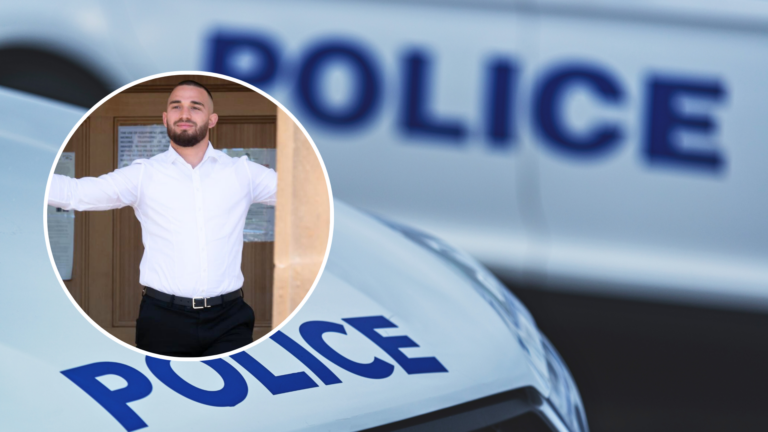
Stavros and Michael Theoharis have been granted home detention bail following their arrests in Operation Ironside, the South Australian crackdown targeting alleged drug trafficking networks linked to the AN0M encrypted messaging app.
Stavros, 32, of Paralowie, faces charges including eight counts of large commercial drug trafficking.
Defence lawyers argued the court could have “confidence” in his compliance with bail, citing his role as a self-employed man with a young family. His long-term partner offered a $10,000 surety.
Magistrate John Clover granted bail, noting “there’s a lot on the line for him.”
His brother, Michael, 29, of Paradise, faces 21 trafficking charges, including trafficking in large commercial quantities. Prosecutors alleged he played a role in the “collection and repackaging” of a significant drug supply and operated two AN0M devices.
Despite opposition from prosecutors, Magistrate Clover also approved home detention bail for Michael, on the condition he raise a $10,000 cash surety. He told the accused: “You need a lawyer, and you need one urgently.”
The Theoharis brothers were among 55 South Australians arrested in last week’s Operation Ironside 3.0, which has uncovered what police allege to be one of the state’s largest organised drug-trafficking networks.
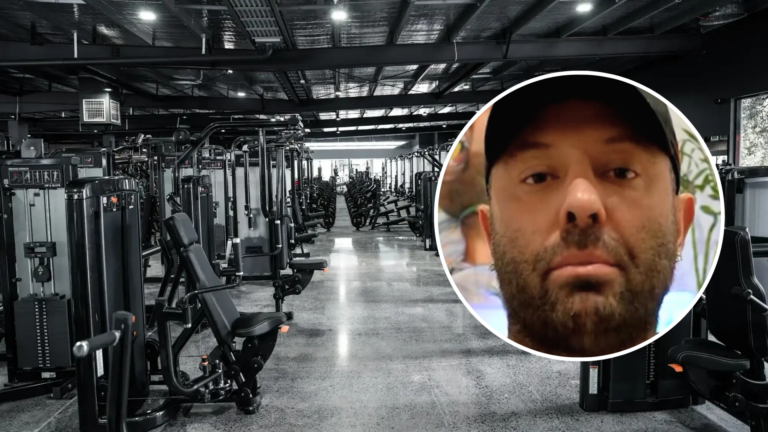
The Derrimut 24:7 Gym in Melrose Park, Adelaide’s south, faces eviction after a court ruling cleared its landlord to take back the premises, marking the latest blow for the struggling fitness chain.
On Thursday, Adelaide’s District Court dismissed Derrimut’s attempt to stop landlord Dimitri Aretzis from closing the Melrose Park site over unpaid rent. Judge Michael Burnett said the company’s subsequent move into administration “fortified” his ruling.
“Unfortunately, we couldn’t see eye-to-eye and make the deal work,” Portelli said on Instagram.
The Melrose Park eviction follows the closure of Derrimut gyms in Angle Vale, Munno Para, Noarlunga, and Shepparton, all linked to unpaid rent.
Court documents show the company’s debt fell from $15 million in April to $12.53 million in June, with other creditors including Return to Work SA, Origin Energy, and Melbourne United Basketball.
Despite mounting pressure, Solomos told staff earlier this year he believed the chain could survive: “For me, it was about opening gyms… and I didn’t pay enough attention to the little things.”
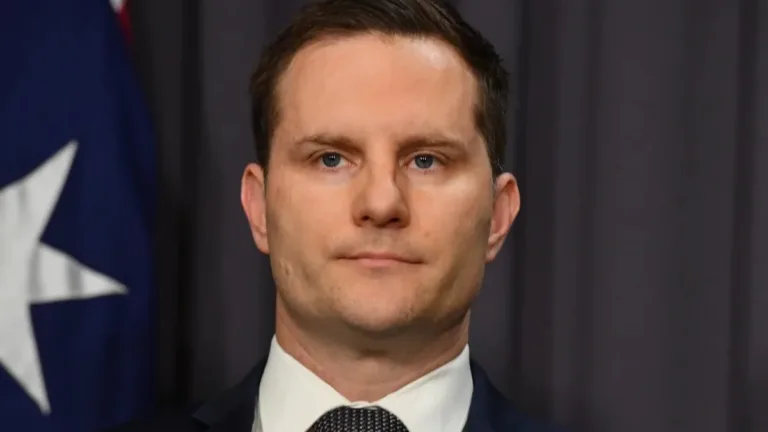
Manager of Opposition Business Alex Hawke MP has become the focus of Liberal Party unrest, with conservatives accusing him of acting as Sussan Ley’s “leader by proxy” as the party finalises its net-zero policy.
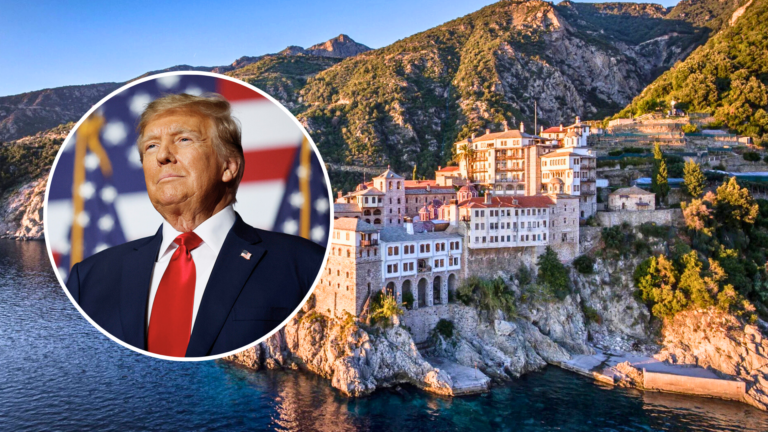
Mount Athos Civil Administrator Alkiviadis Stefanis has officially invited US President Donald Trump to visit the Holy Mountain, revealing he made the request through US Deputy Secretary of State Michael Rigas.
“I told the US Deputy Secretary of State to convey Mount Athos’ official invitation to President Trump. His eyes widened, but he seemed delighted and said, ‘Of course, I will do it,’” Stefanis said.
Stefanis praised Trump’s past engagement with Orthodoxy, citing his meetings with Patriarch Bartholomew and Archbishop Elpidophoros, and his support for reopening the Halki Theological School.
He expressed hope Trump would include Mount Athos in a future trip to Greece, recognising its “spiritual and cultural importance.”
Stefanis also commended Rigas, calling him “a devout man” with a strong appreciation for Mount Athos’ role in religious diplomacy.
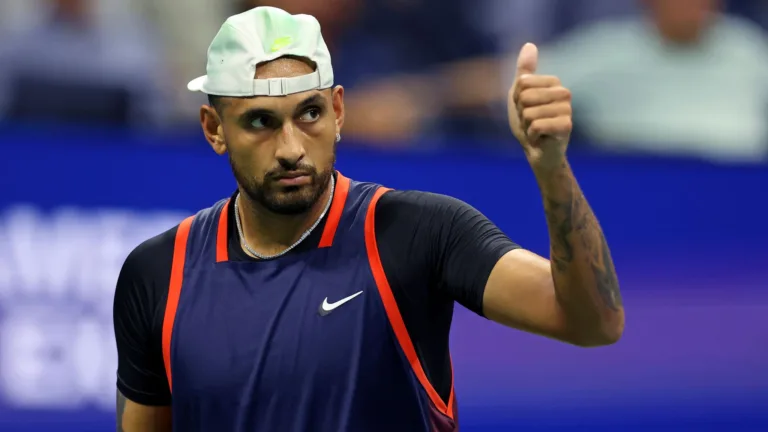
Nick Kyrgios says he’s made a “miracle” recovery from a long-term knee injury and is eyeing a surprise return at the 2025 Australian Open.
After years of knee and wrist problems that limited him to just a handful of matches, the 30-year-old says his knee has suddenly improved and he can now train pain-free.
“It’s not swelling. It’s not feeling bad after a session,” he said.
Kyrgios plans to test his fitness in exhibition matches in the US, India and Dubai before deciding on a Melbourne comeback. Ranked No. 652, he would need a wildcard entry to compete but says he’s regained optimism.
“I thought my tennis career was closing… but now I’m just optimistic again,” he said.
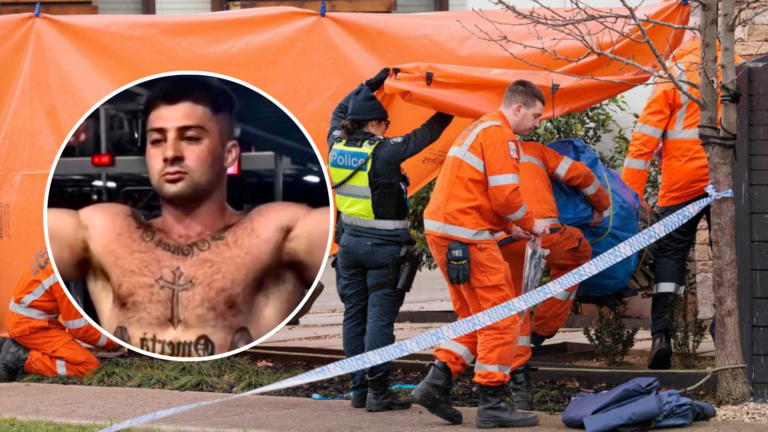
Police believe 21-year-old Athan Boursinos, shot dead in Melbourne’s north, was murdered by organised crime figures from New South Wales who travelled to Victoria specifically to carry out the hit.
Boursinos was killed in a laneway behind Champions Parade, Wollert, on 31 July, in what investigators have described as a “very deliberate and obviously targeted” attack.
According to Detective Acting Superintendent Mark Hatt, intelligence indicates the killing was sanctioned by an interstate crime syndicate, with several men travelling from NSW before the shooting.
“Intelligence leads us to believe these men travelled down from New South Wales prior to Athan’s murder, which suggests this is a murder linked to organised crime entities based in that state,” he said.
Police have released CCTV images of men they want to identify and are seeking information about a white Volkswagen SUV, believed to have been used as a getaway vehicle. Two other cars – a stolen Nissan Patrol and a grey Volkswagen Golf – were later found burnt out in Reservoir and Mickleham.
Detectives believe the suspects then fled in a silver BMW sedan and are urging anyone with information about the men or vehicles to contact Crime Stoppers on 1800 333 000.
“If you believe you have any information relating to the men who may have travelled down from New South Wales to carry out this murder, now is the time to speak up,” Superintendent Hatt said.
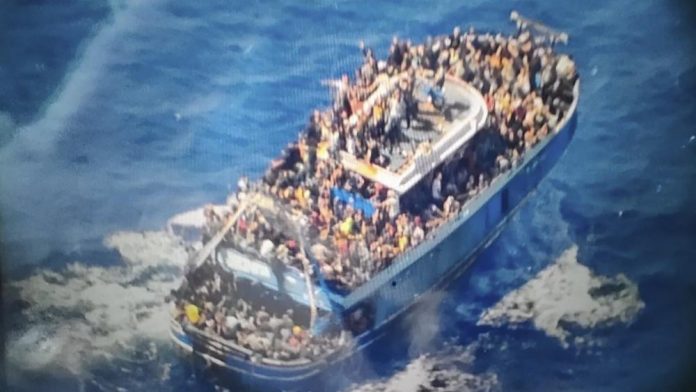
Four senior members of Greece’s coastguard, including its current commander, will face criminal prosecution over the 2023 Pylos migrant shipwreck, which left an estimated 650 people dead.
The Adriana, carrying migrants from Libya to Italy, sank off Pylos after coastguards allegedly made a failed towing attempt.
Greece has denied wrongdoing, but a prosecutor at the naval appeal court in Piraeus has now called for Vice Admiral Tryfon Kontizas and three other senior officers to stand trial for negligent manslaughter and failure to rescue.
Only 82 bodies were recovered, and survivors claim the coastguard’s actions caused the vessel to capsize. The case reopens months after lower courts had cleared the officers, following a legal challenge by victims’ families and survivors’ lawyers.
Greek officials insist the country respects human rights and note it has rescued more than 250,000 people at sea in the past decade.
Greece has taken a major step toward reviving its offshore energy ambitions with the signing of a new exploration agreement in the Ionian Sea involving ExxonMobil, Energean, and Helleniq Energy.
The deal, signed in Athens during the US-Greece Partnership for Transatlantic Energy Cooperation (P-TEC) meetings, covers Block 2, a 2,422-square-kilometre area northwest of Corfu believed to hold significant untapped gas potential.
The concession sees ExxonMobil holding a 60% stake, Energean 30%, and Helleniq Energy 10%. Energean will lead the exploration phase, with ExxonMobil set to assume control should drilling prove commercially viable.
Today in Athens, @ExxonMobil signed a landmark deal with Greece’s @EnergeanPLC to restore offshore gas drilling in the Ionian Sea for the first time in more than 40 years.
The U.S. is proud to partner with Greece as we restore commonsense and unleash affordable, reliable, and… pic.twitter.com/osiQK6cA6a
The venture, estimated to require between $50 million and $100 million, aims to begin exploratory drilling by late 2026 or early 2027, with potential production in the early 2030s.
According to Exxon’s vice president of global exploration, John Ardill, “This significant exploration agreement paves the way for potential future exploratory drilling investments in the 2027 timeframe.” He added that the Ionian project could become a key Mediterranean milestone if results are favourable.
Greek Prime Minister Kyriakos Mitsotakis hailed the agreement as “historic,” declaring, “Today we are writing a new chapter in Greece’s energy history. This is not just another investment. It is the first exploratory drilling in our country in almost 40 years.”
Κάνουμε πράξη τη δέσμευσή μας: αξιοποιούμε με σχέδιο και όραμα τον εθνικό μας πλούτο. pic.twitter.com/Jgq9d3YaC7
The Energy Ministry described the project as “high-risk, high-reward,” while Energean CEO Mathios Rigas emphasised that “this agreement represents an important step toward harnessing Greece’s natural resources and strengthening our country’s role on Europe’s energy map.”
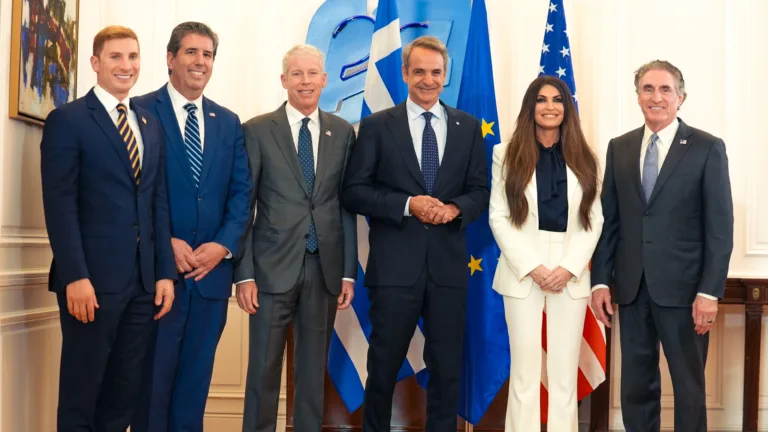
The move also signals renewed US interest in Greek offshore exploration, following recent developments involving Chevron. As new US ambassador Kimberly Guilfoyle put it, “America is back and drilling in the Ionian Sea.”
If successful, the project could mark a turning point in Greece’s efforts to establish itself as a regional energy hub and reduce European dependence on external gas sources.
From the cult sanctuary at ancient Palaepaphos (at the modern village of Kouklia), pilgrims would travel across the eastern Mediterranean to pay homage to an ancient female goddess of fertility. The sanctuary was active from at least 1200 BCE right into later Roman periods.
At some point in deep time, the ancient goddess morphed into the worship of Aphrodite, goddess of love and beauty, as we know her from her classical form. It was believed that she was born in the coast of Cyprus near the rocks now known as Petra tou Romiou.
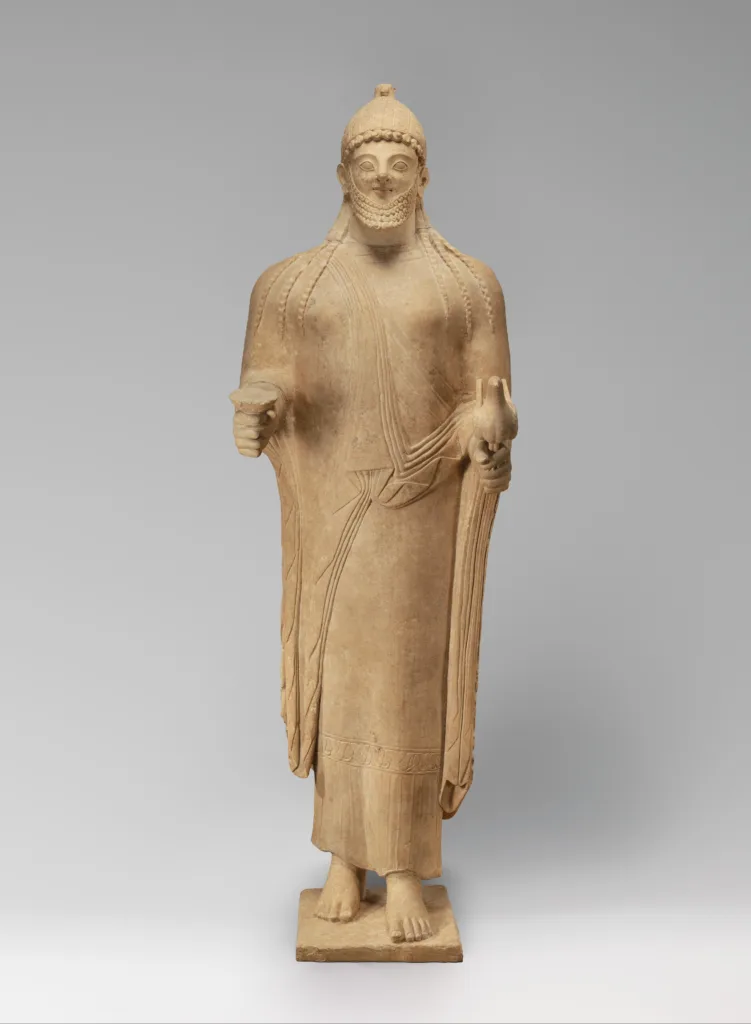
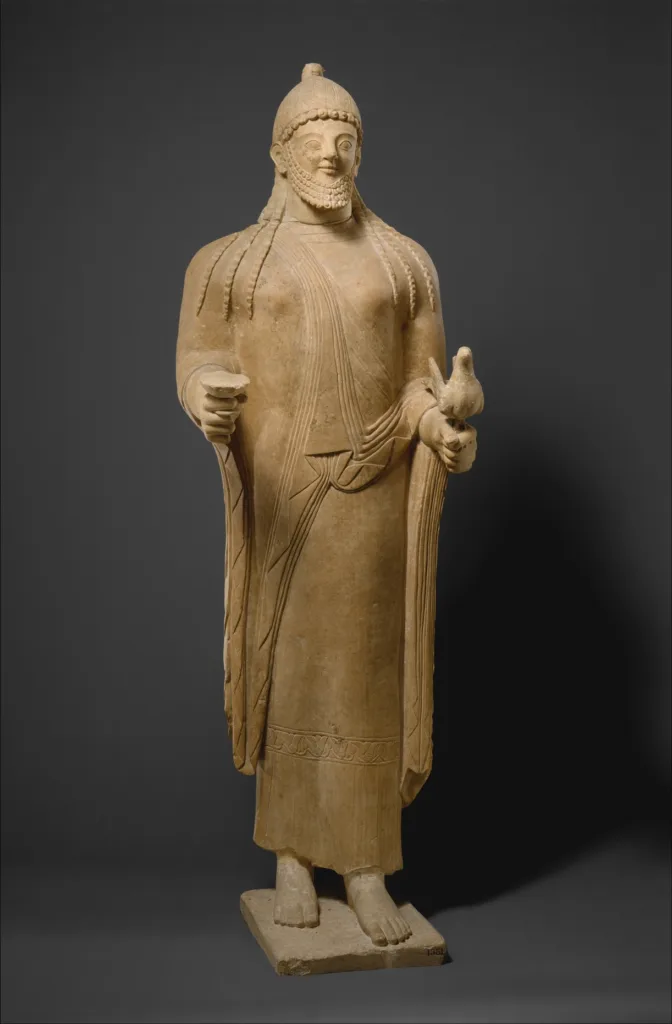
The goddess required priests and priestesses to serve her and to operate the sanctuary site. Carved from local Cypriot limestone, this statue of the late sixth century BCE gives us a hint as to what a priest looks like.
The “Archaic smile” (a slight smile on his lips), the long tresses of hair and the drapery are all heavily influenced by sculptural styles in Greece, yet the pose and the head-dress are very common Cypriot forms that have been influenced by Middle Eastern traditions such as Assyrian headgear. We see the remarkable mixing of cultural traditions that informed Cypriot art for millennia.
He holds a bird in his left hand and a phiale (libation bowl) in his right, both common symbols in ancient Cyprus associated with the goddess. He stands over two metres tall.
Traces of paint remain on the statue which remind us that in antiquity statues were painted brightly. It is particularly visible on his lips, but traces are across his drapery. Vertical lotus designs and the head of a bull are carved into the statue to show us the patterning on his drapery, with the folds also carefully carved into stone.
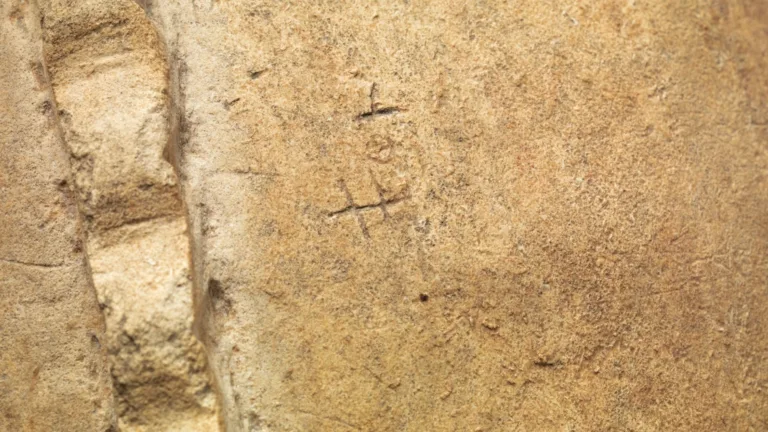
If one looks at his left shoulder, one can see the faint remains of an inscription in Cypriot syllabic (the ancient written language of the island throughout the Iron Age until the adoption of the Greek alphabet in the fourth century BCE). It seems to read “of the Paphian goddess”.
Where this statue was found is not known. It was collected by the American consul Luigi Palma di Cesnola (1832-1904) who oversaw hundreds of illicit excavations across the island in the 1860-70s. Cesnola rarely kept notes and when he did, he often falsified evidence. We know his workers dug at Palaepaphos which is where presumably this statue was found.
When Cesnola left Cyprus in 1877 he took with him more than 35,000 ancient objects, including this. Those objects would form the basis of the Metropolitan Museum of Art. It was an incredible loss of culture heritage for Cyprus.
The base and feet are modern reconstructions and the bird is heavily restored.