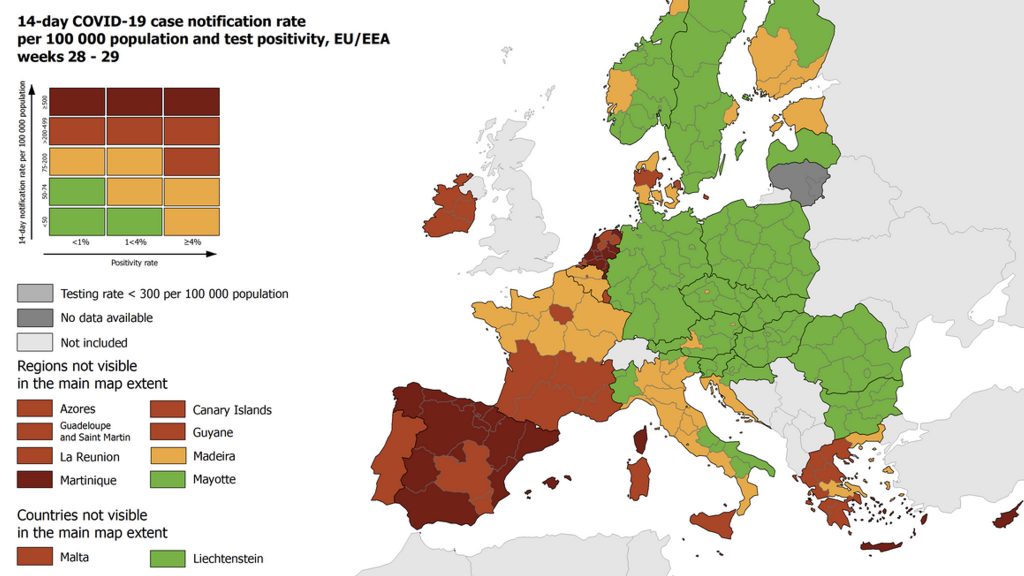
Greece’s south Aegean islands were marked dark red on the European Centre for Disease Prevention and Control’s COVID-19 map on Thursday.
The European Union (EU) agency discourages all but essential travel to and from thirteen islands.
Greek Deputy Civil Protection Minister Nikos Hardalias says Mykonos and Ios are “one step” away from restrictions.
Minister Hardalias adds the Ionian islands of Zakynthos, Tinos, Lefkada, Santorini, Paros, and Rhodes, to the growing list of concern.
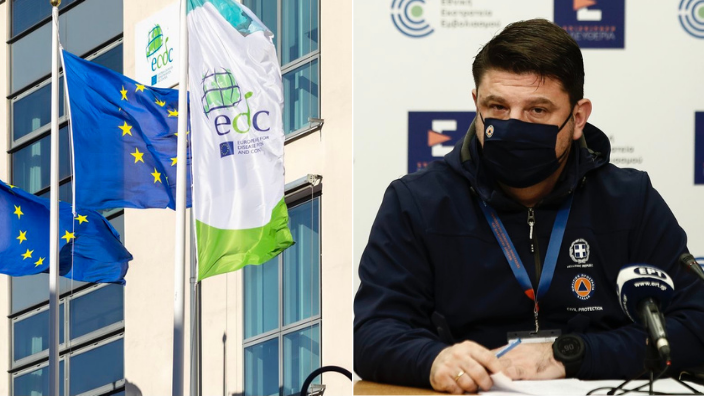
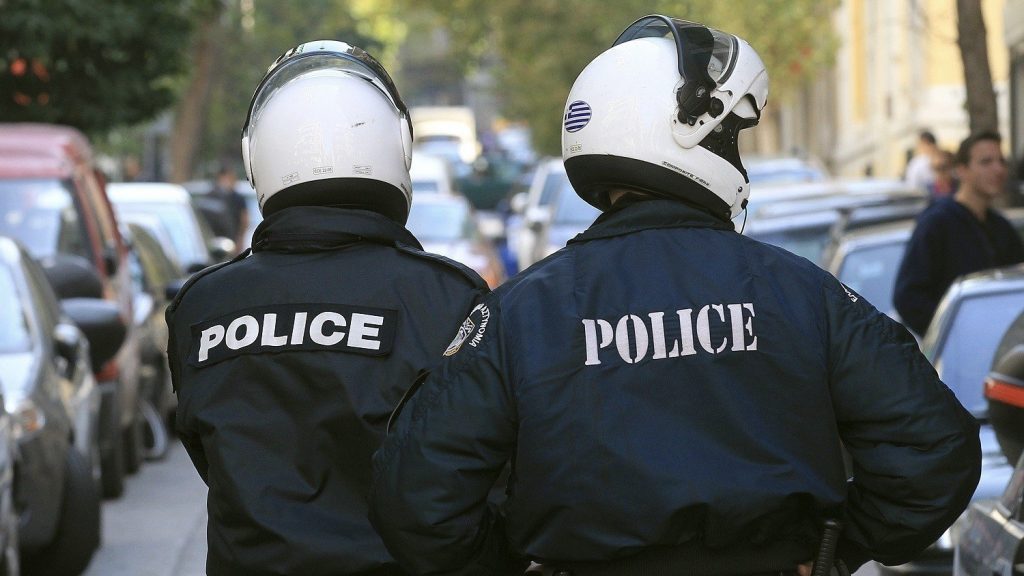
Minister Nick Hardalias expressed his growing concern for the tourism hotspots following the ECDC’s move to designate islands as dark red zones (Right: ANA-MPA/Yiannis Kolesidis) (Left: Via @ECDC_EU on Twitter)
The dark red zones may help distinguish very high-risk areas to consider testing, quarantine, and vaccination measures.
Crete was added to the dark red zone last week.
The dark red zones on the ECDC map help distinguish very high-risk areas (Photo: ECDC)
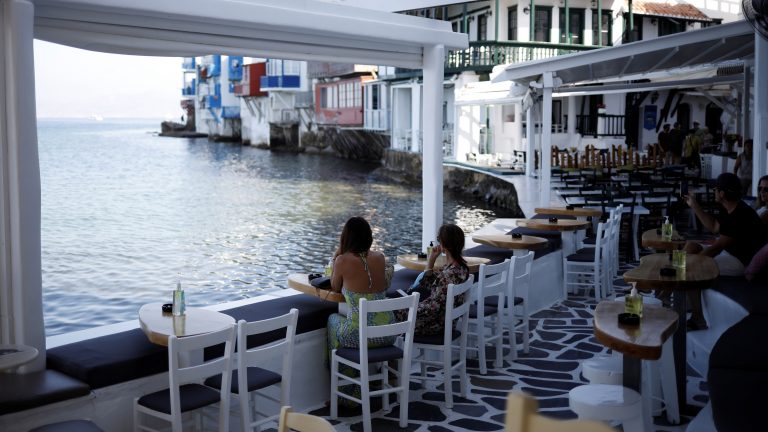
Greece has been promoting “COVID-free” islands to boost tourism for the summer period after the industry’s worst year in decades in 2020.
Uncertainty remains over how the season will unfold, despite a strong June in terms of arrivals and optimism from ministers and tourism officials.
“We’re waiting to see how the (tourist) markets will react,” said Manolis Markopoulos, president of the hoteliers association of Rhodes, referring to the decision of the ECDC.
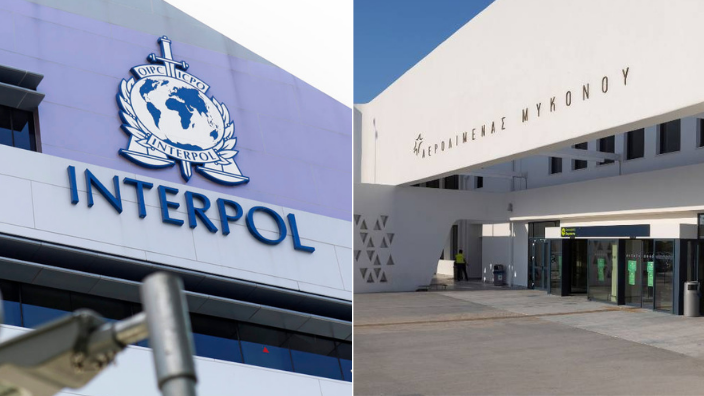
An Australian man wanted by Interpol has been arrested at Mykonos Airport on Wednesday.
The 39-year-old is listed on Interpol’s most-wanted list and is facing charges in the United States.
He is a member of an international drug ring, involved in the importation and trafficking of cocaine, as well as money laundering, according to the police.
(Source: Metrosport.gr)
He appears on Interpol’s “red notice,” which is a request to law enforcement worldwide to locate and provisionally arrest a person pending extradition, surrender, or similar legal action.
Officers from the Attica Security Police Drug Prosecution Subdirectorate and the Police Department of Mykonos arrested the man.
The man is expected to appear before a prosecutor.
Greece’s mixed doubles pairing, Maria Sakkari and Stefanos Tsitsipas, have been defeated in the Tokyo Olympics quarterfinal tonight by the Aussie duo, Ashleigh Barty and John Peers, 6-4, 4-6, [10-6].
Greek Australians around the country were waiting with bated breath for the game to begin all day and once it did, both sides didn’t disappoint.
Barty and Peers had a great start by dominating most of the first set and eventually claiming it 6-4 after breaking the serve of Tsitsipas.
The Greeks bounced back to take a 2-0 lead in the second set – but again, the Australians remained calm under pressure. They kept fighting hard, however couldn’t reel back the early break and the Greeks forced a deciding match tiebreak.
As the tension rose in the high-pressure match tiebreak, Barty and Peers produced some brilliant doubles play to race ahead 7-3.
How good 🙌
Superb net play from @ashbarty and @peers to keep Australia's campaign alive. They get up over Greece's Maria Sakkari and Stefanos Tsitsipas 6-4, 4-6, [10-6] to book a spot in the Mixed Doubles semifinals. #Tokyo2020 | #7Olympicspic.twitter.com/RYlrhXQxSl
From there, they closed out an impressive victory to become the first Australian team to reach an Olympic mixed doubles semifinal.
Peers and Barty now play fourth seeds Andrey Rublev and Anastasia Pavlyuchenkova, who are representing the Russian Olympic Committee, in the semifinals.
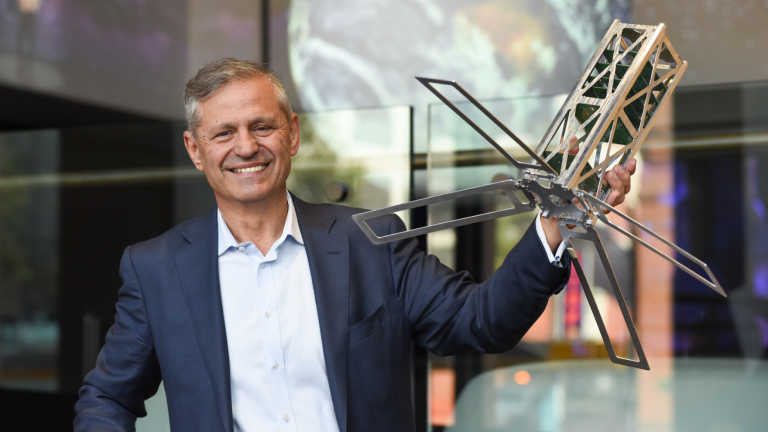
South Australia has its eyes firmly locked on space as it prepares to launch its first, locally manufactured small satellite into ‘low-Earth’ orbit in 2022.
“Isn’t that cool? How good is that?” says Adelaide-based SmartSat Cooperative Centre (CRC) CEO and Managing Director, Professor Andy Koronios, who leads the $6.5 million mission in partnership with local satellite manufacturing firm Inovor Technologies and space data company Myriota.
“Some years ago, we would think that only big governments like the US, China or Russia would be able to do things like this, but technology has come a long way,” Professor Koronios tells The Greek Herald explaining that “the smart watches we wear have a lot more processing power than the computers that guided the Apollo missions to the moon.”
“Our satellite, called SASAT1 -which means SA’s first satellite- will not be bigger than a cereal box but it’s going to be highly impactful and the beautiful thing about it is that it is manufactured in South Australia,” he says.
Very proud to have been paid a visit today by the builders of Australia’s first satellite Australis-OSCAR 5 some 50 years ago! We aspire to carry the flag for a new generation of space activity in Australia pic.twitter.com/85quEYVhhV
Although headquartered in South Australia the CRC is a $245 million national program involving some of the top universities in the country and internationally as well as the Commonwealth Scientific and Industrial Research Organisation (CSIRO) and Defence Science and Technology (DST).
“We want to develop new generation satellite technologies to help the country secure its defence, telecommunications and monitoring technologies for the future. I really have a burning ambition to get satellites to serve humanity,” says Koronios confessing that he inherited his tenacity and passion to succeed from his ‘Yiayia’ (Greek grandma).
A will to give back to Greece
One of five siblings Koronios was born and bredin Sparta, south-eastern Peloponnese. At the age of two, his parents left him to seek employment in Athens but never returned.
“I was raised by my grandmother and she always used to tell me that I need to become someone better than average. This to me has been my compass,” he says.
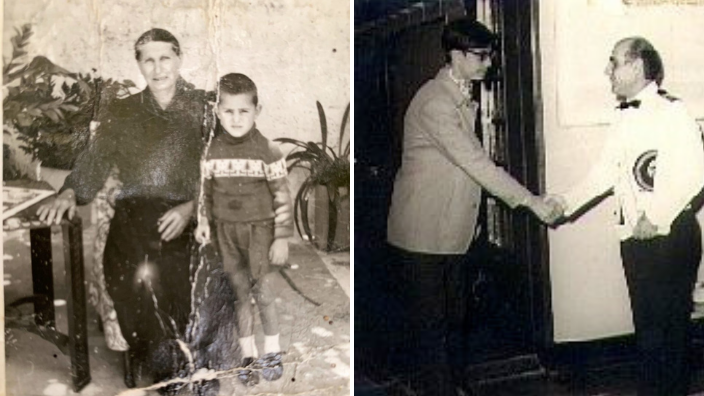
L to R: Andy Koronios with his yiayia in Sparta and photo R embarking on the Patris
In the early 1970s and after his grandmother had passed, he came to Australia aboard the Patris with no word of English but an unstoppable ambition to work hard and build a better future.
“I did nothing more than all the Greek migrants who tried hard and persisted to do better,” says the Spartan, encouraging young people to pursue STEM as a career path.
SmartSat has just released the Space Industry Skills Gap Analysis report, identifying 319 space-related skills needed to support future needs of the sector. This study was supported by the @AusSpaceAgency to understand the skills needs of the national space workforce. pic.twitter.com/MMf5Li30DL
“Anyone can be involved in the space industry or in STEM. Have the willingness to really work and be persistent. I came from a little village in Greece and leading a group of people in this area was the last thing I ever dreamed of.”
“I have a passion for helping Greece in some way. I am particularly interested to get Greek start-ups to become global partners in the field and benefit from space technologies.”
Professor Koronios says he is working systematically towards this goal and is currently in contact with the Greek Embassy in Australia, the Hellenic Initiative, the Mayor of Sparta and Chairman of the International Chamber of Commerce of Greece (ICC) as well as the University of Patra in order to offer some scholarships to PhD students.
“Giving back to Greece is a priority for me. I want to do something for my home country,” concludes the Greek Australian Professor.
Despina Tanner has always had a strong passion and connection to her Kastellorizian culture while growing up in Perth, Western Australia.
Her father, John Kannis, was 21 years old when he arrived in WA in 1946 with his five older siblings and his parents. They came as refugees who’d been displaced by the war and forced to flee Kastellorizo.
Despina’s mother was born in Perth, but still had Kastellorizian roots from her mother.
Both of them instilled in their children not only a rich cultural heritage of recipes for traditional Kastellorizian sweets, but also music, dance, and Greek Orthodox traditions which were celebrated with relatives and the larger Kastellorizian community in Perth. It’s clear the Greek language was also always present.
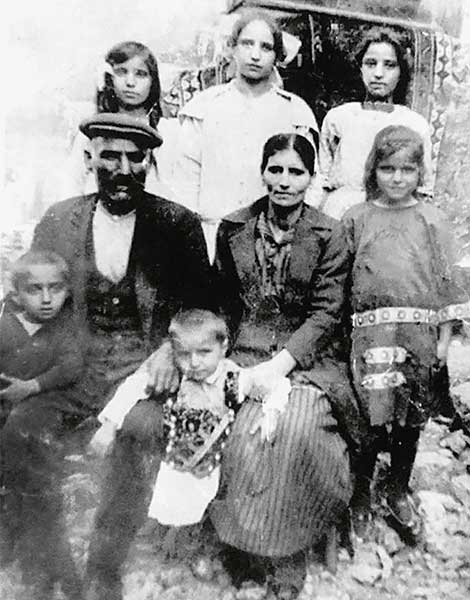
Despina’s great-grandmother with her husband and children, in a photo taken on Kastellorizo in 1924. Photo: Greece Is.
“At home, I spoke Greek with my father, my grandmother and my aunts and uncles. My siblings and I went to a special Greek school once a week and we also attended Sunday school,” Despina told Greece Is.
Moving to Kastellorizo:
Despite being so immersed in the Kastellorizian culture from such a young age, Despina says the moment which truly cemented her pride in her roots was when she visited Kastellorizo with her father in 1973.
“We took the boat from Rhodes, arriving in the middle of the night. The waters of the harbour were calm and the town was quiet. As he disembarked, my father made the sign of the cross and kissed the ground,” Despina tells Greece Is.
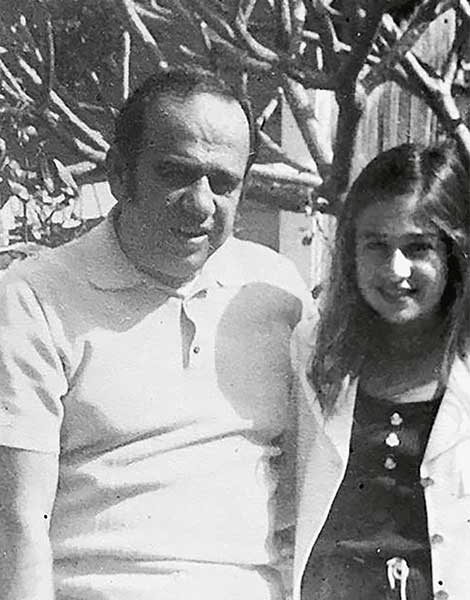
A photo taken with her father, John Kominos Kannis, in 1973. Photo: Greece Is.
“This vacation was life-changing; coming here as a descendant of the island was very emotional and a pivotal experience. I fell in love with the place and from that moment onward dreamt of renovating a house and living here where my ancestors had lived for centuries.”
At the time, that dream wasn’t possible as Despina returned to Perth, opened her own gift shop and cafe called Boucla, and had to deal with the death of her father and two years later, her only brother.
“We spent years in mourning. I feel blessed that I had this heritage to hold on to, and the supportive network of my family. With my father’s death, my love for Kastellorizo grew,” Despina says.
Eventually, Despina returned to Kastellorizo with her mother in 1981, with her husband and son John in 1989 and then, in 1990, her daughter Evana was conceived on Kastellorizo.
“I really wanted to buy a house but, as it turned out, we didn’t get back to the island for another 15 years. When we finally did, our son and daughter, by then 18 and 15 years old respectively, fell in love with the place as I had,” she tells Greece Is.
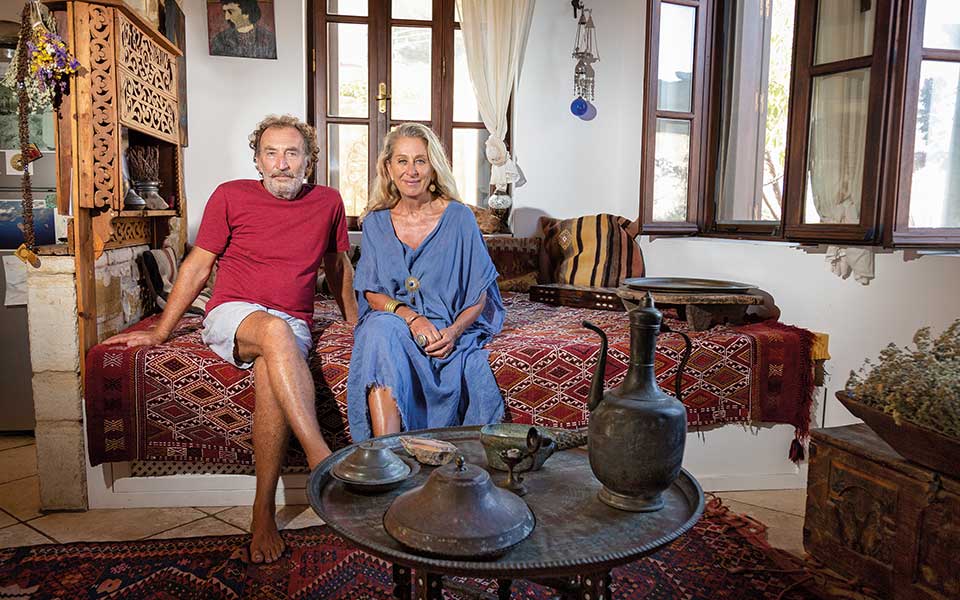
Despina Tanner and her Australian husband Brian Tanner in their home on Kastellorizo. Photo: Nikos Pilos / Greece Is.
“We bought a plot of land and, in 2007, we built a house. From 2008 onwards, I came back every year and then, in July of 2018, my husband and I started our newest adventure and moved to Kastellorizo.”
Since then, Despina and her husband have been enjoying life on the island by going on morning hikes to Avlonia, exploring old farms and gardening. Despina’s husband is also a devoted bread maker and has sourced a biodynamic-grown ancient grain from Crete.
“The greatest beauty of the island lies in its the landscape. It’s strange, but this rugged beauty is similar to that of Australia,” Despina says.
“I feel blessed to have two homelands, Kastellorizo and Australia, two places which, at the end of the day, are not as far from each other as you might think.”
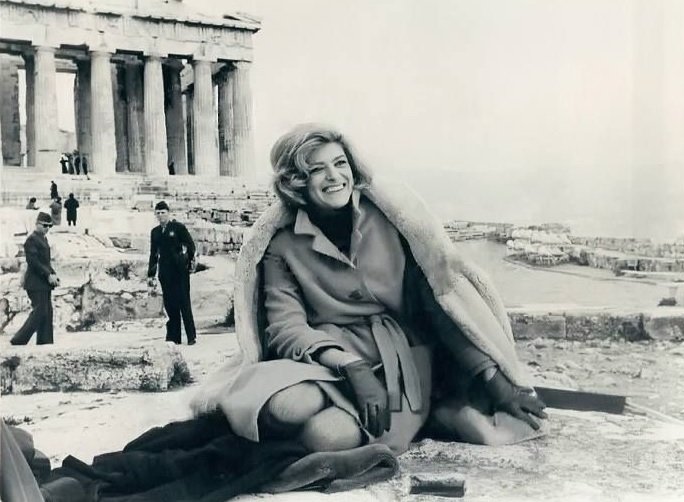
On July 29, 1982, then-Minister of Culture in Greece, Melina Mercouri, addressed the World Conference on Cultural Policies organised by UNESCO in Mexico City.
At the conference, Mercouri seized the opportunity to address the issue of the repatriation of the Parthenon Marbles to a global audience and demanded they be returned to Greece.
In her speech in front of other Ministers of Culture who attended the conference, she urged for the support of the global community to Greek people’s claim. As she stated in her speech:
“It is now some six months since I dared make the suggestion that these marbles ought to be returned to Greece. Since then a small storm has been raging. But what I find most interesting is the fact that, following an interview with the BBC, I had hundreds of encouraging letters from individuals and organisations in Britain. I detect in these letters the English people’s love of justice and beauty,” Mercouri said.
Mercouri called for the return of the Parthenon Marbles to Greece at a UNESCO conference.
“We are not naive. And we well understand that the museums cannot be emptied. But I insist on reminding you that in the case of the Acropolis marbles we are not asking for the return of a painting or a statue. We are asking for the return of a portion of a unique monument, the privileged symbol of a whole culture.”
After this enthralling speech at the UNESCO conference, Mercouri immersed herself further in a battle for the repatriation of the Marbles and she wasn’t alone.
Her vision received wide public acceptance in Greece by academics, middle and working class people, politicians, artists, business circles, as well from other countries.
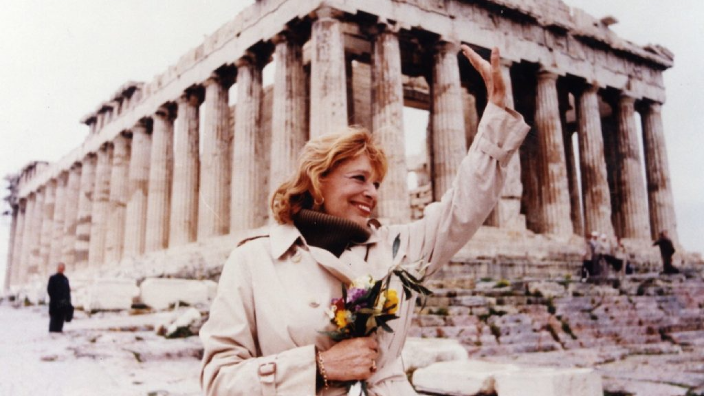
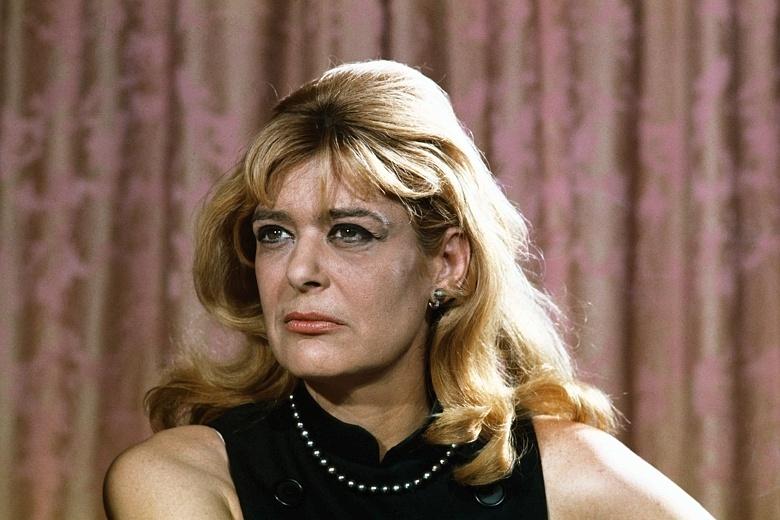
Melina Mercouri.
In 1981, the year before Melina’s speech, the International Organising Committee – Australia – for the Restitution of the Parthenon Marbles, was established. The committee was the first in the world to campaign for the return of the Parthenon Marbles to Greece.
In 1983, the British Committee for the Reunification of the Parthenon Marbles was established. Shortly after this, and following correspondence between the Australian committee and Mercouri, she visited Australia. While in Australia, she asked the inaugural chair of the Australian Committee, Emanuel J Comino, to extend support to the newly formed British Committee.
Following the continuously expanding influence of the campaign, on October 1984 the Greek government made its first claim for the return of the Marbles and soon received its rejection from the British side.
Since then, the issue of the reunification of the Parthenon Marbles has been in the political and cultural agenda of all consecutive Greek governments.
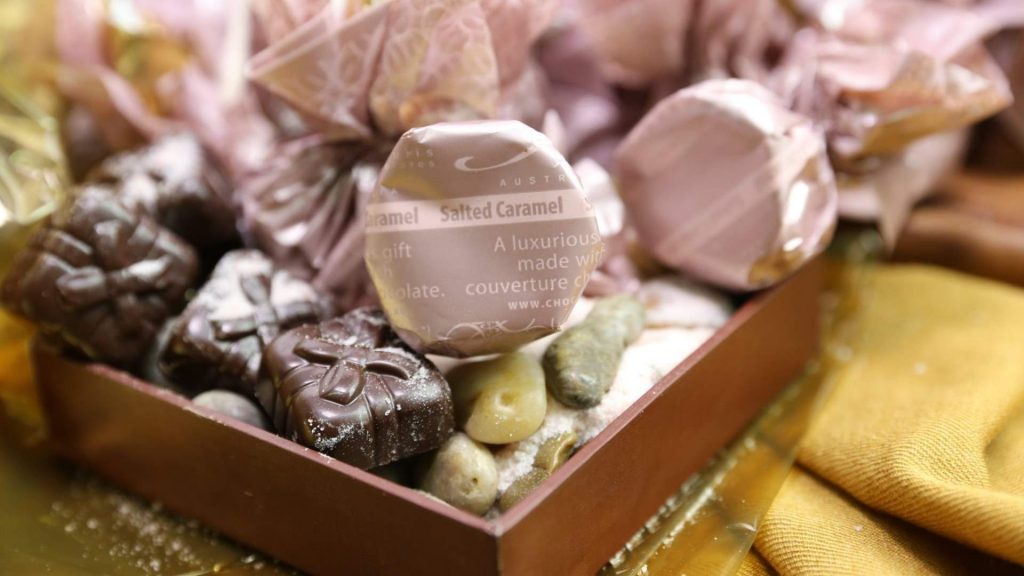
The owner of Fardoulis Chocolates in Kogarah, Anna Athas, has reassured customers that her business is still open for business and offering click and collect to valued customers.
On Tuesday, a COVID alert was issued for a business with a similar name – Fardoulis Sweet and Nuts. This caused customers to call Ms Athas to enquire about her business, The Leaderreports.
“We are deeply sorry to hear the unfortunate linked COVID case to Fardoulis Sweets and Nuts, Mum and Dad’s Nut Factory at 129 Princes Hwy Kogarah next door to the Medical Centre on the corner of South Street,” Ms Athas told The Leader.
Fardoulis Chocolates is a popular shop in Kogarah.
“Our shop is located at 105-109 Princes Hwy Kogarah some distance away. We are COVID Safe, have a COVID safety plan and are not affected by the COVID case as we are separate entities.
“I understand there was some community concern with the news announcement.
“Our Chocolates are available to order online or contactless click and collect. We are also offering free delivery for the Sutherland Shire and the St George area for orders over $50.”
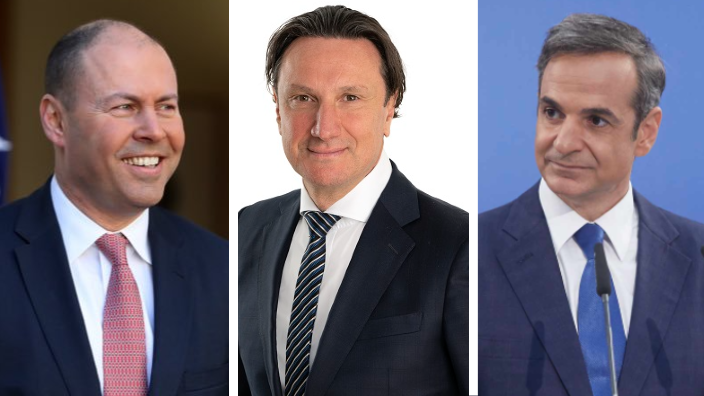
The Greek Orthodox Community of Melbourne and Victoria have written to both the Prime Minister of Greece, Kyriakos Mitsotakis, and Australia’s Federal Treasurer, Josh Frydenberg, asking for a double taxation agreement (DTA) between Australia and Greece.
In their letter to Mr Frydenberg, the Community stresses that a DTA is “one of the most common diplomatic agreements between nations” and the lack of a DTA between Greece and Australia is “proving to be a major impediment in encouraging better economic ties.”
“We seek your support on this matter and would welcome any opportunity to discuss the issues our community faces with you and or your staff at your convenience,” the Community wrote in the letter, stressing that they had also recently written to the Greek PM about the matter.
In this letter to Mitsotakis, signed by President of the Community, Bill Papastergiadis, and Legal Advisor, John Tripidakis, there was a specific focus on Greek Australians and their “hopes to increase their economic and investment relations with their country of origin, for the benefit of both countries.”
“Second and third generations of immigrant families make up the majority of successful professionals and entrepreneurs and many are looking forward to investment initiatives in Greece,” the letter said, before explaining the positives of a DTA.
Full Letter to Josh Frydenberg in English can be found here.
FullLetter to Kyriakos Mitsotakis in Greek can be found here.
NSW recorded 239 new locally acquired COVID-19 cases in the 24 hours to 8:00pm yesterday. It’s the highest daily number of new infections ever recorded in NSW since the pandemic began.
Nearly 111,000 tests were completed in the reporting period.
There was also a new COVID-19 death recorded. A man in his 80s from south west Sydney died yesterday afternoon at Royal North Shore Hospital.
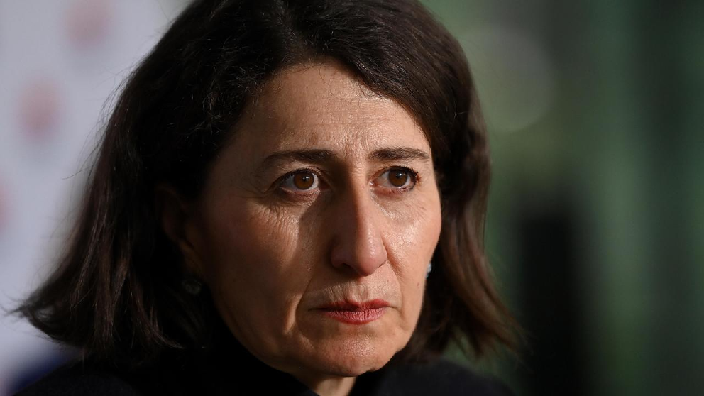
Premier Gladys Berejiklian says she feared “things are likely to get worse before they get better,” given the high number of new infections.
The Premier has introduced new restrictions in eight local government areas (LGAs) where the spread of COVID-19 is most pronounced.
From 12:01am tomorrow, residents in Georges River, Parramatta, Blacktown, Cumberland, Canterbury-Bankstown, Fairfield, Liverpool and Campbelltown must:
Wear a mask whenever they leave their homes, regardless of proximity to others
Not travel more than 5km from home for shopping, unless the goods are not available in their local area
Not travel more than 5km from their home to exercise or take part in a “singles bubble”
The new rules are due to a continuing rate of transmission in workplaces, homes and health care settings, the Premier said.
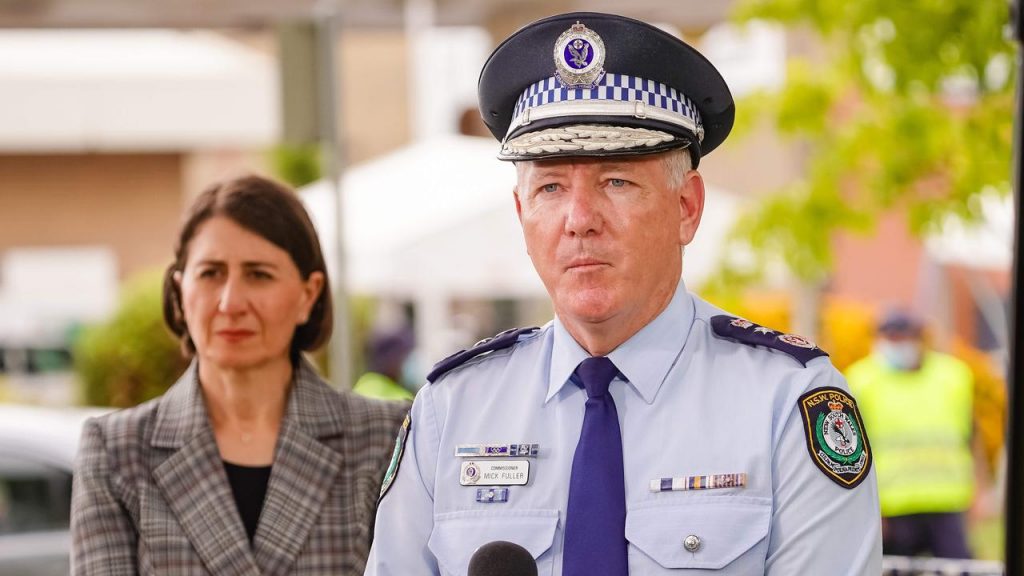
Police Commissioner Mick Fuller sought extra powers for police to ensure compliance in the eight LGA’s, and says thousands of extra police will be out to enforce the new rules.
Police Commissioner Mick Fuller.
“We know that the numbers are too high today. We all want to come out of lockdown. These new powers, the additional police into these areas, is about getting us out of lockdown sooner,” he said.
Chief health officer Kerry Chant issued a dire warning, as the situation in NSW deteriorates.
“At this level of cases, we are going to continue to see further deaths. And, sadly, too many elderly people in our communities are not protected,” she said.
Australia’s peak multicultural organisation, the Federation of Ethnic Communities’ Council of Australia (FECCA), welcomes Federal Government proposed legislation that will increase protections for migrant workers.
The Bill penalises and bans employers for a period if they are found to have violated the rights of migrant workers.
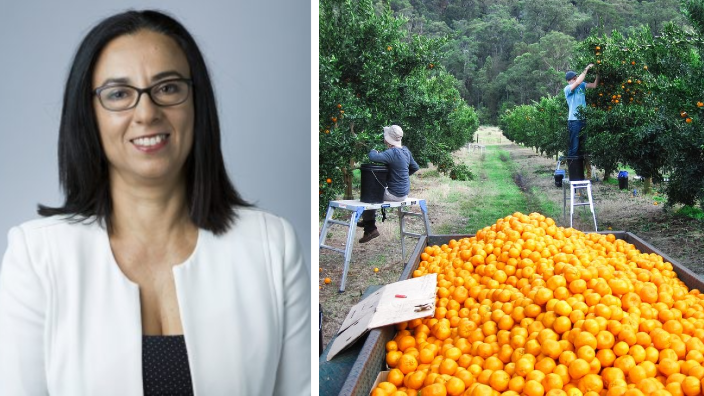
FECCA Chairperson, Mary Patetsos, said the Migration Amendment (Protecting Migrant Workers) Bill 2021 would reduce the probability of workers entering into work arrangements against their will or under exploitative conditions.
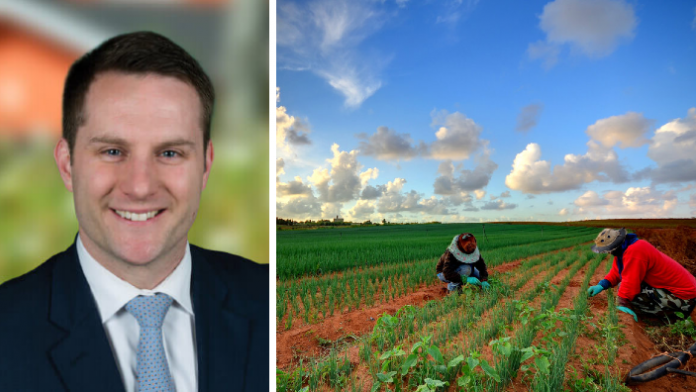
Wage theft and other coercive practices committed by employers who prey on one of the most vulnerable groups in Australia must be stopped and perpetrators penalised accordingly, as outlined by the Minister for Immigration the Hon. Alex Hawke MP.
Alex Hawke MP announced the proposed legislation on Tuesday.
“Circumstance pushes many migrant workers into jobs where they are underpaid and often at the mercy of the employer,” Ms Patetsos said.
“Employers will now have a duty of care towards workers from overseas – something woefully absent today in many businesses.”
Ms Patetsos said the Bill restores the dignity of employees from overseas and recognises their huge contribution to keeping key sectors of the Australian economy vibrant.
Mary Patetsos.
“It’s also important to acknowledge that most businesses are doing the right thing by their workers, and these proposed changes will give them confidence and will restore the reputation of those sectors who heavily rely on hard working migrant workers,” she said.
Ms Patetsos expressed her hopes that the Bill will be accompanied by an effective engagement and communications strategy and protections for affected workers.
“Many migrant workers are not aware of the Fair Work Ombudsman and its role. It’s critical that newly arrived migrant workers are made aware of their rights and that they will not lose their place in Australia if they stand up for these rights.” she said.
“FECCA will work with the Government toward ensuring the safety of all migrant workers.”