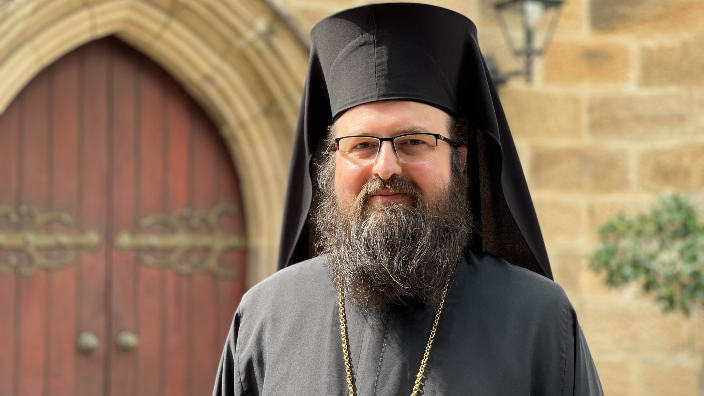
The Greek Orthodox Archdiocese of Australia has announced in a statement today that the Very Reverend Archimandrite Christophoros Krikelis has been appointed as the new Chancellor.
Full statement in English:
“It is with joy that we announce to the pious faithful of the Holy Archdiocese of Australia that after the assumption of the duties of the Archiepiscopal Vicar of Brisbane by the current conscientious and God-pleasing Chancellor His Grace Bishop Emilianos of Meloa, the Very Reverend Archimandrite Christophoros Krikelis is appointed as the new Chancellor, who during the last two years has worked in the role as private secretary of the personal office of the Archbishop.
The new Chancellor is distinguished for his ecclesial ethos, his diligence and his dedication to the Ecumenical Throne and the Holy Archdiocese.
The two promoted clergy received the paternal wishes and the blessing of His Eminence Archbishop Makarios of Australia for the success of the new ecclesiastical ministry that they have undertaken.”
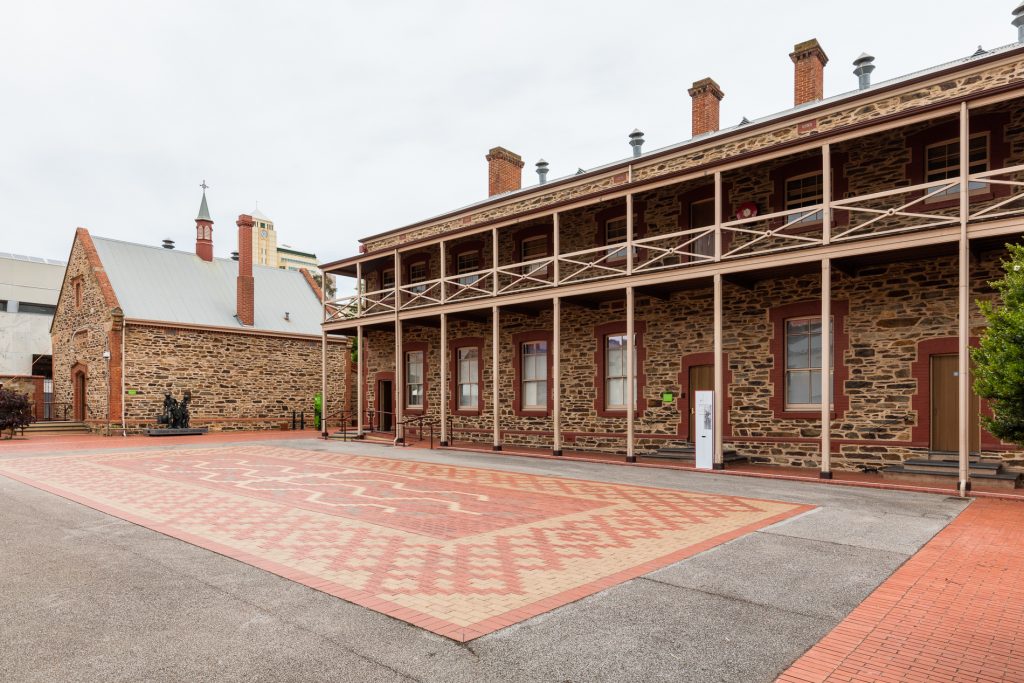
Nearly 3000 pavers engraved with names of people and their respective origin make up the Settlement Square in South Australia’s Migration Museum.
Among those are many Greeks who made the state their home as early as the 1830s.
The Square is a memorial for families to remember their ancestors’ arrival in Australia and value the stories that create South Australia’s multicultural tapestry.
The Settlement Square at South Australia’s Migration Museum
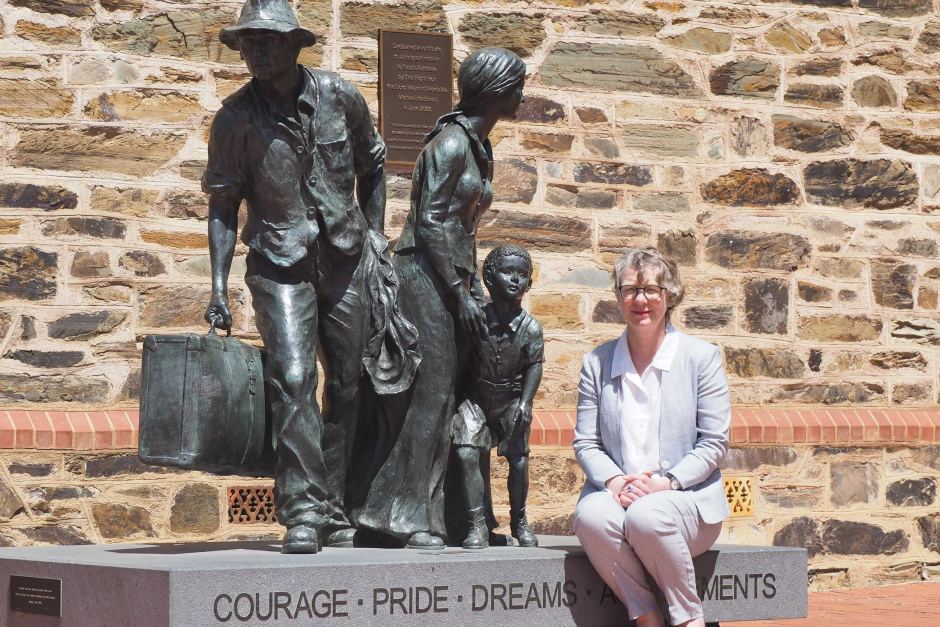
“Stories of migration are key to understanding both the history of South Australia and to social cohesion in the present,” Museum Director, Mandy Paul told The Greek Herald.
“Stories of individuals and families collectively tell the story of our state. Understanding our past helps us to build a future where cultural diversity continues to be valued and celebrated.”
SA Migration Museum Director, Mandy Paul. Photo: ABC
Acknowledging the past to lead for the future
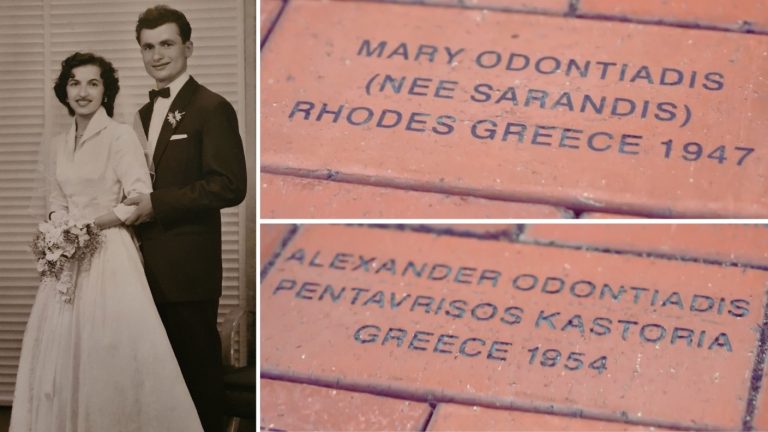
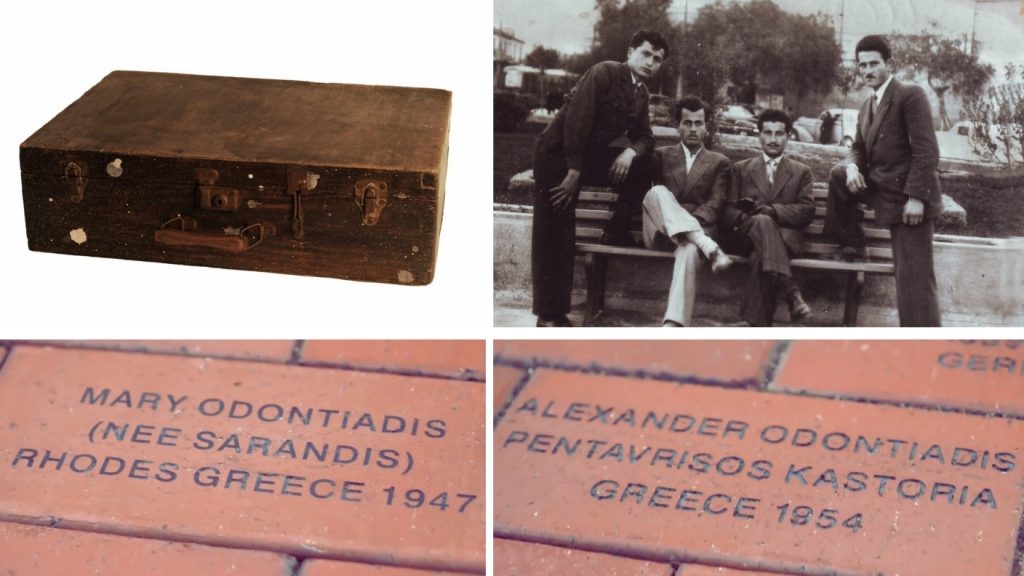
On two pavers that lie close to each other are the names Alexander (Alex) Odontiadis from Kastoria and Mary Odontiadis (nee Sarandis) from Rhodes.
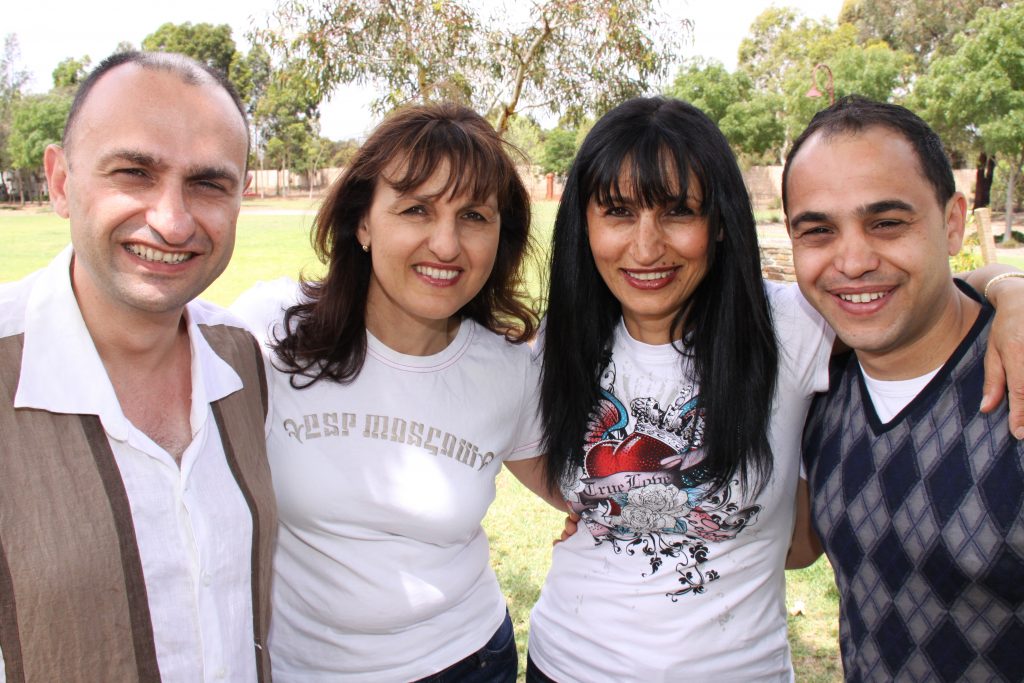
The paver dedicated to Mary Odontiadis was placed in the Settlement Square only a few years ago as a gesture of honour from her four children Tammy, Angela, John and Michael.
The Odontiadis siblings. From L to R: John, Tammy, Angela and Michael
“When the museum launched the paver campaign -twenty years ago- mum took the initiative to dedicate a paver to dad. Later on, she also donated the small wooden suitcase dad had with him on the journey,” said Michael.
“When mum got sick, we thought to honour her by doing what she had done for dad. By coincidence the pavers are close to each other.”
Top Left: Alex Odontiadis’ wooden suitcase was donated to the Migration Museum by Mary Odontiadis in 2008, photo credit: History Trust of South Australia. Photo top right: Alexandros Odontiadis with his friends departing Athens for Australia, photo credit: Odontiadis family
“Our parents sacrificed a lot and they were very humble in how they lived their lives. This a way of acknowledging the contributions they’ve made to society,” Michael said as together with his sister, Angela, they started unfolding their parents’ stories.
Two pavers, two stories, one life
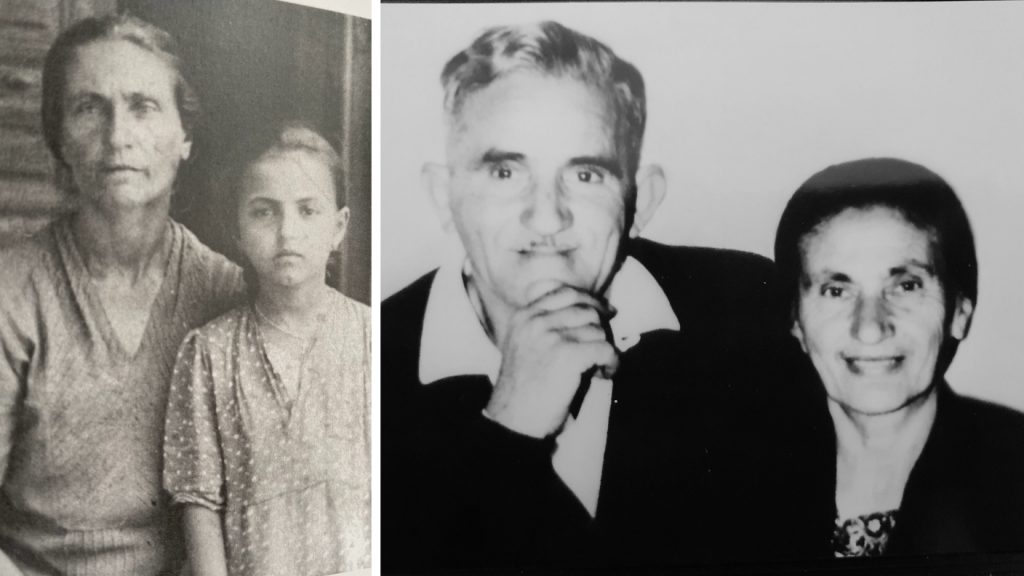
Born in Rhodes in 1939, at the beginning of World War II to parents who had endured the atrocities of the Ottomans in Asia Minor, Mary experienced loss, hunger and hardship during the first tender years of her life.
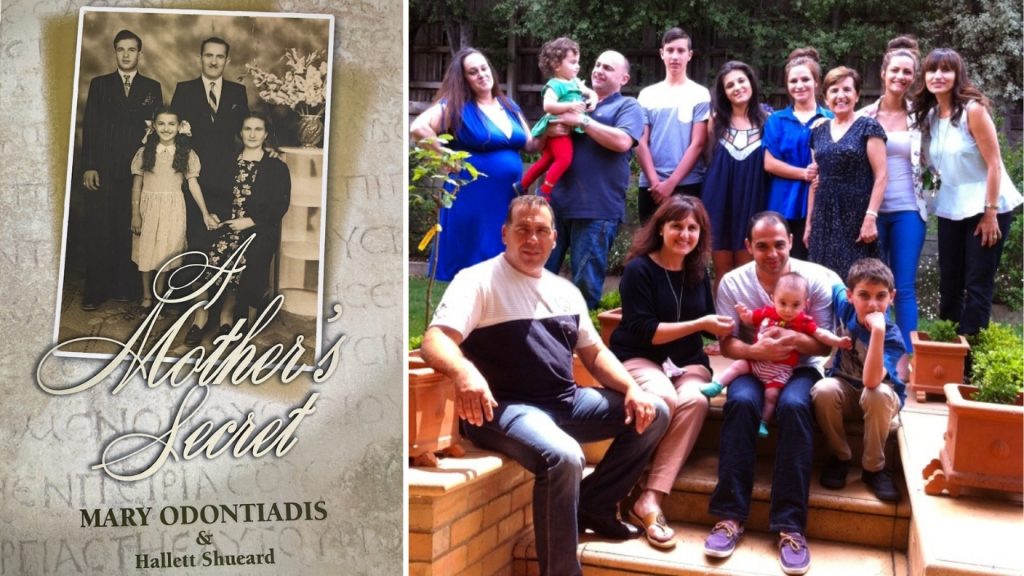
“I can vividly remember the bombs falling and running to the shelters when the sirens started. My mother, Evangelia, used to put me on her back and cover me with a blanket because I did not want to look,” reads a part of the memoir Mary Odontiadis wrote in 2008, entitled A Mother’s Secret.
Photo L: Mary Odontiadis as a kid with her mother Evangelia. Photo R: Mary’s father and mother, Michael and Evangelia
“She, used to tell me that when I was born, she did not have enough milk to feed me, and so she used to give me to another woman to breastfeed me…We managed to survive the war despite there being little food available,” reads another part.
In 1947, 8-year-old Mary immigrated to Australia with her mother via Port Said aboard an Egyptian cargo ship named ‘St Misa’. Her father and older brother, Kostas (Con), were already in Australia hosted by relatives who had immigrated in the 1920s.
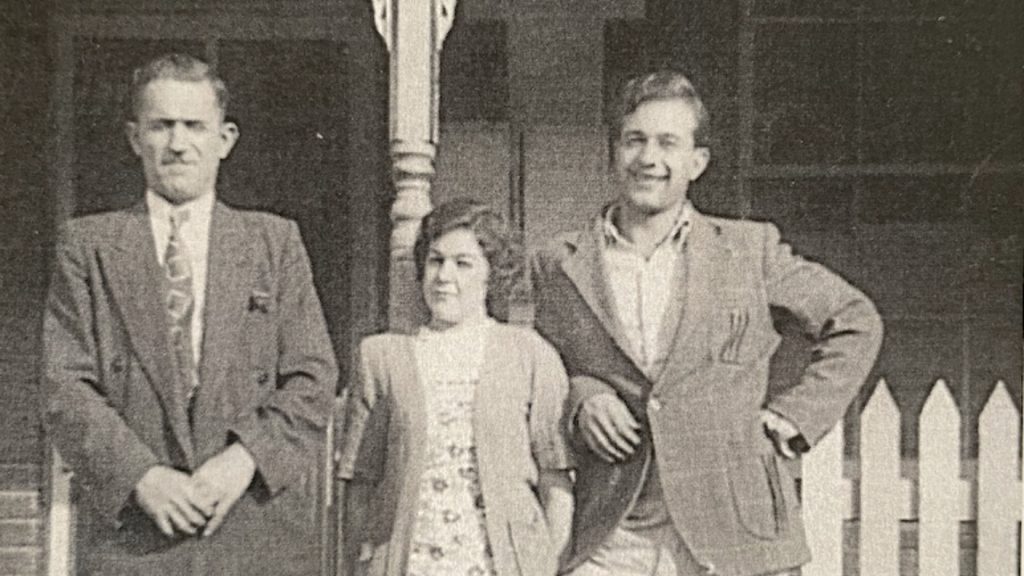
Shortly after their arrival, the family purchased their first home at Gouger Street and Mary was attending primary school in the morning and in the afternoon the Greek lessons organised by the Greek Orthodox Community of SA.
The house in Gouger street. L to R: Mary’s father sister-in-law and brother, Kon
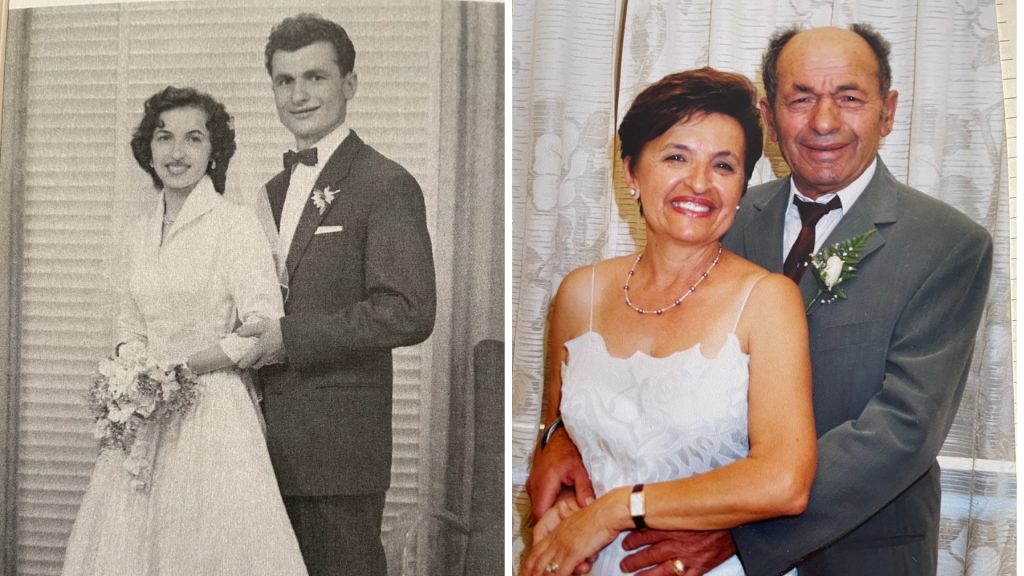
When she was 15, she met newly arrived migrant from Kastoria, Alex Odontiadis, who lived at the family’s Couger street house as a boarder.
He was only 20 years old and came out to Australia in 1954 on the Intergovernmental Committee for European Migration (ICEM) – currently IOM- assisted passage scheme. He was contracted to work for the government for two years.
The couple got engaged in 1954 and ended up getting married in January of 1956, after Mary’s parents found out that Alex had kissed their daughter on the cheek during a party.
Soon after the marriage, their family started growing.
Mary and Alexandros Odontiadis
Growing up Greek in Australia
“We had a good upbringing. There was a good balance between mum and dad. Mum was a very proud Greek person and very stoic in her language, history, tradition but very Westernised in many respects,” said Angela.
“What defined her as a person was when in her 40s, she started her own career. She wasn’t the housewife any longer but the independent and respected member in her community and we admired her for that. She was determined.”
“Dad was very different but had his own impact and legacy. When he came to Australia, he was afraid not to lose his culture and for this reason he became an integral part of the Pontian Brotherhood in South Australia,” Michael said.
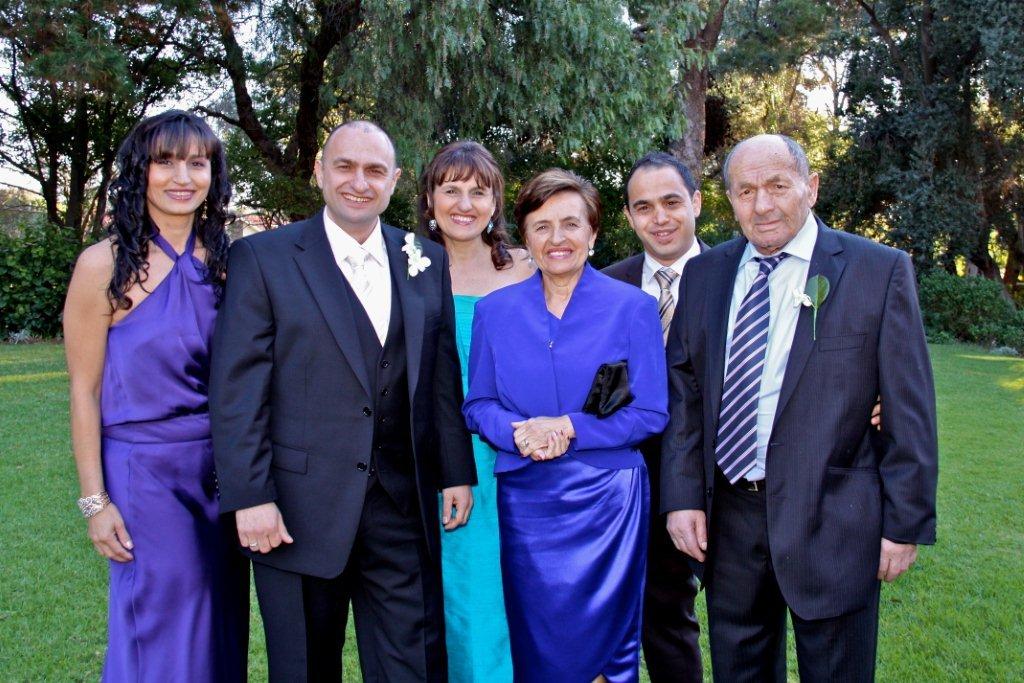
The Odontiadis family
“He was in charge of organising the first youth dance group of the Brotherhood that we all joined. Being Pontian, and feeling that culture was in our blood from a young age.”
“We were forced to go to Greek school growing up, something we are glad for and appreciated later on in life,” said Michael.
“We are proud for both our parents and what they achieved but we are most proud of our mother for the way she reacted when in her early 70s, after all the hardship she had gone through she accidentally found out she was adopted,” agree Michael and Angela.
Mary Odontiadis died aged 81 without knowing who her biological mother was. The family members who knew and had sworn not to reveal the secret had also passed on.
The last few lines in her book give some closure to a story that is sure to be remembered for generations to come.
“…When I look at my family today, I cannot begin to express enough how fortunate I was to have such a lovely woman for a mother. For her to raise me as her own daughter, to give me love and guidance, to teach me to be humble and to forgive any wrongs that I and my family have suffered, I am so thankful for…”
*Selected stories from the South Australian Migration Museum’s Settlement Square will be featured in the ‘Paving the Way’ exhibition, open until 28 February 2022
*The book ‘A Mother’s Secret’ by Mary Odontiadis and Hallett Shueard can be found here
Finally there’s light at the end of the tunnel for the struggling hospitality sector as Freedom Day approaches in NSW on October 11.
But as cafes and restaurants prepare to reopen, dozens of hospitality jobs remain up for grabs as local businesses struggle to find enough staff to fill vacancies.
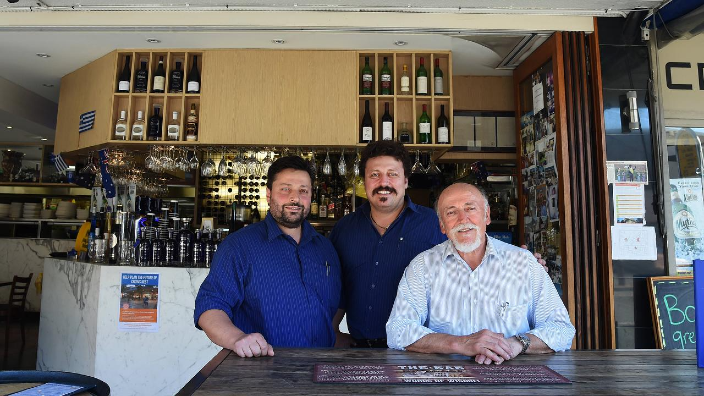
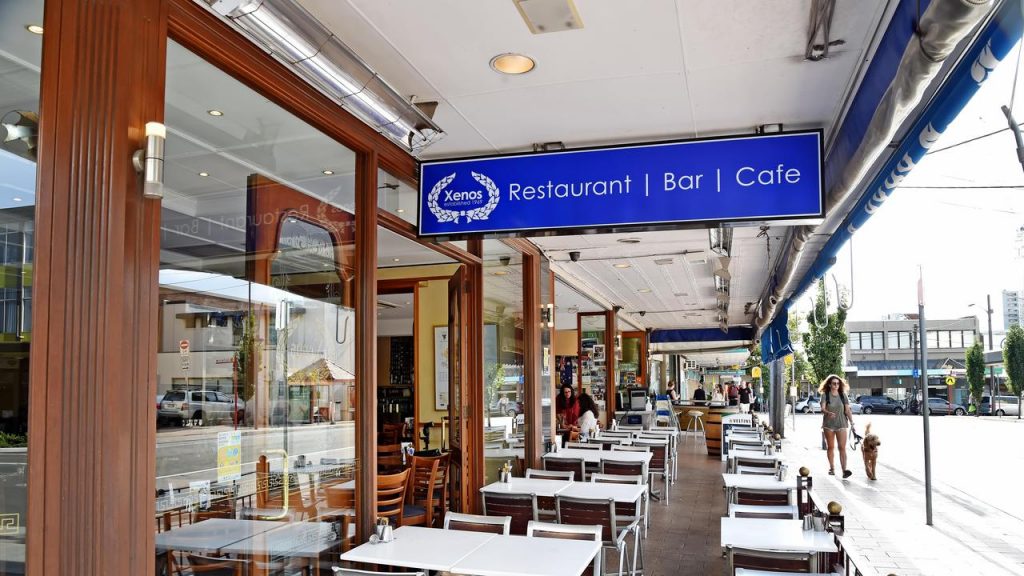
Denis Xenos, co-owner of Crows Nest institution Xenos Restaurant, said the industry-wide shortage threatens to hinder restaurants as they reopen for indoor dining after months of lockdowns and serving takeaways meals.
“We’ve had a board outside the restaurant for close to a month now saying we’re hiring and we’ve had maybe half a dozen people express interest,” he told The Daily Telegraph.
“Everyone is suffering at the moment and we’re having to lower the bar – normally we’d ask for people with experience but there’s no one out there.
“It’s difficult to get anyone with enough experience under their belt and willing to work the hours we need.”
Xenos Restaurant is preparing to reopen for indoor dining next month.
Figures from the Australian Bureau of Statistics show 27 percent of Australian businesses were having difficulty finding suitable staff in a survey in June.
Mr Xenos said he believes the shortage is tied to international border closures and the fact that “people are scared to veer too far from where they feel comfortable at the moment.”
“You’ve also got big hospitality businesses throwing everything at staff to poach them – some are giving new recruits managerial roles in the hope they can get the services they need over summer,” Mr Xenos said.
But the Greek Australian remains hopeful the easing of restrictions in coming weeks will bring about renewed confidence in the job market.
“Hopefully it’s a confidence thing but whatever happens we’ll be open on October 11,” he said.
“We’ll be leaning on as many family members as possible to work in the restaurant if needs be.”
The World Council of Cretans held its annual electoral assembly by teleconference a few days ago, with the support of the University of Crete and members of the Council which include, but are not limited to, the Pancretan Federation of Europe and the Cretan Federation of Australia and New Zealand.
During the Assembly, the Presidents of the members groups, including Tony Tsourdalakis from the Cretan Federation of Australia and New Zealand, gave a rundown of their recent activities over the year.
Later, a new board was elected with Greek Australian, John Nikolakakis, named President.
Mr Nikolakakis thanked everyone for his election and stated his goals and plans for the next three years as President. He also congratulated the outgoing President, Manolis Kougioumoutzis, and Board of Directors for their work in laying the foundations of the World Council of Cretans.
Full list of new Board of Directors and Press Release in Greek below:
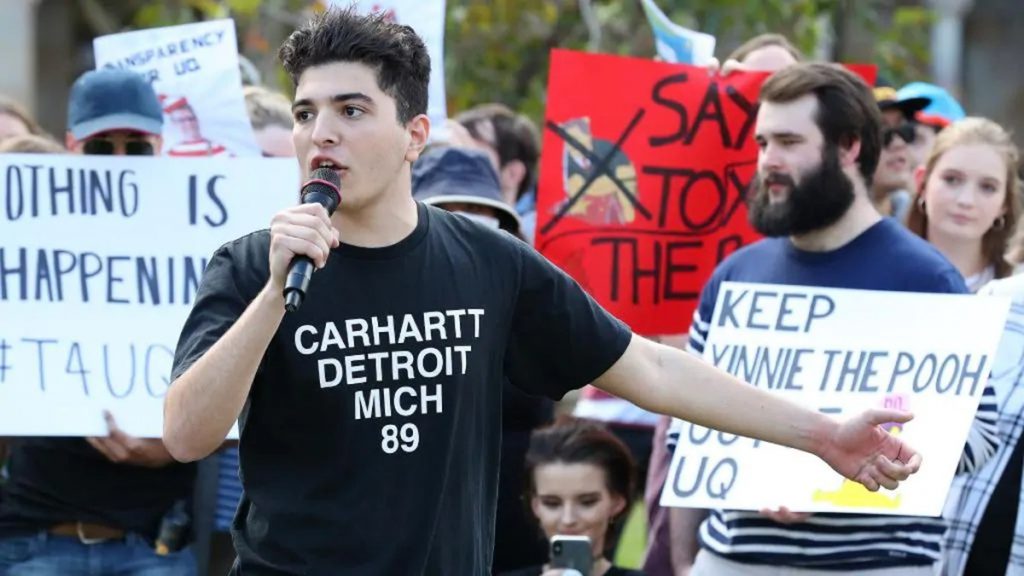
Human rights activist, Drew Pavlou, has been the target of Chinese hackers who accessed his private email account and may have obtained the identity of vulnerable Uighurs with whom he has been in contact, The Australianreports.
The breach was confirmed by cyber security experts from Internet 2.0 who laid a trap for the hackers by planting false information in the account – a fake book contract said to be worth $350,000.
According to The Australian, the exact figure soon found its way into a social media post by a pro-Beijing activist group, Critical Social Work Publishing House, which is run by two Australians, Jaqueline “Jaq” James and Milton James.
Drew Pavlou has been the target of Chinese hackers who accessed his private email account.
It is unclear exactly how Critical Social Work Publishing House obtained the figure that was planted in Mr Pavlou’s email. Milton and Jaqueline James did not respond to repeated requests for comment.
Mr Pavlou suspects information obtained from his hacked emails resulted in Chinese authorities detaining the mother of an Australia-based Uighur he had interviewed for a research project.
Shortly after the anti-China activist was initially hacked, she was tracked down and sent to a re-education facility in Xinjiang by Chinese authorities.
Mr Pavlou said when he realised the potential gravity of the situation, he “wanted to vomit… The possibility that a Uighur Australian’s family member may have been taken to one of these incarceration camps because they were friends with me and talking with me is really scary.”
Drew Pavlou is a prominent activist.
“That’s something that weighs on my conscience so much, and I still feel so sick about it.”
Whilst cyber security experts from Internet 2.0 said the attack could not be confirmed to have come from a state-sponsored actor, Mr Pavlou is certain the hacking was undertaken by state-sponsored actors with the information passed on to pro-China activists.
“This is a very clear case of Chinese interference in Australian democracy. They’re deliberately trying to undermine the credibility and genuinely attack and smear anti-CCP critics in Australia,” Mr Pavlou told the newspaper.
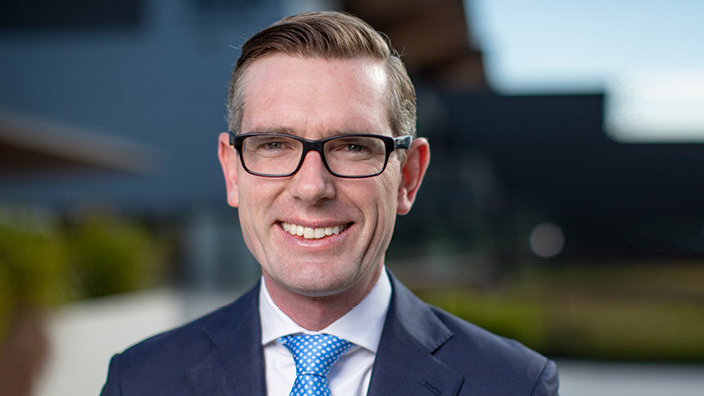
Dominic Perrottet has been voted the NSW Liberal leader and will take over as the state’s Premier.
He defeated Planning Minister Rob Stokes in a party room ballot by 39 votes to 5.
Jobs Minister Stuart Ayres will become his deputy leader and Matt Kean, who is the current Environment Minister, is expected to be promoted to Treasurer.
While leaving the party room with his colleagues, Mr Perrottet said it was an “honour and absolute privilege” to be elected.
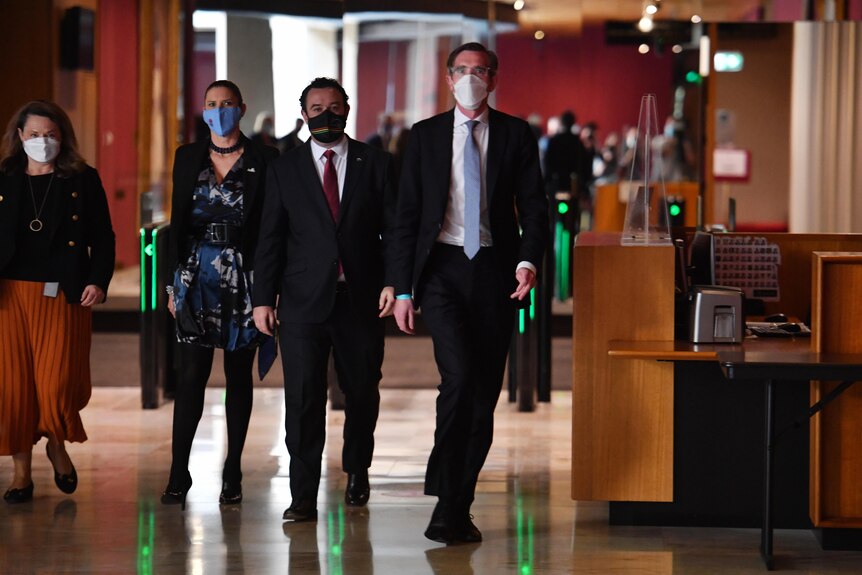
Dominic Perrottet arriving for the vote with Stuart Ayres. Photo: AAP / Dean Lewins.
“I really appreciate the trust my colleagues have put in me today,” he said.
The party room was forced to vote for a new leader after the shock resignation of Gladys Berejiklian last Friday following an announcement that she would be investigated for alleged corruption.
Mr Stokes was largely considered an outside chance but Mr Perrottet said if he was elected he would be sure to give Mr Stokes a senior position in the ministry.
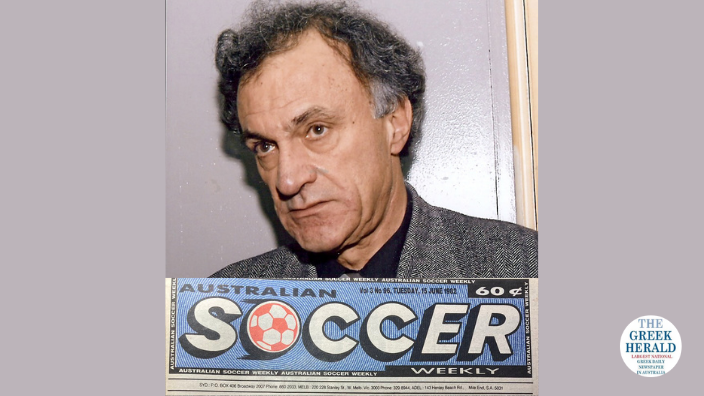
Former editor of the Australian Soccer Weekly and a long-time family member of Foreign Language Publications and The Greek Herald, John Economos, has passed away at the age of 78.
Mr Economos joined the ‘The Australian Soccer Weekly’ in 1980. The Foreign Language Press publication was a football media institution in its heyday, which Mr Economos contributed to for over 25 years.
Anyone that had the pleasure of meeting and working with Mr Economos knew that he had his own amazing and unique style on how to write and tell his football stories.
He was a walking football encyclopedia and touched so many people in his own special way where he made so many friends in the game he loved.
One friend in particular was the great Johnny Warren. Warren took Mr Economos with him on his football journey, from the famous Canterbury ‘Babes’ of the late 1950s, through to the great St George side of the 1970s.
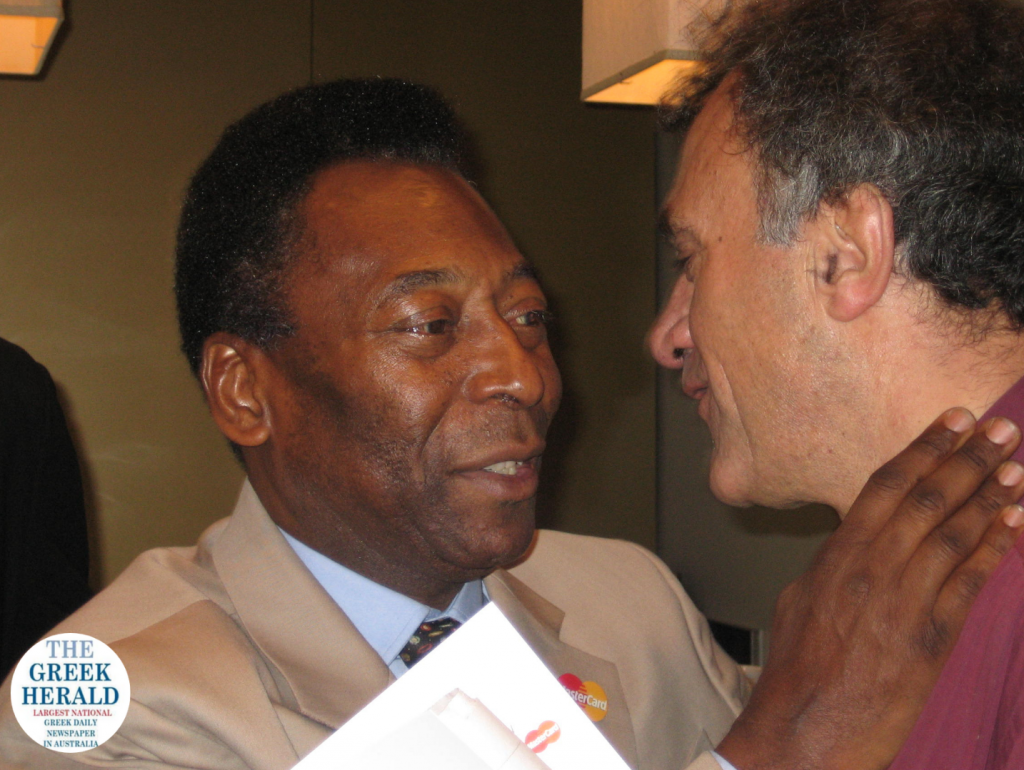
One of Mr Economos’ fondest memories was interviewing the great Pelé, who is the all-time leading goalscorer for Brazil with 77 goals in 92 games. Mr Economos met Pelé four times in total, including once during Pelé‘s first trip to Sydney in 1972.
For his hard working services to the game, Mr Economos was inducted into Football Australia’s Hall of Fame in 2009 championed by the late and great Mike Cockerill, another one of John’s closest friends.
John Economos was inducted into Football Australia’s Hall of Fame in 2009.
In a statement, Football NSW said they are “saddened” to hear the news of the unfortunate passing” of Mr Economos.
“Football NSW was deeply saddened to hear the news of the unfortunate passing of Football Australia’s Hall of Fame Inductee and one of the nation’s final leading and veteran journalists, John Economos,” the statement reads.
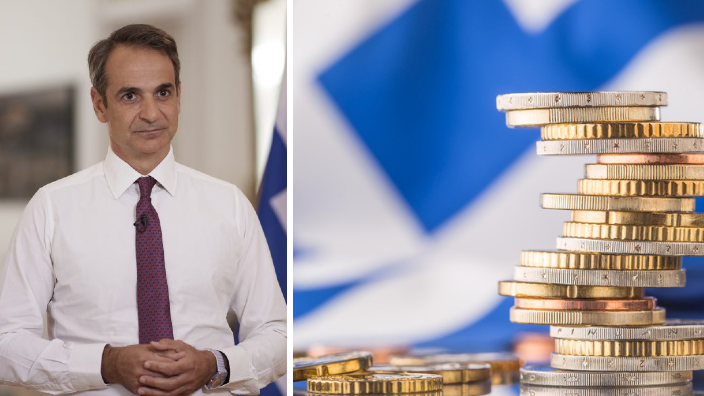
Greece’s conservative government on Monday revised its growth estimate upward for the second time in less than a month, following signs of a faster than expected recovery.
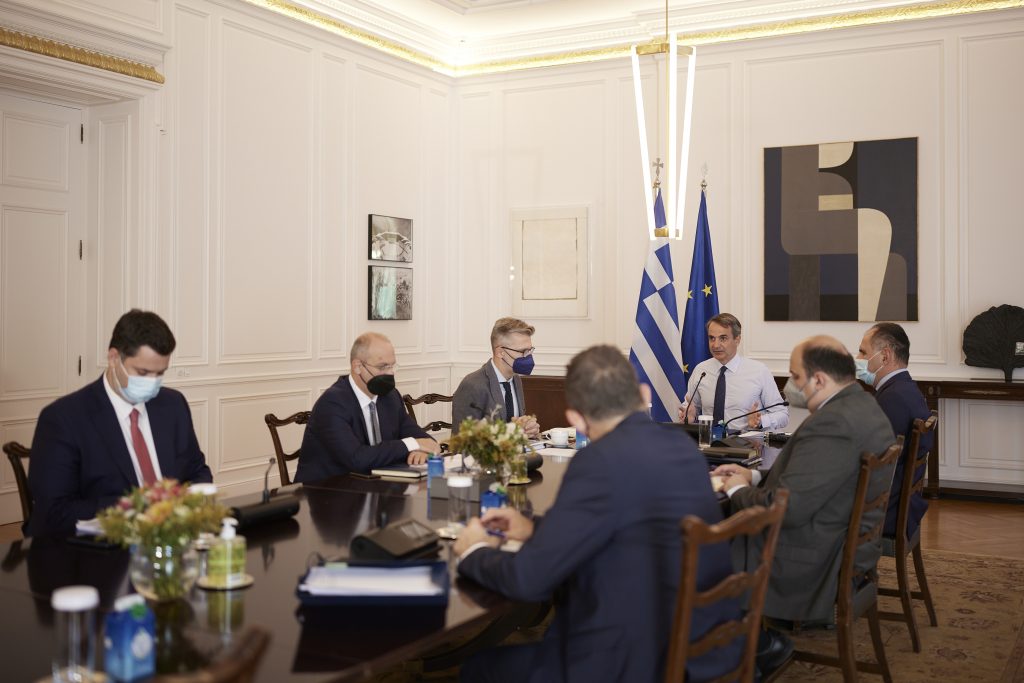
Growth is due to reach 6.1% in 2021 and 4.5% next year, bringing output to above pre-pandemic levels, Prime Minister Kyriakos Mitsotakis told a Cabinet meeting.
The figures were included in a draft 2022 budget submitted to parliament on Monday, and it was due to be finalised next month.
Greece was one of the eurozone economies hardest hit by the pandemic in 2020 when the country suffered an annual slowdown of 8.2%.
Prime Minister, Kyriakos Mitsotakis, told a Cabinet meeting on Monday.
But a partial rebound in tourism and the lifting of most pandemic-related restrictions saw gross domestic product soar by 16.2% in the second quarter from a year earlier.
The new 2021 growth projection — up from estimates of 3.6% and later 5.9% — will ease the national debt ratio to just below 200% of GDP, according to budget figures.
But a continued high level of public spending on pandemic relief measures will further increase the annual budget deficit to an estimated 10% or 7.4% before including debt obligations.
The number of tourists who visited Greece in the first seven months of the year was 4.5 million or 51.4% than a year earlier, but less than a third of the level recorded in 2019, according to Bank of Greece data.
Facebook and its Instagram and WhatsApp platforms have been hit by major global outages.
The social media giants confirmed the outage with messages posted to Twitter.
“We’re aware that some people are having trouble accessing our apps and products,” the official Twitter accounts said.
Users trying to access Facebook in affected areas were greeted with the message: “Something went wrong. We’re working on it and we’ll get it fixed as soon as we can.”
For The Greek Herald readers, while you can’t read our content on Facebook or Instagram right now, we are still on Twitter here: https://twitter.com/greek_herald.
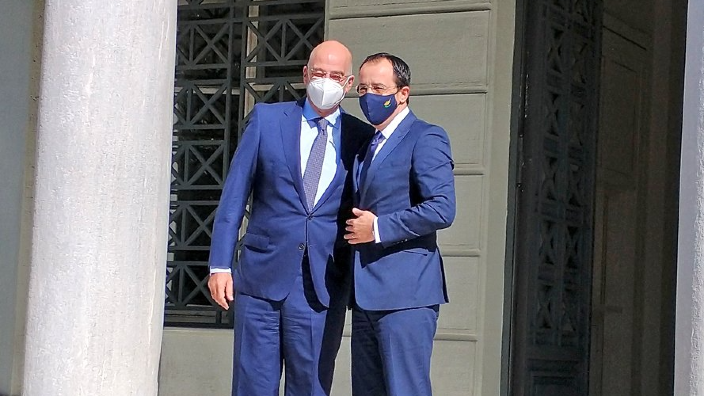
The Foreign Ministers of Greece and Cyprus condemned Turkey’s “illegal actions” in the Eastern Mediterranean after a meeting in Athens on Monday.
“Greece does not pose a threat to anyone, nor will it be bullied by illegal actions,” Greek Foreign Minister, Nikos Dendias, said.
“It will protect its sovereignty [and] its sovereign rights in accordance with international law and the law of the sea,” he said.
I cordially welcomed #Cyprus FM @Christodulides in Athens. Following up on our recent meetings during #UNGA & within the context of close 🇬🇷🇨🇾 coordination, we had a timely discussion on recent 🇬🇷🇫🇷 agreement and developments in regard to Cyprus issue & #EasternMediterranean. pic.twitter.com/6ImeJst8zv
Referring to the 63rd round of low-level exploratory talks that are set to take place in Ankara Wednesday, Dendias rebuffed recurring Turkish calls for the demilitarisation of Greece’s eastern Aegean islands and accused Turkey of “undermining [the contacts] before they even begin.”
The Greek foreign minister also condemned plans by Turkey and the self-declared breakaway state in northern Cyprus to partially reopen the abandoned resort of Varosha, as well as plans to hold military drills inside the Mediterranean island’s territorial sea. Dendias also slammed a recent Turkish announcement regarding energy exploration on Cyprus’ continental shelf.
Σε εξέλιξη #τώρα η συνάντηση του Υπ. Εξωτερικών @Christodulides με τον Υπ. Εξωτερικών της Ελλάδας @NikosDendias στο @GreeceMFA. Αλληλοενημέρωση & ανταλλαγή απόψεων εφ' όλης της ύλης υπό το φως τελευταίων εξελίξεων σε Ανατολική Μεσόγειο, Κυπριακό, ευρύτερη περιοχή και σε θέματα ΕΕ pic.twitter.com/zg5MrqpH9l
“Turkey’s behavior is not acceptable,” he said, while warning of European sanctions.
In his comments, Christodoulides said that Turkey’s recent harassment of the Nautical Geo research ship of the island of Crete, as well as plans to conduct research in an area reserved by the Nautical Geo southwest of Cyprus “demonstrate, even to the most skeptical [observers], that the pleasant-sounding statements that once came from the direction of Turkey are, regrettably, not turning into actions.”
“[Turkey’s] foreign policy is still founded on a revisionist, neo-Ottoman approach, mostly based on the country’s military power,” he said.
US call for de-escalation of tensions in East Med:
This meeting comes as the United States reiterated their support for efforts to de-escalate tensions in the Eastern Mediterranean, including the continuation of talks between Greece and Turkey, following the harassment of a Greek Cypriot research vessel off the coast of Turkey.
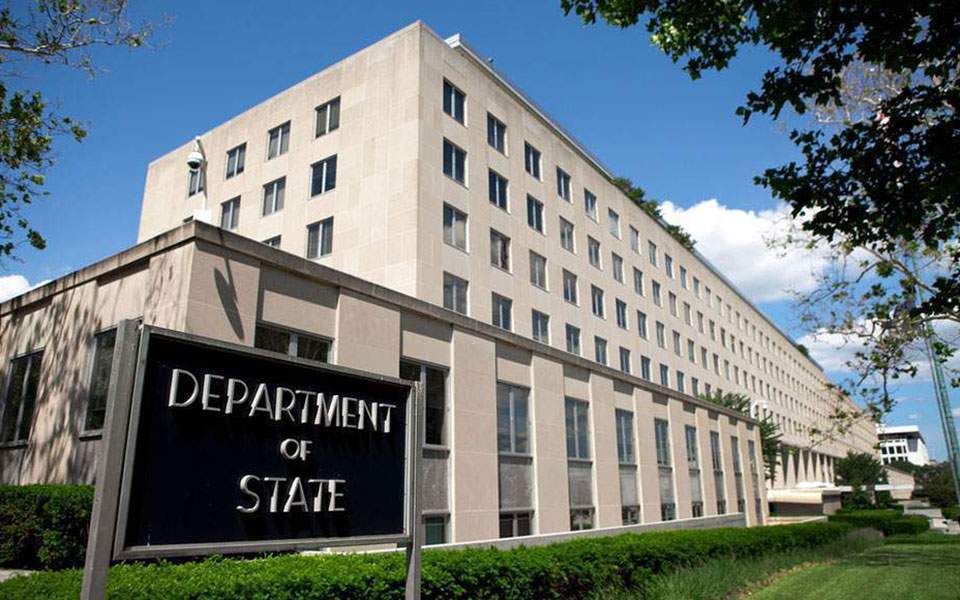
A State Department spokesman said the US “encourages all states to resolve maritime delimitation issues through peaceful dialogue and in accordance with international law.”
The Turkish Defense Ministry said on Monday that the Nautical Geo, a Greek-Cypriot research vessel under the Maltese flag, was taken away from the Turkish continental shelf at the weekend after being warned that it was trespassing.
Sources inside the Defense Ministry of the Republic of Cyprus said that the Nautical Geo was conducting research inside the island’s exclusive economic zone (EEZ) when it was harassed by Turkish vessels illegally sailing in the area.