Home Blog Page 131

From Australia to Athens: Six acclaimed Australian plays find a Greek voice

Having registered here in Greece on the Australian Embassy’s website for event notifications, true to form, they recently alerted me to a series of Australian plays – all being staged in Greek. The venue hosting these six, award-winning Australian, theatrical works continuing until April, is the ‘Aggelon Vima’ theatre in downtown Athens.

Banner of the Aggelon Vima Arts space: “Theatre . Music . Art”
Banner of the Aggelon Vima Arts space: “Theatre. Music. Art.”

This lovely theatre is managed by creative director, author and former practicing lawyer, Margarita Dalamaga-Kalogirou. She tells me that her interest in theatre was piqued “by attending theatre performances since the aged of four, with my father, an out-of-the-ordinary lorry driver and theatre lover.” 
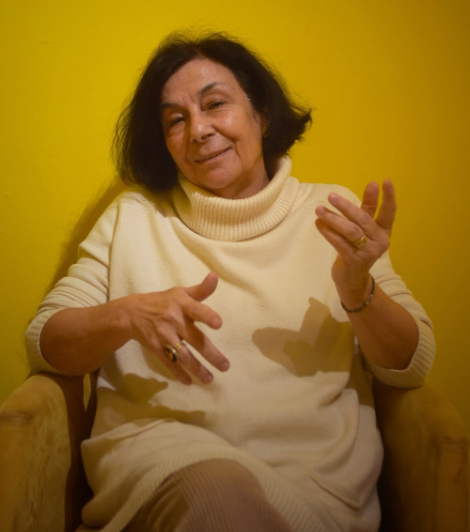
Ms Dalamaga-Kalogirou
Ms Dalamaga-Kalogirou.

Leaving me awe struck, Ms Kalogirou patiently describes her personal involvement in every theatrical season at Aggelon Vima, including the current Australia themed one. 

“I did the research, chose the plays, translated them and developed the idea of one common set representing the country’s symbolism. I also worked with PR people and graphic artists for the communication and promotion of this project, as well as choosing the directors and essentially supervising the whole thing,” she says.

As to her view of what modern theatre can represent in everyday life, she says: “It plays the role of a mirror reflecting contemporary life and culture. What we finally see nowadays in contemporary theatre performances is up to the person who manufactures this mirror (ie. playwrights) and it is up to the person who holds up this mirror (ie. mainly directors, but, also, actors and production teams).”

Ms Kalogirou subsequently gives credit to the Australian Embassy’s role in supporting these plays, particularly to Alison Duncan, the current Australian Ambassador to Greece.

Alison Duncan, the current Australian Ambassador to Greece.

“Ms Duncan is a person highly gifted for this position and there is no doubt that she will leave her mark in the field of developing strong and long standing bonds between Australian and Greek cultures,” she says.

Though Ms Kalogirou hasn’t yet been to Australia, but “would love to see and learn more of this fascinating country”, her choice of the six Australian plays bear testament to this. 

She states: “Australian drama production is stunning and Greek audiences had no real knowledge about it. My deep and lengthy research on contemporary Australian drama revealed 35 plays – all of great interest. I finally chose the following six for the repertory of the current theatre season, ie. WONNANGATTA by Angus Cerini, RUBY MOON by Matt Cameron, ONE LONG NIGHT IN THE LAND OF NOD by Duncan Graham, STOLEN by Jane Harrison, RICE by Michele Lee and THE BLEEDING TREE by Angus Cerini because of their variety and interest in the subjects they are handling and because they created in my mind the feeling and certainty that they would make memorable performances before the eyes of Greek theatre lovers.”

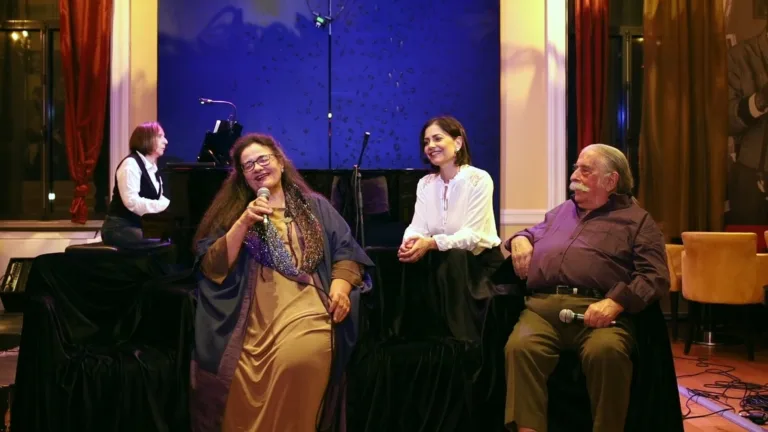
The ‘Aggelon Vima’ Arts space itself is architecturally striking, as its heritage listing supports. It’s a compact three-storey, restored old villa with neoclassical and old world features inside and out.  Upstairs spaces include the foyer/ “music hall” which hosts live events (at present, ‘Rembetises Psihes’ live music show), while further up the next flight of stairs is the comfortable and modern theatre. 

The whole set up is certainly more than a pretty face. Impressive in more ways than one, Ms Kalorgirou tells me that it was built in the 1920s and since its founding as the current theatre in 2005 “has presented roughly 250 theatre performances, with 90% of the cases hosting plays and playwrights in Greece for the first time – in our theatre. There have also been 200 music performances in our music hall, 150 art exhibitions in our galleries, festivals, social events, seminars, etc.”

So far I’ve attended two plays at the Aggelon Vima, with more following. ‘Ruby Moon’, the first play I saw here is a psychological thriller written in 2003, by Australian author Matt Cameron. It primarily features two Greek actors portraying the parental angst of the disappearance of their daughter, little Ruby, believed kidnapped from their local street.  

The play brought to my mind, the not so distant past’s idealism of suburbia – which in reality hides many dark secrets, including unintended alienation. Surrealist touches within the performance caused me to question whether Ruby was actually kidnapped, and or if she ever actually existed? 

The two main Greek actors playing Ruby’s parents were superb; their talent highlighted in their ability to flawlessly shift between playing the different characters of their many neighbours.

I also saw the play ‘One Long Night In The Land of Nod’, written in 2005 by Australian Duncan Graham. Bearing references to the Biblical Cain and Abel, this play is about two brothers – Kane, but also Aaron, and is set in a modern context on a sheep farm in country Australia. 

Kane is an educated city slicker of sorts, while Aaron remained at the sheep farm where both brothers grew up. Circumstances such as their fathers serious illness and pending will, unite them again. In such a backdrop, family history, cultural city/rural references and financial, as well as psychological issues are highlighted within the brothers relationship. 
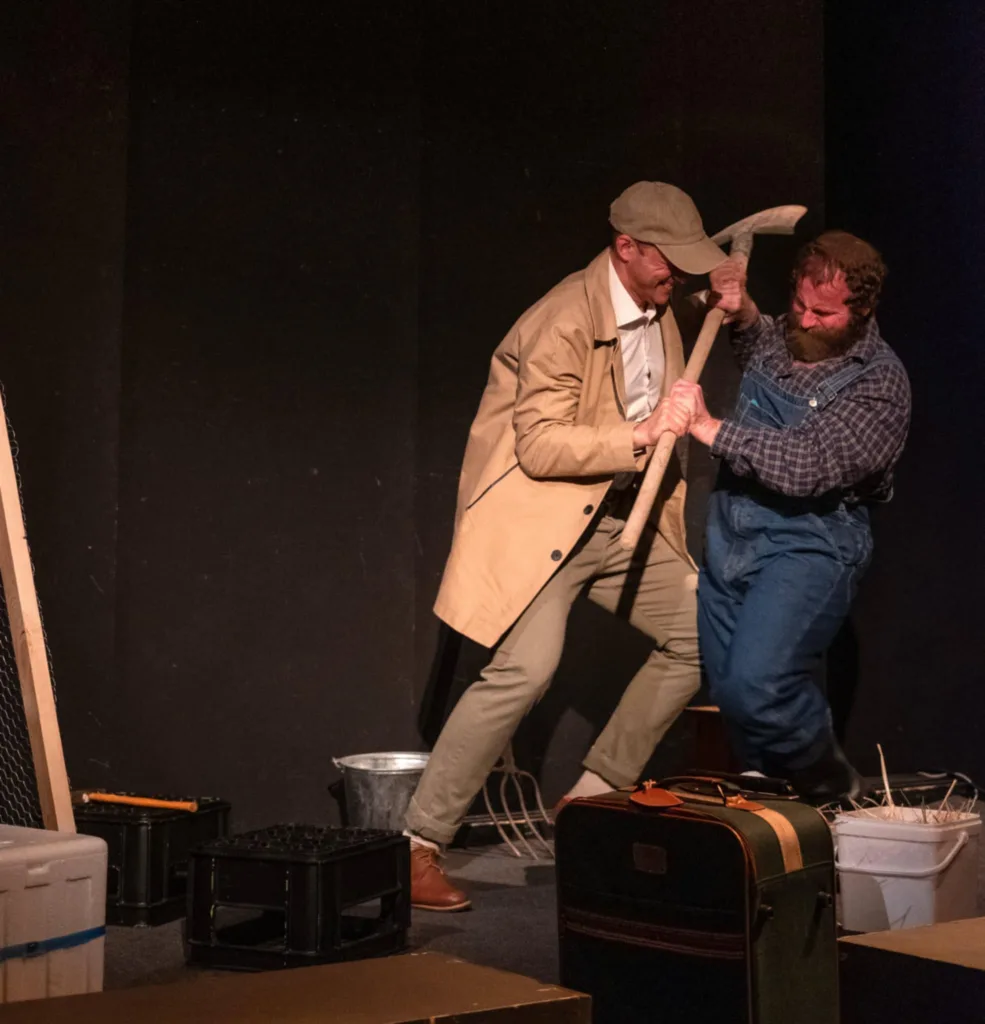
The play’s exaggerated swearing and sexism imply an awkwardness often inherent in male relationships, whether conforming consciously or not, to imposed gender stereotypes. This subsequent, two (Greek) actor show results in sometimes comic, but essential insightful and tragic outcomes.

As yet I haven’t seen the third play to date, titled ‘Wonnangatta’ again by an Australia – Angus Cerini, a synopsis mentions that it’s set in rural Victoria in 1918 and based on a murder that occurred there back then.  It can be described as a murder Western or “Australian gothic”and refers to the brutality of the Australian bush and its isolation as well as themes such as trauma that come from the history of an essentially colonised land.  I really look forward to seeing this one too and definitely all of them.

As the theatre’s creative director – Ms Kalogirou cites, the choice of these particular Australian plays were intended to encapsulate if not the, then an essence of modern Australia.  In this case the fortunate, predominantly Greek audience in Greece get the chance to take this journey through the transcendent time-space continuum that is good theatre, – this time it’s our home grown, Aussie theatre.

And speaking of home grown, there’s a surprise play on very soon at the Aggelon Vima theatre, more specifically related to Greek Australians! Watch this space …

Historic UNESCO recognition of Greek language to be marked with landmark Melbourne event

1.0 Background

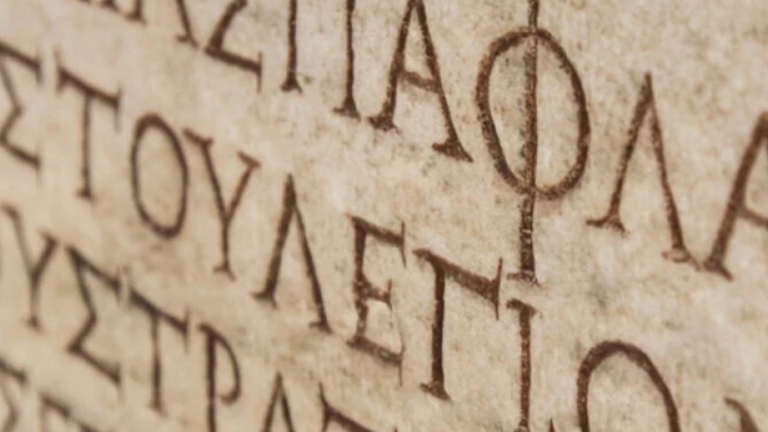
On 12 November 2025, the Plenary Session of UNESCO, the cultural arm of the United Nations, unanimously voted to recognise and encourage all nations and peoples of the world to commemorate World Greek Language Day, in recognition of the Greek language’s immense contribution to human civilisation and humanity.

This decision carries enormous historical and political significance for the Greek language and is perhaps the most important decision taken by the global community in modern Greek history in favour of a language which, for almost 4,000 years, has contributed — and continues to contribute — as the language of science, the greatest monuments of literature, the Gospels and technology.

The success of this global decision originated within the Greek diaspora and was supported by coordinated actions between metropolitan Greece and its diaspora, under the guidance of the Greek Ambassador to UNESCO, Georgios Koumoutsakos.

For 20 months, an informal group of Hellenists and linguists specialising in the Greek language worked within the diaspora, exchanging initiatives and texts to shape and submit a unified document to UNESCO, demonstrating the global significance of the Greek language.

This core group included: Professor Ioannis Korinthios (Italy), who first conceived the idea of UNESCO recognition in 2014; Professor Christos Klairis (France); Professor Georgios Babiniotis; Professor Stella Priovolou (Greece); Professor Anastasios Tamis (Australia); and Professors Filippos Trevezas and Konstantinos Chatzidimitriou (United States).

Hellenism in Australia — with the Australian Institute of Macedonian Studies, celebrating 40 years of continuous activity this year, at its core — played a significant role. It drafted and submitted texts highlighting the importance of the Greek language to humanity and undertook political action to secure consensus in Australia in support of Greece’s request.

Dozens of letters were submitted, and lengthy meetings were held with politicians, church leaders, journalists and members of the judiciary, ensuring strong support from the Australian Ambassador to UNESCO.

In April 2025, when Australia abstained from the vote of the UNESCO Executive Board in Paris, concern was raised. Subsequently, the Government of Prime Minister Anthony Albanese committed not only to supporting Greece’s proposal at the UNESCO Plenary Session on 12 November 2025 in Uzbekistan, but also to co-celebrating World Greek Language Day with Greek Australians.

2.0 The world’s first official celebratory event

With events of honour and pride dedicated to the Greek language — and to all those who have served it with passion and creativity in modern Hellenic history, both in Greece and the diaspora — the celebration will take place on the established date:

  • Monday, 9 February 2026, at 7.45 pm, Capitol Theatre, RMIT University, 113 Swanston Street, Melbourne CBD (opposite Melbourne Town Hall)

Chronologically, this will be the first organised celebration worldwide following UNESCO’s decision. It will be followed by a corresponding event organised by the Greek community in Perth.

The event is dedicated to the first Education Counsellor appointed by the Greek Government, Panagiotis Liveriadis (1977–1981), and to all Greek language teachers and organisations who have contributed to Greek language education in Australia.

On the initiative of the Australian Institute of Macedonian Studies, invitations were issued, media announcements made, and an Organising Committee established. The committee meets at the Lyceum Hall of Alphington Grammar, with exemplary hospitality provided by the leadership of Greek Australian day-school education.

The Organising Committee consists of representatives of institutions and academics involved in Greek language education, including schools, universities, community organisations, media outlets and cultural bodies from across Melbourne and beyond.

3.0 Programme of the celebration

The programme will be presented by legal practitioner Konstantinos Kalymnios (Greek) and television presenter Helen Kapelos (English).

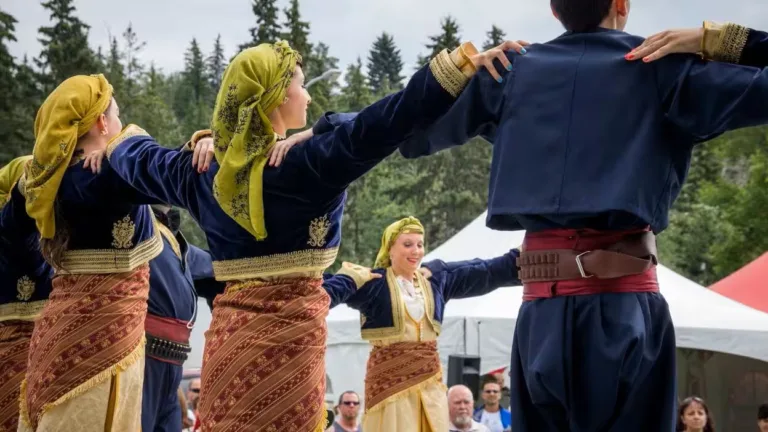
Young performers from the Pegasus Dance Academy, wearing representative traditional costumes from across Greece, will accompany presenters and speakers on stage.

Guests will be welcomed:

  • from 7.00 pm at the entrance by members of the Pegasus Academy and Greek day-school students
  • from 7.30 pm inside the theatre by musical performances from students of Greek day schools

The evening will open with the first two movements of Mythodea by Vangelis Papathanassiou, as performed at the Temple of Olympian Zeus — one of antiquity’s most emblematic monuments.

Following a welcome by the President of the Greek Community of Melbourne and Victoria, the central keynote address will be delivered by former Justice of the Supreme Court of Queensland, The Hon. Anthe Philippides.

Artistic recitations will follow, including:

  • “They gave me the Greek language” by Nobel laureate Odysseas Elytis
  • Selected couplets from the Hymn to Liberty by Dionysios Solomos, performed on the anniversary of his death

The musical programme will include:

  • Byzantine hymns performed by EIKON Artists, accompanied by cello
  • The finale of Leventia Symphony – Nikitiria by Manolis Kalomiris, conducted by Douglas Heywood OAM with the Camerata Chorus of Melbourne
  • Fourteen songs set to poetry by Seferis, Elytis and Ritsos, with music by Xarchakos, Hatzidakis and Theodorakis, performed entirely in Greek

At the conclusion of the programme, Awards of Gratitude will be presented to five Philhellenes of Victoria for their contribution to Greece and Hellenism.

The evening will close with the national anthems, performed by the Camerata Chorus and Greek day-school choirs.

Attendance, publication and support

Approximately 600 people from across Australia are expected to attend. Invitations are issued by name, and RSVP is required to avoid overcrowding. The organisers aim to reserve at least 100 seats for VCE students studying Greek.

The event is free of charge, non-commercial, and supported exclusively by the Greek community, without government funding from Greece or Australia. 

To date, contributions include $10,000 from the Australian Institute of Macedonian Studies; $5,000 from Petros Patisteas OAM; $5,000 from Christina Kotsifaki-Sarris; and $1,000 each from Bill Papastergiadis, Taverna Lemnos and Stamatis Liveriadis. Major sponsors also include Maria Sakellaridou and Panagiotis Zapris, Director of Ellikon Fine Printers, whose in-kind contributions and countless hours of work are invaluable.

An official 28-page commemorative programme will be provided free to guests, along with a bilingual UNESCO explanatory booklet to be distributed to Greek schools nationwide.

Sponsors and supporters will be formally acknowledged, and those wishing to contribute may contact the Treasurers of the Australian Institute of Macedonian Studies, George Lioukas (george.lioukas@aims.edu.au), Professor Anastasios Panagiotelis (anastasiospanagiotelis@gmail.com), or the Secretary Panos Gogidis (panosgogidis@hotmail.com).

The fearless yiayia: Skydiving and 80 years of life

0

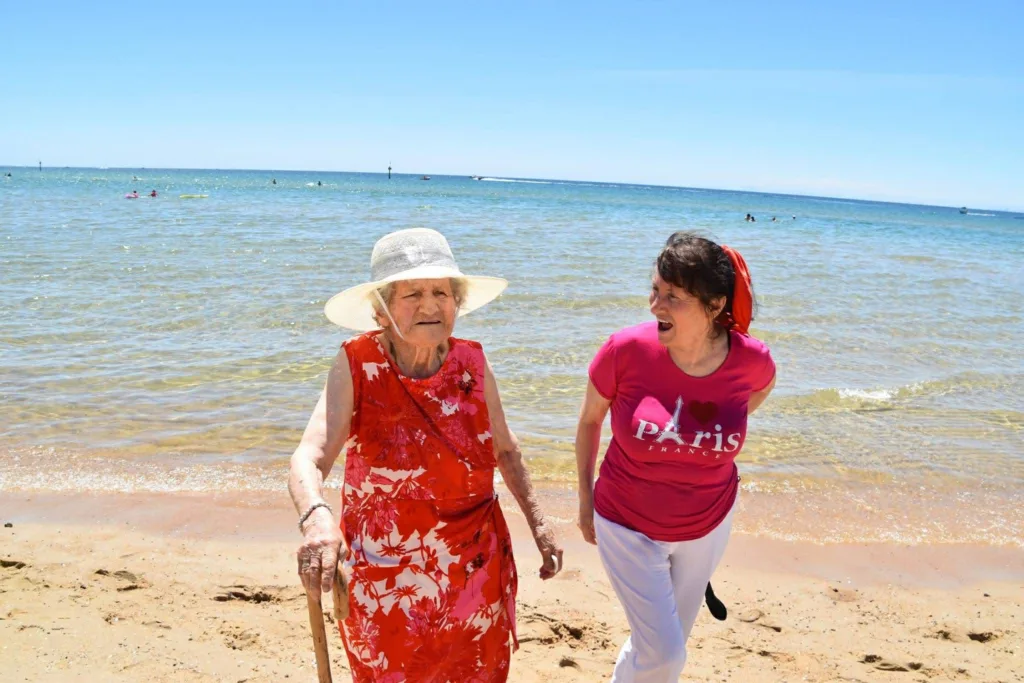
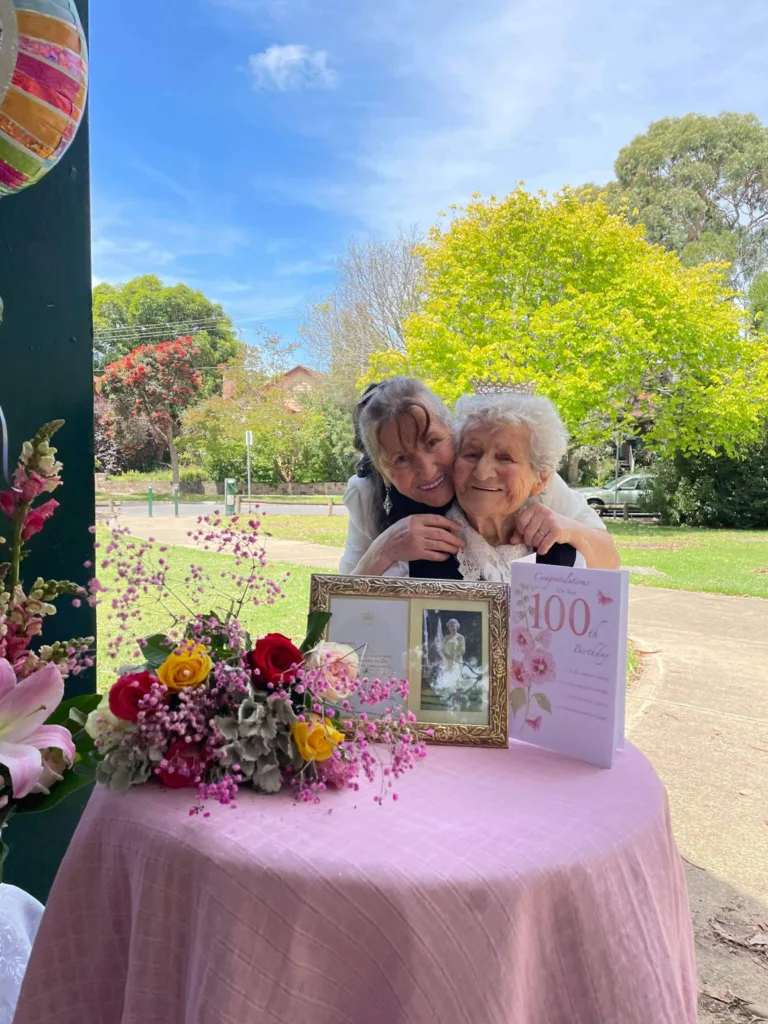
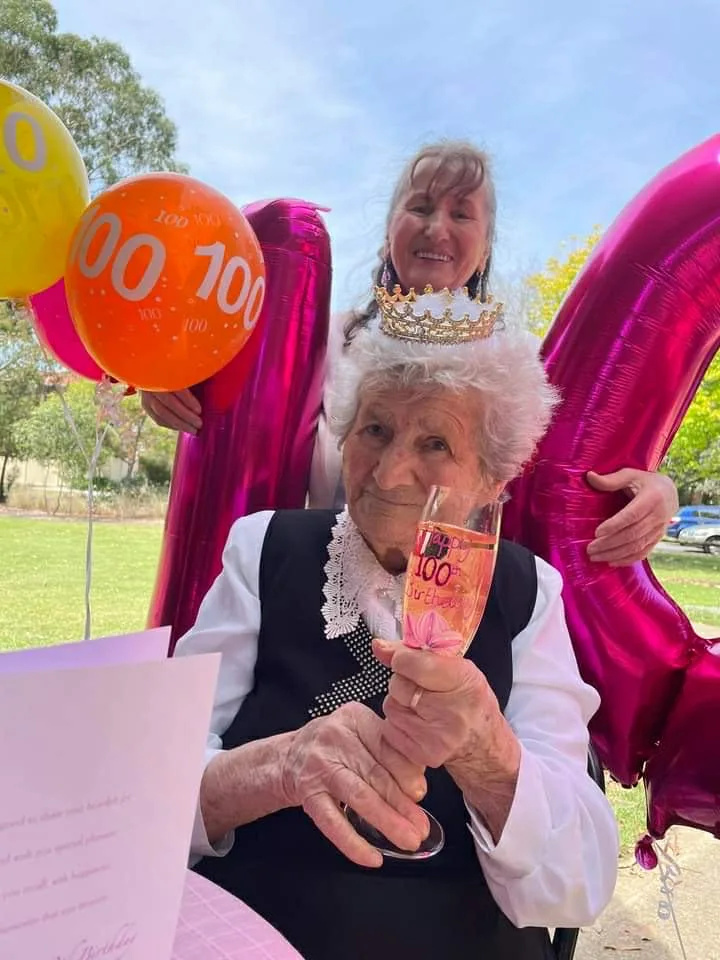
As Vassiliki Xidias approaches her 80th birthday on February 25, she is planning a celebration at a swanky hotel with her six children. But with Vassiliki, a party is rarely the whole story. While most grandmothers are content with tea, she celebrated her 70th by jumping out of a plane.

“Have you ever been skydiving?” she asks. “The hardest part is waiting for others to jump before you. Once you are falling, it is the best feeling. You hold your nose and just come down. It is beautiful. I wish it didn’t stop.”

The skydive was a gift from her children, inspired by her son-in-law’s experience who had tried sky-diving and loved it. While some might joke that a son-in-law encouraging a parachute jump is a plot to get rid of a pethera (mother-in-law), Vassiliki saw only pure adrenaline.

“If anything happens to me, the kids are grown up,” she reasons.

“My husband only found out after it happened, and could not believe it,” she adds. “He is more traditional than I.”

Her “tomboy” spirit was forged in the village of Soulinari, Kalamata, which she left at age nine to arrive in Australia in 1955. The transition was stark.

“In those days, they put older kids who didn’t know English in kindergarten,” she remembers.

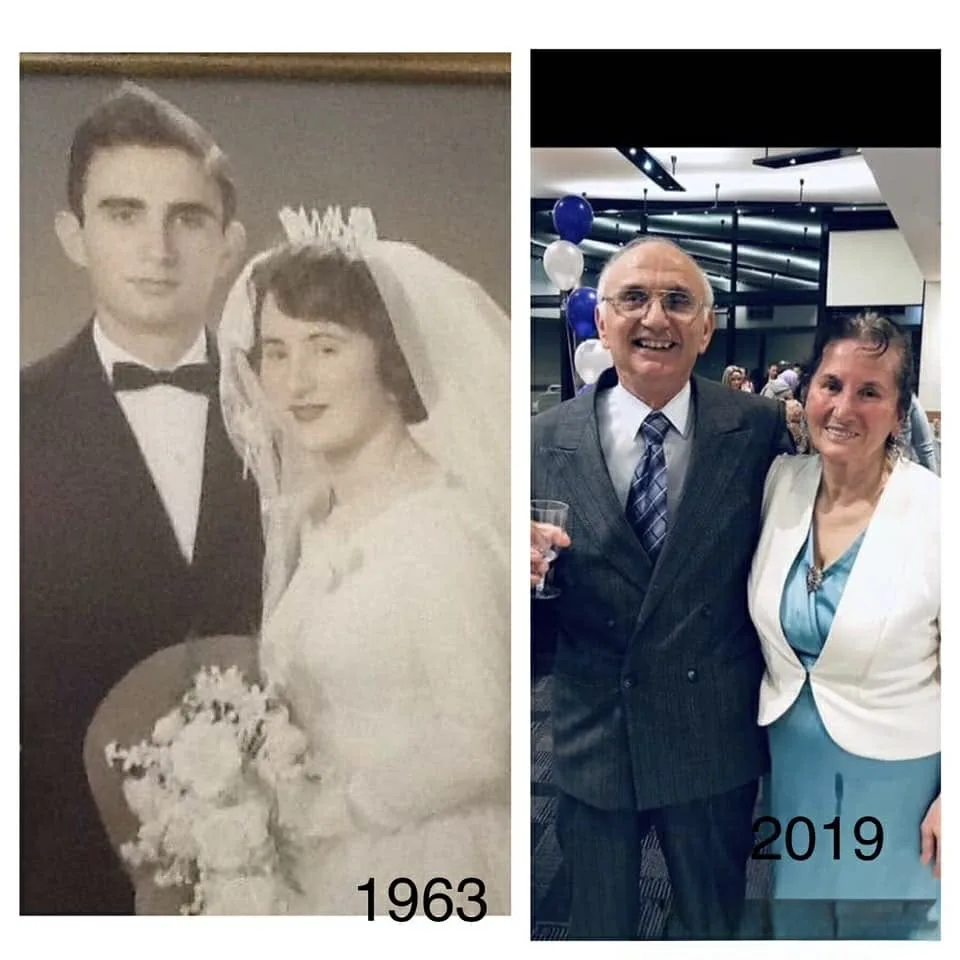
Vassiliki never saw the inside of a high school; instead, her youth was spent caring for five younger siblings and working the bustling stalls of the Victoria Markets. By 17, she was a bride. By her early 20s, she was a mother of six, including a set of twins.

vasiliki xidias
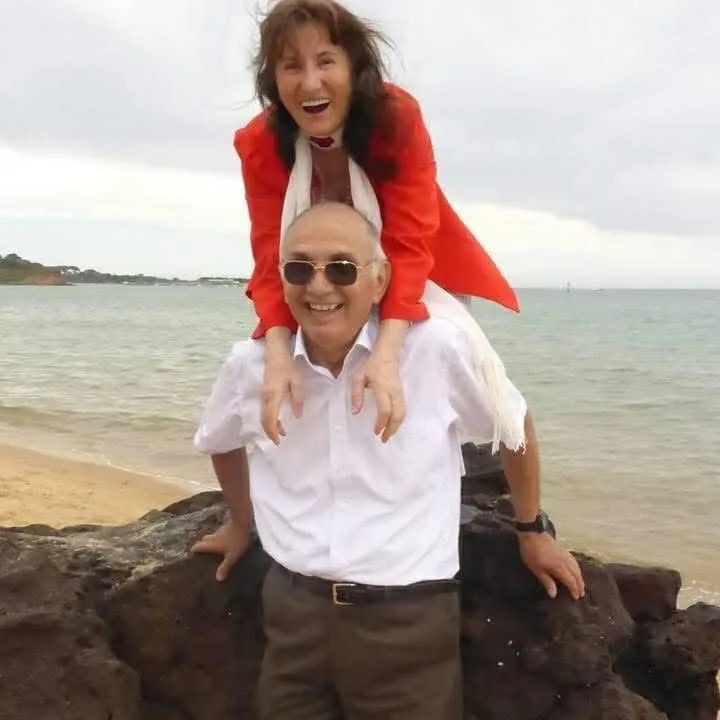
Vassiliki was a bride at 17.

Vassiliki mastered the “hustle” decades before it was a trend. She worked as a seamstress by day and studied fashion design by night, later running a milk bar. “Always have two jobs,” she says with a glint in her eye. “If you don’t like one, there’s always the other.”

In her 50s, she pivoted again, returning to school to become a nurse. She only retired at 66 because, as she puts it, “I noticed many people in the nursing home were younger than I was.”

Her time in aged care taught her more than medicine. “Older people know a lot,” she whispers. “They taught me many things, even about shares. I learned more from life experience than any textbook.”

These days, she gives back by advocating for others and helping her peers and seniors navigate aged care and home packages.

vasiliki xidias

Vassiliki still “walks like she’s running,” power-walking rather than driving. A survivor of Stage 1 breast cancer, she approaches life with the same stoicism she used to care for her own mother, who lived to 101.

“My mother was my hero,” she says. “She had a hard life, and lost her parents when she was eight. But I am so happy she died peacefully in her own home.”

This June, Vassiliki and her husband – the quiet complement to her high-energy spirit – will celebrate 63 years of marriage. They share six children, 19 grandchildren and five great-grandchildren, but she isn’t slowing down. She still drives, socially active at her local Greek club with admin tasks, and hopes to visit Althorp to see the resting place of Princess Diana.

As she looks toward 80, Vassiliki remains open to skydiving again or even bungee jumping in New Zealand.

To Vassiliki, age is just another height, and she’s never been afraid of the view. “You only have one life, so you may as well make the most of it,” she says.

Young Greek talent Odysseas Geladaris embarks on Traralgon and Australian Open challenge

0

Odysseas Geladaris, a talented 17-year-old Greek tennis player, has arrived in Australia. Geladaris will take part in the international junior (J300) tournament in Traralgon, with the qualifying rounds starting tonight, while the main draw will be held from January 16 to 21.

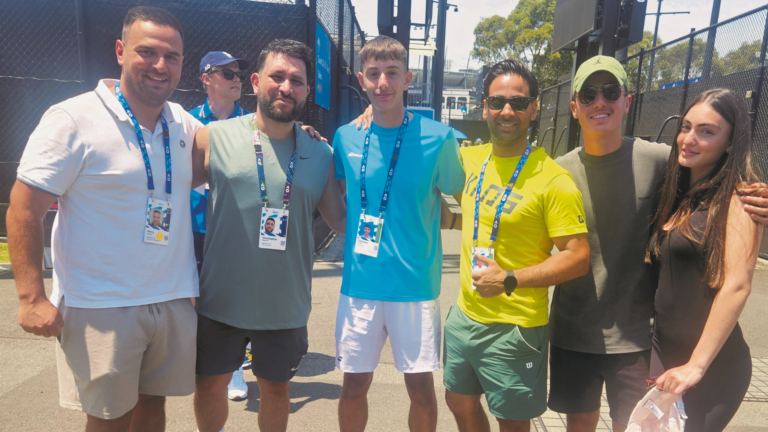
Before departing for the regional town of Traralgon, Geladaris visited Melbourne Park and watched Despina Papamichail’s victorious match against Sachia Vickery. 

There, he met with our Melbourne correspondent Bill Roumeliotis and said: “This is my first time in Australia, and the purpose of my trip is to compete in the Traralgon international tournament and then in the Australian Open Junior, where it will be my first Grand Slam appearance.”

“In the past few days, I have trained hard to achieve my goals in both events, and I am satisfied with the level of training and facilities. I am ranked No. 3 among the qualifiers [at Traralgon], which means I have a good draw and might not need to play in the qualifiers if more than three main draw players withdraw,” Geladaris added.

He explained that to enter the Traralgon main draw, he needs to win two qualifying matches: “I need two wins to reach the main draw, and if I succeed, I also have a strong chance of playing directly in the Australian Open Junior main draw. I feel ready and hopeful that I can make it.”

Regarding his plans beyond the Australian Open Junior, Geladaris said: “I am 17, and I believe I have had a solid junior career. My next big step is to compete in professional men’s tournaments and aim as high as I can.”

Born in Athens with roots in Agrinio, Geladaris expressed his ambition and dedication. We wish him the best and look forward to seeing him competing in Australia’s major summer tournaments every year.

South Melbourne set to depart for Auckland ahead of landmark OFC Pro League debut

The inaugural season of the OFC Pro League is just days away, marking the beginning of a new era for football in Oceania and reinforcing ambitions for the sport to become the region’s number one game.

The fully professional club competition has been developed as part of long-term efforts by world football’s governing body FIFA to strengthen and elevate football across Oceania. The league will feature eight clubs and operate under a centralised, innovative format designed to increase competitiveness and exposure.

How the competition works

The Pro League will begin with five rounds, each hosted in a different country. During these rounds, the eight teams will compete in a round-robin format, playing one another across the first phase of the competition.

Results from these matches will determine two playoff groups:

  • Leaders Group (positions 1–4)
  • Challengers Group (positions 5–8)

These groups will then progress to semi-finals and a grand final to determine the inaugural champion.

Pathway to global competitions

The Pro League champion will earn the opportunity to represent Oceania in major international tournaments, including the FIFA Intercontinental Cup and the FIFA Club World Cup, significantly raising the profile of clubs from the region.

Why it matters

This is the first fully professional football league in Oceania, providing a more demanding and competitive environment for players, coaches and clubs, while creating a clear development pathway to the global stage.

Competition schedule

  • Round 1: 17–24 January – Auckland, New Zealand
  • Round 2: 31 January–8 February – Port Moresby, Papua New Guinea
  • Round 3: 21–28 February – Melbourne, Australia
  • Round 4: 14–19 March – Honiara, Solomon Islands
  • Round 5: 11–18 April – Ba/Suva, Fiji

Leaders Group (positions 1–4): 6–12 May – Auckland, New Zealand

Challengers Group (positions 5–8): 7–13 May – Auckland, New Zealand

Play-offs: 13–24 May – Auckland, New Zealand

South Melbourne FC set for Auckland

The delegation of South Melbourne FC is scheduled to depart for Auckland on Thursday, ahead of the opening round of matches.

South Melbourne fixtures – Round 1

  • Sunday, 18 January: Hellas Melbourne vs Tahiti United, 11.00am – Eden Park Stadium
  • Wednesday, 21 January: Hellas Melbourne vs Solomon Kings, 5.00pm – North Harbour Stadium
  • Saturday, 24 January: Hellas Melbourne vs PNG Hekari, 4.30pm – North Harbour Stadium

Opening round programme

Saturday, 17 January (Eden Park Stadium)

  • Vanuatu United vs Bula FC – 1.00pm
  • Auckland FC vs South Island United – 5.00pm

Sunday, 18 January

  • South Melbourne vs Tahiti United – 11.00am
  • PNG Hekari FC vs Solomon Kings FC – 3.00pm

The launch of the OFC Pro League is widely viewed as a landmark moment for football in Oceania, with the potential to reshape the sport’s future across the region.

Greek Community Home for the Aged to host vibrant paniyiri in Earlwood

The Greek Orthodox Community of NSW’s Home for the Aged is set to come alive with music, food and tradition this weekend, as it joins forces with the Panipirotiki Enosis of NSW to host Greek Paniyiri @ GOCHA, a vibrant community festival celebrating Hellenic culture.

Taking place on Sunday, 18 January 2026, the event will transform the grounds of the Greek Community Home for the Aged in Earlwood, Sydney into a lively Greek paniyiri, welcoming families, friends and community members of all ages for a full day of festivities.

Organisers promise an authentic Greek experience, featuring traditional Greek food, souvlakia, drinks, live music and entertainment, as well as dancing and warm Greek hospitality.

The festival aims to bring generations together, offering an opportunity for younger attendees to experience Greek traditions, while older members of the community reconnect with familiar sounds, flavours and customs.

With free entry and a relaxed, family-friendly atmosphere, the event is expected to draw strong community support and provide a meaningful cultural gathering for the local Greek Australian community.

Event Details

  • What: Greek Paniyiri @ GOCHA
  • When: Sunday, 18 January 2026
  • Where: Greek Community Home for the Aged (GOCHA), 2 Woolcott Street, Earlwood
  • Time: 11.00am – 6.00pm
  • Free event
  • Information & registrations: 02 9718 7195 or hostelreception@goc.com.au

Community members are invited to come together, celebrate Greek culture and enjoy a joyful day filled with tradition, music and shared memories.

Teen driver Aaron Papazoglu faces new charge over fatal Hornsby crash

Aaron Papazoglu, 19, the teenage driver accused of causing a crash that killed 33-year-old Samanvitha Dhareshwar and her unborn child in Hornsby last November, has been hit with an additional charge.

Originally charged with dangerous driving occasioning death, negligent driving occasioning death, and causing the loss of a foetus, Papazoglu was charged on January 6 with aggravated dangerous driving occasioning death, for allegedly exceeding the speed limit by more than 45 km/h.

He has not entered a plea. His case was briefly mentioned at Downing Centre Local Court and adjourned for four weeks, with the next hearing scheduled for February 17.

Source: Daily Telegraph.

Australian Ambassador Alison Duncan meets Greek Foreign Minister in Athens

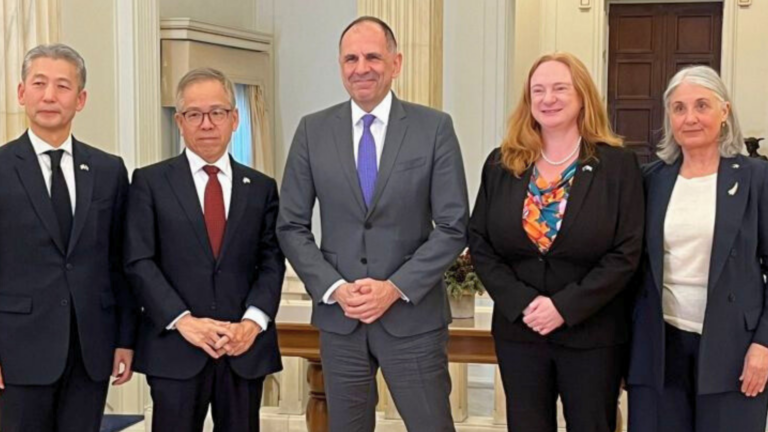
Australian Ambassador to Greece Alison Duncan has met with Greece’s Minister for Foreign Affairs George Gerapetritis in Athens, alongside her counterparts from the Republic of Korea, Japan and New Zealand.

The meeting focused on the growing importance of cooperation between the North Atlantic Treaty Organisation (NATO) and its Indo-Pacific partners, as well as the impact of regional developments on Greece and the broader NATO alliance.

The talks were described as productive and insightful, reinforcing the importance of international collaboration and multilateral engagement in addressing contemporary geopolitical issues.

Steve Georganas MP highlights diaspora role in Greece’s development during PADEE talks

0

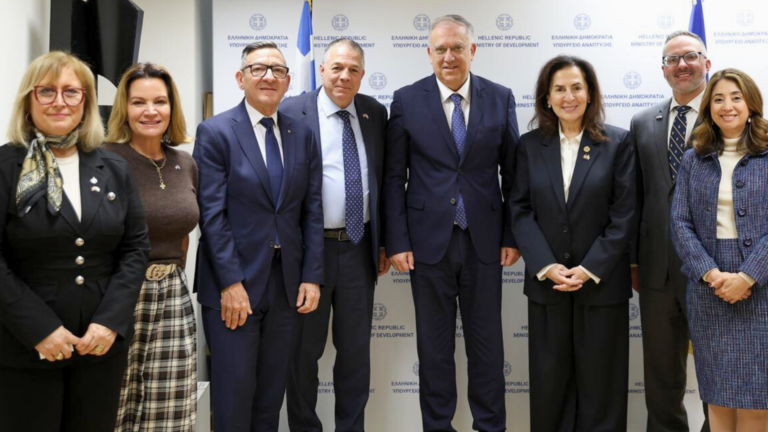
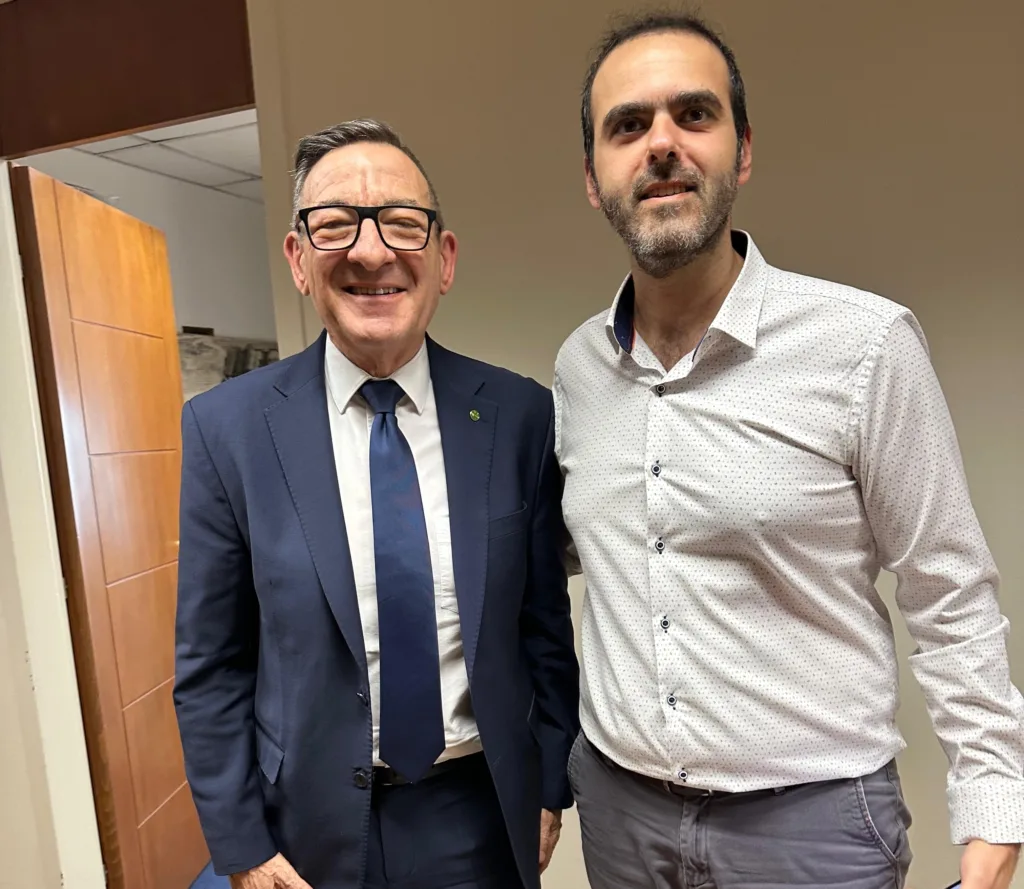
Federal Labor MP for Adelaide, Steve Georganas, is currently in Greece, where he is participating in important meetings of the Executive Council of the World Hellenic Inter-Parliamentary Association (PADEE) with members of the Greek Government. It should be noted that the President of PADEE is Leonidas Raptakis.

One of these meetings took place on Monday, January 12 with the Greek Minister for Development, Takis Theodorikakos, who described diaspora parliamentarians as a valuable asset for Greece. 

Mr Theodorikakos highlighted the importance of stability and credibility during a period of intense geopolitical and economic change, stressing that Greece has the capacity to play an enhanced role on the international stage by leveraging its geographical position, modern infrastructure and a stable investment framework.

Particular reference was made to the prospects for further investment in sectors of strategic importance, such as energy, infrastructure, logistics and new technologies, as well as the growing international momentum around data centres. 

It was underlined that Greece can emerge as an energy hub, a logistics centre and a data connectivity hub, utilising energy sufficiency from renewable sources, as well as infrastructure being developed in key regions of the country.

In this context, Mr Theodorikakos referred to the upgraded role that the port of the Elefsina shipyards could play, as part of a broader plan to transform the area into a comprehensive energy, commercial and trans-shipment hub.

For their part, members of PADEE’s Executive Council emphasised the role that the Greek diaspora can play as a bridge of cooperation with Greece. They expressed their willingness to contribute meaningfully to attracting investment, promoting partnerships and strengthening Greece’s international presence.

Additionally, reference was made to the critical issue of postal voting, so that it may also apply to national elections, which – according to announcements – are expected to take place in the spring of 2027. For this to occur, 200 votes are required in the Hellenic Parliament.

In closing, the Minister for Development expressed his appreciation for the active role of PADEE members and underlined that the Ministry of Development remains open to initiatives and collaborations that attract investments with a meaningful development impact and harness the potential of global Hellenism.

What Georganas said:

Mr Georganas was present at the meeting and immediately afterwards spoke exclusively to The Greek Herald.

“We discussed with the Minister various issues relating to the development of Greece’s economy – where it is heading and the goals it seeks to achieve. At the same time, we discussed how Greece will work together with Australia, Canada and the United States. And, of course, the need for a bridge between us for this development, both for Greece and for our countries,” he said.

Mr Georganas then noted that there was also discussion regarding the upcoming visit of Greek Prime Minister Kyriakos Mitsotakis to Australia in March.

When asked whether there is serious scope and potential for further business cooperation between Greece and Australia, Mr Georganas was unequivocally positive.

“There are many opportunities for investment both in Australia and in Greece, and many have already taken place. As we speak, the largest investment ever made in Greece by a foreign company is from Australia – Macquarie Bank’s investment in PPC, together with other partners here in Athens. It is the largest foreign investment in Greece’s history,” he said.

Finally, when asked about other meetings held in recent days, Mr Georganas told The Greek Herald: “We met with the President of the Parliament, Mr Kaklamanis, with New Democracy MP Filippos Fortomas (President of the Hellenic Parliament’s Special Standing Committee on the Greek Diaspora), and there will also be a meeting with the Minister for Education, Sofia Zacharaki, on the issue of the Greek language.”

The pivotal role of PADEE:

The World Hellenic Inter-Parliamentary Association is a global organisation representing parliamentarians of Greek descent elected in the parliaments of non-Greek-speaking countries.

It was informally established in August 1996 in Athens by a delegation of elected MPs of Greek descent from non-Greek-speaking countries around the world. However, it acquired legal status as an association in June 2005, when it was officially founded and given the name World Hellenic Inter-Parliamentary Association (PADEE).

PADEE has adopted significant resolutions in support of Greek issues at an international level and has dozens of members elected to legislative bodies and parliaments in 24 countries worldwide.

Tsitsipas sets sights on Grand Slam success after Adelaide upset

0

Greek tennis star Stefanos Tsitsipas suffered a shock first-round defeat at the Adelaide International, losing two tight tiebreaks to Australian Aleksandar Vukic, but remains focused on his 2026 goals.

Speaking after the match, Tsitsipas emphasised that the loss would not define his year. He reiterated his ambition to contend at all Grand Slams, aim for deep runs, and maintain consistency in his game throughout the season.

Tsitsipas began the year strongly at the United Cup, winning all three singles matches, including a notable victory over Billy Harris.

Despite last year’s struggles, failing to progress past the second round in any major and exiting the Australian Open early, he is determined to bounce back at Melbourne Park.

“I have a long year, and I’m looking forward to getting it started in the best possible way,” he said, underlining his commitment to regaining top form in 2026.