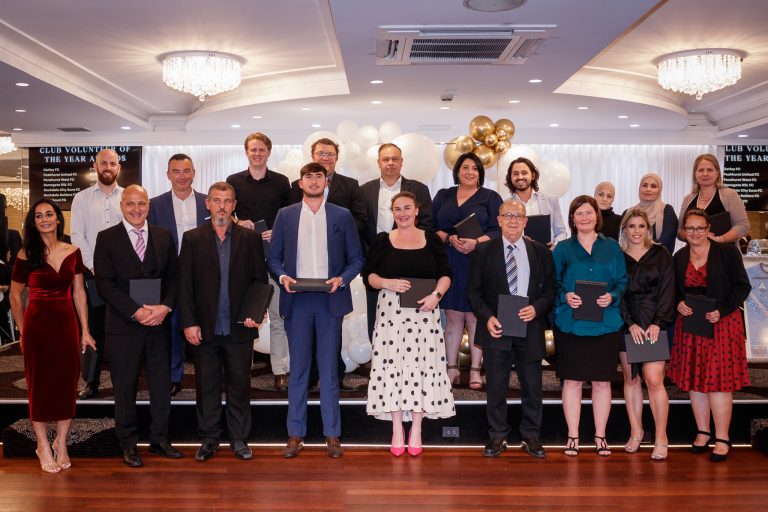
Five Greek Australians have won at the 2022 St George Football Association Gold Medal Presentation.
The awards, which took place last month, recognised the players, coaches, referees and committee members a part of the Southwest Sydney football comp.
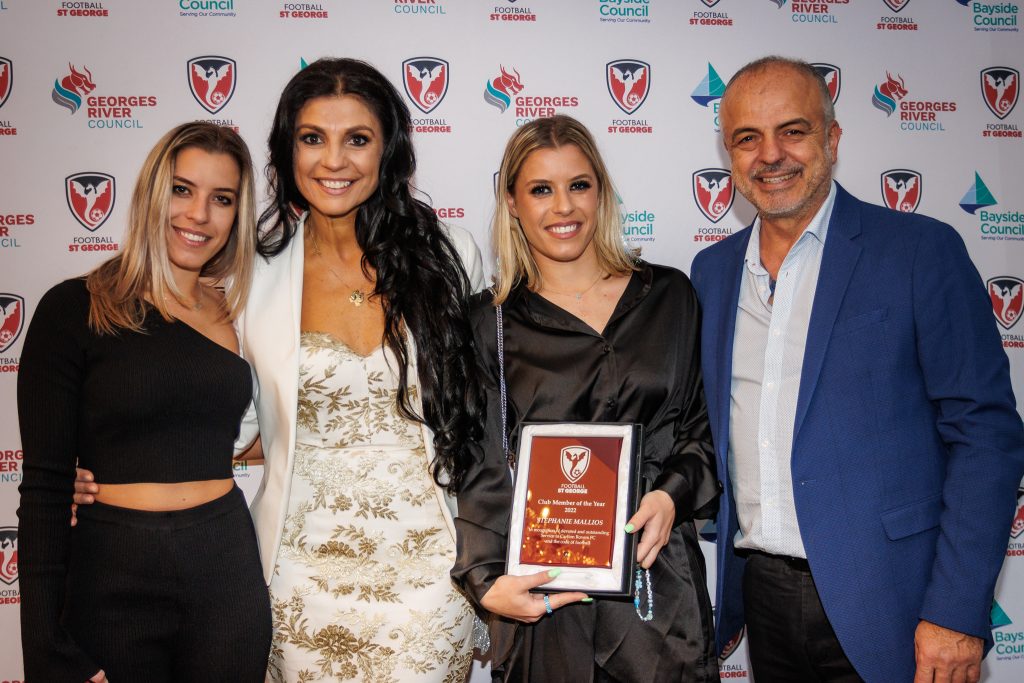
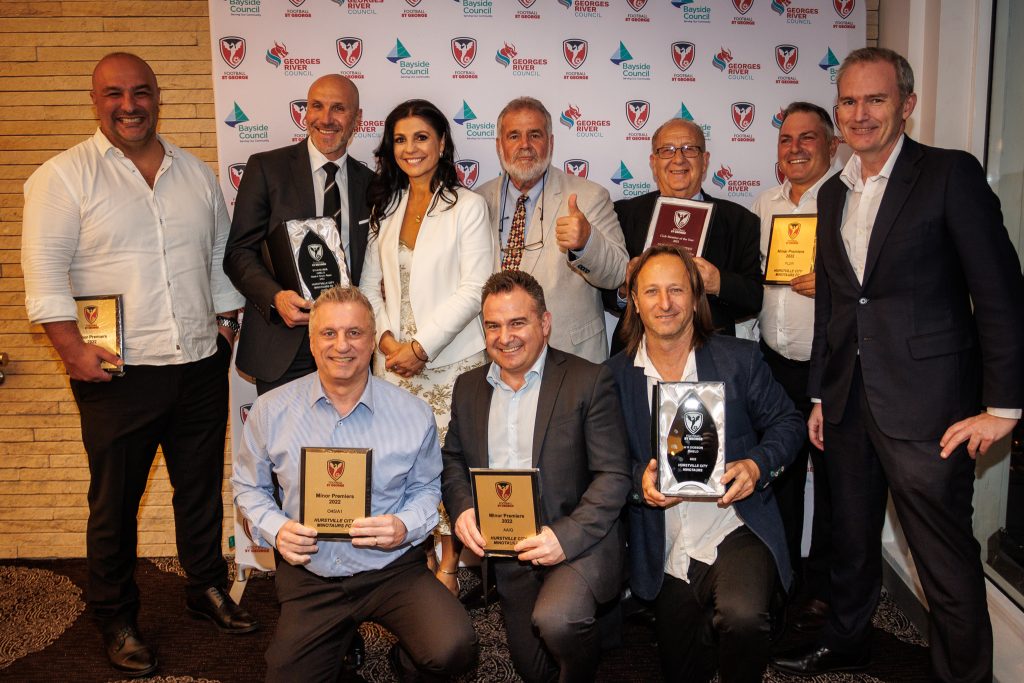
The winners for 2022 Club Person of the year were Athena Michailou (Bexley North FC), Stephanie Mallios (Carlton Rovers FC), Chris Spyrou (Riverwood Glory FC), Mathew Papas (Peakhurst United FC) and John Papadopoulos (St George Football Referees Association).
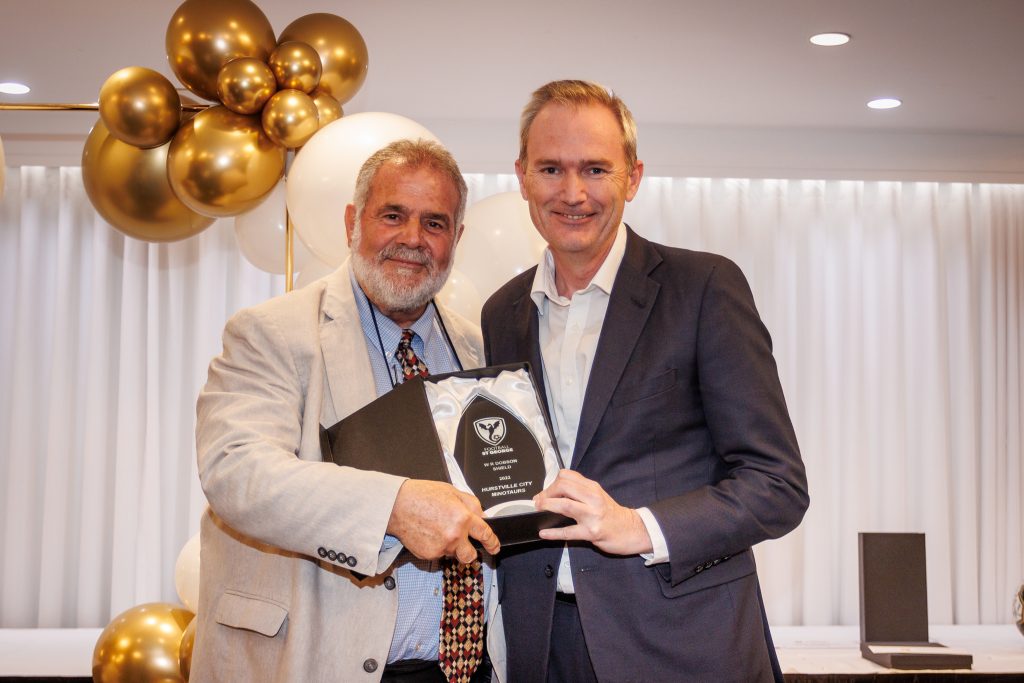
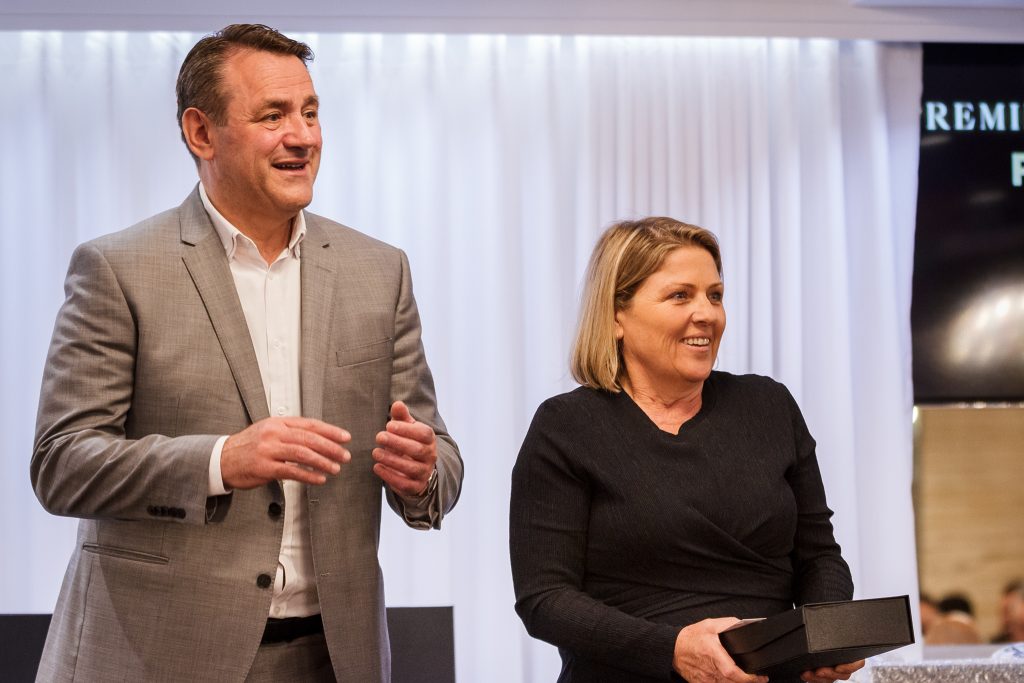
Receiving the Stan Moses Shield and the W R Dobson Trophy on behalf of the Hurstville City Minotaurs FC was Club President Peter “The General” Sarikakis.
The awards night took place at The Grand Roxy, Brighton Le Sands on Friday, 23 September as special guests, club representatives, members, players, coaches and officials attended, acknowledging the achievements from the 2022 season.
Amongst those in attendance was the Federal Member for Banks, the Hon. David Coleman; NSW Member for Rockdale, Steve Kamper; NSW Member for Oatley, Mark Coure; Former Member for Kogarah, Cherie Burton; Mayor of Bayside Council, Dr Christina Curry; Mayor of Georges River Council, Nick Katris and Football NSW Director, Debbie Chapman.
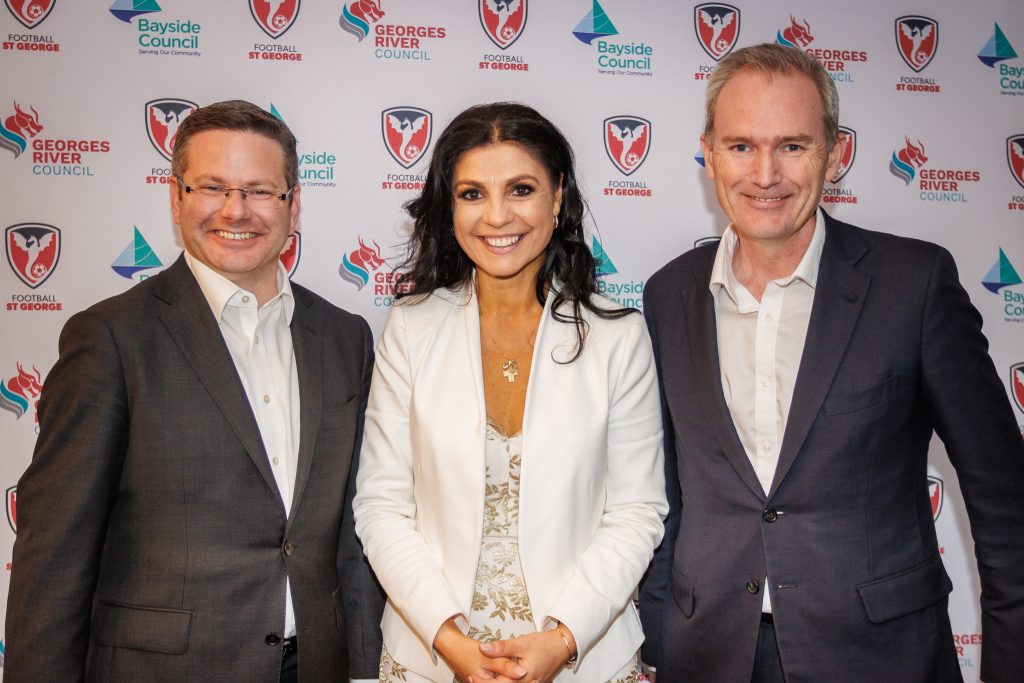
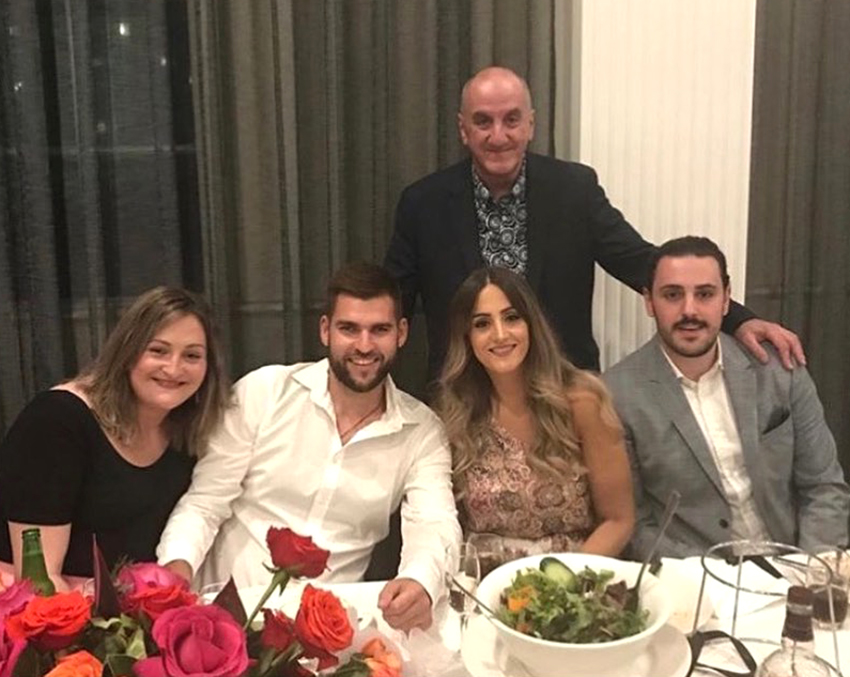
Member for Oatley Mark Coure with SGFA Chairperson and Executive Director, Irene Hatzipetros and Federal Member for Banks, the Hon David Coleman.
The evening was hosted by Australian Sports Presenter and Football NSW Director, Stephanie Brantz.
Football St George Chairperson and Executive Director Irene Hatzipetros was delighted with the end of season Gold Medal and Awards celebrations.
“It was almost surreal to be able to come together in full celebratory mode, acknowledging and commending clubs, teams, coaches, managers, players, referees, and the army of amazing volunteers across our football district that help make our great game what it is,” she said.
“What was yet again very clear is that we are blessed with many fantastic, community minded, local grassroots people that love the game, their club, and the association we are involved in. It is extremely difficult to rate the contributions and achievements of one person to another as in the Board’s eyes, they are all special and champions of our community.”
“It has been an absolute privilege to be able to serve Football St George and the game especially after the previous two COVID interrupted seasons that required a virtual reset of our way of life. 2022 provided us an opportunity to band together again and despite the challenges from wet weather, the Football St George team ensured all players were able to play a complete season.”
“The Football St George, Executive, and I now look forward to what will undoubtedly be an extraordinary 2023 football season ahead.”
He’s the Greek Liverpool FC (LFC) player with a huge fan base. Now, Kostas Tsimikas has shared how he got his ‘Greek Scouser’ nickname.
Speaking to LFC Media, Tsimikas credits a member of the backroom staff at the AXA Training Centre for coining his widely-used nickname.
“I was with my friend the fitness coach in the gym at the training ground and he said to me, ‘You are the Greek Scouser!’ And I liked it a lot, to be honest,” the left-back said.
“That’s why I posted it on Instagram and after that, it was my name. Automatically!”
Kostas Tsimikas.
Since then, Tsimikas even has a crafty chant created specifically for him, with LFC fans singing ‘Tsimi, Tsimi, Tsimi,’ to the tune of the ABBA song Gimme Gimme Gimme.
“I’m very, very happy for that and this makes my time here in Liverpool more special,” he said.
Tsimikas is now into his third season on Merseyside, having arrived from Olympiacos in the summer of 2020.
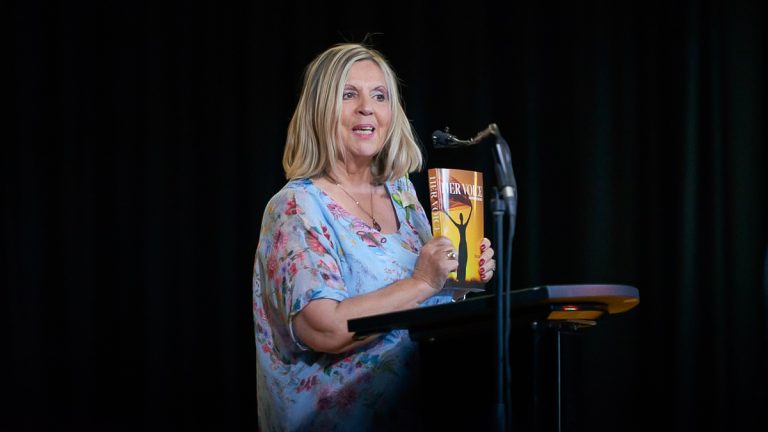
Author of ‘Her Voice’ and founder and chair of the Food for Thought Greek Australian Women’s Network, Varvara Ioannou, was amongst five other Melbournians who were recognised in Manningham City Council’s 2022 Civic Awards on Wednesday night.
Before an estimated 200 people in the Manningham Function Centre, Varvara was named the ‘Doreen Stoves AM PSM JP Volunteer of the Year’.
In a statement, the council wrote: “Varvara is acknowledged as being an inspiring volunteer leader in our community, sharing her professional knowledge and experience.”
“Varvara encourages others to volunteer their time to create an inclusive community. She is committed to creating inclusive schools, universities, workplaces, community organisations and communities,” the statement said.
WATCH Varvara speak with Manningham Council in 2021 about her community and social work.
In previous years, the award had been titled the ‘Volunteer of the Year Award’, however, this year had been renamed in honour of the late Doreen Stoves AM PSM JP.
Doreen has been widely considered a pioneer in the community space, working tirelessly to support socially isolated and marginalised people across Victoria.
For her part, Varvara, who was unable to attend the ceremony, said she was honoured to receive the award, saying; “I would like to express my gratitude to the Manningham City Council for honouring me with the prestigious Doreen Stoves Civic Award.”
“I had the pleasure for having had brunch with the late Doreen a month before she passed away. It was such an honour to watch the whole ceremony from Greece. I had tears in my eyes and feel blessed. Thank you.”
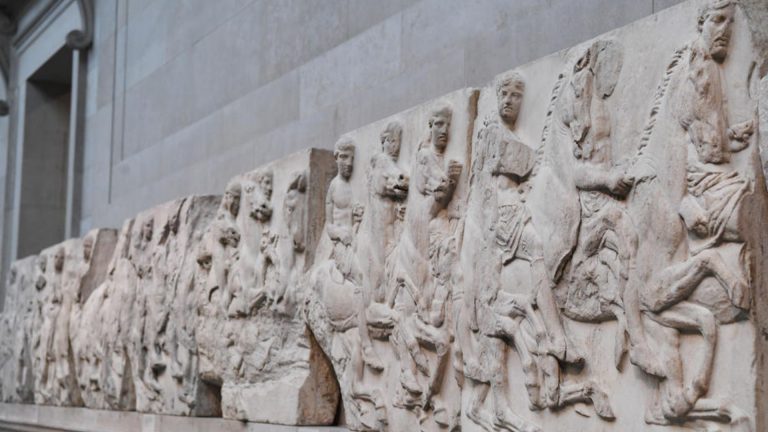
A new law in England and Wales has been introduced to give national museums significantly more power to deaccession works and make progress on restitution cases.
The Charities Act 2022 is expected to come into force later this year and will allow charities, and museums, to dispose of objects where there is a compelling moral obligation to do so.
According to the Charities Act, museums will now be able to deaccession low-value assets without requesting permission; higher-value goods will still require consent from the Charity Commission, the attorney general, or a court.
Museums had previously been limited to the National Heritage Act 1983 and that had restricted the trustees of major UK museums from deaccessioning objects from the collection except under certain circumstances, like if they are a duplicate of beyond repair.
“Given the growing increase in moral and political pressure on museums and their trustees to “do the right thing”, this legislation provides new avenues for trustees to explore,” said art lawyer Petra Warrington of Charles Russell Speechlys to Artnet News.
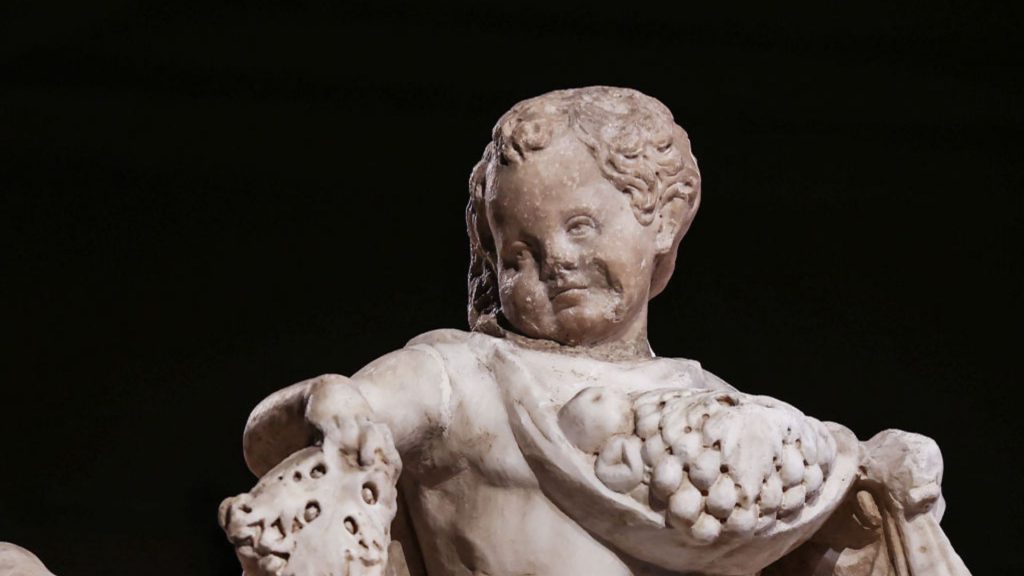
Sidamara sarcophagus at Istanbul Archaeology Museums is complete again with the head of Eros, after it was brought back to Turkey from the V&A museum. Photo by Onur Coban/Anadolu Agency via Getty Images.
“Helping them to find solutions where originally the law had not provided a legal framework for restitution. It is a very positive development.”
The new regulation may also increase a museum’s ability to repatriate cultural items in addition to returning stolen art and human remains.
Earlier this year, a head of Eros from the 3rd century was sent to Turkey after it had been detached from a sarcophagus in the 19th century and brought to the U.K. by a British official.
This “renewable cultural partnership” transfer, which is technically a long-term loan of V&A property because returning the object would have violated the National Heritage Act, is being done.
The new legislation will override Attorney General v. Trustees of the British Museum, a 2005 decision from the High Court that blocked trustees of the British Museum from returning objects based on a moral obligation in accordance with the Charities Act 2011.
This effectively created a false distinction between statutory charities like museums and other charities. The 2022 act instead emphasizes that the “stand-alone statutory power” can be exercised by “any charity.”
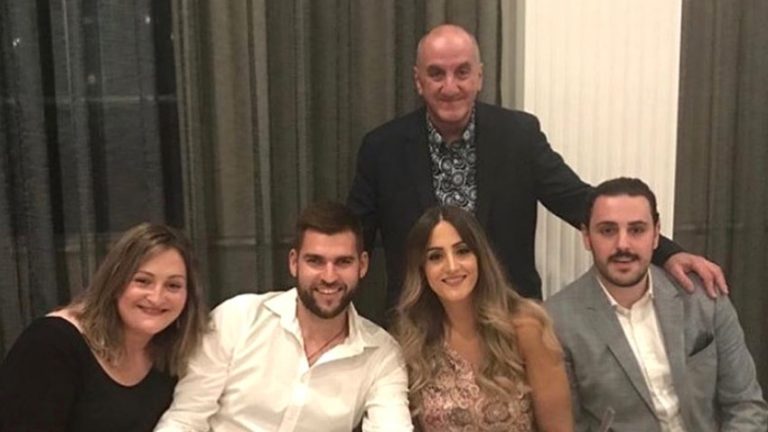
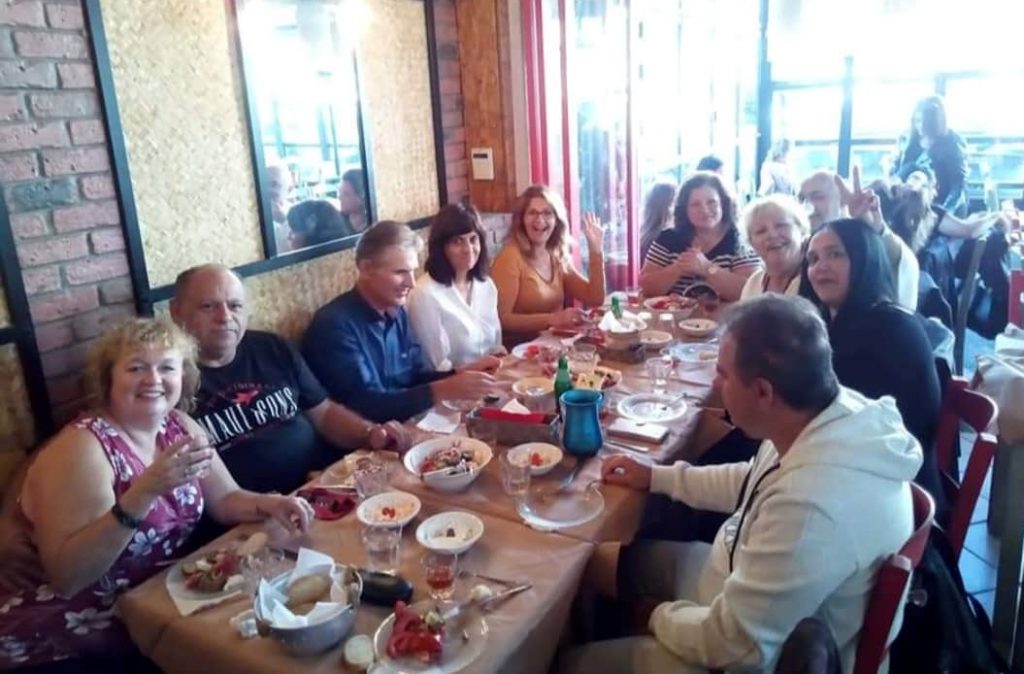
AiA is celebrating over 10 years of operation, being founded in June 2012 by Tina Doumas with the help of George Xenakis. Predominantly comprised by its namesake – Australians in Athens – the group also has a strong membership of Greek Australians in Australia.
AiA’s main administrator now (since 2015) is Angela Vlahoulis, who is in her 60’s, and a proud grandmother of two granddaughters. Though born in Greece, she moved to Australia at the age of one with her parents, returning permanently to Greece around 20 years later.
“AiA is a fun group, and I try to keep it that way by not getting too serious and political. A lot of the posts I put up may seem silly, but it’s to help people forget their problems,” Angela adamantly expresses.
“Some of my posts can be a bit spicy, and a few people get offended, but I can’t be people’s psychologist.
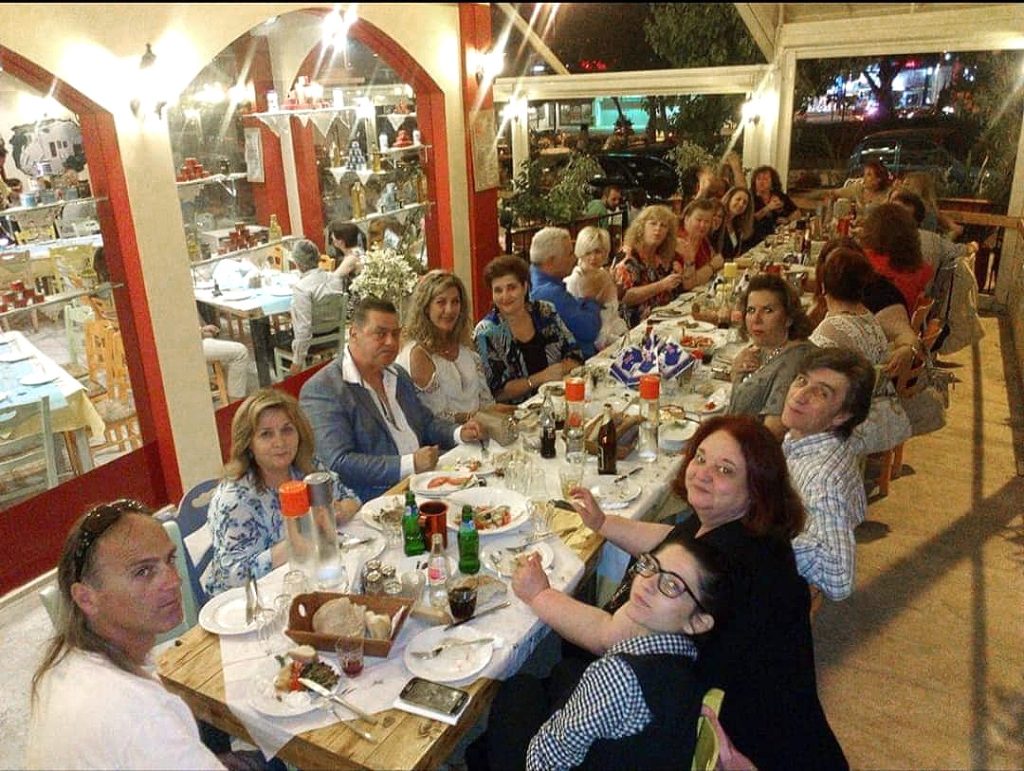
“We make the most of it with our group AiA. It’s a great group with a sense of humour. We have coffee mornings, taverna nights, etc, often giving events an Aussie vibe like including chocolate crackles at a Xmas party! COVID slowed us down a lot, but we’re bouncing back with events, and planning more.”
“There are long term members in AiA as well as new ones, and many close friendships have been made – including marriages!”
Angela explains that although she grew up in Australia (having visited twice on holidays in 1994 and 2008), she never really felt she belonged there.
“Here I feel free to say what I like, to be myself. It’s a different mentality. I can’t stand being constrained,” she says.
In closing, Angela says: “Although I’m a Greek-Greek, the Aussie in me is still there.”
With a sparkle in her eye she adds laughing, “all Greek Aussies are welcome to join the group; the fee for the Aussie ones is chocolate freckles or cherry ripe when they visit Greece!”
I also spoke to AiA member George Ginis, in his 60’s as well, who lives permanently (born and bred), in Melbourne, Australia. He tells me that he joined the group to connect with Greece and with Greek Australians in Greece in particular due to their English speaking ease. George praises the group for its wonderful members including the close friendships he’s forged.
As he relates how his heroic mother brought up her three kids alone, he tells me that his father migrated to Australia in 1933, but passed away when George was only six years old. George himself now has three adult children and is expecting his first grandchild.
Although divorced for many years, George is very close to his children, stating, “my children are my life.”
He explains that although he loves Greece and the lifestyle, whereby -“unlike Australia where they live to work, in Greece they work to live,” George’s health issues and desire to be with his children, see him not planning to live in Greece. But, the AiA group keeps George’s bond with Greece strong – a love for the country that he’s passed on to his children, who enjoy holidays in Greece.
George claims that he’s heard many rumours that Greeks in Greece aren’t friendly.
“My experiences have proven otherwise” he says. “It’s basically, if you’re a smart alec, of course you’re not gonna get treated well.” This was another reason George joined the AiA group: to learn more about Greece, particularly through the eyes of Greek Australians who live there.
Another AiA member (and part of the admin. team), who I spoke with, is Georgina Kloukiniotis. Born in Australia, Georgina came to Greece when she was 20. Now in her early 60’s, Georgina’s membership in AiA was prompted by her desire to meet Greek Australians like herself.
Although content with her life here in Greece, Georgina sought out the group because she found that “Greeks in Greece still regarded her as a foreigner.”
“They called me ‘η Αυστραλέζα’ (the Australian), even after many decades here. Though my Greek husband saw it as the best of both worlds! In AiA though, we understand each other as Greek Australians. Most of us came to Greece at similar ages, our parents backgrounds are similar, we relate to how we grew up, etc.”
Asking her what she misses about Australia, she tells me – “Autumn in Melbourne, the smell, leaves falling, the cleanliness in the streets, our houses and their architecture and yards. I also miss the peace and quiet.”
Animated, Georgina relates that when she was still new to life in Greece and began dating her now husband, “he’d come and pick me up at 10pm, when I was ready to go to sleep! That soon changed of course, but to this day, early nights have stayed with me – something that came from growing up in Australia.”
Other Australian ‘habits’ that Georgina tells me she adheres to include… “getting Vegemite for my Greek husband! He loves it,” she laughs. “I also make Aussie specialties like lamingtons and sausage rolls, and we have family picnics.”
Georgina also states though that it annoys her when she hears Greeks from Australia criticise Greece, positing, “It’s important to know this country’s history, and apart from its wars, to consider the geography of the rocky, Greek land that made life difficult for our people.”
Perhaps such insight also comes with living in a place for a long time, as many AiA’s have. Georgina says the group’s marvellous events and overall community, embraces Greek Australian’s as bicultural.
“Apart from providing a good time, AiA also acknowledges our fears and ‘ifs’. It exorcises the bad.”
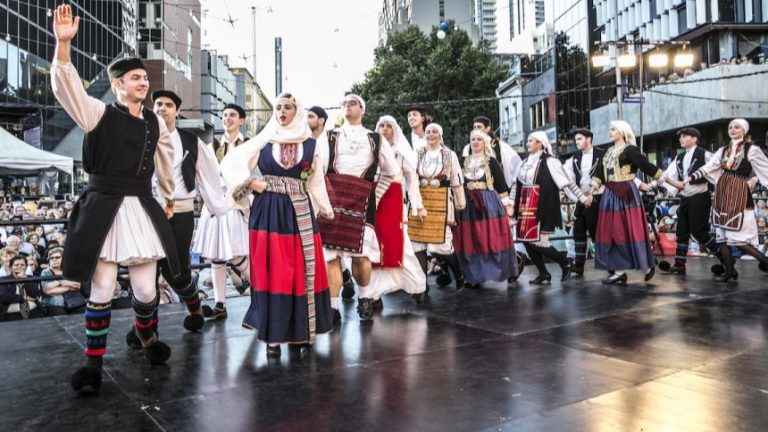
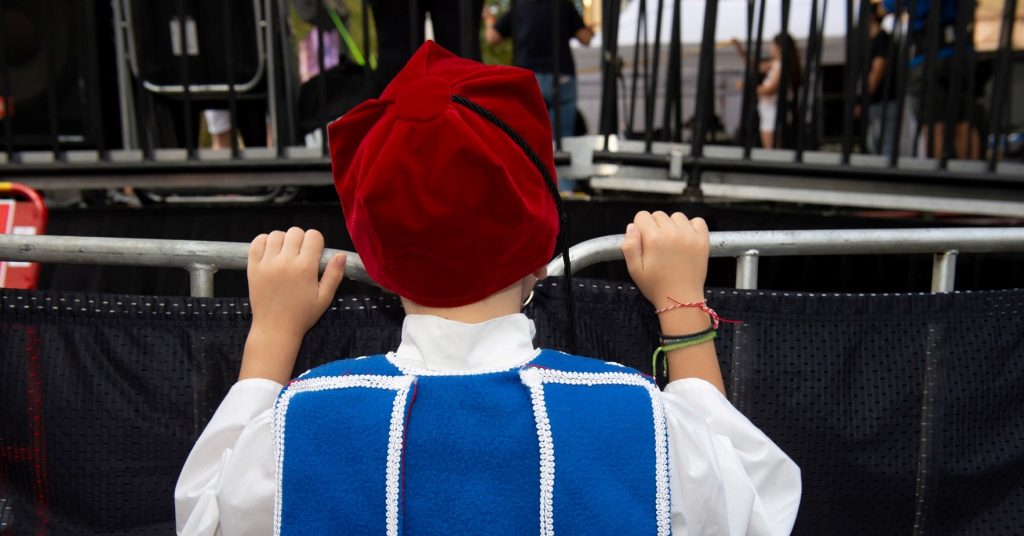
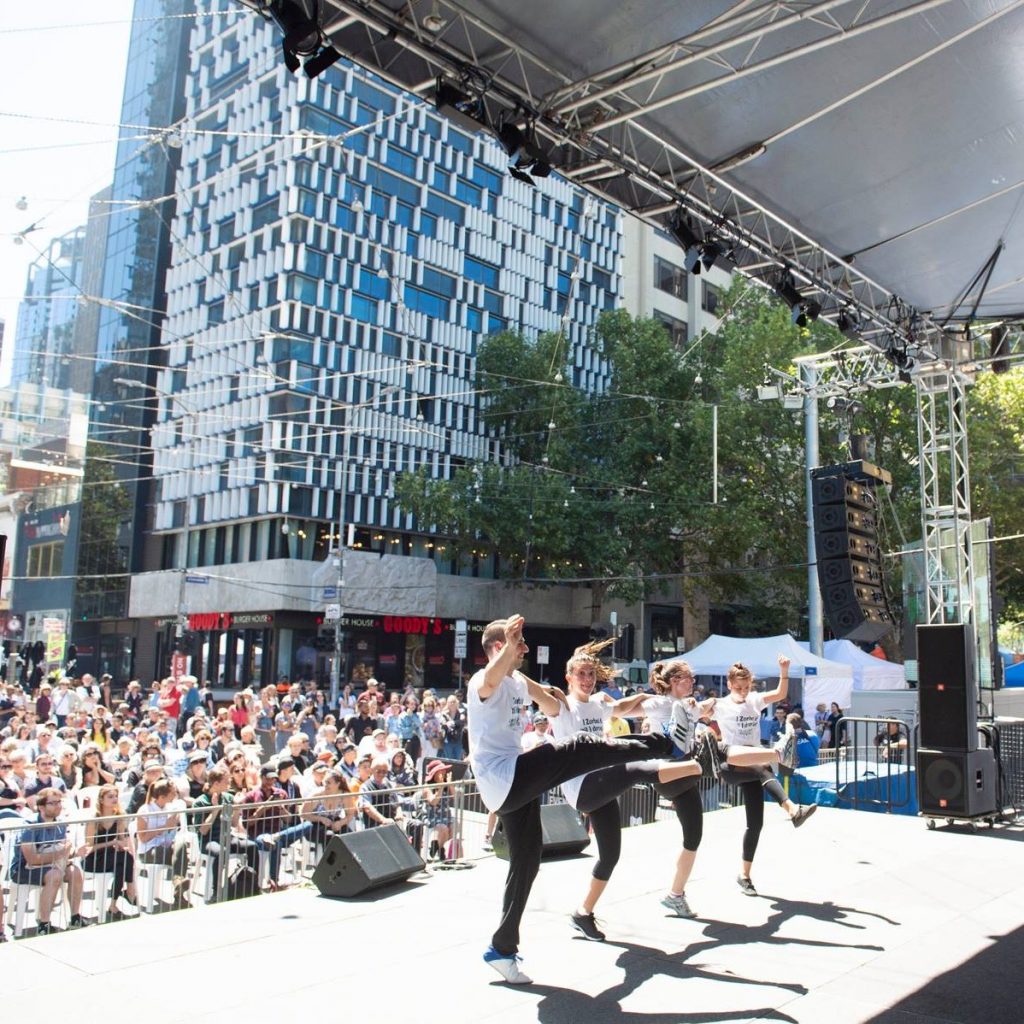
Melbourne’s largest Greek cultural celebration is back for another epic street party this month from Saturday, October 22 to Sunday, October 23.
This year’s Antipodes Festival will take over Melbourne’s Lonsdale Street for a weekend packed with music, dancing and carnival rides. It is being organised by the Greek Community of Melbourne (GCM).
The festival was originally planned for March 5 and 6 this year but was postponed due to the COVID-19 pandemic.
The event was replaced with a Greek music event last year which featured food trucks and live music to keep the Greek spirit alive despite the setback.
But this year will see the Antipodes Festival back with a bang with community, traditional and contemporary groups coming together to present and perform.
With over 90 stalls, three free entertainment stages and roving performers, children’s rides and activities, as well as multiple bars and an array of mouth-watering Greek culinary delights, there will be something for the entire family to enjoy.
The Antipodes festival holds the title of Melbourne’s longest-running Greek festival. Launched in 1987, Antipodes, or the Lonsdale Street Greek Festival, has been a rich showcase of Hellenic arts and culture for delighted audiences.
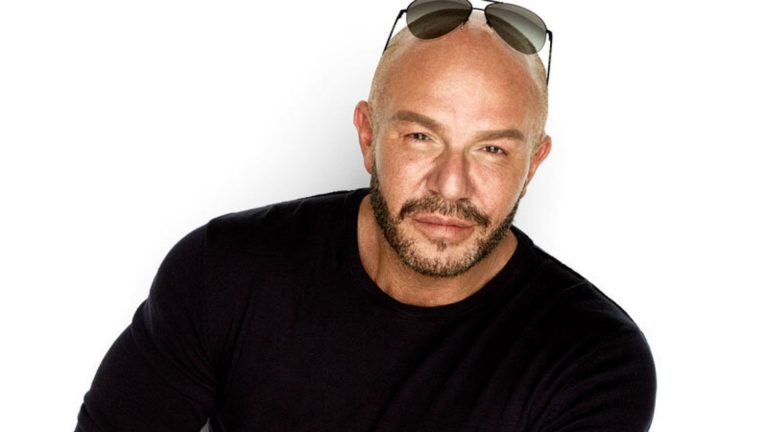
While Alex Perry has built one of the most well-known international Australian brands that has expanded into multiple department stores worldwide, there was still a time he didn’t consider himself “cool enough” for the Australian market.
In an interview with the Daily Telegraph, Perry opened up about his struggles assimilating into his own local market right here in Australia.
“As it turns out, nobody wanted it (my clothes) here,” Perry said.
“It didn’t work in Myer. It didn’t work in DJs, and I kept thinking, what is wrong with my clothes? It just wasn’t right for Australia.”
“I was never the one to watch, or the cool one, it was always all about these other designers. But I kept thinking, ‘I make really good clothes and I think they are really beautiful’.
“So I started to look at what I was doing and I thought ‘you know what, I think I am pretty cool’, but it is in a glamorous way, not what cool is defined as here.”
The renowned designer also mentioned that he was reluctant to open up his designs to the international market in 2000, following all these struggles in Australia.
As one of our most popular international designers, Perry is now carried by more than 280 upscale independent and department stores worldwide.
“We are in every single luxury department store in the world that I have ever wanted to be stocked in,” he said.
“Bergdorf’s, Neiman Marcus, Selfridges, Browns. I thought it was impossible 15 years ago.
Perry is now dressing some of the biggest names in the entertainment industry, which is a far cry from his first big celebrity, which was Noni Hazelhurst for the Logies.
From Heidi Klum to Jennifer Lopez and Kim Kardashian to name a few, a proud moment for the designer was undoubtedly seeing Lady Gaga on the cover of Variety Magazine in one of his pieces.
But he doesn’t let that stop him from working harder and harder.
“I will be on the couch watching Netflix in my pyjamas and something will pop up and we will see Lady Gaga in Alex Perry,” he said.
“I still get a buzz from it. I do for a minute. I don’t hang onto it. I see it and I get really proud and everyone at work loves it. Then it goes away.
“I feel like a superstar for the day, then I wait for the next one.”
In the modern world we have an image of what ancient Greek women were like – demure, modest, house-bound. Not the type to excel in sports or physical combat, and certainly not against elite men.
When we think of ancient sports, we recall the celebrated Marathon runner, Pheidippides, whose heroic run between Athens and Sparta in 490 BCE initiated the most famous footrace in the world. Even today, images of modern athletes are often male with physiques reminiscent of the idealised Greek male form. However, Greek mythical women have also left a legacy in the history of women’s sport and combat – a legacy that continues today.
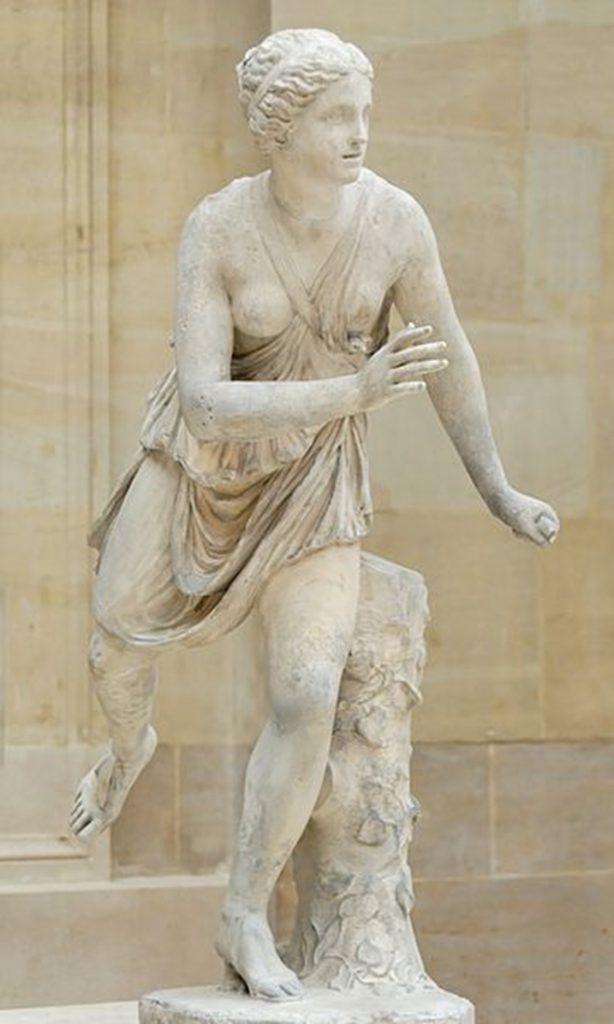
The Boeotian princess Atalanta was renowned for her speed, skill and dexterity. A far cry from the image of the domesticated housewife, the athletic heroine had no interest in marrying, although she attracted many suitors.
Sculpture of Atalanta running towards the viewer, dated c.1703 AD. Located in Paris, Louvre Museum, Inv. MR 1804. (Wikicommons)
When Atalanta’s father forced her to marry, she challenged her suitors to a footrace. The winner could have her hand in marriage, but any man who lost would be killed. Despite these dangerous terms, many men took up the challenge. She outstripped them all with the exception of Melanion, who won by trickery. He dropped golden apples belonging to the goddess Aphrodite on the racecourse and outran Atalanta when she stopped to pick them up. The only man who could beat Atalanta had to rely on the help of a goddess to do so.
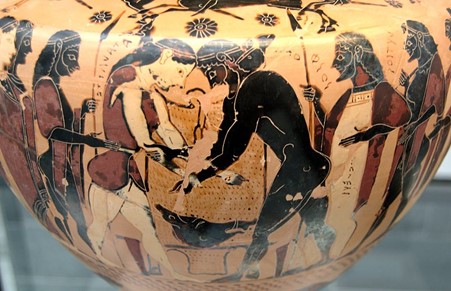
Atalanta was not just a fast runner, she was also exceptionally strong. In fact, Atalanta’s name – which means ‘equal in weight’ – likely refers to her strength and success in contests with men. The ancient writer Psuedo-Appollodorus (2nd Century AD) tells us that Atalanta won a wrestling match against Peleus, the legendary King of Pythia and father of the famous hero Achilles. This was a famous scene in ancient Greek vase-paintings, depicting Atalanta and Peleus wrestling for the prize of the Calydonian boar skin, a monster which Atalanta helped to hunt and kill.
Black-figure hydria c.550 BC depicting Atalanta wresting the hero Peleus. Located in Munich, Staatliche Antikensammlungen, Inv. 596. (Wikicommons)
Through an athletic prowess that rivalled legendary male heroes, Atalanta challenged the idea of sport as a strictly masculine domain. Her legacy inspires women in sport today, as seen in the name of the professional women’s running team Atalanta NYC. She remains a role model for contemporary elite female athletes more generally, as they – like Atalanta – push past societal barriers to excel in the sporting arena.
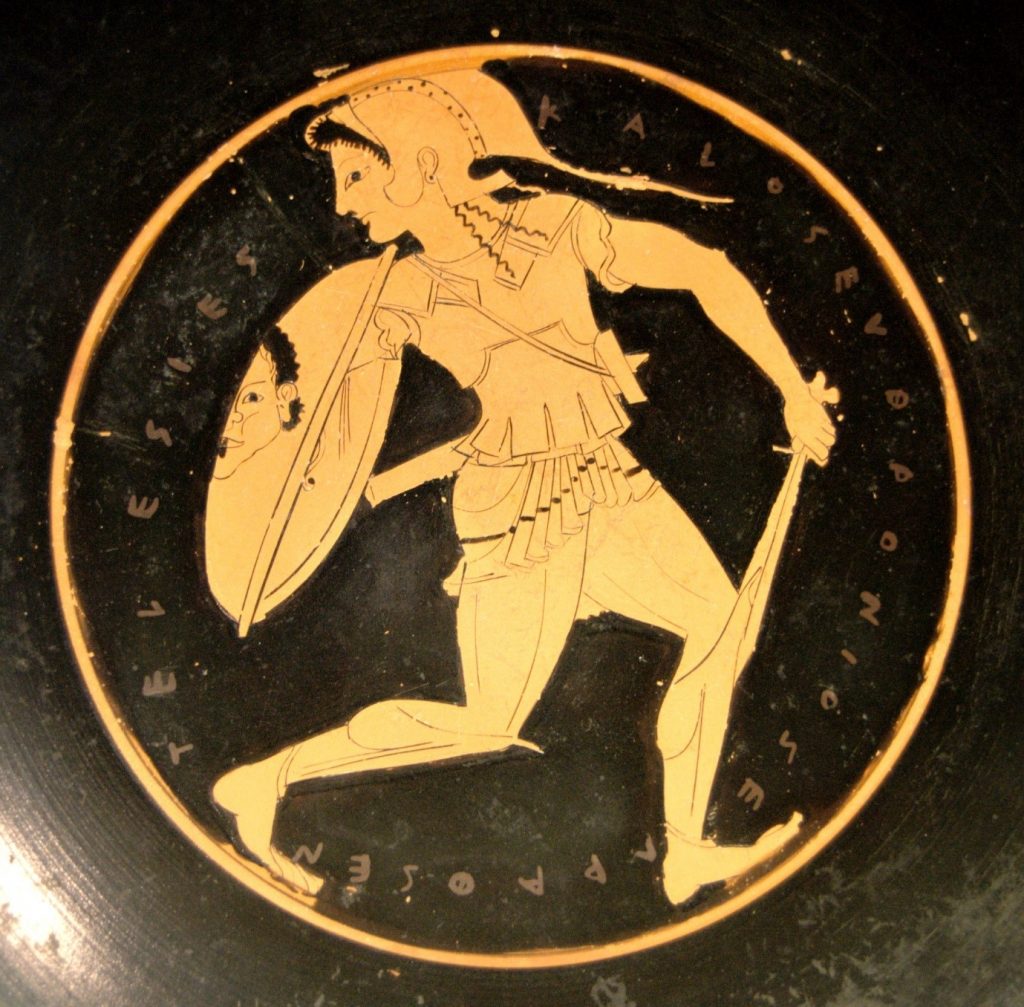
While Atalanta’s legacy lies in her athleticism, the ancient Amazons are renowned for another traditionally masculine quality – their military proficiency. Like Atalanta with her disdain towards marriage, the Amazon women rejected domestic duties and patriarchal norms entirely, living in all-female societies where they devoted their time to hunting and war training.
Red-figure kylix c.510–500 BC depicting an Amazon with sword and shield. Located in Amsterdam, Staatliche Antikensammlungen, Inv. 8953. (Wikicommons).
Tales of the Amazons – often portrayed with weapons and armour – were based off the Greeks’ observations of real warrior women such as Scythian cavalrywomen, highlighting the very long history of women participating in the military realm.
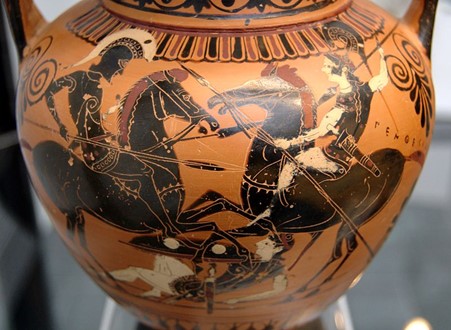
In ancient Greek myth and legend, the Amazons were a formidable tribe of elite cavalrywomen, whose skill in armed combat granted them the title ‘equals of men’. They fought extended campaigns where they defeated countless Greek male warriors. They only met their match when they went up against the most renowned heroes like Achilles, Theseus and Heracles. When Amazon queens fought the ultimate Greek heroes, they put up a formidable fight to the end, granting them heroic status for their unflinching courage on the battlefield.
Black-figure amphora c.520BC depicting the Amazon Queen Penthesilea fighting Achilles. Located in Amsterdam, Staatliche Antikensammlungen, Inv. 1502. (Wikicommons)
With women increasingly taking on combat roles in the armed forces, the legacy of the mythic Amazons and their real historical counterparts continues today, showing that with training and perseverance women can excel in the military sphere.
Ancient Greek heroines like Atalanta and the Amazons challenge the idea that sports and warfare are solely male domains. The athletic and military prowess of the female body is not a modern phenomenon – it has been celebrated for thousands of years. Women today need only to look back to the ancient Greeks to find the inspiration they need to succeed in the modern world.
Biography:
Connie Skibinski is a PhD (Classics) candidate at The University of Newcastle, having completed an honours degree in Ancient History/Ancient Greek at The University of Sydney. Her doctoral research examines the complex and multifaceted portrayal of the Amazons in ancient literature and art, and analyses how Amazon mythology has been reconfigured from the Medieval era to the twenty-first century. Connie was interviewed by ABC Radio National to discuss the portrayal of the Amazons in ‘Wonder Woman 1984’ (2021) when the movie debuted and is currently writing a book chapter on the Amazons in ‘Xena: Warrior Princess’.
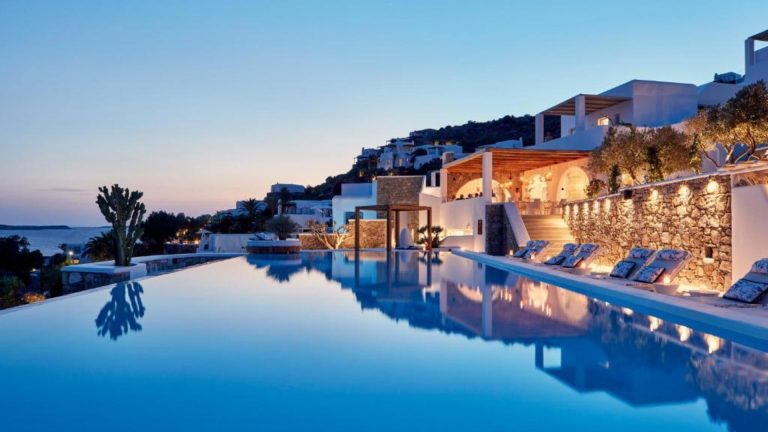
Katikies Santorini and Mykonos have taken first place in the Readers’ Choice Awards for 2022 by Conde Nast Traveller as top preference for Greece.
The luxury resorts were voted for by over 240,000 readers who ranked their travel experiences around the world, providing a complete picture of the best destinations that they visited during the year.
The Readers’ Choice Awards are known as the oldest and most prestigious award in the travel industry, backed by the legacy of its publishing house, Conde Nast.
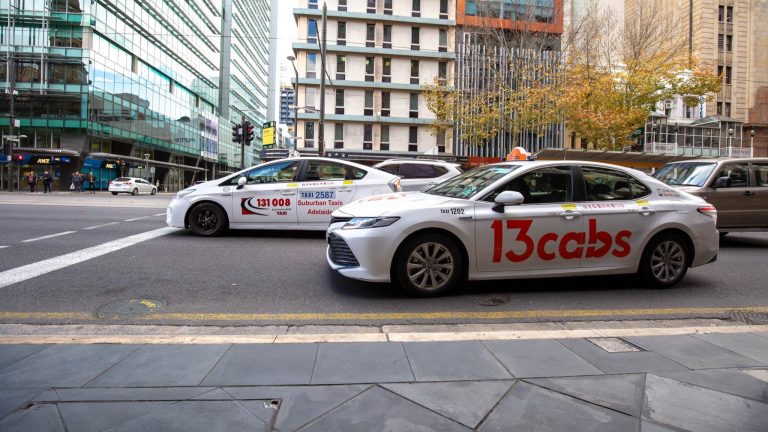
South Australian taxi drivers are set to take home more pay with the State Government today authorising a six per cent fare increase.
The increases, which will be the first for the industry since 2016, will come into operation at the end of this month and are designed to address the financial shortfall taxi drivers now face at the hands of rideshare services and the rising cost of living.
Based on estimates, the cost of a 5km trip within metropolitan Adelaide will increase by 90 cents.
Minister for Infrastructure and Transport Tom Koutsantonis said the increase in maximum taxi fares would support the taxi industry by increasing the revenue-generating capacity of taxi operators to meet overheads.
“The industry has made a compelling case that they are struggling to meet running costs and attract drivers – with the problems they’ve faced exacerbated by increased fuel prices experienced in 2022,” he said.
“Taxi drivers have not seen their take-home pay increased for six years – their wages have languished.
“This is one of SA’s lowest-paid sectors and the State Government is obliged to give these workers a chance to earn a fair fare.”
Tom Koutsantonis MP outside Parliament House. Photo: Matt Turner
The increase is expected to have minimal impact on the South Australian Transport Subsidy Scheme, under which access to taxi travel for people with disabilities is subsidised, currently up to a maximum metered fare of $40.
Additionally, the maximum country taxi fare remains set at 20 per cent higher than regulated metropolitan fares.