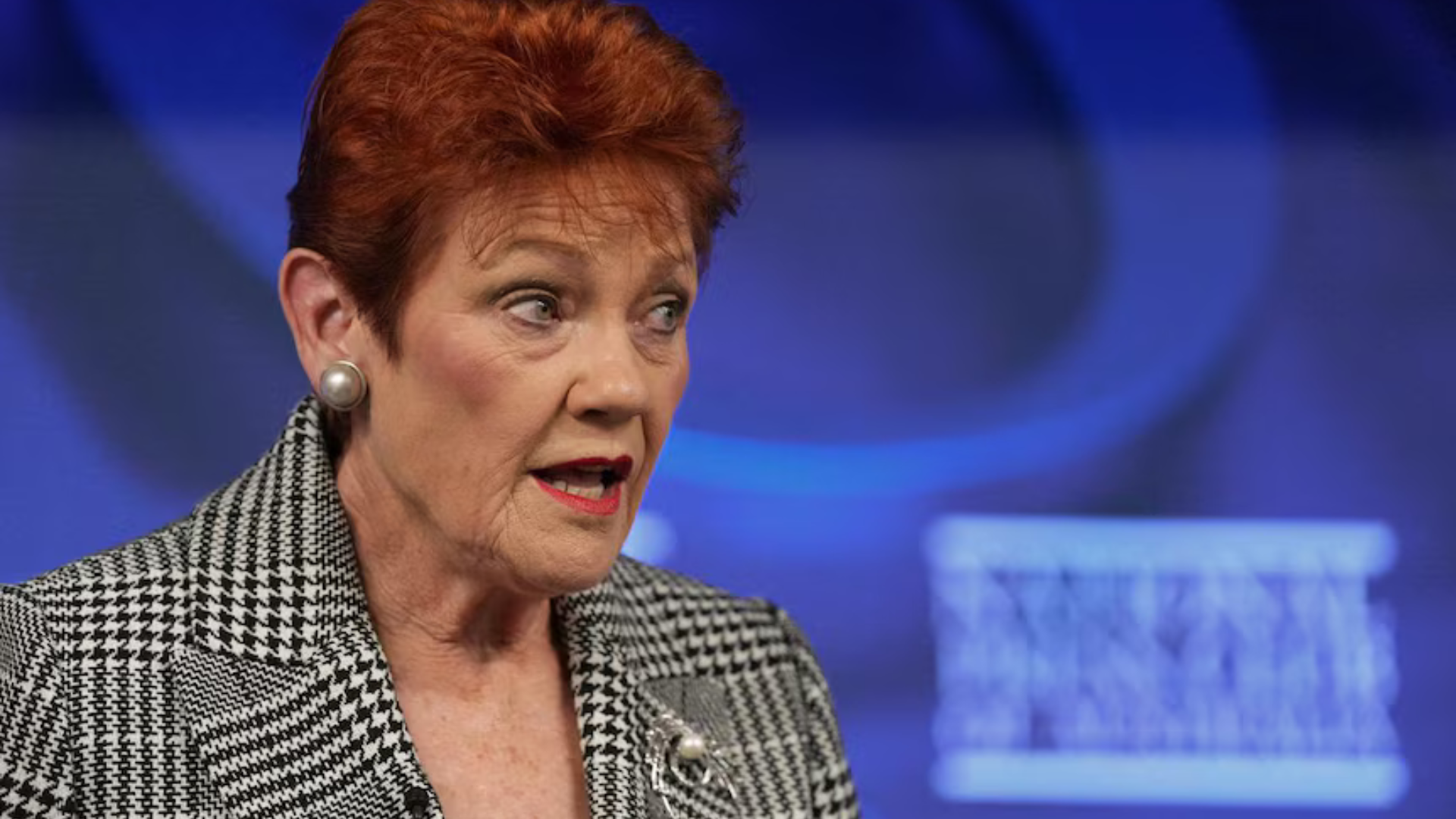
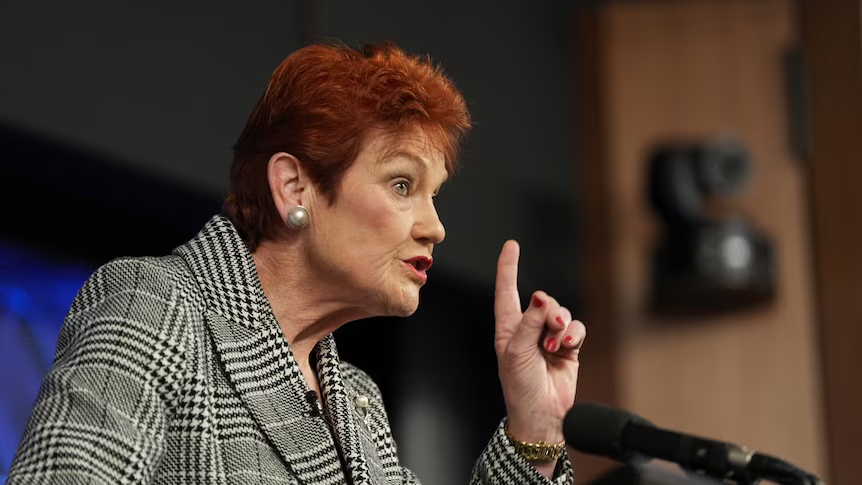
In her first address to the National Press Club in three decades of federal politics, One Nation leader Pauline Hanson outlined a sweeping agenda touching on immigration, multiculturalism, workplace laws, transgender rights, government spending and the media.
The speech sparked immediate backlash from political opponents and was briefly interrupted by a protest banner unfurled inside the venue.
Hanson calls for an end to multiculturalism
The centrepiece of Hanson’s speech was her argument that Australia should move away from multiculturalism and embrace what she described as a “monocultural” national identity.
While acknowledging Australia is a multiracial society, Hanson argued all Australians should share the same cultural values, language and traditions. She claimed current multicultural policies had weakened social cohesion and contributed to cultural division.
She also argued that Australia was losing its identity and criticised the growing number of households where languages other than English are spoken.
Immigration emerges as Hanson’s biggest battleground
Hanson blamed high migration levels for housing pressures, infrastructure strain and social tensions.
She pledged to significantly reduce migration numbers and again advocated restricting immigration from countries she associates with religious extremism. Hanson argued Australia should prioritise preserving what she described as “Australian values” and national identity.
The One Nation leader said concerns about immigration had helped fuel her party’s growing support, claiming many Australians felt ignored by the major parties.
Strong rhetoric on Islam and national security
A major focus of the speech was Hanson’s criticism of radical Islam.
She described Islamic extremism as incompatible with Australian values and said Australia should take a tougher stance on extremist ideologies. Hanson argued Western nations had failed to confront the issue effectively and pledged that a One Nation government would adopt a harder line.
Her comments are likely to reignite debate over her long-standing views on Islam, which have previously attracted accusations of racism and discrimination.
Major spending cuts and government overhaul
Beyond immigration, Hanson unveiled an extensive list of government programs and institutions she would target.
Among her proposals were:
- Abolishing SBS.
- Making the ABC subscription-based in metropolitan areas.
- Scrapping spending on climate change programs.
- Auditing childcare funding.
- Ending foreign aid to Pacific nations that accept Chinese funding.
- Reviewing major government agencies and spending programs.
Hanson argued savings from spending cuts could be redirected towards tax relief and domestic priorities.
Tax reform plans still taking shape
While promising tax reform before the next election, Hanson stopped short of outlining a detailed model.
She suggested pensioners and students should be allowed to work more hours without losing benefits and argued workers should pay less tax on overtime earnings.
However, Hanson acknowledged significant work remained on her taxation policy and said she would continue consulting economists before releasing a final plan.
Workplace laws in her sights
Industrial relations emerged as another key battleground.
Hanson argued current workplace laws favour employees too heavily and make it difficult for businesses to dismiss underperforming staff.
She called for a major overhaul of industrial relations laws and defended her position on wage increases, arguing policymakers must balance workers’ needs with businesses’ ability to pay.
The senator also questioned the significance of the gender pay gap, suggesting workforce participation patterns played a major role in earnings differences.
Hanson targets transgender policies
The One Nation leader devoted a significant portion of her address to transgender issues.
She claimed “transgender ideology” had become deeply embedded within institutions and regulatory bodies and pledged to remove key officials from Australia’s human rights framework if elected.
Hanson said she opposed transgender women competing in women’s sport and argued the issue had become a major social and political concern.
Indigenous affairs and abortion
Hanson reaffirmed her long-standing opposition to the National Indigenous Australians Agency, arguing it had failed to deliver value for taxpayers.
She said any savings generated by abolishing the agency should be redirected into general government revenue.
On abortion, Hanson said she supported procedures where a mother’s life was at risk but opposed abortions occurring very late in pregnancy, while declining to nominate a specific gestational limit.
Fiery exchange with the media
One of the most dramatic moments came during question time when Hanson launched a personal attack on Guardian journalist Sarah Martin.
The senator accused Martin of unfair reporting on One Nation’s finances and her daughter Lee Hanson’s role within the party, calling the journalist “trashy” and warning her not to approach her.
Asked whether she would reset relations with media outlets ahead of the next election campaign, Hanson offered no guarantees.
Protest banner interrupts address
The speech was briefly disrupted when activist group GetUp! unfurled a banner behind Hanson criticising her stance on wage increases.
The banner was quickly removed by National Press Club staff, with the incident later referred to the Australian Federal Police for investigation.
The National Press Club subsequently apologised to Hanson over the disruption.
Political opponents hit back
Prime Minister Anthony Albanese accused Hanson of promoting division rather than solutions, while opposition figures questioned whether One Nation had presented a credible economic plan.
Critics from Labor, the Greens and other political figures also condemned her comments on immigration, Islam and transgender issues, arguing the speech offered division rather than practical policy answers.
Why the speech matters
The address offered the clearest indication yet of the platform Hanson intends to take into the next federal election.
With One Nation polling strongly in several regions, the speech positioned the party around three core themes: reducing immigration, rolling back multiculturalism, and shrinking the size of government. Whether those policies translate into broader electoral support will be one of the key questions heading into the campaign.
