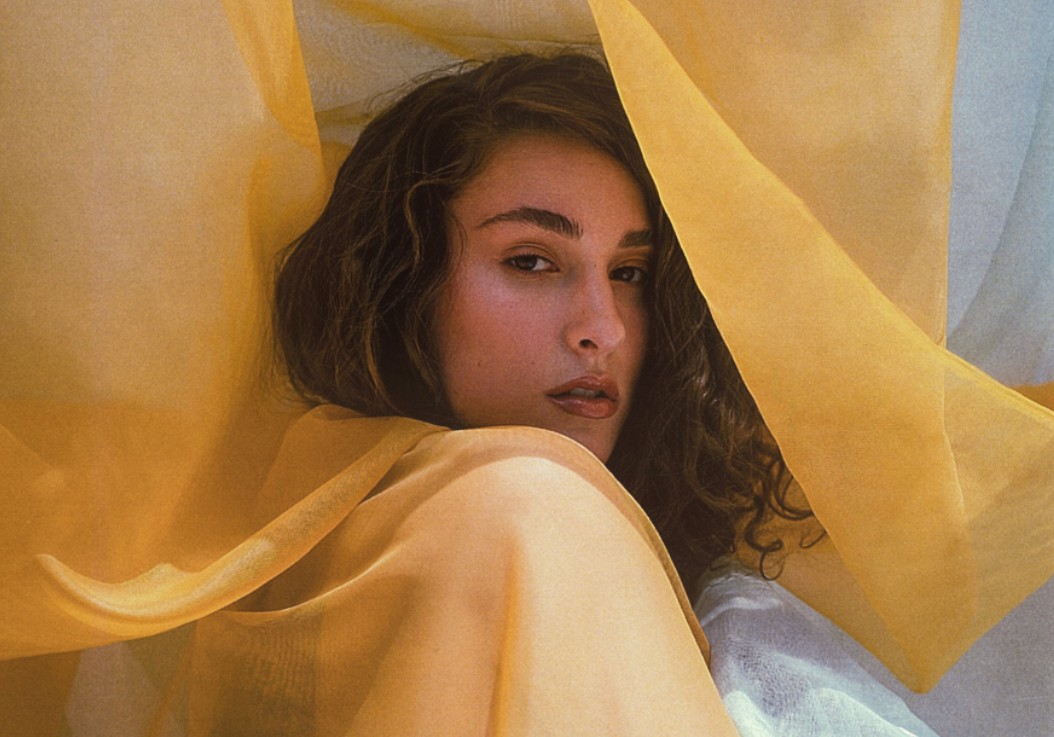
Having grown up both in Greece, on the island of Crete, as well as New Jersey in the US, Evangelia’s heart is split between two different countries and cultures.
However, her new single ‘Fotiá’ tells the tale of her Greek heritage, bringing together traditional Greek sounds and driving drums with modern pop melodies.
The Greek Herald spoke with Evangelia about her new song, how she got started as a hit singer and desires for her music career.
Tell me a little bit about your new song ‘Fotia.’ What was the inspiration behind the song?
At its core, Fotiá (Greek for fire) is about letting go and following your passion – whether it’s romantic love, or doing what you love. For me it’s both.
First it is my story with my creative partner and love of my life, Stolar. I went through a lot of back and forth between my mind, my heart, and my body, until I finally gave in to everything I was feeling. It felt so good to not hold back anymore and really fall completely in love.
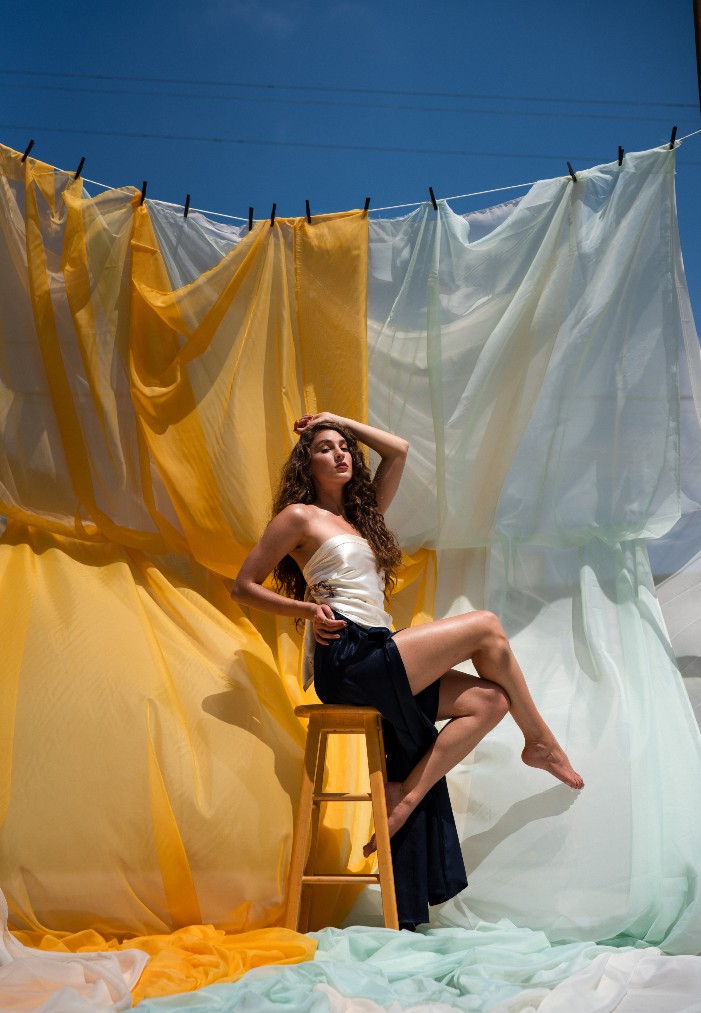
Second, the song is about truly following my passion to be an artist. We wrote the song the day after signing my record deal–it was a milestone for me, because a little over a year before that I was still a full time teacher, only dreaming of where I am now. I had to take a leap of faith, and now I’m actually doing it, living my dream unapologetically.
Both of these experiences were filled with intense tension and release. The song really captures that feeling, from the contrast of intense drums with quiet vocals, to waiting half way through the song to finally reveal the lyric “I’m gonna lose control.” The literal translation of Fotiá is fire, the way I interpret it in this song is as passion. I’ll never be the same as I was before I wrote this song, it’s a part of me now.
What is your creative process like?
My creative process is centered in being open and vulnerable about my truth and what I want to say. Most of the time before I even start writing words and melodies I like to have deep conversations about what I am most passionate about at that moment in my life. I love collaborating with people, but I have to feel very comfortable with them for the songs to end up feeling like me.
Something so special about Fotiá is the group of people I made it with: my main collaborator and partner Stolar, and a new collaborator, Alexis Troy. It took us only a few hours to put the track together and we knew we had captured a song that marked the start of a new era of my life.
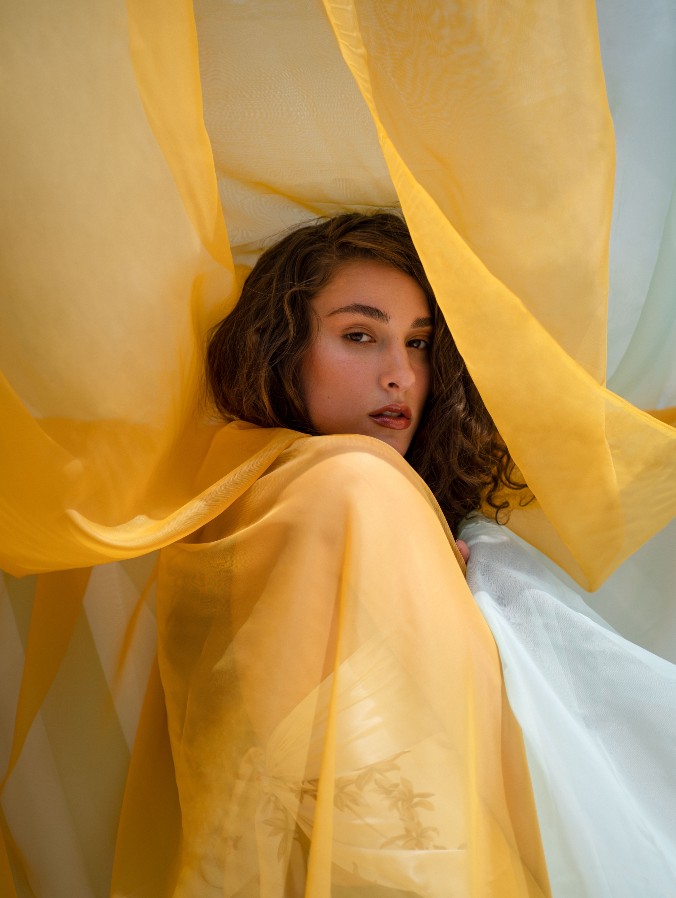
I was so excited to work with Alexis because, aside from the fact that he is brilliant, he is also half Greek! We clicked the second we met, and it felt really good to work with someone who spoke the language, understood my culture first hand and knew the traditional instruments that my music is inspired by.
I grew up with two cultures, so it is important to me that my art reflects that, both sonically and visually.
When did you first become interested in music and singing?
I recently found a notebook from 3rd grade where I wrote “When I grow up I want to be a singer” and drew a picture of myself on a stage with a spotlight. I have always loved music and dreamed of it becoming a career for as long as I can remember, but over time I convinced myself that it was just a hobby.
I wrote songs and performed at open mic nights, and even started hosting my own events–but I didn’t let myself see it as a viable career path.
I valued creativity and interacting with people in my work, so I got my Master’s in elementary and special education, and I became a teacher. While I enjoyed my job and found it fulfilling in many ways, I couldn’t help but still feel the artist inside me wanting more. I began to lead a double life as a teacher by day, and NYC musician by night. It was tiring, but I couldn’t see my life any other way.

Everything changed when there were massive budget cuts in my district that led to me getting laid off from my job. I chose to see it as a sign from the universe that I was given a way out from having to quit my safety net. I took a leap of faith and decided to follow my passion 100%.
I met Stolar soon after, and together we went on a journey of discovering my sound, and ultimately found that incorporating my culture into my music felt the most honest. That combination is what got me my record deal with Sony Music – and the rest is history.
You’re of Cretan background. How does that influence your music?
My father is from Crete, and my mother is Italian-American. My father was the Cultural Chairperson for the PanCretan Association of America, and later served as President of the organization for one year. As you can imagine, my life in America was also filled with a lot of Cretan culture, whether it was dancing in the folk group, or helping to entertain musicians and artists brought over for cultural events from Crete staying at my house.
I had the good fortune of being a Greek-American who spent her summers in Greece on her Yiayia’s farm–starting at the young age of one month old. I love the language, the culture, the customs, and the traditions. My time in Greece was always more than a vacation; it was another life.

My Yiayia taught me a lot, from the simple, daily agricultural work, to the most complex preparation of authentic Cretan cuisine. We would chat on the balcony admiring the beautiful landscape while talking about life, and often listened to Greek music and danced a “sirto” together.
As I got older I’d go into town for a “volta” with my friends, which consisted of a nice walk and a dessert or a drink, while other times the night was filled with dancing at the bars or at a local “panigiri” until the sunrise. I have fond memories of Greece that inspire me every day, and now I take them and incorporate them into my art.
I filmed the music video for my first single “Páme Páme” at my Yiayia’s farmhouse, and threw a party in my village and invited everyone. I wanted to show people where the Greek influence in my music comes from. The music video for Fotiá incorporates choreography that is inspired by tsifteteli, and when the bouzouki drop happens, I do zeimbekiko inspired movement. By fusing American pop culture with traditional Greek elements, I want to honour my heritage while also creating a legacy of my own.
Is there anything else you’d like to add?
I want to spread love and respect for Greece and Greek culture through my art. I am very proud of my roots and want to inspire others to be proud of where they come from, too.
