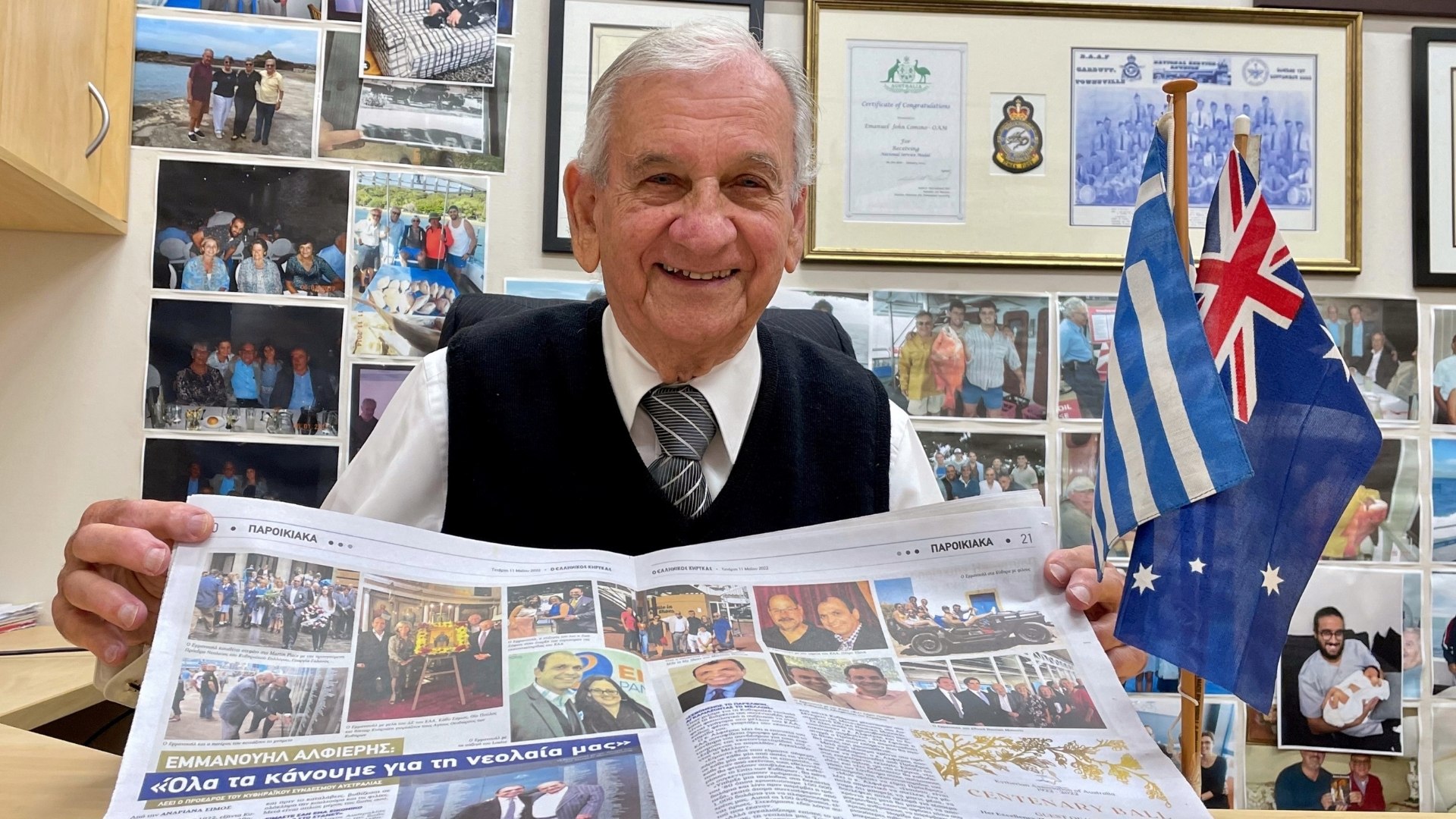
Emanuel John Comino, 89, is an avid fisherman, a family man, a proud Kytherian and the person who first started the international campaign for the reunification of the Parthenon Sculptures.
“I’d rather be fishing, anytime,” says Rockhampton-born Comino with his defiant sense of humour, sharing stories about the photos that surround the wall of his office in Sydney’s south.
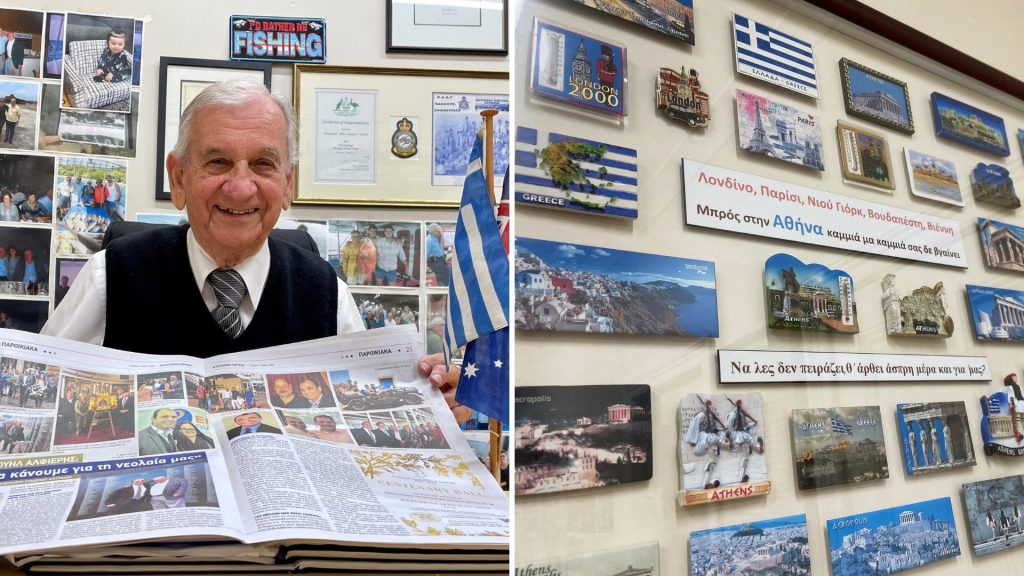
His facial expression and tone of voice change when we ask him about the Parthenon Marbles.
“Of course, we are going to take the Marbles back. One hundred percent,” he says decisively.
“There is a big movement in England and it’s getting bigger by some very distinguished local people and UNESCO,” explains the founder and chairman of the International Organising Committee – Australia – for the Restitution of the Parthenon Sculptures (IOCARPM) and vice chairman of the International Association for the Reunification of the Parthenon Sculptures (IARPS).
In September, Athens will be hosting a meeting of committees from around the world which are lobbying for the return of the Marbles, aiming to coordinate and boost joint efforts for the repatriation.
“The good thing about the campaign for the return of the marbles is that this issue is never, ever going to go away until the marbles return. The British Museum may be stubborn at the moment, but you can’t be stubborn forever.”
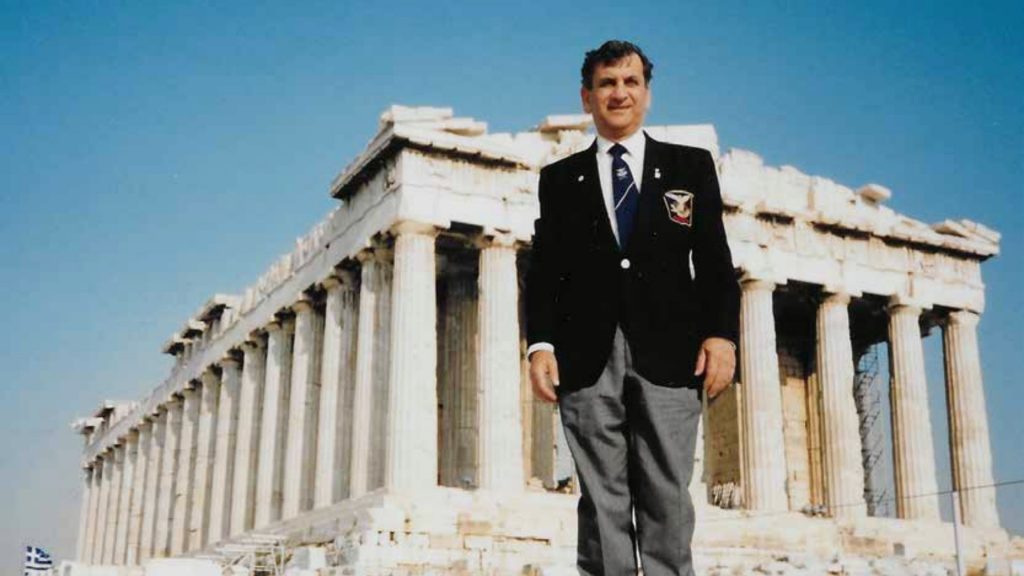
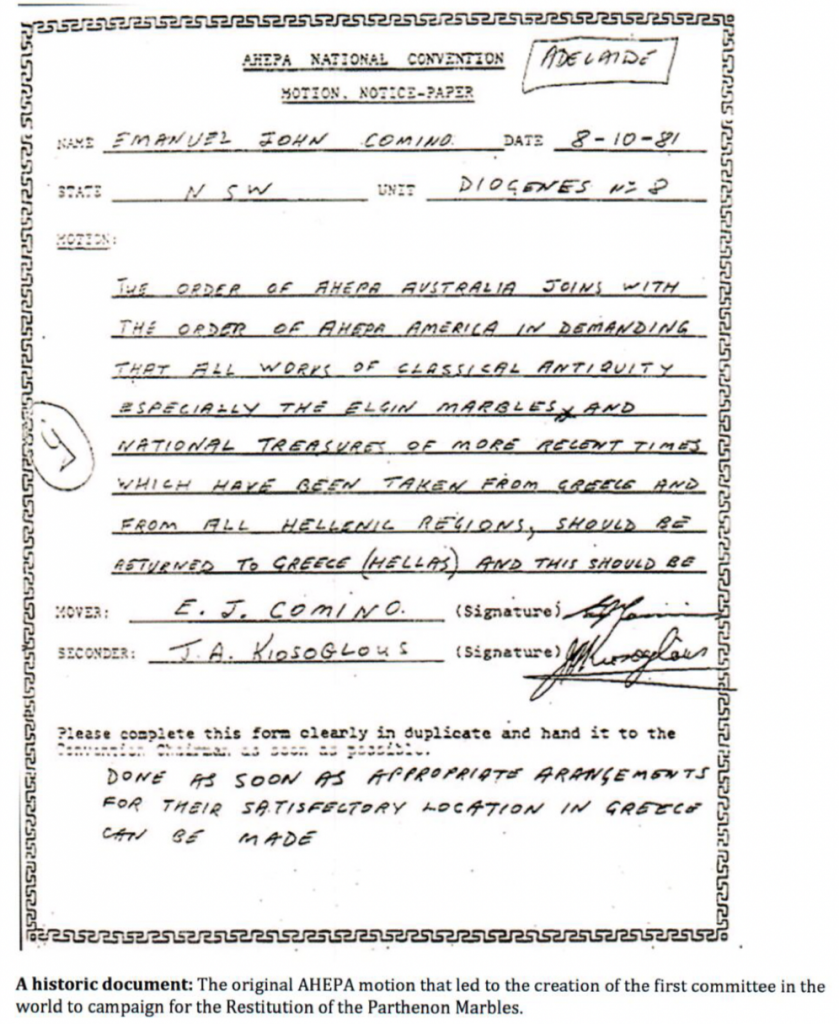
His interest for the Marbles was ignited in 1976, during his second visit to Greece and in 1981 he set up his committee. Since then, he has been travelling around Australia and the world, presenting lectures and advocating for the repatriation of the Parthenon Marbles to Greece, following their removal by Lord Elgin, at the beginning of the 19th century.
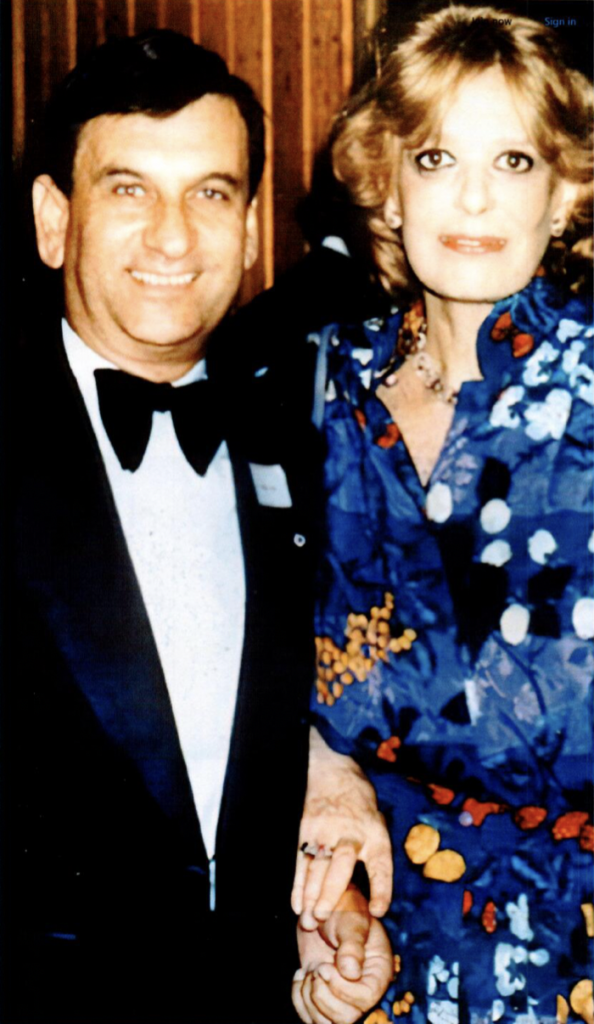
As my eyes scan the walls for more photos, I stumble upon one of Comino with actress and political activist Melina Mercouri who was the minister of culture in Greece’s first socialist government in 1981. He answers my question before I ask.
“There are many highlights in my life, like when I had my first grandson and recently my great granddaughter but one of them was meeting Melina Mercouri in Sydney in 1983,” he says.
“She was wonderful for what she was doing. Forget politics, if she was alive, I reckon we’d have the marbles back by now.”
Comino promised Mercouri that he would continue the fight “until the day I die”. Mercouri passed away in 1994 and Comino kept his promise.
“The Parthenon like Hagia Sophia in Constantinople is the supreme achievement of beauty in all recorded history and it reflects the indestructibility of Hellenism.
“I will continue until the marbles come back.”
A different migration story
Asked where his passion and determination stem from, he points his finger to a frame on the wall. A photo of a young woman holding two boys, a handwritten letter in Greek and its English translation.
“Read this in Greek aloud,” he encourages me.
The letter was a series of instructions from his gravely ill mother, Sofia Venery, to his father, John Peter Comino, on how to look after his brother and him.
“My mother died at the age of thirty when I was only three and the worst thing is that I don’t have memories of her but this letter,” he says.
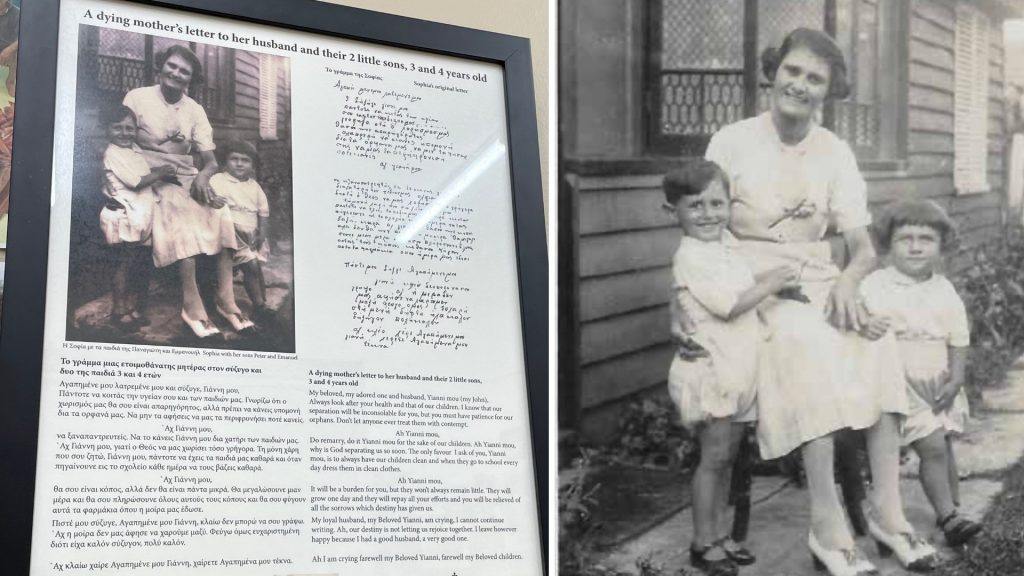
Shortly after his mother’s passing, Emanuel, his brother and their father left Rockhampton and travelled to Greece where they lived in Athens. In 1939, as World War II was declared, they moved to the island of Kythera until they returned to Australia in 1947.
“My education was limited in Greece. I was 14 when I returned to Australia and I couldn’t speak a word of English,” Comino says.
“But I was determined to learn my country’s language.”
At the age of 18, he was called for National Service in the Royal Australian Air Force (RAAF), an achievement he is very proud of to date.
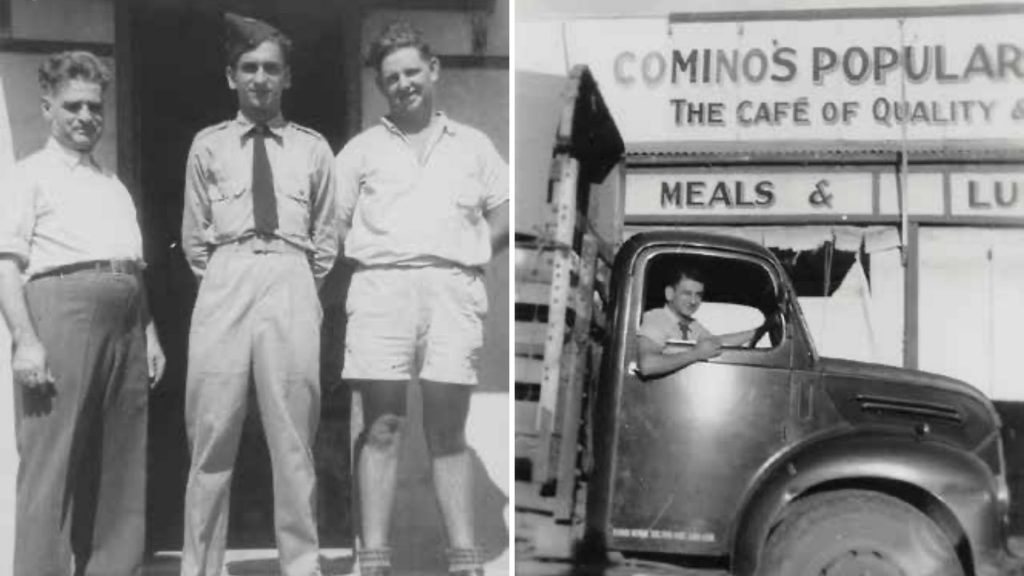
“I always wanted to become a pilot but I found out I was colour blind but I was determined to fly, so I trained as a military photographer,” he says.
“The RAAF gave me opportunities to learn and thrive and I will always be grateful for that. My Aussie roommates helped me to improve my English and I learned to box and play football.”
And all the lessons he learned about Australia and mateship he has returned back to the Greek and the wider community over the years.
In 1985, Emanuel Comino was awarded the Medal of the Order of Australia (OAM) in the Australia Day Honours List for services to multiculturalism, particularly through his continued support for the Greek community of Sydney. In 2010 he was appointed a Member of the Order of Australia (AM).
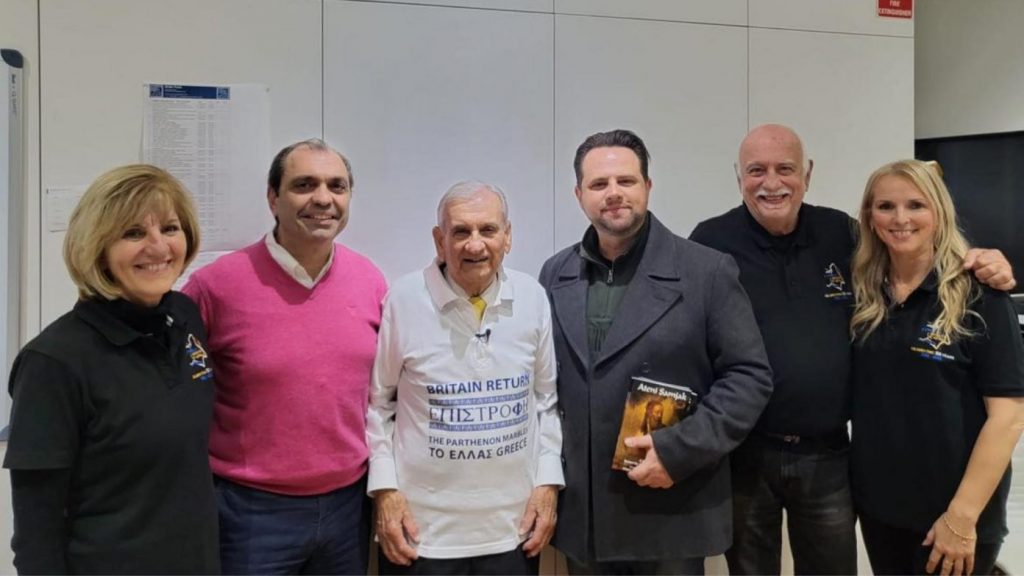
And there is no sign of him slowing down.
I ask him if he has a message to share about the Kytherian Association of Australia’s (KYA) centenary year.
He shuffles through older editions of The Greek Herald and finds an interview of the Kytherian Association’s former President, Emmanuel Alfieris.
We do all this for our youth, reads the title.
“Emmanuel said it right,” he says, “because we have more to lose than gain if we lose our Hellenic identity”.
READ MORE: From Kythera to Rugby League: Peter V’landys on how Greek parents influenced his career

