The decade between 2017 and 2026 marked one of the most transformative periods in the history of The Greek Herald.
In 2017, the newspaper marked ninety years of continuous publication, reinforcing its status as one of the defining institutions of Australian Hellenism and a living archive of Greek Australian migration and community life.
As traditional print media confronted rapid technological disruption, The Greek Herald increasingly evolved into a bilingual digital newsroom publishing daily online coverage in English while continuing its historic Greek-language print edition.
Social media, digital publishing, video journalism and faster online reporting expanded the newspaper’s reach nationally while strengthening engagement with younger generations of Greek Australians and the wider diaspora.
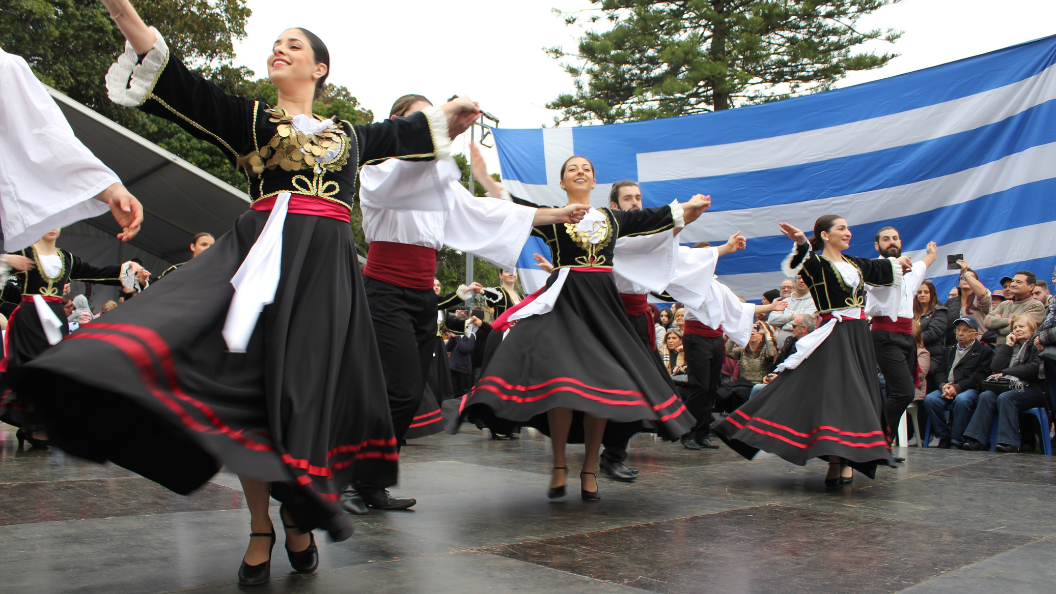
Watchdog journalism, identity debates and community accountability
The opening years of the decade showed The Greek Herald increasingly operating not only as a recorder of events, but as a public watchdog scrutinising governance, transparency and the stewardship of migrant-built community assets.
One of the clearest examples emerged during the prolonged controversy surrounding the proposed sale of the Greek Orthodox Community of NSW’s Paddington property between 2017 and 2018. The Greek Herald conducted sustained reporting into governance, transparency and company structures surrounding the sale process, openly positioning itself as a publication defending community accountability and the protection of legacy assets built by earlier generations.
The period also saw The Greek Herald report on major national debates shaping Australian society and multicultural communities. During the 2017 debate over Section 18C of the Racial Discrimination Act, the newspaper defended multicultural protections and warned against a return to the racism and social exclusion experienced by earlier migrant generations.
The paper also covered Australia’s same-sex marriage debate as a major social and cultural turning point, while providing a platform for internal diaspora discussion around religion, freedom, social change and church authority.
In 2018, The Greek Herald continued scrutinising governance and accountability within the Greek Orthodox Archdiocese of Australia under Archbishop Stylianos, including questions surrounding the future management of an extensive property and financial estate reportedly valued at more than $1 billion and how migrant-built institutions should be protected for future generations.
Generational transition and relaunch
The year 2019 marked a major turning point in Australian Hellenism.
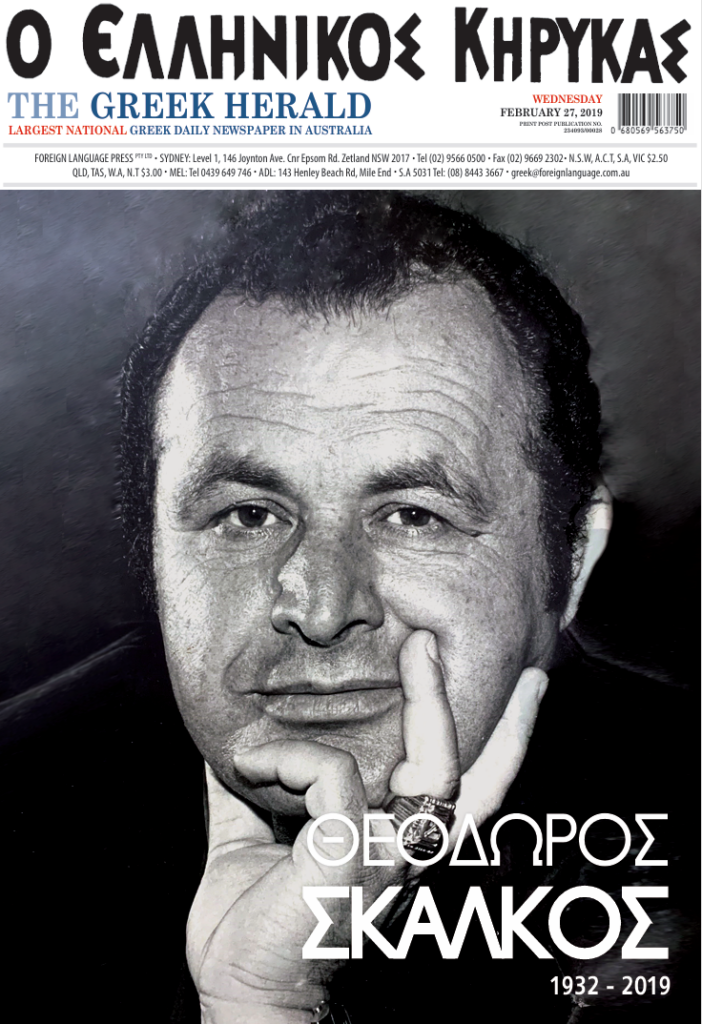
On 19 February 2019, the death of longtime publisher Theo Skalkos marked one of the most emotional moments in the modern history of The Greek Herald.
The newspaper published extensive tribute coverage documenting condolences, public statements and memorial messages received from community organisations, politicians, journalists, clergy and readers across Australia and the wider diaspora. Tributes repeatedly described Theo Skalkos as a fierce advocate for independent journalism, multicultural media and the preservation of Greek Australian history.
Following his passing, Dimitra Skalkos assumed leadership of The Greek Herald as the publication entered one of the most challenging periods in modern media, confronting rapid digital disruption, declining print advertising revenue and, less than a year later, the onset of the COVID-19 pandemic.
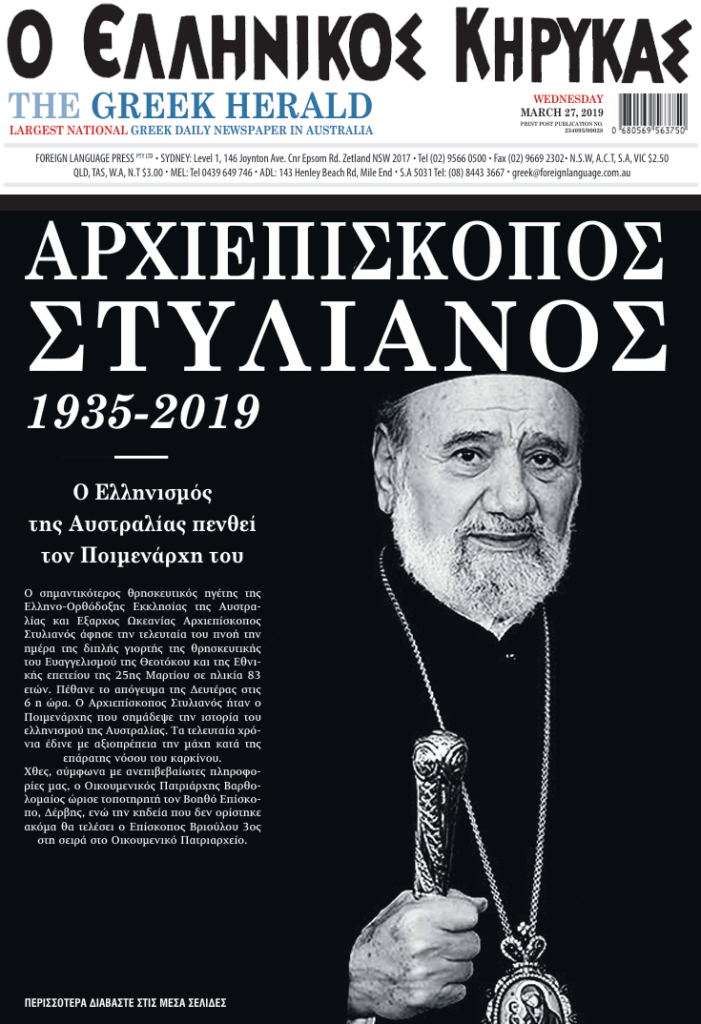
Only weeks later, in March 2019, Archbishop Stylianos Harkianakis died after 44 years leading the Greek Orthodox Archdiocese of Australia. The Greek Herald’s extensive coverage framed his death as the end of a defining era, while also acknowledging the complex legacy of a religious leader whose tenure had shaped church life, community politics and the history of Australian Orthodoxy for decades.
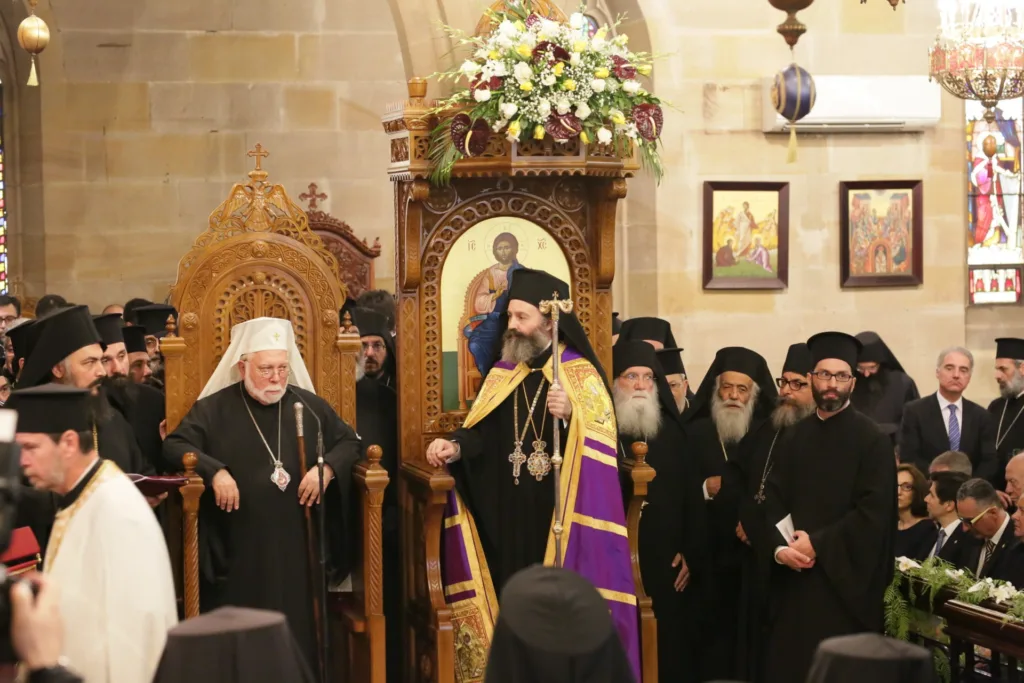
The subsequent enthronement of Archbishop Makarios in June 2019 was presented as the beginning of a new chapter for the Greek Orthodox Archdiocese of Australia, with renewed emphasis on unity, continuity and engagement with younger generations.
In February 2020, The Greek Herald formally relaunched under the banner “New Era for The Greek Herald – 94 Years 1926-2020,” symbolising both continuity and transformation following the death of Theo Skalkos months earlier.
The relaunch marked the formal transition into a new digital era while reaffirming the newspaper’s commitment to maintaining its daily print edition and historical legacy. Archbishop Makarios delivered an address during the relaunch event, publicly recognising the historic role of The Greek Herald within Australian Hellenism and emphasising unity, cooperation and communication between church, media and community institutions.
The relaunch also strongly emphasised building “bridges between generations” as the publication expanded its digital strategy and engagement with younger audiences.
COVID-19 and emergency multicultural reporting
Within weeks of the relaunch, the COVID-19 pandemic became one of the most significant public-interest reporting periods in the modern history of The Greek Herald.
As lockdowns, border closures and public health restrictions reshaped daily life across Australia, the newspaper became a major multilingual source of information for Greek Australians, particularly elderly migrants struggling to interpret rapidly changing government announcements.
The publication extensively covered lockdown announcements, church closures, Easter restrictions, vaccine rollouts, border closures, repatriation issues, mental health concerns, aged care outbreaks and the economic pressures facing migrant communities.
The newspaper also extensively covered the COVID-19 outbreak at St Basil’s Homes for the Aged in Melbourne, which became one of the most devastating pandemic-related tragedies affecting the Greek Australian community.
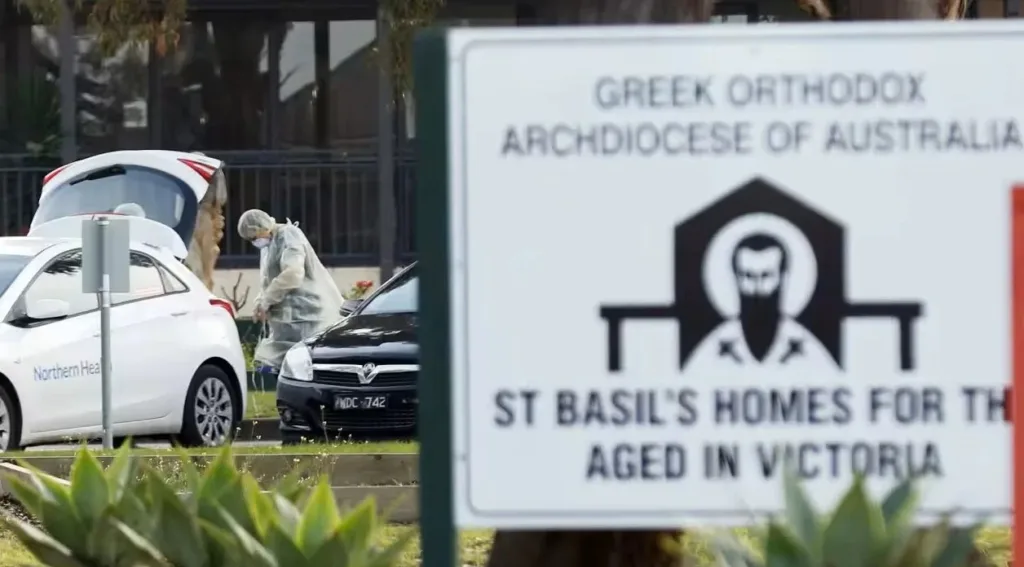
The newspaper also documented the emotional impact of church closures and Easter restrictions, while amplifying concerns surrounding isolation among elderly migrants, the lack of translated government material and pressures facing multicultural communities.
During the pandemic, The Greek Herald also adapted its distribution model through home delivery initiatives for isolated and vulnerable readers.
Greek language advocacy and education
The preservation of Greek language education remained one of the newspaper’s most consistent editorial causes throughout the decade.
Longstanding concerns surrounding declining enrolments, shrinking humanities programs and the future of tertiary Greek Studies intensified during the late 2010s. The closure of Modern Greek programs at institutions such as the University of NSW had already generated significant concern within the diaspora, while broader reporting increasingly questioned whether Greek identity in Australia could survive without language.
In November 2020, La Trobe University announced plans to phase out its Modern Greek program alongside Hindi and Indonesian, citing severe financial pressures linked to the COVID-19 pandemic and long-term enrolment challenges.
The Greek Herald became one of the leading media outlets amplifying concerns surrounding the future of Greek Studies through interviews, feature reporting and community advocacy.
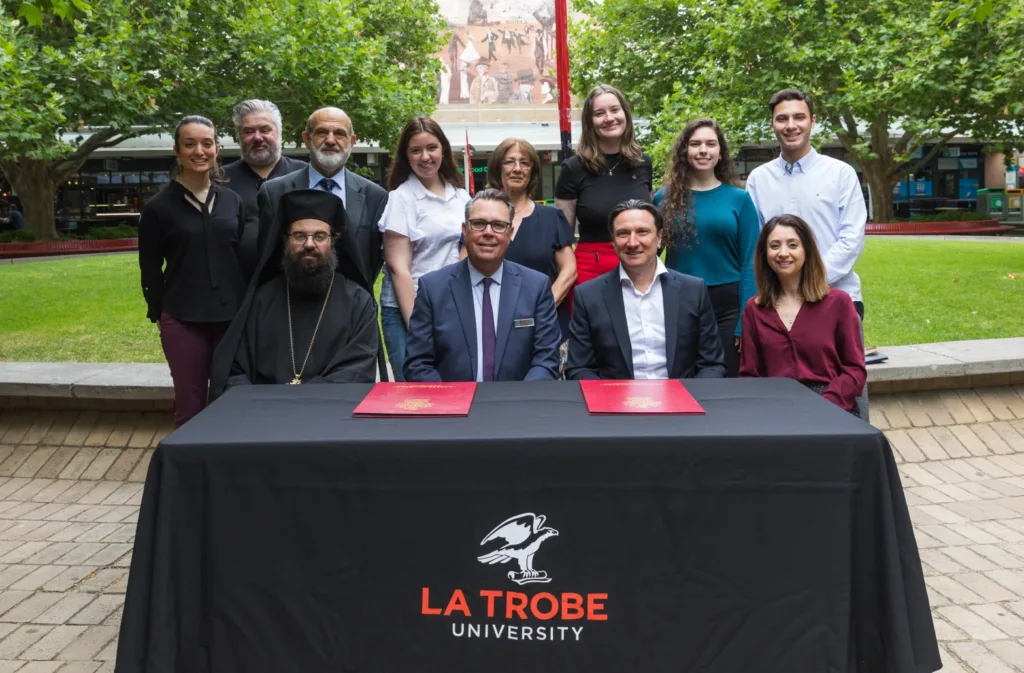
In December 2020, the continuation of the program for at least three further years was announced, which the newspaper treated as a major diaspora victory.
The publication later covered the 40-year anniversary of Greek language teaching at La Trobe in November 2022, while in December 2024 Greek Deputy Foreign Minister Giorgos Kotsiras announced further support for the program.
A recurring question throughout the reporting remained: can Greek identity survive without language?
Orthodoxy, Hagia Sophia and bicentenary identity
The decade also saw The Greek Herald continue documenting the emotional connection between Greek Australians, Orthodoxy and the wider Hellenic world.
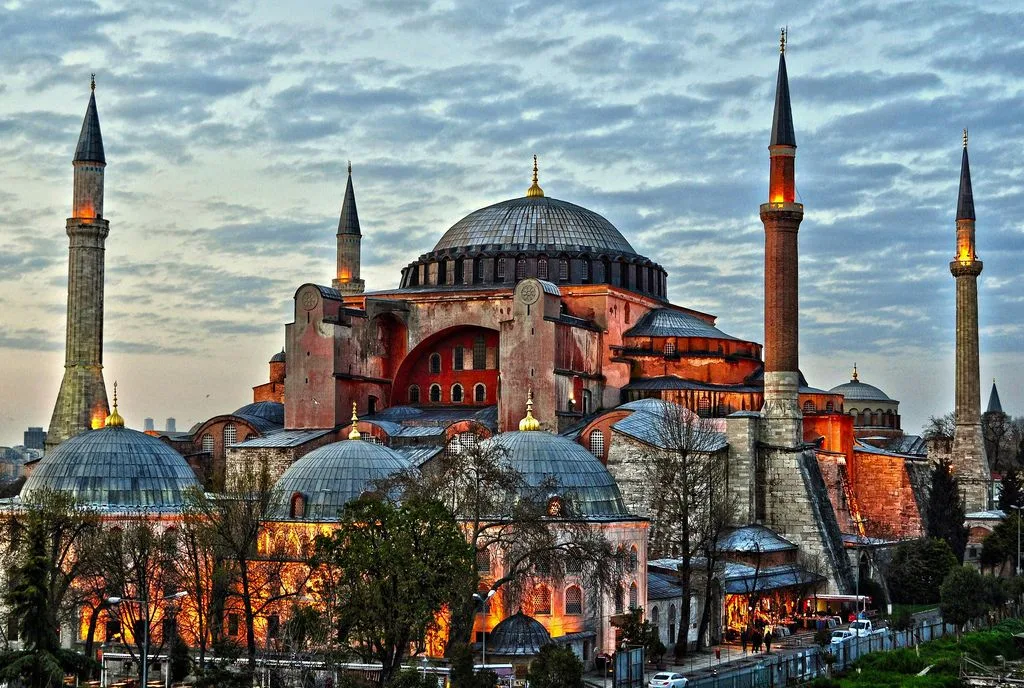
In July 2020, the newspaper extensively documented reactions throughout the Greek Australian community following the decision to reclassify Hagia Sophia from a museum into an active mosque. The reporting framed Hagia Sophia not merely as a building, but as a powerful symbol of Orthodoxy, Byzantine civilisation and collective historical memory for diaspora Greeks generations removed from migration itself.
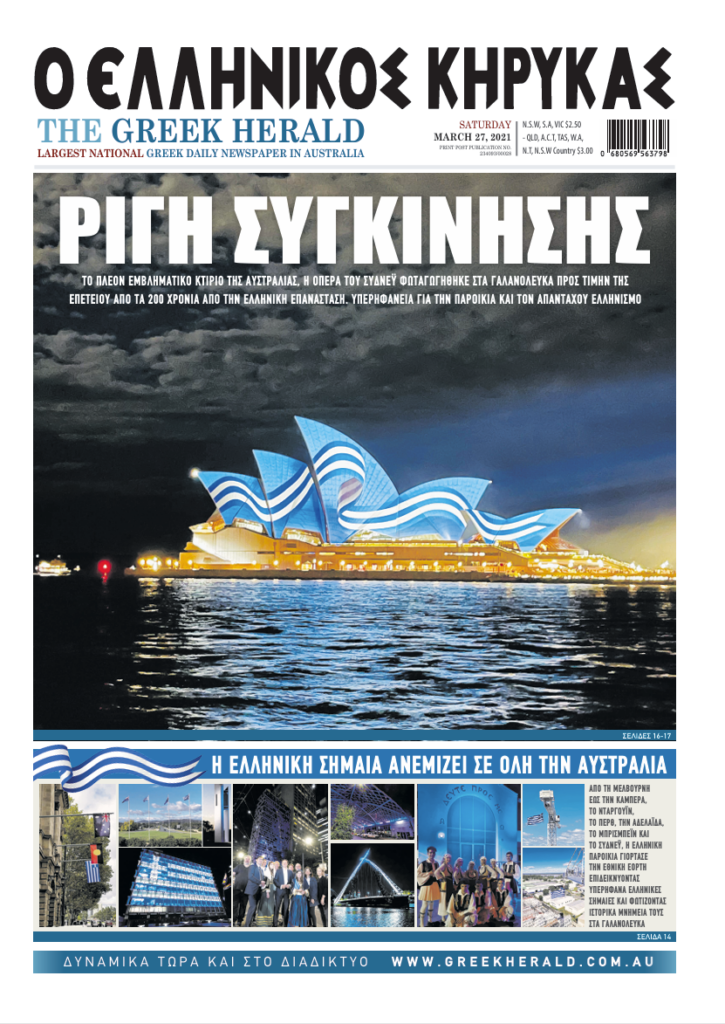
In March 2021, the bicentenary of the Greek Revolution became one of the largest coordinated Greek Australian commemorative movements ever documented by The Greek Herald.
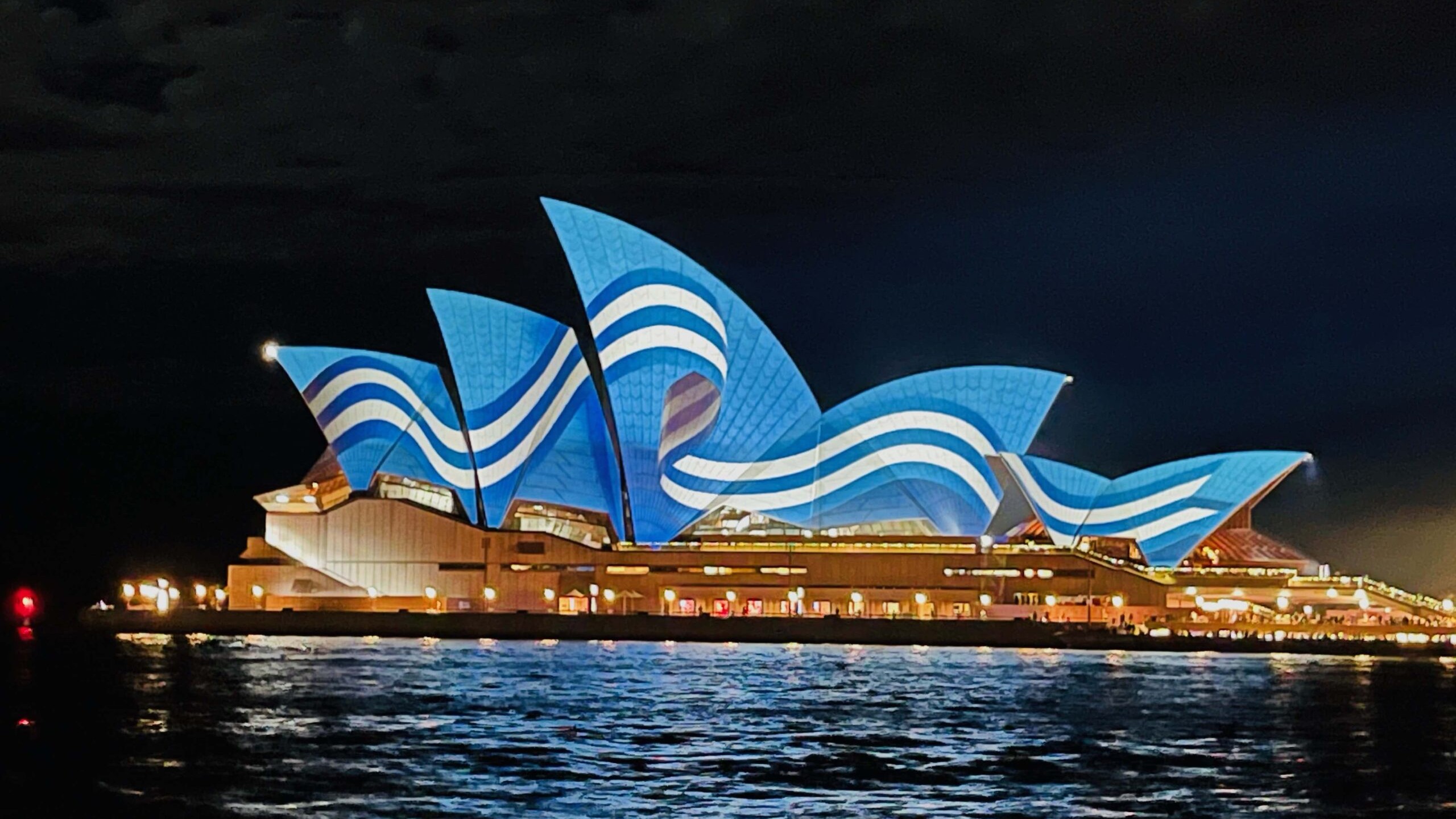
The publication extensively covered landmark illuminations, parliamentary receptions, flag raisings and commemorative events connected to the 200th anniversary of Greek Independence, including iconic Australian landmarks illuminated in blue and white.
The newspaper also extensively documented the national Australian tour of the Hellenic Presidential Guard (Evzones), whose ceremonial appearances, commemorations and public receptions generated enormous emotional engagement throughout the diaspora. Through digital coverage, video journalism and live online reporting, The Greek Herald connected audiences nationally while reinforcing the enduring symbolic relationship between Greece and Greek Australians.
The bicentenary coverage emphasised migration history, language preservation, Orthodoxy and the growing visibility of Greek Australians within mainstream Australian public life.
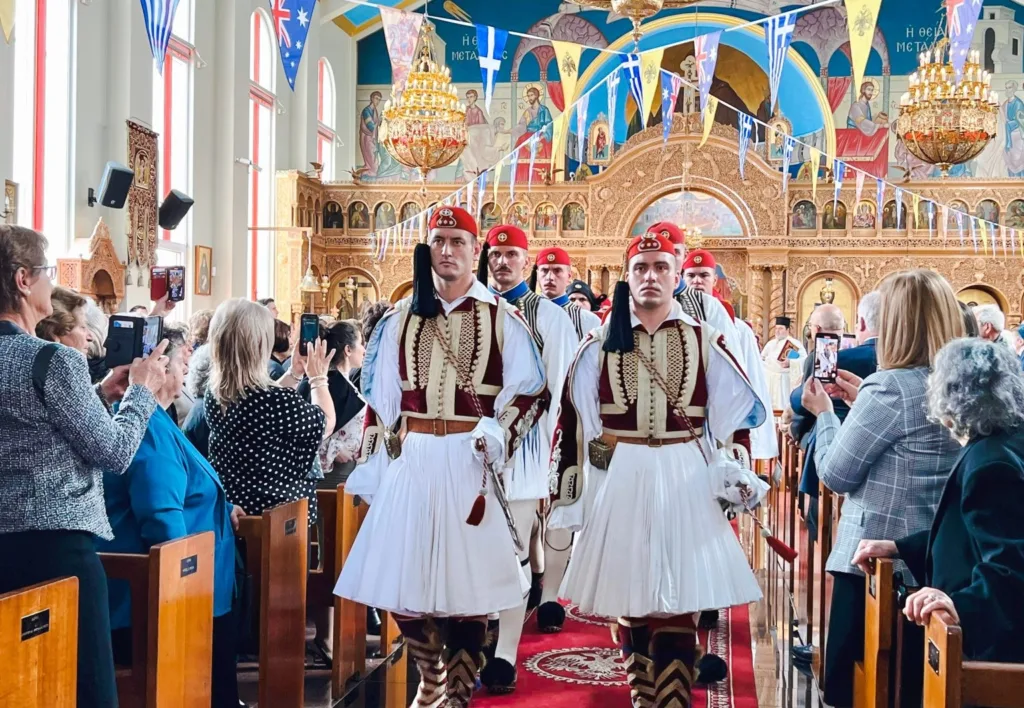
The Greek Herald also created a significant digital archive of bicentenary commemorations held throughout Australia during the pandemic.
Digital journalism, frontline workers and women’s recognition
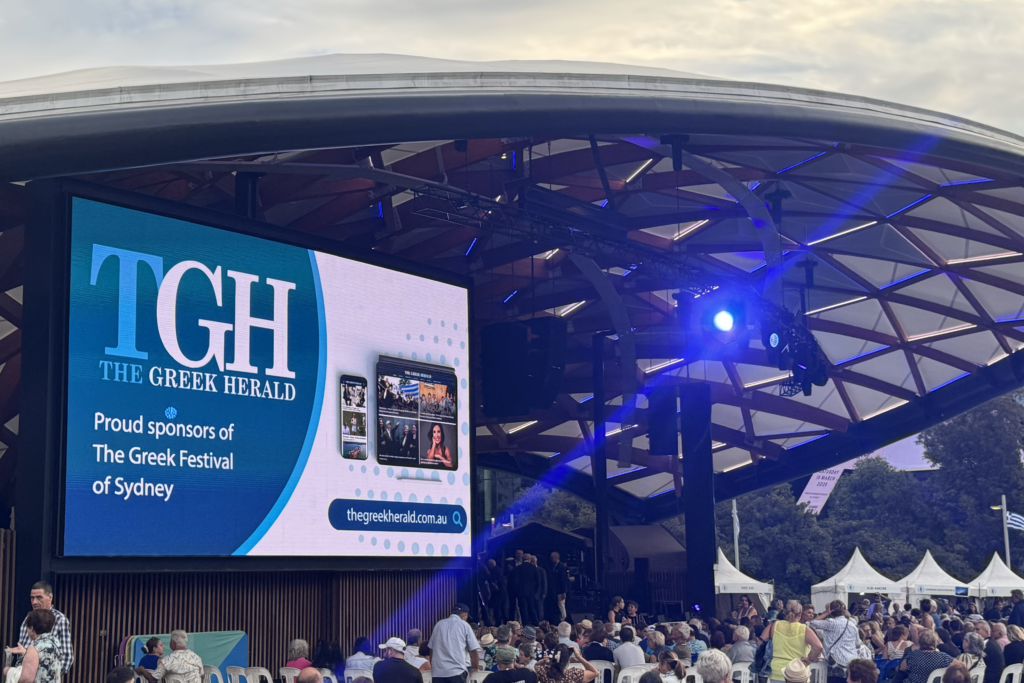
The decade marked the full emergence of The Greek Herald as a modern multimedia newsroom, increasingly adopting social-first journalism, faster online publishing and multimedia storytelling designed to engage younger and geographically dispersed audiences.
Veteran contributors including Michalis Mystakidis, Costa Potiris, Georgia Patsalidou, Ikaros Kyriakou and George Tserdanis remained closely connected to the publication during the digital transition, while a younger newsroom generation emerged through journalists including Andriana Simos, who later became Digital Editor, Argyro Vourdoumpa, who progressed from Adelaide correspondent to Editor, alongside Sophia Katsinas, Peter Oglos, Pamela Rontziokos and Chris Spyrou.
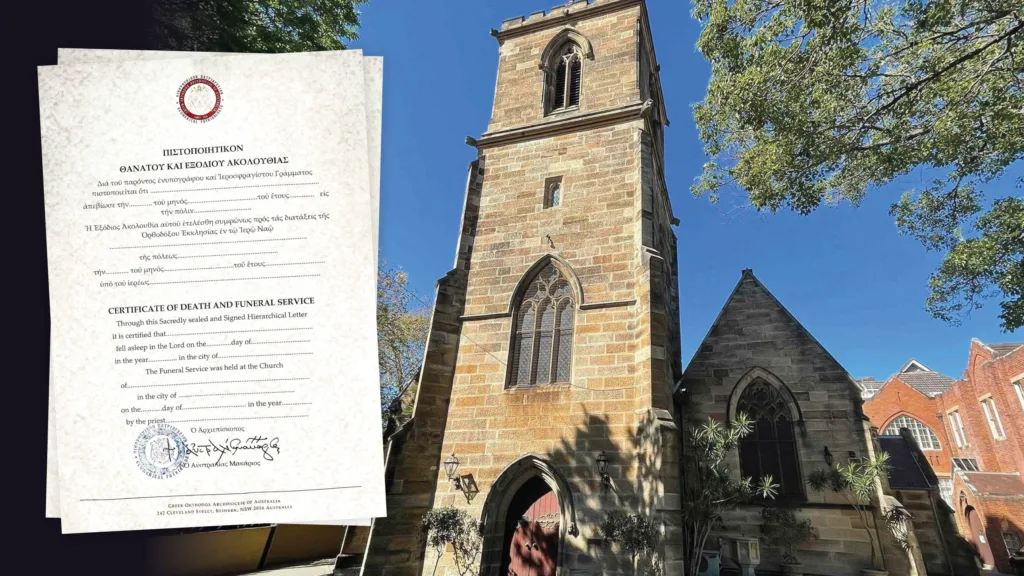
Investigative reporting gained broader industry recognition, particularly through Pamela Rontziokos’ reporting on the Greek Orthodox Archdiocese of Australia’s mandatory funeral certificate system, while The Greek Herald also increasingly covered issues including mental health, disability advocacy, suicide awareness and youth identity.
During the pandemic, the newspaper regularly profiled Greek and Cypriot Australian frontline workers, while International Women’s Day coverage highlighted the experiences of women balancing professional, caring and family responsibilities throughout the crisis.
One of the most visible institutional developments of the decade was the establishment of The Greek Herald Woman of the Year Awards, reflecting a broader editorial direction focused on elevating female leadership and visibility within the Greek Australian community.
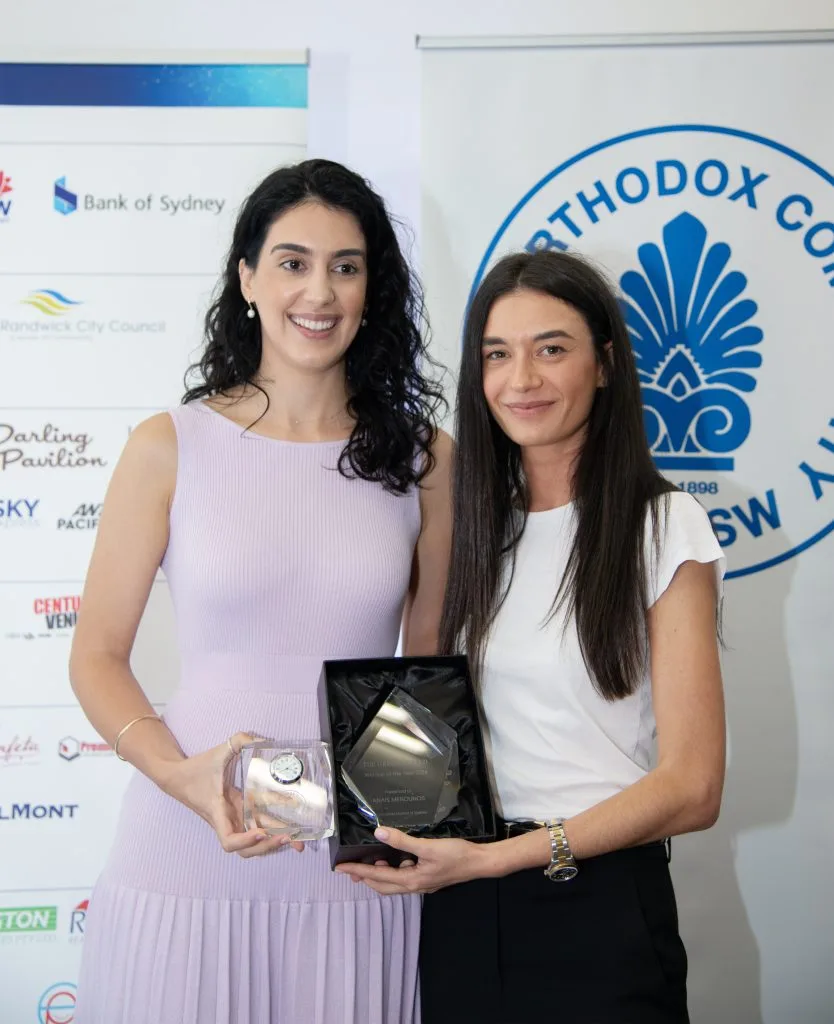
Anais Menounos was recognised during the awards’ inaugural phase in 2024, while Varvara Athanasiou-Ioannou AM received Woman of the Year honours in 2025.
In 2026, Marina Kyriakou received Woman of the Year honours, while the publication also introduced the new Woman to Watch category recognising emerging leadership among younger Greek Australian women. Sisters Zoe and Melina Haritopoulou-Sinanidou were inaugural Woman to Watch winners, while Tia Christodoulou won in 2026.
Governance battles, advocacy and institutional transition
From 2023 onward, The Greek Herald became increasingly associated with investigative and governance reporting examining the future of major Greek Australian institutions, migrant-built assets and community accountability.
Coverage surrounding the proposed sale of Hellenic Village became one of the most significant community issues of the decade. The eventual $119.5 million sale of the Western Sydney site generated extensive reporting regarding governance and the future of one of the most valuable Greek Australian communal assets in the country.
The newspaper also undertook sustained court and governance reporting involving the Cyprus Community of NSW and its financially troubled Stanmore club site, documenting administration proceedings, creditor disputes and internal tensions surrounding debts exceeding $20 million.
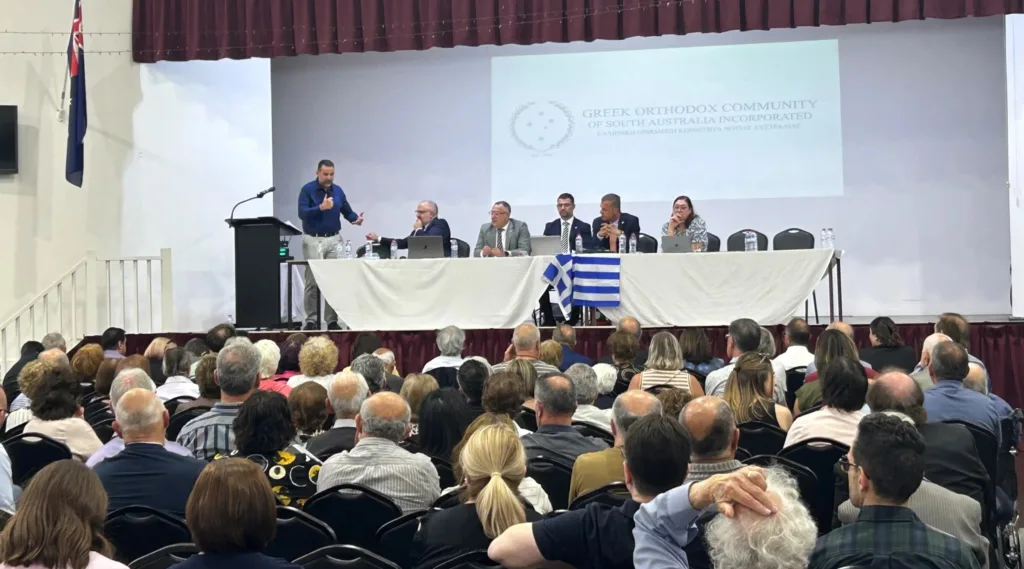
Other major governance disputes covered throughout the decade included prolonged legal battles within AHEPA NSW, the controversial transfer of St Spyridon Parish assets to the Greek Orthodox Archdiocese of Australia under a new constitution in 2022, attempts to reunify the Greek Orthodox Community of South Australia with the Archdiocese, and ongoing instability surrounding the future governance and financial sustainability of Sydney Olympic FC.
Together, these stories reinforced The Greek Herald’s growing emphasis on investigative reporting, institutional scrutiny and accountability within multicultural civil society.
Heritage, remembrance and diaspora mobilisation
The Greek Herald also supported awareness surrounding the heritage significance of St George Greek Orthodox Church in Rose Bay through reporting on preservation efforts and heritage listing developments.
The visit of Ecumenical Patriarch Bartholomew to Australia in October 2024 became one of the most significant Orthodox events in Australia in decades.
The Greek Herald extensively documented the Patriarch’s visit, liturgical services, speeches, public receptions and the broader historical significance of the occasion during the centenary celebrations of the Greek Orthodox Archdiocese of Australia.

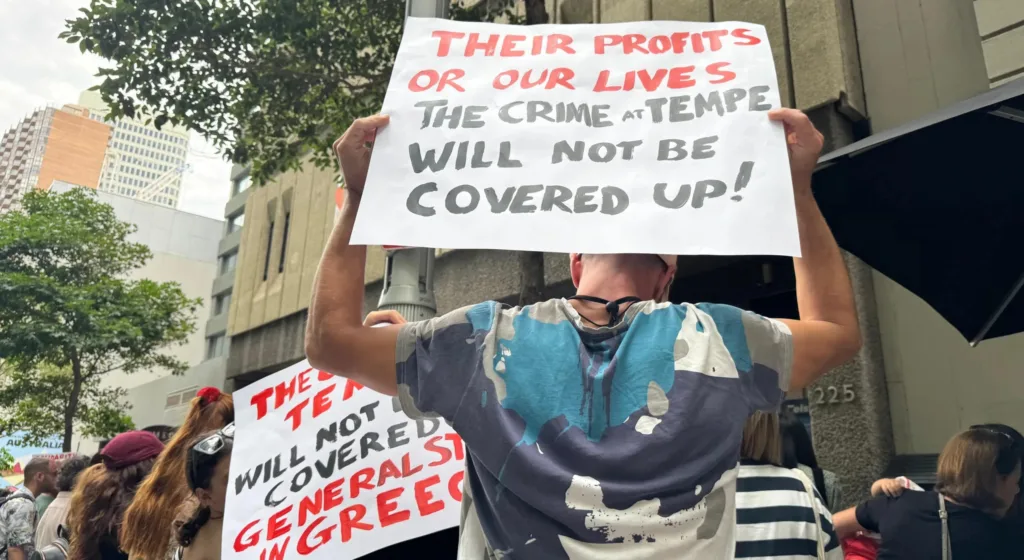
The Tempi train disaster in 2023 became a particularly emotional issue for younger generations of Greek Australians. The newspaper extensively covered vigils, protests and demonstrations held throughout Australian cities while documenting growing calls for accountability and reform.
The second anniversary protests in February 2025 drew large crowds across Sydney and Melbourne, highlighting the continuing emotional connection between diaspora Greeks and events unfolding in Greece.
The publication also followed ongoing diplomatic and diaspora issues including consular access problems, honorary consulate limitations, overseas voting reforms, citizenship demand increases and lobbying for a permanent Greek National Tourism Organisation office in Melbourne.
In July 2024, discussions between The Greek Herald and Greek Interior Minister Theodoros Livanios specifically addressed diaspora frustrations regarding consular staffing shortages, overseas voting reforms and broader service accessibility issues affecting Australians of Greek background.
Multicultural media advocacy and industry survival
The decade also saw The Greek Herald increasingly involved in national debates surrounding the future sustainability of multicultural media in Australia.
The publication covered funding pressures, the collapse of ethnic publications, Meta and Google negotiations and the broader challenges confronting independent publishers, while continuing to argue that multicultural media performs an essential public-interest role during periods of crisis and social change.
Publication of the Year and the centenary era
In March 2025, The Greek Herald won Multicultural Publication of the Year at the NSW Premier’s Harmony Dinner. The award recognised nearly one hundred years of continuous publication, alongside the newspaper’s digital transformation, governance reporting and public-interest journalism during the COVID-19 pandemic.
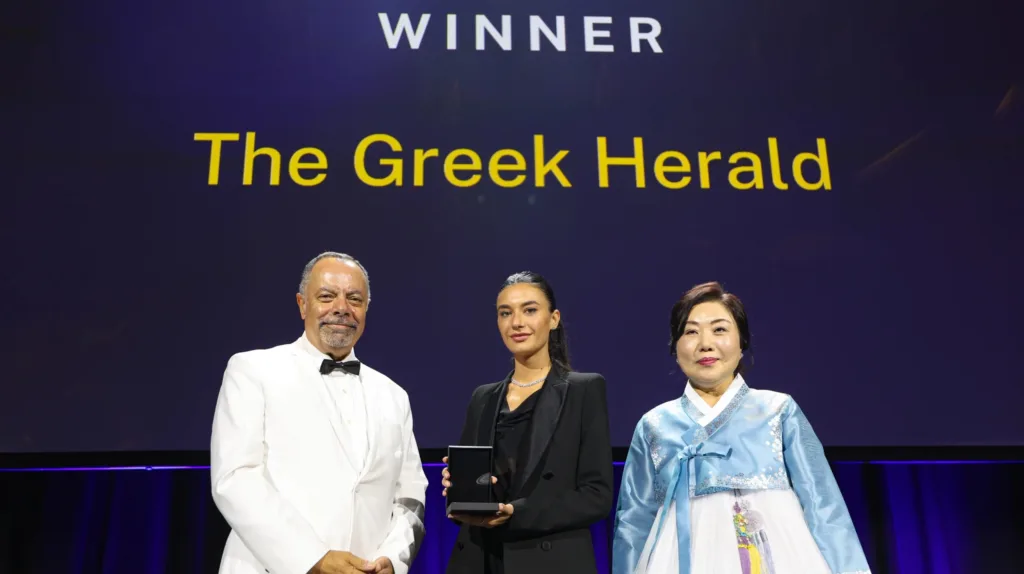
Andriana Simos was named Young Journalist of the Year and won Best Audio-Visual Report in the NSW Premier’s Multicultural Communications Awards for 2021. She was also a finalist in the 28th Quill Awards for Excellence in Victorian Journalism in the ‘Multicultural Affairs and Media’ category.
By the end of the decade, The Greek Herald had evolved from a traditional ethnic newspaper into a modern multimedia newsroom balancing daily print publication with digital journalism and social-first reporting.
Entering its centenary year in 2026, The Greek Herald stood not only as Australia’s oldest continuous Greek-language newspaper, but as one of the country’s most enduring multicultural media institutions.
The centenary milestone also attracted broader recognition internationally and within mainstream Australian media, receiving coverage in Greece through the Athens-Macedonian News Agency and on SBS World News Australia, reinforcing the newspaper’s significance within both diaspora and multicultural media history.
