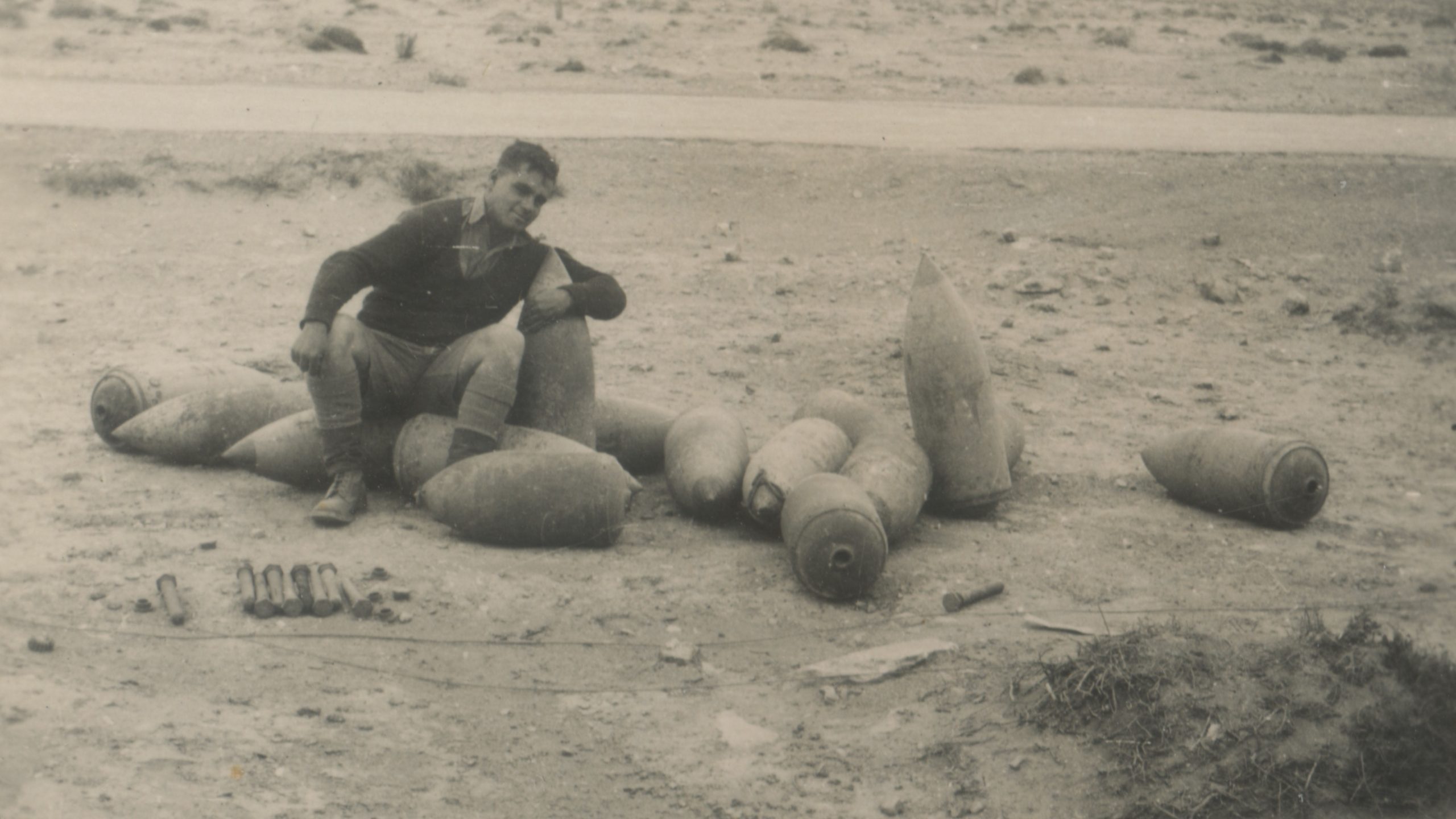
Renowned Archaeologist and Historian, Dr Michael Bendon, has harnessed his interest in the Greek and Cretan campaigns of World War II to write his newest book ‘Dust & Shadows An Australian Nominal Roll – Greece & Crete 1941.’
The Greek Herald spoke with Dr Bendon about his latest research and how he feels about compiling the first ever Nominal Roll for the aforementioned campaigns.
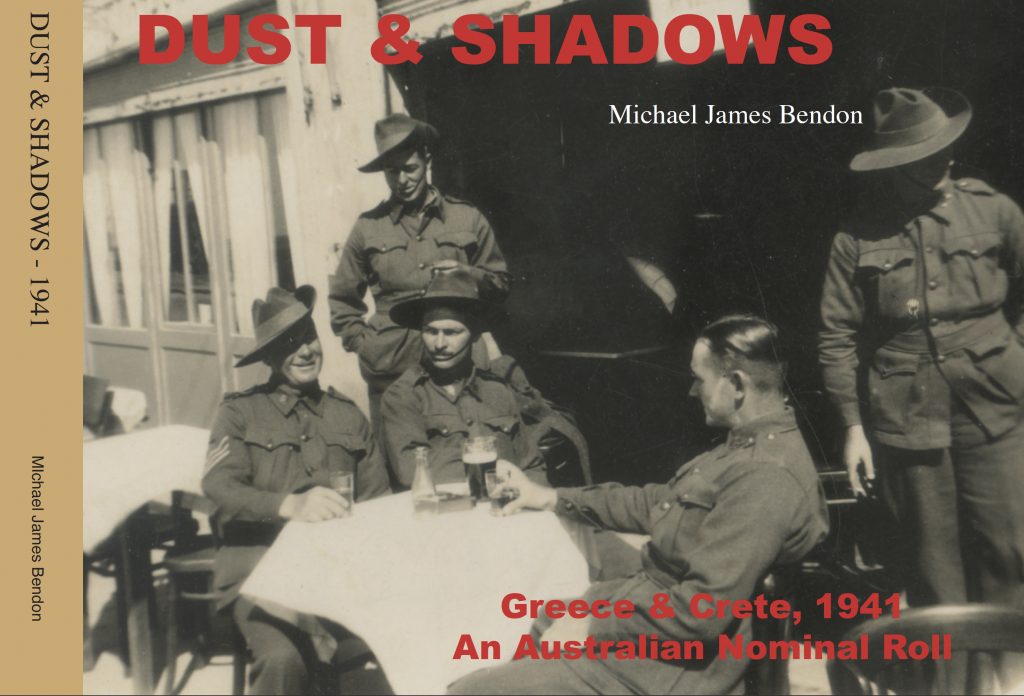
1. Michael, in a few words, could you introduce our readers to the theme of your newest book?
The passing of years after the war did little to shake loose from their very souls the dust of the past or in allowing some to ignore those far-reaching shadows of sacrifice, horror and loss. So, as World War Two stands on the verge of tumbling from memory into myth, Dust and Shadows attempts to commemorate, in some way, the Australian component of the lesser known 2nd ANZACs and their commitment to the Greek and Cretan campaigns of 1941.
2. How would you summarise the work you have undertaken over the past four years putting this all together?
Likely some of the readers are fans of jigsaw puzzles as I am. However, would any of you ever consider undertaking a puzzle with an unlimited, unspecified number of pieces, and even more concerning, no picture on the box?
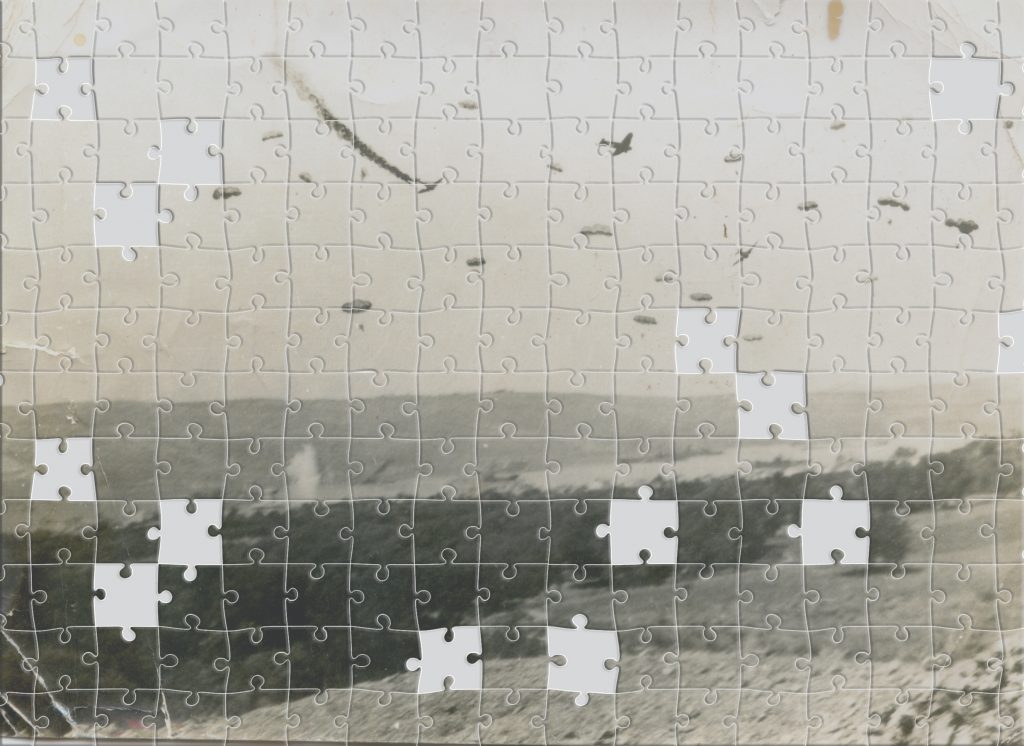
When I decided to undertake the compilation of the first ever Nominal Roll for the Greek and Cretan campaigns of 1941, I believed that somewhere each and every fragment would be simply available, albeit with a bit of digging. I can tell you, this has proved not to be the case.
I tend to approach a jigsaw by finding and connecting all the edge pieces for an idea of the scope and size of the puzzle. So, in looking for the boundaries, I sought out those army units sent to Greece in April of 1941. With these in hand, I was able to lay out what I believed would be the clearly defined numerical border for 17,125 individuals, the figure so often supplied in the literature. As time wore on though, it suddenly dawned on me that I had far more leftover pieces, almost a battalion and a half more. I had to look beyond the obvious research avenues.
3. What was the greatest motivator behind you beginning work on this mammoth undertaking?
The mention Gallipoli, Kokoda, or Tobruk, in most cases, brings a nod of recognition here, whereas the fact that Australians were involved in the Grecian campaigns is often greeted as something of surprise revelation. I came to realise many people today do not even know that members of their family participated in these Mediterranean theatres, their overseas service largely forgotten.
In the early stages of the research, I used to say to myself, ‘why don’t they just look up the service record? Sounds simple enough.’ Unfortunately, a great many service records are incomplete for a variety of reasons.
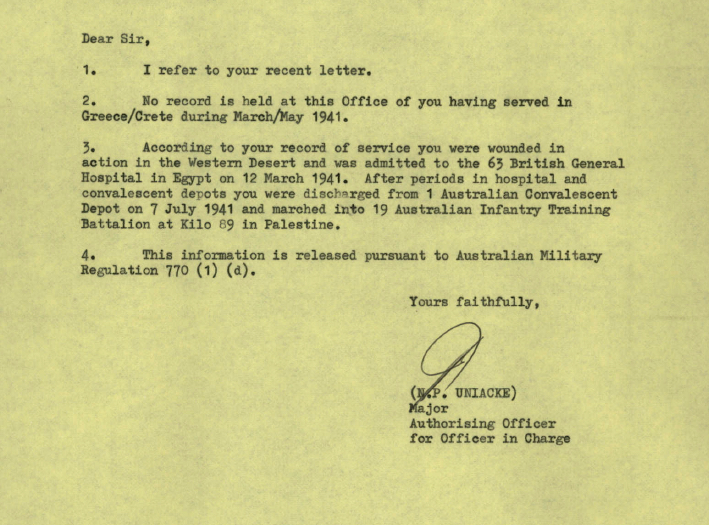
Thus, one of the main aims of the nominal roll contained within Dust and Shadows is to provide readily available confirmation that particular Australian personnel did actually take part in the campaigns of Greece and Crete. I hope then people will begin to seek further information to understand the importance of a family member’s story of service.
4. You mentioned that Dust & Shadows is much more than just a list of names. Isn’t it a nominal roll?
For the past 10 years I have been giving presentations here in Australia, in New Zealand and in the UK in an attempt to gain recognition for the often overlooked campaigns of Greece and Crete.
Audience members would come up at the conclusion of a talk to say that they believed a family member had been in the Mediterranean but with this came so often, something like ‘dad never spoke about the war’.
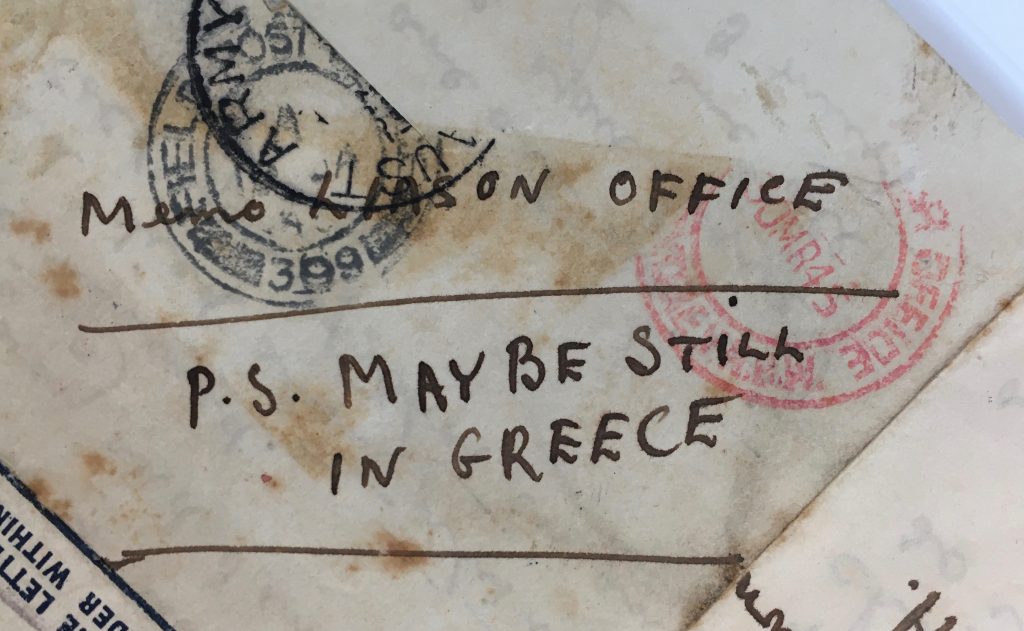
However, that doesn’t mean he was not there. It doesn’t mean that the experiences and the hardships endured didn’t become a part of that person and, in turn, a part of us.
I have included glimpses from war diaries, service records and stories from the troops themselves while in Greece and Crete, hoping to provide a similar ‘research experience’ to that which I underwent in working on this project.
Certainly, I have composed and written sections of the book as well as compiling and setting out the Nominal Roll, yet there is far more. It would be misleading to refer to myself as the ‘author’ of these stories of peoples’ lives. Even as ‘narrator’, it would be an overstatement. These are their stories, their life experiences and I am just setting them within a context. This is not a novel nor a textbook to impart historical knowledge. There are no conclusions. It is simply curtailed snapshots of junctures in just a few tumultuous months of 1941 as felt and told by those who were actually there.
5. How has this research for Dust & Shadows impacted upon you personally?
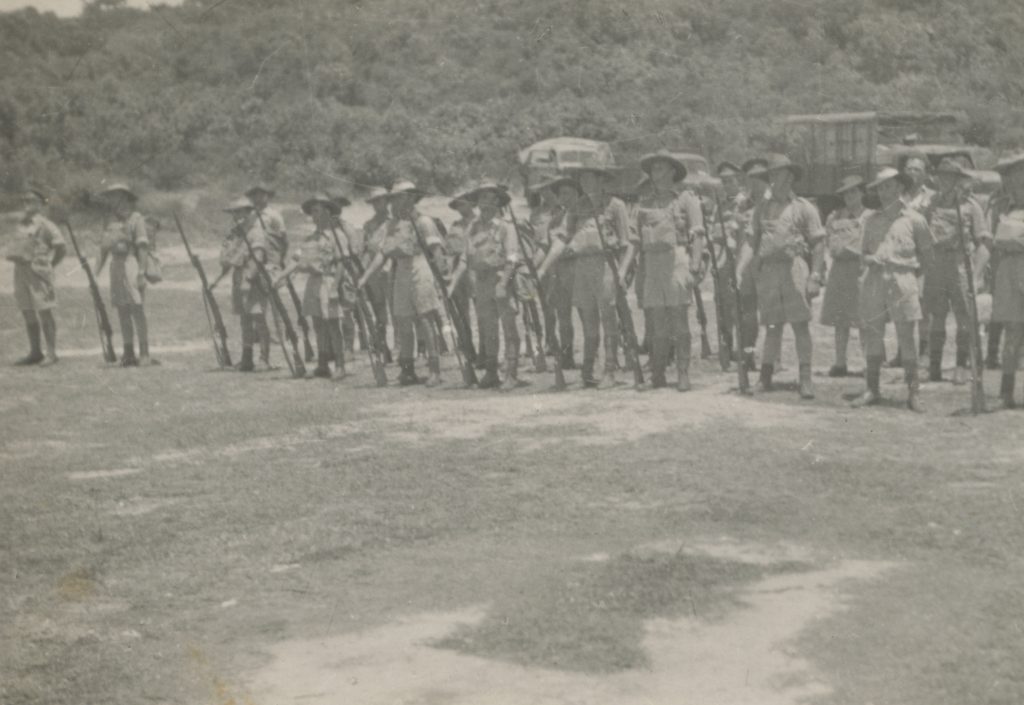
As the work progressed, certain names became possessed of a personality. When I was fortunate enough to come upon a photograph there was always something about the grin, or the glint in the eye, that provided an insight into those subjects captured in that instance of their service. Through the diaries and other documents came further hints of an individual’s strengths and weaknesses and, at times, a deep sadness and sense of loss virtually lifted from the page to encircle and tightly hold me. Yet, this was always accompanied by a profound sense of admiration.
Yes, as a researcher, but also as a witness to the feats, the bravery, the friendship and the commitment of these people, some I feel as though I came to know. Quite often I caught myself nodding as I realised, in different times and circumstances, I may have easily established a friendship and a connection to so many of these devoted souls. They just seemed ‘likeable’. How many among us could not begin a ‘friendship’ with those to whom certain orders were almost personally tailored and issued such as the order to immediately cease the very Australian practice of adopting stray dogs.
*For more information on Dr Bendon’s book you can contact him on: cheersmichael@hotmail.com.
READ MORE: A story told is a life lived: The Battle of Crete.

