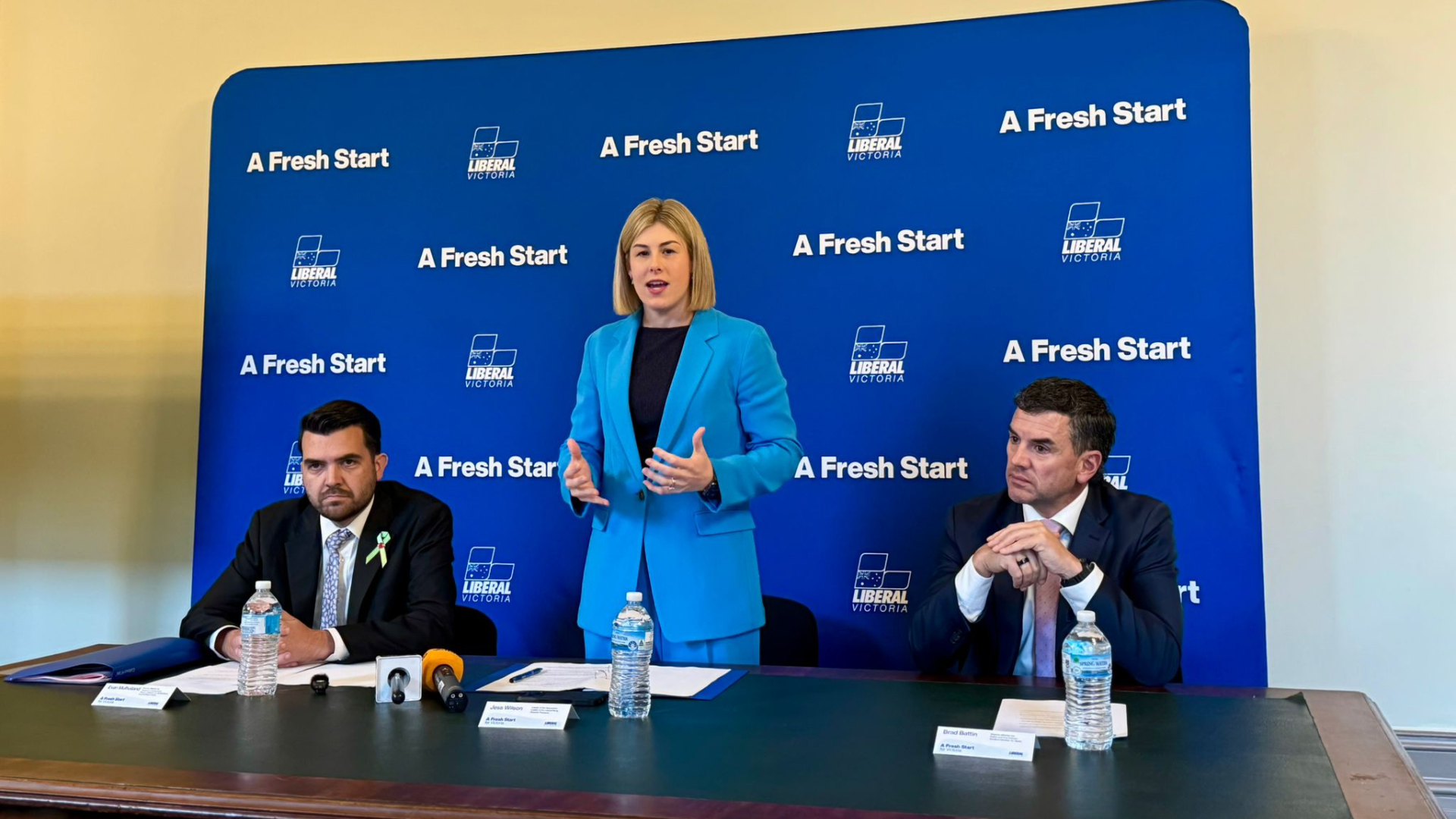
Victoria’s multicultural communities must remain central to government decision-making beyond election cycles, Opposition figures told ethnic media representatives during a multicultural media roundtable at Parliament House in Melbourne.
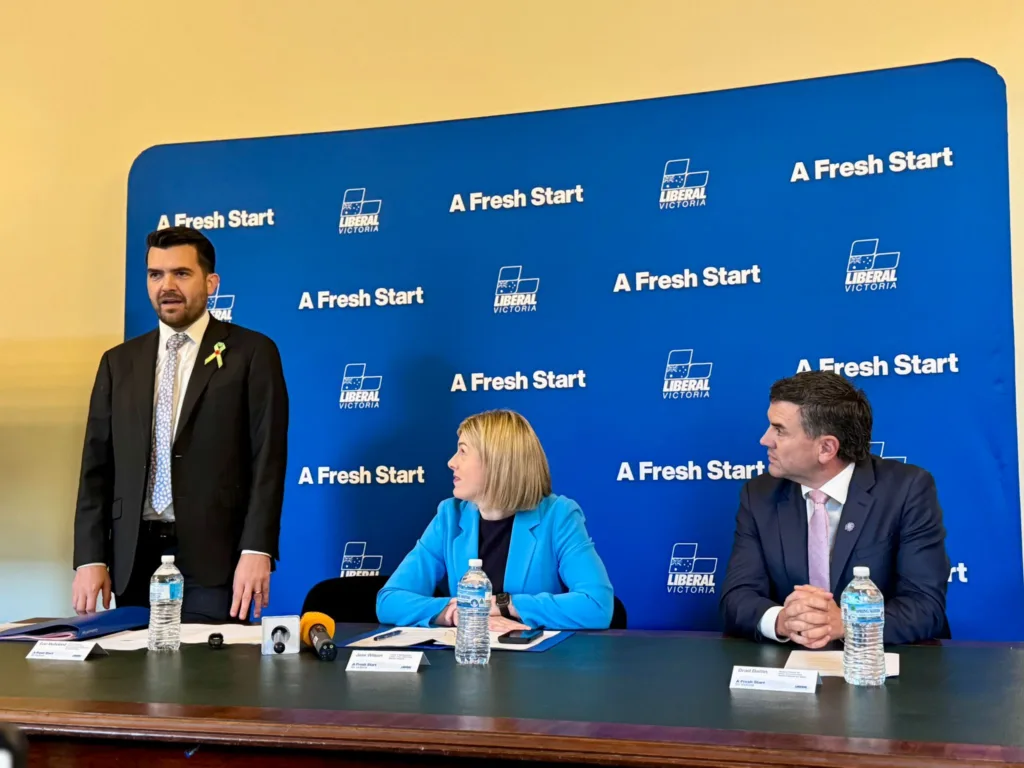
Hosted in the Opposition Party Room on Wednesday, June 17, the roundtable was attended by Leader of the Opposition Jess Wilson MP, Shadow Minister for Multicultural and Multifaith Affairs Evan Mulholland MP, and Shadow Minister for Police, Corrections and Sport Brad Battin MP.
The event brought together representatives from multicultural and ethnic media outlets to discuss key issues affecting Victorian communities, including cost-of-living pressures, taxation, community safety, multicultural funding and representation.
The discussion also featured criticism of the Allan Government’s management of multicultural affairs, community engagement and Victoria’s economic position, with Opposition MPs arguing that multicultural communities had been underserved by the current administration.
Opening the discussion, Mulholland described multicultural communities as “the heartbeat of the Victorian community” and highlighted the role migrant communities play in driving small business growth, entrepreneurship and economic participation across the state.
Wilson echoed those sentiments, noting Victoria’s diversity remained one of its greatest strengths.
“I will always back our multicultural communities,” she said.
“Every single day, that is something that makes our Victoria, our community, so much stronger.”
Opposition rejects attacks on multiculturalism
A significant portion of the discussion focused on the rise of One Nation and comments made earlier in the day by Pauline Hanson regarding multiculturalism.
Asked whether multiculturalism remained a strength for Australia, Wilson and Mulholland both mounted a strong defence of Victoria’s multicultural communities.
“I’ve never met a multicultural community member who didn’t love Australia,” Mulholland said.
“We’re not in the 1990s. We’re in 2026. Everyone, regardless of your background, your belief, your colour or your presence, everyone is a proud Australian.”
Mulholland said multicultural communities were among the strongest participants in national celebrations such as Australia Day and consistently demonstrated pride in both their heritage and their Australian identity.
Battin added that multicultural communities had been central to the growth of many areas across Melbourne and said the focus should be on providing infrastructure, housing, transport and opportunities for future generations rather than questioning multiculturalism itself.
One Nation preference questions
The Opposition was repeatedly questioned about whether it would consider a future preference arrangement with One Nation if polling trends continued.
Wilson said the Coalition’s focus remained on forming majority government in its own right.
“We are running for majority government here in Victoria because we believe we have the plan to fix this state,” she said.
Mulholland also stressed that the Coalition’s only formal political partnership was with the Nationals.
“The only coalition we’re interested in is a coalition with our friends in the National Party,” he said.
While neither ruled out future preference negotiations, Mulholland noted such decisions were managed by the party organisation closer to election day and were not determined by him personally.
Crime, cost of living and the economy
Wilson said Victorians were facing increasing pressure from rising living costs, growing state debt and a difficult business environment.
She pointed to payroll tax, land tax and the Emergency Services Levy as key concerns for households and businesses and outlined the Opposition’s commitment to tax relief should it form government.
“Our multicultural communities are often the very communities that are establishing businesses here in Victoria,” Wilson said.
“People who take the risk, do the extra hours, work the longer hours and are doing so to give their family a better life.”
Wilson repeatedly linked Victoria’s economic challenges to the state’s growing debt burden, arguing that rising taxes and government spending had contributed to worsening business conditions.
“We have more debt at the moment than Tasmania, New South Wales and Queensland combined,” she said.
Wilson said many Victorians felt they were “going backwards” economically and argued that restoring business confidence and attracting investment would be essential to improving living standards.
Battin said crime remained one of the biggest issues affecting communities and small businesses across the state.
The former Victoria Police officer argued rising theft, burglaries, arson attacks and retail crime were placing increasing pressure on businesses through higher insurance premiums and operating costs.
He reiterated the Coalition’s pledge to recruit an additional 3,000 police officers if elected.
“Victorians do not feel safe in their homes, in their businesses, in their neighbourhoods and in their streets,” Wilson said.
Future of the Victorian Multicultural Commission
Representatives also questioned the Opposition about proposed changes to the Victorian Multicultural Commission and the government’s plan to establish a new multicultural body.
Mulholland said the Liberal-Nationals Government had originally established the VMC as an independent body and expressed concern about the Allan Government’s proposed restructuring.
He said he was particularly troubled by the abolition of regional advisory councils, which many communities viewed as an important mechanism for grassroots consultation and representation.
Mulholland also criticised the Allan Government for what he described as a lack of consultation surrounding the proposed reforms.
While welcoming commitments to maintain independence, he said the Opposition had not been briefed on the legislation and questioned the removal of regional advisory councils.
“The more consultation with communities, the better,” he said.
“We need to understand issues very early on in order for governments to get a grasp on how to manage and support our communities into the future.”
Criticism of government multicultural engagement
Mulholland also renewed criticism of the Allan Government’s handling of taxpayer-funded multicultural events, accusing Labor of politicising community engagement activities.
He argued that government-funded multicultural functions should provide equal opportunities for participation across the political spectrum and claimed opposition representatives were often excluded from speaking opportunities despite public funding being used to stage the events.
Mulholland said multicultural affairs should remain a bipartisan area of public policy and warned against using community events for partisan political purposes.
“Multicultural affairs ought to bring people together,” he said.
The Shadow Minister also questioned the growing number of government-funded multicultural events being held during an election year, arguing that community engagement should not be used as a political tool.
Support for multicultural festivals and community events
Responding to questions from The Greek Herald about multicultural funding, Mulholland indicated major multicultural festivals and community celebrations would continue to receive government support under a Coalition government.
He described events such as Antipodes Festival and other major cultural celebrations as important opportunities to showcase Victoria’s diversity and bring communities together.
“I don’t see any cuts there,” he said when asked about continued support for major multicultural events.
Mulholland also suggested government could play a greater role in helping communities navigate permit requirements, venue access and event delivery costs to ensure festivals continue to grow.
Multicultural media funding in focus
The future of multicultural media also formed part of the discussion.
Mulholland acknowledged concerns that multicultural media had not received the same level of support as mainstream outlets and said the Opposition was actively examining ways to strengthen the sector.
He pointed to opportunities to support digital growth, recording facilities, production equipment and advertising investment.
“We’re certainly looking at this very closely,” he said.
“We’re certainly having a look at how we support those multicultural media outlets to grow.”
He also signalled support for recommendations arising from the Victorian Government’s multicultural review regarding government advertising expenditure.
“In principle, we support that recommendation,” Mulholland said.
“I’d rather, under a government we’re part of, have money going to multicultural media than going to Google and others. It’s a pretty easy choice for me.”
Beyond election campaigns
The discussion concluded with questions about how multicultural communities could maintain meaningful engagement with government beyond election campaigns.
Asked by The Greek Herald what structural changes an elected Coalition Government would introduce to ensure multicultural communities and multicultural media retained an ongoing voice in government decision-making, Mulholland said consultation needed to be continuous rather than limited to election periods.
He noted the growing influence and reach of multicultural media across Victoria and emphasised the importance of maintaining direct engagement with community leaders, faith groups and ethnic media organisations.
“I think there’ll be a greater reach to people in this room than some of the major media outlets,” he said.
Mulholland also highlighted his decision in Opposition to rename the portfolio to Multicultural and Multifaith Affairs, arguing that culture and faith were often deeply interconnected and should be reflected in government structures.
The roundtable concluded with informal discussions between MPs and representatives from Victoria’s multicultural media sector, ahead of what is expected to be a closely contested Victorian election campaign.
