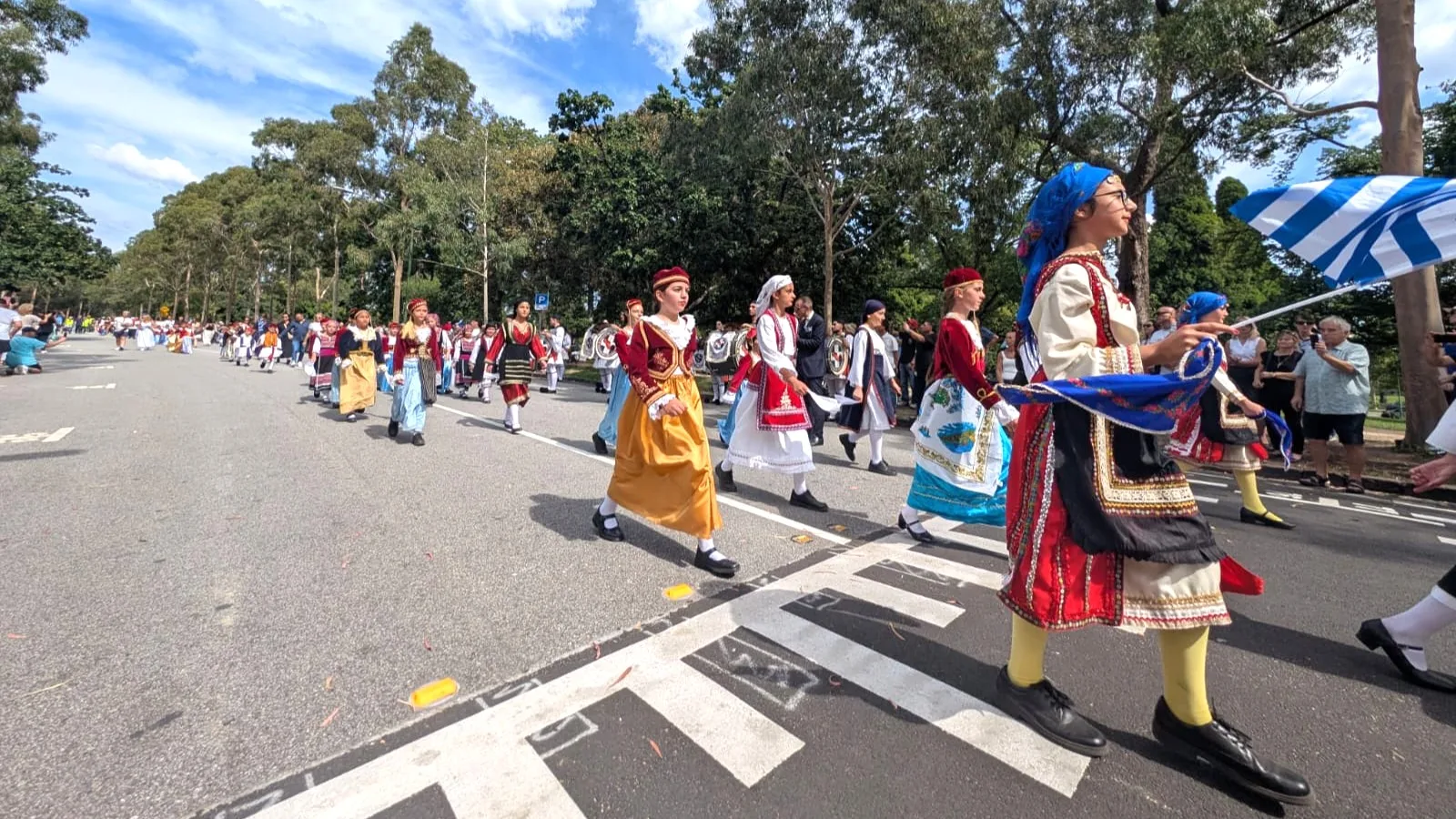
It was one of those Melbourne days where the sun doesn’t just shine; it sits on you. And still, they came.
Thousands lined Birdwood Avenue at the foot of the Shrine of Remembrance, fanning themselves and shifting from foot to foot in a desperate hunt for shade. The veterans came prepared with chairs, hats, and water bottles, while others had to learn the hard way.
“The trick is to drink lots of water,” laughed Angelica Spiliotopoulos-Angsiting, who marched with the Pallaconian Brotherhood and remained high-spirited despite being layered in heavy traditional dress.
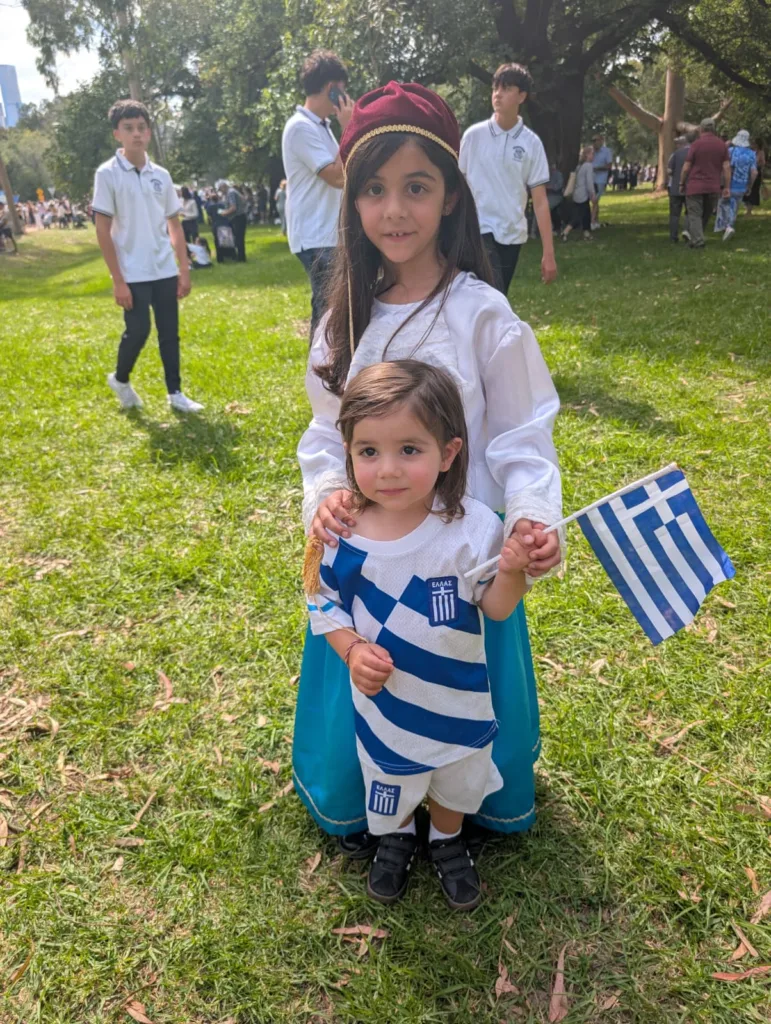
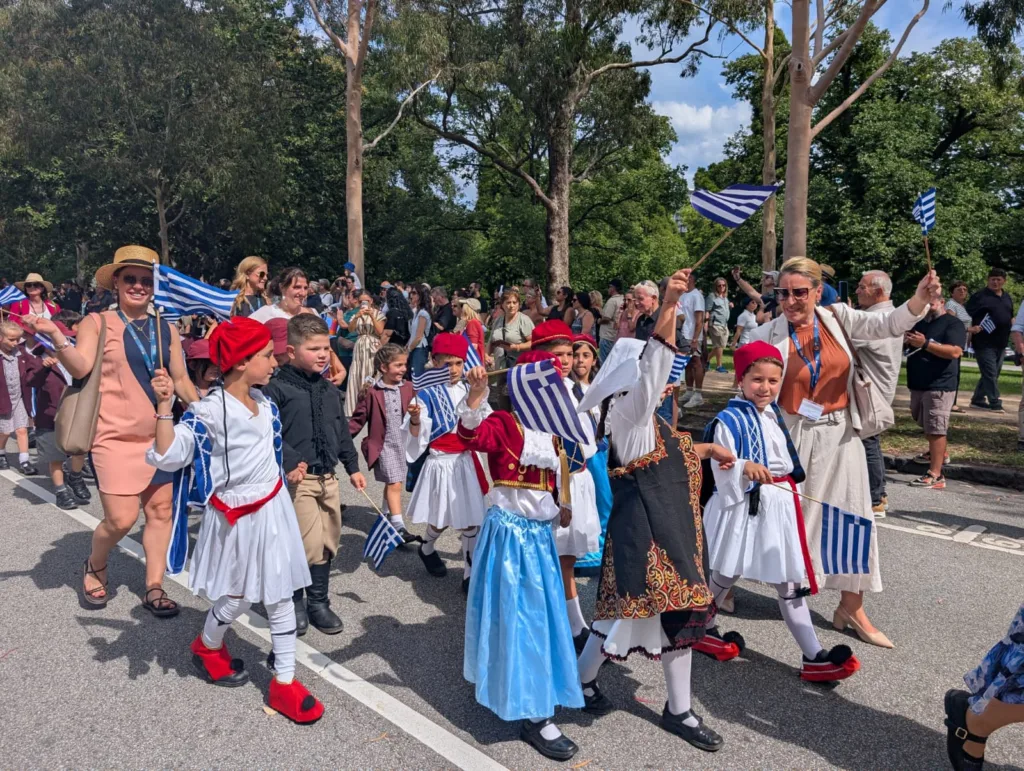
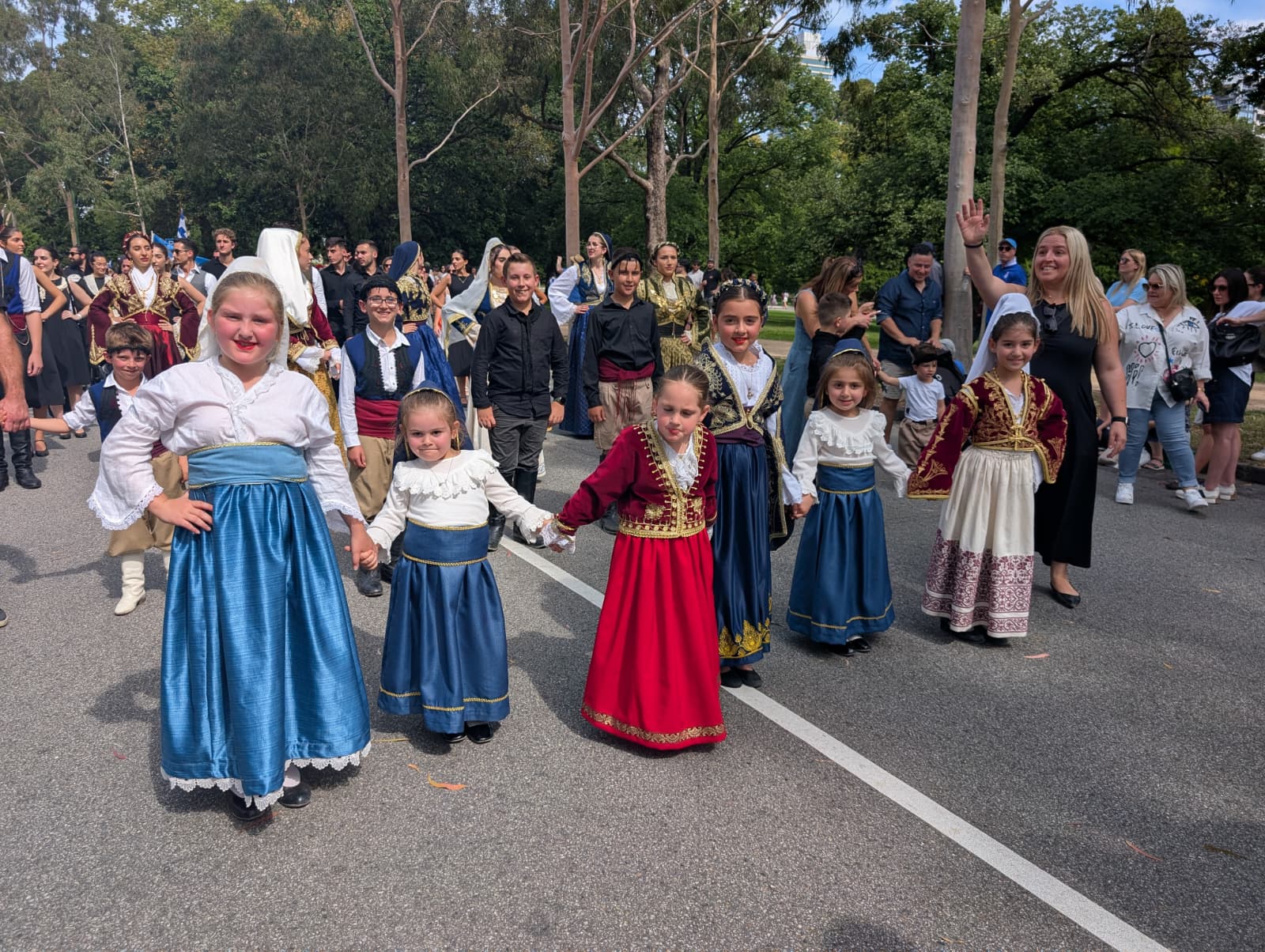
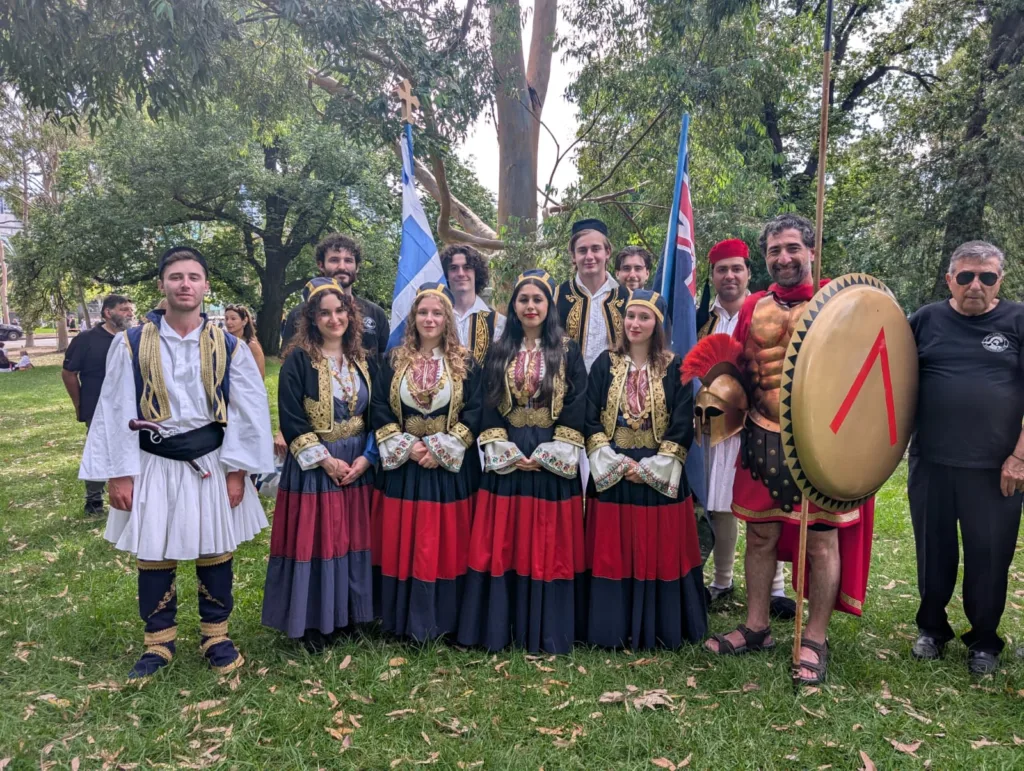
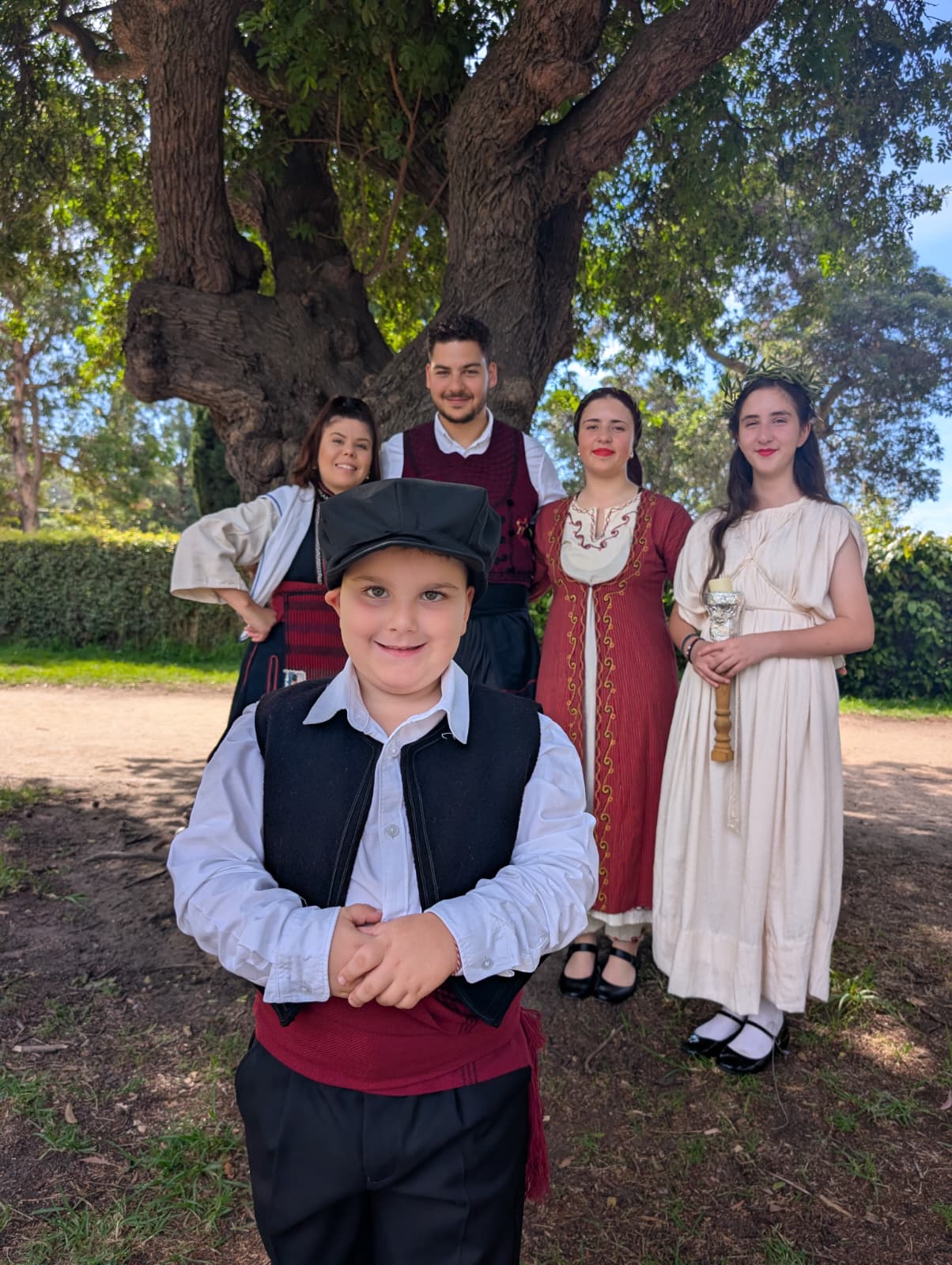
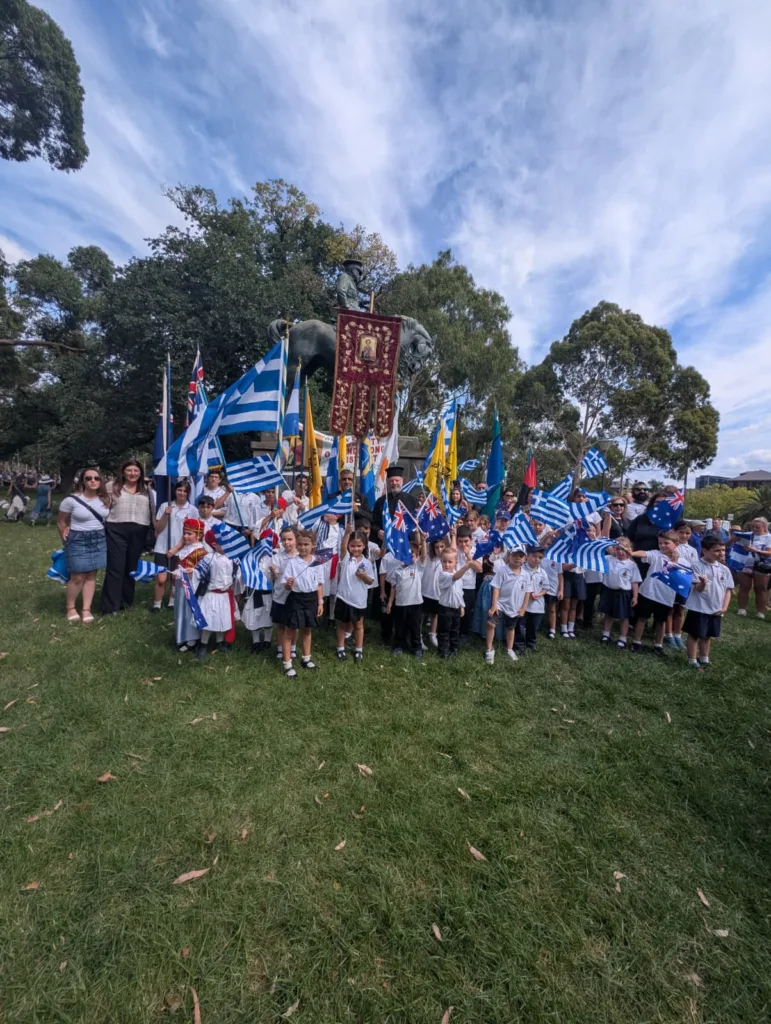
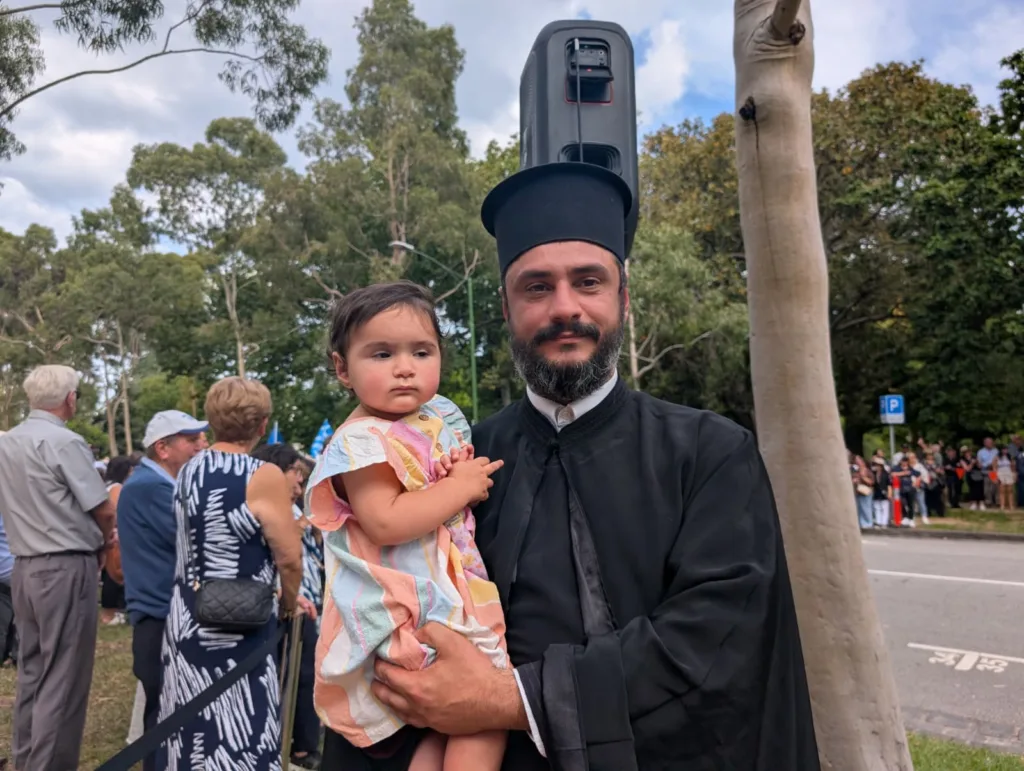
The crowd was a living tapestry: grandparents stood beside toddlers in foustanella, and old friends collided mid-crowd. Teachers spotted former students, now parents themselves, bringing a new generation to the fold. It wasn’t just a parade; it was a massive, sun-drenched reunion.
A match for the Moomba parade in size
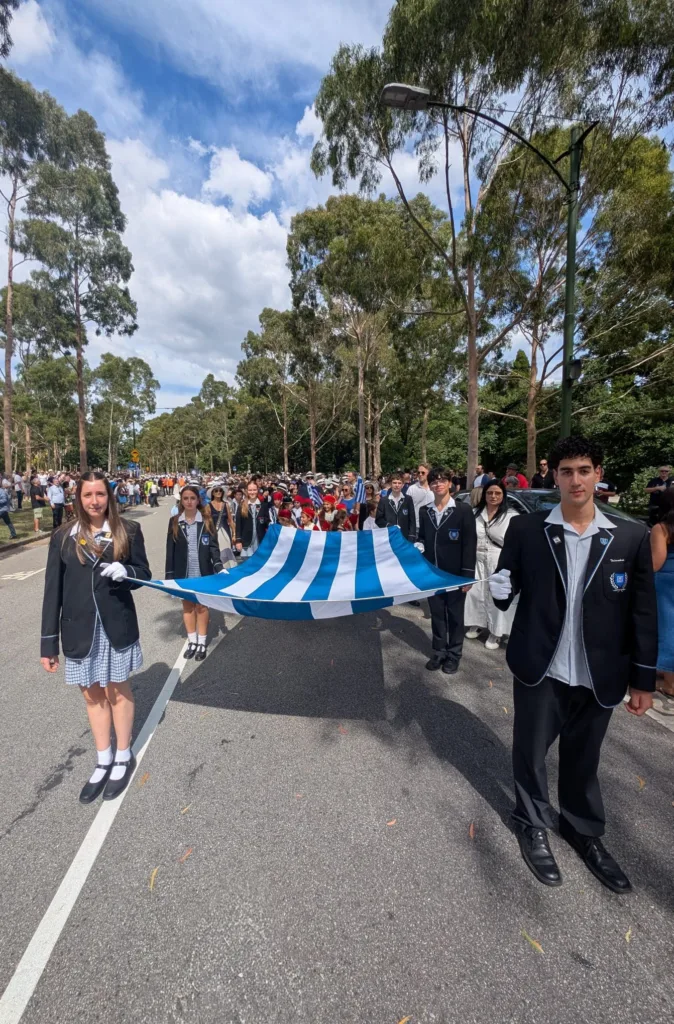
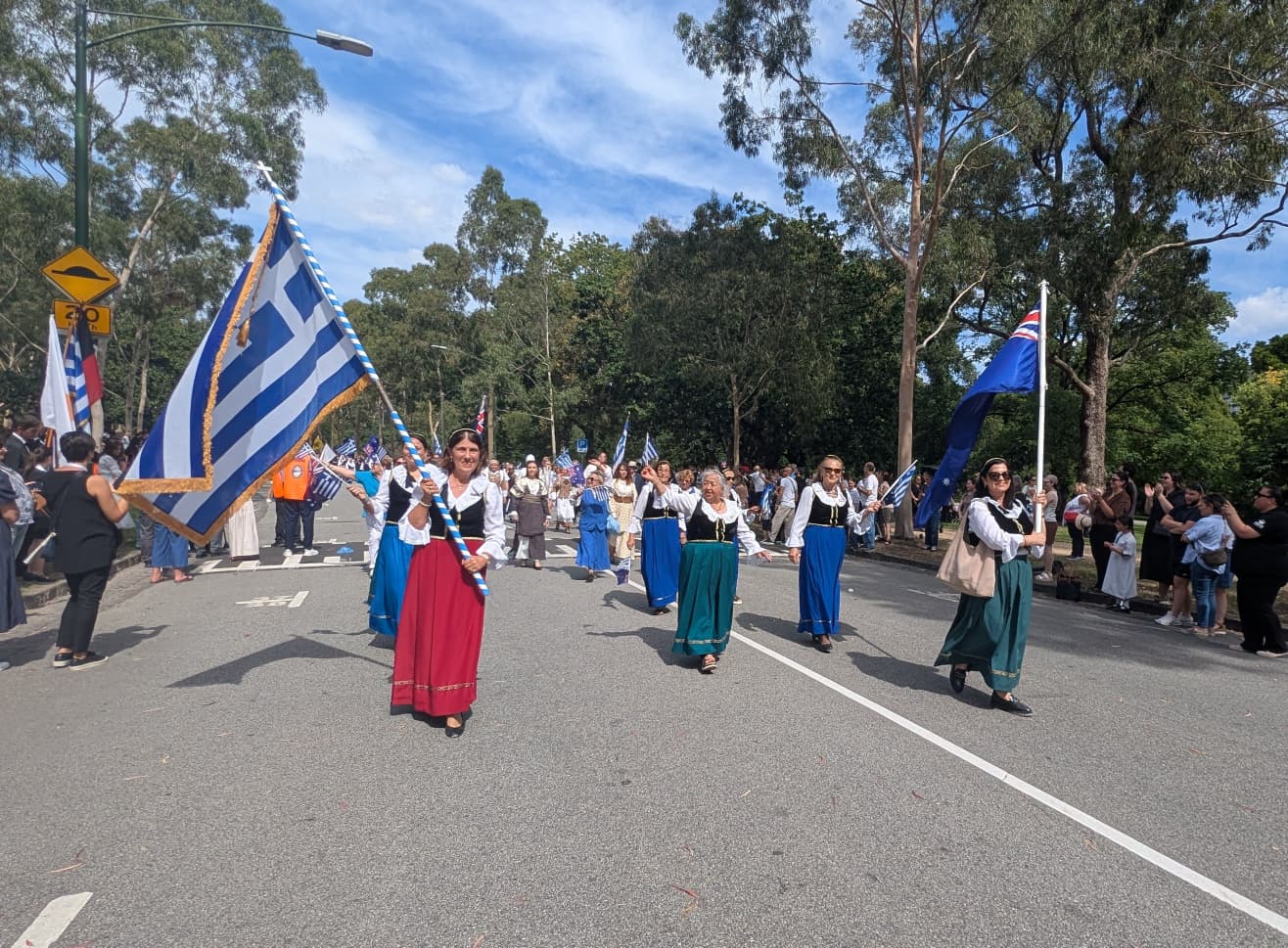
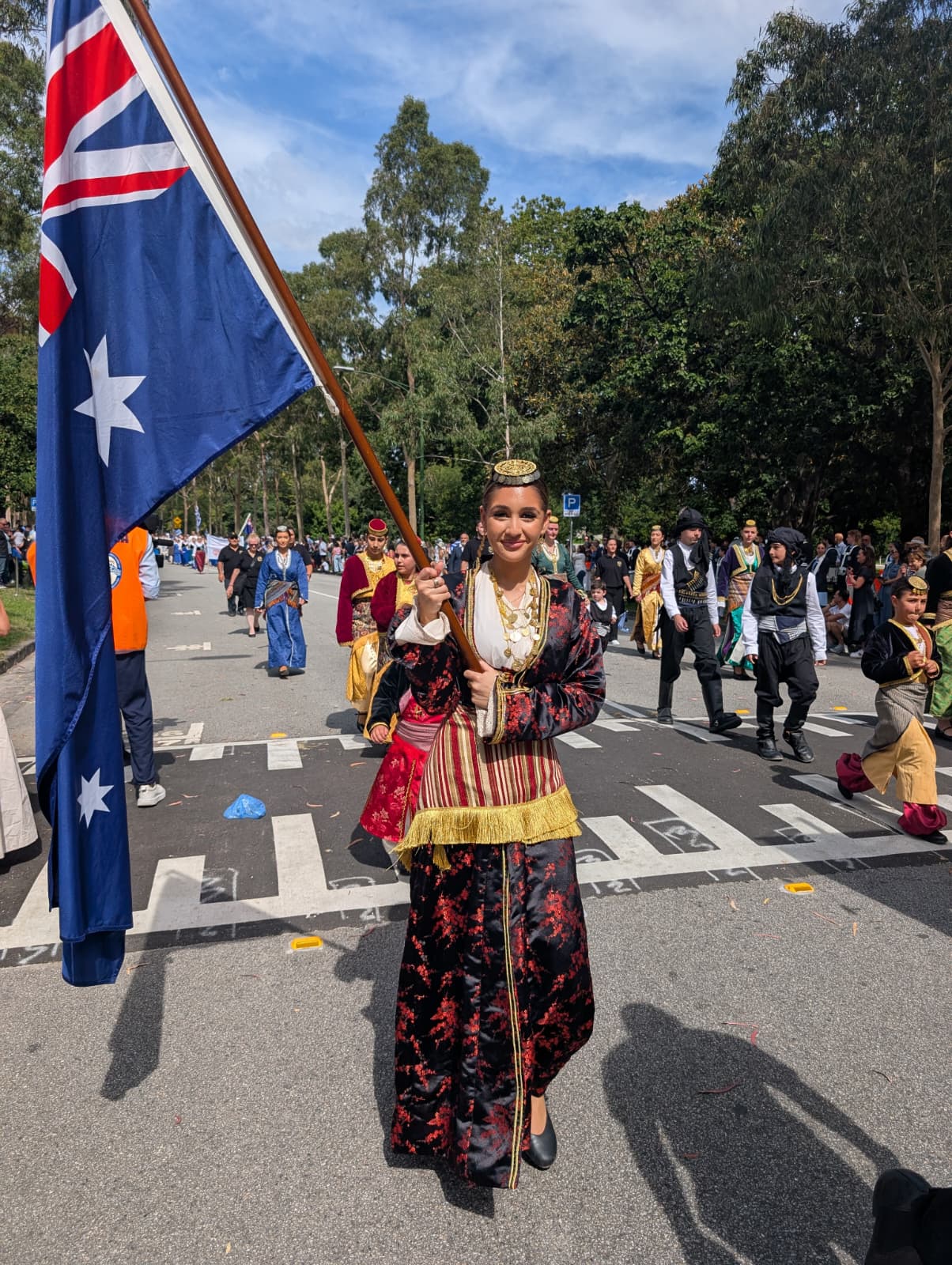
Arthur Andronas, treasurer of the Victorian Council for Greek National Day, did the math. He estimated roughly 3,400 marchers and double that number watching. Fifty groups stretched 460 meters in two rows, with more than 7,000 people lining the streets, waving blue-and-white flags and shouting “Zito!”
“I mapped it out,” he said. “It’s a beautiful day, but the heat is a challenge. A lot of people were fainting.”
Despite the conditions, the energy held. Bands from Oakleigh Grammar and St John’s College cut through the thick heat.
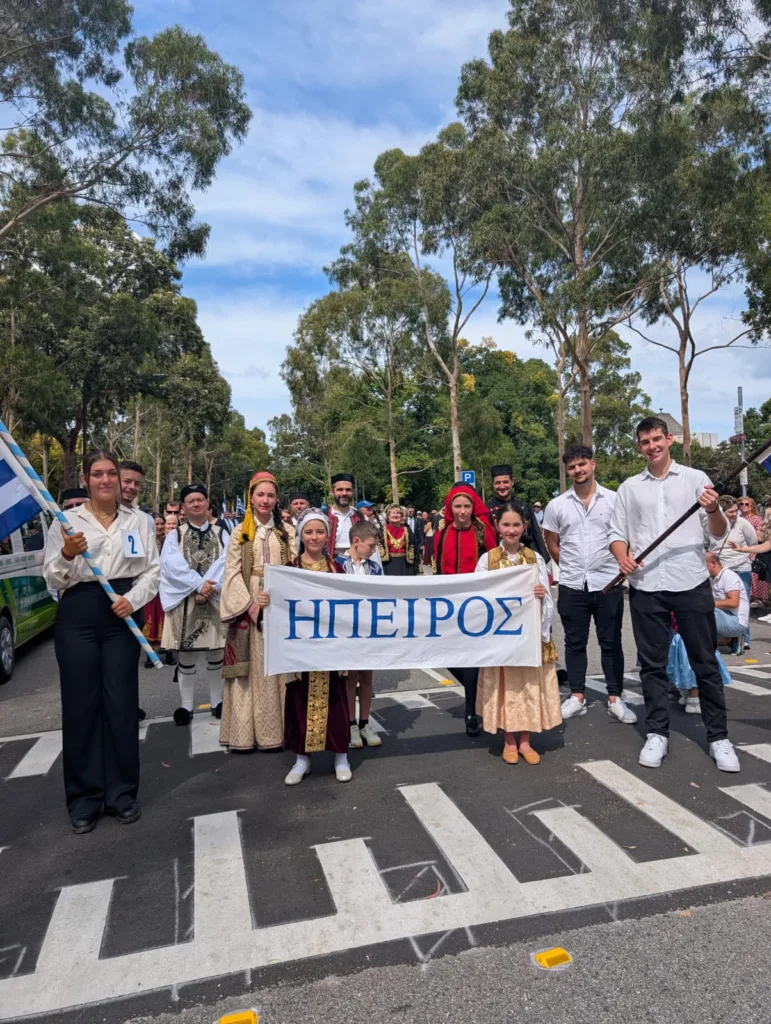
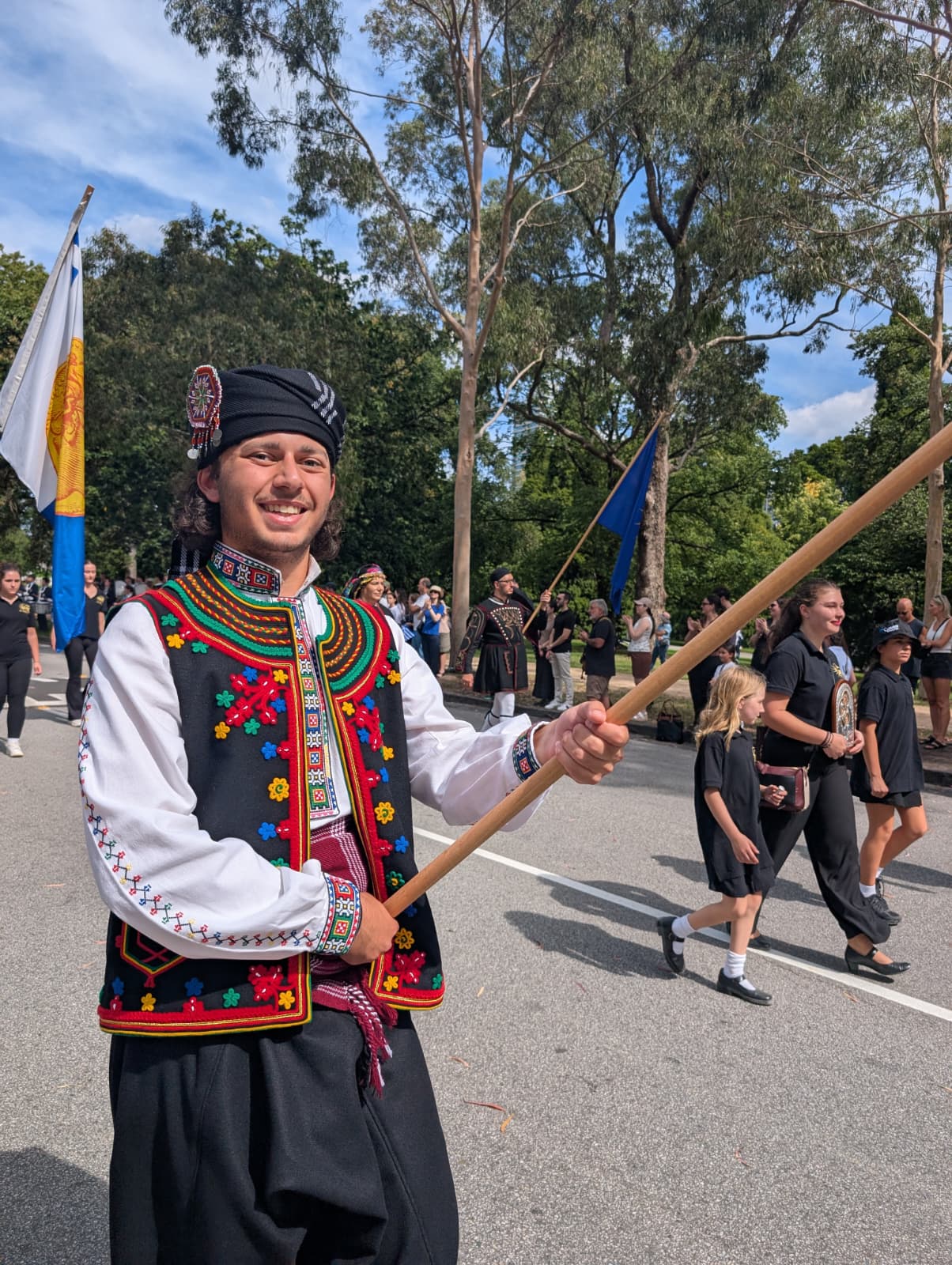
The Epirus group led from the front, while the Manasis dancers provided a strong close, and in between more organisations than ever taking part, showing the diverse fabric of the Greek community. From Anemones to Frontida, including elderly participants in wheelchairs, each organisation acted as a vital thread in the community fabric.
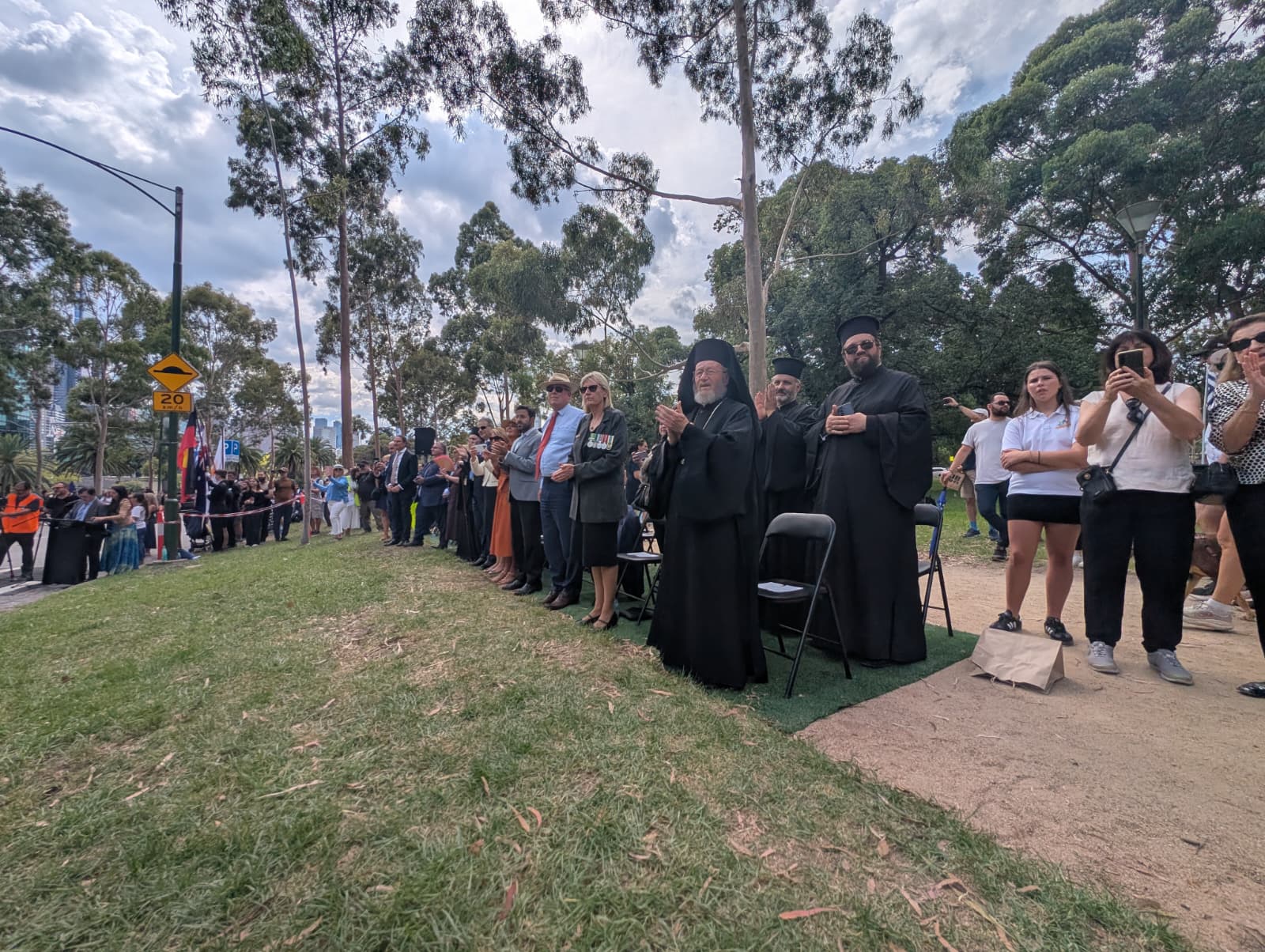
Pride vs. endurance
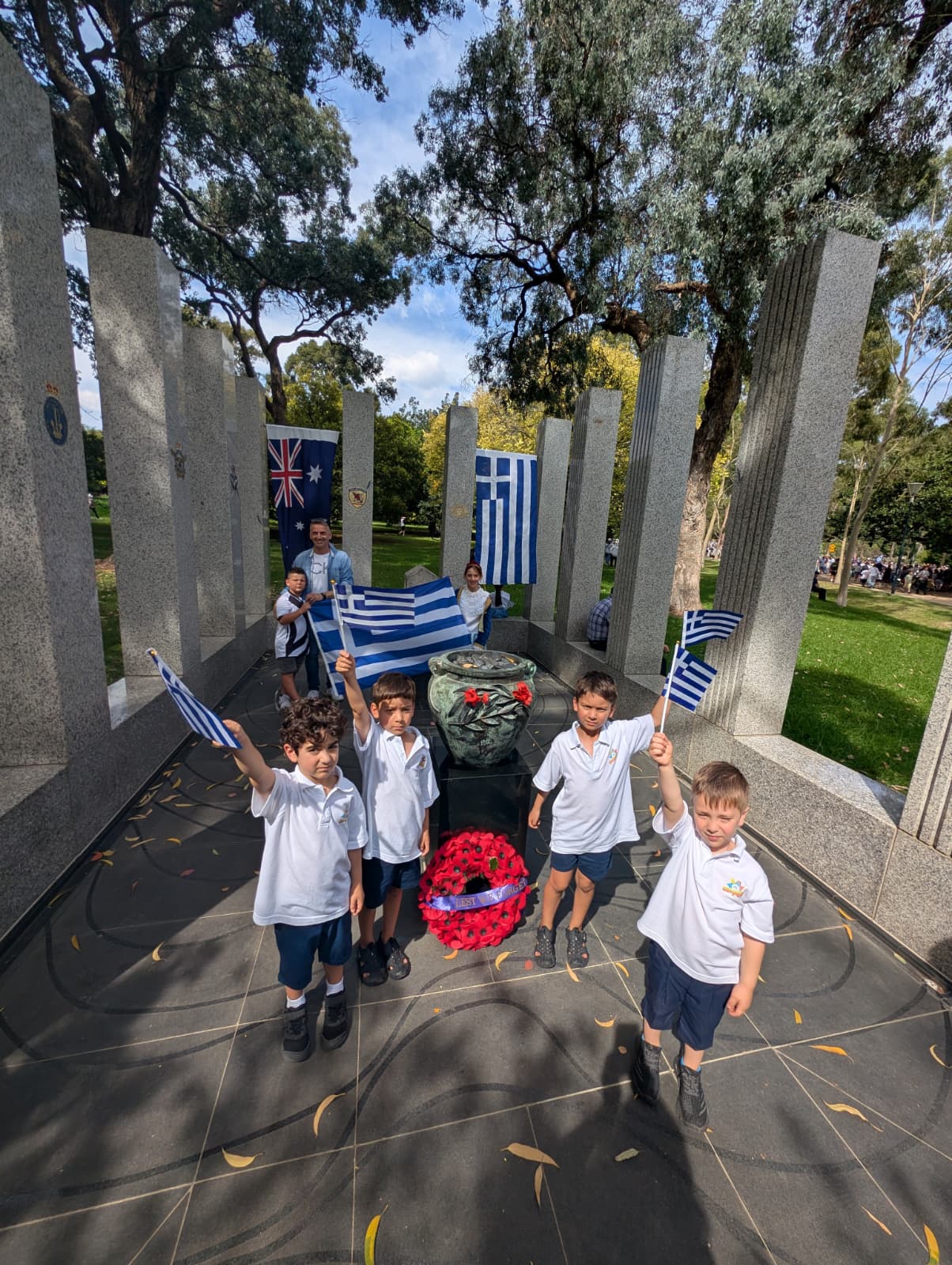
While the spirit was high, the logistics were tested. Groups gathered at 11:30 am, but the parade didn’t move until after 2:00 pm, delayed by a wreath-laying ceremony that ran over schedule. In that heat, every half-hour mattered.
“When our kids and elderly are fainting at the parelasi, something needs to change,” noted esteemed Greek lawyer Dean Kalimniou, posting on social media from his place in the queue with the Epirus group. “This should be about pride, not endurance.”
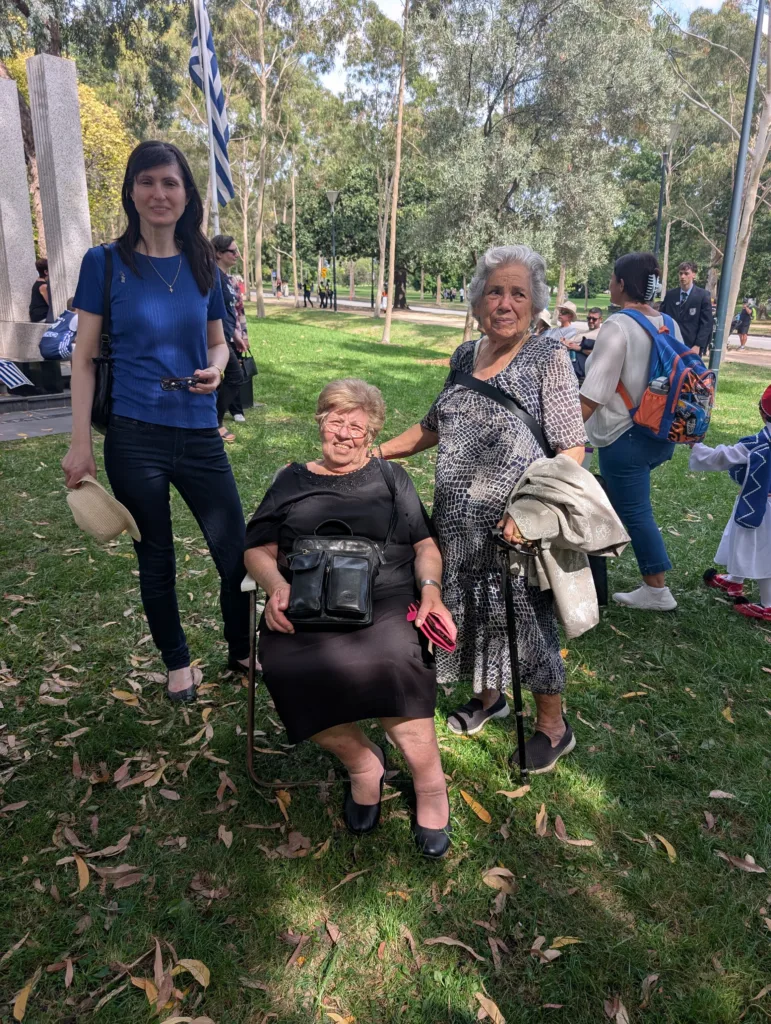
Nearby, two grandmothers from Kalamata shared a single folding chair. “To stand in the sun that long, you’ll faint,” said Katerina. “You find shade, or you don’t last.”
Her friend Thalia, walking stick in hand, nodded in agreement. “I don’t have children marching anymore, but I come every year. I just share the chair with Katerina.”
Past and present, side by side
For many, the day was a bridge to the past. “I came to Australia in 1962,” said Anthe Giannios. “My kids marched here. I miss the Greek scouts; we had so many back then.”
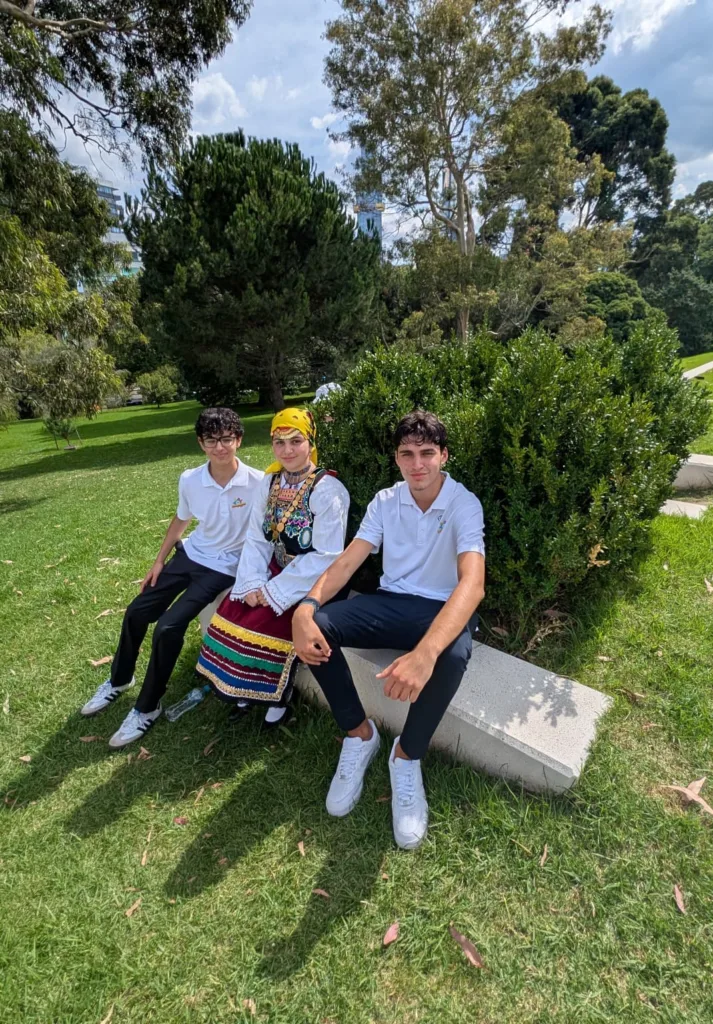
Yet, the next generation is carving its own path. Nicoleta Roma, now a mother and secretary of the Florina Aristotelis Dance Group, has been dancing since she was six. “Now my kids are part of it. That’s what matters,” she said.
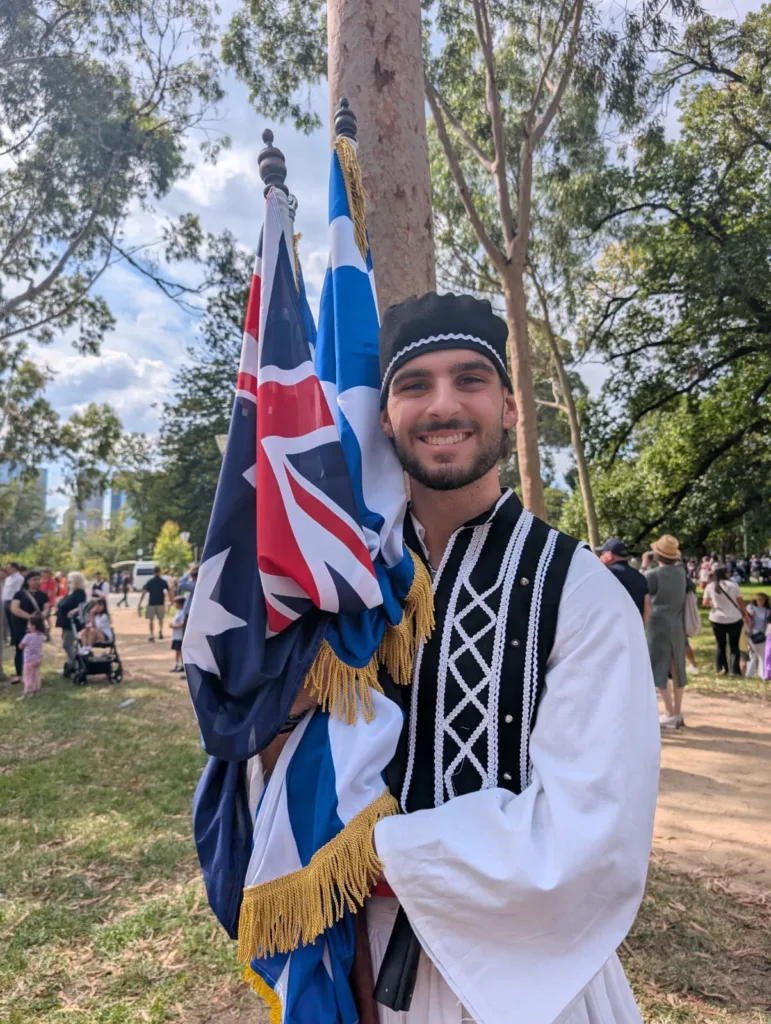
Nearby, young Dimitri Vokolos wore an Evzone uniform passed from grandfather to father to son, three generations stitched into a single garment.
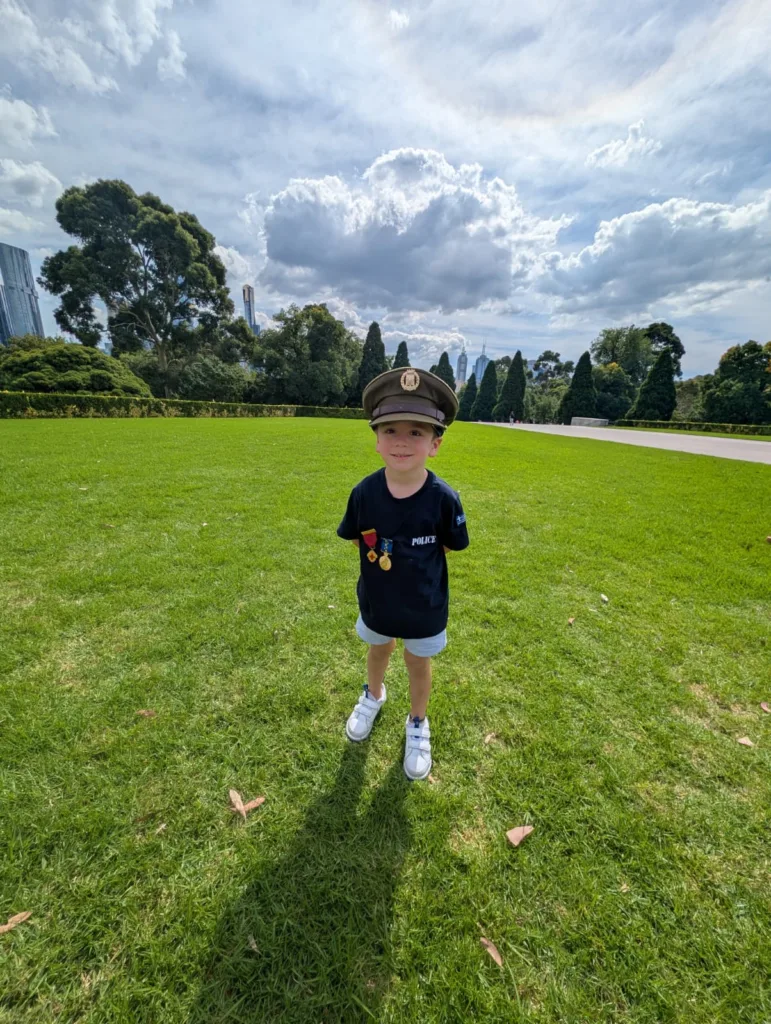
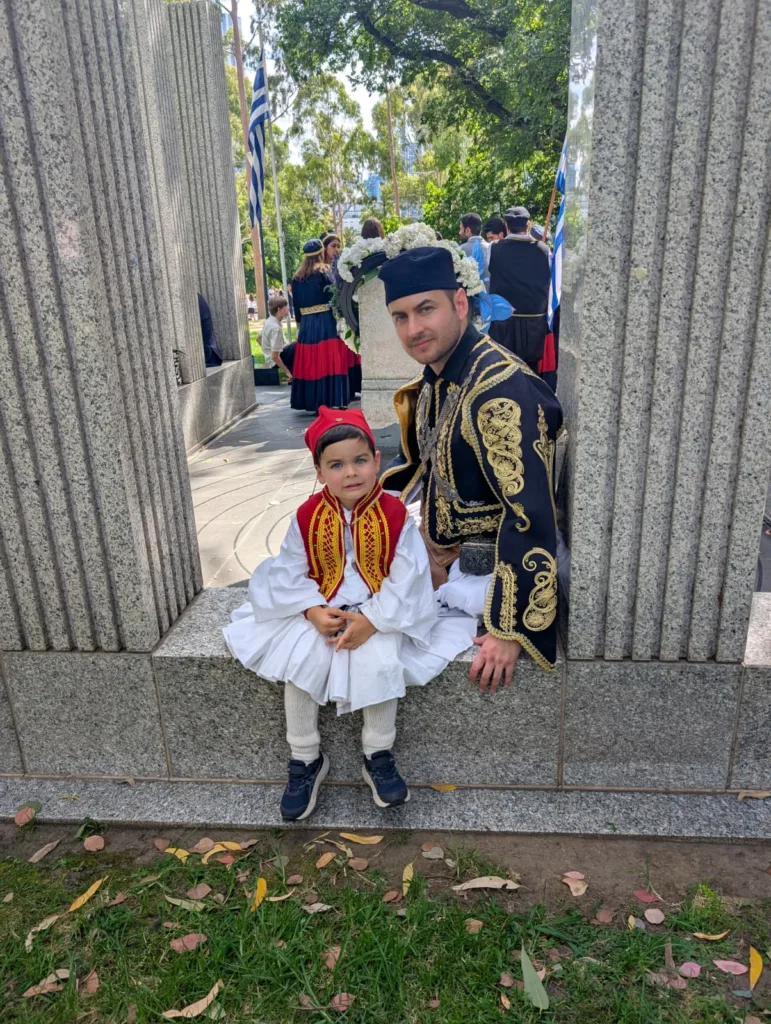
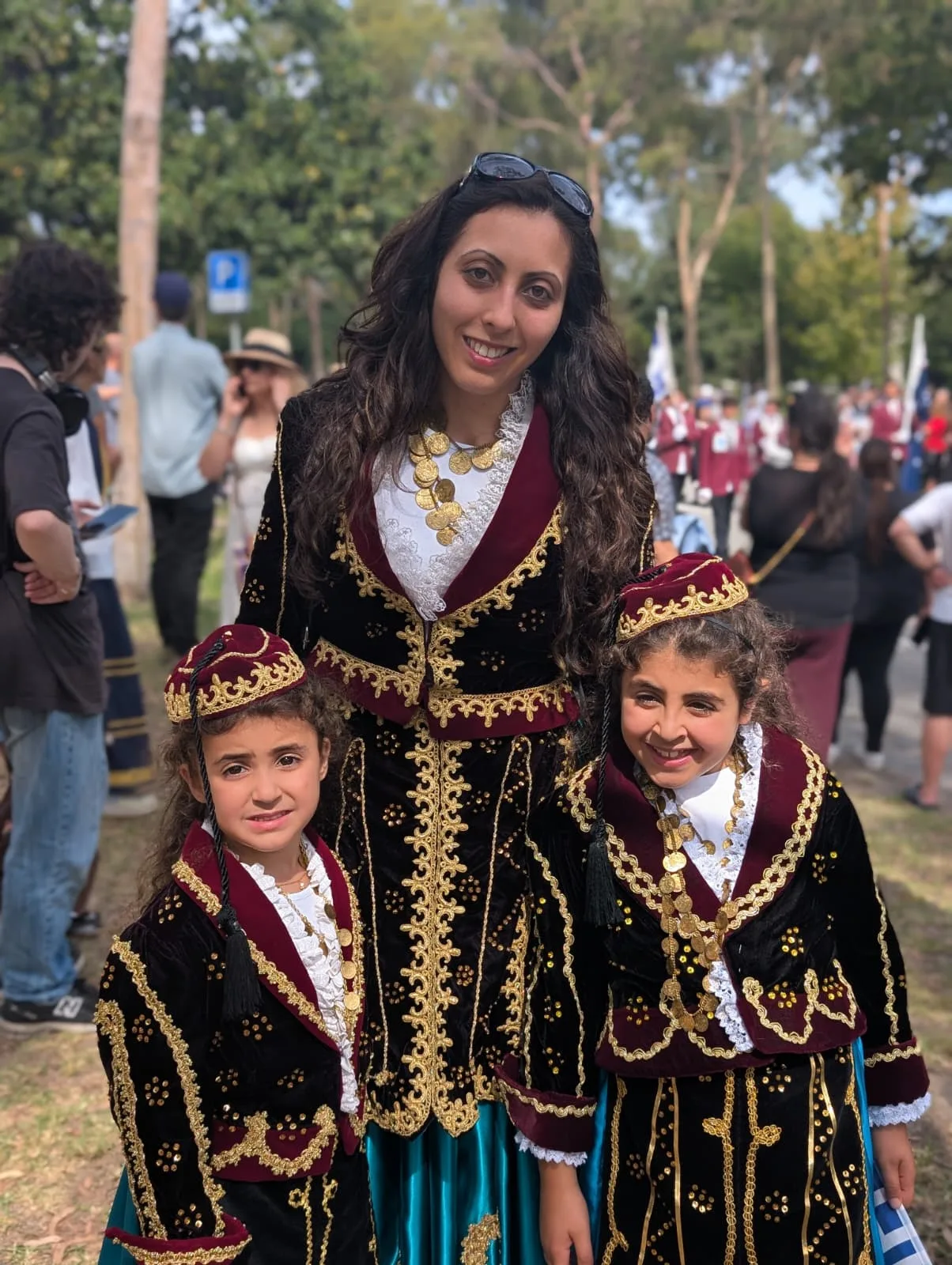
Kelly marched with Logos language school with her daughters Venetia and Irini, all three of them wearing traditional costumes. “When I was their age, I marched too. And I probably felt as tired as they did but I am left with fond memories. Now it’s them. And it means more here, at the Shrine.”
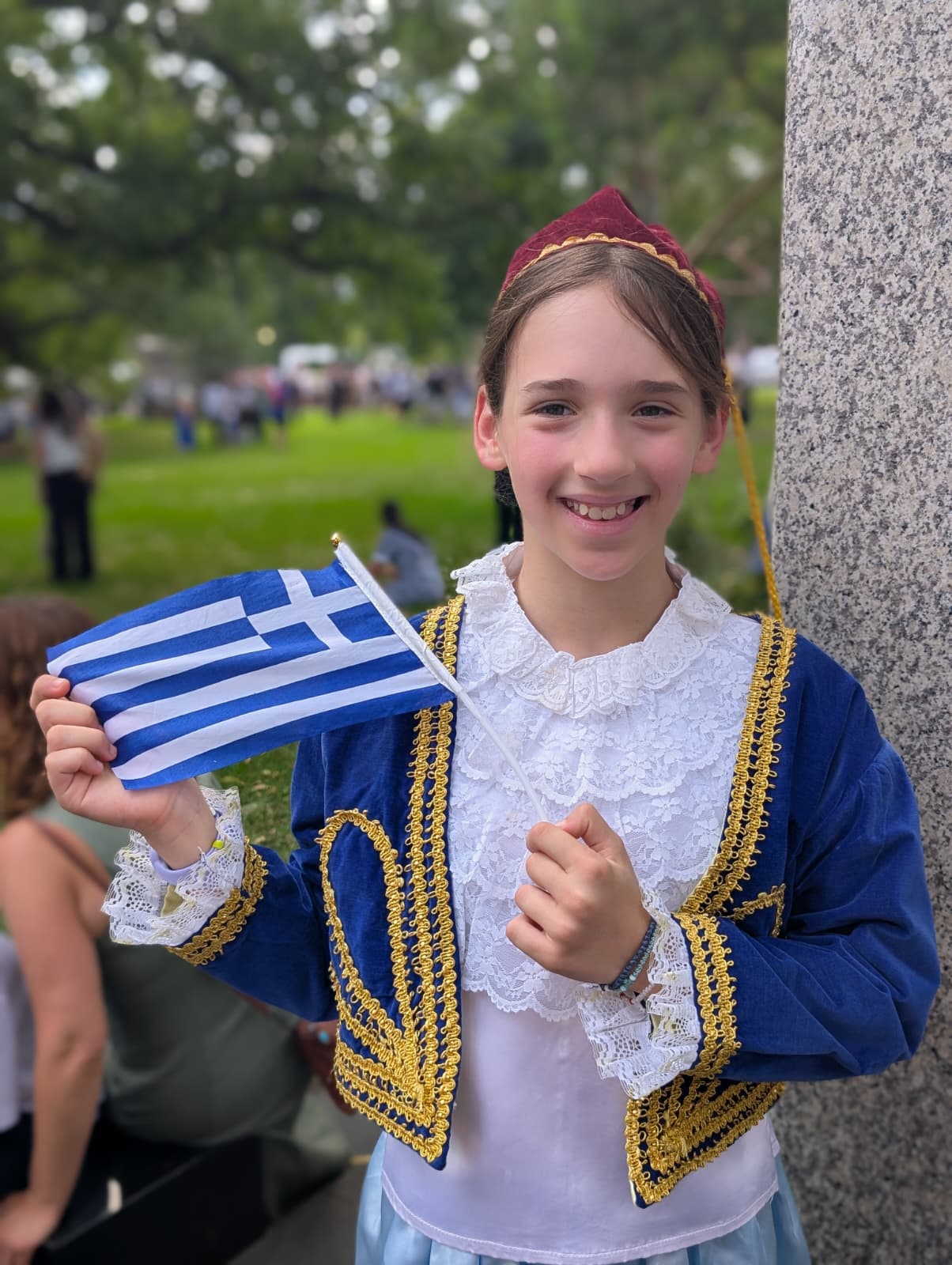
Year 8 student Maria came with her dance troupe, Pegasus. “It’s hot, it’s tiring, but I wanted to be here to celebrate my Greek culture.”
Teacher Sophia Panayiotou watched the procession with a smile. She once taught both Kalimniou and optometrist Leonidas Vlahakis; today, they are koumbari and pillars of the community. “My students now bring their own children. It’s beautiful,” she said.
New energy and legacy
This year introduced a modern lens to the tradition: drones hovered overhead, capturing the parade from above for the first time. Sophia Siachos, Chair of the Victorian Council for Greek National Day, explained that this was a deliberate move toward youth involvement.
“A clear focus of this year’s celebration was the engagement of younger generations. Their presence and enthusiasm affirmed the continuity of Hellenism in Australia and the responsibility carried by the next generation to preserve and reimagine our traditions,” she said.
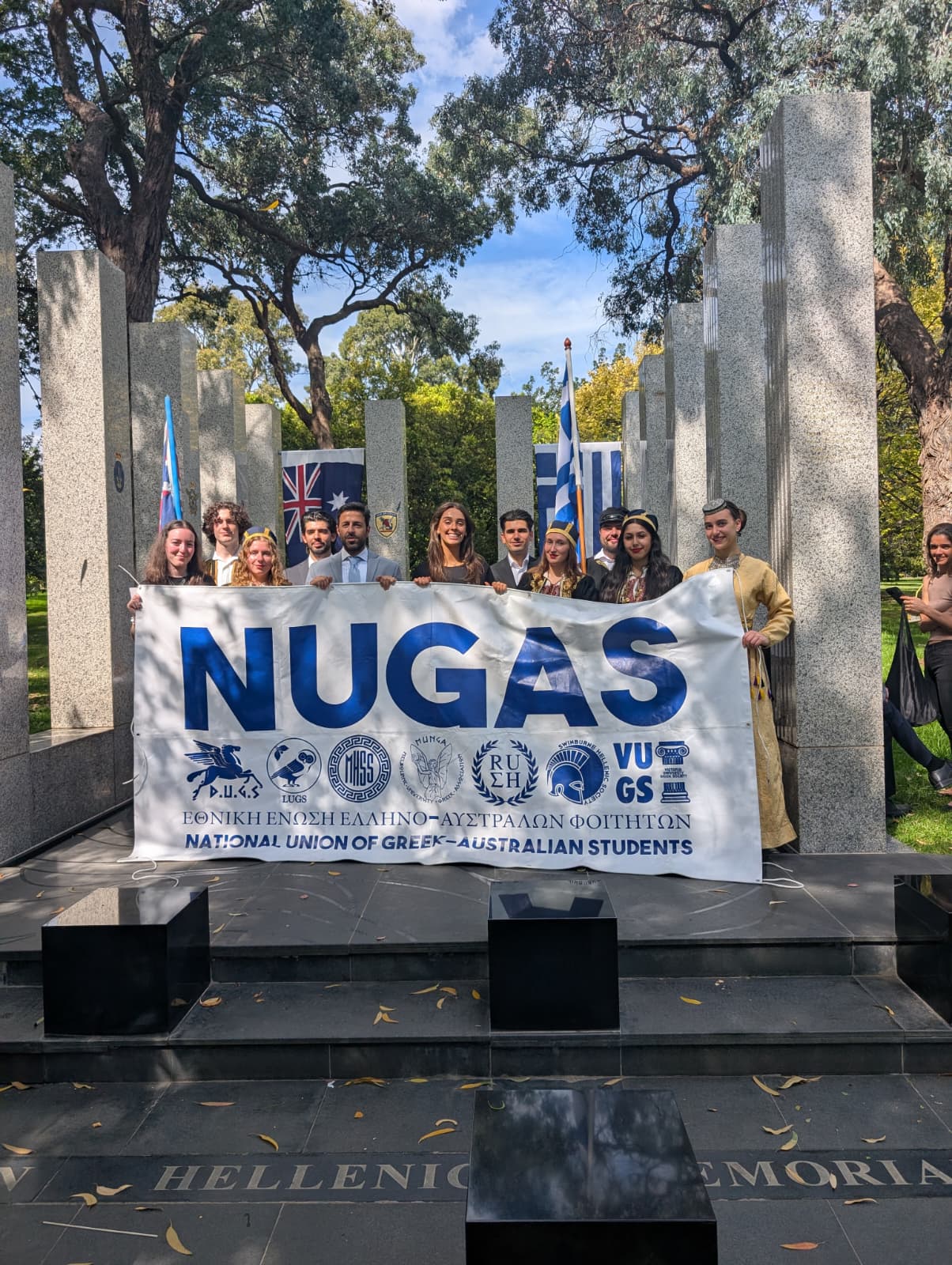
She also told The Greek Herald: “We’ve got young volunteers, NUGAS students, and new dance groups capturing everything. They’re donating their time, using drones, and building our Instagram and Facebook presence. To engage young people, you have to meet them where they are.”
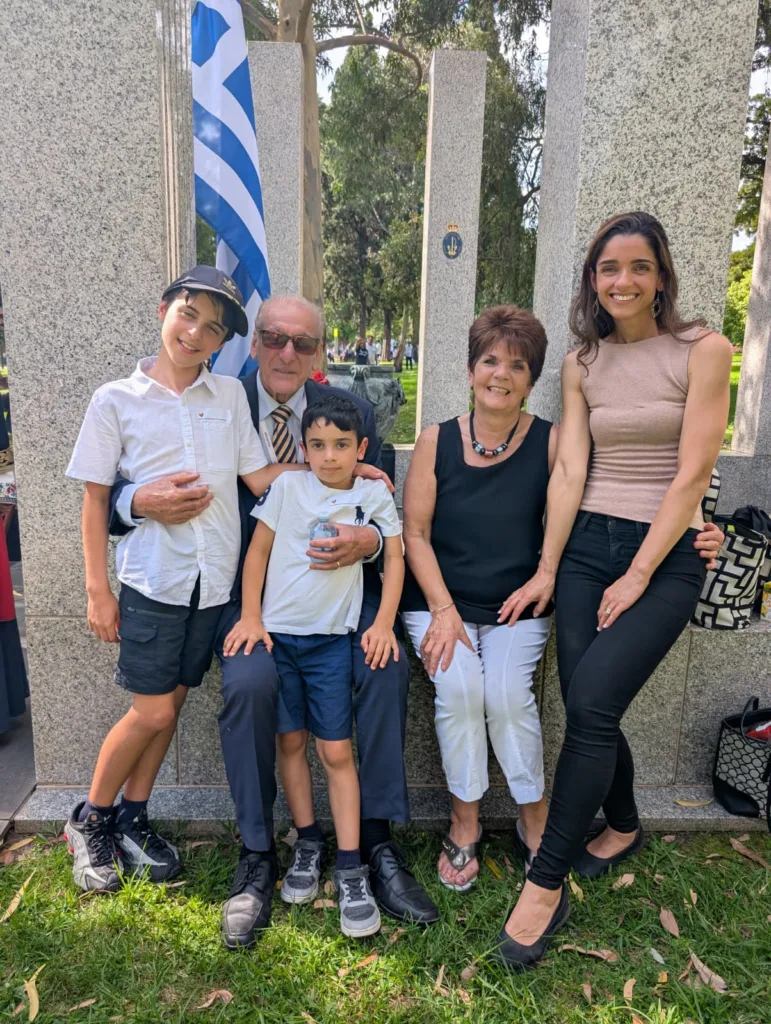
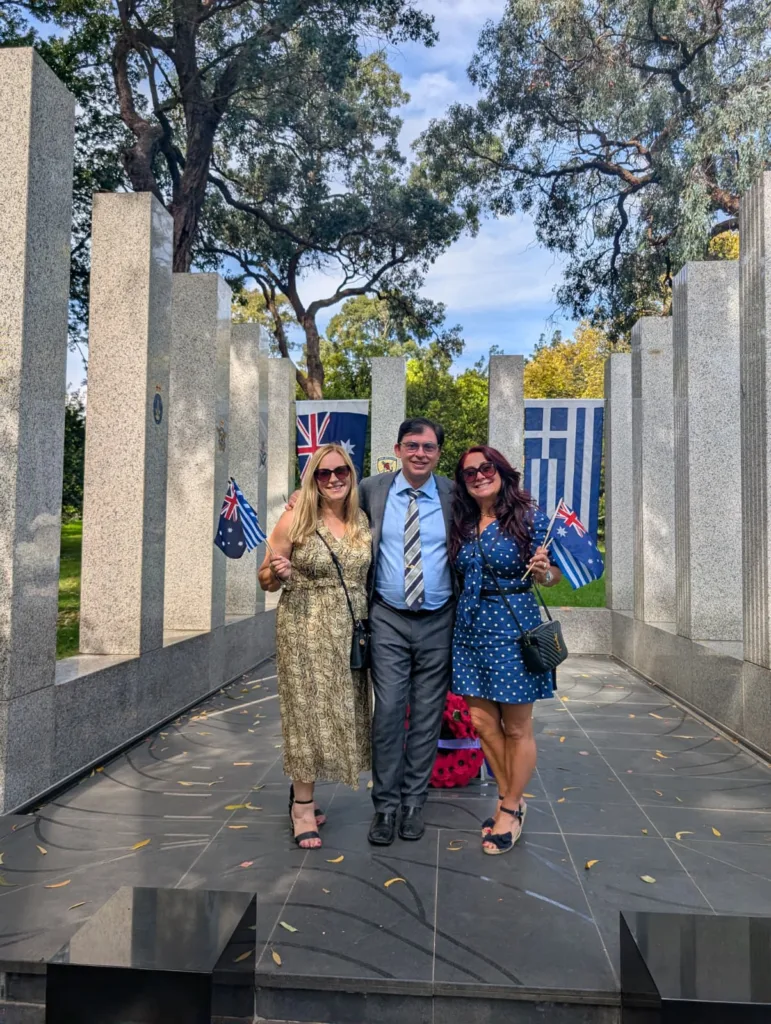
At the heart of the Australian Hellenic Memorial, dignitaries watched the proceedings. Among them was President Steve Kyritsis, joined by his wife and two of his five grandchildren. “It was a long wait, but we’re here for them,” he said simply.
Worth every drop of sweat
By the end, the crowd was flushed and drained, but they lingered. They chatted with long-lost friends and headed off for late lunches, the heat finally beginning to break.
The parade was vibrant, sometimes difficult, but deeply felt. It served as a reminder of what this community is at its core: resilient, intergenerational, and fiercely proud and holds on to its celebrations, especially those that celebrate freedom.
Despite the fainting spells and the blistering sun, one thing was clear: the Melbourne Greek community will keep showing up, no matter how hot it gets.
*All photos copyright The Greek Herald / Mary Sinanidis
