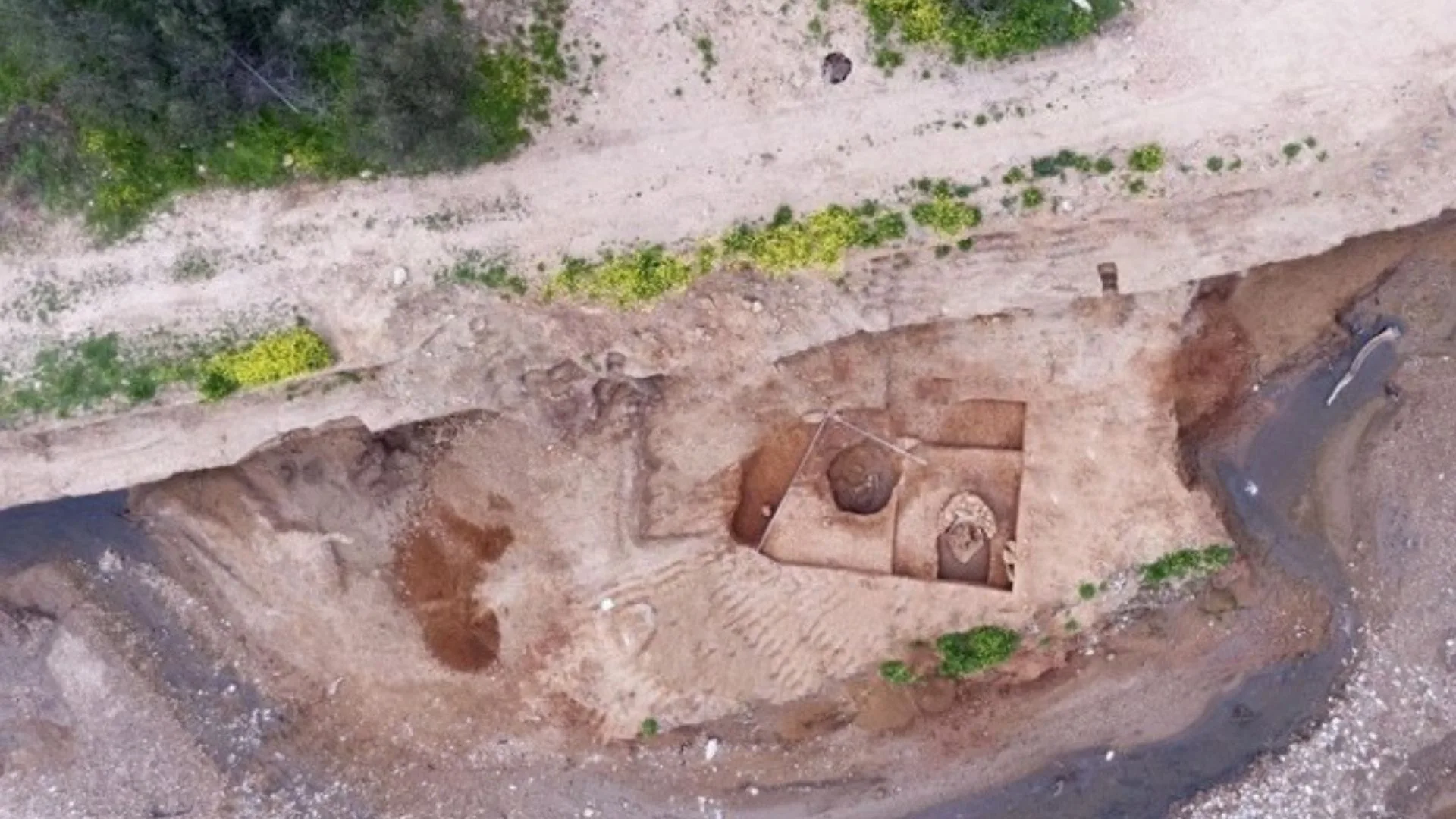
A highly significant Early Bronze Age pithos burial, dating from 3200 to 2000 BC, has been uncovered in Rafina during rescue excavations conducted by the Ephorate of Antiquities of East Attica, amna.gr, has reported. The investigations, underway since 2024, precede works to define the boundaries and stabilise the banks of a local ravine.
According to the Ministry of Culture, the large storage jar was set into a pit cut into the clay soil on the southern bank of the stream. Measuring 1.74 metres in height, the pithos features horizontal handles at its widest point and the distinctive rope-like relief decoration around its neck and handles. Its opening was carefully sealed with a robust semicircular wall of river pebbles, while two large stones with smaller slab stones between them formed a symbolic doorway complete with jambs and a threshold. Inside the vessel, the remains of two individuals were found resting on a bed of sand and pebbles and covered with large stones that filled most of the interior.
Objects accompanying the burial included a bronze tweezer, an oval slab-like stone, obsidian points and ceramic vessels. The careful construction of the grave indicates a high level of respect for the deceased. Although organised cemeteries from the same period are known at Tsepi and Mati in Marathon, Agios Kosmas in Elliniko and Asteria in Glyfada, this isolated burial adds important insight into the range of funerary customs in Attica during the 3rd millennium BC, as well as Cycladic and eastern cultural influences.
Approximately two metres southeast of the pithos, archaeologists also identified a large circular pit showing evidence of prolonged use and burning. In its upper layers, a bucranium and pottery fragments were discovered alongside bronze coins from later historical periods. Near the base of the pit, within a thick burnt deposit, the skeleton of an equid and bones from smaller animals were uncovered. Ongoing archaeological, zooarchaeological and scientific analyses are expected to clarify whether these finds relate to ritual animal sacrifice and to assess the site’s long-standing sacred significance.
Seventy-five years after Dimitrios Theocharis revealed Early Bronze Age settlements near the ancient harbour at Eleftherios Venizelos Square and on the Asketario peninsula, the new discoveries along the stream’s banks provide fresh evidence for understanding the social organisation and funerary beliefs of Rafina’s prehistoric communities.
Source: amna.gr
