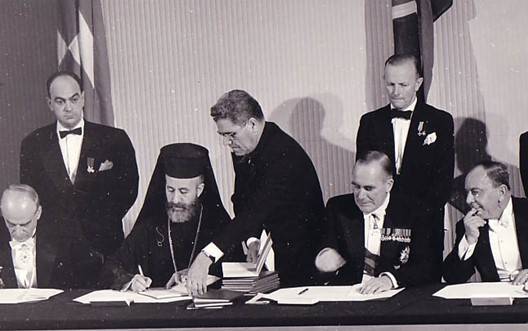
October 1st is of great importance in the history of Cyprus. Ever since 1960, the first day of October marks the anniversary of the island’s freedom from British colonists after the four-year EOKA struggle in 1955-1959.
To mark the occasion of Cyprus Independence Day, we take a look back at the history.
How did Cyprus gain independence?
Cyprus was once under colonial rule and enslaved. It was a colony of Great Britain from 1878 until 1960.
In the early 1950s, some brave inhabitants of Cyprus decided to struggle for the independence of their country from Great Britain. Many wanted to achieve unification, or enosis, with Greece.
As a result, they became involved in a prolonged, and often fierce, battle with the British administration.
The Greek Cypriots fought under the banner of the National Organisation of Cypriot Fighters (Ethniki Organosis Kyprion Agoniston–EOKA), led by Colonel (later General) George Grivas.
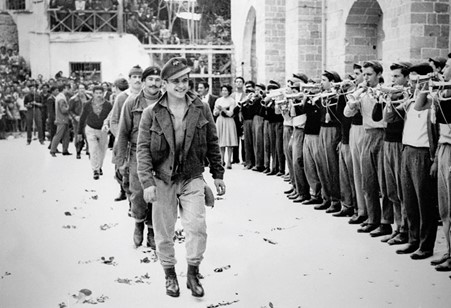
Although EOKA included only a few hundred active guerrillas, it enjoyed wide support in the Greek Cypriot community and was able to tie down about 10,000 British soldiers.
Eventually, after raging guerilla warfare for four long years, Sir Hugh Foot, the British governor, read a British proclamation declaring the independence of Cyprus.
EOKA claimed only partial success as their goal of enosis remained unmet.
For members of the Turkish Cypriot minority in Cyprus, who regarded Turkey as their motherland, enosis would have meant becoming a much smaller minority within the Greek nation. This implanted a bitterness in both ethnic communities and foreshadowed post-independence strife.
Post Independence in Cyprus:
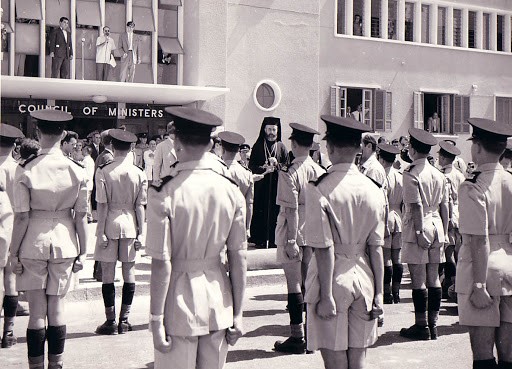
The agreement between Greece, Britain, Turkey, and Cyprus was signed in Zurich and finally came into effect on 1st October 1960 – marking Cyprus Independence Day.
Under the agreement, Britain kept two sovereign military bases in Cyprus, which it continues to maintain to this day.
Soldiers from Greece and Turkey were also to remain present on the island in a bid to keep the peace.
And, under the new constitution, Greek Cypriots would elect a president from their own ethnicity and Turkish islanders would vote for a vice president from among theirs.
Archbishop Makarios III, who was exiled during the guerrilla war, was elected the first head of the new independent state while Fazıl Küçük became his deputy.
How Cypriots celebrate their Independence Day:
On Cyprus Independence Day, festivals and parades are held all across the country, including the display of tanks and advanced armory. Cypriot flags adorn all buildings, streets and towns.
A special Cyprus Independence Day event is also held at the President’s Palace where tribute is given to ancient leaders and people who struggled to gain independence from Britain.
The current President of Cyprus then lays a wreath to the statue of Archbishop Makarios III, the first President of the Republic of Cyprus.
The most luxury and lively Cyprus Independence Day celebrations are held in the capital of the state, Nicosia.
