By Paula Amos.
For those looking for an authentic Greek holiday experience it doesn’t get much better than exploring the southern Peloponnese.
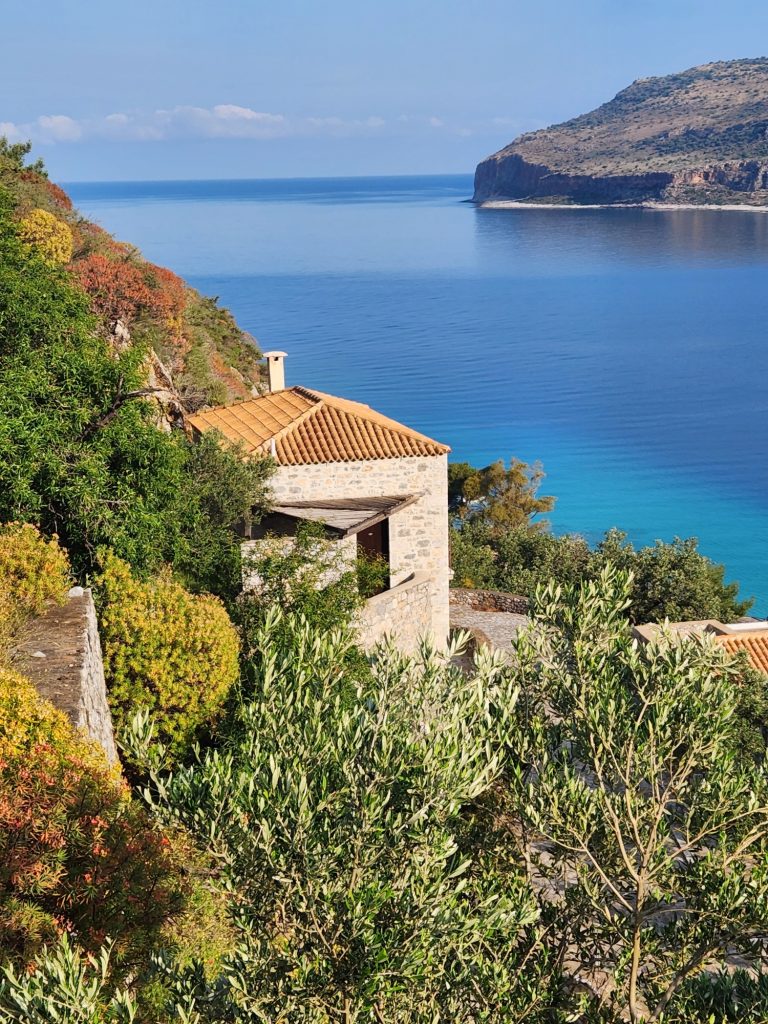
Near the quaint fishing village of Kitries, south of Kalamata, a herd of goats scatter across a steep, rocky track as we pull to a stop in front of our accommodation for the night. The beautiful stone house has a jaw dropping backdrop; silver-green olive trees against an endless sea where a bright orange sun is setting over the Messenian Gulf.
There are many reasons to visit the Mani Peninsula and region of Laconia in the southern Peloponnese. The area has plenty of appeal for the type of traveller wanting to get off the beaten path, away from places frequented by the holiday masses.
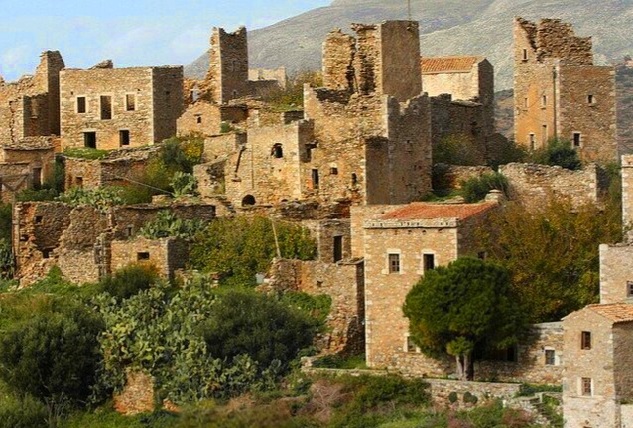
Picturesque villages, secluded beaches, breathtaking views, amazing food and surprisingly good wine – to name a few. Spend some time to unwind, chat to the friendly locals and uncover some knowledge about the area’s rich history visible in its many Byzantine churches, fortifications, and stone houses characteristic of the area. The people of the Mani, the Maniots, claim descent from ancient Spartans, fiercely independent, apparent in the important role they played in the War of Independence.
Heading back along the dirt track in Kitries, we find a little seaside fish taverna. No menu is offered, everything is fresh and locally caught. Another table is occupied by a couple of musicians playing the bouzouki.
We tell them our plans to travel further along the Mani Peninsula to the pretty coastal villages of Kardamyli, Stoupa, Limeni and the areas capital Areopoli, before heading further east in Laconia to Monemvasia. In turn, they tell us about The Diros Caves a spectacular flooded cave complex, you really must see.
So it is one morning, we find ourselves carefully balanced in a punt (narrow boat), the silence of the cave punctuated only by the echo of our guides voice as he rows us through the majestic flooded cave adorned with stalactites and stalagmites.
The cave complex is one of the largest in Europe stretching for around 14 kilometres and reaching depths of 80 meters. Archaeologists have discovered fascinating finds from the Palaeolithic and Neolithic periods, early human habitation, evidence of panthers, lions, spotted hyenas, and a large collection of hippopotamus fossils dating back 32,000 years.
Exploration of the cave continues; experienced cave divers have found stalagmites at depths of 71 meters which formed when the sea surface was much lower than it is today.
The cave is certainly very impressive. Disembarking the boat, it takes a few minutes to adjust my eyes to the bright Greek sunshine.
Beyond The Diros Caves the landscape changes to a stark rocky terrain that has a wild, untamed feel to it. Few tourists venture this far south, and indeed up until recent years some Mani villages were only accessible by sea. However, it’s worth braving the winding roads if for nothing else than to visit the villages of Geroliminas and Vathia, perched high above the sea with its cluster of tower houses like little forts.
Leaving the villages of the Mani behind, on the cusp of The Taygetus Mountains, our first stop in the bustling portside town of Gytheio feels like a return to civilisation. We drive on, on deserted roads through olive and citrus groves, until we reach the medieval fortress town of Monemvasia in Laconia.
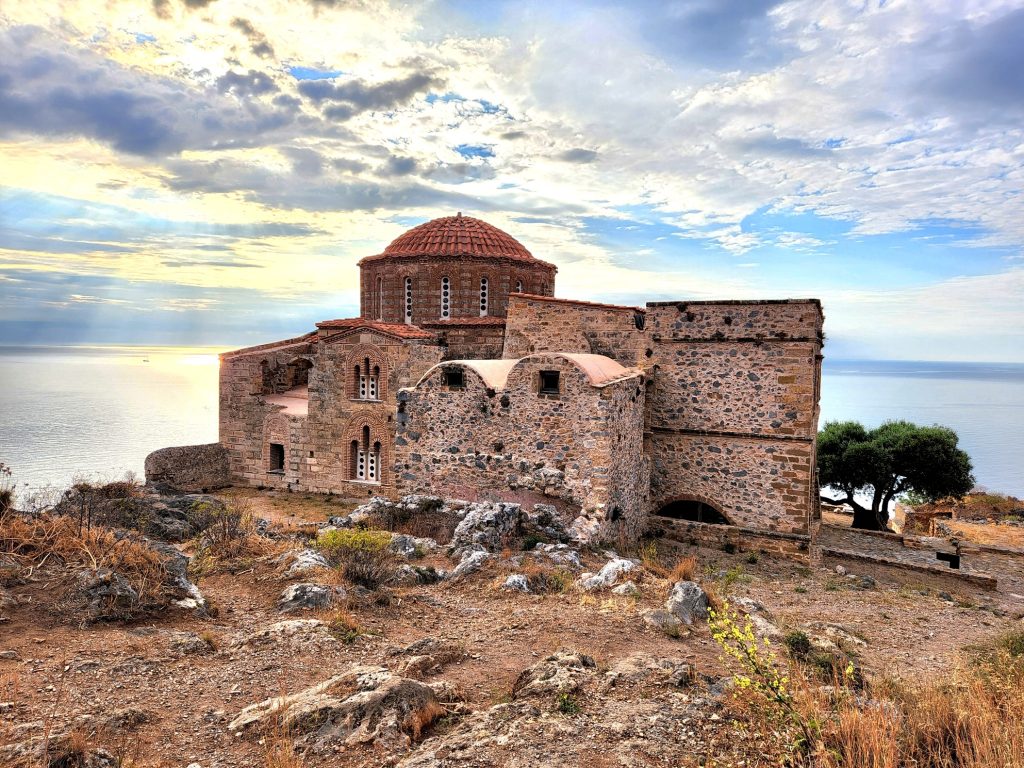
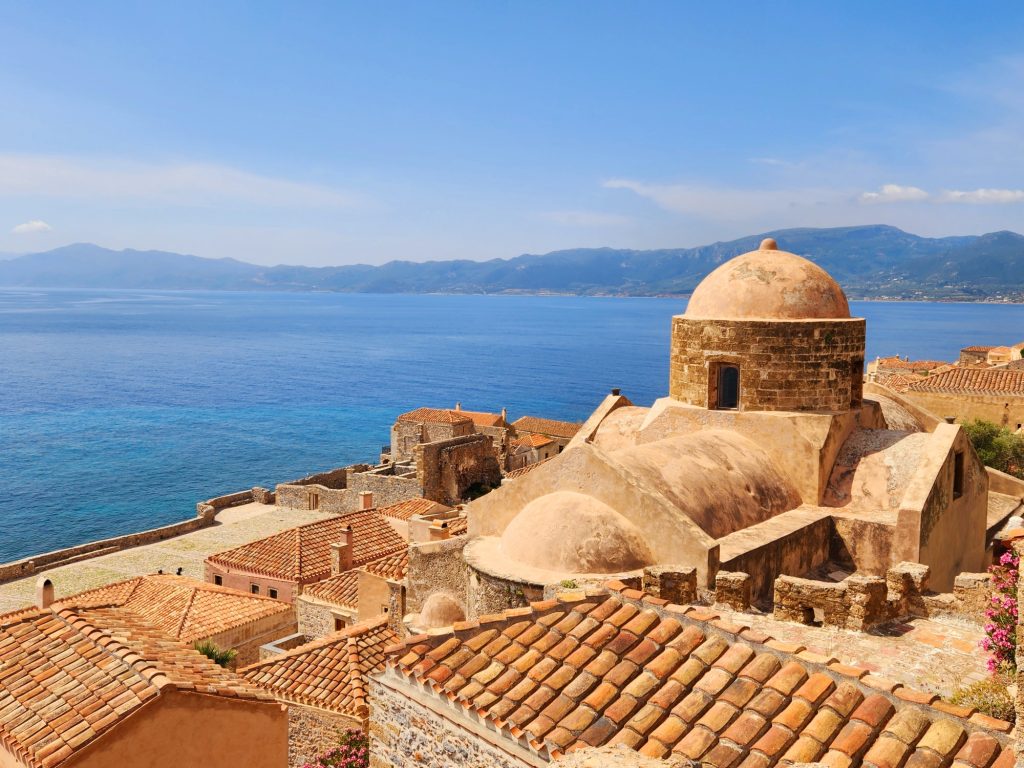
The hidden fortress town, a jewel in the Myrtoan Sea connected to the mainland by a causeway, is a fascinating place stooped in visible history. Nestled on the rockface of the island facing out to sea, it was built this way to avoid enemy attacks.
Entering through the castle walls you are transported into an ancient world, where the streets are a labyrinth of cobbled pathways and tunnels. The well-preserved town of Monemvasia has been continuously inhabited since medieval times and many of its buildings have been restored using the original materials on the site. Some have been converted to boutique hotels, tavernas, or shops which sell unique handmade gifts, olive oil, mead, and the sweet Malvasia wine, an historical product of the area.
There are many beautiful churches but the most impressive is the church of Agia Sofia which sits amongst the ruins of the Upper Town. Architecturally there are only seven of its kind in Greece. It takes about twenty minutes to reach the ruins of the Upper Town along a zigzagging path. The top of the path reveals an ancient Byzantine fortress which dates back to the 6th century, and a breathtaking view over the Mediterranean Sea, and lower town.
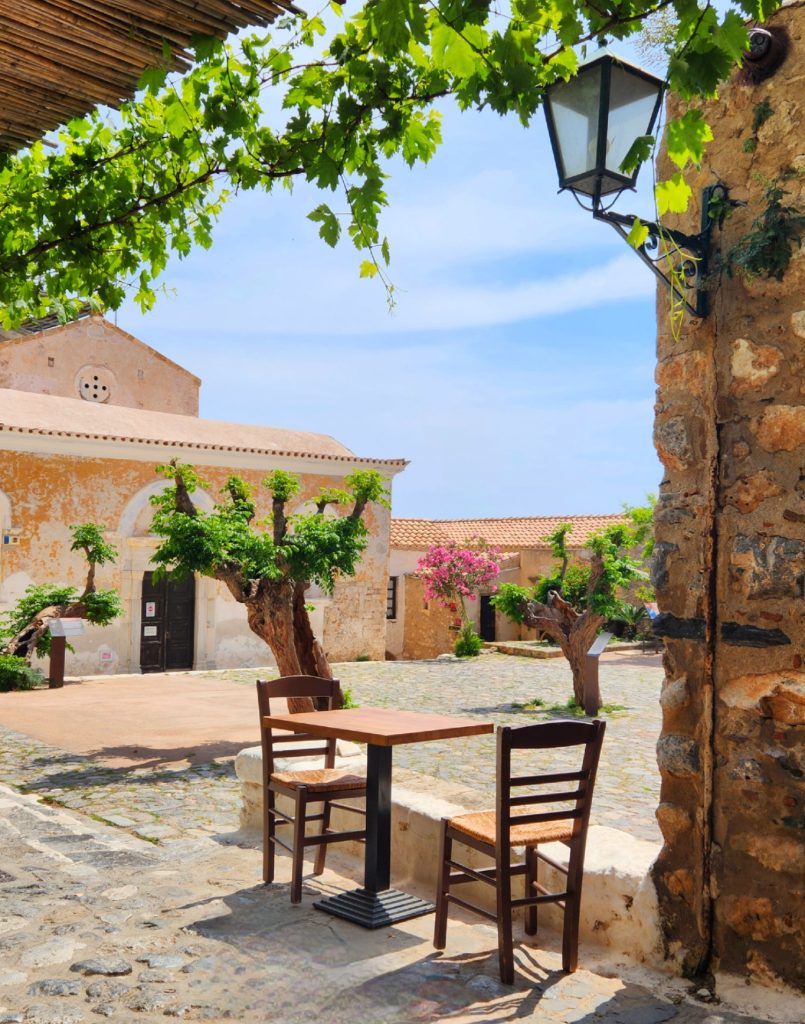
Later, relaxing in a cafe in the central square, admiring the surroundings – pops of greenery and colourful flowers which contrast against the stone and stucco buildings – we reflect on our journey from Kitries to Monemvasia. Exploring this lesser-known side to Greece has been a rewarding experience and one which we will never forget.
