Greece’s Tourism Ministry has prepared a 16-page “safety and hygiene protocol” for hotels to ensure tourists arriving in Greece this summer stay safe and hygienic amid the coronavirus pandemic.
The protocol, which has been based on recommendations from the Greek National Health Organisation, covers all services provided by hotels including the reception area and check-in, restaurants, bars and even swimming pools.
The strict measures have to be implemented at each hotel in Greece, regardless of size and specifications.
Among other things, the protocols focus on:
Reception and check-in:
- Plexiglass should be used in the reception area of a hotel which has the capacity of 60 beds.
- Floor markings at a distance of two metres should also be organised.
- For check-in, portable devices should be used as they can be more easily disinfected after each use.
- People who do not live in the hotel will be barred from entering.

Swimming pools:
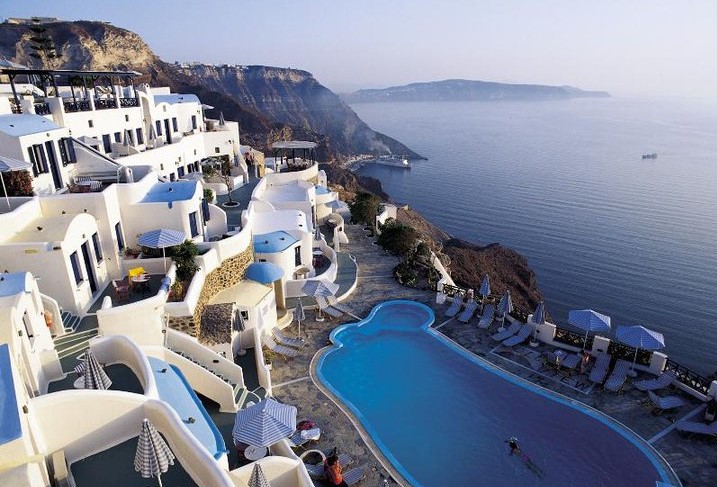
- Layout of seats such as sunbeds, chairs, etc. should be at a distance of 2 meters.
- Sunbeds should be disinfected after each use. They should be covered with a special disposable cloth before placing the towel on top.
- The number of swimmers in outdoor pools will be restricted to one swimmer per 2.5 cubic meters. In indoor pools, the proportion is 2 swimmers per 20 square meters.
Restaurants:
- For the operation of restaurants, the intensive washing of hand towels, tablecloths and all cutlery is proposed. Alternatively, packed cutlery and single-use tablecloths can be used where possible.
- Tables and chairs should be arranged at a distance bigger than 1.5 metres.
- To avoid crowding, the operation hours of restaurants should be extended and customer attendance should be rotated.
- Room service should be encouraged at no extra charge.
- No buffets.

Cleaning Service:
- No frequent cleaning of the room to avoid contact of the cleaning personnel with people potentially infected with COVID-19.
- Abolition of daily change of bed sheets and towels.
- A single-use cover should be installed on remote controls for the TV and air conditioner.
- The management of the hotel must use a sign indicating when and how each room was cleaned.
- Antiseptic should also be placed in each room.
These measures are expected to be put in place before all-year hotels open on June 1.
READ MORE: Up to 65 percent of Greek hotels face bankruptcy, new report warns.
