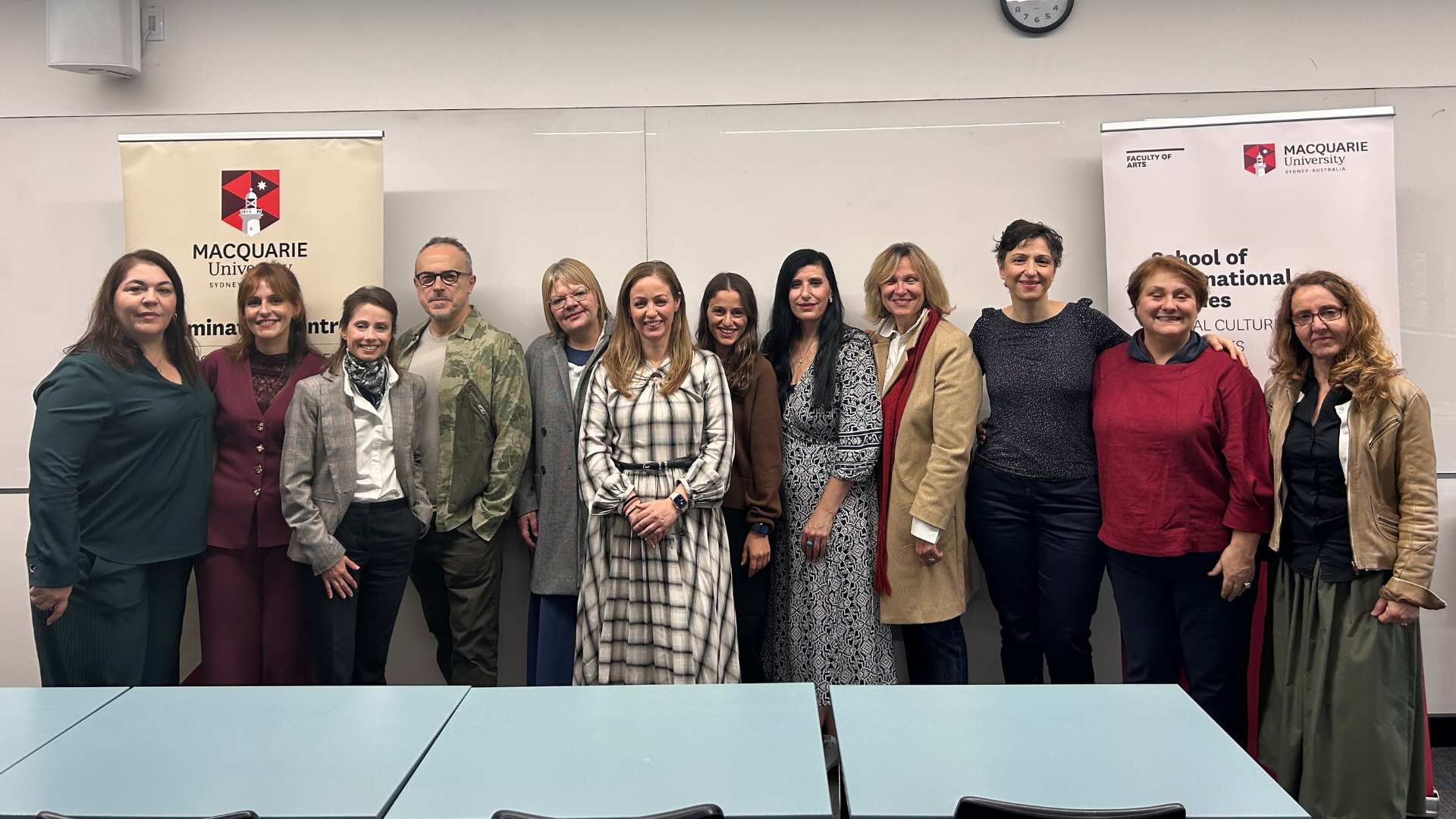
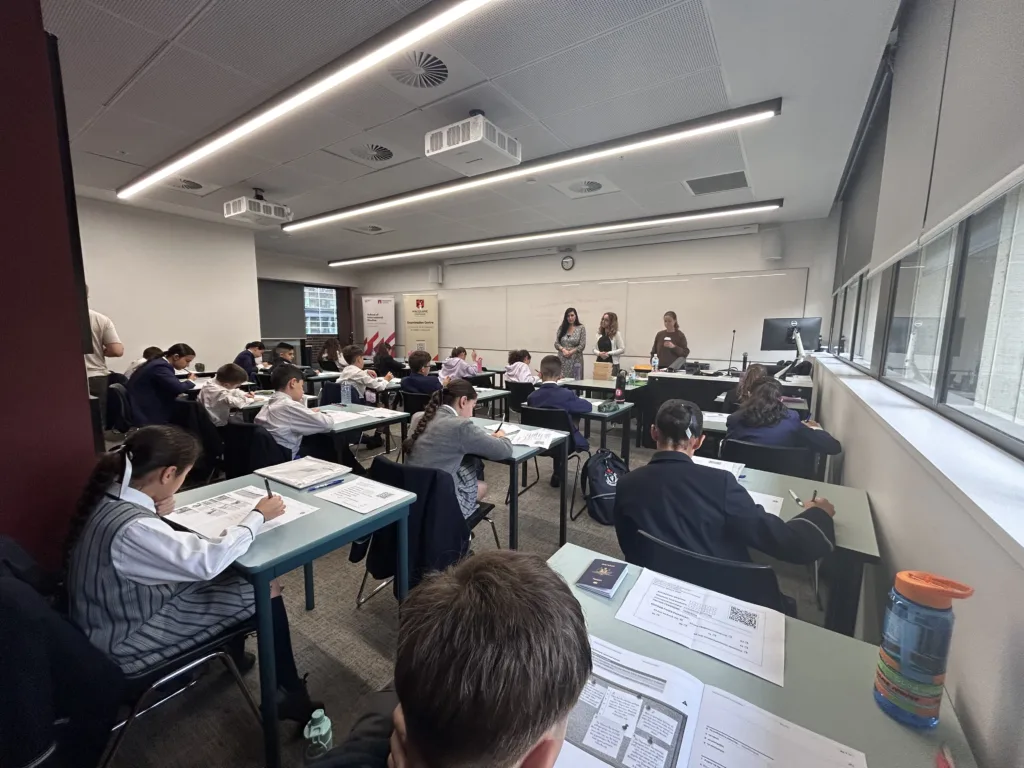
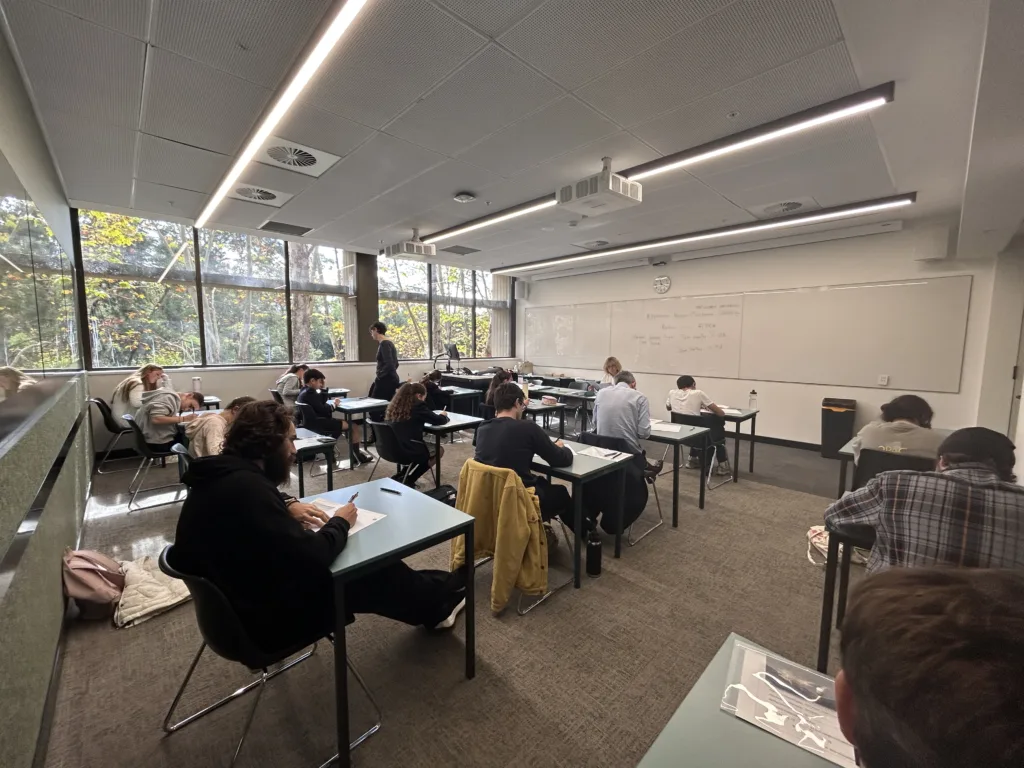
More than 90 candidates from NSW and the ACT sat for the Certificate of Attainment in Greek Language exams, held at Macquarie University on 19-21 May.
The School of International Studies is the largest examination centre in the Southern Hemisphere and serves as the only certified Examination Centre for the Greek language certificate in NSW by the Centre for Greek Language (CGL) in Thessaloniki since 2022.
The Certificate of Attainment in Greek is the only official state certification by the Greek Ministry for Education, Religious Affairs and Sports confirming the knowledge of Greek as a foreign/second language at six levels, corresponding to the Common European Framework (CEFR) levels. It is recognised by all member states of the European Union, and by NESA (New South Wales Education Standards Authority).
Dr Patricia Koromvokis, Senior Lecturer in Global Cultures and Languages in the School of International Studies at Macquarie University and Head of the Examination Centre stated: “For the fifth consecutive year, Macquarie University has been the largest examination centre for the Certificate of Attainment in Greek in Australia; a milestone made possible by our strong partnerships with the Centre for the Greek Language in Thessaloniki, the Consulate General in Sydney, the Education Office in Melbourne, and Greek language schools across NSW.”
“I’m especially grateful to the Greek Australian Society for funding the centre, and to the Macquarie University Greek Association for their continued support. My heartfelt thanks go to the Greek language educators who served as invigilators and examiners; their commitment is vital to sustaining Greek education across the diaspora. Finally, to every candidate who dedicated months of preparation; your effort is commendable regardless of the outcome. We wish you all the very best as you await your results,” Dr Koromvokis added.
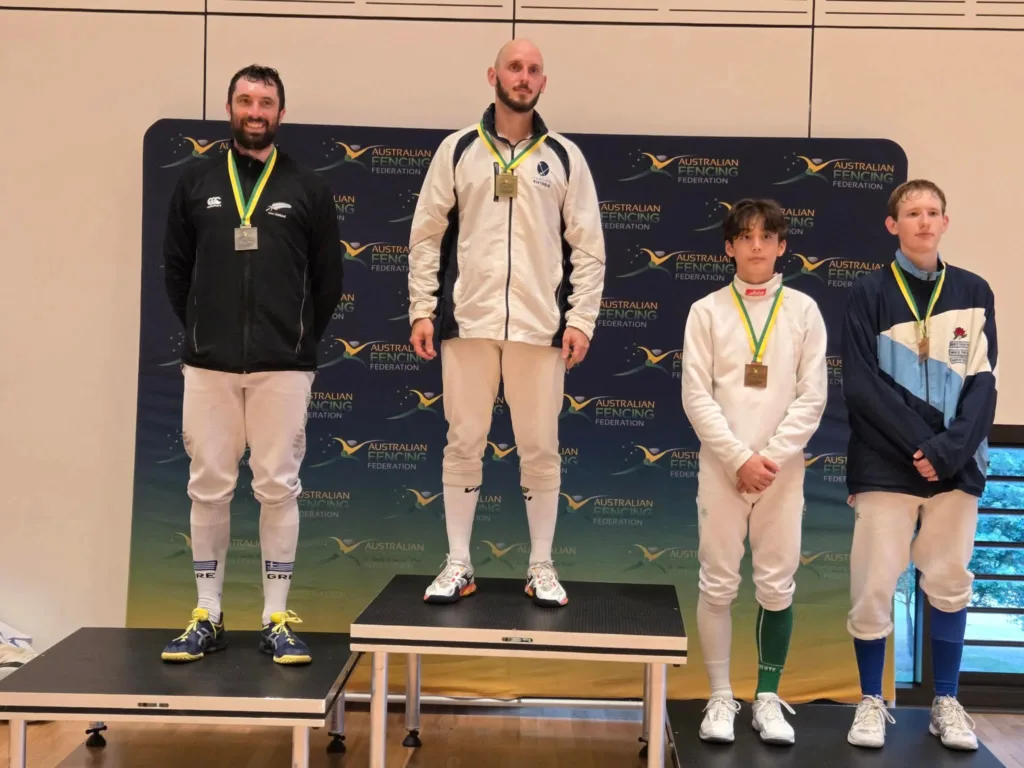
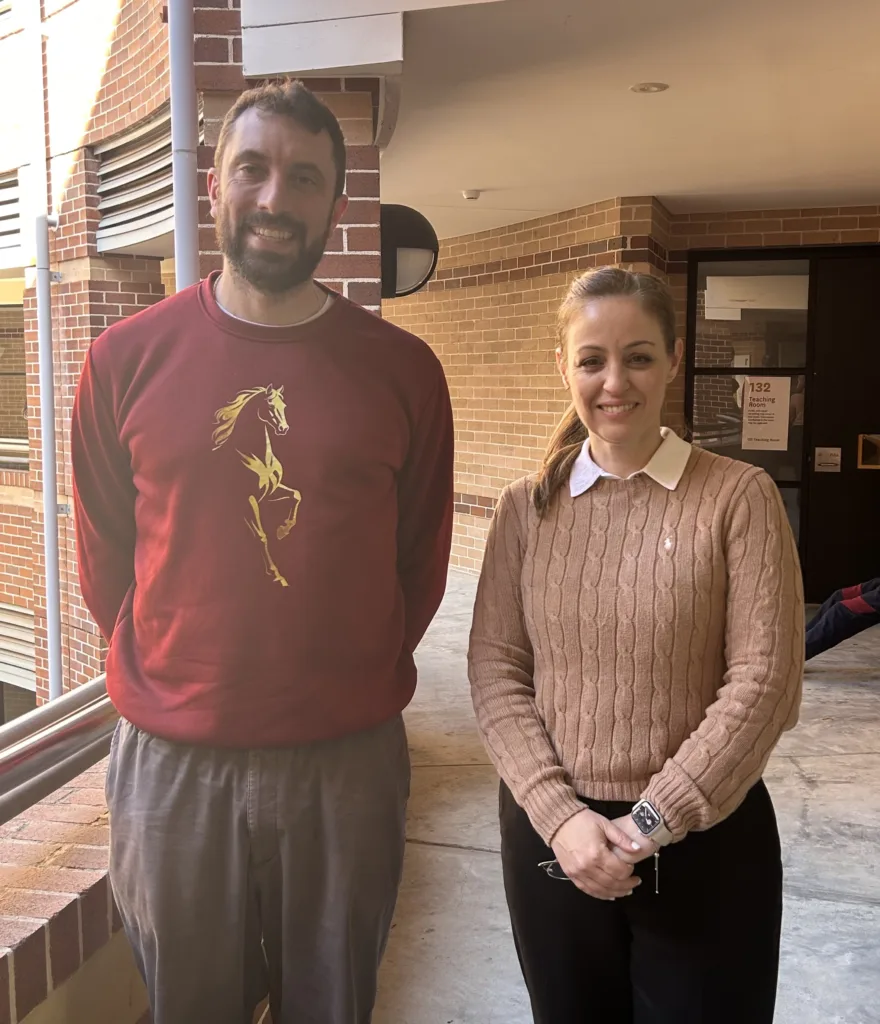
Dr Koromvokis shared that this year’s candidates came with some truly amazing Greek language stories. One of them was Dr Matt Baker, Associate Dean, International Partnerships and Scientia Associate Professor in the School of Biotechnology and Biomolecular Sciences at UNSW, who sat the B1 exam.
A keen fencer for many years, Dr Baker came second at the recent Australian National Fencing Tournament held in Sydney. Despite his demanding schedule, he committed himself to preparing for and sitting the B1 exam.
Here is an interview with Dr Baker:
What inspired you to learn Greek and take the exams for the Greek Language Certificate?
I was inspired to learn Greek mainly because of my children. My wife is Greek, raised and educated in Greece, and after we moved back to my home in Australia, from Oxford, in 2013, we had our first child in 2016 and our second in 2020. Around that time, I realised I really needed to get serious about learning Greek, otherwise my kids would struggle to maintain the language. It was easier to speak Greek socially when we lived in the UK, because the Greek community there is very connected to Greece and people naturally speak Greek together.
I am not Greek at all, so I had no Greek language history or experience, but I could speak a bit of Spanish. At first, I didn’t want to learn Greek because I thought it would push the Spanish out of my head! In Australia, I was speaking almost no Greek day-to-day.
During COVID, after the birth of our second child, I started Zoom lessons with a teacher in Greece and slowly worked through B1 and some B2 material. The exams became important because they gave me a concrete goal. It even started as a joke with my father-in-law. I wanted to earn a Greek language diploma to hang on the wall next to his daughter’s engineering degrees. But having that target gave real structure and accountability to the learning process.
What did you find most challenging and most rewarding during your preparation for the exam?
The most challenging part of the exam preparation was definitely listening comprehension. I actually enjoy the grammar exercises, dialogues and vocabulary challenges, but listening is hard for me because you only hear the audio twice and you have to absorb so much information quickly. Even in English, I tune out and realise I haven’t been paying any attention to the audio for 10-15 seconds.
Writing was also unexpectedly difficult at first because I barely write by hand in English anymore, let alone in Greek. My son even joked that I needed to work on my τόνους (accents) and he was absolutely right. I am a really prolific messenger on WhatsApp, and there autocomplete fixes my accents and so I can appear more competent than I am.
Preparing for the exam was rewarding because it made me appreciate how much Greek I had actually learned. I also think B1 is a reasonable level, I could approximately operate professionally in Greece.
I love speaking Greek, and honestly one of the main things I enjoy about Greece is the opportunity to use the language. Some of my favourite experiences were in Παγκρατι in Athens, where many parents at my children’s school (we lived there briefly in 2024) were Albanian or Bulgarian migrants who had also learned Greek as a second language. Greek became our shared language, and they were often much more tolerant of my mistakes. Those everyday conversations meant a lot to me. Ι needed to make friends with locals and actually people did want to understand about my life in Australia.
How will you use the Greek language in the future?
Professionally, I’ve used Greek academically. I’ve given a conference presentation in Greek, but that took an enormous amount of preparation. It was personally very important because it showed me that I could operate professionally in the language, it just took a lot of work. My area of research is in microbiology, and it is challenging to speak about that in Greek, it requires adapting words from English to new settings in Greek, as the typical day-to-day language in scientific presentations is English so many technical words don’t automatically have Greek equivalents. In the future, I would love to continue building toward teaching or collaborating academically in Greek as well. I wrote to my collaborators in Greece to tell them I was doing my B1 and I did so in Greek to try and set the scene that I could work with them now in Greek.
What would you say to someone who is thinking of starting to learn Greek?
For anyone thinking about learning Greek, I think just go for it. One of my regrets is I didn’t start earlier – particularly to be able to speak with my wife’s grandparents while they were alive. Talking with elderly people in Greek, perhaps especially people who only speak Greek, is very rewarding as they are patient, happy to talk to you and usually have great stories.
I also strongly recommend committing to a formal exam, even if it’s one or two years away. Having a concrete goal creates purpose and accountability when you tell others you are going to do it. I am very grateful to the team at Macquarie University for running these exams. In Greece, everyone seemed to think it was easy to do the exam, but it’s not really, it’s only a few days a year and it’s hard to even register to do it there. I would not have done it if it wasn’t being run at Macquarie.
My final advice is that Greek vocabulary can be genuinely difficult because many everyday words are completely different from their English equivalents, so there is a lot of memory work involved. Greeks love to tell you how many words in English come from Greek, but the inverse fact, that by far the large majority of words in Greek are nothing at all like their English counterparts, is less often emphasised!
For more information visit this website.
