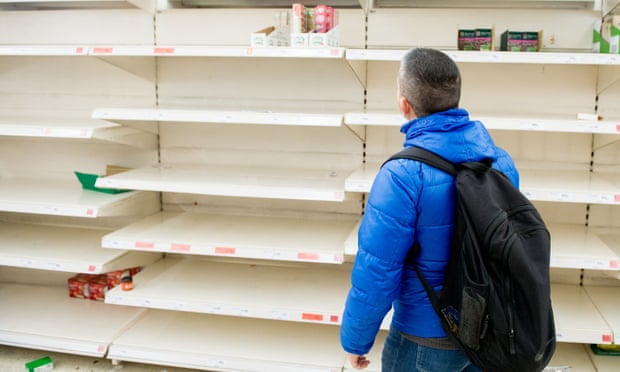
Australia’s Prime Minister, Scott Morrison, has called panic buying ‘ridiculous’ and ‘un-Australian.’ Prime Minister of Greece Kyriakos Mitsotakis agreed, saying ‘panic is just as dangerous as the disease.’
And yet panic buying continued to sweep parts of Greece and Australia over the weekend, with many shoppers descending on stores to empty the shelves of pasta, rice, meat, toilet paper, soap and other essential items.
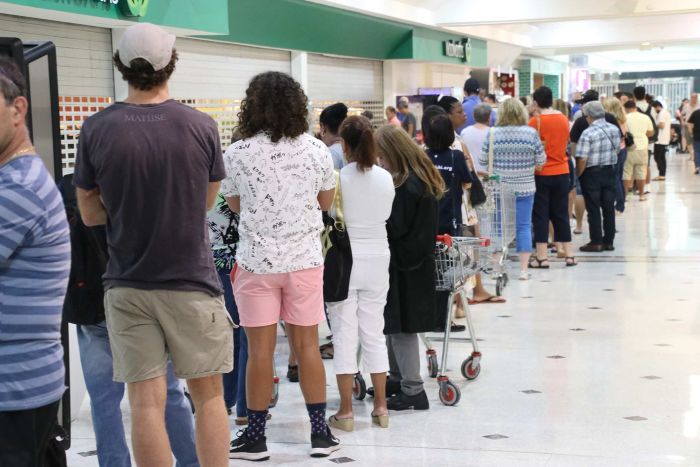
Why is this still happening?
Psychologists and behaviour scientists have finally weighed in on the issue, calling panic buying a ‘human and natural response to a stressful situation.’
In fact, Dr Dimitrios Tsivrikos, an established academic and practitioner in business and consumer psychology at the University College London, said that when people feel uncertain, they tend to focus on things which bring them certainty.
“With natural disasters you usually know it is going to happen and that it will last a couple of days, so you can prepare by being somewhat rational with what you buy,” Dr Tsivrikos said in an interview with Sky News.
“But with a public health issue such as the coronavirus pandemic, we usually have no idea about the time or intensity. And then we get messages on a daily basis that we should go into panic mode, which then forces us to buy into more than we need to. It’s our only tool of control.”
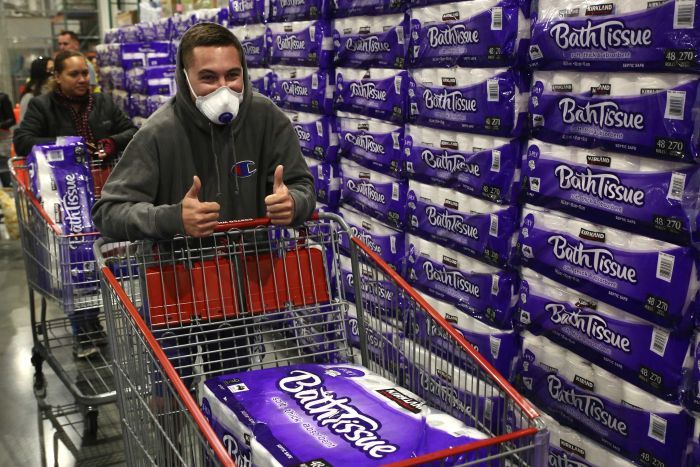
Dr Tsivrikos also addressed the issue of toilet paper hoarding. He said that because toilet paper has a longer shelf-life than many other food items, and features prominently in shopping aisles, people are psychologically drawn to it.
“The bigger they look on the shelves, the more important we think they are,” he said.
“Most of us don’t have the ability to make new vaccines or enact new policies. But the one action that we can control, that feels like we are doing something, is to stock up on supplies.”
But what can be done to stop these actions?
Australian supermarkets such as Coles, Woolworths and Aldi, are all implementing limits of two items from any single category on most packaged products. This includes things such as mince, pasta, flour, rice, paper towels, toilet paper and hand sanitisers.
But it might be time to take inspiration from Danish supermarket, Rotunden, instead. They used a clever pricing trick to stop local shoppers from panic buying and hoarding.
In a post which went viral on Twitter, the supermarket was seen to be selling one bottle of hand sanitiser for $4.09 AUD, while two bottles would cost the shopper $95 AUD.
In a statement defending their decision, the supermarket wrote: “We have a great responsibility to keep the business running, and we can only do that with everyone’s help and understanding.”
The decision has worked a treat, with customers praising Rotunden for giving people less of an incentive to hoard by making multiple purchases more expensive rather than cheaper.
Here’s hoping the technique can be implemented in Australia and Greece soon.
