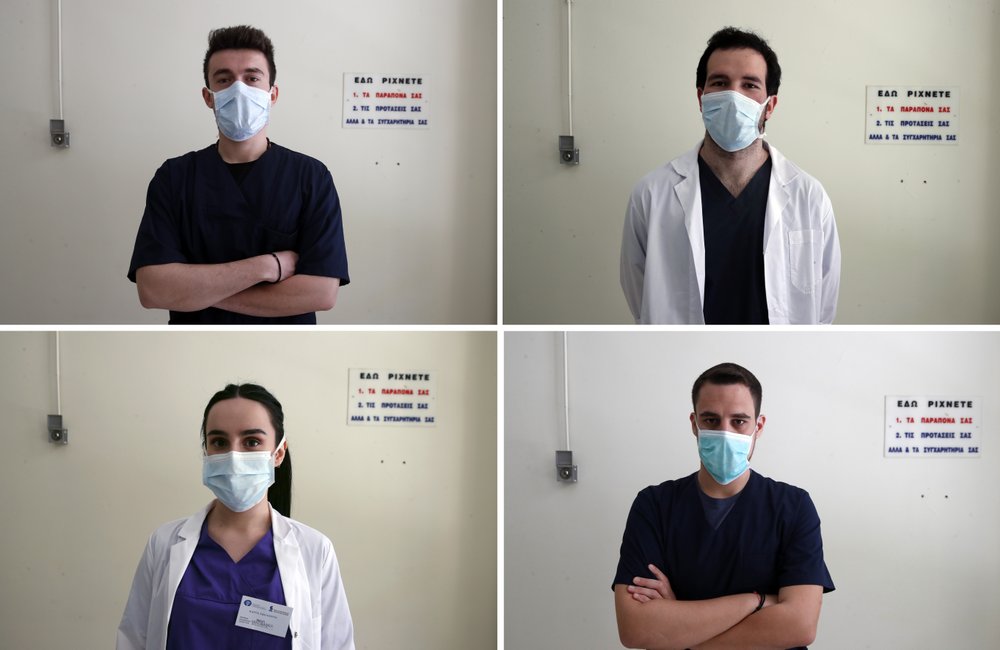
More than a century ago, the Sotiria hospital in Athens was built as a public sanatorium for patients with a feared infectious disease that spread through coughing and killed indiscriminately — tuberculosis.
Now Greece’s main hospital for COVID-19 patients, it’s also the focus of a hands-on training program for dozens of medical students who volunteered to relieve hard-pressed doctors from simpler duties while gaining a close peek at the front lines as medical history is being made.
When the Sotiria — which means “salvation” in Greek — was designated to lead the country’s coronavirus response in March, medical staff quickly found themselves too busy to properly carry out ordinary duties at a major Athens hospital that treats all kinds of patients. That’s when two doctors and professors of medicine at Athens University thought of seeking help from volunteers.
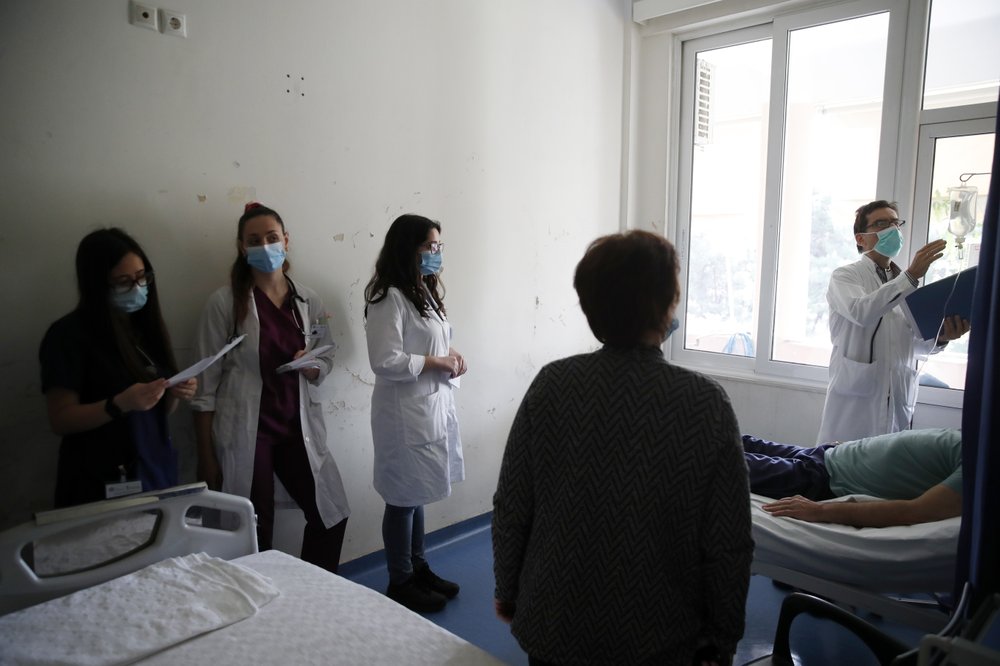
In this photo taken on Thursday, May 7, 2020, internal medicine Charalambos Birbilis, right, examines a patient as medical students Afroditi Gerodimontaki, center, Michaella Alexandrou, left, and Dimitra Siakalli look on at the Pathological Clinic of Sotiria Hospital in Athens. (AP Photo/Thanassis Stavrakis) 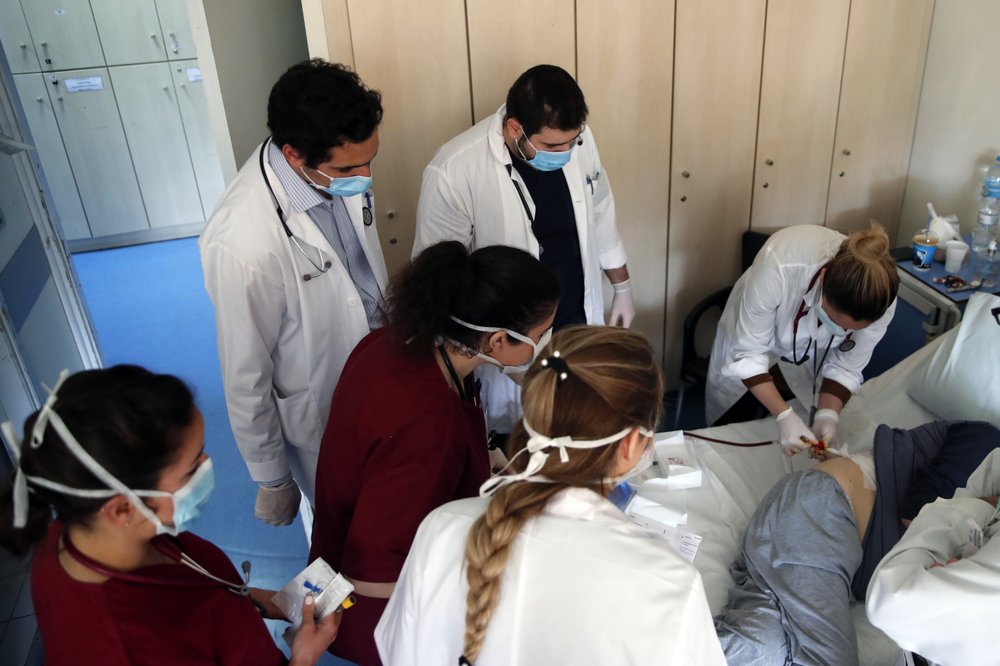
In this photo taken on Wednesday, May 6, 2020, medical students watch internal medicine Katerina Bakiri, right, as she operates a minimally invasive procedure on a patient at the Pathological Clinic of Sotiria Hospital in Athens. (AP Photo/Thanassis Stavrakis)
The program was initially designed for graduates in medicine, but so many students, mostly in their final year, asked to join that it ended up running with them — 56 young men and women from Greek and Slovakian medical schools.
“They underwent rigorous training, and were assigned specific duties and peripheral jobs,” said Garyfallia Poulakou, an assistant professor and contagious disease expert who organised the two-month program together with Kostas Syrigos, a professor of medicine and medical oncology.
“Under no circumstances were they to enter the so-called Red Zone with the COVID-19 patients,” she said. “They proved to be fearless, and the experience for me was very, very positive.”
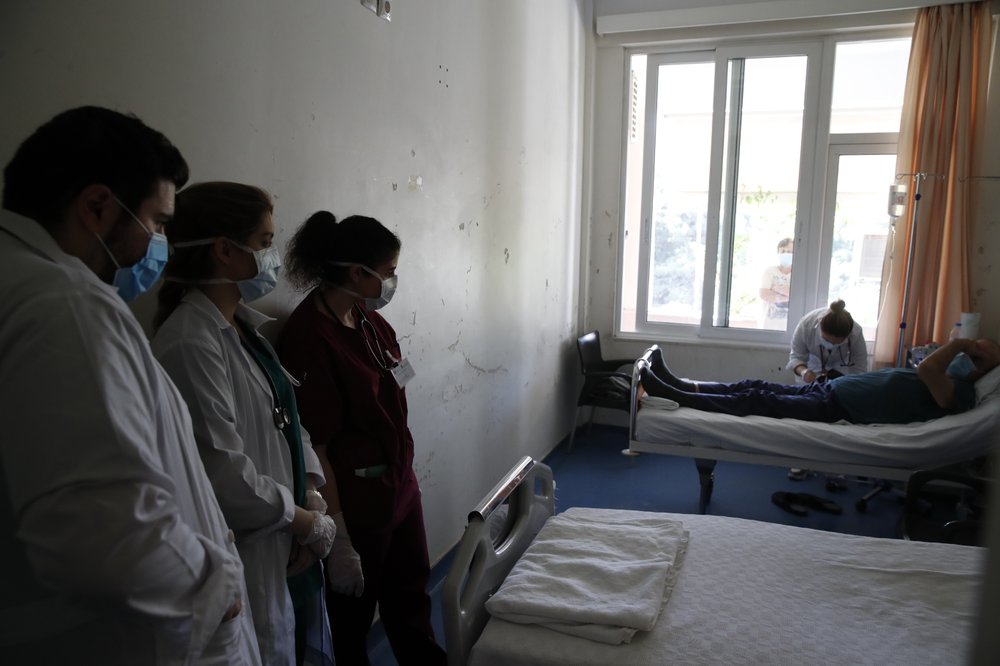
In this photo taken on Wednesday, May 6, 2020, Katerina Bakiri examines a patient as medical students Nikolaos Syrigos, left, Eleni Fyta, center, and Adamantia Papamichail look on at the Pathological Clinic of Sotiria Hospital in Athens. (AP Photo/Thanassis Stavrakis) 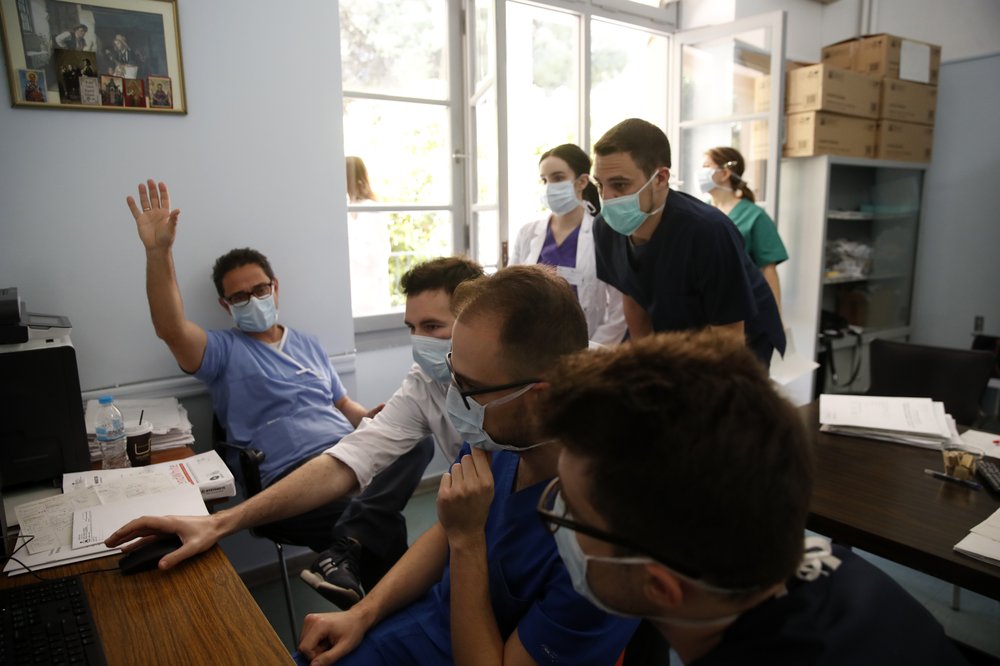
In this photo taken on Friday, May 8, 2020, ICU consultant Marios Karvouniaris, left, and internal medicine Agamemnon Bakakos, center, show medical students a CT of a patient at the COVID-19 Clinic of Sotiria Hospital in Athens. (AP Photo/Thanassis Stavrakis)
The students carry out mundane but necessary jobs at the hospital’s pathological clinic, such as attending minor operations, taking blood samples and handling paperwork. In the COVID-19 section, their duties included taking delivery of blood samples in the safe zone and talking to relatives who were not allowed in to see the patients.
Anna Karagiannakou, 21, a third-year student at Safarik University in Kosice, Slovakia, said she has gained vital insights into what being a doctor fully entails.
“Although I wasn’t allowed to help treat coronavirus patients, I saw this as an opportunity to provide assistance with other tasks and gain experience at a historic moment in crisis conditions, the like of which I may never encounter again,” she said.
Sourced By: Associated Press
