Home Blog Page 99

Ptolemaic Egypt from Alexander to Cleopatra

By Billy Cotsis

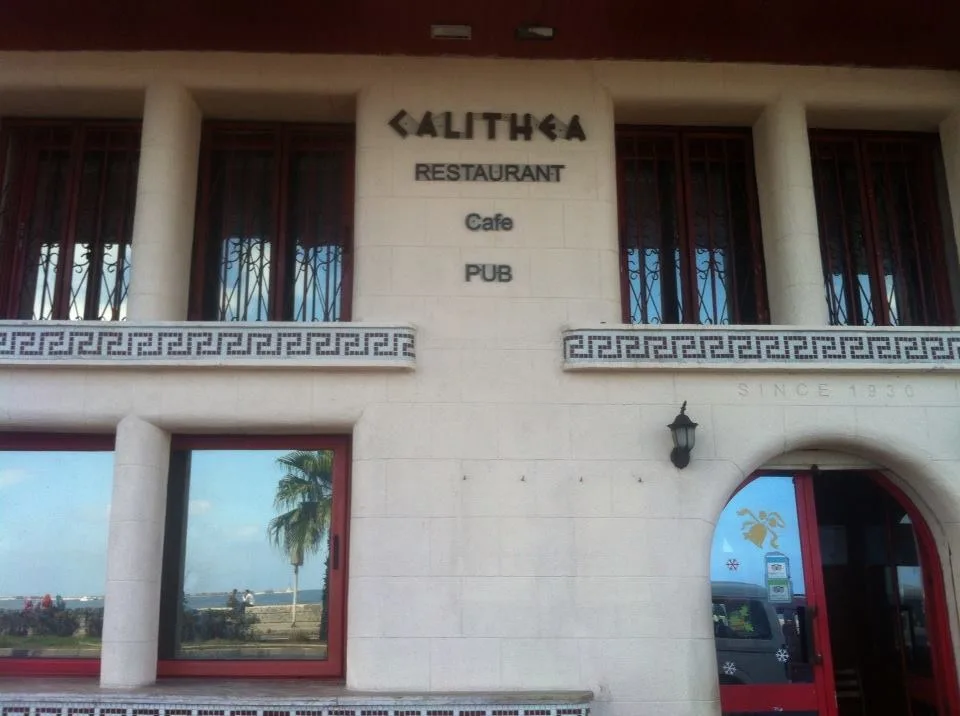
As I sat by the 1920s style Greek owned cafe opposite the harbour, I reflected on two simple questions I asked locals.

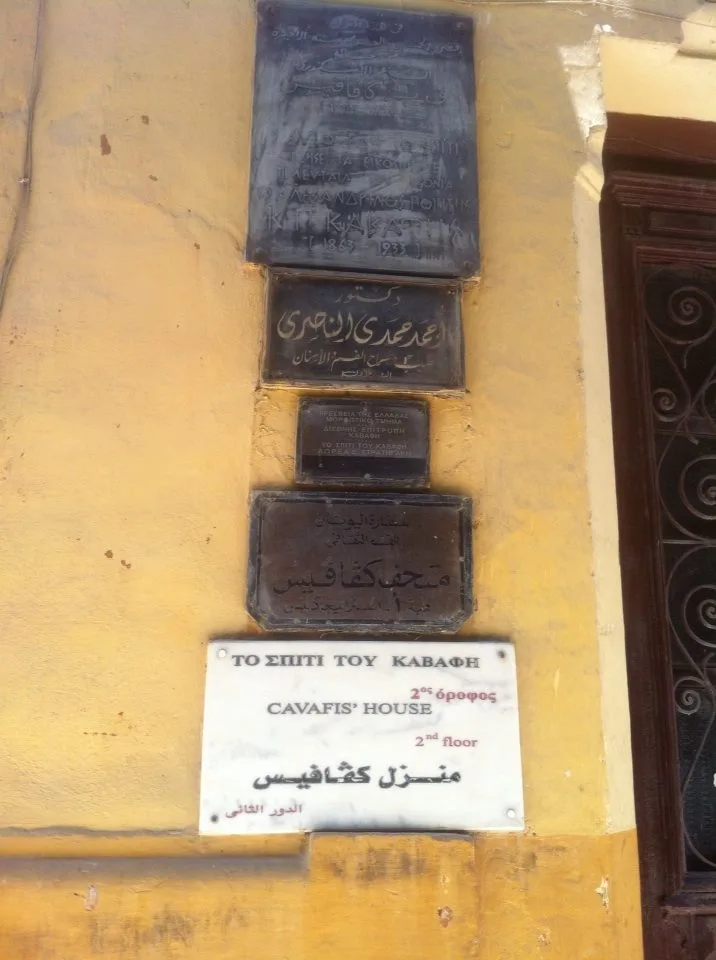
The first was in relation to a great poet. “Do you know where I can find the House of Cavafy?” I asked an Egyptian, who replied, “you mean the Greek poet?” 

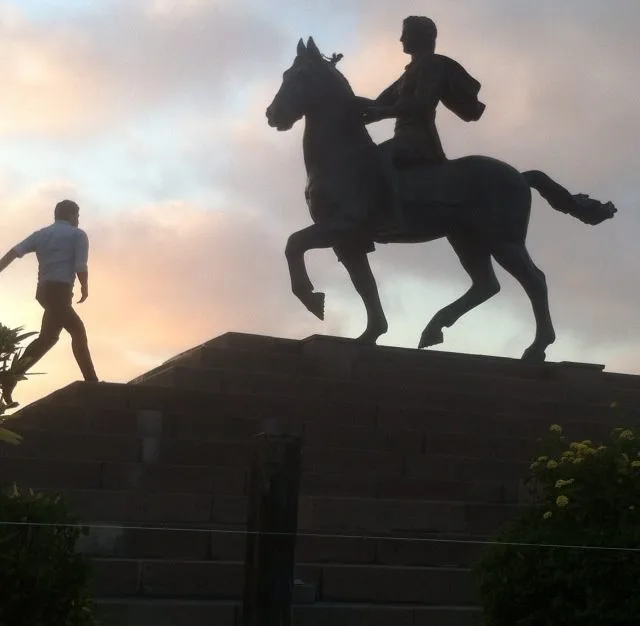
The second, “do you know where I can find the Greek Community Club?”, I asked another Egyptian. “Ah you are a Greek man, you will see the Alexander the Great Statue on the main road, he is Greek too.”

It was a fair indication that the people of Alexandria are comfortable with recognising the Greek past.
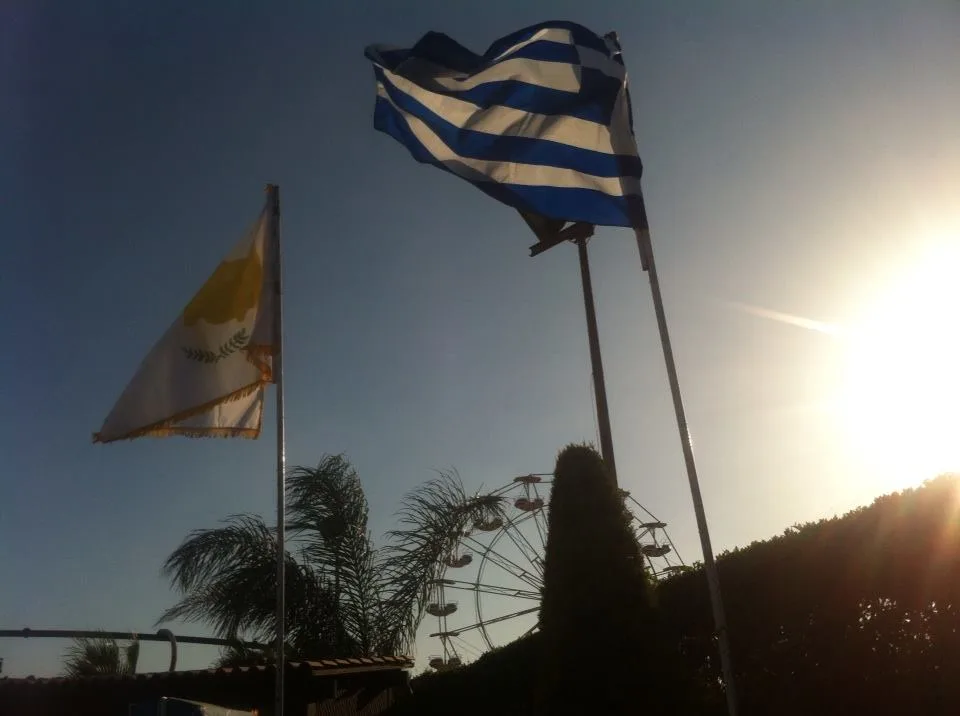
Hellenic flags fly at the Greek Community in Alexandria
Hellenic flags fly at the Greek Community in Alexandria.

In the 1950s and 1960s, the once vibrant Greek community of Alexandria was emptied out. Driven out due to the nationalism under President Nasser. Numbers vary but it is likely that there were close to 400,000. I have bumped into people who were either born there or have parents from the city of Alexander. In London, Athens, Cyprus, Sydney, Melbourne, New York.

I was in Alexandria and was able to meet the remainder of the Greek Community, those who chose to stay. I was told that there are over 4,000 people of Greek origin in Alexandria and perhaps 10,000 in Egypt all up.

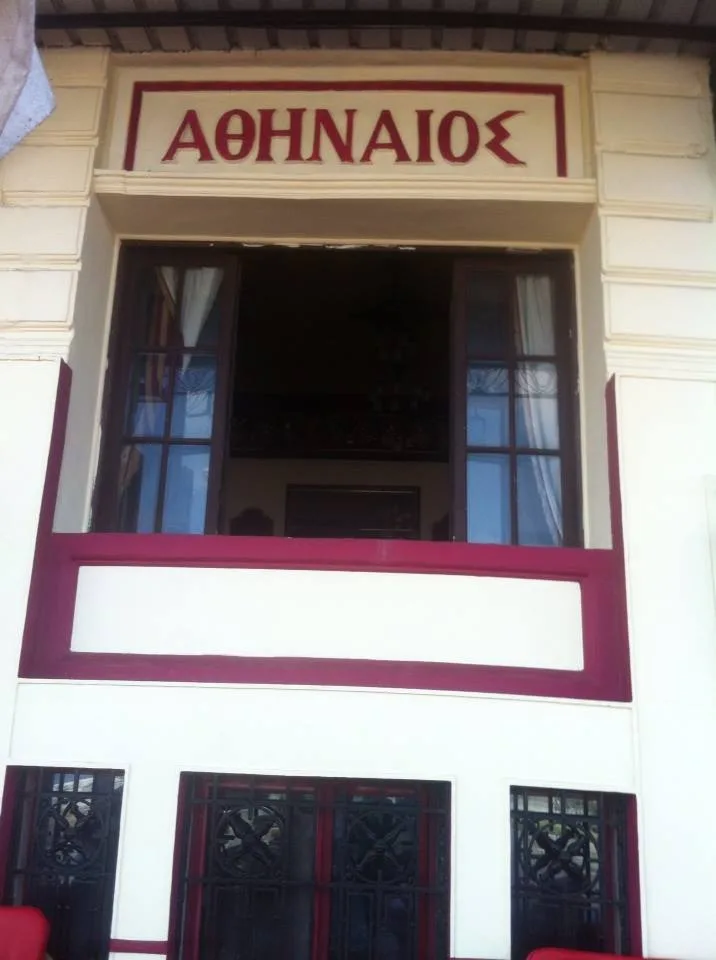
Every day I would play a game of spot the Greek shop, hoping to meet Greek speakers. Excitedly, I would enter an establishment such as Atheneos and ask if the owner was there. Sadly, just about all of them were no longer owned by Greek people. What was interesting is that out of respect to the previous Greek ownership, they keep the name of the business.
Possibly the most famous citizen was Cleopatra, the last Hellenic queen of Egypt. How can this be true, I hear you ask?

When Alexander the Great conquered Egypt in 334, he established an amazing new city called Alexandria. When Alexander died in 323BC, one of his favourite generals Ptolemy took control of Egypt and the surrounding lands, establishing the Ptolemaic kingdom. The Hellenic city of Alexandria was the capital, a city that was rivalled only by Babylon, Athens, Rome and Constantinople.

This Kingdom was unique. Royalty only spoke Greek and intermarried (we now call that incest) to protect the bloodline. Conversely, they also called themselves successors to the Pharaohs. A smart policy that Alexander had created as he sought to blend Greek with local cultures.

Ptolemy adopted many local customs to keep the local population on side. His successors never learnt the local language. Cleopatra was the first to speak a language other than Greek or Latin! Actually, if you were a Greek living in Egypt, you were subject only to Hellenic law.

The Ptolemaic Kingdom ended in 30 BC when Cleopatra, having chosen to side with Marc Antony, was defeated by Rome. She was only 39 years old.

Cleopatra is one of the most famous women of all time, perhaps the most famous. Pity though that the Ptolemaic Kingdom is not as well known.

At its peak, the Kingdom included Libya, Cyprus, Egypt and part of the Middle East. They also encouraged the migration of tens of thousands of Greek speakers who formed the elite ruling class.
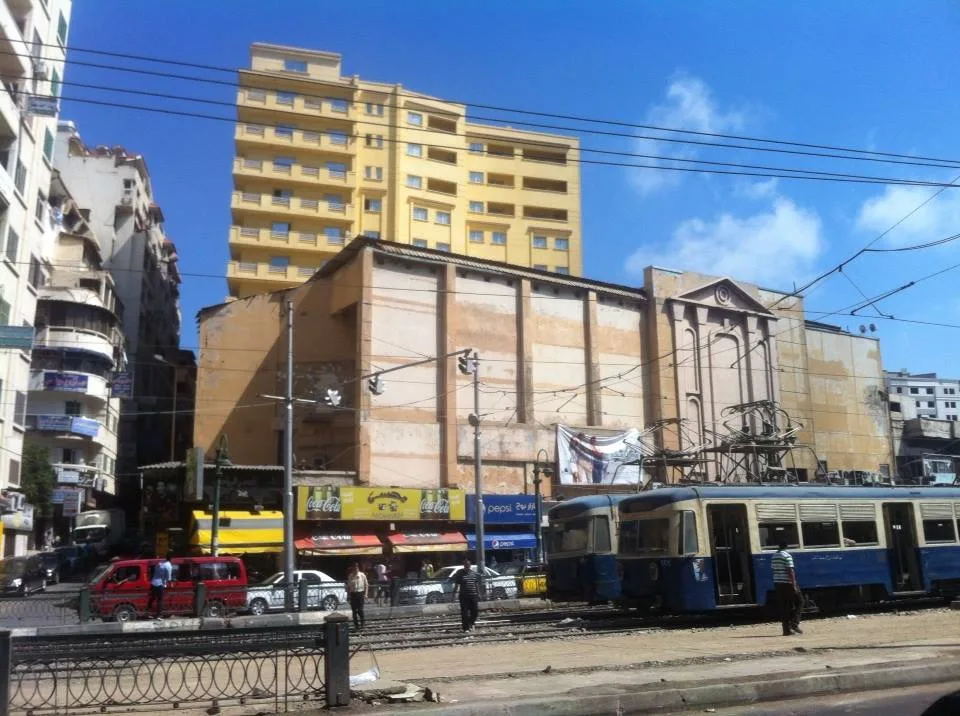
Alexandria
Alexandria.

Prior to the arrival of the all conquering Alexandros, a city called Naucratis existed. The proximity of Egypt to Greece ensured there was a continuous presence of commercial traders, with archaeological evidence suggesting this extends as far back as Minoan times. The small settlement of circa 570 is not too far inland from where Alexandria was built, on the Nile. Naucratis was built for Greek merchants, becoming one of the most important ancient Hellenic cities in Africa, the first permanent Greek city in Egypt.

However, Herodotus tells of a story whereby shipwrecked Greek renegades land in Egypt. The ousted Pharaoh Psammetichus had been foretold of their arrival via an Oracle and employed the men to regain power. As a reward they may have been given land on the Nile, which could be the ancient city of Daphnae, creating their own colony.

Ptolemy, like the other Diadochi generals in the Hellenistic Era, initially claimed to rule on behalf of the Macedon (Alexander) dynasty. Within a year, the wars of the Diadochi were taking place and he defended Egypt from an invasion by Perdiccas. Thereafter he consolidated territory in Egypt and its surrounds; this included Palestine/Judea, Cyprus and a foray into Greece. Confident that he was the master of the region by 305, he declared himself King of Ptolemaic Egypt and taking the title of Saviour, “Soter.” Whilst he may have been master, he lost Cyprus and earned the wrath of the Seleucids of Syria for extending his empire into Asia.

In 295 he recaptured Cyprus. A number of other Greek cities were created and Greek education flourished. Ptolemy retired in 285, succeeded by his Queen Berenice and their son Ptolemy II. Most of their successors would be called Ptolemy. Just like the Greek Seleucids in Asia, they didn’t seem to deviate much in the name department.

The second Ptolemy was known as Philadelphus. Whilst being known as one who was highly educated and cultured, he conquered many Aegean islands and parts of Asia Minor.

By 270, Philadelphus expanded further south in Egypt against the Kushite Kingdom (Sudan) which once controlled Egypt. What is important about this development is that Hellenic culture spread deeper into Africa.

Philaddelphus became the patron of arts and scientific research whilst the great Library of Alexandria was expanded significantly.

Ptolemy Eugergetes came to power in 246, conquering more territory in Asia at the expense of the Seleucids, whilst he ventured further north in Greece as far as Thrace.

Ptolemy IV Philopator rode out the remainder of the century to 205, again a King who married his sister. His reign was known for native Egyptian rebellions.

His infant son ruled to 181 and took the surname Epiphanes. Agathocles was the initial regent whilst the child remained a minor, only to be replaced by an incompetent administration.

With Macedon and the Seleucids circling, the former had regained possessions in Thrace and the Aegean, the Ptolemies took a highly unusual step. One that earmarked them for eventual conquest. They took the phone a friend option and brought in Lepidus from Rome. He helped them reorganise Egyptian affairs including the military set up. In turn he brought in Thessalian Aristomenes to help manage state affairs.

The competent Aristomenes was poisoned by the young King around the time of his being 17. Epiphanes was in turn murdered by his own military officers.

He was then succeeded by his seven-year-old son. Yet again a child ruler; fortunately his mother, another Cleopatra, was an able administrator.

By 170, the Ptolemies invaded Syria unsuccessfully and were easily repulsed by King Antiochus. Had it not been for a second intervention by Rome, Egypt may have been conquered. This incident highlighted two issues. The stupidity to invade a fellow Hellenic empire which is a constant theme in Greek history, and the almost “unalienable right” of Rome to interfere in Ptolemaic Egypt.

Over the next eight decades, a series of rulers quarrelled and fought within their family, leading to civil war and the consistent intervention of Rome. At one stage the Kingdom was split between Egypt proper, and Cyprus as rival brothers reigned, Dionysos and Auletes.

Around 55BC, the latter, previously driven out of Egypt by the local population, was returned to his throne by Pompey. No Greek or Egyptian was keen to fight the Roman forces which by now controlled most of the Mediterranean. The once mighty Ptolemies were now on the brink of collapse.

The King was succeeded by his teenage daughter Cleopatra in 51 and her 13-year-old brother, who became her husband! Not content with sharing rule of Egypt, civil war broke out, leading her to flee Egypt. This is where Julius Caesar comes to the rescue as a Prince Charming and protector.

By 48 they had regained Egypt. Cleopatra, though installed to the throne, was forced to marry her other brother. She had him poisoned four years later.

Cleopatra remained ruler until the romantic end in 30. Her liaison with Marc Antony resulted in disastrous consequences for both of them. Whilst it was only a matter of time before Egypt was officially conquered, one cannot help thinking that Marc was the wrong choice as lover and protector. Tinder didn’t exist then!

As a noble queen, Cleopatra, defeated in battle, took her own life. Thus, ended the Ptolemaic Empire, arguably the equal of the Seleucids as the best Hellenic entity to emerge post Alexander, and is the greatest Hellenic empire in Africa.

The competition for this title includes Cyrene in Libya, the Byzantine presence (534 – 711 AD) and the short-lived Alexandrian empire. Each of these had a profound impact on their time, however they were short lived. It is the Ptolemies who had a lasting impact as they produced a plethora of writers, artists, philosophers, scientists, linguists and architectural triumphs.

One of the most influential Greek astronomers and mathematicians is Ptolemy Claudius, a Greek from Alexandria. Hundreds of poets such as Palladas or mathematicians such as Aristaeus the Elder, Thedorus the philosopher or Euclid the patron of geometry were born here. Add the talented librarian Eratosthenes; he was the man who understood chronology, geography and measuring the circumference of the earth. Ctesibius created the compressed air (a pump is an example). The list is endless and attributable to the prominence of Alexandria and the ability of the Ptolemies to recognise the importance of elements that contributed to progress, from science to theology.

Even the first King created a new God based on Egyptian and Greek influences. He was known as Serapis and would be used as the medium to worship the Ptolemies as a new lineage of the Pharaohs.

Upon the ending of the empire, the Greek language remained a useful tool in civic/bureaucratic circles under the Romans. When the Byzantine Greek forces conquered Egypt in 534 AD under Belisarius, they inherited a region that still had a Greek upper class and institutions.

In 641 AD, Constantinople, which had control of most of Egypt, was defeated by Arab forces; a counterattack was launched with initial success until a total collapse by 646 to a reinvigorated Arab military.
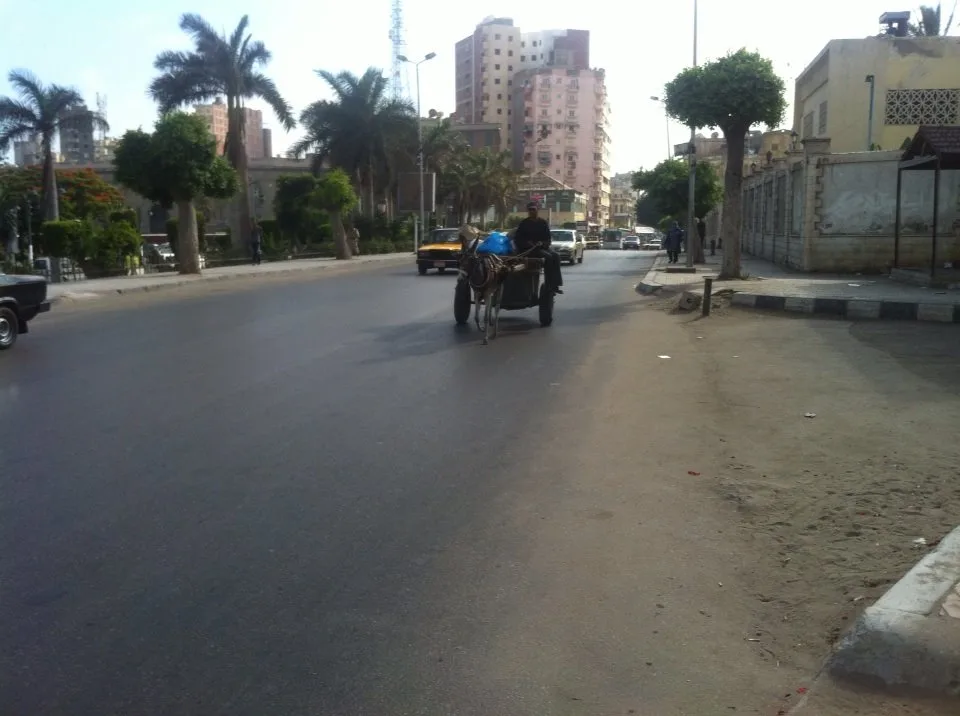
modern Alexandria
Modern Alexandria.

To understand the importance of Alexandria (and Ptolemaic Egypt), the city is comparable to modern London, a hub for writers, artists, merchants and religious types. It remained important for Africa and the Mediterranean until the exodus of Greeks and other Europeans a few decades ago.

Alexandria is what it is, a Hellenic built and developed city that has stood the test of time. Whilst the Greek Community may have dwindled, the imposing spirit of Alexander and Cleopatra will always loom large. If you don’t believe me, just ask one of the locals.

*Billy Cotsis is the author of Aristotle Roberto Carlos Smithopoulos

How Aspa Kladakis turned an unfinished dream into triumph

By Despina Karpathiou 

For many, fitness is a hobby. For Aspa Kladakis, it’s been a lifelong passion – one that started at just 14 years old and has now led her all the way to winning the Australian WBBA Pro title. Her story isn’t just about muscles or medals; it’s about persistence, resilience, and finally living out a dream that waited patiently in her heart for years.

“When I was 17 or 18, my dream was to compete,” she tells The Greek Herald

“But life took me on a different path, and I never had the chance to step on stage. That’s why winning meant so much — it felt like finally achieving an unfinished dream I’ve carried for so long.”

aspa kladakis
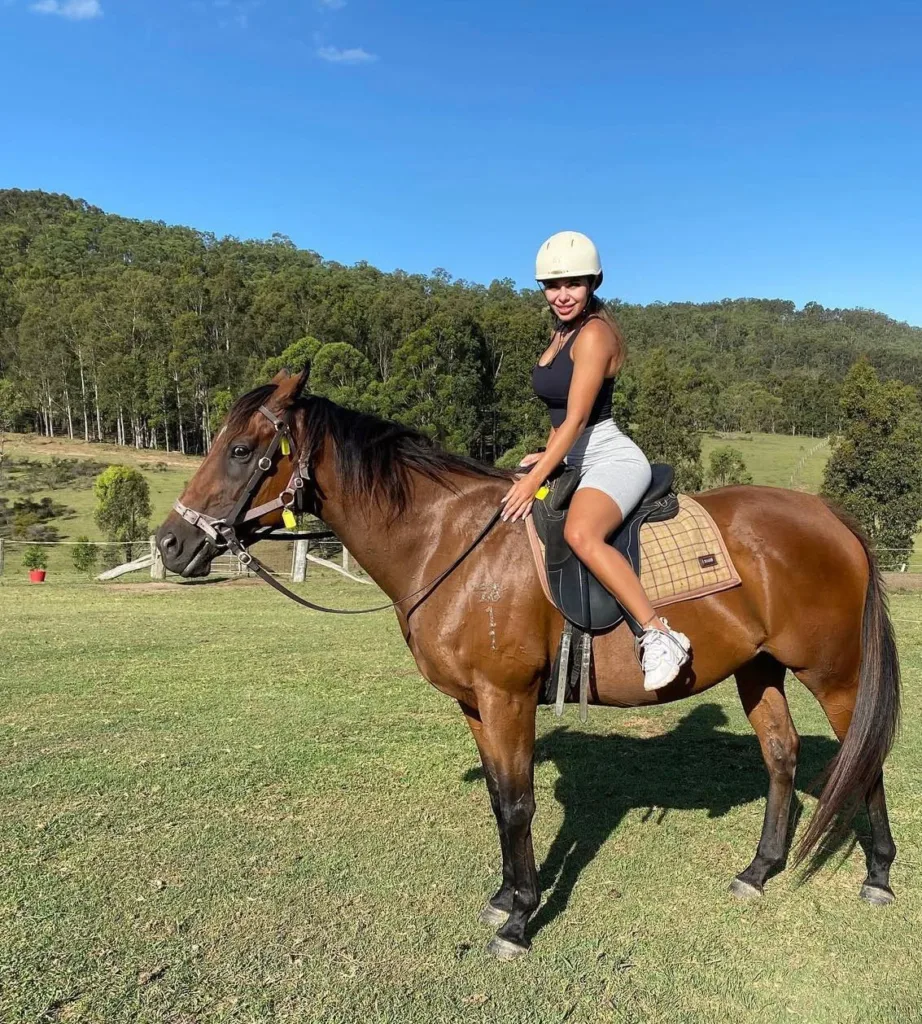
Aspa Kladakis won the Australian WBBA Pro title in 2025.

This is Aspa’s story – we hope it inspires you. 

Preparing for a competition like the WBBA Pro isn’t for the faint-hearted. It’s a mix of strict routines, mental battles, and a deep commitment that goes beyond physical fitness.

“The preparation was one of the hardest things I’ve ever done,” she admits. “There were days when my hormones were so out of balance that I’d cry out of nowhere or feel like I wasn’t good enough. At one point, I even lost my period — that’s how intense prep can be on your body.”

Yet, in those moments of exhaustion and doubt, she discovered something powerful: resilience.

“Pushing through those challenges taught me so much about discipline. It made stepping on stage that day even more meaningful,” she says.

Even social life took a hit — something every athlete knows too well.

“I had to bring my meals everywhere, even to restaurants or events. Sometimes I felt embarrassed, but I reminded myself that discipline means choosing your goal over temporary comfort. Those sacrifices are what made it all worth it in the end,” she says.

Aspa’s journey, however, didn’t just happen in the gym. It began with a bold move across the world.

“It was my family’s decision to move to Australia, and at first, I didn’t want to leave Greece,” she recalls. “I felt so connected to home. But looking back, it was one of the best things that ever happened for me.”

Australia became the place where she found opportunity — and the courage to chase her dreams again.

“This country gave me the chance to grow, to connect with amazing people, and to finally compete at this level. I’m so grateful for that,” she says.

When asked what she’d say to young people struggling with motivation, her answer is refreshingly honest.

“Don’t wait to feel perfect before you start. Just start — even if you don’t have it all figured out. Discipline isn’t about never slipping up; it’s about showing up again and again, even on the days you don’t feel like it,” she says.

It’s advice born from experience — because she’s lived it.

“I did ballet, swimming, and dance from when I was about six. I was always into sports,” she says. “At 14, I started going to the gym, and by 18 I fell in love with training and nutrition. That’s when I first dreamed of competing — and now, years later, stepping on stage feels like everything has come full circle.”

aspa kladakis
Aspa Kladakis was always into sports.

And she’s not slowing down anytime soon.

“Over the next five years, I want to keep competing, but my main focus is on building my portfolio and collaborating with brands. Modeling and creating content is something I’m passionate about — it’s how I connect with people and inspire others to live the fitness lifestyle in a positive way,” she says.

And as for competing again?

“Absolutely! Winning has only motivated me more — this is just the beginning,” she says.

Aspa’s journey proves that dreams never really expire — they just wait for the right moment. 

Mavromoustakos brothers return for biggest-ever Charity Football Match in 2026

The Mavromoustakos brothers are set to return to the pitch in January 2026, with their annual Charity Football Match shaping up to be the biggest and most ambitious edition yet.

The much-loved community event will take place on Sunday, 18 January 2026, at Seymour Shaw Stadium in Miranda, with kick-off scheduled for 4pm.

Organisers Yianni and Chrisos Mavromoustakos are promising a high-energy afternoon of football, entertainment, and community spirit — all in support of children in need across Africa.

Funds raised from the match will once again support Paradise 4 Kids, which assists the vital missionary work of Father Themi Adamopoulos in Sierra Leone, providing food, clothing and education to vulnerable children.

Bigger crowd, bigger names, bigger impact

Building on the success of previous years, the 2026 Charity Match will feature more than 10 special guests, with organisers confirming the return of comedian Anthony Locascio, YouTuber Jamie Zhu, and popular NRL content creators Chris Sassine and Jean Claude Bitar.

Adding to the excitement, streetwear label Pelota has partnered with the event, supplying new kits each year in what has been described as a “partnership like no other.”

Football rivalries and community opportunity

On the football front, Team Yianni will be chasing a third consecutive victory, while Team Chrisos is determined to break the streak in what has become a friendly but fiercely contested rivalry.

Beyond the game itself, the Charity Match continues to emphasise community involvement. This year, organisers are offering work experience opportunities for volunteers on the day, with participants eligible to receive professional resume and CV referrals — a unique initiative aimed at supporting students and young professionals.

Save the date

Described by organisers as the “highlight on everyone’s calendar,” the Mavromoustakos Charity Football Match has grown into a signature summer event for Sydney’s Greek Australian community — blending sport, entertainment and philanthropy for a powerful cause.

Supporters are encouraged to save the date, gather friends and family, and head to Seymour Shaw Stadium on 18 January 2026 for what promises to be the biggest Charity Match yet. Get your ticket here.

Blessing of the Waters ceremony set to draw crowds to Glenelg Jetty

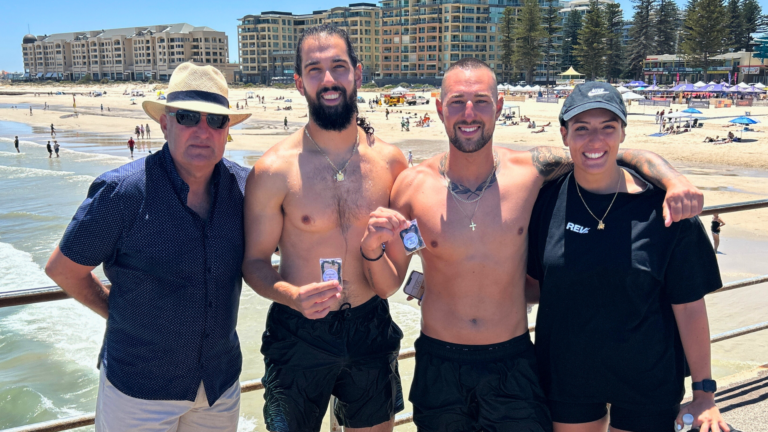
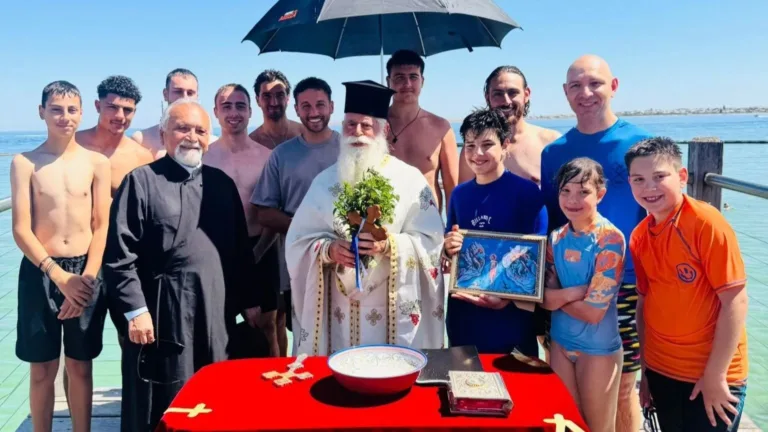
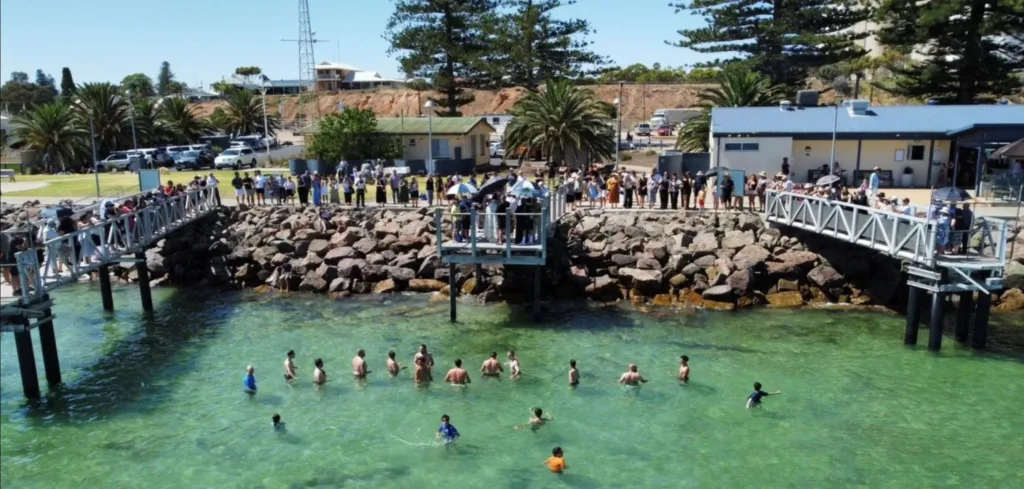
The annual Blessing of the Waters ceremony will take place on Sunday, January 11, 2026, from 12:30pm, at the Glenelg Jetty for the 46ᵗʰ successive year, creating the scene of a centuries-old tradition.

The swimmers who are taking part in these ancient religious celebrations, also known as the Feast of Epiphany, will each attempt to be the first to retrieve the crucifix tossed into the sea from the jetty. The successful swimmer will earn a gold crucifix and is said to receive a special blessing for the following year.

His Grace Bishop Silouan of Adelaide, together with Adelaide’s Orthodox Christian Clergy, will lead the procession onto the Glenelg Jetty and will throw the cross to the swimmers in the water.

The ceremony celebrates the Feast of Epiphany, remembering Jesus’ baptism by John the Baptist in the River Jordan and the appearance of the Holy Trinity and beginning of His ministry.

The Hon Peter Malinauskas MP, Premier of South Australia, will honour this significant event with his presence, as will other Local, State and Federal dignitaries.

The Blessing of the Waters Ceremony will be followed, as always, by the traditional Glenelg Greek Festival, which will be taking place over three days, namely today, Saturday, and Sunday, 9-11 January 2026, at the grassed foreshore area in front of the Stamford Grand Hotel.

The annual festival will feature music and dance performances, and more than 200 volunteers from the Parishes of the Greek Orthodox Archdiocese in South Australia will serve traditional Greek food.

Wallaroo in SA celebrates Epiphany with second annual Blessing of the Waters

The Feast of Epiphany was celebrated with reverence and solemnity for a second consecutive year in Wallaroo, firmly establishing the Blessing of the Waters as a meaningful local tradition linking Orthodox worship with regional communities in South Australia.

The celebrations commenced with the Divine Liturgy at the Church of St Nicholas, officiated by Protopresbyter Fr Stavros Psarommatis, with the participation of Protopresbyter of the Ecumenical Throne Fr Diogenis Patsouris.

A large congregation attended, including faithful who travelled from Adelaide, as well as local residents who warmly embraced the feast.

epiphany at wallaroo
A large congregation attended the Blessing of the Waters at Wallaroo.

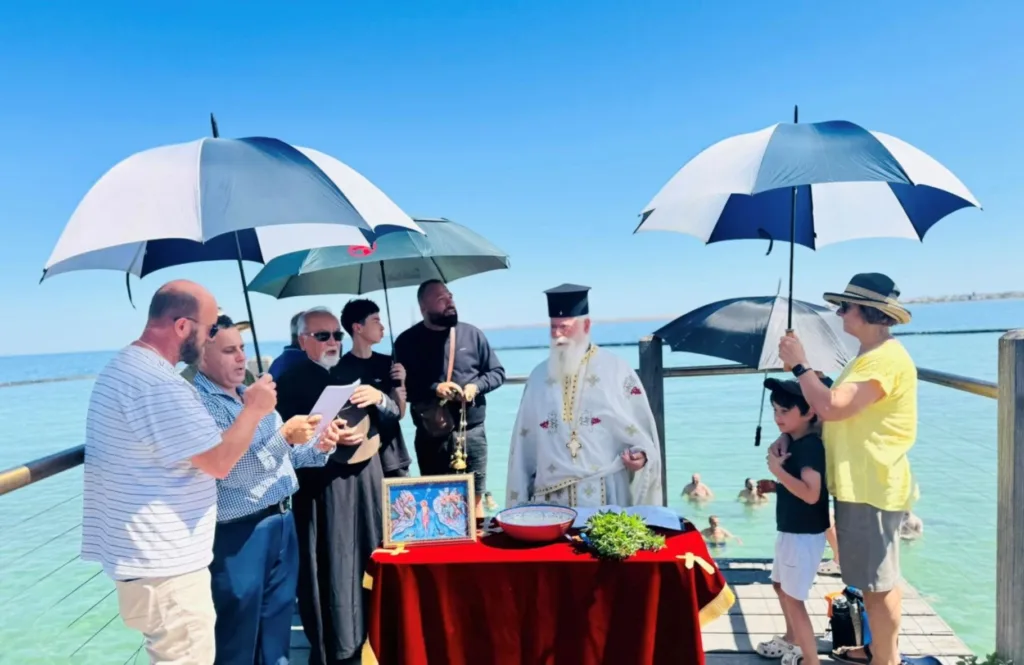
Following the service, worshippers gathered at the Wallaroo jetty for the Blessing of the Waters, during which the Holy Cross was cast into the sea.

The message of His Eminence Archbishop Makarios of Australia was read, highlighting the theological significance of Theophany, the revelation of the Holy Trinity and the sanctification of all creation, while encouraging the faithful to live out their baptism as a daily life in Christ. The blessings of His Grace Bishop of Silouan of Adelaide were also conveyed.

epiphany at wallaroo
The Blessing of the Waters is a meaningful local tradition linking Orthodox worship with regional communities in South Australia.

The Holy Cross was retrieved by young Dimitrios Stylianou, a descendant of the late Fr Charalambos and Presvytera Myrianthi Stratos, pioneers of Greek Orthodox life in regional South Australia – a moment that brought joy and deep emotion to those present.

The celebrations concluded with hospitality and a shared meal prepared by parish members and friends, offering an opportunity for fellowship and reinforcing the sense of unity, faith and continuity within the local community.

Cyprus Community of NSW launches Cyprus EU Presidency Scholarship

To mark Cyprus’ Presidency of the Council of the European Union (EU), the Cyprus Community of New South Wales, also known as The Cyprus Club, has launched the “Cyprus EU Presidency Scholarships.”

The Community’s Honorary President, Michael Kyriacou, said the Community recognises the importance of Cyprus’ Presidency of the EU, noting that it comes at a time when the geopolitics of the region are changing rapidly and when the EU and the world face many challenges. He said it is important to step back and appreciate values that are often taken for granted and are best articulated by the EU.

The fundamental values of the European Union, outlined in Article 2 of the Treaty on European Union, promote a pluralist society that does not discriminate, is tolerant, and defends freedom of thought, religion, assembly, speech and movement, as well as the right to property and safety.

“The EU recognises the protection of human rights as a core value,” Mr Kyriacou said. “Australia is also founded on similar values, which are often taken for granted. It’s important the younger generation appreciates these values and is given the opportunity to be advocates and defenders of them.”

Cyprus’ Presidency will focus on EU security and defence readiness, improving economic competitiveness, promoting youth employment, managing immigration intake, and addressing the demographic and economic changes impacting the EU.

“The scholarships will help students fund their studies and encourage them to promote the values of equality, fairness, progress, tolerance, respect and the protection of human dignity,” said Honorary Assistant Secretary Andrew Paschali.

Honorary Secretary Kyriakos Panayi added that the Community considered how best to mark Cyprus’ EU Presidency in an Australian context.

“Many of our members asked that we mark this occasion by promoting the values of fairness, justice and equality — values defended by Cyprus and our Community for decades,” he said.

“We decided on a wide-ranging scholarship programme to encourage youth to become ambassadors of these values.”

The scholarship programme is a world first, Mr Paschali said. “Each recipient is an ambassador for the causes our Community has advocated for almost a century. We are fortunate to live in a country that shares these values, and we appreciate that Cyprus, although a small nation, will advocate these values to the world as President of the EU.”

The scholarships are open to NSW-based students aged 10 to 25, whether they are enrolled in primary school, high school, university or TAFE.

“Recipients will be asked to promote these values, give talks at their schools, colleges or universities, online and to community groups, attend events, and advocate for the protection of human rights,” Mr Panayi said.

Mr Kyriacou added, “The scholarships are about empowering students who are prepared to have a go — to advance their studies, engage with the Community and stand up for the values shared by Europe, Australia and our Community. It’s about encouraging students to give something back.”

Applications for the Cyprus EU Presidency Scholarships launched online on January 8, 2026, the same day as the official opening ceremony appointing Cyprus to the EU Presidency.

There are more than 50 scholarships on offer.

Eligibility criteria, applications, terms and conditions are available online at: www.thecyprusclub.org.au/scholarship

Turkey accuses Cyprus of ‘abusing’ EU Presidency over Cyprus issue

Turkey has accused the Republic of Cyprus and the European Union of politicising Cyprus’ assumption of the EU Presidency, with Ankara claiming the bloc has failed to act as a neutral or constructive force in resolving the long-running Cyprus issue.

Speaking on Thursday, Turkish Foreign Ministry spokesman Oncu Keceli said the Republic of Cyprus had “abused” its EU Presidency to advance what he described as a “distorted” narrative of the Cyprus problem, while criticising the European Union for alleged double standards.

Keceli objected to language used during speeches at an event on January 7, 2026, marking Cyprus’ assumption of the EU Presidency.

“(We) reject the use of terms such as ‘occupation’, ‘invasion’ and ‘division’ that were used in reference to the island of Cyprus during various speeches at the event held on January 7, 2026, to mark the assumption of the EU Presidency by the Cypriot Administration of Southern Cyprus. These terms are in no way compatible with the historical and current reality on the island,” Keceli said.

He argued that responsibility for the island’s division lay with the Greek Cypriot side, not Turkey.

“The only ‘occupation’ on the island stems from the usurpation of the institutions of the partner state by the Greek Cypriot side in 1963, in flagrant violation of the Constitution and the inherent rights of the Turkish Cypriot people,” he said.

Keceli further accused EU officials of disregarding the rights and existence of Turkish Cypriots.

“The contempt for the existence of Turkish Cypriots by EU officials reveals once again the EU’s double standards around the fundamental humanitarian values it claims to uphold,” he said.

He added that Cyprus’ handling of the EU Presidency had reinforced Ankara’s view that Brussels cannot act impartially.

“The fact that the Greek Cypriot side, contrary to its publicly made commitments, has abused the EU Presidency from the very beginning to present its distorted rhetoric and incompatible positions on the Cyprus problem, reveals why the EU cannot be a neutral and constructive actor in the resolution of the Cyprus problem,” Keceli concluded.

Farmers paralyse roads and borders across Greece after talks with government stall

0

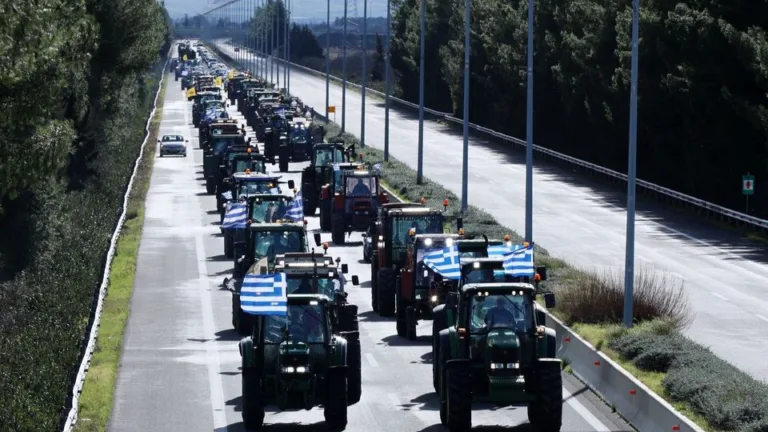
Farmers across Greece escalated nationwide protests on Thursday, January 8, launching coordinated 48-hour blockades of major highways, toll stations and border crossings after talks with the government failed to meet their demands over rising production costs and declining incomes.

From early morning, tractors and heavy vehicles were positioned on key transport routes linking Athens with northern and western Greece, severely disrupting domestic travel and cross-border trade.

One of the most significant closures occurred on the Athens–Lamia national highway near Kastro in Viotia, where traffic in both directions was halted and diverted onto secondary roads, causing lengthy delays.

Further blockades were reported in central Greece at the Vale of Tempe, in western Greece on the Antirrio–Ioannina highway at the Angelokastro toll station, and near Thessaloniki, including the Malgara tolls on the Athens–Thessaloniki highway. Routes towards Edessa and the Halkidiki peninsula were also affected.

Protests extended to northern Greece’s key border crossings. At Promachonas, farmers blocked freight trucks travelling between Greece and the Balkans, while similar restrictions were imposed at Exochi, Niki and Evzones, where trucks were barred and passenger vehicles allowed through only intermittently or in emergencies.

The government reiterated its willingness to engage in dialogue but insisted that negotiations could not take place while roads remained blocked.

Deputy Minister to the Prime Minister and government spokesperson Pavlos Marinakis, speaking to Newsbomb, issued a renewed invitation to farmers.

“We are here for dialogue, we say it again. We are united in this effort, and we want to emphasise clearly that we wish for this situation to come to a resolution. I am making another invitation to the farmers for Tuesday, January 13, when the Prime Minister will be in his office, to meet under two clear conditions,” Marinakis said.

“First, the level of representation must be proportional; that is, all mobilisations must be represented, because in order to find a solution, everyone must have a voice. Second, the dialogue must take place with the roads open, as there can be no dialogue while blockades remain in place.”

Farmers argue that government concessions announced on Wednesday – including cheaper electricity rates and fuel tax rebates – fall short of addressing the scale of the crisis.

The protests, which began in November, were initially triggered by soaring production costs, delayed subsidy payments linked to a fraud scandal, and a sheep and goat pox outbreak.

Anger has also focused on the proposed EU–Mercosur agreement, which would create a vast free-trade zone between Europe and South American nations including Brazil and Argentina. Greek farmers fear the deal would flood the market with cheaper imports and threaten domestic agriculture.

Protest organiser Vangelis Roubis warned that the agreement could have devastating consequences.

Farmers have vowed to continue disrupting travel, supply chains and trade unless the government offers concrete concessions and rejects the trade deal, amid warnings from authorities that prolonged nationwide blockades will not be tolerated.

Source: Ekathimerini and AP News

Yanis Varoufakis joins boycott of Adelaide Writers’ Week over censorship row

Former Greek finance minister and international author Yanis Varoufakis is among a growing list of prominent writers who have withdrawn from Adelaide Writers’ Week in protest over the cancellation of an event featuring Palestinian Australian author, lawyer and activist Randa Abdel-Fattah.

Varoufakis’ withdrawal adds international weight to the boycott, which now includes Miles Franklin winners Michelle de Kretser and Melissa Lucashenko, alongside journalists, academics and writers such as Peter Greste, Evelyn Araluen, Amy McQuire, Clare Wright, Chelsea Watego, Bernadette Brennan and Amy Remeikis.

The protest follows a decision by the Adelaide Festival Board to cancel Abdel-Fattah’s scheduled appearance, where she was to discuss her new novel Discipline, set during Ramadan and centred on the lives of two Muslim characters from different parts of the world.

In a statement, the Adelaide Festival Board said it would “not be culturally sensitive to continue to program [Abdel-Fattah] at this unprecedented time so soon after Bondi,” referring to the Bondi Beach shooting in December.

The board said it was reviewing festival operations in light of the “current national community context” and its role in “promoting community cohesion.”

“This suite of decisions has been taken with the genuine view that they provide the best opportunity for the success and support of the Adelaide Festival, for Adelaide Writers’ Week and the communities we seek to serve and engage,” the board said.

South Australian Premier Peter Malinauskas confirmed his government supported the board’s decision.

Abdel-Fattah responded on Instagram, describing her removal as a “blatant and shameless act of anti-Palestinian racism and censorship.”

“What makes this so egregiously racist is that the Adelaide Writers Festival Board [sic] has stripped me of my humanity and agency, reducing me to an object onto which others can project their racist fears and smears,” she wrote.

She said the decision was a “despicable attempt to associate me with the Bondi massacre” and predicted further withdrawals, citing a similar mass boycott of the Bendigo Writers Festival last year.

The controversy has reignited debate about artistic freedom, censorship and the growing influence of risk management and commercial considerations on arts programming, as Adelaide Writers’ Week prepares to begin on February 27.

Source: ABC News

Hottest days in years as extreme heat and fires threaten communities across Australia

A severe heatwave is gripping much of Australia, with temperatures between 40 and 45 degrees Celsius forecast across large areas as a hot north-westerly airstream pushes inland heat from Western Australia through South Australia, Victoria and New South Wales.

Fire danger is expected to escalate sharply over the next 48 hours, reaching catastrophic levels in parts of Victoria and extreme levels in SA and eastern NSW.

Strong winds, very low humidity and soaring temperatures are creating what meteorologists describe as the “perfect storm” for an intense heatwave.

Temperatures have exceeded forecasts in several locations, with some regions recording highs up to 19 degrees above the January average.

Victoria recorded a high of 46.5C at Walpeup, while South Australia reached 48.2C at Wudinna — just 0.2C below the town’s all-time record. In Western Australia, Onslow reached 49C, less than two degrees short of Australia’s national temperature record.

Melbourne recorded its hottest day in six years on Wednesday, while Adelaide’s coastal areas were spared the worst due to a westerly change, despite inland regions enduring consecutive days above 45C. Sydney is forecast to experience its hottest weather in up to six years on Saturday, with temperatures expected to reach 42–43C.

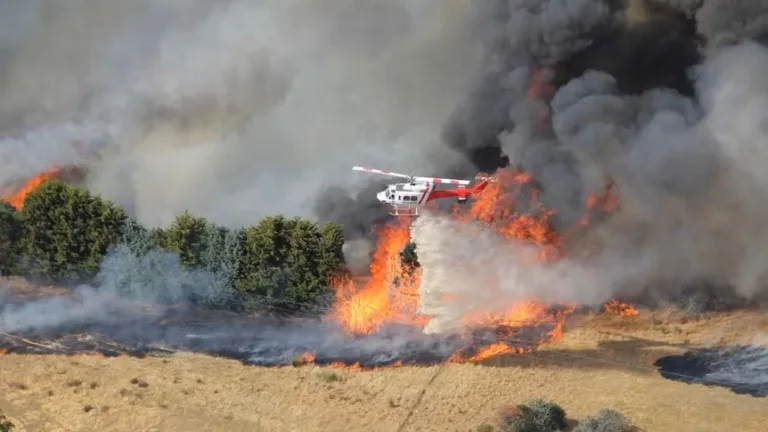
In Victoria, a total fire ban is in place statewide, with authorities warning that today’s conditions are the most dangerous since the Black Summer bushfires of 2019–20. The Northern Country, North Central, Wimmera and South West regions have been issued catastrophic fire risk ratings.

Emergency warnings remain in place for a major bushfire near Longwood in central Victoria, which has burned almost 30,000 hectares and caused confirmed property losses in the town of Ruffy. Ruffy CFA captain George Noye said the town had been “severely” impacted.

“The main street looks like a bomb’s gone off, we’ve lost a school… [the] CFA shed’s still standing, so that’s our hub at the moment,” Mr Noye told ABC News. “The school, it no longer operates, but it was a community hub for us… so it’s absolutely devastating to see it go.”

Authorities have also warned of the risk posed by dry lightning and strong winds, which could spark new fires across the state. Communities have been urged to remain vigilant, monitor emergency warnings and avoid travel in fire-affected areas.

A significant southerly change is expected to bring relief to Victoria and SA late Friday, with temperatures dropping by up to 20 degrees within 24 hours. However, heatwave conditions are forecast to persist across northern Australia into next week.

Source: ABC News