Home Blog Page 933

The celebration of Nativity in Greece through time

By Marina Siskos.

Festivals have been a part of human life since antiquity. Traces of our past Christmas customs and celebrations are found everywhere, from decorations, habits, to culinary creations. The past is diffuse in the Christmas celebrations of today, and it is more than exciting to relive the customs established by our ancestors.

Folk spirit is present in many more events and habits of the Nativity than we imagine. The reason why folklore persists through time and space is because the things people traditionally make with their words, hands and actions, continue to give pleasure, and satisfy artistic impulses common to the species. Folklore persists also because it continues to meet basic human needs.

In the calendar, the period stretching from Christmas Eve to the Epiphany, is the “Twelve Days of Christmas” and it includes most of the Christmas customs. While some Christmas customs came to us from other places, for example Mexico, where from comes the turkey, and others from Europe, such as the Christmas tree, or the American Santa Claus, most customs celebrated in Greece are native.

Pourpouris, Thrace:  

Pourpouris is a performative custom, with its main characters, the goatish Pourpouris and his beloved wife, Kortopoula. This is part of the Ragoutsaria rituals, the masquerades moving about and singing the festive, traditional “kollianta”, the Christimas carols. Pourpouris has a rich history, tracing back to the Asia Minor refugees. It is mainly honoured in Isaakio, the lowlander village of Thrace. Pourpouris arrived with the 1922 Sakpasiotes refugees, from the seven villages opposite Eastern Thrace, during their relocation there.

Pourpouris is the name of the goblin-looking, horn-carrying creature, who is vested in sheepskin and goes around the village homes, singing the kalanta. His sheepskin is elaborately embroidered with traditional patterns, protecting him from the notoriously bitter winter of Thrace. Traditional, instrumental music of Thrace, with the indispensable bagpipe melody (gkaida), accompanies the adventurous performance. Pourpouris wears large, loud bells, and his fearsome disguise is meant to scare the evil spirits away from the village, forcing them to disappearance during this holy celebration.

Pourpouris.

Kortopoula is his wife and, in the custom, the balancing element of the male. This is despite the fact that, Kortopoula is actually a man in disguise. She stands for the fertility of the land and, in consequence, the anticipated springtime and the blossoming of the nature. Pourpouris will furiously chase away any man who attempts to approach Kortopoula. Pourpouris is usually revived on the second, sometimes the third day of Christmas, as it was established by the original residents of Isaakio village.

The Camel, Macedonia:

It is another performative custom, originating from Eastern Romilia and it is relived either on the Christmas, or the New Year’s Eve. It is celebrated in Giannitsa, Galatista of Chalkidiki and Thermi, the eastern district of Thessaloniki. The young people of the village gather and construct a wooden frame, which they vest using relics and pieces of leather. Once the camel frame is ready, two young men carry it and “give” their legs to the camel. The camel is driven by the camel jockey, accompanied by the traditional sounds of the baidouska dance. The camel goes around the village and people offer as a gift, sausages, and money. The camel then, in expression of gratitude, kneels to the ground. During the procession, the camel would go astray, making the people chase after her and beat her; this is an allusion to the hardships and the adversities anyone is doomed to withstand in the course of a lifetime. The bibliography on the exact origins of the custom might be fragmentary, but the similarity to the Trojan horse is inevitable.

The Decorated Christmas Ships, Aegean Sea, Chios Island:

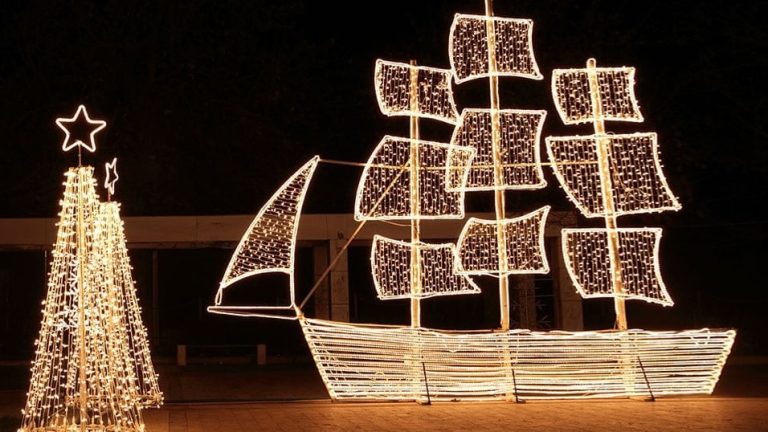
Greece has always been a marine force, proud of its ancient naval history. Hence, the reference to the sea and its people is part of the Christmas custom of the ships, honoured in Chios. They are called the ships of Saint Nicholas.

The custom is performed on New Year’s Eve, taking place at the central square, where children and young people from every neighbourhood gather, bringing their ships. Grouped in teams, they have the mission to construct a ship that is strikingly similar to a real one, be it a cargo or a warship.

Apart from the replicas, the children also create the appraisals (painemata), that is, poems recited as carols, expressing wishes for the families of the marine professionals, and, occasionally, contemporary satire, parodying political events.
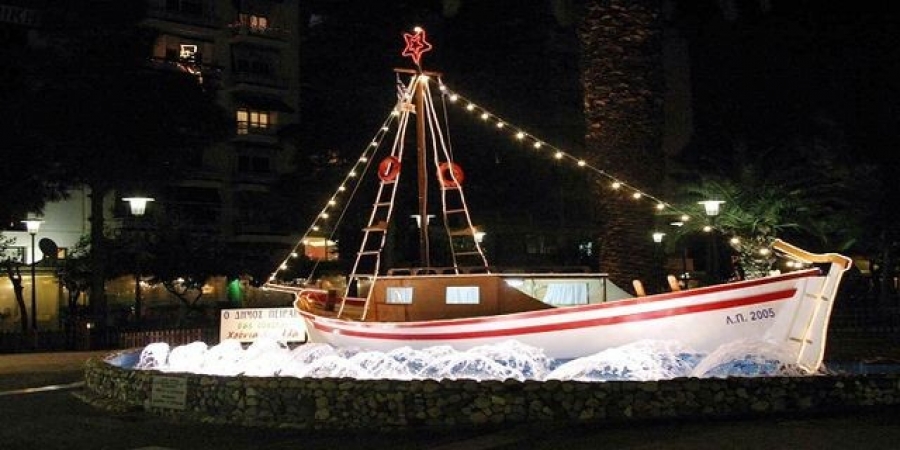
The Decorated Christmas Ships, Aegean Sea, Chios Island.

The competing craftspeople need roughly three months to complete the construction of the Christmas ships. There is a prize for the best ship, and the decorated vessels sails around, accompanied by festive melodies. Regarding the origins of the custom, one theory suggests that it traces back to the Anthesteria, during which, God Dionysus entered Athens and other Ionian cities.

Since the Balkan Wars (1912-13), the custom has been crystallised to its present state. New, sturdier materials started being used, and the constructions were obtaining more characteristics of the real ship, like their funnels. The arrival of 1922 Asia Minor refugees renewed and enriched the symbolic value of the performance.

Feeding the water spring, Thessaly:

In the villages of Thessaly, at midnight on Christmas Eve, people enliven the custom called “the feeding of the water spring”. Young village girls spread butter and honey on the water springs of the village, wishing for abundance and prosperity, like the running water, and for a sweet new year, like the honey. Then, they take the so-called “silent” water home. The transition and the return to the source is silent, hence the water they carry is called “silent”, and they use it to spray their homes to bring health, fortune and good luck.
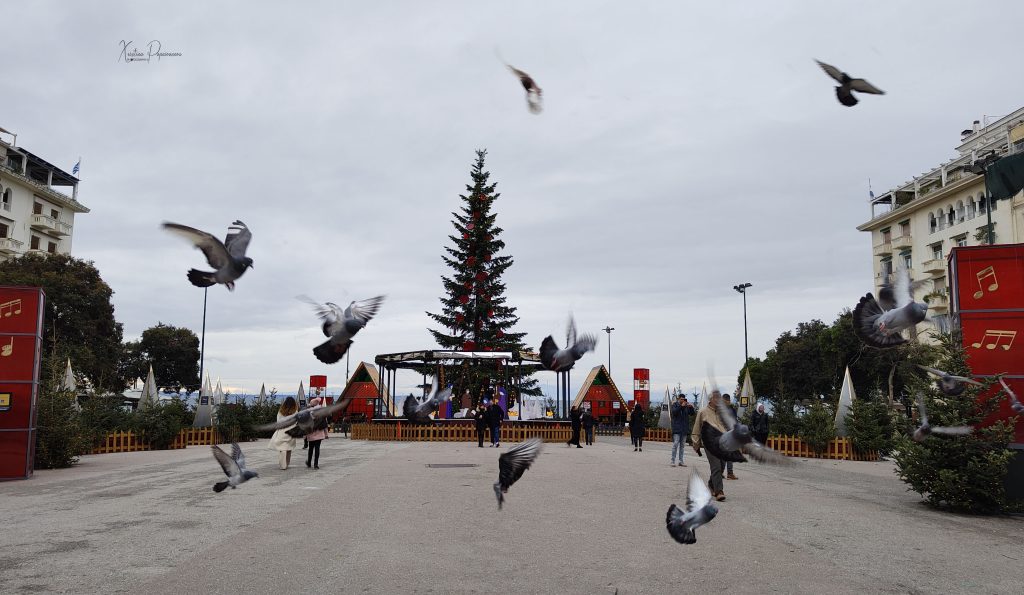
marina siskos
Photo credit: Christina Papaioannou.

To establish healthy and abundant crops, the young ladies go back to the source to lay butter, cheese, or roasted wheat grains. Alternatively, they bring an olive branch, or legume, all of them as an offer for rich crop. They perform a race on their way to the spring, and the first to arrive there is considered the lucky one for the anticipated year.

Feasts and festivals are viewed as “acts which reproduce the great systems of beliefs and mythologies”, and they are “understood as celebrations of social and religious rites and consolidating basic social groups”. Their celebration reinforces established society and social convention.

Surprisingly, most of the traditional Christmas customs are celebrated and preserved through time. They are vastly different, adding to the endless interest and richness of this country. The co-existence of the modern and the traditional, combine to an unparalleled festive scenery, making everyone look forward to this family holiday. Christmas and the New Year’s Eve have always been highly celebrated as they represent the arrival of the new, the pure and the divine, and herald the onset of a better and brighter future.

References

Rare dolphin with thumbs photographed in Greece’s Corinth Gulf

0

A dolphin with unusual, hook-shaped “thumbs” on its flippers has been discovered in the Gulf of Corinth.

According to livescience, researchers from the Pelagos Cetacean Research Institute found the dolphin during boat surveys off the coast of Greece this summer. Despite its unique flippers, the dolphin kept up with its group and engaged in typical dolphin activities like swimming and playing.

This is the first time such flipper features have been observed in 30 years of studying dolphins in the open sea and along the Greek coasts.

The Gulf of Corinth, located between the Greek mainland and the Peloponnese peninsula, is home to a diverse community of dolphins. The unusual dolphin is a striped dolphin, and there are approximately 1,300 of them in the Gulf of Corinth, separated from the rest of the Mediterranean population.

Photo: Alexandros Frantzis/Pelagos Cetacean Research Institute

The strange flipper does not seem to be a sign of illness but may be a result of rare and irregular genes caused by continuous interbreeding in the isolated population.

“Normally, dolphins develop their fingers within the flipper and no cells between the fingers die off,” Lisa Noelle Cooper, an associate professor of mammalian anatomy and neurobiology at the Northeast Ohio Medical University, said.

However, the photographed dolphin seems to be missing some fingers and the accompanying tissue.

“I’ve never seen a flipper of a cetacean that had this shape,” Cooper told Live Science in an email. “Given that the defect is in both the left and right flippers, it is probably the result of an altered genetic program that sculpts the flipper during development as a calf.” 

Source: livescience

Melbourne’s Preston Market heroes keep community fight alive

A market, for many, is their trusted source of fresh fruit and vegetables, local produce, and
a familiar sense of culture and community.

For some, their local market is home.

This is certainly the case for the community of Preston in Melbourne, Victoria, where the local 53-year-old market has long been recognised as the heartbeat of the surrounding suburb.

The Save the Preston Market Action Group, a community-based organisation, has long fought to prevent the redevelopment of Preston’s cherished ‘people’s market’ as threats of closure continue.

The group met on Saturday, December 16 ahead of Christmas to reflect on what has been a year filled with progress for their campaign.

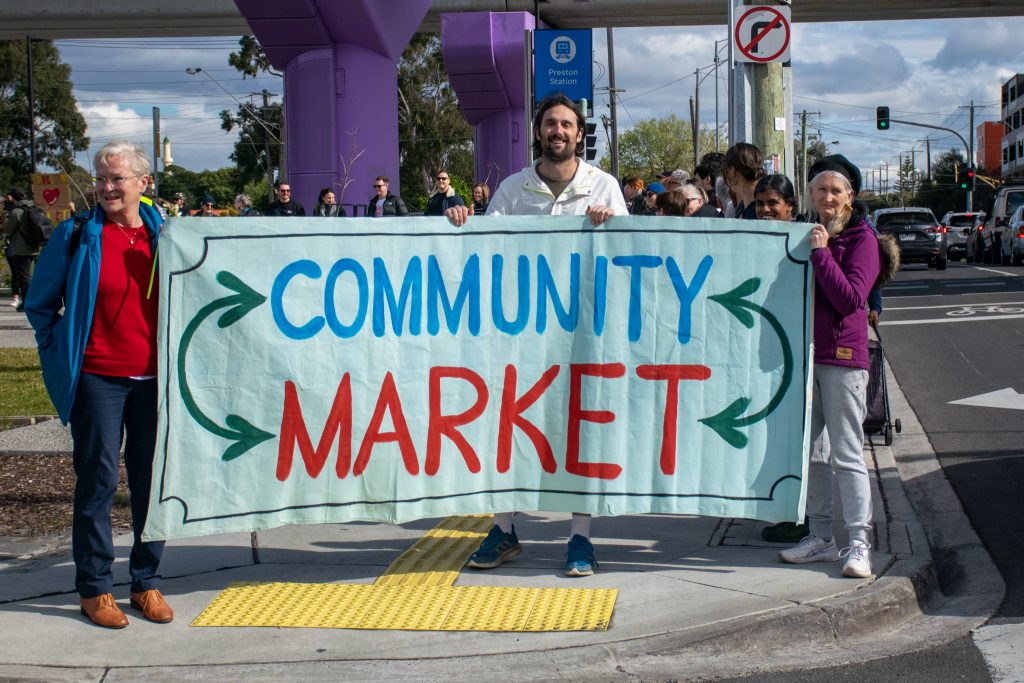
Action group member Kathy handed out badges, while fellow member Jenny rolled out the group’s main banner to prepare everyone for a photo.

Melbourne's Preston Market heroes celebrate keeping community fight alive.
Melbourne’s Preston Market heroes celebrate keeping community fight alive.

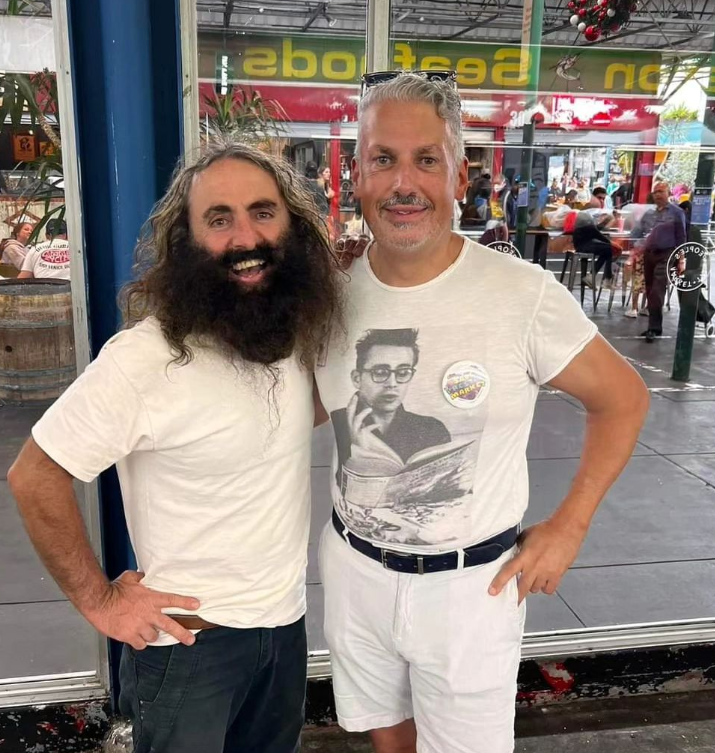
Australian landscape architect and television presenter Costa Georgiadis also stopped by to encourage the group to “keep going” with their campaign.

Australian landscape architect and television presenter, Costa Georgiadis and Member and spokesperson for the action group, Con Lambros.
Australian landscape architect and television presenter, Costa Georgiadis and Member and spokesperson for the action group, Con Lambros. Photo: Save the Preston Market Action Group.

The warm and inviting ambience of Preston Market sprinkled all over the gathering as talks of next steps in preserving what the group describe as the “pillar of Preston” took centre stage.

Closure concerns

Concerns around the Preston Market’s closure began in 2021, when the Victorian Planning Authority (VPA) had declared that a $1 billion fast-tracked project would ensure that 80 per cent of the market would be bulldozed for 20-storey high rise towers, consisting of 2,200 apartments.

This proposal was also put forward by Preston Market owners, Salta Properties and Medich Corporation.

The Save the Preston Market Action Group, which at the time had few members, responded by releasing a community petition started by Darebin Councillor Lina Messina. The petition aimed to stop redevelopment, garnering over 15,000 signatures.

image.png
Darebin Cr Greco and Save the Preston Market Action Group member, Jenny, hosting a petition stall.

After much debate from the action group and public concerns, the VPA adjusted the initial plan, stating in March 2022 that building heights would reduce from 20-storeys to 14.

Later, in October 2022, the revised draft Amendment was sent to the VPA Standing Advisory Committee, with the Victorian Minister for Planning, Sonia Kilkenny MP, only releasing findings in March 2023.

This response and the revised amendments by the VPA were still not enough to stop further activism from the action group as the 80 per cent demolition plan was not yet off the table.

Community and Governance

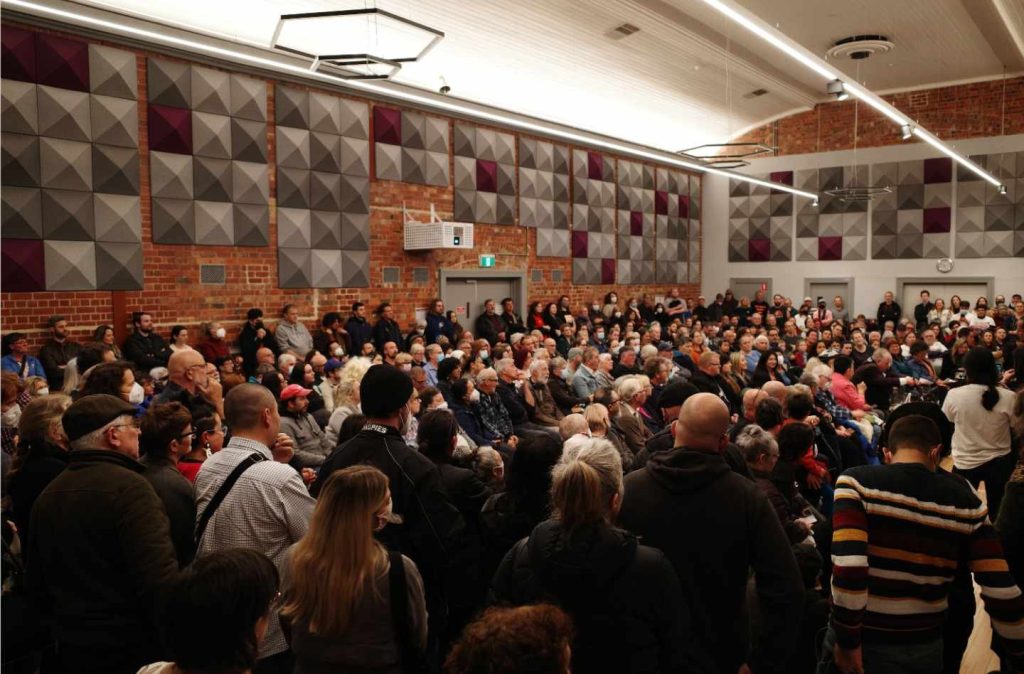
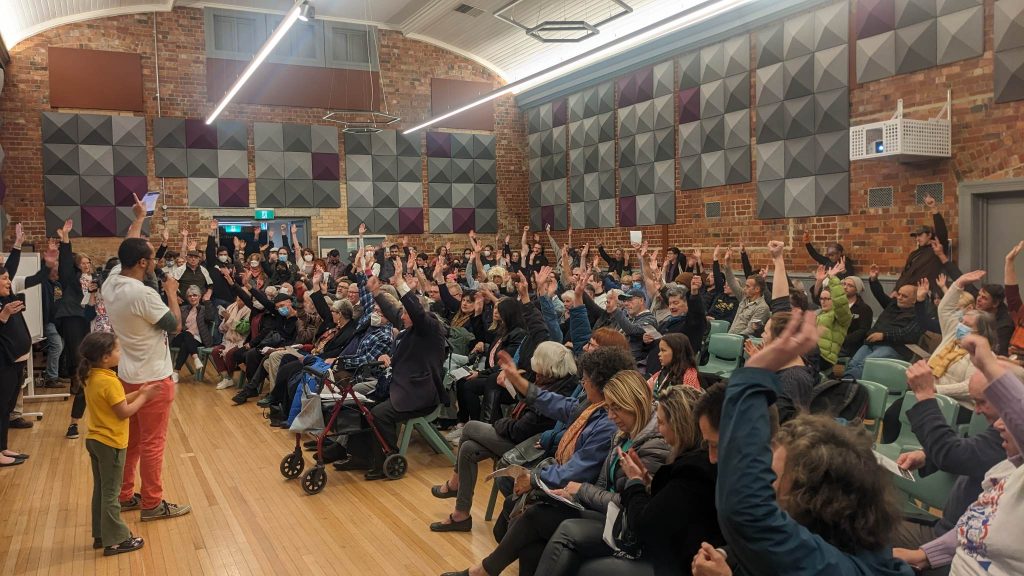
The action group conducted its first public meeting in May 2023 at the Preston Town Hall, with local MP Nathan Lambert in attendance, as well as Darebin Councillors Lina Messina, Gaetano Greco and Julie Williams.

Hundreds gathered to witness the magnitude of community support for the action group’s campaign, while cases for public acquisition of the market were presented.

First public meeting organised by the Save the Preston Market Action Group in May of this year at the Preston Town Hall.
First public meeting organised by the Save the Preston Market Action Group in May of this year at the Preston Town Hall. Photo: Save the Preston Market Action Group.
First public meeting organised by the Save the Preston Market Action Group in May of this year at the Preston Town Hall. 2
First public meeting organised by the Save the Preston Market Action Group in May of this year at the Preston Town Hall. Photo: Save the Preston Market Action Group.

Cr Greco, a well-regarded supporter of preserving the authenticity of the market, closed his statements (via video link) with a reminder to those gathered in the hall.

“The most important thing to remember is… it’s about keeping community life,” Cr Greco said.

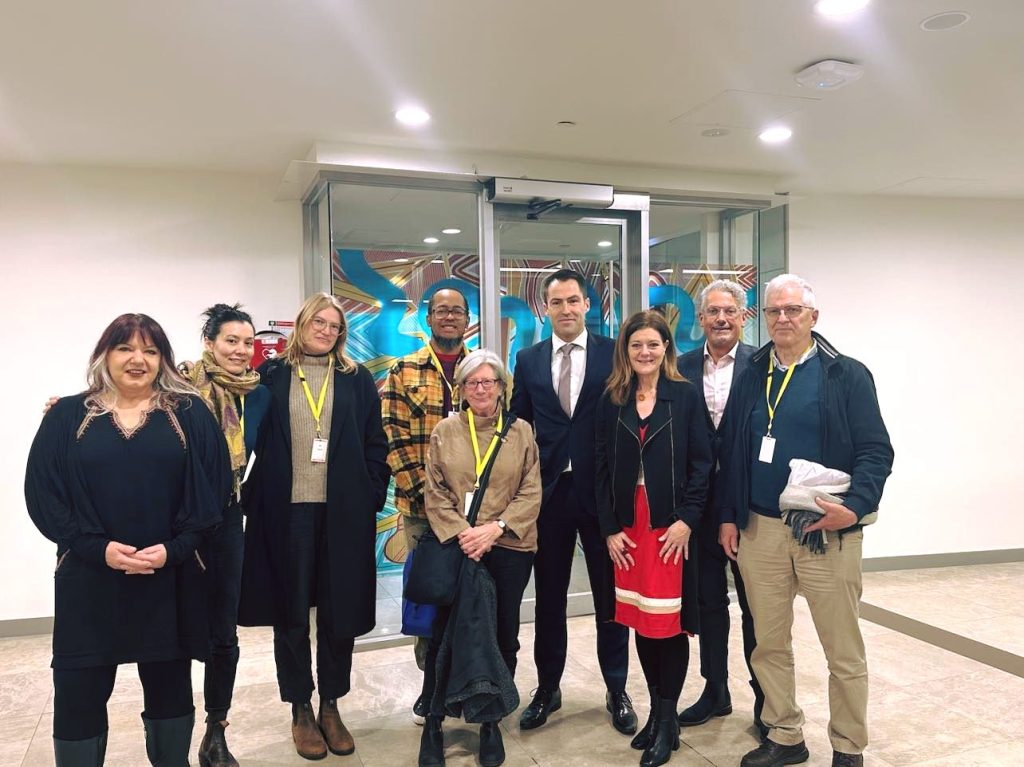
Members of the group then met with Planning Minister Kilkenny and Mr Lambert in July, to make their case further known on a state government level.

Members of the group then met with the Victorian Planning Minister, Kilkenny and local MP, Nathan Lambert in July, to make their case further known on a state government level.
Members of the group then met with the Victorian Planning Minister, Sonia Kilkenny and local MP, Nathan Lambert in July, to make their case further known on a state government level. Photo: Save the Preston Market Action Group.

Co-owner of Preston Market’s ‘Athina’s Deli,’ Dimitris (Jim) Katsaros, who has been running his business for almost 13 years, said that whatever happens could all depend on the next election.

“If the government changes, the whole picture changes,” Mr Katsaros said. “There will be developments whatever the case, it’s just a matter of saving the community feel.”

Hands Around Preston Market

Multiple rallies followed the group’s meeting in July, yielding constructive results, with new planning controls released in August involving ‘Development Plan Overlays’ and heritage protection proposed by the Planning Minister.

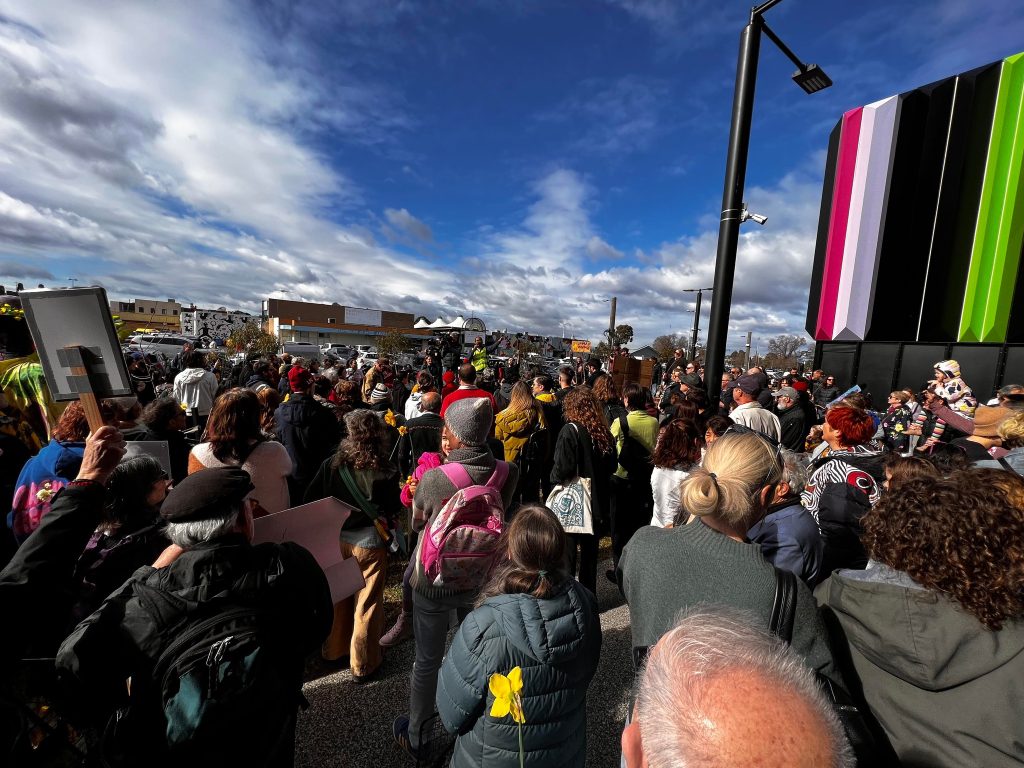
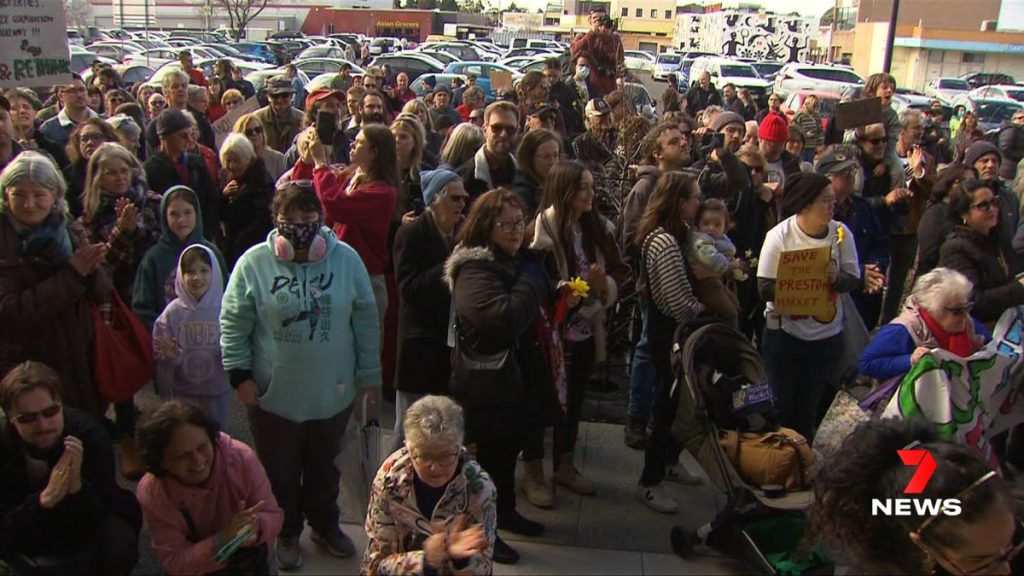
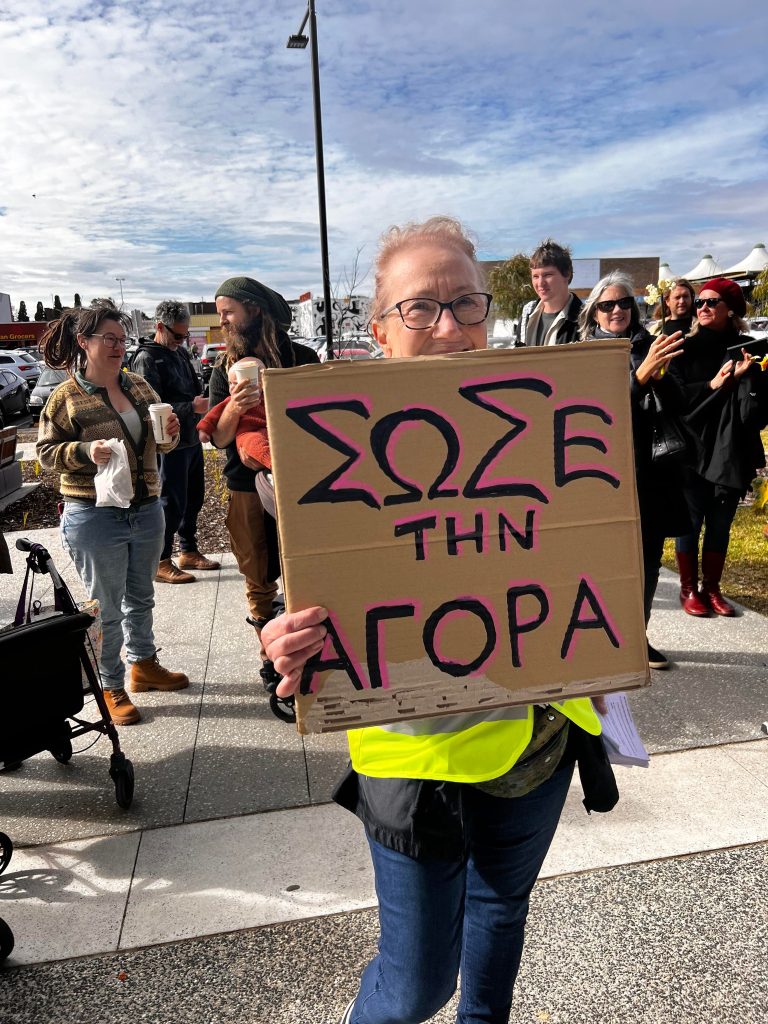
The action group took this as a sign of progress and organised the ‘Hands Around Preston Market’ event in August. Hundreds of people linked hands around the market’s borders in an attempt to display their continued loyalty to its protection.

Multiple news crews also attended to witness the grit and unyielding faith of many Preston market traders and hundreds of supporters.

The greater community attends ‘Hands Around Preston Market’ event organised by the Save the Preston Market Action Group.
The greater community attends the ‘Hands Around Preston Market’ event organised by the Save the Preston Market Action Group. Photo: Save the Preston Market Action Group.
The greater community attends ‘Hands Around Preston Market’ event organised by the Save the Preston Market Action Group
The greater community attends the ‘Hands Around Preston Market’ event organised by the Save the Preston Market Action Group. Photo: 7 News Melbourne.
The-greater-community-attends-‘Hands-Around-Preston-Market-event-organised-by-the-Save-the-Preston-Market-Action-Group.j
The greater community attends the ‘Hands Around Preston Market’ event organised by the Save the Preston Market Action Group. Photo: Save the Preston Market Action Group.
Hundreds of people linked hands around the market’s borders in an attempt to display their continued loyalty to its protection.
Hundreds of people linked hands around the market’s borders in an attempt to display their continued loyalty to its protection. Photo: Save the Preston Market Action Group.

Since then, the group has continued their efforts to attain the most important goal of their campaign – public acquisition, or, a compromise with owners.

5-year leases

On Monday, November 14, Preston Market Developments issued a statement to all tenants advising them that business stall leases would be extended for five years.

“The lease extensions will provide our current traders, and the community, with security, while the masterplan for the redevelopment of the Preston Market precinct is finalised,” the company management said in the statement.

Commenting on the promising news, Save the Preston Market Action Group leader, George Kanjere said even though the 5-year leases are a step in the right direction, there is still more work to do.

“We have to keep public consultation at the forefront. We’re still waiting for owners’ response to the new plans,” George said.

Member and spokesperson for the action group, Con Lambros also expressed his commitment to staying cautiously optimistic for now.

“We have to be careful. We don’t even know the details of these leases yet… battles have been won but the war isn’t over,” Con stressed.

Traders are yet to see the physical copy of the lease, with more information set to be revealed in January.

Despite the continued wait, George said the action group’s hard work has all been worth it.

“They have all done a fantastic job… we’ve come so far in terms of progress… we’ve created a whole other community,” he said.

To join the fight in keeping the “community feel” at Preston Market you can sign the petition here. Follow the campaign progress via the Save The Market Action Group website and on socials.  

Top students get VCE Awards in all subjects, but learning Greek is ‘personal’

By Mary Sinanidis.

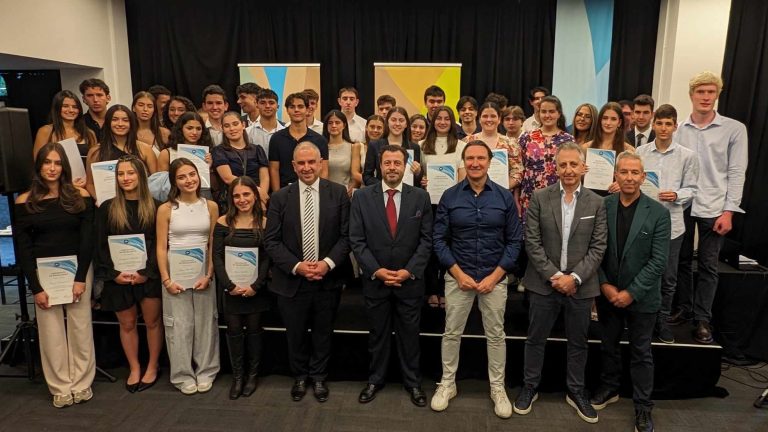
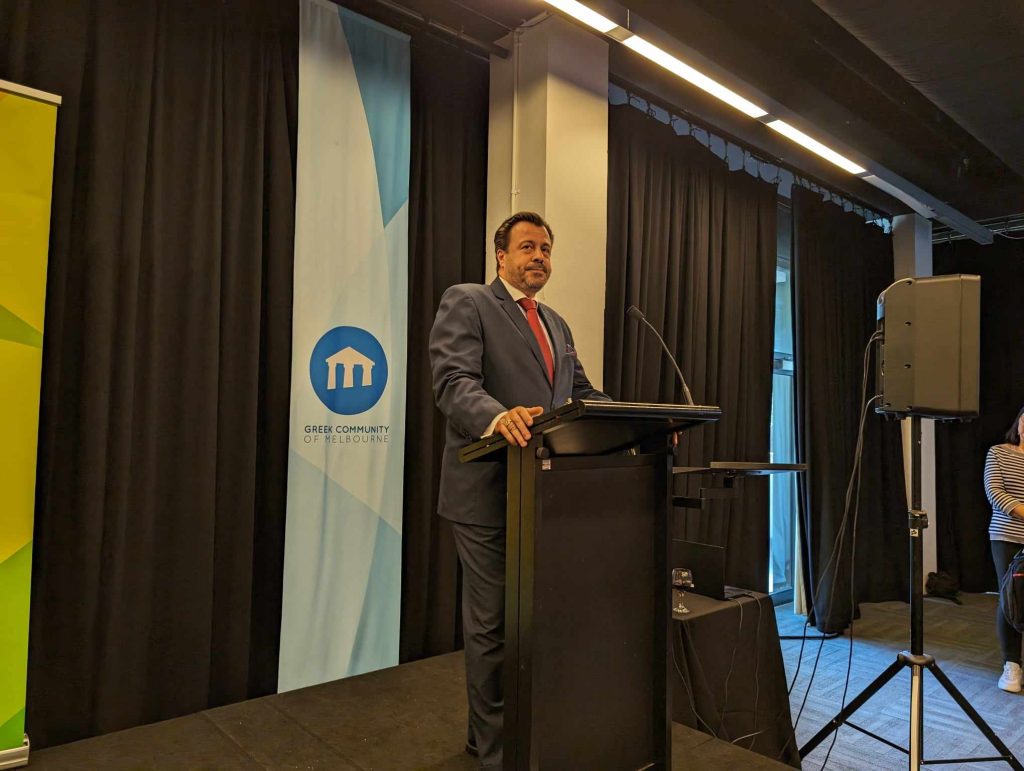
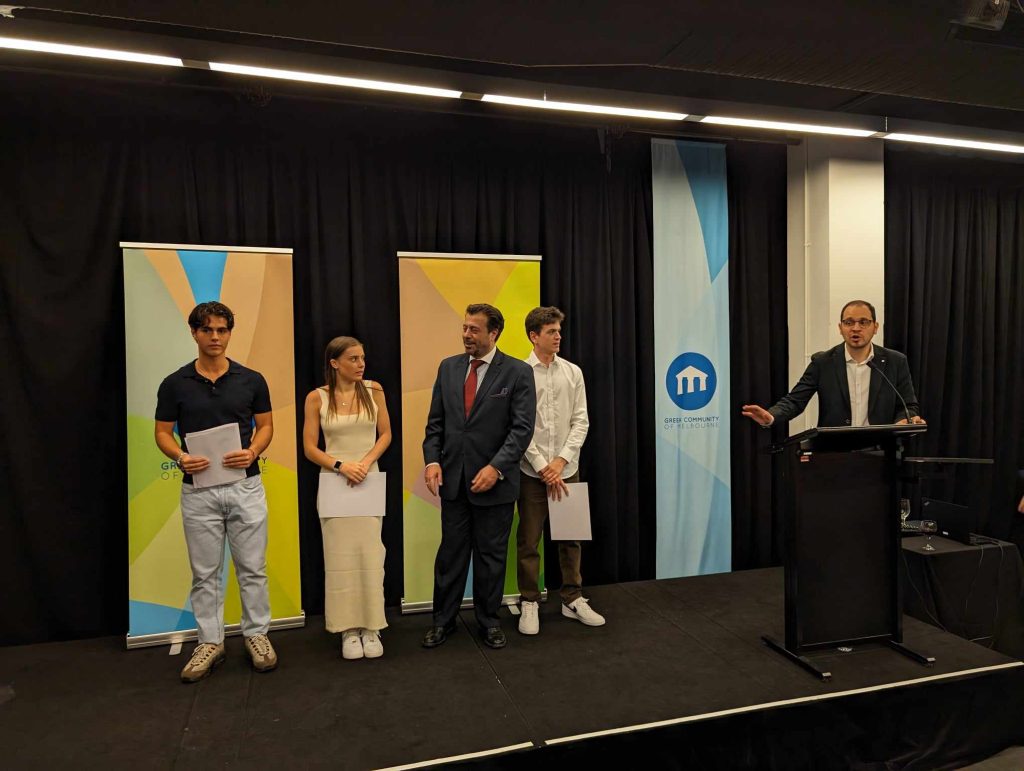
Greek Consul General in Melbourne Emmanuel Kakavelakis took the Greek Centre’s stage and addressed Year 12 students present to receive VCE awards on Tuesday, December 19. Rather than focus on achievements, he touched on the significance of values and the importance of honouring our heritage and language.

“For Greeks growing up here, it is necessary to love both your countries. Love Greece, love Australia, and love the entire world; all the places where you will become what you are,” Mr Kakavelakis said, addressing third and fourth generation Greek Australians in the Greek language.

“By improving your Greek, you will understand more and more, and you will become fluent. And don’t forget the more you know how to speak Greek, the easier it will be to speak more Greek.”

VCE awards Greek community of melbourne
Emmanuel Kakavelakis, Greek Consul General of Melbourne, encouraged students to find meaning in what they do. All photos copyright The Greek Herald / Andriana Simos.
VCE awards Greek community of melbourne
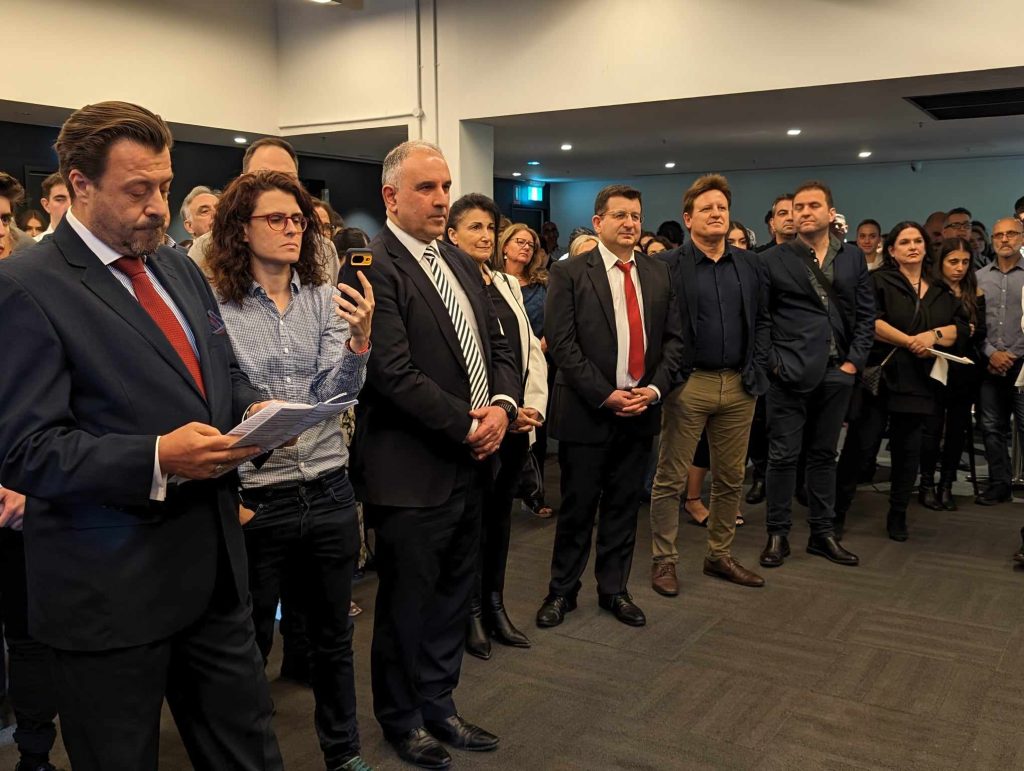
Official guests.
VCE awards Greek community of melbourne
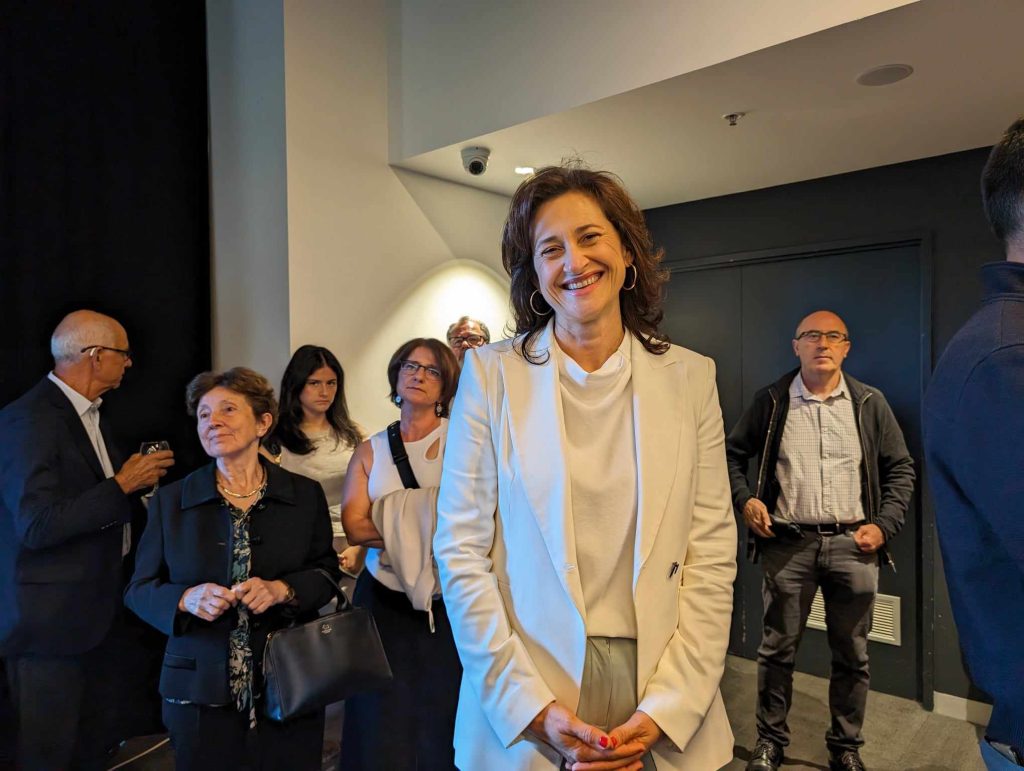
Maria Bakalidou, Principal of the schools of the Greek Orthodox Community of Melbourne and Victoria

Intermingled amidst his meaningful message were doses of humour about the ‘coolness’ of being Greek and an invitation for boys to join the Greek army.

The intensity of his speech may have been lost on speakers with just a rudimentary knowledge of the language. Mr Kakavelakis told The Greek Herald he understands they may not have caught all the words but is certain they managed to get the gist. At least, they laughed in all the right places.

He added that he sees more young people than ever before embracing their culture.

“Unfortunately, it comes at a time when Greece isn’t at its most robust,” he laments, hoping that this flicker of interest can somehow be fanned.

VCE awards Greek community of melbourne
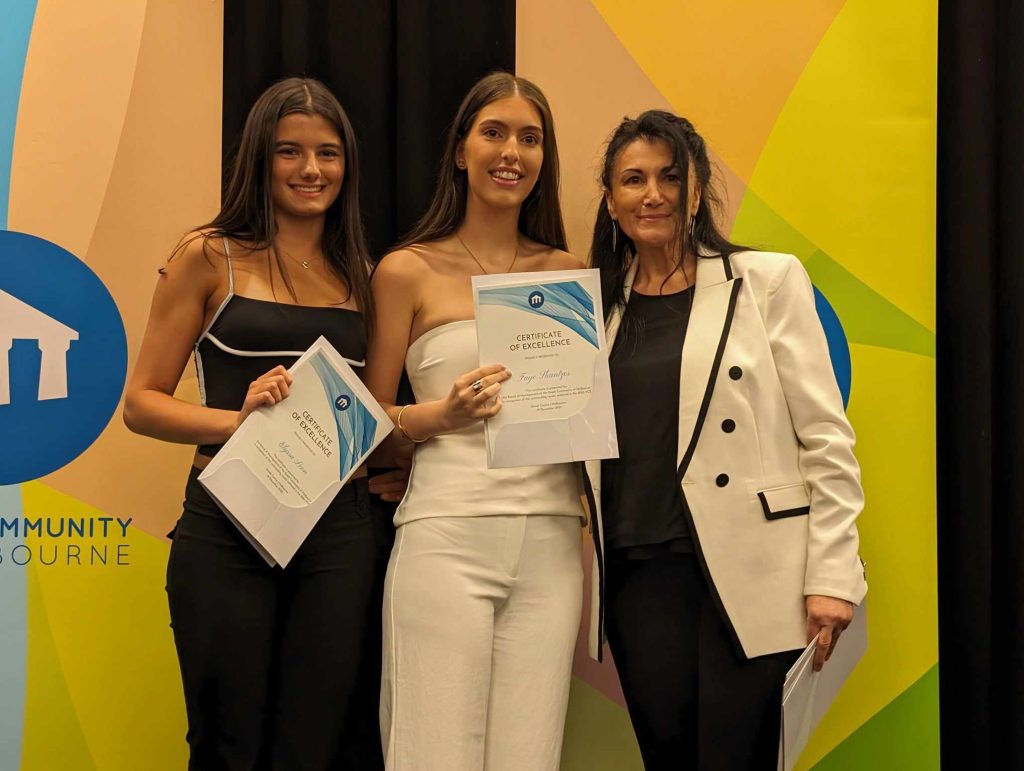
Greek Consul General to Melbourne, Emmanuel Kakavelakis, presented awards to some of the state’s highest achieving Greek Australian students.

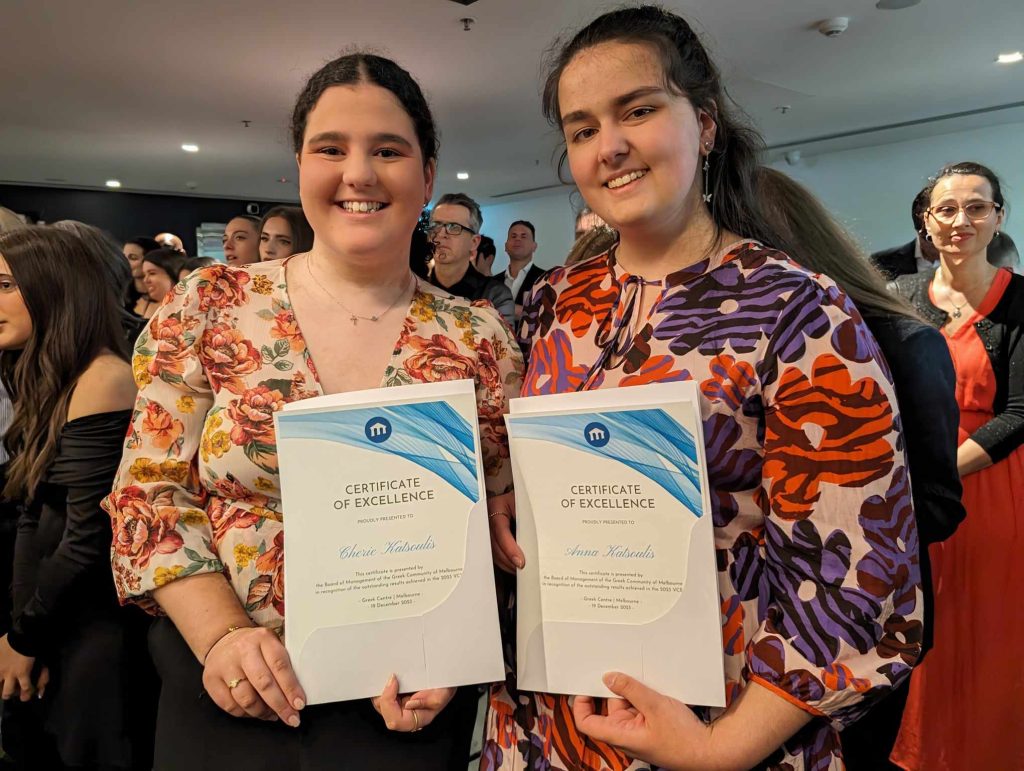
For the young students present, understanding an orator of such eloquence was a success unto itself. Cousins Cherie and Anna Katsoulis told The Greek Herald that having studied VCE Greek, they understood most of the speech.

“I did wonder if others did,” Cherrie pondered.

VCE awards Greek community of melbourne
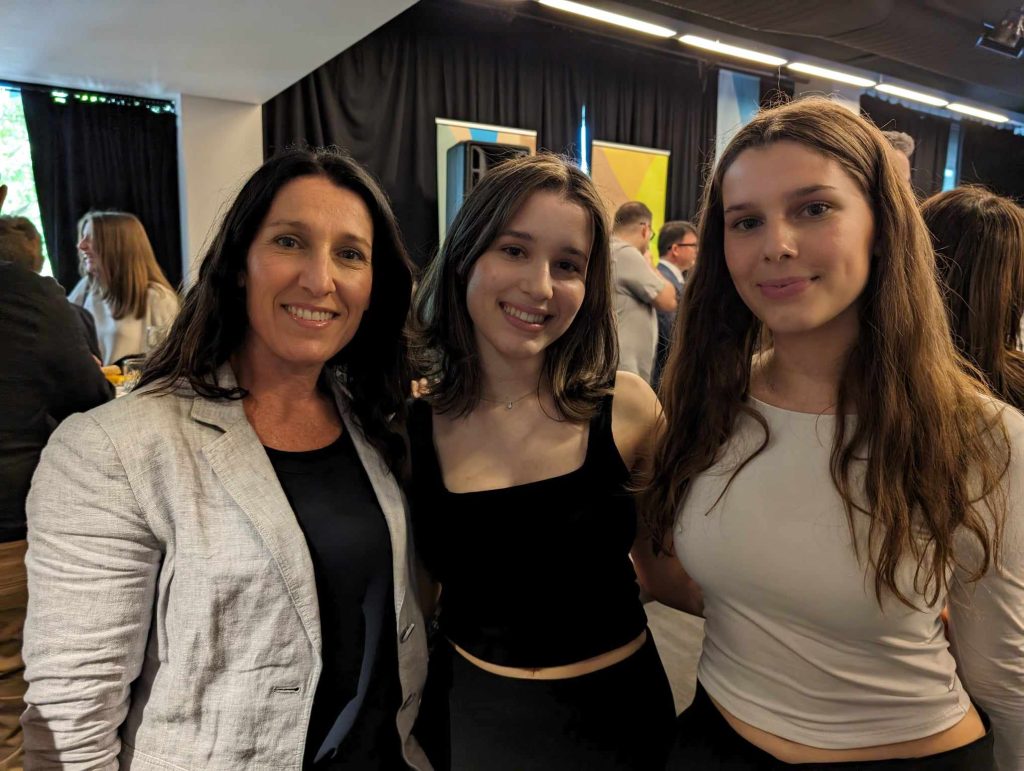
Cherie and Anna Katsoulis, cousins and top scorers in the VCE
VCE awards Greek community of melbourne
More awards and accolades

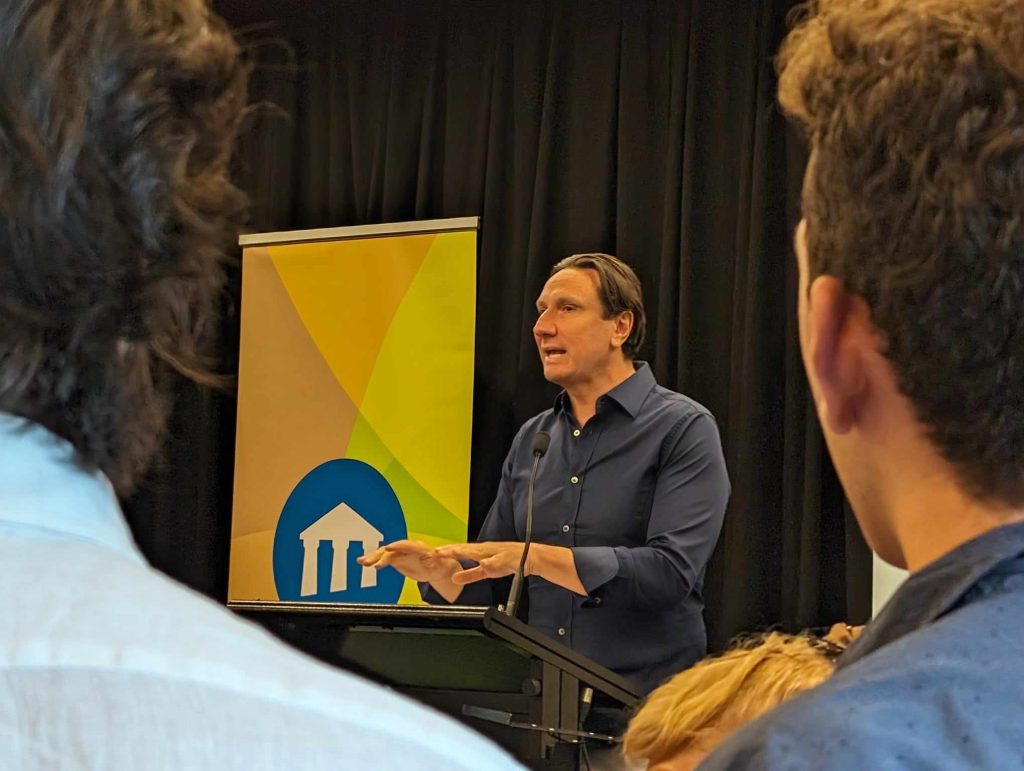
The GCM President, Bill Papastergiadis, OAM, also spoke and encouraged students to continue pursuing excellence and emphasising the importance of education in shaping a brighter future.

“You are the ambassadors of Hellenic excellence, our future educators, you are the future of the Greek community. You are the people that will drive change and continue to regenerate our community, and contribute to this great multicultural city that we live in. Become a citizen of the world,” Mr Papastergiadis said.

VCE awards Greek community of melbourne
Students listen to sage advice by GCM President Bill Papastergiadis.

Starting, stopping and starting again

Arthur Georgakakis, who hopes to do an undergraduate degree on cybersecurity (amongst other dreams), said he valued Mr Kakavelakis’ advice on protecting our digital privacy. The fact that he even picked up on that point was due to his efforts to learn the language at the eleventh hour of his student life.

“I hated Greek when I was younger. I couldn’t see the point of it as we live in Australia. My friends would make fun of me for going to Greek school,” he told The Greek Herald.
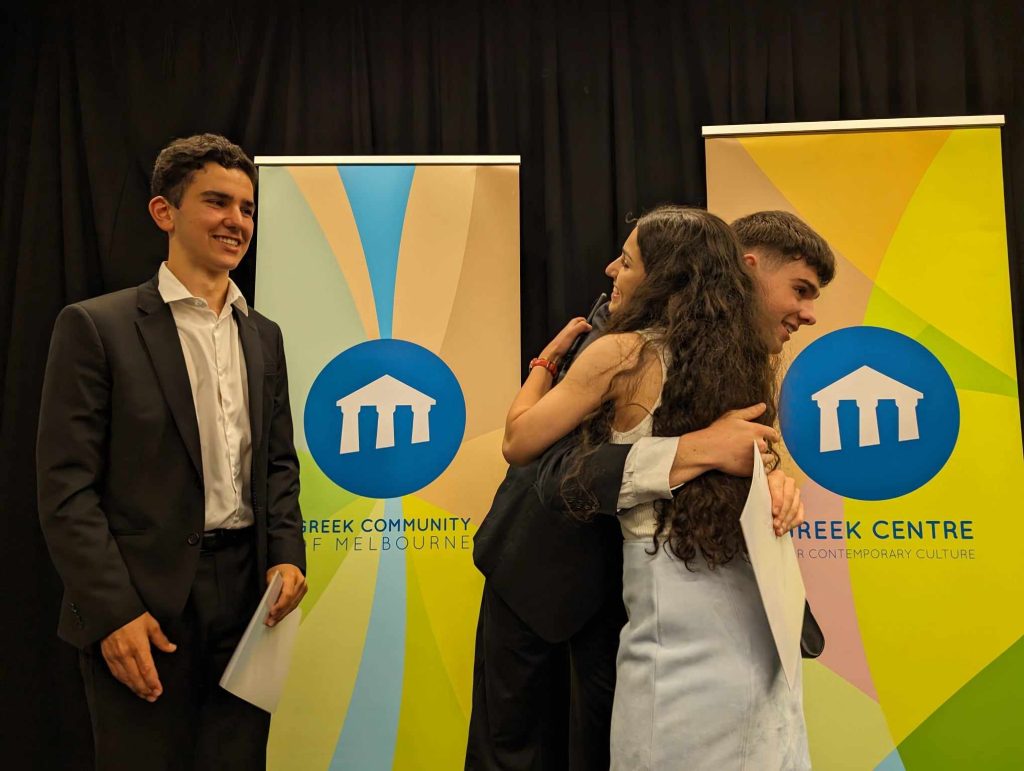
VCE awards Greek community of melbourne
Arthur (Thanassis) Georgakakis and Nektaria Toscas both intermittently stopped and started their Greek language education before falling in love with the language afresh in senior high school.

He went to bed one night praying for God’s guidance to choose the right VCE subjects and woke up with an epiphany – he would study Modern Greek.

“I got a raw score of 41 which is good bearing in mind that I only got back into it in Year 11. But thanks to the help of the Community Schools and their facilities, I managed to get this great result,” he said.

Like Arthur, Nektaria Toscas kept starting and stopping Greek lessons. It was her love for history that eventually fuelled her desire to learn.

VCE awards Greek community of melbourne
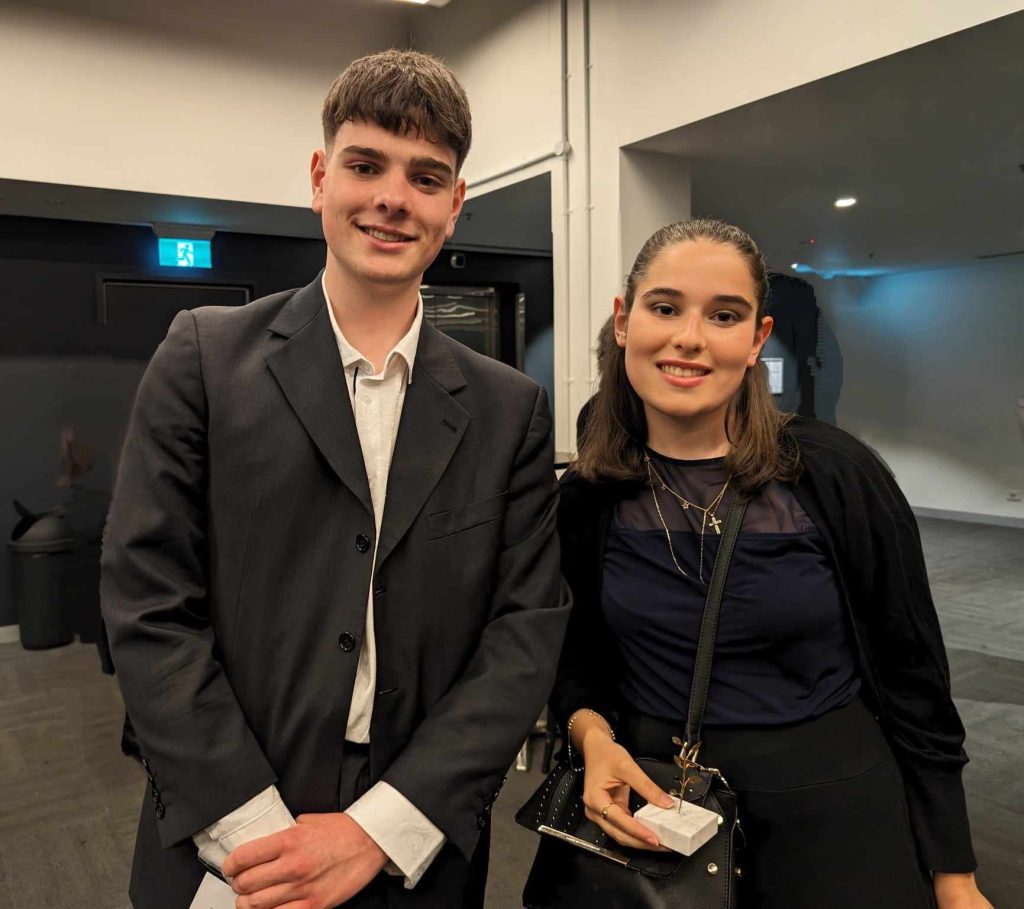
Theodore Limberis, Chris Aravatzis, Angeliki Katahiotis and Nektaria Toscas.

“The more I study Greek, there comes another layer of my history that I want to look into,” she said, adding that it is “a very personal subject that gives you a feeling that you wouldn’t get doing your other VCE subjects.”

Engineering hopeful Timothy Karalis and Michael Scopis, who wants to study Law, said that their grandparents played a major role in their choice to take VCE Greek.

VCE awards Greek community of melbourne
Timothy Karalis hopes to study Engineering and Michael Scopis hopes to study Law at Monash. Both studied VCE Greek to make their grandparents proud

“Every Monday night, I went to the Community’s Balwyn campus to study Greek. It was a tough year, but I improved the most because I put in the most effort,” Timothy said.

Michael said, “I wanted to make my yiayiades and my community proud, and to be part of this great community. I love their support.”

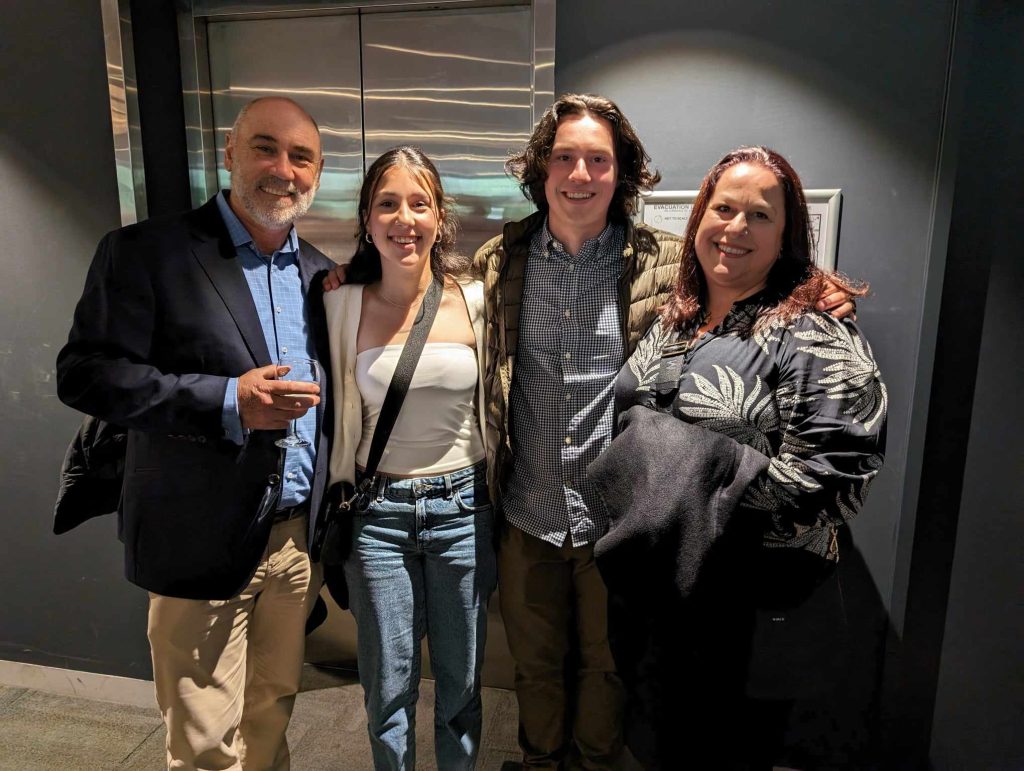
Entire families accompanied the award winners. Year 11 student George Vasiliadis, who got a 50 in Biology and 40 in Greek, was there with his parents and sister. George’s father told The Greek Herald he and his wife made a conscious effort to speak Greek at home.

“When George went to English school, he didn’t know a word of English. We shared what we knew as much as we could,” he said.

VCE awards Greek community of melbourne
The Vasiliadis family came to celebrate George’s success with a perfect 50 in Biology.
VCE awards Greek community of melbourne
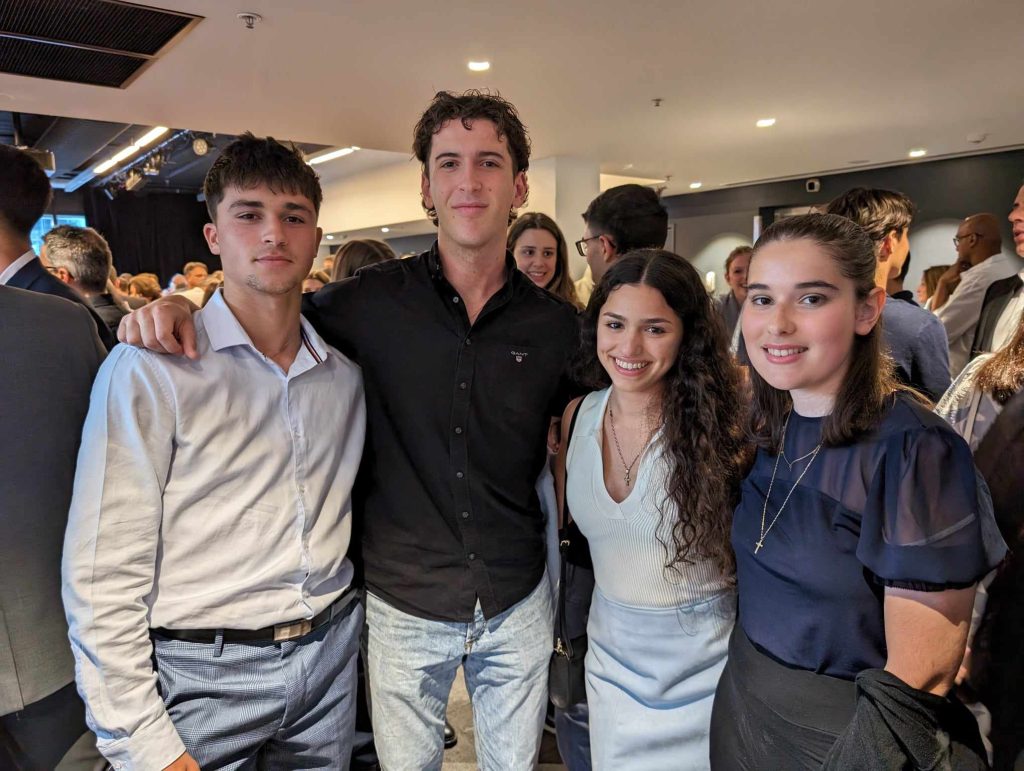
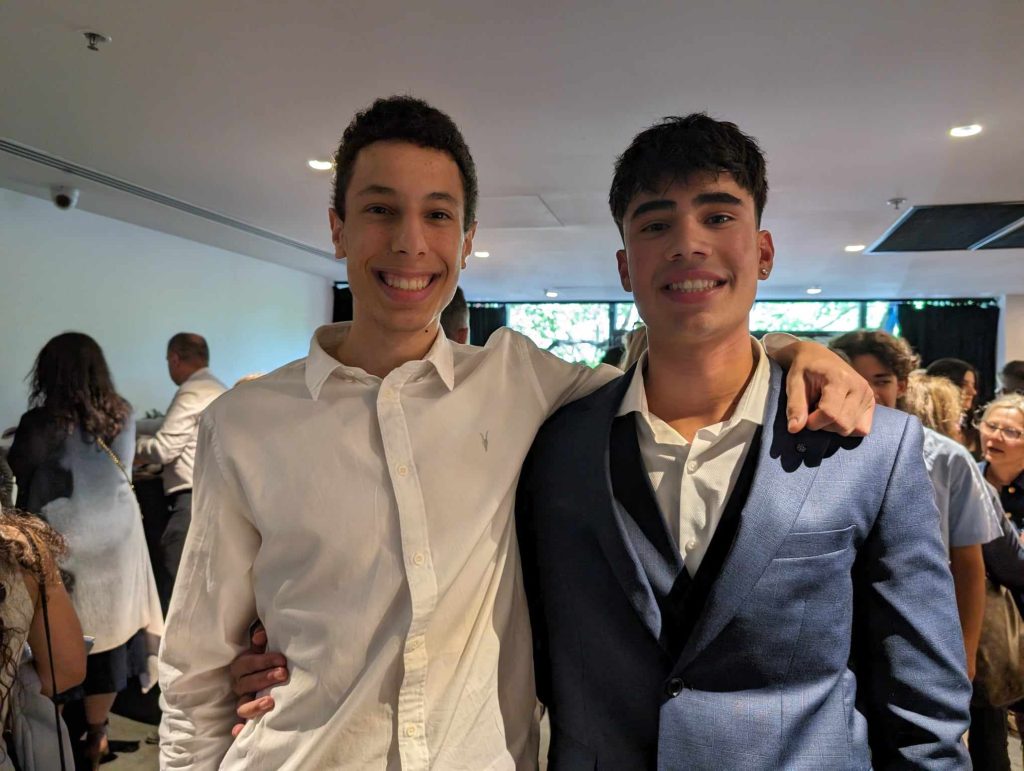
Students received awards and celebrated each others successes, creating memories.
VCE awards Greek community of melbourne
They came to support their younger siblings.

New-found motivation

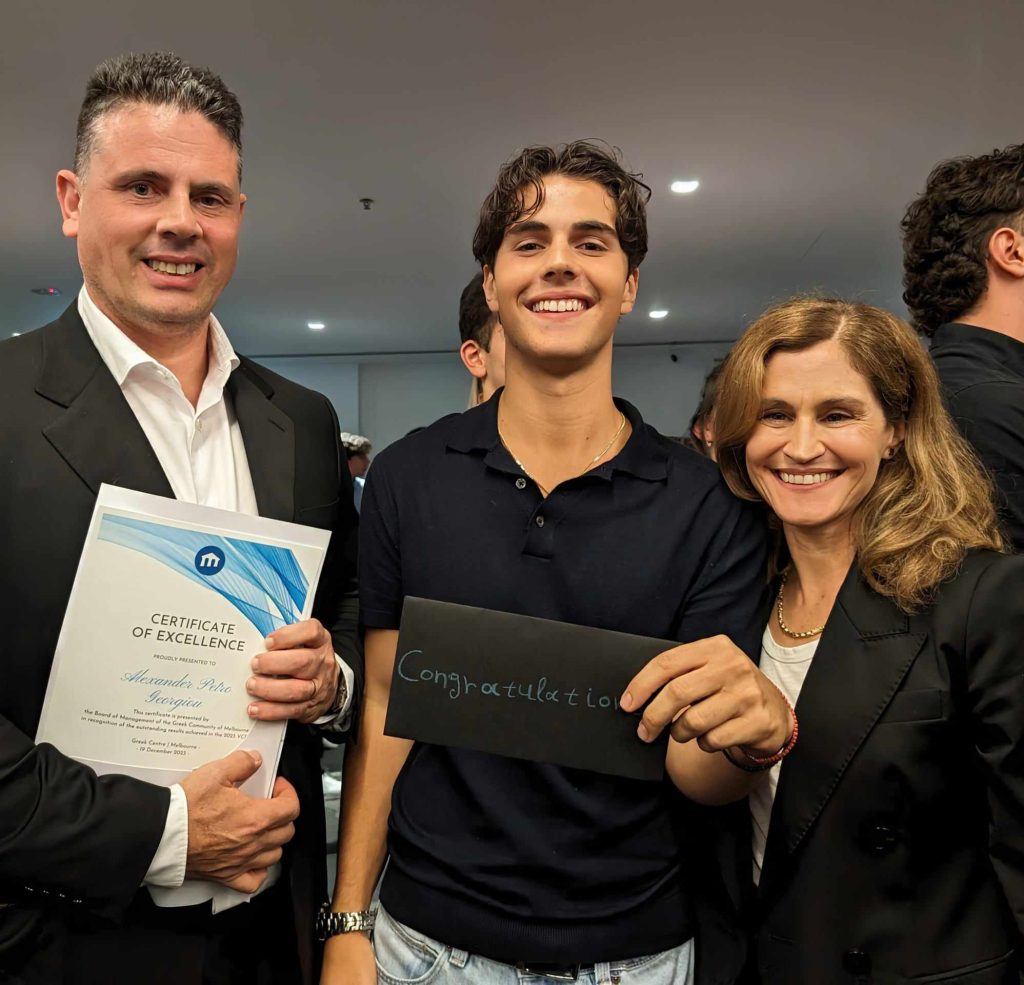
Victoria’s top scorer Alexander Petro Georgiou achieved a remarkable 99.95 and was offered a ticket to Greece. He said the first thing he will do upon setting foot at the University of Melbourne is to join the Greek Club.

“It [the VCE Award] has motivated me to learn the Greek language and get more in touch with my heritage and the Greek community,” he said, adding that the last time he studied Greek was when he was aged five.

VCE awards Greek community of melbourne
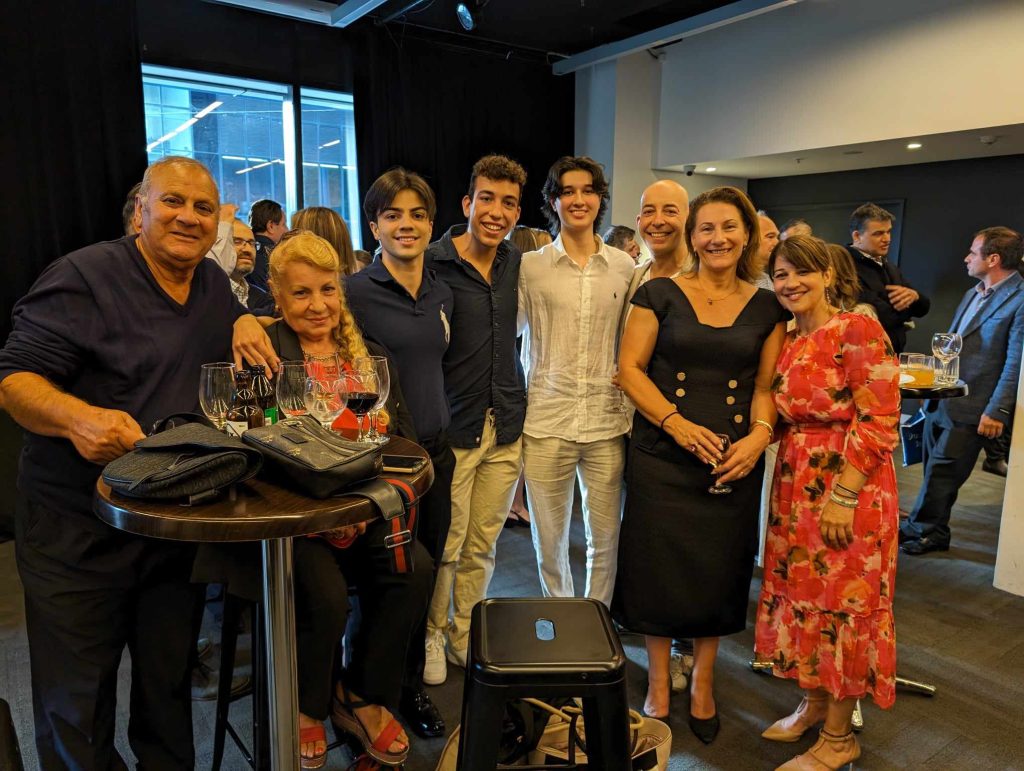
Melbourne Grammar Student Alexander Petro Georgiou received an ATAR of 99.95 and a ticket to Greece. His parents could not be prouder.
VCE awards Greek community of melbourne
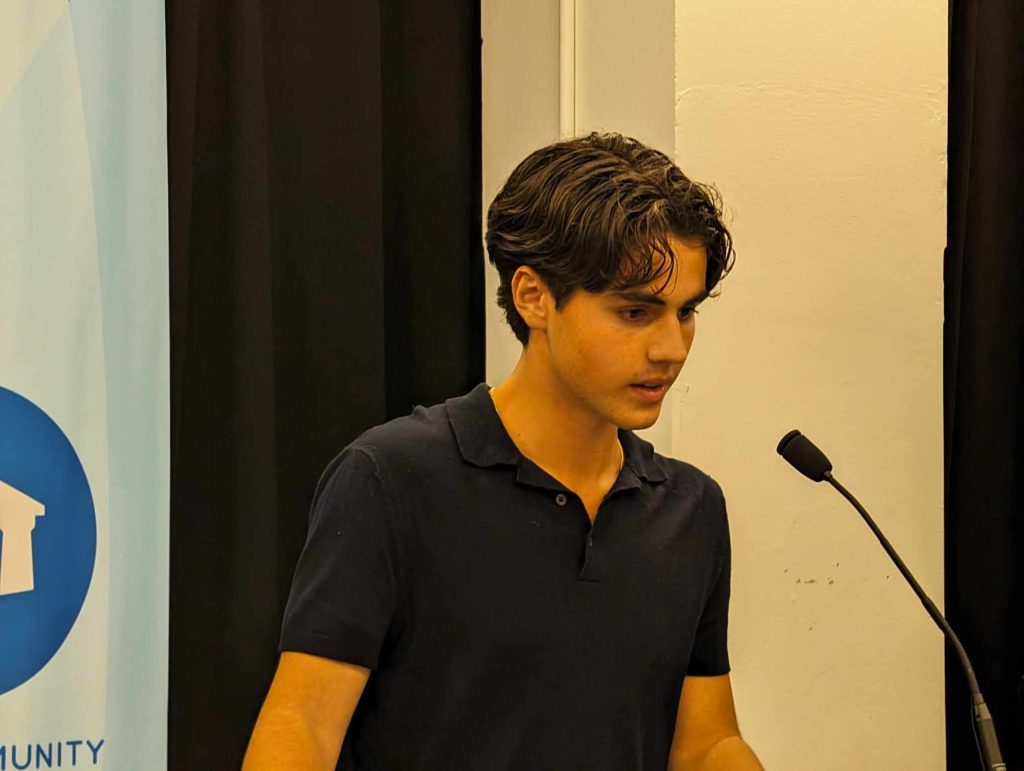
Alexander Petro Georgiou thanked all those who supported him.
VCE awards Greek community of melbourne
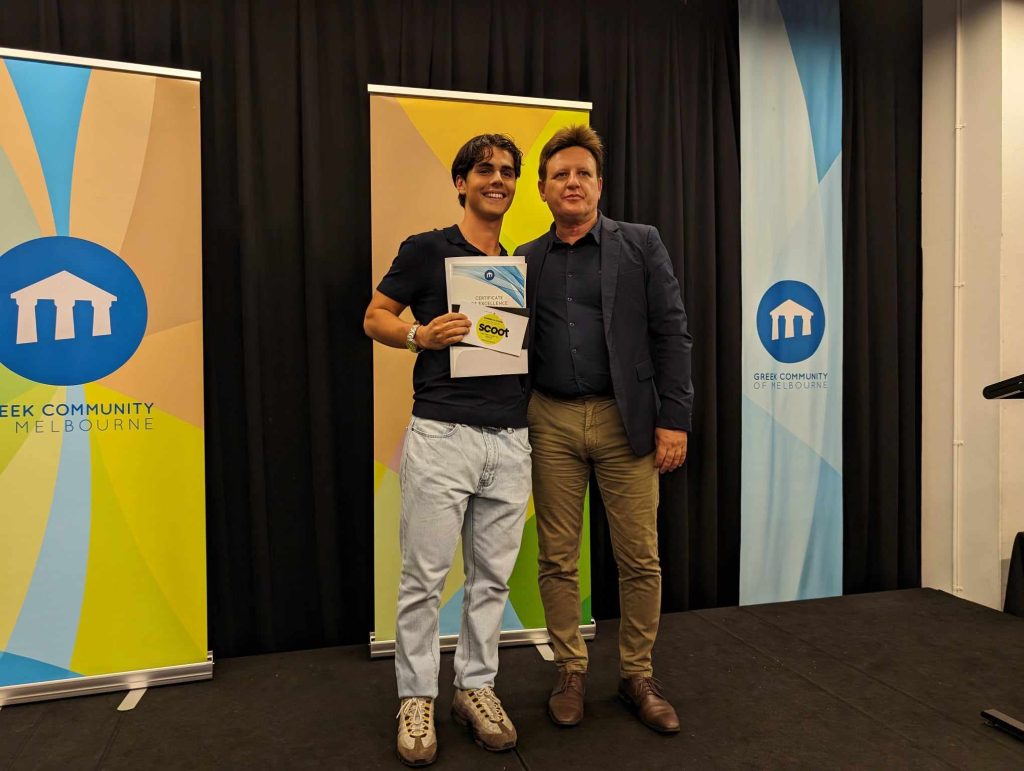
Alexander Petro Georgiou holds his ticket to Greece, offered by GCM board member Michael Karamitos’ family.

Like Alexander, Sam Mirvis said he did not take up Greek as a VCE subject.

“It is not worth the scaling. For instance, Latin scales 17, French scales 11 and Greek scales 1. As a VCE subject, it is not a strategic choice and it is also very competitive,” he said.

VCE awards Greek community of melbourne
High achieving Haleybury students Oscar Kalogeropoulos, Archie Antonopoulos and Sam Mirvis with their families.

Chris Aravatzis, who stopped studying Greek at the age of 10, agrees with this.

“I didn’t pick it up as a VCE subject because I was worried it would bring my marks down. But I hope to learn it,” he said.

Tara Metaxas learnt German and Indonesian at school, simply because it was offered.

“Greek language was not offered at my school and so I didn’t have the opportunity to learn it, otherwise I would have selected it,” she said, adding she neither speaks Greek nor North Macedonian, the language of her parents.

VCE awards Greek community of melbourne
High achiever Tara Metaxas (middle) with her mum and younger sister Isabel.

George Stergiopoulos attended the awards with Ping, his Chinese mother.

“I could not understand the Consul General’s speech because I was raised speaking and studying Chinese,” he said.

VCE awards Greek community of melbourne
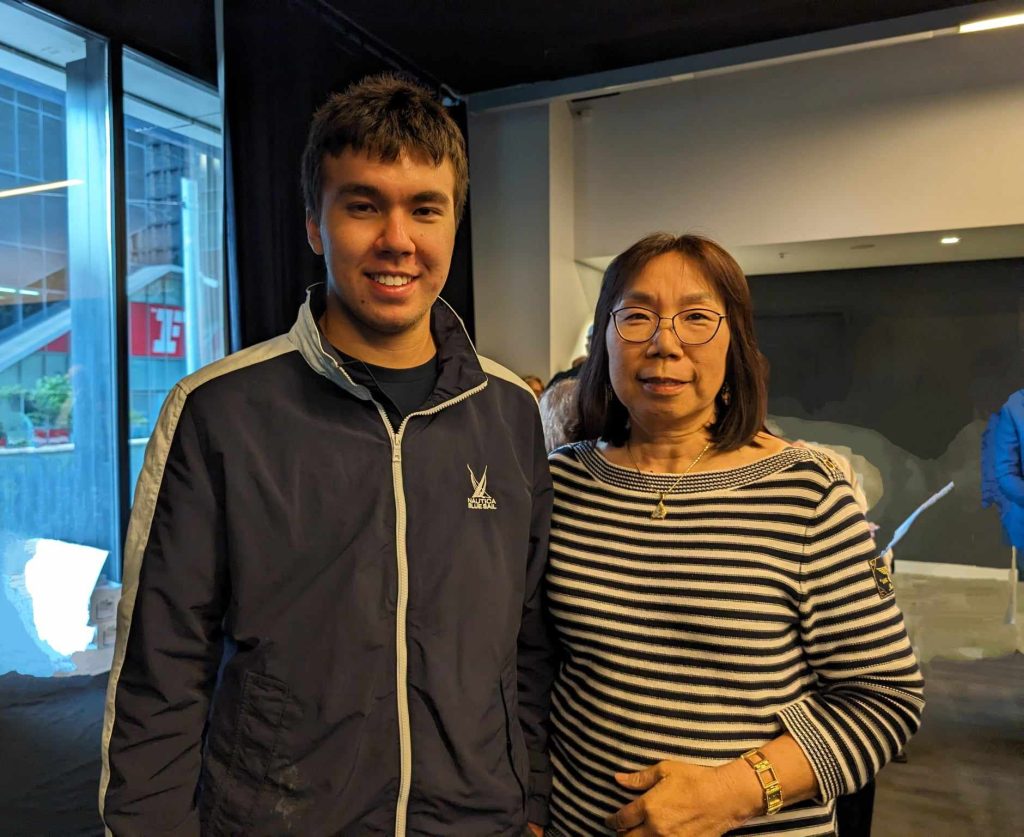
George Stergiopoulos, a high achiever in Physics, and his mother Ping.

Thankfully, George Emmanuel had his mother translating the Consul General’s speech in his ear.

“I was just going along with it and laughing at the jokes. Mum told me about the army,” he said.

VCE awards Greek community of melbourne
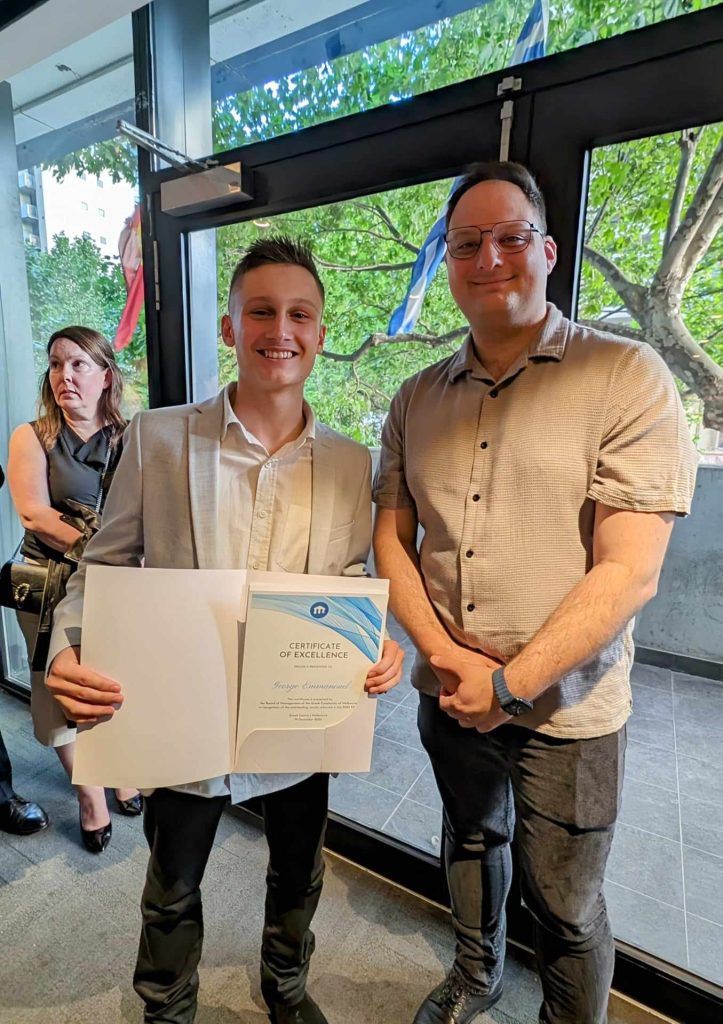
Doncaster Secondary student George Emmanuel and his teacher, Tass Sgardelis, who is also a GCM board member.

On the other end of the spectrum, Sofia Linardou has only been in Australia for three years and matriculated with 99.2.

“My parents said I didn’t have to study Greek as I could already speak it, but I still wanted to study it because I felt it was important to stay connected,” she said, adding that she found the Australian education system more relaxed and enjoyed the opportunity to select some of her subjects in Year 10.

VCE awards Greek community of melbourne
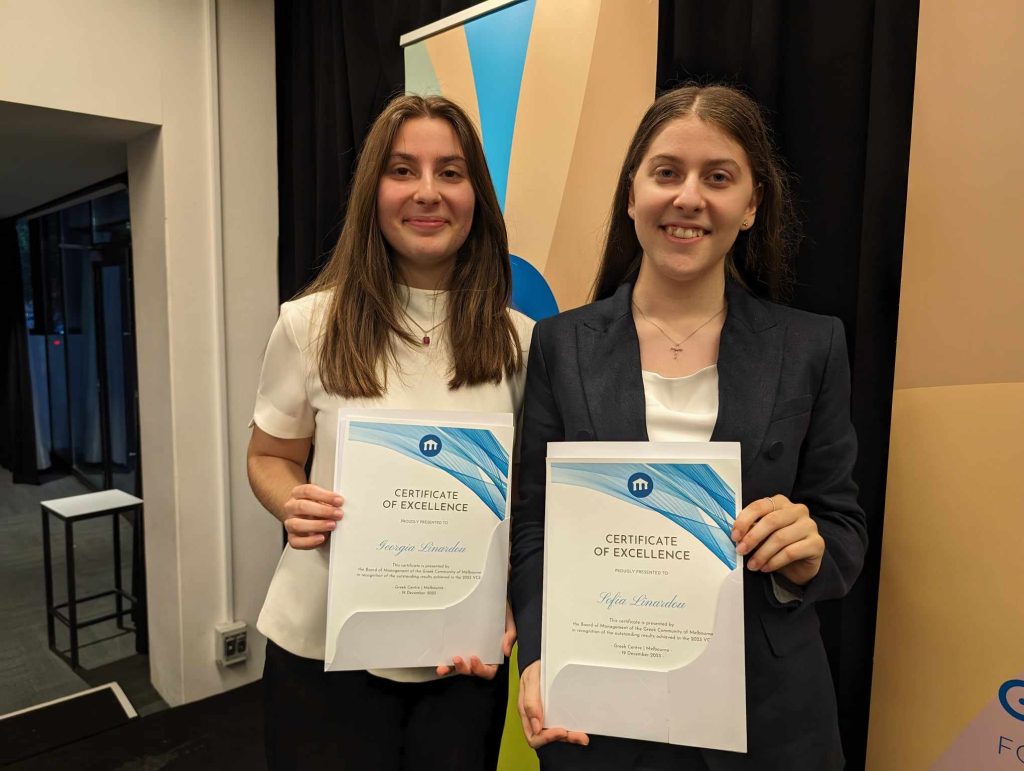
Georgia and Sofia Linardou, both sisters excelled in this year’s VCE.

Despite the opportunities here, she misses Greece and hopes to return.

“Greece is still my final destination,” she said. Her Year 11 sister Georgia, also holding a Certificate of Excellence, agrees.

Regardless of whether the awards were for top grades in the sciences, humanities or languages other than Greek, the desire to visit Greece, to strengthen the connection were palpable in the room.

*All photos copyright The Greek Herald / Mary Sinanidis.

Cyprus Community of NSW spread festive spirit at annual Christmas Markets

The Cyprus Community of New South Wales got into the festive spirit on Saturday, December 16 with their annual Christmas Markets.

The 2023 Christmas Markets were the community’s biggest yet, with 30 stalls selling varying products including candles, fashion products, Christmas goods, arts and accessories, and of course, plenty of food.

cyprus christmas markets1
Photos supplied.
cyprus christmas markets1
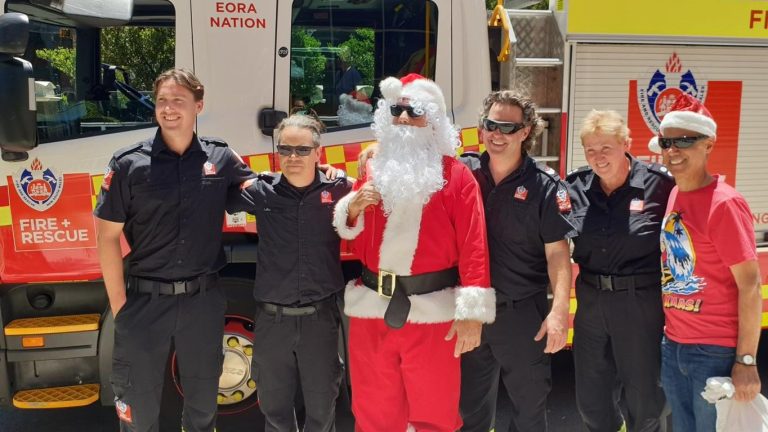
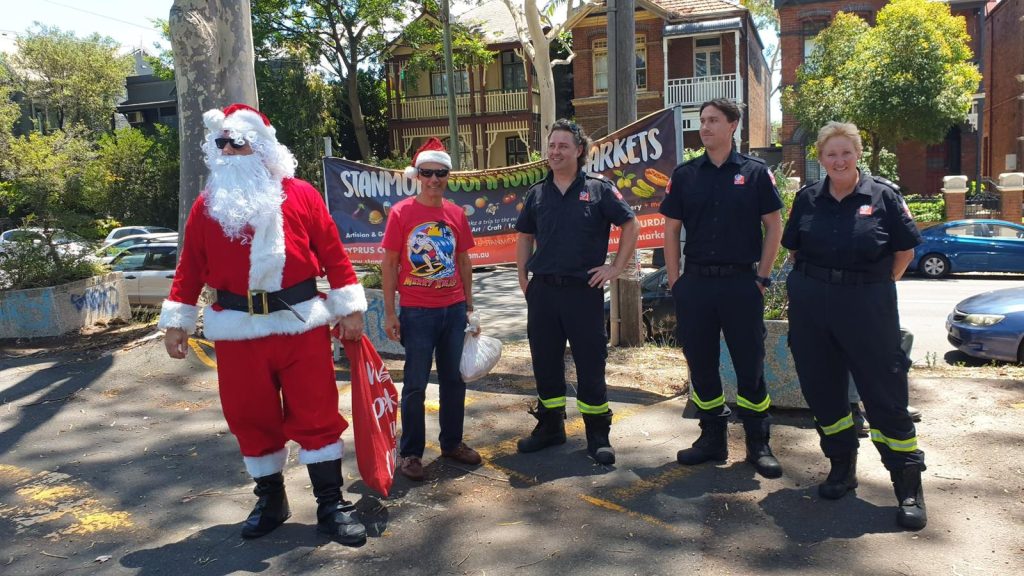
Santa attended the Christmas markets.

Music, rides and plenty of entertainment for both kids and their families were shared.

Santa even made a special appearance with the Marrickville Fire Brigade, giving all the perfect opportunity to take plenty of photos.

Santa’s helper was also there to capture all the precious festive moments.

Kytherian Youth Association in NSW elects new committee for 2024

Members of the Kytherian Youth Association (KYA) in New South Wales have officially elected a new committee for 2024.

Michael Preneas is the new President of the KYA. Also on the Executive Committee are: Nathan Vagias (Vice President), James Valmas (Secretary), James Stewart (Treasurer), and Robert Koutzoumis (Marketing Officer). The KYA’s Events Coordinator will be confirmed soon.

Making up the General Committee are Ross Cordato, Christine Kay and Luke Schwirtlich.

In a Facebook post, the KYA Committee thanked everyone for attending the recent Annual General Meeting (AGM), and expressed their anticipation for future events.

“We can’t wait to see you all at our upcoming events,” the post read.

Greek Community of Melbourne hosts defibrillator training seminar

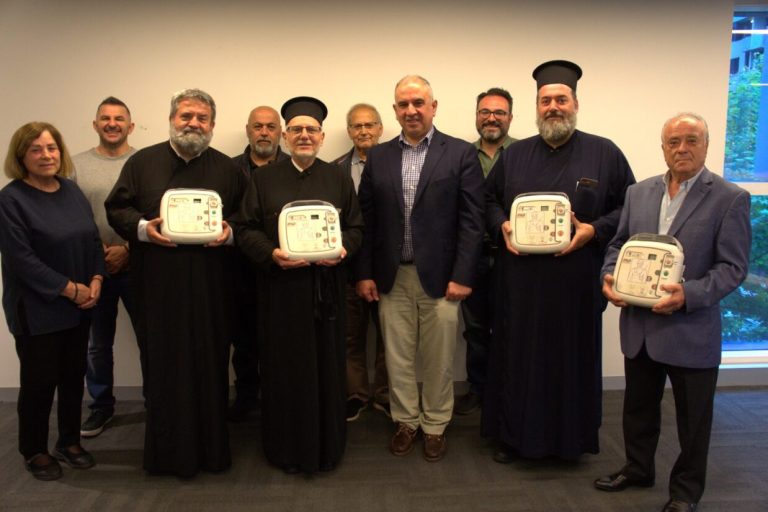
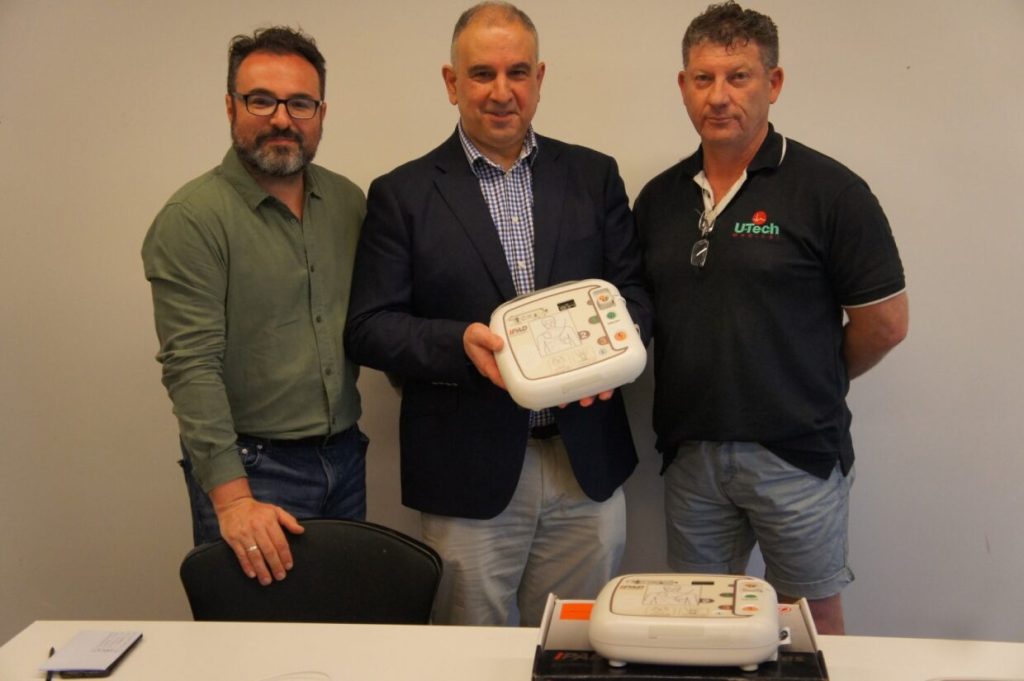
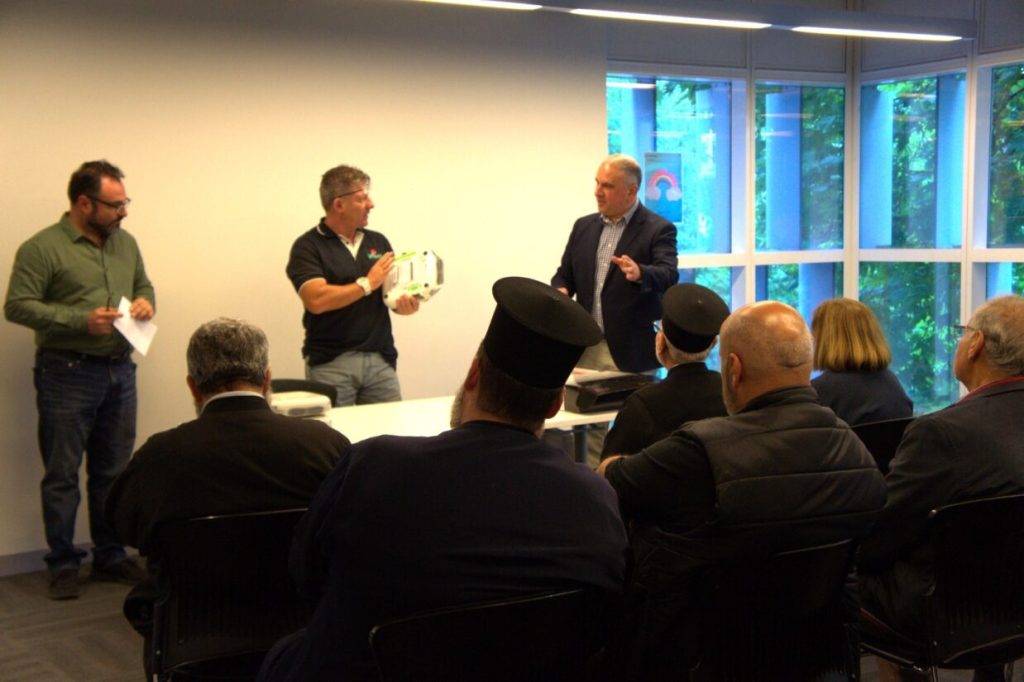
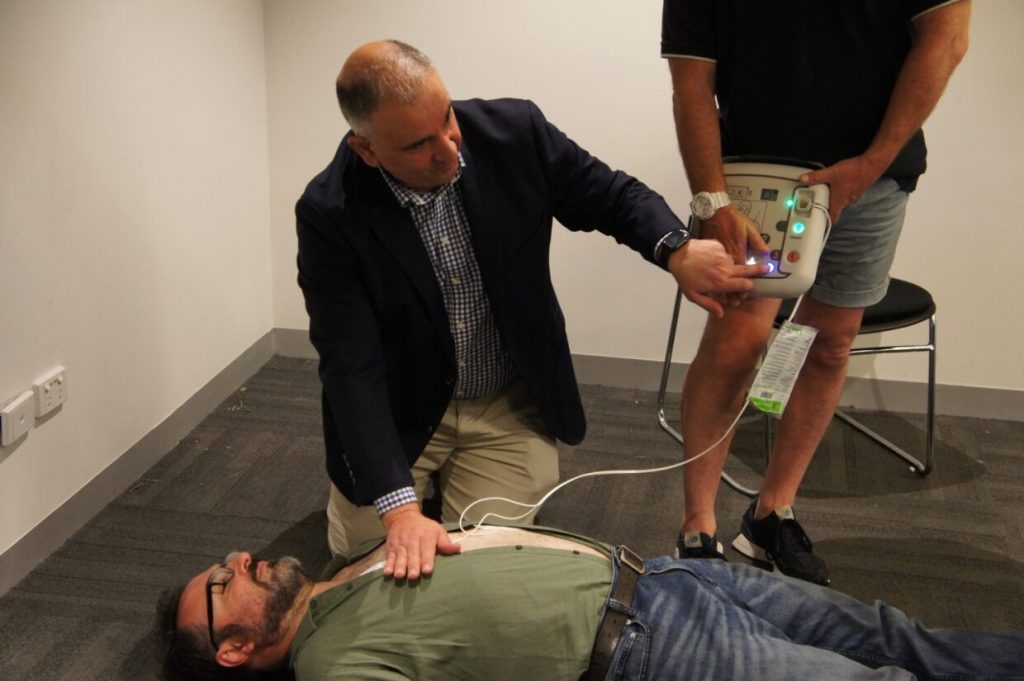
The Greek Community of Melbourne (GCM) took a notable step towards enhancing community safety by organising a defibrillator training seminar at the Greek Centre this month.

The seminar was specifically tailored for the priests of the GCM churches and their dedicated volunteers.

The training brought together priests from the Holy Church of “Annunciation of our Lady,” “Holy Trinity” Church, “St. George” Church, Holy Church of “St. Eleftherios” and Holy Church of “St. Dimitrios,” along with their devoted contributors.

Greek Community of Melbourne hosts defibrillator seminar.
All photos supplied by the Greek Community of Melbourne (GCM).
Greek Community of Melbourne hosts defibrillator seminar.

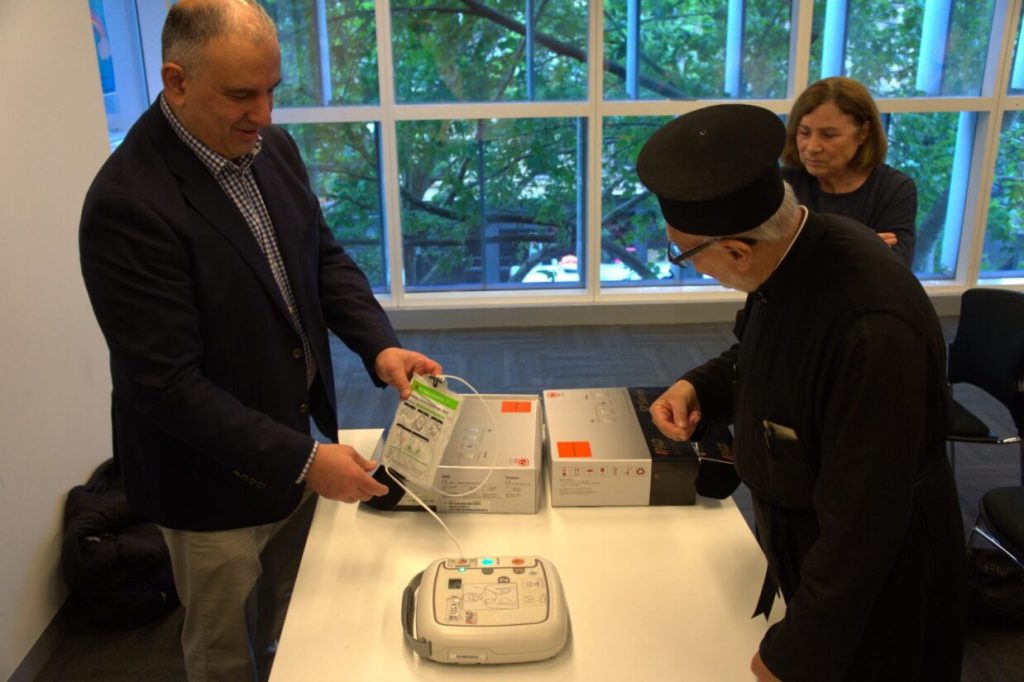
The seminar, delivered by Associate Professor Marinis Pirpiris and a “U-tech Medical” representative, featured a comprehensive step-by-step guide and detailed approach to utilising defibrillators in emergency situations.

The aim was to better equip key community members with the knowledge and skills required to respond effectively to life-threatening situations.

Greek Community of Melbourne hosts defibrillator seminar.

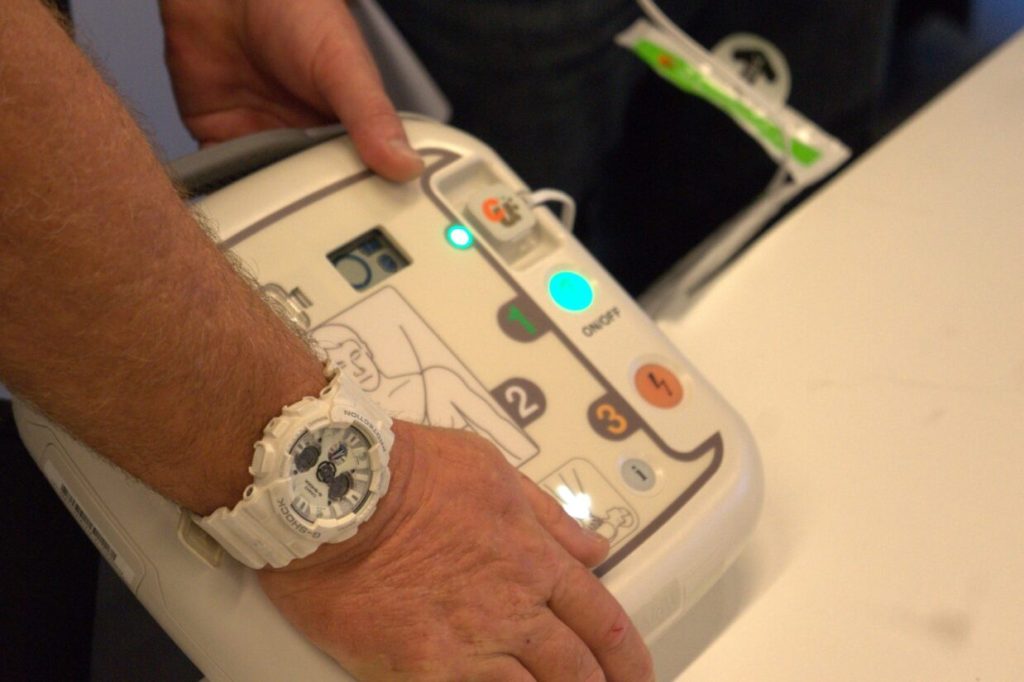
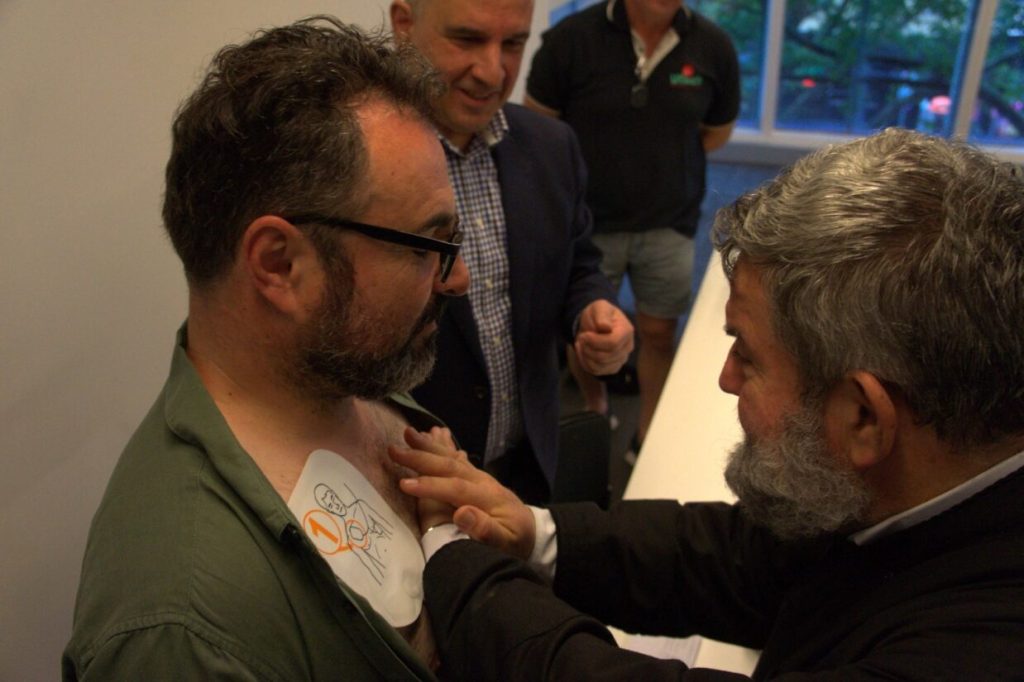
The GCM has invested in fitting all the GCM churches with automated external defibrillators (AED devices). These defibrillators can be used in people who need CPR, such as someone who has had sudden cardiac arrest. The defibrillators can be used to apply an electric shock to a patient to restart their heart or shock the heart back to its regular rhythm. It is used in addition to First Aid.

Dr Myron Weisfeldt of John Hopkins University estimates that in the US alone, an analysis suggested that 1,700 additional lives have been saved each year from bystanders using the defibrillators.

Greek Community of Melbourne hosts defibrillator seminar.

Associate Prof. Marinis Pirpiris, Treasurer of the GCM, emphasised the importance of the seminar, stating, “Having individuals who are trained and confident in using defibrillators can make a crucial difference. We feel it is our “duty of care” to the people attending various church services and functions.”

“In the next few months, it is anticipated that Melbourne shall be subject to severe heatwaves. We need to be medically prepared for our aged and people that have heart conditions,” Associate Prof. Pirpiris added.

Greek Community of Melbourne hosts defibrillator seminar.

Attendees had the opportunity to engage in practical demonstrations, followed by a Q&A session. The knowledge obtained assisted with further understanding of this life-saving equipment.

The seminar showcased the strong sense of community spirit and the proactive approach taken by the GCM in addressing the health and safety needs of its members.

GCM will also be organising a First -Aid training session for its churches’ first aid officers in 2024. For further information, please contact your local church.

Silver-lining for Greeks at OzTag Oceania Cup

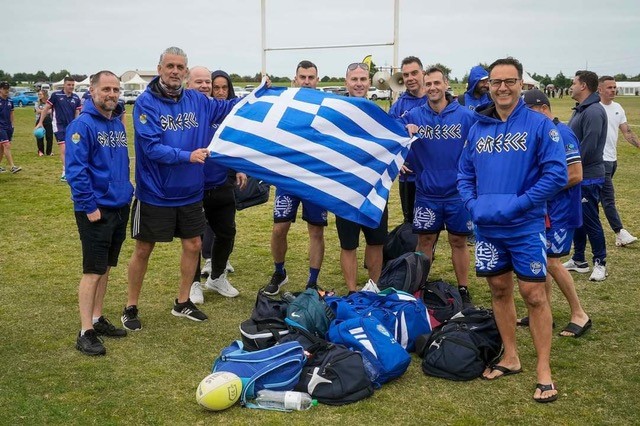
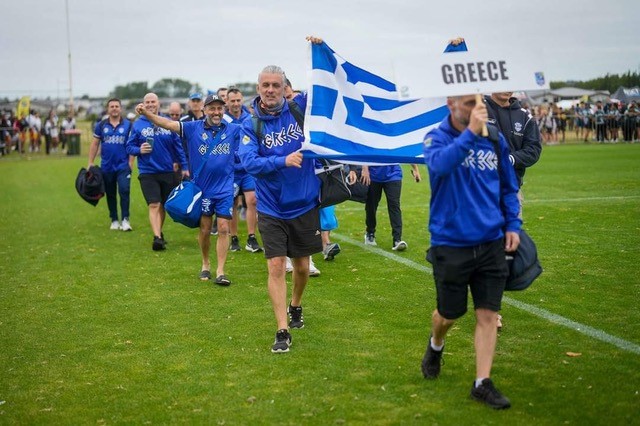
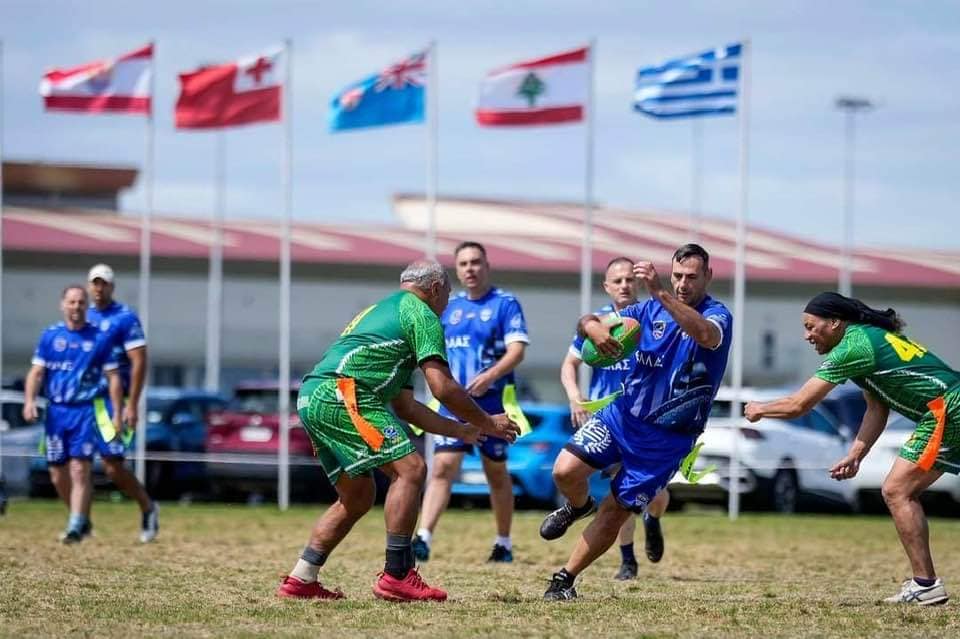
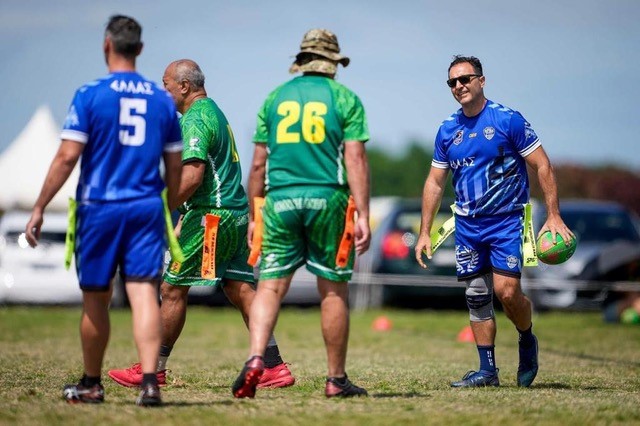
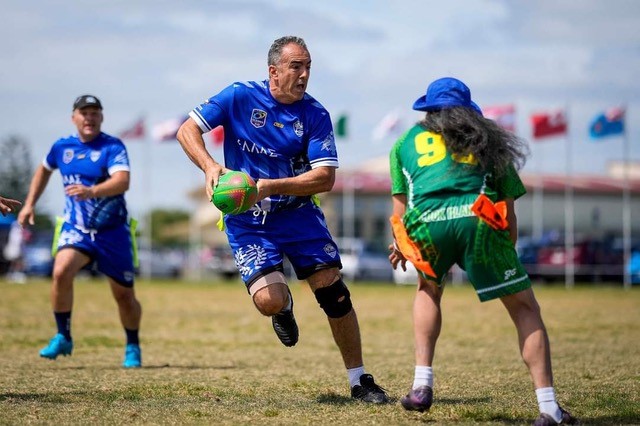
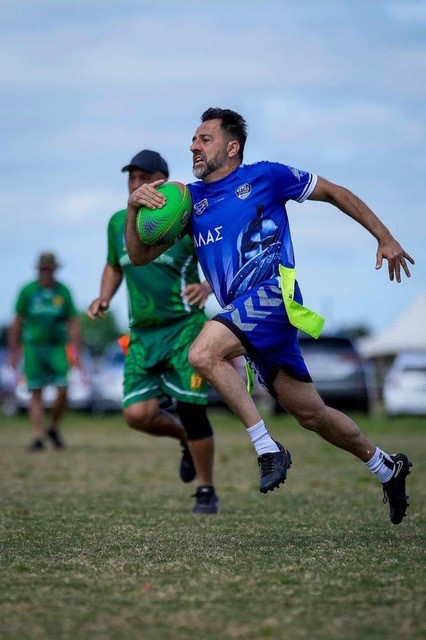
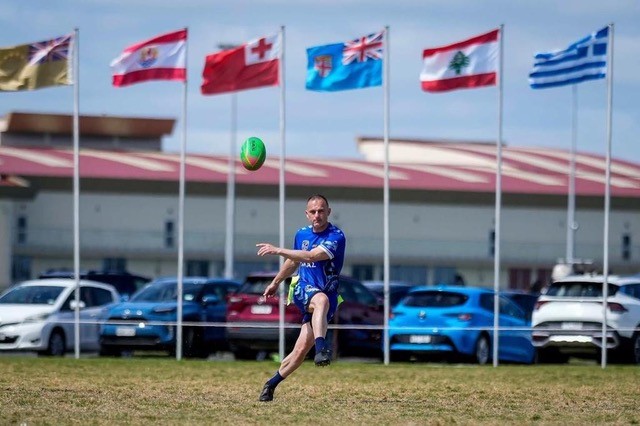
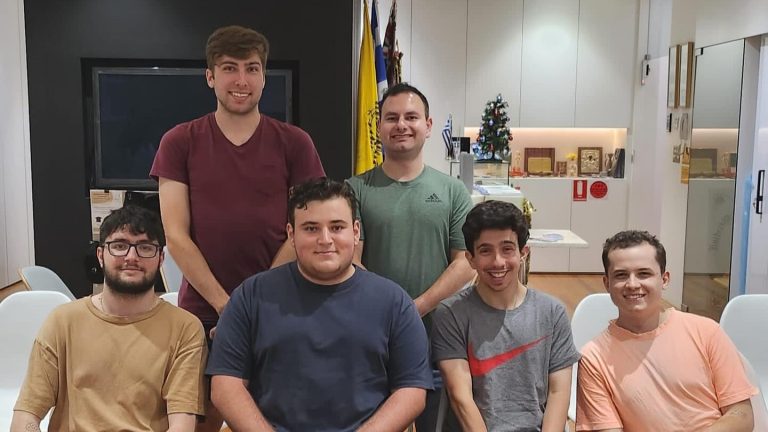
Greece’s over 45’s Oz-tag team took the silver medal at the weekend’s Oceania Cup in New Zealand, with the Australian-based side narrowly going down in Sunday’s grand final to the tournament hosts in Auckland.

Greece came into the tournament final with five wins, including impressive showings against the Cook Islands, American Samoa, and New Zealand Invitational to secure a grand final berth against New Zealand Maori.

Comprised of Sydney-based former lower grade Rugby League players including the likes of George Siambis, John Filipis and Peter Mougios, the Greeks went to Auckland with enough talent to make a statement.

Greece's over 45's Oz-tag team.
All photos from New Zealand Tag Football Inc.
Greece's over 45's Oz-tag team.

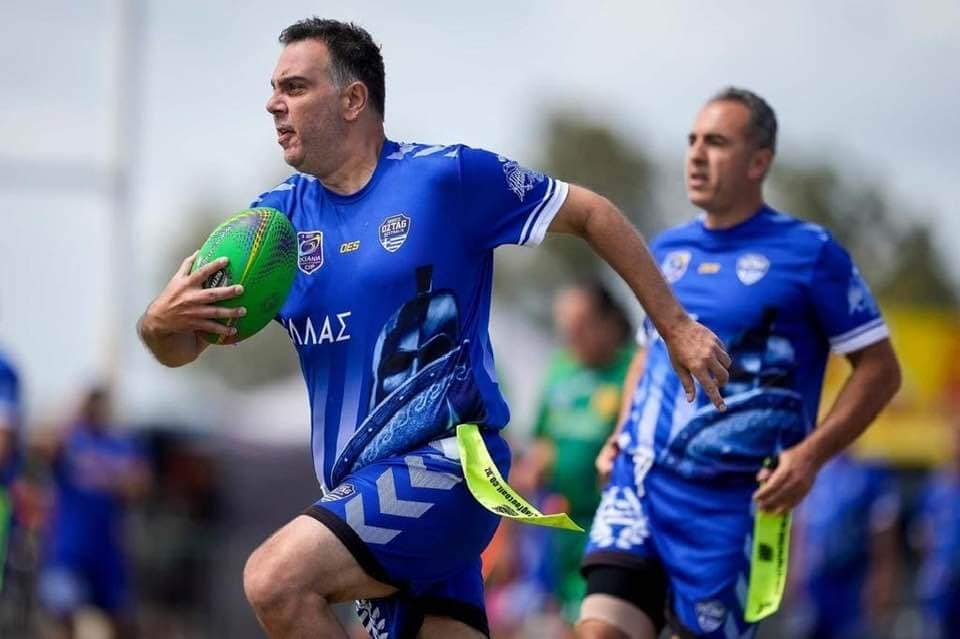
With the grand final hanging in the balance at the back end of the second half, the Greeks seemingly had the Kiwis on the ropes thanks to a build-up of momentum sparked by an incredible defensive showing, coupled by their superior territorial game and an inspirational try by captain Con Benardos.

The home-side would ultimately be too good on the day though, running away with a narrow 5-2 victory.

Proud Greek player and Ouzo Talk Podcast host, Nick Athanassiou, said that it was the clock that ultimately beat the Greek side.

“If there were five more minutes in that game, we would have beaten them,” Nick told The Greek Herald.
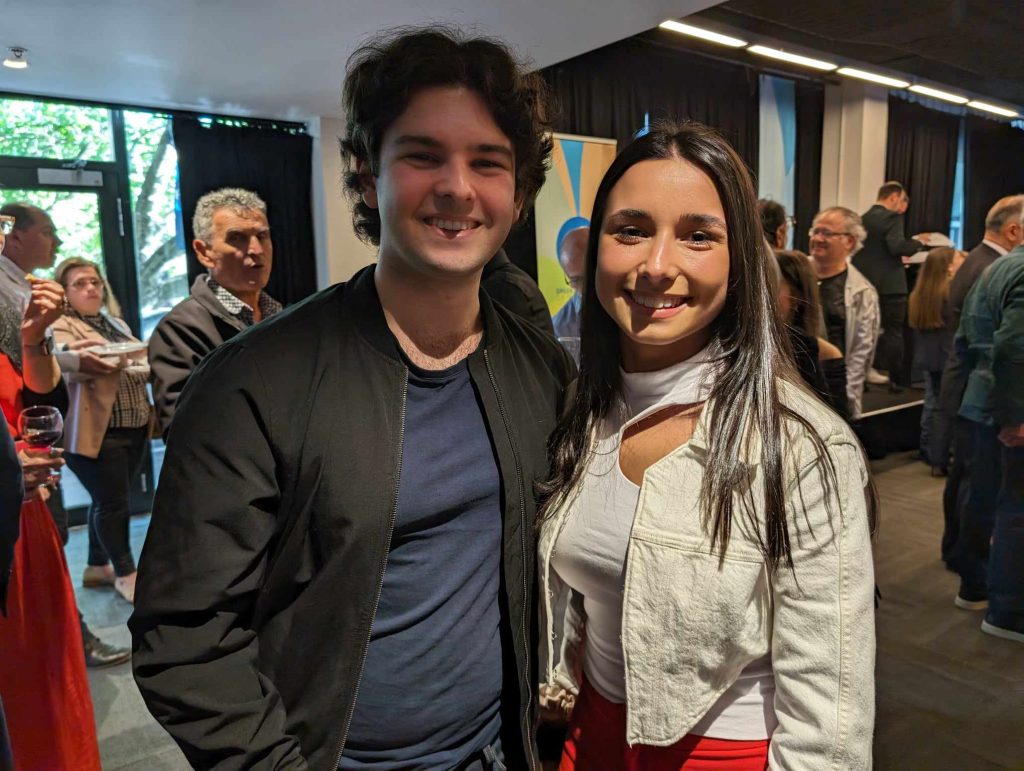
Greeces over 45's oz-tag team.
Greece's over 45's Oz-tag team.

“The boys put in such a great effort over the weekend and everything seemed to align for us. This is our highest ever finish at the tournament, which really says a lot about how much we’ve improved over the years! We just seem to be getting better with age.”

The Greeks were a hit with the locals as well as their fellow competitors, with plenty of banter exchanges before and after matches.

“We developed such a great relationship with some of these teams – particularly the Cook Islands boys,” Athanassiou added.
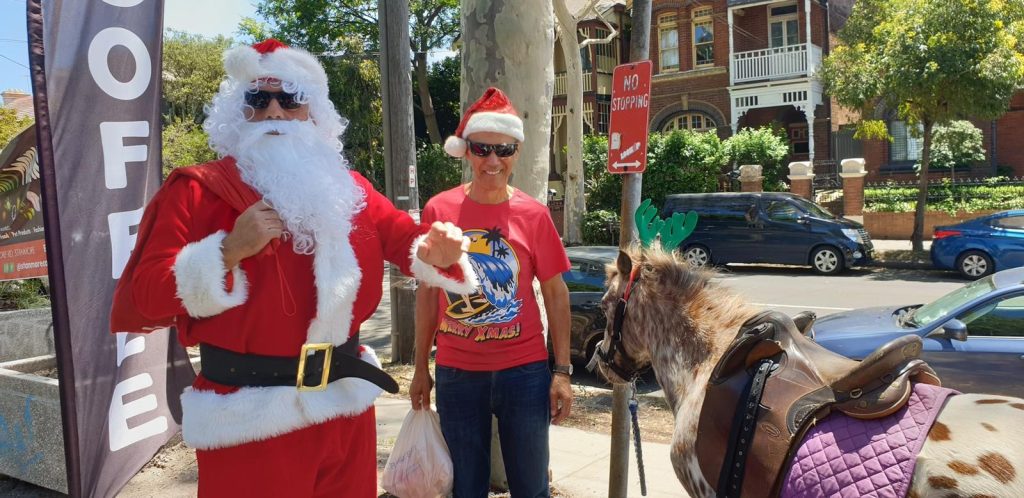
Greece's over 45's Oz-tag team.

“They invited us into their tent, we shared food, drinks and there was just this great feeling of camaraderie all throughout the tournament. It’s what sport is all about.”

A small contingent of Cook islander kids followed the Greek team over the weekend cheering with every great play and running onto the field with high fives after a try was scored.

“I don’t even get this support from my own kids” Vass Anastasiou joked.

Greece's over 45's Oz-tag team.

The gracious supportive kids did manage to walk away with Greek gear donated generously by members of the team on the last day of competition.

Oztag is a non-tackling version of Rugby League. Each team has eight players at any one time on the field, and must remove one or both tags worn on the opposition ball-carrier’s shorts to stop attacker’s progress.

The squad members are: Angelo Berios, Con Benardos, Foti Hristopanos, George Siambis, Harry Georges,  Ilias Tsivitis, Jimmy Binios, John Filipis, John Tzavaras, Michael Bourdakis, Nektario Stefanis, Nick Athanassiou, Peter Constantiniou, Peter Mougios, Savas Topalidis, Vass Anastasiou.

*All photos from New Zealand Tag Football Inc.

Christos Tsiolkas and Will Kostakis make Victorian Premier’s Literary Awards shortlist

Greek Australian authors, Christos Tsiolkas and Will Kostakis, have made the Victorian Premier’s Literary Awards Shortlists for 2024.

Tsiolkas and co-author Dan Giovannoni have been shortlisted in the ‘Drama’ category for their novel Loaded.

Kostakis has been shortlisted in the ‘Writing for Young Adults’ section for his novel We Could Be Something.

Tsiolkas and Kostakis have been shortlisted among 31 other Australian writers from a record-breaking field of entrants for the 2024 Victorian Premier’s Literary Awards, which feature the richest literary prize in the country.

2024 Victorian Premier’s Literary Awards shortlists celebrate books for all ages. Photo Australian Arts Review.
2024 Victorian Premier’s Literary Awards shortlists celebrate books for all ages. Photo: Australian Arts Review.

The works were chosen from 807 submissions and divided into eight prize categories: fiction, nonfiction, drama, poetry, Indigenous writing, writing for young adults, children’s literature, and unpublished manuscripts.

“The Victorian Premier’s Literary Awards are highly prestigious and can be life-changing for writers,” said Erin Vincent, CEO of The Wheeler Centre which administer the Awards on behalf of the Premier of Victoria.

“These are compelling works, exploring nuanced and complex issues through exceptional storytelling. I encourage all readers to support these writers by reading a shortlisted or highly commended work over summer.”

The winners of the 2024 Victorian Premier’s Literary Awards will be announced at a ceremony in Melbourne at The Edge, Fed Square on Thursday, February 1, 2024.

Source: The Australian Arts Review

Anastasia Polites named Trustee of Responsible Gambling Fund in NSW

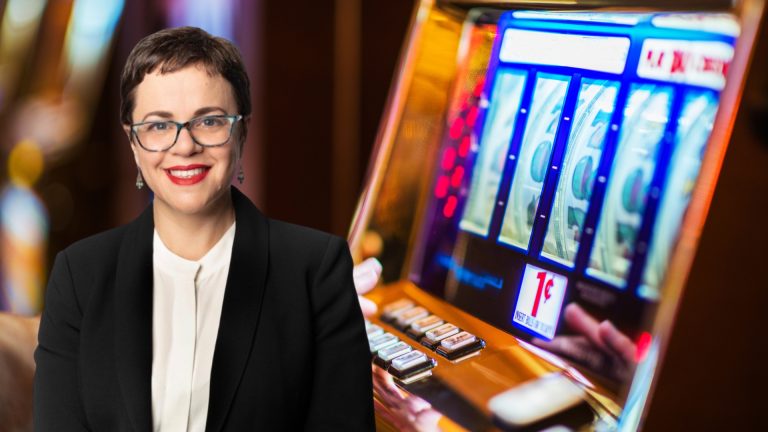
The NSW Government has appointed Chris Bertinshaw as the new Chair of the Responsible Gambling Fund (RGF) along with two new Trustees, Anastasia Polites and Steven Gal, following a publicly advertised merit-based selection process.

NSW Minister for Gaming and Racing David Harris said the appointments reflected the Government’s commitment to minimising harm from gambling across NSW.

The RGF Trust was established in 1995 through funds from a levy on casinos. The Trust plays a key role in advising the NSW Government on the allocation of funds for programs and initiatives to minimise gambling related harm. The RGF budget is used to fund programs consistent with the Office of Responsible Gambling’s vision to work towards zero gambling harm.

RGF Trustees are appointed by the Minister to make recommendations on the use of the Responsible Gambling Fund for gambling harm minimisation initiatives for research, community education, support services and support for policy and regulation. They also provide expert advice to the Minister on gambling policy.

The RGF Trust has a representative on the Government’s Independent Panel on Gaming Reform.

In 2023-24, the NSW Government committed an additional $10 million to the Responsible Gambling Fund to further support the work of the Office.

gambling
The RGF Trust was established in 1995 through funds from a levy on casinos.

The new appointments are for three-year terms:

  • Chris Bertinshaw (Chair and Trustee) is an accomplished leader with more than 30 years’ experience in governance and public health. As Chair of the Illawarra Shoalhaven Local Health District Board and with CEO experience in five diverse organisations, he will bring valuable insights and strategic direction to the RGF.
  • Anastasia Polites (Trustee) is an accomplished senior manager who has worked in employment and industrial relations law, with experience in supporting disadvantaged clients affected by gambling harm through previous roles in the community legal services sector. Her leadership skills and board experience will be valuable assets for the Trust.
  • Steven Gal (Trustee) brings extensive expertise in health and community development. He has led funding reforms and program development in multiple portfolios and for diverse populations. He is currently a director on the boards of the Wellington Aboriginal Corporation Health Service and the Accessible Diversity Services Initiative.

The Government has also reappointed three existing Trustees: accomplished Board Director Anne Fitzgerald and experienced public health executive Robert Lagaida to December 2027, and former head of the School of Public Health at the University of Sydney Professor Joel Negin to December 2024.

The RGF’s work is delivered by the Office of Responsible Gambling. More information about its work is available online at www.gambleaware.nsw.gov.au.