Home Blog Page 851

Night of nostalgia in Sydney: Celebrating Stavros Kougioumtzis’ legendary music

On Sunday, March 24, The Great Club in Marrickville will honour a Greek music legend with a special tribute show taking centre stage.

The show, ‘A Tribute to Stavros Kougioumtzis,’ by Irene Vacondios and Sotiris Procopiou will be held in conjunction with the Greek Festival of Sydney and is expected to wow crowds of all ages with Greek songs everyone knows and loves by the renowned Greek composer – Stavros Kougioumtzis.

Born on July 23, 1932, Kougioumtzis was known for being one of the most significant Greek composers of the 20th century. He died on March 12, 2005, leaving behind a lasting impact on the music industry.

Some of his classic hits include ‘Poune ta Chronia,’ ‘Mi Mou Thimoneis Matia Mou,’ ‘Oi Eleutheroi Ki Oraioi,’ ‘To Kokkino Foustani,’ ‘Na Tane to 21’ and many more.

In an interview with The Greek Herald, singer Irene said Kougioumtzis was responsible for kickstarting the recording careers of many iconic Greek artists.

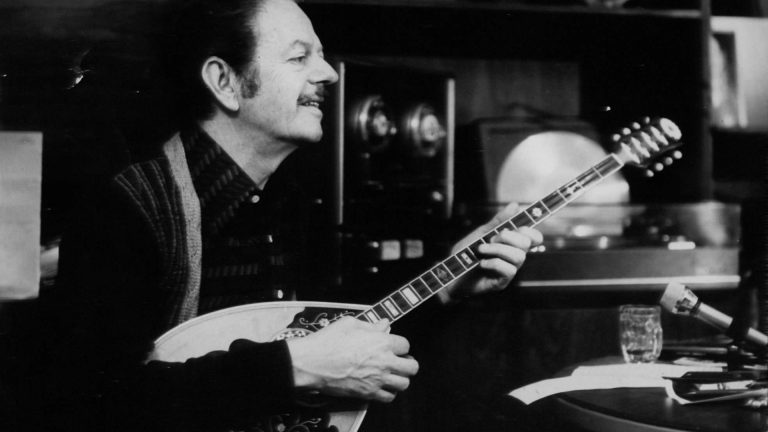
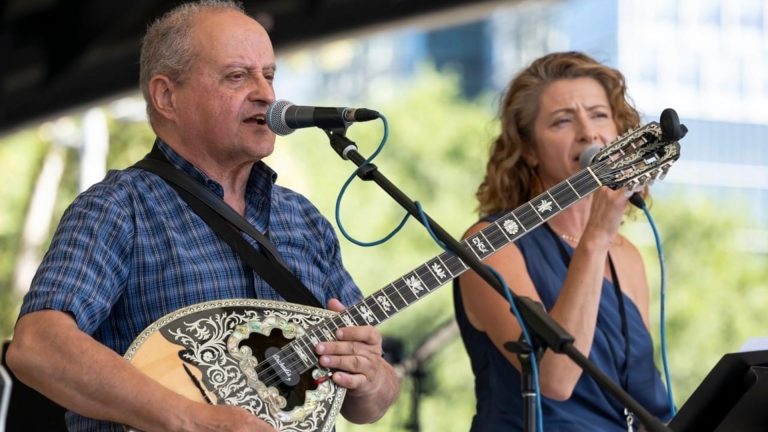
Bouzouki player. Photo: supplied from Irene

“These included George Dalaras, Yiannis Kalantzis, Haris Alexiou and Anna Vissi. Kougioumtzis’ influence resonates through generations and people still listen to his songs today,” Irene said.

“I remember growing up listening to Yiannis Kalantzis, and my dad loved him too, and a lot of my favourite songs sung by Kalantzis were actually written by Kougioumtzis, and that includes a lot of songs by Dalaras, Haris Alexiou and Anna Vissi as well.

“There are so many classic Greek songs that we all know and love, yet we probably didn’t know that Kougioumtzis wrote them. We look forward to performing them for everyone.”

Irene said Kougioumtzis’ repertoire spans from the early ’60s to the late ’90s, with many ballads and timeless classics.

“His songs evoke nostalgia and memories of growing up with immigrant parents,” Irene said. “Many of us didn’t realise the depth of his influence until later in life.”
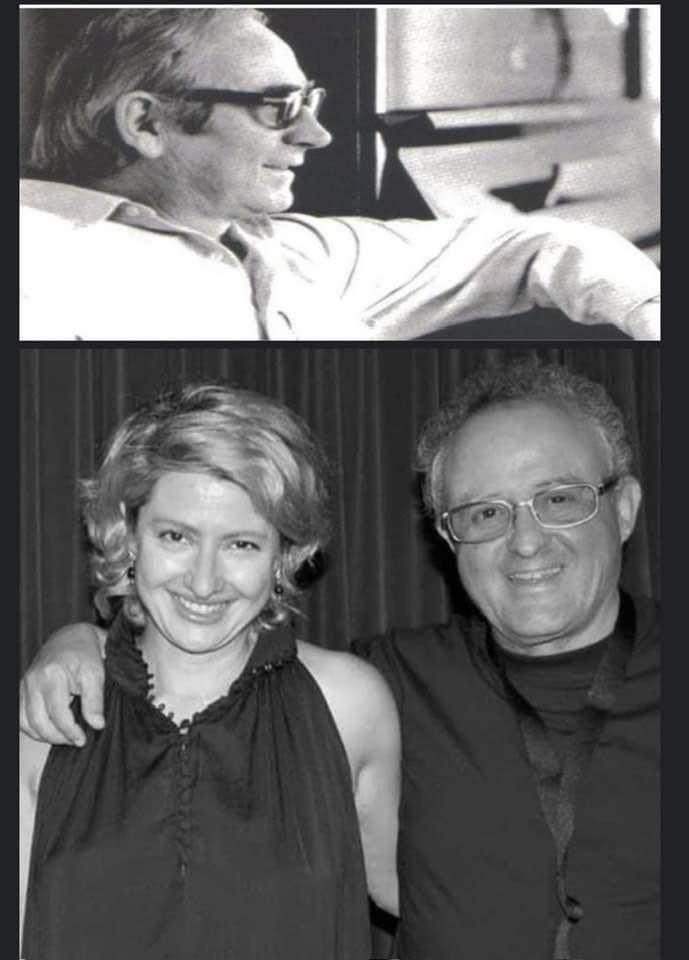
Kougioumtzis pics. Top one, supplied. Bottom: Irene and Kougioumtzis, supplied by Irene

The tribute show involves a talented ensemble of seven members, who people should expect to see perform 30-35 songs. It includes Prokopiou and John Zaharis on bouzouki, Irene on vocals, John Logothetis on keyboard, Ignatis Mariolas on guitar, Theo Samartzis on bass and George Constantinou on drums.

Irene said the two-and-a-half-hour show will feature anything from Kougioumtzis’ iconic hits to soulful melodies.

“A lot of the Kougioumtzis songs we will perform have political overlays, given that they were written around the Houda era, however many of his songs we will perform will also touch on themes of love, heartbreak to migration,” she said.

“There will be an array of hasapika, zembekika, tsiftetelia, karsilamathes and ballads performed, with something for everyone to enjoy.”

The Sydney ensemble singer said the show is more than just about entertaining, it’s about fostering connections with Greek music and preserving our cultural heritage.

“We’re so excited to see familiar faces who have been following us over the last seven years, as well as meet new audiences,” Irene said.

“From younger generations to older generations, to non-Greeks, our aim is to share the magic of Kougioumtzis’ music with everyone.

“We love it when people come up to us after a show and say thank you for the show, thank you for the tribute and for the memories, as we get the opportunity to take people back in time with music, where they reminisce to when they first heard these classic songs when growing up.

“We love having opportunities like this, where we get to take people on an educational and musical journey, and we get to do what we love and share that with our audience. There is such a wealth in Greek music that people don’t realise, and we look forward to bringing more artists and composers into the mix in the future.”
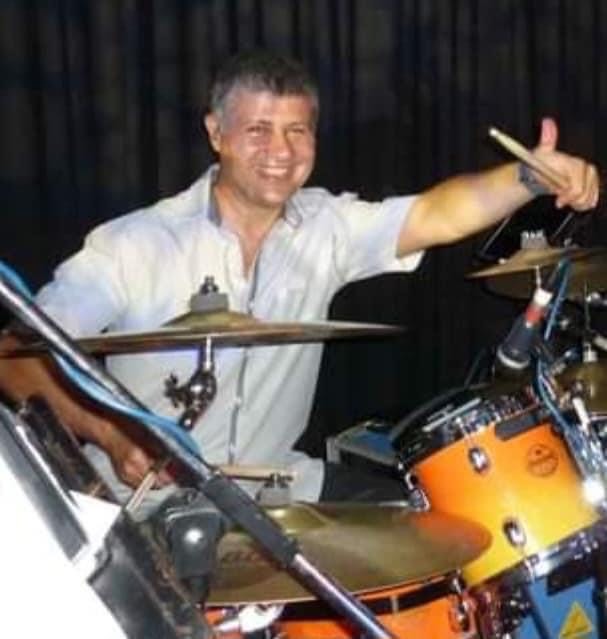
Drummer. Photo: supplied by Irene

Procopiou, the ensemble’s bouzouki player, said he also looked forward to having people come along to the performance.

“I feel so happy and excited to be performing these Greek hymn songs (of Stavros Kougioumtzis),” Procopiou said.

He described Kougioumtzis’ songs as “gems of Greek music.”

“What I love most about Stavros Kougioumtzis is that he puts his soul and his personality into his work, and you can see it come out in his divine songs,” he added.

‘A Tribute to Stavros Kougioumtzis’, by Irene Vacondios and Sotiris Procopiou will take place on Sunday, March 24 at 7 pm at The Great Club in Marrickville. To book tickets, visit Oztix.com.au.


Axion Esti: Melbourne concert to celebrate Mikis Theodorakis and Odysseas Elytis

In 1964, Axion Esti made its debut, marking the beginning of an enduring journey that transcends place and time. Six decades later, the Greek Community of Melbourne (GCM) proudly announces the concert Axion Esti: Worthy it is, commemorating the profound contributions of legendary composer Mikis Theodorakis and Nobel laureate poet Odysseas Elytis.

Taking place on Saturday, June 1, 2024, at the Melbourne Recital Centre, Axion Esti: Worthy it is will see internationally acclaimed vocalist Dimitris Basis lend his powerful voice to the evening’s proceedings. Joining Basis will be Conductor George Ellis accompanied by a 30-piece choir, Chanter George Karantonis and Tony Nikolakopoulos, who will bring Elytis’ poetry to life through narration.

Attendees will have the pleasure of experiencing renditions of Theodorakis’ masterpieces including “Ena To Helidoni” (A Solitary Swallow) and “Tis Dikeosinis Ilie” (Sun of Justice), capturing the essence of Greek heritage and spirit.

This special event pays homage to Theodorakis’ enduring legacy, celebrating the timeless beauty and cultural significance of his masterful compositions.

Axion Esti: Worthy It is promises to be an unforgettable cultural experience, celebrating a turning point in Greece’s history of Greek music and poetry. Join the GCM for a momentous evening.

Mikis Theodorakis

To book tickets, visit the website: https://www.melbournerecital.com.au/events/2024/axion-esti/

Bios:

Mikis Theodorakis, renowned as the composer behind the legendary “Zorba’s Dance,” stands as Greece’s foremost musical figure. With a repertoire comprising over 1,000 songs and song-cycles, his melodies have become synonymous with the essence of Greek musical heritage.

Odysseas Elytis’ groundbreaking work, “Axion Esti” (1959), was immortalized through its musical adaptation by Mikis Theodorakis, emerging as a widely celebrated anthem. Revered as Elytis’ masterpiece, this fusion of suffering, passion, spiritual wisdom, and poetic prowess earned him the prestigious National Book Award for Poetry in 1960. In October 1979, Elytis was honoured with the Nobel Prize for Literature, with the Swedish Academy praising his poetry for vividly portraying modern humanity’s quest for freedom and creativity, rooted in the rich traditions of Greek culture.

The poster

Dimitris Basis is a Greek artist, gained recognition for his musical performances in collaboration with Alkistis Protopsalti, Stamatis Kraounakis, and Lina Nikolakopoulou for three consecutive seasons. His professional debut included participation in Stamatis Kraounakis’ works and the soundtrack of the TV series “To Trito Stefani.” In 2001, Basis collaborated with Mikis Theodorakis, revising and performing “To Tragoudi tou Nekrou Adelfou.” His contributions to celebrations honouring Mikis Theodorakis in 2005 showcased his enduring impact on the Greek music scene.

George Ellis is an orchestral conductor, composer and arranger based in Sydney. His extensive academic training in conducting, composition and arranging and a wide range of experience has enabled Ellis to develop the unique talent essential for sensitively traversing a broad range of musical genres. He conducted the Sydney Symphony Orchestra and Millennium Choir at the Opening Ceremony of the Sydney Olympic Games in 2000 and was Musical Director and Conductor for the Athens Olympics. He has presented concerts conducting in Paris, London, Amsterdam, Brussels, New York, Boston, Philadelphia, Washington DC, Los Angeles, Athens, Kuala Lumpur and Jakarta and performed in every capital city in Australia.

George Ellis

George Karantonis is a highly acclaimed and esteemed singer, songwriter, and instrumentalist who first rose to prominence in his teens. Predominantly a self-taught musician, George captivated Greece with his music as the front man of Moda Blue, a beloved band among Greek Australians. George has lectured in musical composition at Forte School of Music, written songs for various artists, and composed music for the poetry of the late Archbishop of Australia, His Eminence Stylianos. His performances with the Millennium Heritage Choir at the Sydney Olympic Games and as a soloist at the Sydney Paralympic Games have solidified his reputation as a versatile and accomplished musician.

Tony Nikolakopoulos is a Greek Australian film, television and theatre actor. He is best known for his work in the films of Nick Giannopoulos (The Wog Boy and The Wannabes) and for his role as Attilio in the television series Scooter: Secret Agent. He has also performed in Underbelly and stage plays, including Cafe Rebetika in 2009.

Melina Mallos to give Melbourne talk on Greek migrant youth and new media

Melina Mallos, a lecturer in visual art education at the University will present a lecture entitled “Communicating Identities in Digital Spaces: Greek Migrant Youth and New Media” at the Greek Centre, on Thursday 21 March 2024, as part of the Greek History and Culture Seminars offered by the Greek Community of Melbourne.

“My doctoral research was motivated by my personal experiences of migration. Migrants not only navigate time zones but languages, cultures and relationships,” said Melina Mallos.

“The spontaneous effect of new media can be considered beneficial for migrants wishing to maintain a connection to their birth country. But is it?

“Collaborating with eight migrant youths living in Melbourne, aged 18-24 years, we met online to explore the question, ‘In what ways does new media usage shape the identities of Greek migrant youths, and help them find a sense of belonging?’

“Together we explored instances of our identities performed for and shaped by our online communities. As the a/r/tographer (artist/researcher/teacher) leading the research, I captured our individual and shared digital journeys through storyboarding. My arts practice as an author of children’s books centres around arranging text and images on a page to communicate meaning. For this research, each storyboard I created was an assemblage of words and photographs contributed by the participants that also resonated with me and my identities.”

The research study was impacted, perhaps in a positive way, by the global COVID-19 pandemic. Lockdown not only heightened the desire for connection during what was an isolating time for the youth participants, but also fuelled personal contemplations about their migration journey, the enormity of physical distance from Greece, as well as the pandemic’s impact on their future life plans, such as careers, social life and interests.

Communicating Identities in Digital Spaces: Greek Migrant Youth and New Media”

Mediating the use of new media for ‘survival’ in a new homeland, and the value of the digital space to enable communities of belonging, were significant outcomes of this research.

Melina Mallos is a lecturer in visual art education at the University of Melbourne. Previously, she created educational initiatives for educators, families, and schools in Australian museums, including the Museum of Chinese Australian History in Melbourne, and the Queensland Art Gallery or Gallery of Modern Art (QAGOMA) in Brisbane. Melina holds a Master of Education (Research) and a Bachelor of Education in Early Childhood Education.

In 2010, she was granted a three-month Queensland-Smithsonian Fellowship to investigate object-based learning at the Smithsonian Institution in Washington, D.C. Melina has also authored a bilingual picture book, Catch that Cat! in Greek and English.

Her doctoral research explored the ways Greek migrant youth in Melbourne communicated their identities through new media practices and was undertaken during the global COVID-19 lockdown of 2020. Melina leads arts-based workshops exploring identity and belonging with Greek migrants worldwide.

Event Details:

  • When: Thursday 21 March 2024, 7 pm
  • Where: Level 12, The Greek Centre, 168 Lonsdale Street, Melbourne

Katrina Ginis: Crossing the realms of art and psychology

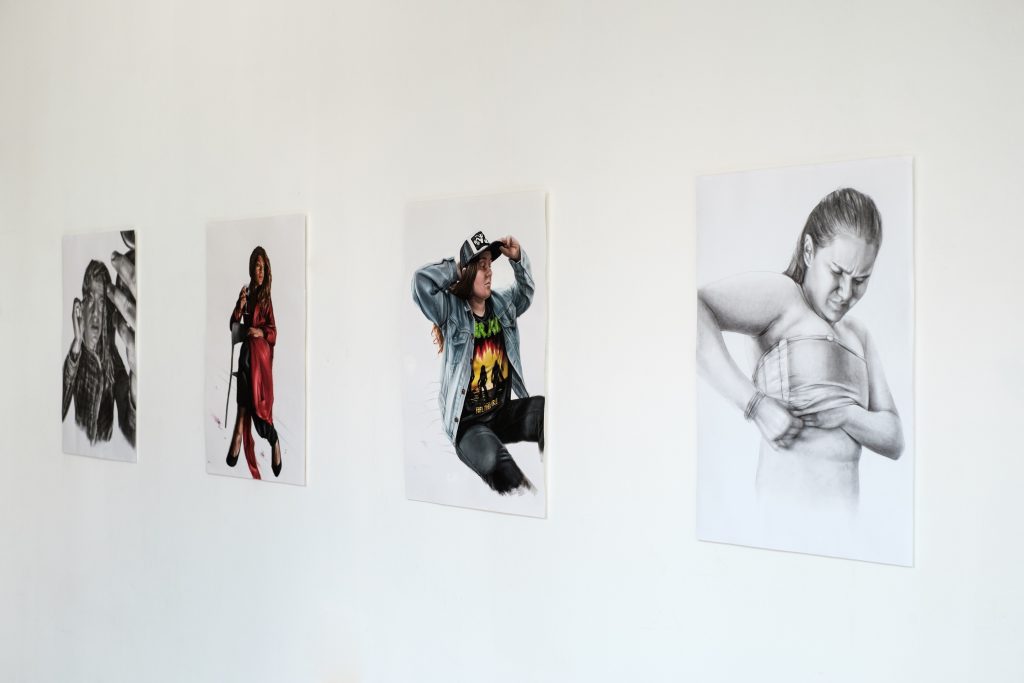
Katrina Ginis is a Melbourne-based artist, who intertwines a passion for visual artistry with the complexities of human psychology.

Painting, drawing and the visual arts in their many and varied manifestations have been a source of fascination and an integral part of Katrina’s identity. Primarily focused on figurative and representational forms, Katrina’s artistic repertoire includes painting, drawing, and various other visual mediums such as oil, acrylic, watercolour, pencil, and pastel.

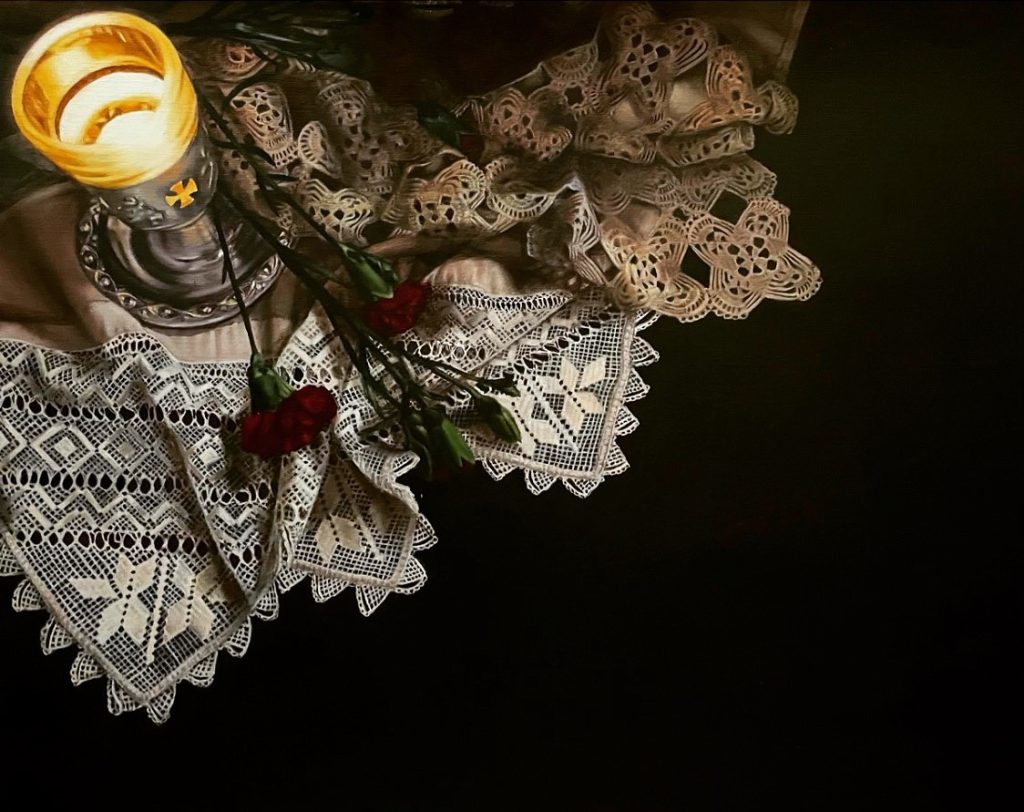
Katrina regards her creative practice as a means of self-expression which enables her to engage with and explore the beauty and complexity of existence. Drawing inspiration from her rich cultural heritage and her scholarly pursuits in Psychology, Katrina finds great inspiration in Greek art, iconography, history, philosophy, literature, and mythology. For example, her work ‘In Memory’ (pictured), pays homage to the strength and creativity of her paternal female ancestors and also commemorates the Asia Minor catastrophe.

‘Becoming’ (2015, acrylic and graphite on paper)

Katrina has successfully intertwined her academic journey with her creative pursuits, which is evident in her doctoral research. She has recently been awarded her Masters and PhD in Clinical Psychology. Her PhD thesis explored creative identity development amongst eminent Australian female visual artists, with a particular emphasis on the complex interrelationships between artistic creativity and physical and mental health. Her creative practice is increasingly informed by her clinical work. For example, Katrina’s latest painting, ‘Duality’ (pictured) serves as a testament to the resilience she has witnessed in her clinical practice, particularly among patients grappling with acute traumatic injuries. Through her art, she confronts the existential realities of life and death, offering a glimpse into the human spirit’s capacity for hope and resilience amidst adversity.

Katrina currently practices as a psychologist and has presented at visual art related conferences at Melbourne’s Monash University and at The University of Melbourne’s ‘Women, Art and Feminism in Australia since 1970 Symposium’.

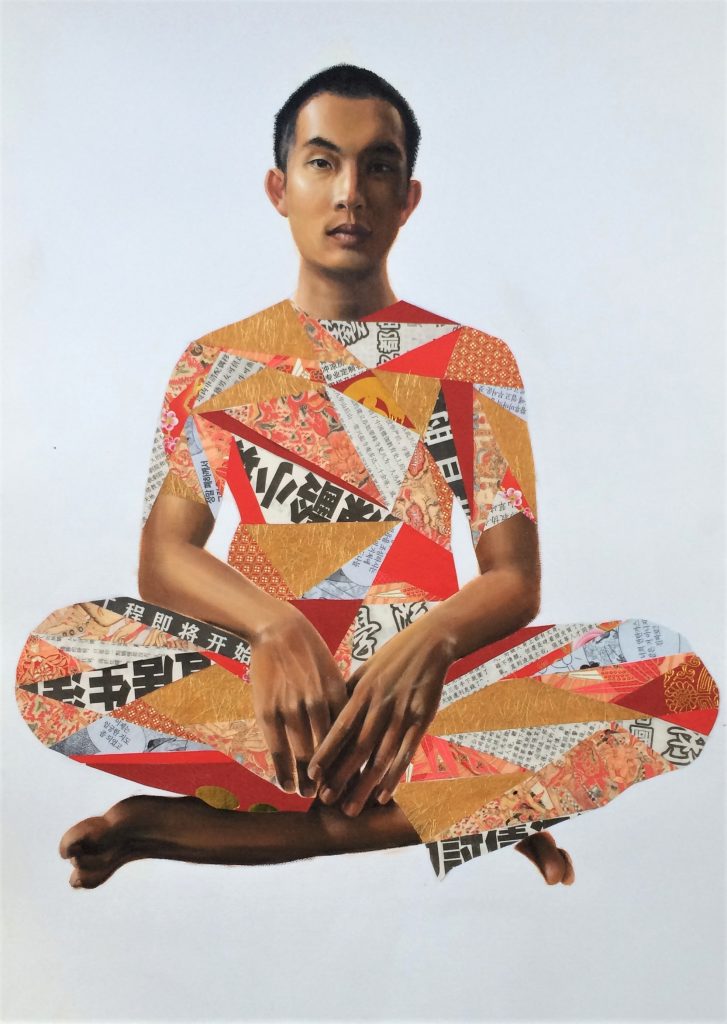
‘Celebration?, Homogenization?, Appropriation?’ (2020, acrylic and collage on paper)

She has completed private commissions for original works, portraits and freelance illustrative projects and has exhibited works at various galleries including The Manning Regional Gallery, Gallery Voltaire, The Black Cat Gallery, the Linden Gallery and the Aarwun Gallery.

Katrina was shortlisted for ‘Top Arts’ and attained a perfect score of 50 with a Premier’s Award, for her secondary school studies in Art.  She was a finalist in the 2015 Manning Art Prize for ‘Joy’, finalist in the 2020 National Capital Art Prize for ‘Celebration?, Homogenization?, Appropriation?’ and awarded the Tolarno Hotel’s annual acquisitive prize in 2015 for ‘Becoming.’

Through her art, crossing the realms of art and psychology, Katrina invites us to explore the human condition, where boundaries of emotion, identity, and expression blur into meaning, and provides us with a compelling narrative of connection between creativity, cultural heritage, and mental well-being.

You can find Katrina via her website: http://www.katrinaginis.com/, Instagram: https://www.instagram.com/katrina_ginis/, or Facebook: https://www.facebook.com/katrina.ginis

‘In Memory’ (2022, oil on paper)

Katrina Ginis is amongst many Greek Australian artists who have participated in the GAAD (Greek Australian Artist Directory). An initiative by the Greek Australian Cultural League (GACL), the GAAD celebrates Greek Australian visual and performing artists by showcasing their works and contributions to the Australian arts landscape.  By preserving and promoting the artistic legacy of Greek Australian artists, the directory ensures that their talents are duly acknowledged and cherished, cementing their place in Australia’s artistic narrative.

‘Duality’ (2023, oil on paper)

Interested artists can register their profiles by visiting www.gacl.com.au and clicking on the dedicated GAAD section.  For any inquiries related to the GAAD, individuals can either email GACL President Cathy Alexopoulos infogaclm@gmail.com or contact GAAD Co-ordinator Vasy Petros on 0412 242557

*This is a Greek Australian Cultural League Initiative supported by The Greek Herald.

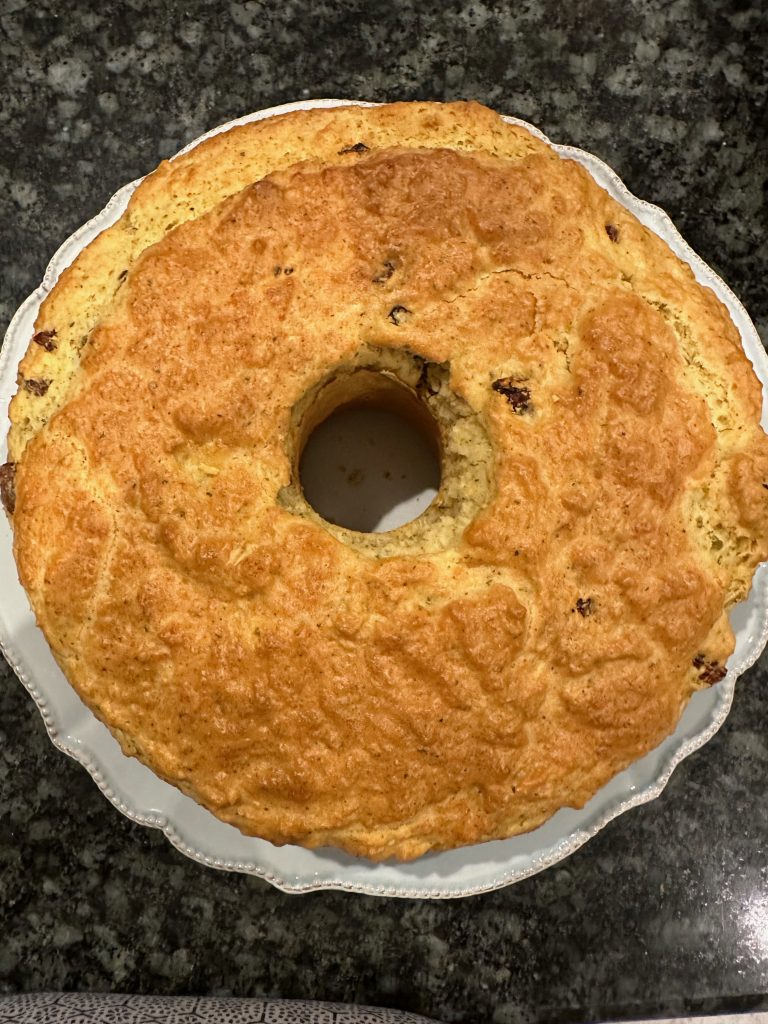
Niki Louca shares her mum’s favourite flaounopita recipe

Cheesefare week (the last week before Great Lent) is upon us and Niki Louca from My Greek Kitchen shares her favourite recipe for flaounopita with The Greek Herald. You can follow her on Instagram @mygreekkitchen for more!

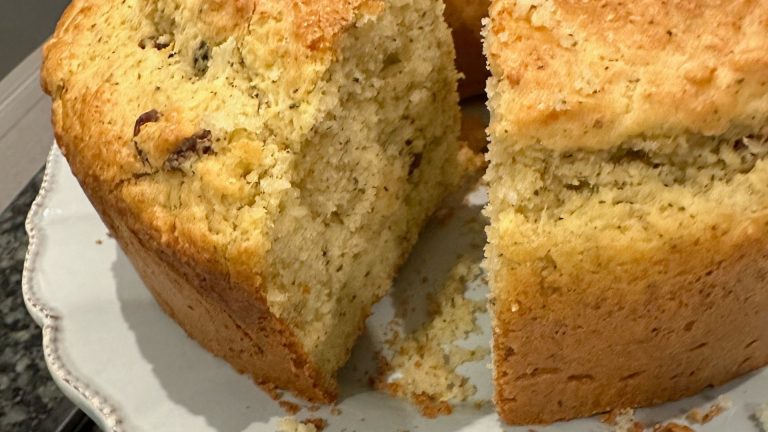
Flaounopita is a savoury “cake” that can be enjoyed for breakfast, morning or afternoon with a coffee.  It’s very versatile and extremely easy to make. All up, it shouldn’t take more than an hour and a half to prepare and bake. 

I grew up with this cake as a stable treat in our home – we’d often have a piece after school. Hope you enjoy it.

Ingredients:

  • 5 large eggs
  • ¾ cup light olive oil
  • 2 cups grated haloumi (use the fine side of the grater)
  • ¾ cup sultanas (optional but highly advisable)
  • 2 ½ cups S.R. flour
  • 2 tsp baking powder
  • 2 tap dried mint
  • Sesame seeds to sprinkle on top (optional)
flaounopita

Method:

  1.  Preheat your oven to 180C fan force.
  2. Grease and flour a bundt tin or 2 medium size loaf pan.
  3. Grate your haloumi on the medium side of your grater.  Not the smallest and not the largest.
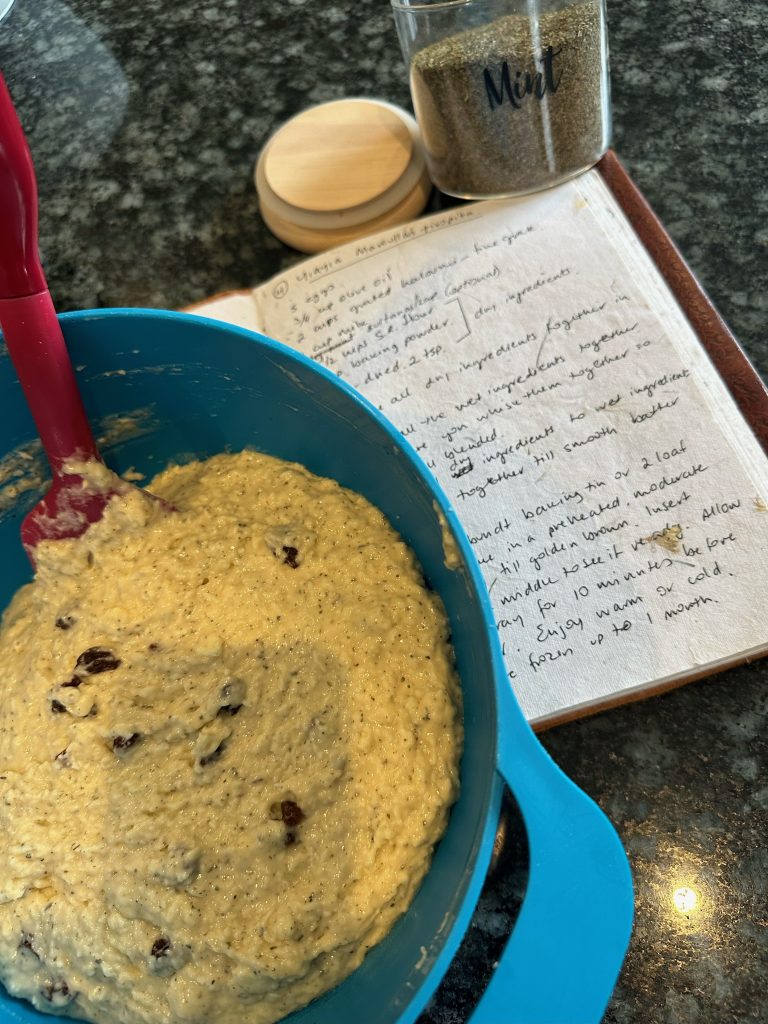
  4. In a large bowl sift your flour and baking powder.  Add your mint and set aside.
  5. In a medium size bowl add your eggs, oil and milk.  Whisk together with a hand whisk till well incorporated. 
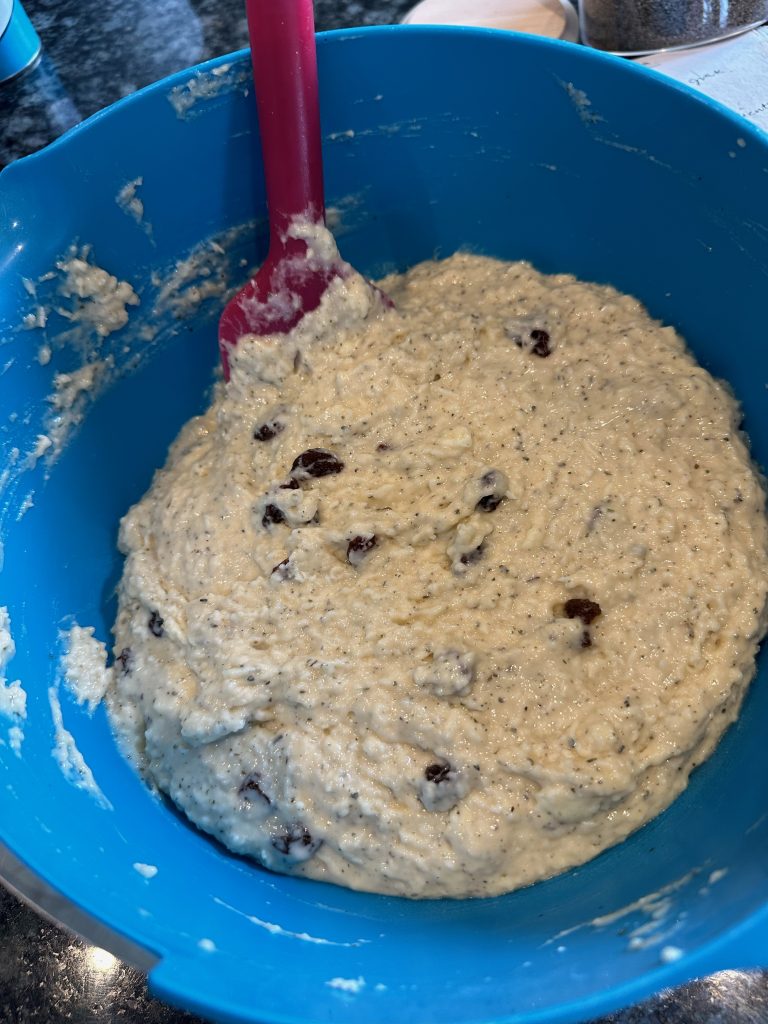
  6. Slowly add wet ingredients to dry ingredients and whisk till just mixed.  Add your haloumi and sultanas and gently fold with a spatula or wooden spoon till all ingredients are well incorporated.
  7. Pour batter into the bundt tin and smooth it out with the back of a spook.  Sprinkle with sesame seeds and bake for approximately 45 minutes or until golden brown and skewer comes out clean. 
  8. Allow to cook in tin for 10 minutes then remove from tin.  Allow to cool slightly before cutting.  Best served lukewarm.  Can be frozen.

Niki Louca runs cooking classes in Melbourne. For more or to book classes visit My Greek Kitchen at www.mygreekkitchen.com.au or Instagram @mygreekkitchen. You can email Niki at: niki@mygreekkitchen.com.au.
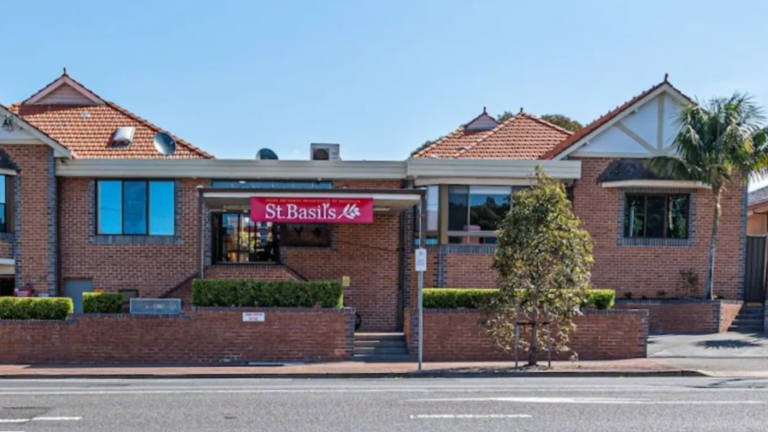
St Basil’s NSW/ACT chief addresses concerns over closure of Kensington aged care home

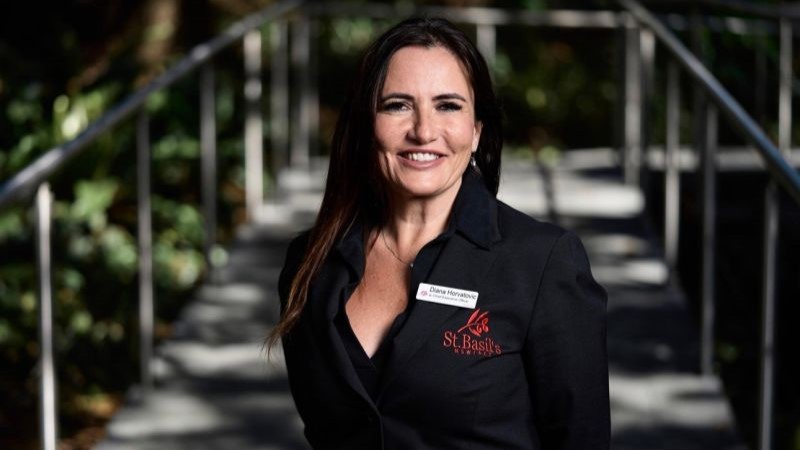
The CEO of St Basil’s NSW/ACT, Diana Horvatovic, has responded to an enquiry from The Greek Herald regarding concerns around the imminent closure of their aged care facility at Kensington, previously operated by Castellorizian Aged Care.

St Basil’s NSW/ACT is an organisation created by the Greek Orthodox Archdiocese of Australia (GOAA) which provides quality care for ageing Australians. Archbishop Makarios of Australia is President of a Board of Directors which includes prominent Greek Australians such as James Jordan (who serves as Chairman), Greg Gav and Theo Penklis.

The Greek Herald first reported on Thursday, March 14 that the decision to close St Basil’s Kensington so soon after the sale of the St Basil’s Annandale property in 2023 for $18 million has left some observers perplexed.

Following the permanent closure of the Annadale aged care home in September 2022, many of the residents were transferred to St Basil’s Kensington. 

For the residents and many of their friends and family, it came as a shock that on 17 January 2024 St Basil’s NSW/ACT announced it had made the “difficult decision” to close its aged care home in Kensington. 

St Basils’ Aged Care management advised that it would be working closely with each resident and their families to relocate to another home of their choice by April 2024.

Since then, friends and relatives of residents have expressed concerns regarding the option to relocate to the St. Basil’s facility in Lakemba. The concern stems from the considerable distance between the existing eastern suburbs location and Lakemba, posing challenges for many relatives and friends who wish to visit their loved ones.

Diana Horvatovic
Diana Horvatovic CEO at St Basil’s NSW/ACT has responded to concerns.

‘Land use to be decided by landlord’:

In response to these concerns, Ms Horvatovic said the decision to close St Basil’s Kensington followed significant consideration by the Board of Directors and the Executive team.

“Our aim, vision and mission are to always provide the best possible care for our residents in a safe and quality living environment. Whilst the clinical care of residents had been maintained, the physical environment had been challenging and the building was no longer fit for purpose. Despite our efforts to renovate, it no longer met the more complex clinical needs of residents,” Ms Horvatovic said.

The CEO added that residents were given three months’ notice of their relocation from St Basil’s Kensington “due to a combination of factors such as operational decisions and regulatory requirements.”

“We have been working closely with relevant Regulatory Bodies to ensure we are meeting compliance requirements and making this process as seamless as possible to minimise any disruptions to our residents’ lives,” she explained.

Ms Horvatovic said St Basil’s NSW/ACT have supported all Kensington residents in finding alternative suitable accommodation.

“Most residents have been relocated to other St Basil’s homes. We currently only have three residents left in Kensington, and all three will be moving to other homes shortly,” she said.

The Greek Herald understands there have been discussions that the Kensington property will be utilised as a training facility for St Basil’s staff or an education facility for the Archdiocese’s Theological College.

When questioned on the use of the Kensington property, Ms Horvatovic said “the land will be used for much needed community purposes as decided by the landlord.”

The property is currently under the Greek Orthodox Archdiocese of Australia Consolidated Trust.

READ MORE: Concerns raised over imminent closure of another St Basil’s aged care home in NSW.

‘Songs of the Sea’: A musical journey celebrating Greece’s legendary musicians

The 42nd Greek Festival of Sydney presents an enchanting evening of musical wanderings with ‘Songs of the Sea’ (Τραγούδια της θάλασσας) on Sunday, May 12 at 7pm at Bankstown Sports Club.

When we think of ‘Songs of the Sea’ we are transported by association to the shores of the Aegean and the fascinating traditional island songs “Nisiotika.” But there is another musical dimension that can be attributed to the blue of the Aegean and the magic of the sea, the well-known “new wave” of the Greek music scene, as well as the songs of migration and foreignness that coincided in time and marked an entire generation.

Thanasis Pylarinos with his 11-member band will try to revive this dimension that has been neglected in recent years by the musical attributes of the Greek community.

Paying tribute to giants of Greek music such as Vassilis Tsitsanis, Yiannis Parios, Michalis Violaris and Rena Koumiotis, the audience will “travel” musically through the years of uprooting and migration through the musical routes of the New Wave and the “Songs of the Sea” with which the younger generations of immigrants grew up both in Australia and around the world.

This captivating performance will take place on Sunday 12th May 2024, at 7:00 PM at Bankstown Sports Club.

Prepare to be transported to the shores of Greece while immersing yourself in the rich tapestry of Greek music, where each note carries the essence of the Mediterranean.

Featuring:

  • Vocals: Eleni Doukas & Ioannis Keligiannis
  • Bouzoukia: Thanasis Pylarinos & Kosta Benetatos

Event Details:

Come and be serenaded by the soothing sounds of the Mediterranean, as people celebrate the timeless allure of “Τραγούδια της Θάλασσας” (Songs of the Sea). Don’t miss this unforgettable evening of music, culture, and camaraderie.

For more information on the programme and to book tickets to selected events, please visit www.greekfestivalofsydney.com.au

Tarantella: The Southern Italian dance with Ancient Greek roots

By Kathy Karageorgiou

As a Greek Australian living in Greece, I like to keep in touch with news, views and events that have to do with Australia. In a recent online search, I was overtaken with excitement at coming across ‘Tarantella’ festivals in Victoria and New South Wales.

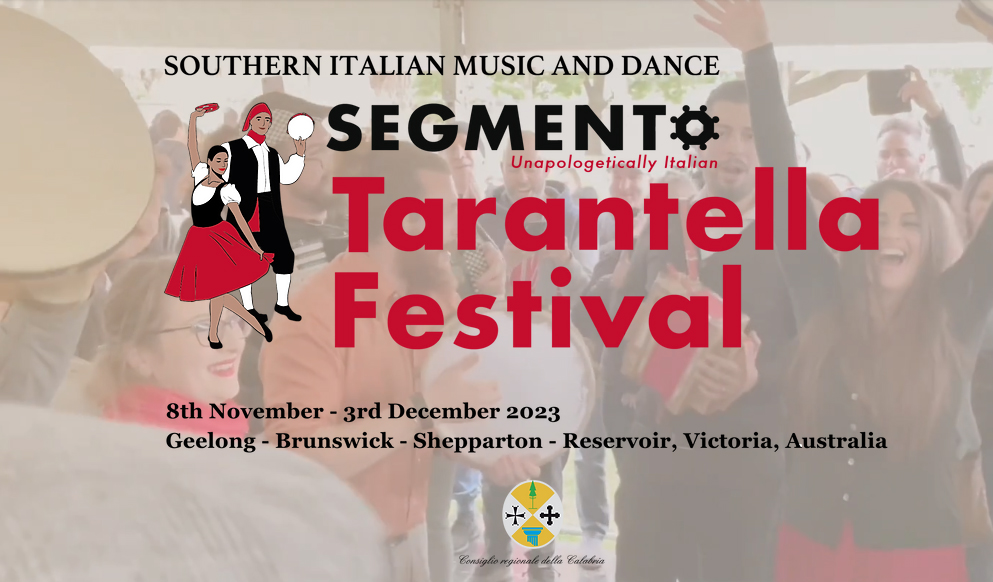
Tarantella festival poster
Tarantella festival poster. Photo: Supplied.
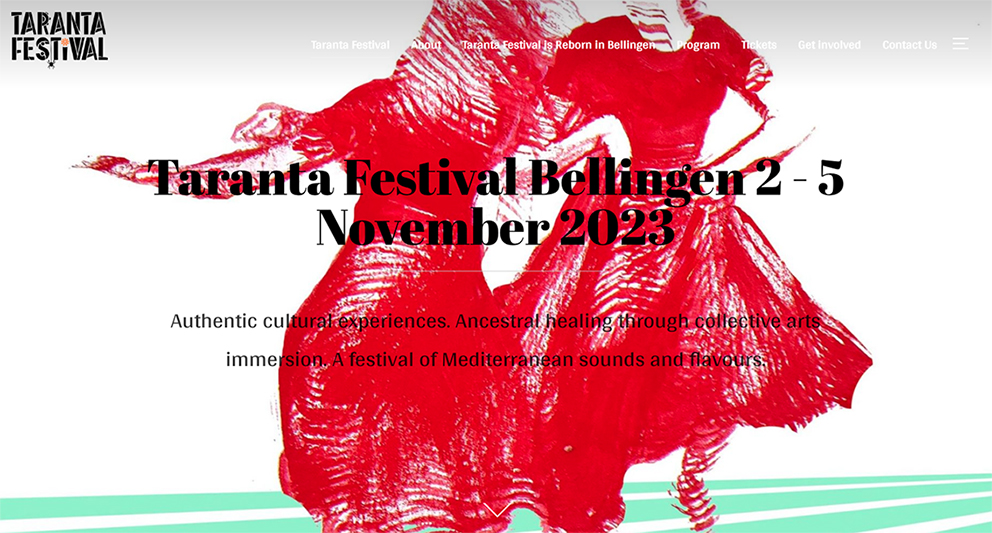
Tarantella festival poster
Photo: Supplied.

My enthusiasm towards Tarantella stems from visiting Naples and Sicily, a few years back. I became fascinated by the culture of Southern Italy, including Magna Graecia – its former Greek colonies since the 8th century BC.  There, I was also exposed to a lively dance and its associated music – Tarantella.  

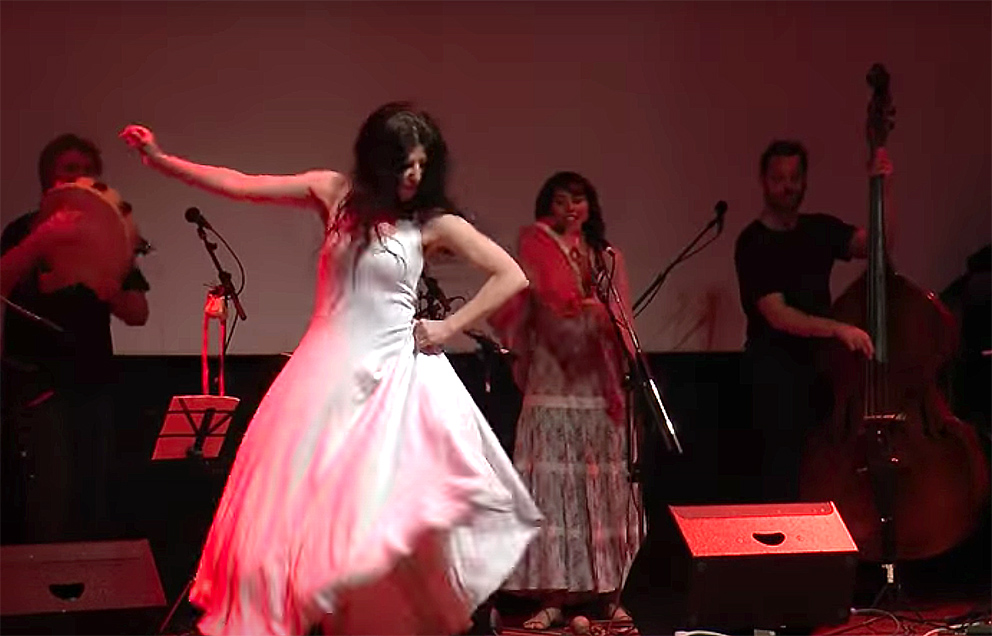
dancer
Greek band Encardia performing Tarantella (Athens, 2015). Photo: Supplied.
people dancing
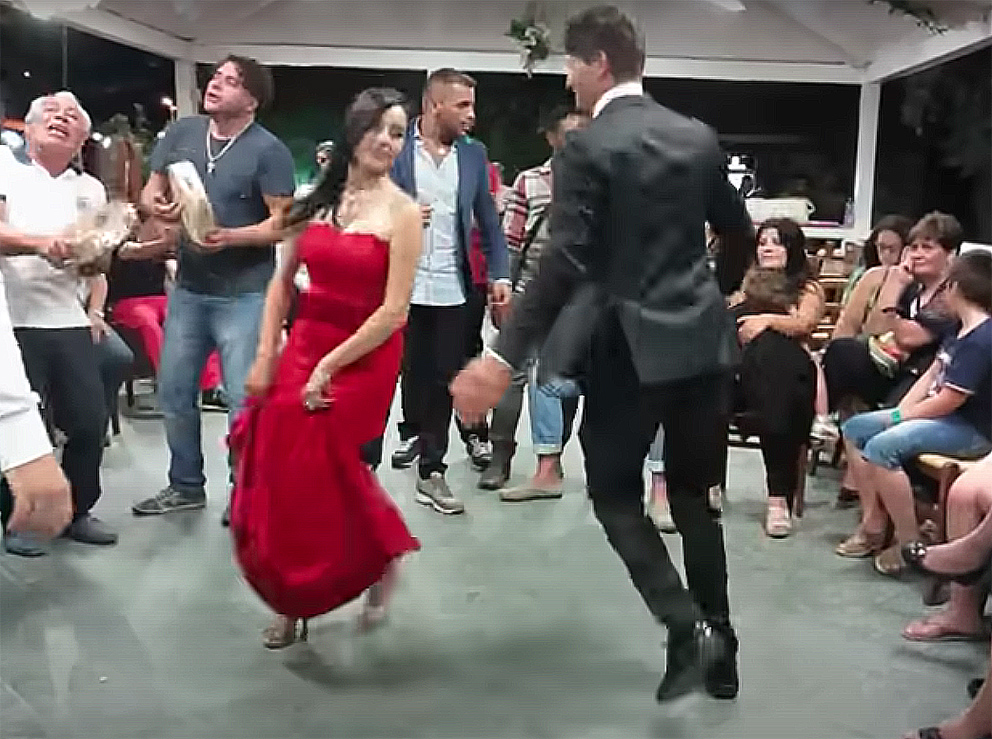
My favourite Tarantella from Calabrian engagement party. Photo: Supplied.

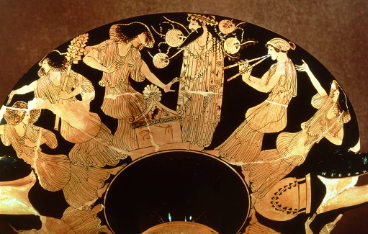
Primarily passionate music and dance of abandon and even ecstasy, the Tarantella is believed to have Ancient Greek roots from the Dionysian God of wine and merriment cult, while the Goddess Diana (our ancient Greek Artemis) is also alluded to.  

Apparently in Ancient Greece it was only women who attended the Dionysian or Artemis/Diana (goddesses of nature) ceremonies. Centuries later, men joined in on the fun, even incorporating it into warrior rituals until the Romans banned the Tarantella’s predecessor’s celebrations outright in 186 BC.  

Dionysus and the Maenads
Ancient Greek Dionysian ritual artwork. Photo: Supplied.

However, Tarantella dance and its frenetic music could not be thwarted and continued ‘underground’ in Magna Graecia – in areas like Sicily, Naples, Campania, Calabria and Apulia – for centuries. In the Middle Ages, the Church itself was unable to suppress Tarantella’s popularity and incorporated it into Catholicism, even endowing it with a patron saint – St Paul.  

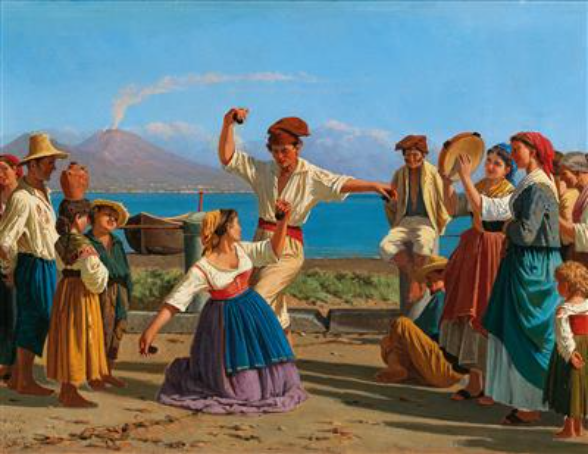
art alexandre francia
Alexandre Francia art. Photo: Supplied.

Tarantella’s popularity has certainly not dwindled in modern times either. Salento in Southern Italy’s Apulia region hosts an annual Tarantella festival drawing over 100,000 people. Salento’s city, Taranto (Taras in Ancient Greece or Tarantum in Ancient Roman), is said to be the home of Tarantism, from where the Tarantella got its name. 

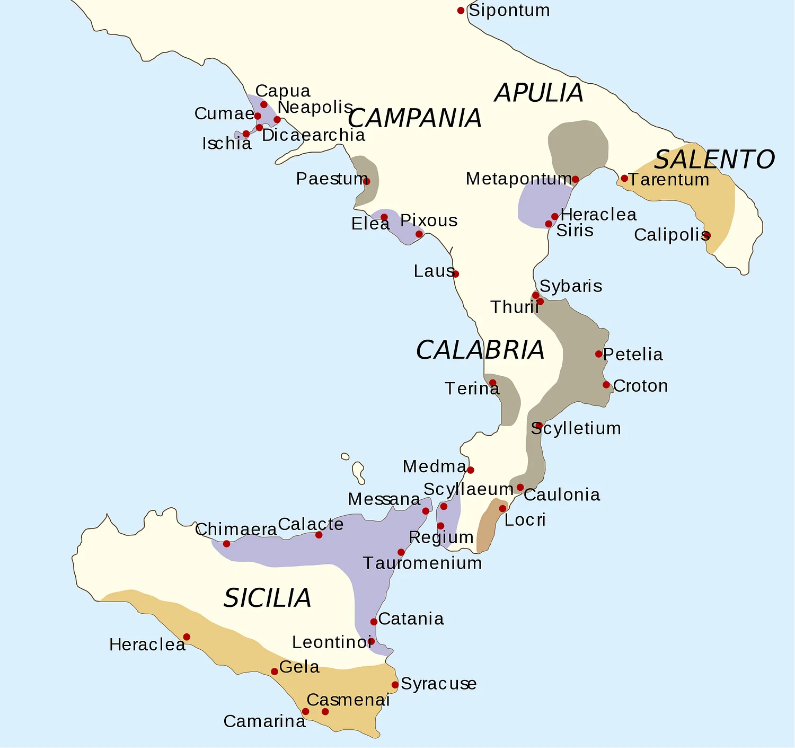
map magna graecia
Magna Grecia map. Photo: Supplied.

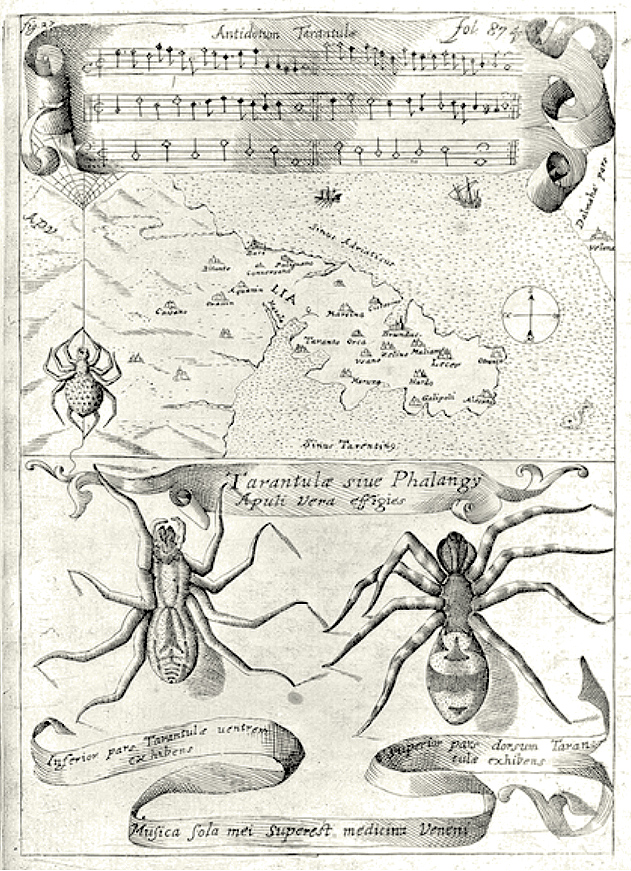
In Tarantism, the victim is believed to have been bitten by a type of Tarantula spider found in Magna Graecia (some say a black widow spider – linking the ‘female’ to its Ancient Greek mythological origins). The bite causes the person to move or dance spasmodically, encouraged and joined in by concerned family, friends and neighbours so that the spiders poison is expelled from the body. The physical, including acoustic (musical), frenzy lasts for days. Many regard this bite cure (which is also the name of a popular type of Tarentella dance: pizzica – meaning bite), as a metaphor for strong emotional build up, particularly in women, of anger, sadness, depression, and pain in general, whereby the Tarantella served as a catharsis, or even as an exorcism.  

Spidermap
A spidermap. Photo: Supplied.

When I found out that there was to be a Tarantella concert event here in Patras, Greece as part of a Magna Graecia event and the Carnivale celebrations, nothing could hold me back! The featured musicians included Encardia, as well as others such as the performer who the Melbourne Tarantella Festival’s promotional guide called “The King of Tarantella” himself – Ciccio Nucera. 

Ciccio Nucera
Ciccio Nucera (playing accordionetto). Photo: Supplied.

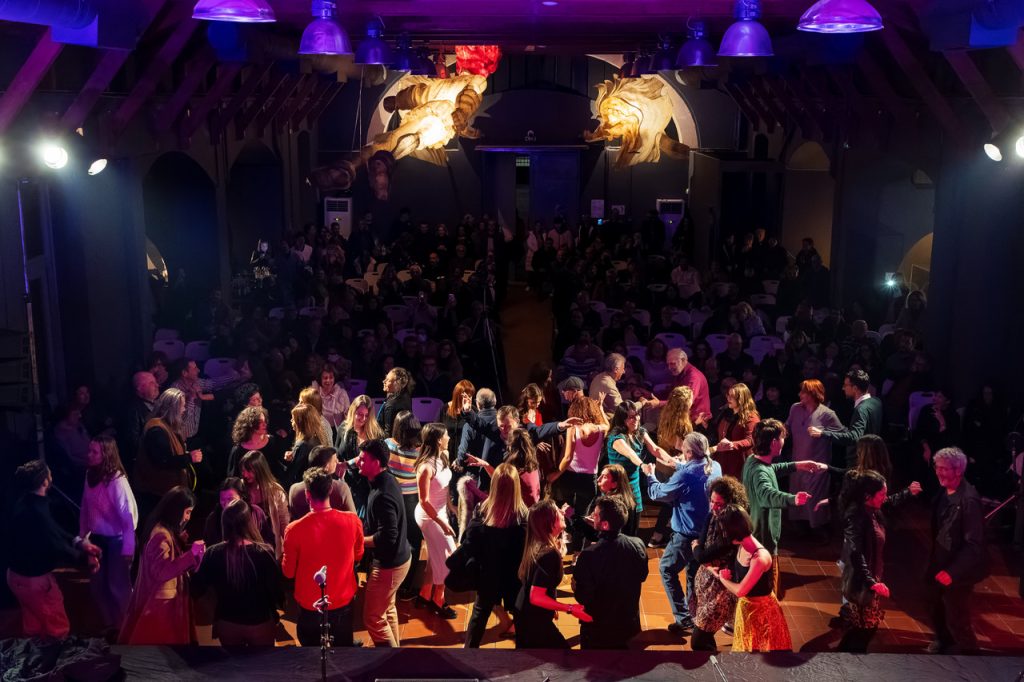
The evening was fabulous, the music truly powerful and passionate. It was so rousing and moving that it literally moved us onto the dance floor, almost trance like, with first time Tarantella dancing for much of the audience.

Patra tarantella
Patra tarantella. Photo: Supplied.

So overwhelming an experience was Tarantella that I located the famed “Tarantella King,” musician, singer and dancer Ciccio Nucera – and had a chat with him.

group pic
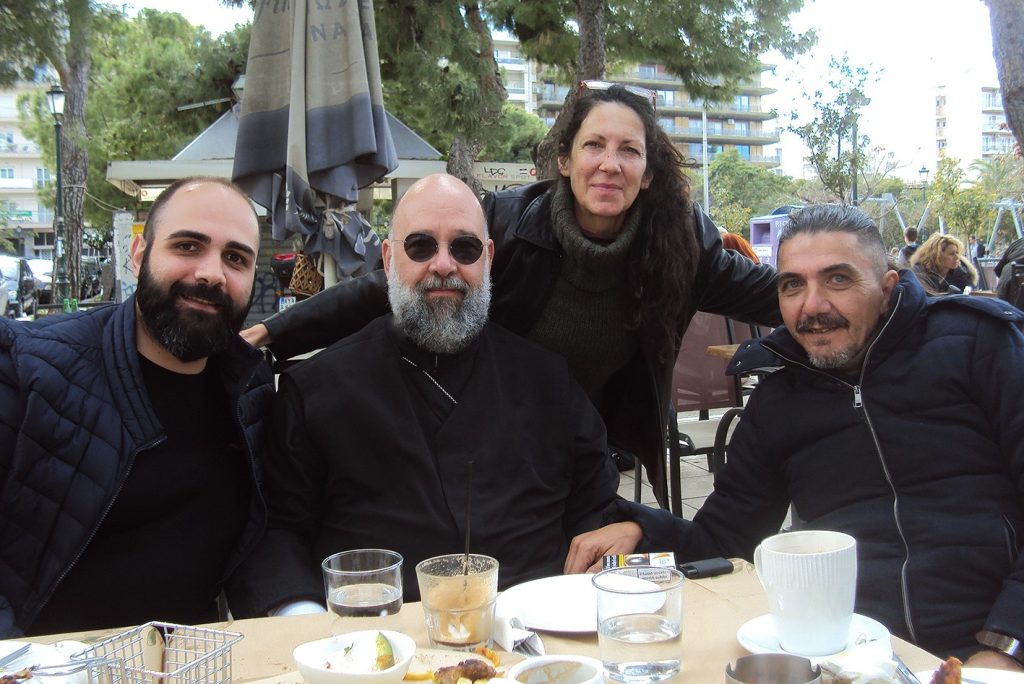
Ciccio (right) and fellow musician Carmello (left). Photo: Supplied.

Ciccio pointed out that he is Griko – of Greek background – and speaks the Grecanico language of his grandparents, hailing from the Magna Graecian village Galliciano in Calabria. 

“I was born with Tarantella even in my mother’s womb,” he tells me, adding that from the age of two he played the accordianetto (a form of accordion) and the tambourine, explaining that Tarantella involves other instruments – the flute, a form of bagpipes and some guitar too.

“The Greeks influenced Tarantella the most, in its original Grecanico language.  There are also traces of Thracian music and dance, like the Zonaradika in Tarantella as well as some Cretan lyra.”  

Ciccio refers to Tarantella’s peasant roots, including shepherds with handmade instruments, playing around a fire. The music would prompt the tempo of the Tarantella dance and vice versa, something which I noticed at the Patras concert.  Ciccio explains that back then, Tarantella happened spontaneously, but now organisation and effort is needed in the form of festivals and concerts to preserve its tradition. 

Tarantella article
Photo: Supplied.

Asking Ciccio about his time at Melbourne’s Tarantella festival last month, he says that he was enamoured by Australia. 

“They keep the traditions alive there, even the 2nd generation of Greeks and Italians do. To Australians the only thing I want to say is that I felt at home there and want to come back. And as for Tarantella – it’s addictive.”  

I couldn’t agree more! 

Maria Sakkari triumphs over Navarro to secure Indian Wells semi-final spot

In a thrilling match of determination, the Greek tennis star Maria Sakkari secured a remarkable victory over Emma Navarro at the Indian Wells Tennis competition.

The final score was 5-7, 6-2, 6-4, following an intense two-hour-and-54-minute match.

According to Tennis Majors.com, Sakkari’s triumphant win marks her return to the BNP Paribas Open semi-finals, setting the stage for her upcoming match against Coco Gauff.

Sakkari described the match as the “toughest” one she’d played in a while.

“Emma is an incredible player. She’s a very nice girl. I got to meet her the last few days. She’s been playing amazing,” she said.

“It’s a huge win for me. I’m very happy I found a way to win this match today.”

For Sakkari, this victory holds special significance, as she had previously secured the runner-up position at Indian Wells in 2022 and reached the semi-finals in 2023.

Source: Tennis Majors.com.

NSW honours multicultural champions at Premier’s Harmony Dinner

A Karenni refugee who provided interpreting services in Coffs Harbour, a Polish language teacher, and a young Human Rights Advocate were just three of the people honoured at the Premier’s Harmony Dinner.

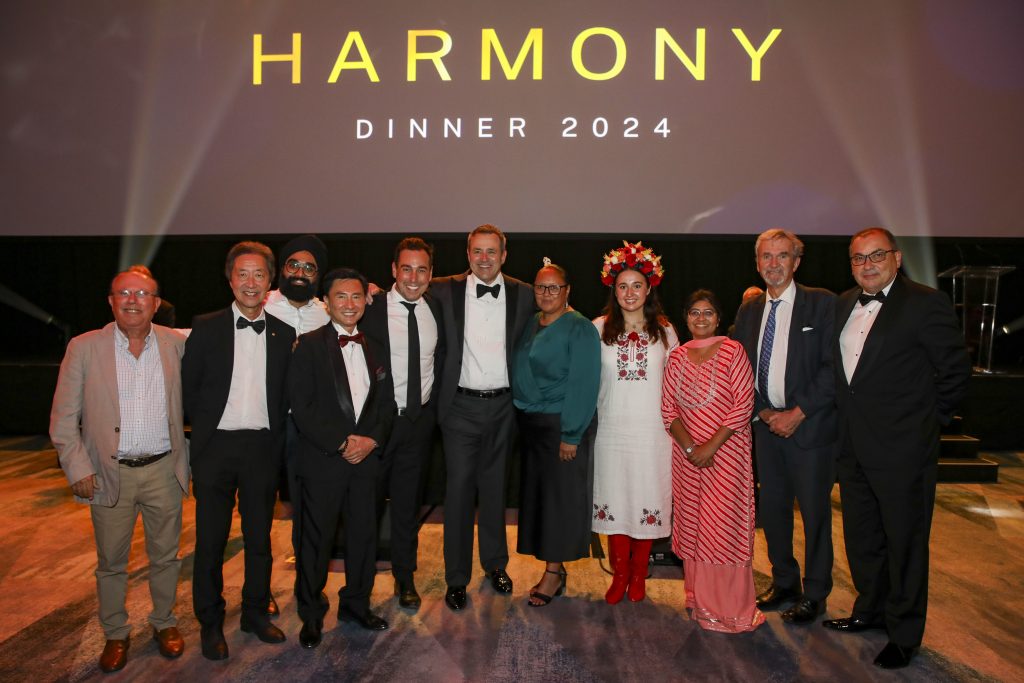
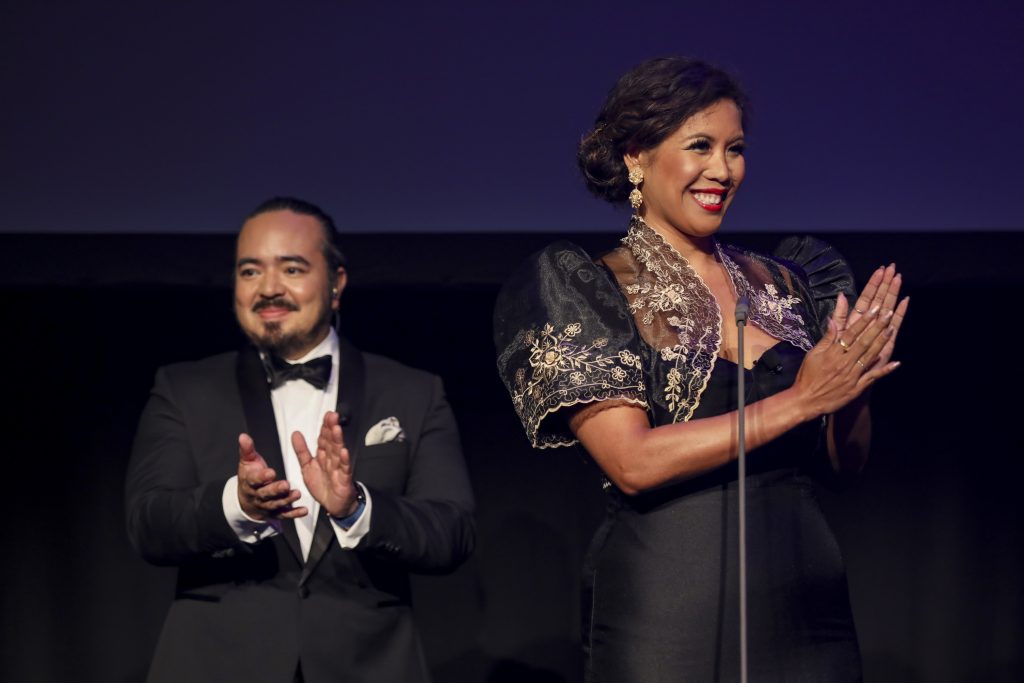
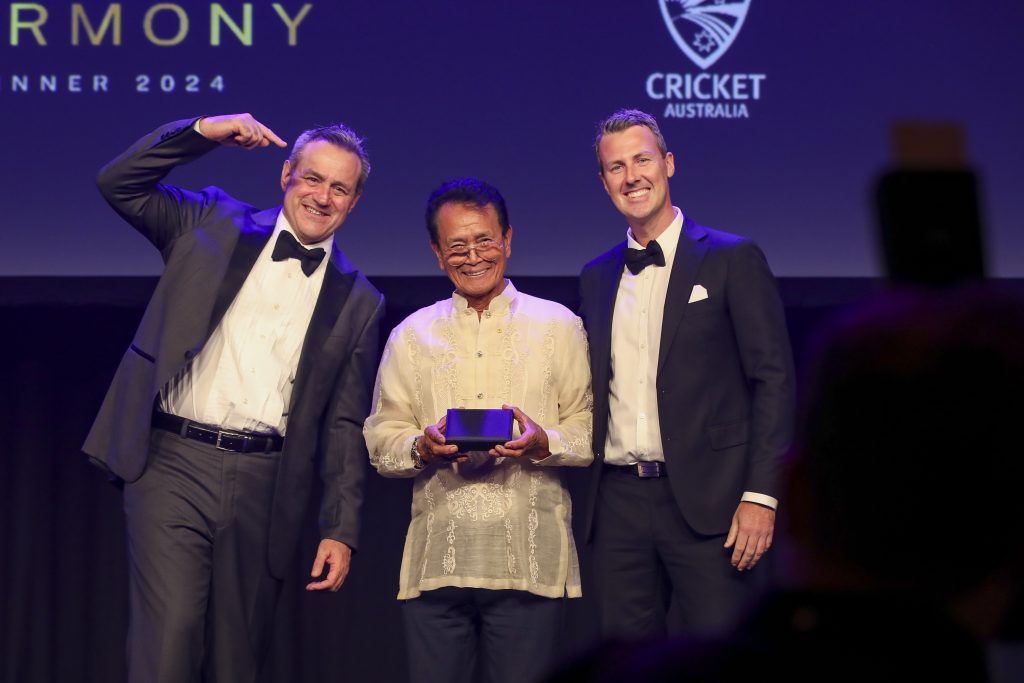
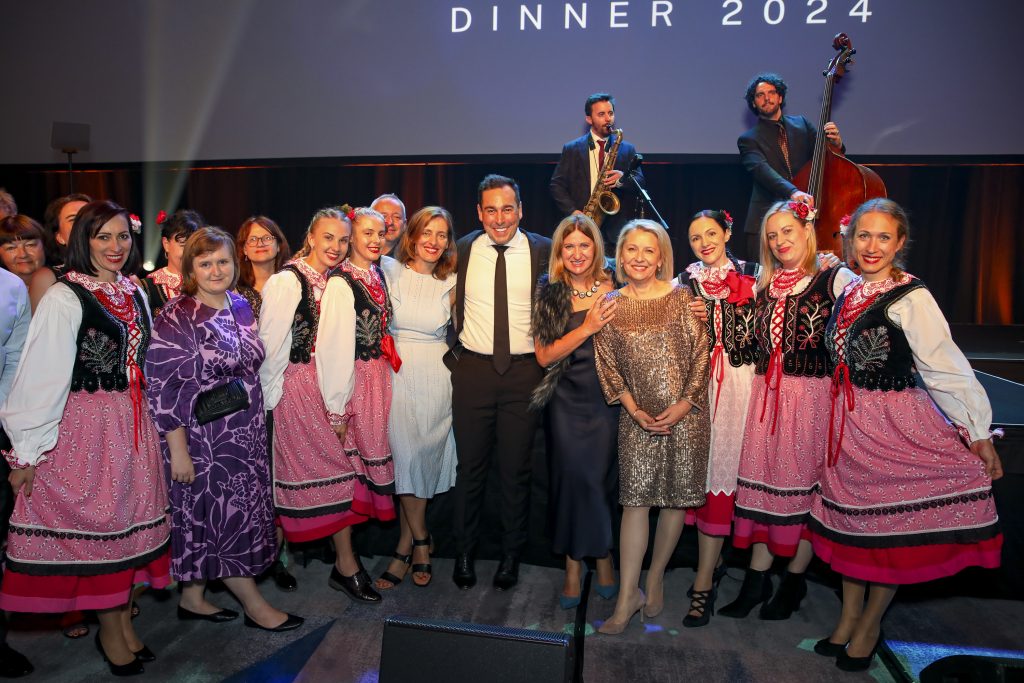
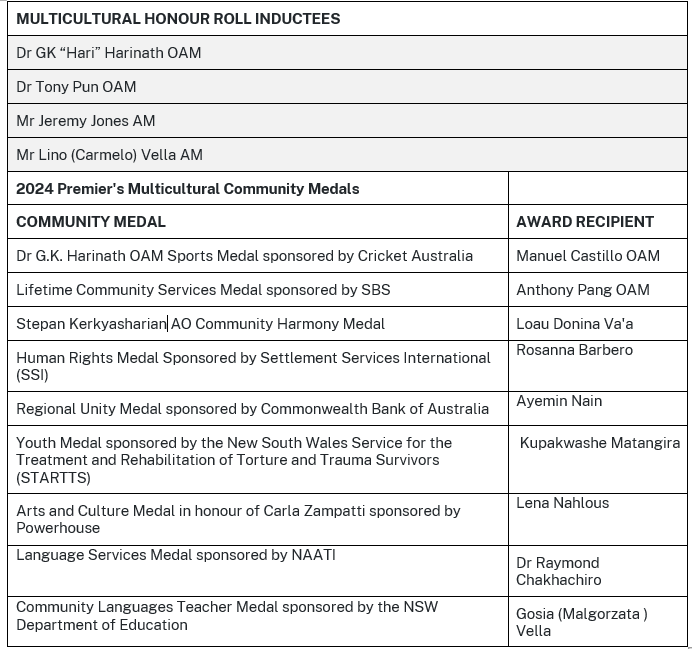
Twelve Multicultural Community Medals were awarded in front of more than 1,600 people at the 2024 Premier’s Harmony Dinner.

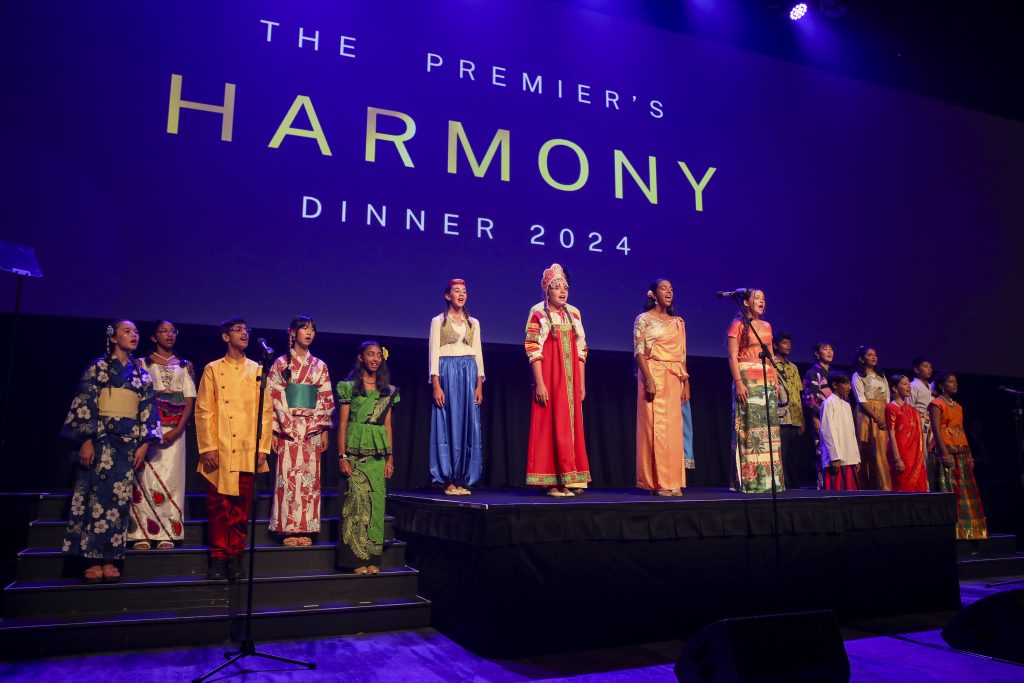
Multicultural NSW Premier’s Harmony Awards. Photo: Salty Dingo.

The 12 recipients were recognised for their outstanding leadership, innovation and community connection to promote social cohesion and harmony in NSW. 

The event also honoured four change makers who were inducted into the Multicultural Honour Roll for the significant contribution made across the course of their lives to enhance our multicultural community.  This posthumous recognition commemorates their legacy and the impact they’ve had on influencing an inclusive, resilient and peaceful society for all. 

Multicultural NSW Premier’s Harmony Awards
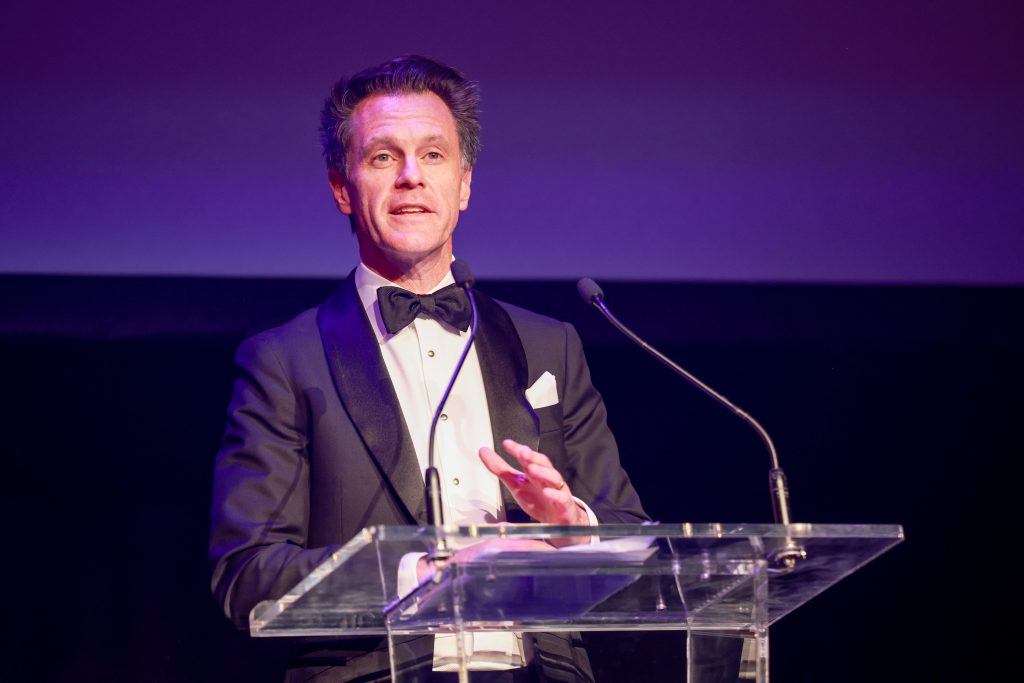
Chris Minns. Photo: Salty Dingo.
Multicultural NSW Premier’s Harmony Awards
Multicultural NSW Premier’s Harmony Awards. Photo: Salty Dingo.
Multicultural NSW Premier’s Harmony Awards
Multicultural NSW Premier’s Harmony Awards. Photo: Salty Dingo.

One of those honoured, was the Chairperson Emeritus of Multicultural NSW Advisory Board, Dr GK “Hari” Harinath OAM.  Dr Hari was incredibly passionate about gender equity and giving young people a voice. 

“It is a great honour to celebrate these exceptional community champions in the presence of their families, friends and peers,” CEO of Multicultural NSW Joseph La Posta said.

“From community work in regional NSW through to language teachers in Sydney, the award recipients showcase the very best of our multicultural society and how we can all make a difference by striving for community harmony.”

Multicultural NSW Premier’s Harmony Awards
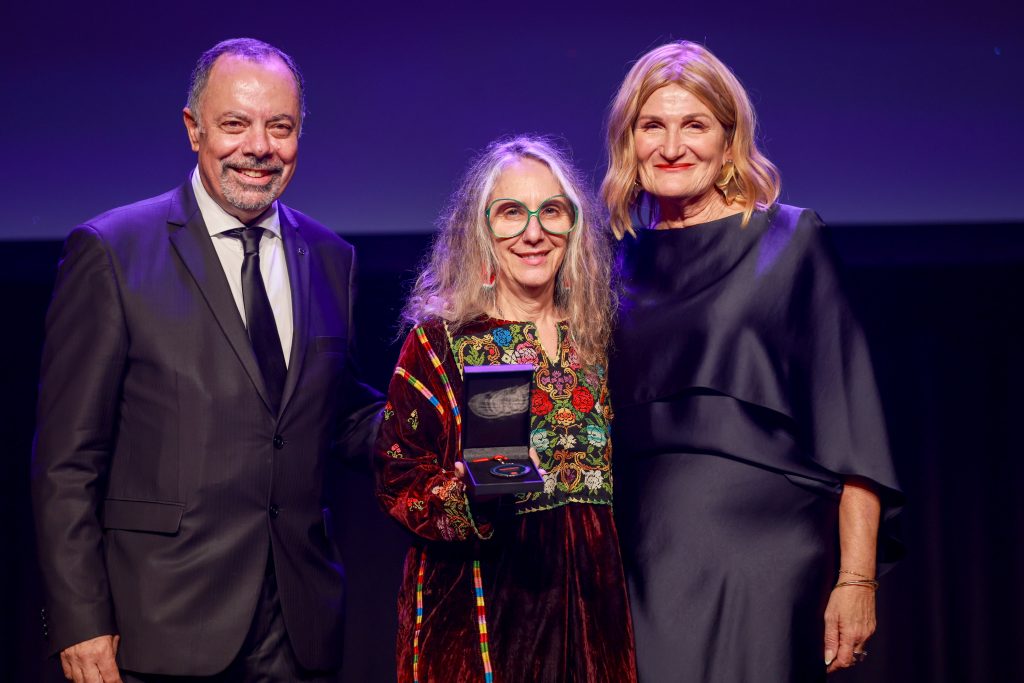
Nick Kaldas, Rosanna Barbero and Violet Roumeliotis. Photo: Salty Dingo.
Multicultural NSW Premier’s Harmony Awards
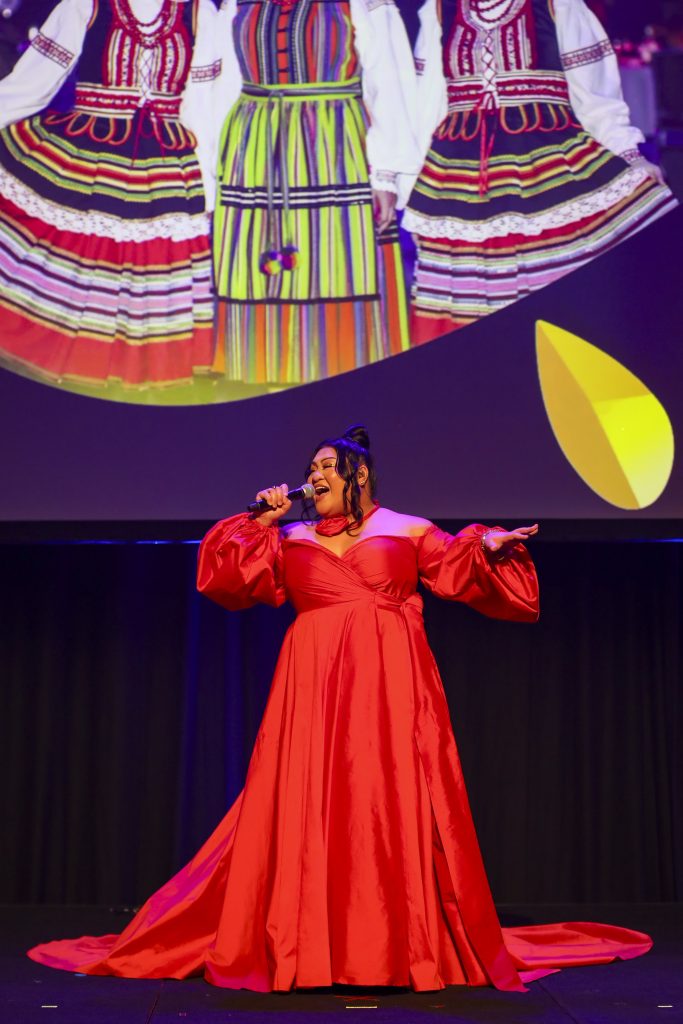
Multicultural NSW Premier’s Harmony Awards. Photo: Salty Dingo.
Multicultural NSW Premier’s Harmony Awards
Multicultural NSW Premier’s Harmony Awards. Photo: Salty Dingo.

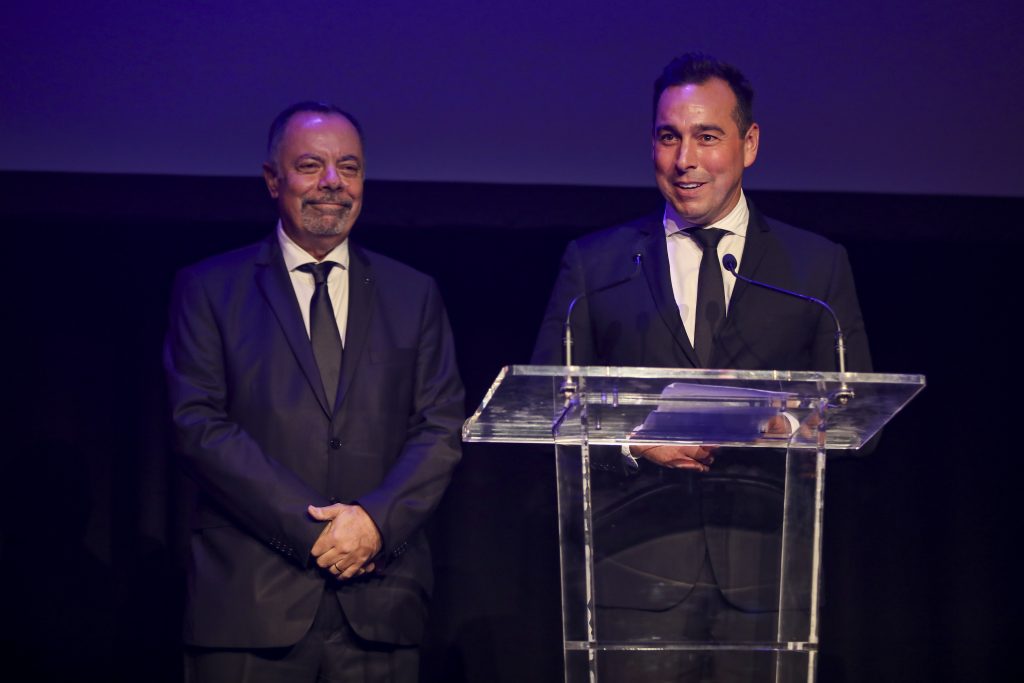
The Multicultural NSW Advisory Board Chair Nick Kaldas, APM, said it was important to “recognise the outstanding achievements made across NSW and to acknowledge the lifetime of work by those who have passed”.

“The people who have been recognised with the Community Medals or induction into the Honour Roll are the reason NSW is considered one of the most successful multicultural states in the world,” he said.

Multicultural NSW Premier’s Harmony Awards
Multicultural NSW Premier’s Harmony Awards. Photo: Salty Dingo.

For the full list of Premier’s Multicultural Community Medals and Multicultural Honour Roll visit https://multicultural.nsw.gov.au/  

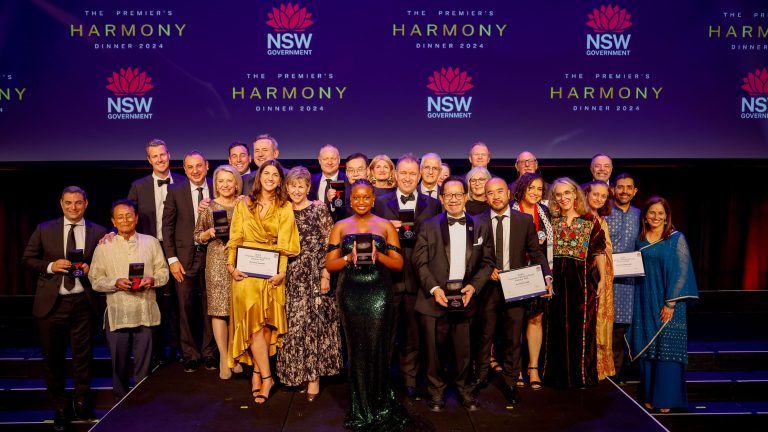
The winners at the Premier's Dinner.
The winners at the Premier’s Dinner.