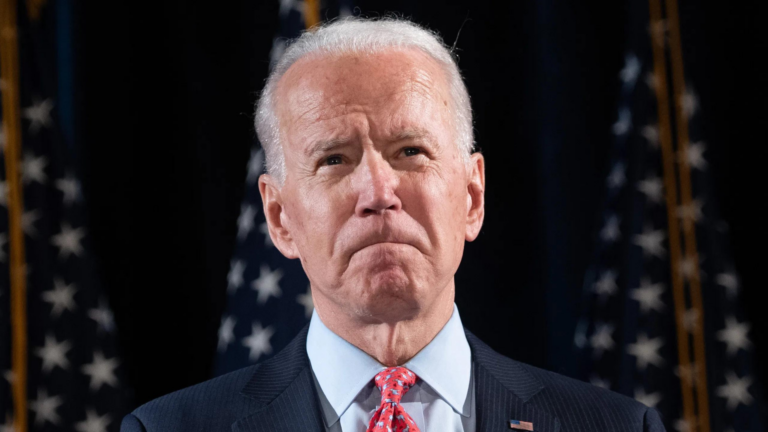
US President Joe Biden is ending his re-election bid and pulling out of this year’s presidential race.
The 81-year-old made the bombshell announcement in a letter he posted on social media while isolating with COVID-19 at his home in Delaware.
He has thrown his support behind Vice-President Kamala Harris to replace him as the party’s candidate.
My fellow Democrats, I have decided not to accept the nomination and to focus all my energies on my duties as President for the remainder of my term. My very first decision as the party nominee in 2020 was to pick Kamala Harris as my Vice President. And it’s been the best… pic.twitter.com/x8DnvuImJV
“I want to offer my full support and endorsement for Kamala to be the nominee of our party this year. Democrats — it’s time to come together and beat Trump. Let’s do this,” he said.
In his letter, Biden said it had been “the greatest honour of my life to serve as your president.”
“While it has been my intention to seek re-election, I believe it is in the best interest of my party and the country for me to stand down and to focus solely on fulfilling my duties as president for the remainder of the term,” he said.
Biden will address the nation on his decision later in the week.
Harris has since released a statement calling Biden’s decision to end his re-election campaign a “selfless and patriotic act.” She said she intends to “earn and win this nomination.”
This year marks 50 years since the invasion of my beautiful island home of Cyprus. It was on my 1st birthday, the 20th July 1974, when Turkish forces invaded Cyprus and took over half the island.
To this day, Cyprus is still occupied and its capital Nicosia remains the only divided capital city in the world. The North has a Turkish section, the South is Greek Cypriot and in between lies the Green zone patrolled by the United Nations.
A few years ago I wrote a short kid’s story book called “THE POWER OF CHRYSTAL” which unfortunately never saw the light of day. I won’t go into why I’ve kept it to myself for so long, but let me just acknowledge that imposter syndrome is alive and well.
Now that the 50 year anniversary is coming up, I’ve decided that today is as good a time as any to share it with you all. And while this story may centre around the Turkish invasion of Cyprus, it’s one that unfortunately so many people are able to relate to. Both in the past and present day.
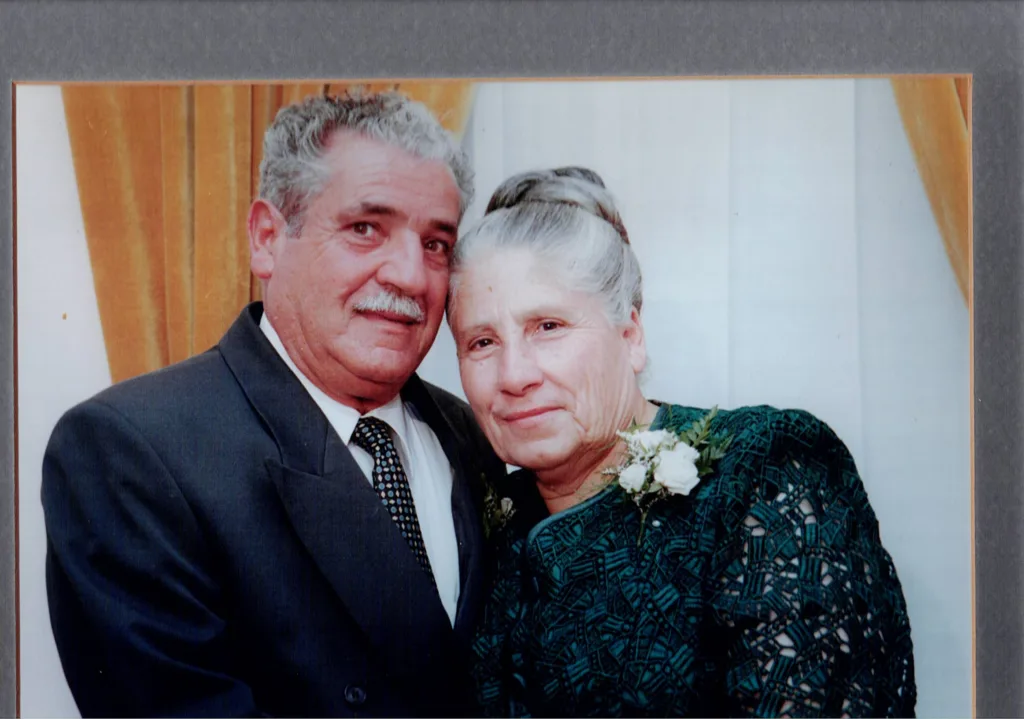
I dedicate this story to my parents who not only managed to start over in a foreign country but did so with grace, passion and success. Who, as a young married couple in their 20’s, said goodbye to all they loved and boarded a plane in search of a brighter future. A story so familiar to so many. Imagine having your whole life turned upside down in a single day? Waking up to sirens signalling the end of your little world as you know it. This was the reality my parents and I, along with all my Cypriot family, faced. Displacement. Loss. Grief.
Mum Andriani, my little sister Panayiota, dad Kypros and I celebrating a birthday in Melbourne.
“Justice for Cyprus” and “Never Forget” are phrases which have been engrained into our brains. And we will never forget. Because 50 years on nothing much has changed and our beautiful island home remains occupied and divided.
The Power Of Chrystal is a story of resilience in a time of war and displacement. As a young girl, Chrystal faces the aftermath of an invasion on her home in Cyprus which subsequently sees her family flee to start a new life in Australia. With a new school, home, friends and a foreign language to deal with, Chrystal looks for the power within to help her survive challenging situations. Not only does she survive; Chrystal discovers that the powers we hold within us are much stronger than we could ever imagine.
THE POWER OF CHRYSTAL
Chrystal always believed she had special powers. On her third birthday Chrystal’s parents told her they had to quickly leave their house…
“Grigora, quickly get into the car,” cried her mum. “The soldiers are coming”.
Chrystal’s birthday cake was sadly left on the kitchen table as they quickly loaded the car with as many belongings as they could grab.
Scared and afraid was how Chrystal was feeling as she left her birthday cake behind. People say there was no way young Chrystal could have a memory of that day…but she did…she had the powers.
Along with her mum and dad, Chrystal spent some time in a camp with other families who also had to flee their homes. The days were different to what she was used to back in her cosy home. Chrystal missed her toys and books and thought about them all alone in her old bedroom. Luckily, she made friends easily and filled her days playing, singing and going on adventures with the other children. As long as she had the powers, she would be okay.
For what seemed like many years, Chrystal would ask her mum and dad when they would return home. She was told it was too dangerous to ever go back. “Someone else lives there now,” declared Chrystal’s dad with a tear in his eye. “We have to find a new place to live. Be brave agapi mou.” Chrystal was fearless as she had the powers.
When Chrystal was five years old, she arrived in Australia with her parents. It had been her first trip in an airplane and she loved it!
Her family soon found a new place to live and although it was small it had everything they needed.
Chrystal started a new life far away from her island home. Her parents hardly spoke of their old country. “Unfortunately, we can never return. Our old life has disappeared and we must now make a new one here,” uttered her mum sadly.
Chrystal believed that wasn’t true. She smiled to herself knowing she would one day see her old home again. Her powers told her so.
Starting at her new school, Chrystal struggled to understand the children and teachers. They were all speaking a foreign language that she knew nothing about.
The other children would point and laugh at her funny looking shoes and tease Chrystal about her ‘pink dip’ sandwiches that smelt fishy. But she didn’t care. Chrystal knew how to make the laughter stop. She had the powers.
One time the class had a party and everyone took a letter home to let their parents know.
GRADE 2M WILL BE HAVING A CLASS PARTY TO CELEBRATE ANOTHER GREAT SCHOOL TERM. PLEASE BRING SOME FOOD ALONG WITH YOUR CHILD TOMORROW TO SHARE. THANK YOU, MRS MALONEY
Chrystal’s mum sent her to school with some freshly baked Halloumopitta (halloumi cake), Eliopitta (olive cake) as well as some rose flavoured loukoumi for dessert.
When Chrystal arrived at school she proudly put all the food her mum had made amongst the others on the table. She was smiling to herself when she first heard the snickering behind her.
The quiet giggling quickly turned into roars of laughter and finger pointing at the ‘weird’ food Chrystal’s mum had made. While the teacher tried to settle the class, Chrystal withdrew to a corner of the room.
She closed her eyes to escape the deafening laughter that had erupted from the children. With her eyes firmly shut, she imagined herself in her old kitchen laughing with her mum and dad while the hum of the air conditioner kept them cool. Chrystal was back there; she had the powers.
As time passed, Chrystal soon learned to speak the strange foreign language. To her delight, Chrystal’s class mates now wanted to share her lunch. They loved her ‘pongy’ pink sandwiches and Chrystal used her powers to learn to enjoy vegemite!
Chrystal even taught her friends some Greek words!
Finally she felt like she belonged and didn’t need to use her special powers quite as often…
As an adult, Chrystal returned back to her island home for a holiday with her mum, dad and sister. She had so much fun listening to all the stories from her relatives about the old days.
But best of all, she got to visit her childhood home once again and even got to enjoy a birthday cake with three candles to blow out. She always knew that one day she would return to her island home. Chrystal had the powers.
THE END
We did in fact get the chance to revisit our home in the village of Skilloura (2003) which is in the occupied part of Cyprus. It was the first time my parents and I returned after having to flee on the morning of July 20th 1974. It was bittersweet as you can imagine and the Turkish family who was now occupying our house gave us a look inside. I can’t begin to imagine what was running through my parents’ head at the time.
I hope you enjoyed the story. My aim was to spread awareness of the plight Cyprus still faces today 50 years on after the invasion. My hope is that we never forget the loved ones we lost, the homes we fled and the land that is still not free. Never Forget.
The Larcos family could never have anticipated the upheaval that awaited them when they made the decision to relocate from Australia to Cyprus in 1970. Four short years later, their lives would be turned upside down.
A father’s dream for his family would be shattered but what gripped him the most was guilt for moving his family to Cyprus.
The Greek Herald sat down with three generations of the Larcos family — Savvas, his sons George and Christopher, and grandson Tim (Christopher’s son) — to talk about the Turkish invasion of Cyprus in 1974 and how the family re-bounded after losing everything.
Moving to Cyprus in 1970
Selling the family home in Sydney, Australia, Savvas and late wife Aliki would take sons Christopher, George and younger brother back to their homeland of Cyprus in 1970.
“Most of the migrants, they wanted to work five or six years in Australia and go back to where they came from. But, when you leave your homeland, there was a reason to leave,” Savvas told The Greek Herald.
Much of his family still resided in Cyprus at the time, part of the reason he wanted to go back.
As the family packed for their return, Savvas’ wife opposed the decision, wanting to stay in Australia as most of her family was there. Her brothers also warned it was potentially not a good move, aware of political troubles abroad and forecasting that the country’s future was uncertain.
But as a property developer in Australia, Savvas did quite well, making capital and taking it to Cyprus to start a company with his brother and his friend, juggling work at the airport as a chef and waiter to support the family.
Savvas and his business partners had property in Famagusta and Kyrenia.
George said life before the war was positive. The brothers were receiving a good education and setting up for their futures.
“My memories pre-war were positive—we had holidays, we would go to the beach regularly, we would visit relatives in Kyrenia and Kontara, take trips to Limassol—a standard happy childhood,” he said.
“The move to Cyprus didn’t cause any emotional issues. It was a wonderful life, and things were being set up well.”
Christopher gives a different perspective of moving to Cyprus.
“At first, I didn’t like the idea of being uprooted from life in Australia to this place on the other side of the planet which I didn’t know,” Christopher said, before adding that after a couple of years at school and making friends, life was good.
“I was home by then.”
By the time 1974 came, the brothers felt at home in Cyprus and could see a positive future ahead, with plans for university abroad. The Larcos family began to settle into their new life.
The day of the invasion
On the verge of the family business booming — their entire livelihood would be uprooted overnight. Savvas had found a buyer for one of his properties in Kyrenia near the water. Selling the property would have set up the family financially.
The very next day, Cyprus was invaded by Turkish troops.
“The morning of the invasion was quite traumatic,” Christopher said, reflecting on the day as a then-17-year-old.
“My habit at the time was to wake up at 6am daily and listen to the BBC World Service. The lead story that morning was about the invasion. I thought, ‘that’s interesting. I don’t see anything’.
“I looked out the window to the north and saw Turkish parachutes coming out of the sky.”
George added, “It was scary. People were using real weapons, they were shooting at you, there were bombs, our home is damaged, there was also a lot of uncertainty… Suddenly, your childhood was being stolen, evaporating right in front of our eyes. You grow up very quickly. You go from a 14-year-old who’s interested in match box cars to realising there is a real world out there. Our situation changed dramatically.”
When Savvas returned from his shift at the airport, the boys saw the fear on his face and could sense the seriousness of the situation as Turkish jets flew above them, and paratroopers landed.
Huddling downstairs in the family home with their neighbours, explosions carried on through the night keeping the family awake.
Escaping to the mountains for a couple of weeks to hold out, the family wanted to see what the chances were of going back. Sleeping out in the fields, underneath a car, near a tent — everything was up in the air.
“We stayed with other families, and we thought it was going to be temporary, maybe a few days, maybe the Turkish people would change their mind, and everything would go back to normal. But that was a full-on hope,” George said.
It quickly became clear things were not going back to the way they were.
“We didn’t have our bedrooms anymore,” George explained.
“There was a lot of unhappiness and tears. For the first time in my life, I saw that my parents were vulnerable people themselves.”
Christopher added, “As a kid you realise there is a big threatening world out there. You see your parents emotionally devastated. Economically, it’s a catastrophe, they’ve lost everything, and everything is uncertain. That was the reality for us.”
Losing his employment and business, and forced out of the family home, Savvas also lost his property investments, which are still occupied by Turkish military today.
“He lost his economic livelihood overnight—it evaporated,” Christopher said. “We had sold our family home in Australia as we planned to stay in Cyprus.”
Savvas’ grandson Tim weighed in on the experience and said, “I think there’s a sense of guilt about going to Cyprus from Australia. He had made the choice to take the family back, and four years later all of this [happened]…I think he wears that a bit even though it has nothing to do with him.”
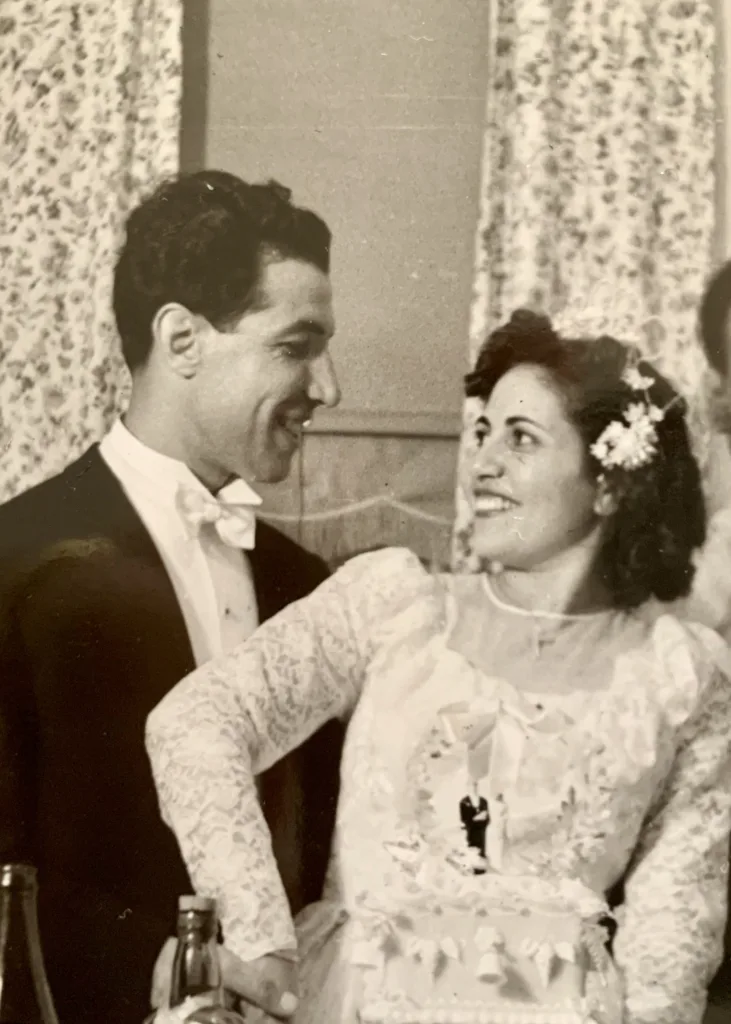
Wedding Day. Sydney, 1953
Rebuilding the family legacy
Returning to Australia months after the invasion, the family started over from scratch.
While living in a small apartment, Savvas worked three different jobs —a breakfast chef by morning, lunch chef and waiter at night. In five years, the family had enough money to put a deposit on a house—the house he now lives in as a 96-year-old.
“I felt responsible for what happened. I said to myself, ‘now you are going to be strong and bring your family back together, like a captain of the ship’,” Savvas said.
“I had to show them that you can go back and find yourself again. I never gave up.”
George said he built an admiration for his folks: “They knuckled down and both worked multiple jobs. They really put effort into re-establishing themselves.”
In retrospect
Looking back now on the events of 1974, George said they made him see his parents “in a different light.”
“There were a few silver linings—it helped me gain a mature outlook on life. I went from being a 14-year-old kid to having a much more mature thought process,” George explained.
“I had enormous admiration for my parents, and I didn’t want to disappoint them, so this made me more resilient, having experienced being shot at, I was determined to make something of my life and please them in doing well.”
Christopher said he has “a different experience.”
“I don’t know if I recovered from the trauma. I think I’m over it now, but I don’t know what the steps were that got me here. I had the opposite reaction to George,” Christopher said.
“I got angry and ended up blaming my parents for it. You know, I thought, ‘this is a mess, it’s all your fault and my life is a mess.’ I carried that anger with me when we came back to Australia.
“I was unfocused, I was traumatised by the Cyprus experience, there was no one to talk to, to help talk it through and resolve it, so my life started to go off the rails. It was lucky I got into the architecture degree, as that helped a bit… I’m lucky to have made it out of my 20s.”
Resilience and the impacts of generational trauma
Savvas’ grandson Tim expressed that he “mirrored” his father Christopher’s trauma during his upbringing.
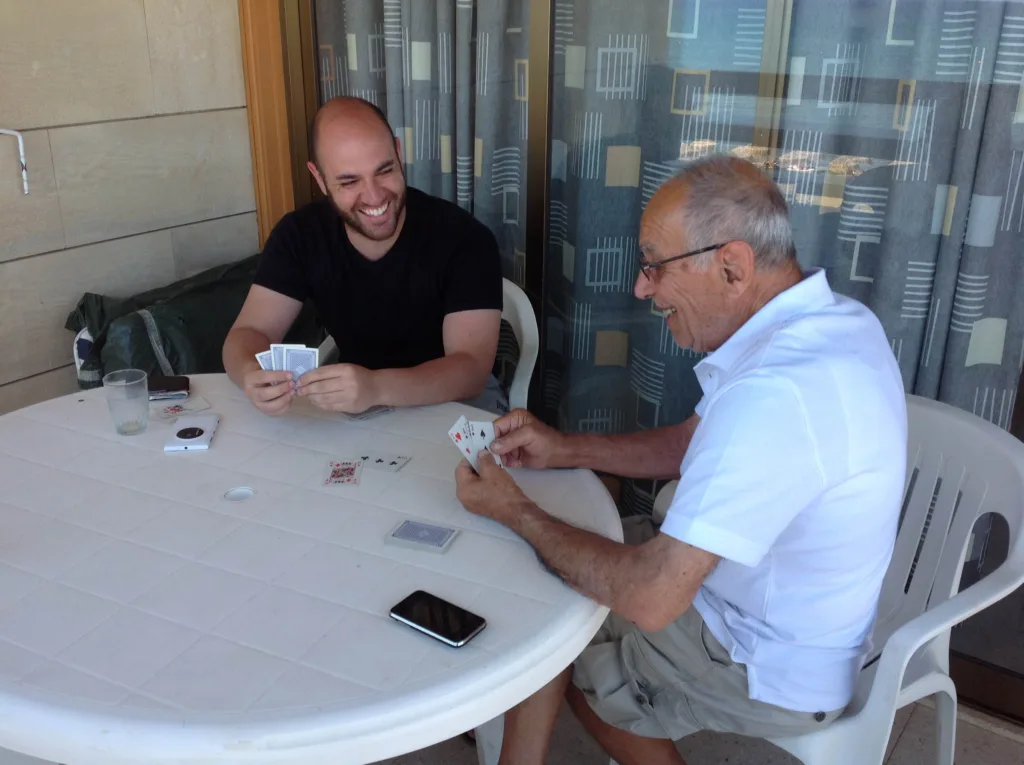
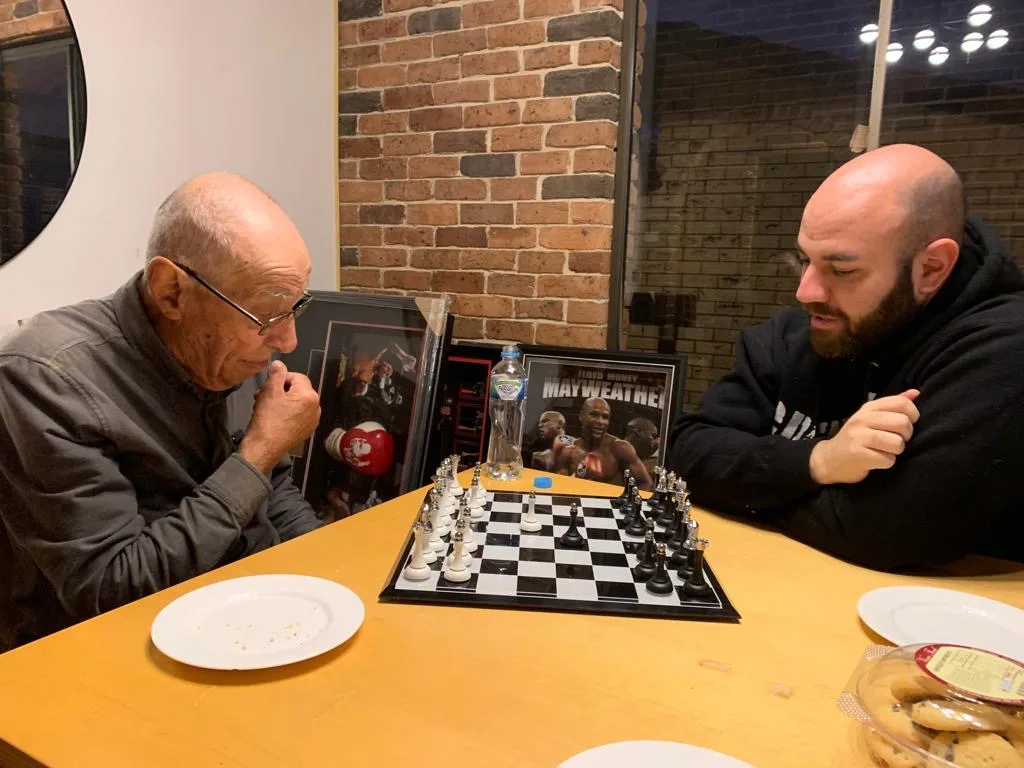
Grandad Savvas and grandson Tim Larcos playing cards in Larnaca.Grandfather Savvas Larcos and Grandson Tim Larcos playing chess in Sydney.
“I heard about the recovery process a lot growing up. He talks about getting shot at by troops. For me, hearing those stories amplified those stories in terms of generational impact,” he said.
Nonetheless, Tim said the family’s ability to overcome such diversity has instilled in him a resilient mindset.
“I’ve seen how resilient the family have been—you have doctors, lawyers, a diplomat—there’s a high bar that has been set in terms of the generation before,” Tim explained
“It’s largely because of this man [Savvas]. The choices he made have set entire generations up for success. I know he laments the choice of going back, but we wouldn’t be in this situation today if it weren’t for the choices he made.
“If they stayed in Cyprus, would I be the person I am today? Probably not.”
Today
Witnessing his children grow up, marry and give him grandchildren and great grandchildren, Savvas said, “For me, this happens to lots of people. It’s all part of life; success and failure.”
Savvas walks up to 5 kilometres daily and still drives. He prides himself on his ability to do online banking. His reflective attitude on the invasion—and the impacts—reveal a man determined to protect and keep his family together at all costs.
“After all this catastrophe, I’m almost 97, I’m so proud, you can’t imagine how proud I am, I’ve got three children, well educated, financially independent, I see my grandchildren become good citizens, that feeling, that positive feeling—you can’t take it away from me,” Savvas concluded.
By Stavros Nikolaou, Deputy High Commissioner of the Republic of Cyprus
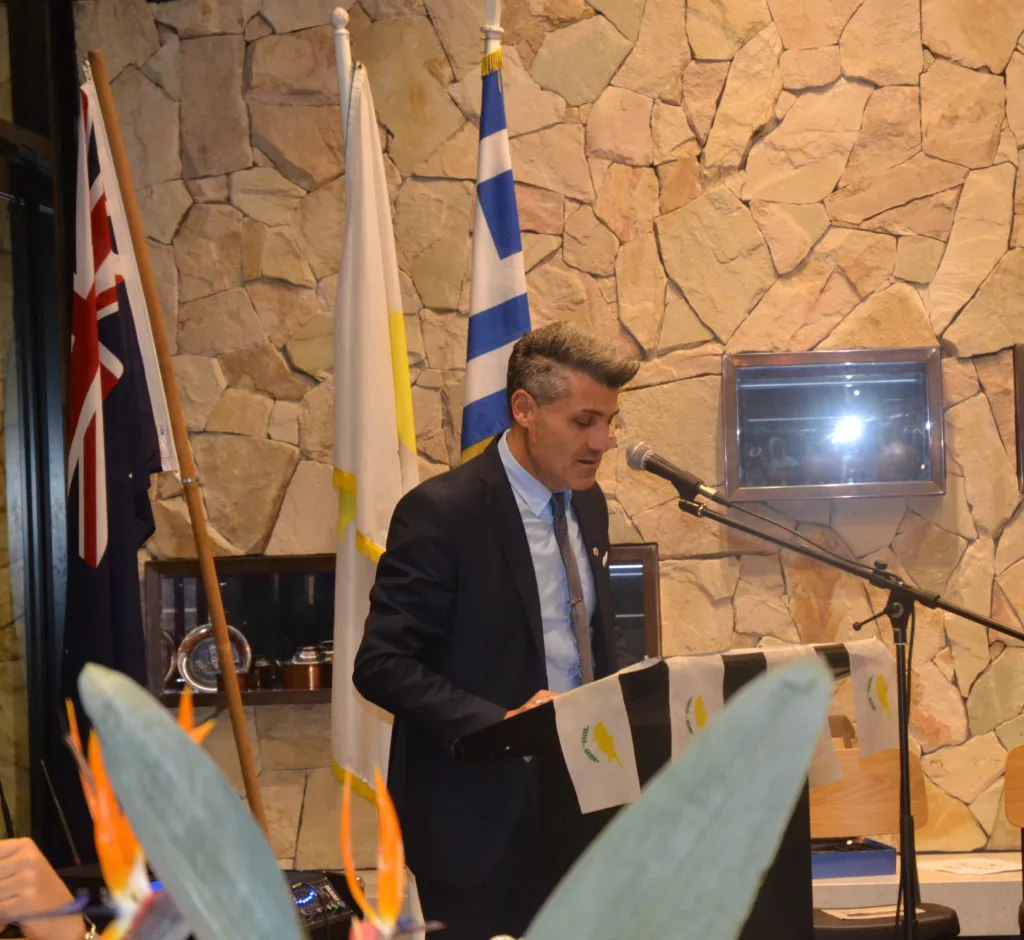
It was an afternoon full of stories—many untold—poetry, dragons, and a single fairy unfolds as the present meets the past to discuss the future. Mr. Prokopis Vanezis, the second Cypriot to serve as High Commissioner of the Republic of Cyprus in Australia, is a significant figure in Cypriot diplomacy.
On Jim Socrates and his wife’s initiative in arranging this meeting, they found my full agreement.
As I conclude my duties as Deputy High Commissioner of Cyprus in Australia, reflecting with one of the early trailblazers seems ideal for a comprehensive review.
As we look back on his varied life with a rather positive outlook—positive, because a career in significant posts in the Cyprus Diplomatic Service cannot be entirely rosy—it feels like riding a train through Cyprus’ modern history. Now residing in Australia, this might be his last station, akin to Seferis’ poem where ‘an irony of thought’ arises, and you ‘hurry to open your heart lest foreignness catch up with you and change it.’
A passionate patriot, Mr. Vanezis discusses his crucial decision to move to Australia, a country he loved almost as much as Cyprus.
“I wanted to end my career in an English-speaking country and then return with my wife to Cyprus, but I ended up staying here for the rest of my life. I have no regrets,” he adds.
We talk about his introduction to Archbishop Makarios III, the first President of the Republic of Cyprus, about whom he has written perhaps the most detailed trilogy. He reveals unknown aspects of Makarios’ personality—the jokes, the wit, and the layers beneath his public role, which made up his impressive persona. The occasion for these books, he says, was the frequent question from foreign diplomats, “How can a modern state have a Father as its head?” To avoid lengthy explanations, he decided to share his writings, which impressed everyone.
We discussed his diplomatic career, his role as the auditor of the Foreign Ministry (now the Internal Audit Unit), the missteps he identified, the pressures he faced, and the challenges when he acted against the norm. Dragons in a fairy tale with a sweet aftertaste, though in reality, the dragons never truly touched him.
At 96 years old, with a memory sharper than a sword, he emphasises, “The most important quality a diplomat should have been honesty.”
A man of integrity, he never indulged in small talk or pettiness. His compass was education, believing that an educated person finds their way through conversation, while the uneducated remain stuck in the past—a lesson he passed on to his children. His son Andrew, present that afternoon, confirms this perfectly.
We also discussed major international issues. He is deeply concerned about current affairs and has clear views on each significant issue. Age, bringing unlimited wisdom, is treated as an asset. He knows the great Kavadi lyrics by heart and seems to have understood them through his experiences. He comprehended what Ithacas mean, as the Alexandrian poet would say.
Our conversation inevitably turns to Sydney’s Cypriot community.
“It is the first thing I ask when meet community members,” he says. “I am always concerned about the future of the Cypriot presence in Australia.”
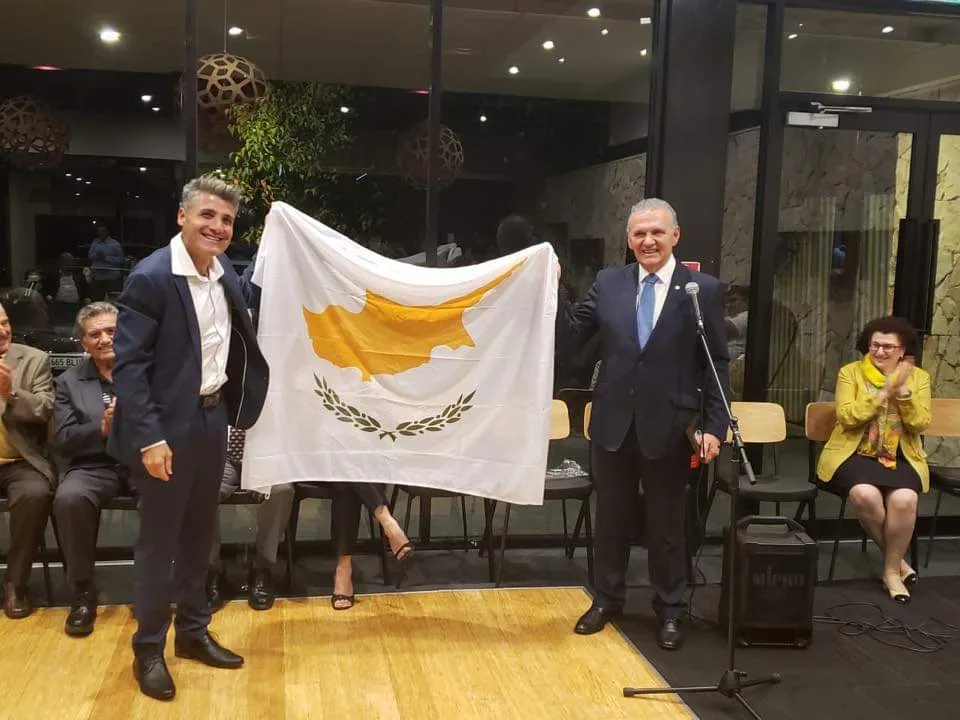
Recent developments have justified these concerns. The current President, Michael Peters Kyriacou, who recently took office, joined us. He faces the challenging task of transitioning the community into a new era. Mr. Vanezis, with a smile, says, “I don’t know whether to offer congratulations or condolences.”
He advises that youth and investment in them should guide the community’s future plans, it’s all about renewal, change, engaging with the younger adults the youth, less so about personalities and property.
“Only by effectively embracing the youth will you achieve your goals,” he tells Michael.
Mr. Vanezis was told of the upcoming Community members meeting to decide on the Stanmore property future, and he reiterated that the Community is a lot more than just real estate it’s about the future presence of Cypriots in Australia.
Mr Vanezi was pleased to learn that younger Cypriots have now taken on leadership roles in the Community and there is a clear plan, to renew the Community by engaging the youth and resolving the future of the Stanmore property with a clear vision to safeguard the legacy of the Cypriots and the future of the Community.
Many developments lie ahead, and the power is in the hands of the many, to whom the leadership must explain its vision. With vision, only good things can happen. After nearly a century of life, he feels his strength waning but does not give up. His mind remains sharper than ever. He aims to finish one last book, and I believe he will. Despite mobility problems and poor eyesight, he persists.
“What saddens me about my vision problem is that I can no longer read as much as I want and that I can’t see her,” he says, pointing to his beloved wife, Lula, who blushes like a young girl. The fairy I mentioned earlier—she is the one.
Even if Seferis did not write the last station about love, isn’t that how everything ends? “In the dark we go, in the dark we go. The heroes go to the dark…”
For centuries, ancient artefacts, art, and relics have been a topic of ownership, provenance, and morality debates. But what is the current situation for those who have intentionally purchased stolen artworks to repatriate them, and what message does this give to the world, particularly those who have dedicated their lives to fighting for art justice? Should there be a financial condition on repatriating a country’s stolen heritage?
On Tuesday, June 11, Cyprus’ Synodal Committee issued a press release announcing that an agreement had been reached between Cypriot and German authorities for the repatriation of sixty ecclesiastical and prehistoric artefacts looted after the Turkish invasion of the island in 1974.
Although the Church of Cyprus hailed the day as historic and joyful, marking the culmination of nearly three decades of efforts and legal battles, undisclosed sources have revealed the repatriation transaction involved Cyprus – and, in this case, His Eminence Porphyrios of Neapolis, Head of the Church of Cyprus Representation to the European Union – paying a sum of money to German authorities to reclaim Cyprus’ stolen antiquities.
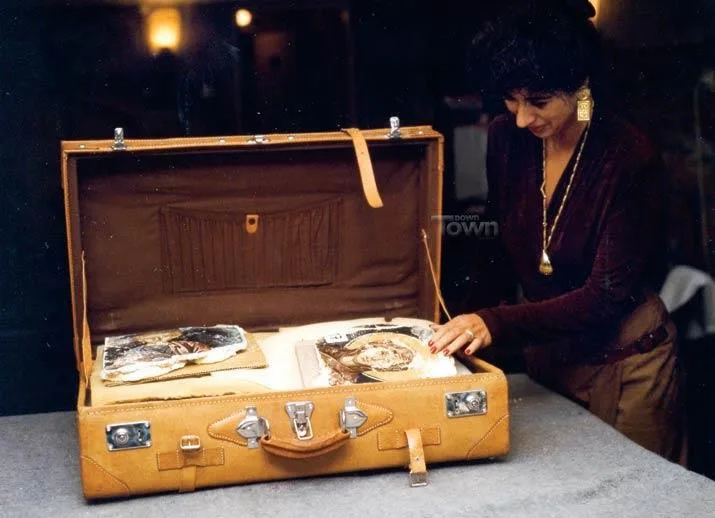
I reached out to renowned Greek Cypriot cultural activist and author of the best-selling memoir, The Icon Hunter, and asked about her thoughts on the Church’s recent declaration and the financial transaction behind their repatriation.
“There is something intuitively wrong – and foreign to the spirit of our times – about the idea of people in Cyprus being asked to pay for the repatriation of parts of their cultural and spiritual heritage, which were stolen in horrible circumstances,” Tasoula Hadjitofi said.
“Many important Cypriot treasures remain in Germany, and people in Cyprus have a profoundly legitimate desire to see them all returned.”
Hadjitofi is knowledgeable of the legal intricacies surrounding stolen artworks, as well as the time-consuming quest for art justice and repatriation, having spent most of her life combatting art trafficking. As an authorised representative of the ancient Church of Cyprus, former Honorary Consul of Cyprus in the Netherlands, and founder of Walk of Truth, a Dutch-based non-governmental organisation that combats cultural crime, Tasoula Hadjitofi followed procedure in January 2024 by requesting that German authorities facilitate the return of all the island’s religious cultural artefacts in a detailed letter addressed to Germany’s Federal Minister of Foreign Affairs, Annalena Baerbock.
In her letter, Hadjitofi recounted the Turkish invasion of Cyprus in 1974, the coordinated effort to steal Cyprus’ cultural heritage, and her own participation in coordinating the 1997 ‘Munich Case’, one of the largest art trafficking sting operations in European history. Tasoula also copied on her letter the President of the Republic of Cyprus, Nikos Christodoulides, the Archbishop of the Autocephalous Church of Cyprus, Georgios, and the German Ambassador to the Republic of Cyprus, Anke Schlimm.
Despite Hadjitofi’s continuous efforts and adherence to procedures, Bishop Porphyrios of Neapolis went ahead on his own accord and paid the German authorities for the restitution of Cyprus’ stolen treasures. In addition to the money given by the Church, it has been reported that Cyprus’ Department of Antiquities also contributed financially to the repatriation ‘deal’.
“Cyprus’ cultural heritage is not for sale. Paying for art repatriation is wrong and goes against ethical practices,” Hadjitofi said. “Moreover, should not one European neighbour to the next support justice rather than taking advantage of one nation’s vulnerability,” she added.
To acquire a better understanding of the broader context of how Cyprus’ stolen antiquities ended up in Germany, and what led to Tasoula’s involvement in combating art trafficking, as well as the life risks she encountered along the way, we need to go back fifty years. Tasoula, like many other Cypriots at the time, was forced to flee her home to escape the 1974 Turkish military invasion of Cyprus, eventually settling in a foreign country as a refugee.
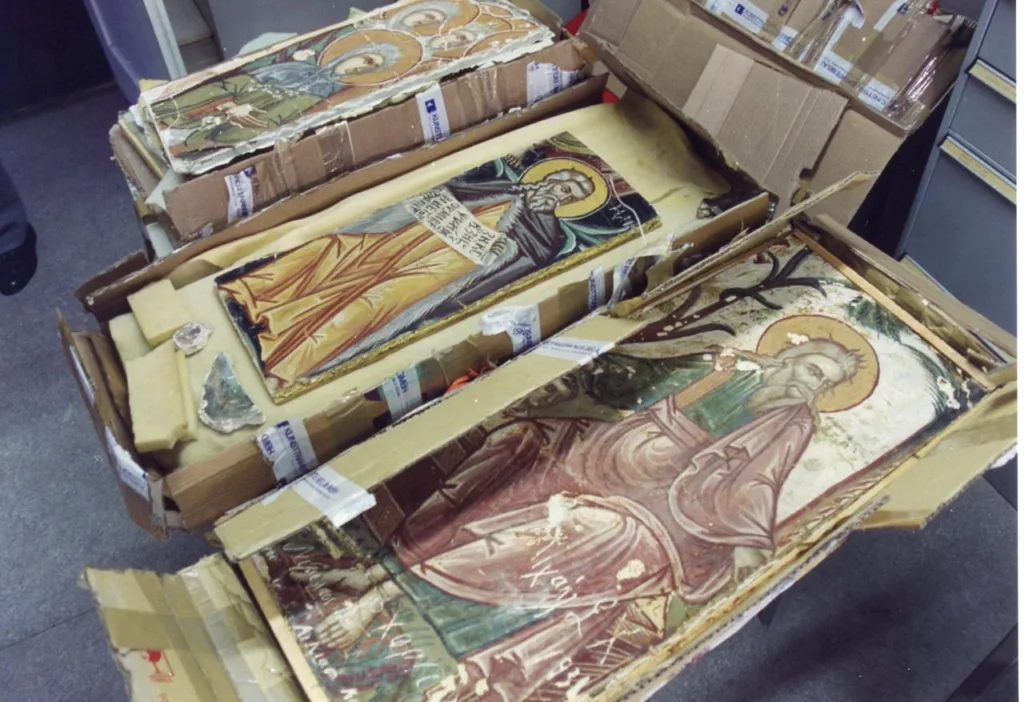
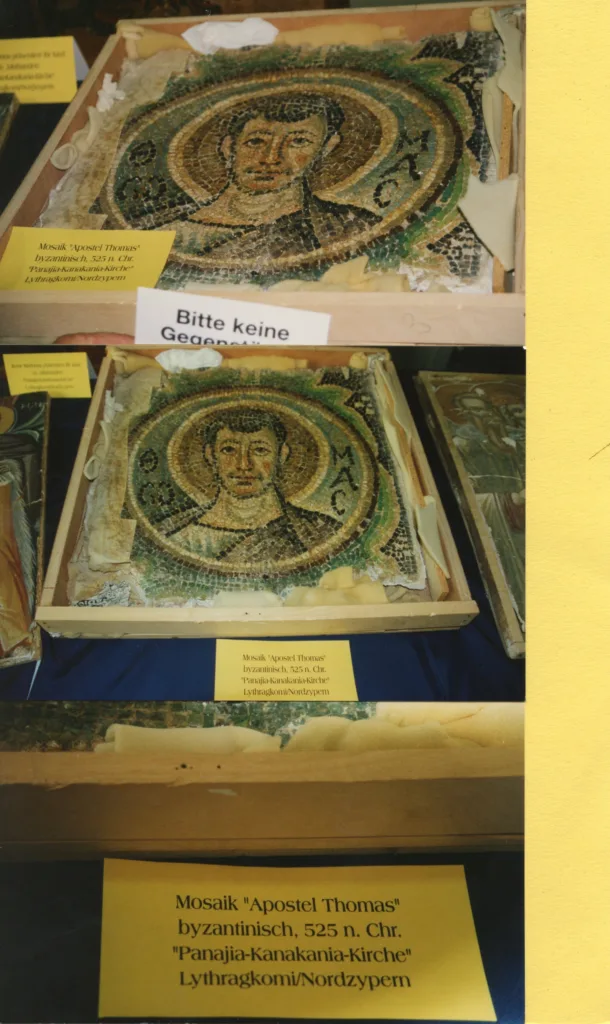
In the immediate aftermath of the invasion, an organised operation was launched to steal icons, frescoes, and mosaics from Cyprus’ centuries-old churches and religious sites, including some of the world’s oldest and most magnificent samples of Christian art. Electric drills were employed on the walls of ancient churches to extract religious art that had served as a source of inspiration and hope for Cyprus’ faithful populace, which was then sold internationally.
“The theft of these treasures was part of a horrific campaign of looting and plunder at the expense of people who were already suffering the dire consequences of the war,” she added.
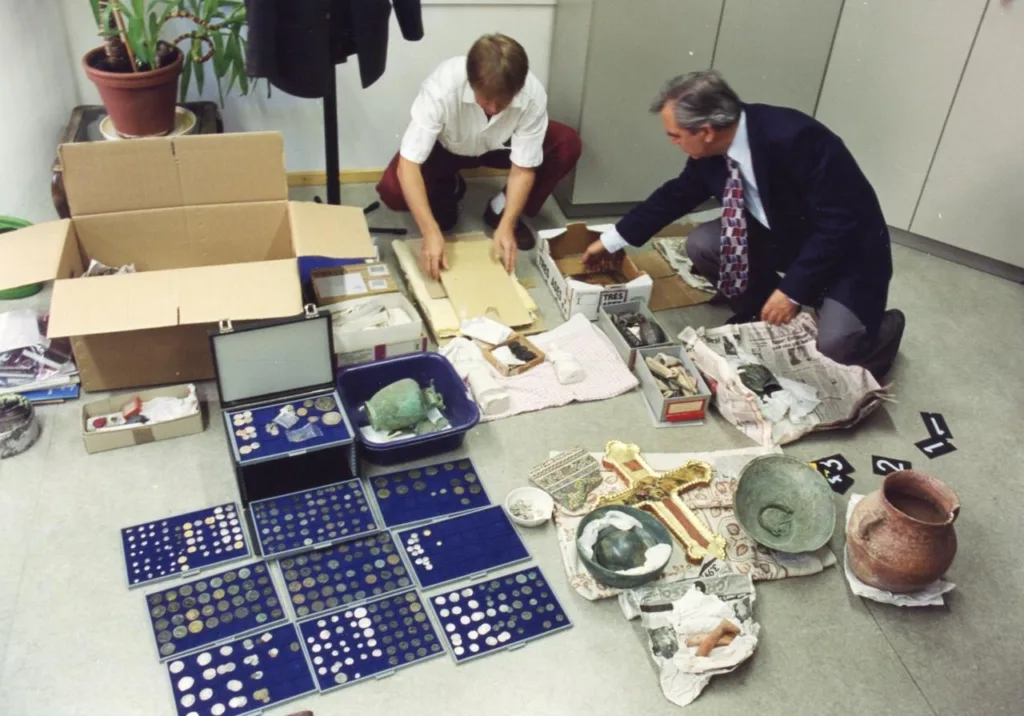
In the late nineties, Hadjitofi coordinated “The Munich Case,” one of the most extensive art trafficking sting operations in European history since World War II. During her intensive work, having worked closely with Archbishop Chrysostomos I of the Orthodox Church of Cyprus, as well as Dutch art dealers, Canadian sellers, and German detectives and police, Tasoula was at times compelled to play ‘cat and mouse’. She was targeted by art traffickers; fearing for her own and her family’s safety, she was forced to pay for private security.
After a joint police operation by the German and Cypriot authorities in 1997 – an action which remains unique in the story of international efforts to combat cultural crime – over 5,000 artefacts were discovered hidden in the double ceilings and hollow floors of the Munich apartments of the late Aydin Dikmen, a Turkish dealer known as “The Archaeologist.”
“People in Cyprus were relieved when they learned that at least 350 of the 5,000 or so artefacts in Dikmen’s hoard were antiquities stolen from the island. They were subsequently disappointed as I hope you can understand, when those products remained in Germany for a long time,” she said.
According to Hadjitofi, 173 stolen artefacts from Cyprus were returned to the island in 2013 following a lengthy legal struggle. However, many significant Cypriot relics from Dikmen remain in Germany, “and people in Cyprus have a profoundly legitimate desire to see their cultural heritage returned.”
The German tax authorities have filed a claim against Dikmen’s estate alleging that he failed to declare his profits from the sale of certain illegally trafficked cultural property while he was alive, thus preventing their repatriation. It was suggested that the Cypriot authorities settle this claim before repatriating the remaining objects.
“The taxes Dikmen owed were for the sale of Cypriot mosaics that had been ripped out of churches before he trafficked them abroad,” Hadjitofi stated.
But the laws of buying stolen products are simple. When a thief sells a stolen artefact, the general rule is that whoever buys the item, regardless of the purchase price or the terms of the sale, does not obtain legal possession (good ‘title’) to it. This is because the thief never had a ‘title’ – and you cannot sell something you do not have. The original owner can take action to require the purchaser to return the artefact (or any damages to its value) to them.
Across the Western world, a new consensus emerged in support of the restitution of artefacts acquired illegally or immorally. Interestingly, Germany has been a leader in this effort, evidenced by the return of 20 Benin Bronzes in 2022, which were removed during an inhumane British colonial attack on Nigeria in 1897. Furthermore, it was even acknowledged that all the Benin Bronzes, which are currently displayed in German collections, belong to Nigeria.
The Ethnological Museum of Berlin eventually returned 23 relics confiscated from Namibia during Germany’s colonial era. The Namibian returns were motivated by Germany’s historical legacy, while the repatriation of the Benin Bronzes by British colonial forces exemplified universal moral norms.
“These values abhor the idea that people who are already enduring the consequences of war, anarchy, or alien domination, should have their suffering compounded by the loss of precious objects, which reflect their collective identity and spirituality,” Hadjitofi stated. “In the name of those values, I am calling on the German authorities to facilitate the return to Cyprus of all the religious and cultural artefacts that were stolen from our island, (with or without evidence of which Church they originated from), with no financial conditions attached.”
But the question remains as to why Bishop Porphyrios of Neapolis went ahead on his own initiative by paying the German authorities for the return of some of Cyprus’ stolen treasures, and what precedence is he setting with his actions. Does this imply that Greece will eventually have to purchase their own Parthenon Marbles from the United Kingdom if they wish to see their return, or that Egypt will have to buy back the iconic Rosetta Stone? Stolen or unlawfully removed antiquities should be returned to their rightful place of origin without financial compensation. Porphyrios’ actions could potentially alter the narrative, justifying the act of purchasing stolen art.
And, more importantly, how does this affect cultural activists like Tasoula who have dedicated their lives to repatriating art lawfully, and to counteract criminal activity through financial contributions from donors?
Tasoula Hadjitofi’s Walk of Truth is the long-term extension of her four decades’ work. Her independent, non-governmental organisation aims to counter the ongoing destruction and looting of cultural heritage by engaging the public and to spread awareness of the value of our shared patrimony and the responsibility of each of us to protect it. Among other things, it has set up a digital research facility containing thousands of documents from cases all over the world, including Syria, Iraq, Yemen, Iran, the Balkans, and Cyprus, for use in training, research, and education.
“Nothing would please us more, the people of Cyprus, than to see Germany sending or delivering these antiquities in Cyprus this year without financial expectations in return,” Tasoula said. “This year marks fifty years since the 1974 invasion and Germany could send a clear message of understanding and hope for sustainable peace through the return of our cultural antiquities.”
Young Cypriot Australians, born decades after the Turkish invasion of Cyprus in 1974, say they are grappling with the conflict’s enduring legacy.
As the first generation of refugees ages, this new wave of Cypriot Australians are racing against time to preserve and digitise the stories of their elders. Beyond remembrance, they are seeking land rights, and leveraging their skills and education to advocate for a future their parents could only dream of – a reunited Cyprus.
Eva Ioannou, 25, Social worker, Wollongong
Eva Ioannou.
Eva embodies the spirit of a young Cypriot Australian deeply connected to heritage.
“The knowledge of the invasion forms a crucial part of my identity. Hearing stories of people in my family and community who are able to hold onto their culture despite adversity, instilled in me a profound respect for their strength and determination,” Eva states.
“It has been a significant project for the youth of our community to digitally archive the experiences of the Turkish invasion from our elderly. In this way we were able to create and maintain digital archives of documents, photos, videos and personal testimonies related to the invasion. This ensures that the information is preserved and accessible to future generations,” she says, adding that the awareness of events that took place “fosters a sense of responsibility to advocate for justice and reconciliation, honouring the struggles of my ancestors while working towards a better future for Cyprus.”
She says these stories encourage her “to stay informed and engaged” with the Cypriot community both in Australia and abroad. Her contribution is noteworthy, and she is currently Vice President of the Australian/New Zealand chapter of NEPOMAK, a Cypriot youth organisation.
Eva would like the Australian government to recognise the invasion’s illegality.
“Being home to the second largest number of Cypriots outside Cyprus, there are many ways in which the Australian government can support Cyprus in finding a resolution to its conflict. The first, and in my opinion the most important, would be for Australia to continue to recognise the illegal invasion of Cyprus,” Eva says, urging the Australian government to also advocate for the Cyprus issue in international organisations such as the United Nations, the Commonwealth of Nations and other relevant bodies.
“Through active advocacy, the Australian government can also take a firm stance against the illegal occupation of Northern Cyprus and support policies that aim for the withdrawal of foreign troops and settlers from the island.”
William’s grandparents hail from Farmakas, Pano Lakatamia and the occupied village of Agridaki.
“My father was a refugee who settled in Anthoupoli,” William shares, highlighting the personal impact of the Turkish invasion on his family.
Growing up with his mother after his parents’ separation when he was eight, his father returned to Cyprus and has since passed away.
“I am trying to go through our deeds and land titles to be sorted on the occupied sides. My father and his siblings have passed their rights to us, and we need to get them signed off to our names,” he says.
The process is complex, compounded by bureaucratic challenges, further complicated by his name – Vasili in Greek and William in English. Despite the difficulties, he is driven to pursue his rights by a sense of legacy.
“It’s not the money. Not that we can do anything with it. We can’t go and build, but we can take a loan for land on the free part of the island or wait for reunification,” he explains.
William’s active involvement in NEPOMAK has been a significant aspect of his journey, having served as Secretary in the Australia and New Zealand Executive Committee. Attending the NEPOMAK Australia and New Zealand Summit in 2024 was a transformative experience.
“I got closer to Cyprus when I was in the environment. For someone to be passionate about what they are, they need to immerse themselves,” he explains.
William’s passion for his heritage extends to advocating for a resolution to the Cyprus conflict. He believes that the Australian government should take a more active role.
“The government needs to address it formally in parliament with all members there. Money talks, unfortunately, in politics, but we need to stand on moral ground and understand that this island has been illegally occupied for 50 years now,” he argues.
William also highlights the importance of unity among Cypriots, including Turkish Cypriots.
“They are still citizens of Cyprus, like they were when we were cut in half,” he notes, emphasising the need for collective efforts towards resolving the conflict.
Souvlaki or Seftalies? Souvlaki because of the pop-up, Seftalies are delicious but ‘fasaria’
Stephanie Demetrios, IT, Melbourne
Stephanie Demetrios.
Passionate about keeping the cultural memory of her Greek and Cypriot heritage alive, Stephanie is often seen volunteering at events. Her father hails from Tsamanatas village in Epirus and her mother is from Larnaca. Stephanie embraces her shared Greek heritage.
“We are stronger when we work together,” she says, dispelling any notion of division between Cypriot and Greek Australians.
She emphasises open dialogue with the Cypriot Australian community.
“Being part of the conversation and being curious go a long way in ensuring we can productively collaborate with other members of our community,” she says.
However, her call to action extends beyond her immediate circle. Stephanie urges the Australian government to take a “more vocal and active approach,” especially in cases such as Turkish-Cypriot leader Ersin Tatar’s visit to Australia.
Stephanie has a deep personal connection to Cyprus, having visited the island nation four times. She fondly recalls getting lost in the mountains and meeting welcoming locals who “invited me in, and spoke to me about their lives, over coffee and generous servings of glyko tou koutaliou (spoon sweets).”
This spirit of community is also evident at Australia’s Cypriot events. Describing her experience at the Cyprus Community Festival in Adelaide, Stephanie highlights the “great atmosphere,” cultural performances, and “delicious food.”
Looking to role models, Stephanie finds inspiration in both Australia and Cyprus. She admires Annita Demetriou, the youngest person and first female Speaker of the House of Representatives of Cyprus.
“I have been inspired by her communication, work ethic and tenacity,” Stephanie shares.
Souvlaki or Seftalies? Both! A mix is best
Lucas Anastasiou, 22, Political Studies student, Deakin University Greek Society Secretary, Melbourne
Lucas Anastasiou.
Having lived in Melbourne his entire life, Lucas’ Greek, Cypriot, and Syrian heritage significantly shape his outlook.
He states, “I’ve discussed the invasion of Cyprus with my parents in detail. For our immediate family, we were not directly affected. My grandfather came to Australia in 1950 and my father was born here.”
However, the broader impact on his family and friends is evident.
“We have many family members and friends who served in the military and defended the country against the invasion. As a result, many of my cousins abroad are currently also serving,” he explains.
Lucas highlights the ongoing impact of the invasion: “The horrors of what happened in 1974 still continue to affect Cypriots every day. Sons must always be ready to fight and, if need be, die. Families are always in fear of another war.”
His grandfather’s experiences under British rule further illustrate Cyprus’ troubled history.
“He told stories of discrimination against Cypriots, including his own brothers, by the British colonial forces. He too described a time where Cypriots were once friendly. He was trained as a carpenter by a Turkish-Cypriot man. He found it regretful that the people became enemies,” Lucas says.
He calls for stronger action from the Australian government: “I would personally like to see a greater condemnation of the Turkish occupation by the Australian government. As a UN member, we have an obligation to stand against what is unlawful. No, Australia doesn’t recognise Northern Cyprus, but we do not actively do anything to change, to push for reunification. It’s an insult to the memory of those who were killed, those who lost everything.”
I must add, Sheftalies have the edge!
Marie Trikkis, 28, Customer Service, Wollongong
Marie Trikkis.
Marie’s roots trace back to Vatili, Cyprus.
“I have had many conversations about the Turkish invasion with not only my grandparents, but my aunt as well. I learned a lot about their personal experiences and struggles at the time as well as their experiences moving to Australia,” she says.
These conversations have given her a deep understanding of the day the tanks rolled through their village, the harsh living conditions her family endured, and their poignant return to the village after the war.
Her commitment to preserving these memories extends beyond her own family.
“A few of the youth in the Wollongong community are taking the time to interview the older generation of Cypriots so that we can share their stories and experiences for the youth to understand more of what our families went through both during the war and migrating to Australia,” she says.
Marie Trikkis visited Cyprus for the first time last year.
Marie is also passionate about fostering greater engagement between the Australian government and the Cypriot diaspora.
“I would like to see the Australian government engage with the Cypriot diaspora in Australia to leverage their insights and support for peace initiatives,” she asserts.
Last year, Marie visited Cyprus for the first time, an experience that deeply moved her.
“The most surprising thing I experienced was visiting my yiayia’s old village with her. Seeing what is left of her home and the amount of pain she was in revisiting was very overwhelming,” Marie says.
Souvlaki or Sheftalies is hard. Both?
Chris Kessaris, 27, Civil Engineer, Darwin
Chris Kessaris.
Through his family’s stories and his personal experiences, Chris has developed a strong sense of identity and a desire to advocate for the resolution of the Cyprus conflict.
“Both my mother and father were born in Cyprus. My mother’s family is from a village called Panagra in Kyrenia, and my father’s family is from a village called Trachonas in Nicosia,” Chris explains.
Growing up in Australia, Chris has always been aware of his Cypriot heritage, but it was the stories shared by his grandfather, or pappou, that brought the historical context of the Turkish invasion to life.
“Before my pappou passed away, he shared his story and experience about the Turkish invasion. In 1974, during the Turkish invasion, he and his family were kicked out of their family home in Trachonas, Nicosia (North Cyprus). People had lost everything they owned apart from the clothes that they were wearing,” Chris recounts.
His grandfather’s harrowing experience of being captured, tortured, and displaced left a lasting impression on Chris.
“He had been taken to Turkey, put into jail, tortured with no food and showers. After three and a half months, they were given showers and clothes and returned to the northern (occupied) part of Cyprus, where after three days they were released back to the Republic of Cyprus,” he says.
Chris believes it is crucial for older Cypriot Australians to share their stories about the invasion.
“Many of the older Cypriot Australians migrated from Cyprus to Australia after the invasion due to being displaced from the North side of the island and wanted to start a new life to provide better opportunities for their family – children and grandchildren,” he says.
He emphasises the need to document these stories to ensure the history is not lost: “Many of the younger generation of Cypriot diaspora who are growing up in Australia now may not be aware of their grandparents’ experience of the invasion and the impact that this had on them.”
Chris Kessaris in Cyprus.
Chris is passionate about raising awareness of the Cyprus issue and believes the Australian government should take a more active role.
“I would like the Australian government to recognise that Turkey’s invasion of Cyprus was an illegal invasion and violated all rules under international law. The self-proclaimed ‘Turkish Republic of Northern Cyprus’ is an illegally recognised state, and 37% of the country is controlled and illegally occupied territory by Turkey,” he asserts.
He suggests that raising awareness among the Australian and international community is the first step towards supporting a resolution: “This will provide additional support from other countries to the UN Security Council’s resolutions and a viable solution to the Cyprus problem through the establishment of a bi-communal, bi-zonal federation.”
Chris has visited Cyprus numerous times and feels a deep connection to the island.
“It is a beautiful island filled with vibrant culture, rich history, mouthwatering food, and beautiful scenery,” he says.
However, visiting the occupied northern side of Cyprus has been a poignant experience: “The experience of visiting the North side of Cyprus and their houses left a heart-wrenching feeling. The north side of the island was unrecognisable compared to the south, and it was saddening to imagine what the north side of the island once was.”
Souvlaki or Sheftalies? Souvlaki. (Or both in a mix pita!)
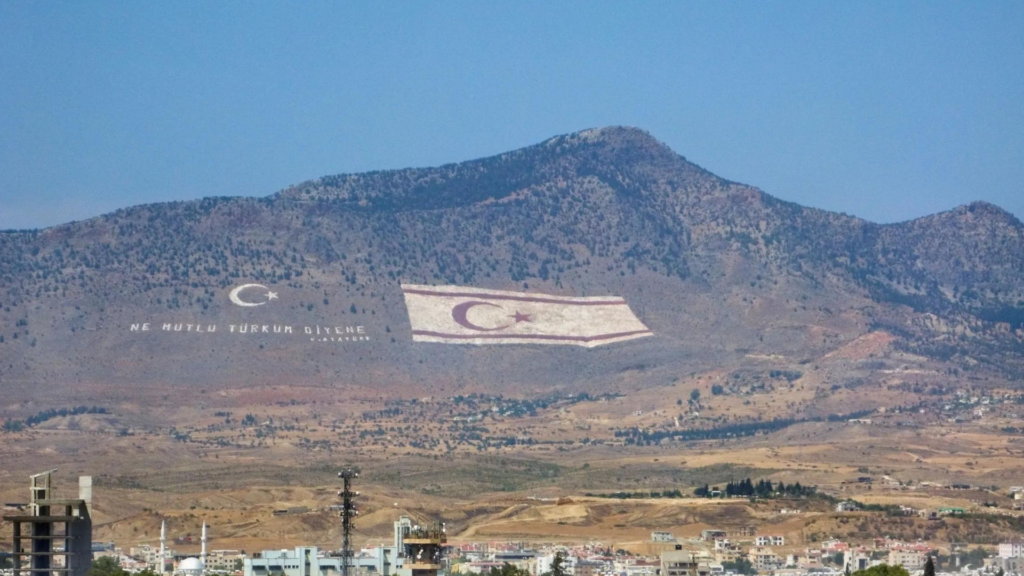
At the Ledra Palace check point in Nicosia, Cyprus stands a red and white sign that reads: ‘TURKISH REPUBLIC OF NORTHERN CYPRUS FOREVER.’ Not too far away, painted on the slopes of Mount Pentadaktylos, is a giant variation of the Turkish flag. Below it a quote by Kemal Ataturk declares: ‘Ne mutlu türk’üm diyene’ (How happy is he who calls himself a Turk).
Every evening thousands of bulbs light it up, sending a spiteful message to the vanquished Greek-Cypriots on the other side who can still see their old homes and those living in them.
Both signs and flags are painful reminders of the 20th of July-August 1974 when Turkish troops stormed the island, capturing 37 percent of its territory in the name of ‘peace.’ A ‘peace mission’ which left thousands of civilians dead, 165,000 Greek Cypriots and approximately 40,000 Turkish Cypriots, displaced out of a total population of 650,000.
Painted on the slopes of Mount Pentadaktylos, is a giant variation of the Turkish flag.
The invasion of Cyprus was not a spontaneous or unplanned event, but rather an accumulation of almost a century of Turkish foreign policy and imperial nostalgia.
In 1878 the declining Ottoman Empire ceded Cyprus to Britain in exchange for protection from Russian aggression. This was generally viewed as a temporary decision, with Turkish diplomats often expressing the desire to have it returned to its ‘rightful owner’. In 1925 it became another British colony.
The island’s first constitution, in 1960, made Greece, Britan and Turkey its guarantors and accorded them the right to intervene together, or unilaterally, in order to restore the status quo, if that was ever threatened. It also ceded 99 square miles to Britain for its military assets.
Even though Greek-Cypriots had, by 1974, generally gotten over their obsession with enosis – union with Greece, which constituted much of the thrust of intercommunal conflict – ultra-nationalism still existed in certain circles both in Greece and Turkey which respectively saw Cyprus as an extension of their own domains.
Between 1967 and 1974, the junta in Athens regularly meddled in Cypriot affairs, financing nationalists in the Greek-Cypriot National Guard with the ultimate goal of annexing Cyprus. To them any potential impact on the Turkish-Cypriot community did not matter. They would simply be ‘collateral damage’ in one more of Hellas’ ‘great’ causes.
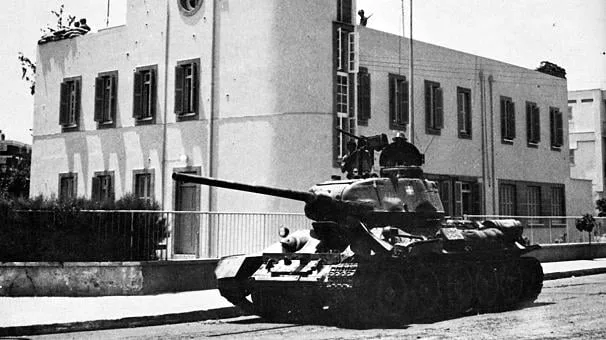
On 15 July 1974 the Greek-Cypriot National Guard launched a coup supported by the Greek junta. It included a failed attempt to assassinate the legitimate president of Cyprus and replace him with a more ‘cooperative’ patriot, the Turk-hater Nikos Sampson. The Greek junta had unleashed a disaster both communities would pay for.
A tank is seen in the streets of Nicosia on July 15, 1974. Photo: Public Domain,
On its part, Turkey viewed the junta’s actions as a direct threat to its own plans for the island, but also as a legitimate threat to the safety of its community. Five days later, it reacted by launching its so-called ‘peace mission’. But it was far from that.
Turkey has always maintained that it was acting lawfully and in accordance with the constitution which gave it the right to do so. That, had it not ‘intervened’ Turkish Cypriots would have been eliminated by Greek and Greek-Cypriot ultra-nationalists on the island.
The coup offered Turkey the perfect pretext to launch an invasion under the guise of constitutional duty; one that ostensibly sought to restore the political situation. In reality, it was the fulfillment of a long-held desire to possess a large section of Cyprus.
It did so by capturing 37% of territory for the 18% percent of Turkish Cypriots. A disproportionality which in itself speaks volumes about the insincerity of its claims.
For fifty years, Turkey has clung to the mantra, or rather mythology, of a humanitarian ‘peace mission’. The facts have shown that its intention was never the restoration of order or a humanitarian mission aiming to prevent the two communities from killing each other. Had it been so, it would have halted its actions and worked with the Greek-Cypriot side to restore the status quo. Instead, it launched a second invasion on the 14th of August 1974 while talks were underway in Geneva.
The second thrust into the island was more violent and effective. It included bombing of civilian targets, executions, the wholesale displacement of communities, rapes and the transferring of hundreds of Greek-Cypriot men to mainland Turkish prisons, to disappear forever. Once vibrant cities like Varosha, Famagusta, with a population of 40,000 were reduced to ghost towns while the rest of the world watched on.
In the years following its invasion, Turkey proceeded to openly defy international law by ethnically cleansing the occupied areas and importing settlers from its hinterland in order to alter the demographics and make any future effort to reunite the island very difficult. It then distributed the properties of the displaced Greek-Cypriots to the newcomers.
The political climate in the occupied areas has never really been conducive to a genuine solution despite the good will of many moderate Turkish-Cypriots like former leader Mustafa Akinci (2015-2020). Instead, one gets the feeling of a pervasive spite and vengeance. A bombastic cruelty of the ‘victors’ towards the vanquished in innuendos and snide remarks. One which is evident in the signs and flags, and in the determination with which millennia of Greek-Cypriot presence have been methodically destroyed.
The authoritarianism, toxic masculinity and hyper nationalism of Turkish politics has made it impossible to negotiate democratically and in a spirit of humanitarianism. As much as it might like to pretend it is, Turkey is not a democracy in the western sense. It plays by its own rules and imposes itself by force.
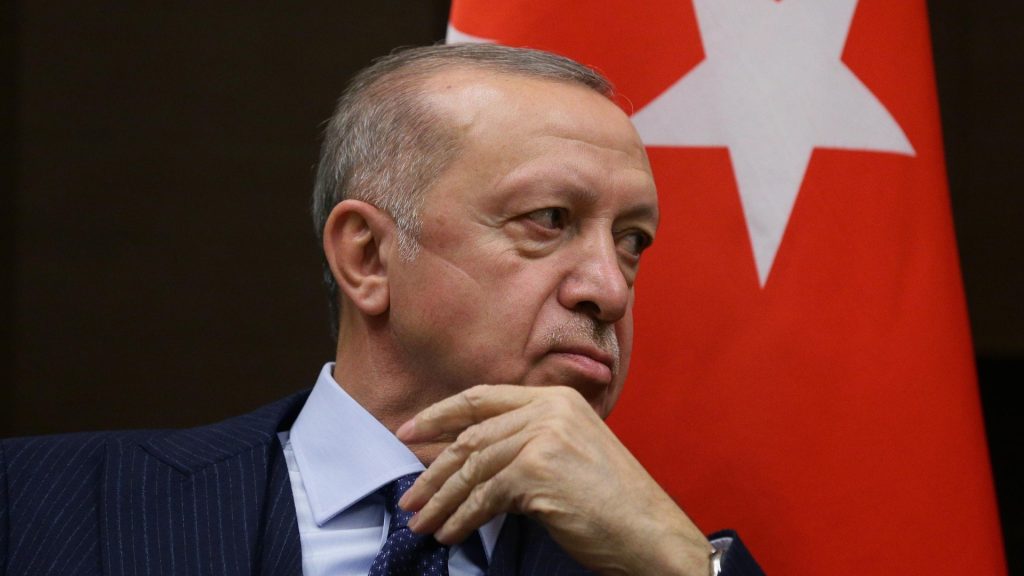
President Erdogan has made it very clear that the situation in Cyprus is the new reality and that ‘Turkey will be there forever’.
Ironically, the greatest threat to Turkish-Cypriotness today, is mainland Turkish nationalism. What is being ‘defended’ on Cyprus is Turkishness not Turkish-Cypriotness. The two are not the same thing.
The last attempt to reunite the island was the 2004 Anan Plan which was rejected by 75% of Greek-Cypriots and supported by 65% of Turkish-Cypriots. The Turkish side cited its failure as more proof of Greek-Cypriot intransigence and greed. For the Greek side, it was a perpetuation of the existing situation with no substantial gains. Hundreds of thousands of illegal settlers would stay. Turkey would remain a guarantor and its troops would be ‘gradually’ withdrawn.
The Anan Plan envisaged a united Cyprus as a member of the EU. Unfortunately, its implementation had been wedded to a particular time frame – May 2004. This hadn’t given the communities – the Greek-Cypriot community in particular – enough time to digest its content and thus adjust to a ‘new reality’.
Some had hoped that Cyprus’ entry into the EU would have been a game changer. That Turkey would have somehow caved under the pressure of having to negotiate with the entire bloc. But their naivete, or audacity, led them to underestimate its geopolitical and economic importance.
Turkey, a major trading partner of the EU and a buffer between Europe and the Middle East, was never going to be strong-armed. And no one was really prepared to upset it. Greek-Cypriots would have to endure more international indifference to their plight because the benefits of a united Cyprus of 1.2 million could not compare with the benefits of a friendly Turkey of 86 million.
This week marks fifty years since the invasion of Cyprus. 63% percent of the island will be mourning while the rest will be celebrating a crime against humanity; forgetting the faces and stories of those lost. There will be military parades and dignitaries from Turkey who will make pompous speeches and medieval threats to ‘break the hands’ of anyone who dares to challenge their country’s flag or might.
Turkey’s constant denial of its historical crimes against humanity will not make them go away. Its illegal invasion, and continued occupation of a sovereign state, is a blemish on its national character. It can easily remedy this by simply taking a back seat and allowing Turkish- and Greek-Cypriots to negotiate their own future. It can begin by withdrawing its troops immediately or continue being the eastern Mediterranean’s most belligerent and ever-whining bully.
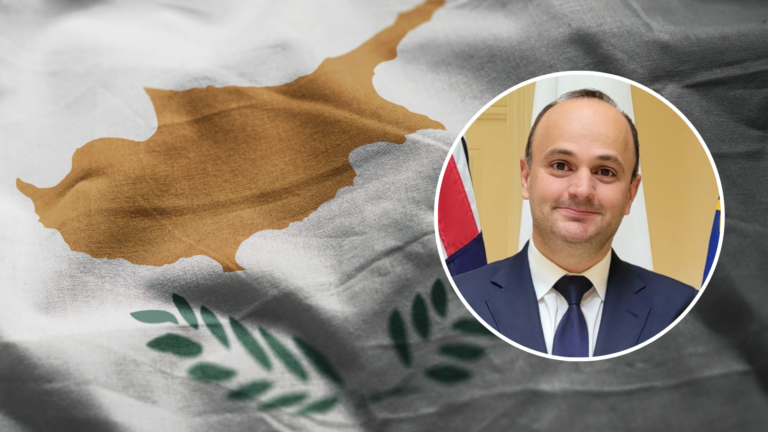
The High Commissioner of the Republic of Cyprus, Antonis Sammoutis, has sent a message to mark the 50th anniversary of the Turkish invasion of Cyprus today.
Full message in English
Dear Compatriots,
Every July, for over 50 years, we recall with profound sorrow the tragic events of 1974: the treacherous coup and the brutal Turkish invasion. We remember, with hearts full of grief, the thousands of civilians of all ages who were killed by the invader and our missing persons, whose fate remains unknown. We remember our occupied land, our villages and cities, our churches and the graves of our ancestors, which remain under the occupier’s boot, waiting for our return.
The Turkish invasion of 20th July 1974 is undeniably a historic event that has marked our country like no other. Not only because the destruction and devastation it caused were immense, but also because it effectively ended the continuous presence of our people in the northern part of Cyprus for 3,000 years, laying the groundwork for what followed: the total destruction of our cultural heritage, the changing of Greek place names, colonisation, and the complete alteration of our country’s demographic structure. I dare say, even the change in the identity of the Turkish Cypriot community itself, with its gradual economic and social marginalisation by settlers from Turkey, Turkish capital, and imported political Islam.
To reverse the consequences of the invasion, we early on, as far back as 1977, accepted a solution of a bizonal, bicommunal federation in Cyprus. Even this significant political concession now seems insufficient to persuade Turkey to agree to a resolution of our problem, as it steadfastly insists on maintaining troops and intervention rights that negate Cypriot independence, and on provisions that render a future federal state dysfunctional, effectively introducing confederal and thus partitionist provisions. Since the collapse of the last peace effort in 2017, the Turkish side has consistently used the term “sovereign equality” in a new attempt to partition the single and indivisible state sovereignty, with the clear ultimate aim of recognising the pseudo-state it illegally and unilaterally declared in 1983.
Despite the difficulties we described, the Cypriot government under President Nikos Christodoulides has, from the first moment it took office last year, prioritised the resumption of negotiations. Since the entire territory of Cyprus is also EU territory and Turkey remains an EU candidate country, the new effort focuses on mobilising the European Union and, separately, its major Member States, which can offer Turkey the economic incentives that will drive a comprehensive settlement of the problem while also explaining the dangers that stagnation poses for the entire region. At the same time, since the negotiations are always conducted under the auspices of the United Nations, the Cypriot government works closely with the Secretary-General’s envoy, Maria Angela Holguín.
Dear Compatriots,
Fifty years of occupation and division of our homeland is far too long. As we think of the Cypriots and Greek officers and soldiers who remained faithful to their oath to defend their homeland and fell heroically in the unequal battle, we renew our promise that we will not forget Cyprus, we will not lay down our arms, and we will never abandon, no matter how many years pass, the efforts for the freedom and reunification of our homeland.
Antonis Sammoutis High Commissioner of the Republic of Cyprus in Australia
The President of the Republic of Cyprus, Nikos Christodoulides, has sent an exclusive message to The Greek Herald readers ahead of the 50th anniversary of the Turkish invasion of Cyprus on Saturday, July 20.
Full message in English
Fifty years after the treacherous coup and Turkish invasion of Cyprus, the pain remains tormenting every time we recall the dramatic events that mutilated our beloved homeland and caused devastation.
The thousands of dead, missing, refugees, and trapped individuals are victims of the crime committed 50 years ago against an entire people by the Turkish army, which has since illegally occupied the territory of an independent and sovereign country, violating every concept of justice.
With particular emotion, I address our compatriots living and working in Australia, the country that became a vast embrace for thousands of Cypriots, especially after the 1974 disaster. I want to thank you for everything you do for our homeland and assure you that liberation, the end of illegal occupation, and the reunification of our country are my top priorities.
With realism, determination, and persistence, we continue our efforts in an ever-changing reality, aiming to create the conditions for resuming negotiations. For the past twenty years, the flag of the Republic of Cyprus has flown alongside the flags of 26 other EU member states, and rightfully, we look to the future with optimism and unwavering faith that the days to come will be better.
By leveraging its European status, the Republic of Cyprus undertakes initiatives and becomes a pole of stability, transforming into a bridge of cooperation at the critical crossroads where geography has placed it. Our constant concern is the correct interpretation of international developments, understanding geopolitical balances, and strengthening the international standing of the Republic of Cyprus by enhancing all the state’s power factors and highlighting its role as a pillar of security and stability in the Eastern Mediterranean and the wider Middle East.
We bow to the greatness of our people, who, despite the hardships they endured, did not compromise, did not give up, and did not forget. The homeland is grateful to Cypriots everywhere because, in this great struggle we are waging, the contribution of the diaspora is substantial and unparalleled.
Together, we continue to move towards a safe, creative, and hopeful future that ensures the prosperity and security of our citizens, all our lawful compatriots: Greek Cypriots, Turkish Cypriots, Maronites, Armenians, and Latinos. European citizens of the Republic of Cyprus, who we want to live and thrive in conditions of prosperity and security. This is the country I envision; this is the homeland we are obliged to pass on to our children.
The life of Cypriots as they knew it was turned upside down on July 20, 1974 when Turkey invaded the island of Cyprus.
Professor Andreas Evdokiou, who is the President of the Cyprus Community of South Australia and a member of the Justice for Cyprus Co-ordinating Committee SA (SEKA SA), was 11 years old at the time.
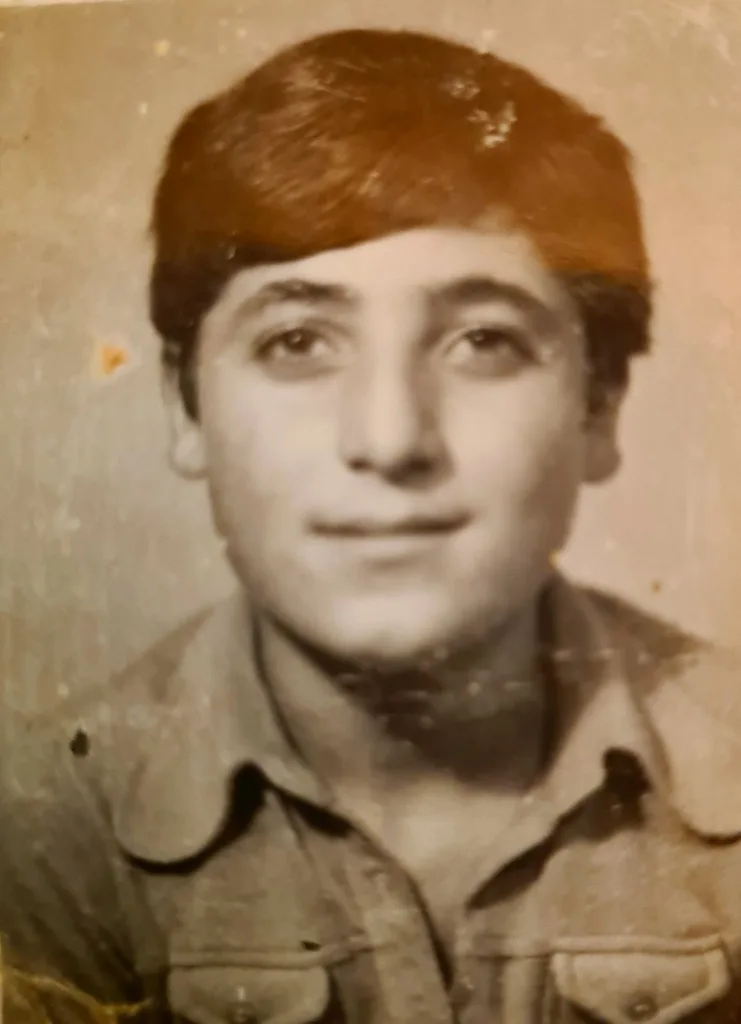
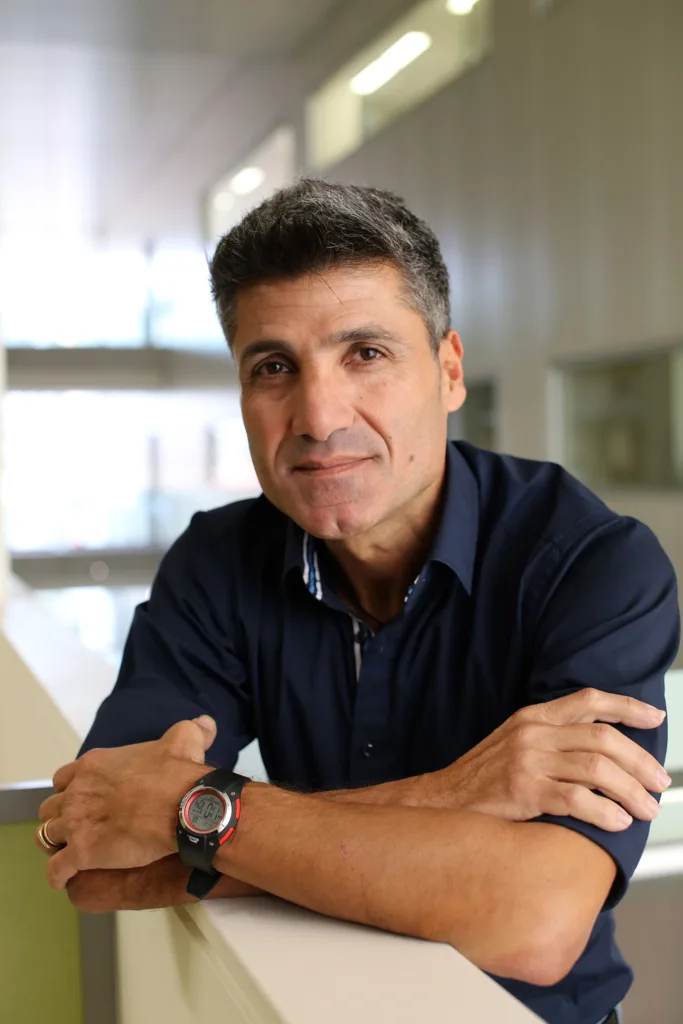
Andreas, 11 years old, in Cyprus.Andreas today.
Speaking to The Greek Herald about his own ‘traumatic’ experience, Prof. Evdokiou explained why he feels ‘deeply’ for compatriots who lost everything and why he will never forget the events.
The Evdokiou family, Eftihia and Anastasios and their four children, lived in Aradippou, Larnaca at the time of the invasion. Eftihia was a stay-at-home mother who also made bamboo baskets and sold Tupperware. Anastasios worked as a plumber in the English bases at Dhekelia until the Turkish invasion, but had also worked in Libya for 12 months.
Anastasios and Eftihia – the parents of Andreas.
While their village was far away from the sounds of artillery, bombs exploding and the planes flying overhead could still be heard.
Prof. Evdokiou had to grow up fast to make sense of what was happening, and although the family was safe from the movement of soldiers, the influx of refugees and their ‘horrifying’ stories would be firmly entrenched in his memory to this day.
“I will never forget. As an 11-year-old, this was terrifying,” he said.
“The Turkish invasion was a traumatic experience. During the war, I helped dig trenches in the back of my grandparents’ house in anticipation of an attack. We had the icon of the Virgin Mary and a candle in the trench to protect us.
“Soldiers and ordinary men were keeping a lookout at nighttime, close to the trench. I would sometimes hold the gun together with other youngsters all pretending to be brave and aiming at the other side. More often to me it felt like a game. A very scary game!”
The noise of the planes was so loud that Prof. Evdokiou still remembers the ‘terrifying’ and ‘thundering noise’ they made.
“The anti-aircraft guns from the army base just 200 meters away from our trench were firing non-stop. The sound was terrifying,” he recalled.
“One day we heard this huge explosion coming from the village nearby. Later we learned that a napalm bomb was released from one of the Turkish planes flying above, hitting a convoy of army trucks, incinerating three United Nations peacekeeping soldiers and a Cypriot man in the village of Kochi.”
In August 1974, the family feared the invasion of the Turkish army was getting closer to their village so Anastasios made the decision to move the family to a safer place and they too became refugees at the village of Xylotymvou, which was close to an English army base.
Andreas and his siblings in Cyprus. The Evdokiou family, Eftihia and Anastasios and their four children, lived in Aradippou, Larnaca at the time of the invasion.
Once there, Prof. Evdokiou saw the influx of refugees living in white tents because they had been ‘forcibly displaced from their homes.’
“The cries of many families could be heard from far away. The thought that we may not ever be able to go back home was devastating,” he said.
“The propaganda from the radio that we were winning the war and were succeeding in pushing the Turkish army back to the sea where they came from, together with the hourly announcements of the downing planes by our forces, was reassuring for me and I was taking comfort in that.
“In my eyes everything was going well, and we were defeating the enemy. Little did I know… After all, I was only 11!”
He recalled feeling scared ‘deep down’ but pretended to put on a brave face, even holding a gun when needed.
“Every night at the trenches we kept a lookout with other children, parents, and soldiers,” he said.
“We would pass the guns around and we were shown how to load and fire in the event the Turks came close. Scary thought. Was it a game?”
Prof. Evdokiou recalled how tired the soldiers looked coming back from the front line, often stopping at their home where they would be given food and a place to sleep. Many displaced refugees were also helped by the local villagers. His family did not lose their home or land and were able to return, but other families were not as fortunate.
Andreas will never forgot what he saw during the Turkish invasion of Cyprus.
“I deeply feel for our compatriots that have lost everything, becoming refugees in their own homeland having to start over again from scratch and only with the ever-diminishing hope of returning to their homes one day,” he said.
“They have grown old just like I have and only dream of returning home. One of those was my wife – a family of ten being displaced from their home in Neo Chorio, leaving behind everything.
“I often hear stories from her about their own experience during the war, the bombs, the destruction, the encounter with the Turkish troops, the imprisonment, and the dead and injured around them as they fled. Their difficult time as refugees trying to survive.
“All this makes my story not worth writing about. I will never forget.”
As President of the Cyprus Community of South Australia, Andreas (left) advocates for a solution to the Cyprus problem.
Prof. Evdokiou’s family migrated to Australia, moving to Adelaide, South Australia in 1975. He went to school without any English, but thanks to a government funded program he learned the language.
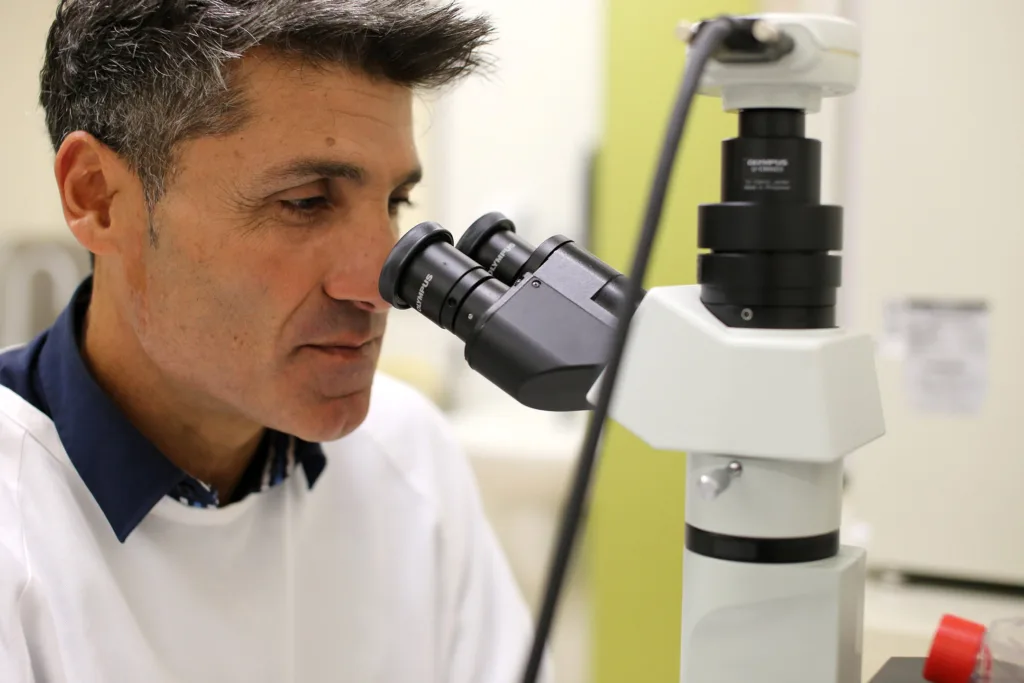
He studied science at the University of Adelaide and started his career in medical research. He was awarded prestigious scholarships – including from the National Health and Medical Research Council of Australia (NHMRC) and the National Breast Cancer foundation (NBCF). His research was supported by $10 million of funding from various sources, and has had more than 150 scientific articles published in journals.
Andreas studied science at the University of Adelaide and started his career in medical research.
In 2011, he was promoted and awarded a professorship leading a team of researchers and students and established the Breast Cancer Research Unit of the University of Adelaide and was supported by The Hospital Research Foundation as the inaugural breast cancer research fellow.
Prof. Evdokiou recently retired after 40 years of working at the University of Adelaide and together with his wife Margarita are now able to spend more time with their three children – Stasi, Maria and Tia.
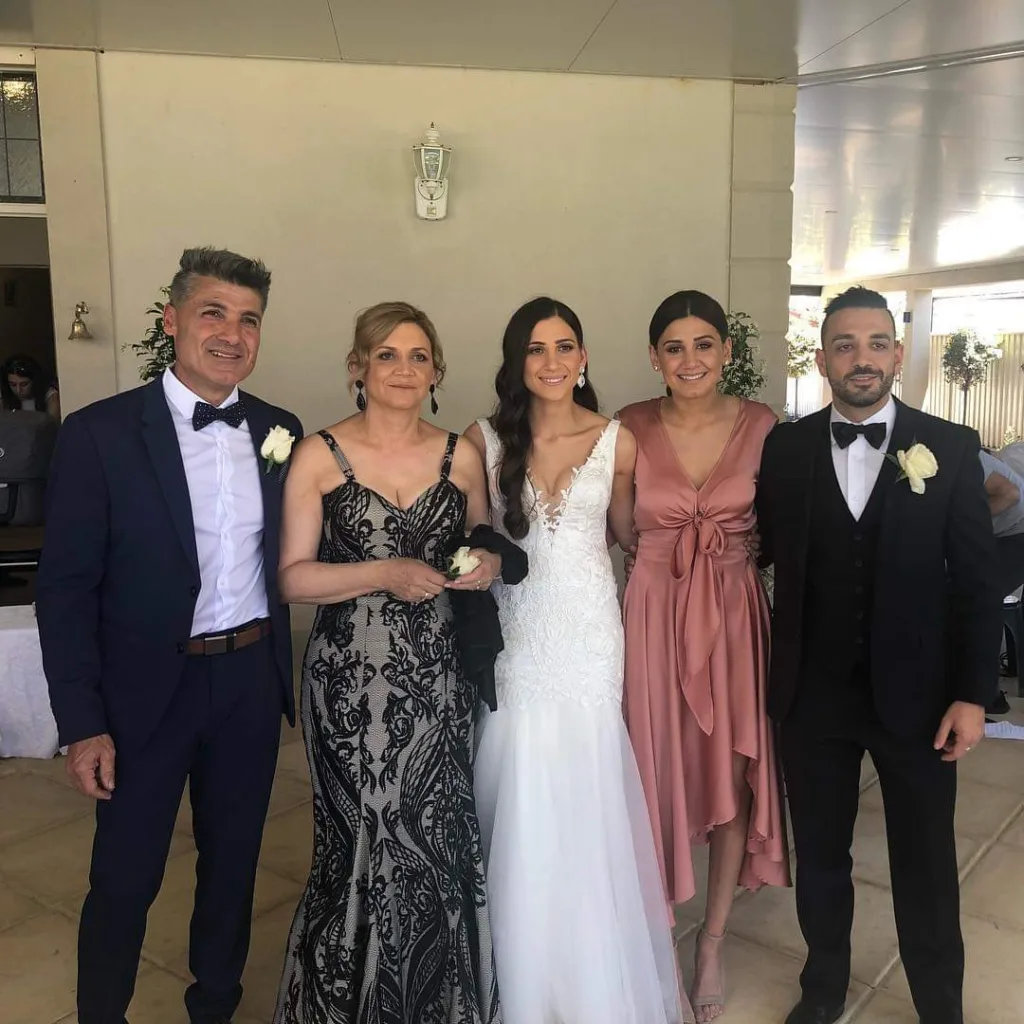
The Evdokiou family in Australia.
The retired couple also treasure time spent looking after their four grandchildren – Ariana, Margarita, Ellie and Christian – with a fifth grandchild on the way.
They also visit Cyprus almost yearly, staying at the house Prof. Evdokiou grew up in.