Home Blog Page 66

The history of olive oil in Greece: An updated overview

0

By Lisa Radinovsky from Greek Liquid Gold.

Olive trees have existed longer than modern humans, and the history of olive oil in Greece spans millennia. Wild olive leaf fossils from Evia date back 23 million years. In the volcanic crater of Santorini, 37,000 and 50,000-year-old olive leaf fossils were discovered. And traces of olive oil processing done 4,000 years ago have been found in western Crete.

The history of olive oil in Greece may have begun in Crete

“The origin of the olive tree is lost in time,” suggests Apostolos K. Kiritsakis, “coinciding and mingling with the expansion of the Mediterranean civilizations” (11). There are many theories about the tree’s origin, when and where it was first cultivated, and how it spread around the Mediterranean region, but no conclusive proof.

The post-Ice-Age story of olive trees in Greece may have begun in Crete, according to Sytze Bottema and Anaya Sarpaki, where olives seem to have been brought from overseas, perhaps from the Levant (whether by people or birds, we do not know). They explain that Neolithic people “modified the landscape and promoted the growth of the imported olive” in Crete (737). Archaeobotanical analyses of soil core samples, as Sarpaki writes in Greek, “show with certainty that the olive was present in Crete at least from the middle to the end of the Neolithic period, around 6200 years before present. Additional finds that further support this view include two jars from the Late Neolithic period at Gerani in Rethymno,…in which traces of olive oil were detected” (46).

Alexandra Livarda and her colleagues also found evidence of “large-scale olive tree management since the Final Neolithic period and through to the Late Bronze Age” in Crete. As Sarpaki indicates, carbonized olive fruit from the Bronze Age (the Minoan Period, after the Neolithic) has been discovered in several areas in Crete. Most impressively, 45 olives were found together in a well at the Minoan palace of Zakros, although they disintegrated quickly after exposure to air (50).

Moreover, there is evidence of ancient olive oil production in Crete. As Sarpaki writes, “the discovery of remains of olive processing — like the systematically broken pits in a building of the Middle Minoan I A period (2160–2000 BC) at Chamalevri in Rethymno [Crete] — gives us important indications of oil extraction, at least from the beginnings of the 2nd millennium BC” (45).

Nikos Michelakis and Anaya Sarpaki identify Minoan Crete as the source of “the first written records and art creations” about olive trees and olive oil in the world, including ideograms on clay tablets in the Linear A and B scripts, wall paintings, and decorations on pottery (6-8).

Olive trees and olive oil throughout ancient Greece

Olive products also spread around the Aegean Sea and the rest of the Mediterranean Basin. While additional archaeological and archaeobotanical research is required to ascertain details, there is clear evidence, according to Sarpaki, that the olive tree and its products played “an important and decisive” role “in the technological, economic, social, and political sphere of Aegean societies during the Bronze Age, and possibly even during the Neolithic period” (50).

“In the later years of Minoan and Mycenaean dominance,” Anaya Sarpaki and Marianna Chatzidimitriou explain, there is archaeological evidence that the olive and its oil “played a primary role in the economy of those peoples, and with this product they could accumulate wealth” (18).

This enabled some groups to become rich and powerful, Sarpaki and Chatzidimitriou add, “producing the social and economic stratification seen in those periods” (18). For example, Linear B tablets show that perfumed olive oil was an important status symbol in ancient Mycenae, as Maria Protopapas-Marneli and Antonia Trichopoulou report (2).

In 6th century BC Athens, Solon’s laws deemed olive trees so valuable that cutting them down without authorization could result in the death penalty. Then the “historian Herodotus described Athens in the fifth century BC as a vast center of olive culture,” Giorgos Kostelenos and Apostolos Kiritsakis point out, while the “philosopher Aristotle elevated olive cultivation to a science” (1-2).

The history of olive oil in Greece reveals multiple purposes

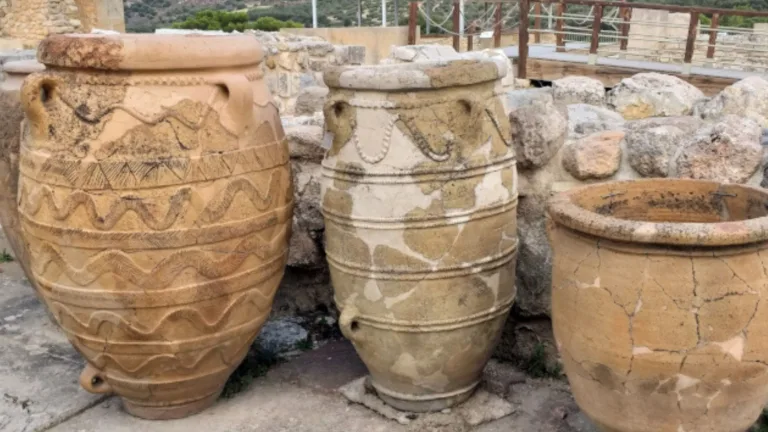
Ancient Athenians included images of olive branches on their coins and worked actual branches into wreaths “to crown the heads of victorious athletes, generals, and kings” (Protopapas-Marneli and Trichopoulou 3). Athletes coated their bodies with olive oil, Olympic champions were crowned with olive wreaths, and Panathenaic Games winners were awarded many large, valuable ceramic pots (amphoras) of olive oil.

“Ancient Greeks regarded olive oil as essential for health,” according to Protopapas-Marneli and Trichopoulou (5). Hippocrates disseminated information about “the healing properties of olive oil” by referring to “treatments with olive oil, as well as its mixture with wine, vinegar and water,” in his treatises. Prominent ancient physicians followed his prescriptions (3).

In addition, olive oil was utilized in ancient Greece “in the preservation of foods, because of its antioxidant properties,” according to Sarpaki and Chatzidimitriou. “With olive oil, the ancient human could certainly preserve meat and dairy products and vegetables. It was also used for lighting (ancient lamps) and in various technical crafts such as perfumery, tanning, and weaving. The by‑products of pressing — the crushed pits and residues — were used as animal feed, while together with olive wood they were used as fuel for cooking” (18).

Olive cultivation and olive oil production continued to spread around the Mediterranean area during the years of the Roman Empire (146 BC to 324 AD). Romans oversaw the import, distribution, and trade of olive oil to enable it to reach areas that had lacked it, Nikos Psilakis and Maria Psilakis explain (20). As they add, “the cultivation of olive trees continued for many centuries to be one of the main forms of occupation for the inhabitants of Greece” (21).

The history of olive oil in Greece: importance through the centuries

Both the export and domestic consumption of olive oil remained consequential during the time of the Byzantine Empire (324-1453), as well as afterwards. Psilakis and Psilakis mention “large-scale production of olive oil in certain areas, such as the Peloponnese,” during the Byzantine period. With olive oil used regularly in cooking, the olive was “the symbol of survival for the inhabitants of many agricultural areas” in the difficult times of the post-Byzantine period that began in 1453 AD and lasted until the 19th century (21).

In Crete, Psilakis and Psilakis explain, olive oil production remained especially important. Starting in the late 16th century and continuing for hundreds of years, Cretan olive oil was in demand as an ingredient in soap production (23). Previously made in France, olive oil soap became a noteworthy Greek product in the 18th and 19th centuries.

Nineteenth-century travelers were also amazed by the quantity of olive oil Cretans ate. “Greeks based their diet on olive products for thousands of years,” Psilakis and Psilakis write. “On Crete, in the south of the Peloponnese, on the islands of the Aegean and in many other areas, olive oil was almost exclusively used as the fat content in food” (6) of all types.

However, only in the middle of the 20th century with the Rockefeller Foundation’s report and the famous Seven Countries Study did the health benefits of olive oil begin to be understood by modern scientists beyond the Mediterranean region. Olive oil’s ancient use as a medicine had persisted in folk traditions. It has now been revived by modern scientific evidence.

Olive oil, trees, and branches in the religions of Greece, from ancient times to the present

“The olive tree was a spiritual treasure for the Greeks,” according to Kostelenos and Kiritsakis (2). Psilakis and Psilakis explain that in ancient Greece, olive oil was used as an offering to the gods, and to anoint the dead (16-18). Some olive trees were worshiped as sacred, and olive branches were important parts of burial customs, supplications for mercy, purification rituals, sacrificial processions, and harvest celebrations (36-41).

For Christians, olive oil “is one of the three blessed products” that God gave to humankind, along with bread and wine, Psilakis and Psilakis observe (27). Olive oil has played a key role in the ceremonies of the Greek Orthodox Church. For example, it is utilized in the baptismal font and on the baptized child, in holy myrrh, in oil lamps, and during special blessings. In Greece, the olive tree has long been associated with goodness, light, hope, and peace (41).

Olive oil in Greek mythology, art, and literature since antiquity

A famous myth explains the name of the city of Athens: the goddess Athena competed with the god Poseidon to see who would produce the most impressive gift for human beings. While Poseidon offered a salt water spring or a horse (depending on the version of the story), Athena produced an olive tree. When the olive tree was judged more valuable, the city of Athens received its name (still “Athina” in Greek today) and its patron goddess.

Olive oil “constituted the symbol of peace and well-being of the Ancient Greeks,” according to Protopapas-Marneli and Trichopoulou (3). Sarpaki points out that the olive was “the tree of life” for the Minoans. Starting with Minoan frescoes and pottery and ancient mythology, and continuing through Homer’s The Iliad and The Odyssey, Aesop’s fables, Solon’s laws, the games of classical Greece, and Aristotle’s writings, right up to the present, the olive tree and its oil have been fundamental to Greek culture and history. As Protopapas-Marneli and Trichopoulou remind us, the olive tree and olive oil “are not only central to the Mediterranean diet but also to the rich, multidimensional Greek tradition” (5).

*Originally published on Greek Liquid Gold: Authentic Extra Virgin Olive Oil (greekliquidgold.com). See that site for recipes with olive oil, photos from Greece, agrotourism and food tourism suggestions, and olive oil news and information.
Greece introduces plan to protect cultural heritage from climate change

0

The Culture Ministry has presented a new National Strategy aimed at safeguarding Greece’s cultural heritage from the effects of climate change. The initiative will be funded through a €22 million grant from the Recovery and Resilience Facility, according to ekathimerini.com

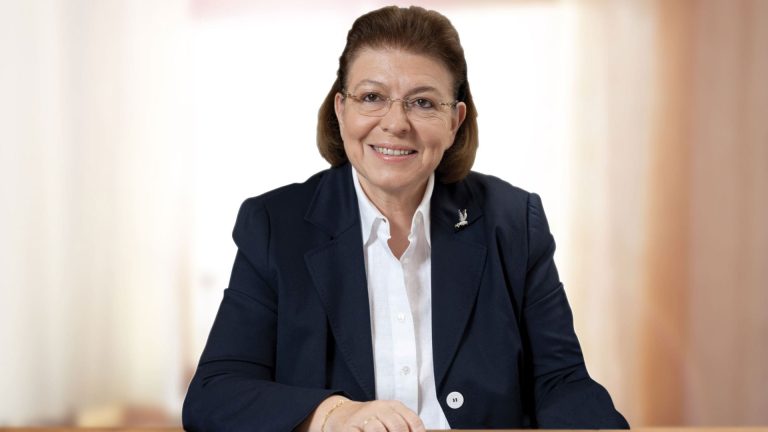
Culture Minister Lina Mendoni introduced the strategy, which was created in collaboration with the University of Athens and the National Hellenic Research Foundation. The long-term plan runs through 2050 and sets progress checkpoints every five years. As part of the initiative, adaptation plans are expected to be developed for 40 archaeological sites by 2030.

“Our goal is for it to serve as a reference framework for all involved state institutions regarding the protection of monuments and archaeological sites,” Mendoni said.

The strategy focuses on strengthening protection measures as climate-related threats grow. Authorities say rising temperatures, extreme weather events and environmental changes are increasing risks for historic monuments and archaeological locations across the country.

Climate Crisis Minister Yannis Kefalogiannis highlighted the growing pressure these sites face from wildfires and severe weather conditions. He also announced that the two ministries are jointly preparing a new fire-protection regulation specifically for archaeological areas.

Officials say the strategy aims to create a coordinated approach among government institutions, ensuring that cultural heritage sites are better protected from climate-related damage in the coming decades.

Source: ekathimerini.com

Silver medal from 1896 Athens Olympics sold at auction

0

A rare silver medal from the first modern Olympic Games in 1896 has been sold at auction for about $179,000. The medal was offered by Bruun Rasmussen Arts Auctioneers, a Denmark-based auction house, and dates back roughly 130 years, according to the smithsonianmag.com

Unlike today’s Olympic system, the 1896 Games awarded silver medals to first-place winners. Athletes who finished second received bronze medals, while third-place competitors did not receive any medal.

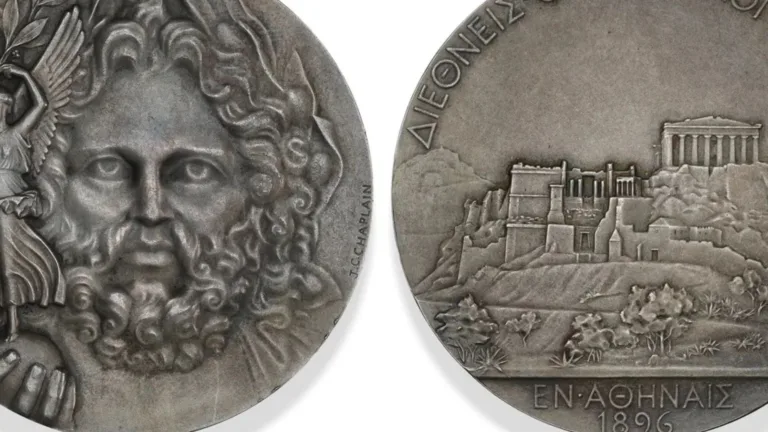
The medal was designed by French artist Jules-Clément Chaplain. One side displays Zeus holding the goddess of victory, Nike, in his hand, while the reverse side shows the Acropolis in Athens along with the inscription “International Olympic Games-Athens 1896” written in raised Greek letters.

According to the auction house, the piece is “an excellent and beautiful” artifact “of great historical interest.” It weighs about 2.36 ounces-roughly the weight of a large chicken egg—and measures just under two inches in diameter. The medal was also sold together with its original box.

Officials are unsure which athlete originally received the medal, though it may have belonged to Viggo Jensen, Denmark’s first Olympic champion in weightlifting. The identity of the buyer has not been revealed.

“Such medals are exceptionally rare, and for collectors of Olympic memorabilia, this is nothing short of a crown jewel,” says Christian Grundtvig, head of the coins and medals department at the auction house, in a statement.

The ancient Olympic Games began in 776 B.C.E. in Olympia, Greece, and continued every four years until 393 C.E., when Roman emperor Theodosius I banned them for being a pagan celebration.

The modern Olympics returned in 1896 after Pierre de Coubertin founded the International Olympic Committee and helped organize the first Games in Athens.

Source:smithsonianmag.com

People of Footscray: Hidden Hellenism mural opens at new Footscray Hospital

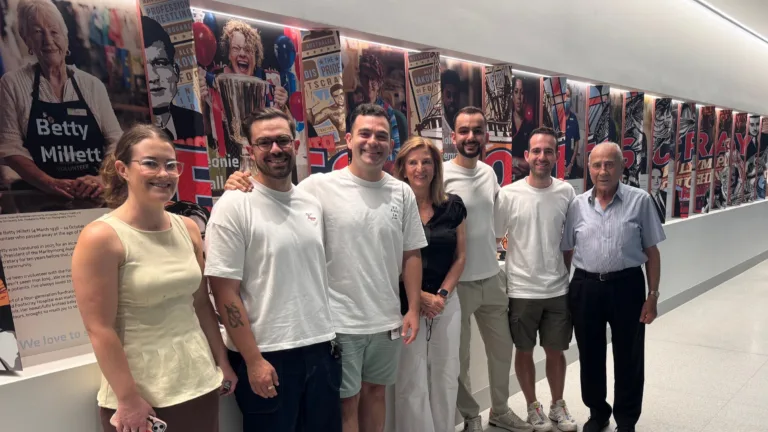
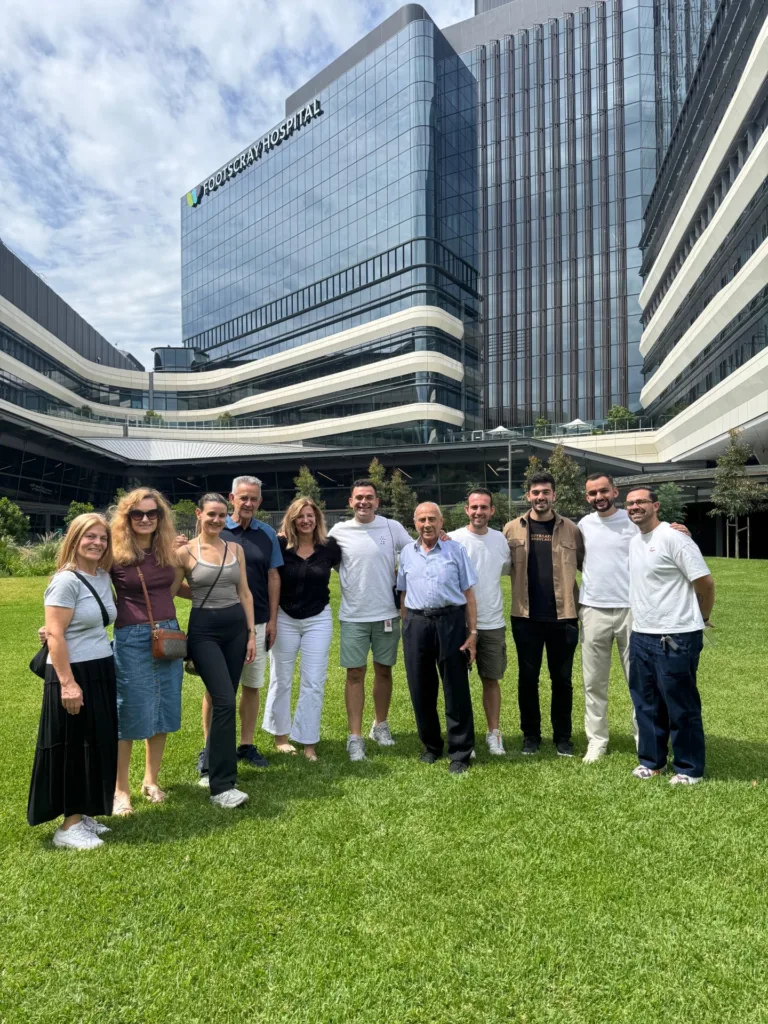
Yitonia’s iconic Melbourne murals continue with the Hidden Hellenism mural at the new Footscray Hospital, showcasing Greek migrant stories from the suburb. It is their biggest mural to date and the culmination of nearly three years of dedicated work.

The original mural opened in September 2023 and now lives on through a photographic reproduction located around the emergency department of the hospital. It appears alongside other artwork that tells the diverse stories of people connected to the Footscray healthcare service.

Leading the project is Yitonia’s Dean Kotsianis and Peter Giasoumi. Both are proud of the latest mural which reflects their combined 20 years of community experience and their ongoing effort to share Greek voices with communities across Melbourne.

Dean and Peter were grateful for the opportunity to first display the mural on Yewers Street in Footscray. After hearing the new Footscray Hospital’s call out for local artwork, it was a natural step for them to present a new version of the mural – with more stories and detail – when the hospital opened last month. 

In a statement to The Greek Herald, Western Health CEO Prof Russell Harrison said the Reflections of Footscray display shows the important connection between Western Health and the diverse community it serves.

footscray mural feature

“The former Footscray Hospital was known as the ‘People’s Hospital’ and we want to continue that tradition at the new Footscray Hospital,” Prof Harrison said.

“At Western Health, we’re really proud to be part of such a wonderfully diverse community across Melbourne’s west, and that of course includes our friends in the local Greek community.

“The Reflections of Footscray display is just one way we can show our appreciation for the rich cultural heritage of the western suburbs.

“Our new hospital has only been open for a few weeks, but already we know that a lot of visitors are making a special trip to the lower ground floor to see it.”

Project leader Dean spoke to The Greek Herald about their process. “We wanted to actually represent real stories and real people and tell more of a… story about a suburb’s hidden Hellenism.”

A Footscray local himself, Dean holds the suburb’s Greek history close to his heart and appreciates being able to share these stories with the broader community. From April, he will also begin working at the new Footscray Hospital as a Junior Doctor.

“It’s a proud moment to be able to influence my work culture in way through my community stuff,” he said.

Peter explained that murals like these help migrant histories connect with a wider audience. “These murals which celebrate a migrant group at a point in time can really hit the mainstream. They talk about that local area and we’re quite proud that it’s featured at the hospital.”

footscray mural feature

Footscray’s deep and expansive Greek migrant history is reflected throughout the mural.

“Part of the mural for us was we wanted to celebrate their story because a lot of the people within the mural have passed on,” Peter continued. “So for us it was about celebrating their journey and I think we did that quite well through the mural.”

Connecting community groups with the history of their suburb through a visual medium is a unique venture.

“I think we’re really preserving the Greek layer as an important part of that living history,” Dean said. “We’re using a very Melbourne way of storytelling in a Greek way, which I think resonates with the mainstream as well… I guess it’s a niche and an expertise we’re developing.”

Yitonia plans to continue sharing community and Greek migrant stories through murals as their dominant art form.

“It’s an awesome way to share a story and a way to get the community activated,” Peter said. “It’s something we don’t see all too often anymore—being able to bring the community together… We do look forward to doing [more murals] in the future.”

Membership concerns dominate Hellenic Lawyers AGM as eligibility questions emerge

The Hellenic Australian Lawyers Association (HAL) Annual General Meeting (AGM) on Friday, 27 February 2026 was dominated by discussion surrounding a recent National Committee interpretation of Rule 8 of the Association’s membership rules. Controversy which saw the membership disqualification of the South Australia State Chair one day before election nominations.

The AGM opened positively, with President, Joseph Tsalanidis, reporting a surplus of approximately $157,000 for the 2025 financial year. This success was largely due to the Global Summit of Hellenic Lawyers, placing the Association in what was described as a sound financial position.

However, during General Business, attention turned sharply to the Committee’s December interpretation of Rule 8 and how it effects membership eligibility.

Unseen Consequences and Broad Exclusions

The uncertainty centred on Rule 8 of HAL’s Constitution and how it restricts full (‘ordinary’) membership rights to individuals who are “admitted to practice law in an Australian jurisdiction.” The rule, however, is ambiguous in that it lacks clarity on whether membership broadly refers to the formal admission to the legal profession, or whether it is narrowly defined as holding of a current practising certificate.

During the discussion, serious concerns were raised about the effect this decision had on the scope of HAL’s membership base.

Mr Tsalanidis confirmed at the AGM that the HAL Committee obtained conflicting pieces of legal advice on the rule before adopting its interpretation, and that the Committee chose to adopt the narrow interpretation, which limits full membership to members of the legal profession who are admitted to practise in Australia and hold a current practising certificate.

As a result of the interpretation, lawyers practising under statutory authority (i.e. an Act of Parliament), who are not required to and do not hold practising certificates, do not have full member rights, including voting rights or ability to hold office in the Association. This category may include Crown Solicitors and DPP prosecutors who regularly appear in court, and esteemed Parliamentary staff and Directors of Law firms who despite being admitted do not hold practising certificates.

‘I’ve been a member since the beginning’

A government lawyer from Western Australia was astonished by these implications, saying she had been a member of HAL “since the get go” and had only now realised that, under the adopted interpretation, she may technically never have been eligible as a full member.

“I don’t think it was ever the intent to exclude government lawyers,” she said.

Mr Tsalanidis accepted that the rules, on one reading, may operate in a narrow and exclusionary way.

He acknowledged that “the last thing [we want], as an association of busy practitioners, is to adopt any construction that might be said to be narrow, restrictive, [or] exclusionary,” but maintained that his Committee had chosen to adopt what it considered to be the correct interpretation.

Refund and Overpayment Concerns

The discussion then moved to the financial implications of the interpretation.

A member asked whether the Committee had considered reimbursing lawyers who paid the full membership fee of $50 membership, instead of the $20 associate membership fee, if they are now regarded as associate members under the Committee’s revised interpretation.

Mr Tsalanidis confirmed that the issue of reimbursement is subject to discussion with the Treasurer and the passing of a resolution by his Committee.

Andrew Panna KC, the Victorian Chapter Chair and Member of the Committee, supported the suggestion saying that the Committee should “tell all those [members] what the situation is… and if they want to have a refund, of course I think as a Committee we should refund if they want it…”

Calls for a broader interpretation

Considering these issues, and the acknowledgments by some on the Committee that the matter requires attention, one member proposed what he described as a more efficient solution.

Given that conflicting legal advice had been obtained, he suggested the Committee could decide to accept a more inclusive/broader interpretation of Rule 8, which would avoid unintended exclusionary consequences and the administrative burden of a formal constitutional amendment.

Mr Panna KC emphasised that this would be an “easy” solution, provided that the Committee “would consider that the course that we took was not correct”.

He added that he held a “very strong view” on the rule’s interpretation, arguing it would require the Committee to acknowledge that “we got it all wrong,” while also indicating that the rule “has to be changed and [to] make it clear.”

HAL in 2026

Looking ahead to 2026, HAL members have told The Greek Herald that the membership eligibility rules and their practical consequences must be addressed for the benefit of the organisation.

Questions have also been raised as to how all existing members impacted by the adoption of the new rule will be handled.

Members stressed that greater transparency by the Committee is important, particularly as HAL continues to run events and signals organising another Global Summit of Hellenic Lawyers in 2027.

Open letter: Theo Maras appeals for unity after Fr Diogenis Patsouris controversy

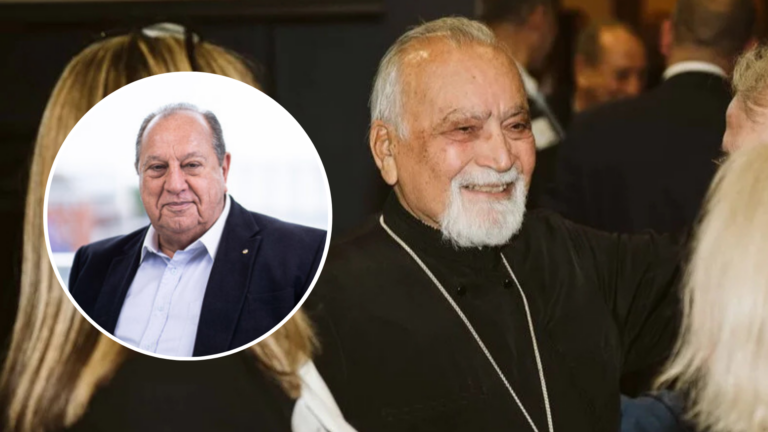
Former President of the Greek Orthodox Community of South Australia (GOCSA) and Chairman of the Maras Group, Theo Maras, has issued an open letter responding to recent developments surrounding the Very Reverend Father Diogenis Patsouris and the broader public discussion that has followed within the Greek community in South Australia.

Speaking to The Greek Herald, Mr Maras said his primary intention in releasing the statement is to encourage unity and healing within the community, which he believes has been deeply unsettled by recent events.

In the letter, he also reflects on comments made by South Australian MP Tom Koutsantonis and calls on His Eminence Archbishop Makarios of Australia to help restore stability and confidence among the faithful. The full text of Mr Maras’ statement appears below.

Full Statement in English:

I have read the recent statement issued by the Honourable Tom Koutsantonis explaining his motivations for speaking publicly about the situation involving the Church and the Greek community in South Australia.

The events surrounding the treatment of the Very Reverend Father Diogenis Patsouris have shocked and deeply upset many within the Greek community of South Australia. To see a priest who has given his entire life to the Church treated in this way has caused enormous pain and disbelief.

In my view, Tom Koutsantonis has rightly articulated what many in our community have been feeling — that his comments were not made out of disrespect for the Church, but out of genuine concern for the wellbeing and unity of the Greek Orthodox faithful in this state.

Tom has long been a strong supporter of the Greek community and of the Church. Through his advocacy, many Greek organisations — including church institutions that now seek to criticise him — have benefitted from government support. His connection to the Church is personal and deeply felt, and his decision to speak publicly reflects the concerns of many members of the community who have been troubled by recent events.

Of course, matters of Church governance ultimately belong to the Church, and that principle should be respected by all.

However, the Church does not exist in isolation from its faithful. Our churches were built through the sacrifices of generations of Greek Australians, and it is entirely natural that members of the community will express their views when events affecting their Church cause distress or concern. Respectful public discussion should not be dismissed or criticised; it is part of a healthy and engaged community.

Having served as President of the Greek Orthodox Community of South Australia and having been involved in community affairs for many years, I am acutely aware of the long and complex relationship between the Community, the faithful, and the Greek Orthodox Archdiocese of Australia. Over time, significant progress had been made in building understanding and cooperation.

Sadly, the way recent events have unfolded risks setting those relations back many decades. In my view, it has reopened old divisions and revived concerns that many believed had long been resolved.

For the good of the Church and the unity of the faithful in South Australia, I respectfully call upon His Eminence Archbishop Makarios of Australia to intervene and help bring healing to this situation. The distress currently felt within parts of the community risks deepening if left unresolved, and I have every confidence that His Eminence’s leadership will restore unity, stability and confidence in the Church.

Our community deserves respect. It deserves to be heard. And it deserves leadership that understands the Church exists to serve its people and unite them in faith.

The Greek Orthodox Church in South Australia was built through the faith, sacrifice and devotion of generations of Greek Australians. It is only natural that those same faithful hope to see their Church guided in a way that strengthens unity, respects its history and honours the people who built it.

Moving forward in unity and mutual respect will only be possible if the concerns of the faithful are acknowledged and addressed with the wisdom and humility that His Eminence can bring.

Veteran Greek American broadcaster Ernie Anastos dies aged 82

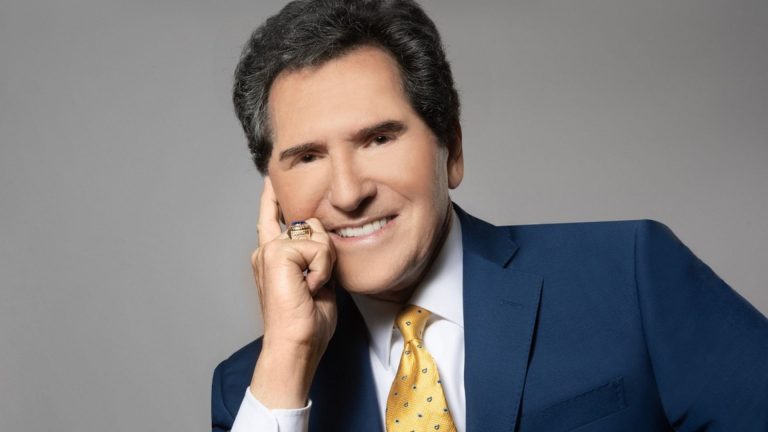
Veteran Greek American broadcaster Ernie Anastos, a trusted television news anchor in New York for decades, has died aged 82.

Anastos died early Thursday morning of pneumonia at Northern Westchester Hospital, according to his wife. Fox 5 confirmed the news, describing him as “an Emmy Award-winning journalist and beloved former Fox 5 news anchor.”

“His voice, integrity, and lasting impact on New York journalism will never be forgotten,” the station said in a statement.

During a career spanning more than four decades, Anastos earned around 30 Emmy awards and nominations and reported on major events including the September 11 attacks and the COVID-19 pandemic. He also received a Lifetime Emmy Award and was inducted into the New York State Broadcasters Association Hall of Fame.

The proud Greek American journalist worked at several leading New York television networks, including ABC 7, CBS 2, WWOR and Fox 5, where he anchored alongside Rosanna Scotto for many years.

Earlier in his career, Anastos revealed he was once encouraged to change his surname because “ethnic names were not all that hot,” a suggestion he refused.

Tributes quickly poured in from colleagues. Scotto wrote: “I enjoyed working with him, anchoring alongside of him on the 10 o’clock news. He was a good man and someone we really looked up to. We are all heartbroken.”

Former colleague Teresa Priolo described Anastos as “the gold standard in life and in this crazy news business.”

Source: NY Post

Australian artist’s LEGO portrait finds permanent home at Acropolis Museum

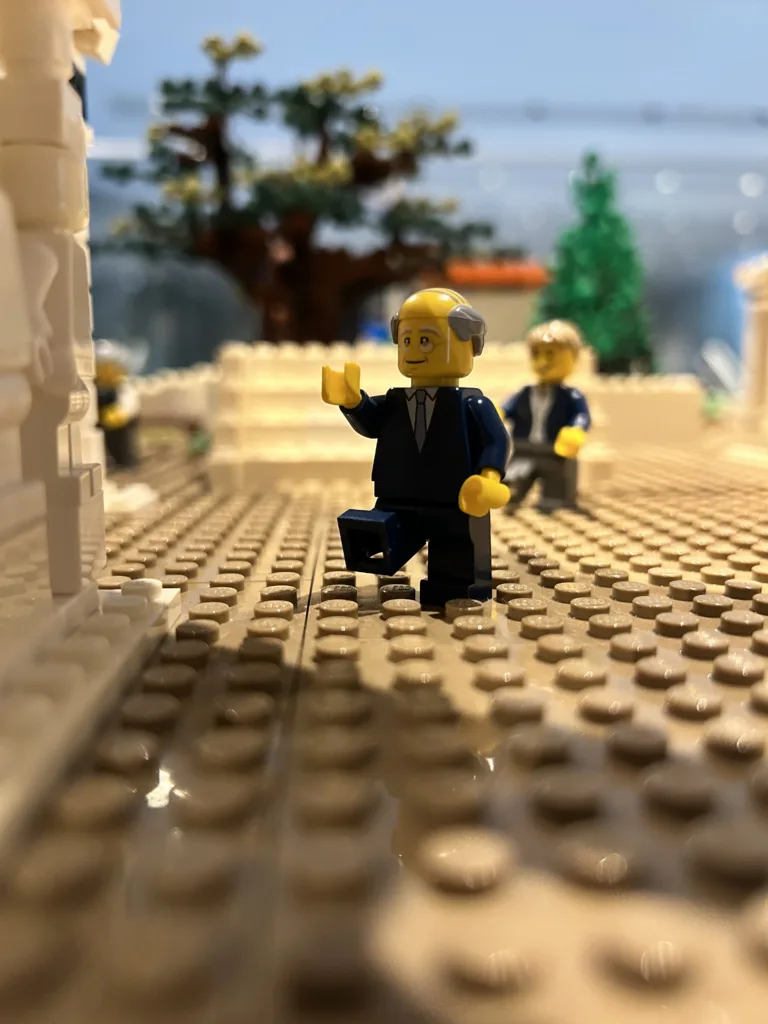
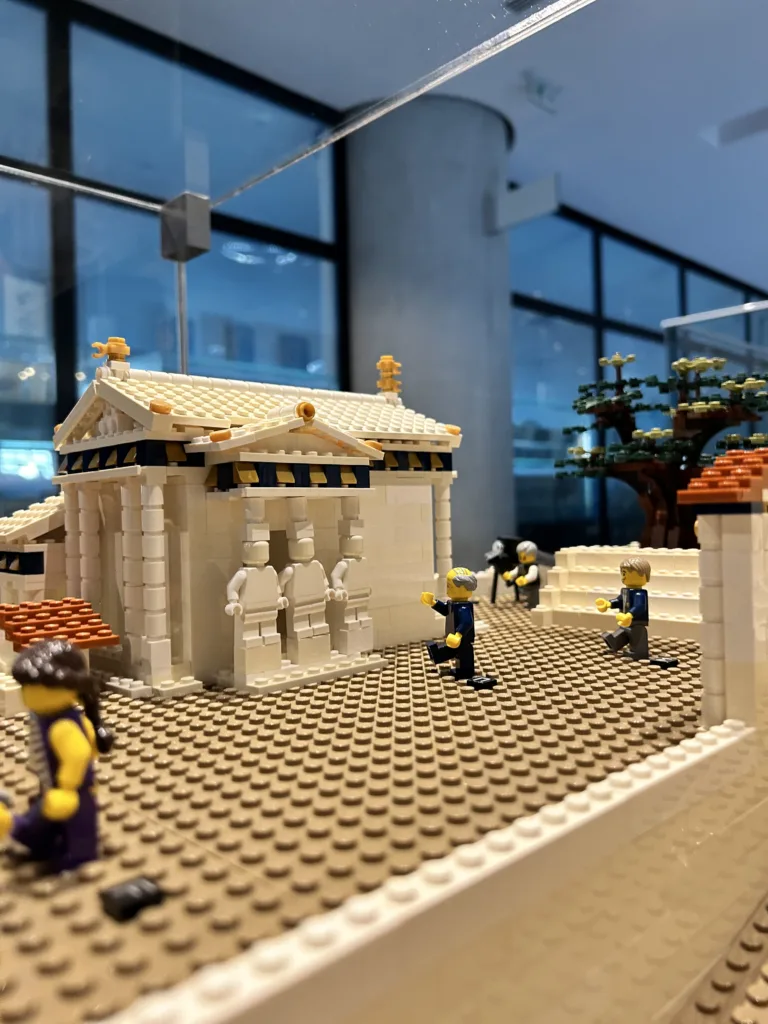
A LEGO minifigure portrait of Acropolis Museum Founder, Prof. Dimitrios Pantermalis, created by Australian LEGO Pop Artist Liam D. Jensen, is now on permanent display at the Acropolis Museum, Athens. 

Shortly after the sad death of Prof. Dimitrios Pantermalis in late 2022, the Acropolis Museum reached out to Mr Jensen to request an extra minifigure portrait to be placed in the LEGO Acropolis model that stands in the Museum.

The request was meant as memorial to Prof. Pantermalis pivotal role in establishing the Acropolis Museum and his leadership and tenacity in lobbying to have the Acropolis Marbles returned to Greece, where a place waits for them in the Museum.

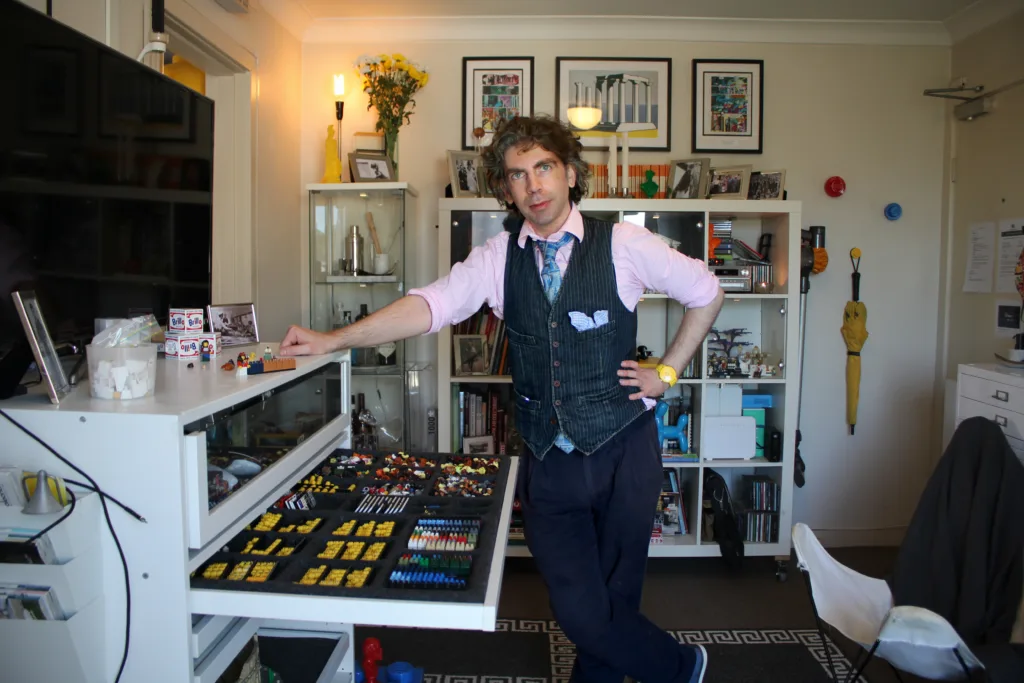
Liam D Jensen in his home studio 1 - photo from The Greek Herald, Australia, photo by Andriana Simos
Liam D Jensen in his home studio. Photo by Andriana Simos.

Mr Jensen originally made a portrait of Prof. Pantermalis in 2019 as part of the Brick Classicists Empire (or BCE) project. It was sent to Prof. Pantermalis and according to staff at the Museum, the portrait was loved by him and his family, who still have it. 

Museum staff requested another minifigure portrait be made for the Museum after his death, to be added to the LEGO Acropolis. 

The LEGO Acropolis model was gifted to the Acropolis Museum in 2014 by the then-senior curator Michael Turner of the Nicholson Museum (now the CCW Museum) at the University of Sydney, Australia.  

This came about after Prof. Pantermalis sent word to Michael Turner to request a loan of the model, but Turner insisted on donating it instead. The model is currently displayed on the Acropolis Museum’s Kids Corner on the second floor.

Mr Jensen said he was “very honoured and touched to make and donate the special minifigure portrait to the Acropolis Museum.”

“As always with these BCE minifigure portraits, I try to keep the design simple yet characteristic of the person who is being portrayed in the medium of a LEGO minifigure. With Prof. Pantermalis, I wanted it to have straightforward dignity with a hint of joyful enthusiasm, reflecting great and astonishing work over his lifetime,” Mr Jensen said.

“The ironic lens of seeing real people portrayed as LEGO minifigures, as though they came straight out of an official LEGO set, opens up a new perspective allowing us to see the person in new way and leveling us all, so that with childlike wonder and joy we can see our real selves.”

Mr Jensen was excited to learn recently that the figure has indeed been proudly placed in the LEGO Acropolis, along with Liam’s LEGO portrait of current Museum Director, Prof. Nikolaos Stampolidis, a playful, joyful reminder of Prof. Pantermalis’ pivotal, tenacious and enduring work.

Cypriot Australian presses ahead with move to Cyprus despite regional tensions

A Cypriot Australian businessman preparing to relocate permanently to Cyprus says recent security developments in the region have not deterred his plans, even as tensions in the Middle East raise concerns among diaspora communities.

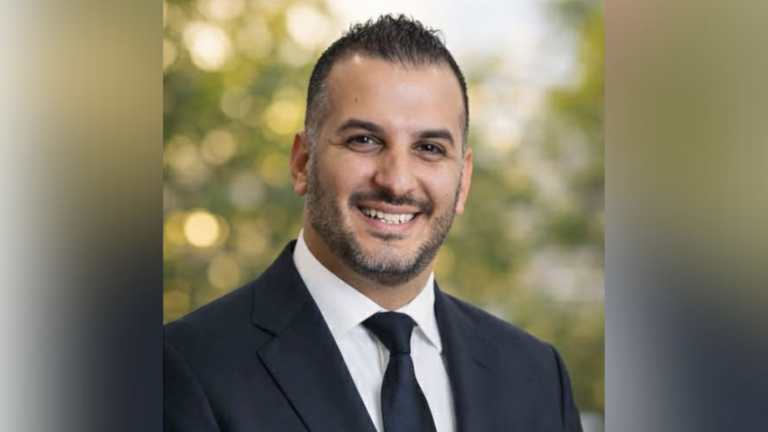
Sydney-based entrepreneur Peter Kitas is set to move to Cyprus within the next month, where he intends to establish a new advisory and investment platform aimed at connecting opportunities between Europe, the Middle East and Australia.

The relocation, he says, represents both a professional expansion and a personal reconnection with his heritage.

“The move to Cyprus is a strategic next chapter for me,” Mr Kitas told The Greek Herald. “I’m relocating to establish and grow Onisilos Partners as a Cyprus-based advisory and investment platform, using Cyprus as a gateway between Europe, the Middle East, and Australia.”

“Personally, it’s about reconnecting with heritage while building something long-term. I see life there as ambitious but balanced – building a respected business, expanding into property and advisory, and laying foundations for future legacy projects.”

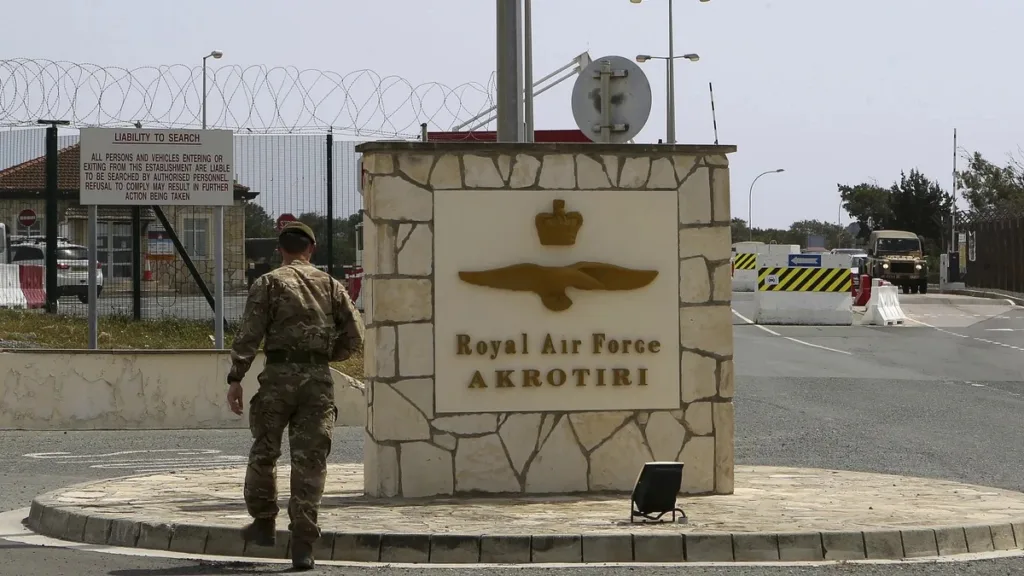
His comments come days after reports of a drone incident near the British military base at RAF Akrotiri, one of two UK sovereign base areas on the island. The incident has drawn attention to Cyprus’ proximity to regional conflicts and the potential risks associated with military infrastructure on the island.

RAF UK AIR BASE1
An Iranian drone crashed into the British RAF Akrotiri base in Cyprus last week.

The bases, including RAF Akrotiri, have long been strategically significant for the United Kingdom Royal Air Force, serving as a key hub for operations in the Eastern Mediterranean and Middle East.

While authorities have emphasised that everyday life in Cyprus remains unaffected, the episode has prompted discussion among Cypriots and members of the diaspora about the island’s position at the crossroads of geopolitical tensions.

For Mr Kitas, however, the development has not altered his broader assessment of Cyprus.

“When incidents involve places like RAF Akrotiri, you pay attention,” he said. “But Cyprus has historically been stable despite its geographic position.”

“I assess risk calmly. At this stage, the broader environment hasn’t changed my view of Cyprus as a safe and strategic place to live and build.”

Despite concerns raised by family and friends following the incident, Mr Kitas said his relocation plans remain unchanged.

“So far, there’s been no practical impact on my plans. Travel, timelines, and business setup remain unchanged,” he said.

“I always plan with contingencies – insurance, reserves, and flexibility. Family and friends naturally ask questions, but on the ground, life in Cyprus continues as normal.”

Cyprus has increasingly attracted international entrepreneurs and investors in recent years, thanks to its strategic location between Europe, the Middle East and North Africa, as well as its EU membership and favourable business environment.

At the same time, regional security developments – particularly the escalation of tensions in the Middle East – have placed renewed attention on the island’s geopolitical role and its longstanding hosting of foreign military facilities.

For Mr Kitas, however, the long-term opportunities still outweigh the uncertainties.

“I feel steady and resolved,” he said. “Entrepreneurship always involves calculated risk.”

“My decision is shaped by long-term opportunity, stability, and strategic positioning. Unless there’s sustained escalation affecting civilian life, my move remains on track.

“I’m moving forward informed – not reactive.”

His experience reflects a broader balancing act faced by many members of the diaspora with ties to the region: weighing personal and economic opportunities in the Eastern Mediterranean against an increasingly complex global security landscape.

Lecture in Sydney marks 250 years since the birth of Ioannis Kapodistrias

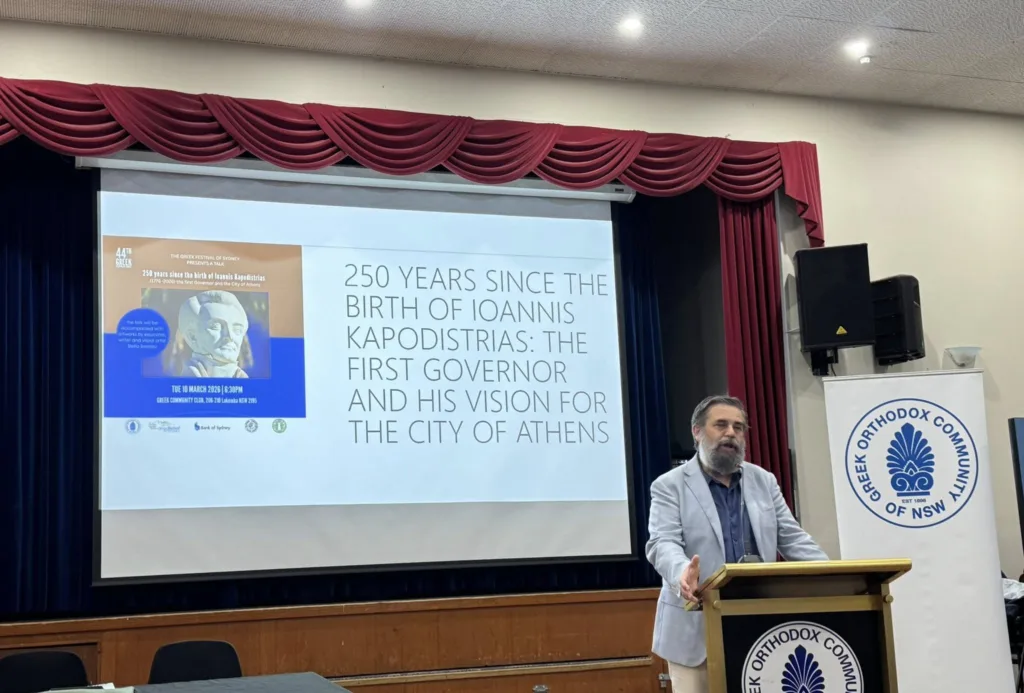
A packed audience gathered in Sydney on Tuesday, March 10 for a special public lecture marking 250 years since the birth of Ioannis Kapodistrias, exploring the legacy of the first Governor of the modern Greek state and his vision for the future of Athens.

The event, titled “250 years since the birth of Ioannis Kapodistrias (1776–2026): The First Governor and the City of Athens,” was presented under the banner of the Greek Festival of Sydney and organised in collaboration with Unity in Philia and the Athenian Association of NSW.

Held at the Greek Orthodox Community of NSW Hall in Lakemba, the lecture was delivered by Vassilis Adrachtas, Convenor of Greek Studies at the University of New South Wales.

ioannis kapodistrias greek festival of sydney (1)
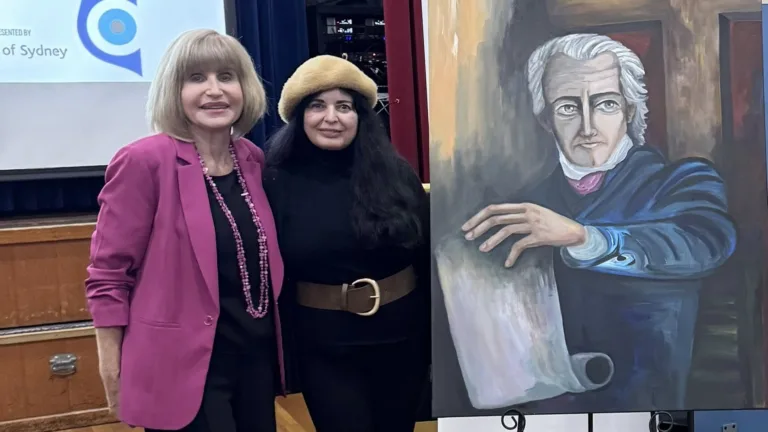
Vasilis Adrahtas gave the lecture.

Dr Adrahtas examined Kapodistrias’ pivotal role in the formation of the newly independent Greek state and his early recognition of the strategic importance of Athens as a future capital city. The presentation drew on historical texts and visual material, including the artworks of educator and writer Stella Sorotou, and was followed by a roundtable discussion on the topic.

Opening remarks were delivered by Con Apoifis, President of the Greek Orthodox Community of NSW, and Cathy Vallis, President of the Athenian Association of NSW.

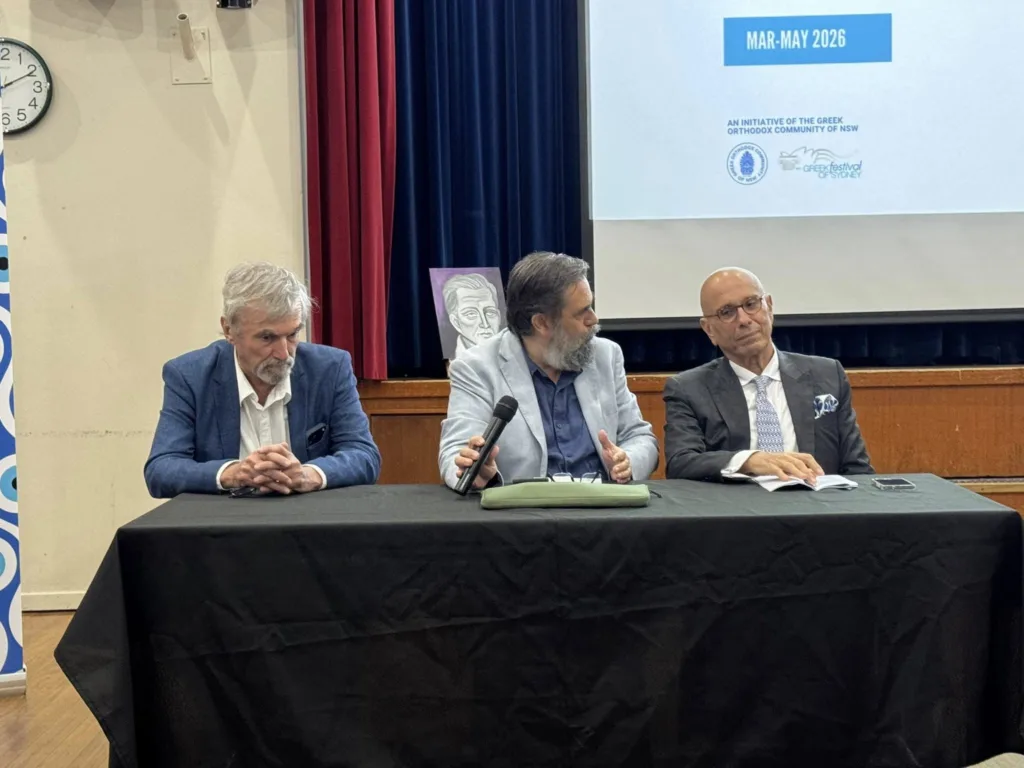
A discussion panel followed the keynote address, featuring Dr Adrachtas, George Vardas, and John Tripidakis, with the audience participating in an enthusiastic question-and-answer session.

ioannis kapodistrias greek festival of sydney (1)

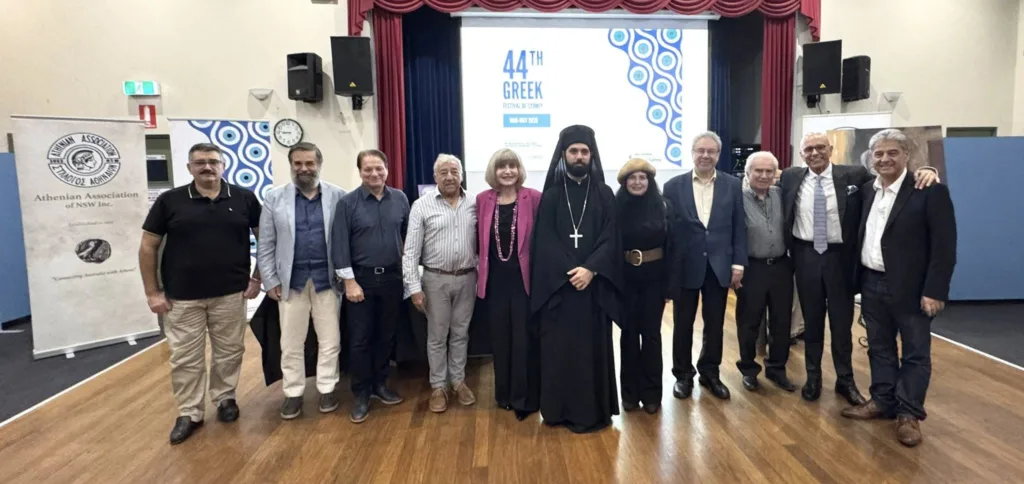
Among the distinguished guests present were Archimandrite Fr Irenaeus Triantis; Athanasios Lambrou, Head of the Public Diplomacy Office at the Consulate General of Greece in Sydney; Pamela Proestos, Chair of the Greek Festival of Sydney; and Tilda Sikes, Festival Director.

ioannis kapodistrias greek festival of sydney (1)

The lecture formed part of the program of the 44th Greek Festival of Sydney, commemorating the bicentenary-era figure whose work helped lay the foundations of the modern Greek state.

Following the event, attendees gathered for refreshments and finger food while continuing discussions on Kapodistrias’ historical significance and enduring influence.