Sydney’s radio scene is bracing for significant changes as regional broadcaster 2SM sets its sights on challenging the city’s dominant players. With a fresh leadership team in place, 2SM is planning a major shake-up, starting with the recruitment of top-tier talent to fill the void left by the departure of iconic host John Laws, who retired after 71 years on air.
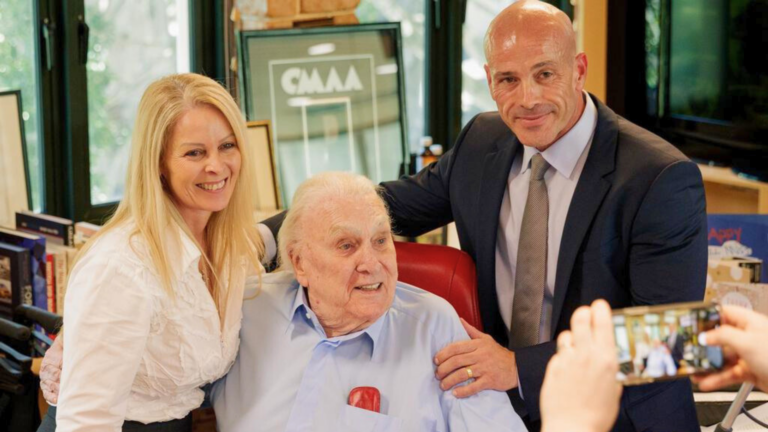
Owners Despina Priala and George Caralis, who took over the 2SM Super Radio Network following their parents’ passing, have revealed ambitious plans to reintroduce a local Sydney breakfast show and recruit a high-profile broadcaster for their morning slot. Bill Caralis’ heirs also aim to bring local breakfast programs back to their regional stations in Orange, Coffs Harbour and Port Macquarie.
The network has reportedly been in discussions with several prominent media figures, including former 2GB presenter Jason Morrison, ex-Sunrise host Mel Doyle, and talkback presenter Chris Smith. George Caralis explained, “We want to be local. We want to make some changes. It’s very exciting.”
Morrison, who currently presents on Triple M, confirmed meetings with 2SM but did not disclose further details. While Smith declined to comment, Doyle’s agent suggested that for 2SM to hire a respected presenter, they would need to offer between $700,000 and $1 million. Priala responded, “Maybe he needs to buy a station and then work it out himself.”
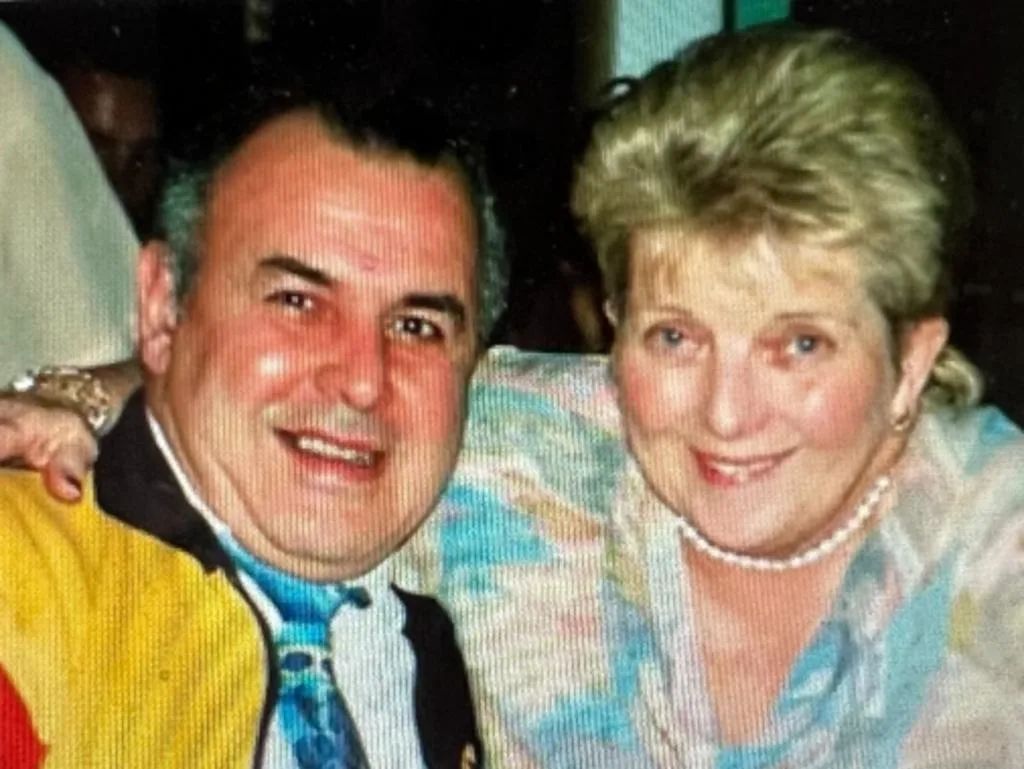
The late 2SM owners Bill and Pam Caralis.
Doyle met with the 2SM team in October, but will not be joining the station in 2024. Priala noted that “the days of ridiculous money are gone.” The network also reportedly approached Sky News host Erin Molan, but she won’t be joining 2SM either.
In terms of potential talent, 2GB and Nine presenter Deb Knight has been named as a target, while Smooth FM’s Ron Wilson has reportedly been mentioned but is committed to his current role. Veteran broadcaster Steve Price weighed in on 2SM’s strategy, advising the network to focus on its regional strengths rather than chasing younger, urban listeners. Price also warned against hiring high-profile figures like Chris Smith, citing his past controversies.
With the future of 2SM still in the balance, Caralis emphasised that while discussions are ongoing, no decisions will be announced until January. The station is focused on securing the right talent to resonate with its regional audience while maintaining confidentiality about their plans.
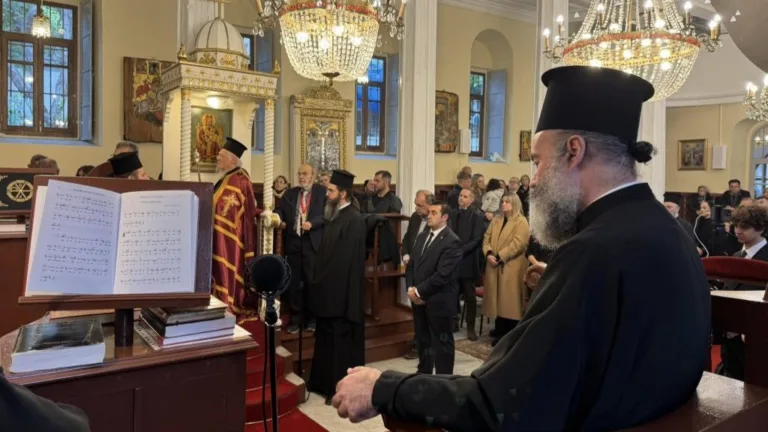
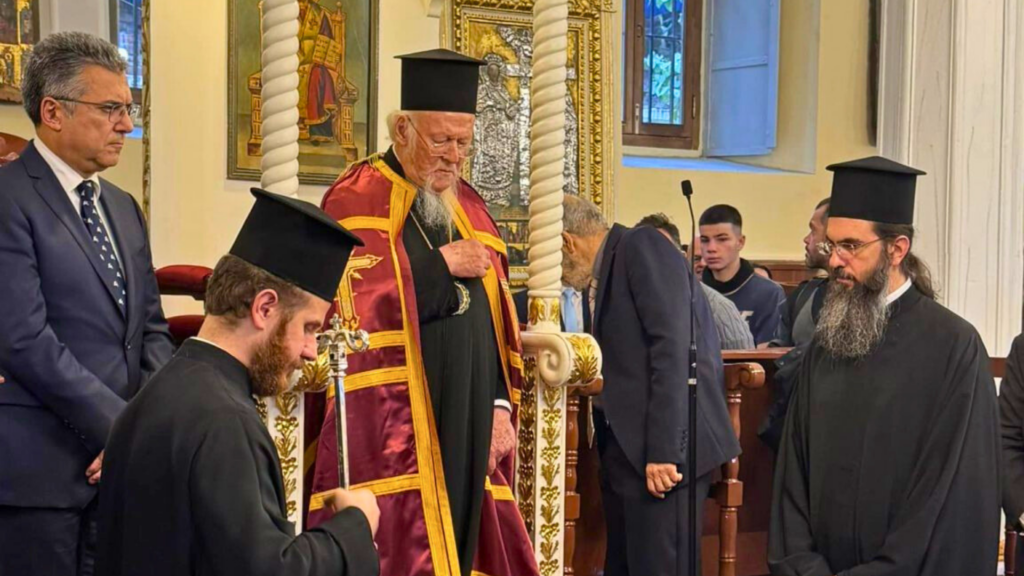
His All-Holiness Ecumenical Patriarch Bartholomew officiated a Divine Liturgy from the throne (Horostasia) at the Church of Panagia Balino in Constantinople on Sunday, November 17.
The service marked the Feast Day of the Holy Great Martyr Menas, where the sacred spring of the Saint is found in the Narthex of the Holy Church.
The Patriarch was welcomed by His Grace Bishop Adrianos of Halicarnassus, Overseer of the Phanar – Golden Horn District, and also by the President of the Community Council, Dr Symeon Soltaridis.
Photo: Yani Kayakoparan.
Among the attendees were His Eminence Archbishop Makarios of Australia, along with Archons of the Great Church of Christ and many faithful believers.
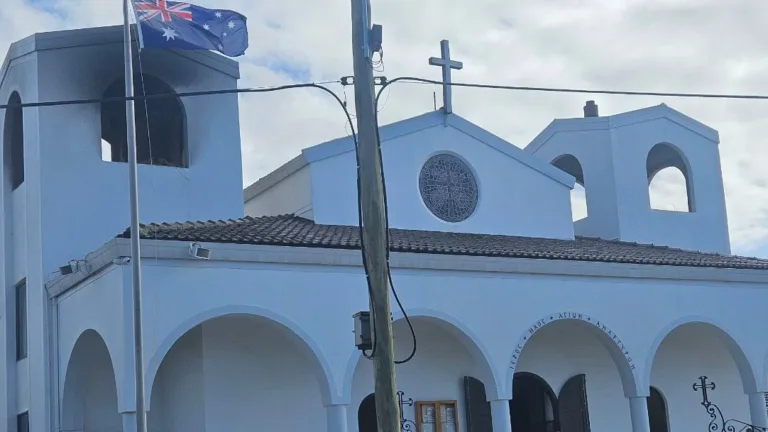
Thieves allegedly targeted a power station overnight, stealing copper cables that supply power to the Oakleigh area, including the nearby church of Sts Anargyri.
The theft caused significant disruption, with the church and surrounding neighbourhood left without electricity.
Photo copyright The Greek Herald / Bill Roumeliotis.
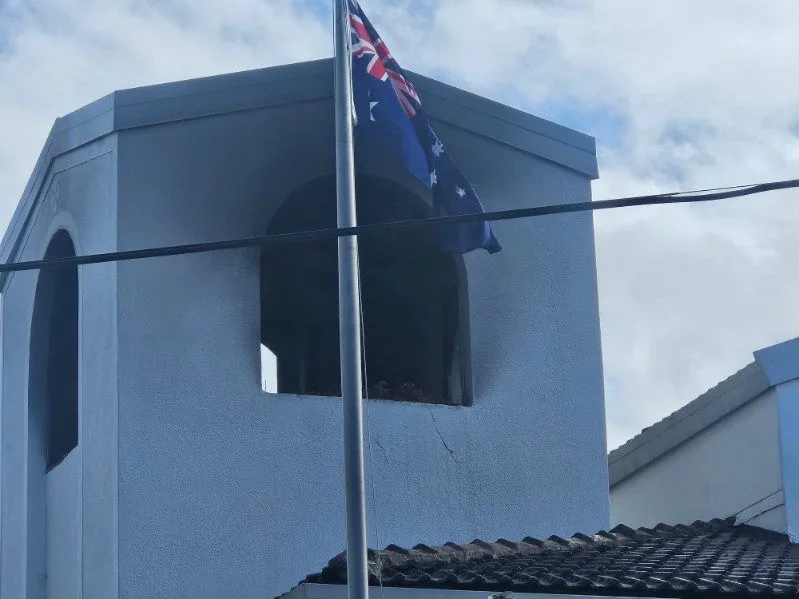
The Greek Herald understands the stolen cables led to a fire breaking out in the church’s bell tower. Damage to the church was minor and contained.
The Greek Herald has contacted Fire Rescue Victoria, with an investigation ongoing into the fire.
Despite the setback, the church is working tirelessly to restore electricity before a scheduled funeral at 10:30am today. The church doors remain open, symbolising the community’s resilience and strength during this challenging time.
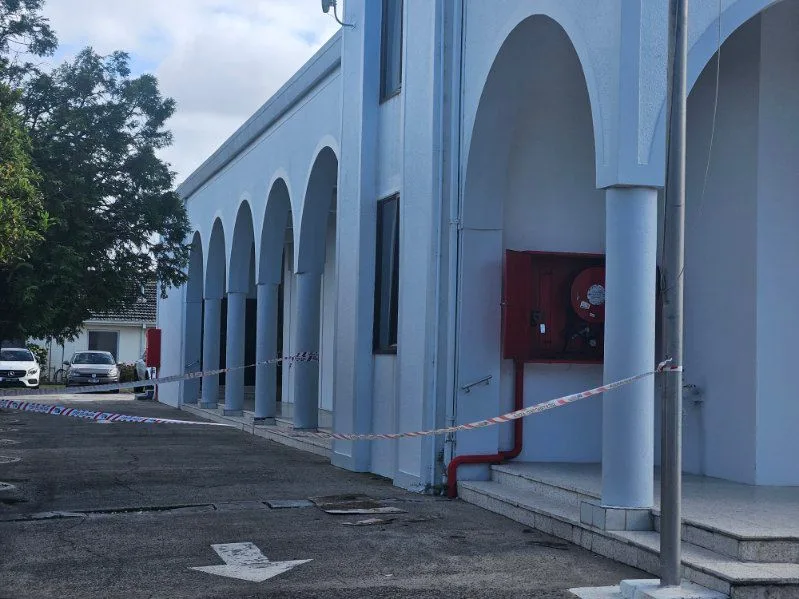
The area has been cordoned off.
“We hope for a swift return to normalcy,” Chris Damatopoulos, President of the Greek Orthodox Parish and Community of Sts Anargiri at Oakleigh, told The Greek Herald today in an emotional statement.
“Thankfully Sts Anargiri protected us for a second time.”
Another fire – unrelated to the current one – broke out at the church in December 2022. The fire caused extensive damage to the office area and smoke damage throughout the church. No one was injured at the time.
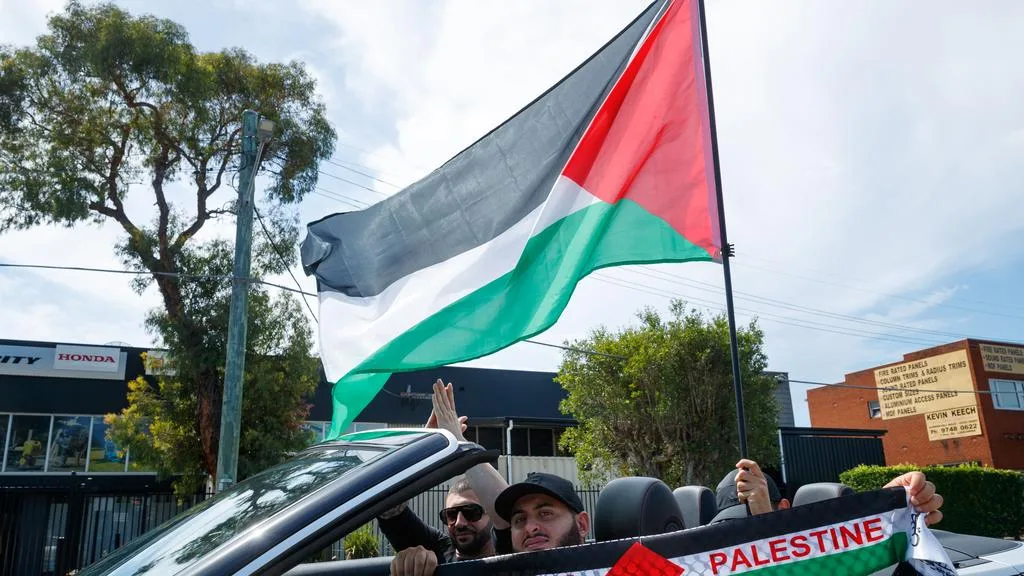
Cumberland Council’s decision to fund a public art installation honouring Palestinian victims of the Middle East conflict has sparked significant debate, with Independent Councillor Steve Christou among those questioning its inclusivity and appropriateness for local government.
At a council meeting on Wednesday, November 13, Mayor Ola Hamed introduced a motion expressing solidarity with Palestine, advocating for a ceasefire, and requesting the foreign affairs minister recognise the council’s stance on Gaza. Independent Councillor Ahmed Ouf reportedly drafted a more radical version, but it was toned down by the mayor.
Cr Christou challenged the council’s focus, arguing it failed to acknowledge Israeli victims.
“We seem to be acknowledging the plight of the Palestinian people, but we’re not acknowledging there are also Israeli victims as well,” he said.
Citing the suffering on both sides, he called for a “common sense” approach and supported Liberal Councillor Paul Garrard’s proposal to include Israel in the discussion.
“There’s no discrimination – people are people, blood is blood. Both communities have innocent victims,” Christou stated, advocating compassion for all.
Photo: Max Mason-Hubers.
Liberal Councillor Joseph Rahme criticised the council’s engagement with international issues, urging it to concentrate on local matters such as “rates, roads, and rubbish.” Similarly, Councillor Helen Hughes acknowledged the tragedy of deaths in both Palestine and Israel but questioned the appropriateness of the council taking a stance.
The mayoral motion was later amended to include Lebanon, recognising the suffering of Lebanese civilians affected by the conflict. Despite this addition, Councillors Christou and Garrard opposed the revised proposal.
The council also approved a cost-free event for the Palestinian Australians’ Welfare Association at Holroyd Gardens on November 29, coinciding with the International Day of Solidarity with the Palestinian People. A budget allocation was made to develop a concept for the art installation.
Cumberland’s decision mirrors similar moves by other councils. Last October, Canterbury-Bankstown Council flew the Palestinian flag until a ceasefire was declared, while Woollahra and Waverley councils, located in areas with significant Jewish populations, recently approved permanent public artworks commemorating Israeli victims of Hamas attacks.
The proposal has highlighted deep divisions within Cumberland Council and prompted broader discussions about the role of local government in addressing international conflicts.
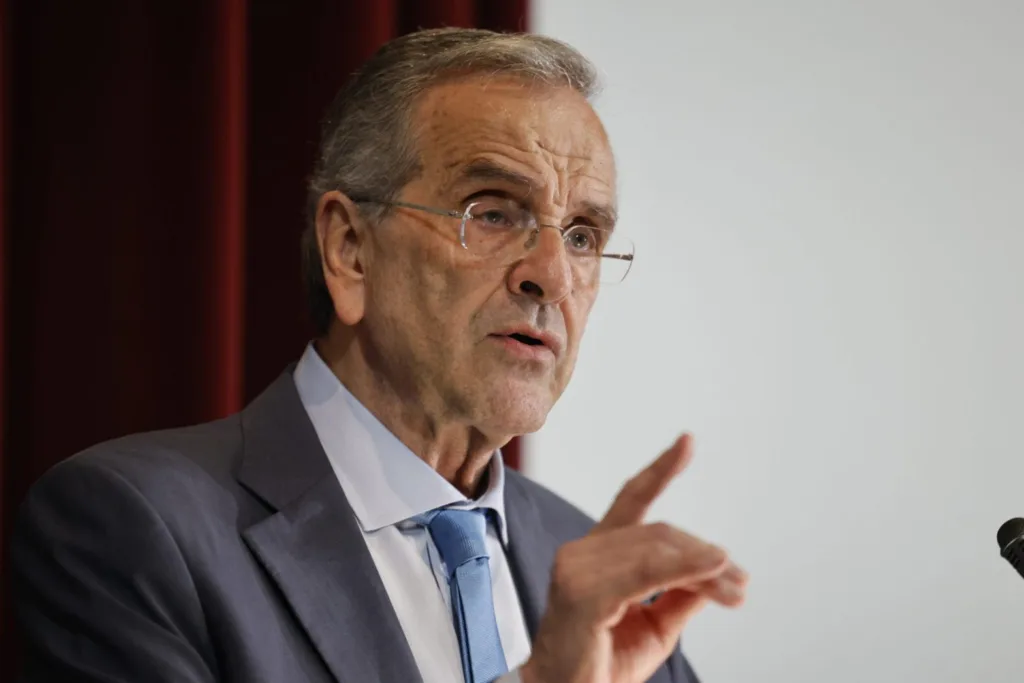
Former Greek Prime Minister Antonis Samaras has strongly criticised acting Prime Minister Kyriakos Mitsotakis and his government following his expulsion from the New Democracy party. Samaras, who once led the party, accused Mitsotakis of abandoning New Democracy’s core principles and being disconnected from its base.
In a statement, Samaras challenged Mitsotakis to identify any inaccuracies in his critiques, including on Greek-Turkish relations, inflation, and the “woke agenda.” He also defended his suggestion of Kostas Karamanlis as a candidate for Greece’s presidency in 2025.
“Arrogance and an obvious loss of nerve explain Mitsotakis’ move,” said Samaras. “I have sacrificed everything for the fatherland, even my health. But no one can force me to also sacrifice my conscience. The people and history will judge us all.”
Government spokesman Pavlos Marinakis stated that Samaras’ recent interview, where he accused Foreign Minister George Gerapetritis of appeasing Turkey, marked a clear break with government policy. “Samaras placed himself, for the second time after 1993, outside of New Democracy,” said Marinakis.
Former Greek PM Antonis Samaras. Photo: Eurokinissi / Yorgos Kontarinis.
In the interview, Samaras called for Gerapetritis’ removal, accusing him of conceding to Turkish demands in ongoing negotiations. While not naming the minister directly, Samaras referred to Gerapetritis’ past remarks about prioritising stability and calm relations with Turkey, even if labelled an appeaser.
Samaras has also criticised Mitsotakis’ progressive social policies, including the recent legalisation of same-sex marriage, and described any presidential discussions as “untimely” and disrespectful to the current head of state.
This marks the second major clash between Samaras and the Mitsotakis family. In 1992, Samaras was dismissed as foreign minister by Konstantinos Mitsotakis, Kyriakos’ father, over his hardline stance on Macedonia. In 1993, Samaras broke from New Democracy, leading to the fall of the Mitsotakis government.
Samaras served as New Democracy’s leader from 2009 to 2015, succeeding Kostas Karamanlis. However, his expulsion signals a deepening rift within Greece’s ruling party during a critical time for the country.
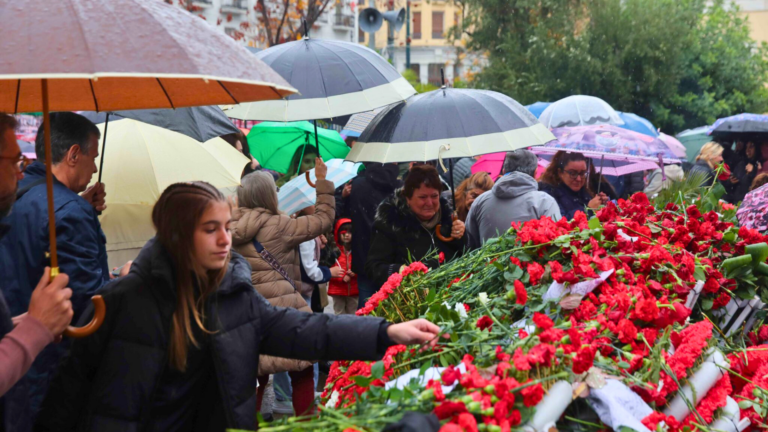
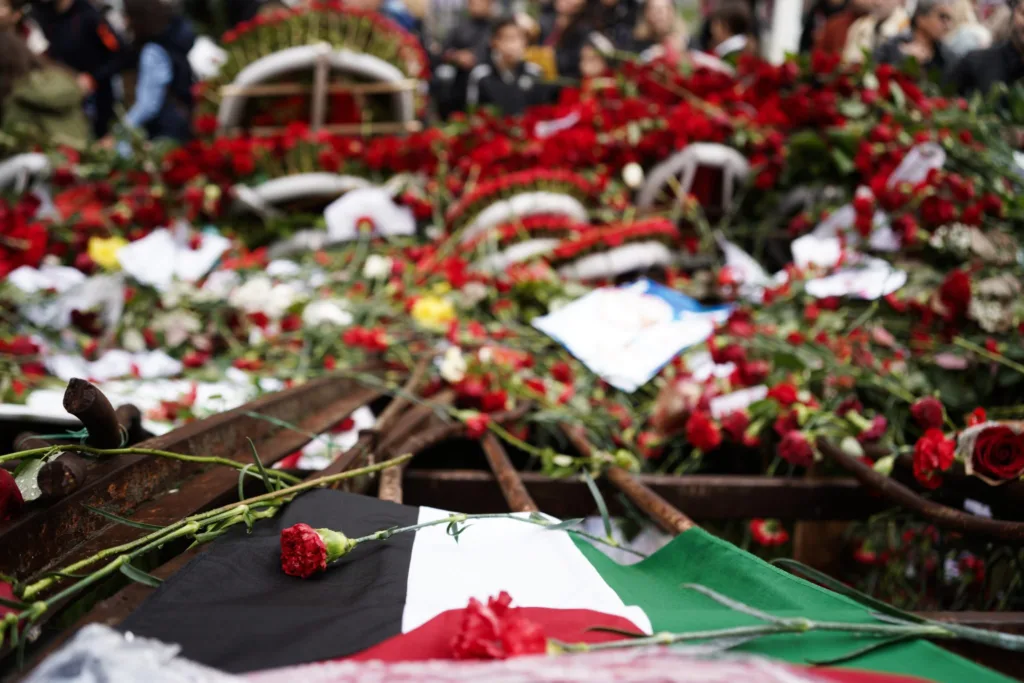
Despite wet weather, crowds gathered early on Sunday, November 17, at the Athens Polytechnic to honour the 51st anniversary of the 1973 anti-junta uprising. Families, students, and political figures commemorated those who lost their lives fighting for democracy during the military dictatorship.
Attendees placed flowers at the monument, sharing stories of the uprising with younger generations. “Rain or shine, we promised we’d come,” said one father, accompanied by his young child. A woman from the “Polytechnic Generation” reflected, “This historical event must never be forgotten. Its relevance endures today.”
Prime Minister Kyriakos Mitsotakis underscored the uprising’s legacy, calling it “an enduring symbol of progress” and a reminder of Greece’s commitment to democracy. President Katerina Sakellaropoulou emphasised its significance amid modern challenges, stating, “Democracy is our most valuable asset.”
Photo: Tovima.
The day culminated in a march from the Polytechnic to the US Embassy, with around 25,000 participants chanting slogans like “The Polytechnic uprising lives on” and “Freedom in Palestine.” The protest also drew criticism of US support for the junta during the Cold War.
Authorities deployed over 5,500 officers, supported by drones and helicopters, to monitor the march and prevent unrest. Police detained over 110 individuals in pre-march checks. In Thessaloniki, clashes erupted as demonstrators threw Molotov cocktails, prompting police to respond with tear gas.
The Polytechnic uprising is widely seen as a turning point that hastened the collapse of Greece’s military dictatorship, leading to the restoration of democracy in 1974. Protests were held nationwide, reinforcing its enduring call for freedom and justice.
Greece’s national team did what was necessary, securing a 2-0 victory against Finland at Helsinki’s Olympic Stadium—their first-ever away win over Finland in history. With this result, Greece completed their obligations in Group 2 of League B in the Nations League, finishing with five wins from six matches.
Greece amassed 15 points, equal to England’s tally, but the “Three Lions” claimed first place due to a superior goal difference, having thrashed Ireland 5-0 at the same time.
England earned direct promotion to League A, but the target remains achievable for Greece who will fight for promotion in the playoffs in March 2025.
Moreover, beyond promotion, Greece could secure a second chance to participate in the 2026 World Cup qualification playoffs, with Ivan Jovanović’s team set to enter Pot 2 in the draw.
From a tactical standpoint, the national team controlled possession from the outset. This was achieved without much difficulty, as the hosts opted for a defensive setup, playing with three centre-backs and waiting for their opponent.
While Greece moved the ball well, they lacked the pace required for the match, showing a clear deficit in freshness and energy—undoubtedly influenced by Thursday’s defeat to England.
The Finns left little space, and the choices made by Jovanović’s players in the final third were not ideal, resulting in a lack of significant chances in front of Joronen’s goal.
There was also inefficiency in set pieces, with Greece executing several corners in the first 45 minutes. However, apart from two off-target headers by Mavropanos (8’, 15’) from Bakasetas’ deliveries, there was little to show for their efforts.
The best chance of the first half came in the 38th minute when Pavlidis entered the box and shot, with Hoskonen deflecting it onto Masouras, only for the ball to go wide.
The second half was a stark contrast, with Greece starting strongly and opening the scoring in the 52nd minute through a Bakasetas strike following a brilliant through ball by Koulierakis.
Before the hosts could regroup, they found themselves chasing a two-goal deficit. Four minutes later (56’), after a long ball from Mavropanos, Joronen cleared with a header, only for Tzolis to lob the ball into the net from distance, sealing the game at 2-0.
In the 90th minute, Ivan Jovanović substituted in Christos Mouzakitis, who became the youngest player in the history of the Greek national team to feature in an official match.
A high-profile conference was held at Melbourne Town Hall on Friday, November 15, bringing together key community and multicultural leaders to address concerns around social cohesion and the need for stronger anti-vilification laws in Victoria.
The event was organised in light of recent protests by pro-Palestinian demonstrators, who disrupted the unveiling of the Myer Christmas windows, sparking widespread criticism for targeting a family-friendly tradition.
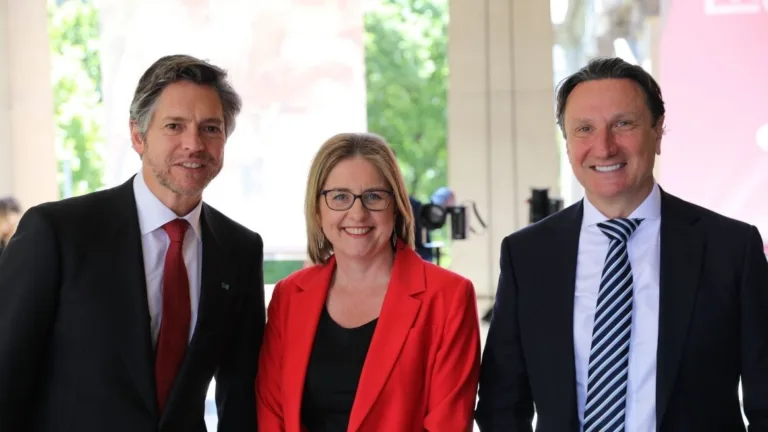
Representing the Greek Orthodox Community of Melbourne, President Bill Papastergiadis OAM was an active participant in discussions with Premier Jacinta Allan and other community leaders prior to the Town Hall conference.
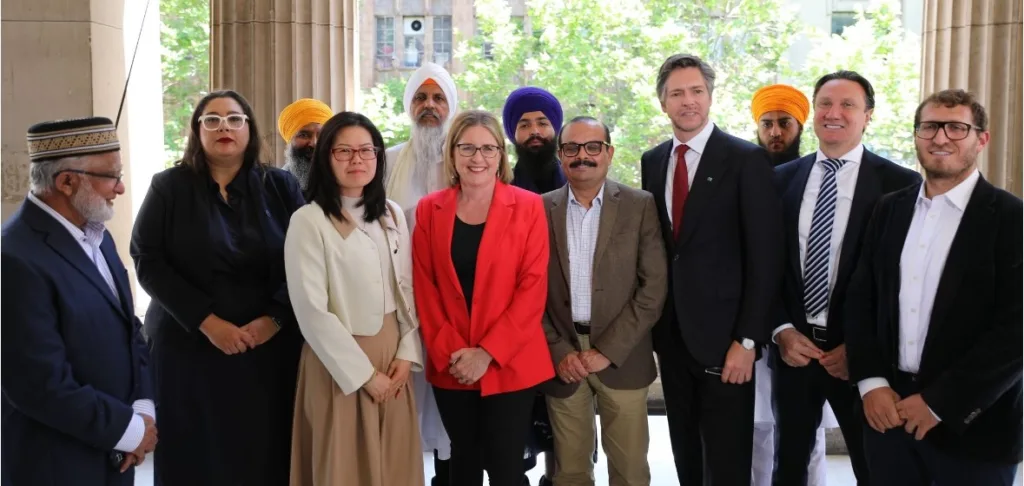
Premier Jacinta Allan and other community leaders prior to the Town Hall conference. Photo: Supplied.
Mr Papastergiadis joined an influential group of attendees, including Jasbir Singh Suropada from the Sikh Interfaith Council of Victoria, Sheikh Muhammad Nawass from the Board of Imams, Rabbi Gabi Kaltmann from the Ark Centre, Makarand Bhagwat from the Hindu Council of Australia, Hass Dellal from the Australian Multicultural Foundation, Bihong Wang from the Asian Business Association of Whitehorse, and Pritam Singh Gill and Ravi Inder Singh from the Gurduara Council of Victoria.
During the discussions at the Premier’s office earlier in the day, Mr Papastergiadis shared his views on the relationship between freedom of speech and societal harmony. He highlighted there is no such thing as an absolute right to freedom of speech, emphasising that existing laws already regulate speech in areas such as privacy, protection of minors, and defamation.
“There is no such thing as an absolute right to freedom of speech,” he stated. “Those that sought to use this expression to justify hateful language simply misunderstand the law. At present, there are a number of laws that impinge on freedom of speech, including laws relating to privacy, minors, and the law of defamation. Hence, our rights are regulated so as to ensure we have a functioning and respectful society.”
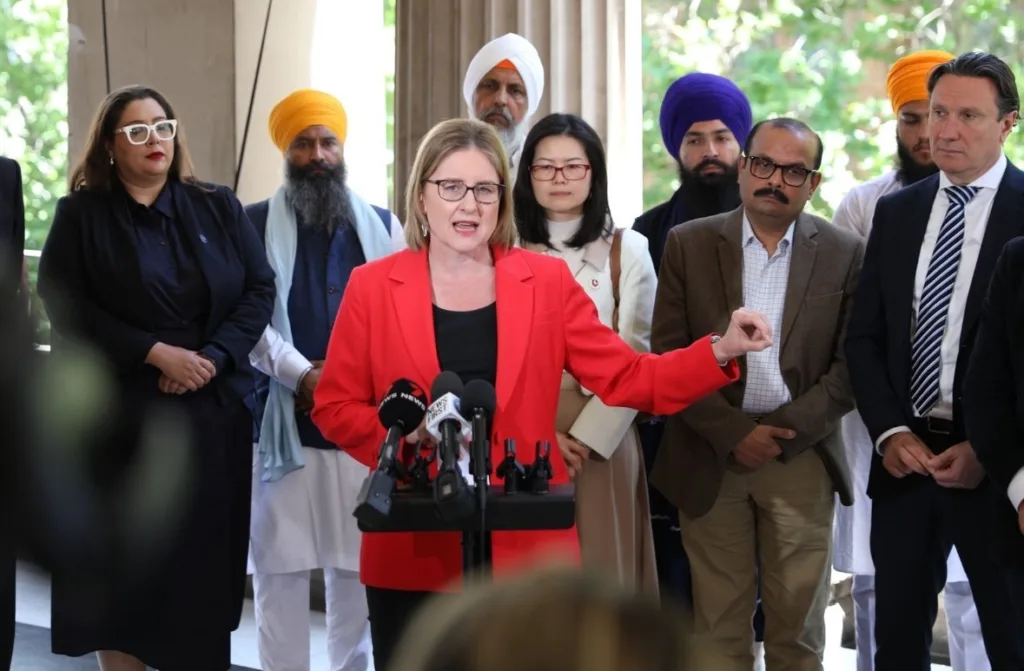
Following these discussions, the leaders accompanied the Premier to the conference at Melbourne Town Hall, where Premier Allan and Melbourne’s newly elected Lord Mayor Nick Reece addressed the audience.
Premier of Victoria Jacinta Allan. Photo: Supplied.
Premier Allan condemned recent protests that disrupted public events.
“A small group of people disrupting a beautiful Christmas tradition for kids is not the Victoria I know,” she said.
Highlighting the state’s multicultural fabric, the Premier reiterated her commitment to protecting social harmony.
“The Victoria I know is a place where we come from 200 backgrounds, speak 200 languages, but we are one community – Victoria united,” she said.
The group of leaders, including Mr Papastergiadis, supported the Premier in her message to those attempting to sow division: “People have a right to demonstrate, but no one has a right to divide.”
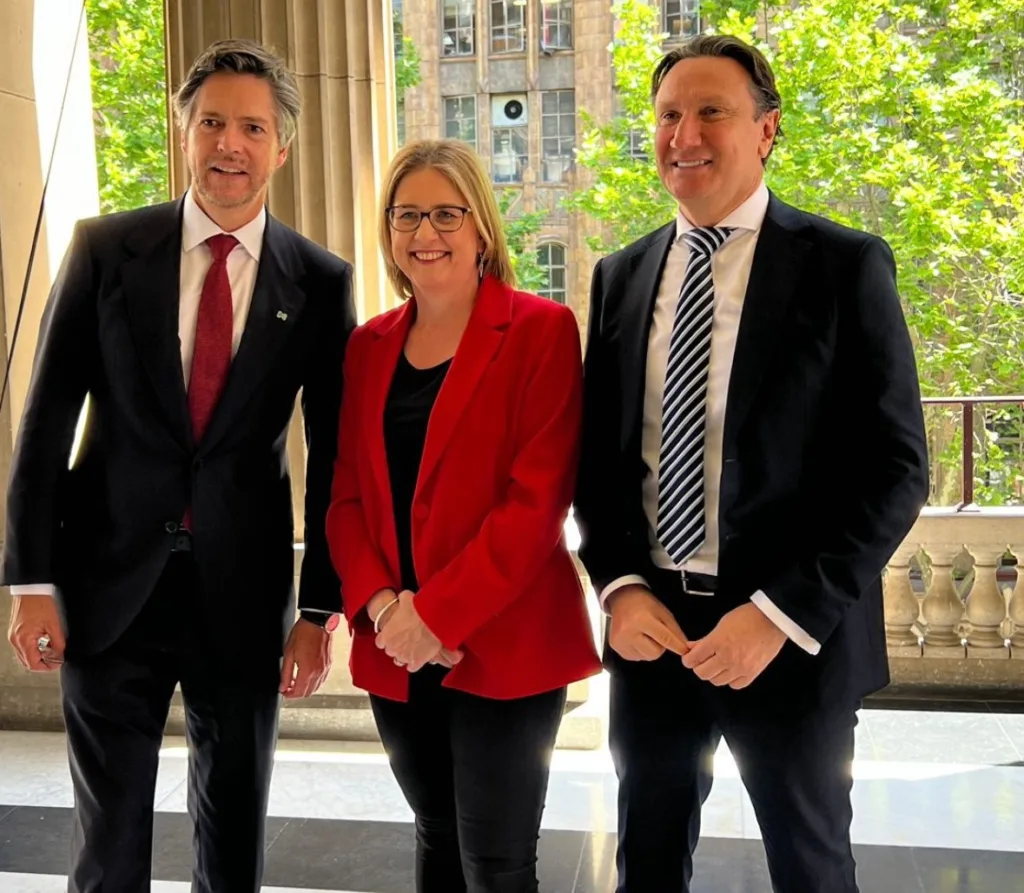
Lord Mayor Nick Reece, Premier Jacinta Allan & Bill Papastergiadis. Photo: Supplied.
Premier Allan also announced her government would be introducing legislation to strengthen Victoria’s anti-vilification laws in the upcoming parliamentary sitting week.
The Premier said the legislation is intended to enhance social cohesion and “wind back this culture of division and put an end to vilification and hate.”
“We’ve been working hard on those laws, and I can tell you now that we will introduce them to Parliament this month,” Ms. Allan said.
“I will not let the constant violence, division, and vilification we see overseas creep into Victoria.”
The conference and preceding discussions marked a critical moment in Victoria’s ongoing efforts to address vilification, with strong support from multicultural and community leaders like Mr Papastergiadis.
If you’ve ever listened to rebetika (Greek Blues) music, you’ll notice that if you close your eyes, you’re transported straight to a quaint, beautiful Greek village. That’s the power of Urban Folk Music—it speaks to the soul.
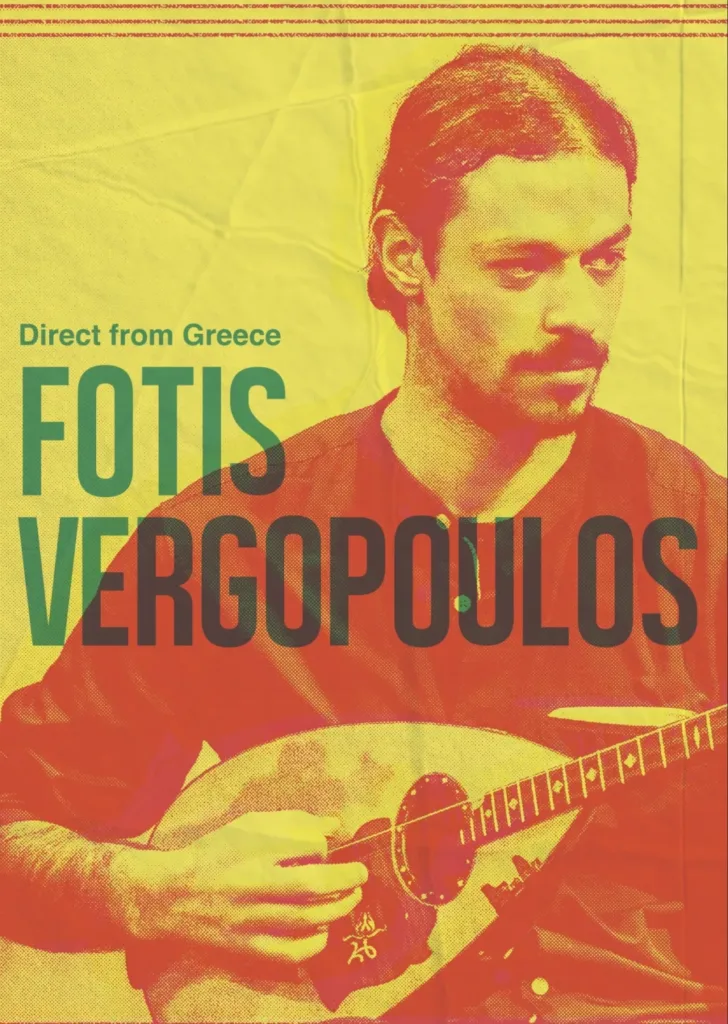
A Melbourne-born Athenian is bringing this feeling back to Australia with shows in Melbourne, Canberra and Sydney starting on November 29th.
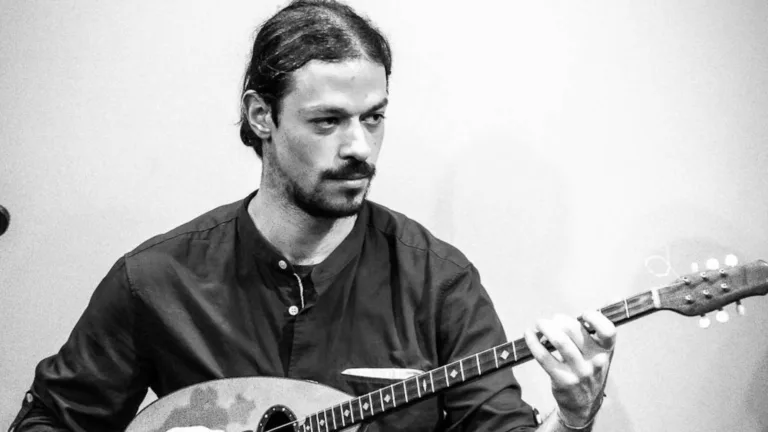
His name is Fotis Vergopoulos, and he is well-known for his extraordinary musicianship and deep connection to rebetika. Fotis leads a superb group of local and interstate artists, embodying a new wave of Greek talent.
Currently based in Athens, Greece, Fotis has toured extensively throughout Europe, Africa, Australia, and New Zealand. He has worked with renowned artists such as Manolis Pappos, Babis Gkoles, Martha Fritzila, and Agathonas Iakovidis.
Rebetika, or “Greek Blues,” emerged in the early 1900s. Its raw, emotional style, often played with instruments like the bouzouki, explores themes of hardship, love, and rebellion. This genre has left a lasting mark on Greek urban culture.
The Greek Herald sat down with Fotis to chat about his life and music.
For those who don’t know you, can you give a brief overview of who you are and what you do?
I’m Fotis Vergopoulos, born in Melbourne, raised in Greece, studied in Melbourne, and now living in Athens. I play the six-string bouzouki and sing, and recently I’ve started composing my own music. I specialise in Greek Folk Music, but over the years, I’ve been influenced by other styles. Now, I focus more on the music itself than the specific genre we play.
How did your love of music evolve? Were you born with it, or did it come as you grew up?
My love for music started at a really young age—I can barely remember a time without it. The biggest influence was my father, Nikos, who was an original member of Apodimi Compania, a band based in Melbourne in the ‘80s.
What do you love most about what you do?
Turning my first toy (a baglamas and bouzouki) into my life’s work and having the time to keep practicing and improving. Meeting such interesting people along the way.
How would you describe the bouzouki? What makes it a unique instrument? What emotions does it bring out?
The bouzouki is a stringed instrument that sounds like the lute and the mandolin. What makes it unique is its rich history. For me, though, it’s not the instrument itself that brings out emotions, but the connection between the audience and the people creating the music. Of course, instruments are the medium, but it’s really the mindset and emotions of those willing to experience the music that make it special.
What’s something people don’t know about you that you wish they did?
I love reading and taking long walks!
Where do you see yourself in five years?
I see myself somewhere in Greece, continuing to do what I’m doing today.
The Social Issues, Mass Media and Education Laboratory of the Department of Early Childhood Education, School of Education, of the University of Ioannina, and the Maliotis Cultural Center at Hellenic College in Boston, with the participation of:
– Ecumenical Patriarchate, Greek Education Department, – Greek Orthodox Archdiocese of America, Department of Greek Education, – Greek Applied Linguistics Association – Athens – Macedonian News Agency – Study in Greece – The University of Chicago, Center for Hellenic Studies, and – Fondazione Vexillum, organise the 11th International Summer University “Greek Language, Culture, and Mass Media.”
The project is scheduled to take place in Boston, on May 24 – 29 2025, at the Maliotis Cultural Center (campus of Hellenic College at 50 Goddard Avenue) in Brookline. It will be conducted through the Center for Lifelong Learning of the University of Ioannina. The program enjoys the auspices of the Hellenic Parliament.
The 11th International Summer University has the special title: ‘Diaspora mass media: challenges and prospects for the Greek language and culture’
Indicative topics:
-The international presence of diaspora mass media and their contribution to the modern Greek culture
-The contribution of the diaspora mass media towards spreading and preserving the Greek language
-Depictions and representations of Greece in diaspora mass media
-Diaspora mass media, identity, and multicultural horizons
-Diaspora mass media and modern crises (memoranda, refugees, climate, war, energy). Language representations and symbols
-The teaching role of diaspora mass media
-Possibilities for cooperation and synergies, in the framework of a global forum for Greek diaspora mass media.
Filming the spot
A tradition of extroversion
Following 10 years of renowned success for the program, the tradition of fostering extroversion and synergies with prominent international institutions in education, culture, and mass media continues.
It is reminded that, in the previous years, the International Summer University “Greek Language, Culture, and Mass Media” has been supported by the Harvard University Center for Hellenic Studies, the Hellenic Representation of the European Parliament, the Association of European Journalists (Greek department), the Orthodox Academy of Crete, the French Department of the Club de la Presse Européenne in Paris, the Centre Culturel Hellénique in Paris, the Instituto De Letras in Rio De Janeiro University, the Department of Media, Communications, Creative Arts, Language and Literature, Faculty of Arts of Macquarie University, the Macquarie Greek Studies Foundation in Sydney, and many more.
Participation
Directors and journalists of diaspora mass media in America, Europe, Australia, Asia, and Africa will participate in the program. Moreover, academics and researchers, intellectuals and artists from Greek and foreign universities and research centers will join the program.
The program will be offered for free. The program is addressed to journalists, undergraduate and graduate students, PhD holders, educators, and it accepts a number of professionals with relevant interests, in the framework of lifelong learning. The program offers certificates of attendance and educational material to the participants.
The poster
The presence of mass media in Greece and in the diaspora
The following organisations support the program as communication sponsors: ERT, ERT 2, ERT3, ERT WORLD, the First Program 105.8, the Voice of Greece, and the Parliament Channel. Real FM, Real News, and real.gr, along with CNN GREECE, serve as media sponsors, as well. The Greek Service of Deutsche Welle is also a media sponsor.
The following media sponsors also participate in the program: Orthodox Observer News, The National Herald in the U.S.A., the only daily Greek newspaper outside of Greece in Australia – The Greek Herald, the newspaper Neos Kosmos in Melbourne, the Hellenic Public Radio of New York COSMOS FM, the H W Media Group in Austria (diaspora websites https://hephaestuswien.com/, https://pyramisnews.gr and the Greek-speaking radio in Austria Hephaestus Radio). Furthermore, the Pyramis News, addressed to the Diaspora in Africa and the Arab countries, also participates in the program. Media sponsors also include the following diaspora media: Kallimera Massalia, WNTN Radio-1550 AM/Grecian Echoes in Boston, Hellenic Radio from Bedfordview in Johannesburg, the newspaper “Eleftheria” in London, 2mm Radio, Sydney, Darwin, Wollongong, the website «Ηχώ» of Central and South Africa, Broadcast Canadian & International TV Network (BCI media) in Canada, NEWSVILLE in Belgium and more.
Promoting the program
In 2025, the program is promoted through a TV and radio spot, with Giannis Bezos as the leading actor and director. The production was undertaken by the film production company Production House, with the directorial supervision of Mr. Panos Manolitsis and his team. Watch the spot here:
Program direction
Professor Nikoletta Tsitsanoudis – Mallidis, Dean of the School of Education at the University of Ioannina and Harvard CHS – GR Associate, is the Founder and Scientific Coordinator of the Program. She is also responsible for the unit “Greek language, culture, and mass media” unit within the Social Issues, Mass Media, and Education Studies Laboratory at the Department of Early Childhood Education, University of Ioannina. Ms. Chrysoula Kourkounti, Executive Director of Maliotis Cultural Center, is responsible for the administrative direction of the program in Boston.