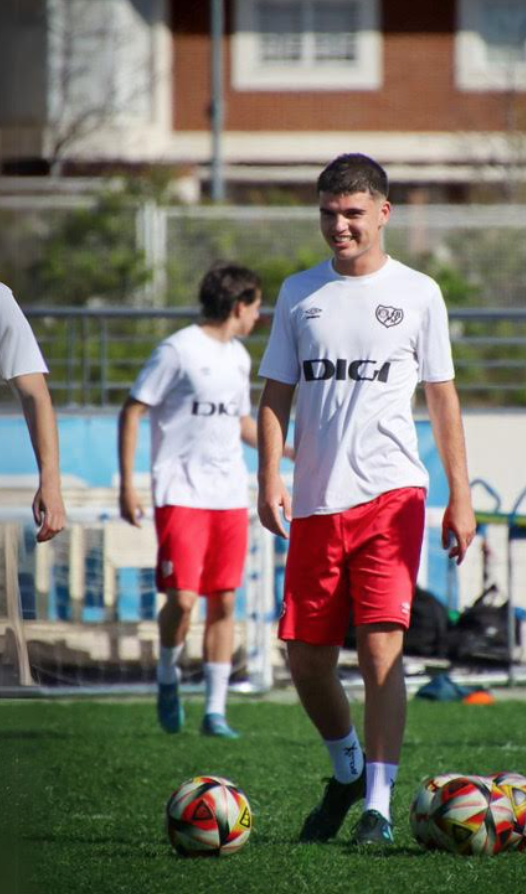
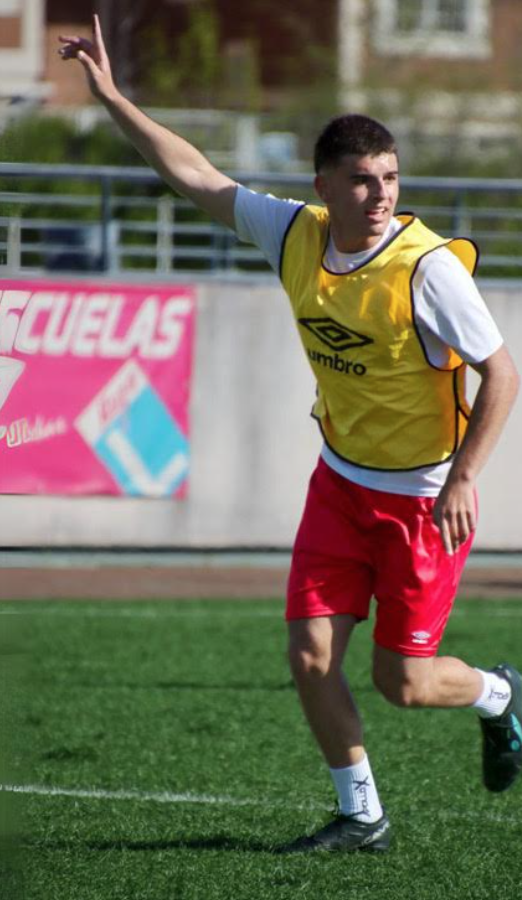
Greek Australian rising star Kosta Antonopoulos has officially signed with La Liga club Rayo Vallecano, joining the club’s Juvenil A Squad ahead of the 2024/25 season.
The exciting forward, hailing from Melbourne, continues to make waves in European football after catching the eye of scouts during a recent showcase by Anthem Sports.
Antonopoulos, known for his technical ability, sharp finishing, and football intelligence, becomes one of the few Greek Australian players to enter the top-tier youth system of a Spanish La Liga club.
His move to Rayo Vallecano represents a major milestone in his professional journey and highlights the increasing footprint of Australian talent on the European stage.
This landmark deal was facilitated by renowned FIFA-licensed agent Morris Pagniello, who continues to lead a number of successful international transfers through his global football network and player development initiatives.
“I’m incredibly proud of this next step in my career,” said Antonopoulos.
“To be part of a club with such tradition and a pathway to top-level football is a dream come true. I want to thank everyone who believed in me — especially my family, coaches, and my agent, Morris Pagniello.”
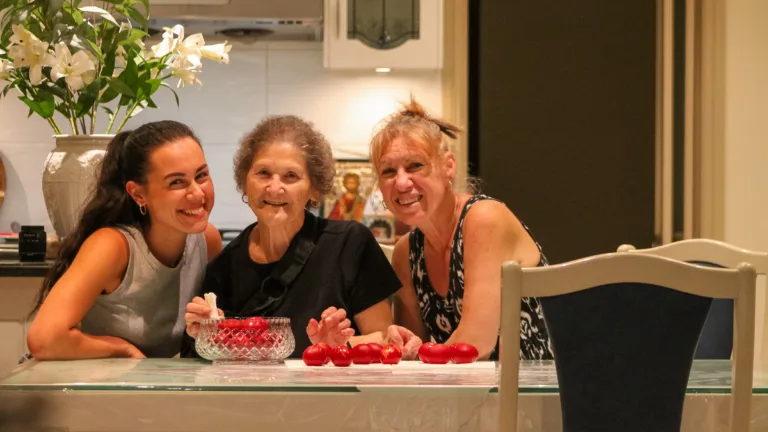
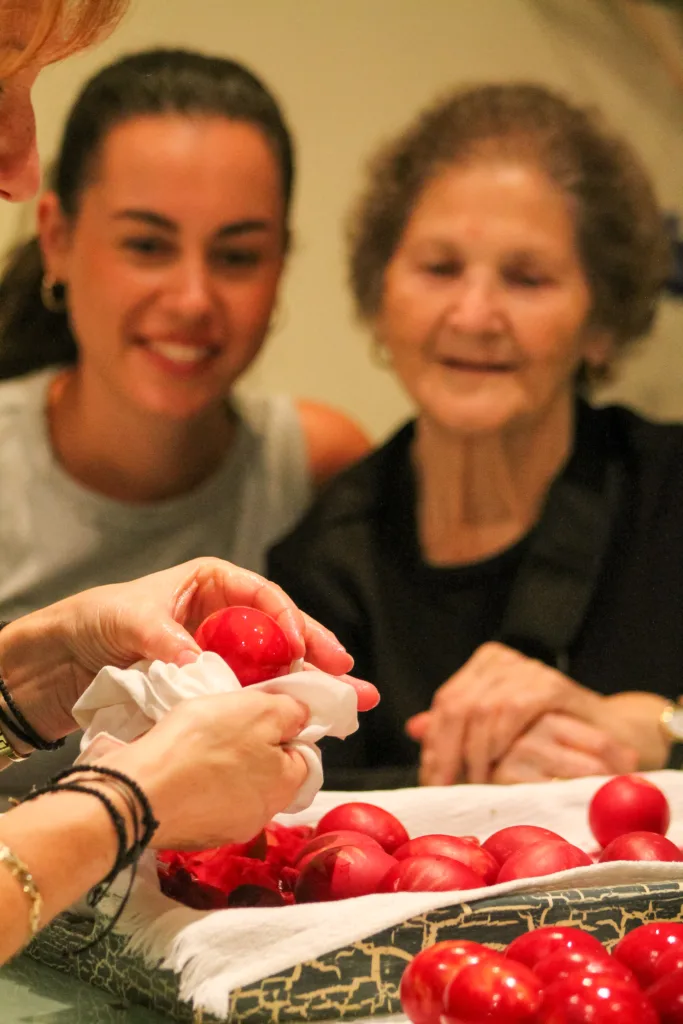
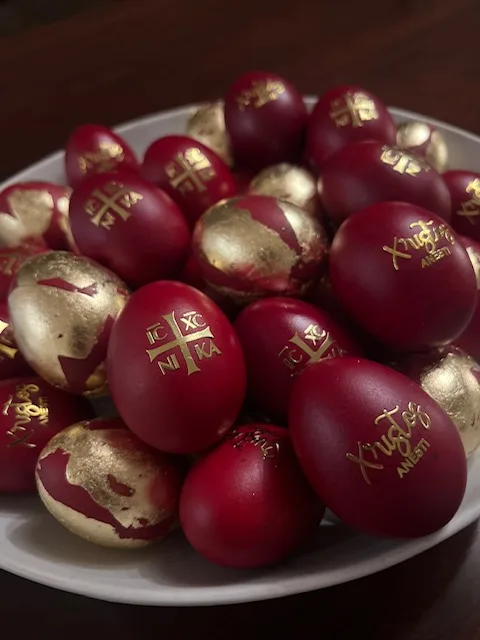
Just over a month ago, we lost Pappou. His absence is still felt and this year, Yiayia Vithanio wasn’t sure she wanted to do the red eggs for Orthodox Easter. Her heart was heavy, and her body too — she’d broken her collar bone not long after the funeral, and the sling around her arm was a constant reminder of how much had changed.
But somehow, in that quiet moment between grief and resilience, she agreed.
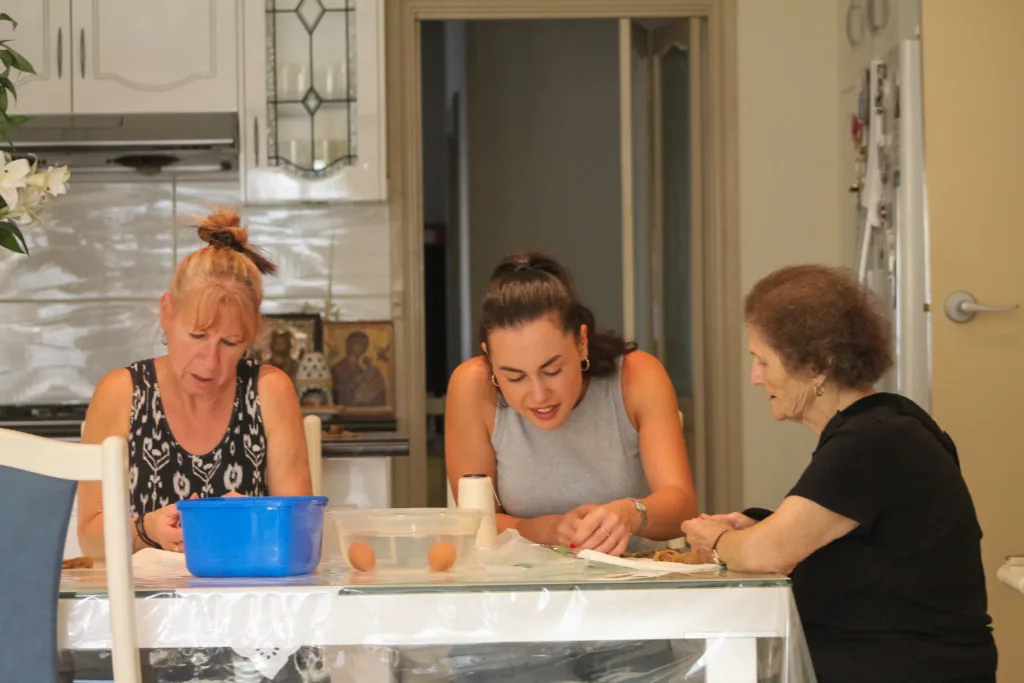
Yiayia learnt how to decorate Easter eggs from her own mother and as she passed on that tradition to my mum Connie, sister Anastasia and I, it brought us closer together to learn whilst we still have the chance.
This Easter isn’t perfect. But it is full. And that’s something we’ll carry with us.
Red eggs by Yiayia Vithanio
Ingredients and Utensils:
1 doz. eggs (large/medium size)
½ cup vinegar
1 tablespoon salt
1 sachet of red dye
1 reel of string (fine)
Collection of leaves from garden
1 pair of beige pantyhose
Water to cover eggs
1 saucepan
1 wooden spoon
1 slotted spoon (metal)
A little bit of oil in a bowl
A cotton cloth
A tray to place red eggs for cooling
Instructions:
Place eggs in a bowl of water (with salt).
Cut pantyhose into pieces to cover the size of the egg.
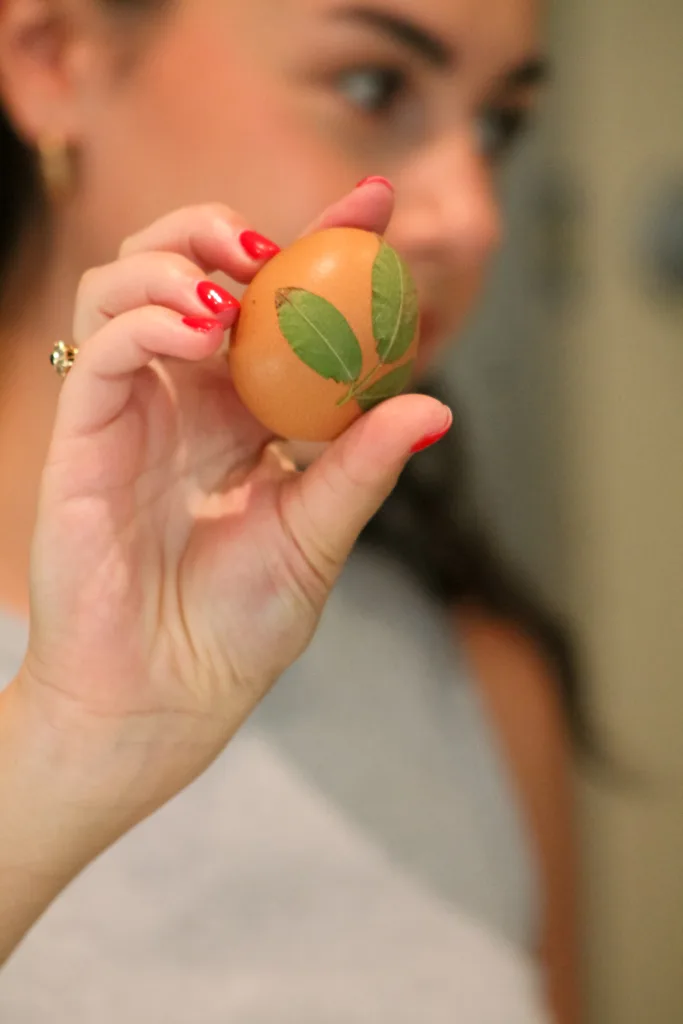
Take a leaf, place in the middle of the egg.
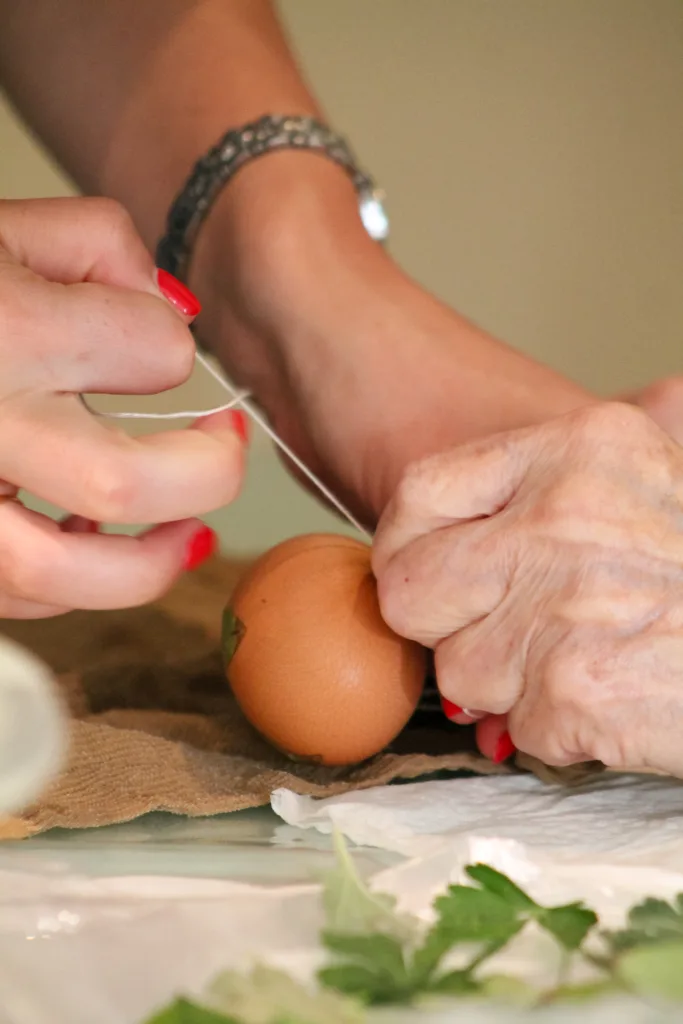
Cover egg & leaf with piece of pantyhose.
Tighten pantyhose & tie at the back of leaf to stay on – not move.
Repeat with other eggs or as many as you like.
Place red dye in saucepan.
Add water in saucepan.
Stir the dye & water over stove until dye dissolves.
Add salt, vinegar & stir.
Place eggs carefully in saucepan & boil until ready (approx. 20–25/30 minutes).
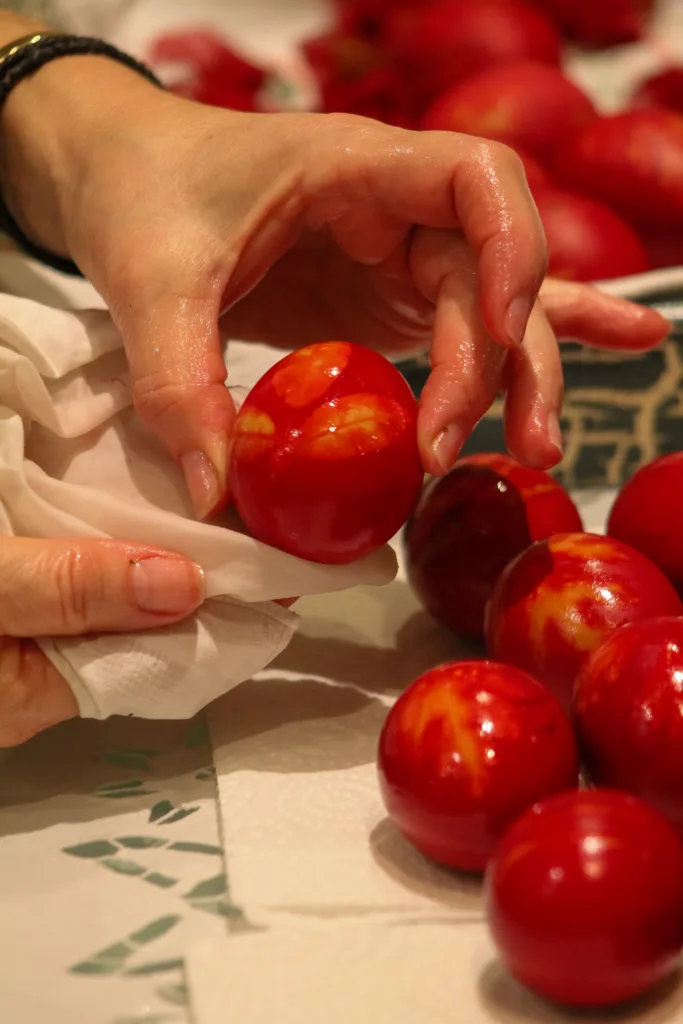
Once eggs cooked, carefully take out with slotted spoon & place somewhere to cool down.
Once eggs cool, use cotton cloth & oil to polish the eggs for shine.
*This food series for Greek Orthodox Easter is a collaboration between Neoléa in South Australia and The Greek Herald.
Troy Vlahos has pleaded guilty to several charges, including possessing a shortened firearm without authority, stealing a motor vehicle, and driving while disqualified, following a plea deal in Batemans Bay Local Court.
According to Daily Telegraph, the 31-year-old from Nowra was initially facing a range of serious allegations—31 in total—including firing a sawn-off shotgun near Denhams Beach on January 12, 2024.
However, several charges were withdrawn, including possessing a loaded firearm in public, possession of stolen firearms and ammunition, and deception offences.
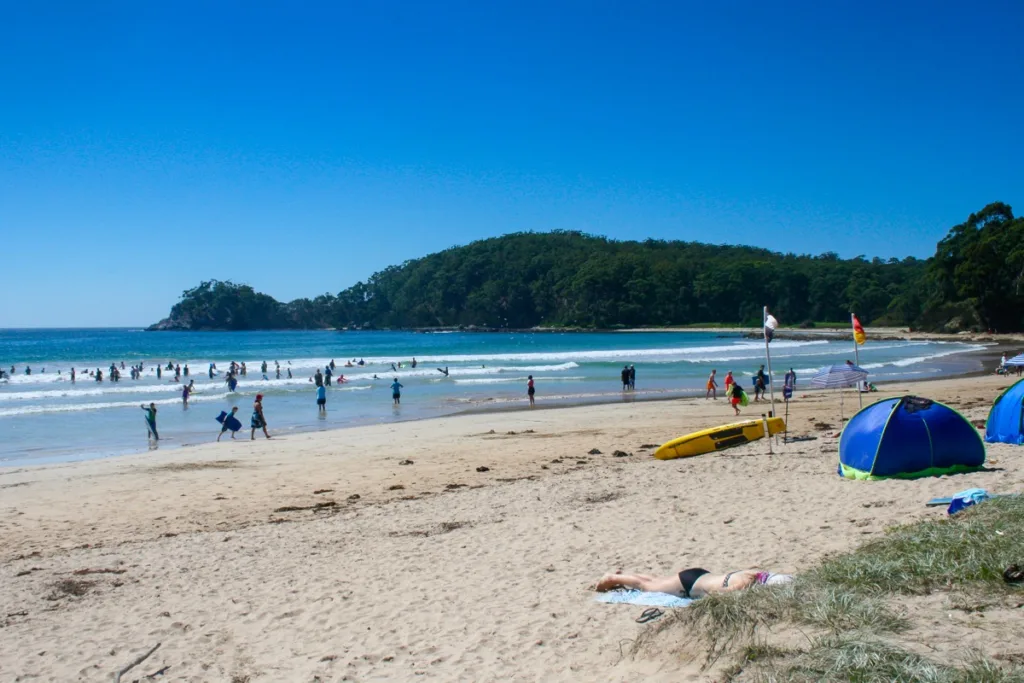
Denhams Beach.
Court documents reveal police found a sawn-off shotgun abandoned at Denhams Beach, 6km south of Batemans Bay, and alleged it had been discharged earlier that day. Vlahos was later accused of stealing and driving a vehicle during this period, despite having a disqualified licence.
He was arrested by South Coast Police District officers on May 3 and has remained in custody since being refused bail.
Represented by lawyer Lisa Stone, Vlahos’ matter will now be heard in the Bega District Court, with a sentencing date to be set on June 10.
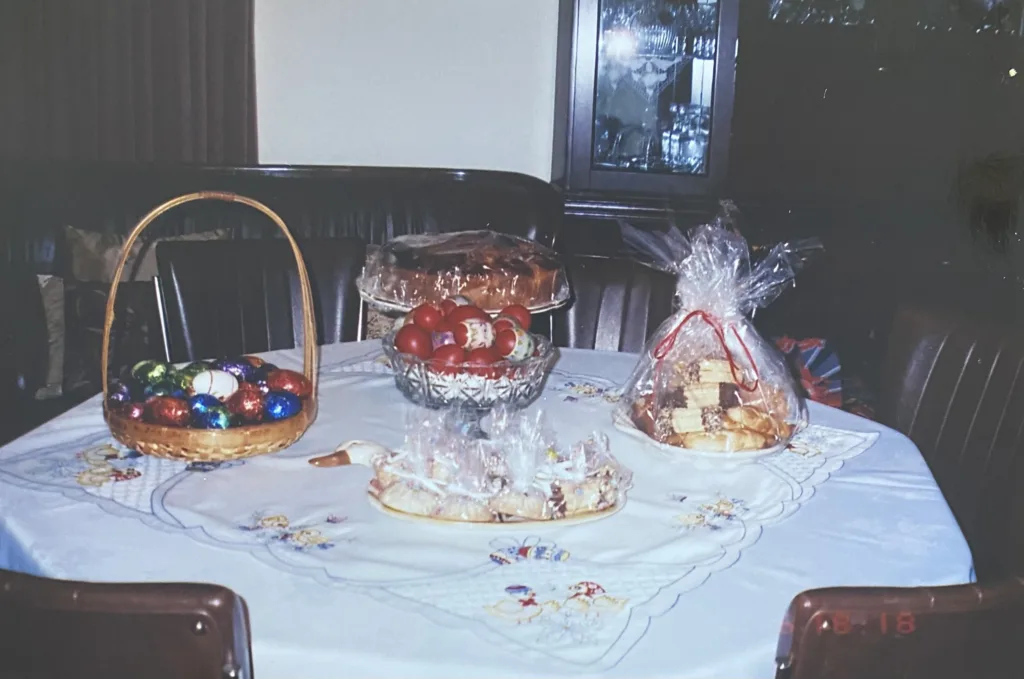
Greek Orthodox Easter memories usually consist of lamb roasting on a spit, washing red dye off your hands, and hoping the egg you’ve chosen won’t crack and you’ll have luck until next Easter.
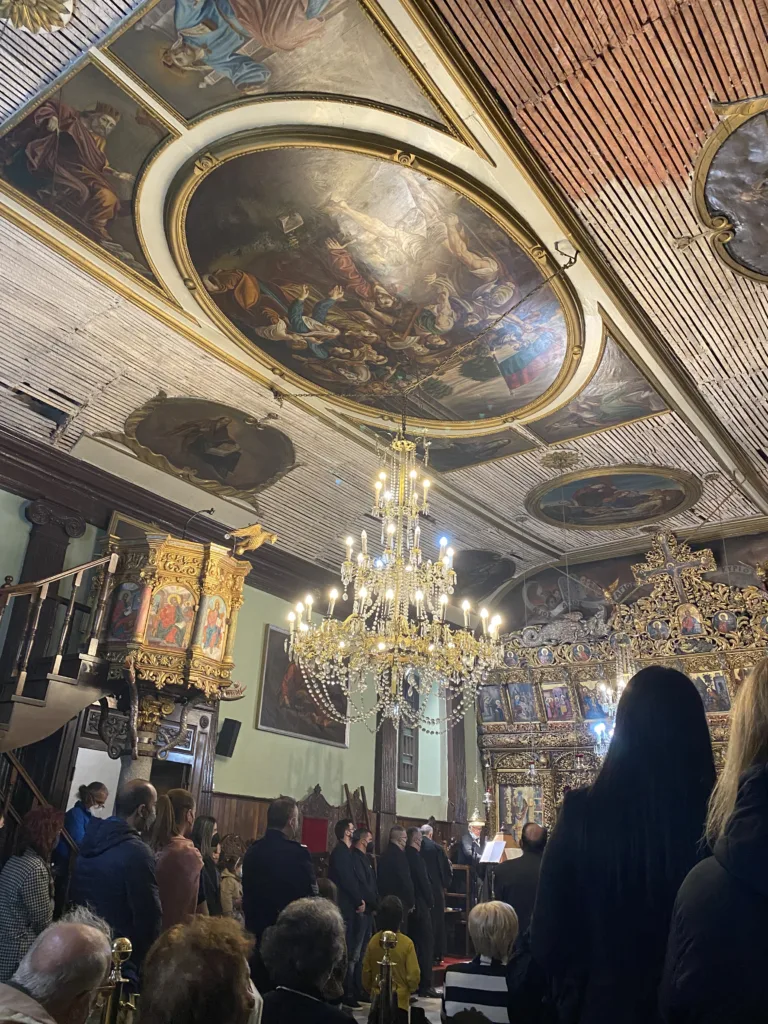
You might remember hastily tying your hair back to avoid being burned by the Agio Fos (Holy Light) or the chill air of the Holy Saturday morning as you head to church to receive communion.
The Greek Herald spoke with some Australians to hear their experiences spending Easter in Australia or Greece. Having only ever spent Easter in Melbourne, I was curious to learn if there is a different feel to celebrating Easter in Greece.
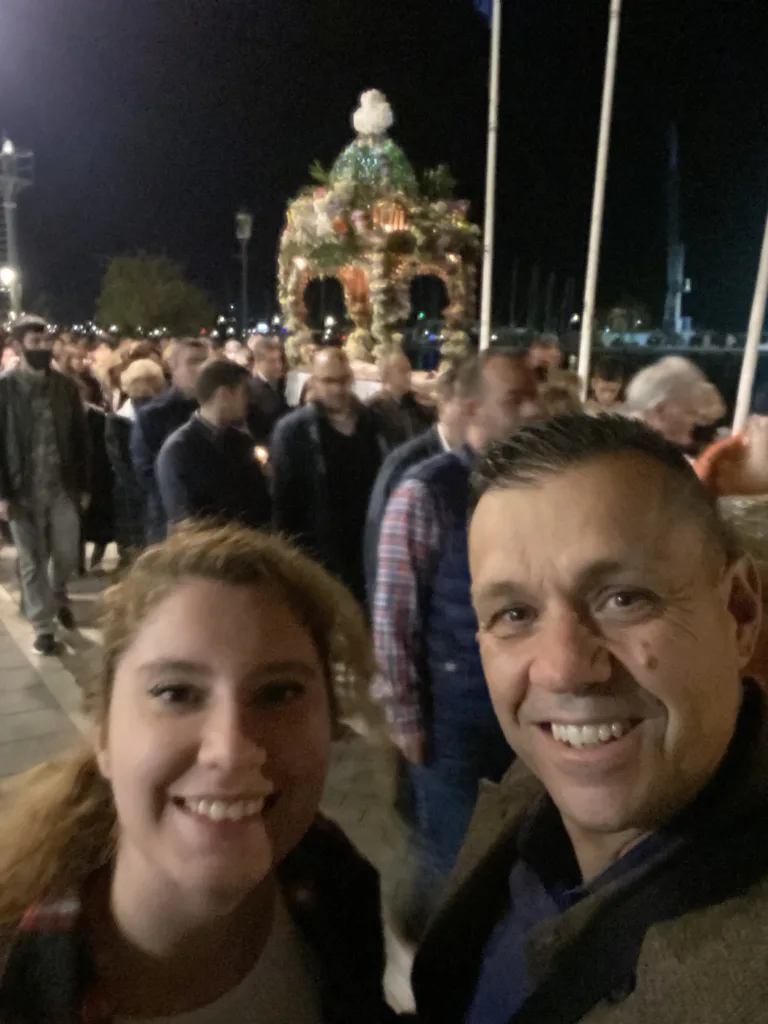
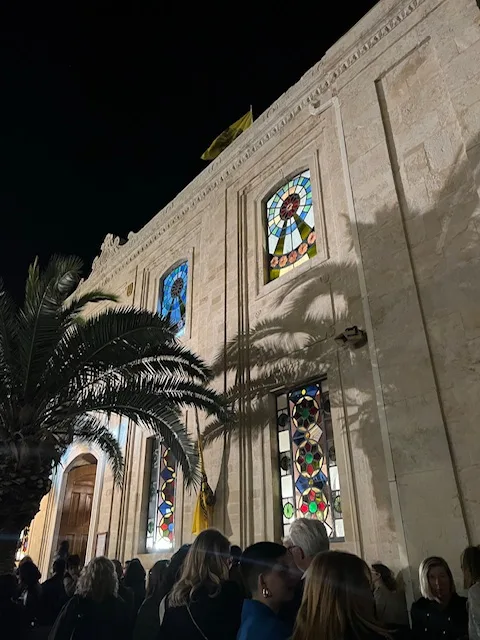
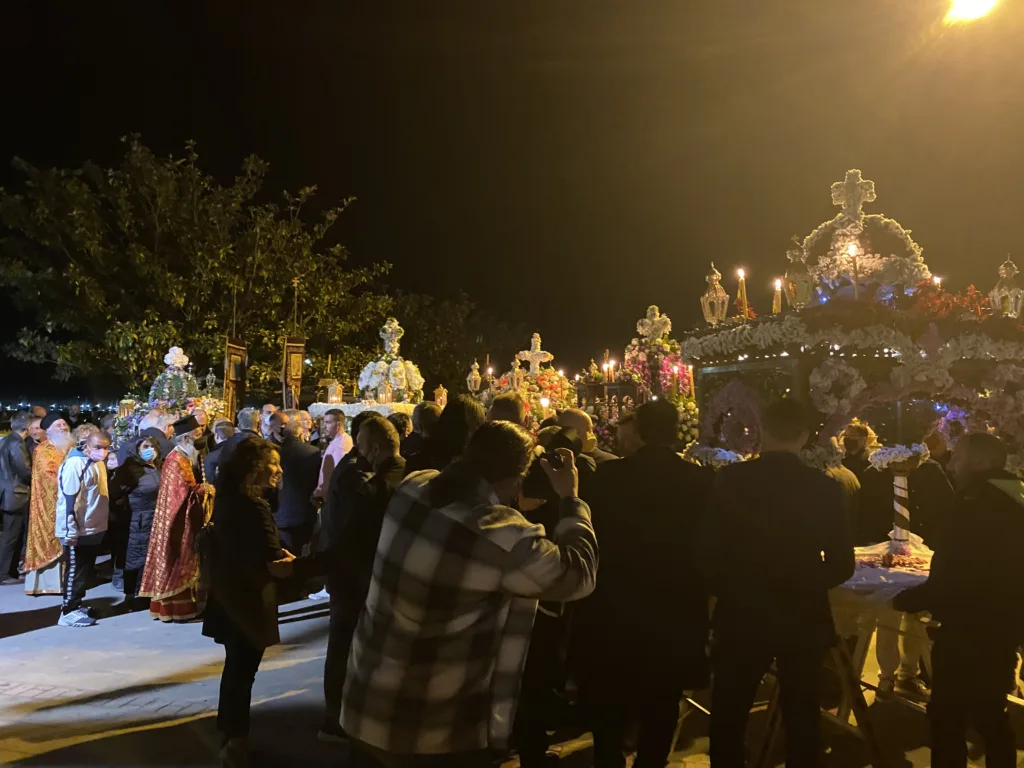
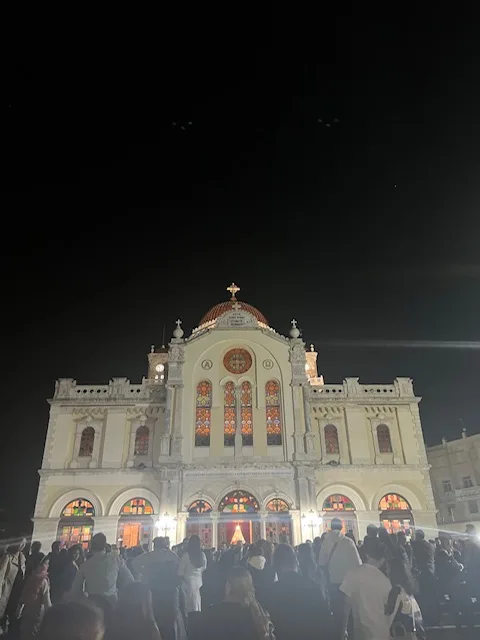
At 21, Elizabeth Kanterakis spent her 2023 Easter with her family on Crete, Greece. Celebrating Easter in Heraklion, Elizabeth appreciated seeing the procession of a band, the army, red cross, and priests, through the centre of the city. She noted how Easter celebrations are “a lot bigger over there than here.”
Elizabeth particularly loved attending a monastery for Anastasi (holy service on the Saturday night before Easter Sunday). She said, “it was very different to here because I’ve never experienced Easter at a monastery. It was very peaceful there.” Elizabeth hopes to spend another Easter in Greece soon.
After celebrating over 50 Easters in Australia, John Ftohogiannis spent his first Easter in Greece with his cousins. When international travel resumed after Melbourne’s brutal COVID-19 lockdowns, John took the opportunity to travel to Greece.
John and his cousins travelled from Ioannina to Preveza for the Easter weekend. He found it interesting how churches in the villages held Anastasi at different times because often “there’s one priest for three different churches.”
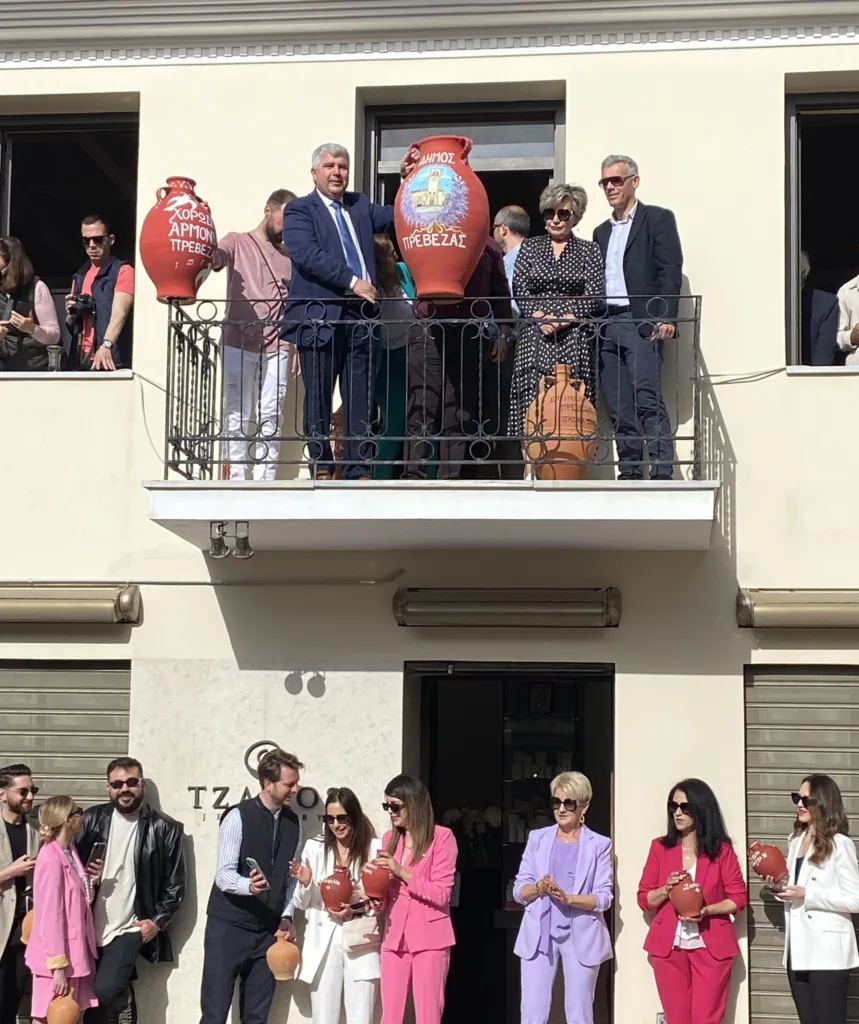
John also witnessed the Preveza tradition of breaking clay pots, where everyone could take home a “souvenir of the little red pot.”
For John, the obvious difference between celebrating Greek Orthodox Easter in Australia and in Preveza was the sense of community.
“It feels more religious in Greece… because everyone is a part of it,” he said.
He explained how in Australia, only the Greek community celebrates Easter at their given time, and “as soon as you leave the church, you go back to normal traffic… whereas there, no matter where you are, it’s all part of it.” He appreciated how “everyone is in that Easter spirit.”
While Elizabeth and John grew up celebrating Greek Orthodox Easter with their families, 29-year-old Italian-Australian Jordan LR married into a Greek family and learnt the traditions of Greek Orthodox Easter at an older age.
“Coming into a Greek family, I quickly noticed the deep emphasis on sharing and staying connected,” Jordan said.
He noticed this connectedness in many ways, “from gathering at church to share faith and traditions to being lovingly urged into a fifth serving of food just to keep the dinner table conversations going.”
Despite not being exposed to Greek culture before, Jordan found himself welcomed into the culture and community and said he felt “a unique warmth and sense of togetherness that I had never experienced before.”
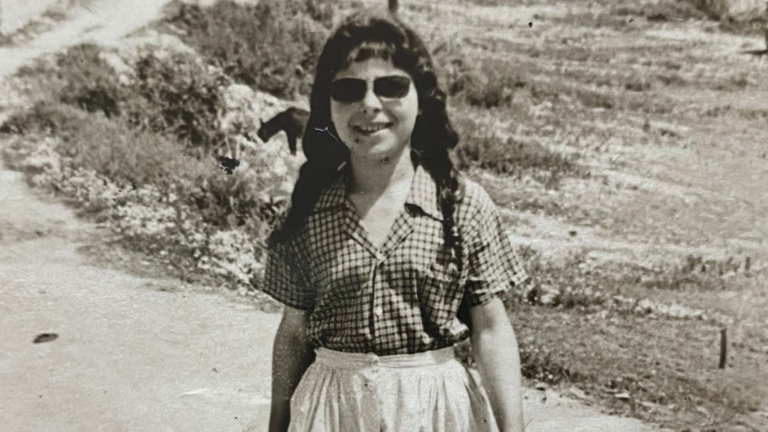
John, Elizabeth, and Jordan’s Easter experiences are from recent years, but I also spoke with Eli Savopoulos who shared fond memories of her Easters celebrated as a child in Kavala, Greece, in the 1950s.
For every Easter she has celebrated in Australia since, she has continued the Easter traditions she learnt from her family as a child.
She detailed her traditions, saying how she would “go to church every night during Holy Week.”
Eli explained the different services she would attend; “on Wednesday we would go to the efkelio, where the priest blessed us with the cross. On Thursday we would go to the Twelve Gospels and on Friday we would go to the Descent from the Cross service, and in the evening, we would go to the epitaph.”
Holy Week would come to a close with Eli and her family receiving communion on Saturday morning and in the evening, they would enjoy a meal together and crack the red eggs.
Eli and her family would make tsourekia each Easter in Kavala and would give all their friends and family a tsoureki as a gift. They were given the recipe from their local baker.
Every Easter they would buy new clothes and shoes to wear to church. Eli remembered the excitement of this and how it meant Easter was coming.
Eli lovingly shared, “we had a great time with our friends and relatives during Easter.”
Warmth and a connection to family and faith tie all these memories together. Greek Orthodox Easter is another chance to celebrate Greek culture and embrace the spirit of the holiday.
Greece is stepping up its diplomatic footprint and solidifying its role as a regional stabiliser, according to Foreign Minister George Gerapetritis, who addressed the country’s growing influence in international affairs during a recent foreign policy briefing.
Speaking on Greece’s evolving strategic presence, Gerapetritis said the nation is “growing taller” diplomatically, pointing to enhanced participation in multilateral organisations and a focus on peaceful cooperation in the wider Eastern Mediterranean region.
“Our role is to be present and active in all international forums and initiatives that promote peace, international law, and stability,” he noted, citing Greece’s engagements through the United Nations, the EU, and trilateral partnerships with regional neighbours.
Συνέντευξη Υπουργού Εξωτερικών, Γιώργου Γεραπετρίτη, στο κεντρικό δελτίο του ΣΚΑΪ και τη δημοσιογράφο Σία Κοσιώνη (16.04.2025)
Gerapetritis emphasised that Greece is not seeking to provoke or escalate tensions but is committed to defending its sovereignty and international rights through dialogue and diplomacy.
The Minister also made reference to Greece’s consistent position on respecting territorial integrity and the rule of law—principles he said are especially vital amid ongoing geopolitical shifts and conflicts.
While not directly naming Turkey, Gerapetritis’ remarks come at a time of cautious optimism in Greek-Turkish relations following months of diplomatic thawing.
As Greece aims to further its influence across key international platforms, Gerapetritis said the country’s vision is clear: to be a constructive and reliable partner in the global community.
A 14-year-old Greek Australian schoolgirl with a nose for news and a passion for art is taking a stand on social issues and earning national and international accolades along the way.
Year 9 student Madison Eve was awarded an Honorary Diploma in the 14th International Cartoon Festival and a Certificate of Excellence for her contribution to the International Cartoon Competition for Young People.
The budding reporter and illustrator, whose family hails from Crete, was also recently named News Corporation’s Junior Journalist of the Year for the second year running and took out the title of News Reporter of the Year (secondary category) as part of the Kids News Junior Journalist Newsroom competition.
The talented teen produced a series of award-winning articles and illustrations focusing on the scourge of domestic violence that has swept across the country.
“It was an absolute honour and a privilege to be recognised in this national competition and to shine a light on important issues such as domestic violence, screen time and the cost-of-living crisis,” Madison said.
News Corp Australia’s Community Ambassador Penny Fowler said Madison showed maturity beyond her years and a willingness to tackle big issues.
“In particular I would like to congratulate Madison, who has remarkably won the competition two years in a row, showing a maturity beyond her years in her exposés of bullying last year and the scourge of domestic violence this year,” Fowler said.
Madison’s siblings, George aged 10 years and Alexandra aged 11 years, also participated in the Kids News Junior Journalist Newsroom competition and were highly commended for their video story focusing on robotics and sport.
Cartoonist Mark Knight praised Madison’s creative streak and her interest in current affairs.
“Madison clearly has an interest in news events and a marvellous sense of humour to go with it,” Knight and a panel of cartoonists said of her work.
Greek tennis star Stefanos Tsitsipas has progressed to the quarterfinals of the 2025 Barcelona Open Banc Sabadell, defeating American Sebastian Korda in straight sets, 7-6(4), 6-4, in a tightly contested second-round match on Wednesday.
This victory marks the fifth consecutive year that Tsitsipas has reached the quarterfinals in Barcelona – a tournament where he has made four previous final appearances but is still chasing his elusive first title.
The first set was evenly matched, with both players holding serve throughout and pushing the opener into a tiebreak. Tsitsipas stormed ahead to a 6-2 lead in the breaker with two early mini-breaks, but Korda refused to fold, saving two set points. However, the Greek held his nerve and closed the tiebreak 7-4.
In the second set, Tsitsipas earned a crucial break of serve early and never looked back, maintaining his lead to secure the match. Despite hitting 30 unforced errors, he didn’t face a single break point, underlining the strength of his service games and mental focus on the clay.
This win also served as personal redemption for Tsitsipas, who suffered a straight-sets defeat to Korda just last month at the Miami Open. It’s a significant momentum boost as he continues his clay-court campaign ahead of the French Open.
Tsitsipas will now face seventh-seeded Frenchman Arthur Fils in the quarterfinals on Friday, April 18, with the match scheduled for 7:00 PM AEST. Fils comes into the match after a commanding 6-3, 6-2 win over Spain’s Pedro Martínez and currently leads the head-to-head against Tsitsipas 2–0. However, both previous encounters were played on hard courts, making this their first meeting on clay — a surface that strongly favours the Greek.
Should Tsitsipas progress, he could face top seed Carlos Alcaraz in the semifinals in what would be a blockbuster rematch of their 2023 Barcelona Open final, where Alcaraz emerged victorious.
Currently ranked No. 19 in the world, Tsitsipas has long been considered one of the most formidable players on clay, with past titles in Monte Carlo and finals appearances at Roland Garros. Yet Barcelona remains a missing piece in his resume.
In a small workshop in Thessaloniki, “Keradiko”, the flame of creation is lit even before the Easter candles are lit.
Every Easter in Greece, the scent of Easter, the colours of spring, and of course, the traditional choice of candle must be made by young and old alike.
However, in recent years, some candles have stood out not only for their light, but also for their creativity and humour.
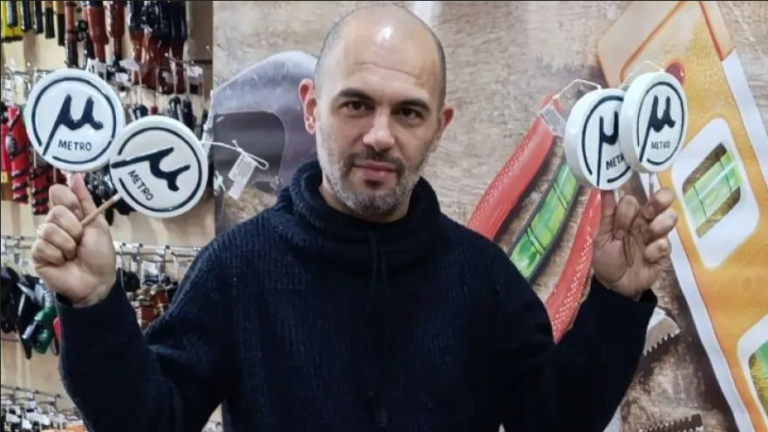
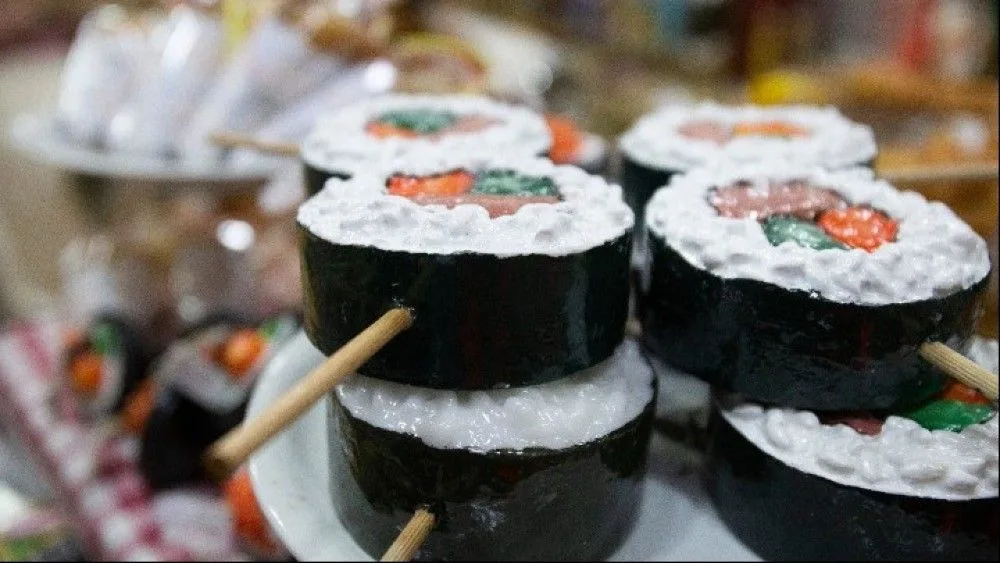
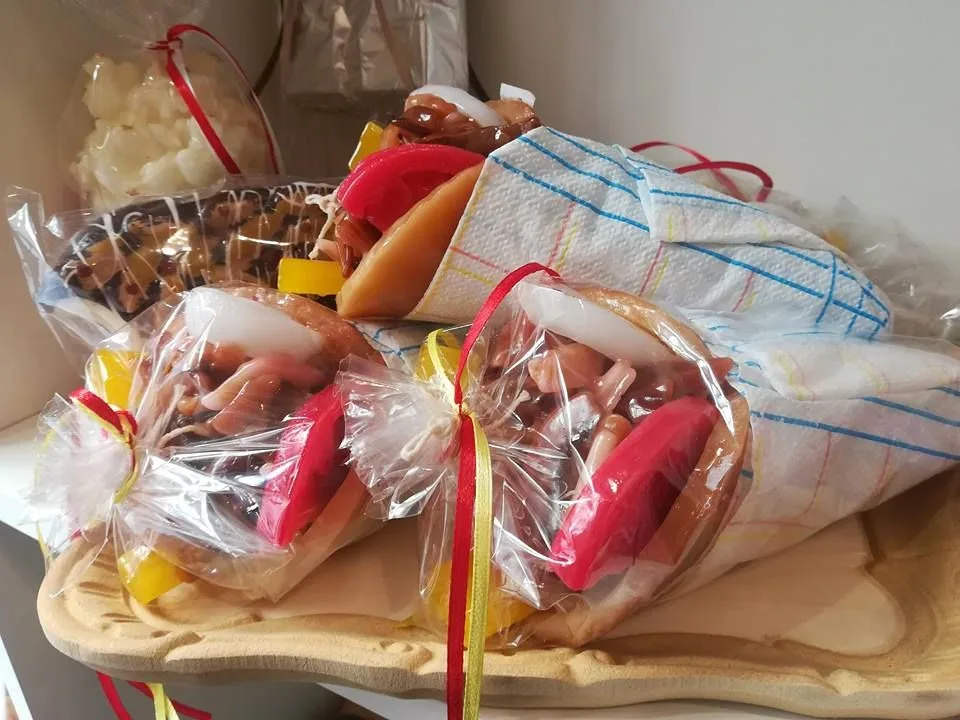
The “Metro Thessaloniki” candle and the “Chocolate Dubai” have already climbed to the top of the preferences, while the emblematic “pito-gyro” candle is not only lit in Thessaloniki, but also reaches… all the way to Australia.
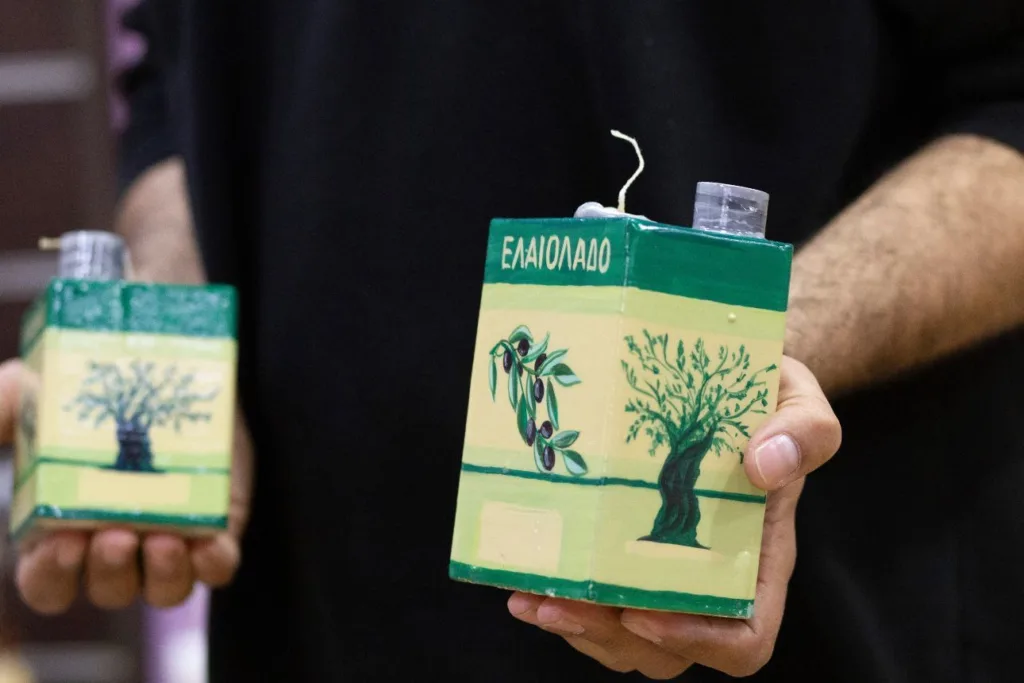
Behind these inventive creations is the Gerakis family’s “Keradiko” workshop, which has transformed the handmade candle into a form of contemporary folk art.
Drawing inspiration from current events, TikTok trends, and the suggestions of their customers themselves, their creations combine traditional techniques with smart design. And as everything shows, the light of Greek Easter creation does not stop at the borders, it also lights up in neighborhoods abroad.
The Greek Herald, seizing the opportunity, decided to speak with the soul of the workshop, Alexis Gerakis, who, together with his brother, continues the tradition started by their father in the late ’80s, constantly renewing the product.
How did it all start? Where did the idea to transform the candle into something so original come from?
The truth is that for several years we made more classic candles. But when I started working with my brother, we saw that something different was needed. One year the idea for the pitogyro candle came up. It was also the time when ice cream had become fashionable, so we said “why not do something similar with a Greek identity?” We took it to the next level, added fries, gyros, pita… and there was a panic. We went to an exhibition with 20 other codes, from burgers to tools and saw that people embraced it. That’s where it started.
How many different candles have you created so far?
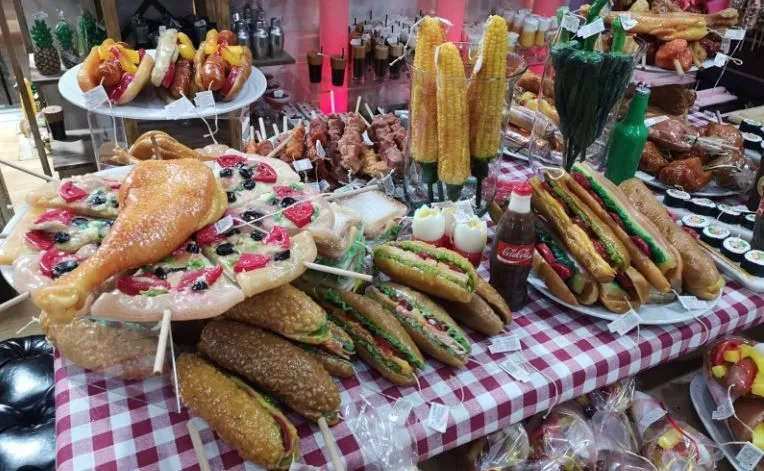
We currently have over 2,000 codes. 500 are thematic candles, that is, those that have an original shape or idea, and another 1,500 are the most classic, which are simply “dressed up” differently. Every year we add new designs, we work all year long on this. Our painters, the children involved in production, have been active for 12 months, we don’t stop.
The lamp for you is not just a product, but also has an artistic dimension. At least that’s how it seems…
Exactly. We don’t use machines or presses. Everything we make is handmade. And many times our customers ask us for something completely personal or unexpected. That’s where our work stands out. It’s not industrial production. They are small works of art with a touch of humor, something that expresses us.
How are ideas born? Does current events or social media play a role?
Both. An example is the Thessaloniki Metro lamp. We saw how much discussion there was about its operation, that it was something that the people of Thessaloniki had been waiting for for years, and we said “we’ll make it a lamp”. And it was a disaster. Or the “Dubai chocolate”, which combines the craze for sweets with a dose of exoticism. Of course, social media plays a huge role. A candle that goes well on TikTok can skyrocket orders.
Your reputation has reached Australia. How did that happen?
We have a regular customer company from Australia that orders every year. But also several that have placed orders with us in recent years. The pito-gyro-candle has become the absolute viral thing there. I think it touches on a nostalgia – a “something” that reminds us of Greece in the most playful way. And it’s not just Australia. This year we got over 15 new customers in Germany. Orders are now coming from everywhere.
Are there any ideas that come from customers? Something that they have suggested to you and that eventually became a success?
Very often. About half of our codes started from a customer suggestion. Someone comes and says “can you make me a candle of something specific?” and we work on it. Even if it doesn’t become mass production, it can go viral. We see our creations on TikTok, Instagram, Facebook, and it’s a great joy.
What was the most successful candle of all time?
I would say the one with the pito-gyro candle. No one expected it. It sold tens of thousands of pieces. It touched the world because it is something purely Greek, with humour, and made with love. That’s where it all started.
The next steps? Are you thinking of expanding abroad or collaborating with influencers?
We have already started looking more seriously abroad. There are over ten million Greeks outside Greece who keep their Easter customs with even greater devotion.
Perhaps there will also be collaborations with people who love world, but that will come in due time. We continue to do what we know: make candles with passion.
Fifteen Greek hotels have been recognised in the prestigious 2025 Forbes Travel Guide Star Awards, celebrating excellence in luxury hospitality across categories including five-star, four-star, and recommended distinctions.
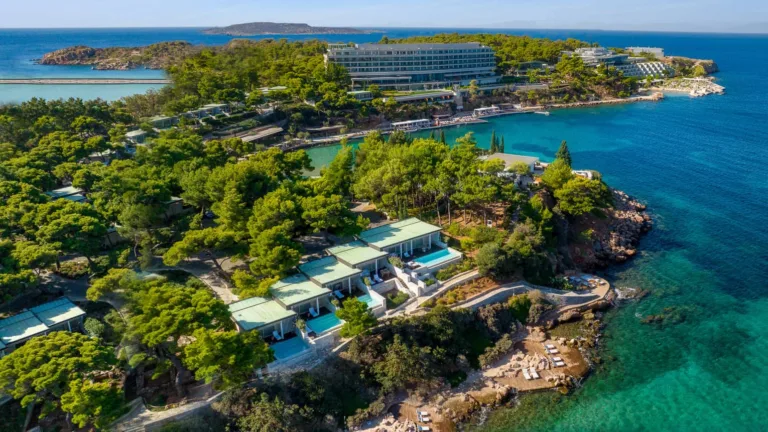
Leading destinations such as Athens, Mykonos, and Santorini feature prominently, with standout properties including the Four Seasons Astir Palace Hotel Athens, Grace Hotel Santorini, and several members of the Myconian Collection.
A notable newcomer is the Mandarin Oriental Costa Navarino, now placed among Europe’s most iconic luxury stays.
The awards also highlight three key trends transforming luxury travel: the expansion of luxury into emerging destinations like Costa Navarino and Vietnam; a growing emphasis on authenticity through local culture and design; and the prioritisation of wellness, with health-focused experiences becoming central across all star categories.
High-end collaborations—like Atlantis The Royal’s partnership with Louis Vuitton—also underscore a shift toward experiential, curated luxury.
Forbes’ 2025 list spans 2,187 honourees in 90 countries, reflecting a global move toward meaningful, immersive travel experiences.
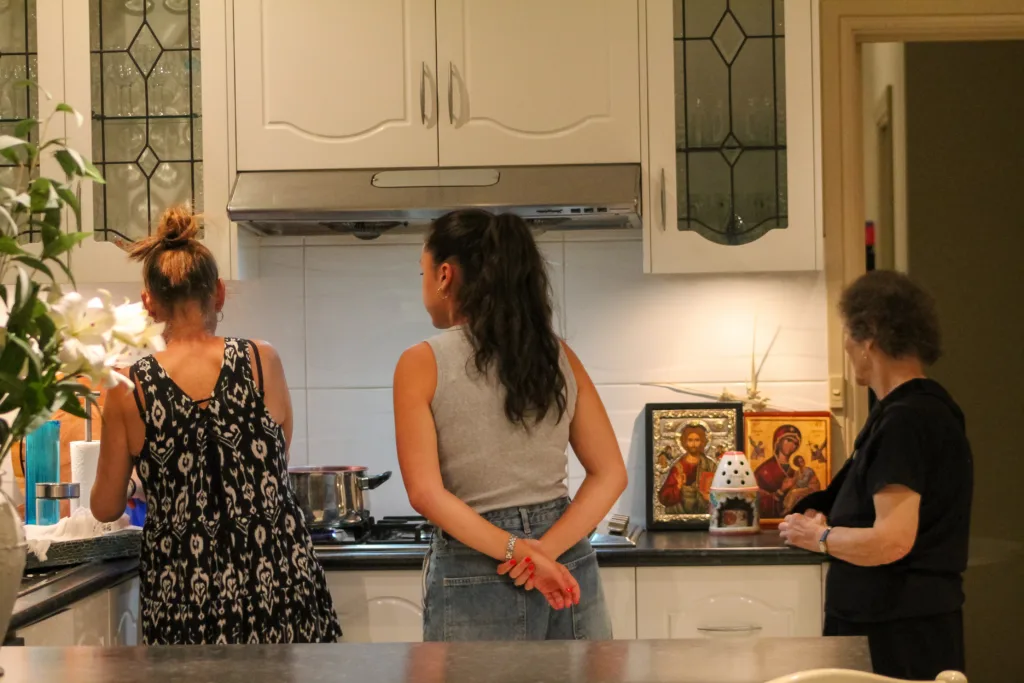
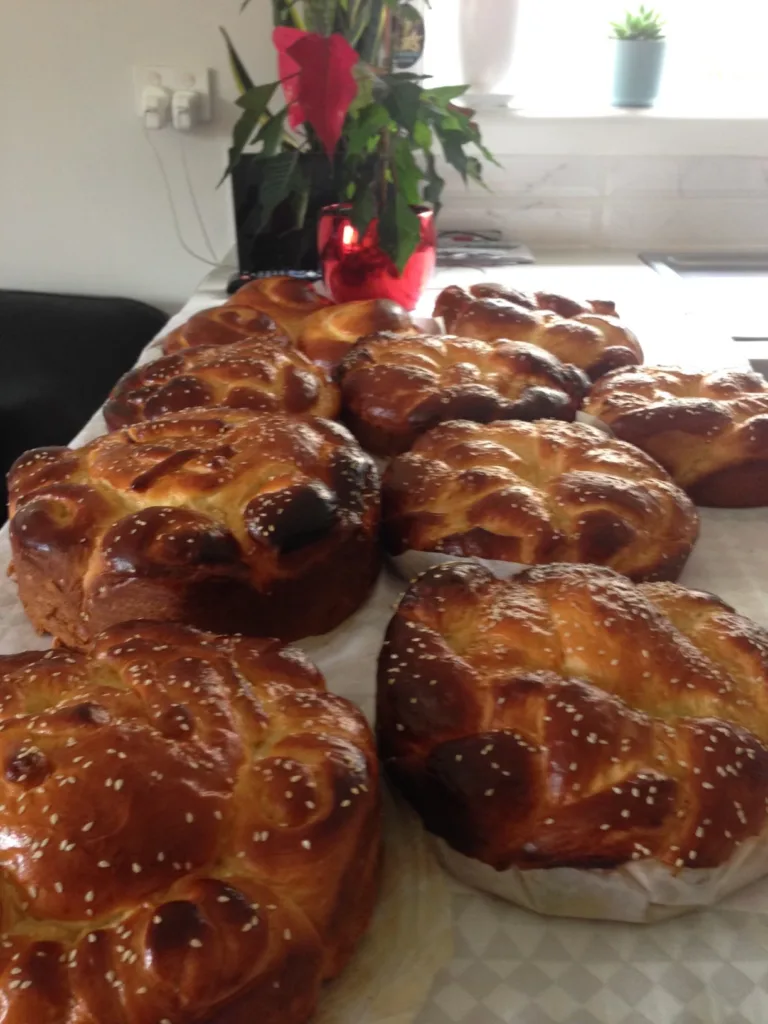
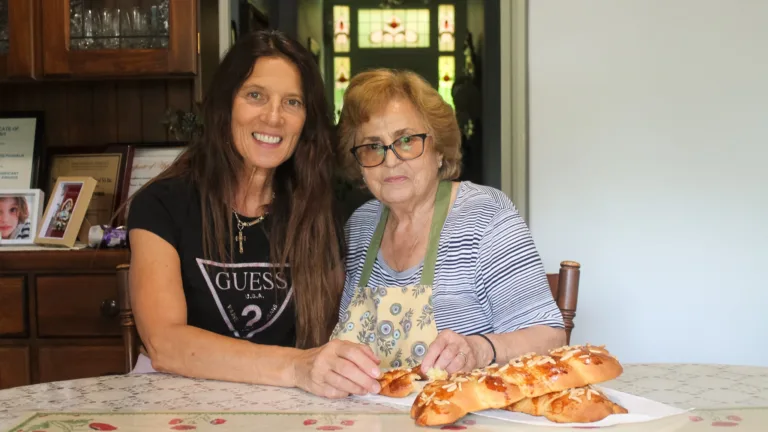
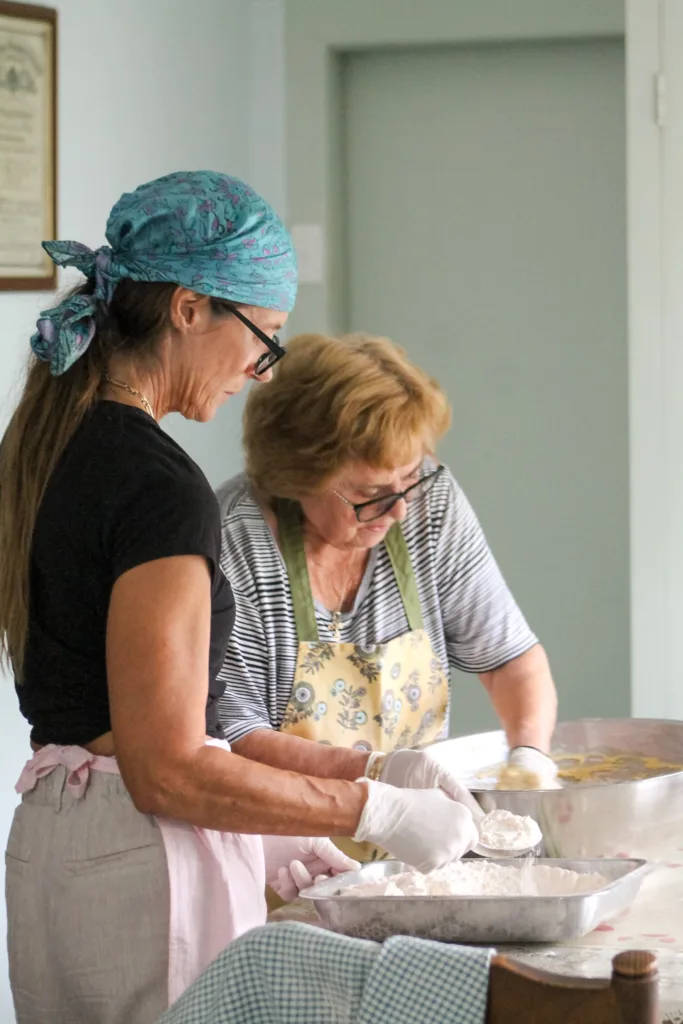
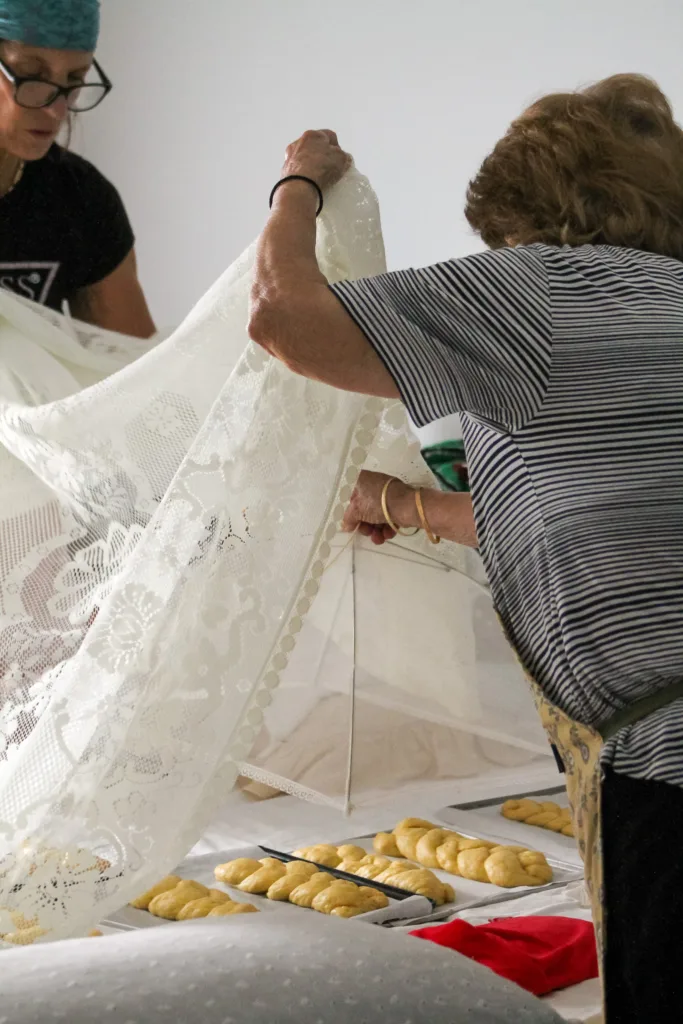
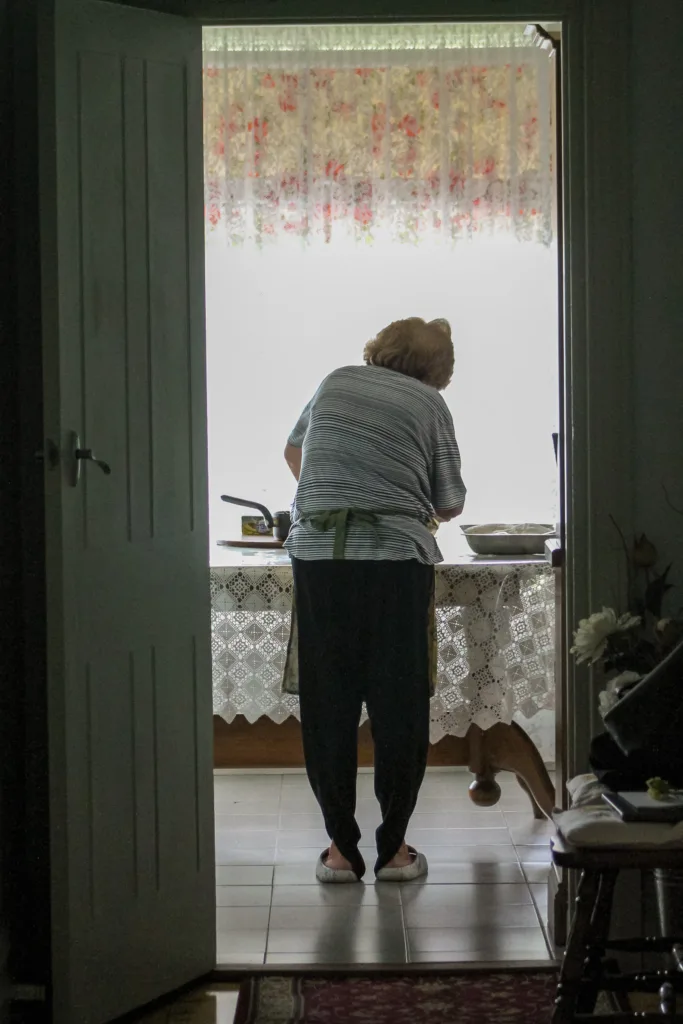
On Tuesday, April 15 we were given the beautiful opportunity to learn Kyria Effie’s treasured tsoureki recipe. Though it’s a labour of love, for her, baking tsourekia during Easter is more than tradition — it’s a deep expression of care for her family. In her heart, it simply wouldn’t feel like Easter without the smell of tsourekia in the air and the warmth of the kitchen.
This year, with one hand out of action, she had some help — Linda stepped in, knowing just how much it meant to her. There was something quietly powerful about that moment: one woman supporting another in continuing a tradition that holds so much meaning.
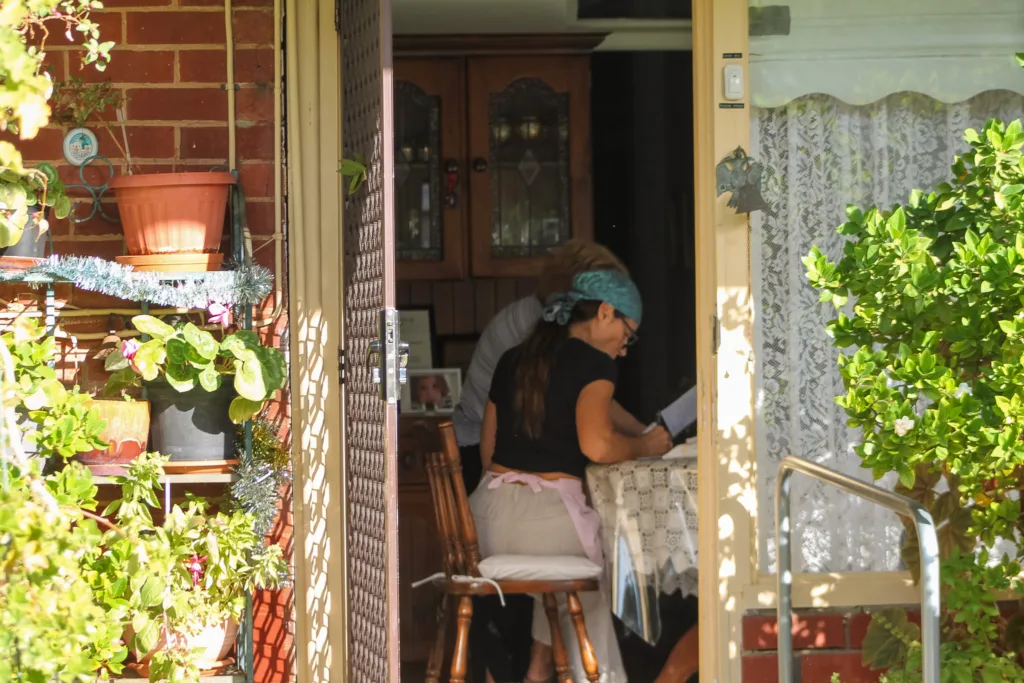
Just as Kyria Effie once learned, we too were learning — gathered in her home, going through the recipe step-by-step, hands in dough, stories shared, laughter exchanged. For Linda, it felt like helping her own mum.
Tuesday wasn’t just about baking. It was about community — about passing down knowledge, not only to our own families, but to those around us. It was about generosity, sharing the little secrets that make a recipe sing, and of course, leaving with full bellies and even fuller hearts.
To be welcomed into that space and to learn in this way — just as generations before us did — was something truly special.
Tsourekia recipe by Effie Katianos
Half dose recipe – approx 12 medium portions, Cook at 200°C
Ingredients:
2kgs flour (approx)
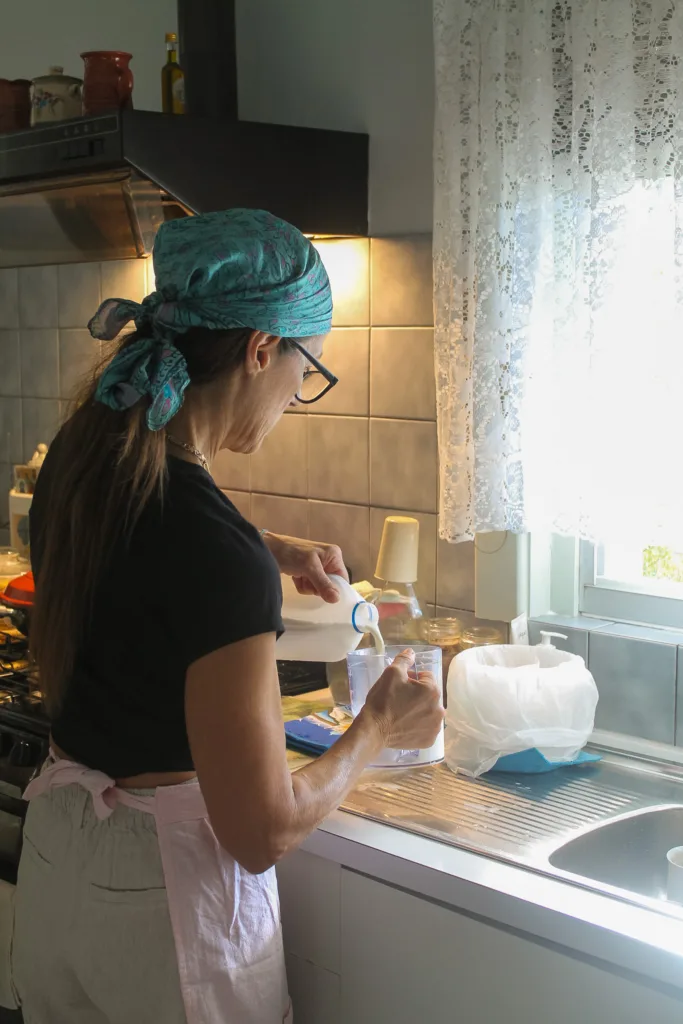
500mls warm milk
7 eggs
1 cup caster sugar
3tbs yeast (3 sachets)
1 cup orange juice (250 ml)
Grated rind of 1 x lemon and 1x orange
1 cup oil
2 tbsp mahlepi powder
1 x egg yolk mixed with little water for basting
Cover with almonds or sesame seeds
Method:
Warm milk in saucepan
Add the yeast and mix well.
Add 2 cups of plain flour.
Mix well until dissolved by hand.
Cover in a warm place with blankets to rise for one hour (approx) (tip: electric blankets work well).
Beat eggs with sugar until dissolved.
Warm the oil (test with finger for lukewarm temp).
Add ½ cup oil, grated rind, mahalepi and juice to egg mixture. Mix all together by hand in a large bowl.
Alternate by adding the other ½ cup oil and flour in gentle portions mixing and kneading well by hand.
Once your dough is ready you must let it rise. Keep your dough in a large bowl and cover it with blankets to keep it warm.
Let the dough rise in a warm place until it doubles in size — this usually takes about 1 to 2 hours, depending on room temperature.
Once risen, punch down the dough gently to release air, and divide it into equal portions depending on how many tsourekia you’d like to make.
Roll each portion into three long ropes, then braid them together to form each tsoureki loaf.
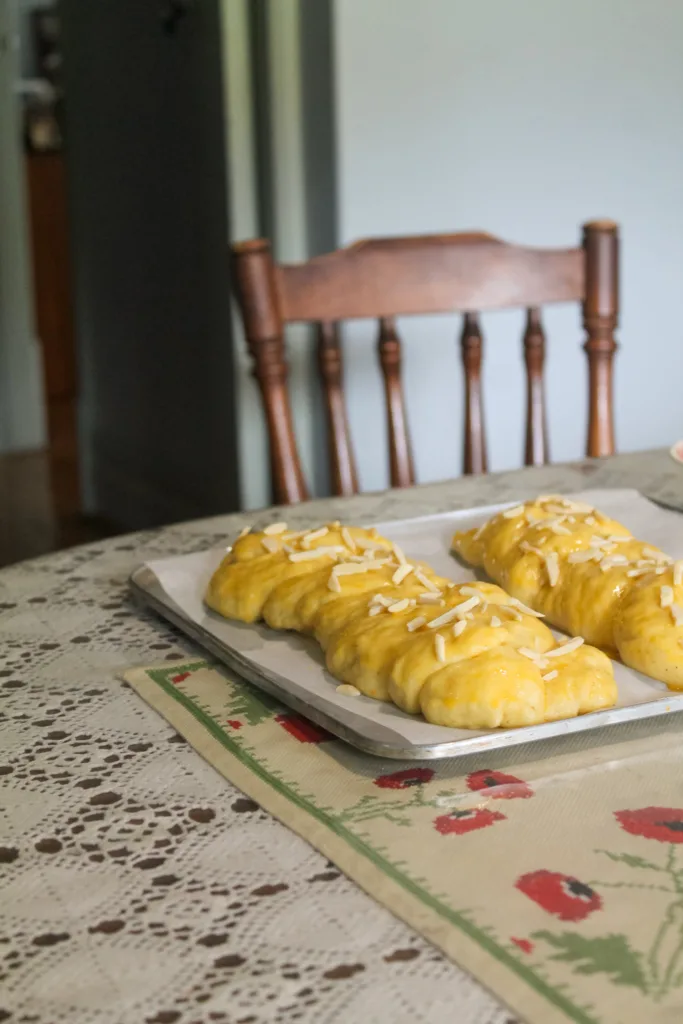
Place each braided loaf on a baking tray lined with baking paper. Allow them to rise again for 30–45 minutes, covered with a towel, until puffy.
Before baking, baste the tops with the egg yolk and water mixture using a pastry brush. Sprinkle generously with flaked almonds or sesame seeds.
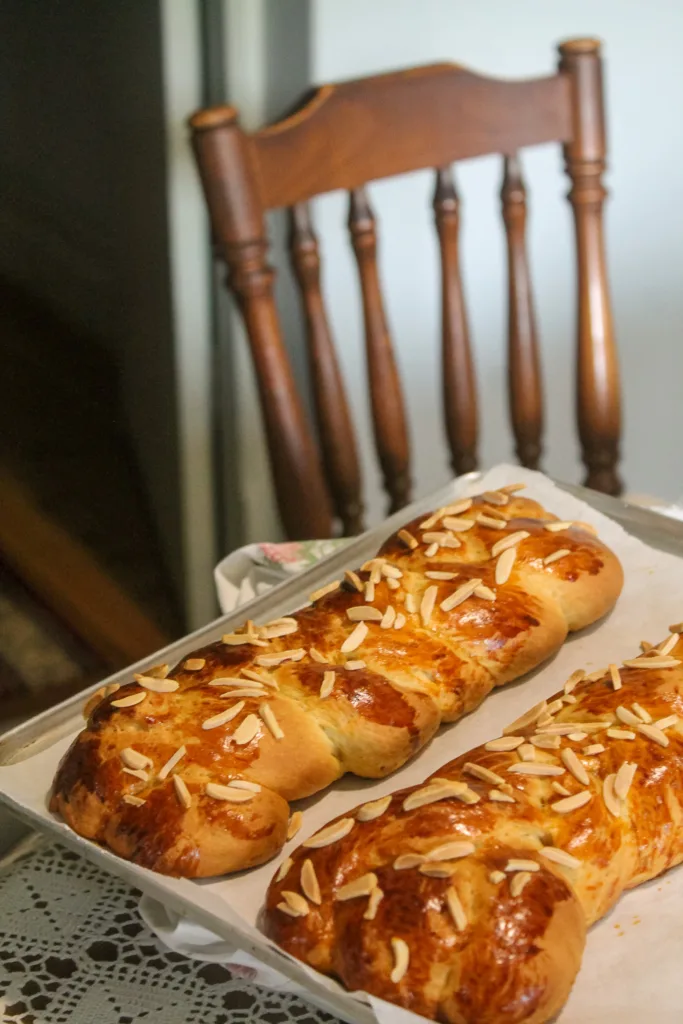
Bake in a preheated oven at 200°C for approximately 20–30 minutes, or until golden brown and cooked through
*This food series for Greek Orthodox Easter is a collaboration between Neoléa in South Australia and The Greek Herald.