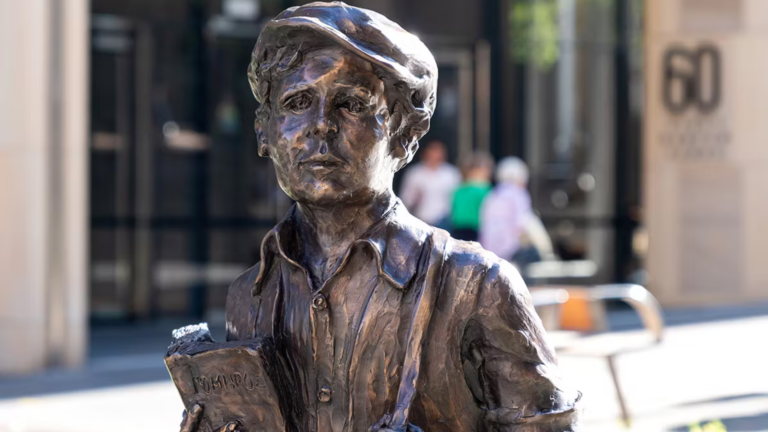
Local school students have been invited to put pen to paper to tell the true story of someone they admire or know who has, against all odds, become their own success story.
City of Parramatta, in partnership with the Lysicrates Foundation, launched the new writing competition in honour of the sixth premier of New South Wales and Parramatta local, Sir James Martin.
As part of The ‘James Martin’ In My World: A Treasury of True Stories of Struggle and Triumph competition, students in Years 7 and 8 have been asked to tell a story in 500 words or less about someone who they know has experienced a real-life struggle and later overcame that adversity.
City of Parramatta Lord Mayor Cr Martin Zaiter said it’s a great way to help young people build on their story telling skills, while honouring a Parramatta identity.
“Just like many Parramatta locals past and present, Sir James Martin was a passionate leader who never let an obstacle get in the way of success,” Cr Zaiter said.
“We know there are plenty of stories about resilience and determination within our local area.
“As the son of migrants myself, I have seen unsung heroes make a life for themselves and others from very humble beginnings – whether that’s opening, owning and operating a small business, serving the community by volunteering or achieving big dreams in sport or the arts – there are plenty of stories out there and I encourage students to think hard and get writing.”
Lysicrates Foundation co-founder Dr Patricia Azarias said Sir James Martin’s story is one that resonates with many others.
“Many families have a “James Martin” – someone who, just like that iconic Parramatta figure, has started out with few advantages but who has made a success of their life, whether in their own family, public life, education or in business,” Dr Azarias said.
“We’re inviting the kids of Parramatta to tell the story of the “James Martin” in their world – maybe a grandfather, a mother, a neighbour, a friend, someone who inspires them to reach for their dreams, and makes them believe that that is possible.”
A book containing 30 selected stories will be published and launched at a special event on 14 August 2025 at Parramatta Square, held to coincide with the annual James Martin Children’s Walk from Martin Place to Parramatta and the announcement of the winner of the Martin Lysicrates Prize.
This has been presented in partnership between the City of Parramatta and the Lysicrates Foundation, with the support of the NSW Department of Education, and with the involvement of Catholic Schools NSW and the Association of Independent Schools of NSW, facilitated by the NSW Education Standards Authority.
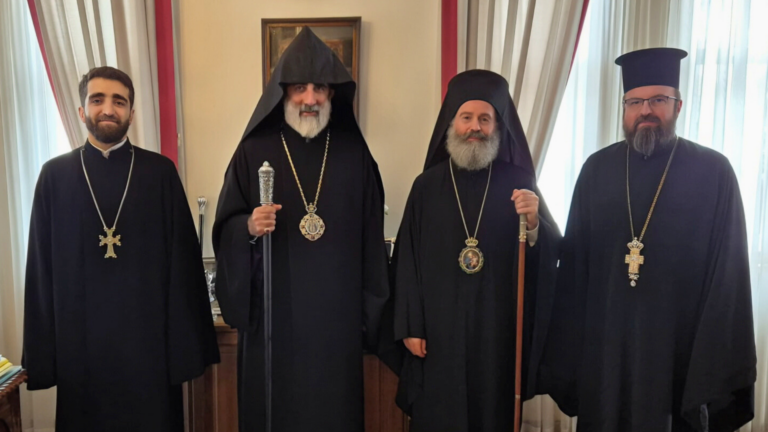
His Eminence Archbishop Makarios of Australia officially welcomed Bishop Vardan Navasardyan of the Diocese of the Armenian Church of Australia and New Zealand to the headquarters of the Greek Orthodox Archdiocese in Sydney on Tuesday, July 29.
Just one month after his arrival in Australia, Bishop Vardan chose the Archdiocese as the first stop in his official visits.
During the meeting, the two church leaders discussed shared pastoral concerns in the diaspora and explored ways to strengthen cooperation and friendship.
Archbishop Makarios invited Bishop Vardan to attend the International Theology Symposium “Nicaea at 1700: A Council for the Ages?”, scheduled for 22–23 August 2025 in Sydney.
The event is hosted by St Andrew’s Theological College and the Council of Churches of New South Wales under the Archdiocese’s auspices.
As a gesture of goodwill, Bishop Vardan presented Archbishop Makarios with a piece of traditional Armenian embroidery and a bottle of Armenian wine.
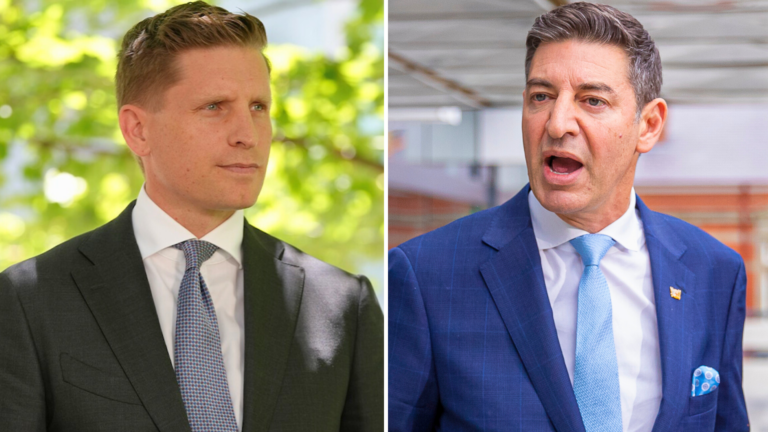
Federal Liberal MP Andrew Hastie has publicly criticised WA Liberal leader Basil Zempilas for supporting Australia’s 2050 net zero emissions target, despite a successful motion at the WA Liberals’ State Council meeting calling for its removal.
Hastie, who proposed the motion, said it reflected “growing concern from mainstream Australians about our expensive energy bills, unreliable supply, and the erosion of our national sovereignty.”
In an email to supporters, he said he was “disappointed” by Zempilas’ remarks, accusing the state leader of dismissing those concerns.
Zempilas, speaking to reporters at the event and again on Monday, reaffirmed his support for the net zero target, stating, “We support the status quo on the net zero targets.”
He also urged the party to reconnect with younger, urban, and female voters, warning against alienating them over climate and cultural issues.
He further distanced himself from a separate motion to scrap Welcome to Country ceremonies and Indigenous flags, stating the WA parliamentary Liberal Party did not support it.
“We are very comfortable standing in front of the Aboriginal flag,” he said.
The disagreement highlights growing division within the Liberal Party as federal deputy leader Sussan Ley leads a policy review to help reclaim seats lost to Labor and independents.
Similar motions to abandon net zero have passed in South Australia, with Queensland yet to vote.
Nick Kyrgios may still feature in the US Open’s revamped mixed doubles event despite not being included in the initial wildcard selections.
Organisers have announced qualifiers and six of the eight wildcard pairings, leaving two spots open, one of which could be reserved for Kyrgios pending fitness.
Kyrgios and Naomi Osaka, as well as fellow Australian Alex de Minaur and his fiancée Katie Boulter, were not among the announced pairings. However, both duos remain in contention for the remaining slots.
14 teams are IN!
Eight teams have received direct entry and six teams have received wild cards to the US Open Mixed Doubles Championship. The final two wild cards will be announced at a later date. pic.twitter.com/mkAteJDQVT
De Minaur, who just claimed his 10th ATP singles title at the Washington DC Open, is currently the highest-ranked male player (ATP No. 8) not included in the event.
The short-format mixed doubles competition, offering $1.5 million in prize money, is scheduled during Fan Week before the main draw and aims to boost fan and media engagement.
Kyrgios’ participation may depend on his recovery after returning to action last week in doubles with Gael Monfils. He later posted that his knee was “cooked,” though he completed the match.
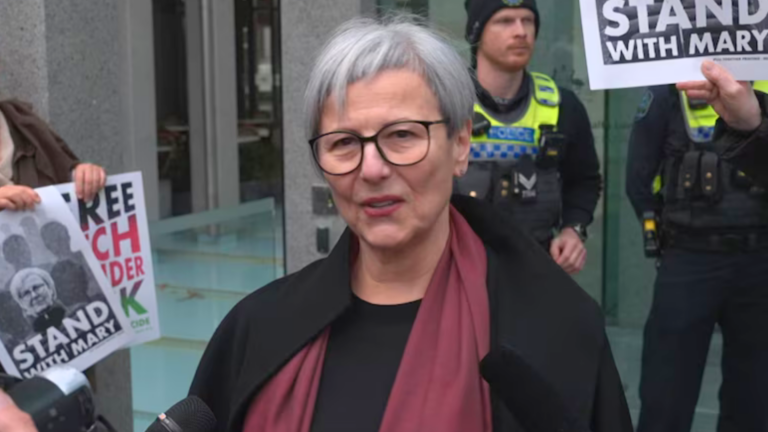
ZFA chief executive Alon Cassuto filed the case in April, claiming Kostakidis breached the Racial Discrimination Act by posting two X (formerly Twitter) posts in January 2024.
The posts included a video of late Hezbollah leader Hassan Nasrallah urging Israeli dual citizens to flee the region and a caption that read: “The Israeli govt getting some of its own medicine. Israel has started something it can’t finish with this genocide.”
Kostakidis’ legal team argued in court on Tuesday that the posts were part of legitimate journalism and political commentary.
Photo: Dean Martin.
Her barrister, Stephen Keim SC, said the criticism was directed at the Israeli government, not Jewish people, comparing it to criticising a sports team without condemning a nation.
Outside court, Kostakidis told supporters: “I’m a strong believer in freedom of the press and the freedom of political expression. I will defend my right to report the news and the right of every journalist to do so and the right of every Australian to engage in public debate.”
Cassuto, however, argued the posts were “not about free speech but hate speech,” claiming Kostakidis had “shared the calls of a prescribed terrorist organisation to ethnically cleanse Jews and Israelis.”
“This conduct reproduces an overseas conflict in Australia,” he said. “We have to stand up against racial hatred, no matter who is being targeted and no matter who is spreading it.”
Supporters gathered outside Adelaide’s Federal Court during the hearing, waving Palestinian flags and holding signs.
Justice Stephen McDonald has reserved his decision on Kostakidis’ application to strike out most of the case, with no date set for the ruling.
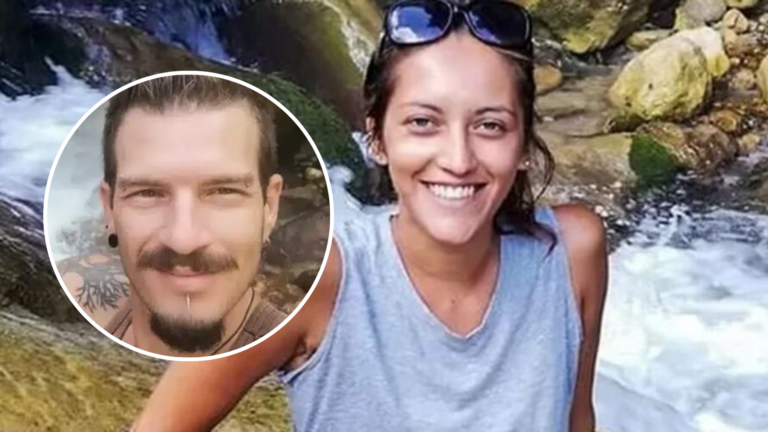
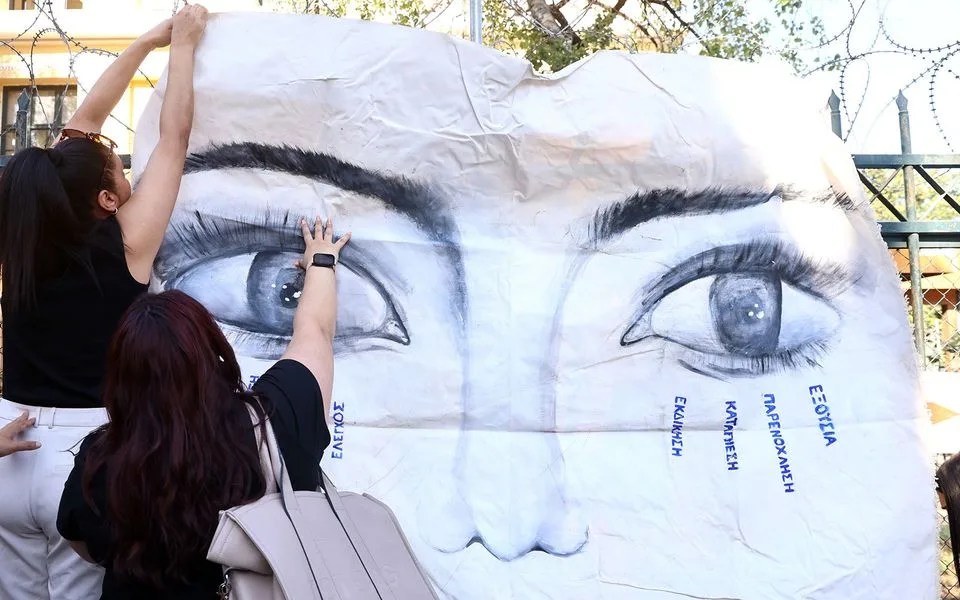
A Greek court has sentenced 40-year-old Athanassios Kourelis to life in prison, plus five years and a €1,000 fine, for the premeditated murder of his former partner 28-year-old Kyriaki Griva outside a police station in Agioi Anargyroi on April 1, 2024.
Griva had gone to the station to report Kourelis for abuse when he fatally stabbed her. The case sparked public outrage amid criticism of police inaction.
A mixed jury unanimously found Kourelis guilty of murder committed in a calm state of mind, illegal weapon possession and use, and drug possession. His claims of mental illness were rejected.
Photo: InTimeNews.
Griva’s family wept in court, with her father shouting at the accused, “Do you see, Thanassakis, what you did? You turned her into a photo.” Kourelis remained expressionless.
Prosecutors argued the attack was calculated and controlling, highlighting Kourelis’ use of a smartwatch to monitor Griva’s movements.
“The violence was extreme – he stabbed her five times, breaking bone,” the prosecutor said. “That’s not the act of someone out of control.”
The court found no evidence of psychiatric disorder and concluded the murder was deliberate and methodical.
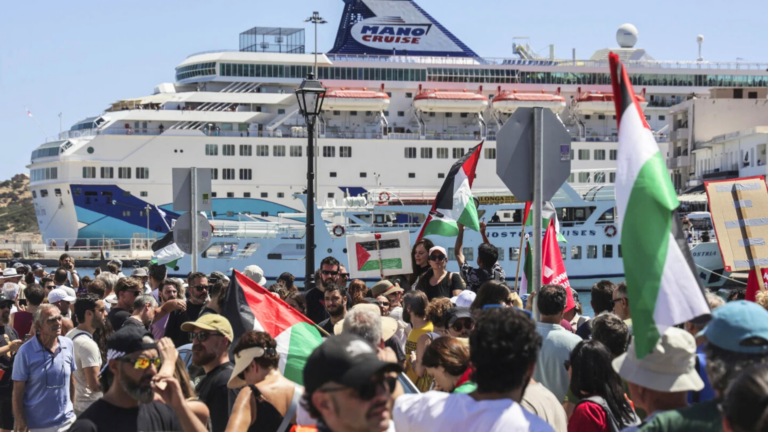
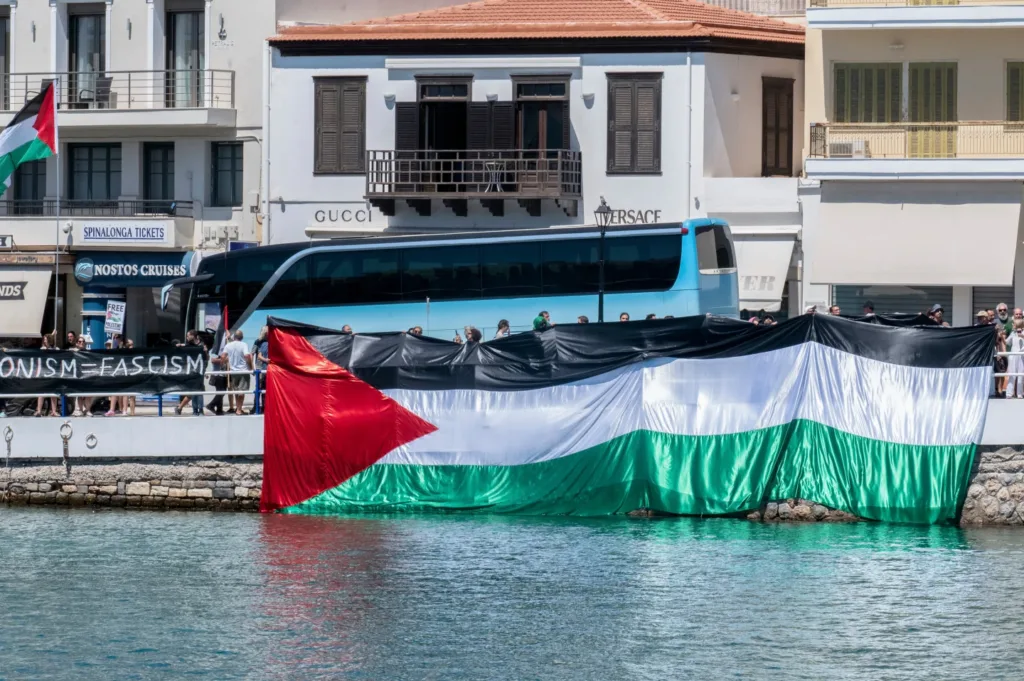
Protesters on Crete demonstrated against the war in Gaza on Tuesday, July 29, targeting the arrival of the Israeli cruise ship Crown Iris at the port of Agios Nikolaos, the third such protest on a Greek island in a week.
Demonstrators unfurled a large Palestinian flag and chanted “Free, free Palestine” as passengers disembarked and boarded tour buses.
Riot police kept the protesters back, and scuffles broke out, with local media reporting the use of pepper spray. Four people were detained.
Photo: Antonis Zouridakis / Eurokinissi via AP.
The previous day, similar scenes occurred in Rhodes, where the Crown Iris again docked amid anti-war protests. While passengers disembarked for tours, no violence was reported.
The ship’s 1,700 passengers remained on board, and it departed earlier than scheduled. The cruise operator, Israel’s Mano Cruise, said it diverted the ship “in light of the situation in the city of Syros.”
The Syros protest prompted a call from Israeli Foreign Minister Gideon Saar to Greek Foreign Minister George Gerapetritis.
Revered not only for his genius compositions like Axion Esti and Zorba the Greek, Theodorakis was also a man of the people, whose music and political beliefs deeply impacted generations around the world.
To honour his centenary, The Greek Herald spoke with three Greek Australians who met him: renowned Australian conductor George Ellis, Chair of the Greek Festival of Sydney Nia Karteris, and President of the Greek Orthodox Community of NSW (GOCNSW) Harry Danalis.
Each shared personal, powerful memories of their encounters with the great composer.
George Ellis: ‘It was like meeting Mozart’
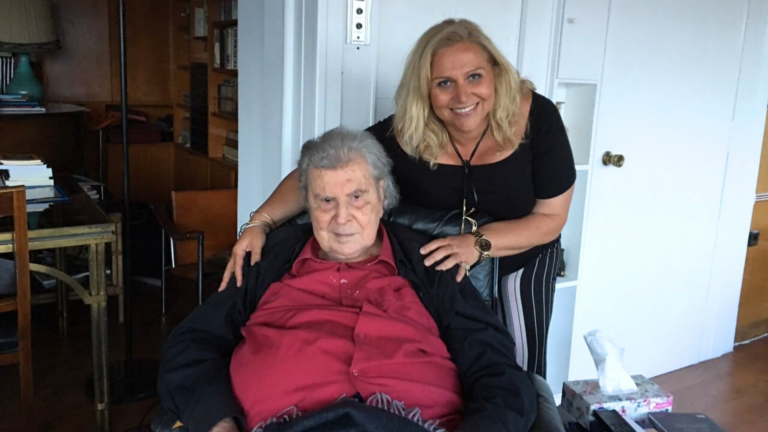
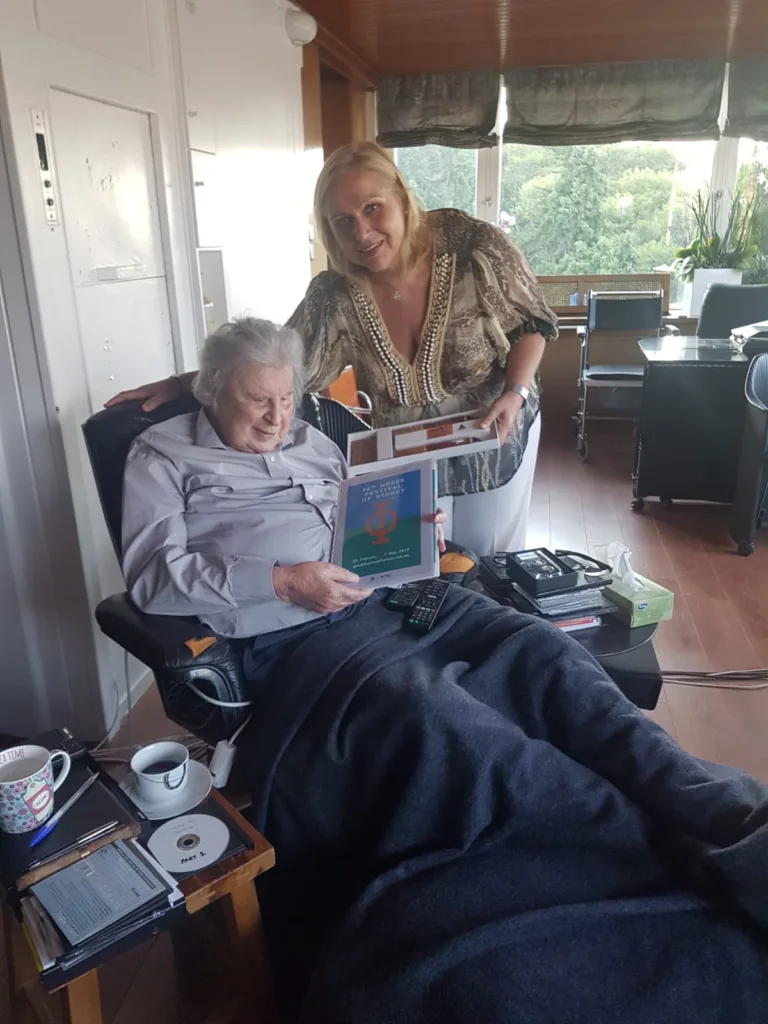
Mikis Theodorakis with George Ellis.
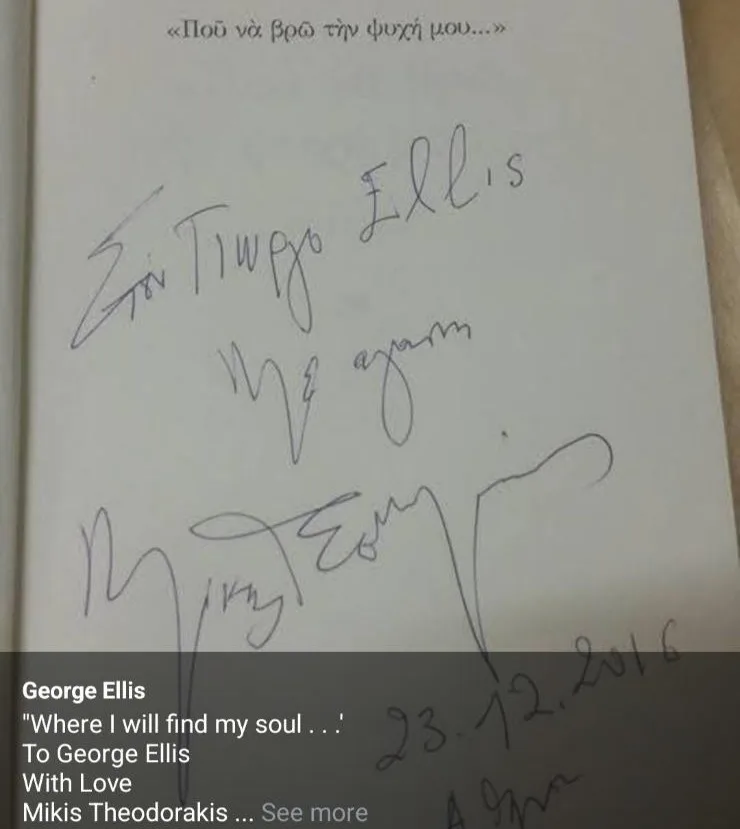
For George Ellis, meeting Theodorakis in December 2016 was the culmination of a lifelong musical admiration. Thanks to the Greek Festival of Sydney and singer Dimitris Basis, Ellis travelled to Athens to meet the maestro at his home, a modest apartment overlooking the Acropolis.
“I rang the doorbell right on 6pm… the lift door opened, and as soon as it did, there was the great man sitting there, just looking over and smiling. I remember having trouble breathing for a second… I was so starstruck,” Ellis recalls.
“It was like meeting Mozart or Beethoven or Leonard Bernstein, in terms of a composer and conductor. He was Greece’s greatest.”
Initially scheduled for just 30 minutes, their conversation extended for over three hours. Theodorakis watched Ellis’ YouTube performance of Axion Esti and gave a live critique.
“He would say things like, ‘This is a good tempo,’ or, ‘Oh, I take it a little bit slower than you, but that’s okay.’ It was surreal,” Ellis says.
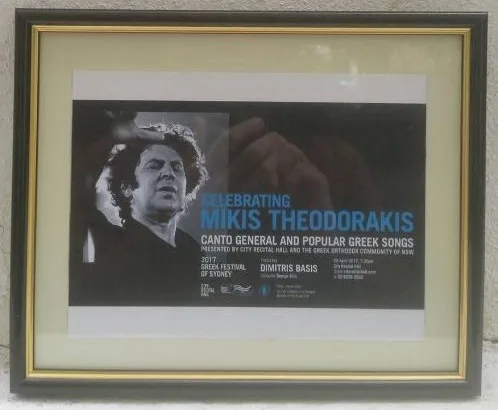
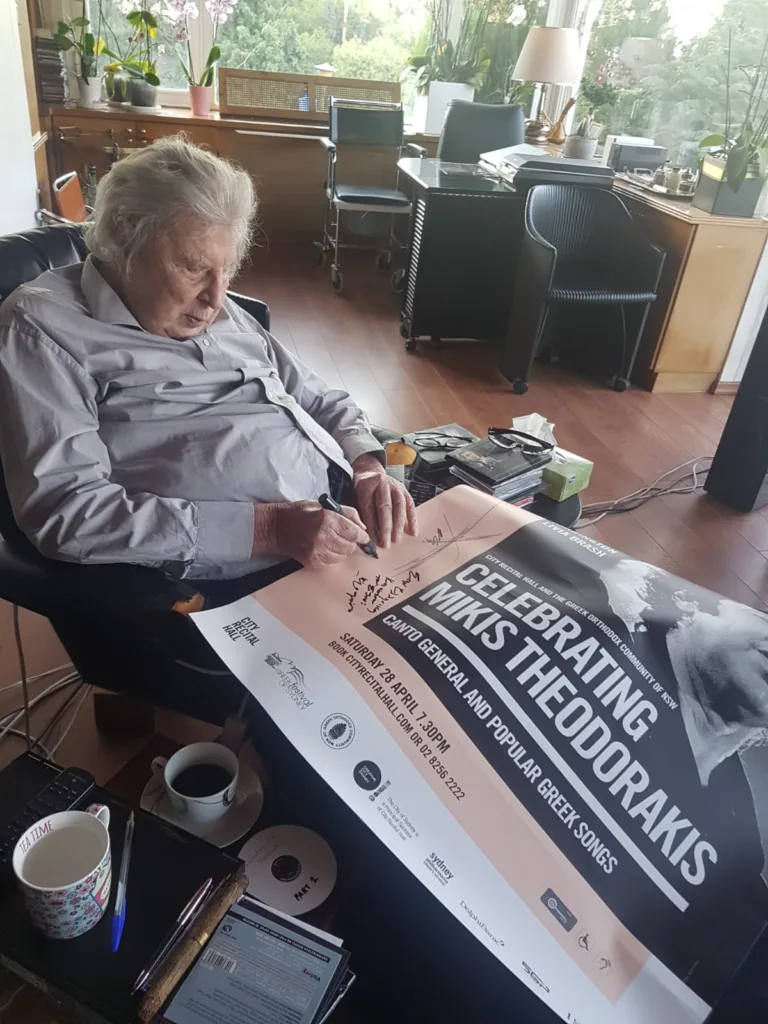
George Ellis’ autographed Greek Festival of Sydney poster.
The encounter didn’t end there. Theodorakis pulled out the score for Canto General, which Ellis was scheduled to conduct the following year.
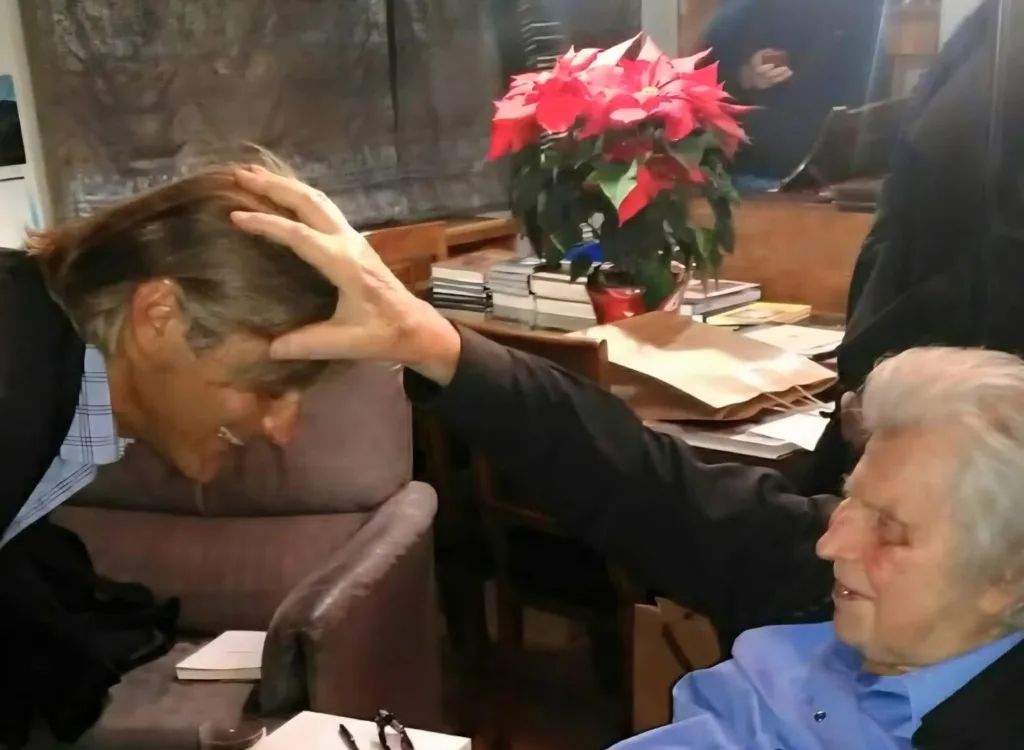
“He gave me advice on the hardest parts and even gave me his blessing by putting his hand on the top of my head,” Ellis says.
“It was the most beautiful conversation… To this day, it has informed the way that I conduct, especially his music. I wouldn’t have traded it for the world.”
Mikis Theodorakis ‘blessed’ George Ellis to continue conducting his music.
Nia Karteris: ‘He made us feel like equals’
Chair of the Greek Festival of Sydney, Nia Karteris, met Theodorakis three times – in 2006, 2016, and 2018 – often alongside delegations from the GOCNSW including Harry Danalis (President), the late Michael Tsilimos and Stanley Koulouris. Each visit left an indelible impression.
“Walking in and seeing this huge, strong, tall person in front of you… it was just a feeling of awe. But he made us feel so comfortable, like we were equals. Like we all had a purpose in society,” she recalls.
Nia Karteris meets Mikis Theodorakis.
Their first meeting was meant to last 30 minutes but stretched to three hours. “He spoke about his life during the junta, being a communist, his time in exile, his imprisonment, his music, and his politics – he never shied away from that.”
What struck Karteris most was how much Theodorakis cared about Greece’s diaspora. “He wanted to know how Greek was being taught here, how young people connected with Greek music, and he was genuinely interested in our challenges.”
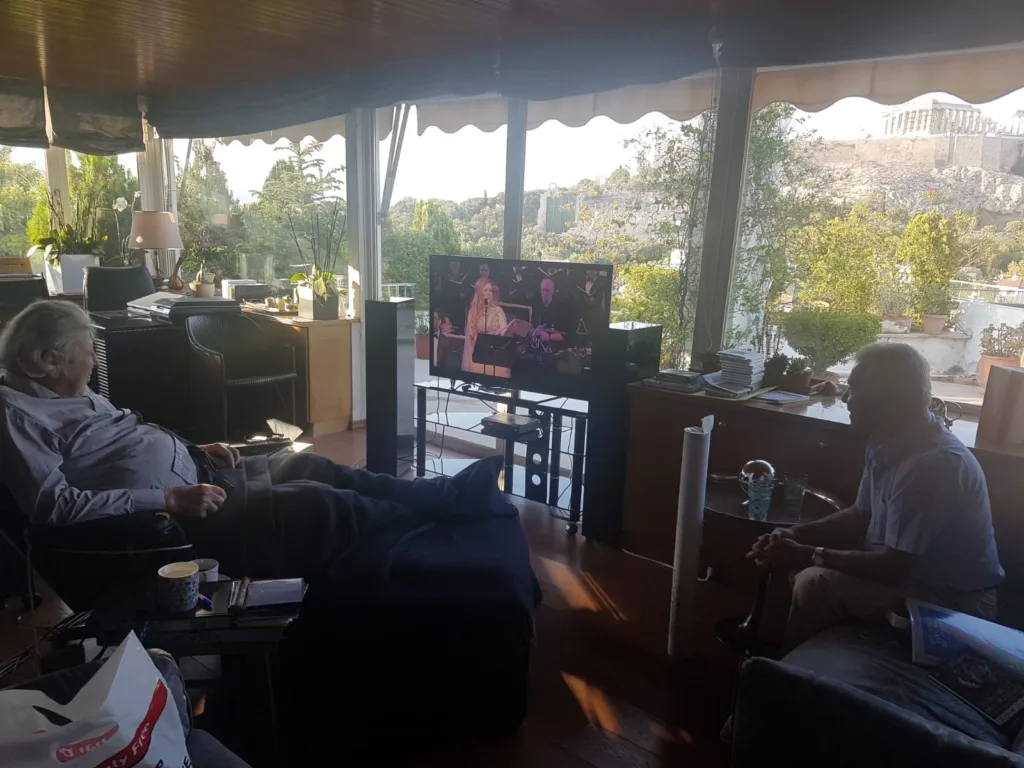
Mikis Theodorakis watching an old performance of his music by the Greek Festival of Sydney. Pictured with him is the late Michael Tsilimos.
After hearing about the Festival’s productions of Axion Esti and To Treno Fevgi stis Okto, he was visibly moved. “He said, ‘Be proud of what you are doing. Continue it.’ He even asked for copies of the music and gave us feedback. He didn’t use his status to intimidate – he listened.”
And he remembered her. “At the third visit, he addressed me as ‘Nia’. I say it now, and I’m moved. That was the pinnacle for me.”
Harry Danalis: ‘One of the highlights of my life’
Harry Danalis, President of the GOCNSW, met Theodorakis twice – once briefly after a concert in Australia in the early 1970s, and again in 2006, during a delegation visit to his Athens residence.
While the Australian encounter was short, the 2006 meeting went over time.
“He was not in the best of health at the time, but he ranged over the whole course of his life. It was an intimate, profound conversation,” Danalis shares.
“He spoke about his time in prison during the dictatorship, his political activism, and his music. He gave us insight into the motivations behind his work, and what he truly cared about. It wasn’t just a meet-and-greet – it was one of the highlights of my life.”
Danalis, a lifelong admirer of Theodorakis’ music, describes the meeting as “a dream come true.”
“He was a legend in his own lifetime. His music, in my opinion, will endure forever,” he says.
Legacy beyond borders
For all three, the legacy of Theodorakis extends beyond his music. It lies in his humility, his deep belief in justice and culture, and his rare ability to make every person feel seen.
Karteris puts it simply: “He could have said, ‘I don’t have the time.’ But instead, he welcomed us, made coffee, and gave us his blessing. That’s the kind of man he was.”
On this centenary, the memory of Theodorakis lives on not only in concert halls and national anthems, but also in quiet living rooms in Athens, on Sydney stages, and in the hearts of those fortunate enough to meet him.
In July 2025, the Holy and Sacred Synod of the Ecumenical Patriarchate formally added the name of Saint Dimitrios Gagastathis to the calendar of saints.
The canonisation of this revered married priest and confessor, whose holiness was long attested by popular piety, represents a continuation of the Ecumenical Patriarchate’s venerable commitment to discerning and proclaiming the presence of sanctity within the life of the Church. It reflects a tradition of spiritual discernment anchored in patristic wisdom, ascetic vigilance, and pastoral sensitivity.
Notably, Saint Dimitrios Gagastathis was the father of nine daughters, a detail which underscores the significance of his sanctification as a step toward affirming the sanctity that can emerge through the lay and familial life.
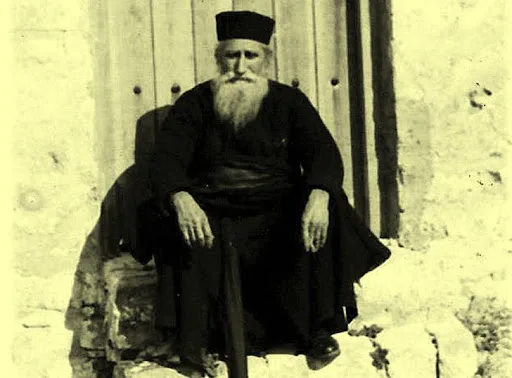
Saint Dimitrios Gagastathis.
And yet, a broader pattern in the canonisations of the past decade invites theological and ecclesiological reflection. While the Orthodox Church possesses a deeply rooted understanding of the sanctity accessible to all the baptised, the official recognition of saints has recently centred predominantly upon those who are monastics or ordained clergy. This emphasis, while coherent within the context of Orthodox spirituality and tradition, risks underrepresenting the sanctifying potential inherent in the lay state.
By contrast, the Russian Orthodox Church has, over the past century, canonised not only hierarchs and new martyrs but also laypersons whose lives bore the unmistakable imprint of divine grace.
One moving example is the canonisation of the companions of the last Imperial Family of Russia, including not only the Tsar and his family but also their faithful attendants: Dr Eugene Botkin, the royal physician; Ivan Kharitonov, the cook; Anna Demidova, the maid; and Alexei Trupp, the footman. These were not monastics, nor were they ordained. They were ordinary Christians who, in the final hour, bore witness with courage and loyalty, sanctifying their deaths through solidarity and fidelity.
Similarly, the Roman Catholic Church, while doctrinally distinct, has elevated the sanctity of lay life to a visible theological principle. It has canonised individuals such as Saint Gianna Beretta Molla, a physician and mother who sacrificed her life for her unborn child; Saint José Sánchez del Río, a fourteen-year-old martyr of the Cristero War; Saint Isidore the Farmer, whose piety and simplicity became a model of rural sanctity; and Louis and Zélie Martin, the parents of Saint Thérèse of Lisieux, whose married life was a profound testimony of holiness. These figures exemplify how sanctity may unfold not in monastic seclusion but amidst the routines and burdens of modern life.
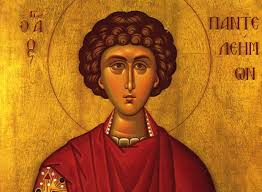
It must be emphasised that Orthodox theology is unequivocal in its affirmation of the sanctity of the lay state. From the earliest centuries, the Church has recognised soldiers like Saint George, physicians like Saint Panteleimon, and rulers like Saint Constantine as vessels of holiness. The theology of theosis, so central to the Orthodox understanding of salvation, envisions all the faithful as participants in divine grace.
Saint Panteleimon.
As Saint Gregory Palamas taught, the divine energies are not the exclusive inheritance of the ascetic few, but are offered to all who struggle toward likeness with God, however unassuming their vocation.
Sainthood, in this light, must be understood not merely as exceptional heroism, but as the fruit of cooperation with divine grace within the concrete and often hidden circumstances of everyday life. The late Father John Meyendorff, building on the patristic legacy, spoke of sainthood as the manifestation of the transfigured person within the ecclesial body. This vision affirms that holiness can arise in any context, urban or rural, professional or domestic, visible or obscured. The sanctification of the layperson is not a peripheral anomaly; it is intrinsic to the catholicity and incarnational logic of the Church.
The sociological implications of this theological truth are profound. As Father John Chryssavgis has incisively asked, should we not question why so few women or laypersons are advanced for canonisation, and why the aura of sanctity is so often confined to the male, monastic, and clerical domains? He challenges us to expand our ‘radar for sanctity,’ asking why we privilege solitaries over spouses, monastics over seculars, miracle workers over those whose lives radiate empathy, decency, and practical solidarity with the suffering. He goes further, questioning whether our reverence for saints might sometimes obscure rather than aid our spiritual growth. Drawing on Dostoevsky’s Grand Inquisitor, Father Chryssavgis warns against a spiritual economy fixated on miracle, mystery, and authority, those same temptations Christ refused in the desert.
Might our yearning for saints endowed with supernatural powers reflect a deeper human fragility, a desire for emotional certainty and external validation? When we venerate miraculous charisma more eagerly than sacrificial compassion, we risk domesticating holiness into something predictable and palatable. Lay saints, those who embrace suffering with faith, who bear injustice without bitterness, who love without recognition, embody these moments. They are not exceptions but prophetic signs of the Church’s potential to speak to the deepest human longings.
Peter Berger, too, reminds us that for religion to remain existentially plausible, it must articulate the sacred within the structures of ordinary life. Berger’s vision of “plausibility structures” in religious belief reveals how saints of the everyday restore credibility to the sacred by inhabiting the world with reverent transparency. Their holiness is not imposed upon the world, but drawn from within it, revealing the presence of God in the mundane and the marginal.
Canonisation, therefore, is not merely a retrospective recognition of sanctity. It is a forward-looking proclamation of what kind of life is capable of bearing divine light. In recognising lay saints, the Church does not relativise the monastic vocation, but extends the monastic spirit into the hearth, the marketplace, the hospital ward, and the schoolroom. It bears witness to the radical unity of Christian life across all vocations. Spiritual vigilance, or nepsis, becomes not only a monastic discipline but a universal mode of attentiveness—possible amidst the cries of infants, the fatigue of labour, the noise of history.
The canonisation of Saint Dimitrios Gagastathis, in this sense, is emblematic of a sanctity that does not retreat from the world but transforms it from within. His life as a father of many daughters, a parish priest rooted in the soil of his people, a spiritual father open to all, reveals that the ascetical life can be lived in the very texture of the familial and the pastoral. Grace does not require isolation. It transfigures relationality, reconfigures fatigue as prayer, and renders every gesture capable of becoming Eucharist.
Saint Dimitrios Gagastathis was recognised as a saint earlier this year.
As Orthodox theologian Christos Yannaras has insightfully argued, the Church is not merely an institution but a mode of existence—a way of being that unfolds in love, freedom, and truth. In this ontology, the saint is not defined by role or status, but by participation. The sanctity of the layperson is not an exception. It is the sign of a Church alive in every limb, responsive to every whisper of the Spirit.
From a theological perspective, the renewed attention to lay sanctity would deepen the Orthodox vision of conciliarity and catholicity. It would reaffirm that holiness is diffused throughout the body of Christ, as Saint Paul wrote: “Now there are varieties of gifts, but the same Spirit” (1 Corinthians 12:4). The dogmatic teachings of the Church affirm this variety of grace; canonisation makes it visible.
The Ecumenical Patriarchate, as the primatial see of global Orthodoxy, carries the weight and dignity of a witness that shapes the entire Orthodox world. Its discernment of sanctity is therefore not only pastoral but ecclesiological. A broader embrace of lay sanctity would not dilute this witness. Rather, it would broaden its resonance, revealing that the Spirit blows where it wills, and often in unexpected quarters.
In a world disillusioned by clericalism and craving authenticity, the proclamation of lay saints would offer a theologically robust and spiritually compelling model of divine-human cooperation. It would testify to a Church that remains in the world without becoming of it, a Church that does not idealise the cloister but sanctifies the courtyard, the classroom, and the kitchen.
Perhaps the next saint to be recognised will be a mother who taught her children to pray through silence, or a neighbour who gave bread to the stranger, or a worker who resisted injustice with gentleness and perseverance. These lives, luminous and hidden, remain among the Church’s most precious gifts.
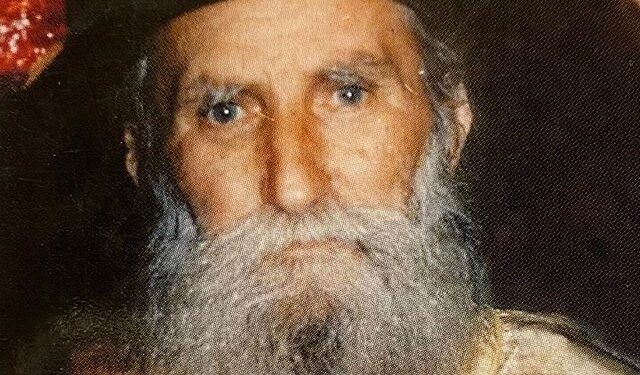
Among such examples is Saint Dimitrios Lekkas, a lay Orthodox Christian known for his unwavering humility, deep prayer life, and tireless service to those in need. His memory endures as a quiet yet profound inspiration, reminding us that sanctity does not always wear a cassock or dwell within monastic walls. Lives such as his are not only spiritually edifying but also theologically vital, offering the faithful tangible models of holiness lived amidst the ordinary rhythms of the world. The time has come to bring them to light, with reverence, theological precision, and ecclesial love.
The Pavlos Giannakopoulos Tournament is coming to Australia’s shores and the Greek Orthodox Community of NSW (GOCNSW) is playing an active role in highlighting the historic event that will pit some of Europe’s best basketball clubs (including Panathinaikos) against Australia’s.
The tournament, created by Panathinaikos Basketball Club, is being held outside of Greece for the first time ever on 21 and 22 September in Sydney and will see the Greens and KK Partizan battle it out against Sydney Kings and Adelaide 36ers.
The organisers of the event, including the Greek basketball giants and Australia’s National Basketball League, met with the Community, recognising its ability to reach the wider Hellenic public of Sydney.
Apart from the leadership of the Community meeting with Panathinaikos BC president Vasilis Parthenopoulos and NBL officials, the Community is undertaking a series of initiatives related to the tournament.
Among them includes a poster competition for Sydney’s students aged 7 to 14, with the youngsters encouraged to put their art skills to use and submit a decorative piece related to the tournament to the Community.
In addition, the Community will also combine with the Greek student associations of Sydney’s universities (USYD, UNSW, UTS, Macquarie) in a social media competition to be run through the student groups’ pages.
Both initiatives will run until 5 September with a select few from each to receive tickets to the matches.
“The GOCNSW is proud to be involved in this project, and we are hopeful that the community will respond in large numbers to support the initiative which runs well beyond the sporting boundaries and strengthens further our Hellenic attachments,” Secretary of the Community and Chair of the Greek Festival of Sydney, Nia Karteris, said.
The Community continues to work on ways to engage the wider public further with the tournament, which also represents a historic first-ever visit to Australia by Panathinaikos’ basketball team.
Pavlos Giannakopoulos Tournament Match Details:
Venue: Qudos Bank Arena, Sydney Olympic Park
Sunday, 21 September 2025
KK Partizan vs Sydney Kings – 4:30 PM
Panathinaikos B.C. vs Adelaide 36ers – 7:00 PM
Monday, 22 September 2025
KK Partizan vs Adelaide 36ers – 5:00 PM
Panathinaikos B.C. vs Sydney Kings – 7:30 PM
Tickets are now on-sale for each game day via Ticketek, with family ticket packages available for $123 in Melbourne including two adults and two kids, and $120.95 in Sydney. Club merchandise available to purchase via the NBL site.