An Australian man wanted over a deadly 2023 drive-by shooting in Melbourne has been arrested in Greece, marking the sixth arrest linked to the high-profile case.
The 24-year-old suspect was taken into custody at Athens International Airport on July 31 following an international arrest warrant issued by Australian authorities.
He is accused of being involved in the targeted shooting of 27-year-old Robert Issa outside Craigieburn Central shopping centre in Melbourne’s north on October 6, 2023.
Issa was sitting in a white Mercedes with friend Eric Catanese when gunmen opened fire. He died at the scene while Catanese was injured.
The offenders fled in a black Range Rover, later found burnt out in Westmeadows. The incident is believed to be linked to Melbourne’s illicit tobacco turf war, though the motive remains unclear.
A bullet-riddled car at the scene of the murder. Photo: David Caird.
The arrest follows a coordinated Victoria Police operation on the same day in Melbourne, where five other men, aged between 26 and 33, were charged with murder, attempted murder, and arson.
Police described the group as “foot soldiers,” with higher-ranking figures still under investigation.
Victoria Police, along with the Attorney-General’s Department, are now working with Greek authorities on the suspect’s extradition.
Detective Inspector Dean Thomas said the operation sent a strong message: “We will do everything we can to hold accountable every single person involved in this shooting.”
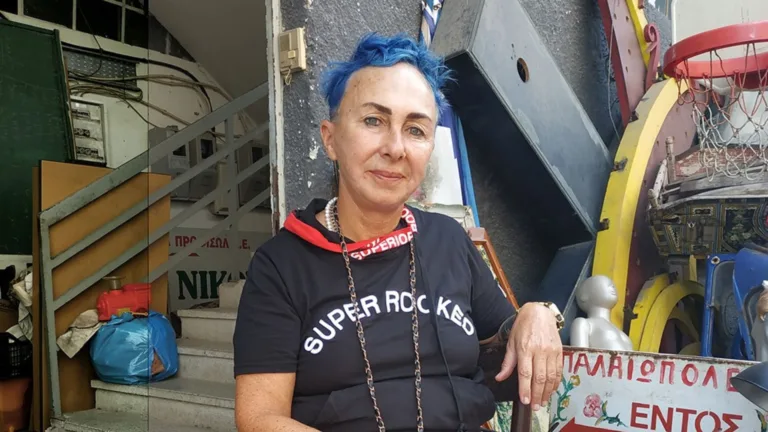
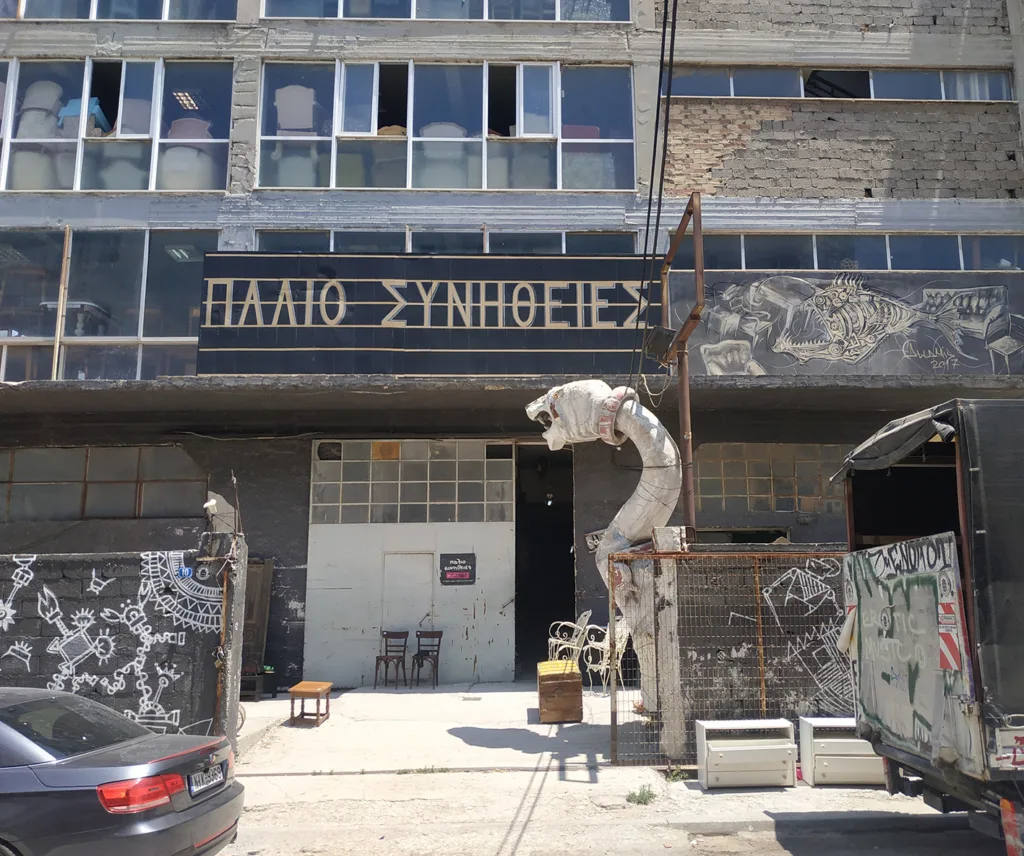
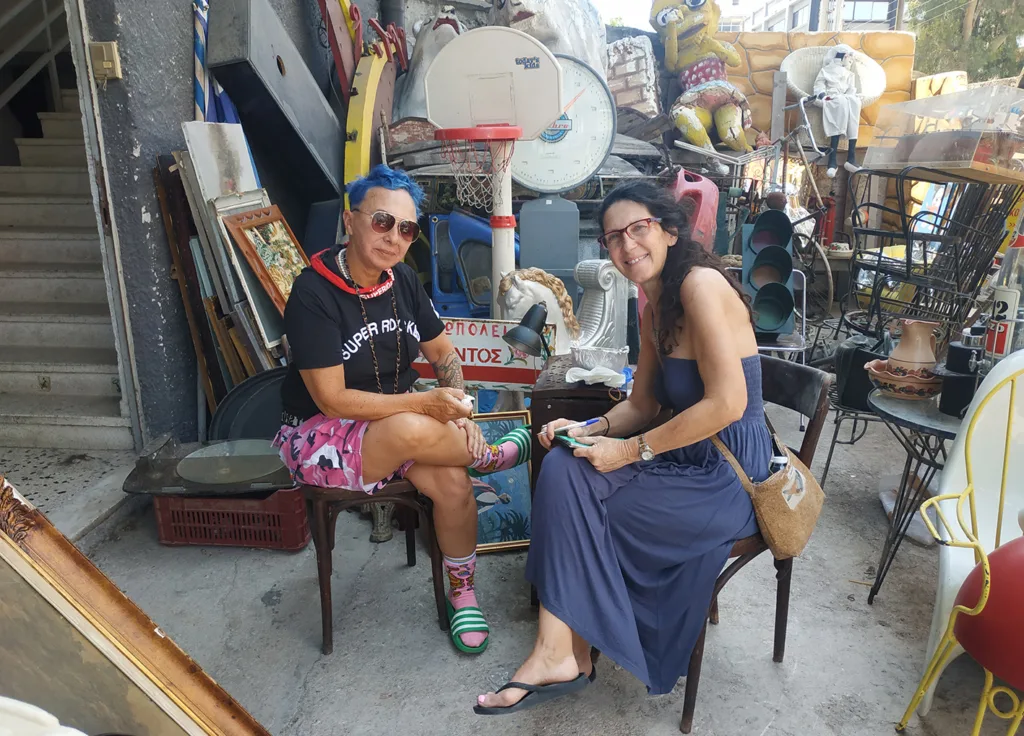
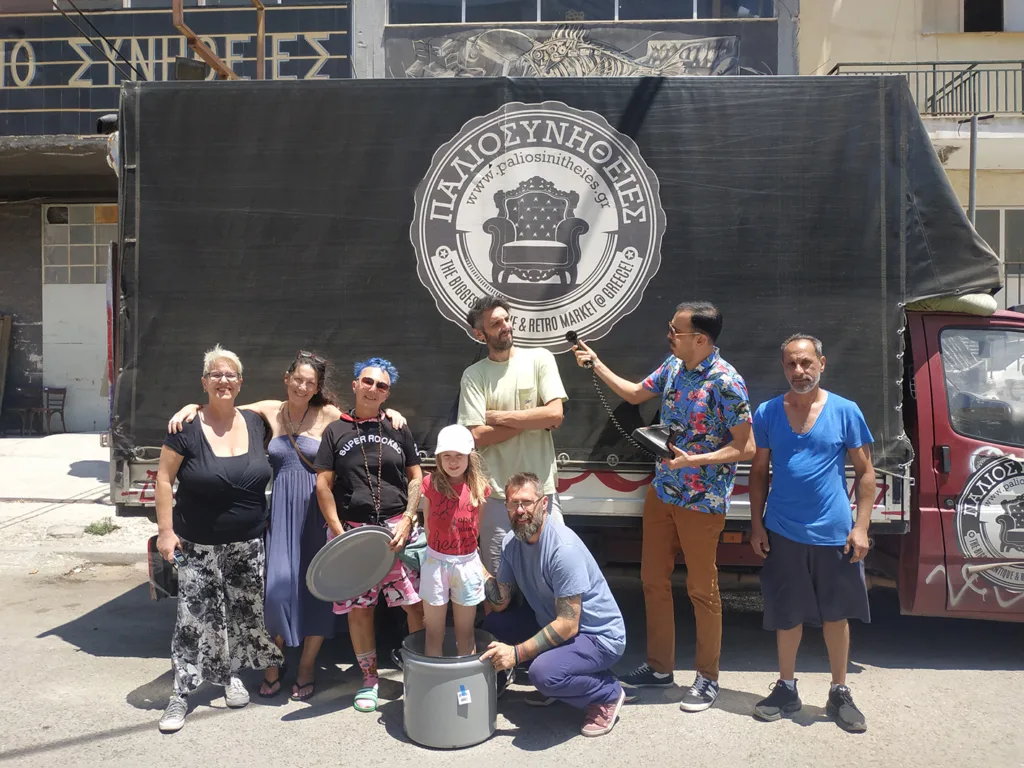
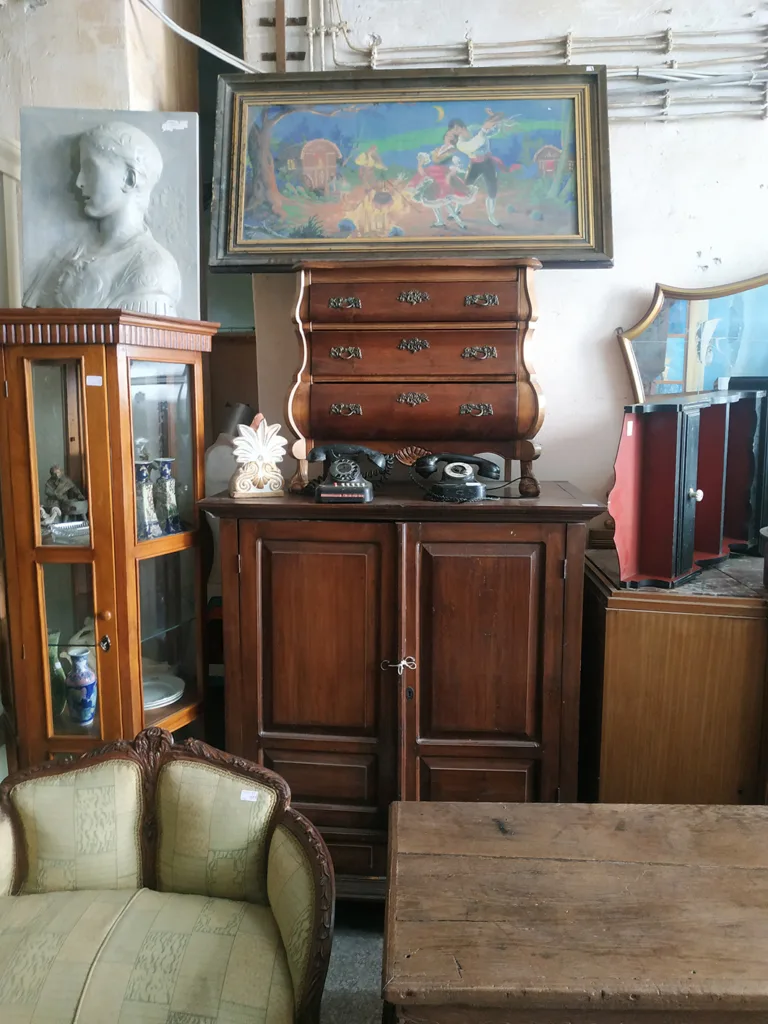
‘Paliosinitheies’ (Bad Habits in English) is Greece’s largest ‘Opportunity’ or ‘Op Shop’ – as we Aussies call it.
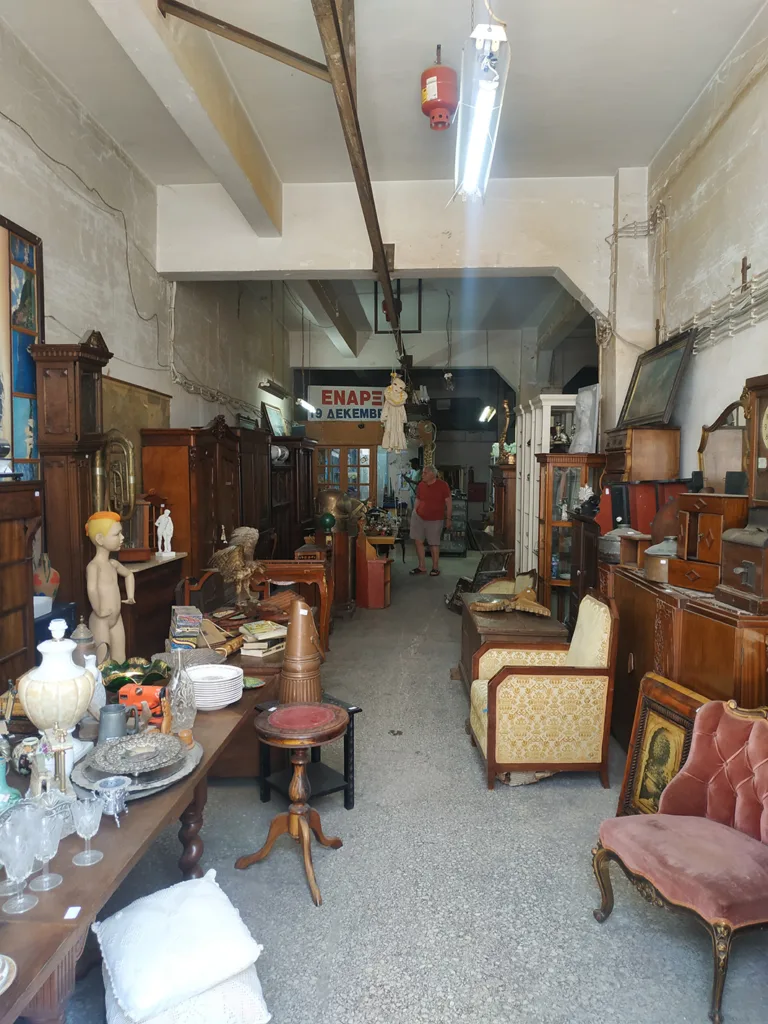
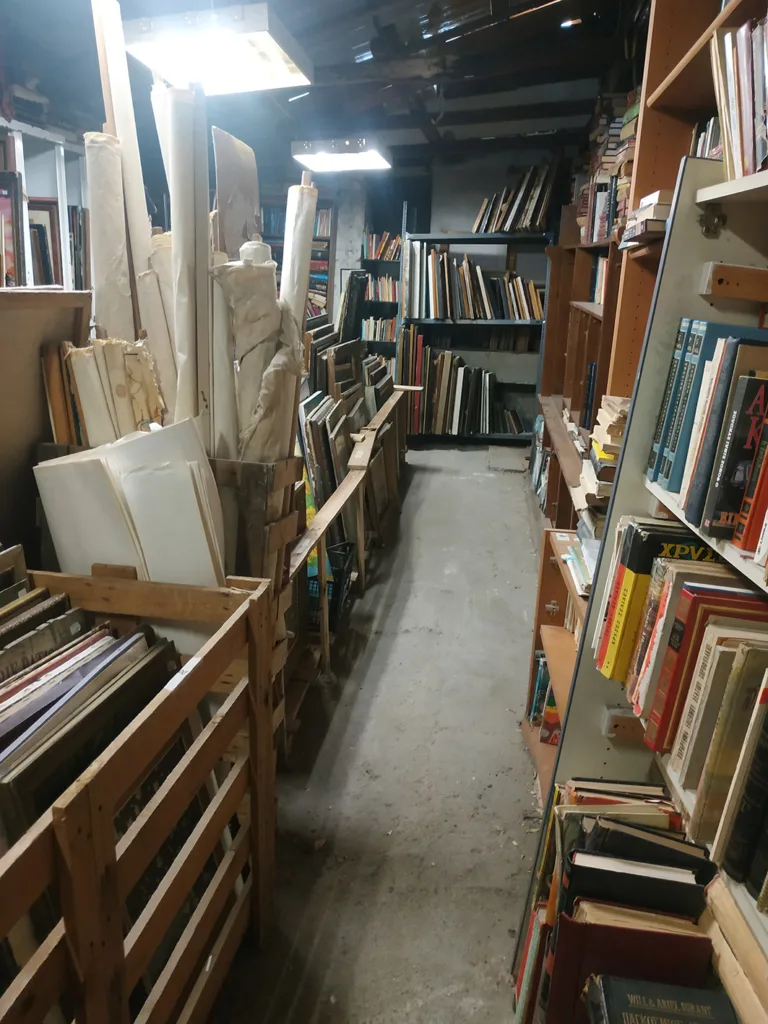
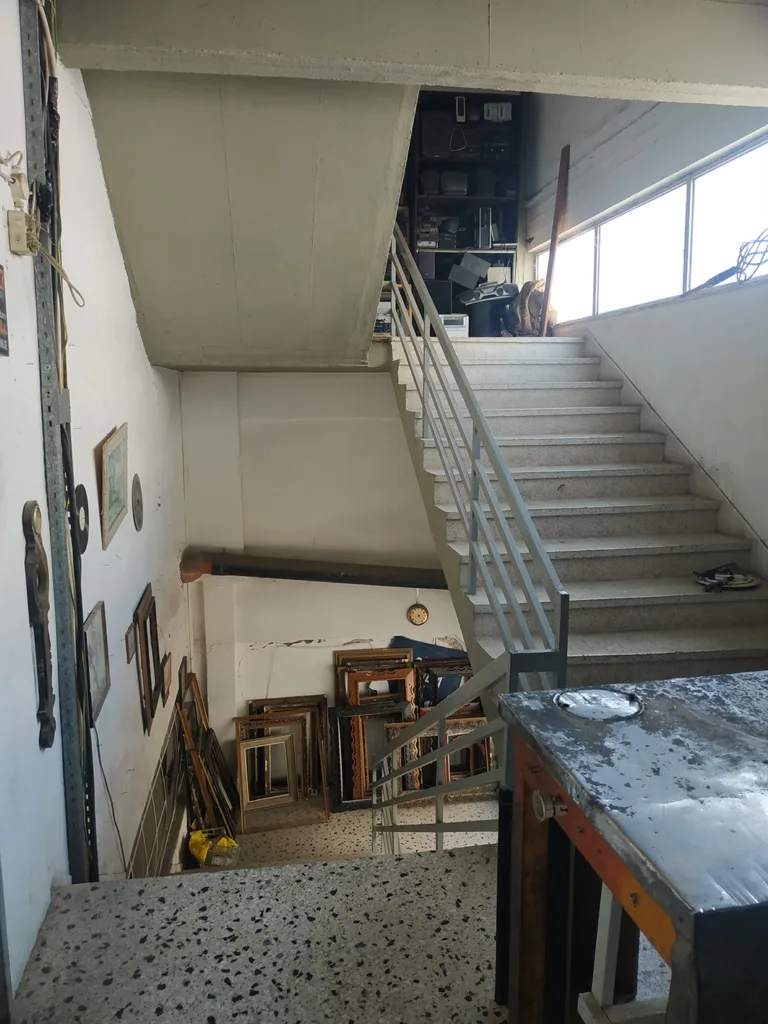
Founder and boss, Ada (Adamantia) Pana, calls her 3,150sqm, four-storey, ex-meat processing factory “a Thrift and Antique store.”
Paliosinitheies has been in operation at its current premises for 16 years, in which time sales include not only local buyers, but quite a few from afar too: “A Korean film company bought stuff from us for one of their series’… as has Netflix and many Greek TV shows, like Greece’s ‘Survivor’ reality series.”
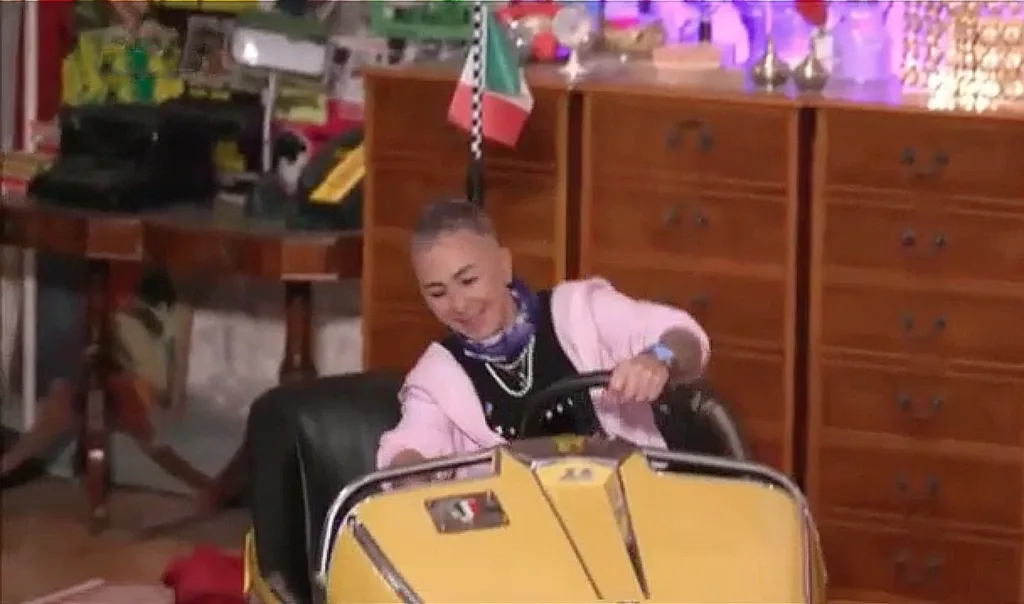
Speaking of TV series’, Ada is one of the panel in the Greek ‘Cash or Trash’ (akin to Australia’s ‘Cash 4 Trash’) which has led to her celebrity status.
“I don’t care for fame or money. Fair enough, I want a decent house, and I must admit I’m mad about motorbikes and cars, but now I don’t want as many of those as I used to have,” she says.
Her – and her business’ founding story – is a fascinating one. I say ‘one’, as the two, Ada and Paliosinitheies, seem to meld into one.
“I’ve lived a full and many times turbulent life, particularly in my youth. This included a series of addictions and somewhat dangerous risk taking, but I cleaned myself up, got married to a man, had a son – my wonderful son who’s now 30. My life hasn’t been and isn’t, let’s say uneventful nor conformist, and this abides by my work/business philosophy,” Ada says.
“My business started as an Interior Designer but during the Greek crisis in 2008, it went under. Things were tough, so sometimes I’d collect wood for a fire from rubbish bins where I’d find other old bits and pieces, like various furniture that people had discarded as rubbish. Well, I’d collect them too, and paint them and decorate them, and then people began wanting to buy them, so that was basically it, until I opened the current Paliosinitheies.”
Apart from being extremely charismatic and honest, Ada is also humble as I prompt her to mention that she has also studied Interior Design and worked on reputable projects before the crisis hit. Her business savvy and leadership / boss skills were also inadvertently displayed during our interview, when she once or twice apologised to me in order to give directives to her busy and very capable staff. Ada is also a kind hearted and wise woman.
“I chose to name my business Paliosinitheies – Bad Habits, because I believe that we should never discard anything or anyone. It’s kinda metaphorical, but like people, objects have a history, a patina, a wabi-sabi if you like. You don’t toss them out, you try to make the best of things because that’s the core beauty of life,” she says.
I get her gist as new things, particularly in today’s mass produced markets, almost encourage a buy-discard-buy cycle. Luckily that’s changing with more of a recycling focus and also since new products made from more traditional materials such wood, metals and clay are too expensive for many to afford.
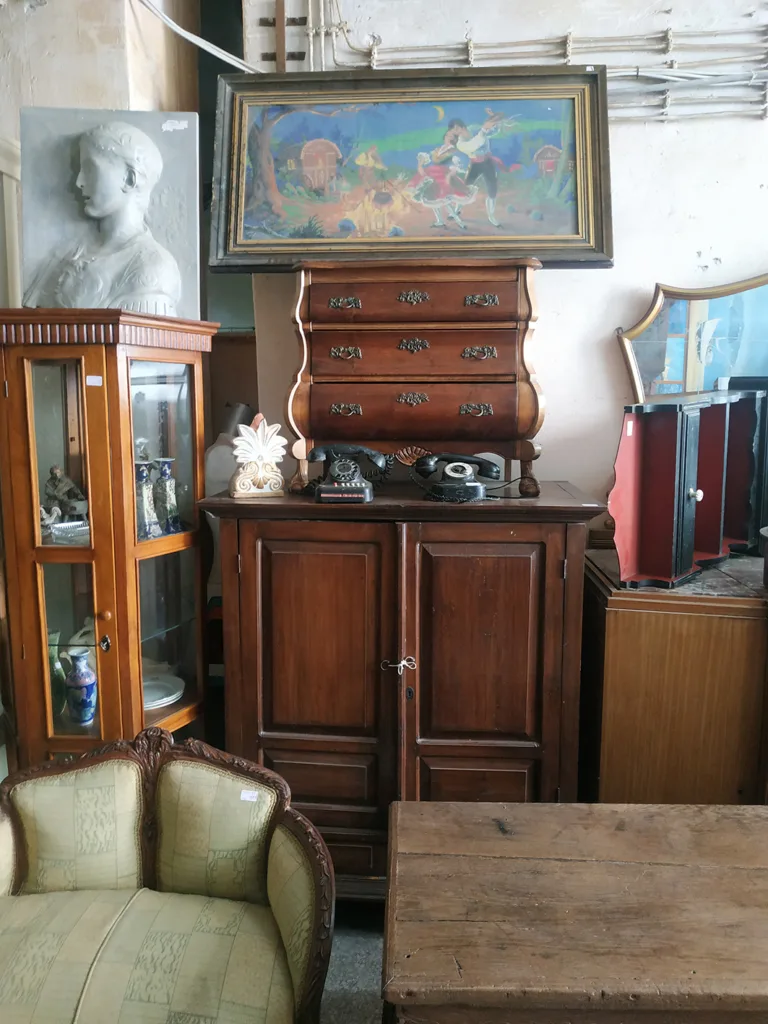
On another level, thrift or Op Shop stuff like old wooden furniture for example, exude stories of someone’s life, of their circumstances, inspiring and arousing interest and awe in the human, beyond the material: not to mention the more often than not uniqueness and better craftsmanship of such products too.
The products of Paliosinitheies incorporate many eras and subsequent styles and include a plethora
of every type of furniture piece and ‘decorative’ item you can imagine… and more, such as a gynecologists table, and a ‘torture’ chair from a film set, and the less ‘kinky’ oriented, pinball machine, though one never knows. Oh, and there’s the dodgem car which Ada bargained hard for in Cash or Trash, and got! There are also traditional Greek items, and smaller knickknacks such as various ornaments, rugs, lamps, plate sets, etc.
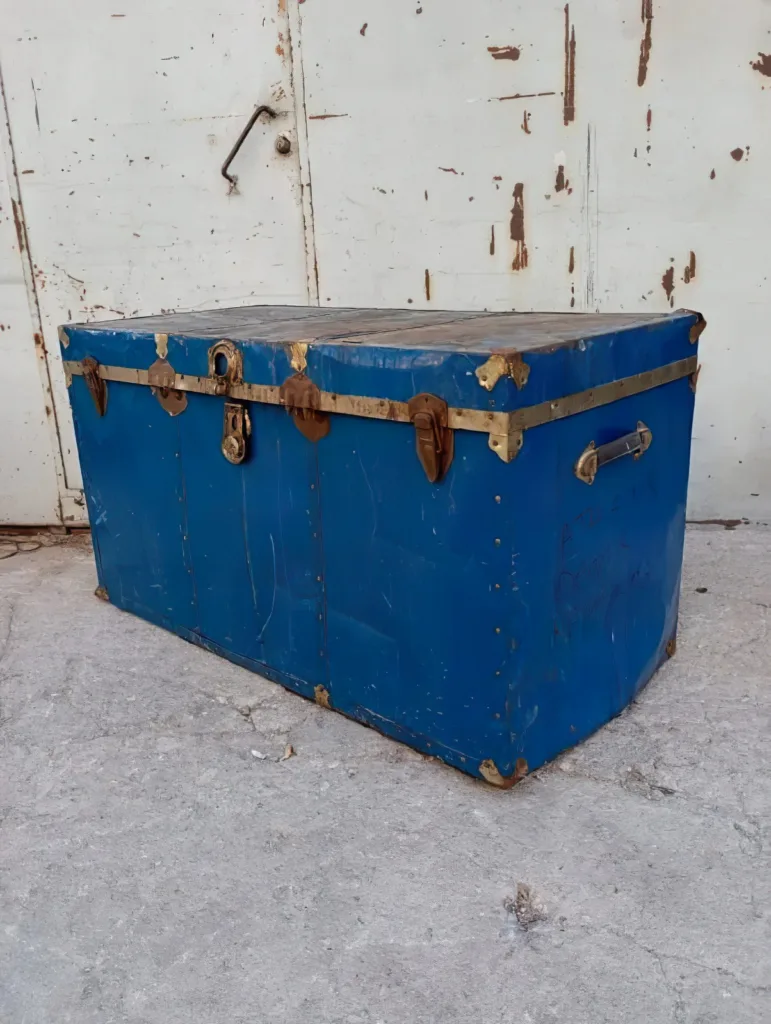
Laughing, she tells me of a trunk for sale in her shop that she hadn’t properly “searched” after cleaning, where the buyer found hundreds of euros in its base.
Becoming more solemn she says, “imagine the stories of these chests – migrations, goodbyes, starting again and often returning for whatever heart wrenching reason.”
She then looks into the distance, and tells me about the letters: “We also have letters found in furniture drawers, and even in old shoe boxes for example, that tell of people’s loves and lives. This is what interests me most – the human factor; the light but also the darkness of people.”
Returning to the present, Ada continues: “Most things here in my store are from Greece, but there are also quite a few products from my travels abroad. I go to France and Belgium quite a bit and bring stuff back. We sell things at Paliosinitheies at the best low prices, and of course don’t make distinctions between celebrities who come here, nor members of the public.
“We respect all our customers, and this may have something to do with the fact that myself and my staff have had our share of interesting, turbulent lifestyles before turning it all around and making the Paliosinitheies business our primary world of paliosinitheies!”
I thank Ada and wish her the very best, while with blue eyes twinkling and a smile she reminds me, “we can ship to Australia too.” There you have it! Bad habits turned thrifty and good!
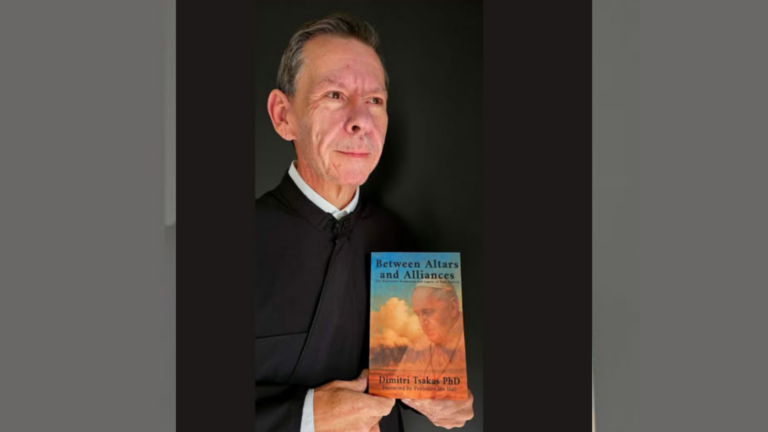
In his recently published “Between Altars and Alliances,” Father Dimitri Tsakas, a Greek Orthodox priest, offers a rich, expansive, and intellectually sophisticated exploration of Pope Francis’ diplomatic legacy.
This is no superficial biography nor apologetic hagiography. Instead, he furnishes the reader with an interdisciplinary analysis that draws equally from theology, international relations theory, political history, and critical theory. The result is a work that not only sheds light on the inner logic of Francis’ unconventional diplomacy, but also calls into question the inherited assumptions underpinning papal statecraft in the modern era.
At the heart of the book lies a compelling argument: that Pope Francis did not merely engage in diplomacy as an ancillary function of the papal office, but redefined it as a mode of ecclesial presence in the world, as a form of spiritual encounter and discernment rather than geopolitical manoeuvring. This paradigm, according to Father Dimitri Tsakas, emerges from a confluence of Francis’ Jesuit formation, his Latin American political context, and his commitment to the full implementation of the Second Vatican Council.
Father Dimitri Tsakas carefully traces how Francis’ diplomatic ethos is shaped by Ignatian spirituality. Here, diplomacy is primarily about discerning the signs of the times, privileging reality over idealism, and acting from the margins. The influence of figures such as Romano Guardini and Gustavo Gutiérrez becomes palpable in this work, where paradox, ambiguity, and patience, rather than being seen as flaws in Francis’ approach, are deliberate features of a relational politics grounded in encounter, not confrontation.
The ground-breaking study situates Francis squarely within the tradition inaugurated by Vatican II. The author convincingly argues that Francis sees the aggiornamento of the Council not solely as a moment in ecclesial history, but as an ongoing imperative. His diplomacy thus is dialogical, inclusive, and unafraid to enter the world’s wounds. The model of Church as “field hospital” becomes more than a metaphor, it structures the very grammar of Francis’ international engagements.
Father Dimitri Tsakas’ engagement with diplomatic theory is nuanced and incisive. He situates Pope Francis within the tradition of soft power diplomacy, yet expands it beyond Joseph Nye’s formulation. For the author, Francis’ diplomacy is not merely about attraction or legitimacy, but about presence, memory, and witness, drawing on theological rather than strategic categories.
Engaging constructivist and post-structuralist international relations theory, the author shows how the Holy See under Francis challenges the logic of geopolitical hegemony. Rather than acting as a power-maximiser, the Vatican becomes a norm entrepreneur, advancing alternative frameworks grounded in multilateralism, nonalignment, and a theological anthropology of encounter.
While Father Dimitri Tsakas does not explicitly engage critical theorists such as James Der Derian or Cynthia Weber, his account gestures toward a reading of Francis’ diplomacy as deeply symbolic and performative. He invites readers to consider how the pope’s public gestures—his silent prayer at the separation wall in Bethlehem, his embrace of refugees, his meetings with Patriarch Kirill and Grand Imam al-Tayeb, operate within theological and liturgical registers, rather than conventional geopolitical scripts. In this light, Francis emerges not merely as a statesman, but as a moral interlocutor whose rituals of presence challenge the logic of Westphalian diplomacy and unsettle the norms of global governance.
In this respect, the pontiff’s preference for a multipolar world is not a tactical response to declining Western influence, but a theological commitment to pluriversality, a world composed not of one centre and its satellites, but of many voices, many centres of gravity, all oriented towards the common good. This vision aligns with the decolonial critique advanced by thinkers such as Walter Mignolo or Enrique Dussel, who call for a shift from universalism to diversality. Francis’ diplomacy, as the author describes it, operationalises this shift by decentralising ecclesial authority, amplifying non-European perspectives, and affirming the dignity of peripheries.
This approach can be fruitfully read through Michel Foucault’s theory of power as relational and dispersed. As the author suggests, Francis’ diplomacy resists the vertical hierarchies of both ecclesiastical tradition and secular realpolitik. Instead, it exercises what Foucault might call capillary power, influence that moves through diffuse, informal channels, privileging proximity over domination. This power manifests in pastoral visits, symbolic gestures, and acts of solidarity that bypass conventional statecraft while subtly shaping global consciousness. In this light, Francis is not merely a soft power actor, but a practitioner of parrhesia: one who dares to speak truth from the margins within asymmetrical structures.
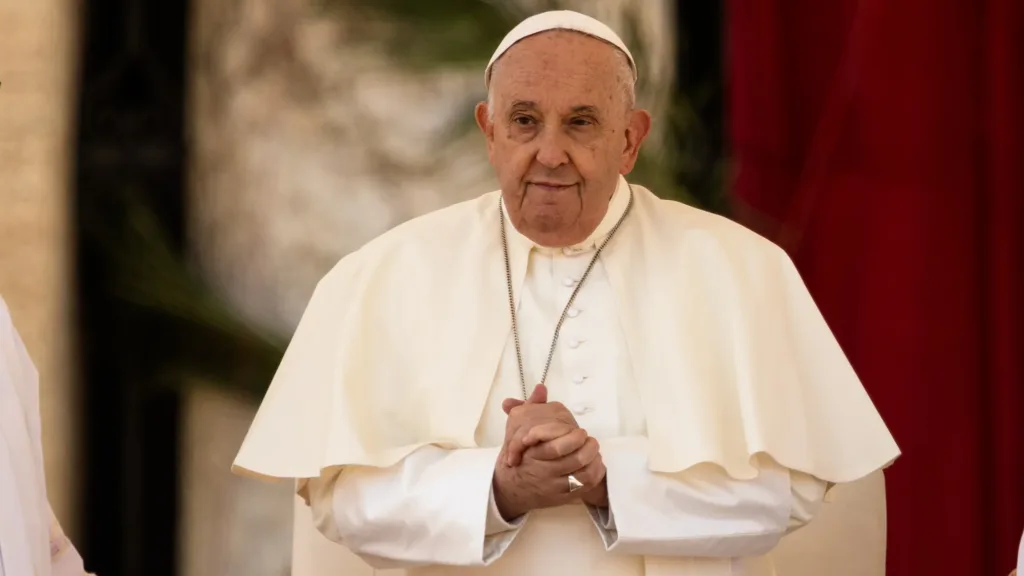
Pope Francis
One of the great strengths of the book lies in its use of three case studies: Francis’ diplomatic engagement with the United States, Russia, and China. Each is approached not merely as political history but as a meditation on the tensions between diplomacy and conscience. In the case of the United States, Father Dimitri Tsakas highlights Francis’ dual posture of alignment and critique: affirming American democratic ideals while challenging economic exclusion and militarism. With Russia, the author probes the risks and significance of the 2016 Havana meeting with Patriarch Kirill, framing it as a tentative gesture toward healing the millennium-old schism, while remaining alert to the complicity of the Russian Orthodox Church in Kremlin geopolitics.
The China chapter is perhaps the most ethically provocative. The author does not avoid the controversy surrounding the 2018 Provisional Agreement. He acknowledges concerns from underground Catholics and human rights advocates, but interprets Francis’ decision as driven by a long-range pastoral vision. Diplomacy, in this case, becomes a form of ecclesial kenosis, a strategic self-emptying in hope of sustaining communion. Though Tsakas does not explicitly cite political theologians such as William Cavanaugh or Leonardo Boff, his work gestures toward the same questions: How does the Church navigate the tension between institutional adaptability and prophetic witness? In inviting readers to reflect on these dilemmas, the author opens space for a deeper theological engagement with the practice of diplomacy under authoritarian regimes.
While not explicitly engaging postcolonial theory, Father Dimitri Tsakas’ account invites a critical reading through that lens. Francis’ formation in postcolonial Argentina, and his deep suspicion of hegemonic structures, resonates with the concerns of theorists such as Homi Bhabha and Frantz Fanon. Although the author does not cite them explicitly, his emphasis on Francis’ resistance to binary logics, his decentring of European authority, and his preference for the margins suggests a decolonial ethos at work. One might interpret Francis’ diplomacy as a form of pastoral pluriversality: opposed to imperial universals and rooted in the dignity of multiple centres of moral authority. A more sustained dialogue with liberationist and postcolonial scholarship, particularly as applied to ecclesiology, could further illuminate the theological radicalism implicit in the author’s narrative.
This raises a pressing question: what might this model of diplomacy mean for the Orthodox Church? Father Dimitri Tsakas is suggestive rather than prescriptive. He observes that Orthodoxy, lacking a centralised juridical authority like the papacy, follows a different diplomatic grammar. Yet the Havana meeting and Francis’ overtures to the East pose both an invitation and a challenge. Could there emerge an Orthodox diplomacy of encounter, grounded in synodality, oikonomia, and an ecclesiology of communion, or does the institutional fragmentation of Orthodoxy preclude such a vision? There is much here for Orthodox theologians to consider, particularly whether an “Orthodox soft power” might be imagined, drawing on ascetic witness, diaspora networks, and a eucharistic cosmology. In diplomatic terms, eucharistic cosmology reframes the Church’s presence not as jurisdictional control, but as sacramental offering: a vision of unity-in-diversity where diplomacy extends liturgical communion across ecclesial and geopolitical borders.
The book’s implications for Orthodoxy extend beyond diplomacy. Father Dimitri Tsakas subtly challenges Orthodox churches to develop a global vision, not merely in reaction to papal initiatives, but as a coherent response to a fractured world. What would Orthodox diplomacy look like if shaped by the Trinitarian logic of relationality rather than institutional autocephaly? Could a kenotic, dialogical model emerge from the patristic and hesychastic traditions? These questions are pressing, especially amid geopolitical crises involving Orthodox churches. Between Altars and Alliances calls Orthodox theologians to look beyond jurisdictional rivalries and imagine diplomacy as a liturgical and eschatological presence in the world.
In an age of war, climate collapse, and ideological entrenchment, Francis’ diplomacy, as presented by the author offers a vision not of ecclesiastical dominance but of moral imagination. It is a diplomacy that dares to be uncertain, relational, and open-ended. It prioritises witness over victory, process over posture. And in doing so, it implicitly critiques both secular diplomacy’s obsession with control, and ecclesiastical diplomacy’s tendency toward triumphalism.
Between Altars and Alliances is thus a landmark study that reimagines diplomacy as a theological and spiritual practice, and Francis as a figure who blurs the line between church and world, altar and forum. Father Dimitri Tsakas writes with clarity, erudition, and restraint, offering an analysis that is both grounded and visionary. The book stands out for its interdisciplinarity and accessibility. The author distils complex concepts, such as pluriversality, parrhesia, and ecclesial kenosis, into elegant prose without oversimplification. His treatment of Francis’ meeting with Patriarch Kirill deftly weaves ecclesiological nuance with geopolitical insight, making it engaging for both specialists and general readers. With scholarly precision and lucid style, he opens up ecclesial diplomacy as a vital field of inquiry, charting new directions that link theology, global politics, and moral witness.
In the final analysis, Father Dimitri Tsakas does not ask us to endorse all of Pope Francis’ diplomatic choices. Rather, he urges us to grasp their theological coherence and moral intentionality. In doing so, he establishes a compelling framework for understanding ecclesial diplomacy as a vital mode of ecclesial presence in the modern world. Whether Francis is seen as a bridge-builder or as a disruptor, his reconfiguration of the Church’s global engagement, rooted in encounter, conscience, and pastoral risk, is here rendered with intellectual clarity and spiritual depth. This work stands as a significant contribution to both theological reflection and the study of international relations.
As Cyprus faces another intense summer with growing wildfire risks, the Municipality of Paralimni-Deryneia is adopting artificial intelligence to enhance early fire detection, according to ekathimerini.com.
In collaboration with Kernel Consultants, the municipality is rolling out 15 advanced fire detection stations powered by FireWatch AI—a system developed by Cyprus-based Neuranet Solutions. This cutting-edge technology can detect signs of smoke or fire up to 15 kilometers away, issuing alerts within seconds.
“This technology gives us a critical edge in fire prevention,” municipal officials noted, highlighting the importance of rapid response during extreme heat and high-risk conditions.
The AI network will monitor all areas within the Paralimni-Deryneia municipality. When a potential fire is detected, a signal is sent to specialized AI servers for real-time analysis. A trained operator then confirms the alert and immediately contacts the Fire and Forestry Departments, enabling fast and coordinated action.
Cyprus first introduced AI-based fire detection in 2023, when Greek company PROBOTEK implemented a similar system in Athalassa Park, Nicosia. The current expansion marks a major step forward in wildfire prevention efforts across the island.
By Joseph Lo Bianco, President of the Pharos Alliance
Understanding but not speaking is a common experience of heritage language or background language communities. We grow up surrounded by English, and increasingly we only hear our heritage language in our parents’ or our grandparents’ homes.
People often describe understanding Greek as passive competency and speaking Greek as active competency. There is some sense to this, but it is also a limited perspective. Understanding requires a lot of mental and linguistic activity as well as just processing the ‘input’ we receive from others. When we receive other people’s messages and process them, we imagine we are not doing much.
By contrast we think that speaking Greek is an active competency, because the speaker generates the messages. This is broadly true but also misleading. You cannot process what someone has said to you passively, you still need to apply active knowledge to sort out the meaning. Understanding language requires us to actively think about what the speaker intended, what nuances, or attitudes are attached to the message. To make this more concrete, imagine Stavroula speaking to her 16-year-old son, Orestes.
Stavroula: Ορέστη, ήταν πολύ αγενές αυτό που έκανες. Δεν είναι σωστό να κοιτάς συνέχεια το τηλέφωνό σου στο σπίτι κάποιου άλλου. Kατάλαβα ότι η θεία Μαίρη ενοχλήθηκε. Είναι χειρότερο για τον παππού σου που απλά δεν καταλαβαίνει τι κάνεις. Είναι πολύ μεγάλος για αυτές τις τεχνολογίες και σε αυτόν φαίνεται ότι δεν έχεις καθόλου σεβασμό.
Orestes: Oh mum, don’t make SUCH A BIG DEAL about it. I just looked a couple of times, SHEESH, everyone does it. I’ve seen YOU check your iPhone heaps of times. Even Aunty Mary, when she’s helping παππού, she’s always checking things. It’s nothing about RESPECT.
For Orestes to understand what his mum said he had to process information and attitudes as well as language. His reply in English tells us that he understood perfectly that he was being chastised, and about family obligations, and appropriate behaviour expectations. He understood it well enough to push back, it’s clear he knows a lot of Greek. His understanding is deep (his behaviour a bit less). This is a bilingual dialogue, a mixed language communication reflecting our bilingual lives.
Comprehension and production feed each other, hearing and reading more Greek expands your vocabulary, grammar awareness and natural phrasing, and each time you successfully speak or write in Greek you confirm your sense of what is appropriate, reinforcing your comprehension, deepening your mastery and turning passive knowledge residing in your brain into an accessible language resource for spontaneous use.
Comprehension and production usually develop in what linguists call a ‘developmental order, meaning that most learners comprehend MORE than they actively produce. Language comprehension and language production are intimately tied together, interacting to build a full communication ability. In the developmental order active skills lag behind passive ones, it is like a pyramid, we can understand and decode more than we use, because we can work out in context what unfamiliar words might mean but we might not be able to spontaneously use those words ourselves. Below, I recommend some practical ways to build active use from passive knowledge, to move to speaking Greek from understanding it, as we want Orestes to do and as the question behind this Pharos Tip asks, these two concepts will help you design your own growth from comprehension to active use.
Shifting from passive to active
So, here are some practical tips and steps to bridge the gap between recognition and production and become an active language user. To unlock your inner fluent Greek speaker, the key is to interact and speak as much as possible, in real spontaneous situations.
1. Do it daily: Nominate a daily Speak Greek time. Pick a topic for a week and develop new words or expressions for it each day. Tell people who speak fluent Greek that you are on a mission of learning and growing and aim to track your progress, stay consistent, be systematic, and ‘check out the tech’.
2. Record Yourself: Self-recordings are a useful way to track and improve and build self-awareness. Make tapes or phone videos of yourself speaking, listen to these tapes, focus onpronunciation errors and correct yourself.
3. Find an interlocutor: This is a fancy way of saying find a native speaker. Ideally, it will be a real person but don’t dismiss the tech. There are many apps that provide avatars and AI tutors, and some connect you to native Greek speakers for real time conversations. The best apps offer realistic simulation, enjoyment, immediate correction and helpful feedback. If your interlocutor is not a real living human being then you shouldn’t worry about them judging you, and you can make improvements to pronunciation and vocabulary before you test your new language ability with a human. You can set up a small group for Greek conversation, best done weekly or more often if you can manage it, agree you will try to use Greek and only Greek.
4. Shadowing: This sounds sneaky but it isn’t really, shadowing technique is just a systematic way to listen and repeat. You selectreal time spontaneous Greek audio (a podcast is ideal, but it could be the highlights of a μητέρα όλων των μαχών on YouTube clip, etc), but it needs to have stop and play functionality. You play, stop, immediately repeat aloud, trying to reproduce what you heard in real time Greek, especially new phrases, pronunciation and rhythm. Record, replay, check. You can do this as practice for the chat session with your friends, or an online group with an AI assistant. Shadowing helps you improve understanding of normal paced talk and builds your own oral fluency
5. Core Phrases: In communication there are low frequency words and high frequency words. Online just now I checked the 20 most frequently used words in ordinary communication in Greece. The particle na is in first place, είμαι (I am) is 4th, που is11th, andso on. Do a simple search of the 10-20 most useful phrases for an area or topic that interests you and use that to build your active vocabulary.
Help from cyberspace and from physical space
You can use core phrases building and sentence building exercises to pick high frequency words in cooking, football, weather, politics, etc, then put these words into phrases and sentences, and memorise and practice them with app partners (AI tutors, as well as humans) to put all this into practice. There are even apps to help you select the core phrases and words that interest you the most. Look up Anki or Quizlet both of which help you retain and recall words/phrases.
The best thing to do however, is to find a conversation practice course. Many university and commercial providers offer discussion or conversation support, on a weekly basis usually, so you are guided in improving your conversation. The focus of these is not a formal long term teaching program, but small group or even individual Greek speaking sessions on everyday topics, with the point of helping you move towards regular use. It is important in conversation training to keep a positive attitude, to ask for correction when chatting with tutors or partners, so they know where you are aiming to reach. The 5 steps above are personal exercises and combined with a professional course, supplemented by apps and can bring dividends, even if only done 10 minutes per day.
The following online resources all include Greek, and resources that connect you with native Greek speakers for text, voice, or video chats. Most offer daily practice opportunities, guided conversation, AI and real human tutors. They aim to be immersive and move you from passive to active knowledge. I don’t endorse or promote any single app, you should investigate the vast array of options available online, one of them might be perfect for your needs. HILOKAL, TANDEM, HELLOTALK, TALKPAL, PREPLY, MONDLY, DUOLINGO, GREEKPOD101.
One example is TALKPAL which helps you with interactive and practical tools to speak in Greek, and supports you towards fluency. You can get instant feedback, identify what you need to improve and shift from understanding to using the language. Here’s the link to TALKPAL Greek.
Conclusion:
Let’s return to Stavroula and Orestes and see how they are getting along.
Stavroula: Ορέστη, την επόμενη εβδομάδα είναι η ονομαστική σου εορτή και είμαστε καλεσμένοι στο σπίτι της θείας Μαίρης για μεσημεριανό γεύμα. Φρόντισε να το εκτιμήσεις αυτό.
Orestes: Cool, it’ll be sweet. I love my ονομαστική γιορτή. Ω, ξέχασα να σου πω, κάνουμε προφορικά στο μάθημα των ελληνικών. And I found a cool Greek app on my phone.
*Joseph Lo Bianco is President of Pharos Alliance, and Professor Emeritus in Language and Literacy Education at the University of Melbourne.
The unyielding, intransigent and aggressive policy of Turkey, the supposed signs of negotiation and joint trilateral and five-party meetings under the auspices of the UN, and the constant and pressing position of Turkey and the Turkish Cypriots that the only solution is partition and the apparent annexation of the occupied territories, through a Northern Cyprus, to Turkey — all these make the present appear as a resounding and deafening tragedy, following the rejection of the Annan Plan, 21 years ago.
In the previous article, we mentioned that with the Annan Plan we would now have a Federation of two states, with political arrangements that maintained balance, with two states accountable to the Federation — a system that has prevailed in Switzerland and has yielded excellent results.
Let us now look, beyond political reality, at the practical issues concerning citizens and their rights. Again, the Annan Plan prevails over current conditions, with the only negotiating leverage being the fact that Greek Cyprus is a member of the EU, on behalf of all Cypriots.
The complex property provisions of the Annan Plan included restoration, compensation and exchange. Greek Cypriots displaced in 1974 from territories to be placed under the control of the constituent state would get their properties back. Those not entitled to return to their homes would receive compensation in guaranteed bonds based on the market values at the time of their loss, adjusted to reflect the appreciation in property values since then.
All other displaced owners would have the right to restore one third of the value and one third of the area of their total property and receive compensation for the rest. Among other provisions, current users of properties originally owned by displaced Greek Cypriots and Turkish Cypriots who had made “significant improvements” to a property could apply for title to it, provided they paid for the value of the property in its original state. Cypriot citizens required to vacate properties for restoration would not have to do so until suitable alternative housing was provided.
The three Treaties of Establishment, Guarantee and Alliance of 1960 would remain in effect. Britain, Greece and Turkey would continue as guarantor powers. In the event of acceptance of the Annan Plan, Britain declared it would relinquish nearly half of the 98 square miles of land covered by its two sovereign military bases under the Treaty of Establishment.
A gradual demilitarisation of Cyprus would follow. All Cypriot security forces would be dissolved, while Greece and Turkey would be allowed to maintain up to 6,000 troops in Cyprus until 2011, to be reduced to 3,000 by 2018 or earlier if Turkey joined the EU before that date. Thereafter, the numbers would be reduced to the original 950 Greek and 650 Turkish troops provided for under the 1960 Treaty of Alliance. This would be reviewed every three years with the aim of eventual complete withdrawal of all Greek and Turkish forces.
The Annan Plan was the most tangible and rigorous proposal ever presented for negotiation and acceptance regarding the Cyprus issue. Any rejection of it by either of the two communities participating in the April 2004 referendum might be later regretted as a reckless abandonment of reality or seen as patriotic but maximalist dreaming that extended far beyond its limits. As expected, Cypriot communities around the world were once again divided over the referendum outcome, depending on ideological lines and place of origin.
Everything conspired to trigger a fanatical outburst. The fires of discord burned fiercely once more. The more moderate, the sceptical, the unaffiliated, were soon lost. The doctrine of resistance against the plan gained the upper hand. The maximalists prevailed and took leadership. They expressed their views in public spaces and dominated.
The divergence of opinions was also strong in Greece, where political leaders were divided, with supporters of the “Yes” stance gaining ground there. Also, many Greek Cypriots believed that the demand for the Cyprus issue to be resolved before Cyprus’ EU accession was so that reunification would not have to contain elements of European law incompatible with certain provisions of the Annan Plan.
On the other hand, as expected, the nationalistic ambitions of Turkey under President Recep Tayyip Erdoğan to increase its territorial ambitions and colonise the occupied part of northern Cyprus led its leaders, by February 2022, to consider any solution based on a “federal state”, as outlined in the Annan Plan, now as “outdated and off the table”. Instead, they were now focusing on “solving” the Cyprus problem through partition, creating two separate states on the island and thereby legitimising revenue from natural gas exploration on an equal footing.
Meanwhile, the aftermath of the resulting crisis, stemming from the failure of the 2004 referendum, was felt in Cyprus, Greece, and the Greek diaspora through exchanges of vitriolic articles in Greek-language newspapers, letters with unfortunate content, uprisings at gatherings, and noisy assemblies.
Turkey and the leaders of the Turkish community know well that no other country besides Turkey is willing to recognise the TRNC of 1983 as an independent sovereign state on an island which, as a whole, is accepted as a member of the European Union. They are also aware that Greek Cypriots have no reason to accept forms or types of minimalist settlement, because they are accepted by the world as the Republic of Cyprus on their own and can thus enjoy the benefits of recognition independently. Why should they ever accept anything less than that?
Finally, it is also a political and legal fact that individually, Turkish Cypriots have secured for themselves passports and identity cards from the Republic of Cyprus, which means that even if they refuse to recognise the Republic as their state, under global political and legal standards they are still its citizens, with all the consequences that entails.
It is also true that many negotiations have taken place to resolve the Cyprus issue. Since peace talks began in Beirut in 1968, seven UN Secretaries-General have held office, including Guterres. Also, during this time, leadership has changed five times on the Turkish side and seven times on the Greek side, including the current leaders. At least six special envoys for Cyprus and heads of the UN Peacekeeping Force in Cyprus have been appointed by the UN.
Since 2018, Cyprus has launched joint military exercises and training with the United States, sent its first security attaché to Washington, and begun accepting US troops and ships. In December 2021, the US Secretary of State declared that “the cooperation between the United States and the Republic of Cyprus is at a historic high.”
Furthermore, due to the shifting political dynamics on the island, UN leadership, following the last round of substantial negotiations at the Swiss resort of Crans-Montana in 2017, remained optimistic, stating that: “The essence of a comprehensive settlement of the Cyprus issue is practically there. The parties had come close to reaching strategic understanding on security and guarantees, as well as on all other outstanding core elements of a comprehensive settlement.” However, a senior diplomat with deep knowledge of the talks stated that “the remaining open issues from Crans-Montana… are insignificant.”
Finally, of historic importance is also the decision by the United States to fully lift the arms embargo that had been imposed on the Republic of Cyprus, reflecting the good relations of American foreign policy with Cyprus. However, any solution to the Cyprus problem that would lead to its reunification remains clouded, given the current political and strategic structure and the diplomatic progress made. This results in the missed opportunity of 2004 being seen as a loss and a tragedy.
We tend to think of modern science as arising through a break with religious ways of thinking, associating it with 18th century rationalism or with the atheistic materialism of the 19th century. It’s hard to imagine that the great shift towards modern mathematical science was way back in the early 1400s among those who pursued wisdom as a devotional path to divinity.
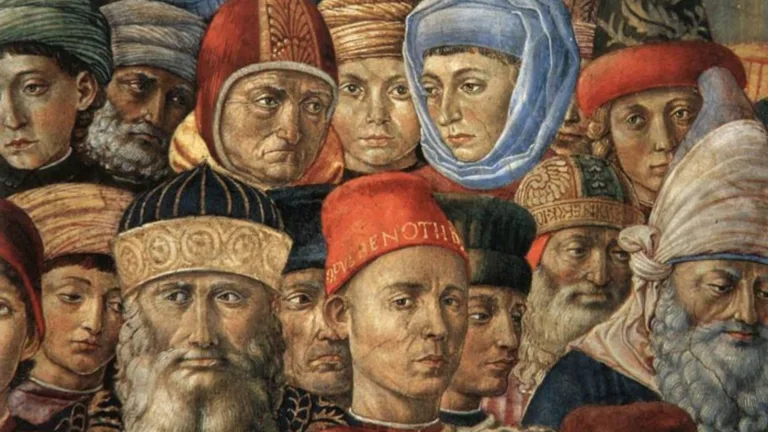
Stranger still is to imagine that an Eastern Orthodox delegation to a Western church council might have accelerated this scientific revolution. Yet the arrival of Gemistos Plethon at the Council of Florence in 1438 did just that.
Bearing Greek manuscripts of Plato, Plethon proceeded to define a break with old school Aristotelianism by teaching that the divine mathematical forms are to be found expressed in the movement of the stars, and across the whole of nature.
Plethon and other Eastern visitors invigorated the spirit of this Platonic revival that drove the advances of Leonardo de Vinci, of Luca Pacioli, and then of Copernicus, Galileo and Kepler.
In this lecture we consider the extent to which the Italian Renaissance might have begun in Plethon’s circle, before he left for Florence, back in the hilltop city of Mystras overlooking ancient ruins of Sparta.
BIO
Bernie Lewin is a founding director of the Platonic Academy of Melbourne. He has published widely in the history of science, including on the Platonic foundations of mathematics. Enthusiastic Mathematics: Reviving Mystical Emanationism in Modern Science is an historical introduction to Platonic science published by the Academy in 2018.
Event Details:
When: Thursday 7 August 2025, 7pm
Speaker: Bernie Lewin
Seminar: From Mystras to Florence: Gemistos Plethon and the Eastern influence on the Western Renaissance
Where: Greek Centre (Mezzanine, 168 Lonsdale St, Melbourne)
Niki Louca from My Greek Kitchen shares her favourite recipe for Apple Cake with The Greek Herald. You can follow her on Instagram @mygreekkitchen for more!
Ingredients:
150 g plain flour
1 tsp baking powder
125 g butter, softened
100 g sugar
2 eggs
1 tsp vanilla extract
2 tbsp dark rum
*50 ml milk
*3 large apples, peeled and cut into 3cm pieces
½ tsp cinnamon
Icing sugar to dust
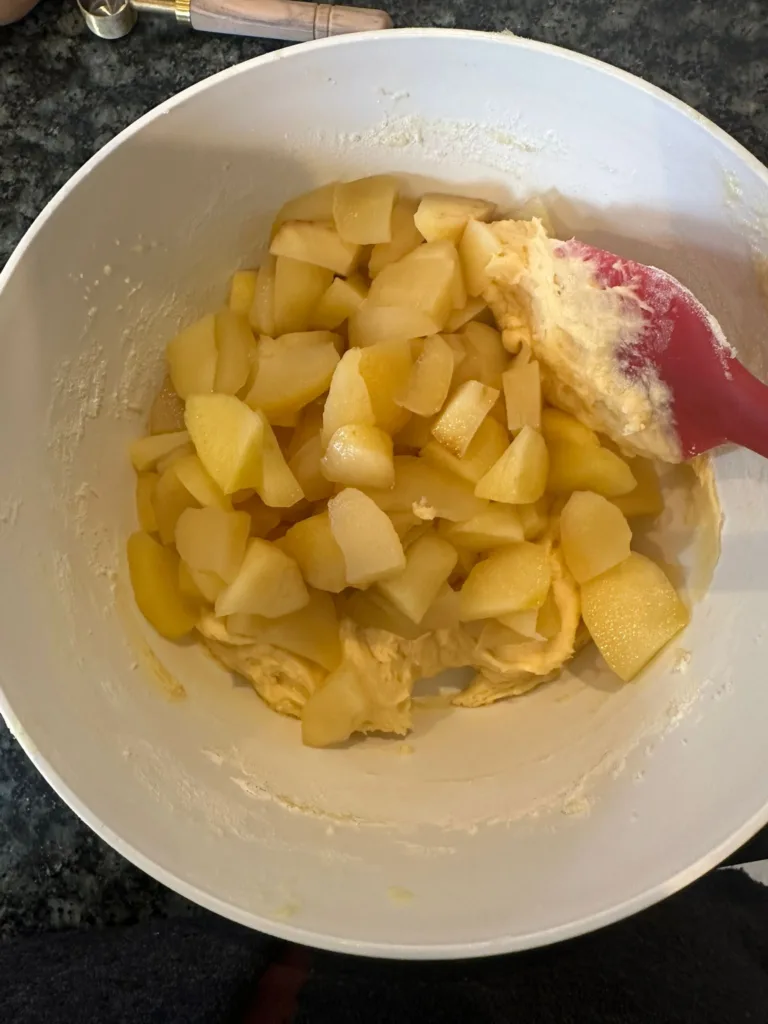
*can be made dairy free by omitting the milk and using poached apples instead. I have tried both ways and both are nice. I peel, quarter, and then cut each quarter into 3 slices, and poach them for only 3-4 minutes so they still have a bite to them. You don’t want them to be mushy. Use any sweet apples you have but NOT granny smith (they are too tart). I like using pink lady ones. Once they’re done, cool them down completely and cut them in half.
Method:
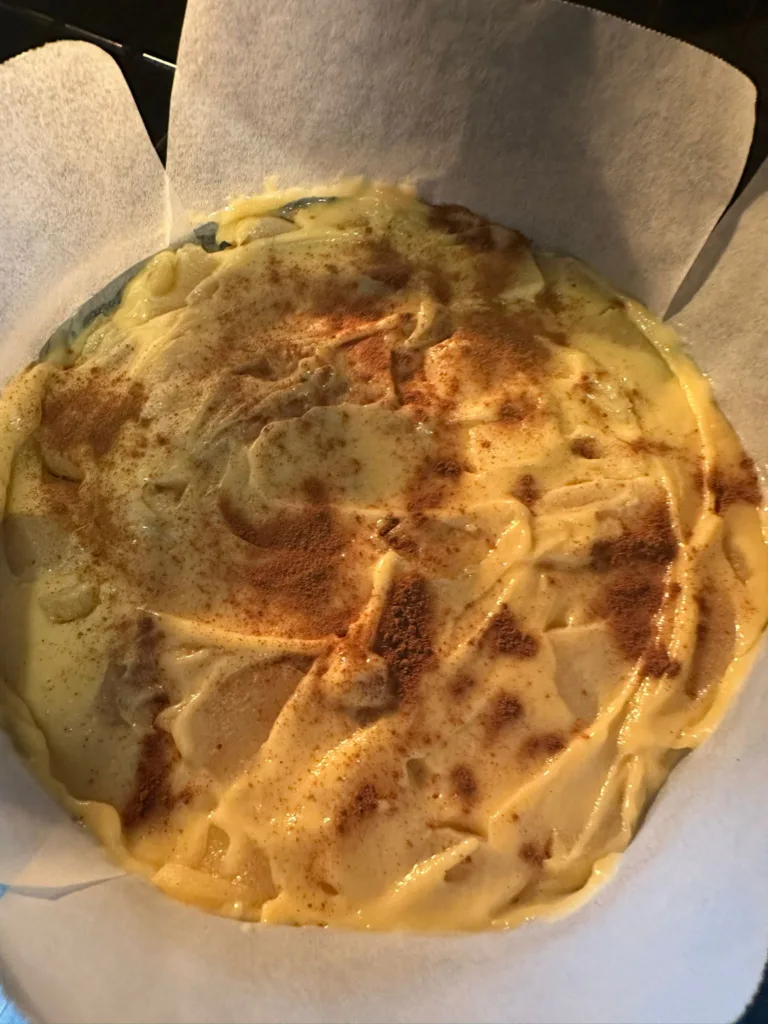
Preheat your oven to 160C and line a 20cm baking tin with baking paper. Base and sides.
Sift your flour and baking powder – set aside.
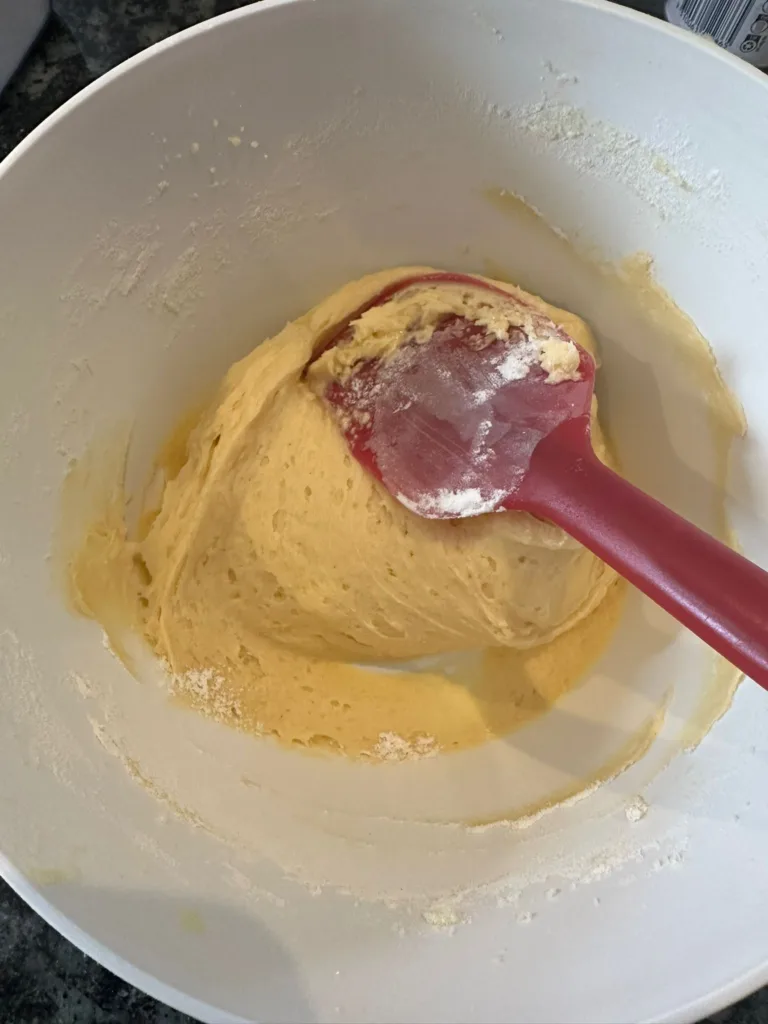
Using a hand held electric mixer, beat the sugar and softened butter till pale and creamy. Add the eggs one at a time, making sure you beat them well after each one. Add your vanilla and beat that through.
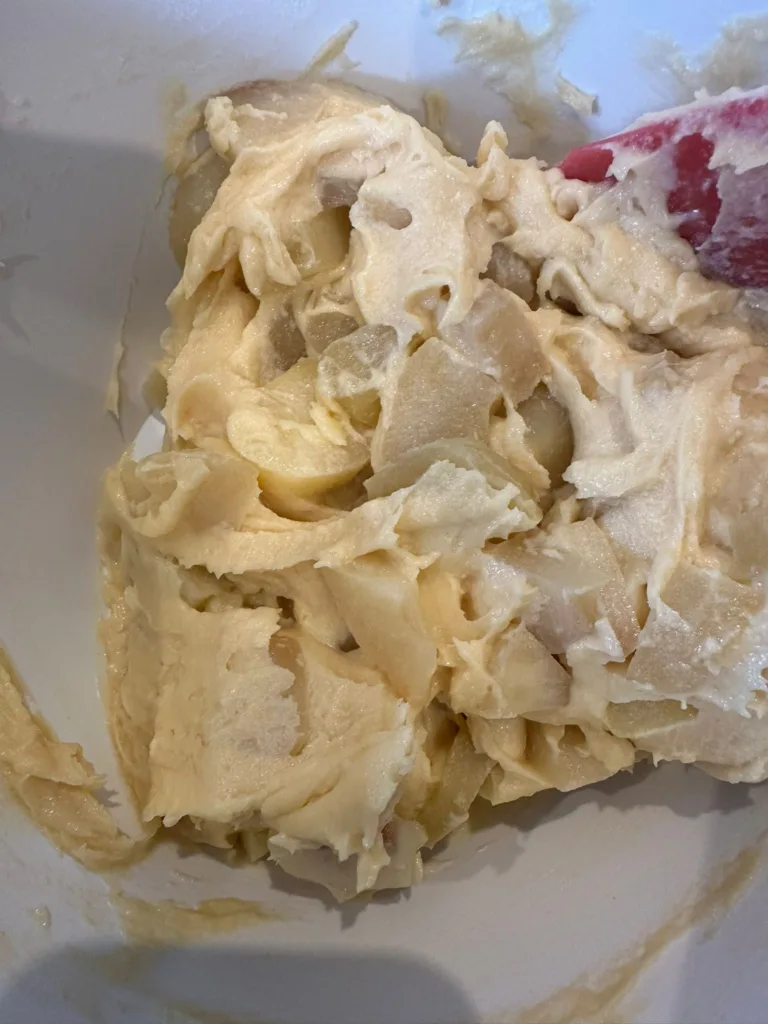
Fold your flour and baking powder mixture into the butter/sugar mixture, milk and finally your apples. If you are using poached apples be gentle as you don’t want to break them and don’t forget to omit the milk.
Transfer to your baking tin and sprinkle the cinnamon on top. Bake for approximately 30-35 minutes (till golden brown)making sure a skewer comes out clean when inserted into the centre of the cake. Remove from the oven and allow to sit in the pan for 5-10 minutes then transfer to a wire rack to cool completely.
Once cooled, transfer to your platter and dust with icing sugar. Serve as is or with a dollop of cream.
Greece remains among the top 15 travel destinations for tourists from the U.S., Canada, and Australia, while significantly gaining popularity in India, surpassing China for the first time, according to a new INSETE report.
Based on a GWI survey (Jan–Feb 2025), Greece ranks:
Australia: 11th (9.8%)
Canada: 11th (7.9%)
U.S.: 13th (8.4%)
India: 26th (5.9%), up 13 spots
China: 31st (3.8%)
According to athens24.com, France and Italy lead Mediterranean preferences across all five markets. Greece ranks 4th overall—except in Australia, where it places 3rd.
Travel intent is highest in India (72.4%) and lowest in the U.S. (57%), with Canada, Australia, and China in between. Indian travelers also show the highest intent for multiple trips, with 13.8% planning five or more.
Nature-focused and sun/sea holidays, key strengths for Greece, are especially appealing to Indian travelers.
Spending expectations remain steady across most markets, though many travelers expect to spend more—particularly 18% of respondents in Canada, the U.S., and China. Indian and Australian travelers also show increased spending intent.
Accommodation budgets vary, with Americans and Australians spending the most. In India, 38.9% are willing to spend over ₹4,800 per night.
Trip planning habits show Indians and Chinese book earliest, while Canadians are latest. Most prefer trips of 5–7 days or longer, especially in India, Australia, the U.S., and Canada.
Top vacation types include sightseeing, beach holidays, and city breaks. Relaxation is the main motivation in most countries, while cultural experiences top the list for Chinese travelers.
Hotels remain the top accommodation choice—except in China, where alternative lodging is more popular.
Greece’s rising profile, especially in India, points to opportunities in cultural, coastal, and nature-based tourism.
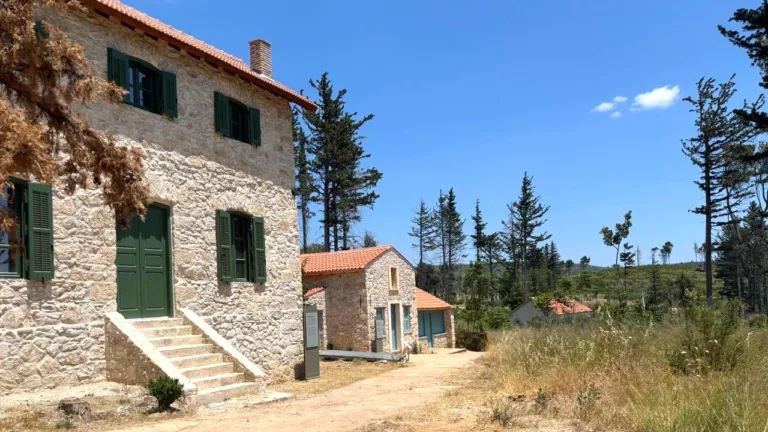
The redevelopment of the historic Tatoi Estate, once the summer home of Greece’s former royal family, is progressing steadily, according to Culture Minister Lina Mendoni during her recent visit. Located 21km northwest of Athens at the base of Mt. Parnitha, the estate is being transformed into a dynamic hub for culture, nature, and recreation, tovima.com, has reported.
With a budget exceeding €70 million—funded by national and EU sources, along with private sponsors like the A.C. Laskaridis Charitable Foundation and the AEGEAS non-profit of the Athanassios & Marina Martinos Foundation—the project aims to complete museum infrastructure by 2026.
Minister Mendoni called it “a project of national importance,” emphasizing that “the protection, restoration, and public access to the historical core of the former royal estate in Tatoi is a project of national importance, transforming the estate into a dynamic, visitable cultural and environmental site.” Major works are set for completion by end-2025, with public opening planned for the following year.
Current efforts include restoring the Stables of George I—future home of the Museum of Royal Carriages—and the Mausoleum near the Church of the Resurrection. Palace Garden landscaping continues, and infrastructure for water and sewage is already in place.
Damaged during the 2021 Mt. Parnitha wildfires, Tatoi is now equipped with modern fire prevention systems. Restoration is also supported by the Friends of the Tatoi Estate Association through fundraising and public tours.
Recognized for its ecological significance under the EU’s Natura 2000 network and once listed by Europa Nostra among Europe’s most endangered heritage sites, Tatoi’s revival is part of a broader €130 million initiative. “Tatoi is a legacy project for future generations,” said Mendoni.
The redevelopment of the historic Tatoi Estate, once the summer home of Greece’s former royal family, is progressing steadily.