Home Blog Page 32

Easter in Cyprus and the diaspora: A testament to resilience, renewal and unity

By Michael Peters Kyriacou, Honorary President of the Cyprus Community of NSW

For Cyprus, Easter is the defining heartbeat of the year.

Rooted in the traditions of the Greek Orthodox faith and shaped by centuries of history, it speaks to something deeper: identity, continuity, resilience, renewal, faith and enduring hope.

Above all, Easter represents resilience and continuity, connecting Cyprus’ ancient past, Christian heritage and modern community life in a living expression of hope, renewal and collective spirit.

Across Cyprus, and the diaspora Easter is lived — not observed.

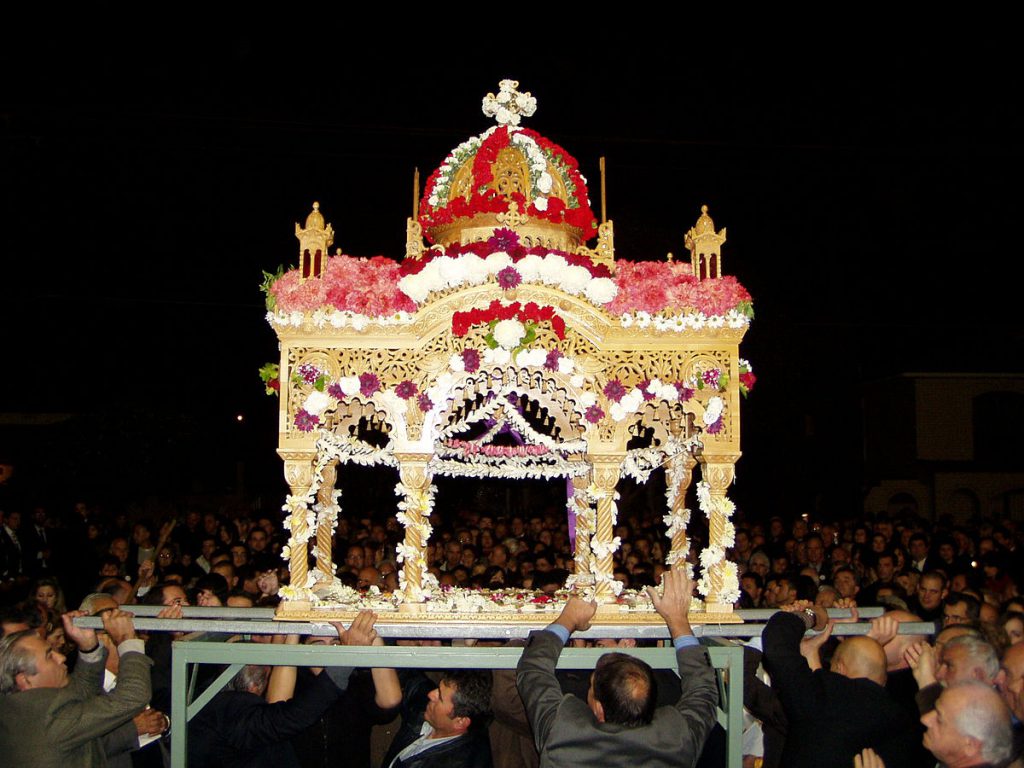
Churches are adorned with flowers, the Epitaphios moves solemnly through the streets, and the midnight proclamation of “Christ is Risen” brings communities together in a shared moment of light. Red eggs are cracked, families gather, ‘flaounes‘  traditional Cypriot cheese-filled pastries, are baked.
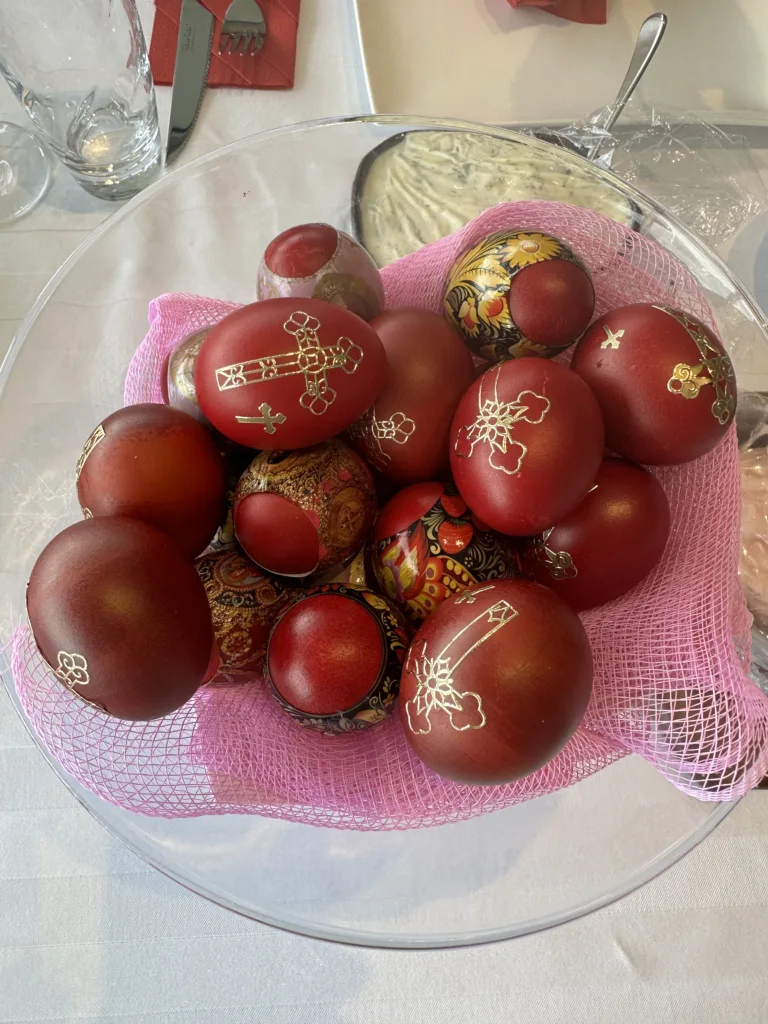
These are not rituals for show — they are expressions of belonging, continuity and meaning.

Easter in Cyprus is more than tradition — it is resilience and renewal.

Since the Turkish invasion of Cyprus and the ongoing occupation of the north, these traditions have not diminished — they have strengthened. Churches were lost, communities displaced, villages divided. But Easter endured — quietly affirming that identity, faith and culture cannot be erased.

Cyprus remains a spiritual anchor.

Through the legacy of the Church of Cyprus, one of the oldest autocephalous churches, the island continues to carry a message that has outlived conflict, division and time itself – a message that resonates across the diaspora.

Recent remarks by Hulusi Akar suggesting a “last Easter” for Greek Cypriots on the island stand in stark contrast to everything Easter represents: peace, renewal and our shared humanity. Many within the Cypriot community — especially those who lived through displacement — see that contrast clearly. On one side: light, renewal and hope. On the other: division and hostility. History has already answered which endures.

Easter is not defined by rhetoric. It is defined by resilience.

At its core, it is a call to conscience – towards peace, reconciliation and responsibility. It reminds us that selfishness and division have no place in a meaningful life.

It calls on us to be better. To care. To give. To build.

That message has travelled.

In Australia, the Cypriot community in New South Wales has not simply preserved these traditions — it is renewing them. Easter is lived. Families gather, values are passed on, and community remains central. But renewal is not passive. The Cyprus Community of NSW, as an institution, is itself in renewal — actively building.

Through scholarships, leadership programs, youth pathways and active subcommittees, it is shaping a future grounded in opportunity, inclusion and participation. From heritage and archives to youth, welfare, the arts and education – this is a living organisation.

Like the message of Easter — which is for all — so too is the Community: open to all to step forward, to contribute, and to help build something meaningful. A community for young families, for youth, for our elderly and our neighbours — a place of opportunity for connection, growth, purpose and renewal.

The recent Australia–Cyprus Achievement Awards reflect this clearly — recognising not status, but contribution; not words, but impact. They honour those who make a difference — those who help, who heal, who renew, and who advance tolerance through action.

cyprus australia achievement awards (69)
Winners of the Cyprus Australia Achievement Awards 2025. All photos copyright The Greek Herald / Andriana Simos

Easter reminds us of that truth.

Renewal is always possible — but only if we choose it.

And in a world too often defined by division, Cyprus — through its people — continues to stand for something better: peace, unity and inclusiveness.

The Cyprus Community of NSW wishes all a peaceful Easter — a time of reflection, renewal and renewed commitment to community, family, unity and the enduring values that bring us together.
Costa Georgiadis to feature at this year’s Little Food Festival in Melbourne

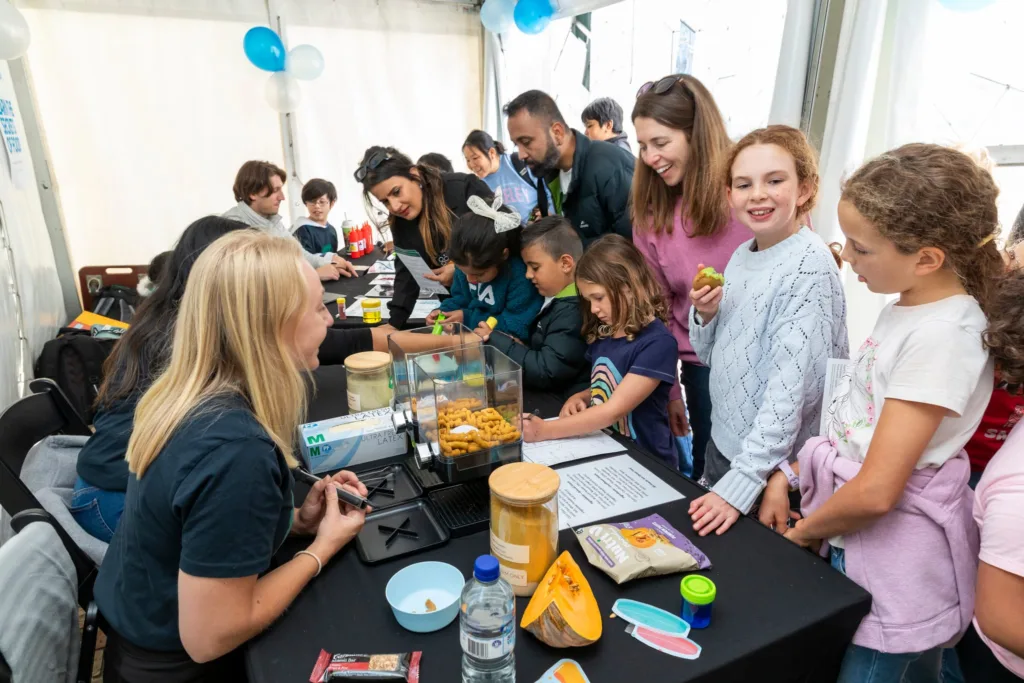
The Little Food Festival returns to Fed Square in Melbourne next weekend, April 15–16, for its eighth year. While it’s designed with kids in mind, it speaks just as strongly to adults and how food is understood, valued and engaged with.

The festival is a free community event which offers a lens into how food literacy — understanding where food comes from, how it’s grown, and the impact of our choices — can shape healthier, more sustainable habits across entire households. It’s as much about re-engaging adults as it is about educating kids.

Only 4.3% of Australian children meet the recommended daily intake of fruit and vegetables, and that figure declines as they grow. It’s a statistic that points to a broader issue: a growing disconnect from food systems that doesn’t begin and end in childhood.

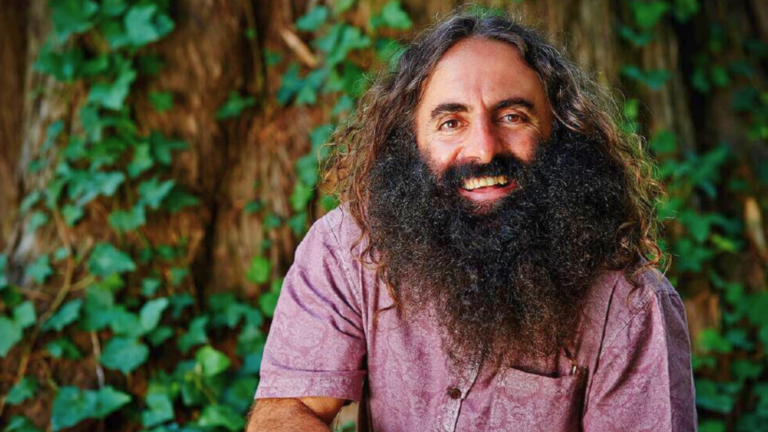
This year’s special guests include founder Dr Sandro Demaio, produce expert Thanh ‘Fruit Nerd’ Truong, and everyone’s favourite gardener Costa Georgiadis.

Costa brings an intergenerational perspective to the conversation — from growing up in backyard gardens where sharing plants was a form of currency, to learning about soil, composting and seasonal eating from his family.

His Greek heritage also plays a meaningful role in shaping his approach to food — where growing, cooking and sharing meals are deeply cultural acts, rooted in generosity, community and connection, and traditions he continues to champion in a way that resonates with a broad Australian audience.

He is a compelling voice on why food and sustainability education isn’t about perfection or restriction, but about simple, practical shifts — buying seasonal produce, embracing imperfect ingredients, and recognising the social value of cooking and sharing meals.

Event Details:

Janus Bar serves a taste of Greece to Sydney’s CBD crowd

The popular Sydney Bligh Street souvlaki spot Janus Bar has been treating bankers and lawyers to a smokey taste of Greece. Nestled between Chifley Square and Governor Phillip Tower, Janus Bar is owned by George Michael and managed by Georgina Ellenis.

Michael attributes Janus’ popularity to its versatility — it can be a quick lunch or a place to linger. He recalled the dire pandemic days.

“I remember $200 days,” he told The Australian Financial Review. “No one was coming back into the city, especially in this building. Other areas were getting more people. We had to push and do something different, so I pulled the barbecue out.”

Manager Ellenis clarified that Janus didn’t always have yeeros available. “At first, we only did the yeeros on certain days, Tuesdays and Fridays. Once we started doing this, it hasn’t stopped. They stay here all afternoon. They like the theatre of the barbecue, the smell. You can’t really get an outdoor barbecue in the city.”

Janus’ drinks also draw a crowd. Ellenis said Sapporo beer, sauvignon blancs and Aperol spritzes are favourites.

The financial appeal of Janus bar makes it a favourite compared to its high-priced neighbours, Chophouse, Grill Americano and Rockpool Bar & Grill. While Chophouse sells a double lamb chop for $62, fresh barbecued chicken or lamb wrapped in pita can be snapped up for $21 at Janus.

One Janus regular said, “As an investment banker, Janus is a good place to meet with clients when wanting an option out of the office.” Another referred to it as a “mullet… business in the front, party in the back.”

Source: Australian Financial Review

Director Margaret Thanos set to make her Sydney Theatre Company debut

Award-winning Cypriot Australian director Margaret Thanos is set to make her Sydney Theatre Company debut with Jez Butterworth’s 2012 play The River.

The River‘s intimate and unsettling story follows a man and his girlfriend on a nighttime fishing trip, with the woman swapping roles with other actors, raising questions about his past relationships.

Previously staged in small, immersive theatres with actors like Dominic West and Hugh Jackman, the play now opens at the Sydney Opera House, starring Ewen Leslie and Miranda Otto, her first stage role in over ten years.

Thanos received a call from Sydney Theatre Company’s new artistic director Mitchell Butel to direct the play. The call came after Miranda saw three of Thanos’ plays last year and recommended her to Butel. Miranda was impressed by Thanos’ ability to maintain a balance between humour and horror.

Thanos has directed The River like a cautionary dating tale. “There is probably nothing more terrifying than going away with your new boyfriend and realising while you are there that you have no idea who he is,” Thanos tells The Australian. “And that’s what happens to Miranda’s character in the show.”

This debut comes as Thanos also recently directed A Mirror for Belvoir St Theatre, a comedy first performed in London which skews politics, war, egotism and bureaucracy. 25-year-old Thanos also completed a term as the Andrew Cameron artist in residence at Belvoir.

Raised in Melbourne, Thanos remembers turning to her mum after her first drama class aged seven and saying “I’m doing that forever.”

While acting is what started Thanos’ love affair with theatre, she acknowledges that she was “always a director” and as President of the University of Sydney’s Drama Society she was able to harness her passion for directing.

Her taste for scandalous theatre started in high school when she staged a play with themes of suicide. “There was no greater feeling to me than watching a group of people bring to life something that I helped facilitate,” she said.

Thanos also mentioned her ambitions to direct cinema and win an Oscar award.

The River is at the Sydney Opera House until May 9.

Source: The Australian

Multicultural Minister Anne Aly sends Orthodox Easter wishes

The Hon Dr Anne Aly MP, Federal Minister for Small Business, International Development, and Multicultural Affairs, has issued a formal message wishing Orthodox communities a Happy Easter.

Full Message in English:

As Orthodox communities across Australia gather with family and loved ones to mark this sacred occasion, I send my warmest wishes for a blessed and peaceful Easter.

Orthodox Easter is a time of reflection, faith and renewal. It is a celebration of hope after hardship, light after darkness, and the comfort and strength that comes from family, culture and community.

Throughout Holy Week, traditions such as the procession of the Holy Shroud, the sharing of the Holy Light and the cracking of red eggs are important expressions of enduring faith and connection to heritage.

In a world of uncertainty, the message of Easter is especially meaningful. It reminds us to care for one another, to stand together in compassion and understanding, and to hold on to hope.

May this Easter bring peace to your homes, strength to your hearts and joy to your celebrations.

Happy Orthodox Easter!

The Hon Dr Anne Aly MP

Travel to Greece changes for Australians as EU launches biometric Entry/Exit System

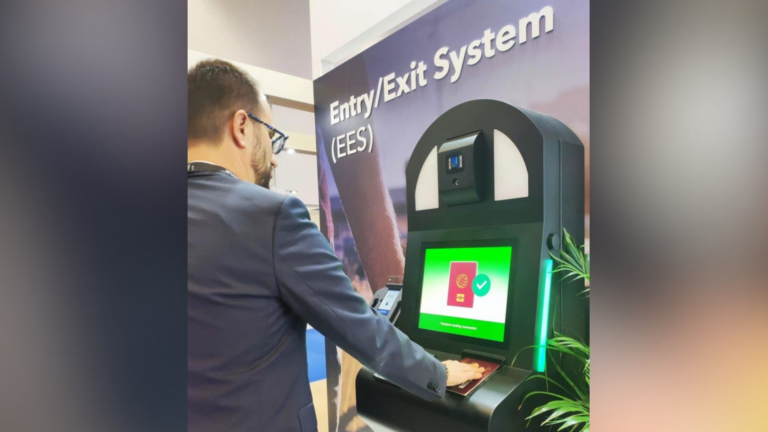
In effect from today, Australians travelling to Europe will have their faces and fingerprints scanned at borders across 29 countries as the new European Union Entry/Exit System (EES) replaces passport stamping.

Greece is among the countries to implement this new biometric data collection designed to track who enters and leaves the continent.

Other countries in the Schengen Zone who will activate the EES system are Austria, Belgium, Bulgaria, Croatia, Czech Republic, Denmark, Estonia, Finland, France, Germany, Hungary, Iceland, Italy, Latvia, Liechtenstein, Lithuania, Luxembourg, Malta, Netherlands, Norway, Poland, Portugal, Romania, Slovakia, Slovenia, Spain, Sweden, and Switzerland.

Cyprus and Ireland will maintain the use of manual passport stamping.

Travellers could also be questioned about the reason for their visit. Tighter screening comes amid ongoing Middle East conflict disrupting global travel while the European Commission reports over 25,000 people have been denied entry to Europe since the EES gradual rollout last year due to invalid documents or insufficient travel justification.

Travel experts warn of delays at airports, ports and international train stations as the digital system is activated. The International Air Transport Association (IATA), which represents hundreds of airlines worldwide, voiced its concerns about the effectiveness of the EES.

“There is a complete disconnect that EES is working well, and the reality, which is that non-EU travellers are experiencing massive delays and inconvenience,” IATA said in a statement. “We need to be realistic about what will happen during the peak summer months, when traffic at Europe’s airports doubles.”

Migration law expert at the University of Sydney, Mary Crock told ABC News the decision reflected part of a wider international shift toward increased surveillance of international travellers, amid rising instability from the Middle East conflict.

“We are now moving into an age where the need to be aware of who’s travelling where… has probably never been more important,” Crock said.

The EES is not the only border security measure Europe will be implementing. The European Travel Information and Authorisation System (ETIAS), will be functional towards the end of the year and will require travellers from visa-exempt countries, including Australia, to apply for authorisation before departure.

Crock said the new systems were “fortuitous”, rather than something for Australians to be concerned about.

“Given the dangers that we’re facing with conflict in the Middle East, we are in a period where nobody quite knows what’s happening, who is going to try and retaliate and in what manner,” she said. “So, for all of those reasons, getting on top of the electronics of movement is a very sensible thing to do.”

How does EES work?

Non-EU citizens, including Australians who are travelling to the countries in the Schengen area for short stays of up to 90 days in a 180-day period will use the EES.

The free digital border system requires no pre-registration and will record the traveller’s photo, fingerprints and passport details each time they cross a border.

On arrival and depature, travellers will present their passport, have their photo taken and fingerprints scanned, and potentially answer questions about their accommodation or the purpose of their visit. Returning visitors will only undertake a quick biometric check. Children under 12 only require a facial scan. Irish passport holders and some EU residents are exempt.

If travelling through a connecting flight through a Schengen airport, the EES checks happen at the first point of entry into the Schengen area. Internal flights between Schengen countries usually will not require further checks.

Source: ABC News

Mitsotakis signals age limits for gaming, online gambling following social media ban

Following the Greek government’s announcement to enforce a social media ban for under-15s, Prime Minister Kyriakos Mitsotakis has defended the plan and indicated that gaming and online gambling will be the next sectors subject to age-based restrictions.

Citing concerns over mental health, Mitsotakis criticised social media platforms for their “infinite scrolling” design which aim to increase user time.

“Parents are desperate,” he said, acknowledging that the new restriction would give them “two weapons” in telling their children that social media use is illegal under the new rules and referring to the introduction of mandatory age verification by platforms which will be imposed from January 1, 2027.

Mitsotakis urged parents to consult the government platform parco.gov.gr for guidance on device settings and application restrictions while confirming that social media companies will be required to verify users’ ages.

He emphasised that the restriction is part of a broader initiative where gaming and online gambling will be addressed next.

Mitsotakis said Artificial Intelligence and its impact on education are also on the government’s radar.

“Do we want Artificial Intelligence and these applications to do our children’s homework, or should children do it themselves?” he questioned. “It is a reality — let’s not kid ourselves — it is already happening today as we speak.”

Source: Kathimerini

Hellenic Club of Canberra to close City venue as Woden expansion takes centre stage

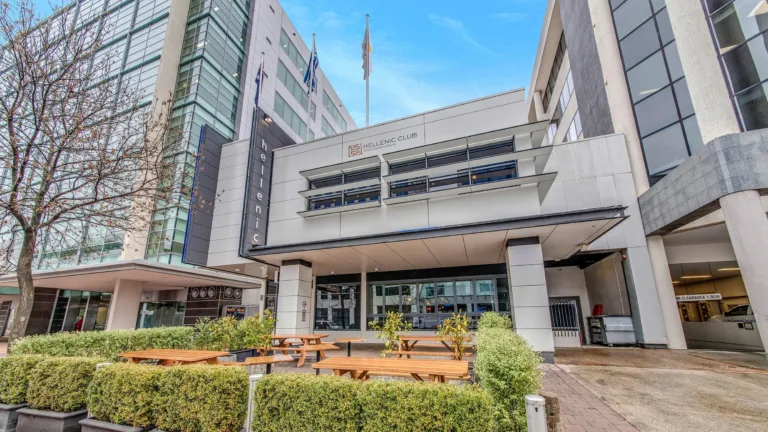
The Hellenic Club of Canberra will close its City venue in the coming weeks as it shifts focus to a major expansion of its Woden site, marking a new chapter for one of the Australian Capital Territory’s largest member-based organisations.

The City Club, which has operated for 15 years, will shut as part of a broader strategy to consolidate investment into the Hellenic Precinct, an ambitious masterplan set to transform the Woden location into a vibrant community and hospitality destination.

Hellenic Club CEO Ian Cameron said the decision reflects changing member behaviours and a long-term vision for the club’s future.

“This is about setting the club up for the next 15 to 20 years,” he said.

“We’ve seen a shift in how and where our members choose to spend their time. By focusing our energy on Woden, we can deliver a more dynamic and sustainable offering that benefits all 50,000 of our members.”

The Hellenic Precinct plan outlines a significant evolution of the Woden site, with expanded dining, entertainment and community spaces designed to create a central hub for members and the wider Canberra community.

Woden-Village1-1536x827
The plans for a Hellenic Precinct at Woden.

Importantly, the closure of the City Club will not result in job losses, with all staff to be offered equivalent roles at the Woden location.

“We’re incredibly proud of the City Club and the role it has played over the past 15 years,” Mr Cameron said.

“Our priority has been to support our team through this transition and ensure our members continue to receive the high level of service they expect.”

The Hellenic Club remains one of Canberra’s largest member-based organisations, and the shift signals a renewed focus on scale, experience and long-term sustainability in a changing hospitality landscape.

Greece prepares to safely transfer the Holy Light from Jerusalem amid strict restrictions

Greece will undertake a carefully planned mission to safely transport the Holy Light from the Church of the Holy Sepulchre via a government flight under strict restrictions imposed by Jerusalem police.

According to Deputy Foreign Minister Ioannis Loverdos, a detailed operational plan has been finalised, with Greece prepared to undertake this mission under the strict security measures put in place.

A flight will depart early on Holy Saturday morning for Tel Aviv before the Greek delegation will travel by road from the Ben Gurion Airport to Jerusalem.

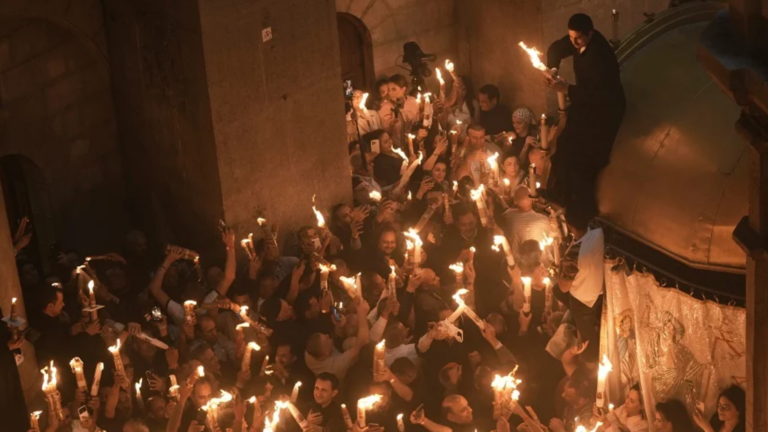
The delegation will participate in the Holy Light ceremony at the Church of the Holy Sepulchre before the Patriarch of Jerusalem will officially hand over the Holy Light. The delegation will then retrace its route before departing for Greece in a government aircraft.

The Holy Light is expected to arrive at Athens International Airport at approximately 7:00pm on Holy Saturday where Greek airline SKY Express will transport the Holy Light from Athens to Alexandroupoli, Iraklio, Corfu, Hania, Mytilini, Rhodes and Santorini.

Adhering to this timeline is crucial for distributing the Holy Light nationwide through coordinated airline efforts. Greek Ministry of Foreign Affairs emphasised that the goal is to ensure the Holy Light reaches every parish nationwide in time for the Resurrection service.

Source: Tovima and Kathimerini

Greece could benefit as Trump weighs shifting US troops from NATO allies

The White House is reportedly considering ways to punish members of the NATO (North Atlantic Treaty Organization) alliance that US President Donald Trump believes were unhelpful in supporting the US and Israel during the Iran war.

The proposal would involve removing US troops from NATO countries deemed unhelpful and stationing them in countries that were more supportive. This proposal comes after Trump’s threat to fully withdraw the US from the alliance which by law he can’t do without Congress.

NATO members including Spain, Germany, Italy, and France, have clashed with Trump since his return to power and have recently angered him by criticising or refusing to support the Iran war. Whereas countries viewed as supportive such as Greece, Poland, Romania and Lithuania, could benefit from this proposal.

Trump has been openly and frequently critical of NATO countries and their unwillingness to support since the start of the conflict. He says it is “a mark on NATO that will never disappear.”

Senior European officials argue they were never consulted on the war which made it difficult to coordinate a military response in the initial days of the conflict.

The proposal is still in its early stages and is one of several ideas aimed at retaliating against NATO. The discussions highlight increasing tensions between the Trump administration and its European allies, especially after the president’s decision to initiate conflict with Iran.

White House press secretary Karoline Leavitt said, “It’s quite sad that NATO turned their backs on the American people over the last six weeks when it’s the American people who have been funding their defence.”

There are approximately 84,000 US troops stationed across Europe which serve as an integral hub of global US military operations. It has yet to be confirmed which countries would have their troops removed.

Source: The Wall Street Journal