Nick Kyrgios says he’s made a “miracle” recovery from a long-term knee injury and is eyeing a surprise return at the 2025 Australian Open.
After years of knee and wrist problems that limited him to just a handful of matches, the 30-year-old says his knee has suddenly improved and he can now train pain-free.
“It’s not swelling. It’s not feeling bad after a session,” he said.
Kyrgios plans to test his fitness in exhibition matches in the US, India and Dubai before deciding on a Melbourne comeback. Ranked No. 652, he would need a wildcard entry to compete but says he’s regained optimism.
“I thought my tennis career was closing… but now I’m just optimistic again,” he said.
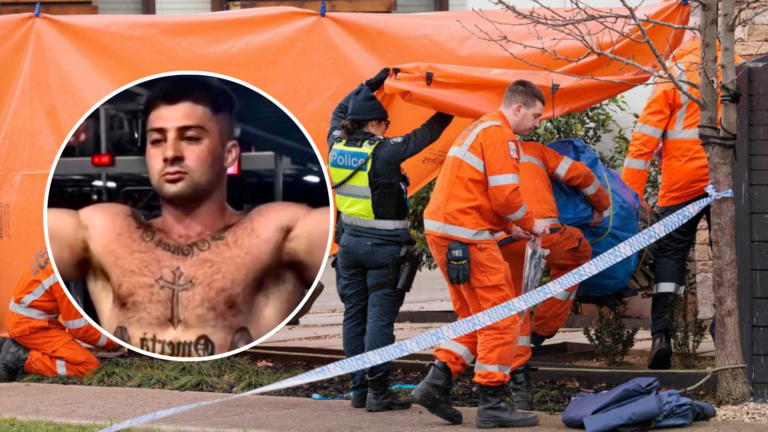
Police believe 21-year-old Athan Boursinos, shot dead in Melbourne’s north, was murdered by organised crime figures from New South Wales who travelled to Victoria specifically to carry out the hit.
Boursinos was killed in a laneway behind Champions Parade, Wollert, on 31 July, in what investigators have described as a “very deliberate and obviously targeted” attack.
According to Detective Acting Superintendent Mark Hatt, intelligence indicates the killing was sanctioned by an interstate crime syndicate, with several men travelling from NSW before the shooting.
“Intelligence leads us to believe these men travelled down from New South Wales prior to Athan’s murder, which suggests this is a murder linked to organised crime entities based in that state,” he said.
Police have released CCTV images of men they want to identify and are seeking information about a white Volkswagen SUV, believed to have been used as a getaway vehicle. Two other cars – a stolen Nissan Patrol and a grey Volkswagen Golf – were later found burnt out in Reservoir and Mickleham.
Detectives believe the suspects then fled in a silver BMW sedan and are urging anyone with information about the men or vehicles to contact Crime Stoppers on 1800 333 000.
“If you believe you have any information relating to the men who may have travelled down from New South Wales to carry out this murder, now is the time to speak up,” Superintendent Hatt said.
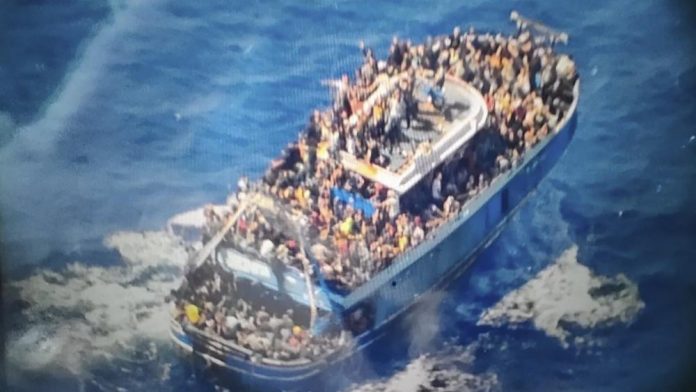
Four senior members of Greece’s coastguard, including its current commander, will face criminal prosecution over the 2023 Pylos migrant shipwreck, which left an estimated 650 people dead.
The Adriana, carrying migrants from Libya to Italy, sank off Pylos after coastguards allegedly made a failed towing attempt.
Greece has denied wrongdoing, but a prosecutor at the naval appeal court in Piraeus has now called for Vice Admiral Tryfon Kontizas and three other senior officers to stand trial for negligent manslaughter and failure to rescue.
Only 82 bodies were recovered, and survivors claim the coastguard’s actions caused the vessel to capsize. The case reopens months after lower courts had cleared the officers, following a legal challenge by victims’ families and survivors’ lawyers.
Greek officials insist the country respects human rights and note it has rescued more than 250,000 people at sea in the past decade.
Greece has taken a major step toward reviving its offshore energy ambitions with the signing of a new exploration agreement in the Ionian Sea involving ExxonMobil, Energean, and Helleniq Energy.
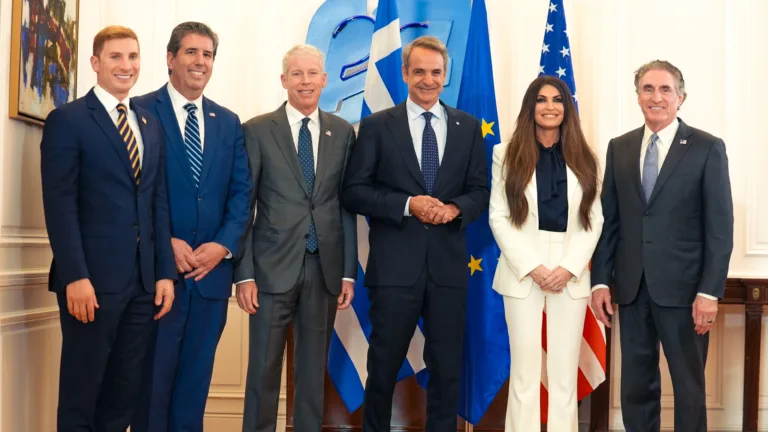
The deal, signed in Athens during the US-Greece Partnership for Transatlantic Energy Cooperation (P-TEC) meetings, covers Block 2, a 2,422-square-kilometre area northwest of Corfu believed to hold significant untapped gas potential.
The concession sees ExxonMobil holding a 60% stake, Energean 30%, and Helleniq Energy 10%. Energean will lead the exploration phase, with ExxonMobil set to assume control should drilling prove commercially viable.
Today in Athens, @ExxonMobil signed a landmark deal with Greece’s @EnergeanPLC to restore offshore gas drilling in the Ionian Sea for the first time in more than 40 years.
The U.S. is proud to partner with Greece as we restore commonsense and unleash affordable, reliable, and… pic.twitter.com/osiQK6cA6a
The venture, estimated to require between $50 million and $100 million, aims to begin exploratory drilling by late 2026 or early 2027, with potential production in the early 2030s.
According to Exxon’s vice president of global exploration, John Ardill, “This significant exploration agreement paves the way for potential future exploratory drilling investments in the 2027 timeframe.” He added that the Ionian project could become a key Mediterranean milestone if results are favourable.
Greek Prime Minister Kyriakos Mitsotakis hailed the agreement as “historic,” declaring, “Today we are writing a new chapter in Greece’s energy history. This is not just another investment. It is the first exploratory drilling in our country in almost 40 years.”
Κάνουμε πράξη τη δέσμευσή μας: αξιοποιούμε με σχέδιο και όραμα τον εθνικό μας πλούτο. pic.twitter.com/Jgq9d3YaC7
The Energy Ministry described the project as “high-risk, high-reward,” while Energean CEO Mathios Rigas emphasised that “this agreement represents an important step toward harnessing Greece’s natural resources and strengthening our country’s role on Europe’s energy map.”
The move also signals renewed US interest in Greek offshore exploration, following recent developments involving Chevron. As new US ambassador Kimberly Guilfoyle put it, “America is back and drilling in the Ionian Sea.”
If successful, the project could mark a turning point in Greece’s efforts to establish itself as a regional energy hub and reduce European dependence on external gas sources.
From the cult sanctuary at ancient Palaepaphos (at the modern village of Kouklia), pilgrims would travel across the eastern Mediterranean to pay homage to an ancient female goddess of fertility. The sanctuary was active from at least 1200 BCE right into later Roman periods.
At some point in deep time, the ancient goddess morphed into the worship of Aphrodite, goddess of love and beauty, as we know her from her classical form. It was believed that she was born in the coast of Cyprus near the rocks now known as Petra tou Romiou.
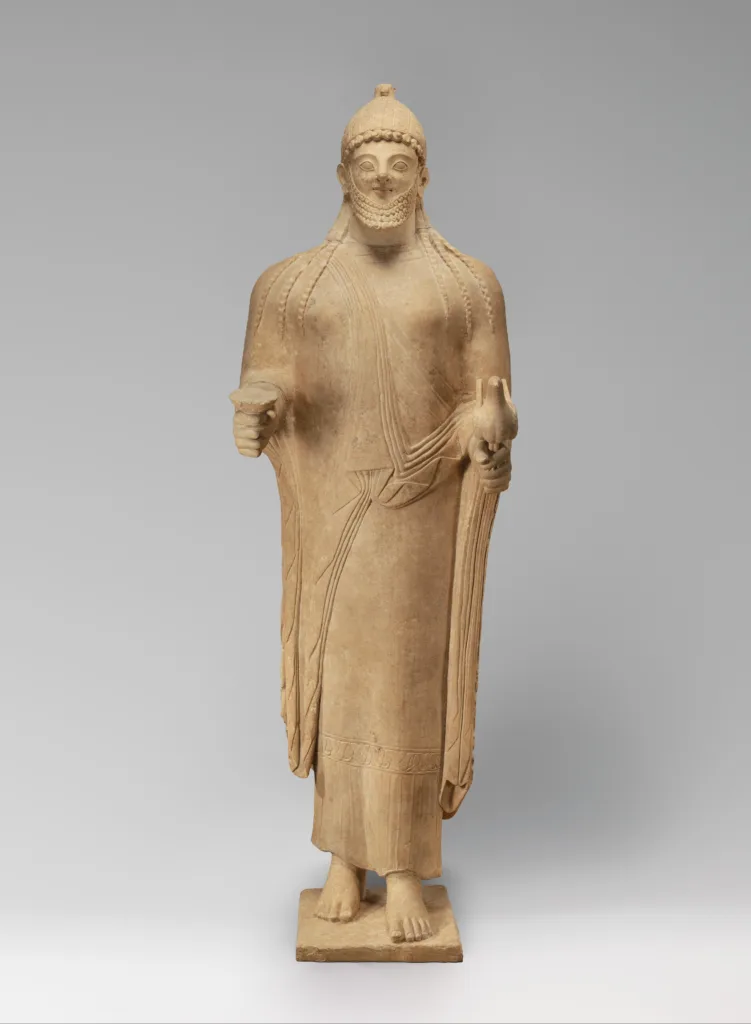
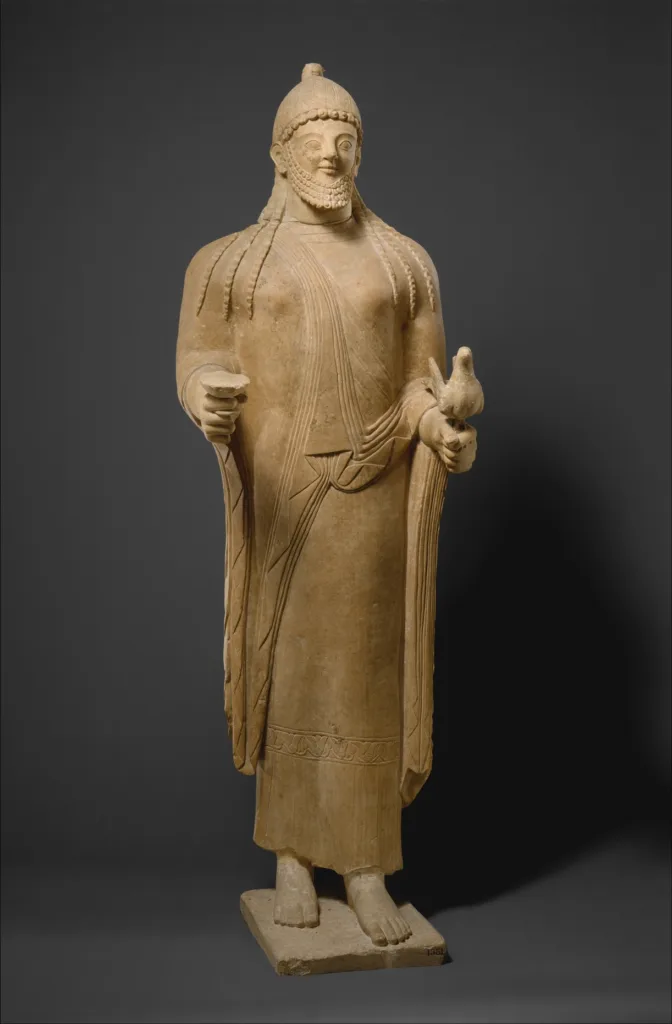
The goddess required priests and priestesses to serve her and to operate the sanctuary site. Carved from local Cypriot limestone, this statue of the late sixth century BCE gives us a hint as to what a priest looks like.
The “Archaic smile” (a slight smile on his lips), the long tresses of hair and the drapery are all heavily influenced by sculptural styles in Greece, yet the pose and the head-dress are very common Cypriot forms that have been influenced by Middle Eastern traditions such as Assyrian headgear. We see the remarkable mixing of cultural traditions that informed Cypriot art for millennia.
He holds a bird in his left hand and a phiale (libation bowl) in his right, both common symbols in ancient Cyprus associated with the goddess. He stands over two metres tall.
Traces of paint remain on the statue which remind us that in antiquity statues were painted brightly. It is particularly visible on his lips, but traces are across his drapery. Vertical lotus designs and the head of a bull are carved into the statue to show us the patterning on his drapery, with the folds also carefully carved into stone.
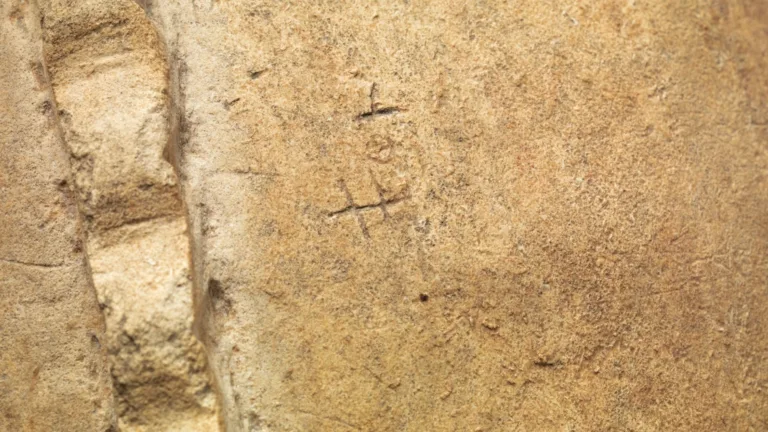
If one looks at his left shoulder, one can see the faint remains of an inscription in Cypriot syllabic (the ancient written language of the island throughout the Iron Age until the adoption of the Greek alphabet in the fourth century BCE). It seems to read “of the Paphian goddess”.
Where this statue was found is not known. It was collected by the American consul Luigi Palma di Cesnola (1832-1904) who oversaw hundreds of illicit excavations across the island in the 1860-70s. Cesnola rarely kept notes and when he did, he often falsified evidence. We know his workers dug at Palaepaphos which is where presumably this statue was found.
When Cesnola left Cyprus in 1877 he took with him more than 35,000 ancient objects, including this. Those objects would form the basis of the Metropolitan Museum of Art. It was an incredible loss of culture heritage for Cyprus.
The base and feet are modern reconstructions and the bird is heavily restored.
When Kastellorizians began to return in 1945 after their evacuation during the Second World War, the harbour, once alive with colour and trade, fell silent. My maternal grandparents stood on the deck of the ship that brought them home, their young children beside them and fellow Kastellorizians gathered nearby. Together they gazed at the island that had once been their home. They returned to ruins.
For much of its history, the island was deeply connected to the Greek communities of Lycia in south-west Asia Minor (modern-day Turkey) through economic, social and family ties, including Livissi (now Kayaköy), Kalamaki (now Kalkan) and Antiphellus (now Kaş). My grandparents’ displacement was not new. My grandmother, Mihalakena Sakaris (née Taliangis), was from Livissi, and my grandfather, Themistocles Sakaris, from Kalamaki. They both crossed to Kastellorizo as young children because of the genocide of Greeks, Armenians and Assyrians in the late Ottoman period (1914–1923), during which they lost members of their families.
Having lost her father, my grandmother for a time lived in Alexandria, Egypt, with her uncle and his wife, later returning to Kastellorizo to be raised by her aunt. My grandfather lost his older brother during the deportations. He worked as a fisherman and seaman from the age of fourteen in Kastellorizo, earning his living from the same sea that had carried their family into exile, yet also sustained life.
The island in the First World War
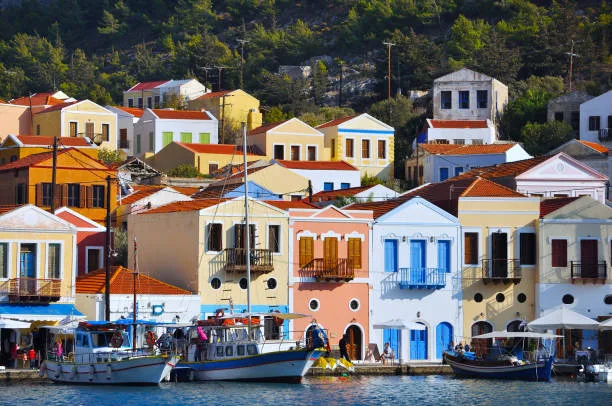
Kastellorizo, from the Italian Castelrosso meaning “Red Castle”, lies just two kilometres from modern-day Turkey. Once, goods moved freely through the Aegean and eastern Mediterranean, linking the island with distant British and Levantine ports, but that world of open movement gradually gave way to decline.
In the early twentieth century, the first major waves of migration to Australia began amid political and economic upheaval. Italy occupied the Dodecanese during the Italo-Turkish War of 1911–12. Kastellorizo’s path to union with Greece was marked by violence and uncertainty. On 14 March 1913, the Kastellorizians declared a provisional Greek administration after imprisoning the Ottoman governor and his troops stationed on the island. The following month, Ottoman forces committed atrocities against the island’s Greek population, resulting in deaths and the burning of homes. The island thereafter endured alternating periods of fear and hope under successive foreign powers.
Kastellorizo came under French control in late December 1915, becoming a naval outpost and a target for Ottoman artillery. In January 1917, Ottoman coastal artillery on the Kaş heights opened fire on Kastellorizo soon after the arrival of a British seaplane. Over several hours, sustained shelling struck the town and harbour, causing widespread destruction and civilian casualties. Ottoman shore batteries sank the British seaplane carrier HMS Ben-my-Chree while it was anchored in the harbour.
The island was transferred to Italian administration in 1921, a status formalised by the 1923 Treaty of Lausanne, which confirmed Italian sovereignty over the Dodecanese. Under Italian rule, policies of Italianisation curtailed Greek education and weakened the Orthodox Church’s role. An earthquake in March 1926 added further hardship, damaging homes and churches and prompting another wave of migration. The island’s population had fallen from perhaps 10,000 at the start of the twentieth century to around 2,000 by the 1930s.
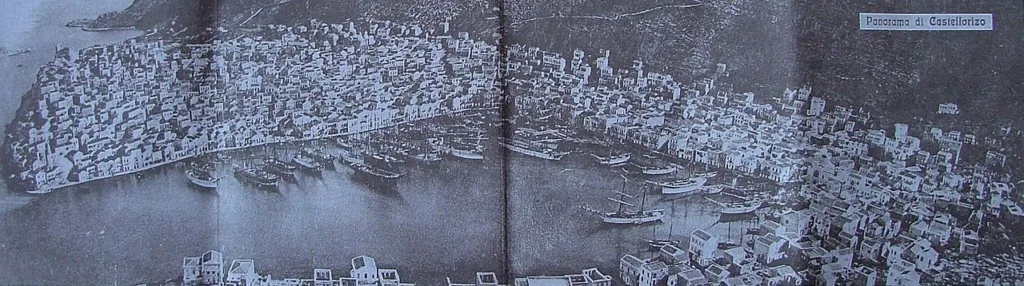
Harbour, c.1921
War returns
When the Second World War reached Kastellorizo, the island became a strategic outpost. Its position offered a vantage point over Allied supply routes between the Middle East and the Aegean. In late February 1941 during Operation Abstention, British commandos briefly seized the island before Italian forces from Rhodes retook it a few days later. After Italy’s surrender to the Allies in September 1943, British troops returned; German air raids soon followed, and the civilian population was evacuated.
Across the Dodecanese, the war left deep scars. Islands such as Leros, Kos, Kalymnos and Rhodes endured bombardment, occupation, destruction and exile. In October 1943, around 1,000 Kastellorizians were evacuated by the British, first to Cyprus and later to Nuseirat in the British Mandate of Palestine, where families lived in makeshift shelters. Life was harsh: families endured shortages and disease, yet they preserved their faith, raising their children, marking feast days and welcoming new life even as illness claimed others.
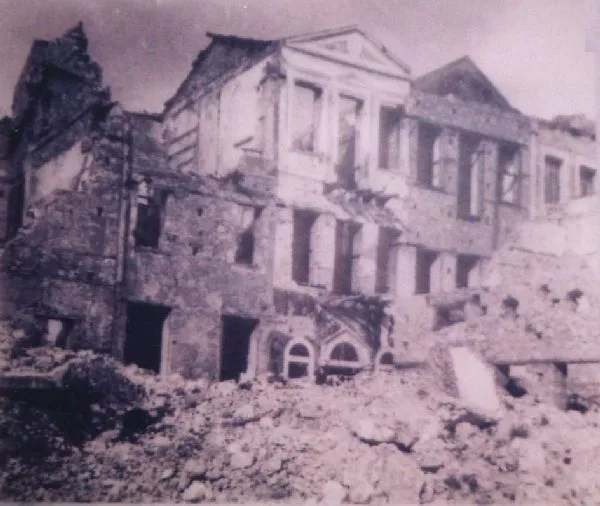
Ruins after the 1943 bombings.
In July 1944, while Kastellorizians remained in exile, a fire broke out on the island. It spread to fuel and ammunition stores left by military forces and consumed rows of homes and churches. The cause was never confirmed, but the destruction was total.
When they finally returned home in 1945, many are said to have leapt from the ships before they reached the pier, swimming towards the harbour in desperation to touch their island again. What they found was ruin; some collapsed in grief before the shells of their homes.
On 29 September 1945, the British ship SS Empire Patrol caught fire soon after leaving Port Said with close to 500 returning Kastellorizian refugees. Around 33 Kastellorizians and two crew members lost their lives. The sky lit red with flame as cries were swallowed by the sea. For those who had survived war and exile, the sea that once sustained life had become an agent of tragedy.
Much of the island’s merchant fleet, once its lifeline to the world, was gone, lost to war or seized for military use. Economic hardship and isolation drove many to migrate once again, seeking work and stability far from home.
Aftermath
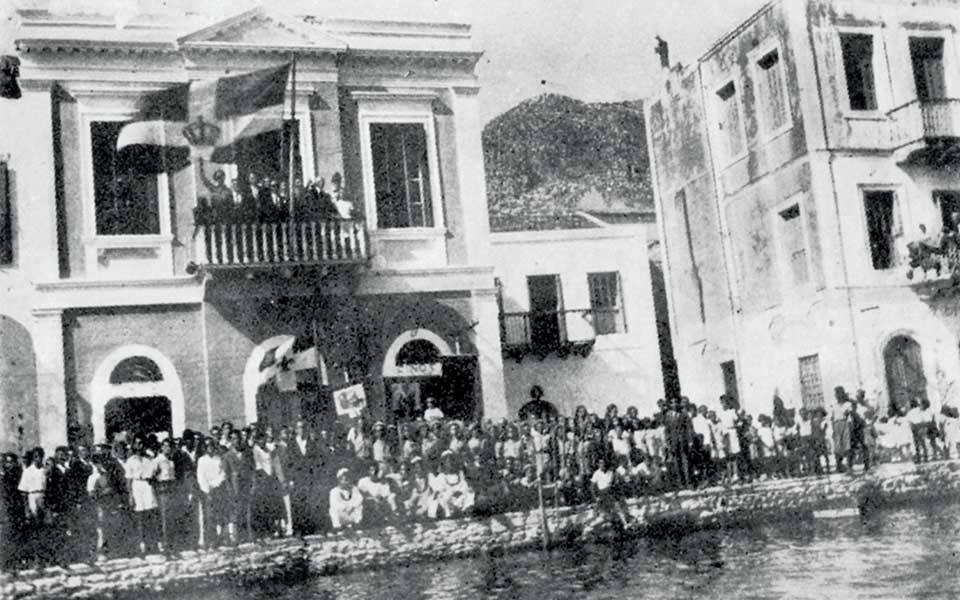
The Treaty of Peace with Italy (Paris Peace Treaties, 10 February 1947) formally transferred the Dodecanese to Greece, and the act of union was celebrated on 7 March 1948. After decades of foreign rule and the devastation of war, Kastellorizo was Greek again, though its population had dwindled to about 500.
Celebrating the 1948 Union with Greece.
Life was difficult. The population had thinned, and the island was almost deserted. My mother, Vasilia, was born on Kastellorizo in the years that followed. She migrated to Melbourne in the 1960s, aged thirteen, with her older brother, younger sister and younger brother. She was part of the post-war exodus that would reshape the island’s destiny. The same uncle who had once cared for my grandmother in Alexandria was later uprooted from Egypt and again helped the family on their passage from Piraeus to Melbourne.
In Melbourne’s inner north, my mother worked in textile mills and other factories alongside migrant women whose tireless labour sustained the city’s post-war industries. Yet she always hoped to return to her island. My grandfather laboured at the brickworks in Brunswick, its towering chimneys visible across the red rooftops, while my grandmother persevered in raising a family through many hardships.
My mother’s three older sisters and two other older brothers had already settled in Melbourne, having migrated to Australia in the preceding years. My uncles initially worked in the sugar-cane fields of Cairns, North Queensland, while my aunties raised families under extremely difficult conditions before eventually settling in Melbourne. In the years that followed, many Kastellorizians and their descendants became influential figures in Australian public, business and community life. By the 1950s, Kastellorizian communities were thriving in Perth, Sydney and Melbourne, establishing associations, churches and cultural centres.
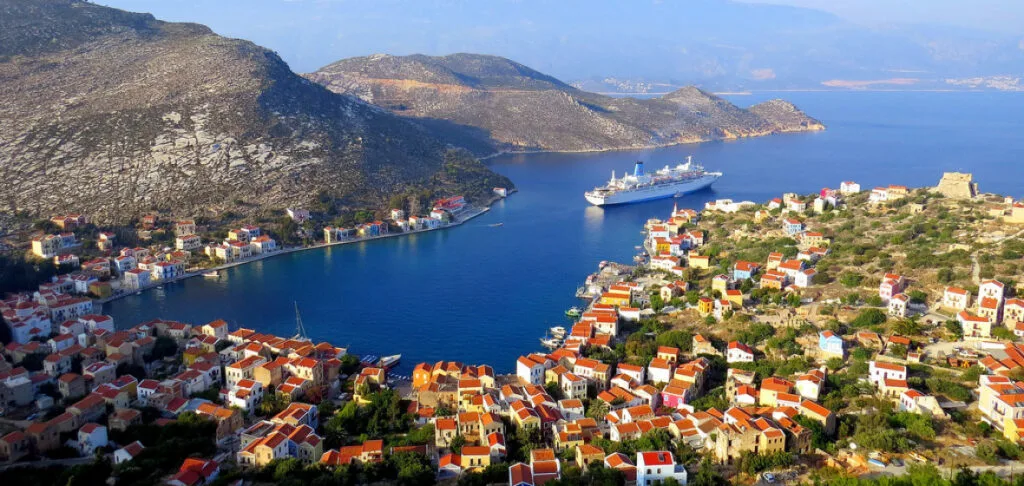
Aerial view of Kastellorizo today.
The island remains
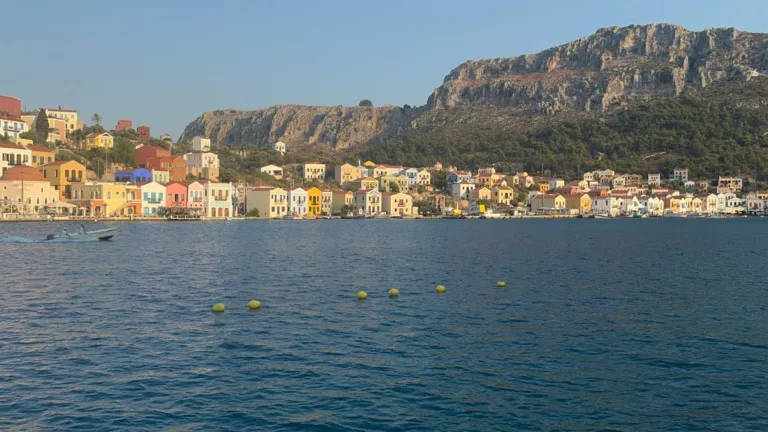
Today, when the ferry from Rhodes turns into the harbour, the picturesque pastel houses are mirrored in the deep turquoise water, a calm surface concealing the memory of loss. The island’s original Greek name, Megisti (“greatest”), reminds us that although it is the smallest of the Dodecanese, it is the largest within its own small cluster, including Ro and Strongyli. The name itself speaks of endurance and pride, echoed by the vast diaspora that now thrives in Australia and returns to the island often.
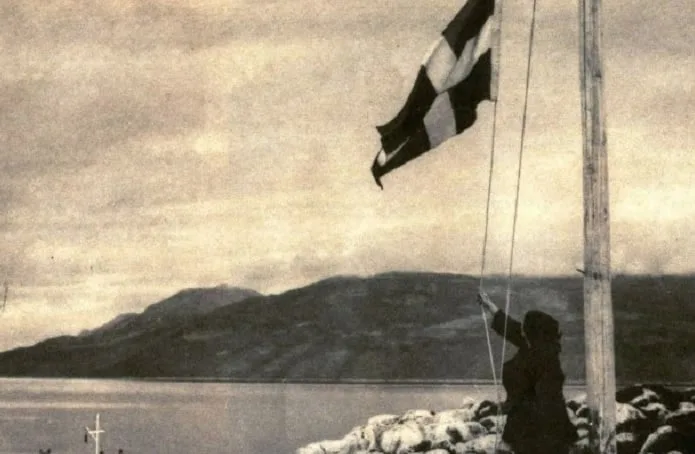
Across the water lies Ro, where Despina Achladioti, the Lady of Ro, in quiet defiance, raised the Greek flag every morning from the late 1920s until her death in 1982. Throughout occupation, war, exile and unification, her devotion came to embody the spirit of all Kastellorizians.
Despina Achladioti raises the Greek flag on Ro.
The bond between island and diaspora remains unbroken. Each summer, Kastellorizians return from Australia — children, grandchildren and great-grandchildren who still identify with the island. They walk lanes lined with restored houses, light candles in rebuilt churches and gather by the harbour that once rose from debris.
Kastellorizians once looked across to the Asia Minor coast, where many of their ancestors had been uprooted, and wondered whether such times might ever return. Despite periodic tensions and provocations in the region, the people of Kastellorizo continue to maintain friendly relations with their neighbours across the sea.
The old school still stands, its walls worn by time yet alive with the memories of the children who once filled its courtyard. Bougainvillea spills over stone walls in bursts of colour, and sea turtles glide through the clear water below the quay.
Waterfront today.
My mother often speaks of those years. She remembers singing echoing across the island, laughter ringing through the narrow lanes and the scent of wildflowers. She also recalls memories of Papa Yiorgis (Father George), who had once been a chanter and later became the island’s priest, chanting in church alongside her older brother. A vivid memory, though, remained: my grandmother anxiously waiting on the balcony for my grandfather to return in his boat through the rough winter seas, weaving across the waves that broke against the front door of their home. It was a familiar story, forged in fire and carried by the sea.
Dr Themistocles Kritikakos is a Greek-Australian historian and writer. He holds a PhD in History from the University of Melbourne. His forthcoming book, Armenian, Greek, and Assyrian Genocide Recognition in Twenty-First Century Australia, will be published by Palgrave Macmillan in December 2025.
All Smart Kitchens, led by Nick Goumis, son of respected tradesman Denis Goumis, is facing serious allegations from a Sydney homeowner who claims her family has been left with unfinished bathrooms, an incomplete kitchen, and months of costly delays.
The All Smart Kitchens name is well known in Sydney’s Greek community, built on Denis’ reputation for craftsmanship and reliability. But according to this homeowner, that legacy has been undermined under Nick’s leadership.
A costly and unfinished renovation
The homeowner says her $120,000 renovation, which began in February 2024 and should have been completed by January 2025, has instead become a nightmare of half-finished work and mounting costs.
“All Smart’s work was riddled with mistakes,” she told The Greek Herald. “From misaligned joinery to missing powerpoints, it’s been nothing short of a nightmare. We’ve had to get All Smart back on site on numerous occasions to fix mistakes in its works.”
The project included wardrobes installed in mid-2024, followed by kitchen and bathroom works in November 2024. But problems soon emerged. The homeowner alleges joinery was installed incorrectly in several areas of the home, contributing to further errors and a significant cost blowout. She also claims the kitchen bar was not built to the approved drawings and remains unusable after repeated requests for rectification.
The homeowner alleges joinery was installed incorrectly in several areas of the home.
Disputes over workmanship and payment
The homeowner further alleges that in December 2024, Mr Goumis removed the kitchen overhead doors after determining they were not compliant with plans and refused to return to site until payment was made – a payment she says was neither invoiced nor due under the contract. She also claims other kitchen doors were installed upside down.
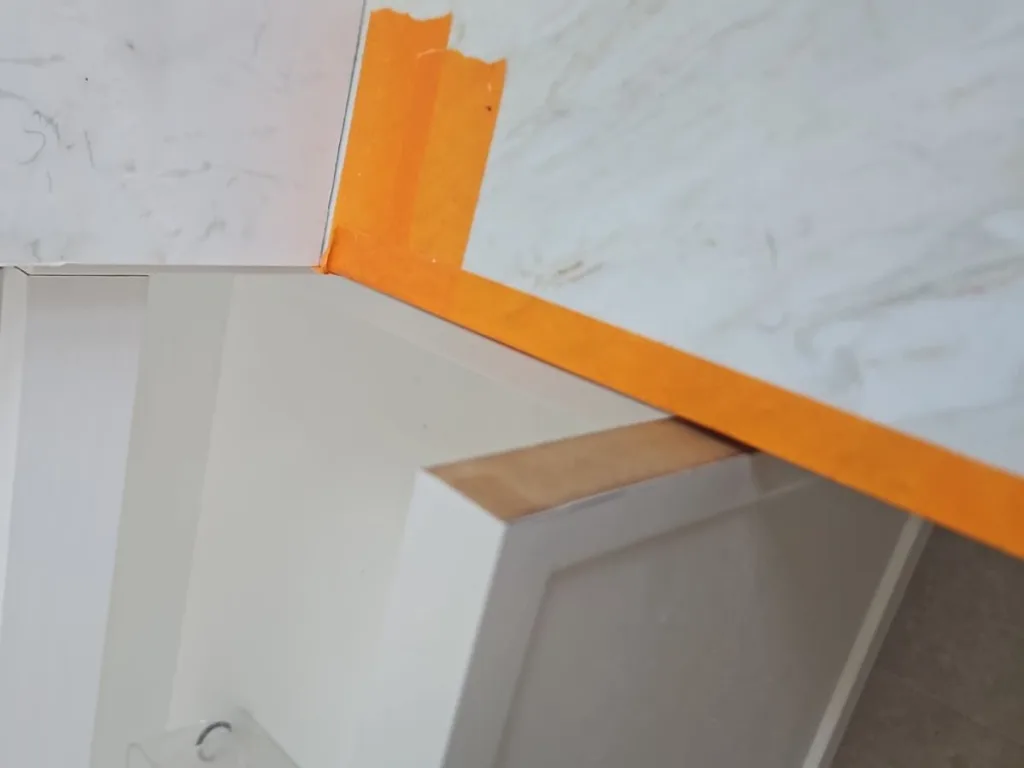
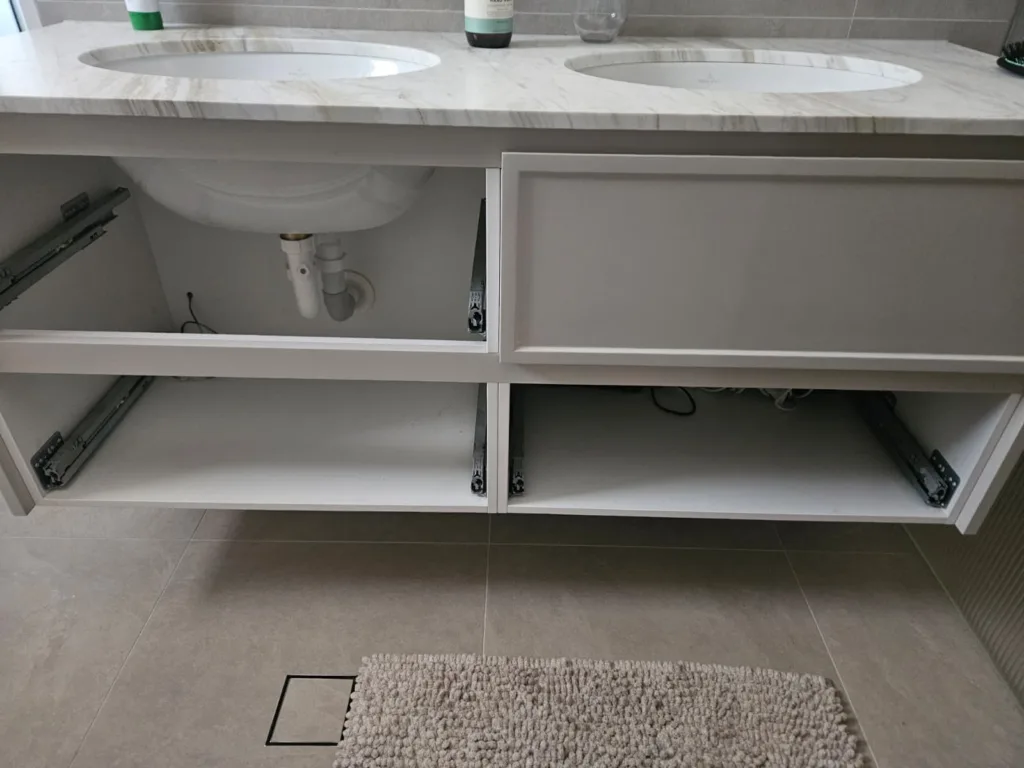
She alleges that the bathroom vanity drawers did not fit as designed and that All Smart Kitchens staff cut the drawer sides, leaving exposed edges – a fault she says remains unresolved.
Despite multiple site visits, the company walked away from the job in July 2025, leaving two bathrooms and the kitchen incomplete.
With a young family, she says they have been forced to live with just one functional yet unfinished bathroom for six months.
“It has been incredibly stressful,” she said. “We’ve had to make compromises every day. It’s not just about unfinished cabinetry – it’s about the disruption to our lives, the extra costs, and the fact that other tradespeople can’t finish their jobs because of this.”
The homeowner alleges that the bathroom vanity drawers did not fit as designed.
Frustration for other trades
Beyond workmanship, the homeowner alleges that Mr Goumis was difficult for other trades to work with.
“Trades have had a nightmare working with him,” she said. “We scheduled a meeting with Nick and the electrician before production to check electricals. He turned up more than an hour late, with no apology. Our stonemason’s been left in limbo. The plumbers can’t finish. Everyone’s been held up.”
The homeowner says even independent trades engaged on the site have expressed concern at the quality of the cabinetry and finishes. She maintains that she has already met her obligations under the signed contract.
While she explained she is preparing a complaint to NSW Fair Trading, she stresses her priority is not litigation but closure.
“We just want to move on and find a solution,” she said. “Living like this with a young family is not sustainable. It’s time to fix what’s been left undone.”
The All Smart Kitchens brand was built by Denis Goumis, whose work earned a strong reputation in Sydney’s Greek community for consistency and care. That reputation now faces scrutiny following the homeowner’s allegations.
The Greek Herald contacted All Smart Kitchens and Nick Goumis for comment, but no response was received by the time of publication.
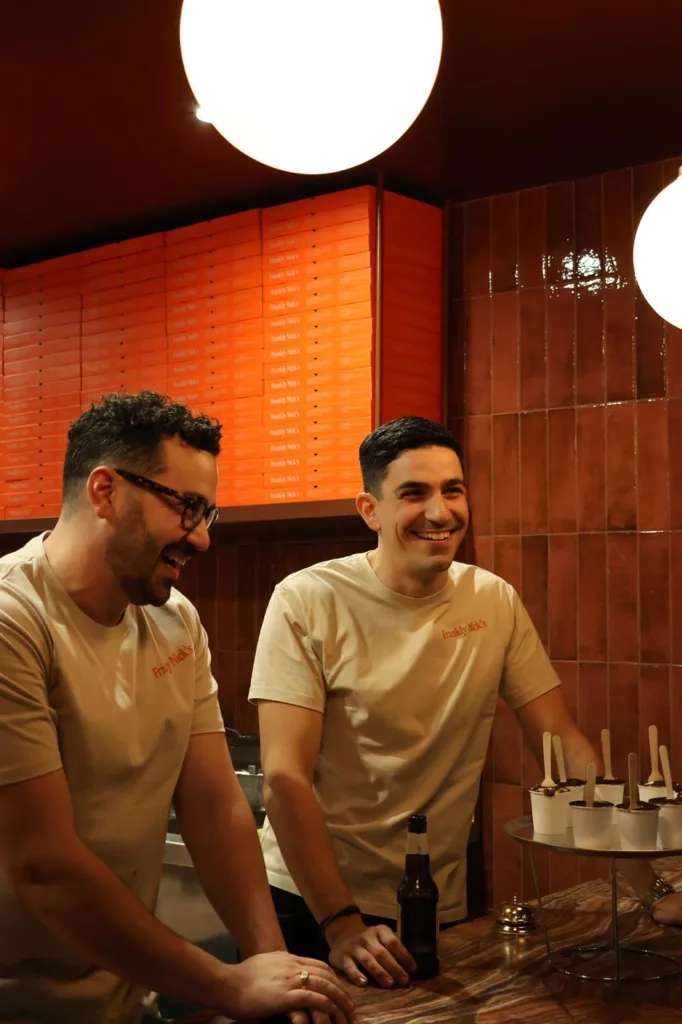
On a quiet stretch of Floss Street in Hurlstone Park, two best mates are keeping the pizza ovens burning – not just for dinner service, but for the sake of legacy.
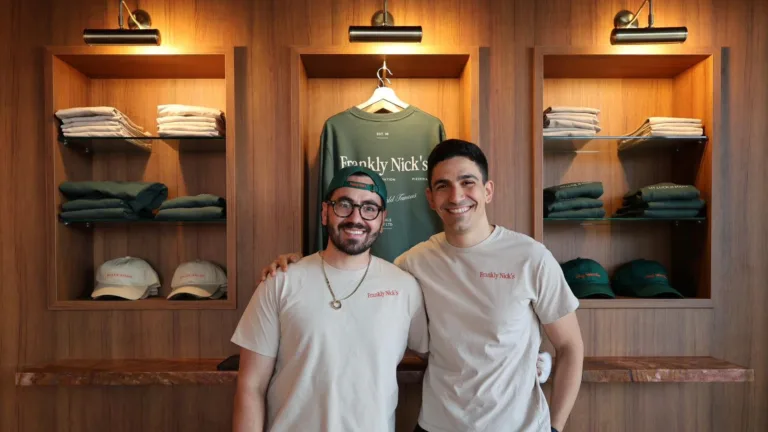
For William Kay, 33, and Georgio Panousos, 30, co-owners ofFrankly Nick’s, opening a neighbourhood pizzeria wasn’t just about food. It was about returning to their roots – to the kitchens where they once worked as teenage dishies for their fathers, Frank and Nick.
“We had been looking for a while at different concepts for a business until my father Frank Kay said in passing, ‘why don’t you do what me and your father did and do a pizza shop,’” William tells The Greek Herald.
“The more we started thinking about it, the more it made sense. We had both started in pizza working for the dads when we were in our teens and thought to ourselves that a throwback to how it began with their relationship would be the perfect homage.”
That idea became Frankly Nick’s – a name that nods to their fathers’ lifelong friendship and the family legacy that shaped them.
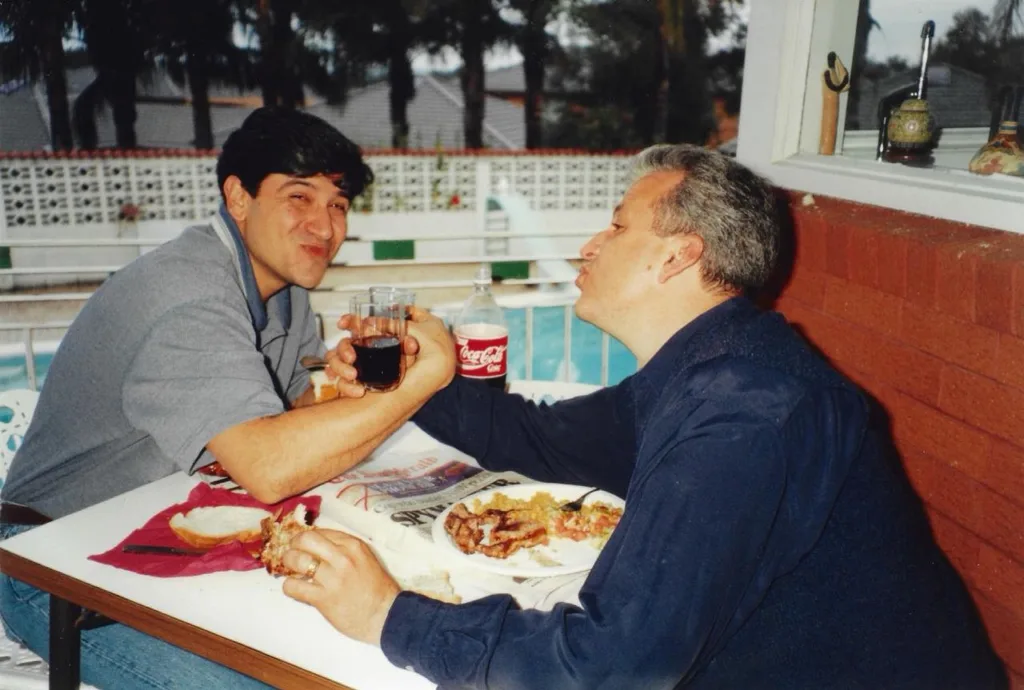
Frank and Nick inspired Frankly Nick’s.
A home between Belmore and Stanmore
The choice of location wasn’t a coincidence.
“As for Hurlstone Park, it was simple,” William explains. “Frank grew up in Belmore and Nick grew up in Stanmore. We met in the middle. Both Georgio and my own family either lives or grew up a stone’s throw away from the area and it just made sense.”
Hurlstone Park, once a quiet residential pocket, hadn’t had a dinner venue in decades. Within a week of opening, Frankly Nick’s sold over 900 pizzas – a clear sign that the community was ready for its comeback story.
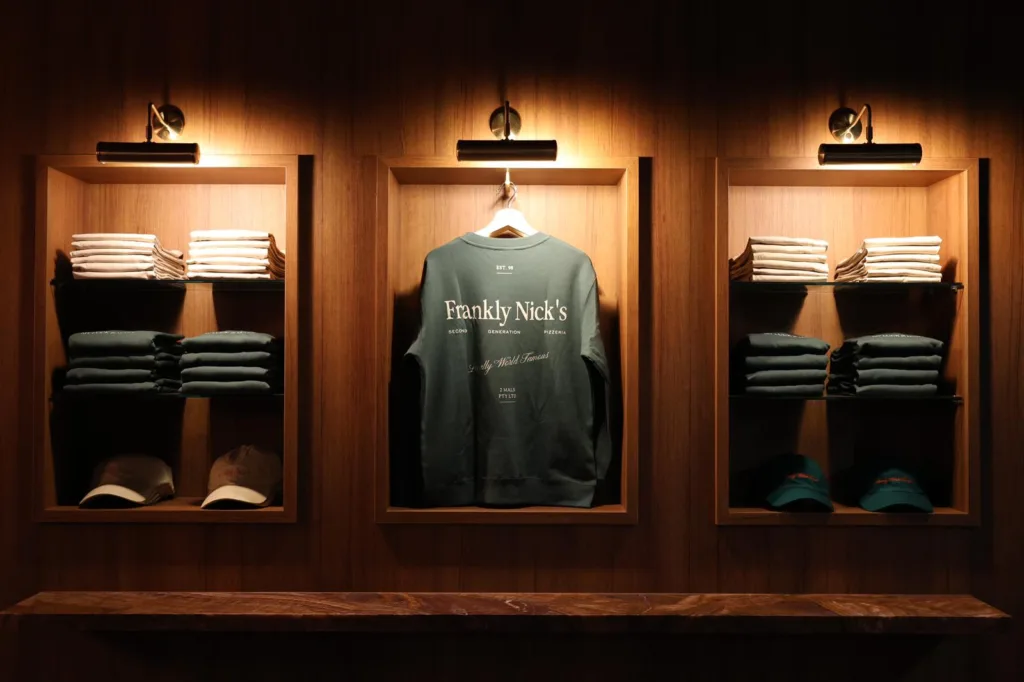
The choice of location for Frankly Nick’s wasn’t a coincidence.
The lessons of Frank and Nick
The new generation might be running the show, but the philosophy remains unchanged.
“If the product’s right, with the right service and the right price people will always come for a great meal,” William says.
“Hospitality starts in the home, treat the customers as if you were entertaining the family and be open to the criticisms of the crazy aunties and uncles.”
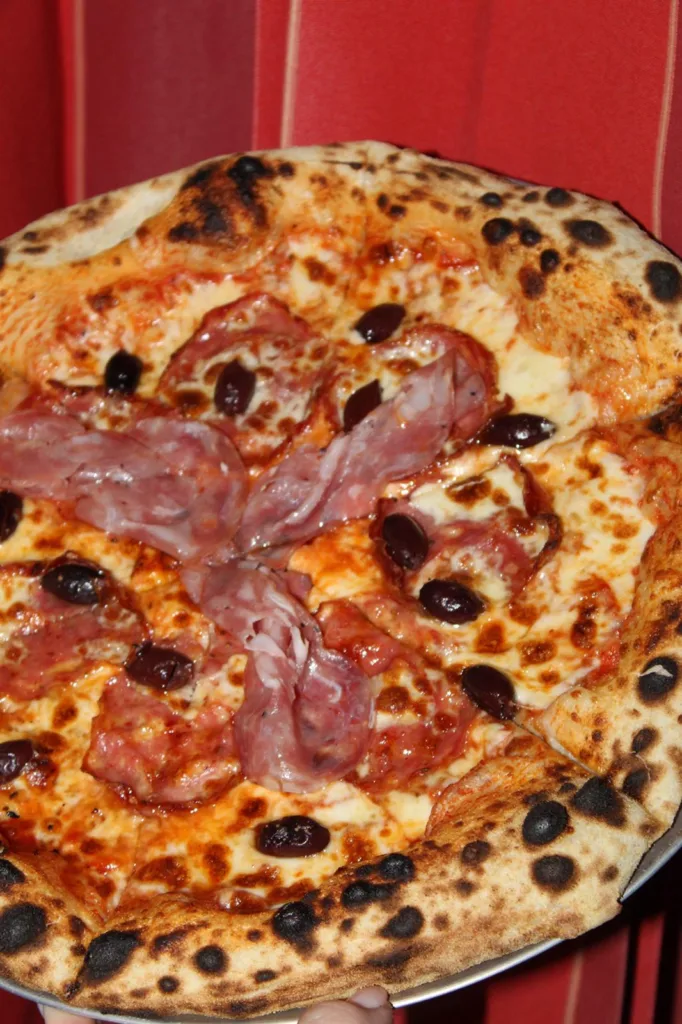
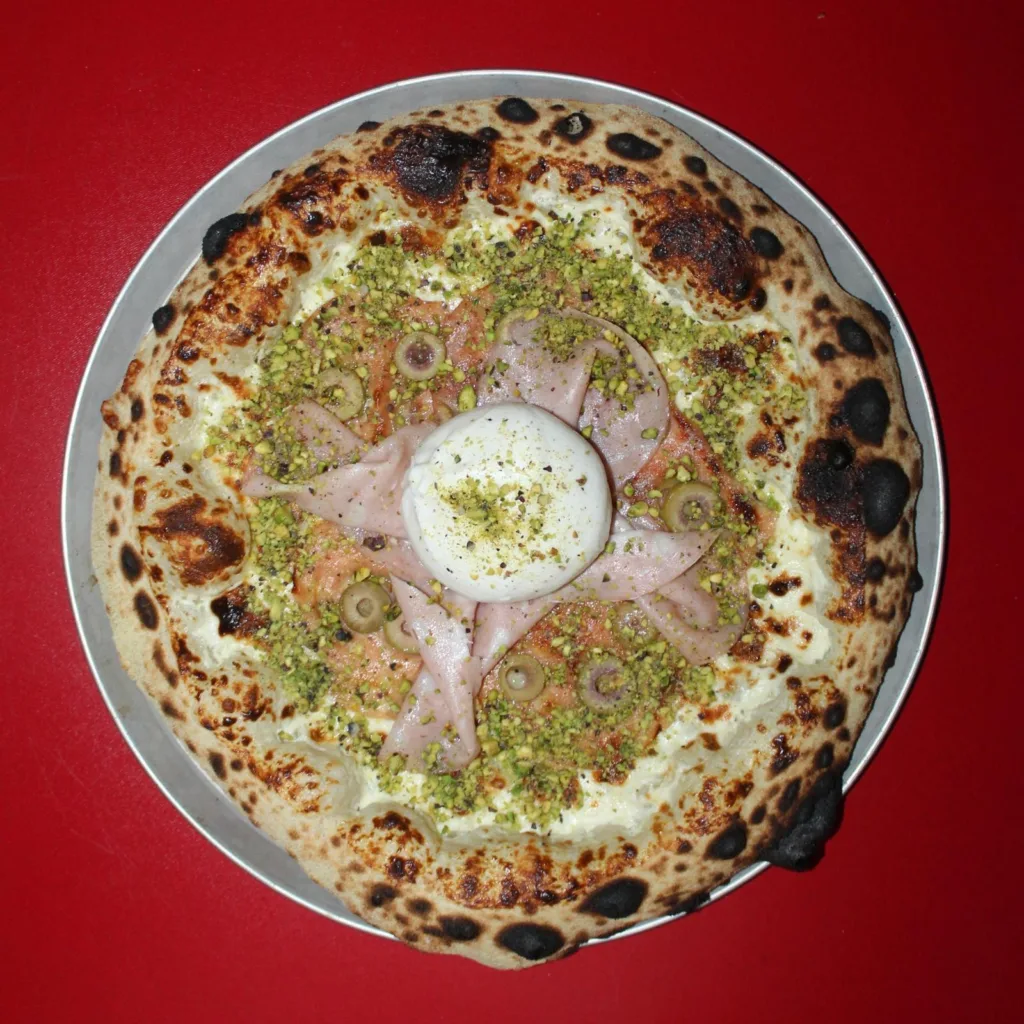
These old-school values underpin everything at Frankly Nick’s – from their 48-hour cold-fermented dough to the generous, convivial atmosphere that greets guests as soon as they step through the door.
A friendship forged in pizza dough
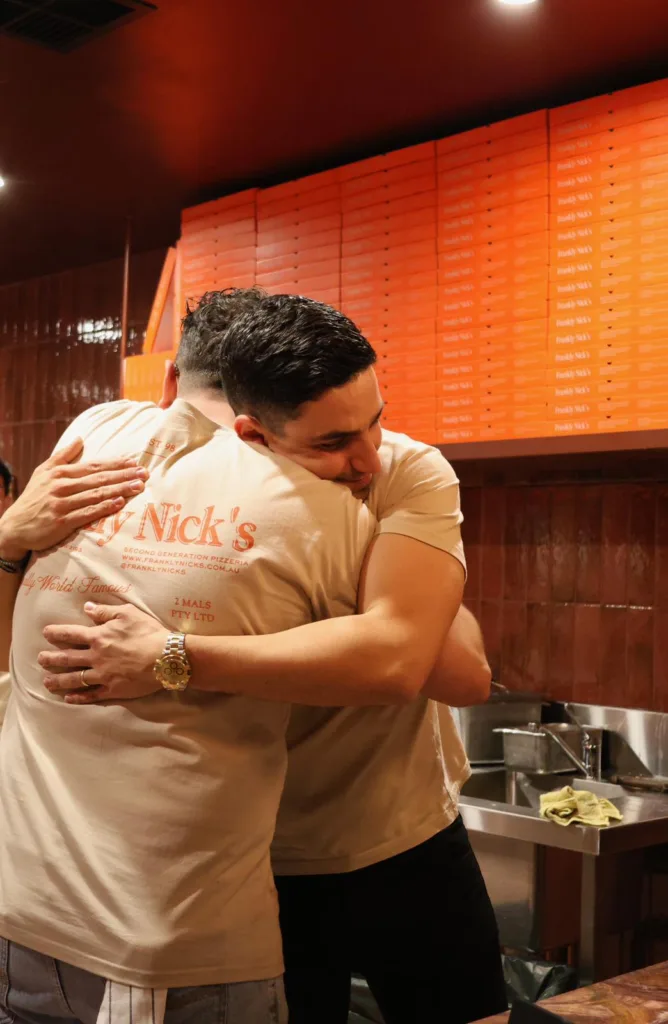
William and Georgio’s friendship began in their fathers’ restaurants, scrubbing dishes and stretching dough. Years later, that bond still defines how they work together.
“Georgio has always been prevalent in the front of house in previous ventures, whilst I’ve been more in the mechanics of the kitchen and menu design,” William says.
“Through the years we can always lean on each other when either is struggling in our sections of the business. Having ourselves manage separate parts of the business allows us to excel in our own ways but neither one of us has the final say until both of us are satisfied with a decision.
“This stops us from having tunnel vision whether it comes to new flavours and menu ideas, or staff training and implementing new systems.”
Their dads also passed down a key rule: don’t let conflict linger.
“Our dads taught us to never go to sleep angry,” Georgio adds. “We’ve been working together for over a decade and we never say things on the fly. If something bothers us we sit down, listen to each other and know whenever we have those chats it’s not to hate the other person but to build each other up.”
William and Georgio’s friendship began in their fathers’ restaurants, scrubbing dishes and stretching dough.
Flavours that speak the language of home
Greek heritage runs through Frankly Nick’s like oregano through a village kitchen.
“It’s in everything we do from the sauce to the salads,” Georgio says.
“The menu items have all been built up from flavours that have been taught to us through not just our fathers but our mothers, aunties and yiayias.
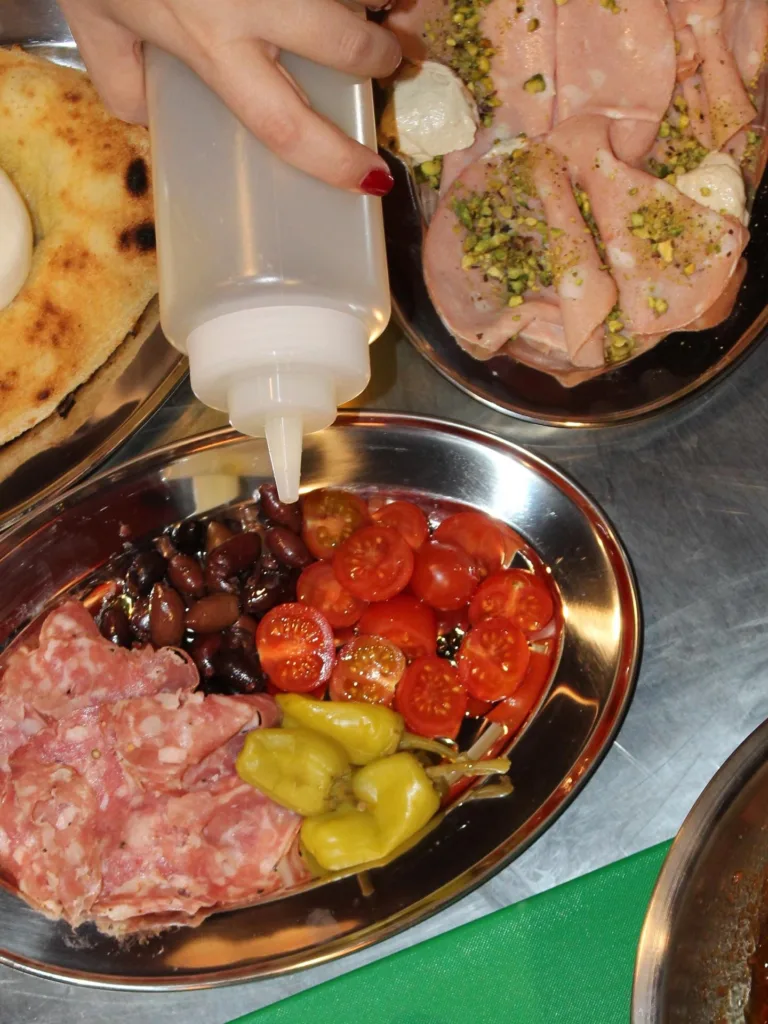
“Delicious is delicious and that is a language with no barriers. Whether it’s using aniseed in the pickled onions or an excessive amount of yiayia’s oregano in the sauce or even baking the pastas like a pastitsio, the Greek influence is heavy but the flavours speak volumes.”
William sums up their cooking mantra simply: “Deduct and perfect. It’s easy to hide behind multiple layers in a dish, but it’s much harder to make simple perfect. If you do the small things right and let the ingredients shine the dish will speak for itself. An example is a horiatiki salata – it’s only feta, tomatoes, cucumber, olive and oil. Something so simple but you know when you’re getting a good one and getting a bad one.”
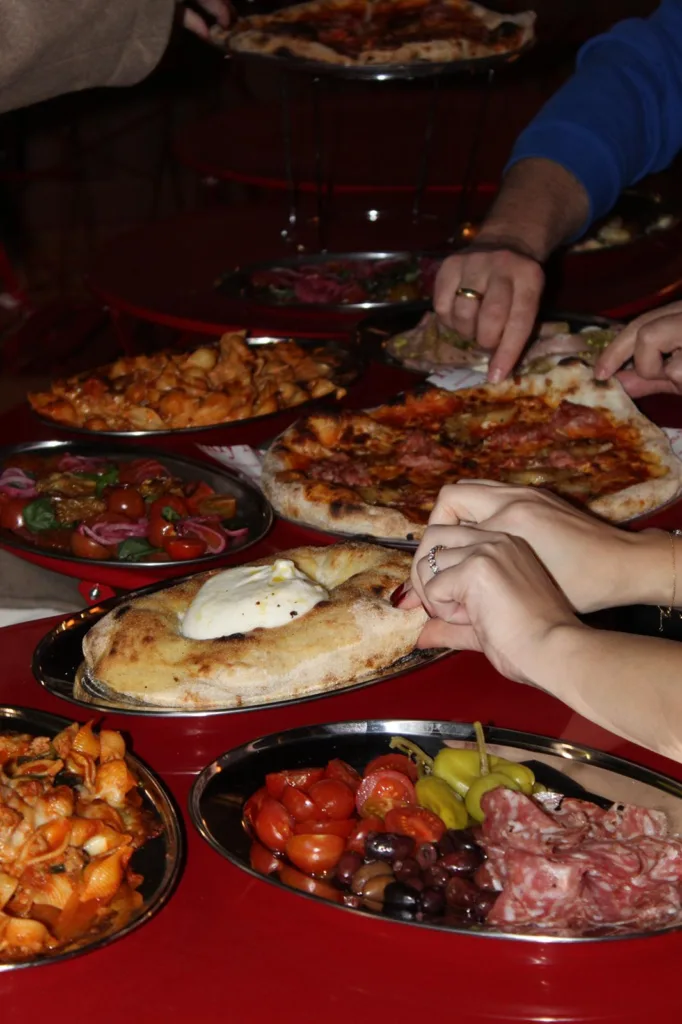
Greek heritage runs through Frankly Nick’s like oregano through a village kitchen.
Old soul, new look
While the menu draws on the past, the space itself feels timeless – a warm mix of vintage tones and modern design.
“Honestly all credits go to my sister Eleni Kay, also the owner of Angie Baby Kitchen Catering,” William says.
“Georgio and I had a vision but didn’t have a way to consolidate our ideas. Eleni, with her background in food marketing and styling, was able to focus our vision of a modern 1960’s pizza/cocktail bar and help us make the correct choices in terms of colour palette and material schedules to bring the warm feeling to our venue.”
Rooted in community
In a suburb long defined by small businesses and neighbourly ties, Frankly Nick’s fits right in.
“We are highlighting the other businesses around us by including and incorporating the products of our neighbours in our menu,” Georgio explains.
“All of our veggies are bought from Friendly Grocer, our local supermarket. Our meat is purchased from Carnes Latinas, the local butcher. We offer BYO from the local bottlo. We cross-promote with the local bar HP Bowlo. Our dream is not to just be a staple of this area but to be a place of cult following within the Inner West.”
And in true Greek fashion, everyone’s welcome – no formalities, no fuss. “Come down and don’t ever be afraid to say hello,” Georgio grins.
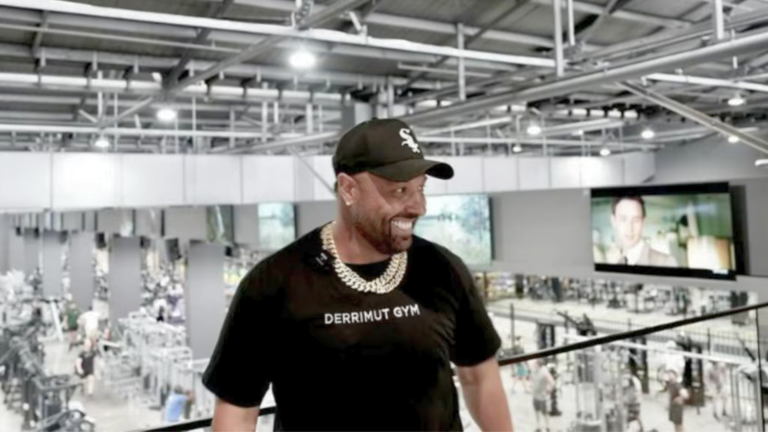
In a message to staff on Thursday, November 6, Solomos said the decision was “not made lightly” but was a “proactive step to restructure, protect jobs, and position the business for a stronger future.”
He assured employees they would continue to be paid weekly and that all 26 gym locations would remain open.
The chain is estimated to owe nearly $30 million, with debts to the Australian Tax Office, landlords, suppliers and other creditors.
The ATO has been pursuing $15.4 million in unpaid taxes, superannuation and penalties but recently agreed to delay liquidation proceedings by four weeks.
Insolvency expert Stephen Dixon of HM Advisory has been appointed as administrator.
Solomos said a new investor had joined to assist through the administration process, though their identity remains undisclosed.
The Hellenic Writers’ Association of Australia (S.E.L.S.A.) has announced the winners of its 2025 Student Literary Competition, recognising outstanding creative writing by Greek language students across Melbourne.
The annual competition encourages young writers to explore their imagination and cultural identity through storytelling in Greek. This year’s entries reflected a vibrant mix of themes, from family and migration to traditions in the Antipodes.
Following careful evaluation by a panel of teachers, the winners were named as:
Primary School:“Antipodes” – Petra Drongiti, Grade 3, Coburg West Primary School
Middle School:“The Celebration” – Alexandra Barbagianni (13), Maria Voudouris (13) and Angeliki Konstas (12), Sts Anargiri Greek Language Centre
High School:“Customs and Traditions in the Antipodes” – Irini Katsoulis (17), Year 11, Sts Anargiri Greek Language Centre
Each winner will receive a $100 prize (shared equally in the case of group entries) and a commemorative certificate in recognition of their creative achievement.
The awards ceremony will take place during the official presentation of O LOGOS magazine on Sunday, 9 November 2025 at 3:00 pm, on the mezzanine floor of the Hellenic Community of Melbourne, 168 Lonsdale Street.
S.E.L.S.A. extended warm congratulations to all participating students and thanked the teachers who inspired and guided their creative efforts, continuing the proud tradition of Greek literary expression in Australia.