Home Blog Page 21

Iran ceasefire hangs in balance as Trump signals deal to come ‘relatively quickly’

Diplomatic efforts to stabilise the fragile ceasefire between the United States and Iran have intensified, as regional powers step up engagement and global markets react cautiously to renewed tensions.

Iranian Foreign Minister Abbas Araghchi held a phone call on Monday with Russian counterpart Sergey Lavrov, during which both sides discussed the evolving regional conflict.

Lavrov reiterated the importance of upholding the ceasefire and maintaining diplomatic momentum, while Tehran confirmed it was prepared to ensure the uninterrupted passage of Russian ships and cargo through the Strait of Hormuz — a critical artery for global energy supplies.

Markets responded with measured concern. Brent crude, the international oil benchmark, rose by 5.6% to settle at $95.48 per barrel, reflecting heightened uncertainty. Meanwhile, US equities dipped slightly, with the S&P 500 closing 0.2% lower.

Attention is now turning to potential talks in Pakistan, where US Vice-President JD Vance is expected to travel on Tuesday at the head of a diplomatic delegation, contingent on Iran agreeing to further negotiations in Islamabad. He is set to be joined by Steve Witkoff, a senior envoy to Donald Trump, and the president’s son-in-law Jared Kushner.

However, the prospect of talks remains uncertain. Iran’s president has warned of a “deep historical mistrust” of the United States, underscoring the fragile nature of the diplomatic track.

President Trump, in a post on Truth Social, struck a more optimistic tone, stating that a deal with Iran would be reached “relatively quickly”. He added that the United States would not lift its blockade of Iranian ports until an agreement is secured, expressing confidence that any new nuclear deal would surpass the 2015 international accord aimed at curbing Tehran’s nuclear programme.

Tehran has responded with defiance. Iranian Parliament Speaker Mohammad Bagher Ghalibaf rejected negotiations under pressure

“Trump, by imposing a blockade and violating the ceasefire, seeks, in his view, to turn the negotiating table into a table of surrender or to justify renewed warmongering,” Ghalibaf wrote in a post on X. “We do not accept negotiations under the shadow of threat, and over the past 2 weeks we have prepared to reveal new cards on the battlefield.”

Elsewhere in the Gulf, regional actors have continued efforts to de-escalate tensions. Qatar’s Prime Minister, Sheikh Mohammed bin Abdulrahman bin Jassim al-Thani, held talks with Oman’s Foreign Minister Badr bin Hamad bin Hamood Albusaidi, focusing on cooperation and the latest developments surrounding the ceasefire.

According to a statement from Qatar’s foreign ministry, discussions included “the ceasefire between the US and Iran, and the efforts being exerted to reduce tension and promote regional peace and security”.

As the ceasefire deadline approaches, the coming days are expected to prove critical in determining whether diplomatic efforts can hold, or whether tensions risk escalating once again.

Source: The Guardian

Damon Hanlin issues defamation warning ahead of Sydney Olympic AGM

Damon Hanlin, former Sydney Olympic president and current benefactor member, has issued a defamation concerns notice ahead of the club’s Annual General Meeting, with Sydney Olympic FC circulating the correspondence to members in relation to a series of posts published on a supporter-run Facebook page.

In a statement shared publicly, the club advised members that lawyers from Vincent Young had issued the formal concerns notice under the Defamation Act 2005 (NSW) on Mr Hanlin’s behalf in relation to content published on the “Sydney Olympic Supporters” page.

Multiple posts and serious allegations identified

The correspondence, dated 20 April 2026, relates to a series of posts and comments published between late March and mid-April, forming part of a sustained pattern of publication over several weeks.

Central to the notice is the position that Mr Hanlin is the sole benefactor member under the club’s current constitution, having contributed approximately $4.6 million in funding over the past six years, which the letter states was critical to the club’s survival.

The notice identifies multiple posts, including at least nine publications, and associated comment threads, which are alleged to have conveyed a range of serious imputations concerning Mr Hanlin’s conduct in his role with the club.

While the specific wording is not reproduced, the correspondence states that the material includes allegations suggesting criminal or corrupt behaviour, breaches of duty, and improper use of his position as benefactor member. It also claims the posts portray him as acting against the interests of the club.

The letter further asserts that references to the “benefactor member” within the posts would have been understood by readers as identifying Mr Hanlin, given his position within Sydney Olympic FC.

Administrators, anonymity and platform action

A significant element of the notice relates to the role of page administrators, with the correspondence stating that those responsible for the Facebook page may be liable not only for the original posts but also for comments published or allowed to remain once they are aware of the material.

The notice also raises concerns about the use of anonymous accounts and seeks assistance in identifying individuals responsible for administering and contributing to the page, including those publishing content anonymously.

The correspondence argues that the publications meet the “serious harm” threshold under defamation law, citing the nature of the allegations, the audience of club supporters, and the continued availability of the material online.

It further states that the posts have led to concern among members of the community and raised questions about Mr Hanlin’s reputation and involvement with the club, including within the broader football and professional community.

The legal notice has also been directed to Meta Platforms, seeking action at a platform level in relation to the content and the page itself.

The notice calls for the removal of the identified posts and associated content, action in relation to the page itself, and seeks to identify those responsible for publishing the material.

Governance tensions and AGM backdrop

The posts referenced in the legal notice arise amid ongoing debate among members regarding the club’s governance structure, particularly the role and influence of the “benefactor member” under the current constitution. In the lead-up to the AGM, a member-led steering committee has raised concerns about these arrangements, with discussion increasingly moving onto social media platforms where differing views on the club’s direction have been openly expressed.

The “Sydney Olympic Supporters” Facebook page referenced in the notice was no longer accessible at the time of publication. The page, which has been active for several years and regularly hosted criticism of the club’s leadership, appears to have been taken down following the issuing of the correspondence.

In its statement, Sydney Olympic FC encouraged members to review the correspondence, noting that the matter will be addressed in further detail at the club’s AGM on Tuesday, 21 April.

‘Lest we forget’: St Spyridon Parish in Sydney hosts moving ANZAC Day memorial

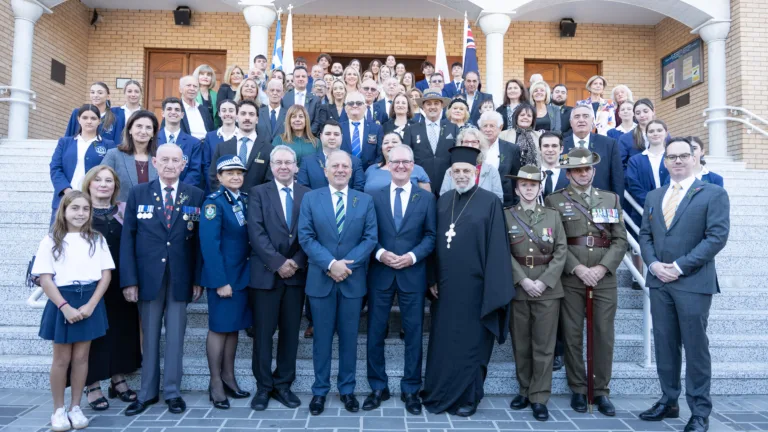
The St Spyridon Greek Orthodox Parish in Sydney has hosted a special ANZAC Day service, bringing together the community to honour Australians and Greeks who served and died in war.

Held on Sunday, April 19 at the Kingsford church, the service began at 11:00am and commemorated those who made the ultimate sacrifice during the two World Wars and in conflicts around the world.

The annual memorial service was led by parish priest Father Steven Scoutas, and honoured the courageous men and women who served in World War I, World War II and beyond.

St Spyridon Greek Orthodox Parish in Sydney has hosted a special ANZAC Day service. All photos: Tom Skolarikis.

Students of St Spyridon College played a central role in the commemorations, reciting poems and delivering the Ode in both English and Greek, while a bugler’s performance added to the solemn atmosphere. Wreaths were laid by dignitaries and veterans, as Father Steven delivered a reflective address on sacrifice and remembrance.

st spyridon parish anzac memorial

Among those in attendance were Athanasios Lambrou, First Counsellor for Public Diplomacy of the Consulate General of Greece in Sydney, Member for Maroubra, Michael Daley, Elia Economou, President of St Spyridon Parish, veterans of RSL Associations, officers of the Australian Army, representatives of local Greek and Cypriot organisations, and local government officials.

st spyridon parish anzac memorial

As one of the few Greek Orthodox churches in Australia formally designated as a war memorial, St Spyridon holds deep symbolic significance for the Greek Australian community, reflecting a shared history of service, migration and contribution to the nation.

The annual service once again provided an opportunity for parishioners and the wider public to come together in prayer and reflection, paying tribute to those who fought for the values of freedom and democracy, while acknowledging the enduring ties between Greece and Australia forged through wartime alliances.

*Photos supplied by Tom Skolarikis

Final seats released as Sydney races to witness Mimis Plessas centenary tribute

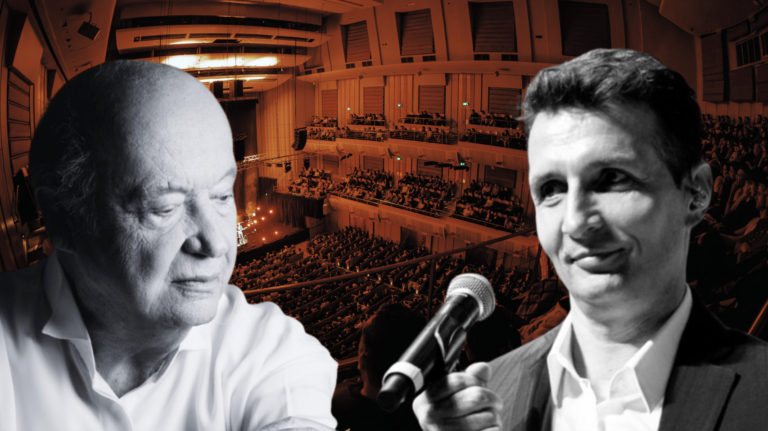
The atmosphere in Sydney has reached a fever pitch for the centennial tribute concert of Mimis Plessas. In a move rarely seen in the city’s premier concert halls, City Recital Hall has officially authorised the release of its final side-seat reserves to meet a tidal wave of public demand.

This is the last call for Sydneysiders to witness “100 Years of Mimis Plessas”, a tribute that has evolved from a concert into a historic cultural pilgrimage.

The final countdown is on:

This is not merely a performance; it is the collective breath of a community honouring a legendary musician. As the centenary tribute concert of Mimis Plessas, the architect of the Mediterranean’s most iconic cinematic and soulful melodies, approaches, the realisation has set in: this is a once-in-a-lifetime occurrence.

Once the final ticket is booked, a century of musical evolution will have found its crescendo, and the opportunity to be “in the room” will vanish forever.

“The energy surrounding this tribute is unlike anything we’ve experienced,” says the production team.

“History is calling, and Sydney has answered. By opening these last-reserve seats, we are fighting to ensure that every person wanting to celebrate this legacy can be accommodated. We are pushing the venue to its absolute limit because a legacy this grand deserves nothing less than a full house.”

The stage will be commanded by the legendary Dimitris Basis, whose soaring power captures the very essence of the Greek spirit. Under the masterful baton of George Ellis, and featuring the evocative talents of Maria Yiakoulis and George Doukas, the evening promises to ignite the stage with the raw, cinematic magic that defined Plessas’ 100-year journey.

The musical masterpieces of Plessas, widely considered the “cinematic music heartbeat of Greece”, will not just be heard; they will be felt in the floorboards and the rafters of City Recital Hall. From the silver screen classics to the deep, symphonic soul of the Mediterranean, this is the definitive celebration of a music legend.

Event Details

  • Event: “100 Years Mimis Plessas: A Living Tribute with Dimitris Basis”
  • Date: Friday, 8 May 2026 | 7:30 pm
  • Venue: City Recital Hall, 2 Angel Place, Sydney
  • Featuring: Dimitris Basis, George Ellis, Maria Yiakoulis, George Doukas and a Full Symphony Orchestra
  • Last Remaining Tickets: https://shorturl.at/hcVWg

The final seats are now live. Secure your spot before the curtain closes for good.

Open letter urges unity over Hellenic Village as $119.5m sale nears completion

By Constantine D. Vertzayias, Solicitor and Notary Public

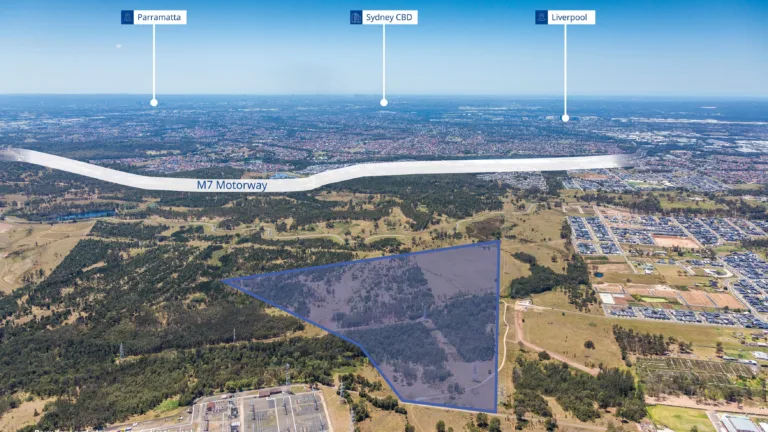
For many years now we have known about the OFSE property at Kemps Creek, known as the “Hellenic Village”. We have reached the point where the moment of completing the sale is approaching. For this achievement we must congratulate the Board, as the negotiations and the process are complex, full of obstacles and difficulties.

It appears, however, that we are heading towards a successful conclusion and this divine gift, the unexpected, the windfall – indeed a veritable bonanza – is the greatest opportunity that has ever come to any Greek community anywhere in the world.

Let me briefly recall the background. It initially began as an effort by the Pan-Arcadian Brotherhood which, through Christos Skoufis, transferred it to OFSE because it was “an important matter for the entire Community and not for any one brotherhood.” This selfless and patriotic contribution must be recognised and appreciated. Subsequently, negotiations took place during the presidency of Ioannis Kokkaliaris and the State Government agreed to grant the 40-hectare site at Kemps Creek on a 99-year lease at an annual rent of $100. With the initial enthusiasm that generally characterises Greeks, we planned grand projects which were, of course, impossible to realise due to the lack of the substantial funds required.

Thereafter, under my presidency, we decided to approach the Government to purchase it, on the reasoning that, firstly, only if it became our property could we persuade individuals and brotherhoods to invest money in its development and, secondly, in the event that it was not developed, we would at least have an asset whose value would increase over time (of course, no one could have imagined that it would reach the price at which it has now been sold).

However, in order to purchase it, we went through many trials and difficulties. The first obstacle was that OFSE did not have its own funds. The second was that, of the then-28 member brotherhoods, around 10–12 did not wish to contribute money. I was obliged to visit the non-cooperative brotherhoods and, in two cases, they called Extraordinary General Meetings for their members to approve (or not) participation. This process took years and, in the meantime, the time specified in the contract for completing the purchase had expired. The Government’s lawyers threatened to cancel the sale as we had exceeded the time limits.

We are fortunate Bob Carr (and here we must also mention the late Takis Kaldis), not once but twice extended the time for us to complete the purchase.

The third problem, after all the efforts to persuade the reluctant member brotherhoods, was that we were still short of the required amount. Thus, we decided to seek assistance outside the OFSE brotherhoods. We approached the Greek Orthodox Community of New South Wales, AHEPA and the Hellenic Club of Sydney. The latter two responded positively. However, we were still short by $20,000 and did not have the funds for stamp duty. Once again, Mr Carr and Mr Kaldis assisted us by reducing the purchase price from $500,000 to $485,000, allowing us to pay $15,000 in stamp duty. For the remaining $20,000, we again looked outside OFSE. The Apollo Club gave us $10,000 and we were desperately searching for another $10,000. In the end, the late Lefteris Sioustis contributed the funds held by the Greek Taxi Drivers Association, and thus the purchase was completed. All of this is documented from my position as President and solicitor of OFSE.

At this point, certain truths must be stated and understood by all. First, without the contribution of the brotherhoods that provided funds, the purchase would not have taken place, and the Community must be grateful to these organisations. Second, all the brotherhoods (and the Taxi Drivers Association – which was not a brotherhood) fulfilled their duty for the good of the Community. That was their sole motivation. There was not the slightest illusion that they were acting for their own interests.

Third, there is an issue concerning the Hellenic Club. The Hellenic Club requires funds for reasons relating to the Club itself. The Hellenic Club is an important and significant asset of the Greek Community (and here a note is needed – all property owned by one or another organisation belongs to the community, because all of us may participate as members, and such assets were accumulated through events and contributions from members of the community). The Hellenic Club is a special case, as there is no other Greek building of such value and significance in such a location, worth many millions. All of us can be members of the Hellenic Club and we must all help to preserve it and ensure it remains entirely Greek.

Fourth, as we all know, our problem is, without exaggeration, existential – we are losing our language and our identity from one generation to the next. Here we have the unique opportunity to build something that will guarantee the existence and continuity of the Greek community for many generations. A great legacy for our grandchildren, great-grandchildren and beyond. To create something that does not exist in any Greek community anywhere in the world. The brotherhoods hold enormous power and, at the same time, responsibility for the future of our community. A wrong move or decision will weigh on them for generations and they will face criticism, condemnation and rejection not only now but forever.

For almost 30 years the Community has lived with this vision – now it can be realised:

  1. Creation of a Pan-Hellenic Fund, which will grow over time through donations (which will be tax-deductible), bequests and the assets of brotherhoods (when they dissolve). The capital will remain intact and the interest will be used for the needs of the Community – education, aged care homes, childcare centres, etc.
  2. A portion to be used for the needs of the Hellenic Club, with mutual benefits.
  3. A portion for a Pan-Hellenic Cultural Centre.
  4. In the future, when the Pan-Hellenic Fund grows, to build a Greek skyscraper on the current site of the Hellenic Club. Such a building will not exist anywhere in the world.

Do we believe in this vision? Here is Rhodes, here is the leap.

P.S: In the event that the funds from the sale are distributed among the brotherhoods, many millions will be paid to the government in capital gains tax. That is, they will be lost unjustifiably from the hands of the community. For this reason, I repeat the great responsibility held by the Boards of these brotherhoods.

Rampant APIA Leichhardt crush Sydney Olympic to surge back into second

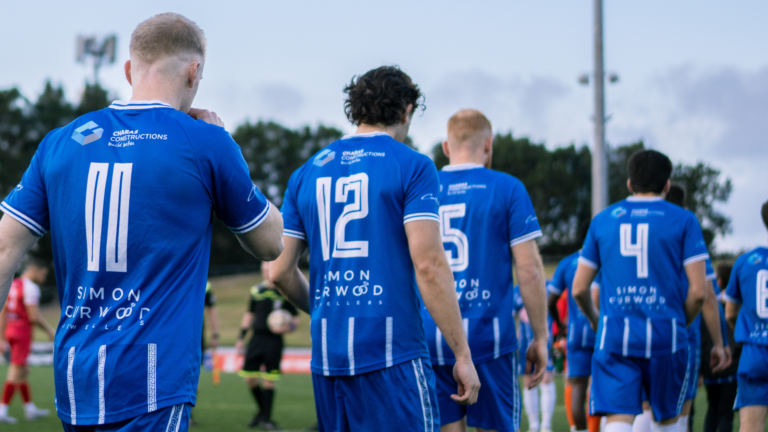
APIA Leichhardt delivered a statement performance at Lambert Park, powering to a commanding 4–1 victory over Sydney Olympic to reclaim second place on the ladder, with a display full of attacking flair, clinical finishing, and moments of genuine quality.

Despite the final scoreline, it was Olympic who came flying out of the blocks and very nearly stunned the home crowd inside the opening moments. A long ball forward found Marco Arambasic, who brought it down superbly before a slip from Eijin Kishimoto presented him with a golden opportunity one-on-one with Oliver Kalac.

However, the APIA goalkeeper stood tall, producing a crucial early save to deny what would have been a shock opener.

That moment proved pivotal, as APIA gradually took control of proceedings. The opening 20 minutes were largely played in the hosts’ attacking half, though clear-cut chances were initially hard to come by against a disciplined Olympic outfit that showed flashes of promise on the ball.

The breakthrough finally arrived in the 23rd minute. Oscar Gonzalez drew contact from Ziggy Gordon near the edge of the area to win a penalty, and Jack Stewart made no mistake from the spot, calmly side-footing his effort past Josip Orlovic to give APIA a deserved lead.

From there, the hosts began to find their rhythm—and their cutting edge. Just seven minutes later, they doubled their advantage with a stunning counter-attacking move. After Thema Muata-Marlow regained possession, Fabian Monge linked play before Stewart showcased quick footwork to create space and release Cameron Fong on the overlap.

What followed was a moment of brilliance. Driving forward from deep, the right-back surged into the box before unleashing a superb strike on his left foot, picking out the bottom corner with precision to score his first goal of the 2026 campaign and leave Orlovic with no chance.

APIA carried that momentum into the second half and effectively put the game beyond doubt in the 57th minute. A high press saw Michael Kouta win possession before Seiya Kambayashi threaded a clever pass through to Gonzalez, who unselfishly squared for Monge to calmly guide the ball into the far corner and make it 3–0.

To their credit, Olympic refused to fade and began to create opportunities of their own. Ben Giason slipped a neat ball through to Yuto Fujita, whose curling effort was well saved by Kalac, while Arambasic was later sent through on goal following a sharp counterattack, only to lift his attempted chip over the crossbar with Kalac once again applying pressure.

Those missed chances proved costly, as APIA remained ruthless in front of goal. The fourth arrived through Gonzalez, who capped off a fine attacking move after Alex Denmead regained possession and Rory Jordan drove at a retreating defence before threading a perfectly weighted pass into the striker’s path. Gonzalez did the rest, hammering a powerful finish into the top corner.

Olympic did manage a late consolation in the 86th minute following a well-worked counterattack. Brooklyn Mallia showed strength and determination to break forward from midfield before his pass found Giorgos Louca, who rounded Kalac and finished neatly to reduce the deficit.

However, the result was never in doubt, as APIA’s attacking quality and efficiency proved decisive across the 90 minutes.

Post-match, APIA head coach Franco Parisi was full of praise for his side’s performance and the brand of football on display.

“Some exciting football, some real sexy football—if you look at some of the moments we had in the final third, it’s very exciting,” he said.

“We had a great crowd today, playing after the women’s game, and those that saw it will definitely be coming back because it was great to watch.”

With this emphatic victory, APIA not only strengthened their position near the top of the table but also sent a clear message about their attacking capabilities and growing momentum as the season progresses while it was yet another dark day for Olympic who still sit in last position on the NPL Men’s NSW competition ladder after eleven rounds.

Source: NPL NSW.

Lydia Kamperos earns first white apron on MasterChef Australia 2026

Lydia Kamperos has become the first contestant to secure a white apron on MasterChef Australia 2026, earning unanimous praise from judges with her standout dish.

Kamperos impressed with a charred octopus served with leek and potato, alongside a yoghurt sauce with dill oil, despite initially worrying the seafood was undercooked. Her performance earned her an immediate apron and an official place in the competition.

Speaking after her success, she said: “It’s just been such a dream to be here, and I just can’t actually still believe that I am here. I just want to pinch myself.”

When asked how much she wanted the opportunity, Kamperos added: “A lot, more than anything. It’s such a great time for me, and all my dreams are around food.”

Her dish and the judges’ response prompted an emotional reaction, marking an early highlight in the new season, which features 40 home cooks competing for a place in the competition.

ACT petition pushes for Greek, Armenian and Assyrian genocide education in schools

A new petition before the ACT Legislative Assembly is calling for the inclusion of Armenian, Assyrian and Greek genocide education in the territory’s school curriculum, as community groups intensify efforts to secure broader historical recognition.

The e-petition, sponsored by Greens MLA Andrew Braddock, urges the ACT Government to incorporate teaching on the experiences of these communities during World War I and its aftermath, particularly the period between 1915 and 1923.

It comes as the Canberra Association of Pontos ‘Trapezounta’, alongside Armenian and Assyrian organisations, continues a coordinated push to have the proposal adopted.

Supporters say the initiative is about strengthening historical awareness and ensuring students gain a more complete understanding of events that profoundly impacted these communities.

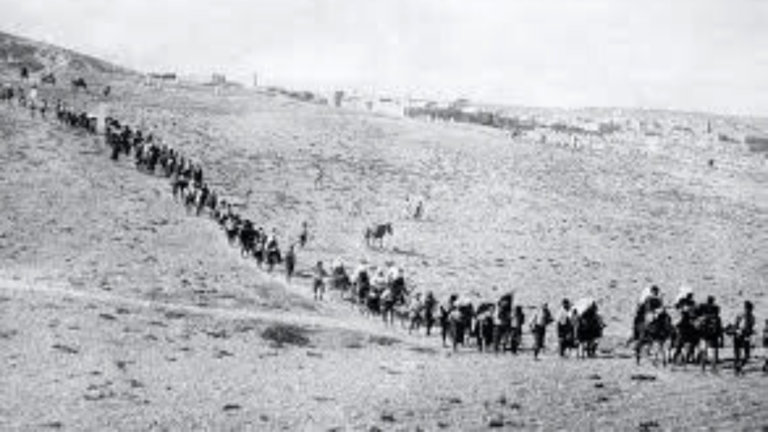
The petition highlights what it describes as the systematic mass killings and deportations carried out under the Ottoman Empire, which led to the deaths and displacement of millions of Armenians, Assyrians and Greeks.

Advocates argue that including this history in the curriculum would not only acknowledge the experiences of affected communities, but also contribute to a broader understanding of migration, identity and multicultural Australia.

The petition, lodged earlier this year, remains open to ACT residents, with organisers urging supporters to take part, noting that even small increases in signatures could strengthen the case for parliamentary consideration.

If successful, the proposal would prompt the ACT Government to review its curriculum framework and consider formally incorporating the topic into classroom teaching.

The push reflects a wider movement across Australia, where diaspora communities have long advocated for greater recognition of these historical events within education systems and public discourse.

If you are an ACT resident, you can sign the petition here before it closes on May 3.

History of Greek cafés and milk bars in Australia comes to life in new documentary

A new documentary from Fork Films uncovers one of Australia’s most significant yet overlooked migration stories – the unique Greek café and milk bar phenomenon that shaped how a nation worked, ate and learned to live together.

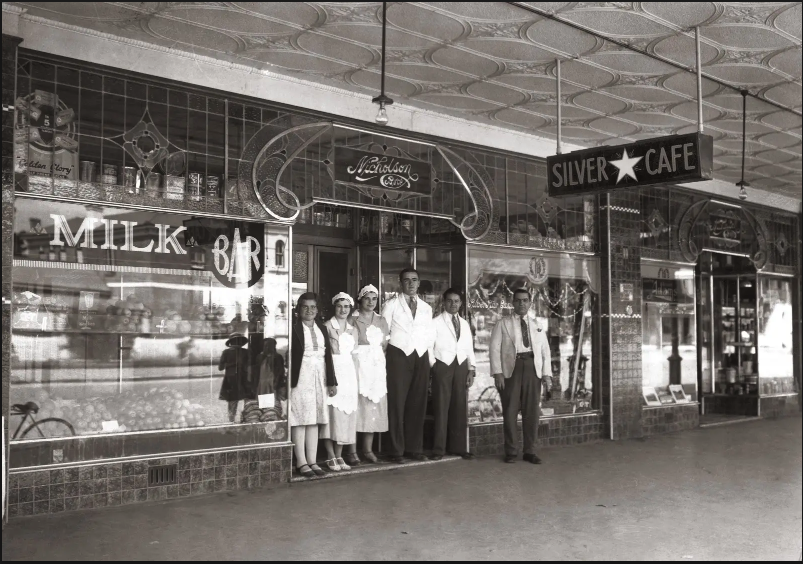
Australia’s Greek Cafés & Milk Bars (53mins) chronicles the epic saga of Greek migrants who, from the late 1800s until the 1970s, established thousands of milk bars and cafés in so many suburbs and towns, introducing Australians to jukeboxes, all-day dining and the radical idea that eating out was not just for the wealthy but for everyone.

“The Greek Australian story is a milestone in Australia’s history.”

From the team that produced Anzac.Lemnos.1915. broadcast on SBS TV @ 7.30pm Anzac Day 2024 and ongoing SBS On Demand and screened at the Dawn Service in Gallipoli 2025.

Directed by Pria Viswalingam, co-produced with Elizabeth Kaydos and edited by Jack Rôbin, the documentary draws on the landmark research of cultural historians Leonard Janiszewski and Effy Alexakis, who have documented this cultural phenomenon over decades of fieldwork.

Australia’s Greek Cafés & Milk Bars (2)
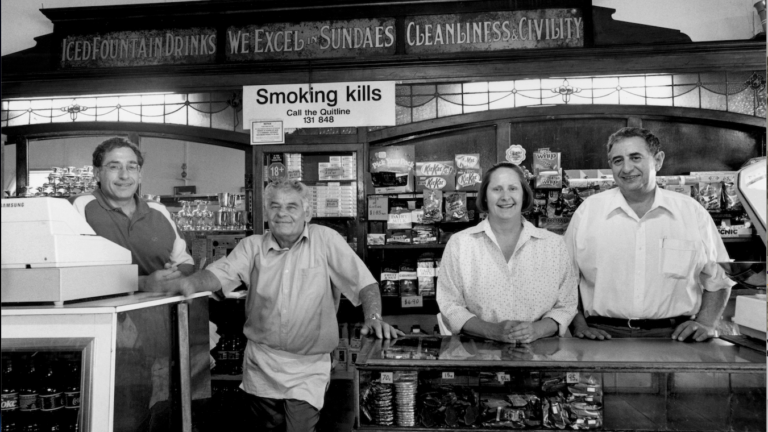
Source: In Their Own Image: Greek-Australians National Project Archives.

The film features intimate testimonies from café proprietors, staff and their descendants, people who grew up serving customers before and after school, shops open all hours, all week, all year. It also reveals the prejudices these families endured under the White Australia policy, and how they persevered to prosper in newly multicultural Australia.

“Greek cafes and milk bars changed Australia for the better,” observes Mr Janiszewski. “The echoes of those changes could be heard around the world.”

Rich with rare archival audio recordings, footage and photography, Australia’s Greek Cafés & Milk Bars recalls an era of jukeboxes, bodgies and widgies, mixed grills vs “chook food”, and proxy marriages. But ultimately, it’s a story about family, sacrifice and belonging, about parents who worked 18-hour days so their children could escape their “prison” through education to become doctors and lawyers.

“They came here, they saw these opportunities, and they changed Australia forever.”

Australia’s Greek Cafés & Milk Bars will premiere on SBS tonight at 7.30pm.

Perth Greek school launches student newspaper bridging two homelands

0

The Greek Language and Culture Institute of Evangelismos in Perth, Western Australia has launched Το Βήμα του Περθ (“The Tribune of Perth”), a student-produced newspaper created in collaboration with historic Greek publication To Vima.

The initiative, described as the first newspaper of its kind from a Greek diaspora school in Australia and the second globally after “The Tribune of Munich,” is supported under the auspices of the General Secretariat for Greeks Abroad and Public Diplomacy.

The project features texts, interviews, comics and sketches produced by teenage students covering topics including Australia’s under-16 social media ban, school uniforms, and comparisons between Australian sports and Greek sporting traditions.

It also includes interviews with Greek Australian teenagers on their identity and adaptation to life in Australia, alongside a central feature on the history of Greek immigration to Perth in the 20th century.

School director Polychronis Koutsakis said the students’ work “are bridges” that seek to connect the children’s two homelands, adding that Greek schools abroad represent “collective acts of faith.”

The school thanked To Vima for the collaboration, saying it provided students with an opportunity to work creatively as a team.