Home Blog Page 2003

UN: Greece still in violation of some norms for detention

0

A group of United Nations experts on arbitrary detention said that despite some improvements, Greece was still in violation of certain international obligations in how and where people are imprisoned.

The U.N. Working Group on Arbitrary Detention presented a preliminary report following a visit to 20 detention facilities across the country between Dec. 2 and Dec. 13. It noted several areas of concern involving both the criminal justice system and migration.

A final report will be be issued in several months. The group, which visited Greece following an invitation by the 6-month-old government, said it had enjoyed unrestricted access to facilities and full cooperation from Greek officials.

The group’s concerns included prison overcrowding, the non-segregation of suspects held in pre-trial detention from those already convicted, the access of asylum seekers to interpreters and legal help, and reports of arbitrary push-backs into Turkey of migrants attempting to cross the border into Greece.

Greek prisons have suffered from overcrowding for years. A recent change to the penal code reducing the length of prison sentences and encouraging the use of alternatives such as community service “are positive steps forward,” the group said. But it added that “there is still considerable scope for their implementation,” and noted that the conditions in prisons and police station holding cells “do not generally meet international standards.”

The preliminary findings criticized the widespread use of pre-trial detention. It also said that holding people awaiting trial together with convicts runs contrary to the International Covenant on Civil and Political Rights and is “contrary to the presumption of innocence that all persons are entitled to prior to conviction.”

Regarding push-backs, the group said it had received information from various sources, including lawyers and non-governmental groups, that some migrants attempting to enter Greece from Turkey “are arrested, detained in very poor conditions, and summarily returned across the Greece-Turkey land border” without being given the chance to apply for asylum.

“We understand that it’s not occasional. In fact, we understand that it’s a long-standing practice dating back several years now,” said Leigh Toomey, vice chair of the group. Toomey said the group was currently “in dialogue” with the government regarding the reports, and did not have information on how many people were believed to have been the subject of push-backs.

This was the second visit by the UN’s Working Group of Arbitrary Detention to Greece. The first was conducted in 2013.

Sourced via Associated Press.

Increase in flood related deaths in Greece

0

Fatalities resulting from flash floods are on the rise in Greece, according to a new survey which points to an increase in annual deaths from flood-related deaths as well as in the average number of deaths per event.

A total of 156 deaths were associated with 56 flash floods between 1980 and 2018, an average of 2.8 deaths per flash flood. Most fatalities were recorded during November each year. The findings were presented at the annual conference of the American Geophysical Union (AGU), a Washington-based nonprofit, in San Francisco last week.

The data was analyzed by experts from the Institute for Environmental Research and Sustainable Development at the National Observatory of Athens who drew on 39 years (1980-2018) of records in the EUropean Flood Fatalities (EUFF) database.

Sourced via Ekathimerini

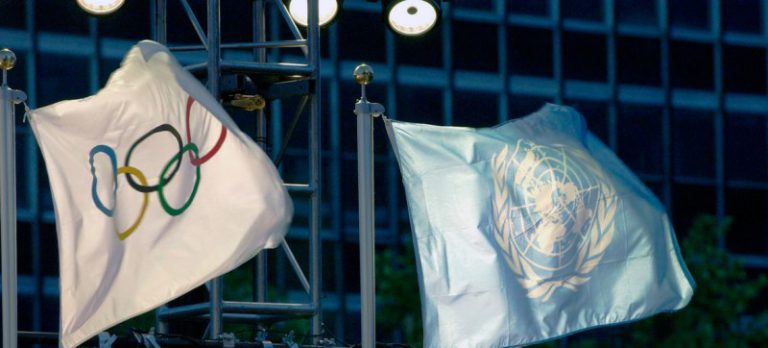
Ancient Greek tradition of ‘Ekecheiria’ will apply in Tokyo 2020

The Olympic Truce – traditionally known as Ekecheiria – was an announcement of peace and denouncement of hostilities before, during and after the Olympic Games.

According to the UN resolution, as in the ancient Greek tradition, the Truce will begin one week before the opening of the Olympic Games (24 July to 9 August 2020) and end one week after the closing of the Paralympic Games (25 August to 6 September 2020).

The UN and the International Olympic Committee (IOC) began discussions in 1992, on how the international community can cease hostilities during the Olympic Games, and how this can extend to international diplomacy. In 2000, the IOC and the Greek Government established the International Olympic Truce Centre, which aimed to promote peace through the traditional Olympic Truce.

Since then, the Olympic Truce has been an integral point of discussion within the United Nations and the resolution is passed every two years to include the Winter and Summer Games respectively.

The establishment of the Olympic Truce closely links with the introduction of the Olympic Games. The Olympic Games are said to have begun in the 8th century BC, when the oracle of Delphi advised Greeks to replace the incessant cycle of armed conflict with a friendly athletic competition every four years.

According to the UNESCO Olympic Truce Declaration, the tradition was established in ancient Greece in the ninth century BC by the signature of a treaty between three kings. It is considered the longest lasting peace accord in history.

With the recent UN resolution concerning the Olympic Games 2020 in Tokyo, UN Member States underlined the importance of cooperating to “collectively implement the values of the Olympic truce around the world,” and agreed to “cooperate with the International Olympic Committee (IOC) and the International Paralympic Committee in their efforts to use sport as a tool to promote peace, dialogue and reconciliation in areas of conflict during and beyond” the holding of the Games.

Today the Olympic Truce has become an expression of mankind’s desire to build a world based on the rules of fair competition, peace, humanity and reconciliation in accordance to the most compelling purpose of the United Nations – the maintenance of international peace and security. The application of the Olympic Truce to the Paralympic Games and its relating recognition of the rights of persons with disabilities is another important achievement building on the General Assembly resolutions.

With reference to Greek News Agenda.

Mitsotakis on Greece’s refugee policies: “we will send you back”

0

“It is unacceptable for Greece to treat refugees on their own…We must create a convention on asylum and immigration, as promised by the Commission, and tackle the problem with fair burden-sharing,” said Greek Prime Minister Kyriakos Mitsotakis in an interview with German newspaper, Bild.

“We must send a clear message to the circuits: You should know that when you come to Greece…you have no right to international protection, we will send you back,” said Kyriakos Mitsotakis. 

Referring to those who try to enter the country illegally, he points out: “If one wants to enter the territorial waters, they must first tell him that he enters the territorial waters illegally. This does not mean that the vessel must be in danger, but the coastguard is not a host or travel agency. It is intended to guard the border and, of course, save anyone at risk at sea. The sea has borders. It’s just a lot harder to keep track of. But border management is the exclusive prerogative of the state.”

Asked if he is afraid of a “hot incident” with Turkey, he replies, “No. Of course there is always the chance, but what if I’m afraid? No, I’m not afraid. I don’t think things will get out of control. You referred to the word ‘crisis’. I think we have an aggravated situation. This MOU signed with Libya is illegal and invalid. Everyone agrees on this, the European Union, America, Russia, Egypt and Israel. Everyone seems to agree that what Turkey has done is provocative and illegal. Therefore, I believe that Turkey will become increasingly isolated on this issue. We have made it clear that we want to talk, but we will not accept any violation of our sovereign rights. Because, we respect international law. It is Turkey that does not respect the law of the sea, not us,” said the Prime Minister.

Kyriakos Mitsotakis says Greece’s debts will be repaid and the country’s development is at a pivotal point. 

“For the first time, Greece borrowed in the short term at a negative rate. Who would have thought that this would have been possible a few months ago? At some point our 10-year bond was trading at a lower yield than the Italian bond,” he said while calling on the Germans to invest in Greece. 

“It is an invitation to the world to buy real estate, as the Greek real estate market is very attractive. It is not just an invitation for tourists. It’s an invitation to spend their winter here. There are many, many opportunities for retirees,” he said.

George Kambosos Jr. conquers former world champion Mickey Bey in Madison Square Garden

0

George Kambosos Jr. (18-0) overcame the biggest test of his career on Sunday (AEDT) to set himself up for a massive 2020 at the top of world boxing.

The Australian earned a split decision win over former world champion Mickey Bey (23-3-1) in Madison Square Garden to stake his claim as a potential title contender in the lightweight division.

Going into the fight as the third ranked IBF lightweight, the win — on the undercard of Terence Crawford v Egidijus Kavaliauskas — puts Kambosos Jr. that little bit closer to the belt.

With Richard Commey set to defend his IBF lightweight belt against Teofimo Lopez later on the card, Kambosos Jr. did his job against a tricky opponent in Bey.

Kambosos Jr. knocked Bey down in the tenth and final round; a clutch moment in a fight that was scored 97-92, 96-93, 94-95.

The 26-year-old told news.com.au before the fight, “If Commey is to win, I’ll probably go to Lomanchenko, but if Commey is to lose, there’s a big chance me and Lopez get it on next.”

Represented by big-name boxing promoter, Lou DiBella, Kambosos Jr. has already been talked about as a potential future opponent for Lomachenko by Bob Arum.

Sourced by: Fox Sports

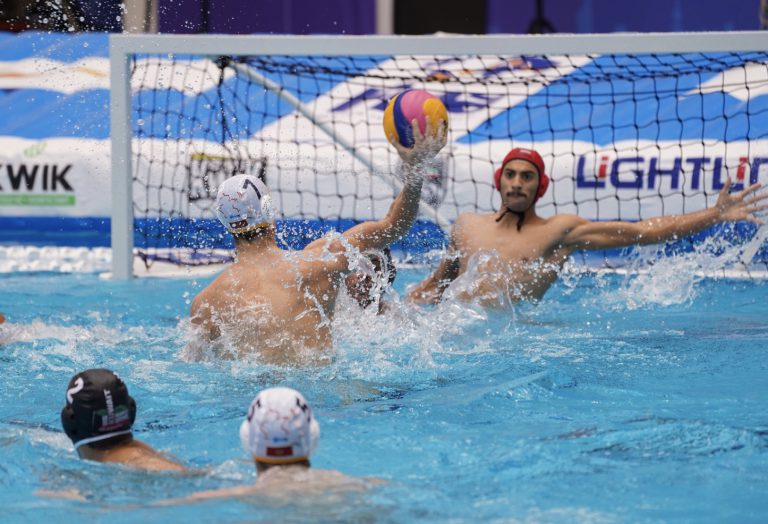
Greece maintains perfect record at FINA Men’s World Junior Water Polo Championships

Greece has strengthened their grip in the group standings on the third day of group matches, at the International Swimming Federation World Men’s Junior Water Polo Championships in Kuwait City.

Greece moved clear at the top of the Group D standings at the Al-Nasar Sport Club, recording a third consecutive victory.

The defending champions eased to a 13-2 win over Brazil, while their nearest challengers New Zealand faltered by losing 8-7 to Australia.

Greece now top the standings on six points, with New Zealand, Brazil and Australia all following on two.

Brazil and Australia have a game in hand on the top two teams.

Sourced by: Inside the Games

Young Greek Australian woman the first confirmed victim of the New Zealand volcanic explosion

Australian woman Krystal Eve Browitt, 21, is the first victim of the White Island volcanic eruption formally named by New Zealand Police. Krystal Browitt hails from the Drakatos family on her mother’s side.

The 21-year-old was a former student at Kolbe Catholic College, with principal Nick Scully describing her earlier in the week as a “beautiful soul”.

Mr Scully said he was praying Krystal’s sister Stephanie would make a full recovery.

On Saturday evening, New Zealand police confirmed a person being treated at Waikato Hospital had died, bringing the death toll to 15.

The remains of six people were successfully retrieved on Friday after a military team in gas masks and hazmat suits went onto the island and removed the bodies in a high-risk operation.

The Brewitt family were travelling on the Ovation of the Seas cruise ship. The father, Paul and the two daughters, Stephanie and Krystal, decided to visit White Island, while their mother, Marie, chose to stay on the ship. 

Sourced by: ABC and SBS Greek

Constantine Cavafy: Renowned Greek poet of 20th century literature

Born in Alexandria, Egypt on April 29th 1863, Cavafy was raised in the Greek district of Constantinople and is recognised as one of the biggest figures in Greek poetry.

Cavafy’s biography showed he wanted to be known as being from Constantinople by descent, but born in Alexandria. He described that he left whilst he was very young and spent much of his childhood in England.

During his lifetime Cavafy was an obscure poet, living in relative seclusion and publishing little of his work. This lack of concern for publication was due, perhaps, to the highly personal nature of many poems. Cavafy, who was gay, wrote many sexually explicit poems in the early years of his piety writings, however gained much critical acclaim from his philosophical and historical poems.

Cavafy is best known for his prosaic use of metaphors, his brilliant use of historical imagery, and his aesthetic perfectionism. He is also known as a very stoic poet, and most of his poems deal with his internal crisis of marginalization. Because of this, he only created about 200 poems, acting as his harshest critic.

Poet George Seferis, writing in On the Greek Style, believes that all of these attributes define Cavafy’s character, stating “All these things together make up the experience of his sensibility—uniform, contemporary, simultaneous, expressed by his historical self.”

Some of his most well-known poems include ‘Ithaka’ and ‘The City’.

Cavafy’s poem ‘Ithaka’ is a sentimental and philosophical piece that aims to remind readers that the journey is more important than the destination. This destination can be both physical and metaphoric, however many interpret this poem as symbolising the act of transitioning through life, from beginning to end, and to finally returning to one’s origins.

“Nacre, coral, amber, ebony, Egyptian cities where it’s possible to learn from the wise and to thrill at seeing a port for the first time.” Through this, Cavafy reiterates that the jouney may give the person treasures that are greater than the destination, and it is crucial to pay attention to every treasure.

The poem ‘The City’ has a quite personal and passionate meaning from Cavafy’s point of view. It follows the idea of constant moving and travelling across different countries, which Cavafy did according to his many different places of living. Though, the deeper meaning of the poem is reflected in the action of moving to escape. He reiterates the need to run away from a place one has lived, in order to forget their past.

The last line of the poem in Greek summarizes the core of the poem… “Ετσι που τη ξωή σου ρήμαξες, εδώ στην κώχη τούτη την μικρή, σ’ολην την γή την χάλασες. One of the more passionate translations of the last line reads “Just as you’ve destroyed your life here, in this small corner, you’ve ruined its worth everywhere, over the whole earth.” This translation is said to best capture the spirit of Cavafy as his literary perfectionism, stoic nature and nomadic past are dramatically emphasized.

You can follow The Greek Herald’s poet of week every week here: https://greekherald.com.au/blog/category/culture/

Half of Greece’s workers feel “inexplicable exhaustion”

0

A study conducted by Hellas EAP found 5 in 10 Greek workers feel inexplicably exhaused, 4 in 10 experience conflict at work and 3 in 10 feel no incentive to work for their companies.

The study took place between 2018-2019 and aimed to gather research on employees mental wellbeing, psychology and productivity, post financial crisis.

Commenting on the above, Hellas EAP Managing Director Tatiana Tountas stressed that “the effects of the multi-year financial crisis the country has experienced remain fresh in employment. Employees will need a long time to adapt adequately to new data , as well as to changes still taking place in a very large number of businesses.”

According to Tundas, “key elements of boosting employee productivity are their timely psychosocial support, experiencing mild adaptation to new data, feeling able to offer and feeling attachment to their company is constantly increasing.”

It is noted that a recent Hellas EAP survey showed that the major sources of stress for Greek workers include parental stress with 47%, work stress with 38%, and staff with 36%, followed by sensitive issues with 13.5% and imbalance in personal/work life with 4%.

GALANNI: The globally renowned couture brand that started in a small Greek village

Lenna and Catherine Vasilas talk to The Greek Herald about fashion, how the Galanni brand began, and how two girls from Lamia managed to create a very successful fashion brand in Sydney.

 “When a woman wears GALANNI, we want her to radiate presence, we want her to feel confident and empowered, by her beauty and by celebrating the female form. The way we do this is by designing wearable art combined with our signature fits.”

For the Vasilas women, it proves true that talent is in the blood. As both mother (Lenna) and daughter (Catherine) believe fashion was their calling.

“Fashion is a platform where we can freely express our creativity and art through design. Often we always made dresses for ourselves and every time we wore them found interest by women wanting and sometimes even demanding to buy our designs, so in 2004 we took the plunge and launched Galanni,” explains Catherine.

“Starting a high end couture label was always dream of ours. Crafting wearable works of arts whilst achieving the ultimate fit transformed the brand to new heights. Being woman designers allowed us to have an advantage as we know exactly how we wanted to feel and look when wearing a glamorous gown.”

GALANNI photoshoot in Santorini.

Catherine believes that what took GALANNI from a family idea to a high-end couture label was hard work, late nights and focus.

“We feel it is really important to stay true to your creativity, trust your creative intuition, always be original, and don’t take any short cuts in the quality and the journey,” said Catherine.

Lenna Vasilas, who founded GALANNI in 2004, experienced the migrant success story first-hand when she and her family migrated from Lamia, Greece, with one suitcase.

“A lesson that my parents taught me is whatever your situation is or where you come from you can achieve whatever you want. All you need is a vision and just go for it,” said Lenna.

The mother-daughter duo have not forgotten their Greek roots, and say their Greek heritage influences their inspiration for their work.

“Being Greek and being proud of our heritage and culture has always been one of our main sources of inspiration and you can see that through each of our designs, there’s always an element of Grecian flair,” said Catherine.

“When we are designing the Greek summers are always the backdrop to our vision!! And one of our proud highlights of our brand was when we did our campaign photo-shoot in Santorini.”

The GALANNI success story is reflected in their clothing, as well as the highly commendable people who wear their clothing. Some of their most prominent GALANNI fans include Mel B, Paula Abdul, Jennifer Hawkins, Samantha Jade, Jessica Mauboy,  Jesinta Franklin, Sophie Monk, The Veronicas and Brandi Glanville. 

Jennifer Hawkins in GALANNI.

The duo seek constant motivation from new goals which inspires new creations. They say an ultimate honour of theirs would be to dress Jennifer Lopez, Beyoncé or Rihanna!