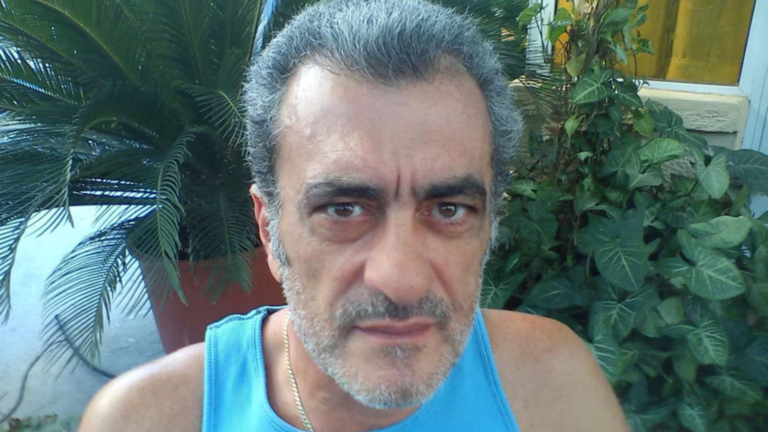
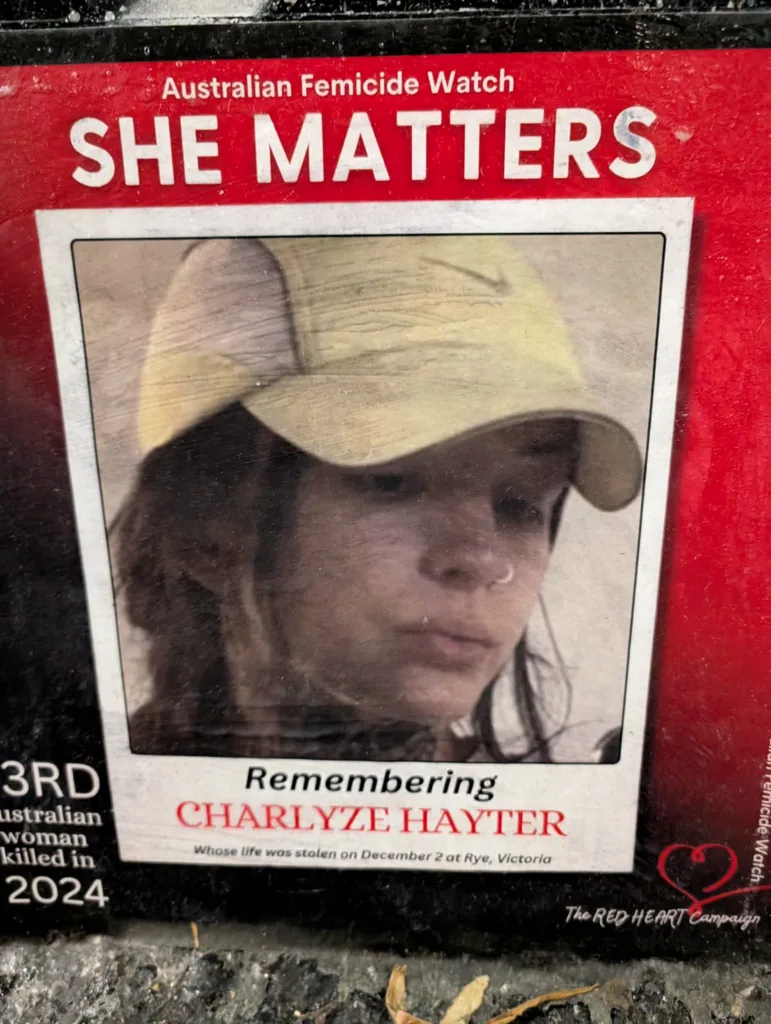
A committal hearing in Melbourne has heard dramatic evidence from former homicide detective Ron Iddles, who revealed he confiscated a knife from accused Easey Street double-murderer Perry Kouroumblis during a random traffic stop just days after the 1977 killings.
Mr Kouroumblis, now 66, has been charged with murdering Suzanne Armstrong, 27, and Susan Bartlett, 28, and with raping Ms Armstrong. He intends to plead not guilty to all charges.
Mr Iddles told the court he stopped the then-teenage Kouroumblis four to five days after the murders and found a knife in the boot of his 1968 Holden, which the accused claimed he had found on the railway tracks.
Under cross-examination, Mr Iddles said the murders were “fresh in his mind” at the time, though he could not recall precisely how the knife was transported to the police station.
The hearing also examined decades of evidence-handling, with defence barristers questioning potential contamination and gaps in forensic continuity. Former detectives Stuart Bateson and Peter Hiscock both gave evidence about earlier assessments of the knife and the DNA trail, while forensic pathologist David Ranson confirmed the weapon could neither be ruled in nor ruled out as the murder weapon.
Police maintain that seminal fluid recovered from Ms Armstrong’s body belongs to the killer, and that DNA did not match other past suspects. The court heard evidence has been moved between multiple storage facilities over the years, though officers insisted procedures sought to minimise contamination risks.
The prosecution’s case relies heavily on DNA evidence said to link Kouroumblis to the crime scene. The hearing continues.
In a statement to The Greek Herald, a VCAA spokesperson confirmed: “No changes will be made to the available VCE studies in 2026. The VCAA will consult with stakeholders prior to implementing any changes to the studies offered as part of the VCE from 2027.”
Professor Tamis, Director of the Australian Institute for Macedonian Studies, told The Greek Herald he had been informed the VCE Board was “seriously contemplating abolishing Classical Studies and Ancient Greek.” He said removing the subjects would damage academic pathways and undermine the study of Western civilisation.
“This will not stand,” he said. “We will not allow the Board to cut these subjects. We have a moral obligation to intervene.”
Teachers and community leaders also expressed frustration at the lack of formal communication, with several saying they had heard only “whispers” of an impending review.
According to background figures, only three students were enrolled in Classical Greek in 2025, and 226 students in Classical Studies – placing both well below thresholds examined in recent VCAA reviews.
Review recommendations place low-enrolment subjects under scrutiny
The community’s alarm follows Stage 2 of an independent review into the VCAA, which found the authority carries an “unsustainable subject load” and recommended examining low-enrolment studies, including languages with fewer than 15 students.
While these recommendations have sparked debate, the VCAA’s statement indicates no immediate changes – and emphasises that consultation will guide any reform affecting 2027 and beyond.
What happens next
The VCAA’s assurance provides short-term stability, but uncertainty remains over the long-term future of Classical Greek and Classical Studies. Community organisations, academics and benefactors are now preparing to take part in the consultation process once it begins.
For Professor Tamis, the fight is just beginning.
“To abandon Classical Greek is to abandon a part of ourselves,” he said.
The Greek Herald will continue to follow developments as the VCAA prepares its consultation process for 2027.
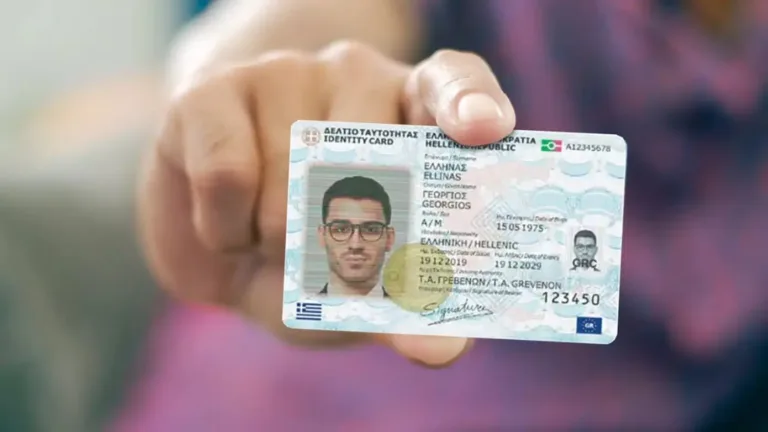
Greece has now completed the automatic allocation of personal identification numbers to all citizens who did not choose their preferred first two digits by the November 5 deadline, the Ministry of Digital Governance announced.
A total of 6,602,827 numbers were assigned automatically, bringing the overall figure since the reform began on June 3 to 9,311,529.
Notifications are being sent via email, the gov.gr “Citizen’s Inbox,” and the Gov.gr Wallet, with the ministry stressing that no action or confirmation is required. For security reasons, the number itself is not included; citizens can view it through pa.gov.gr using TaxisNet credentials or inside the Gov.gr Wallet.
The automatic process continues daily as soon as adults and minors receive a tax identification number. Users are then prompted to check their details in the myInfo app to correct any inaccuracies. Authorities have already identified 963,419 discrepancies across state registries, which are now being addressed.
Citizens with unresolved inconsistencies cannot yet receive a personal number. The new identifier is essential for the upgraded police ID card, which already includes it in 647,643 issued IDs, and will become the single reference number for all public-service transactions.
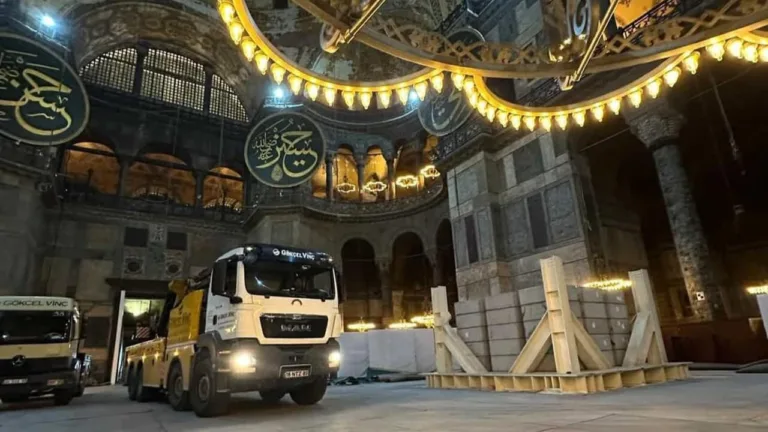
Photographs showing a crane truck and another vehicle inside Hagia Sophia have triggered concern about whether the monument’s fragile floor is being properly protected during restoration works.
The images, widely shared online, raised questions about potential damage to Hagia Sophia’s layered floor structure, which includes mosaics, ancient stone slabs and areas with underlying cavities.
Specialists warned that simple flat plates, like those seen in the photos, may not adequately distribute heavy loads.
In response, Turkey’s Ministry of Culture and Tourism insisted the works are safe, with Minister Mehmet Nuri Ersoy describing Hagia Sophia as “1,486 years old” and entering “the broadest and most comprehensive restoration process in their history.”
Authorities said structural analyses were carried out beforehand, and a temporary platform capable of supporting 30 tonnes per square metre was installed.
They added that the heaviest vehicle, weighing 45 tonnes, exerts only 6 tonnes per square metre due to the weight-distribution system used.
Alarm has swept through Victoria’s Greek community after The Age reported that Classical Greek and Classical Studies may be among several low-enrolment VCE subjects earmarked for “retirement” by the Victorian Curriculum and Assessment Authority (VCAA).
The reaction intensified when Professor Anastasios Tamis, Director of the Australian Institute for Macedonian Studies and one of Australia’s leading advocates for Classical education, revealed he had received information indicating the VCE Board is already seriously considering abolishing these subjects, despite no public updates from the VCAA.
“I have just been informed that the VCE Board of Studies has announced it is seriously contemplating abolishing Classical Studies and Ancient Greek as subjects for university entry examinations,” Tamis told The Greek Herald.
“Universities are adopting student-demand driven subjects based on market expectations, rather than true education that cultivates knowledge, skills and values.”
The lack of official communication has only deepened concern.
Professor Tamis has taken a leading role in rallying opposition. In a detailed letter sent to major university benefactors, he warns that eliminating Classical Greek and Classical Studies at VCE level would sever critical academic pathways and undermine the study of Western civilisation in Australia.
“This will not stand,” he told the Greek Herald. “All the schools teaching Classical Greek, the University [of Melbourne], the Tatoulis and Stamoulis families, we will not allow the Board to cut these subjects. We have a moral obligation to intervene. The decision must be reversed.”
According to Tamis, dismantling these subjects would not only affect high school students but also destabilise university humanities departments that rely on VCE Classics for future enrolments.
Classical Greek and Classical Studies may be among several low-enrolment VCE subjects earmarked for “retirement”.
Uncertainty, whispers, lack of transparency
The VCAA has made no formal announcement. Yet even the rumour has sparked urgent meetings among teachers, academics, school leaders and community organisations who fear that losing Classical Greek would sever a cultural and intellectual lifeline.
The subject is reportedly on a list of nine VCE languages with fewer than ten students enrolled last year, including Hungarian, Swedish, Indonesian First Language, Armenian, Auslan, Bengali, Korean First Language and Classical Hebrew.
Teachers who spoke to The Greek Herald said they had “heard whispers” and informal concerns but had received no briefing or consultation.
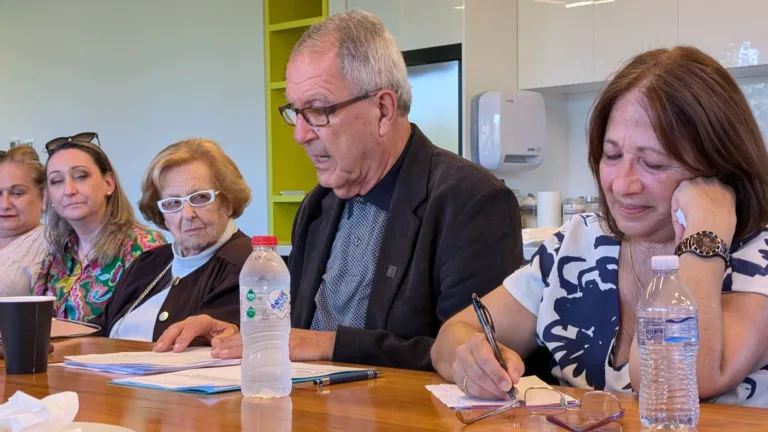
The issue resurfaced during a working group for World Greek Language Day (9 February) at Alphington Grammar on Tuesday, November 25 where The Greek Herald was the only community newspaper in attendance. Community members openly questioned how Classical Greek could survive a review focused on efficiency and cost-cutting rather than cultural value.
Scathing review could trigger subject cuts
What is happening to Classical Greek does not exist in a vacuum.
It follows a damning independent review into the VCAA, commissioned after last year’s VCE exam breaches, which found the agency suffers from “bad governance, management failures and a culture of fear.”
Stage 2 of the report, released by governance expert Dr Yehudi Blacher, made direct recommendations that now place low-enrolment subjects, including Classical Greek, under immediate scrutiny.
His report had 11 recommendations and 41 sub-actions. The report found the VCAA:
had an unsustainable subject load (116 VCE subjects)
is drained by low-enrolment subjects
should review and potentially retire low-enrolment subject (and possibly deliver this through alternative models such as university partnership subjects or unscored ATAR contributions)
assess languages with fewer than 15 students.
Blacher specifically recommended that the Education Department and VCAA “review the financial sustainability of the current subject load, with particular focus on low-enrolment subjects, and assess whether these subjects—such as Classical Greek and Classical Studies—should continue in their current form or be delivered through alternative models, including university partnerships or unscored contributions.”
These recommendations directly place Classical Greek and Classical Studies at risk, as both currently fall far below the threshold.
Classical Greek is reportedly on a list of nine VCE languages with fewer than ten students enrolled last year.
Following the review’s release, Deputy Premier and Minister for Education Ben Carroll announced further investigations into VCAA processes. Meanwhile, new CEO Andrew Smith stated: “The VCAA welcomes this report, and we accept its findings and recommendations. We acknowledge that major reform is needed.”
The VCAA has confirmed it will consult stakeholders before making changes, but the timing of the review alongside the leak about subject cuts has accelerated community anxiety.
Global crisis in humanities
Tamis’ letter places the issue within a worldwide decline in support for the humanities. Across Australia and internationally, Classics departments have faced cuts, staff losses and shrinking enrolments as funding models increasingly favour STEM and vocational training.
This trend inspired the creation of the Ramsay Centre for Western Civilisation, funded by a $3 billion bequest from the late Paul Ramsay, aimed at revitalising “great books” education.
Greek-Cypriot researcher and author John Milidis says the threat to Classical Greek is part of a broader structural problem.
“Even Modern Greek is dropping,” he says. “If we hadn’t had migration from Greece during the financial crisis, we wouldn’t have the 170 students we have now. It’s capitalism. Subjects survive only if they make money.”
Academic Anna Hatzinikolaou echoes that the issue goes deeper than enrolment numbers.
“The importance of Greek lies in the fact that it is the base of many languages,” she says. “If you want to learn good English, learn Greek. Humanities should not be optional add-ons. We need mandatory electives. We are already late.”
Across Australia and internationally, Classics departments have faced cuts.
Students feel the loss before it happens
For students like Costas Vardavakis, a Year 10 student undertaking Year 11 Classical Greek at the schools of the Greek Community of Melbourne (GCM), the subject has been transformative.
“I did it because a friend encouraged me, and because I wanted to understand the language my family grew up with,” he says. “There are only three of us in my class. It’s surprising more students don’t do it.”
He believes reduced scaling has discouraged enrolments. “It used to scale up by nine. Now it only scales up by five. The VCE Board isn’t encouraging the subject, and it’s making it harder.”
Though he hopes to pursue commerce and law, Classical Greek has shaped his worldview and strengthened his Greek identity.
He adds that at schools like Xavier College, there are Classical Greek students who aren’t of Greek background. They take it out of genuine intellectual interest.
What’s at stake?
If Classical Greek and Classical Studies are removed from the VCE, Victoria would lose one of the last remaining school-level pathways into Classics in the entire country. Community leaders warn this could accelerate the collapse of Classics at university level and undermine Victoria’s reputation as a multicultural state that values language diversity.
Professor Tamis is unequivocal: the community will not accept the decision.
“We are speaking about the roots of democracy, philosophy, science, theatre, ethics—everything that shaped the modern world,” he said. “To abandon Classical Greek is to abandon a part of ourselves.”
For now, the Greek community is mobilising, contacting benefactors, preparing public statements and demanding transparency from the VCAA before any decision is made that could reshape the future of humanities education in Victoria.
Comment from a spokesperson for the Victorian Curriculum and Assessment Authority:
No changes will be made to the available VCE studies in 2026. The VCAA will consult with stakeholders prior to implementing any changes to the studies offered as part of the VCE from 2027.
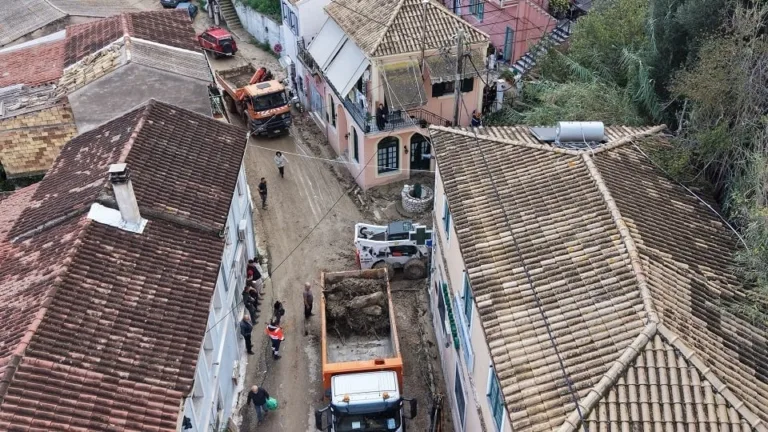
Authorities in northwestern Greece are urgently repairing flood-damaged roads, bridges and utilities as new severe weather is forecast mid-week.
Epirus and northern Corfu remain among the worst affected, with landslides, collapsed infrastructure and disrupted power and water supplies leaving rural villages at risk of isolation.
The national weather service EMY has warned of renewed heavy rain and thunderstorms spreading from western Greece to the Ionian Islands, the Peloponnese and eastern Macedonia from Tuesday onwards.
A second system, Adel, is expected to bring even more dangerous conditions on Thursday and Friday, including hail and gale-force winds.
Civil Protection has placed the Ionian Islands, Epirus, Western Greece and the Peloponnese on red alert. After convening the Risk Assessment Committee, officials said the storm would impact western and northwestern regions, the northern Ionian and parts of northern and eastern Greece.
As the committee noted, “On Wednesday heavy rain and storms are expected in western Greece, mainly in the northwest… On Thursday rain and storms will be particularly heavy in western Greece, central and eastern Macedonia and Thrace.”
Local authorities have been instructed to activate emergency plans, with a further assessment due Wednesday to determine whether the severe weather will continue into Friday.
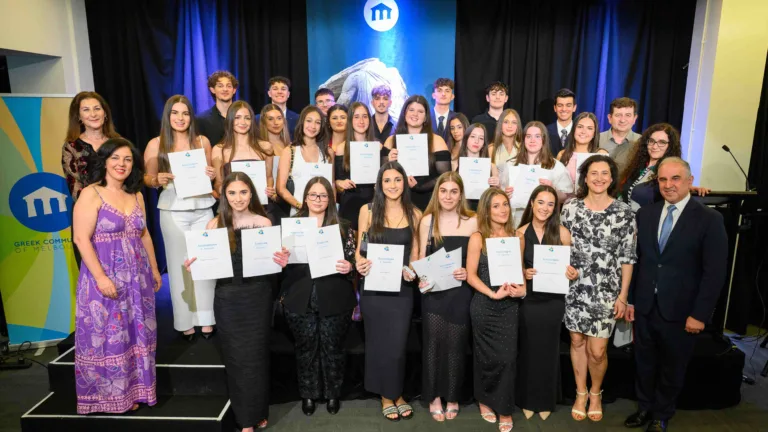
In an atmosphere of pride and emotion, the Graduation Ceremony of the Class of 2025 of the Greek Community of Melbourne Schools took place on Saturday, 22 November, at the Greek Centre.
In a warm atmosphere, the Year 12 students marked the completion of their studies at the Greek School. Parents, teachers, and Board Members attended to honour the effort, dedication, and achievements of the graduates.
In her address, the Principal of the Greek Community Schools, Maria Bakalidou, stated: “Our graduates tonight completed a journey filled with knowledge, friendships, and beautiful moments at the Greek School. We saw them grow, try, doubt, dream, and today, we are immensely proud of them. We thank the parents for their unwavering support and our teachers for their dedication, love, and passion throughout the year.”
The Secretary of the Greek Community, Marinis Pirpiris, added: “Our students have achieved something truly remarkable. Their dedication and love for the Greek language fill us with deep emotion and pride. We warmly congratulate them and wish them every success on the bright path ahead.”
The evening’s program included the graduation ceremony followed by a joyful students’ party that showcased the students’ enthusiasm and energy, giving an extra spark to the celebration.
The Greek Community of Melbourne warmly congratulates the graduates and wishes them every success in their future endeavours.
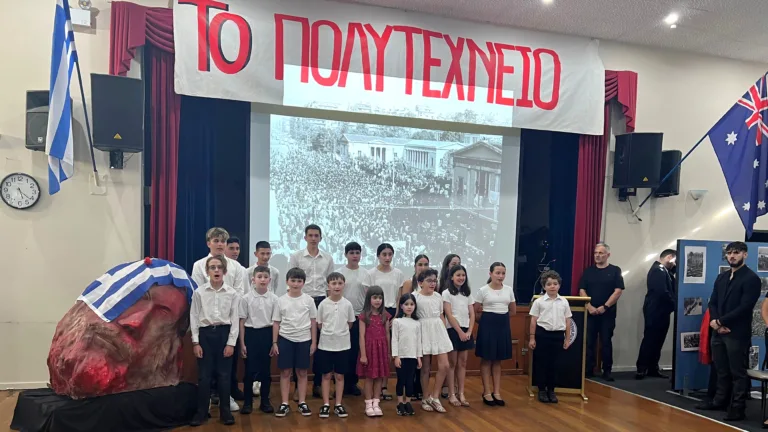
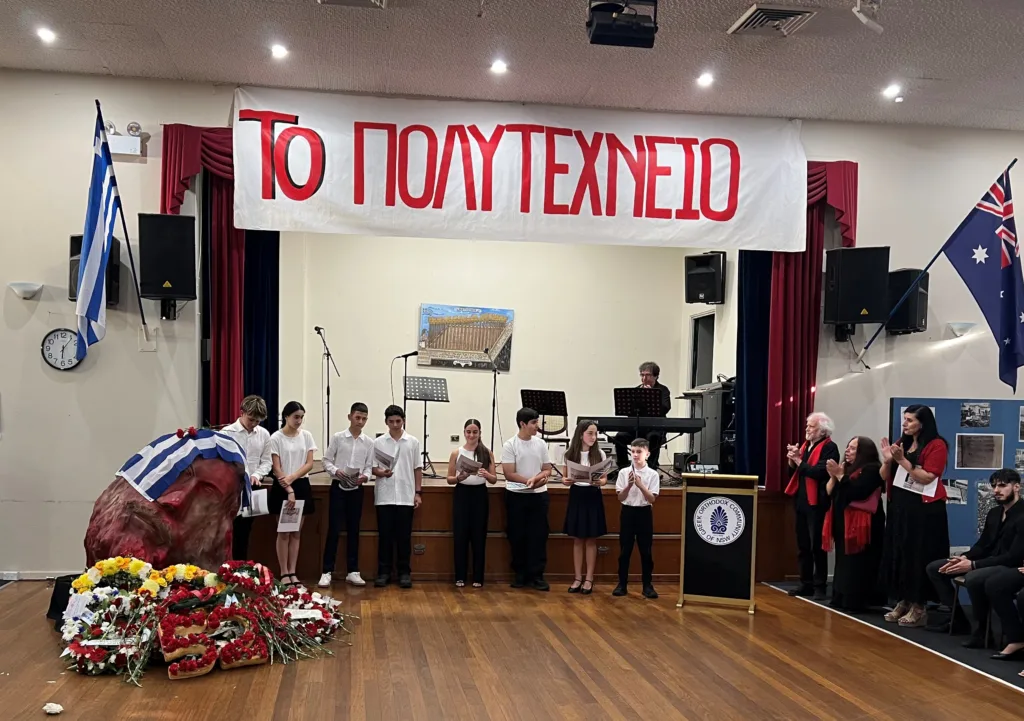
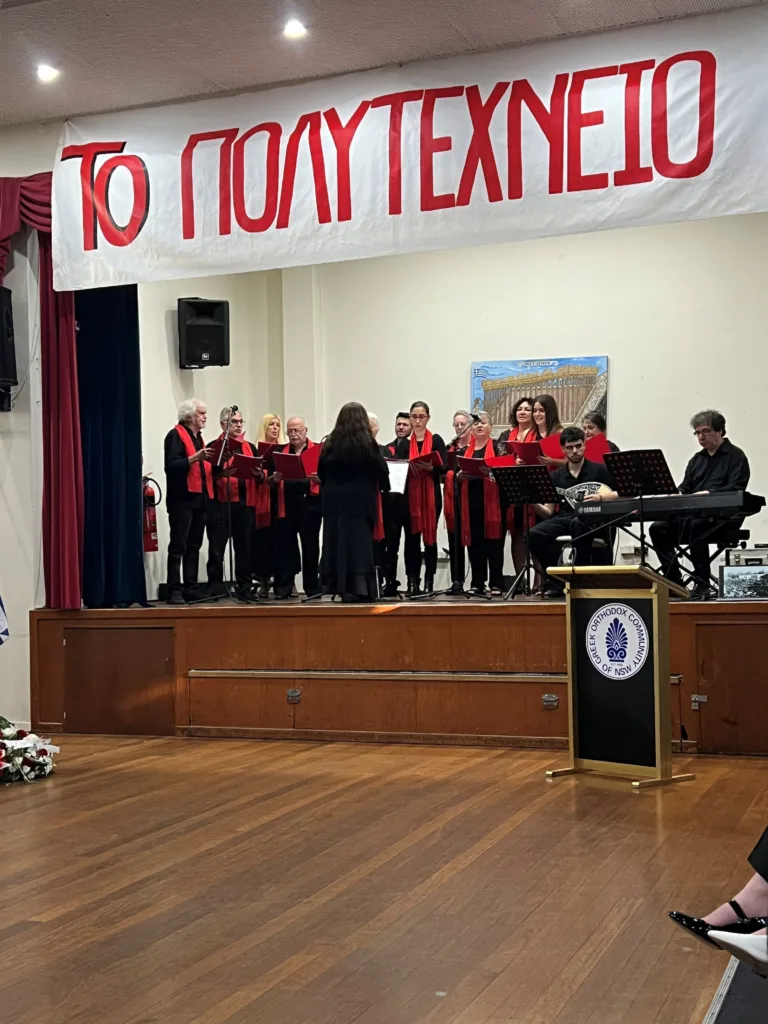
The event honoured the bravery and sacrifice of the students who stood for freedom and democracy, bringing together students, university representatives, and members of the Greek Australian community.
The ceremony opened with a minute of silence, followed by the national anthems performed by students from the Afternoon and Saturday Schools of the GOCNSW.
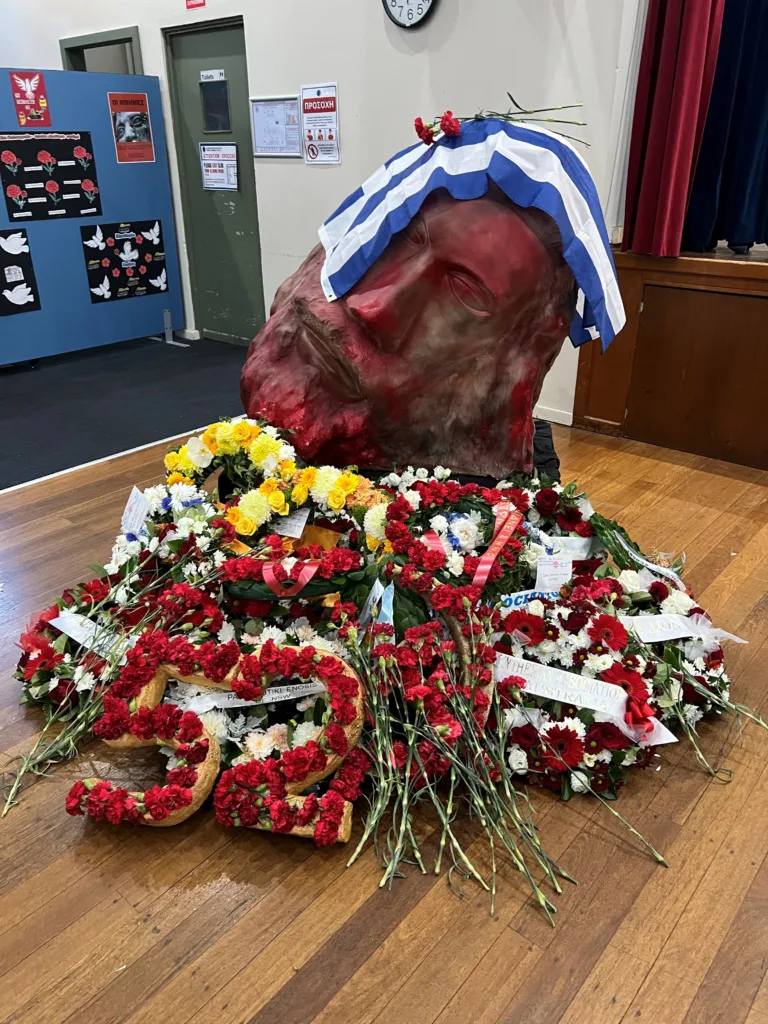
Wreaths were laid in remembrance of the heroes of the uprising, while students, Maria Hassapoglou, Dionisis and Yiannis Marinos recited poignant poems.
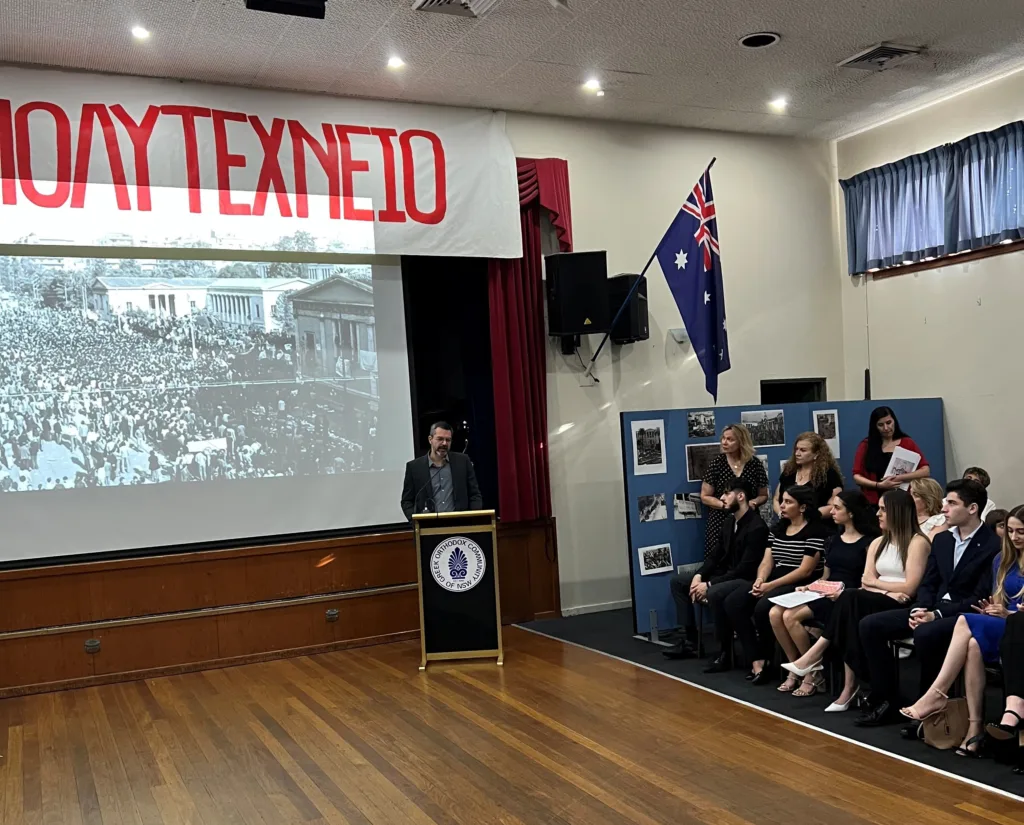
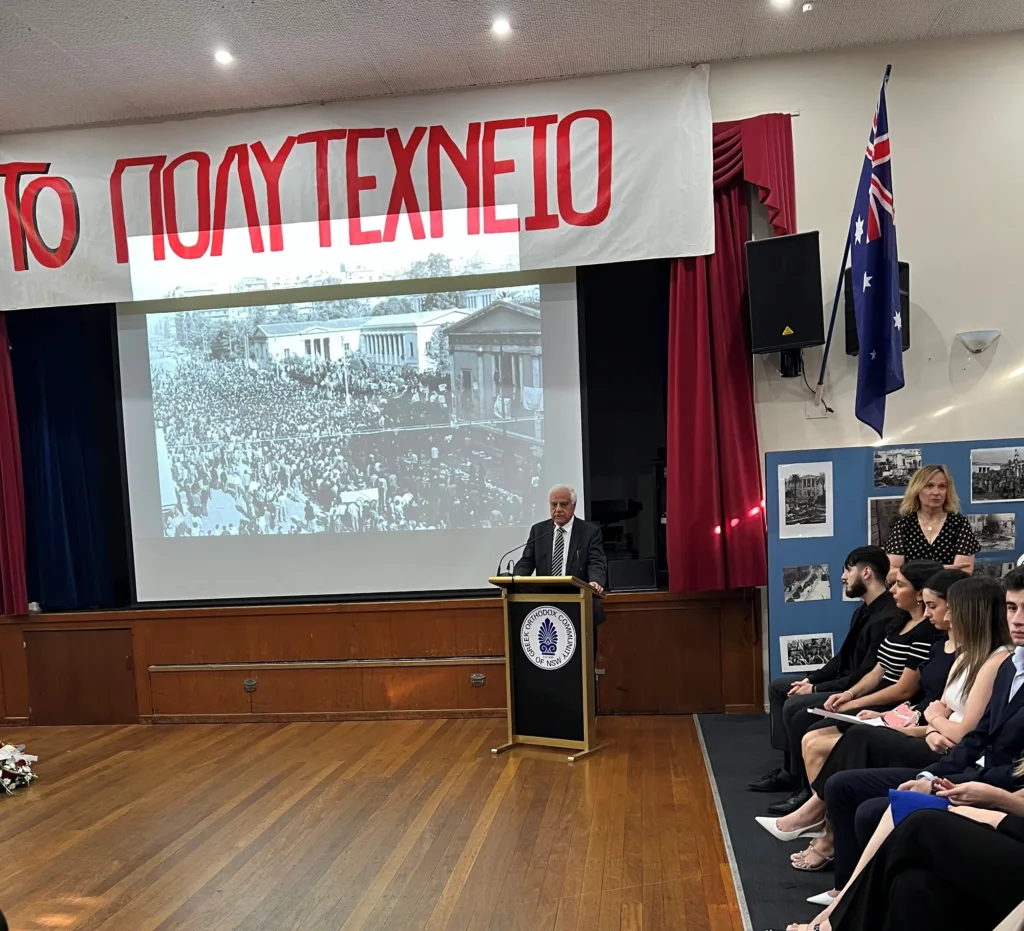
Penny Kalantzis, first-year representative of the Sydney University Greek Society (SUGS), presented a historical account, and a video produced by the Combined Universities Greek Association (CUGA) highlighted the origins and enduring significance of the Polytechnic Uprising.
In his address, Harry Danalis, President of the GOCNSW, reflected, “Today, we honour the bravery and sacrifice of the students who stood for justice and democracy. Their courage in the face of oppression remains a guiding light, inspiring us to uphold freedom, justice, and civic responsibility in our communities.”
George Skemperis, Consul General of Greece in Sydney, added, “The students of the Polytechnic were young people whose voices challenged injustice and fought for democracy. Young people have a powerful ability to speak out against unfairness, while many older generations are often more likely to accept the status quo. Their bravery and courage continue to inspire and guide our communities today.”
Consul General of Greece in Sydney, George Skemperis.GOCNSW President Harry Danalis.
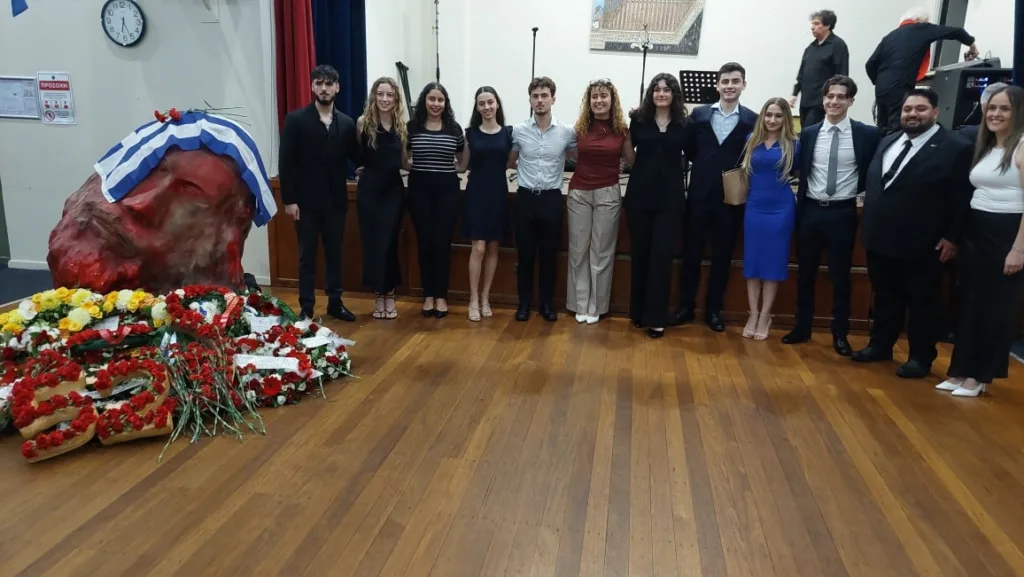
The event was attended by representatives from Greek and Cypriot community organisations and Hellenic university societies across Sydney, including leaders from SUGS, MUGA, UTS Hellenic, UNSW Hellenic Society, and CUGA, as well as presidents and representatives of numerous community associations and cultural organisations.
University students.
The ceremony concluded with GOCNSW students reciting eyewitness testimonies from 17 November 1973, laying flowers, and paying tribute to the fallen. This was followed by a moving performance of the song O Dromos by the students, accompanied on piano by Dimitris Fotiadis.
The event concluded with a musical tribute performed by the Greek Australian Cultural Ensemble and Choir Romiosini, conducted by Maria Fotiadou with accompaniment by Mr Fotiadis.
Choir.
The ceremony was hosted by Master of Ceremonies Dimitris Kallos. The GOCNSW also acknowledged its Board members and expressed sincere gratitude to the local Greek media, the students and teachers of the Greek afternoon and Saturday schools, university students from Sydney, UNSW, UTS, and Macquarie, and all community organisations in attendance for their dedication and contribution to the success of the event.
As Greeks, many of us grow up hearing phrases like “to ksylo vgike ap’ ton paradeiso” (“violence came from paradise”) or “tha sou valo piperi” (“I’ll put pepper on your tongue”). Said jokingly, almost affectionately, they hint at something deeper: the normalisation of tough discipline and, at times, violence in our families and institutions.
When the UN declared 25th November as the International Day for the Elimination of Violence Against Women in 2000, Liana Papoutsis had just entered a violent relationship. As a human rights lawyer and family violence prevention specialist, she has spent the last 12 years advocating for the elimination of gender-based violence. Her lived experience informs her advocacy.
“When we look at community institutions, faith spaces, cultural associations, most are male dominated. That doesn’t automatically mean more violence, but it does influence how visible and acceptable sexism can be,” she says.
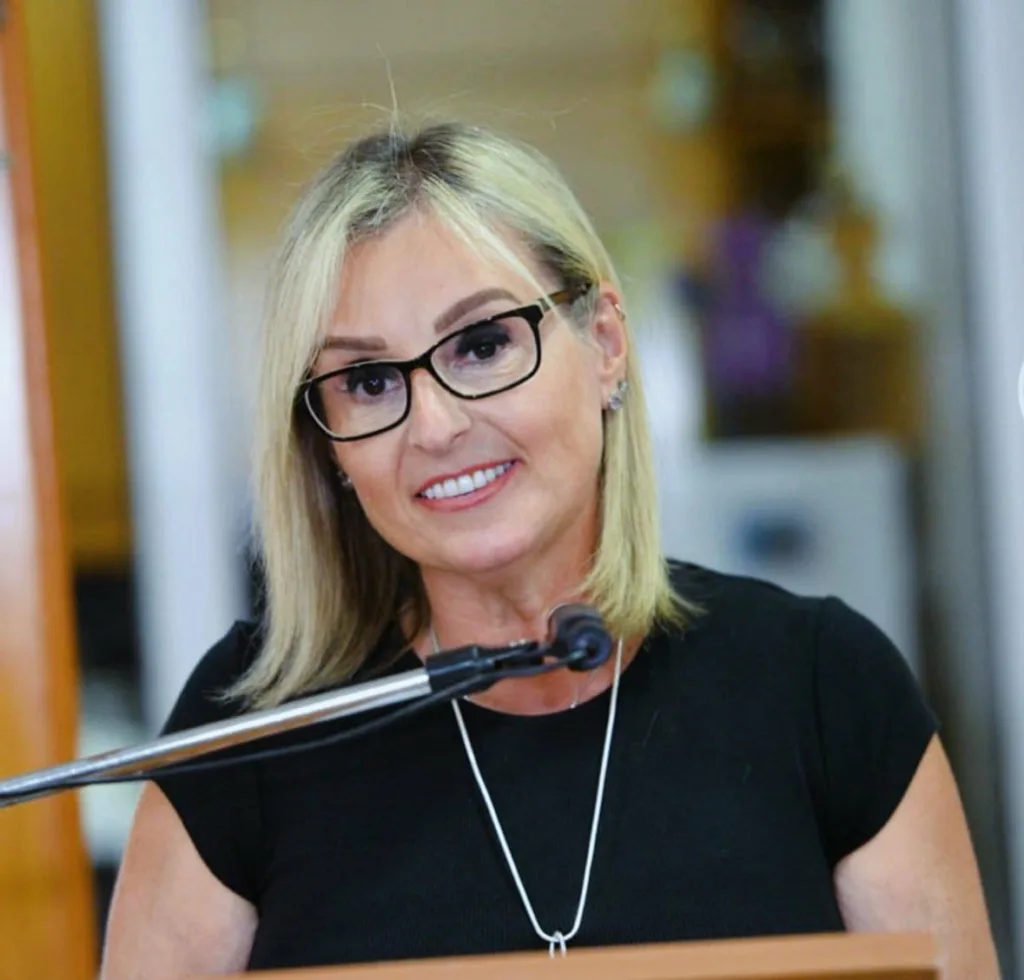
Lawyer Liana Papoutsis, an advocate for violence against women with lived experience.
Hidden family violence
Papoutsis is clear that Greek Australian communities are no exception to national trends. “Why would we think the Greek community is exempt from something affecting all of society?” she questions.
“We know family violence is very much present, but it remains in the shadows due to stigma and fear,” she says, concerned that it is swept under the carpet in a way that prevents it from being addressed.
When conversations were proposed for Greek language schools, she was told parents would object. She approached a leader of a Greek community organisation to request participation in a research project.
“I explained our project on preventing family violence in faith communities. He said someone would get back to me, but nobody ever did,” she says.
Welfare organisations see the reality up close. “Openly acknowledging it can cause unrest,” Papoutsis says, adding her academic research into violence prevention in faith communities also revealed resistance.
“Priests were similarly divided between denial, some telling me ‘there’s no problem in the Greek community’ and helplessness, where they say: ‘If someone tells me something, I just send them to the police.’”
A personal survival story
Papoutsis speaks with measured clarity, but her calmness sits atop years of trauma.
“I’m Greek Australian. Educated. Born here. And I lived through 14 years of abuse,” she says.
What began with “small lies” grew into financial control, coercion, threats, and physical violence. The breaking point came when her former partner harmed their child and issued death threats.
“That was it. Everything became about protecting my son,” she says.
At the same time, her father— an activist, resistance fighter, and her greatest supporter — was dying. She had hoped to spare him the truth, but her perpetrator reached him first, twisting the narrative.
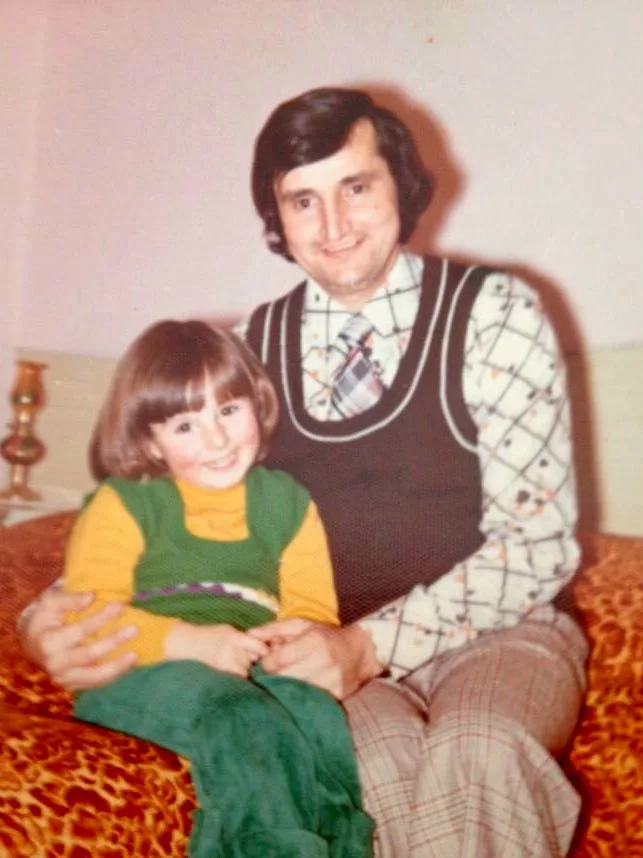
Liana Papoutsis and her father, an inspiration.Liana always had a close relationship with her father.
“That incident caused a lot of pain, but my dad and I resolved it. His dying words to me were about staying safe,” she says.
Even after escaping, judgement followed.
“Perpetrators are often ‘street angels, home devils’. People couldn’t believe it. Some in his family told me it was my fault he went to jail. Instead of supporting a traumatised child, they supported him. Deep down, though, they knew,” she says.
Microcosm of society
Papoutsis notes that migration stories, intergenerational trauma, language barriers, and patriarchal norms all contribute to the silence around violence in Greek Australian families.
“Our migration story is coloured by hardship. Reporting is lower among CALD women. Shame is powerful. Many families instruct women not to ‘embarrass’ the family. Patriarchy, silence, and the lack of women in leadership make challenging abusive behaviour even harder,” she explains.
Papoutsis notes that migration stories, intergenerational trauma, language barriers, and patriarchal norms all contribute to the silence around violence in Greek Australian families.
Young Greek Australians, she says, are trying to break the cycle, but not without backlash. “There is progress, but also real resistance. And we must talk about that honestly.”
Responding to the situation of younger women experiencing coercion in Greek Australian community groups, she says: “We need parents to stop enabling bad behaviour from sons. We need accountability.”
Crucially she emphasises that men must be part of the solution. Not to take over the table “but to buttress the women who are already speaking. Men as allies matter,” she says.
Change in workplaces
Workplaces, she says, mirror society, and Greek Australian environments may be a little slower when it comes to adopting change.
“You will have perpetrators and victims in every workforce. Companies must act decisively. Too often, people call someone a ‘bully’ without naming the behaviour as violence or coercion,” she says.
Papoutsis was especially proud to take part in the recent launch of Relationship Matters’ Safe and Supported at Work program. The innovative program integrates confidential counselling with specialist legal support and is offered to employers who want to support employees impacted by family violence.
The program was launched by the Assistant Minister for the Prevention of Family Violence Ged Kearney, with Relationship Matters’ CEO Maya Avdibegovic leading the presentations on the program. The launch was organised by Relationship Matters’ Business Development Manager Vicki Kyritsis, who is also the Vice President of the Greek Community of Melbourne and Victoria. Vicki oversees the program.
“This program equips employers to meet new legislative obligations and provide trauma-informed, culturally sensitive support,” Papoutsis says.
She notes that Victoria has led the nation on reform.
“I’m proud to be Victorian. The investment and lived-experience leadership model is world-leading. But this is a national crisis. Over 50 women are killed each year. If this were terrorism, billions would be spent,” she says.
She argues that lived experience must remain central. “We used to build systems and expect survivors to fit into them. Now we co-design with them. That’s how real change happens.”
Papoutsis argues that lived experience must remain central.
Holding on to hope
Despite everything, Papoutsis radiates strength. “I’m in the best place I’ve ever been. My son is 20 now. I’m teaching him about respect, about the kind of man he wants to be. What we went through doesn’t define us.”
Her message for 25th November is straightforward.
“Family violence is happening in our community. We need honesty. We need leadership. And we need to stop pretending tradition is an excuse. We are a long-established community in Australia. There is no excuse for silence.”
To find out more about Safe and Supported at Work, employers can contact Vicki Kyritsis at workplacematters@relationshipmatters.com.au
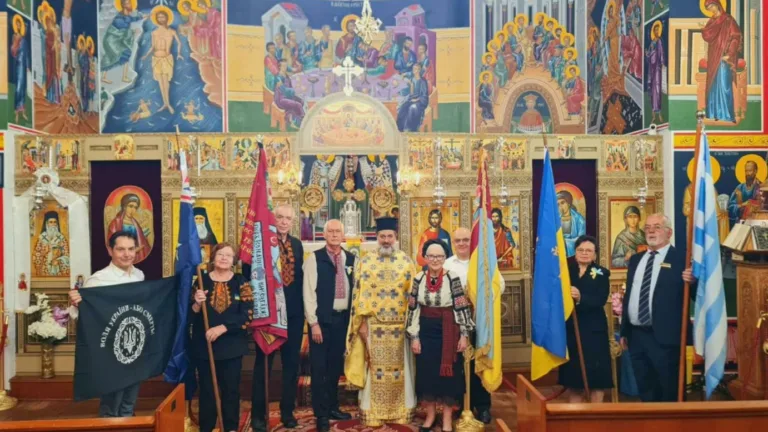
The Parish of Saint Savvas of Kalymnos in Banksia joined Ukrainians worldwide on November 23 to mark the 92nd anniversary of the Holodomor, the 1932–33 man-made famine that killed millions under Stalin.
A Divine Liturgy and memorial service were held at the church, resonating strongly with the parish’s Ukrainian faithful amid the ongoing war in their homeland.
During the service, Fr Savas Pizanias read a message from His Eminence Archbishop Makarios of Australia, who called the Holodomor “one of the most tragic and unjust events in human history” and stressed that it was the result of a deliberate policy “to erase a people who cherished their freedom, their heritage, and their faith.”
He added: “Villages disappeared, graves multiplied, and entire generations were silenced… while tyrants may bury bodies, they can never bury hope.”
Members of the Ukrainian Free Kozaks of Australia were present as the Archbishop’s continued support for Ukraine and its faithful was reaffirmed. The church was filled with Greeks, Ukrainians and others.
The service concluded with prayers for the eternal memory of the Holodomor’s victims.