Home Blog Page 104

Cyprus Community of NSW supports the Steve Waugh Foundation

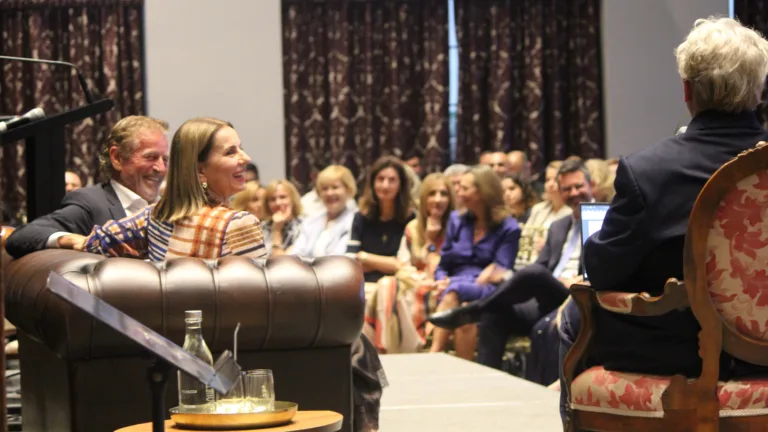
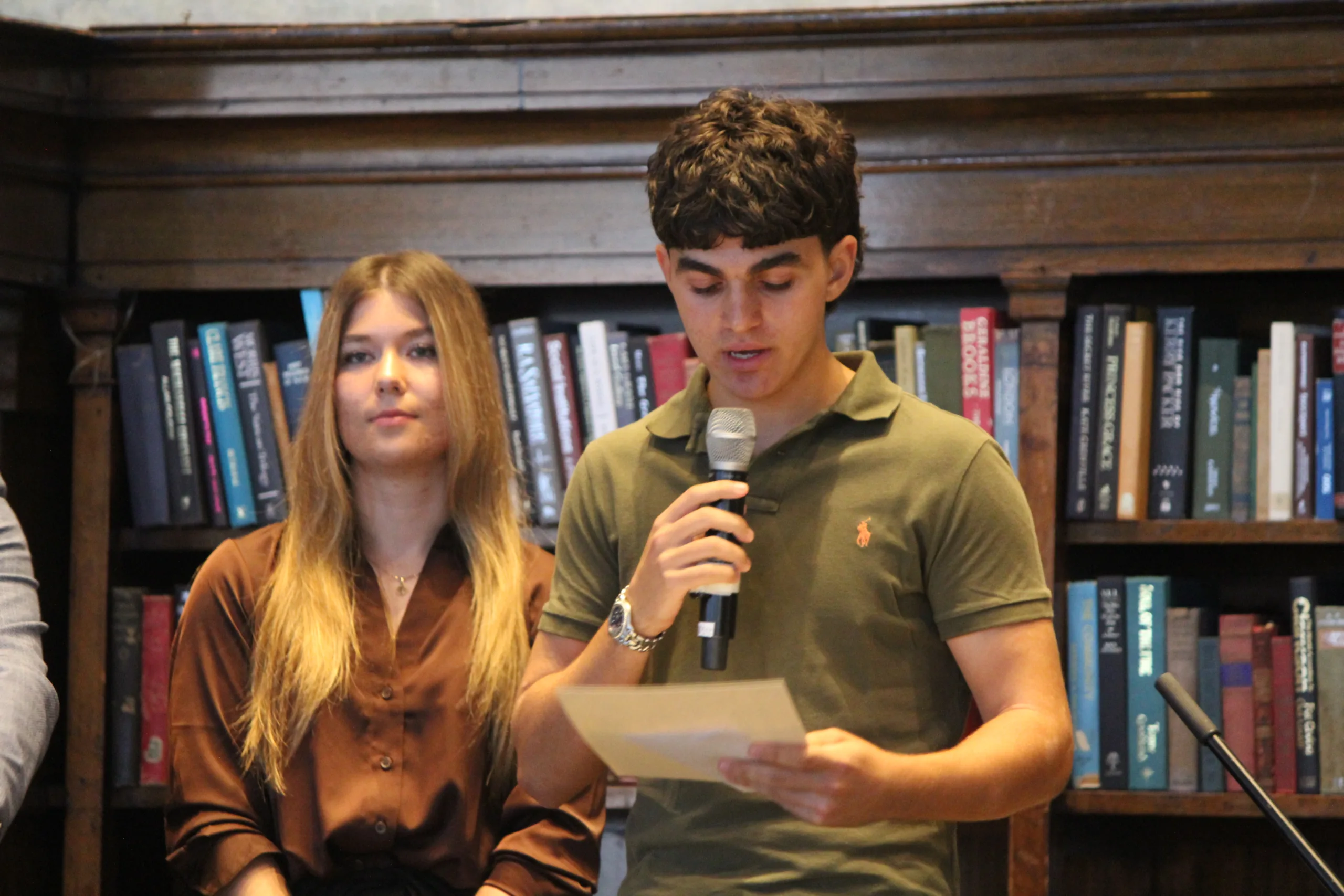
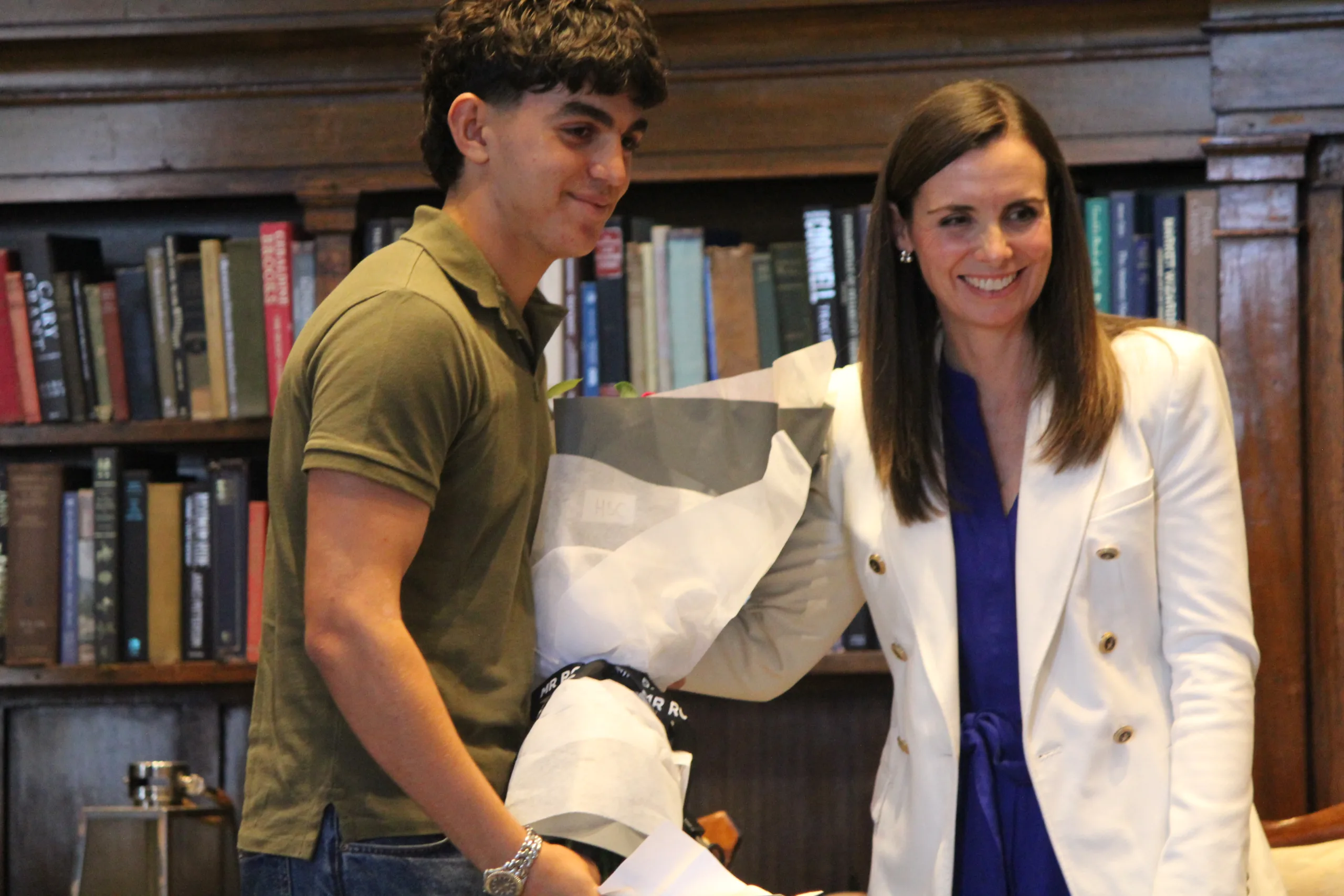
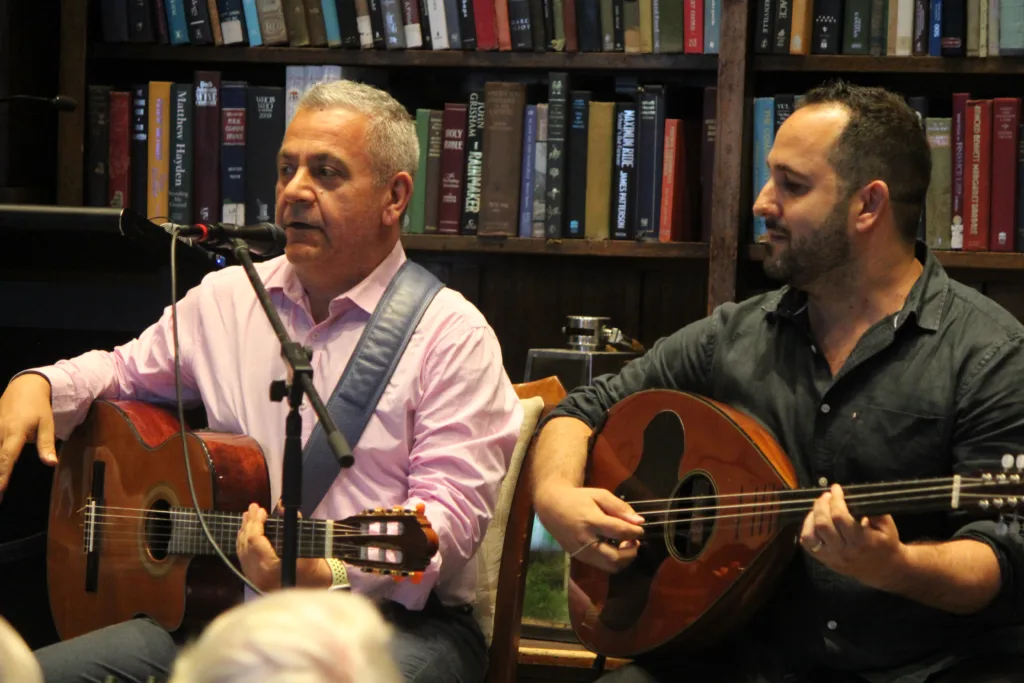
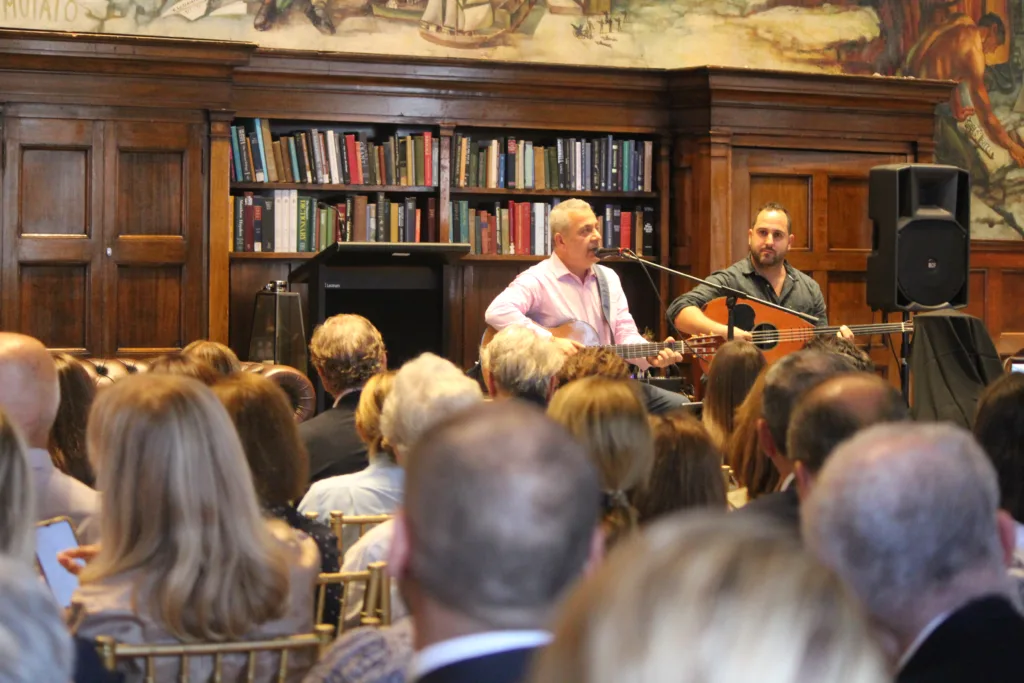
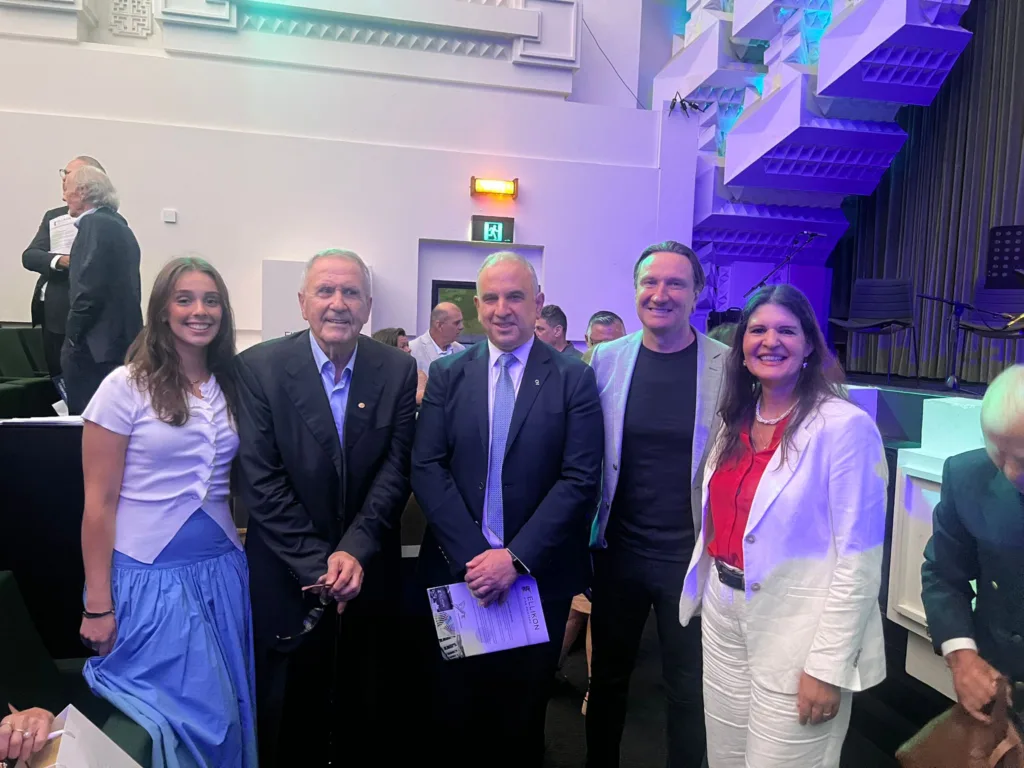
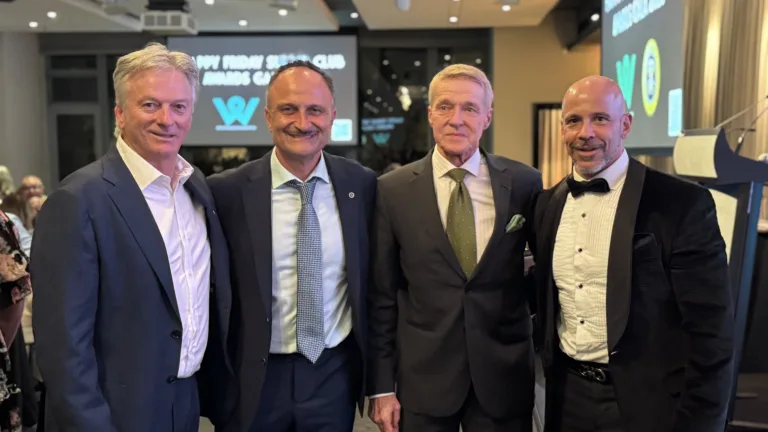
The Cyprus Community of NSW has announced its support for the work of the Steve Waugh Foundation at a Greek- and Cypriot-Australian supper club fundraiser held on Friday, 6 February 2026, with proceeds directed to the Foundation.

The event marked not only a show of community solidarity, but also the Community’s growing commitment to science-led medical research and evidence-based care aimed at improving outcomes for children and young adults living with rare diseases.

The fundraiser formed part of a broader series of community-led initiatives supporting the Foundation in early 2026.

Held on February 6, the supper club event directed funds toward the Foundation’s ongoing work with children and young adults living with rare diseases. The evening followed earlier fundraising initiatives involving Steve Waugh AO, including an Intimate Evening at Benny’s Cronulla on 2 January 2026, reflecting sustained community momentum behind the Foundation’s mission.

For the Cyprus Community, the cause is deeply personal. Many within the Cypriot Australian community live with rare diseases or care for children and young adults affected by complex and often undiagnosed conditions. These families frequently face lifelong medical, emotional and financial challenges, often with limited access to specialised support.

“For many in our Cypriot community, rare disease is not an abstract issue – it is something lived every day by families we know and care about,” Kyriakos Panayi, Honorary Secretary of the Cyprus Community of NSW, said.

“Our support for the Steve Waugh Foundation reflects a clear commitment to ensuring that science, care and compassion reach those who too often fall through the gaps.”

Founded by former Australian Test cricket captain Steve Waugh AO, the Foundation supports children and young adults aged 0–25 living with the rarest of the rare diseases – conditions with extremely low prevalence that often fall outside conventional funding and support systems. Its mission is to improve quality of life and provide “somewhere to turn” when no other help is available.

Support is delivered primarily through individual grants for specialised medical equipment, therapy, communication and mobility aids, and respite care, alongside national advocacy and awareness initiatives such as World Rare Disease Day.

“This is about standing alongside families – many from our own community – who face extraordinary challenges with quiet strength,” Mr Panayi said. “By supporting the Steve Waugh Foundation, we are committing ourselves to practical help, dignity and hope for those who need it most.”

Supper clubs, philanthropy and community in 2026

The Greek Australian supper club scene in 2026 reflects a blend of philanthropy, cultural tradition and contemporary Australian hospitality. Across the community, dedicated supper clubs and pop-up events bring people together through shared meals, late-night dining and live music – often with a strong charitable purpose.

One of the most prominent examples is the Happy Friday Supper Club, a long-running group of Greek and Cypriot Australian friends established in 2009. The group meets on the first Friday of every month without fail. What began as a simple gathering has evolved into a significant fundraising force, with the February 2026 event aiming to raise $50,000 for the Steve Waugh Foundation.

Members describe the club as a modern-day parea – a circle of friends who gather not only to share food, but to support one another and contribute to the wider community. This ethos of friendship and responsibility underpinned the February fundraiser, which brought together supporters across the Greek and Cypriot Australian communities.

A science-led, donor-focused approach

Alongside its support for community fundraising, the Cyprus Community has recently undertaken significant reforms to modernise its governance framework, membership by-laws and committee structures, while also strengthening and expanding its services, financial controls and internal operations through the rollout of a state-of-the-art, AI-enhanced membership engagement system.

As part of this renewal, the Community is adopting a more deliberate, science-led approach to charitable giving, particularly in medical research and healthcare. Working with medical professionals, scientists, researchers and subject-matter experts, the Community is identifying priority areas where support can deliver meaningful outcomes in research, treatment and patient care.

Michael Kyriacou, Honorary President of the Cyprus Community of NSW, said the Community is forming an expert advisory panel of scientists and medical researchers to guide this work and ensure charitable contributions are directed toward credible, evidence-based initiatives with the strongest potential impact.

“The intention is to ensure Community efforts are targeted and effective, delivering real outcomes for members of our community affected by ageing and disease, while also benefiting the wider community,” Mr Kyriacou said.

The Community is also coordinating donor support so that individual contributions can be aligned and syndicated into focused research initiatives, allowing funding to be directed where it can deliver the greatest benefit.

“By bringing donors together, we can support targeted research initiatives where contributions have real impact,” Mr Kyriacou said.

“We are also developing a dedicated, independently managed medical research bequest fund to ensure support for research continues and helps make better treatment and care a reality for all.”

Community leaders say this approach reflects a broader understanding that health challenges touch every family at some point, making investment in medical research both a shared responsibility and a long-term benefit.

“Community is more than kafenio, dances, gatherings and real estate,” Mr Kyriacou said. “It is also about supporting science, research and medicine to deliver treatment and care that helps people – not only within our own community, but beyond it.

“We encourage members to consider leaving something in their will to support medical research, so future generations, including their children and grandchildren, are better equipped to face disease. It is one of the most meaningful and selfless legacies we can leave.”

A modern model for community responsibility

The Cyprus Community is demonstrating how traditional community organisations – historically centred on cultural and social life – can evolve into powerful engines for social good.

This modern model is defined by:

  • Evidence-based giving, guided by expert scientific and medical advice
  • Professionalised governance reform, strengthening transparency, accountability and institutional resilience
  • The power of the supper club, leveraging long-standing social bonds to address complex challenges faced by families living with rare disease

Why the Steve Waugh Foundation

The Steve Waugh Foundation fills a critical gap in the Australian healthcare landscape. Because rare diseases have such low prevalence, they often fall outside conventional funding and research systems, leaving families without adequate support.

The collaboration between the Cyprus Community of NSW and the Steve Waugh Foundation highlights a sophisticated approach to charity – one that balances the warmth of parea with the rigour of science-led medical research – while addressing the needs of those living with the rarest of the rare conditions.

The evening itself was a great night in every sense – warm, generous and deeply meaningful. It brought together the wider Greek and Cypriot-Australian communities in a spirit of friendship and purpose, turning a shared supper into genuine support for families living with rare disease and showing how community, culture and shared values can come together to make a lasting difference.
Greek Festival of Sydney returns in 2026 with season of culture and conversation

The Greek Festival of Sydney is back with a stacked program for 2026, bringing you the very best in local and international Greek arts, ideas and celebrations.

Whether you’re looking to enjoy some thought-provoking theatre, take in discussions with some of the Greek community’s most respected intellectuals, or celebrate at a real Greek glenti (party), the festival has something for everyone!

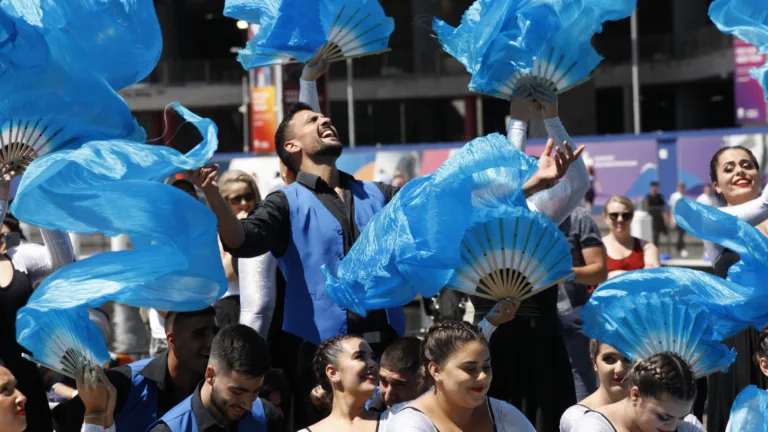
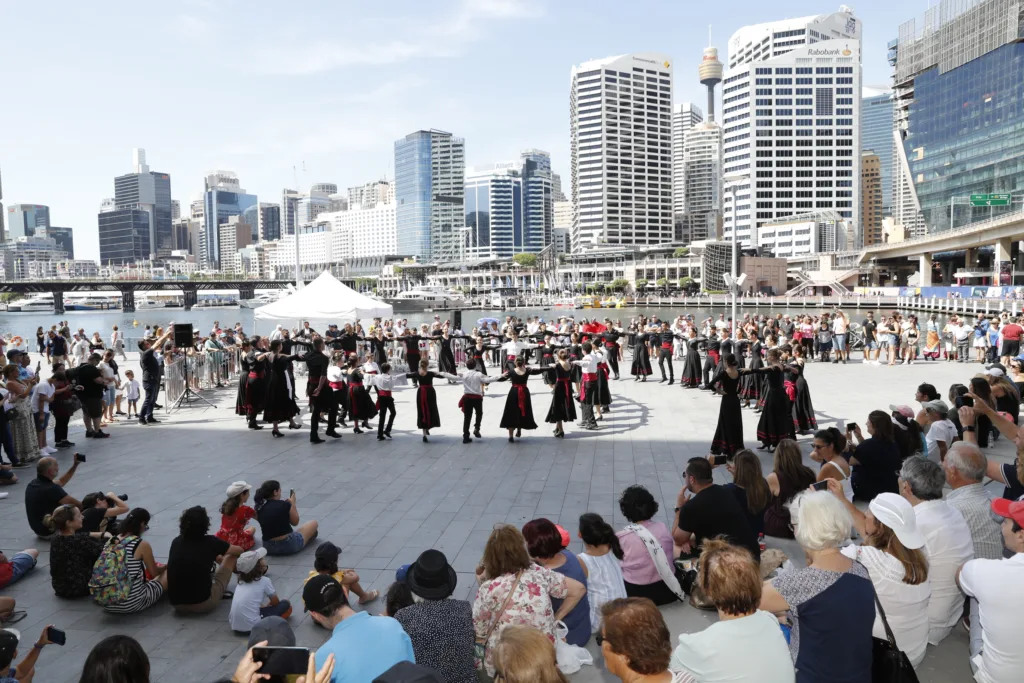
The 44th Greek Fest will be returning to its beautiful Darling Harbour location for another year on Sunday, March 1. The Darling Harbour celebrations attract thousands of visitors every year, showcasing the best food, wine, gifts and arts from Sydney’s Greek Australian community.

Darling Harbour 1 feature
The 44th Greek Fest will be returning to its beautiful Darling Harbour location.

And if you’re looking for a party, be sure to stick around – internationally beloved Greek singer Ioulia Karapataki will be giving a free performance to close out the day, bringing the magic of Euro Summer to our Tumbalong Park stage.

Ioulia Karapataki
Ioulia Karapataki.

The festival will continue in full swing in the weeks to come, starting strong with Greek economist, politician and author Yanis Varoufakis in conversation with Greek Australian journalist and academic Dr. Helen Vatsikopoulos.

On Friday, March 6 at the Teacher’s Federation Conference Centre, Varoufakis will discuss his family’s history of resistance against oppressive, authoritarian systems as captured in his recent book, ‘Raise Your Soul’. Through tracking his family’s acts of resistance through some of the most significant and tumultuous events of the 20th century, Varoufakis and Vatsikopoulos will speak to the current cultural moment in Australia and beyond.

The Greek Festival’s Greek Australian Comedy Gala, Paravasis, will be returning for another year of laughs, hosted by one of Australia’s most beloved Greek comedians, Anthony Locascio.

The Sydney Comedy store will host this showcase of the very best Greek stand-up comedians on Sunday, March 8, with a lineup including Raw Comedy 2025 winner Peter Josip, runners-up Mariah Nicholas and Josh Spyro, and Melbourne favourites Montana Papadinis and Con Coutis. Go along for a night of sharp wit and big laughs!

Elsa Mouratidou
Elsa Mouratidou.

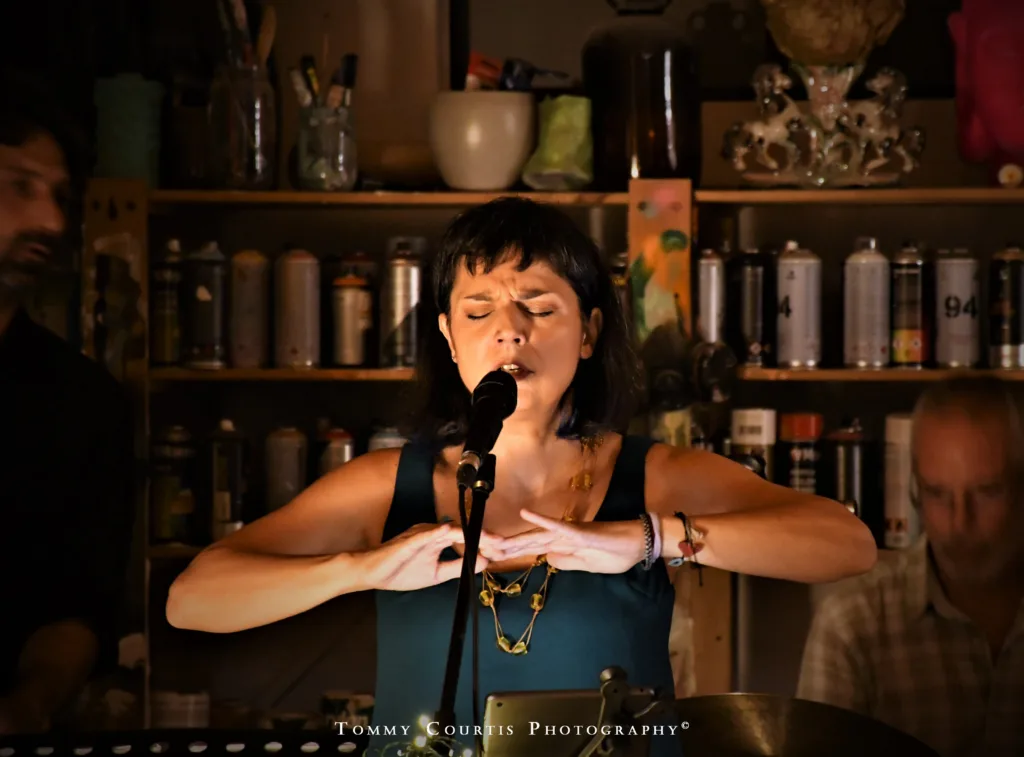
Later in the program, the festival will welcome Greek musicians Elsa Mouratidou & Taxim Trio to the Factory Theatre with their show ‘Untamed Voices’, a tribute to the fearless women of rebetiko (Greek blues), whose contributions to Greek culture are immeasurable, yet often overlooked. Music lovers will be spellbound by Mouratidou and Taxim Trio’s fresh interpretations of timeless, instantly recognisable Greek classics.

But the festivities don’t stop there! Keep up to date with the program on the Greek Festival of Sydney’s Instagram and Facebook pages, or visit their website for more information.

Sydney hosts world’s first celebration of International Greek Language Day

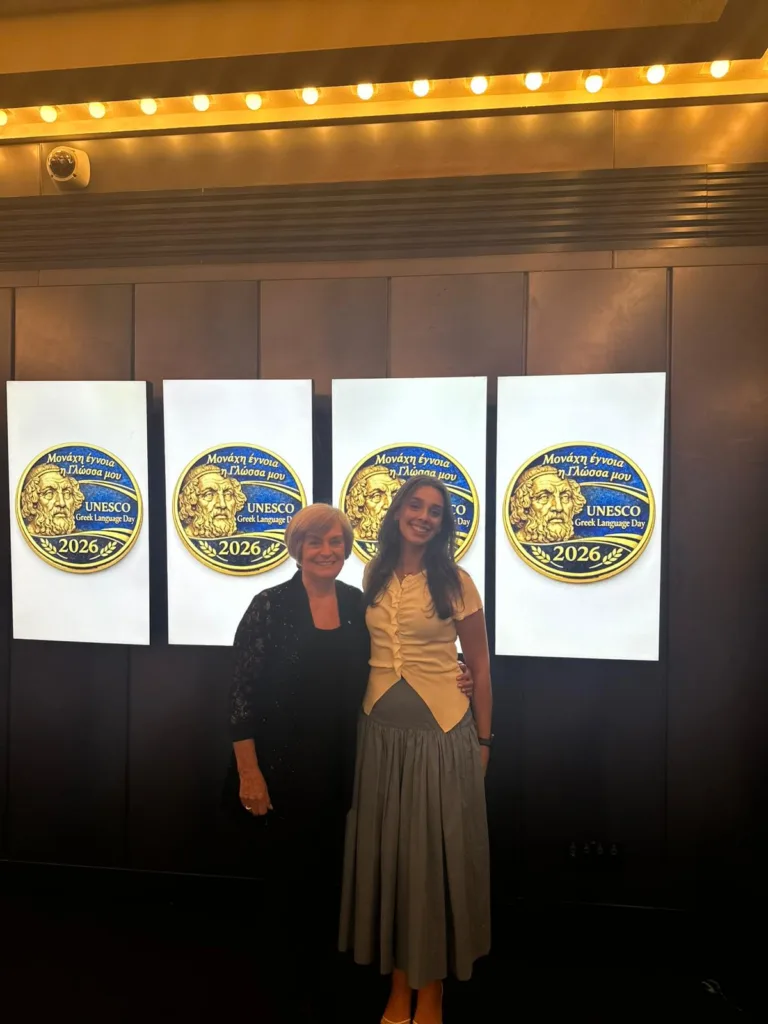
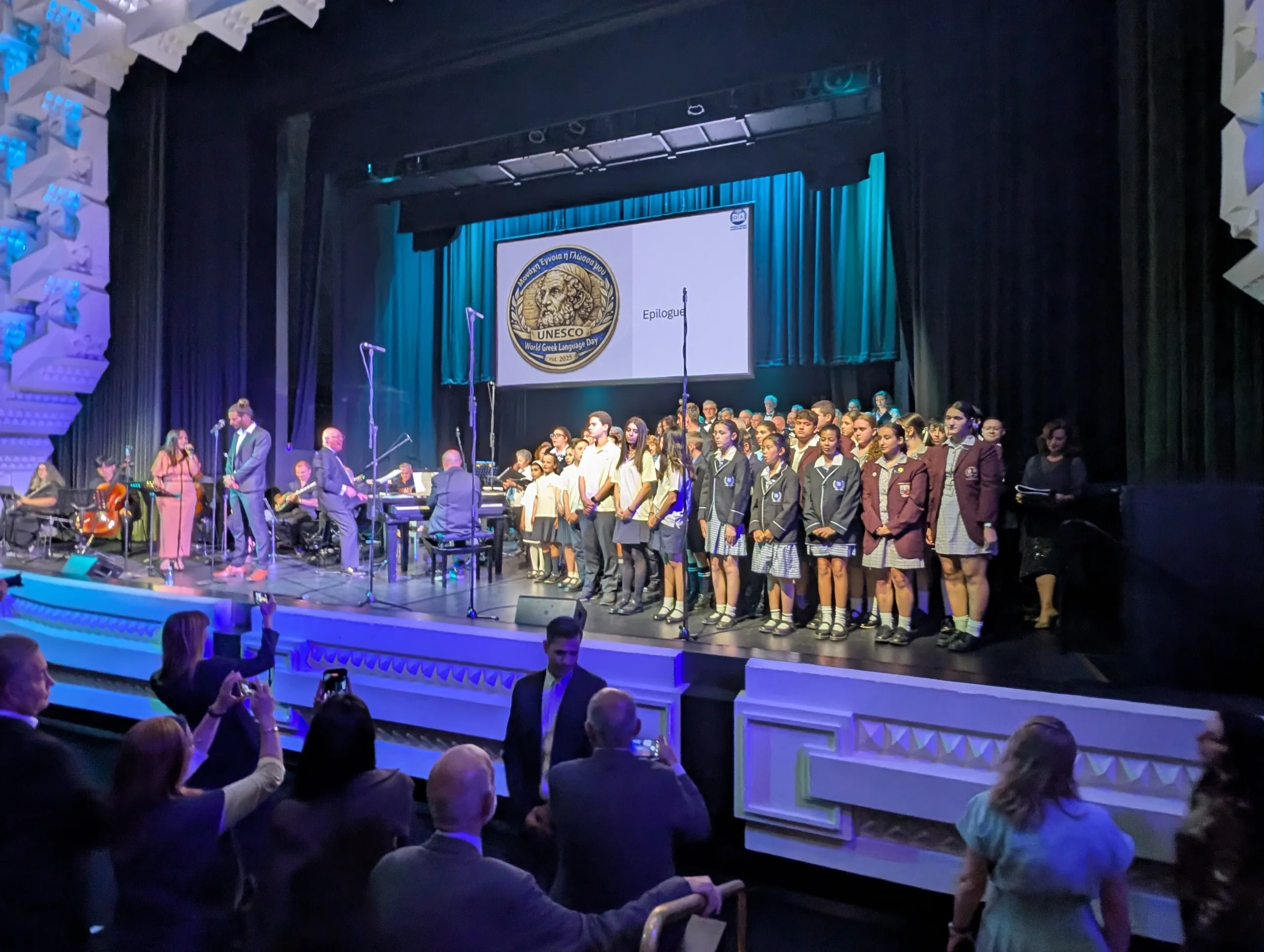
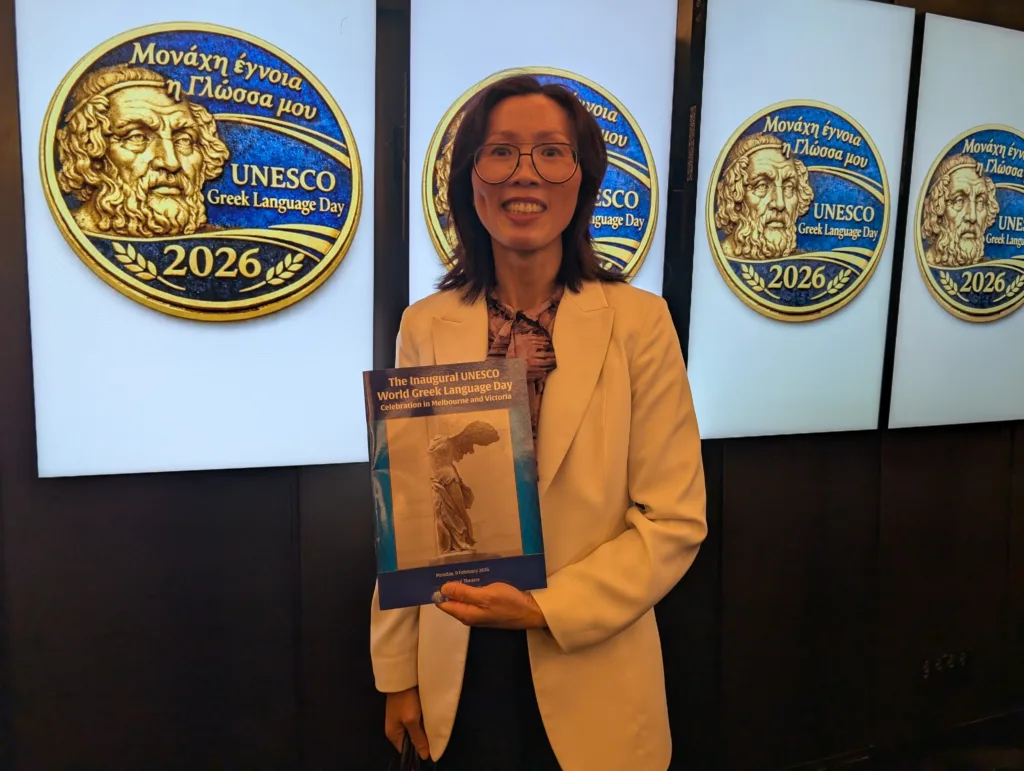
Sydney made global history on Monday, February 9, becoming the first city in the world to officially celebrate World Greek Language Day, following UNESCO’s formal recognition of the day late last year.

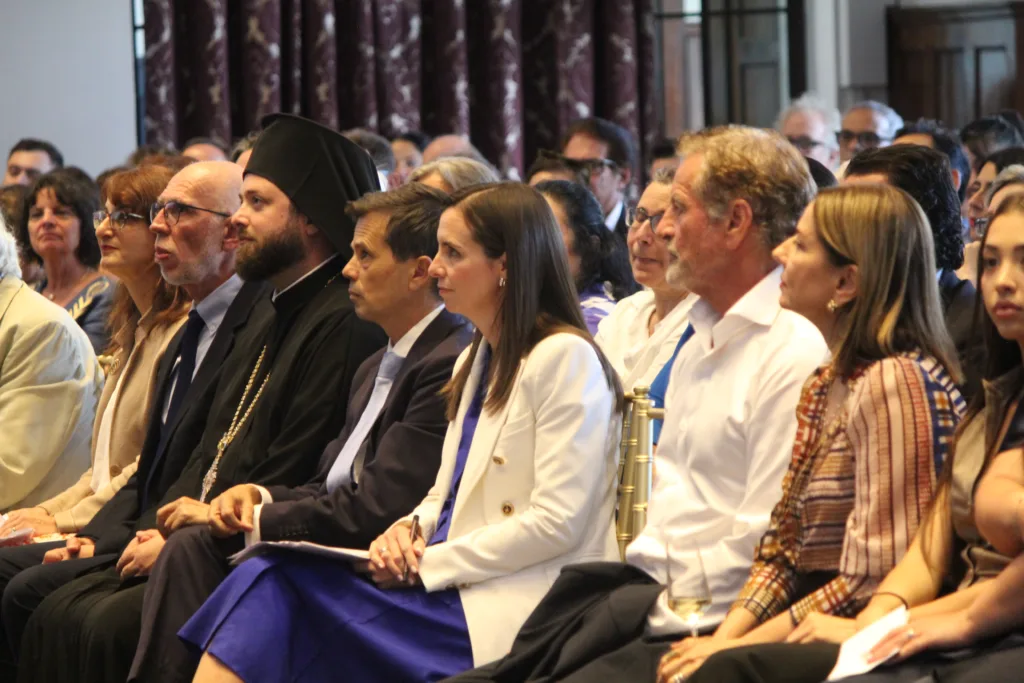
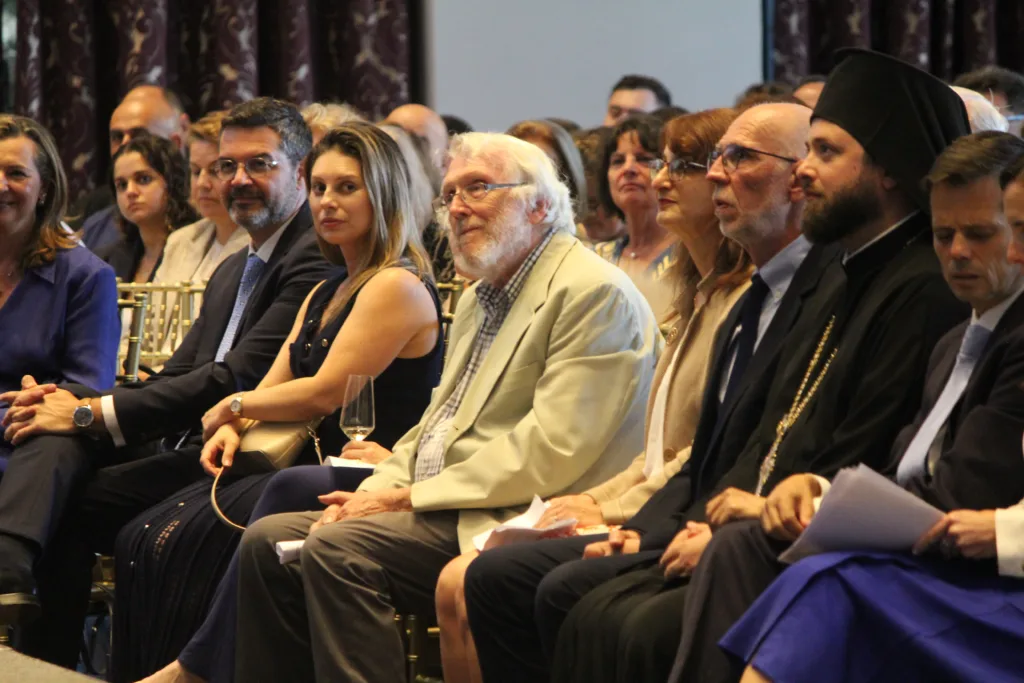
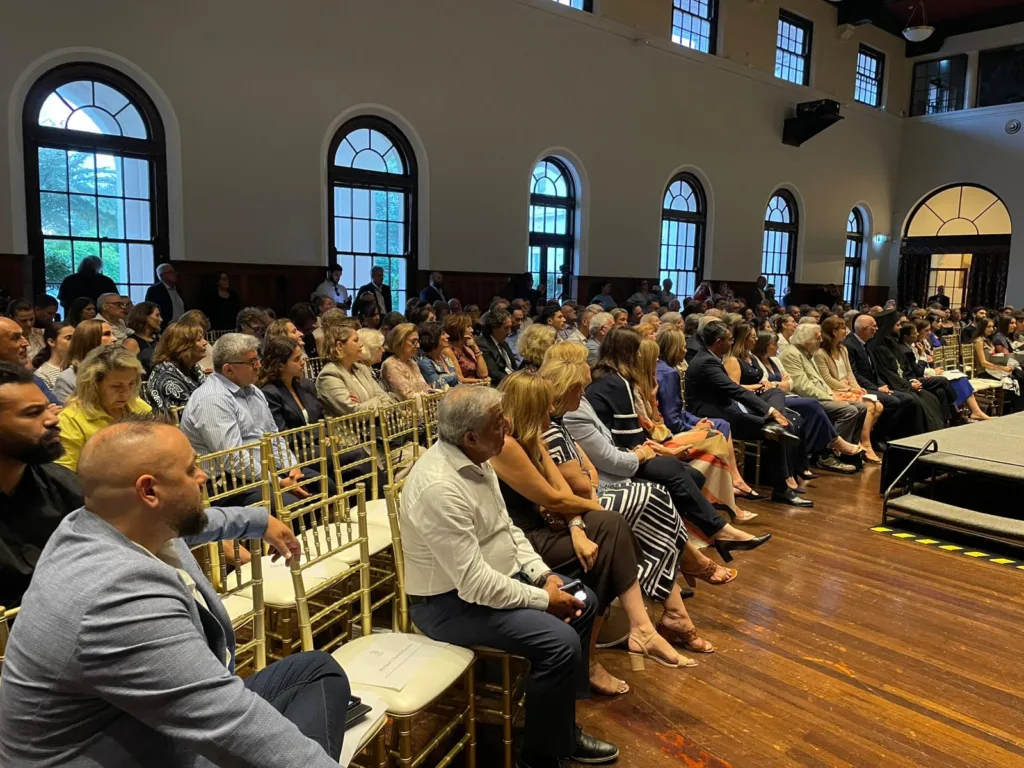
Held at the University of Sydney and hosted by the Consulate General of Greece in Sydney, the landmark event brought together diplomats, politicians, academics, educators, students and community leaders for an evening that honoured a language repeatedly described as foundational to civilisation itself.

world greek language day in sydney 2026
The landmark event brought together diplomats, politicians, academics, educators, students and community leaders. All photos copyright The Greek Herald / Andriana Simos.

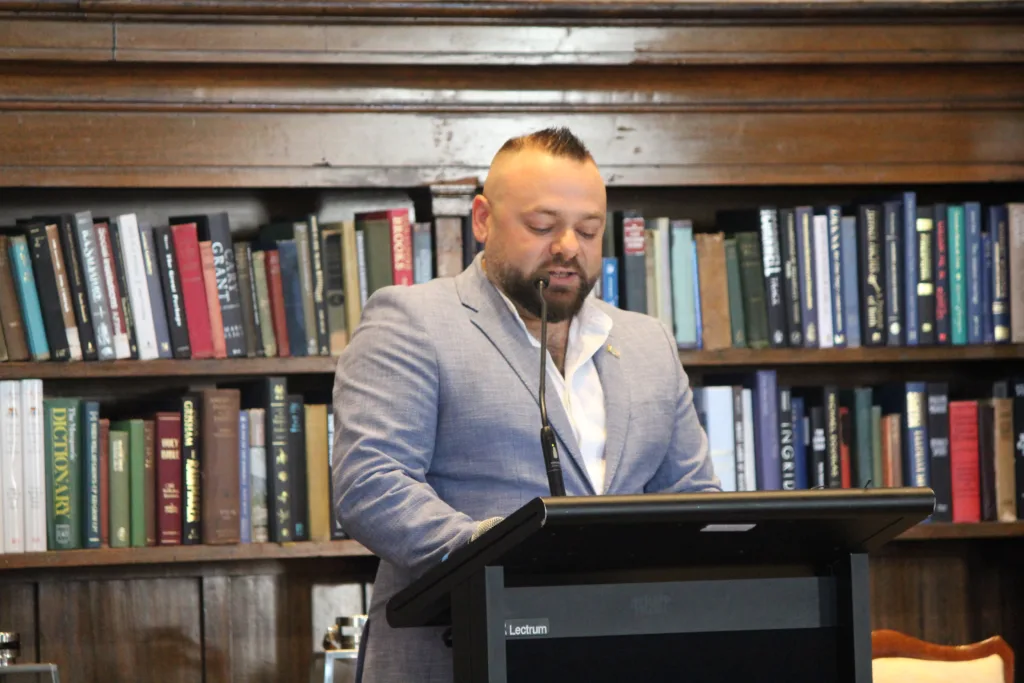
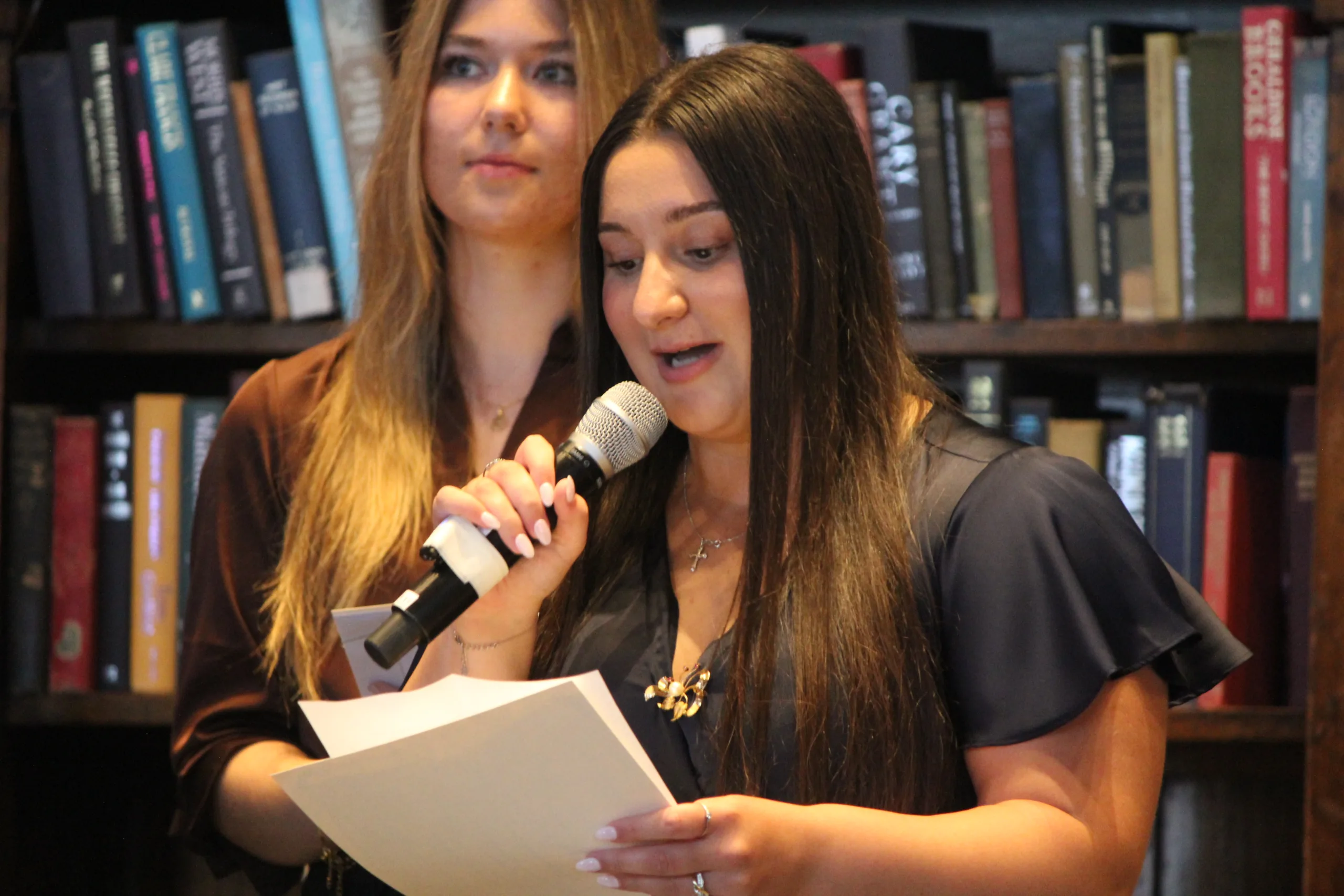
Opening the night, emcee Tom Skolarikis set the tone with warmth, humour and reflection, telling the audience: “This evening, we in this room will in fact be the first to celebrate not only our Greek language, but its enduring impact on civilisation across the sciences, medicine, the arts and every field of human endeavour.”

He spoke of Greek as a language of remarkable continuity, with “over 40 centuries of oral tradition and 35 centuries of written expression,” noting that few languages can claim such an unbroken dialogue between past and present.

world greek language day in sydney 2026
Emcee Tom Skolarikis.

A strong official presence

The significance of the occasion was underscored by the presence of senior political, diplomatic and ecclesiastical figures, including NSW Minister for Finance Courtney Houssos, Consul General of Greece in Sydney George Skemperis, and Archimandrite Father Irineos, representing His Eminence Archbishop Makarios of Australia.

They were joined by honorary consuls, representatives of Greek Australian community organisations, local council figures, and leaders from Greek Australian educational institutions, creating a cross-section of civic, cultural and generational voices under one roof.

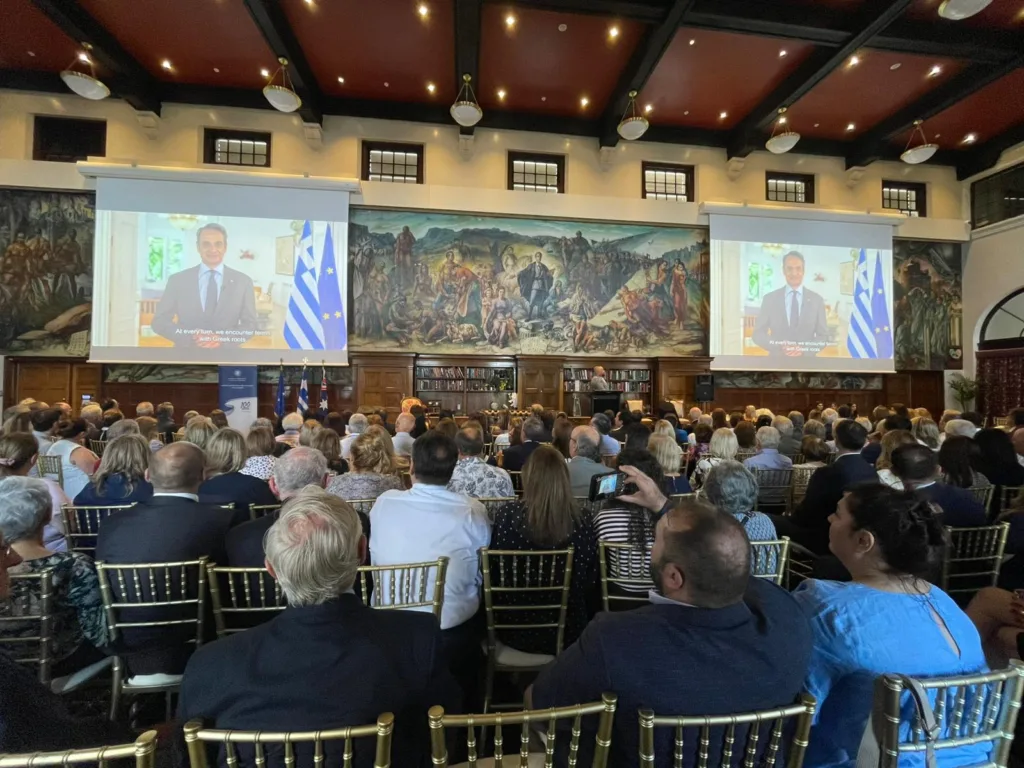
The evening also featured recorded messages from Greek Prime Minister Kyriakos Mitsotakis and Deputy Minister for Foreign Affairs Ioannis Loverdos, reinforcing the Greek Government’s long-standing commitment to the cultivation and promotion of the Greek language abroad.

world greek language day in sydney 2026
Video message by Greece’s Prime Minister Kyriakos Mitsotakis.

‘Sydney is the first city in the world’

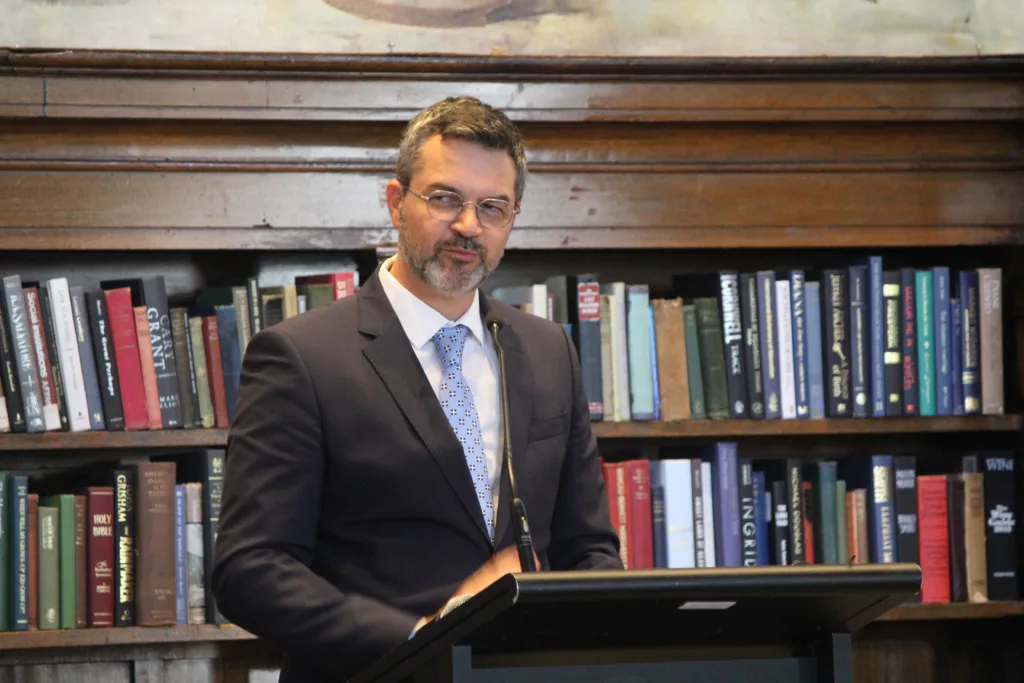
In one of the night’s most warmly received moments, Consul General Mr Skemperis reminded attendees of the global first unfolding before them.

“I don’t want to spoil the fun of our friends in Melbourne,” he said with a smile, “but Sydney is the first city in the world to celebrate World Greek Language Day.”

world greek language day in sydney 2026
Consul General George Skemperis.

Reflecting on Australia’s geography, he added that while Greeks often describe Australia as “the end of the world,” in reality it is “the beginning of the world – because the day starts here.”

He described Greek as “the only element of our identity that has stayed the same for 3,500 years,” despite changes in religion, political systems and even national self-definition.

Greek language, global legacy

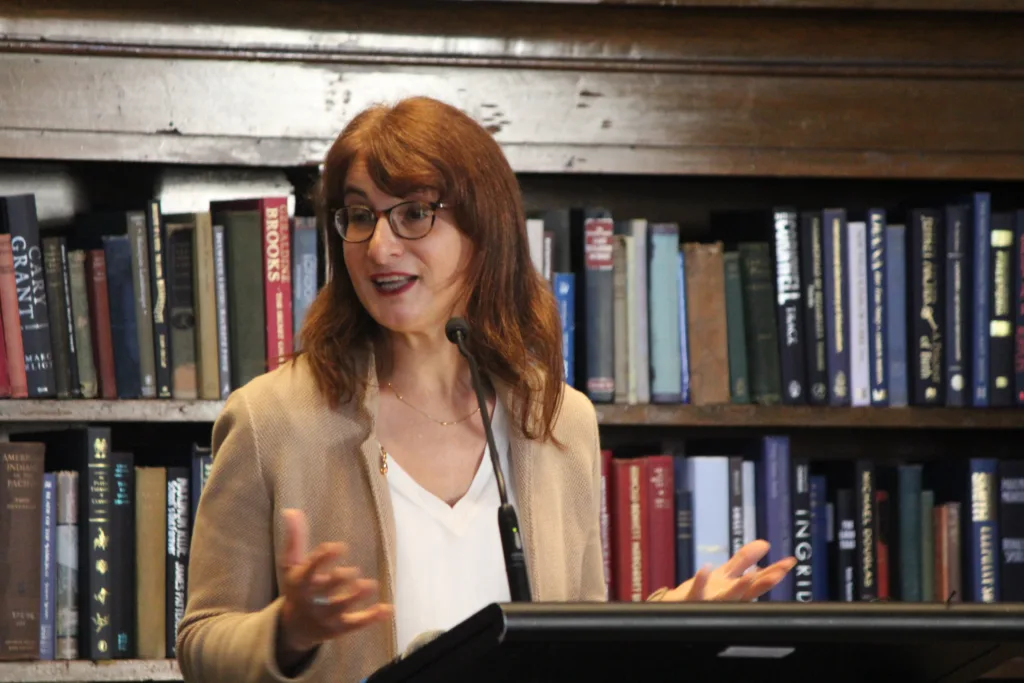
Academic reflections on the Greek language’s reach and influence were led by Professor Giorgia Alu, Deputy Head of the School of Languages and Cultures at the University of Sydney, who described World Greek Language Day as both a celebration and a reminder of responsibility.

“Whether we know Greek or not, we use words like democracy, ethics, biology, cosmos, aesthetics and theatre,” she said, noting that Greek continues to shape the vocabulary of science, politics, art and everyday life.

world greek language day in sydney 2026
Professor Giorgia Alu, Deputy Head of the School of Languages and Cultures at the University of Sydney.

She reaffirmed the University’s commitment to Modern Greek studies, stressing the vital role of community engagement in sustaining language education in the diaspora.

Celebrating the next generation

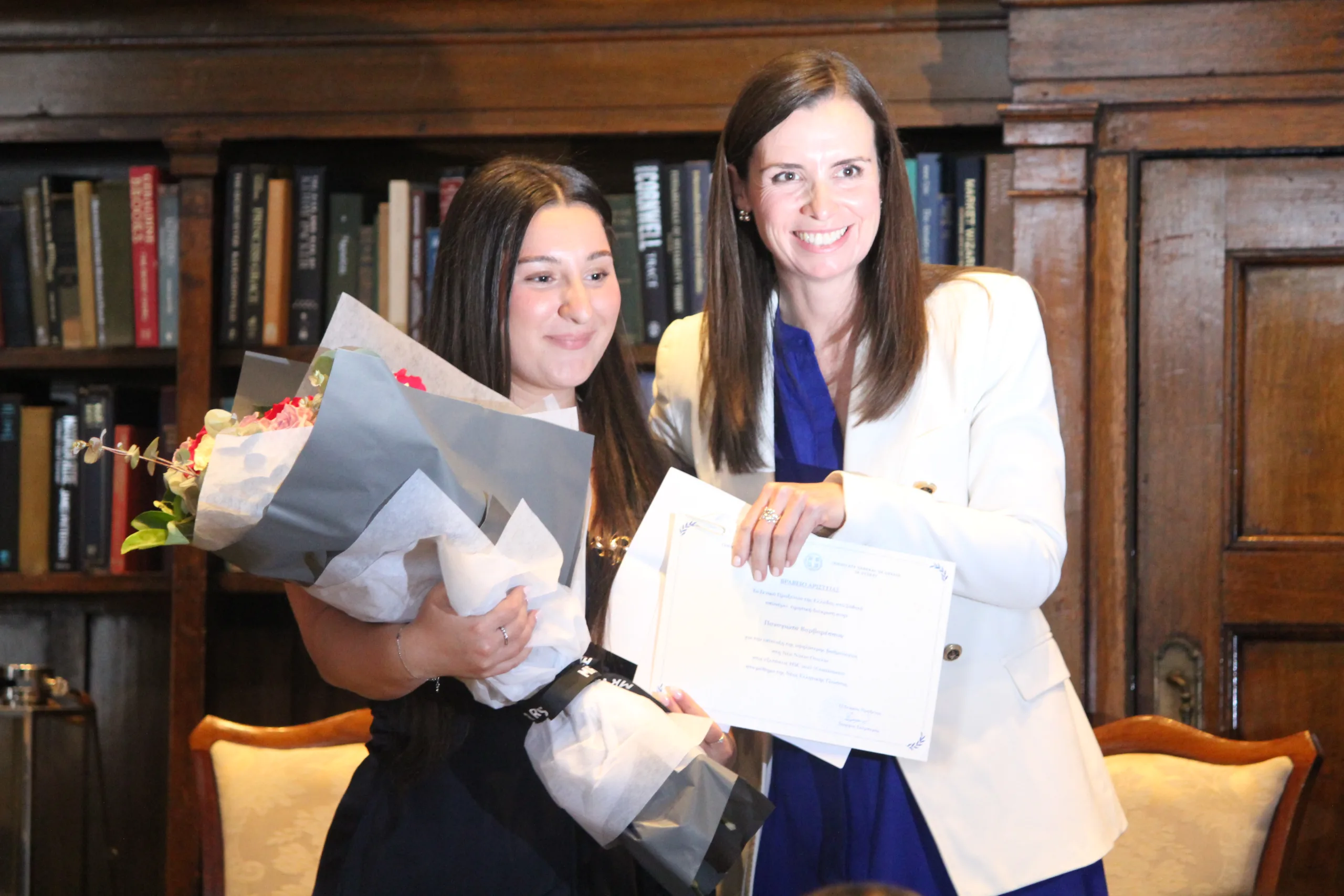
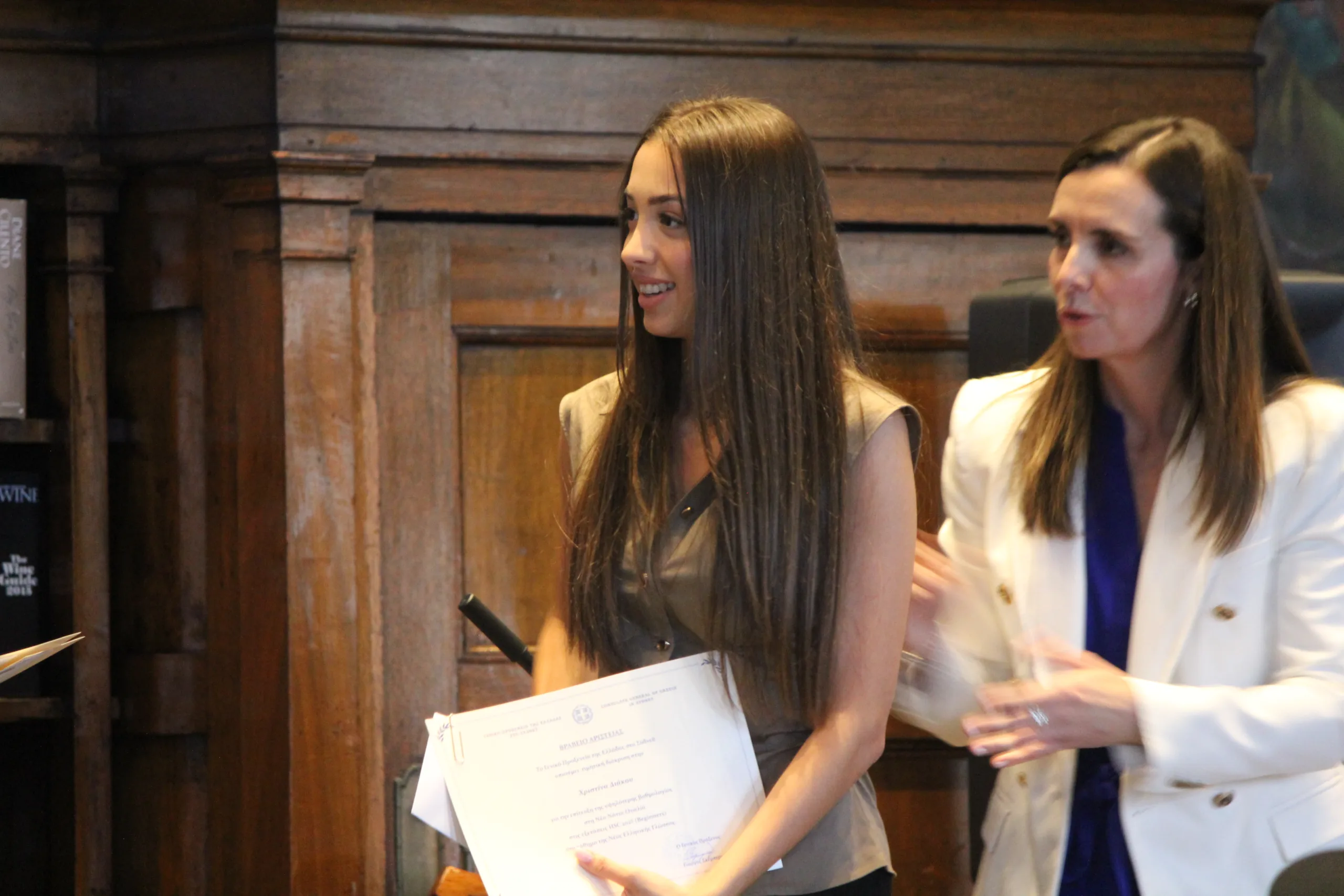
A highlight of the evening was the presentation of HSC Greek Language Awards to NSW’s top-performing students for 2025. Kristy Diakou (Greek Beginners), Panagiota Varvaresos (Greek Continuers) and Giorgos Moisidis (Greek Extension) were each recognised for their outstanding achievements, drawing warm applause from the audience.
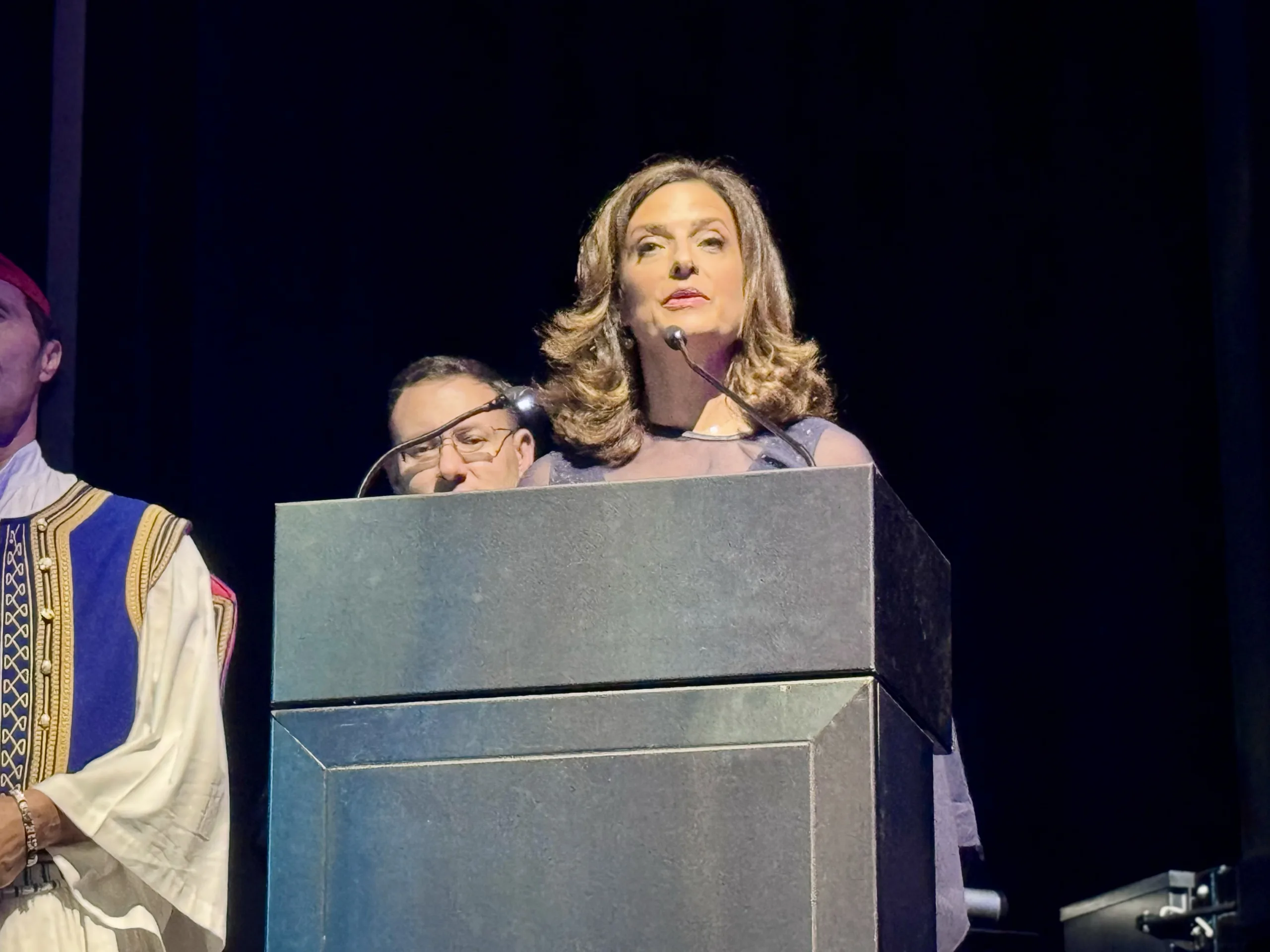
A highlight of the evening was the presentation of HSC Greek Language Awards to NSW’s top-performing students for 2025.

Presenting the awards, Minister Houssos spoke about the cognitive and cultural value of language learning, noting that it activates parts of the brain that otherwise remain dormant. She also acknowledged the crucial role of families, remarking that students’ success is rarely achieved without parental sacrifice and encouragement.

world greek language day in sydney 2026
NSW Minister Courtney Houssos.

Language as a living system

The evening’s keynote address by Professor Vrasidas Karalis, Chair of Sir Nicholas Laurantos in Modern Greek and Byzantine Studies at the University of Sydney, offered a deeper philosophical lens. He urged the audience to move beyond celebratory rhetoric and see language as something lived rather than preserved.

“Languages are life forms,” he said. “They are not simply tools for communication. They are ways of living, ways of relating, ways of being in society.” He warned that every language lost represents a lost worldview, placing Greek within a broader global struggle to protect linguistic diversity.

world greek language day in sydney 2026
Professor Vrasidas Karalis.

Music as continuity

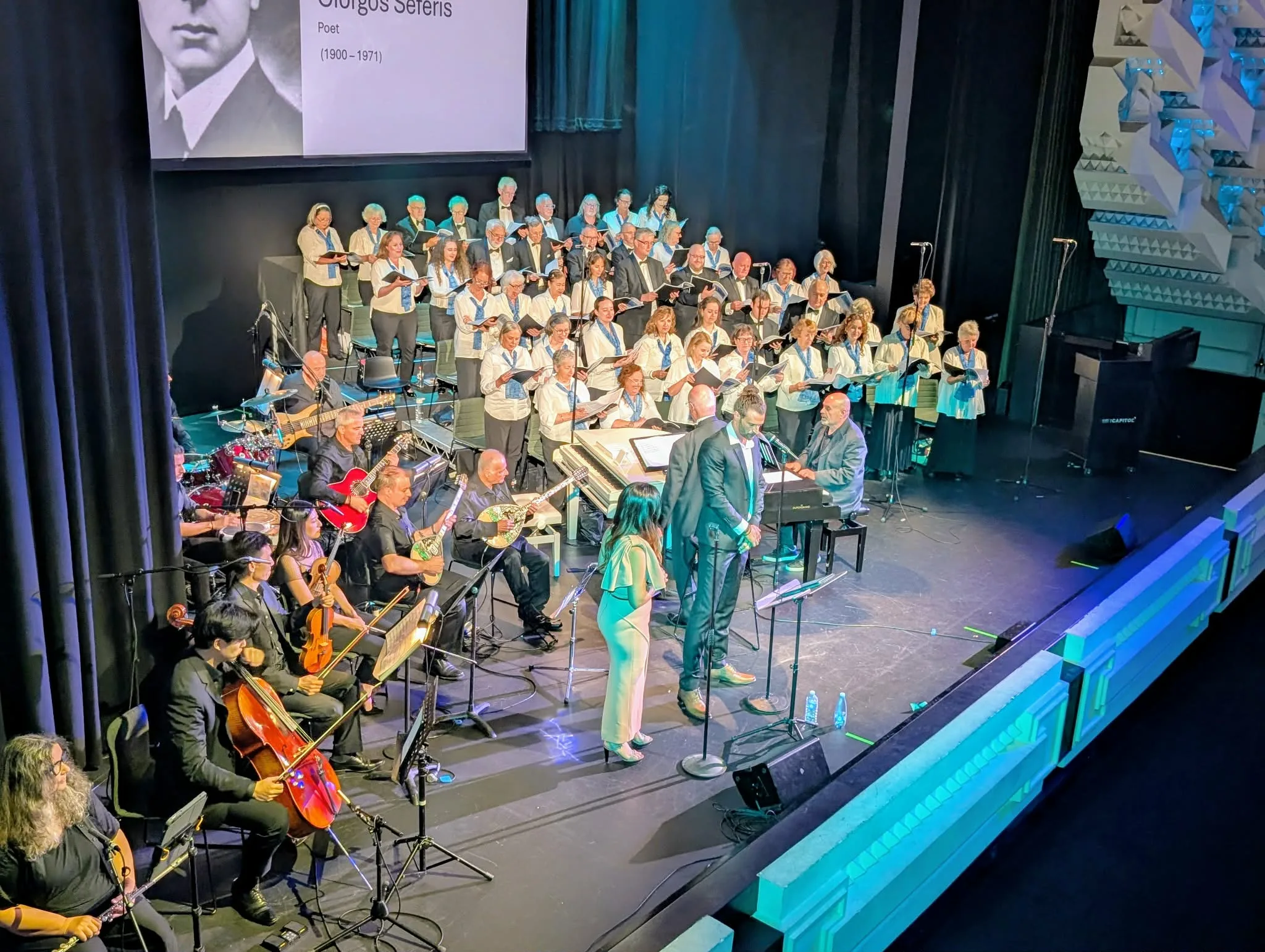
True to the theme of endurance, music emerged as one of the most powerful carriers of Greek on the night.

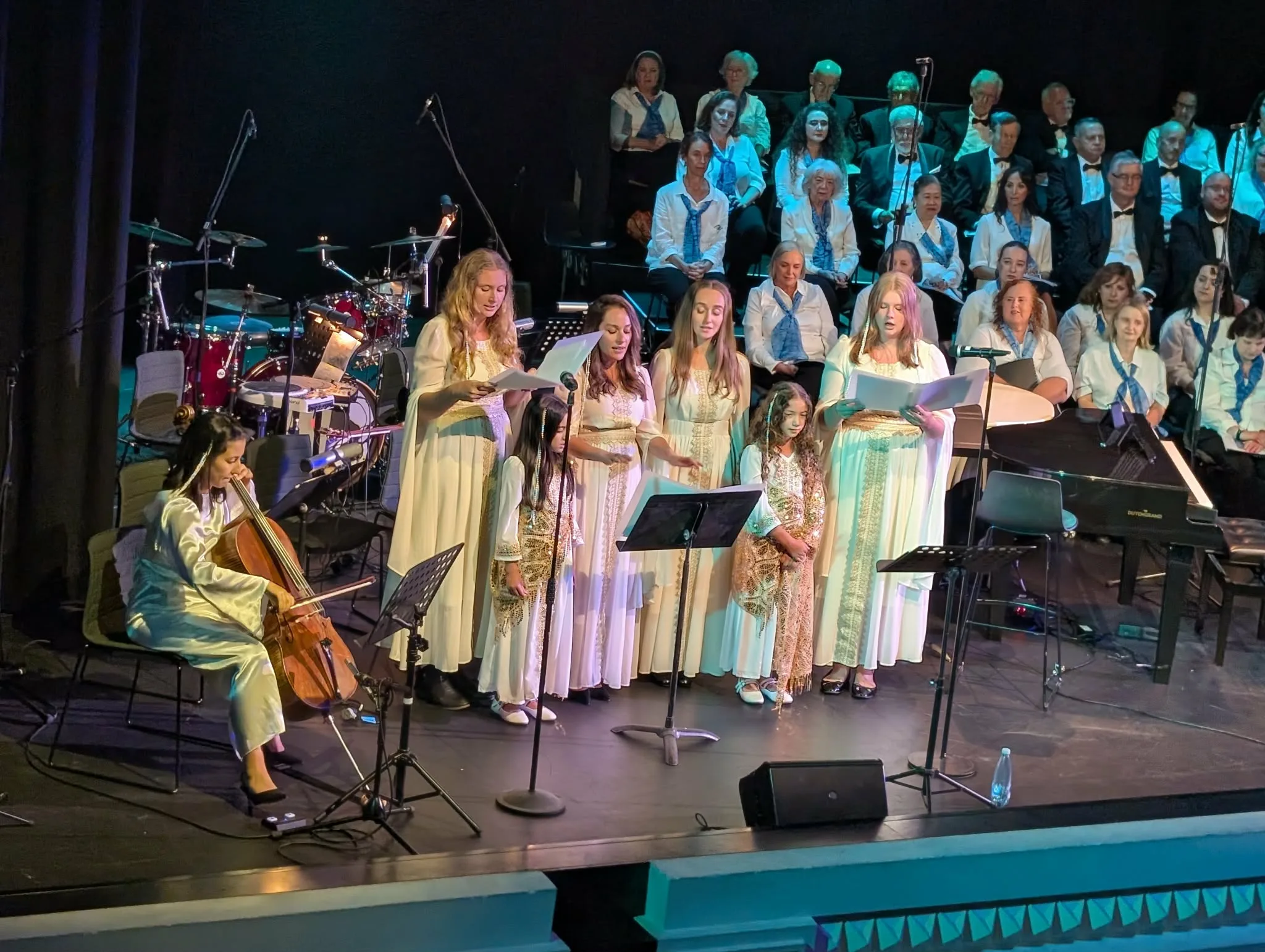
The Australian Byzantine Choir, led by George Scoufis, performed hymns written up to 15 centuries ago.

Musicians Angelos Goutzios and Nikos Sousamidis of Iho Nyx brought to life excerpts from Erotokritos, the 17th-century Cretan masterpiece by Vitsenzos Kornaros.

For many in the audience, these moments provided a rare and moving experience of the Greek language heard in its poetic and historical forms.

A thoughtful note

Despite the historic nature of the evening, some attendees quietly noted that a celebration dedicated to the Greek language featured relatively little spoken Greek beyond the musical performances and brief segments.

Given the symbolic weight of hosting the first World Greek Language Day celebration globally, there was a sense that future events could more confidently centre the living language itself – particularly in a diaspora context where spoken Greek continues to face generational decline.

The observation did not diminish the importance of the occasion, but served as a constructive reminder of the responsibility that accompanies recognition.

Identity, humour and lived experience

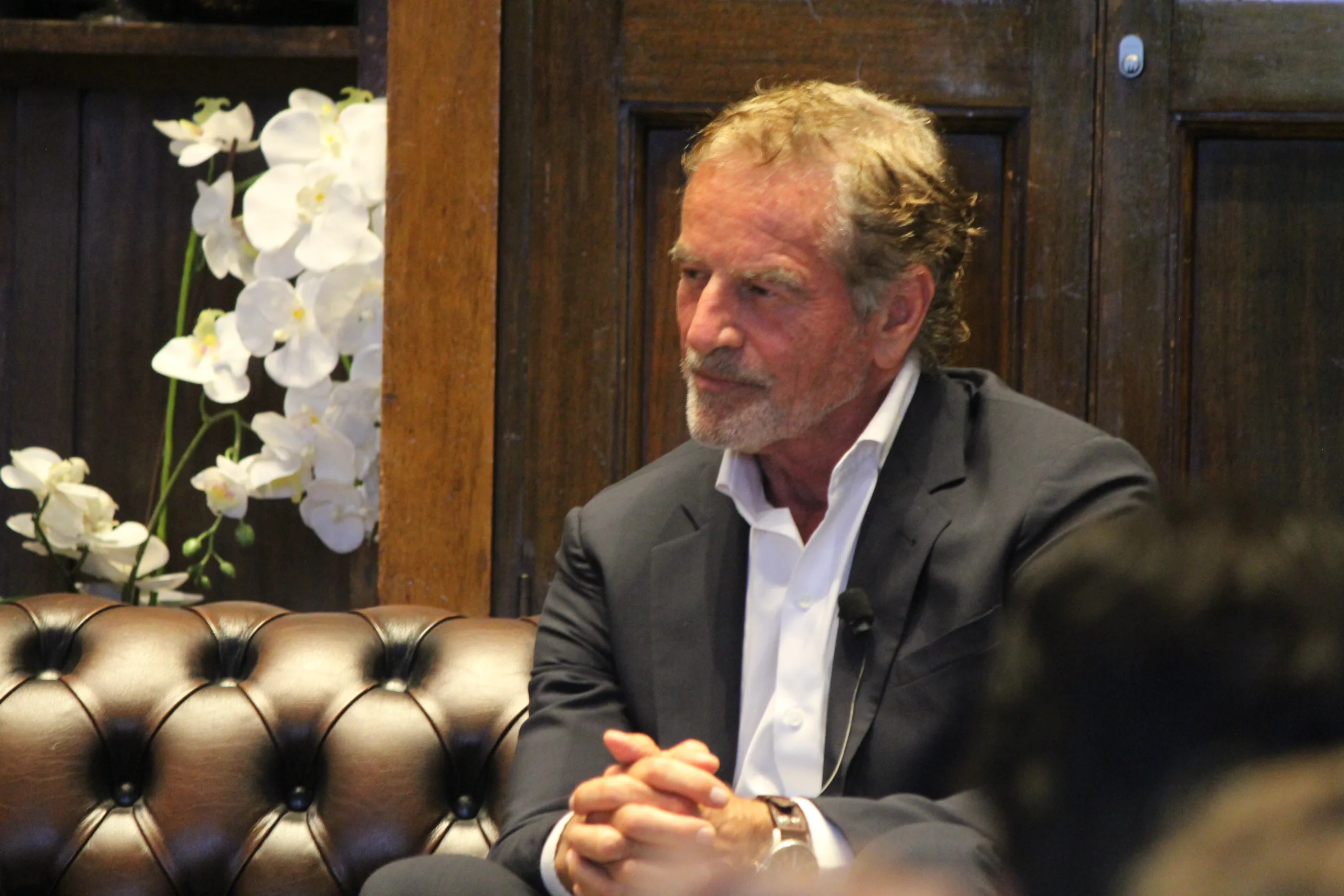
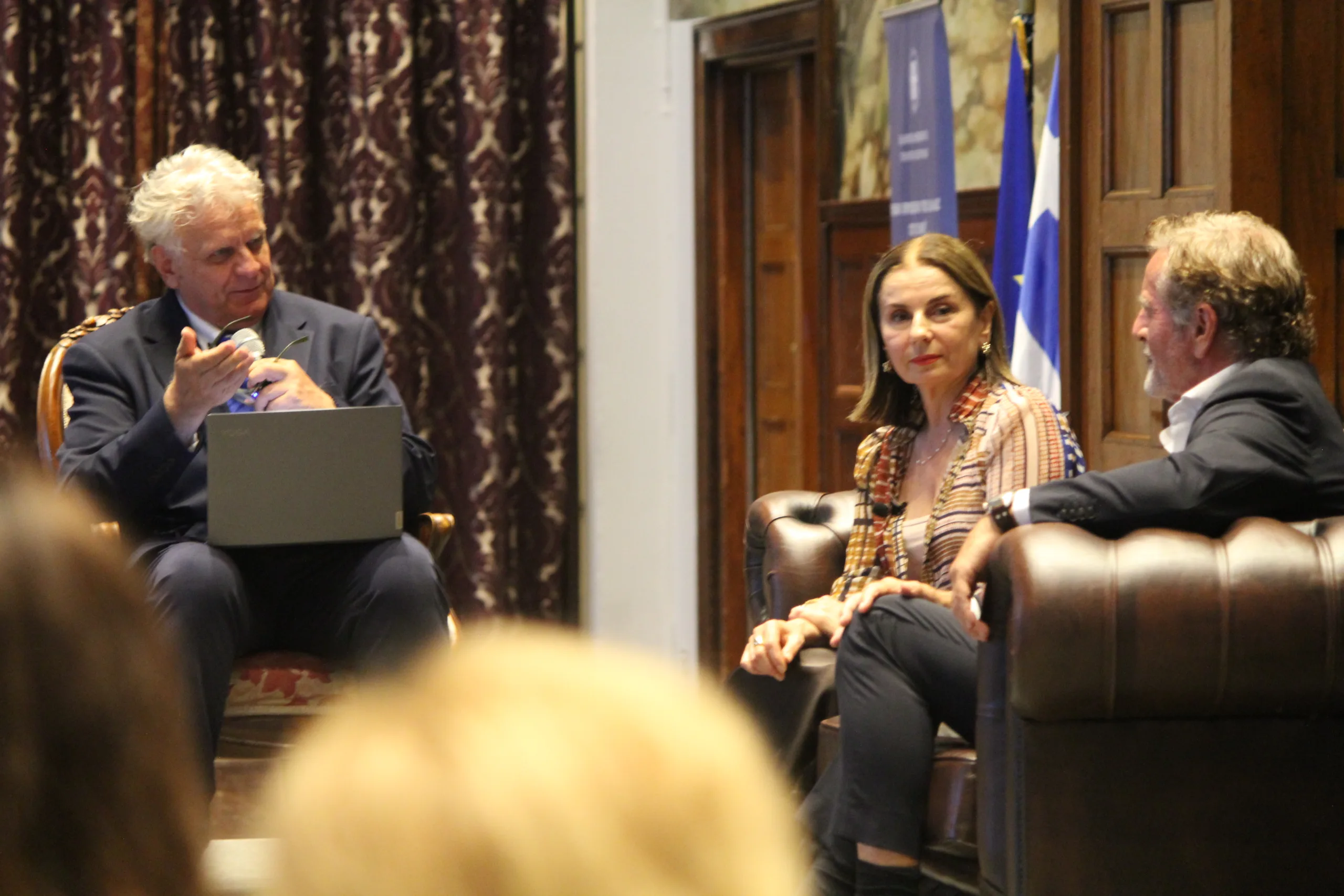
The evening included a panel discussion on language and identity featuring actress Mary Coustas, entrepreneur and businessman Mark Bouris AM and Professor Karalis.

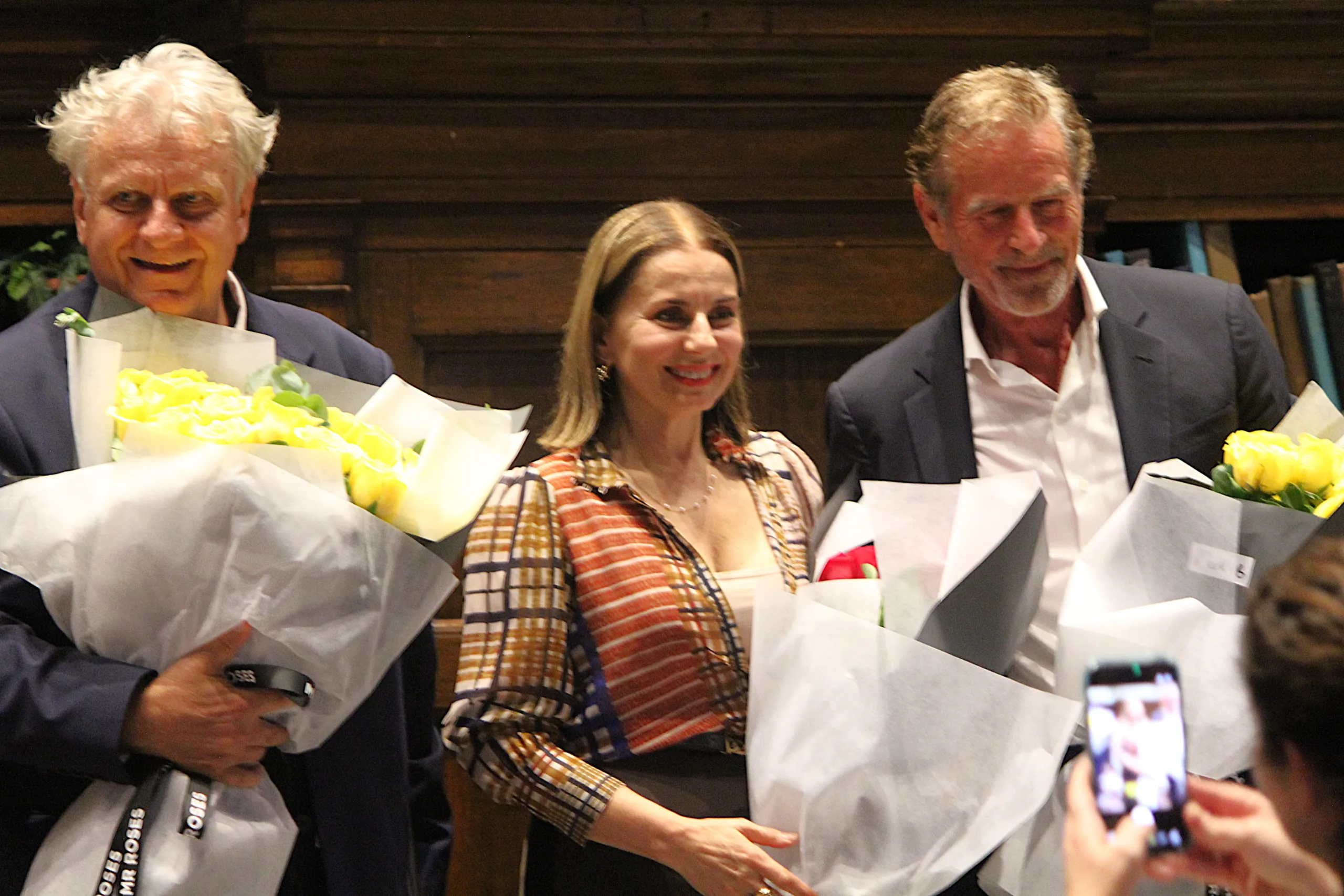
The evening concluded with a panel discussion.

Coustas reflected on how Greek language and culture shaped her creative voice, saying it “gave me permission to be myself 1,000 per cent,” while Bouris spoke candidly about regret, belonging and the cultural gaps many Greek Australians feel when language slips away, even as food, family and music continue to anchor identity.

The event concluded with a poetry reading in Greek of Cavafy’s Ithaki by the Consul General Mr Skemperis.

A beginning, not an end

As several speakers observed, the fact that World Greek Language Day began in Sydney was both symbolic and fitting. The evening marked not just a historic first, but the opening chapter of what many hope will become a richer and more linguistically confident annual celebration – one that continues to honour Greek not only as the language of civilisation, but as a living voice of the diaspora.

*All photos copyright The Greek Herald / Andriana Simos

International Summer University on Greek language to be held in Sydney this September

Sydney will host the 12th International Summer University “Greek Language, Culture and Media” from 6 to 11 September 2026, bringing together academics, educators, students and community leaders to explore the past, present and future of the Greek language in Australia and the diaspora.

Held on the University of New South Wales (UNSW) campus, this year’s Summer University carries the theme “The Greek Language in Australia: from memory to the future”, examining how Greek has been preserved across generations and how it can continue to thrive in a modern, multilingual society.

The programme is organised by the University of Ioannina in collaboration with the Programme of Greek Studies at UNSW and Unity in Philia, and is held under the auspices of the President of the Hellenic Republic. Participation is free of charge.

Sessions will take place at UNSW’s Rex Vowels Theatre, a fully accessible venue equipped with advanced hybrid learning technology. The programme will also be streamed online, allowing broader national and international participation.

Over six days, the Summer University will feature lectures, panel discussions and presentations on topics including Greek-language education in Australia, community and church involvement in language preservation, innovative teaching methods, digital and hybrid learning, Greek-language media in the diaspora, and partnerships between universities, communities and institutions.

The programme is open to undergraduate and postgraduate students, doctoral candidates, educators, journalists and professionals with an interest in Greek language and culture, within the framework of lifelong learning. All participants will receive certificates of participation and educational materials.

Speakers will include academics and researchers from Greece and overseas, as well as writers, artists and media professionals from the Greek diaspora.

The International Summer University has been running successfully for more than 11 years and has previously partnered with leading institutions in Europe, Australia and the United States. In recent years, the programme was hosted in Boston, attracting strong international participation.

The Founder and Scientific Director of the programme is Professor Nikoletta Tsitsanoudi-Mallidi, Professor of Linguistics and Greek Language and Dean of the School of Education Sciences at the University of Ioannina. The Australian programme is coordinated by Vasilis Adrahtas, Head of the Programme of Greek Studies at UNSW.

Further information is available at https://summerschool.ac.uoi.gr and https://unityinphilia.gr.

Community celebration fills Melbourne’s Capitol Theatre for World Greek Language Day

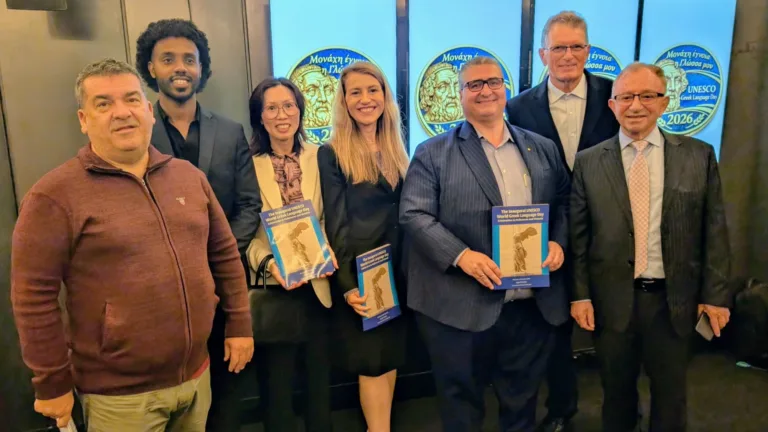
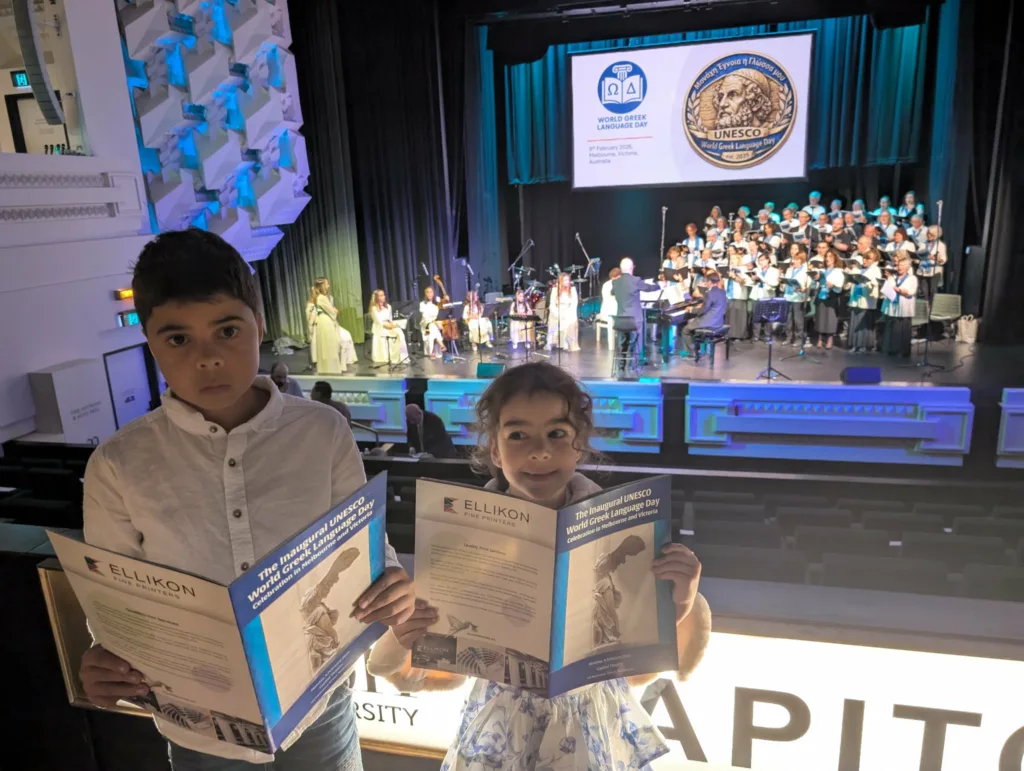
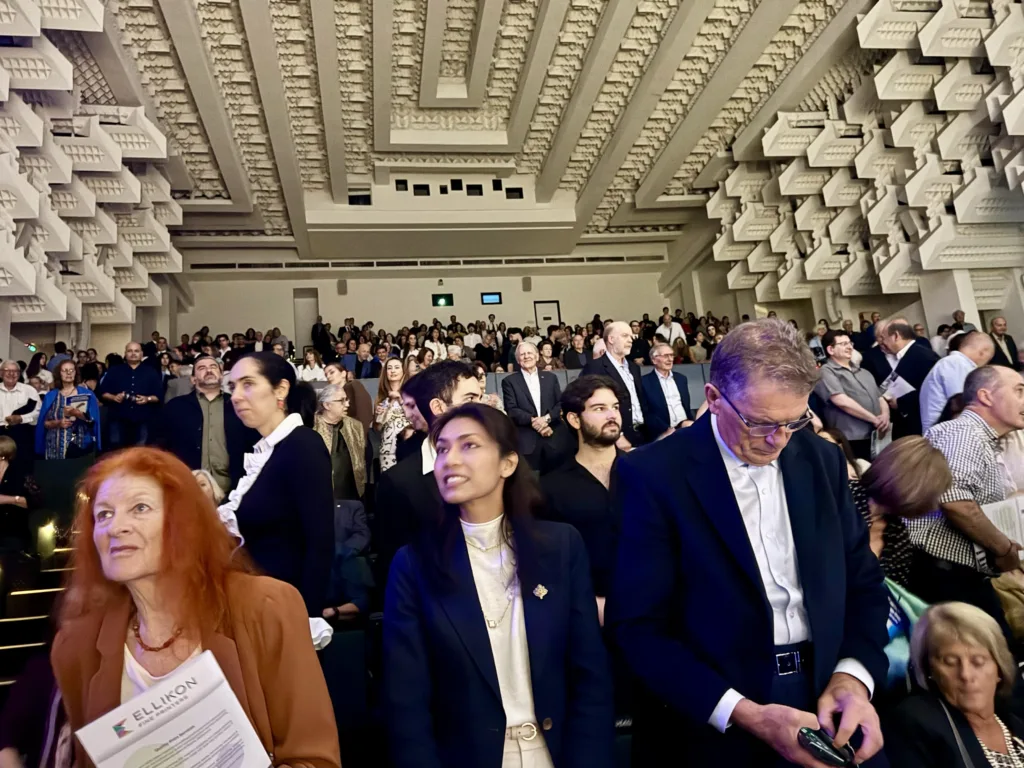
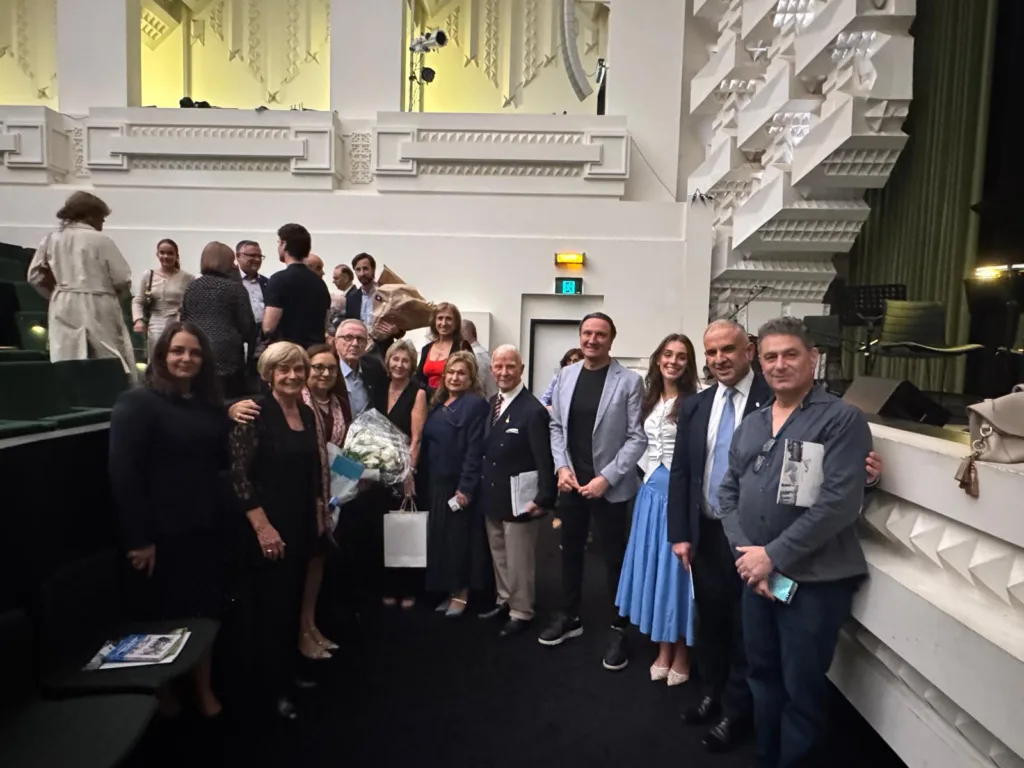
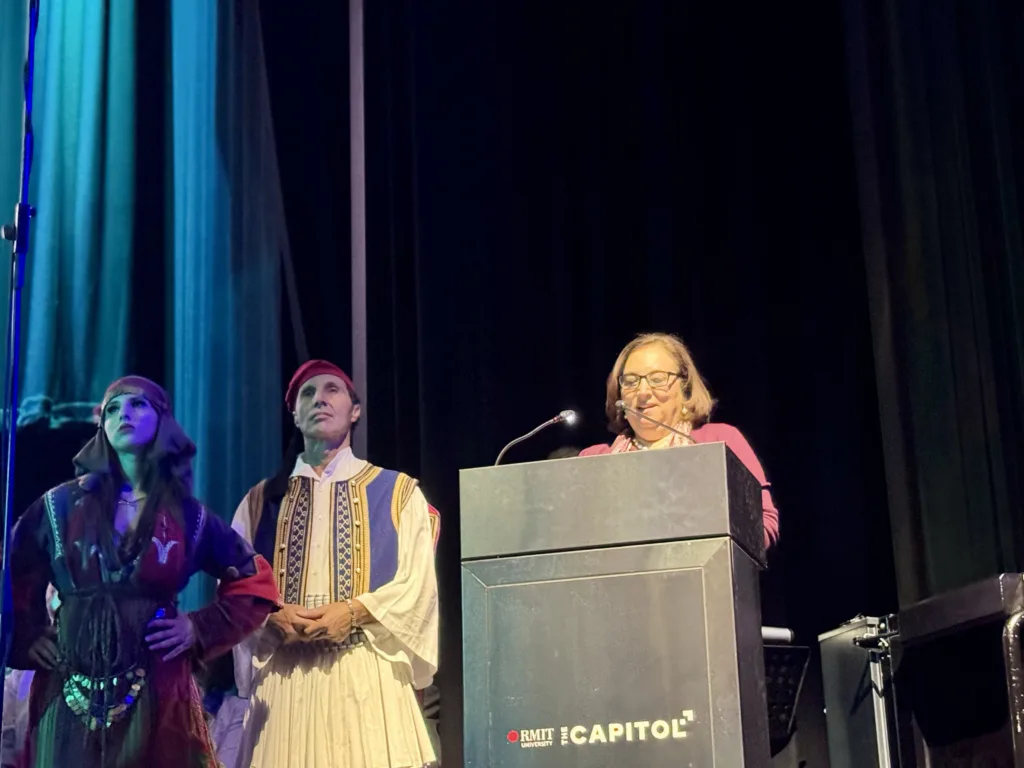
Melbourne’s historic Capitol Theatre was filled to capacity on Monday, February 9, as the Greek and wider multicultural community gathered to celebrate the official recognition of UNESCO World Greek Language Day.

From the moment doors opened, the sense of anticipation was palpable, with the theatre humming with conversation, reunion and pride.

In addition to the full house, thousands more joined a waiting list, reflecting extraordinary demand for the celebration. More than 2,000 expressions of interest were recorded, with the venue capped at 600 seats – a powerful indicator of the hunger for cultural connection through language.

world greek language day event in Melbourne

The free event demonstrated a resurgence of public interest for a language that has shaped global thought for over three millennia and remains the bedrock of modern law, science, art, and philosophy.

Throughout the evening, Greek was not only celebrated but spoken, heard and felt – dominating the spoken word and anchoring the program with authenticity and depth.

Greek as a living, global force

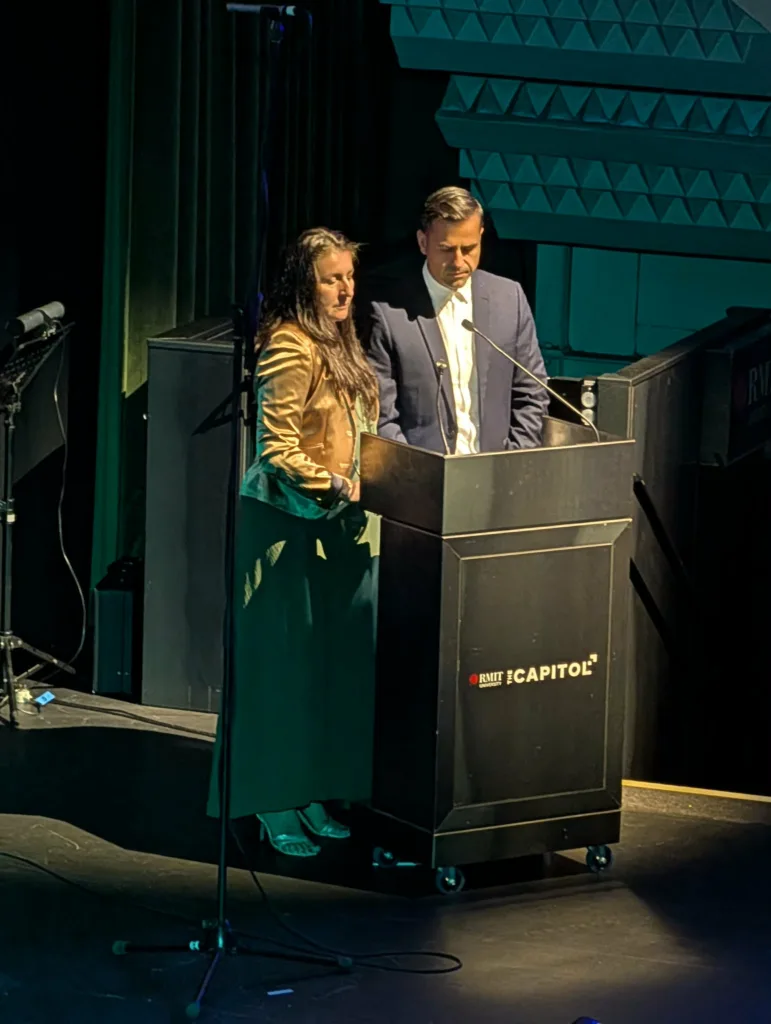
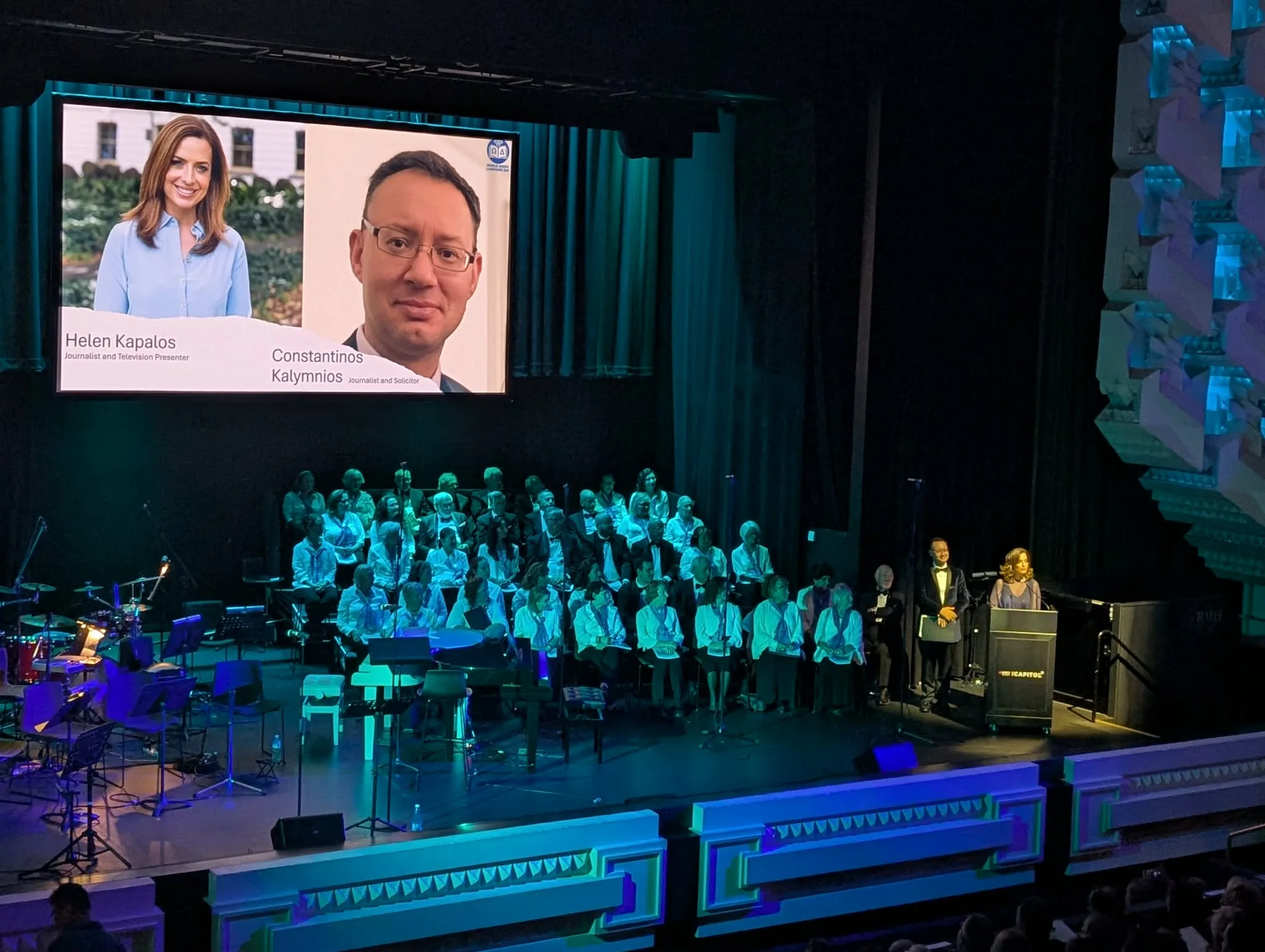
Co-hosted by lawyer Konstantinos Kalymnios and journalist Helen Kapalos, the program framed Greek not as a heritage relic, but as a contemporary tool for global discourse. The bilingual flow of the evening reinforced Greek as a living language – confident, expressive and fully at home in a modern civic space.

Co-hosted by lawyer Konstantinos Kalymnios and journalist Helen Kapalos, the program framed Greek not as a heritage relic, but as a contemporary tool for global discourse.

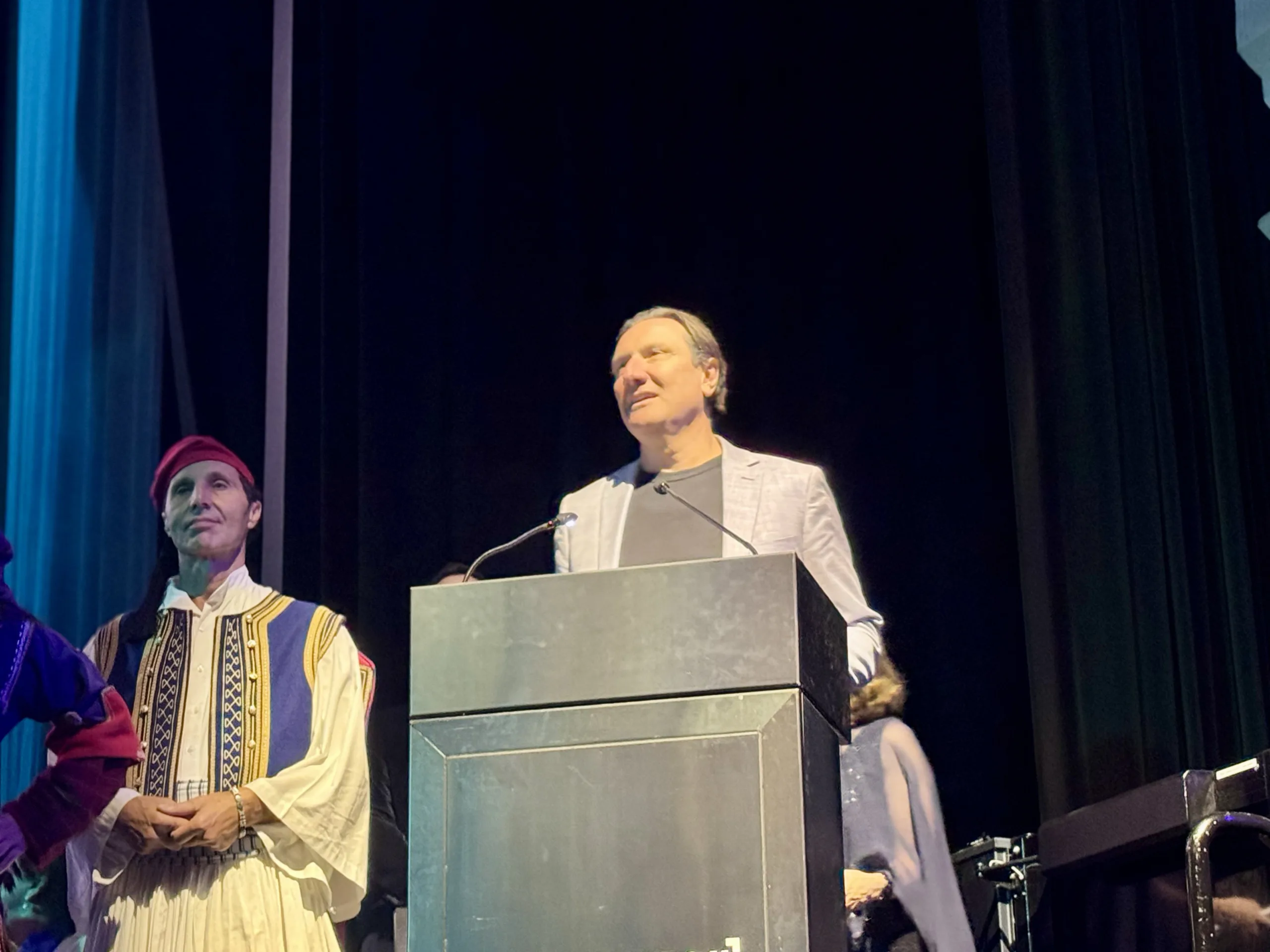
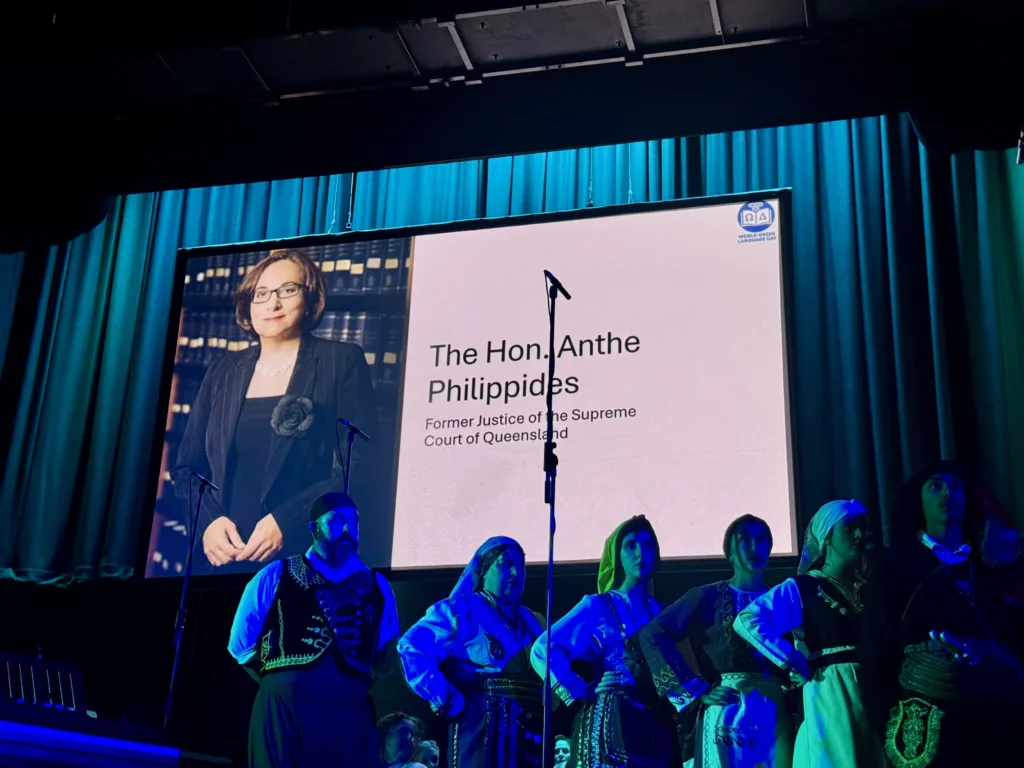
The keynote address by The Hon. Judge Anthe Philippides, former justice of the Supreme Court of Queensland, explored Greek’s enduring influence on Western legal reasoning and the emergence of demokratia.

“The Greek language is not just a means of communication, it is a way of thinking,” Judge Philippides said. “In Greek, for the first time, thought learned how to write itself.”

Musical performances by the intergenerational Eikon Byzantine Choir of Melbourne and the Camerata Chorus of Melbourne led by musical director Andreas Koikas, and Douglas Heywood at the podium. Stavrina Dimitriou and Giannis Spachios were joined by a 12-member ensemble in a performance that culminated into a sing-along and reinforced the bond between Greek language and song.

The audience enthusiastically joined in, singing along to beloved melodies that stirred memory, emotion and shared heritage.

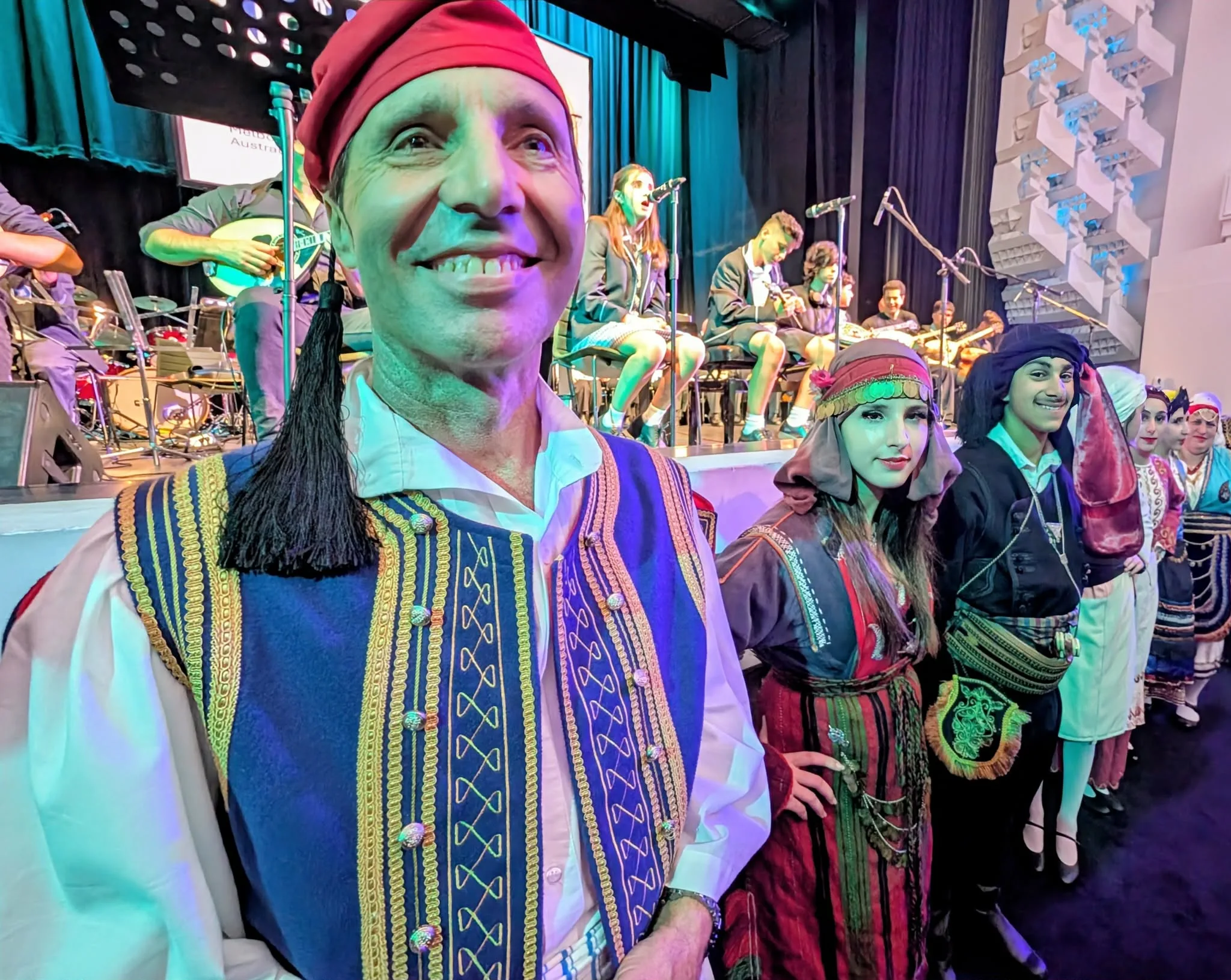
There were plenty of musical and cultural performances.

Actors Jeremy Artis and Katerina Poutachidou from Creative Drama and Arts wowed the audience with their unique rendition of Dionysis Solomos’ Hymn to Freedom. Their performance brought the poetic power of Greek into sharp relief, earning sustained applause.

Dr Dimitris Gonis and Betty Exindaras gave a measured a narration from Odysseas Elytis’ Nobel Prize acceptance speech, highlighting language as a defence against forgetting. The reading resonated deeply, drawing a stillness across the theatre that underscored the gravity of language as memory and resistance.
A grassroots success story

In a significant display of community self-reliance, the event was organised in less than three months, including a break over the Christmas–New Year period, by a grassroots committee representing local Greek schools and organisations such as the Australian Institute of Macedonian Studies (AIMS).

The scale, polish and emotional impact of the evening stood in stark contrast to the limited timeframe, underscoring the extraordinary commitment behind the scenes. The organising committee, comprising volunteers with extensive experience in events management, education, and community leadership, was chaired by Professor Anastasios Tamis and delivered the event without government funding or institutional sponsorship.

world greek language day event in Melbourne
Professor Anastasios Tamis (second from left) was the key coordinator of the event.

Multiple speakers and contributors openly acknowledged that Professor Tamis’ vision, leadership and tireless drive were instrumental to the event’s success, with many noting that without his stewardship, the inaugural celebration may not have been possible.

“The response shows what is possible when participation is driven by belief rather than obligation,” Professor Tamis said.

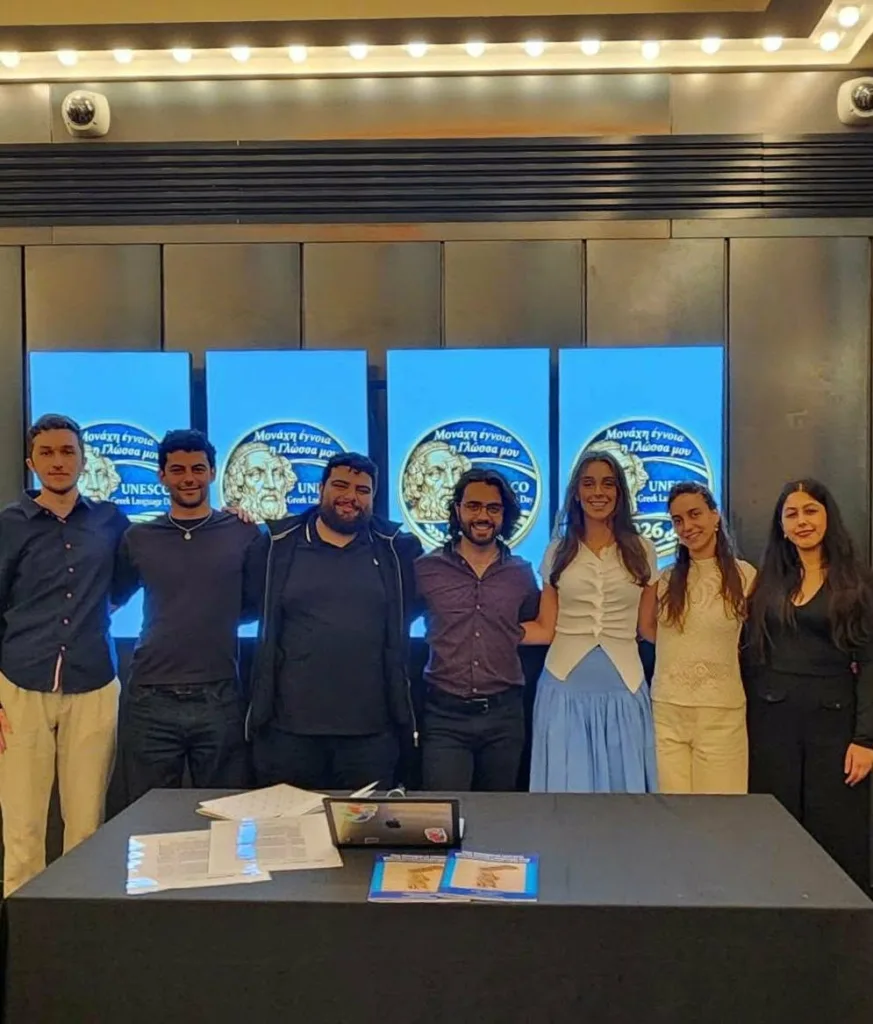
This intergenerational momentum was further amplified by the National Union of Greek Australian Students (NUGAS), who co-organised the event. NUGAS Co-President Demi Bourdopoulos, described the event as a milestone acknowledgement of the Greek language as a living, evolving presence in Australia.

“Being part of the planning of this inaugural celebration has been an incredible honour, marking a historic moment that recognises the language’s global legacy and its living presence within our community today,” Demi said.

The strong student presence reinforced the message that Greek is not confined to the past, but actively carried forward by younger generations.

Awards and cultural impact

The Philhellenism Excellence Awards were presented to three distinguished scholars for their lifelong contributions to Hellenic studies and education:

  • Professor Dr Jennifer Webb (Cypriot archaeology and classical scholarship).
  • Arthur McDevitt (Ancient Greek poetry and intercultural research).
  • Professor Dr Michael John Osborne (Leadership in Greek-language education and research).

The awards segment was met with warm applause, recognising scholarship as a vital pillar in sustaining Greek language and culture.

Broad diplomatic and civic representation

The guest list reflected Greek’s global reach and enduring appeal among Greeks and Philhellenes, with representation from government, diplomacy, local government, education, community organisations and media. The diversity of attendees affirmed Greek as a shared cultural inheritance extending well beyond ethnic boundaries.

Attendees included Victorian Minister The Hon. Enver Erdogan MP; former Premier The Hon. Ted Baillieu AO; Lee Tarlamis MP; Vivien Ngu, Chair of the Victorian Multicultural Commission; former MPs Jenny Mikakos, Theo Theophanous and John Pandazopoulos; and former Australian Ambassador to Greece Jenny Bloomfield.

world greek language day event in Melbourne
(L-R) Marinis Pirpiris, Bill Papastergiadis OAM and Victorian Minister The Hon. Enver Erdogan MP.

Diplomatic and consular representatives attended from Fiji, Bhutan, Latvia and Paraguay, alongside mayors and councillors from across Melbourne. Community, cultural and education leaders were represented by the Greek Community of Melbourne, the Federal Hellenic Lawyers Association, the Hellenic Medical Society Association, the Hellenic Museum, Pharos Alliance, and the education sector.

Media outlets present included SBS, The Greek Herald celebrating its centenary this year, Neos Kosmos, Ta Nea, Apolis, Channel 31 and 3XY Radio. The breadth of coverage reflected the event’s significance as both a cultural and civic milestone.

Looking ahead to 2027

The committee has officially opened submissions for World Greek Language Day 2027, inviting educators, artists, and sponsors to join the volunteer-led effort by contacting admin2@worldgreeklanguageday.au. Following the success of this inaugural Melbourne celebration, expectations are already high for future editions.

For more information, visit About Us – World Greek Language Day

Greek Summer Festival returns to Sydney’s Carrs Bush Park this month

Sydney’s largest Greek cultural event is returning on 15 February 2026, with the Greek Summer Festival once again bringing a slice of the Hellenic Republic to Carrs Bush Park in the city’s south.

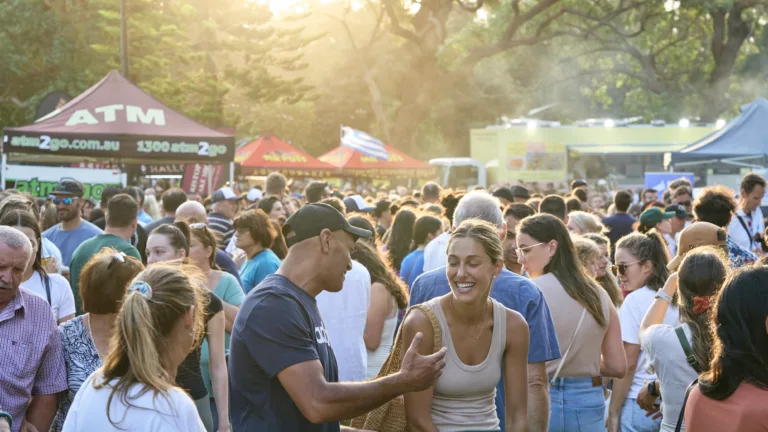
The festival is expected to attract around 40,000 visitors, offering a full day of traditional food, music, dance, and community celebration by the water’s edge.

With more than 110 stalls, the park will be filled with the aromas of freshly grilled souvlaki, homemade loukoumades, traditional sweets, and delicacies passed down through generations.

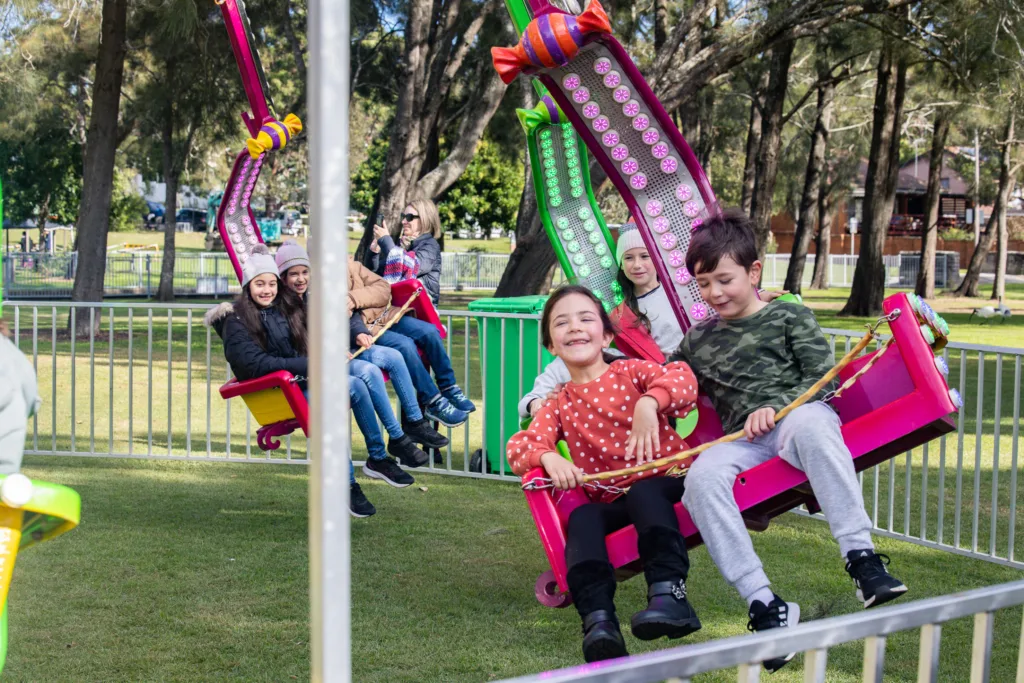
Kids on ride
Families and young visitors will have plenty to enjoy.

The park will be buzzing from morning until evening with live Greek live music, dance, and cultural performances. Musicians and singers will perform traditional songs, while dance groups from across Sydney showcase island dances and other long-loved traditions.

Families and young visitors will have plenty to enjoy, with amusement rides, a Ferris wheel by the water, face painting, games, children’s entertainment, and open spaces for families to relax. As the sun sets, the festival will conclude with a spectacular fireworks display over the waterfront.

Event Details

  • When: Sunday 15th February 2026
  • Time: 10am – 9 pm
  • Where: Carss Bush Park, Carss Park, NSW
  • Entry: Free for the whole family
  • Parking: Convenient onsite parking available

Greek Glendi and community spirit light up Canberra’s National Multicultural Festival

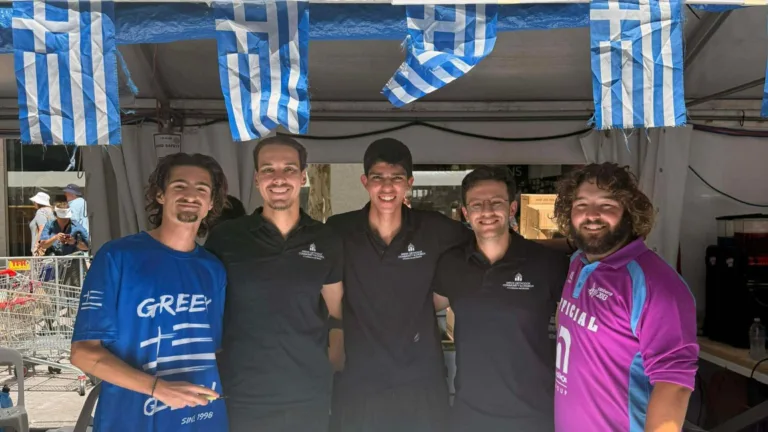
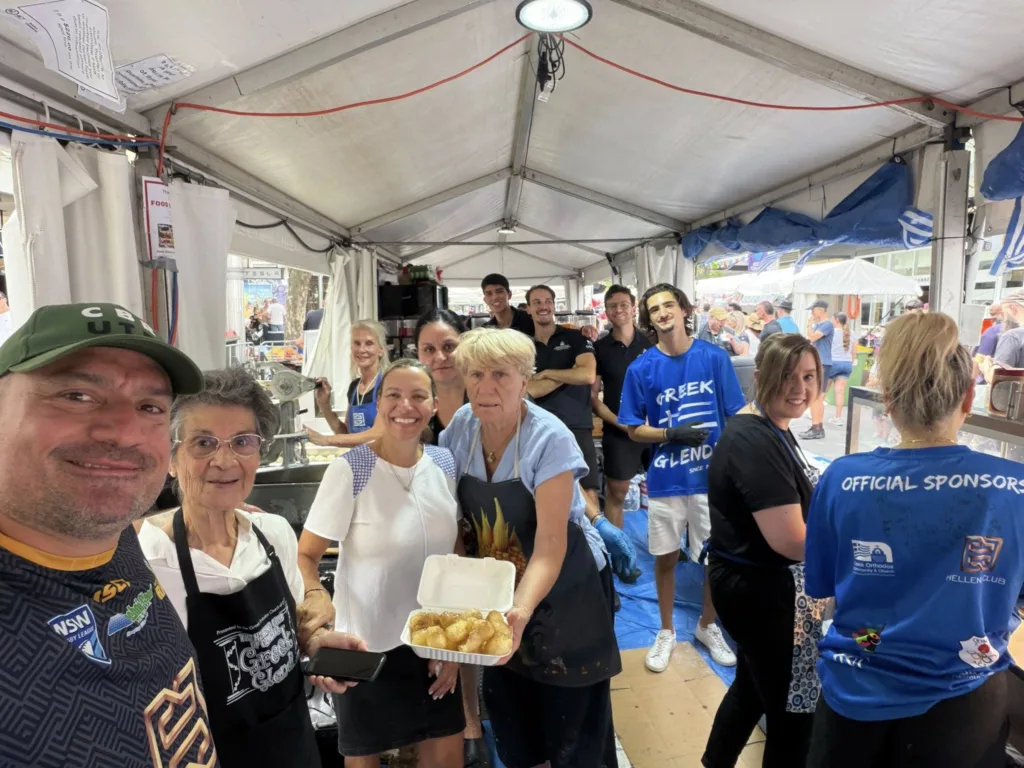
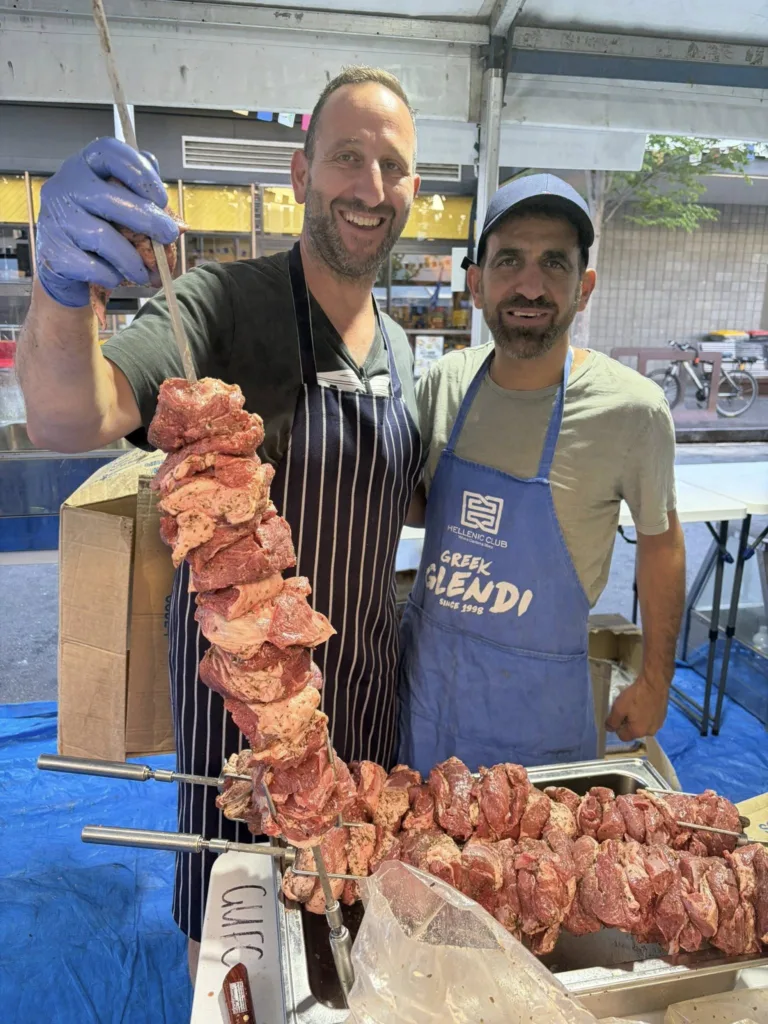
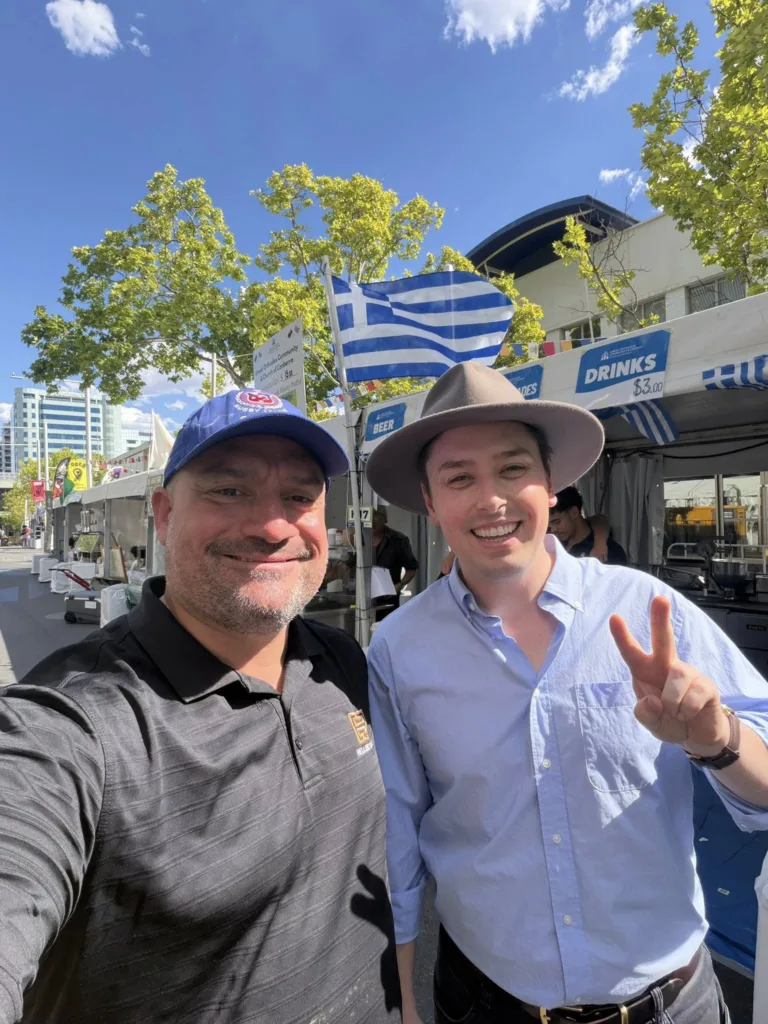
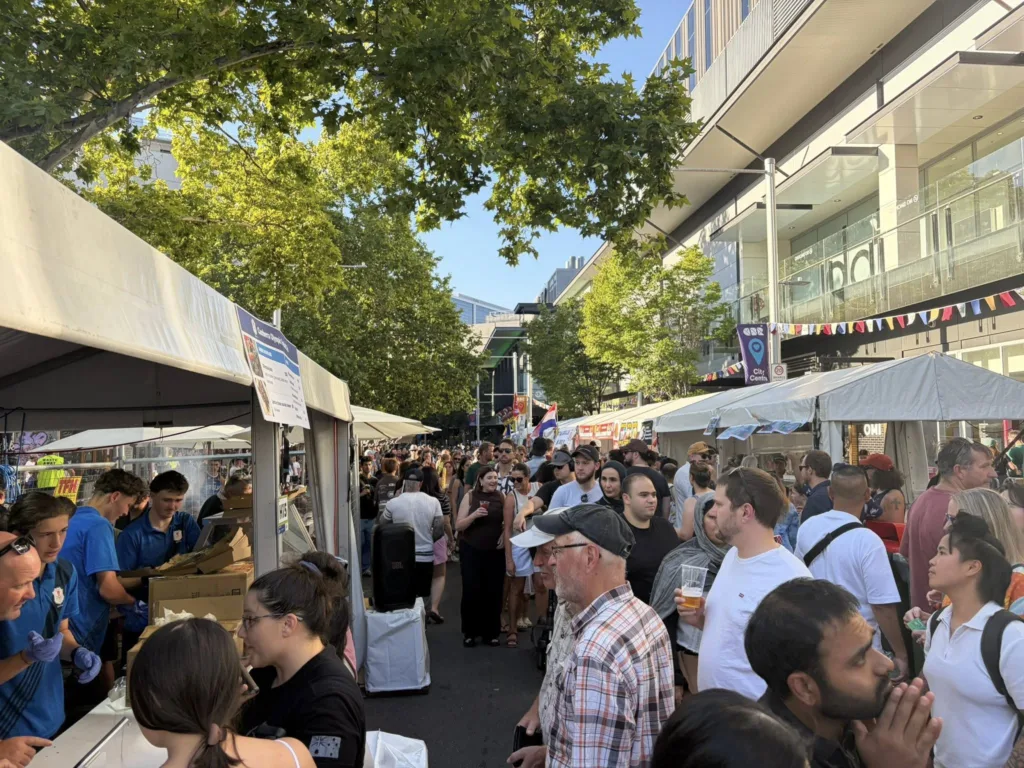
The Greek community played a standout role at the National Multicultural Festival in Canberra, with food, music, dance and youth volunteering taking centre stage across a rain-soaked but vibrant three-day celebration from Friday, February 6 to Sunday, February 8.

Despite challenging weather, organisers estimate more than 400,000 people attended the festival, with the Greek precinct – informally dubbed the “Hellenic Highway” – among the busiest areas throughout the weekend.

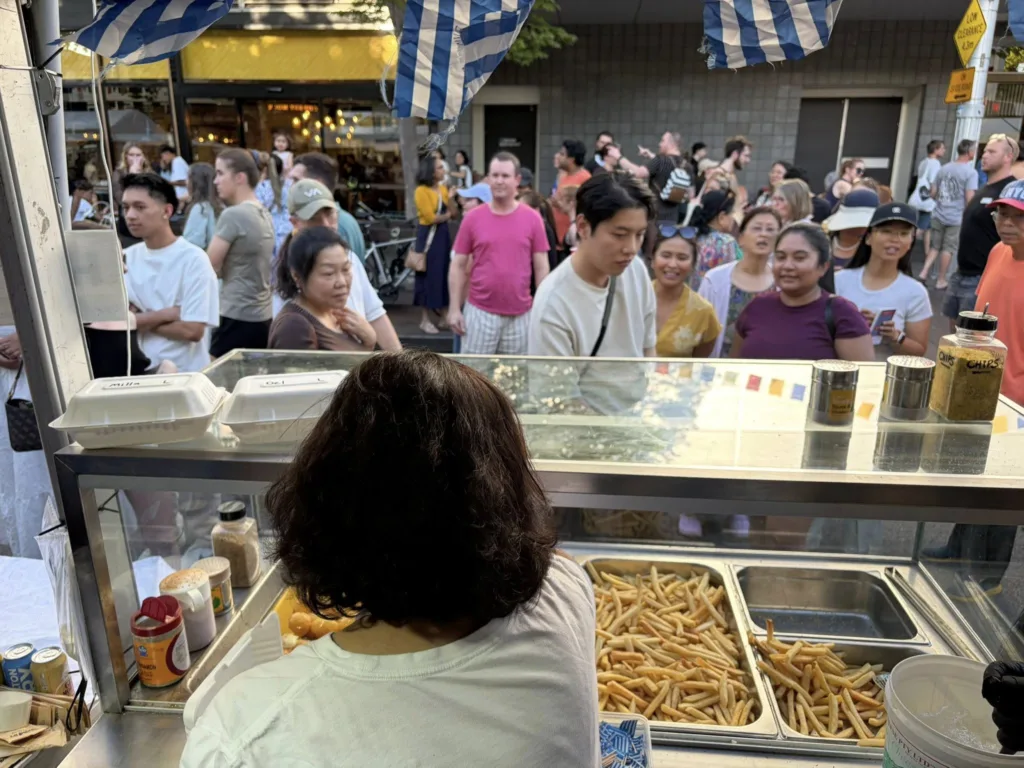
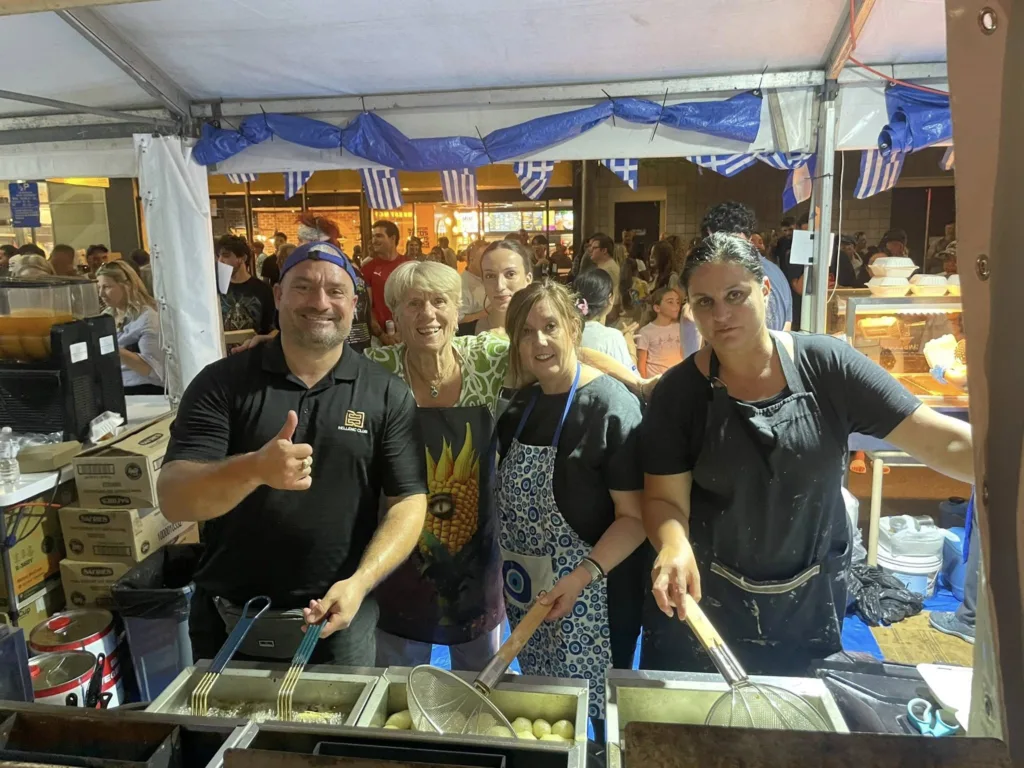
The Greek Orthodox Community and Church of Canberra & Districts, alongside the Cyprus Community of Canberra and ACT and Canberra Olympic Football Club, operated neighbouring stalls at the corner of Petrie Place and Bunda Street, offering a traditional spread of loukoumades, souvlakia, lamb plates, halloumi, Greek coffee and frappe.

greek glendi at national multicultural festival

One of the defining features of this year’s Greek presence was the scale of volunteer involvement, particularly among young people. More than 50 youth volunteers – some as young as 12 – contributed across all three days, assisting with food service and fundraising efforts in support of the local Greek Orthodox church and Greek school.

Greek Community President John Loukadellis praised the unity and dedication shown by volunteers, describing the weekend as a collective community effort that reflected the spirit of Hellenism in Australia.

Funds raised from loukoumades sales will be directed towards St Nicholas Greek Orthodox Church Canberra and the Greek School of Canberra, supporting the commencement of the new academic year.

A major highlight came on Sunday afternoon with the Greek Glendi at the Garema Place Stage, which drew large crowds for an energetic program of live Greek music, traditional dancing and audience participation. The event was hosted by MC Yianni Lazarou, with performances by the Canberra Hellenic Dancers and popular features including the loukoumades eating competition.

greek glendi at national multicultural festival

Community organisers said the Glendi captured the essence of Greek culture, showcasing music, dance, food, kefi and philotimo to festivalgoers from across Australia’s multicultural capital.

Organisers added that the strong turnout reaffirmed the enduring appeal of Greek culture within Canberra’s multicultural landscape, with plans already underway for next year’s festival.

Workers pursue civil claims after Kekatos-founded security company shuts down

A Melbourne-based security company has ceased trading just five months after launching, leaving a number of former workers pursuing unpaid wages through civil channels.

Arrow Security Group, established in May 2025 by Roxanne Kekatos, issued employment contracts for management and security roles before moving to deregister the business in October. Corporate records show the company operated with minimal capital during its short existence.
Some former staff said they were told the company had secured major commercial contracts, including work at Westfield shopping centres. However, Westfield operator Scentre Group confirmed to news.com.au it had no dealings with the company.

The company also entered into a contract with workforce management platform Guardhouse. Guardhouse said it received only a “nominal amount” despite documentation suggesting a larger payment had been made.
Former HR director Brooke Logie said she was left to inform staff that expected contracts would not proceed.

“People had left other jobs for the positions,” she said.

In a statement to news.com.au, Ms Kekatos said the business was unable to secure contracts and could not continue operating.

“Unfortunately, we could not secure any contracts and therefore it was no longer feasible to continue trading,” she said. “Hence the company is no longer trading.”

She said only three employees were unpaid for their final fortnight and denied broader non-payment.

Victoria Police confirmed the matter was reviewed, including by its Financial Crime Squad, and determined to be a civil issue.

Source: news.com.au

NSW Premier’s Anzac Memorial Scholarship opens for historic Greece and Crete tour

The Minns Labor Government has announced that up to 18 students from across NSW have the opportunity to be selected to participate in a study tour visiting historic sites in Greece and Crete relating to Australia’s military service during the Second World War.

The Premier’s Anzac Memorial Scholarship (PAMS) is a wonderful opportunity for high school history students to deepen their understanding of Australians at war and gain a richer appreciation of the courage and sacrifice of the nation’s servicemen and servicewomen over the generations.

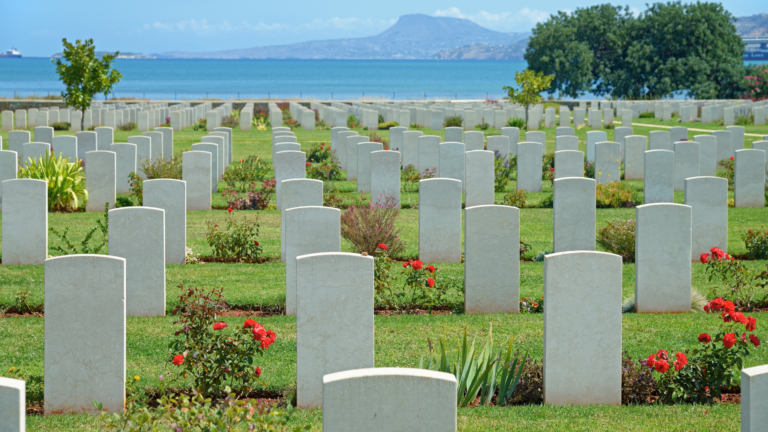
Locations in Greece include the Commonwealth War Graves Cemetery at Phaleron, the Hellenic War Museum, and the battlefields of Thermopylae and Thebes.

In Crete, the tour will visit sites such as the 6th Australian Division Memorial at Stavromenos, the battlefields of Rethymno, the Melame Memorial and the Souda Bay War Cemetery. 

NSW Minister for Veterans David Harris said “the PAMS tour presents a unique opportunity for students from all over New South Wales, and I highly recommend that History and Modern History students in Year 10 and Year 11 consider applying.”

“Through this scholarship, recipients will have the opportunity to visit historic sites across Greece and Crete that experienced the conflict firsthand – walking in the footsteps of the Australians who served and honouring their legacy at the very battlefields where their bravery was defined,” Minister Harris added.

“More than 17,000 Australians served in the Greece and Crete campaigns of 1941, standing in defence against advancing German forces. Close to 600 made the ultimate sacrifice, with many more wounded and thousands taken as prisoners of war.

“Their courage and resilience remain an enduring part of our national story, and a lasting bond between Australia and Greece.

“The Minns Labor Government is proud to continue to support this fantastic program and the extraordinary legacy of veterans.”

Two PAMS 2025 recipients reflected on their tour to the Republic of Korea and Singapore last year which they said was life changing.

Scarlett Sheridan from Green Point Christian College reflected that the tour was one of the greatest honours of her life, opening her eyes to the sacrifices made by veterans around the world.

Flynn Greenow from Narrabeen Sports High School said he felt a profound sense of connection while standing on the historic battlefields visited during the tour.

The 2026 tour will take place in the Term 3 school holidays departing on Saturday, September 26 and returning to Sydney on Thursday, October 8.

An important change has been introduced to the application process this year, requiring eligible students to submit a five-minute multimedia presentation as part of their online application, along with a letter of recommendation from their school and a parent consent form.

Applications close on Monday, 9 March 2026. For more information and to apply visit: https://www.veterans.nsw.gov.au/education/premiers-anzac-memorial-scholarship/ 

Greek is a global cultural capital, Mitsotakis says on World Greek Language Day

0

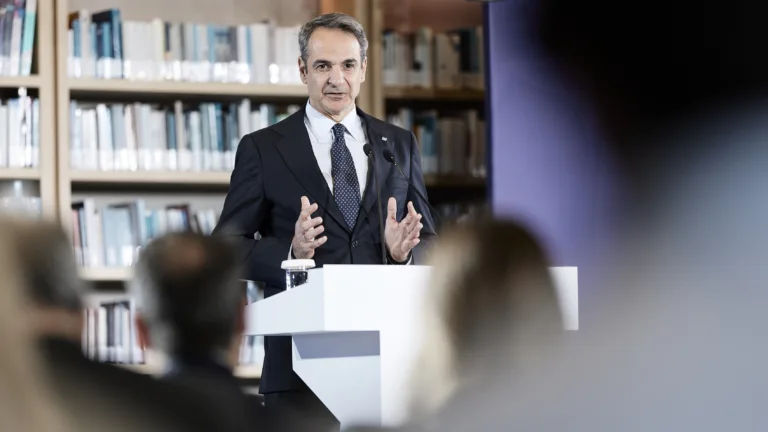
Greek Prime Minister Kyriakos Mitsotakis has hailed the Greek language as a global cultural and intellectual asset, following UNESCO’s official recognition of World Greek Language Day on February 9.

Speaking at an event hosted by the Ministry of Foreign Affairs at the National Library of Greece, Mitsotakis said the designation confirms the universality of Greek, describing it as a language that shaped fundamental concepts of citizenship, democracy, freedom, beauty and the “golden mean”.

He noted that Greek ideas and terminology helped inspire major political milestones, including the French and American revolutions, as well as the Greek War of Independence of 1821, adding that the language served as “our bridge to the world”, positioning modern Greece at the heart of Europe and the West.

The Prime Minister highlighted Greek’s ability to articulate complex ideas, absorb and contribute vocabulary across cultures, and remain relevant in the digital age – including in algorithms and artificial intelligence.

However, he warned that technological change risks weakening language through abbreviated writing and screen-based communication, stressing that reflection and critical thinking depend on proper written expression.

“Language acts as a catalyst for growth and, in the end, for democracy,” Mr Mitsotakis said, describing the promotion of Greek as a national priority.

He added that technology could also assist in expanding Greek language education, including new approaches to teaching ancient Greek, while cautioning against the careless or distorted use of Greek in mass media.

Quoting poet George Seferis and writer Nikos Kazantzakis, Mitsotakis underlined the enduring resilience and transformative power of Greek, calling UNESCO’s recognition an acknowledgment of the language’s lasting global value.

The Prime Minister made the remarks during commemorations marking UNESCO’s designation of World Greek Language Day, which celebrates Greek as both a national treasure and a shared heritage of world civilisation.

Source: AMNA