Egypt’s foreign minister Sameh Shoukry on Tuesday rebuffed a Turkish push for a two-state peace deal in Cyprus.
He said any talks should adhere to an UN-backed road map reunifying the island as a federation.
He said after talks with his Cypriot counterpart that regional challenges need to be countered based on international law instead of “aggressive activities or expansionist tendencies”.
Turkey is accusing Cyprus of supporting a peace deal that would serve its policy goal of exerting control over the east Mediterranean.
Cypriot Foreign Minister Nikos Christodoulides said that he conveyed to Shoukry his government’s “deep concern regarding Turkey’s increasingly revisionist and destabilising foreign policy” in the region.
Cyprus was split in 1974 when Turkey invaded following a coup aiming at union with Greece.
Only Turkey recognises a Turkish Cypriot declaration of independence in the island’s north where it keeps more than 35,000 troops.
Turkish Cypriot leader Ersin Tatar said a prerequisite to reviving stalled peace talks is the recognition of the breakaway Turkish Cypriot state as a legitimate legal entity on par with the internationally recognized Cyprus Republic.
Greek Cypriots fear a two-state deal would entrench Turkish control potentially over the entire island as well as hydrocarbon deposits off its shores.
Turkey doesn’t recognise Cyprus’ statehood and says that much of the sea around the island where the Cypriot government claims exclusive economic rights falls within its own continental shelf.
The Turkish government says a “unilateral” Greek Cypriot bid to carry out drilling off its shores ignores its rights — and those of Turkish Cypriots — to the region’s potential energy reserves.
The Cypriot government says Turkish claims contravene international law and the island’s sovereign rights.
Peace talks have been at a standstill since the last bid to reach a reunification agreement collapsed in the summer of 2017.
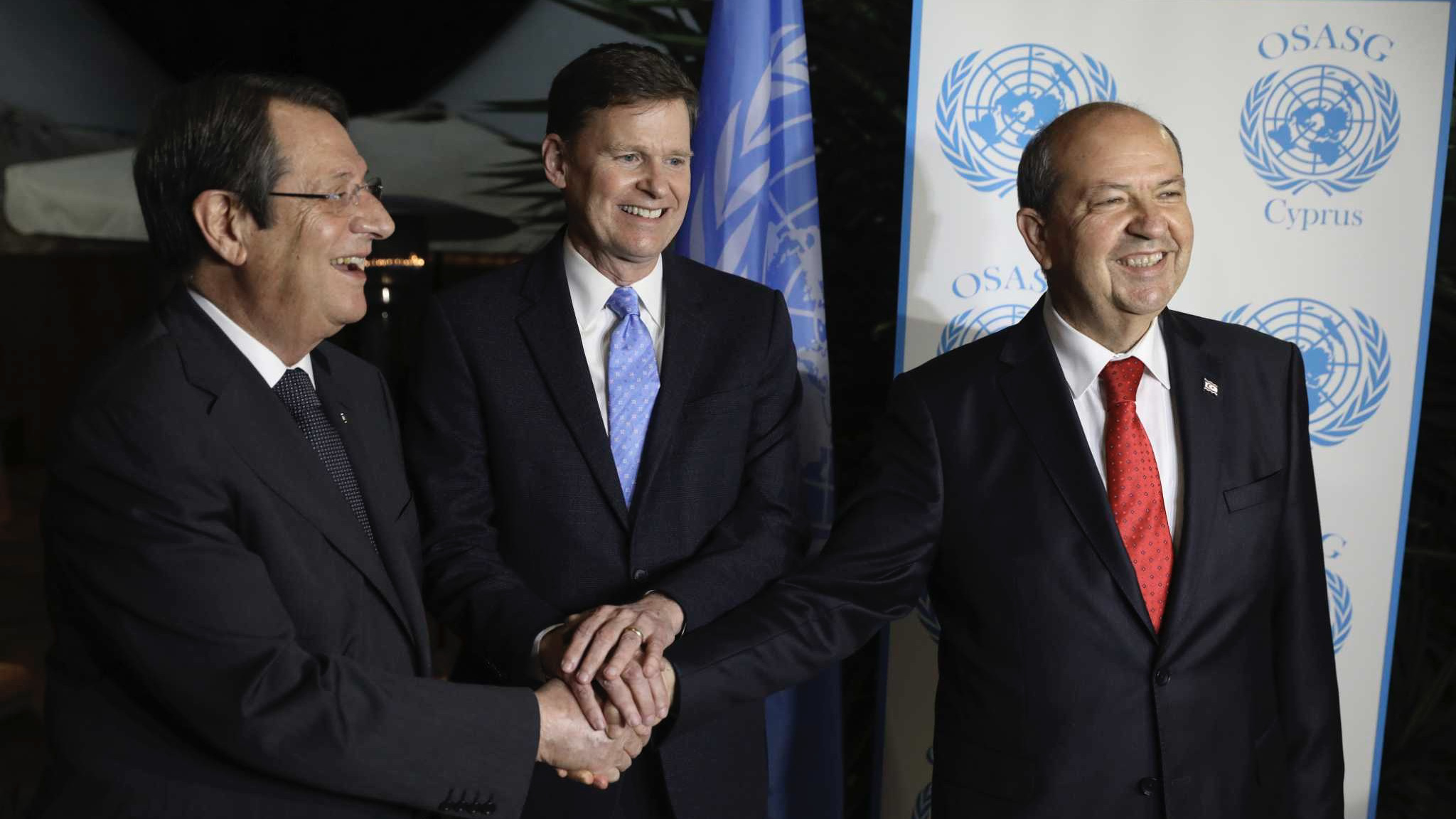
Colin Stewart, the new head of the U.N. peacekeeping mission on Cyprus, will host Tatar and the island’s Greek Cypriot President Nicos Anastasiades at an informal reception on Tuesday at an abandoned hotel inside a U.N. controlled buffer zone that cuts through the capital Nicosia.
The meeting is billed primarily as a social event geared toward breaking the ice between the two leaders in the absence of formal talks.
Source: AP

