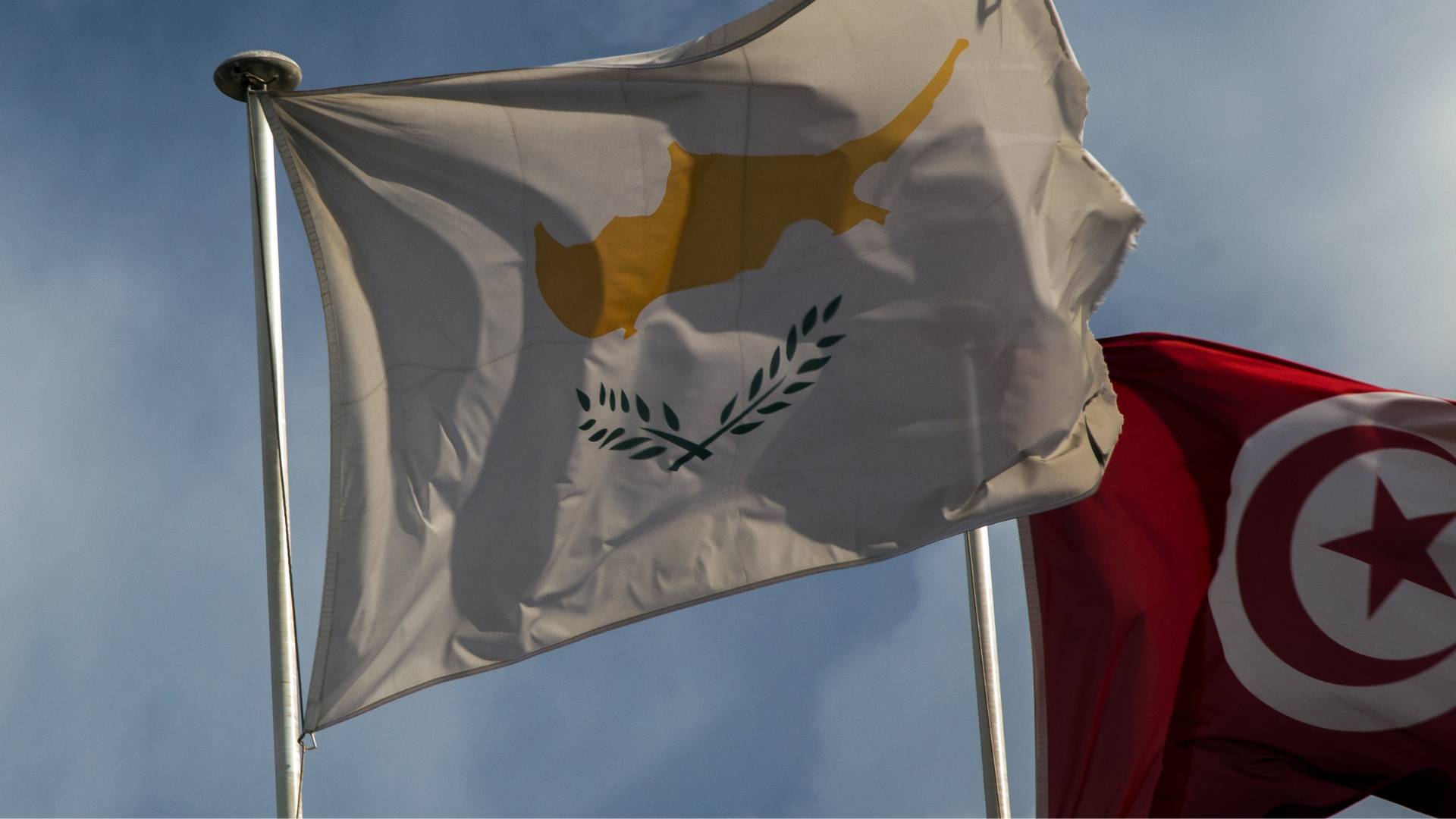
Since 1974, Turkey has illegally occupied 37 percent of the territory of a European sovereign nation, the Republic of Cyprus, in violation of all United Nations resolutions and decisions. Over the past fifty years, Turkey has continued to provoke and challenge the sovereign rights of at least two neighbouring states, the Hellenic Republic and the Republic of Cyprus.
In a manner that reveals the true intentions of its government – to create flashpoints of tension across the region. Turkey repeatedly announces plans for drilling surveys in areas outside its internationally recognised Exclusive Economic Zone (EEZ). These repeated announcements of seabed exploration in the Eastern Mediterranean are not isolated Turkish acts of aggression. They represent the latest episodes in a recurring pattern of aggression, each time growing more belligerent.
The NAVTEX announcements and – above all – the deployment of the Turkish research fleet to further militarise the crisis with Greece and Cyprus was a deliberate, tactical move to further muddy the waters, especially at a time when emotions are already running high due to the conversion of Greek Orthodox Christian monuments, including Hagia Sophia and the Monastery of Chora (Kariye Mosque) – both World Heritage Sites – into mosques.
Turkish aggression in the Eastern Mediterranean is neither new nor fleeting. It is a longstanding act of intimidation dating back to 1963, and it is becoming increasingly difficult to contain. It began with military dictators and continued through representatives of a local society made up of mullahs, military figures, Islamists, and secular Kemalists to the present day. The international landscape, distorted perceptions of power relations in the region, all drive Turkey to violate one border after another.
From Libya to Syria and from Iraq to Armenia and Azerbaijan, Turkey remains a constant source of instability and aggression. Its supposed stabilising role is a smokescreen – an artful camouflage concealing the true objectives of Islamic Turkey: to project a peculiar Neo-Ottoman sectarianism, which is little more than a nationalistic frenzy, an imperialistic syndrome, detached from reality, with potentially catastrophic consequences. This expansionism constitutes a violation of international law and desecration of the sovereign rights of other countries in the region.
Turkey violates the territorial and maritime rights of the Republic of Cyprus, threatens Greece – and by extension Europe – destabilises Libya, invades Iraq and Syria, and lately seeks to play a “strategic regional” role in the Caucasus and the Middle East. The Turkish Islamic government seeks dominance over the Islamic world of Asia and the Pacific, all the way to Indonesia, and to become the regulatory protector of the Muslim world. Turkey has appeared as an uninvited guest in all these domains. No one requested its intervention in Syria or Libya, and certainly no one feels safe when the Turkish fleet seeks to control the Eastern Mediterranean as if it were a Turkish lake.
The Eastern Mediterranean is not – and will never be – a Turkish lake, simply because many countries have equal rights over it. It is the cradle of civilisation, culture, and friendship among peoples who coexist and share its bounty. There is only one way to share the Eastern Mediterranean: that of good-faith, sincere and fruitful cooperation and dialogue, based on the universally and internationally recognised Law of the Sea. Unfortunately, there is no multilateral political force, in Europe or Asia, especially after the rise of Trump’s self-centred American administration, that functions as a deterrent Great Power, in the form of a union or collective body, to counter and punish the unrest caused by Turkey’s stance in the Eastern Mediterranean in recent years.
Sadly, the rhetorical condemnations of Turkish provocations by the EU, or countries such as Germany or the USA, are not perceived by Turkey as they should be – but as signs of tolerance, encouragement or, worse still, weakness. Greece and Cyprus, as full members of the EU, are key stabilising factors in the region – bridges between the Middle East, North Africa, the Balkans and Europe – and they have nothing to fear from shows of strength and intimidation that do not align with the spirit of the times or with real power balances. Anyone who tries to turn the region into a battlefield of armed rivalries and imbalances is doomed to fail spectacularly.
The course and evolution of the Turkish invasion of Cyprus, the permanent occupation of its lands, the unilateral insistence on its partition, the implied annexation, and the claim of leadership in the so-called “Blue Homeland” (Mavi Vatan) – a delusional revisionist geopolitical fantasy that essentially aims to reconstitute the disbanded former Ottoman Empire (1918–1920) – are a political paradox that international institutions have been forced to tolerate for over 50 years with impunity.
Since 1963, under the imperialist doctrine of the “Blue Homeland”, Turkey has challenged the sovereignty of the Greek islands in the Aegean as well as the Greek and Cypriot EEZs. According to the 1982 United Nations Convention on the Law of the Sea, an Exclusive Economic Zone (EEZ) is the maritime area within which a state has the right to explore or exploit marine resources.
Turkey’s attempt to legitimise its military invasion – through slogans such as “intervention for peace” or “we liberated the unredeemed Turkish Cypriots and established lasting peace on the island” – following the coup imposed against President Makarios by the Athens junta and the appeals of “Greek Cypriots in favour of Enosis [union with Greece]” – has been refuted by Turkish Cypriots themselves. After the arrival of thousands of settlers from Anatolia, Turkish Cypriots fled into self-exile in greater numbers than Greek Cypriot refugees.
The myth of “intervention for peace” cannot be justified, either by the large number of Turkish Cypriots still holding Republic of Cyprus passports, or by the insistence of the global community not to recognise the de facto occupation and partition imposed by a NATO member acting as a regional troublemaker.
Turkey’s revisionist intent became even more extreme and maximalist following the rejection of the Annan Plan in April 2004. While it is true that this plan did not fully align with Hellenism’s interests – especially on an island historically dominated by Greek civilisation – like the Prespa Agreement on Macedonia, it was a “difficult and perhaps bad solution”, but far preferable to war. President Clerides rightly assessed that the Cyprus issue risked becoming a total shipwreck for Hellenism.
Indeed, today, expansionist and imperialist Turkey promotes a solution of two separate states rather than two federated communities within a single state – an approach historically opposed even by the majority of Turkish Cypriots, 65 percent of whom voted in favour of the Annan Plan for political reunification in 2004.
The historical, cultural and demographic characteristics of Cyprus have remained unchanged for centuries, affirming, overwhelmingly, the national character of its inhabitants as members of the Greek ethnos. The alteration of that character through “military interventions for peace” or government decrees has never succeeded in history without enforced population exchanges – with all that entails. The forced displacement and expulsion of Greek populations from northern Cyprus and their replacement with Anatolian settlers confirm that both the July and August 1974 invasions by Turkey were unequivocally acts of expansionism.
The ethnic cleansing that followed in occupied Cyprus primarily reveals the invaders’ deep intention: permanent division, disdain for international resolutions, and the eventual looting annexation of occupied territories into the anticipated “Blue Homeland”. Responsibility for this paradoxical status quo lies primarily with international institutions that tolerate this provocative violation of the territorial sovereignty of a European country and EU member state with impunity – but it does not absolve us of our own responsibilities.
The expression of neo-Ottoman expansionism in Cyprus has now lasted half a century, demonstrating Turkey’s contempt for implementing UN resolutions. Turkish disregard for international decisions has been encouraged both by the lax and tolerant attitude of the global community and the absence of the punitive measures – sanctions, wars or embargoes – imposed on other invading countries (e.g. Kuwait, Ukraine). In Turkey’s case, it has been met instead with generous indulgence.
At the same time, the lack of a unified, systematic and practical strategy on the part of Greece (both Greece and Cyprus) has led the Cyprus crisis into national disarray and improvisation, promoting ideologies and emotions that have weakened national cohesion and distracted from the crux of the issue: the ongoing need for a realistic, politically negotiated compromise solution – away from passions and maximalist goals.
Tragically, we have failed.
