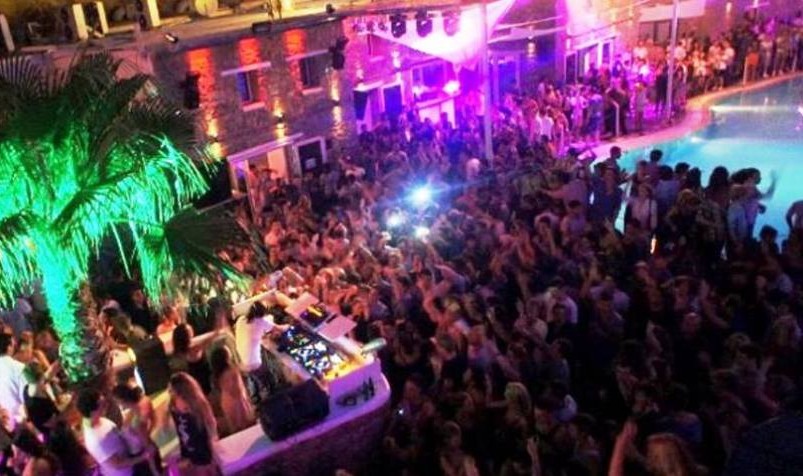
Music banned in Mykonos restaurants and bars

·

Greece banned music in restaurants and bars and imposed a nighttime curfew on its popular holiday island of Mykonos on Saturday after a rise in new coronavirus infections there.

Known as the party island of the super-rich, Mykonos is one of Greece’s most popular destinations, attracting more than a million visitors each summer, among them Hollywood stars, models and world-famous athletes.

Following a “worrying” local outbreak, the Civil Protection Ministry said it was banning music on the island around the clock, including in shops, cafes and beach bars. It also said it would restrict movement between 1 a.m to 6 a.m except for those going to and from work or to hospital.

Greece depends on tourism for a fifth of its economy and desperately needs a strong season this year following a disastrous 2020 when visitor numbers and revenues collapsed.
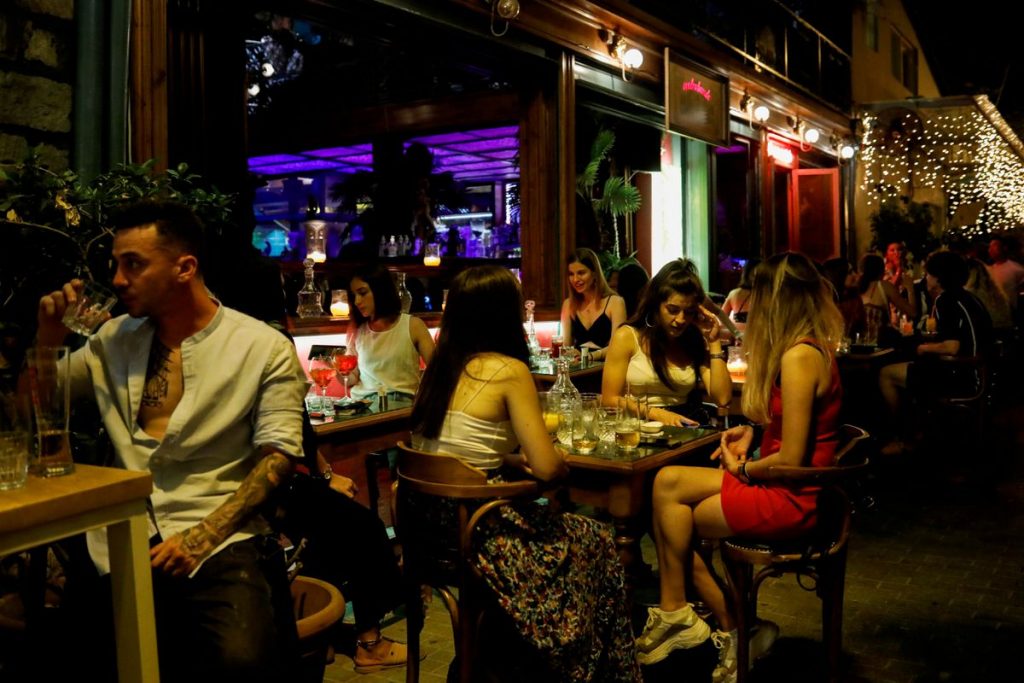
People sit at a bar, amid the spread of the coronavirus disease (COVID-19), in Athens, Greece, July 6, 2021. Picture taken July 6, 2021. REUTERS/Costas Baltas/File Photo/File Photo

The number of infections has been rising in Greece in recent weeks, forcing the government to mandate the vaccination of healthcare workers and nursing home staff, and to introduce new restrictions across the country, including allowing only vaccinated customers indoors at restaurants and clubs.

Mykonos’s Mayor Konstantinos Koukas said imposing measures at the heart of the tourism season was “unfair” and “misguided.”

“Mykonos cannot be the only island where music won’t be heard… the only thing this will achieve is that visitors will go to another island,” he wrote on Facebook.
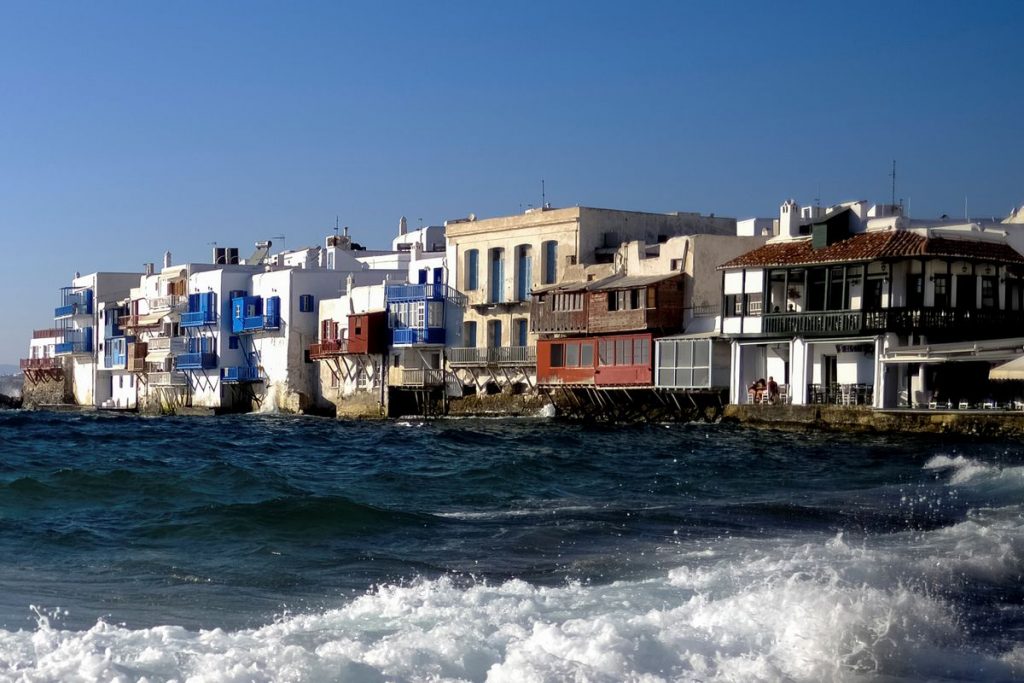
A view of Little Venice on the island of Mykonos, Greece, August 22, 2020. Nektaria Balomatini/Eurokinissi via REUTERS

The government banned music in restaurants and bars across the country in May to avoid people having to get close to one another to be heard, increasing the chances of transmitting the virus. It lifted that measure when infections dropped.

“We call on the residents, visitors and professionals on our beautiful island to strictly follow the measures… so that we can quickly control and contain the spreading of the virus and Mykonos can return to normality,” the ministry said.

The restrictions on Mykonos will be in place until July 26.

Source: Reuters

Share:

KEEP UP TO DATE WITH TGH

By subscribing you accept our Terms of Service and Privacy Policy.

Latest News

Greek Christmas spirit lights up Canterbury at Cyprus Community’s Carols and Night Market

Up to 1,500 people came together for a joyful Greek summer Christmas at the Cyprus Community of NSW’s Greek Christmas Carols & Night Market.

Archbishop Makarios of Australia condemns Bondi Beach terror attack

His Eminence Archbishop Makarios of Australia has condemned the terrorist attack at Bondi Beach in Sydney.

Greek court rules against journalist in defamation case involving Archbishop Makarios

The Greek Orthodox Archdiocese of Australia announced the Tripartite Court of Appeal of Thrace (civil procedure) issued its judgment.

St Spyridon Parish marks 50 years of ministry by Fr Steven Scoutas and his Presvytera

The Parish of Saint Spyridon in Kingsford, Sydney, celebrated fifty years of devoted ministry by Fr Steven and Presvytera Patricia Scoutas.

$120,000 raised in Adelaide to support Orthodox Mission in the South Pacific

Adelaide’s St Dimitrios Parish raised $120k to support the Orthodox Mission in the South Pacific during a special visit by Metropolitan Myron

You May Also Like

Cypriots begin clean up after deadly forest fire spreads through villages, farms

A deadly fire that claimed four lives and has been described as the most destructive blaze in Cyprus’ history is now fully under control.

Iconic Semaphore Greek Festival in South Australia wows crowds again

On Sunday, the 42nd Bank of Sydney Semaphore Greek Festival once again attracted visitors from all over Adelaide.

Archbishop Makarios: We don’t want our churches to become sources of contamination

His Eminence has explained his decision to close churches across Australia, saying that he did not want participation in the Divine Liturgy to result in "anyone becoming ill or even dying because they were infected."