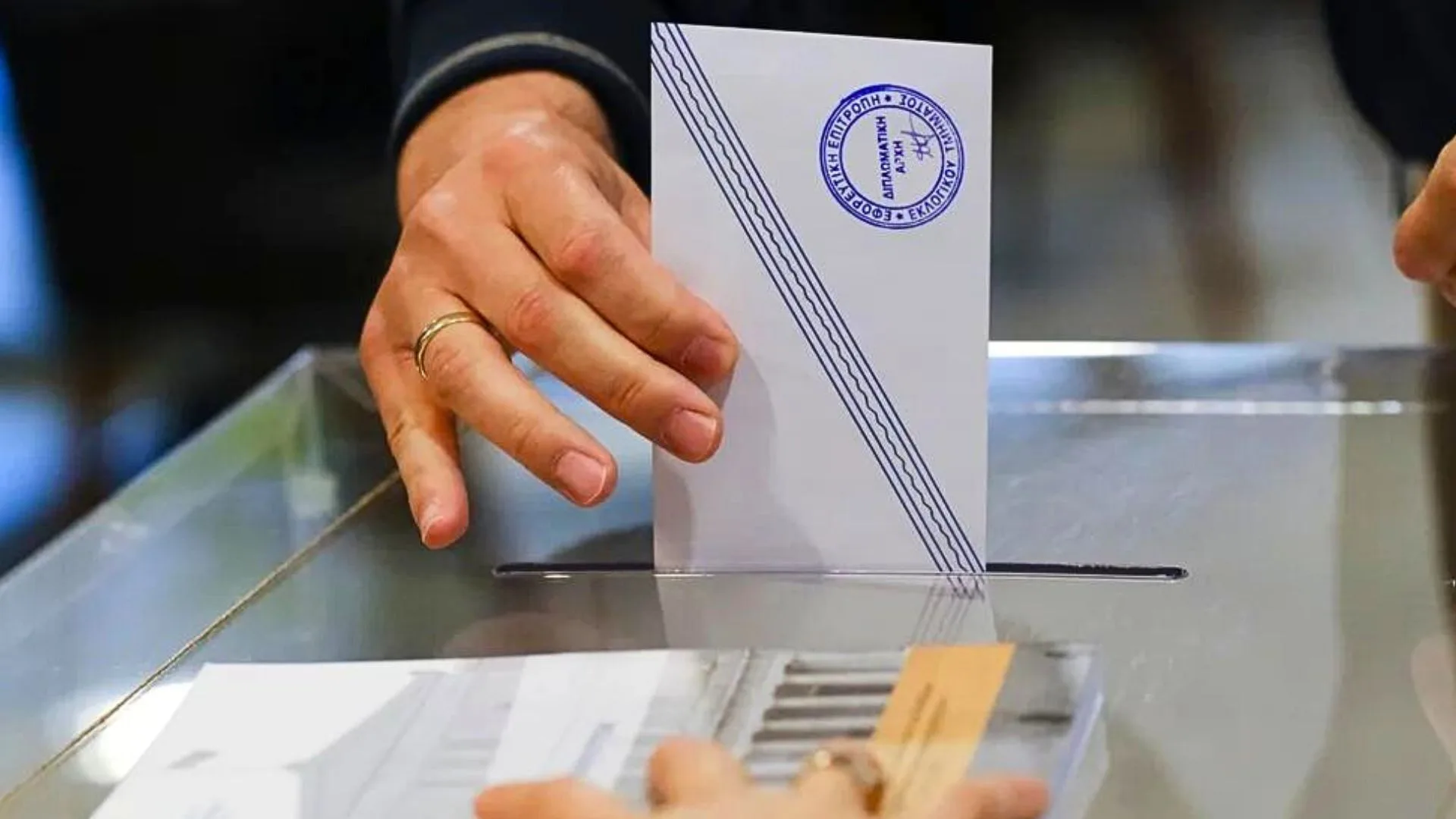
A draft law defining the electoral district of the Hellenic diaspora and facilitating postal voting for Greeks abroad has been approved by majority in its second reading by parliamentary committees and is now before the Plenary of the Hellenic Parliament for a two-day debate.
The bill, introduced by the Interior Ministry, will be put to a roll-call vote on Thursday. If it secures at least 200 votes, its provisions will apply immediately in the upcoming national elections.
New Democracy voted in favour at committee stage, while KKE and New Left voted against. PASOK-KINAL, SYRIZA, Hellenic Solution, Niki and Pleusi Eleftherias reserved their positions for the Plenary debate.
Interior Minister Theodoros Livanios announced the withdrawal of a provision exempting diaspora ballots from gender quota rules, confirming that of five candidates, at least two must be of each gender.
He also introduced amendments ensuring expatriate electoral lists will not indicate where or how voters choose to vote, in line with the Personal Data Authority’s opinion, and said a technical authorising provision regarding the Candidacy Portal would be added.
Opposition parties signalled that postal voting for expatriates may secure the 200 votes required for immediate implementation, but not provisions creating a single global three-seat diaspora constituency or introducing cross-preference voting for overseas candidates.
If only postal voting reaches the 200-vote threshold, expatriates will be able to vote either in person at polling stations abroad or by post in the next national elections.
The 15 State MPs will remain unchanged, with at least one diaspora candidate included among the top three positions on each party’s State ballot, as in 2023.
If repeat elections are held within 18 months under a list system, and the three-seat diaspora district passes with fewer than 200 votes, the district would be created but implemented at the subsequent elections.
State MPs would be reduced to 12, with three diaspora MPs elected by list and proportionally to party strength. Cross-preference voting for expatriates, if passed with fewer than 200 votes, would apply at the next election held under a preference system.
Livanios rejected opposition objections, calling claims about the global constituency “pretentious” and arguing that allocating MPs based on vastly different voter numbers “would be a distortion that does not currently exist in the other electoral districts.”
He dismissed concerns over campaign costs and accountability, saying diaspora MPs would be accountable “much more intensely and powerfully” to their constituents, aided by new technologies.
He also defended postal voting as constitutional, stating: “the Constitution itself is what exceptionally allows postal voting for those outside the country,” adding that safeguards are among the strictest internationally.
Opposition parties voiced varied concerns. PASOK-KINAL backed postal voting but objected to the global constituency, citing campaign costs and accountability. SYRIZA warned that postal voting cannot guarantee absolute secrecy and said expanding the constituency worldwide does not resolve representation issues.
KKE opposed the bill outright, calling postal voting “a strategic choice” to distance voters from in-person participation and describing the measure as “a reactionary move that raises serious issues of violation of the vote and the integrity of the elections.”
New Left objected to grouping all regions into a single district and questioned the fairness of representation across continents. Greek Solution argued the bill serves major party interests and called for 10 non-partisan diaspora seats.
Niki proposed including the overseas region through revision of existing decrees and raised constitutional concerns. Pleusi Eleftherias criticised the three-seat district as favouring the first party and called for a full report on the implementation of postal voting in the European elections.
Debate continues in the Plenary, with the outcome of Thursday’s vote set to determine which provisions will take effect in the next national polls.
