With the federal election tomorrow, Business Sydney hosted a high-level political forum on Wednesday evening at Clayton Utz, bringing together some of Australia’s most experienced campaign strategists and commentators for a timely discussion on the state of the race.
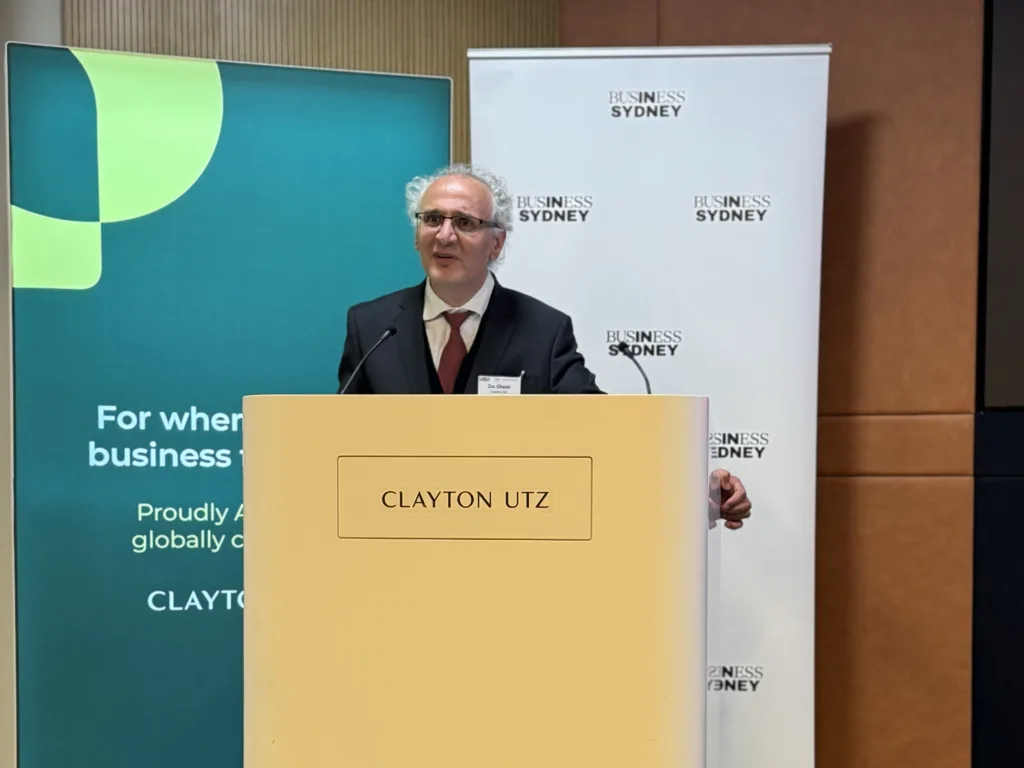
Titled Decide 25: The Political Shakers, the event was the second in Business Sydney’s 2025 federal election series. The evening opened with formal welcomes from Paul Nicolaou, Executive Director of Business Sydney, and Zac Chami, Commercial Litigation Partner at Clayton Utz.
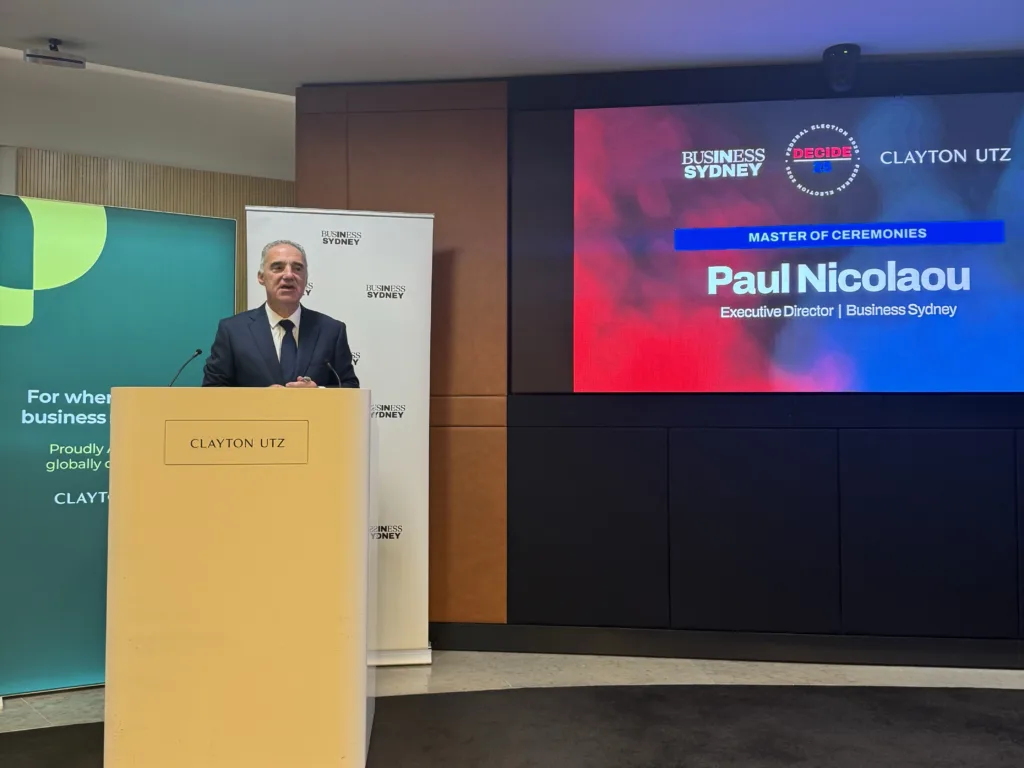
Nicolaou acknowledged the support of event partner Clayton Utz and welcomed a broad mix of guests from the business, legal and political spheres. He paid tribute to the evening’s panellists, noting their deep expertise across both major parties and decades of campaign experience.
“We’re thrilled to have such an extraordinary line-up to help us understand what’s really at play in the final days of this federal election,” Nicolaou said. He also welcomed a number of distinguished attendees, including former ministers, mayors, business leaders and representatives of peak organisations.
Mr Chami followed with brief remarks on behalf of Clayton Utz, reflecting on the importance of dialogue across political, legal and business sectors.
“Now more than ever, we need spaces for thoughtful, informed engagement,” Mr Chami said. “Forums like this allow us to examine the policies and pressures shaping Australia’s future — across democracy, the economy and society.”
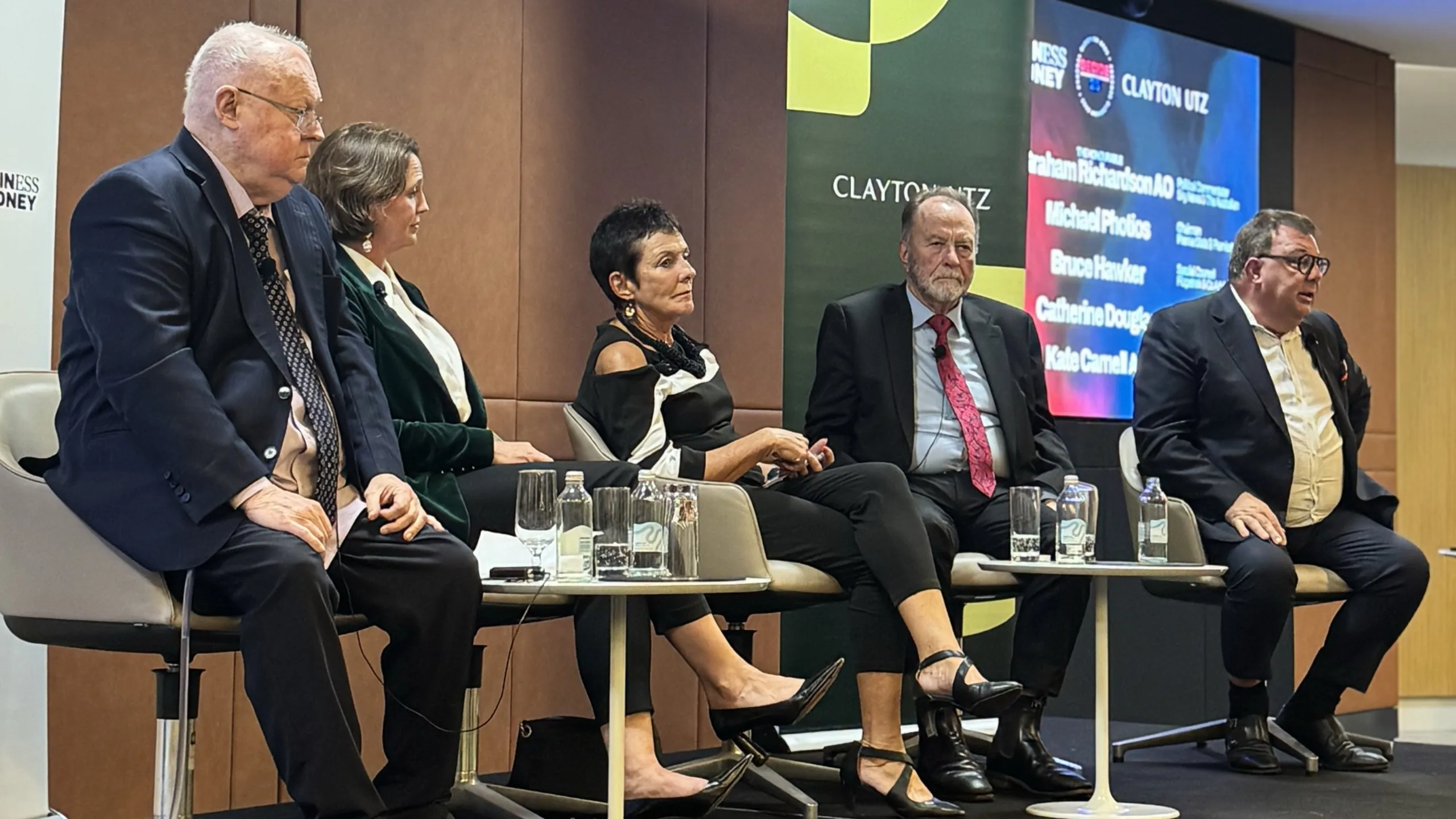
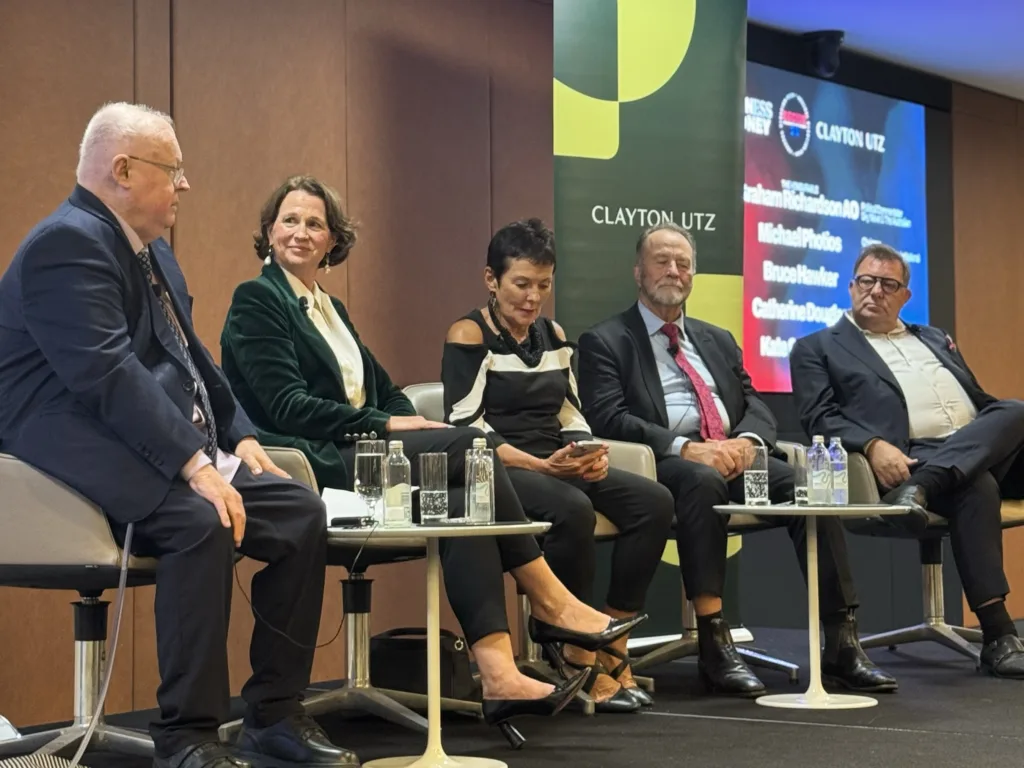
From there, guests heard from the panel featuring The Hon. Graham Richardson AO, Political Commentator for Sky News and The Australian; Michael Photios, Chairman of PremierNational; Bruce Hawker, Special Counsel at Fitzpatrick & Co Advisory; and Catherine Douglas, Managing Director of CT Group Australia. The discussion was moderated by Kate Carnell AO, Chair of the Australian Made Campaign and former ACT Chief Minister.
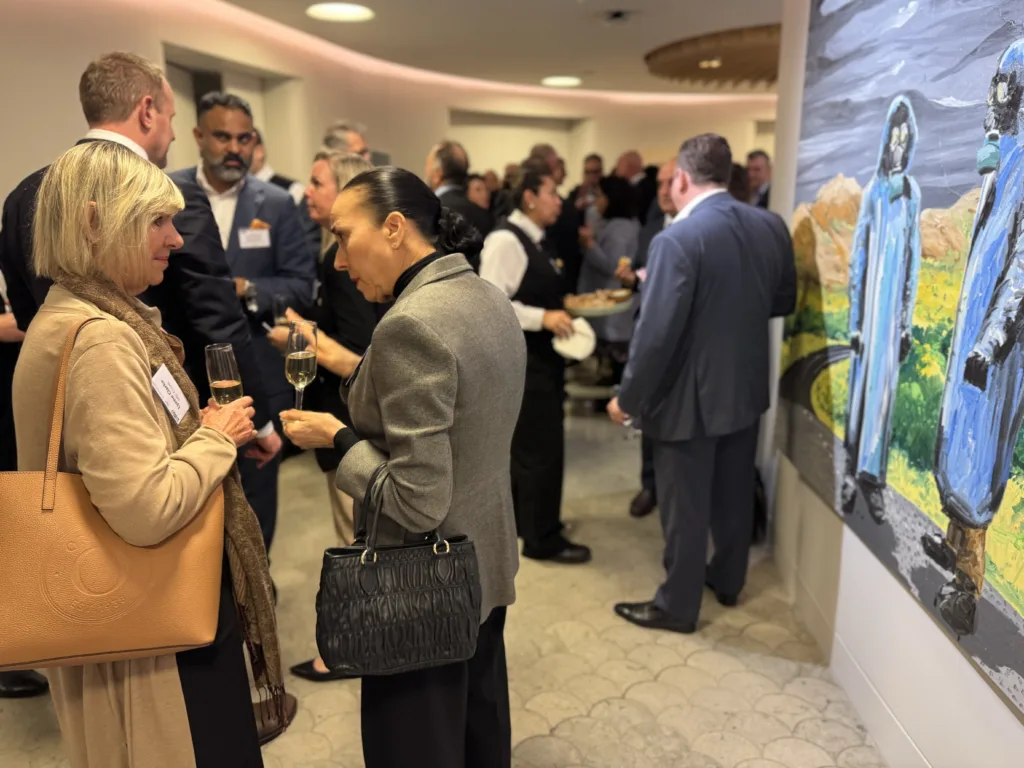
The event blended pre-panel networking with a dynamic discussion on the key issues shaping the final stretch of the federal election campaign.
Campaign tone, voter sentiment and political fragmentation
Opening the discussion, moderator Carnell posed a comparison between this election and previous campaigns. Mr Richardson described the tone as unusually subdued, noting a departure from the more combative styles of past elections.
“Nobody wants to be a fighter anymore — everyone’s playing it safe,” he said.
Richardson went on to warn that the increasing fragmentation of party support poses a long-term risk to the effectiveness of government.
“I don’t want us to become like Italy and have a government every nine months. When you get that kind of government turnover, it means that people you don’t know — bureaucrats whose faces you don’t know — have all the power, because they’re the only constant in the system. The politicians are visitors. They’re not the residents. The bureaucrats stay there the whole time,” he said.
Photios echoed the concern, arguing that stability through strong party governance remained essential.
“It would be Australia’s greatest mistake to fracture into a whole lot of minor parties. We need a government that can govern — and if you don’t like them, you vote them out. But when no one can govern, we all lose,” he said.
Douglas also pointed to a growing disconnect between major parties and mainstream voters, identifying a shift in values alignment as a central issue in the campaign.
Policy gaps and the Coalition’s underutilised agenda
Several panellists criticised the lack of substantive policy debate in the election. Photios pointed out that the Coalition had released a 12-point policy plan, but said it had failed to dominate the campaign narrative.
“It’s a landmark policy agenda in a policy-free zone,” he said. “We haven’t heard much about it in the last couple of weeks.”
Douglas observed that traditional issues such as economic management and support for small business — long seen as strengths for the Coalition — had not received adequate focus, adding that more proactive advocacy was also needed from the business sector itself.
Hawker cited the lack of bold initiatives across both major parties and drew parallels with previous eras, contrasting current campaign caution with historical examples of politically risky but transformative reforms.
Trump factor and political messaging
The panel also examined the so-called “Trump factor” and its influence on Australian politics. Richardson suggested that while Donald Trump’s presence dominates global headlines, his impact on Australian voting behaviour was minimal.
Hawker took a different view, warning that Australians may be increasingly wary of importing political styles seen in the United States.
“We’re not the same as America,” he said. “Australians don’t want a dose of what the Americans are getting — we’re wired differently, and that’s a strength.”
Douglas added that crisis moments, such as international instability or cost-of-living pressures, tend to benefit incumbents, a dynamic that has likely contributed to the shifting momentum back toward Labor in the final stretch of the campaign.
Minor parties, preferences and the electoral landscape
The role of preferences and minor parties was a recurring theme throughout the evening. Photios pointed to expected increases in One Nation’s primary vote, particularly in Queensland and parts of regional Australia, and said their preference flows could tighten contests in several marginal seats.
Douglas noted that preference strategies were already proving more favourable to the Coalition than in the previous federal election, but warned that increasing reliance on minor party support may complicate future governance.
The panellists also discussed the influence of teal independents, particularly in economically engaged electorates. Richardson acknowledged the pressure these candidates place on the Liberal Party, calling them a “serious challenge” that could grow over time.
Closing thoughts and community engagement
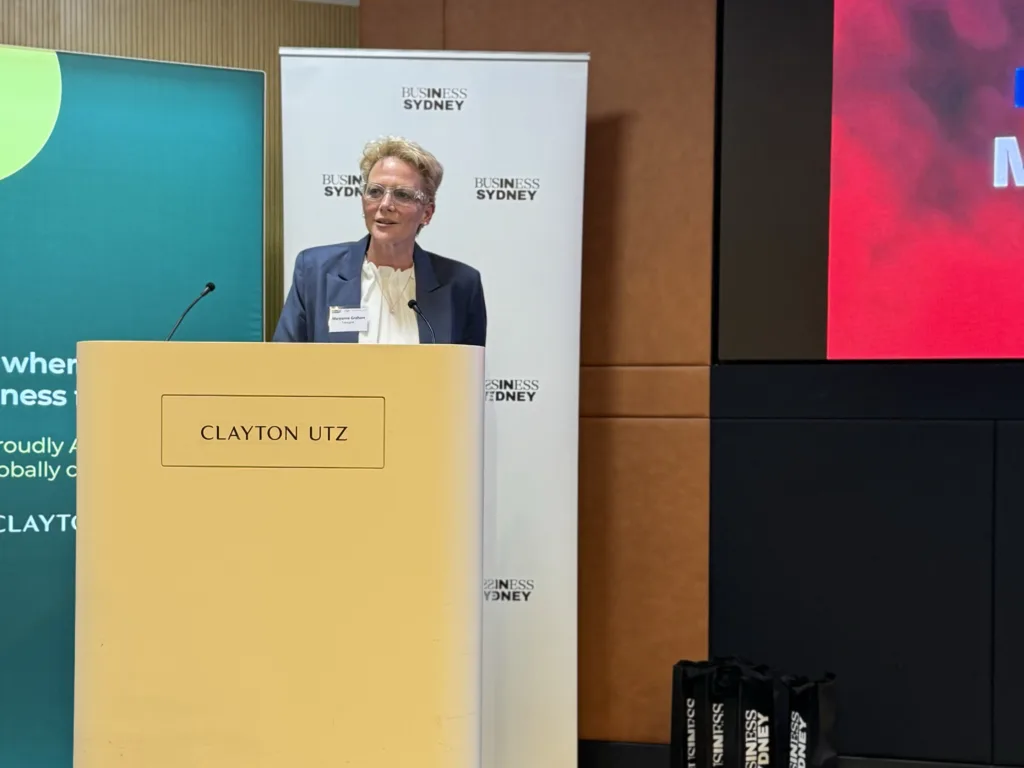
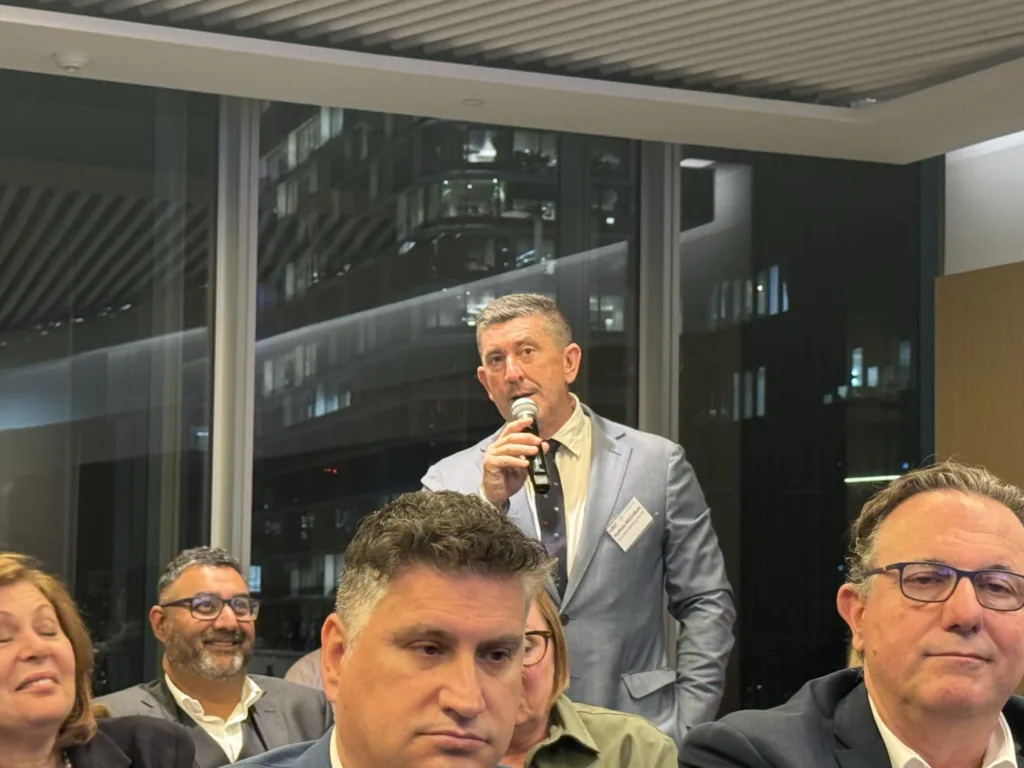
The evening concluded with a Q&A session and closing remarks by Maryanne Graham, Executive General Manager of Transgrid, who thanked the panel for delivering “deep insights and just the right amount of political mischief.”
“I think everyone here is walking away better informed — and certainly more entertained — as we head into Saturday’s vote,” she said.
Graham also thanked Business Sydney and Clayton Utz for facilitating the event, and emphasised the importance of continued civic and business engagement in shaping public policy.
As the panellists were presented with thank-you gifts, one message resonated clearly: in a campaign marked by uncertainty, platforms like Decide 25 provide a rare space for clarity, exchange, and reflection.