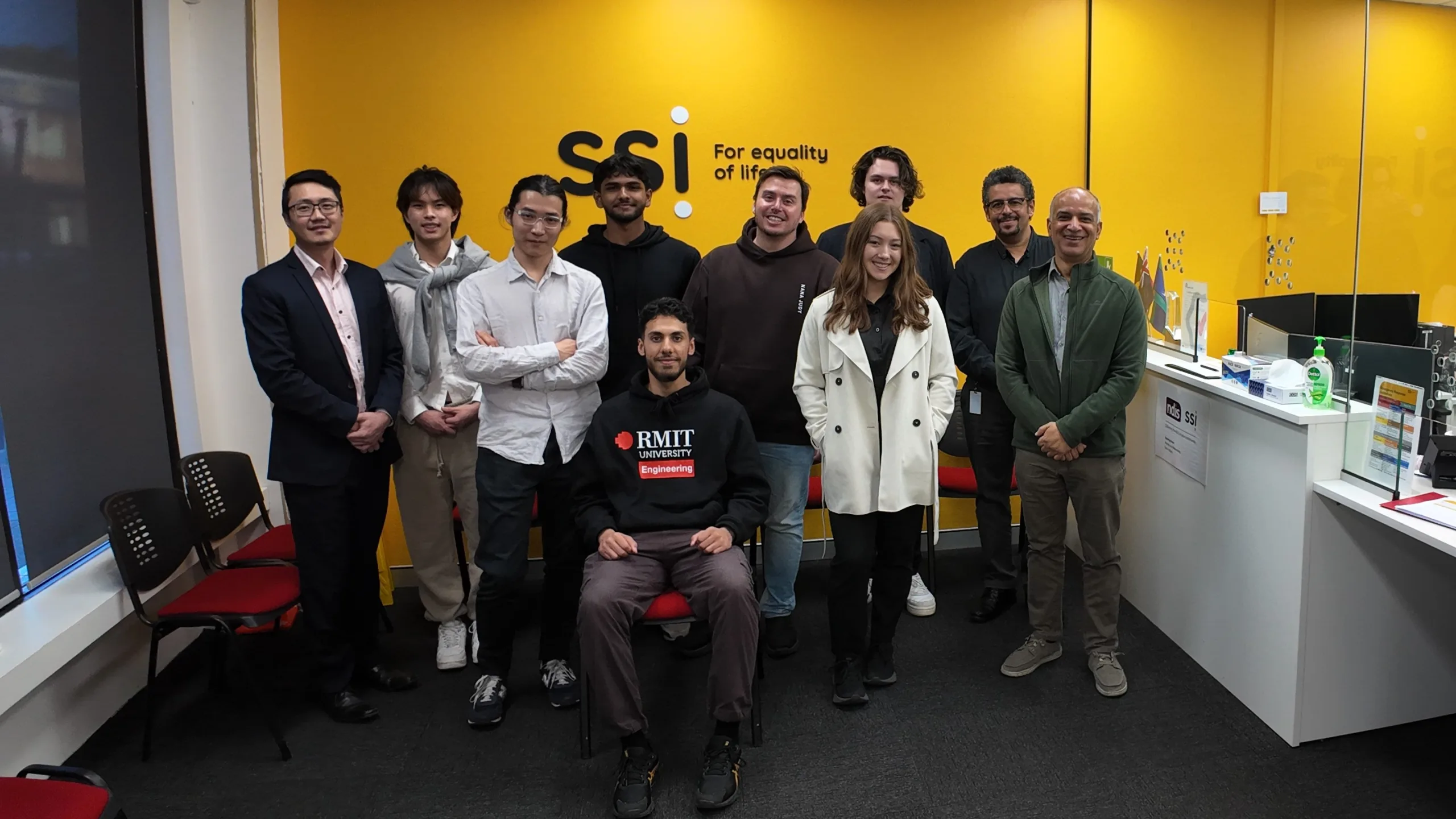
New funding will support an Australian-first project that brings together engineering students and diverse communities in search of solutions.
RMIT first-year engineering students are meeting with community groups in Victoria and New South Wales to co-design and prototype innovative engineering solutions to solve community problems. A recent surge in support has seen the funding pool increase from $10,000 to $40,000, bringing the total to $210,000 until 2030.
The project sits within RMIT’s Humanitarian Engineering Lab, co-led by Dr Spyros Schismenos and Dr Nick Brown, and its recently established HERCULES – which stands for Humanitarian Engineering Research Consortium: Understanding and Leveraging Engineering with Society.
It is a collaboration between RMIT and SydWest Multicultural Services, Settlement Services International (SSI) and PRONIA – all not-for-profits (NFPs) which work with culturally and linguistically diverse communities, including migrants, asylum seekers and refugees.
Dr Schismenos, lecturer in humanitarian engineering, oversees the project.
“Humanitarian engineering issues are complex. The point of this program is that students understand the power and responsibility they have, even as engineers in training, to help address these issues,” Schismenos said.
“Students focus on a range of topics, including energy, housing, health, and domestic and family violence.
“About 1,500 students in Australia’s biggest engineering degree work with communities and our partner NFPs to prepare a proposal for community needs. The most potentially impactful of those go onto meet with community groups and services and, together, develop their idea into a product or a service.
“I hope many of the students will go onto develop their prototype, whether it be through study – such as a capstone subject or even as a Masters or PhD – or as a startup.”
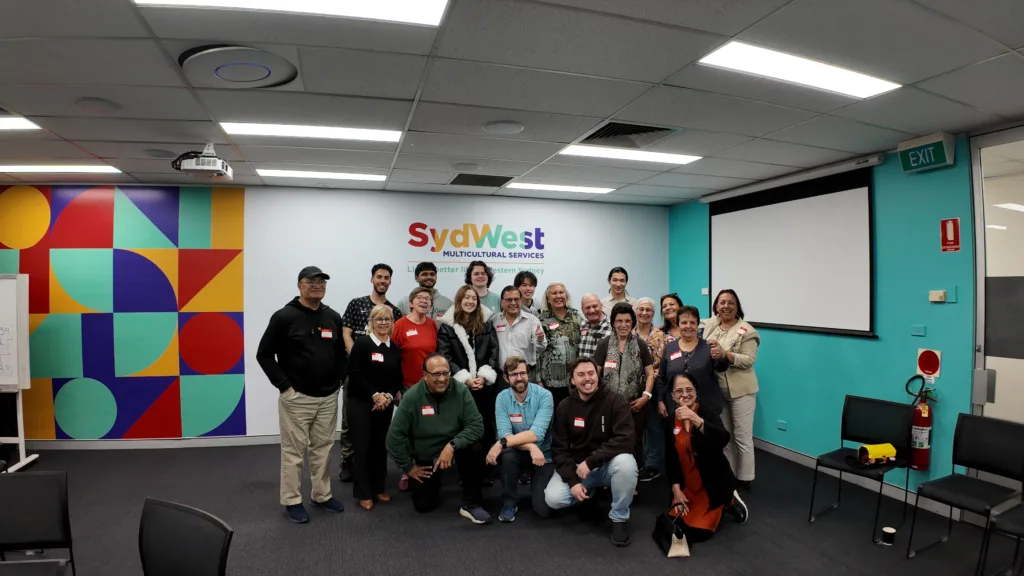
The initial round of funding saw humanitarian engineering students awarded $10,000 from SydWest to develop prototypes to help improve outcomes for the Blacktown community in NSW. Their prototypes focused on issues such as housing crisis, energy insufficiency and sanitation.
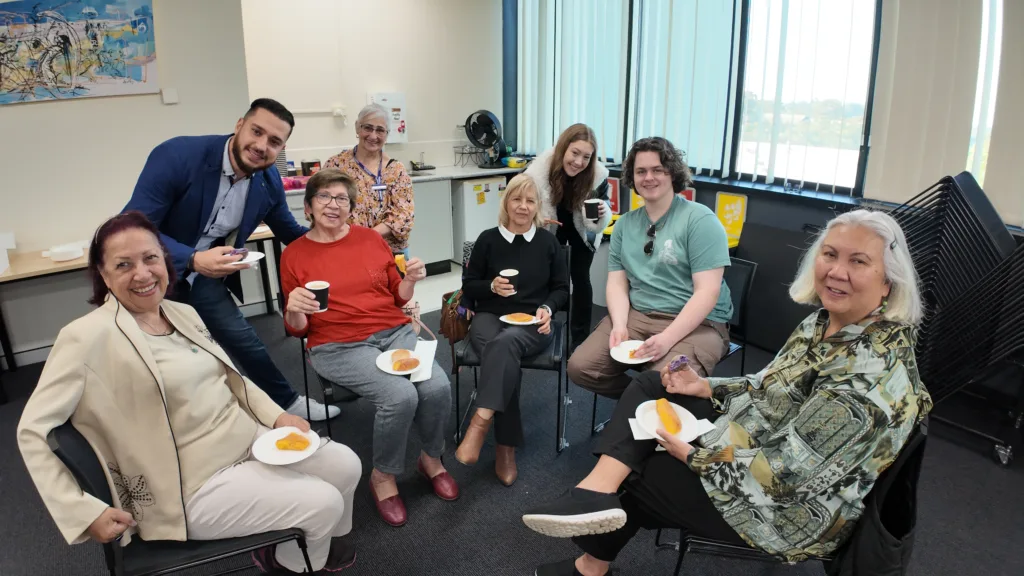
Community talks for the first round of the expanded project have already kicked off, with students travelling to Sydney to speak with culturally and linguistically diverse (CALD) seniors at SydWest in early September. They also met with staff from Settlement Services International.
Humanitarian engineering student Tahlia Torcasio has led prototype presentations back to community leaders.
“My team is focused on hoarding in social housing. An elderly lady in the workshops said she is having this problem on her front porch, with clutter spilling over from neighbours,” Torcasio said.
“She is the sweetest lady, which has given team members even more motivation to help her.
“We’re looking at solutions around sanitizing the area, making it safer, and making the spaces more accessible to seniors like her.”
Peter Kan, an RMIT civil engineering student, also visited Blacktown in the pilot program.
“I think it’s clear to all 20 of us who received the funding that it’s no longer an engineering and social sciences assignment for our studies,” Pan said.
“It’s become emotional. You’re sharing Tai Chi and morning tea with the seniors, visiting local areas and connecting in a WhatsApp group. And at the same time, you’re learning a lot more about the engineering design process in practice, especially when working with culturally diverse seniors who have so much to share.”
SSI CEO Violet Roumeliotis said the partnership demonstrates a shared commitment to empowering engineering students and supporting communities to co-design solutions to some of our most pressing challenges.
“Diverse communities face numerous challenges, often punctuated by inequality and lack of opportunity afforded to other sectors of society. SSI supports refugees, people seeking asylum, culturally and linguistically diverse communities, people living with disability, Aboriginal and Torres Straits Islander communities, women, youth, families and LGBTIQA+ communities,” Ms Roumeliotis said.
“By working with RMIT University and HERCULES consortium partners, we’ll provide a unique engagement experience that supports students in their educational pursuits and helps communities co-create place-based solutions.”
SydWest Multicultural Services CEO, Elfa Moraitakis said the impetus to join the HERCULES consortium grew from the students’ response to the RMIT SydWest Engagement Challenge where she saw first-hand the impact of collaboration that comes from genuine engagement.
“Working from a strength-based perspective enables individuals and communities to provide insights and solutions to the challenges impacting them. This approach enables students to develop these skills early in their career and to design engineering solutions with the end-user in mind,” Moraitakis said.
“The Western Sydney region is a diverse and vibrant area with a mix of unique challenges and creative insights and perspectives providing students with a rich learning ground.”
