
A spate of suicides has sparked a crisis meeting of high-level NSW school executives as teachers struggle to connect troubled students with psychiatric services, The Daily Telegraph reports.
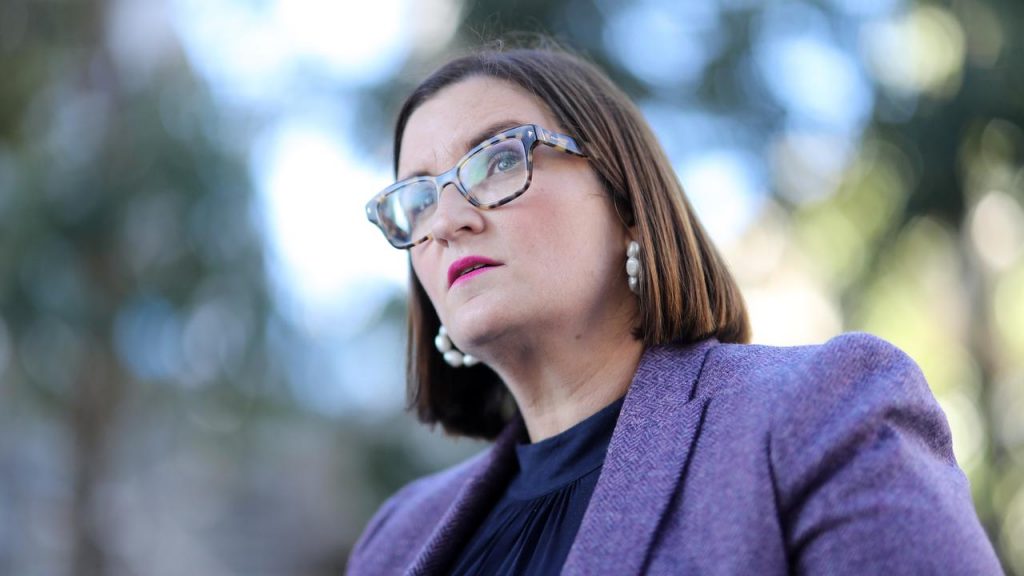
The roundtable was called by Education Minister, Sarah Mitchell, to urgently thrash out how to bridge the divide between schools and trained mental health professionals.
It comes during a time where several school-aged suicide clusters have emerged in the past two months.
According to The Daily Telegraph, three teenagers from the Riverina took their own lives last month.
A suicide cluster in the Illawarra has claimed four young lives, including a 16-year-old boy and 17-year-old girl from a Wollongong public school, an 18-year-old from a Wollongong private school and a 16-year-old from Kiama Downs.
The meeting to discuss these teen suicides included the heads of all three school sectors — newly appointed Secretary of the Department of Education, Georgina Harrison, Catholic Schools NSW chief executive, Dallas McInerney, and Association of Independent Schools of NSW chief executive, Geoff Newcombe — as well as NSW Teachers Federation boss, Angelo Gavrielatos, Education Minister, Sarah Mitchell, Health Minister, Brad Hazzard, and Mental Health Minister, Bronnie Taylor.
There was broad consensus it must be easier for schools to refer students struggling from mental ill-health to appropriate clinical care in order to avoid more tragedies.
READ MORE: ‘A slap in the face’: Teachers, nurses react to wage freeze for NSW public servants.
“It is quite apparent the relationship between schools and health services is not as strong as it should be,” Mr Gavrielatos told The Daily Telegraph.
“The meeting recognised we are dealing with serious health matters beyond the remit and capacity of schools. The growing incidence of mental health distress manifesting in our schools is of great concern.”
While there were no concrete outcomes from the meeting, there was unanimous agreement more must be done.
READ MORE: NSW Teachers Federation to take ‘whatever action is necessary’ to secure promised pay rise.
Source: The Daily Telegraph.

