By Victoria Loutas
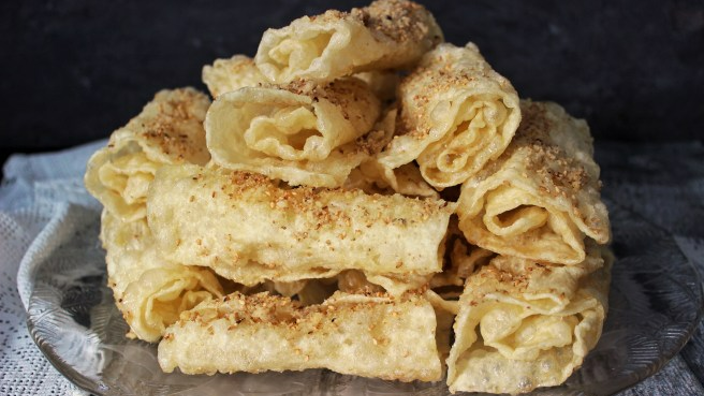
Diples are traditional, sweet Greek pastries that are topped with walnuts and drizzled with honey. They originated in the Peloponnese region and are often made in large batches and offered on a platter at Greek celebrations! This sweet dessert gets its name from the Greek word for fold because of the folding layers within diples.
Ingredients
For the diples;
- 2 tbsps sugar
- 2 tbsps baking soda
- 400g all-purpose flour
- 5 eggs (divide into yolks and whites)
- Juice of 1 lemon
- Juice of 1 orange
- 1 bsp white win vinegar
- ½ cup corn oil
- A pinch of salt
- Vegetable oil
For the syrup
- ¼ cup sugar
- ¼ cup water
- ½ cup honey
- Juice of ½ lemon
- 1 cinnamon stick
- 150g chopped walnuts (to top)
- Cinnamon

Method
- Begin by placing the five egg whites and a pinch of salt into a bowl. Whisk the egg whites with an electric mixer until the mixture is thick and glossy.
- Add the egg yolks into the mixture, one at a time whilst continuing to mix. In a separate cup, add the orange and lemon juice and baking soda and blend until dissolved. Once dissolved, add into the egg mixture.
- Add the white wine vinegar and sugar and mix into the egg mixture.
- Transfer the mixture into a large bowl and sift in the flour in small batches. Then, add the oil and knead the dough using your hand until smooth and elastic. If needed, add more flour.
- Separate the dough into four pieces and cover with plastic wrap. Let the dough mix for 30 minutes.
- After 30 minutes, roll out the dough into thin, large rectangular pieces. Using a knife or rolling cutter, cut the dough into rectangular sheets into the sizing of your choice.
- Heat vegetable oil in a deep frying pan, until shimmering but not smoking hot. Place the sheet into the hot oil using two forks. Hold the dough with the fork in the oil and roll the pastry sheet away from you, to eventually form a circular shape.
- Repeat this step with all rectangular sheets.
- Remove the diples from the oil and place on some kitchen towelette to drain.
- Begin preparing the syrup for the diples. Pour all of the syrup ingredients into a pot over heat and bring to a boil. The syrup is ready once the sugar has dissolved.
- Depending on how sweet you like your diples, you can either drizzle the pastries with the syrup or soak in the syrup for a few seconds. Sprinkle with crushed walnuts and cinnamon and enjoy!

