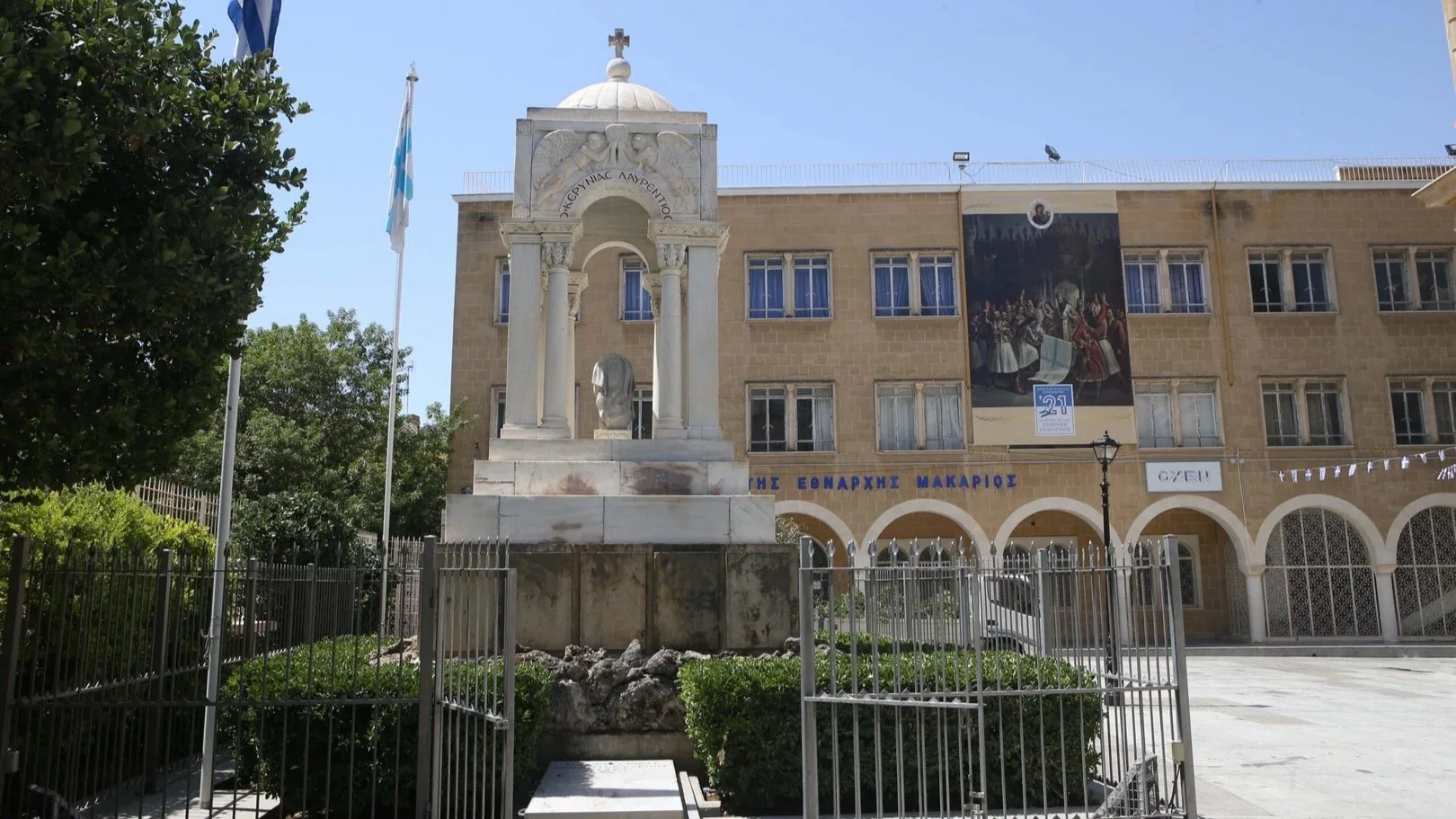
By Michael Peters Kyriacou, President of the Cyprus Community of NSW
The bonds that hold Hellenism together are complex and reach back millennia, older than Christianity and Homer.
Beyond language, tradition, and the thirst for knowledge is the desire for liberty, the freedom to think, to earn the fruits of one’s labour, the right to be a citizen of a polis and a willingness to accept the obligation that comes with citizenship.
Earning a right is the Hellenic ritual, a pathway to being a Greek.
The people of Cyprus, the home of the ancient naval engineers, global traders, scientists and poets, Olympians and farmers, aspire that the flame of liberty should grace the island at the crossroads of the great civilisations.
Today many talk of their “rights” with no mention of what they have done to earn the rights.
1821 was the age of sacrifice, delivering on a pledge, an obligation, stepping up to earn the right to have a voice, to be a Greek.
Greeks had for well over two millennia lived beyond the Greek mainland, they made their home in southern France, Spain, Magna Grecia of Southern Italy, the Black Sea, north Africa, Asia Minor, Crete, Cyprus and beyond.
The Greeks of Cyprus were, as they are today, accustomed to invasion, occupation and ethnic cleansing on an industrial scale. They also desire freedom – it’s in their DNA.
It’s no surprise that the Greeks of Cyprus were amongst the first to swear the oath to join the ‘Filiki Eteria’ (‘Friendly Society’), a secret organisation whose purpose was to overthrow Turkish Ottoman rule to establish an independent Greek state.
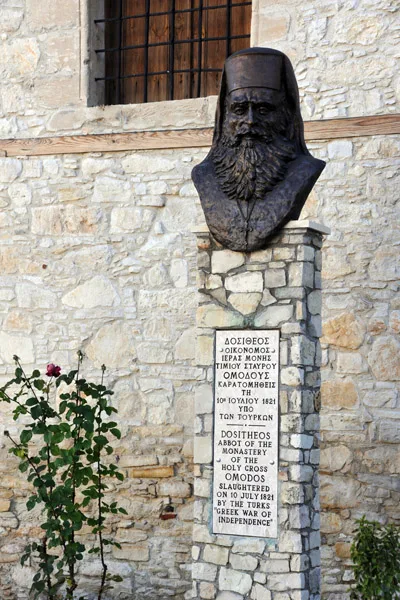
As early as 1818, Archbishop Kyprianos of Cyprus lent his “secret” support of the venture at great risk as evident in an 1818 letter to Alexander Ypsilantis.
The Greeks of Cyprus were to be active members of the organisation, take up arms in the 1821 war of liberty, be present in the battles of Tripolitan, Cervenka, Levadia, Athens, Thebes, Spetses, Samos and Patras, Argos, Kalamata, Corinth, Corinth, Messolonghi, Faliron, Piraeus, Piraeus, Karystos, Haidari, Nafpaktos, on land and at sea.
The Greek National Archives preserves letters and notes by Kolokotronis, Kanaris, Mavromichalis, and many other 1821 leaders writing about the heroes from Cyprus.
Many Greeks from Cyprus would sell their prized possessions even their real estate and risk the safety of their family and friends to join the revolution.
Within three months of 25 March 1821 declaration of independence, an estimated 480 to 2000 Greeks from Cyprus had died for liberty.
Back in Cyprus, the occupier’s Governor issued an order to the occupying forces to disarm the Greeks and instigated a reign of terror that was recorded in great detail by the Consuls of many European nations. In particular, the French Consul in Nicosia noted the brutality of the terror, the murder of children, women, priests, a frenzy that engulfed European non-Greeks, which led to an official protest by the diplomat Corp led by the French.
When Archbishop Kyprianos of Cyprus sent off a letter to all parishes to calm his people, he also sent a letter to the Turk Emperor that was intercepted and never arrived, begging a halt to the terror.
At the same time, the local occupier’s Governor met with the Greeks to accept a petition and cash to stop the terror, the Governor kept the money, and intensified the terror.
This collective “punishment” did not deter the Greeks of Cyprus on the battlefield; indeed it motivated them to fight for more than the idea of the ethnos “Hellas,” the idea that this will spread to their island.
As their families back home fell to the killing machine of the occupiers, Cyprus was to endure massacres that will stain the island for centuries.
Today, the 1821 Greeks of Cyprus heroism is often not known. Like all Greeks from the diaspora, the Greek of Cyprus deserve credit.
In particular, Archbishop Kyprianos of Cyprus’ conduct at the height of the 1821 uprising during March-July to protect the families of all in Cyprus, to give them hope, even though many were to be hung, murdered by the occupying forces – that is a remarkable feat of human courage.
Today, a corner of Europe is still under occupation, 51 years later, the idea of liberty is a strong as ever before.
The 1821 spirit is the light of hope that inevitability history will deliver liberty.
The Cyprus Community of NSW since 1929 has preserved our identity, history and perhaps trauma. Today, the Community offers various services often accessed by the refugees of the 1974 invasion of Cyprus.
We listen to their stories, their trauma, the massacres, the destruction of ancient and sacred sites just as if it happened yesterday or perhaps in 1821.
The refugees and their families are more than victims or displaced persons, collateral of a brutal invasion, forced out of their ancestral homes. They are the custodians of hope, endurance, the hope that our ancestors grasped in 1821.
To see churches converted, ancient names wiped out, monuments defaced, the brutality of occupation throws a dark shadow on the island of Aphrodite, the goddess of love, on the home of St Barnabas, on the town of Zeno of Citium the founder of stoicism, and yet 1821 is a reminder that the struggle continues.
March 25, 2025, is a time to mark the return of liberty to the lands of the Hellenes, and a time to reflect that rights come at a price – they are delivered by our commitment to liberty.
The promise of 1821 lives in Cyprus today, it is alive in our Cyprus Community of NSW, it is reflected in our services, our events, the work of the Justice for Cyprus Committee (SEKA), the Cypriots for Anzac Committee, the Cyprus Heritage Committee. It is the narrative that is passed on to our Greek School students, it is in our DNA, the love of liberty, a love the island of love deserves and longs for, just as the Hellenes did way back in 1821.
