By Victoria Loutas
With the wedding industry beginning to boom again in Australia, The Greek Herald is taking a look at Greek Wedding traditions and the meaning behind each of them.
Listed below are five Greek wedding traditions and what they symbolise.
Stefana (crowns)
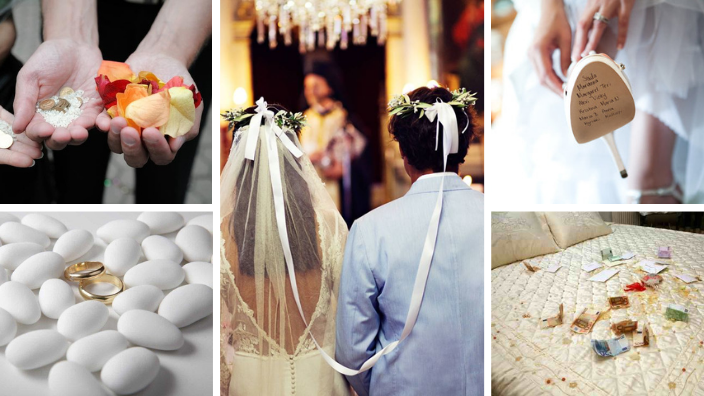
The Stefana (Greek Wedding crowns) are two crowns joined together by ribbon to symbolise unity and are blessed by the priest in the name of the Father, Son and the Holy spirit. When placed on their foreheads, the bride and groom are “crowned” the King and Queen of their home, which they will run with love and Faith. The crowns are swapped back and forth three times by the koumbaro (best man or maid of honour) as they walk around the altar to mark the beginning of their marital journey.

To Krevati
A very ancient wedding tradition that is not as common anymore is ‘To Krevati’. Friends and family of the bride and groom are invited to join in the ‘bed making’ process prior to the wedding. Only unmarried women are able to make the bride’s and groom’s bed with fresh bed sheets. Money, rice, gifts and even a young child is thrown onto the bed to promote prosperity and fertility for the soon to be married couple!
Bride’s Shoes
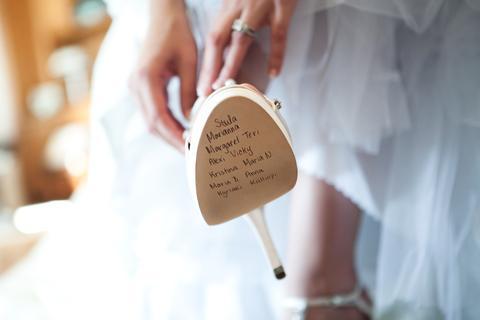
The names of all the single ladies in the bridal party are written on the bottom of the bride’s wedding shoes. Tradition has it that the last name to have rubbed off the shoe will be the next to get married, while others believe that the first name to rub off will be next to get married.
Spitting on the bride
Don’t worry, not literally spitting!
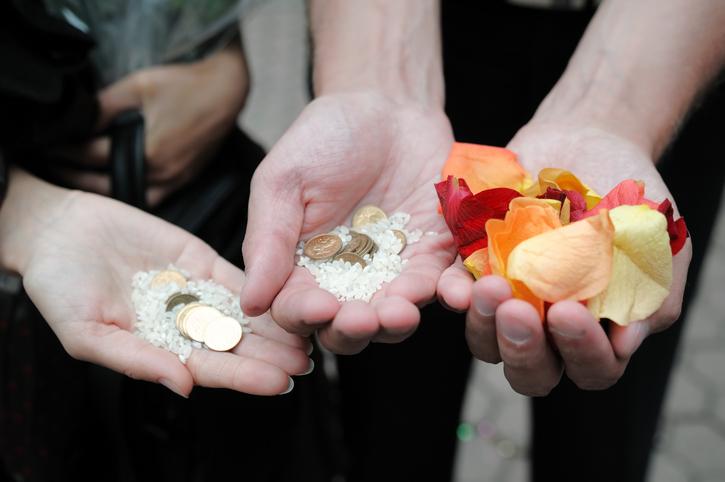
Guests at a Greek wedding will pretend to spit onto the Bride and Groom as they walk down the aisle as a married couple for the first time. “Spitting” on the couple is traditionally done three times to protect the couple from evil spirits. Guests will also throw rice to promote fertility and happiness for the newlyweds.
Bomboniere

At the conclusion of a Greek wedding, guests are given a small gift known as the ‘Bomboniere’. Today, these gifts can be anything from candles to icons, but traditionally the Bomboneire are sugar coated almonds, also known as ‘Koufeta’ in Greek. The sugar almonds represent many things in itself, symbolising purity through the colour white and fertility through the egg shape of the almond. The firmness of the almond represents strength in the marriage and the sugar coating symbolises sweetness.
Traditionally, the bride and groom would give five almonds in each bag to represent five pillars in their marriage; health, happiness, fertility, wealth and a long life.

