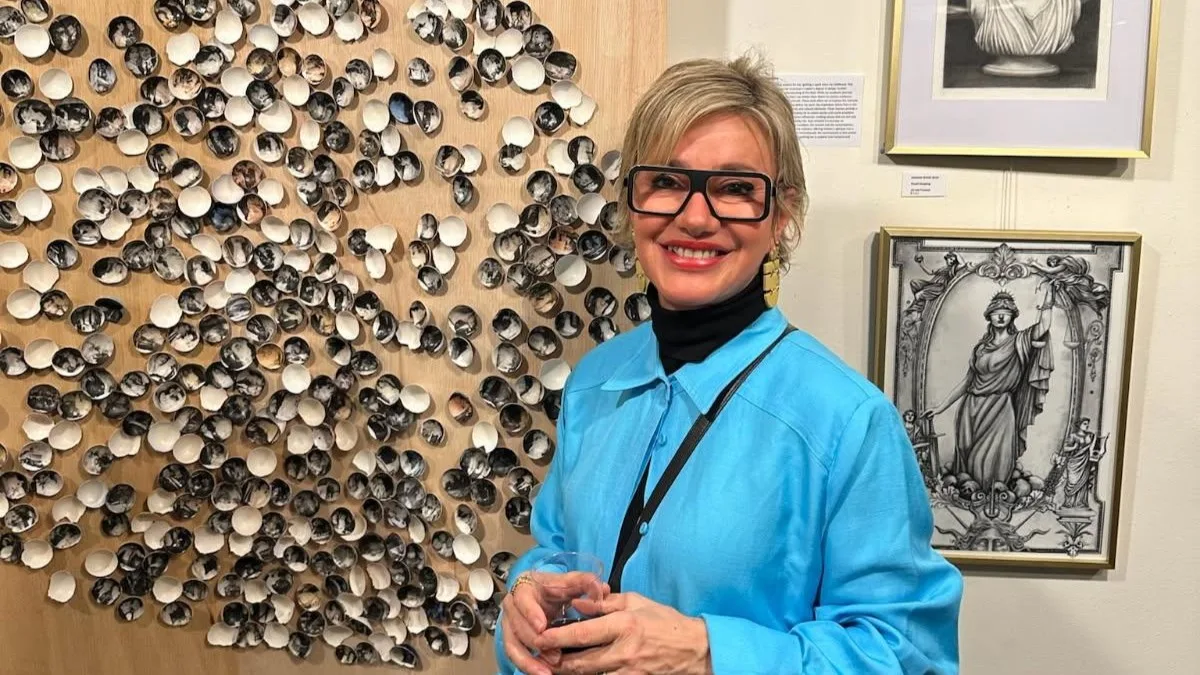
In a Richmond studio, surrounded by tubs of meticulously washed eggshells, Melbourne artist Victoria Floratos is piecing together more than just artworks. She’s crafting tributes to migration, memory, and resilience – one fragile shell at a time.
Her material of choice? Discarded eggshells – a humble, overlooked symbol.
“If the egg is broken from the inside, life begins,” she says. “If broken from the outside, life ends.”
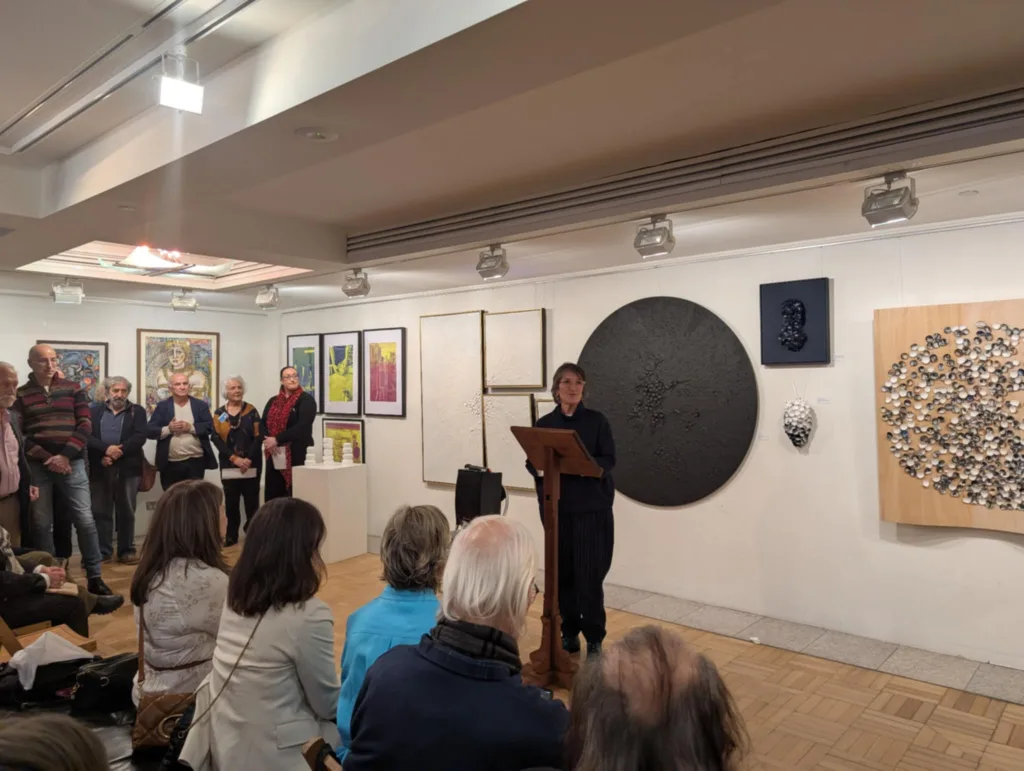
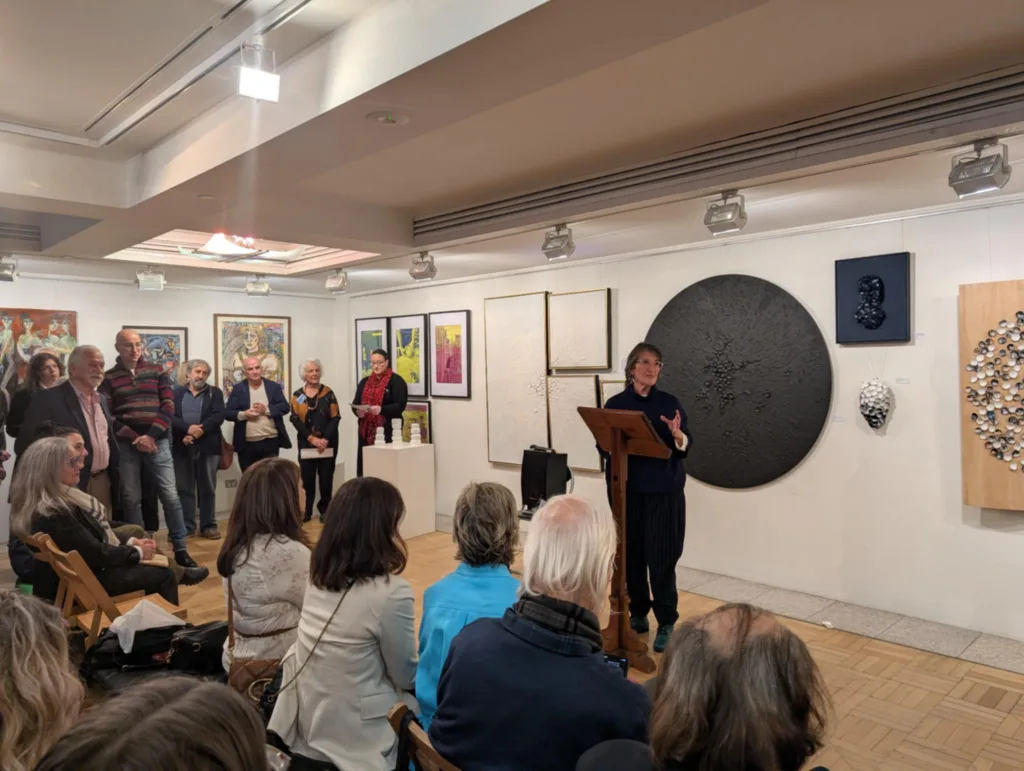
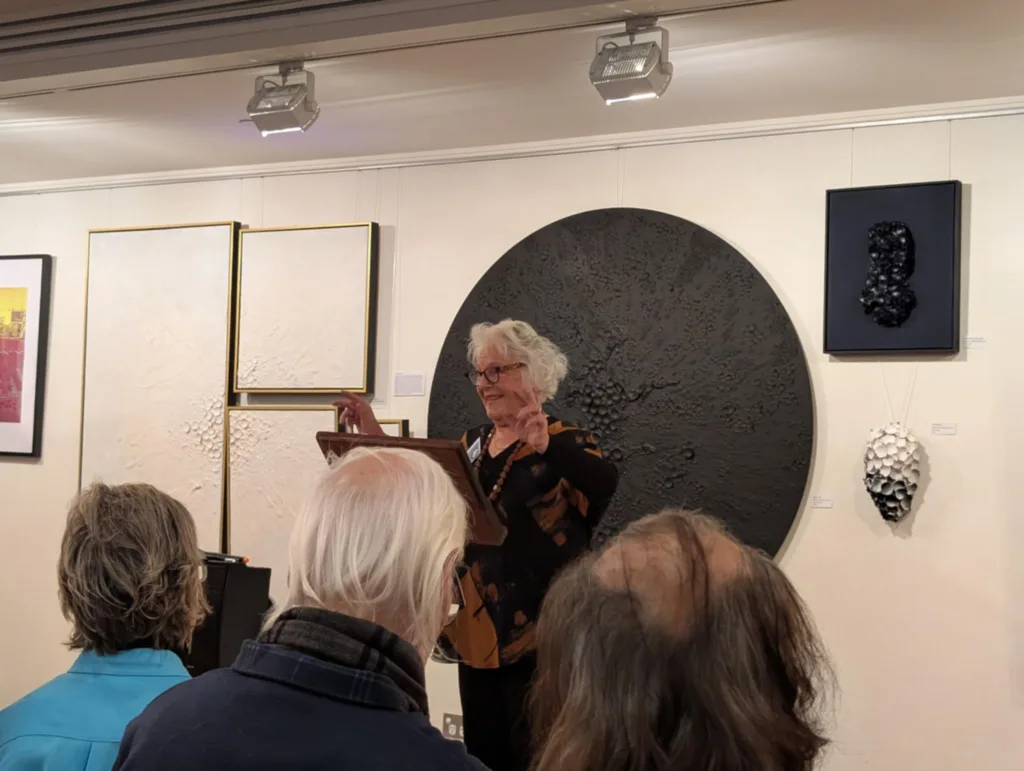
That symbolism resonated deeply with audiences at the recent Antipodean Palette exhibition launch, hosted by the Greek Australian Cultural League (GACL) at Steps Gallery.
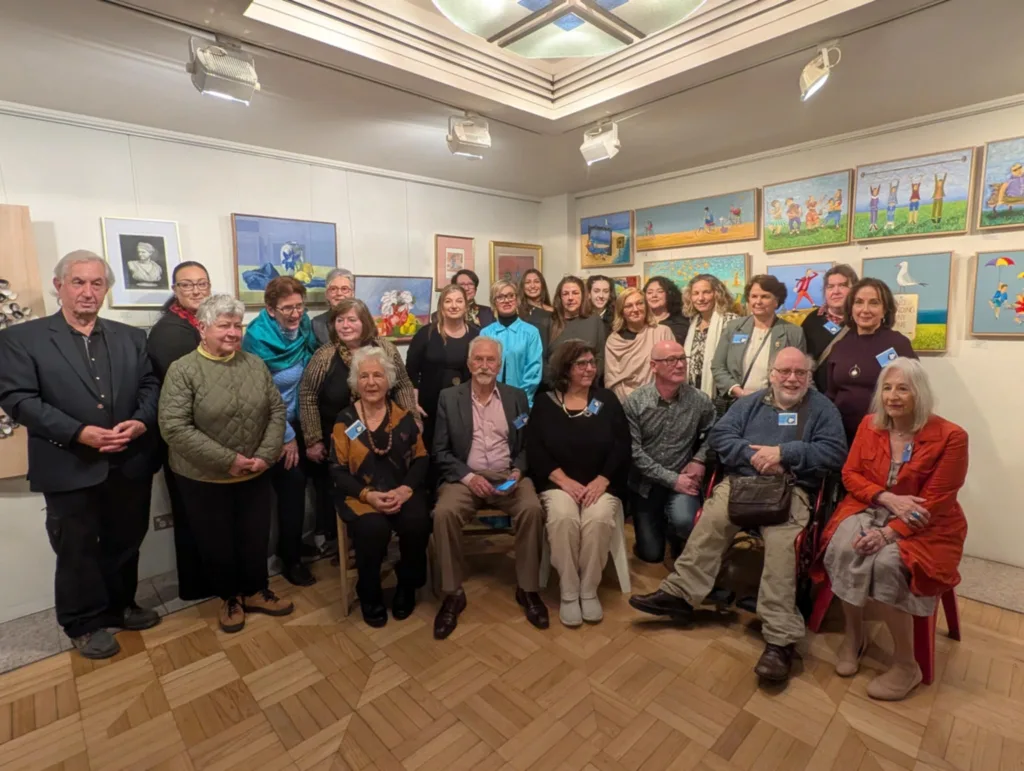
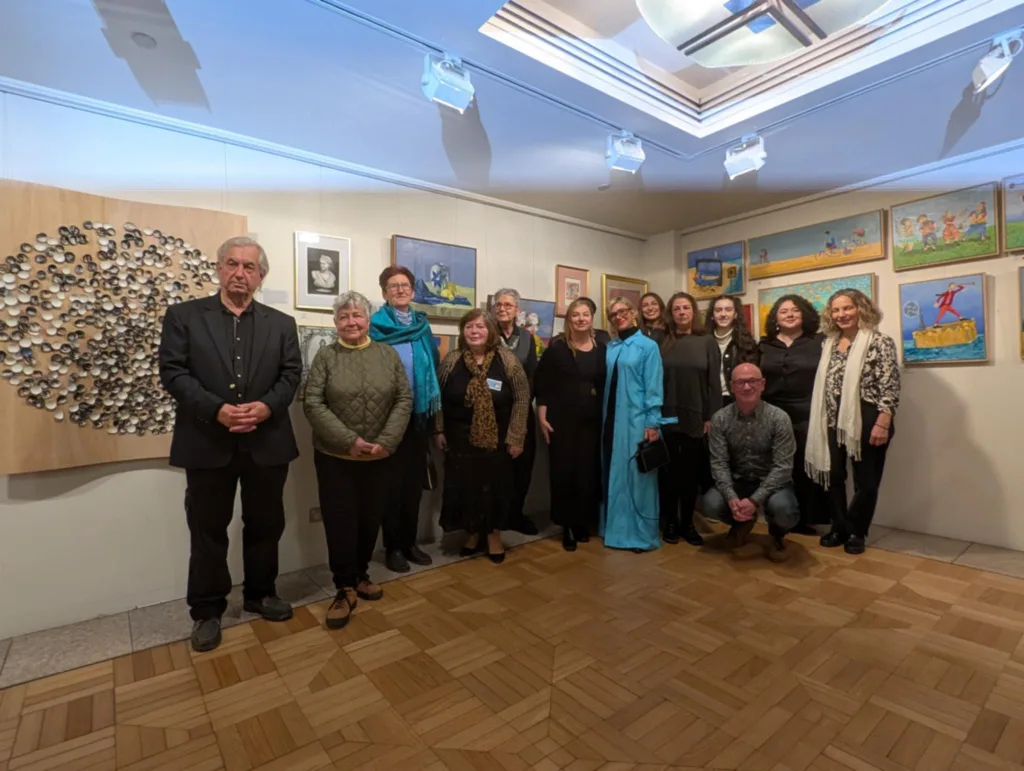
Floratos’ centrepiece, Cradled Echoes, stirred powerful emotions. “I didn’t expect it,” she admits. “I just wanted to honour that generation.”
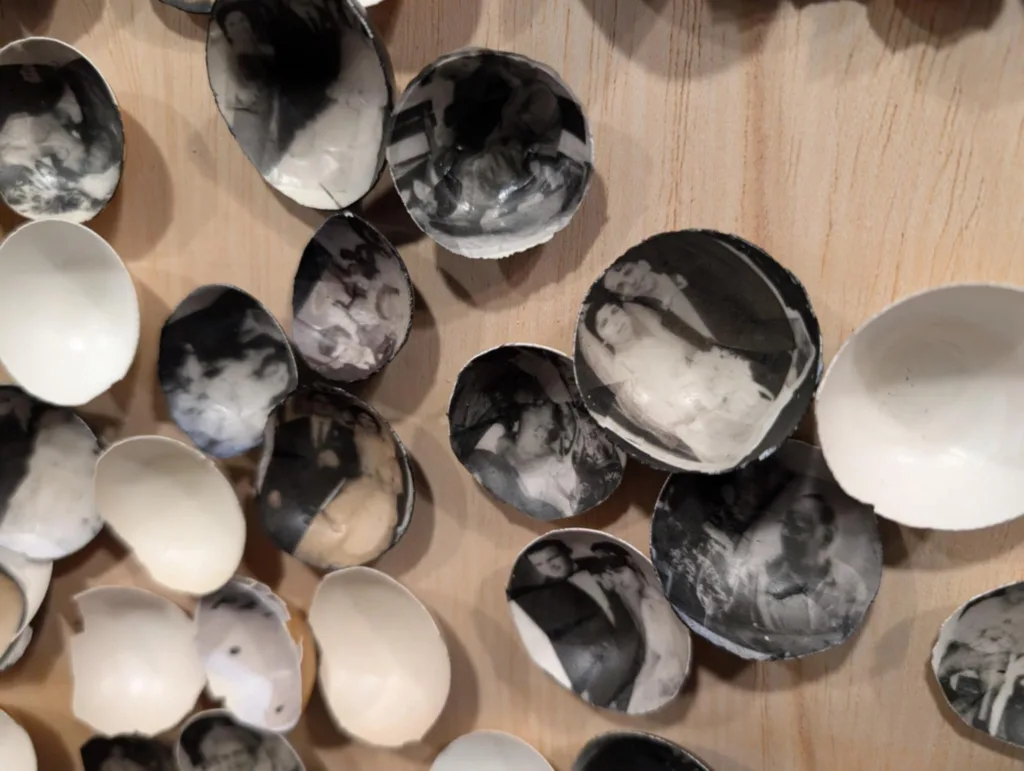
Visitors were visibly moved, huddled around the sculptural work and pointed to the black-and-white photos embedded in the shells. “That’s my uncle! That’s my neighbour!” some whispered. Others simply stood still, overcome.
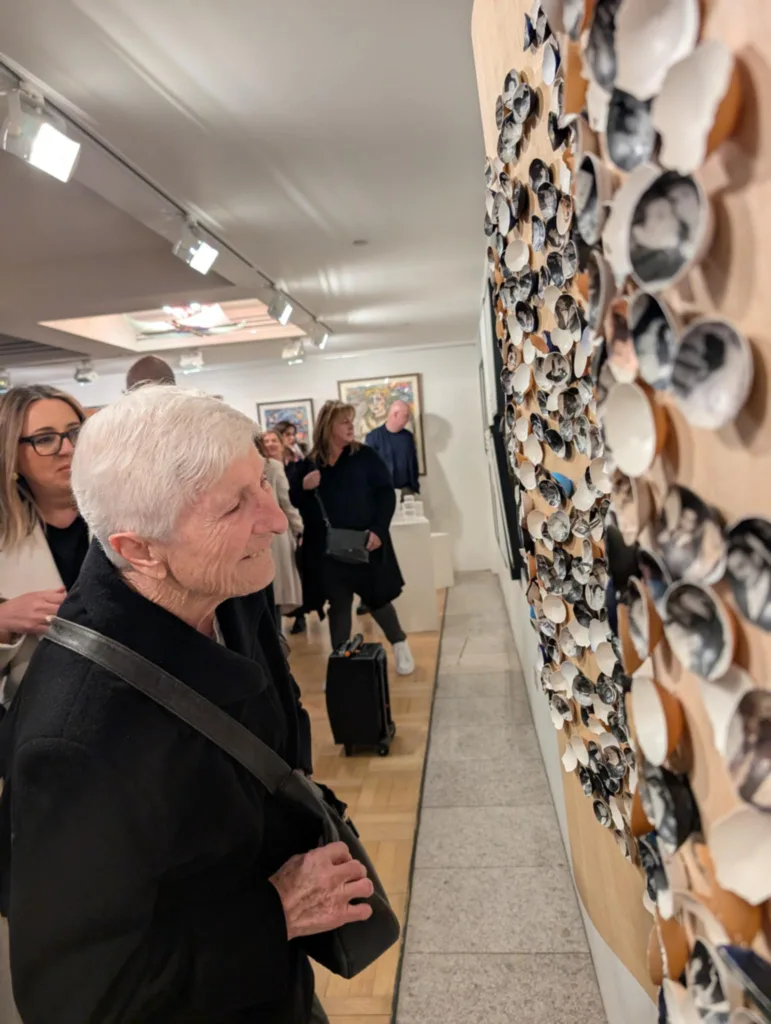
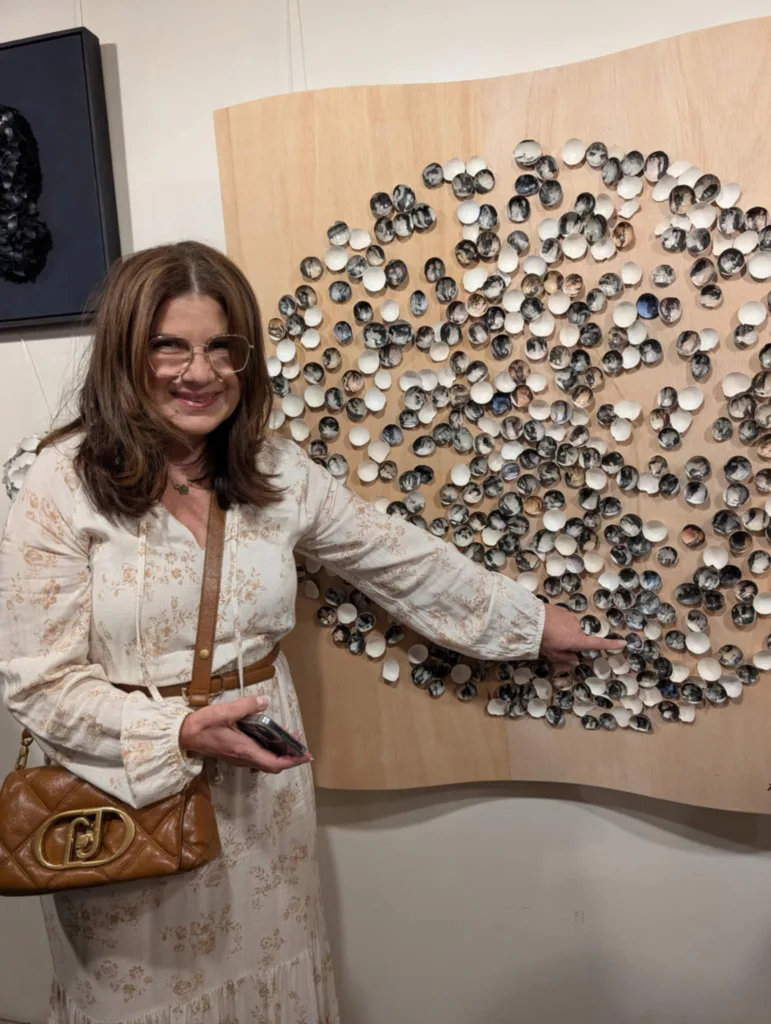
“It became a living, breathing memorial to our community,” Floratos says. “The emotion in the room – it was everything I’d hoped for.”
The piece, built on a wave-shaped board to represent the journey to Australia, features hundreds of rice paper images of photos donated by members of the Greek Australian community.
“I sent out a message to friends and family asking for early migrant wedding photos,” she says. “More than 250 people responded. I was floored.”
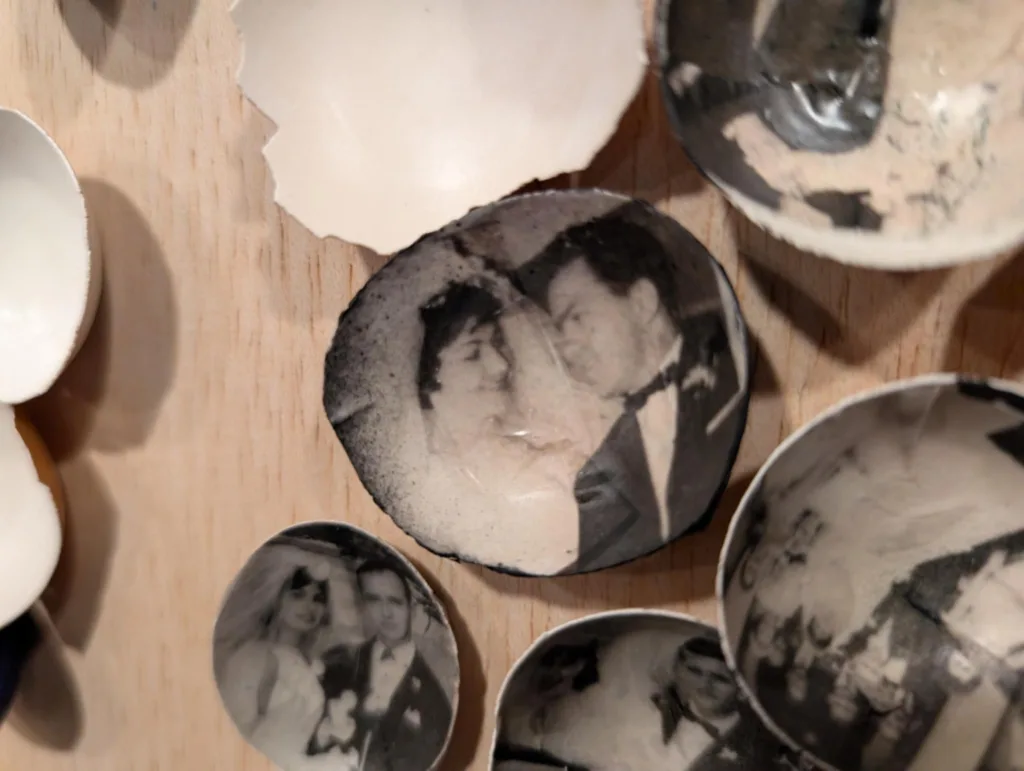
Among them were images of her own parents and grandparents, who migrated from Kolindros near Thessaloniki.
The emotional power of her work caught the attention of retired MP Maria Vamvakinou. “They are my favourite works,” Vamvakinou told the crowd.
When artists were acknowledged at the launch, the cheers for her were particularly loud.
But this moment of recognition was just the latest step in a journey that began in childhood – sketching dogs and horses in the margins of schoolbooks.
Her creative turning point came during her final year of high school. While other students reached for brushes and canvas, she gravitated toward discarded leather offcuts.
“Everyone else was painting. I wanted to do something different. My mum helped me sew it together. It said everything I needed to say,” she explains.
So impressed was the school principal, he urged her to study fine arts. But Floratos took a different path – studying travel and tourism, raising children, and putting her artistic ambitions on hold.
“My parents were worried. They said, ‘What are you going to do, sell paintings for $5 door-to-door?’” she laughs.
After the birth of her daughter, her husband gave her a canvas and a set of oils. “I haven’t stopped painting since,” she says.
It was the death of her younger brother Steven, at just 28, that transformed her art into something deeper.
“It was horrific. A scream inside me,” she says.
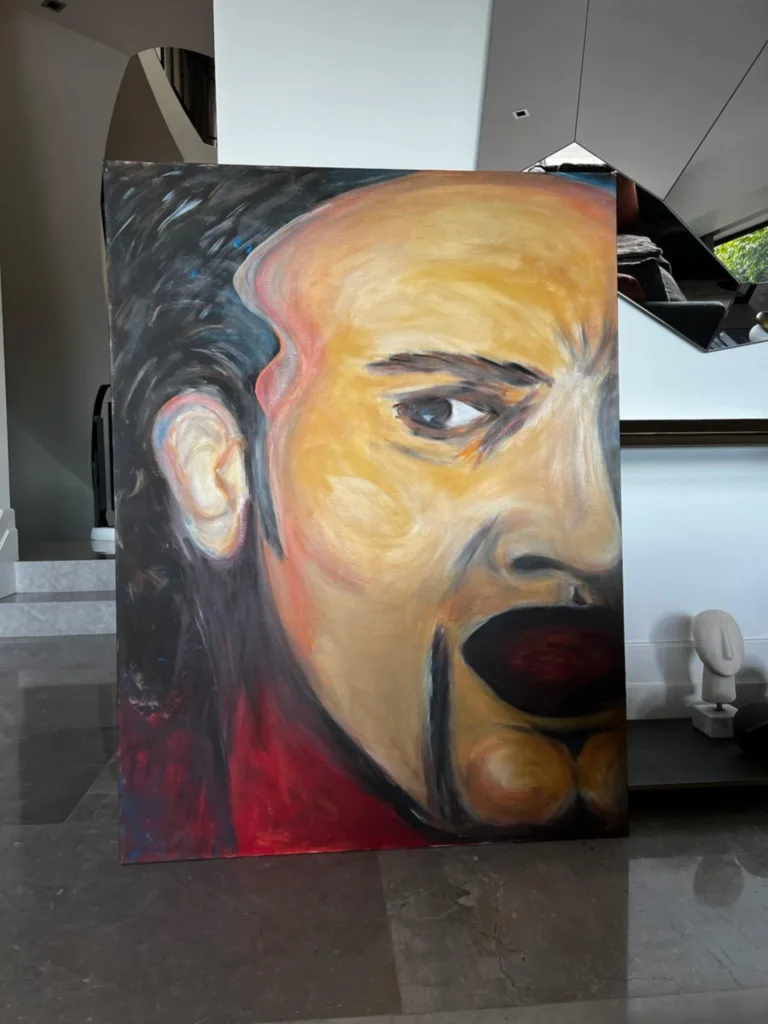
What followed was a visceral painting – streaks of burgundy and red poured across the canvas. “It reminds me of The Scream —-but it’s mine. Loud, messy grief.”
She offered to share the painting with her siblings in rotation. “But for my brother, it was too raw.” For Floratos, it became a tool for healing. “That’s when I realised I needed to create when words failed.”
Her experiments with eggshells began as both a mourning ritual and an act of protest.
“We live in a society that throws everything away. I wanted to take something fragile and dismissed, and show it still has value,” she says.
She began collecting discarded shells from cafes – often to confused stares – and cleaning them meticulously with the help of her late mother.
“God bless her, she’d dry every one,” she says. Now, even strangers leave containers of shells at her door. “It’s become a community effort – proof that even broken things can hold us.”
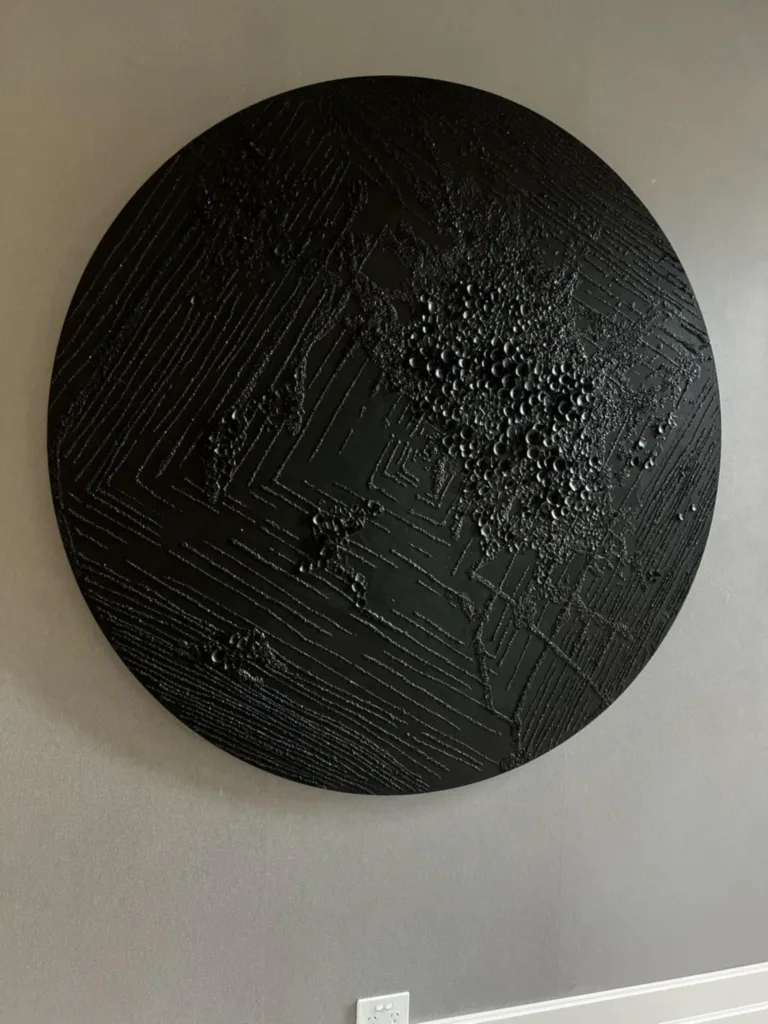
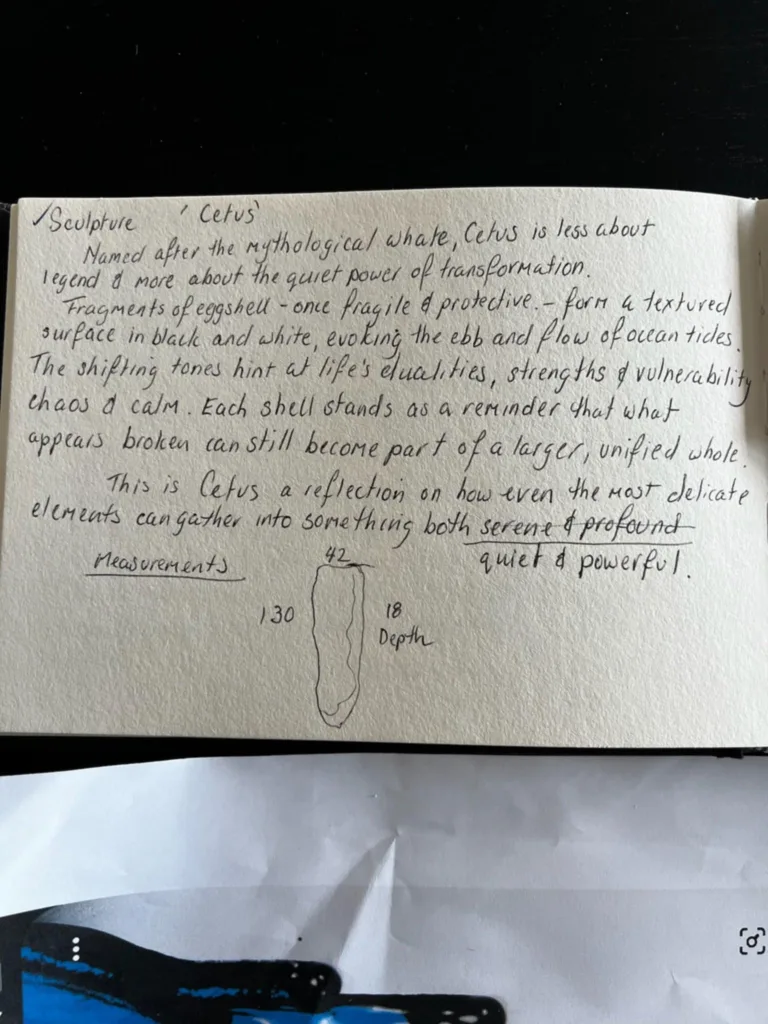
Her latest work, Cetus, is a mythological whale, fragments of egg shells in black and white textures, evoking the ebb and flow of ocean tides and shifting tones that hint at life’s dualities, strength and vulnerability, chaos and calm.
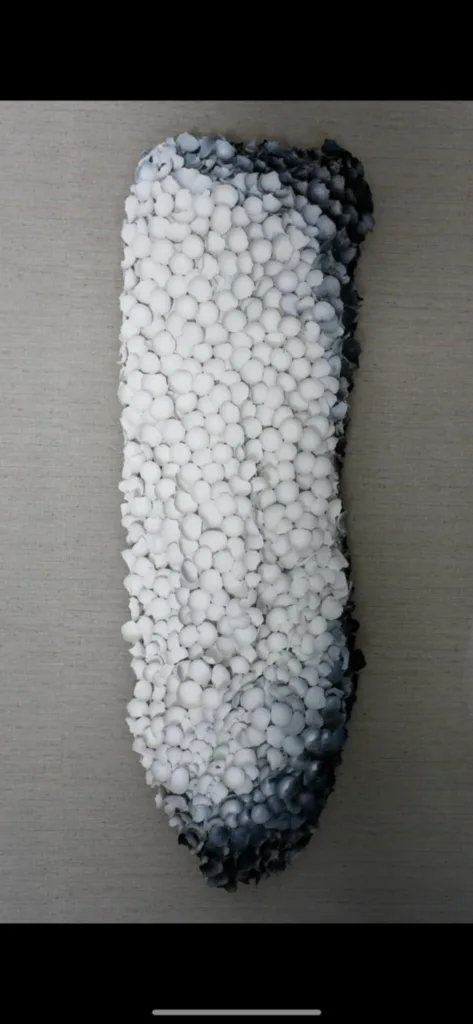
“It’s less about legend, and more about the quiet power of transformation,” says Floratos of the work, privately displayed in a Toorak home.
Though she’s been offered commissions, Floratos prefers to work freely. “I need to create from emotion, not instruction.”
Her work is on display at Steps Gallery at Lygon Street Carlton until 22 June, and there will be a poetry afternoon on 2pm on that date. Her work is available at her Richmond Studio and her next solo exhibition will be in Brighton later this year, and will see her experimenting with brighter colours.
“Black and white is my default – it’s emotionally versatile – but I’m letting in more light now. Life is full of layers,” she says.
Layers of memory. Layers of grief. Eggshells – crushed, reformed, and carried.
